Author: Evan Mercer

  • CFTC Submits Crypto Rules to White House for Review as Congress Stalls on Clarity Act

    CFTC Submits Crypto Rules to White House for Review as Congress Stalls on Clarity Act

    Key Highlights

    • CFTC Chair Mike Selig signals readiness to finalize rules for digital asset derivatives markets following Wednesday’s commission vote.
    • The CFTC issued a no-action letter allowing software providers to connect users to regulated derivatives markets without registering as introducing brokers.
    • Relief covers passive software enabling market viewing and order submission through crypto wallets, with strict conditions on asset custody and trade execution control.

    CFTC Advances Digital Asset Derivatives Framework With No-Action Relief

    The Commodity Futures Trading Commission took dual steps this week to clarify the regulatory perimeter for technology providers operating in digital asset derivatives markets. Following a Wednesday commission vote, CFTC Chair Mike Selig declared the agency prepared to move forward with rulemaking for what he described as the “new frontier of finance.”

    “The CFTC is locked in and ready to ship its rules for the new frontier of finance,” CFTC chair Mike Selig wrote in a post on X following the vote on Wednesday.

    On Friday, the commission supplemented that signal with concrete operational guidance. The Division of Market Oversight and Division of Clearing and Risk jointly published a no-action letter establishing a pathway for certain software providers to facilitate user access to CFTC-regulated derivatives markets without triggering introducing broker registration requirements.

    Scope and Conditions of the No-Action Relief

    The letter specifically covers passive software that enables users to view market data and submit orders directly to registered entities, including through cryptocurrency wallet integrations. Providers operating under this relief may market specific contracts and receive transaction-based fees, but face explicit prohibitions: they cannot hold customer assets, generate buy or sell signals, or control how orders are routed or executed.

    The relief comes with mandatory conditions including risk disclosures, recordkeeping obligations, and compliance with existing marketing rules. According to the commission, this temporary framework remains in effect until the CFTC adopts formal rules or guidance addressing registration requirements for software developers more comprehensively.

    Why This Matters

    The combined actions represent the CFTC’s most detailed engagement yet with the intersection of decentralized technology and regulated derivatives markets. By distinguishing passive order-routing software from activities requiring introducing broker registration, the commission creates regulatory clarity for wallet providers, front-end interfaces, and decentralized application developers seeking to integrate with designated contract markets and swap execution facilities.

    The move also reflects Chairman Selig’s stated priority of modernizing the CFTC’s approach to digital assets without waiting for congressional action. The no-action letter effectively bridges the gap between current registration requirements and the forthcoming rulemaking, reducing enforcement risk for compliant software providers while preserving core investor protections around custody, discretionary trading, and order handling.

    Frequently Asked Questions

    Who qualifies for the no-action relief?

    Software providers offering passive tools that allow users to view markets and submit orders directly to CFTC-registered firms qualify, provided they do not hold customer assets, generate trading signals, or control order routing and execution.

    Can providers charge fees under this relief?

    Yes. Providers may market specific contracts and receive transaction-based fees while operating under the no-action letter.

    How long does this relief remain in effect?

    The relief remains in place until the CFTC adopts formal rules or guidance addressing registration requirements for software developers.


  • Haruko Cyberattack Impacts 15 Clients, Causes Fund Losses for Crypto Tech Provider

    Haruko Cyberattack Impacts 15 Clients, Causes Fund Losses for Crypto Tech Provider

    Key Highlights:

    • Haruko, a London-based digital-asset infrastructure provider, suffered a security breach where an attacker exploited a process vulnerability to extract a user-access token and capture data from system memory.
    • A small amount of client funds and trading data were stolen, with smaller hedge funds described as particularly exposed due to weaker security controls.
    • GSR confirmed it was not impacted, while several other major firms including Bitcoin Suisse and Flowdesk did not respond to comment requests; client login credentials on their own systems were not compromised.

    Haruko Infrastructure Breach Exposes Institutional Crypto Clients

    A cyberattack targeting Haruko, a London-based firm providing portfolio, risk-management, and trade-data infrastructure to institutional digital-asset firms, has resulted in the theft of client funds and trading data. The company’s platform connects with centralized exchanges, custodians, blockchains, and decentralized-finance (DeFi) protocols, giving clients a consolidated view of their positions, transactions, and risk exposure. According to people familiar with the matter who spoke on condition of anonymity because the investigation is private, a small amount of client funds was stolen, and smaller hedge funds with weaker security controls may have been particularly exposed.

    Attack Vector and Data Compromise

    The attacker exploited a vulnerability in one of Haruko’s processes, extracting a user-access token and using it to capture data held in the process’s memory. That memory could have included read-only exchange API details and other data. Clients’ login credentials were not compromised on their own systems; instead, the access token was extracted through a vulnerability in Haruko’s infrastructure. Trading data was also taken during the intrusion.

    Industry Response and Exposure Assessment

    “GSR has not been impacted by any rumored breach,” a company spokesperson said. Bitcoin Suisse, Flowdesk, 3iQ, M2, Ampersan, MNNC, and Trovio did not reply to requests for comment before publication time. The incident underscores the persistent security challenges facing the crypto industry, where transactions are generally irreversible and platforms rely on digital credentials and signing systems that can give attackers direct access to assets.

    Why This Matters

    The Haruko breach highlights the systemic risk posed by infrastructure providers that aggregate access to multiple exchanges, custodians, and DeFi protocols. As institutional adoption of digital assets accelerates, the concentration of API credentials and trade data in centralized platforms creates high-value targets for attackers. The fact that smaller hedge funds with weaker security controls were particularly exposed suggests a tiered risk landscape where resource-constrained firms may suffer disproportionate harm. The incident also demonstrates how memory-resident data—such as read-only API keys—can be weaponized even when full login credentials remain secure, a nuance that may prompt reassessment of token rotation and memory-hardening practices across the sector.

    Frequently Asked Questions

    Was GSR affected by the Haruko breach?

    No. A GSR spokesperson explicitly stated: “GSR has not been impacted by any rumored breach.”

    Were client login credentials stolen from their own systems?

    No. According to messages from Haruko’s Carlile to clients, login credentials were not compromised on client systems. The access token was extracted through a vulnerability in Haruko’s own infrastructure.

    Which other firms were contacted regarding potential exposure?

    Bitcoin Suisse, Flowdesk, 3iQ, M2, Ampersan, MNNC, and Trovio were contacted for comment but did not reply before publication time.

  • Bitcoin (BTC) Tops $80K Again, Altcoins Surge: Top Gainers and Market Drivers

    Bitcoin (BTC) Tops $80K Again, Altcoins Surge: Top Gainers and Market Drivers

    Key Highlights

    • Bitcoin surged 4.7% in 24 hours to reclaim the $80,600 level on Binance, triggering $198 million in leveraged liquidations—$190 million of which were short positions.
    • Major altcoins outperformed Bitcoin, with Arbitrum (ARB) jumping 29%, Near Protocol (NEAR) rising 26%, Uniswap (UNI) gaining 20%, and Aptos (APT) climbing 18%.
    • The rally coincides with the SEC’s announcement of a “novelty waiver” plan to temporarily permit tokenized stock trading for five years, which analysts say signals growing institutional blockchain adoption.

    Bitcoin Breaks $80K as Short Liquidations Fuel Sharp Rebound

    Bitcoin staged a forceful recovery on Tuesday, climbing back above the psychologically significant $80,000 threshold and reaching $80,600 on Binance. The 4.7% gain over the previous 24 hours caught leveraged traders off guard, resulting in $198 million worth of positions liquidated in a single hour. Data from Bitcoinsistemi.com shows that $190 million of those liquidations were short positions, underscoring the intensity of the squeeze that propelled the leading cryptocurrency higher.

    Altcoins Outpace Bitcoin with Double-Digit Gains

    The bullish momentum spilled broadly across the altcoin market, where several assets posted percentage gains well ahead of Bitcoin’s. Ethereum rose 4% to surpass $2,550, while Solana advanced 7.8% to top $108 and XRP climbed 4.5% above $1.30. The strongest performers, however, were among the so-called “altcoin leaders.” Arbitrum (ARB) surged 29%, Near Protocol (NEAR) added 26%, Uniswap (UNI) gained 20%, and Aptos (APT) rose 18%. Jupiter (JUP), Worldcoin (WLD), and Ether.fi (ETHFI) followed with increases of 15.5%, 15.2%, and 15%, respectively.

    SEC “Novelty Waiver” Sparks Optimism for Tokenized Assets

    Market analysts attribute the broad-based altcoin strength to an improvement in regulatory sentiment following a landmark announcement by the U.S. Securities and Exchange Commission. On Monday, the SEC unveiled a “novelty waiver” plan that will temporarily allow tokenized stock trading for the next five years. Analysts believe the move anticipates a significant rise in the use of supporting blockchain infrastructure should tokenized equities achieve widespread adoption, providing a fundamental tailwind for layer-one and layer-two tokens alike.

    Why This Matters

    The convergence of a sharp short squeeze in Bitcoin and outsized altcoin gains highlights how quickly leverage-driven volatility can cascade across the digital-asset complex. More structurally, the SEC’s “novelty waiver” represents a rare regulatory green light for tokenized securities, potentially unlocking institutional capital flows into blockchain networks that power settlement, custody, and compliance layers. If tokenized stock trading scales as regulators envision, demand for high-throughput, low-cost infrastructure—exemplified by Arbitrum, Near, and Aptos—could accelerate well beyond speculative cycles. Traders and investors should monitor whether the current rally extends into sustained volume or retraces once liquidation-driven buying exhausts itself.

    Frequently Asked Questions

    How much was liquidated during Bitcoin’s move above $80,000?

    $198 million in leveraged positions were liquidated in the last hour, of which $190 million were short positions, according to Bitcoinsistemi.com data.

    Which altcoins posted the largest percentage gains?

    Arbitrum (ARB) led with a 29% increase, followed by Near Protocol (NEAR) at 26%, Uniswap (UNI) at 20%, and Aptos (APT) at 18%.

    What is the SEC’s “novelty waiver” and why does it matter?

    The SEC announced a “novelty waiver” plan that will temporarily permit tokenized stock trading for five years. Analysts view this as a signal that regulatory barriers for blockchain-based financial infrastructure are lowering, which could drive long-term demand for the networks that support tokenized assets.

    This is not investment advice.

  • Bitcoin Surges Above $80,000 Again as Altcoin Volatility Spikes; Top Gainers and Drivers Identified

    Bitcoin Surges Above $80,000 Again as Altcoin Volatility Spikes; Top Gainers and Drivers Identified

    Key Highlights

    • Bitcoin surged 4.7% in 24 hours to reclaim the $80,600 level on Binance, triggering $198 million in leveraged liquidations—$190 million from short positions alone.
    • Altcoins outperformed Bitcoin with double-digit gains: Arbitrum (+29%), Near Protocol (+26%), Uniswap (+20%), and Aptos (+18%) led the rally.
    • The SEC announced a five-year “novelty waiver” permitting tokenized stock trading, a move analysts say signals regulatory thaw and could accelerate blockchain infrastructure adoption.

    Bitcoin Breaks $80K, Triggering Massive Short Liquidations

    Bitcoin staged a forceful recovery on Tuesday, climbing 4.7% over the past 24 hours to trade above $80,600 on Binance—the first sustained break above the psychologically critical $80,000 threshold in several sessions. The sharp ascent caught leveraged traders off guard, resulting in $198 million worth of liquidated positions within a single hour, according to data aggregated by Bitcoinsistemi.com. Of that total, $190 million originated from short positions, underscoring the one-sided bearish positioning that amplified the upward move.

    Altcoins Outpace Bitcoin in Broad Market Rally

    The rally extended well beyond the flagship cryptocurrency. Ethereum rose 4% to surpass $2,550, while Solana gained 7.8% to breach $108 and XRP advanced 4.5% above $1.30. However, mid-cap altcoins delivered the most explosive returns. Arbitrum (ARB) led with a 29% surge, followed by Near Protocol (NEAR) at 26%, Uniswap (UNI) at 20%, and Aptos (APT) at 18%. Jupiter (JUP), Worldcoin (WLD), and Ether.fi (ETHFI) each posted gains between 15% and 15.5%, signaling broad-based risk appetite returning to the digital asset complex.

    SEC “Novelty Waiver” Fuels Regulatory Optimism

    Market participants attributed the sentiment shift to a landmark announcement from the U.S. Securities and Exchange Commission (SEC) on Monday. The regulator unveiled a “novelty waiver” framework that will temporarily authorize tokenized stock trading for a five-year period. Analysts interpret the move as a pragmatic acknowledgment that tokenized securities require supporting blockchain infrastructure to scale, and that regulatory clarity could unlock institutional participation. The waiver effectively creates a regulated sandbox for equity tokenization, a development long sought by both traditional finance incumbents and crypto-native firms.

    Why This Matters

    The confluence of a technical short-squeeze in Bitcoin and a policy breakthrough from the SEC represents a dual catalyst for the digital asset market. On the technical side, the $190 million in short liquidations suggests excessive bearish leverage had accumulated, creating coiled-spring conditions for a sharp reversal. On the regulatory side, the SEC’s novelty waiver is the first formal U.S. framework enabling tokenized equities at scale—a prerequisite for bringing trillions in traditional assets on-chain. If the waiver transitions into permanent rulemaking, it could legitimize blockchain-based settlement layers and drive sustained demand for Layer 1 and Layer 2 tokens that power such infrastructure. Traders should monitor whether the current rally holds above $80,000, which would confirm a higher-low structure, and watch for further SEC guidance on tokenized asset custody and broker-dealer requirements.

    Frequently Asked Questions

    What triggered Bitcoin’s surge above $80,000?

    A combination of technical short-covering—$190 million in short positions liquidated in one hour—and improved macro sentiment following the SEC’s tokenized stock trading waiver announcement drove the 4.7% rally to $80,600.

    Which altcoins posted the largest gains during the rally?

    Arbitrum (ARB) led with a 29% increase, followed by Near Protocol (NEAR) at 26%, Uniswap (UNI) at 20%, and Aptos (APT) at 18%. Jupiter (JUP), Worldcoin (WLD), and Ether.fi (ETHFI) each rose roughly 15%.

    What is the SEC’s “novelty waiver” and why does it matter?

    The novelty waiver is a five-year temporary authorization allowing tokenized stock trading under a regulated sandbox framework. It matters because it provides the first clear U.S. regulatory pathway for equity tokenization, which analysts expect will increase demand for blockchain settlement infrastructure and associated tokens.

  • CFTC Submits Crypto Market Structure Proposal to White House for Review

    CFTC Submits Crypto Market Structure Proposal to White House for Review

    Key Highlights

    • The CFTC has submitted a proposed regulatory framework for crypto asset transactions and markets to the White House Office of Management and Budget for review.
    • The move comes after the CLARITY Act stalled in the Senate, prompting the agency to act under its existing authorities.
    • The proposal could establish a new “crypto asset market” category for eligible exchanges and permit leveraged or margined crypto trading.

    CFTC Advances Crypto Rulemaking Amid Legislative Gridlock

    The Commodity Futures Trading Commission is forging ahead with its own regulatory framework for digital asset markets after congressional action on the CLARITY Act stalled in the Senate. Federal records confirm the agency formally submitted its proposed rule set to the White House Office of Management and Budget on September 17, initiating the interagency review process required before the commission can vote on publication for public comment.

    Proposal Leverages Existing Statutory Authority

    Chairman Michael Selig signaled the agency’s intent in August, stating that CFTC staff were developing rules under existing authorities that would create a new category of “crypto asset market” for eligible exchanges and permit crypto trading on a leveraged or margined basis. The submission to OMB represents a concrete step toward formalizing that vision, bypassing the legislative impasse that has left a regulatory vacuum for spot and derivatives crypto markets alike.

    Regulatory Process and Next Steps

    The proposal now faces OMB review, which may result in revisions before the document returns to the CFTC for a commission vote. If approved, the agency would publish a notice of proposed rulemaking in the Federal Register, opening a public comment period. A final rule would then require another commission vote before taking effect, a timeline that could extend well into 2025 depending on the volume of feedback and any legal challenges.

    Why This Matters

    The CFTC’s unilateral action underscores the growing urgency among U.S. regulators to establish guardrails for the digital asset ecosystem in the absence of comprehensive legislation. While the Securities and Exchange Commission has pursued enforcement actions, the CFTC’s rulemaking approach aims to create a structured registration and compliance regime for platforms offering crypto derivatives and leveraged products. Market participants, including exchanges, custodians, and institutional investors, are closely monitoring the process for clarity on eligibility standards, capital requirements, and customer protection provisions. The outcome will shape the competitive landscape for U.S.-based crypto trading venues and influence global regulatory alignment.

    Frequently Asked Questions

    What is the CLARITY Act and why did it stall?

    The CLARITY Act (Commodity Legislation for America’s Regulatory Improvement and Transparency Yearly) was a bipartisan bill designed to clarify the CFTC’s jurisdiction over digital commodity markets. It passed the House Agriculture Committee but did not advance to a full Senate vote before the legislative calendar compressed ahead of the election cycle.

    What does a “crypto asset market” designation mean for exchanges?

    Based on Chairman Selig’s public remarks, the new category would allow eligible platforms to register with the CFTC and offer leveraged or margined trading of digital assets under a defined regulatory framework, including capital, reporting, and customer segregation requirements.

    How long before a final rule takes effect?

    After OMB review and a CFTC vote to propose, a public comment period of at least 30 to 60 days is typical. The commission must then review comments, potentially revise the rule, and vote again on a final version. The entire process often takes six to twelve months or longer.

  • DHS Predictive Policing Unconstitutional, Un-American, Should Be Stopped

    DHS Predictive Policing Unconstitutional, Un-American, Should Be Stopped

    Key Highlights

    • A Department of Homeland Security (DHS) memo revealed that a Border Patrol Predictive Intelligence Targeting Team (PITT) flagged Kyle William Olson based on “financial activity patterns commonly associated with illicit narcotics activity” before any specific crime was identified.
    • Alek Schott, another individual targeted through DHS intelligence sharing, was pulled over and searched in Bexar County; no drugs were found, and he is now suing for Fourth Amendment violations.
    • Critics argue the practice treats transaction history as pre-crime evidence, effectively reversing the presumption of innocence by subjecting Americans to financial surveillance without probable cause.

    DHS Financial Surveillance Fuels Predictive Policing Stops

    A growing body of evidence suggests that federal agencies are quietly analyzing the financial records of American citizens to generate leads for local law enforcement, a practice civil liberties advocates describe as a fundamental inversion of constitutional due process. According to reporting by 404 Media, the mechanism operates through Border Patrol Predictive Intelligence Targeting Teams (PITT), which scrutinize transaction histories for patterns deemed indicative of criminal enterprise. These analytical outputs are then disseminated to state and local police, who initiate traffic stops and searches based on the federal intelligence tips rather than independent observations of wrongdoing.

    The Kyle Olson Case: A Template for Pre-Crime Enforcement

    The clearest illustration of this workflow emerged in the criminal case of Kyle William Olson in Montana. A DHS memo produced during discovery stated that a PITT unit had identified Olson based on “financial activity patterns commonly associated with illicit narcotics activity.” The memo did not disclose which specific financial records were examined, the legal authority used to obtain them, or the precise algorithmic criteria that triggered the alert. Police subsequently stopped Olson’s vehicle and discovered marijuana, but the seizure has done little to answer the core constitutional question: why was the federal government secretly auditing his finances absent any individualized suspicion of a specific crime?

    Intelligence Sharing Expands the Dragnet to Local Jurisdictions

    The implications extend well beyond a single traffic stop in Montana. 404 Media documented additional instances where DHS intelligence tips directed local deputies toward motorists who had not committed observable traffic violations. In one notable case, Alek Schott was pulled over in Bexar County, Texas, for allegedly drifting between lanes. A subsequent vehicle search yielded no contraband. The Associated Press reported that federal agents had previously monitored Schott’s movements using automated license-plate readers and other surveillance technologies. Schott has filed a federal lawsuit against Bexar County, the sheriff, and individual deputies, alleging violations of his Fourth Amendment protections against unreasonable search and seizure.

    Why This Matters

    The convergence of financial surveillance and predictive policing represents a significant escalation in domestic intelligence operations. Traditionally, the Fourth Amendment requires particularized suspicion—grounded in observable facts—before the state may intrude on a person’s liberty or property. By treating broad “financial activity patterns” as a proxy for criminal intent, the PITT program effectively lowers the threshold for government scrutiny to the level of algorithmic probability. Legal scholars warn that if courts uphold stops predicated on opaque financial profiling, the government could routinely bypass warrant requirements by outsourcing the probable-cause determination to a federal analytic unit that operates outside the view of the defendant, the defense counsel, and often the presiding judge. The Schott lawsuit in Texas and the Olson proceedings in Montana are poised to become critical test cases for whether the judiciary will sanction this end-run around constitutional safeguards.

    Frequently Asked Questions

    What is a Border Patrol Predictive Intelligence Targeting Team (PITT)?

    PITT units are specialized DHS teams that analyze data—including financial transaction records—to identify individuals whose behavior patterns match profiles associated with illicit activity such as drug trafficking. Their analytical products are shared with state and local law enforcement to initiate investigative stops.

    Has any court ruled on the constitutionality of stops based on PITT financial analysis?

    As of the latest reporting, no appellate court has issued a definitive ruling on whether a traffic stop predicated solely on a PITT financial-profile alert satisfies the Fourth Amendment’s reasonable-suspicion standard. The Olson and Schott cases are currently working through the federal and state court systems.

    What legal authority allows DHS to access Americans’ financial records for predictive policing?

    The DHS memos released in the Olson case did not specify the statutory or regulatory basis for the financial-data acquisition. Potential authorities include the Bank Secrecy Act, the USA PATRIOT Act, and various administrative subpoena powers, but the exact mechanism remains undisclosed in the public record.

  • ECB President Christine Lagarde Intervened to Block Binance’s EU MiCA License, WSJ Reports

    ECB President Christine Lagarde Intervened to Block Binance’s EU MiCA License, WSJ Reports

    Key Highlights

    • Binance confirms it remains committed to securing a MiCA license in Europe despite withdrawing its Greek application in mid-June after the Hellenic Capital Market Commission (HCMC) declined to approve it.
    • Binance’s Head of Europe, Gillian Lynch, states the exchange met all HCMC requirements and had a “complete application” with nothing material outstanding.
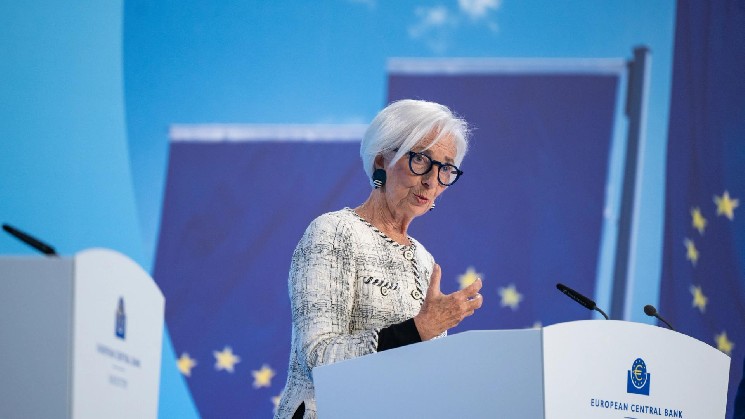
    • The Wall Street Journal reports ESMA privately advised national regulators to reject Binance’s MiCA applications due to past compliance issues, while the ECB clarifies it has no institutional role in authorizing Crypto-Asset Service Providers.

    Binance Reaffirms European MiCA Ambitions After Greek Setback

    Binance has signaled its determination to remain a regulated participant in the European cryptocurrency market despite a significant regulatory rebuff in Greece. A company spokesperson confirmed that the exchange is actively working toward becoming MiCA-authorised and view this as an important step in providing users with a consistent, regulated, and trusted service across the European market. The statement comes weeks after Binance withdrew its application with the Hellenic Capital Market Commission (HCMC) and began winding down local operations after officials decided at the last minute not to approve the exchange’s Markets in Crypto-Assets (MiCA) license request. The company had previously vowed it would not exit the European market entirely.

    Exchange Contends Application Was Complete

    In an interview with CoinDesk in early July, Gillian Lynch, Binance’s Head of Europe, contested the regulatory outcome, asserting that the exchange had satisfied every condition set by the Greek regulator. We were deemed to have a complete application, Lynch said. Nothing was missing, nothing material was outstanding. The assertion raises questions about the specific grounds for the HCMC’s decision to deny authorization, particularly given the exchange’s claim of full procedural compliance. The withdrawal marks a notable stumble in Binance’s broader strategy to secure regulatory footing across the European Union under the new MiCA framework.

    ESMA Guidance and ECB Jurisdiction Clarified

    Adding complexity to the regulatory picture, The Wall Street Journal reported that the European Securities and Markets Authority (ESMA) privately advised national financial regulators to reject Binance’s MiCA applications. The guidance reportedly stems from concerns regarding the exchange’s historical compliance record. Meanwhile, an ECB spokesperson declined to comment on the specific case when contacted by CoinDesk. However, information shared with the outlet clarifies that the European Central Bank holds no institutional role with regards to the authorising of Crypto-Asset Service Providers (CASPs), noting that competence remains strictly with national competent authorities—in this instance, the HCMC.

    Founder’s Legal History Looms Over Licensing Efforts

    The regulatory scrutiny follows the high-profile legal resolution involving Binance founder Changpeng “CZ” Zhao. In 2023, Zhao pleaded guilty in the United States to violating the Bank Secrecy Act (BSA), resulting in a $4.3 billion settlement with U.S. authorities. He subsequently served a four-month prison sentence in California in 2024. In a significant political development, Zhao was pardoned by President Donald Trump in October 2025. This history appears to be a central factor influencing European regulators’ assessment of the exchange’s suitability for a MiCA license.

    Why This Matters

    The standoff in Greece represents a critical test case for how MiCA—the EU’s landmark crypto regulatory regime—will be applied to major global exchanges with checkered compliance histories. While MiCA offers a “passporting” mechanism allowing a license in one member state to serve the entire bloc, the Binance case illustrates that national competent authorities retain significant discretion to block entry based on reputational and historical risk factors. ESMA’s reported intervention suggests a coordinated regulatory posture toward entities with past enforcement actions, potentially setting a precedent for other exchanges seeking EU authorization. For Binance, securing a MiCA license remains essential for maintaining legitimate access to the EU’s 450 million consumers, but the path forward now likely requires a new application in a different jurisdiction or a successful appeal of the Greek decision.

    Frequently Asked Questions

    Why did Binance withdraw its Greek MiCA application?

    Binance withdrew its application in mid-June after the Hellenic Capital Market Commission (HCMC) decided not to approve its MiCA license request. The exchange subsequently began winding down its Greek operations but maintains it intends to pursue authorization elsewhere in Europe.

    Did Binance fail to meet the regulatory requirements in Greece?

    According to Binance’s Head of Europe, Gillian Lynch, the exchange met all of the HCMC’s requirements and was deemed to have a “complete application” with nothing material outstanding. The specific reasons for the HCMC’s denial have not been publicly detailed by the regulator.

    What role did Changpeng Zhao’s legal history play in the decision?

    While not explicitly cited by the HCMC, The Wall Street Journal reported that ESMA advised national regulators to reject Binance’s applications over concerns regarding the exchange’s past compliance issues. Zhao pleaded guilty to violating the U.S. Bank Secrecy Act in 2023, resulting in a $4.3 billion fine and a four-month prison sentence served in 2024, before receiving a presidential pardon in October 2025.

  • Zcash Targets November Upgrade to Make Private Payments Up to Three Times Faster

    Zcash Targets November Upgrade to Make Private Payments Up to Three Times Faster

    Key Highlights

    • Zcash’s upcoming NU7 network upgrade proposes reducing target block time by two-thirds, accelerating transaction confirmations for shielded payments.
    • The proposal maintains long-term ZEC issuance by dividing per-block rewards by three and extending the halving interval from 1.68 million to 5.04 million blocks.
    • ZIP-235 introduces a Network Sustainability Mechanism that temporarily removes 60% of transaction fees from circulation, returning them to miner rewards starting February 2031.

    Zcash NU7 Upgrade Targets Faster Confirmations Without Inflation

    The Zcash development community is advancing a significant protocol upgrade known as NU7 that aims to make shielded transactions more practical for everyday commerce. The centerpiece of the proposal is a reduction in target block time, which would allow exchanges, bridges, and merchants requiring multiple confirmations to finalize deposits in roughly one-third the current wait. While the faster cadence still falls short of traditional card payment speeds, developers argue it meaningfully improves the viability of direct private payments at physical and digital points of sale.

    Preserving Emission Schedule Through Block Reward Adjustments

    Producing three times as many blocks does not translate to three times the ZEC supply. To preserve the project’s long-term monetary policy, the NU7 proposal divides the block reward by three and extends the halving interval from 1.68 million blocks to 5.04 million blocks. This mathematical adjustment ensures that total ZEC issuance over time remains largely unchanged, maintaining the scarcity profile that underpins the asset’s value proposition while accommodating the faster block production rate.

    Network Sustainability Mechanism Introduces Fee Recycling

    Beyond block timing, NU7 introduces the Network Sustainability Mechanism via ZIP-235. Under this design, approximately 60% of transaction fees would be temporarily burned—removed from circulation—rather than paid directly to miners. These fees are not destroyed permanently; they are programmed to re-enter the supply through block rewards beginning in February 2031. The mechanism aims to supplement miner revenue as regular block subsidies decline through successive halvings, addressing long-term security budget concerns without increasing total supply.

    Why This Matters

    The NU7 proposal reflects a maturing approach to balancing usability, privacy, and economic sustainability in a proof-of-work privacy coin. Faster block times directly address a persistent friction point for shielded Zcash adoption: the tension between confirmation latency and the privacy guarantees that differentiate ZEC from transparent cryptocurrencies. Meanwhile, the fee-recycling mechanism tackles a structural challenge facing all halving-dependent chains—how to fund network security once block subsidies diminish. By deferring a portion of fee revenue to the 2030s, Zcash attempts to smooth the transition to a fee-dominated security model without altering the 21 million coin cap. The upgrade’s success will depend on community consensus, miner signaling, and the real-world performance of the new block interval under network load.

    Frequently Asked Questions

    How does NU7 affect the total supply of ZEC?
    NU7 does not change the total supply of ZEC. The 21 million coin cap remains intact. The upgrade divides per-block rewards by three and extends the halving interval proportionally, keeping the emission curve effectively unchanged over time.
    When will the burned transaction fees return to circulation?
    Under ZIP-235, the 60% of transaction fees temporarily removed from circulation are scheduled to begin returning through block rewards in February 2031, supplementing miner income as regular block subsidies decline.
    Will faster block times make Zcash as fast as credit card payments?
    No. Developers acknowledge that even with the reduced block time, shielded Zcash payments at a shop counter will still be slower than tapping a card. However, the shorter wait makes direct private payments more practical for merchants and exchanges that require multiple confirmations.
  • Bitcoin Bottom Signal vs. Fed Rate Expectations: Which Drives Market Direction? Two Analysts Weigh In

    Bitcoin Bottom Signal vs. Fed Rate Expectations: Which Drives Market Direction? Two Analysts Weigh In

    Key Highlights

    • On-chain analyst Willy Woo identifies a Fisher Transform golden cross on Bitcoin’s monthly chart, marking only the fourth such bottom signal in the asset’s history.
    • Crypto analyst Murphy contends that interest rate hikes by the Federal Reserve and Bank of Japan are not inherently bearish for Bitcoin, emphasizing pace of tightening and market structure over rate decisions alone.
    • Historical comparison shows Bitcoin rallied during the 2015–2017 and 2023 rate hike cycles, while the 2022 decline coincided with aggressive 75-basis-point increases; current conditions mirror early 2023 more than 2022.

    Willy Woo’s Fisher Transform Analysis Signals Potential Bitcoin Bottom

    As Bitcoin consolidates between $76,000 and $79,000, prominent on-chain analyst Willy Woo has turned attention to the asset’s monthly chart, where the Fisher Transform indicator has formed a golden cross. First published in 2002, the Fisher Transform is designed to identify turning points in price movements. According to Woo, this latest crossover represents only the fourth bottom signal in Bitcoin’s entire history. Crucially, the previous three occurrences did not result in false breakouts, lending historical weight to the current formation.

    Why the Golden Cross Isn’t an Immediate Buy Signal

    Despite the indicator’s track record, Woo cautions against interpreting the golden cross as a sudden trend reversal or a direct buy signal. He notes that Bitcoin’s price may continue moving sideways for a period before resuming its upward trajectory. Woo also points out that during bull markets, the Fisher Transform has occasionally crossed bearish only to turn bullish again without signaling the end of the primary trend. Therefore, while the current signal points to a possible bottom, it does not, by itself, definitively confirm a trend reversal.

    Murphy Challenges Rate Hike Bearish Narrative with Historical Evidence

    Separately, crypto analyst Murphy argued that interest rate hikes by the U.S. and Japanese central banks alone do not indicate Bitcoin will re-enter a bear market. Murphy asserts that the pace of monetary tightening, market structure, and investor positioning will be more decisive than the rate hike decisions themselves in determining Bitcoin’s direction.

    To support this view, Murphy compared three distinct tightening cycles. In 2022, the Federal Reserve implemented a cumulative 425 basis points of increases, including four consecutive 75-basis-point hikes from June to November. During that period, Bitcoin declined from approximately $41,000 to $15,800. In contrast, during 2023, the Fed raised rates four times by 25 basis points each, and Bitcoin rose from roughly $16,500 to $42,000. Murphy also highlighted the December 2015 to December 2017 cycle, when the Fed hiked five times by 25 basis points each, and Bitcoin surged from about $454 to $16,515.

    Market Structure Resembles Early 2023 More Than 2022 Peak

    Murphy further observed that the current structure of the Bitcoin market more closely resembles conditions at the beginning of 2023 than those during the initial 2022 rate hike period. At that time, inflation was falling, the size of each rate hike decreased from 75 to 25 basis points, and the market priced in the end of the tightening cycle. According to the analyst, if future rate hikes remain limited to around 25 basis points and the market does not anticipate a new, prolonged tightening cycle, interest rate policy alone may not be sufficient to trigger a fresh bear market in Bitcoin. The pace and scale of future Federal Reserve rate hikes will be critical for Bitcoin’s trajectory.

    Why This Matters

    The convergence of technical and macroeconomic analyses offers a nuanced view for market participants. Woo’s Fisher Transform signal provides a rare, historically validated technical marker suggesting a cyclical bottom may be in place, yet his emphasis on the indicator’s limitations—specifically its inability to time entries or guarantee immediate reversals—underscores the need for patience. Meanwhile, Murphy’s macroeconomic framework challenges the simplistic narrative that higher rates automatically depress risk assets like Bitcoin. By demonstrating that the asset has rallied during previous tightening cycles when hikes were measured and expected, the analysis shifts focus to the trajectory of policy rather than its mere existence. With inflation moderating and central banks signaling smaller incremental moves, the current environment bears stronger resemblance to the constructive 2023 backdrop than the disruptive 2022 shock. For investors, the key takeaway is that Bitcoin’s next major directional move will likely hinge on whether the Fed maintains a gradual, telegraphed path or surprises with accelerated tightening.

    Frequently Asked Questions

    What is the Fisher Transform golden cross, and why is Willy Woo highlighting it now?
    The Fisher Transform is a technical indicator published in 2002 designed to identify price turning points. A golden cross occurs when its faster line crosses above its slower line. Willy Woo highlights that this has happened only four times in Bitcoin’s history on the monthly chart, with the prior three instances marking valid bottoms without false breakouts.
    Does the Fisher Transform golden cross mean Bitcoin will rally immediately?
    No. Woo explicitly states the signal is not a sudden trend reversal or a direct buy signal. He notes Bitcoin may trade sideways for a while before continuing its uptrend, and that the indicator has previously flipped bearish then bullish again during bull markets without ending the primary trend.
    Are Federal Reserve interest rate hikes bearish for Bitcoin?
    Not necessarily. Analyst Murphy shows that Bitcoin fell during 2022’s aggressive 75-basis-point hikes but rose during the 2015–2017 and 2023 cycles when hikes were smaller (25 basis points) and well-telegraphed. The pace, scale, and market expectations around rate hikes matter more than the hikes themselves.
  • UAE, Sweden Arrest Seven Over $7.1M Crypto Laundering Ring Linked to Contract Killings

    UAE, Sweden Arrest Seven Over $7.1M Crypto Laundering Ring Linked to Contract Killings

    Key Highlights

    • Seven suspects arrested in coordinated UAE-Sweden operation targeting an international money laundering network that moved approximately 70 million Swedish krona ($7.1 million) over ten months using cryptocurrency.
    • The alleged Swedish leader, wanted on an Interpol Red Notice, was detained in the UAE while six associates were simultaneously apprehended in Sweden following extensive intelligence sharing.
    • Blockchain analysis of crypto transactions uncovered financial links to organized crime and contract killings, advancing Sweden’s push to seize illicit digital assets amid rising gang violence.

    Cross-Boor Operation Dismantles Crypto-Enabled Laundering Ring

    Authorities in the United Arab Emirates and Sweden have executed simultaneous arrests of seven individuals alleged to operate a transnational money laundering network that processed roughly 70 million Swedish krona ($7.1 million) over a ten-month period. The operation, announced by the UAE Ministry of Interior via the Emirates News Agency, marks a significant milestone in bilateral law enforcement cooperation targeting the use of cryptocurrency to obscure criminal proceeds.

    The suspected ringleader, a Swedish national who had fled his home country, was tracked down and detained in the UAE while wanted under an Interpol Red Notice. Six additional suspected network members were arrested in Sweden at the same moment, with legal proceedings initiated against all seven individuals. The Ministry of Interior has not publicly identified any of the suspects.

    Cryptocurrency Trail Exposes Links to Violent Crime

    Investigators emphasized that following the network’s cryptocurrency transactions proved pivotal. According to the UAE Ministry of Interior, tracing the digital asset flows and analyzing associated digital evidence “helped uncover financial links to other criminal activities, including organised crime and contract killings.” The network allegedly dealt in cash proceeds from criminal activity, redirecting them to other criminal entities while using cryptocurrencies “to transfer and move the value of those funds.”

    The revelation aligns with Sweden’s intensified focus on illicit cryptocurrency activity. The country’s Minister of Justice last year ordered police forces to step up seizures of criminal digital assets. Contract killings have become a documented crisis in Sweden, with Swedish police reporting in May that 23 bystanders had been killed and 30 wounded in gangland shootings over a three-year span. Gangs have increasingly exploited social media and encrypted messaging applications to recruit paid killers, frequently teenagers below the age of criminal responsibility.

    Bilateral Coordination Called Decisive

    Senior officials from both nations highlighted the depth of coordination required. Brigadier Abdulaziz Al Ahmad, director general of the Federal Criminal Police at the UAE Ministry of Interior, stated the country would “continue to track criminal networks, disrupt their sources of financing, and take legal action against anyone seeking to exploit the country’s territory for criminal activities.”

    Anders Wiberg, the Swedish Police Authority’s police commissioner and head of its international division, described cooperation with the UAE as “a key factor in achieving the successful outcome of this case.” The arrests followed what the ministry characterized as extensive searches, investigations, and close monitoring to pinpoint the gang leader’s whereabouts, enabled by direct security coordination and intelligence sharing between the two governments.

    Why This Matters

    This case illustrates the growing intersection of cryptocurrency forensic capabilities and traditional organized crime investigations. As criminal networks adopt digital assets to launder proceeds, law enforcement agencies are developing blockchain analytics expertise to trace fund flows that would otherwise remain opaque. The UAE-Sweden partnership demonstrates how Interpol Red Notices, combined with real-time intelligence exchange, can overcome jurisdictional barriers that historically allowed fugitives to operate with impunity. For Sweden, the operation validates its strategic pivot toward aggressive crypto asset seizure policies amid a surge in gang-related violence that has claimed innocent bystanders. The involvement of juvenile contract killers recruited via encrypted platforms adds urgency to efforts targeting the financial infrastructure enabling such recruitment.

    Frequently Asked Questions

    How much money did the network launder and over what period?
    The network handled approximately 70 million Swedish krona (about $7.1 million) over a ten-month period, according to the UAE Ministry of Interior.
    What role did cryptocurrency play in the investigation?
    Cryptocurrency was used to transfer and conceal the value of illicit funds. Tracing those transactions and analyzing digital evidence led investigators to uncover financial links to organized crime and contract killings.
    Who were the key officials commenting on the operation?
    Brigadier Abdulaziz Al Ahmad, director general of the Federal Criminal Police at the UAE Ministry of Interior, and Anders Wiberg, Swedish Police Authority commissioner and head of its international division, both emphasized the importance of bilateral cooperation in securing the arrests.