Author: Evan Mercer

  • Altcoin Hits All-Time High: Why It Surged and Analyst Predictions

    Altcoin Hits All-Time High: Why It Surged and Analyst Predictions

    Key Highlights

    • Hyperliquid Strategies accumulated 4.28 million HYPE tokens worth approximately $385 million over three weeks, representing 1.4% of circulating supply and outpacing Assistance Fund purchases by 7.5 times.
    • Despite aggressive institutional buying, HYPE price initially declined from $89 to $76, with analyst Shaunda Devens attributing weakness to insufficient marginal demand beyond PURR-driven flows and existing investors selling into the bid.
    • HYPE subsequently reversed to all-time highs as selling pressure abated; Devens notes improved financial positioning (cash assets of $245 million, market-cap-to-net-asset ratio of 1.24) but cautions that current valuation prices in significant optimism despite a 50% revenue decline since August 2024.

    Institutional Accumulation Drives HYPE to Record Highs

    Hyperliquid’s native token, HYPE, reached new all-time highs today following weeks of concentrated institutional buying by Hyperliquid Strategies. According to crypto analyst Shaunda Devens, the entity purchased 4.28 million HYPE tokens in just three weeks, deploying approximately $385 million. This accumulation represents roughly 1.4% of the token’s circulating supply and dwarfs the purchasing activity of the Assistance Fund, which bought only a fraction of that amount over the same period. Devens highlighted that Hyperliquid Strategies’ buying accounted for an estimated 15% of total Hyperliquid spot trading volume during the accumulation window, underscoring the outsized influence of a single institutional participant on market dynamics.

    Analyst Flags Demand Concerns Amid Aggressive Buying

    Despite the substantial bid from Hyperliquid Strategies, Devens observed that HYPE price action initially deteriorated, falling from $89 to $76 even as positive catalysts such as Kraken’s HIP-3 announcement failed to arrest the decline. The analyst interpreted this divergence as evidence of insufficient marginal demand beyond PURR-driven mechanisms, with existing holders using the institutional bid as liquidity to exit positions. Devens identified the $80 price region as a critical support zone, noting that approximately 33.4 million HYPE — about 11% of circulating supply — changed hands within this range. The analyst warned that a withdrawal of the primary buyer combined with a decisive break below $80 could trigger a cascading sell-off capable of ending the prevailing uptrend.

    Price Recovery and Improved Fundamentals Alter Near-Term Outlook

    Contrary to the bearish scenario outlined by Devens, the market moved in the opposite direction. HYPE surged to fresh all-time highs as selling pressure evaporated. The analyst acknowledged that Hyperliquid Strategies now sits in a materially stronger financial position compared to three weeks prior, with cash assets rising to $245 million and a market-capitalization-to-net-asset ratio of 1.24. Based on this improved balance sheet and the reduction in overhead supply, Devens expressed a very positive short-term outlook for the token, suggesting the path of least resistance remains higher.

    Valuation Shift Raises Caution on Priced-In Optimism

    However, Devens underscored a fundamental shift in HYPE’s investment narrative. The token, previously viewed as a fundamentally cheap asset largely overlooked by the broader sector, has transitioned into a widely accepted holding with elevated growth expectations now embedded in its price. Devens argued that current levels reflect a significant degree of optimism, pointing to a disconnect between token performance and protocol fundamentals: Hyperliquid’s revenues have declined by approximately 50% since August 2024, yet the HYPE price has nearly doubled over the same period. This divergence suggests that further upside may require evidence of revenue re-acceleration or new fundamental catalysts beyond the existing institutional accumulation story.

    Why This Matters

    Hyperliquid operates as a high-performance decentralized perpetual futures exchange, and its native token HYPE serves as both a governance and value-accrual mechanism within the ecosystem. The aggressive accumulation by Hyperliquid Strategies — effectively a protocol-aligned treasury vehicle — signals strong internal conviction and reduces circulating supply available to the market. However, the analyst’s observations reveal a market increasingly reliant on a single dominant buyer, creating structural fragility if that bid withdraws. The revenue decline since mid-2024 coincides with broader crypto market volatility and competitive pressures from both centralized exchanges and rival onchain venues. For investors, the key tension lies between the token’s improved technical setup and balance-sheet strength versus a valuation that may have decoupled from near-term fundamental trajectories. Upcoming protocol upgrades, fee-switch mechanisms, or expansion into new asset classes could serve as the next fundamental catalysts to justify current pricing.

    Frequently Asked Questions

    How much HYPE did Hyperliquid Strategies buy, and at what cost?

    Hyperliquid Strategies purchased 4.28 million HYPE tokens over a three-week period at an aggregate cost of approximately $385 million, according to analyst Shaunda Devens.

    Why did HYPE price fall initially despite heavy institutional buying?

    Devens attributes the price weakness to a lack of sufficient marginal demand beyond PURR-driven flows, with existing investors using the institutional bid as an opportunity to sell their holdings.

    What is the current financial position of Hyperliquid Strategies?

    As of the latest assessment, Hyperliquid Strategies holds $245 million in cash assets and trades at a market-capitalization-to-net-asset ratio of 1.24, indicating a stronger balance sheet than three weeks prior.


  • Best Crypto to Buy Now: MemeToro Builds AI Launchpad as MemeCore Holds Near $1.13

    Best Crypto to Buy Now: MemeToro Builds AI Launchpad as MemeCore Holds Near $1.13

    Key Highlights

    • MemeCore ($M) trades near $1.13 with established technical support at $1.1065 and resistance between $1.20–$1.25, while MemeToro ($MT) remains in Stage 7 presale at $0.00430 with over $137,000 raised.
    • MemeToro’s differentiation is its AI-driven fair-launch platform on BNB Chain, backed by 1,373 lines of open-source Solidity code featuring a no-admin, non-upgradeable FairLaunchEscrow.sol contract designed to eliminate insider allocations.
    • The two assets represent distinct risk-reward profiles: MemeCore offers immediate liquidity and price discovery, whereas MemeToro provides early-stage entry contingent on successful delivery of its AI launchpad, staking, and trading ecosystem.

    MemeCore: Live Market With Defined Technical Levels

    MemeCore’s native $M token is currently changing hands around $1.13, according to supplied market data. Technical models identify a short-term equilibrium near $1.1065, while the $1.20 to $1.25 zone functions as a visible resistance area. Longer-term projections have cited a potential price near $1.76 over 12 months, with some sector observers linking a larger valuation outcome to a possible $4 billion market cap if the meme-coin cycle regains momentum. These forecasts are not guarantees; MemeCore’s price action remains sensitive to futures positioning, token liquidity, and broader market sentiment. The primary advantage for participants is immediate access to a live, two-sided market, though the token has already progressed through a portion of its early price-discovery phase.

    MemeToro: AI Launchpad and Fair-Launch Architecture

    MemeToro is positioning itself as a planned BNB Chain platform for researching, funding, and trading memecoins. Its core product thesis centers on an AI agent designed to scan public market, social, and news data before preparing a proposed token launch. The agent produces a public launch manifest detailing the evidence behind the concept, proposed supply, fixed funding price, cap, and rules. A deterministic validation layer then checks the proposal: it rejects any submission if source links are missing, allocations do not sum to 100%, insider allocation exceeds zero, or funding terms deviate from the public manifest. The $MT token is intended to underpin platform access, funding participation, staking, rewards, memecoin trading, prediction markets, and a news portal—creating a multi-faceted utility model beyond simple speculation.

    Smart Contract Design: No Admin Keys, Deterministic Validation

    MemeToro has published 1,373 lines of Solidity across 17 files. The keystone contract, FairLaunchEscrow.sol, is engineered to hold funds for a single memecoin round under fixed terms. Its stated design includes no owner, admin role, or upgrade path, intended to prevent the team from altering rules after a round begins. Allocation mathematics are structured to preclude insider supply: contributors and liquidity must account for the total supply, with any rounding remainder directed to liquidity. The contract also restricts fund flows to refunds or the designated liquidity process, with no stated route for developer or treasury withdrawals. This code-first approach addresses a recurring trust deficit in memecoin launches. However, the live executor, liquidity connection, factory deployment, testnet launch, and independent security review remain pending—representing the primary delivery risk for prospective buyers.

    Token Economics: 1.2 Billion Supply With Public Sale Majority

    The $MT tokenomics allocate the 1.2 billion total supply as follows: 71% to public sale, 10% to exchange liquidity, 5% to platform trading, 7.56% to marketing partners, 4.44% to user rewards, and 2% to the core development team. Marketing and partner tokens are subject to a 24-month vesting schedule, while presale purchases are fully unlocked at launch. Verified holders can access a staking mechanism currently offering up to 35% APR in programmatic rewards. The verified smart contract resides at 0x44….a8cfff. MemeToro lists Coinsult, BlockSAFU, and SOLIDProof as audit or review providers, adding public trust signals alongside the open-source repository.

    Why This Matters

    The comparison between MemeCore and MemeToro illustrates a broader divergence in the memecoin landscape: assets with live markets and established price histories versus early-stage platforms betting on product execution to unlock value. MemeCore’s trajectory will be driven by technical trading dynamics, sector rotation, and liquidity conditions on existing venues. MemeToro’s outcome hinges on shipping a functional AI launchpad, deploying its fair-launch contracts to mainnet, and attracting genuine project proposals and user volume. For market participants, the choice reduces to preference for immediate tradability with known technical levels versus early-stage exposure to a platform attempting to codify fairness and transparency into memecoin issuance. Both carry speculative risk; the risk vectors, however, are fundamentally different.

    Frequently Asked Questions

    Is MemeCore less risky than MemeToro?
    MemeCore has a live market and price history, while MemeToro is an early-stage presale. Both are speculative, but MemeToro carries greater execution and delivery risk.
    What gives $MT potential utility?
    $MT is designed for platform access, funding participation, staking, rewards, memecoin trading, prediction markets, and a planned news portal within the MemeToro ecosystem.
    Is MemeToro’s displayed price target guaranteed?
    No. Any displayed target is not a guaranteed trading or exchange price; it reflects an internal projection, not a market commitment.

    More Information on MemeToro ($MT) Presale:

  • Altcoin Rally Sustainability Questioned: Analysts Debate if Bull Market Has Begun

    Altcoin Rally Sustainability Questioned: Analysts Debate if Bull Market Has Begun

    Key Highlights

    • Bitcoin demonstrated unexpected resilience following the Clarity Act’s Senate failure and the Federal Reserve’s rate hike, outperforming the S&P 500 despite initial fear-driven sell-offs.
    • Santiment on-chain data reveals large wallets (10–10,000 BTC) have distributed approximately 57,600 BTC since August 5, while small investors increased holdings—a pattern historically associated with heightened pullback risk.
    • Capital rotation is accelerating into altcoins, with Zcash, Uniswap, and Hyperliquid significantly outperforming Bitcoin and Ethereum, while AI and big data tokens like NEAR see surging volume and price action.

    Bitcoin Resilience Amid Macro Headwinds

    Bitcoin’s price action has defied bearish macroeconomic catalysts in recent sessions, holding relatively flat while traditional equity markets stumbled. According to Santiment analyst Brian, the failure of the Clarity Act to advance in the U.S. Senate combined with the Federal Reserve’s latest interest rate decision initially amplified investor fear. However, the cryptocurrency market’s reaction proved more resilient than anticipated. Brian noted that despite these developments being widely viewed as extremely negative for digital assets, Bitcoin’s swift recovery after a limited pullback suggests the market has largely absorbed the negative news flow. He highlighted a striking divergence: while the S&P 500 dropped to its lowest level in a month following the Fed’s decision, Bitcoin avoided a similarly severe sell-off, signaling underlying strength relative to traditional risk assets.

    On-Chain Data Flags Whale Distribution

    Beneath the surface stability, Santiment’s on-chain metrics are flashing a significant risk signal for Bitcoin. Data shared by Brian shows that large investor wallets holding between 10 and 10,000 BTC—often categorized as whales and “sharks”—have sold a cumulative total of approximately 57,600 BTC since August 5. Concurrently, smaller investors have been accumulating during the same period. This dynamic indicates that sophisticated entities are distributing into strength while retail participants chase price appreciation, a pattern that historically precedes corrections. Brian emphasized that this outlook warrants caution in the short to medium term, adding that renewed accumulation by these large wallets would be required to restore a more bullish structural signal. Santiment concludes that the continued reduction in whale holdings alongside rising retail exposure elevates the probability of a pullback above normal levels.

    Capital Rotation Fuels Altcoin Outperformance

    In stark contrast to Bitcoin’s distribution profile, the altcoin sector is exhibiting clear signs of capital rotation. Santiment data highlights that several mid- and low-capitalization assets—including Zcash, Uniswap, and Hyperliquid—have significantly outperformed both Bitcoin and Ethereum over the past week. Brian stated that the strong gains across a broad swath of alternative cryptocurrencies, juxtaposed with limited downside in the two largest assets, serve as a significant signal that capital is actively shifting toward altcoins. This rotation extends beyond isolated names; trading volumes for AI and big data-focused cryptocurrencies have surged recently. Brian specifically noted strengthening volume and price action in NEAR Protocol and other AI-themed projects, advising that if the altcoin rally persists through the second half of September, the AI and big data sector warrants close monitoring.

    AI and Memecoin Dynamics Signal Shifting Sentiment

    Sentiment analysis further complicates the outlook. Santiment tracks memecoin activity as an inverse market indicator, observing that peaks in memecoin trading volume and speculative fervor have historically coincided with short-term market tops, while sharp declines in memecoin interest have occasionally appeared near market bottoms. Meanwhile, overall market sentiment has deteriorated from strong optimism at the start of September to neutral levels. Brian explained that sentiment was buoyed by high expectations for the Clarity Act’s passage but eroded progressively following the Senate setback and the Fed’s rate decision. Regarding Bitcoin’s near-term trajectory, Brian acknowledged a path toward $80,000 and potentially $85,000 remains possible, though he stressed that fresh positive catalysts would likely be necessary to sustain such a move.

    Why This Matters

    The divergence between whale distribution and retail accumulation in Bitcoin underscores a classic late-cycle dynamic where smart money exits into liquidity provided by late entrants. Simultaneously, the pronounced capital rotation into altcoins—particularly AI-linked tokens—suggests investors are seeking higher beta exposure amid a perceived lull in Bitcoin’s momentum. The Clarity Act’s legislative stall removes a near-term regulatory clarity catalyst for the U.S. market, while the Fed’s rate posture keeps macro liquidity tight. These factors combined create an environment where selective altcoin strength may persist, but systemic risk remains elevated should Bitcoin’s whale distribution accelerate. Market participants should monitor on-chain accumulation trends among large wallets and the sustainability of altcoin volume as leading indicators for the next directional move.

    Frequently Asked Questions

    What does the 57,600 BTC sale by large wallets since August 5 indicate?
    It signals that entities holding 10–10,000 BTC are distributing positions during price strength, while smaller buyers absorb supply—a pattern Santiment associates with increased short-to-medium-term pullback risk.
    Which altcoins are leading the current capital rotation?
    Zcash, Uniswap, and Hyperliquid have significantly outperformed Bitcoin and Ethereum over the past week, alongside rising volume in AI and big data tokens such as NEAR Protocol.
    What catalysts could push Bitcoin above $80,000 again?
    According to Santiment’s Brian, Bitcoin could retest $80,000–$85,000, but the market would likely require new positive catalysts—such as regulatory clarity or improved macro liquidity—to sustain such a rally.
  • Top 5 Memecoins to Buy Right Now: DOGE, SHIB, PEPE, BONK, MemeToro Gain Traction as Memecoin Momentum Builds

    Top 5 Memecoins to Buy Right Now: DOGE, SHIB, PEPE, BONK, MemeToro Gain Traction as Memecoin Momentum Builds

    Key Highlights

    • Established memecoins Dogecoin ($DOGE), Shiba Inu ($SHIB), $PEPE, and $BONK maintain market dominance through deep liquidity and exchange access, while MemeToro ($MT) enters as an early-stage BNB Chain project building an AI-guided launchpad currently in Stage 7 presale at $0.00430 with over $137,000 raised.
    • MemeToro differentiates through utility infrastructure: a 1,373-line Solidity fair-launch codebase across 17 files, AI-driven trend analysis for token proposals, manifest transparency showing supply and funding terms, and validator checks against insider allocations—backed by Coinsult, BlockSAFU, and SOLIDProof reviews.
    • Risk profiles diverge sharply: $DOGE, $SHIB, $PEPE, and $BONK face volatility and shifting trader attention in live markets, while MemeToro carries execution risk on platform delivery but presents a theoretical 12.06x upside to its $0.05186 launch target if the AI launchpad achieves adoption.

    Market Landscape: Established Leaders vs. New Utility-Focused Entrants

    The memecoin sector continues to stratify between legacy assets with proven liquidity and emerging projects attempting to capture attention through functional infrastructure rather than community momentum alone. Dogecoin, Shiba Inu, $PEPE, and $BONK remain the primary reference points for traders and investors, each benefiting from broad exchange listings, recognizable branding, and established holder bases. MemeToro, by contrast, positions itself as a platform token for an AI-led launchpad on BNB Chain—a model that shifts the value proposition from social virality to utility-driven token issuance. The project’s Stage 7 presale price of $0.00430 and a stated launch target of $0.05186 imply a theoretical 12.06x multiple, though the source material emphasizes this is a displayed project target rather than a guaranteed return, contingent on development milestones, liquidity formation, and market conditions.

    MemeToro’s AI-Led Launchpad Architecture and Token Utility

    MemeToro’s core proposition centers on an autonomous agent designed to scan public trends, generate evidence-backed token proposals, and publish structured launch manifests before any funding commences. These manifests are intended to disclose supply parameters, funding caps, fixed pricing, and source evidence—creating a transparency layer absent in many presale models. A validator component is programmed to reject proposals containing unsupported links, broken allocation totals, insider allocations, or inconsistent funding terms. The $MT token is slated to underpin platform access, funding participation, staking rewards, future memecoin trading, prediction markets, and a news portal, representing a broader utility stack than tokens relying solely on community narrative. The project has published its initial fair-launch contracts—1,373 lines of Solidity across 17 files—providing a verifiable code artifact for prospective buyers to audit. Remaining milestones include the executor module, liquidity connection, factory deployment, BNB Chain testnet launch, and independent review completion.

    Dogecoin: Market Structure and Technical Outlook

    Dogecoin retains its position as the largest and most widely recognized meme asset, trading in a range between approximately $0.0815 and $0.093 according to the supplied market data. Technical observers are monitoring the $0.087 support level as a prerequisite for a potential advance toward $0.10. Longer-term bullish models cited in the source suggest targets between $0.32 and $0.50, though these are explicitly framed as estimates dependent on a strong market cycle. Dogecoin’s advantages—deep brand recognition, universal exchange availability, and a vast holder base—also mean it requires significantly more capital inflows to generate large percentage moves compared to smaller-cap alternatives. For investors seeking established meme exposure with a mature market structure, $DOGE offers a lower-risk profile relative to presale-stage assets.

    SHIB, PEPE, and BONK: Divergent Ecosystem Narratives

    Each of the three major alt-memecoins carries a distinct fundamental narrative. Shiba Inu continues building utility through its Shibarium layer-2 network and ongoing token burn mechanisms, currently contending with resistance near $0.0000051. Bullish projections referenced in the source place a potential year-end range between $0.000008 and $0.000015 should momentum improve. $PEPE remains predominantly a culture-driven trading vehicle, currently under pressure near $0.00000334 with the $0.00000320 level identified as critical support to avoid a deeper pullback. $BONK’s trajectory is tightly coupled to Solana ecosystem activity; it requires approximately a 7% recovery to reclaim the $0.0000030 psychological threshold, with longer-term strength contingent on Solana’s throughput and $BONK’s own liquidity conditions. All three tokens share the core risk of volatility and the fickle nature of trader attention cycles.

    MemeToro’s Presale Mechanics and Risk Considerations

    MemeToro’s presale structure incorporates several trust-minimization features designed to address common early-stage project concerns. The fair-launch escrow mechanism locks round parameters, prohibits insider allocations, and routes funds exclusively toward contributor refunds or planned liquidity provision—critically, the contract specifies no owner role, admin privileges, or upgrade path. Third-party verification is cited from Coinsult, BlockSAFU, and SOLIDProof, providing a stronger audit narrative than projects relying solely on social proof. However, the source material underscores that $MT should be treated as a speculative early-stage position: the platform’s executor, liquidity integration, factory contracts, testnet deployment, and independent review remain incomplete. Buyers are essentially underwriting the delivery of an AI-guided launchpad that has yet to demonstrate market fit.

    Why This Matters

    The memecoin sector is undergoing a subtle but meaningful bifurcation. Legacy assets like Dogecoin and Shiba Inu are increasingly evaluated on their ability to sustain relevance through ecosystem development—Shibarium for SHIB, payment integration for DOGE—while newer entrants such as MemeToro attempt to bootstrap value by solving a structural problem: the lack of transparency and standardization in memecoin launches. If MemeToro’s AI-curated, manifest-driven model gains traction, it could introduce a replicable framework that reduces rug-pull risk and aligns issuer incentives with community participants. Conversely, failure to ship a functional launchpad would render $MT a speculative artifact with no underlying utility. For market participants, the key distinction lies in time horizon and risk tolerance: established tokens offer liquidity and optionality on sentiment shifts, while presale-stage platform tokens offer asymmetric upside contingent on product execution. The next inflection points to watch include MemeToro’s testnet deployment and independent audit publication, alongside technical breakout or breakdown levels for $DOGE, $SHIB, $PEPE, and $BONK.

    Frequently Asked Questions

    Which of these memecoins is the most established?
    $DOGE is the most established by market history and broad recognition, while $SHIB, $PEPE, and $BONK also have active public markets with significant liquidity and community followings.
    Why is MemeToro different from $DOGE or $PEPE?
    MemeToro is an early-stage platform token designed for an AI-led launchpad on BNB Chain, whereas $DOGE and $PEPE are already-trading memecoins with established communities and market presence. MemeToro’s value proposition centers on launch infrastructure utility rather than pure community momentum.
    Is the $0.05186 launch target for MemeToro guaranteed?
    No. It is a displayed project target. Actual $MT prices will depend on development progress, liquidity formation, market demand, and broader crypto sentiment. The 12.06x multiple from the Stage 7 price of $0.00430 is a theoretical comparison, not a promised return.
  • Legendary Analyst Tom Lee Reveals New Cryptocurrency Future Prediction

    Legendary Analyst Tom Lee Reveals New Cryptocurrency Future Prediction

    Key Highlights

    • BitMine Chairman Tom Lee asserts cryptocurrency market rally can continue despite CLARITY Act failing to advance in U.S. Senate
    • Lee emphasizes real user and investor demand outweighs single regulatory outcomes for crypto market trajectory
    • Ethereum remains preferred institutional blockchain platform; switching to alternatives creates unnecessary technical and operational risks

    CLARITY Act Stalls But Market Momentum Persists, Says BitMine Chairman

    BitMine Chairman Tom Lee maintains that the cryptocurrency market’s upward trajectory remains intact despite the CLARITY Act failing to secure the 60 votes needed to advance in a Senate procedural vote. The legislation, designed to establish a comprehensive regulatory framework for digital assets in the United States, would have explicitly defined the Commodity Futures Trading Commission’s (CFTC) oversight role. However, Lee argues that fundamental market forces—not any single piece of legislation—will ultimately determine the sector’s direction.

    User Demand Trumps Regulatory Milestones

    In an interview, Lee argued that real user and investor demand is more important than any single regulation for the future of the cryptocurrency market. He stated that the passage of the CLARITY Act would create a clearer regulatory framework for the industry and make the role of the US Commodity Futures Trading Commission (CFTC) more explicit, adding that the failure of the bill would not completely halt the regulation of the sector. Following the bill’s failure, the U.S. Securities and Exchange Commission (SEC) and the CFTC will continue to work on regulations for the cryptocurrency sector within their existing legal powers.

    Prediction Markets Demonstrate Resilience Amid Uncertainty

    Lee pointed out that sectors like prediction markets have shown that growth can continue in areas with strong demand despite regulatory uncertainty. Therefore, he argued that the failure of the CLARITY Act alone would not be a development that would end the bullish trend in the cryptocurrency market. This perspective suggests market participants are pricing in regulatory evolution as an ongoing process rather than a binary legislative event.

    Ethereum’s Institutional Dominance Remains Unchallenged

    Network Effects Outweigh Theoretical Alternatives

    The BitMine chairman also reiterated his strong views, particularly regarding Ethereum’s institutional use. He stated that it would not make sense for financial institutions to gravitate towards new networks with low liquidity and uncertainties surrounding code security, adoption, market makers, or node operators once they decide to use a public blockchain. Lee stated that Ethereum is currently the preferred platform for financial institutions, and that switching to alternative networks could create unnecessary technical and operational problems.

    Why This Matters

    The CLARITY Act’s stall reflects ongoing legislative gridlock around digital asset regulation in Washington, yet market structure continues evolving through agency rulemaking and institutional adoption. Lee’s analysis highlights a critical divergence: while policy makers debate comprehensive frameworks, market infrastructure—particularly Ethereum’s institutional entrenchment—is hardening around practical utility and network effects. The SEC and CFTC’s parallel regulatory tracks under existing authority suggest a fragmented but functional oversight regime may emerge absent congressional action. For investors and builders, this underscores that product-market fit and liquidity moats currently matter more than regulatory clarity timelines.

    Frequently Asked Questions

    Did the CLARITY Act fail completely?

    The CLARITY Act failed to reach the 60-vote threshold needed to advance in a Senate procedural vote, but this does not permanently kill the legislation—it could be reintroduced or its provisions incorporated into other bills.

    What happens to crypto regulation now that the CLARITY Act stalled?

    The SEC and CFTC will continue developing regulations within their existing statutory authorities, maintaining a dual-agency oversight approach rather than the unified framework the CLARITY Act proposed.

    Why does Tom Lee believe Ethereum will remain the primary institutional blockchain?

    Lee cites Ethereum’s established liquidity, proven code security, broad adoption, mature market maker ecosystem, and decentralized node operator network as factors that make switching to newer, less proven alternatives operationally and technically irrational for financial institutions.

    This is not investment advice.

  • Bitcoin Surpasses $80,000 Amid Bullish Sentiment; Chinese Analyst Forecasts Next Moves

    Bitcoin Surpasses $80,000 Amid Bullish Sentiment; Chinese Analyst Forecasts Next Moves

    Key Highlights

    • Bitcoin surged past $80,000 to trade near $81,000, triggering over $457 million in short-position liquidations over 24 hours.
    • Prominent miner Jiang Zhuoer forecasts a potential test of the $83,000–$84,000 resistance zone before a sharp correction to $72,000–$74,000.
    • Short positions accounted for 89% of total liquidations in the past 24 hours, signaling a aggressive bearish squeeze.

    Bitcoin Breaks $80,000 Barrier as Short Squeeze Accelerates

    Bitcoin ($BTC) surged above the psychologically significant $80,000 level in recent trading hours, climbing rapidly from a consolidation range near $78,000 to reach approximately $81,000. The sharp upward move unleashed a wave of forced liquidations across cryptocurrency derivatives markets, with short positions bearing the brunt of the losses. According to on-chain and exchange data, the rally has wiped out hundreds of millions of dollars in bearish bets, underscoring the fragility of leveraged short exposure at current price levels.

    Jiang Zhuoer Projects Next Resistance at $83,000–$84,000

    Jiang Zhuoer, a well-known Chinese cryptocurrency miner and market analyst, noted in his latest analysis that Bitcoin has validated his earlier thesis by recovering without breaching the $75,000 support level. Zhuoer stated that the velocity of the current ascent increases the probability of Bitcoin testing the strong resistance zone between $83,000 and $84,000 in the next phase. However, he cautioned that such a move would likely set the stage for a subsequent sharp correction, as the liquidation of short positions at those elevated levels could exhaust buying momentum and trigger a reversal.

    Analyst Warns of Correction Toward $72,000–$74,000 After Resistance Test

    Zhuoer believes that once short positions are flushed out near the $83,000–$84,000 region, Bitcoin could retreat toward the $72,000–$74,000 range. This pullback, he argues, would then target long positions accumulated during the rally, creating a two-sided liquidation event that could reset market structure. The miner’s framework suggests a classic high-leverage washout pattern: an initial short squeeze to clear overhead supply, followed by a deep retracement to cleanse excessive long leverage before the next directional move.

    Liquidation Data Reveals Magnitude of Short Squeeze

    The scale of the short squeeze is evident in the liquidation metrics across major derivatives venues. In the most recent four-hour window, total liquidations reached $306.55 million, of which $286.14 million — approximately 93% — were short positions. Long liquidations during the same period amounted to just $20.41 million. Extending the horizon to 12 hours, total liquidations climbed to $411.62 million, with shorts accounting for $372.53 million versus $39.09 million for longs. Over the full 24-hour period, cumulative liquidations hit $515.05 million, with short positions representing $457.26 million (89%) and longs $57.79 million. The overwhelming skew toward short liquidations confirms that the rally was driven predominantly by forced covering rather than fresh spot demand.

    Why This Matters

    The current price action highlights the outsized influence of leveraged derivatives on Bitcoin’s short-term price discovery. With open interest remaining elevated across major exchanges, the market remains vulnerable to violent two-way moves as liquidation clusters act as magnetic price targets. Zhuoer’s projected $83,000–$84,000 resistance aligns with key technical levels, including prior local highs and dense liquidation clusters visible on exchange heatmaps. A successful breach could attract momentum-driven flows, but the subsequent correction risk to $72,000–$74,000 underscores the importance of risk management for leveraged traders. For longer-term holders, the sequence reinforces Bitcoin’s tendency to purge excess leverage before establishing sustainable trends.

    Frequently Asked Questions

    What triggered Bitcoin’s surge past $80,000?

    The rally appears to have been fueled by a short squeeze in the futures market, where rapidly rising prices forced bearish traders to buy back positions, amplifying upward momentum. Over $457 million in short positions were liquidated in 24 hours.

    What is Jiang Zhuoer’s price prediction for Bitcoin?

    Jiang Zhuoer expects Bitcoin to potentially test the $83,000–$84,000 resistance zone before correcting sharply to the $72,000–$74,000 range as long positions are subsequently liquidated.

    How significant were the recent liquidations?

    Extremely significant. In the last 24 hours, total liquidations reached $515.05 million, with short positions accounting for 89% ($457.26 million). The 4-hour window alone saw $286.14 million in short liquidations versus only $20.41 million in longs.

  • MemeToro Releases MIT-Licensed AI Launchpad Code With 1,373 Solidity Lines for Memecoin Presale

    MemeToro Releases MIT-Licensed AI Launchpad Code With 1,373 Solidity Lines for Memecoin Presale

    Key Highlights

    • MemeToro has published 1,373 lines of Solidity code across 17 files under an MIT license, including the FairLaunchEscrow.sol contract, providing public visibility into its presale mechanics.
    • The project has raised over $137,000 in Stage 7 with $MT priced at $0.00430, and its escrow design locks funding rules at round creation with no owner, admin role, or upgrade path.
    • MemeToro still requires deployment of the token executor, liquidity connection, AI-to-escrow integration, testnet launch on BNB Chain, and an independent security audit before mainnet release.

    MemeToro Publishes Open-Source Escrow Contracts to Increase Presale Transparency

    MemeToro, a planned memecoin launchpad ecosystem on BNB Chain, has taken an unusually transparent step by releasing 1,373 lines of Solidity code across 17 files under an MIT license. The publication includes the project’s first FairLaunchEscrow.sol contract, along with ILaunchExecutor.sol and IERC20Minimal.sol interfaces, test suites, architecture documentation, and contributor guidelines. The codebase is built with Foundry, a widely adopted Solidity development toolkit, enabling developers to compile, test, and audit the contracts using familiar workflows. As of Stage 7, the presale has raised more than $137,000 with the $MT token priced at $0.00430.

    AI-Driven Launch Manifests and Validator Logic

    The MemeToro platform is designed around an AI agent that analyzes market data, news feeds, and social signals to propose token concepts. Each proposal generates a public launch manifest detailing the evidence, proposed token supply, fixed funding price, hard cap, and round rules. A validator component is engineered to automatically reject proposals if the evidence fails to match cited source links, if allocations do not sum to 100%, if any insider allocation exceeds zero, or if funding terms conflict with the manifest. The AI handles research and documentation, while the smart contract layer is intended to enforce the accepted launch parameters without human intervention.

    Escrow Architecture Locks Funding Terms On-Chain

    The FairLaunchEscrow contract is designed to hold contributor funds for a single launch round and freeze the round settings—including funding cap, deadline, minimum threshold, and allocation structure—at the moment the round is created. The contract includes no owner, admin role, or upgrade mechanism, meaning the terms cannot be altered after contributions begin. It also stores a cryptographic fingerprint of the public launch manifest, allowing participants to verify that the on-chain round matches the terms published before payment. Fund movement is restricted to two outcomes: refunds to contributors or transfer to the designated liquidity executor. No pathway exists for funds to flow to a developer or treasury wallet. Allocation mathematics require that contributors and liquidity account for 100% of tokens, with any rounding remainder directed to liquidity, effectively eliminating the possibility of hidden insider supply.

    MIT License Enables Community Code Review

    By licensing the code under MIT terms, MemeToro permits developers to inspect, reuse, and build upon the contracts under clear, permissive conditions. For a memecoin presale, this moves trust signals beyond the whitepaper: external reviewers can examine the contract structure, execute test suites, and compare the public code against the project’s public statements. The repository includes tests covering caps, deadlines, thresholds, refunds, claims, and unexpected contract behavior, supplemented by random-sequence testing to verify accounting integrity. However, open-source availability does not guarantee contract safety or token price appreciation; it only makes the stated design more auditable.

    Why This Matters

    Memecoin presales have historically operated with opaque tokenomics, undisclosed team allocations, and mutable contract parameters that allow developers to alter terms after capital is committed. MemeToro’s approach—publishing the escrow logic, locking parameters at deployment, and removing administrative backdoors—addresses a core trust deficit in the sector. The integration of an AI-generated manifest with on-chain fingerprint verification introduces a novel accountability layer: the code enforces what the documentation promises. For participants, this reduces reliance on social reputation and increases reliance on verifiable code. For the broader BNB Chain ecosystem, it sets a precedent for launchpad transparency that could influence competing platforms. The project’s next milestones—deploying the token executor, connecting the AI manifest to the escrow fingerprint, launching a round factory on testnet, implementing ERC-8004 agent identity, and completing an independent audit by firms such as Coinsult, BlockSAFU, or SOLIDProof—will determine whether the architecture survives real-world adversarial conditions.

    Frequently Asked Questions

    What is the current status of the MemeToro presale and $MT token price?
    The presale is in Stage 7, has raised over $137,000, and the $MT token is priced at $0.00430. The published code represents the contract foundation, not a completed mainnet platform.
    How does the FairLaunchEscrow contract prevent insider allocations?
    The contract’s allocation mathematics require that contributors and liquidity pools account for 100% of the token supply. Any rounding remainder is automatically directed to liquidity. The validator rejects any launch proposal where an insider allocation is above zero, and the escrow stores a fingerprint of the public manifest to ensure on-chain terms match the published rules.
    What remaining steps must MemeToro complete before a live mainnet launch?
    The project still needs to build the production token executor and liquidity connection, link the AI manifest to the escrow fingerprint, create deployment scripts and a round factory, deploy on BNB Chain testnet, implement ERC-8004 agent identity standards, and complete an independent security review. MemeToro has named Coinsult, BlockSAFU, and SOLIDProof as potential audit providers.
  • MemeToro $MT Presale Reaches Stage 7 at $0.00430 After Raising $137K to Fund BNB Chain Plans

    MemeToro $MT Presale Reaches Stage 7 at $0.00430 After Raising $137K to Fund BNB Chain Plans

    Key Highlights

    • MemeToro’s Stage 7 presale has surpassed $137,000 raised with $MT priced at $0.00430, offering early access to a planned AI-led memecoin launchpad on BNB Chain.
    • The project has published 1,373 lines of Solidity code across 17 files, including the FairLaunchEscrow.sol contract designed with no owner, admin role, or upgrade path to lock funding terms.
    • Tokenomics allocate 857,936,900 $MT to public sale with zero vesting for presale buyers, while marketing and partner pools face a 24-month vesting schedule and staking offers up to 35% APR.

    MemeToro Advances AI-Led Launchpad Development Amid Stage 7 Presale Momentum

    MemeToro, a planned BNB Chain ecosystem for discovering, funding, and trading memecoins, has crossed the $137,000 threshold in its Stage 7 presale where the native $MT token is available at $0.00430. The project distinguishes itself by pairing an early-stage token sale with public development work for an AI-led launchpad designed to bring documented transparency to memecoin launches. Unlike typical memecoin offerings where the public may only see a token name, logo, and social-media campaign, MemeToro’s AI agent is engineered to collect market, news, and social evidence before preparing a launch manifest that shows proposed token supply, funding cap, price, and the reasoning behind each token idea.

    Public Smart Contract Architecture Provides Verifiable Framework

    A significant differentiator for MemeToro is its commitment to public code review. The project has published 1,373 lines of Solidity across 17 files in its first fair-launch contract update. The centerpiece, FairLaunchEscrow.sol, is designed to hold contributor funds for a single launch round and locks round settings when the round begins. Its stated design includes no owner, admin role, or upgrade path—a mechanism intended to prevent the team from changing rules after participants have funded a round. The contract also stores a fingerprint of the public launch manifest, creating a method for users to compare on-chain round parameters with the information published before payment. The contract address is officially deployed at 0x…cfff and has undergone independent smart contract audits, though the project still needs to complete the live token executor, liquidity connection, manifest integration, round factory, BNB Chain testnet deployment, and an additional independent security review.

    Tokenomics Structure and Vesting Schedules Detailed

    The MemeToro ecosystem relies on a structured token distribution across six categories. The public sale receives the largest allocation at 857,936,900 $MT, followed by CEX reserves at 120,000,000 $MT, marketing and partners at 96,000,000 $MT, MemeToro trading at 60,000,000 $MT, network rewards at 53,280,000 $MT, and the core team at 12,783,100 $MT. Vesting schedules differ significantly: tokens acquired during the presale phase feature zero vesting restrictions and are fully claimable to the purchasing wallet immediately upon the official launch date. In contrast, marketing and partnership pools are subject to a strict 24-month vesting timeline to ensure ecosystem stability. Users can secure their $MT tokens via the platform’s native staking protocol to earn yields of up to 35% APR.

    Presale Mathematics and Theoretical Scenarios

    At the current Stage 7 price of $0.00430, a $100 purchase would yield approximately 23,256 $MT before card, processing, or network fees. MemeToro displays a launch target of $0.05186, which would represent a 12.06-times price comparison and a theoretical paper value near $1,206 for that allocation. A more aggressive hypothetical scenario posits a $1 billion fully diluted valuation; based on the stated 1.2 billion-token supply, this would imply a price of roughly $0.8333 per $MT, valuing the same 23,256 tokens at approximately $19,380. The project emphasizes these are illustrations, not promised returns, noting that liquidity, slippage, fees, taxes, circulating supply, market demand, and the project’s delivery can all change the actual result. The bullish case depends entirely on MemeToro turning its published launch rules into an active BNB Chain product.

    Why This Matters

    MemeToro’s approach addresses a persistent credibility gap in the memecoin sector, where launches often operate with opaque tokenomics, undisclosed insider allocations, and no verifiable code. By publishing smart contracts that intentionally remove administrative control and embedding launch manifests on-chain, the project attempts to shift trust from team promises to code-enforced rules. The AI-led launchpad concept—automating trend analysis and proposal documentation—could introduce a repeatable framework for evaluating memecoin concepts before capital commitment. However, the project remains in a pre-launch phase: the testnet deployment, security review, and live product delivery are outstanding milestones. For participants, the Stage 7 presale represents early access to a platform that has not yet demonstrated functional utility, and the displayed price targets are project-stated aspirations rather than market-derived valuations.

    Frequently Asked Questions

    What is MemeToro building?

    MemeToro is building an AI-led BNB Chain platform for documented memecoin launches, fixed funding, trading, staking, and planned prediction-market tools. The AI agent prepares launch proposals with documented reasoning before funding rounds begin.

    What is the current $MT presale price and how can users buy?

    $MT is priced at $0.00430 in Stage 7. Users can visit the official MemeToro website at https://memetoro.com/, connect a compatible wallet, choose a supported payment method, and confirm the transaction. Never share a seed phrase.

    What are the vesting terms for presale tokens versus team and marketing allocations?

    Presale tokens have zero vesting restrictions and are fully claimable immediately upon official launch. Marketing and partnership pools are subject to a strict 24-month vesting timeline, while the core team allocation of 12,783,100 $MT follows its own schedule.

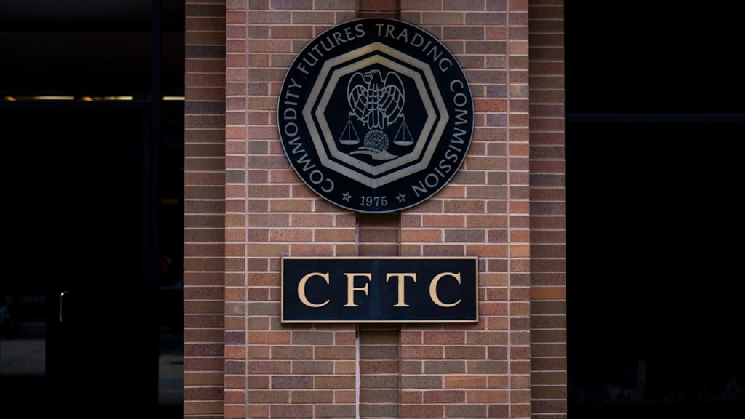
  • Clarity Act Stalled; CFTC Submits Cryptocurrency Draft to White House

    Clarity Act Stalled; CFTC Submits Cryptocurrency Draft to White House

    Key Highlights

    • The Clarity Act, a leading legislative effort to establish a comprehensive U.S. cryptocurrency market framework, failed a procedural Senate vote this week.
    • The CFTC submitted a new regulatory proposal to the White House Office of Management and Budget on September 17, now under interagency review by OIRA.
    • CFTC Chair Michael Selig directed staff to “develop ways to formalize the digital asset market structure using the agency’s existing legal authority, independently of congressional legislation,” signaling a potential administrative path forward.

    Senate Setback for Clarity Act Prompts CFTC Administrative Action

    The legislative path toward a unified federal framework for digital assets encountered a significant obstacle this week when the Clarity Act failed to secure the necessary votes to advance in the U.S. Senate. The bill, widely regarded as one of the most consequential attempts to codify comprehensive rules for cryptocurrency markets, stalled on a procedural vote, leaving a regulatory vacuum that the Commodity Futures Trading Commission (CFTC) appears prepared to address through administrative rulemaking.

    CFTC Proposal Enters White House Interagency Review

    According to the Office of Information and Regulatory Affairs (OIRA) within the White House Office of Management and Budget, the CFTC formally submitted a new proposal on September 17. The submission is currently undergoing interagency review, a standard step before a proposed rule can be published for public comment in the Federal Register. While the full scope and specific provisions of the regulation have not been disclosed, a Bloomberg report analyzing the draft title indicates the commission intends to establish a comprehensive regulatory framework governing cryptocurrency transactions and the operational structure of digital asset markets.

    Chair Selig Signals Intent to Leverage Existing Authority

    The agency’s move aligns with recent public statements from CFTC Chairman Michael Selig, who said he had instructed staff to “develop ways to formalize the digital asset market structure using the agency’s existing legal authority, independently of congressional legislation.” This approach suggests the commission is prepared to assert jurisdiction over digital asset markets—particularly those involving commodities and derivatives—without waiting for new statutory mandates from Congress.

    Industry Observers Note Accelerated Timeline

    The speed of the CFTC’s submission drew immediate attention from policy analysts. Hyperliquid Policy Center CEO Jake Chervinsky posted on X, “The CFTC is moving fast. It appears to have sent a proposed rule for interagency review.” His observation underscores a growing perception that federal regulators may pursue parallel administrative tracks to address digital asset oversight while legislative efforts remain gridlocked.

    Why This Matters

    The dual developments—legislative stall and regulatory acceleration—highlight a pivotal moment for U.S. crypto policy. With the Clarity Act’s future uncertain, the CFTC’s proposal represents the most concrete federal initiative to date to define market structure rules for digital assets under existing commodities law. If finalized, the rule could establish registration, reporting, and operational standards for trading platforms, custodians, and market participants, shaping compliance obligations across the industry. However, the scope of the CFTC’s authority over spot digital asset markets remains legally contested, and any rulemaking will likely face scrutiny from both industry stakeholders and congressional committees. The OIRA review period typically spans 90 days but can be extended, meaning the earliest public glimpse of the proposed text may arrive in late 2024 or early 2025.

    Frequently Asked Questions

    What is the Clarity Act and why did it fail?
    The Clarity Act is a Senate bill designed to create a comprehensive legal framework for cryptocurrency markets in the United States. It failed a procedural vote this week, meaning it did not receive the necessary support to advance to debate or a final vote on the Senate floor.
    What does the CFTC’s new proposal aim to do?
    Based on the draft title reviewed by Bloomberg, the CFTC’s proposal seeks to create a comprehensive regulatory framework for cryptocurrency transactions and the functioning of digital asset markets, using the agency’s existing authority under the Commodity Exchange Act.
    When will the public see the details of the CFTC proposal?
    The proposal is currently under review by the Office of Information and Regulatory Affairs (OIRA). Interagency review typically takes up to 90 days, after which the CFTC would publish a Notice of Proposed Rulemaking in the Federal Register for public comment.
  • MemeToro Adds 1,373 Lines of MIT-Licensed Code to AI Memecoin Launchpad

    MemeToro Adds 1,373 Lines of MIT-Licensed Code to AI Memecoin Launchpad

    Key Highlights

    • MemeToro has open-sourced 1,373 lines of Solidity code across 17 files under an MIT license, including the FairLaunchEscrow.sol contract, executor interfaces, test suites, and architecture documentation for its planned BNB Chain AI memecoin launchpad.
    • The escrow contract is designed without an owner, admin role, or upgrade path, locking round parameters such as funding cap, deadline, and token structure at creation to prevent post-contribution changes.
    • Core launchpad components—including the live token executor, liquidity connection, manifest integration, BNB Chain testnet deployment, ERC-8004 agent identity, and independent security audits from Coinsult, BlockSAFU, and SOLIDProof—remain pending before mainnet launch.

    MemeToro Publishes Foundational Smart Contract Code for AI-Driven Memecoin Launchpad

    MemeToro has released 1,373 lines of Solidity code across 17 files, marking the first public code drop for its planned BNB Chain AI memecoin launchpad. The repository, published under the permissive MIT license, includes the FairLaunchEscrow.sol contract, the ILaunchExecutor.sol and IERC20Minimal.sol interfaces, a full test suite with mock token and executor contracts, architecture notes, and contribution guidelines. The codebase is built with Foundry, the widely adopted Solidity development toolkit, enabling developers to compile, test, and review the contracts using standard workflows. The project’s native token, $MT, is currently in Stage 7 of its presale at $0.00430, with more than $137,000 raised to date.

    Escrow Architecture Removes Admin Control and Insider Allocation

    The centerpiece of the release is the FairLaunchEscrow.sol contract, which is designed to hold contributor funds for a single launch round. Critical round settings—including the funding cap, deadline, minimum threshold, token structure, and other terms—are locked immutably when the round is created. Notably, the contract contains no owner, admin role, or upgrade mechanism, a design choice intended to eliminate the possibility of a team altering contract behavior after users have committed funds. The escrow also stores a cryptographic fingerprint of the public launch manifest, allowing participants to verify that the on-chain round matches the document presented before funding. Fund flows are restricted to two paths: contributor refunds if the round fails to meet its threshold, or transfer to the planned liquidity executor upon success. There is no coded route for funds to move to a developer or treasury wallet. Token-allocation logic further enforces that contributors and liquidity must account for 100% of supply, with any rounding remainder directed to liquidity, effectively rejecting insider allocations.

    Test Suite Covers Failure Modes and State Transitions

    The accompanying test suite exercises caps, deadlines, thresholds, refund flows, claim flows, and interactions with misbehaving connected contracts. Random-sequence testing validates that the contract’s accounting remains balanced across varied user action orders. The tests also confirm that the system correctly reaches each intended state—funded, launched, claimed, and refunded—addressing a common gap where tests pass without ever exercising the critical code paths they are meant to verify. This level of test coverage signals that the team is actively checking failure conditions, not just happy paths.

    Why This Matters: Transparency as a Pre-Launch Trust Signal

    In a sector where many memecoin projects ask users to trust marketing claims about fair access, locked funding, and token supply without publishing verifiable code, MemeToro’s approach is distinctive. By releasing the contract structure under an open-source license before mainnet, the project creates a public development trail that allows anyone to inspect the design rather than rely solely on promises. However, the code release does not equate to a live platform. Significant engineering milestones remain: the live token executor, liquidity pool integration, manifest-to-contract wiring, deployment scripts, a round factory for multiple launches, BNB Chain testnet deployment, ERC-8004 agent identity implementation, and a completed independent security review. The project has named Coinsult, BlockSAFU, and SOLIDProof as audit or review providers; prospective participants should examine the final scope and published reports when mainnet contracts are finalized. Open-source code improves transparency but does not eliminate product, market, liquidity, or price risk.

    Frequently Asked Questions

    What exactly did MemeToro publish?

    MemeToro published 1,373 lines of Solidity code across 17 files, including its fair-launch escrow contract (FairLaunchEscrow.sol), future executor interface (ILaunchExecutor.sol), minimal ERC-20 interface (IERC20Minimal.sol), a complete test suite with mock contracts, architecture documentation, and contribution guidelines—all under an MIT license.

    Does the open-source release make $MT or the launchpad risk-free?

    No. Open-source code improves transparency and allows public inspection of contract logic, but it does not remove product risk, market risk, liquidity risk, or price volatility. The launchpad’s core execution, liquidity, and deployment components are still under development.

    Is the full MemeToro launchpad currently live?

    No. The project has published its foundational contract layer. The live token executor, liquidity connection, manifest integration, deployment scripts, round factory, BNB Chain testnet deployment, ERC-8004 agent identity, and independent security audits from Coinsult, BlockSAFU, and SOLIDProof are all still pending before a mainnet launch.

    More Information on MemeToro ($MT) Presale:
    Website: https://memetoro.com/
    X: https://x.com/memetoro_mt
    Telegram: https://t.me/memetoro_mt
    YouTube: https://www.youtube.com/watch?v=gY0jgWy_DtA