Author: Evan Mercer

  • Solana Accelerates Block Production by 17%, Transaction Capacity Unchanged

    Solana Accelerates Block Production by 17%, Transaction Capacity Unchanged

    Key Highlights

    • Solana reduced its target slot time from 300 milliseconds to 250 milliseconds, accelerating the network clock by approximately 17% without expanding total transaction throughput.
    • The change increases slot frequency to four per second from roughly 3.3, shortening each validator’s leader window from 1.2 seconds to one second and rotating transaction-ordering authority faster.
    • DeFi applications, oracle-powered markets, and automated market makers benefit from fresher price data, reducing failed trades and price slippage for end users.

    Solana Accelerates Block Production With 250-Millisecond Slot Target

    Solana’s validator network implemented a significant timing adjustment earlier Friday, cutting the target slot duration from 300 milliseconds to 250 milliseconds, according to on-chain data. The modification makes the blockchain’s internal clock run nearly 17% faster, targeting four slots every second compared to the previous rate of approximately 3.3 slots per second. Notably, the upgrade does not increase the network’s overall transaction capacity; instead, it compresses the timeframe in which designated validators propose blocks, delivering a more current view of chain state to wallets, exchanges, and trading applications.

    Leader Windows Compressed, Validator Rotation Accelerated

    Under Solana’s consensus design, validators—entities that supply computing power to maintain the blockchain—serve as leader for four consecutive slots. With the faster slot cadence, each leader’s control window shrinks from 1.2 seconds to exactly one second. This hands transaction-ordering authority to the next validator in the schedule more quickly, a change that carries direct implications for latency-sensitive operations. Applications such as oracle-powered markets and automated market makers (AMMs) rely on timely price feeds; even a few hundred milliseconds of stale data can determine whether a transaction executes as intended or fails due to expired conditions.

    User Experience Improvements for Trading and DeFi

    End users should observe tangible benefits from the tighter timing. Transaction confirmations and state updates will propagate sooner, while swaps and other time-critical operations face a narrower window in which market conditions can shift before the transaction reaches the network. The practical outcome is a reduction in failed trades and a lower probability of receiving a materially different execution price than expected—a persistent pain point in high-velocity decentralized finance environments.

    Why This Matters

    The slot-time reduction represents a targeted optimization rather than a throughput expansion. By accelerating the clock without increasing block size or transaction limits, Solana addresses a specific class of latency-dependent use cases: high-frequency trading, oracle-dependent protocols, and MEV-sensitive strategies where millisecond-level freshness dictates economic outcomes. The change also reflects the network’s ongoing evolution toward deterministic, low-latency finality—a competitive differentiator as blockchain infrastructure matures and institutional participation grows. Validators must ensure their hardware and networking stacks can sustain the faster cadence without increased missed-slot rates, a factor that will influence decentralization dynamics over time.

    Frequently Asked Questions

    Does this change increase Solana’s transactions per second (TPS)?

    No. The total transaction capacity remains unchanged. The network processes the same volume of transactions but distributes block production across more frequent, shorter slots.

    How does the shorter leader window affect validators?

    Each validator still leads for four consecutive slots, but the total leadership duration drops from 1.2 seconds to one second. This rotates block-proposing responsibility faster, requiring validators to maintain low-latency infrastructure to avoid missed slots.

    What types of applications benefit most from this update?

    Latency-sensitive DeFi protocols—particularly oracle-powered markets, automated market makers, and high-frequency trading systems—gain fresher price data and reduced slippage, leading to fewer failed transactions and more predictable execution.


  • Altcoin Whale Offloads Major Holding, On-Chain Data Shows

    Altcoin Whale Offloads Major Holding, On-Chain Data Shows

    Key Highlights

    • A single wallet address sold 600,000 UNI tokens across multiple transactions, netting approximately 5.1 million USDT according to on-chain data tracked by Onchain Lens.
    • The same address transferred an additional 100,000 UNI, valued at roughly $844,000, to the cryptocurrency exchange OKX, signaling potential further liquidation.
    • Market participants are monitoring the activity closely, as large-scale transfers to exchanges by major holders often precede selling pressure on the Uniswap governance token.

    Major UNI Holder Liquidates Position, Moves Additional Tokens to OKX

    On-chain analytics platform Onchain Lens reported on September 18 that a single wallet address executed a significant sell-off of Uniswap (UNI) tokens, offloading 600,000 UNI through a series of transactions. The sales collectively yielded approximately 5.1 million USDT in stablecoin proceeds, according to blockchain data reviewed by the firm.

    The wallet’s activity did not stop at the executed sales. Subsequent on-chain analysis revealed the address transferred an additional 100,000 UNI to the centralized exchange OKX. At the time of the transfer, this batch of tokens carried an estimated value of $844,000. Analysts interpret such deposits to exchange wallets as a standard precursor to further selling, as it moves assets from cold storage or self-custody into a liquid trading environment.

    Market Watches for Supply Overhang Amid Whale Activity

    The sequence of events has redirected market attention toward the concentration of UNI supply among large holders, often referred to as “whales.” While the 600,000 UNI sale represents a realized outflow, the 100,000 UNI deposit to OKX represents a potential future supply overhang. Market structure analysts caution that the transfer alone does not confirm a sale; the tokens could be held on the exchange for market-making, collateral, or other strategies. However, historical precedent suggests exchange inflows from dormant or accumulating wallets frequently correlate with distribution phases.

    Uniswap’s UNI token functions as the primary governance asset for the leading decentralized exchange protocol. As such, its tokenomics are sensitive to large-scale portfolio rebalancing by early investors, team allocations, or treasury managers. The current circulating supply and the identity of the specific address involved have not been disclosed in the Onchain Lens report, leaving the total magnitude of the holder’s remaining position unknown.

    Why This Matters

    Large-token transfers by single entities serve as critical market structure signals for decentralized finance (DeFi) assets. Unlike equities markets where insider filings are mandatory, on-chain transparency is the primary tool for detecting shifts in whale positioning. The combination of realized sales (600k UNI) and exchange staging (100k UNI) suggests a deliberate reduction in exposure. For UNI holders and liquidity providers, tracking whether the OKX deposit translates into active sell orders on the order book will be key to assessing near-term price resilience. The event underscores the ongoing maturation of Uniswap’s token distribution, where early concentrated holdings continue to enter circulating supply years after the initial airdrop and token generation event.

    Frequently Asked Questions

    How much UNI was sold and what was the proceeds?

    The address sold 600,000 UNI tokens across multiple transactions, receiving approximately 5.1 million USDT in return, based on on-chain data reported by Onchain Lens on September 18.

    Why is the transfer of 100,000 UNI to OKX significant?

    Moving tokens from a private wallet to a centralized exchange like OKX typically indicates the holder intends to sell, trade, or use the assets as collateral. While not a guaranteed sale, this $844,000 deposit increases the available supply on the exchange order book, which traders monitor for potential downward price pressure.

    Does this activity represent the entire holdings of the whale address?

    No. The Onchain Lens report explicitly states that available data does not provide definitive information about the address’s total UNI balance or its future transaction plans. The 700,000 UNI moved (600k sold + 100k transferred) may represent only a portion of the wallet’s total position.

  • Corporate Treasuries Bought Only 5,900 Bitcoin in Three Months as Demand Signals Weaken

    Corporate Treasuries Bought Only 5,900 Bitcoin in Three Months as Demand Signals Weaken

    Key Highlights:

    • Corporate treasuries hold ~1.22 million BTC with an average cost basis of $80.5K, leaving them ~6% underwater at current prices.
    • Strategy (formerly MicroStrategy) dominates with ~845,050 BTC; Tokyo-listed Metaplanet ranks among the next-largest holders.
    • U.S. spot Bitcoin ETFs have drawn billions since August but remain ~$1 billion negative year-to-date, while the Coinbase premium stays mostly negative, signaling weaker U.S. demand versus offshore markets.

    Corporate Treasury Bitcoin Holdings Sit Underwater as Buying Momentum Stalls

    Corporate treasuries that drove significant Bitcoin accumulation through 2025 have abruptly stepped back, leaving their aggregate position underwater at current market levels. According to on-chain analytics firm Glassnode, the cohort’s average entry price—termed the Corporate Treasury Cost Basis—stands at $80,500, approximately 6% above spot. Bitcoin briefly reclaimed that level in recent sessions but failed to sustain gains, reinforcing the $80.5K threshold as a technical ceiling.

    “Corporate treasuries were a big buyer through 2025, and they have stepped back,” Glassnode said. “Their average entry, the Corporate Treasury Cost Basis, sits at $80.5K, about 6% above spot, so the group as a whole is under water.”

    Data from Bitcoin Treasuries confirms the scale of institutional exposure: public companies collectively hold roughly 1.22 million BTC across 181 listed firms. Strategy (formerly MicroStrategy) remains the dominant buyer and holder, controlling approximately 845,050 BTC. Tokyo-listed Metaplanet ranks among the next-largest corporate stacks. As a group, these treasuries remain in a loss position at prevailing prices, creating a potential overhang if entities choose to de-risk.

    “A reclaim of $80.5K would put the treasuries back in profit and remove one layer of overhead supply; until then their entry is one more ceiling,” Glassnode added.

    ETF Inflows Rebound Yet Year-to-Date Deficit Persists

    Demand indicators beyond corporate treasuries paint a mixed picture. U.S.-listed spot Bitcoin ETFs have attracted billions of dollars in net inflows since early August, signaling a rebound in institutional appetite. However, data from SoSoValue shows these funds remain roughly $1 billion short of turning positive on a year-to-date basis, underscoring that the recent surge has only partially offset earlier outflows.

    Coinbase Premium Signals Weaker U.S. Spot Demand

    The Coinbase premium indicator, tracked by CoinGlass, has stayed mostly negative since May, with only a brief move into positive territory on September 5. A negative reading means Bitcoin is trading at a discount on Coinbase relative to Binance, suggesting that U.S.-based buyers are exhibiting weaker spot demand compared to traders on offshore venues. This divergence highlights a geographic split in buying pressure that could influence price discovery in the near term.

    Why This Matters

    The confluence of corporate treasuries sitting underwater, ETF flows still negative for the year, and a persistent negative Coinbase premium creates a layered resistance structure for Bitcoin. The $80.5K corporate cost basis acts as both a psychological and fundamental supply zone: if reclaimed, it could trigger profit-taking relief and remove a structural overhang; if rejected, it reinforces a ceiling that may cap near-term upside. Meanwhile, the ETF year-to-date deficit indicates that institutional capital has not yet fully recommitted after earlier drawdowns, and the Coinbase discount suggests U.S. participants remain cautious relative to global peers. Market watchers should monitor whether the August ETF inflow momentum can close the YTD gap and whether the Coinbase premium flips sustainably positive—both would signal broadening, conviction-led demand.

    Frequently Asked Questions

    How many Bitcoin do public companies hold in total?

    According to Bitcoin Treasuries, public companies hold approximately 1.22 million BTC across 181 listed firms.

    What is the Corporate Treasury Cost Basis and why is it important?

    The Corporate Treasury Cost Basis is the average entry price of corporate Bitcoin holdings, currently $80,500. It matters because the group is underwater at current prices; a reclaim would put them in profit and remove a layer of potential selling pressure.

    Are U.S. spot Bitcoin ETFs positive for the year?

    No. Despite billions in inflows since early August, SoSoValue data shows U.S. spot Bitcoin ETFs remain roughly $1 billion negative year-to-date.

  • Cardano’s IOG warns users after YouTube channel hijack

    Cardano’s IOG warns users after YouTube channel hijack

    Key Highlights

    • Input Output Global (IOG) warned users on Sept. 18 to avoid its YouTube channel after an apparent takeover featured a suspected AI-manipulated Charles Hoskinson livestream promoting a cryptocurrency giveaway scam.
    • The fraudulent broadcast, presented as a Project Catalyst town hall, used footage resembling Hoskinson and promoted a “double your wealth” scheme via QR code links, with no evidence that Hoskinson or Project Catalyst authorized the promotion.
    • IOG has not confirmed how the channel was compromised, whether administrative control has been fully restored, or if any users lost funds, while the incident follows a documented pattern of Cardano-related impersonation scams dating back years.

    IOG Issues Urgent Warning After YouTube Channel Takeover

    Input Output Global (IOG), the development firm behind the Cardano blockchain, issued an urgent security advisory on Sept. 18 directing users to avoid its official YouTube channel following an apparent account compromise. The organization posted through its verified X account that users should avoid interacting with the channel “until further notice,” explicitly warning people not to click links, transfer funds, or provide personal information through any material appearing on the platform.

    The warning came while the compromised channel was broadcasting a livestream presented as a Project Catalyst town hall. The suspicious broadcast utilized footage resembling Cardano founder Charles Hoskinson and promoted an offer claiming viewers could “double your wealth” by following instructions linked through a QR code. No evidence reviewed indicates that Hoskinson or Project Catalyst authorized the promotion. At the time of IOG’s public warning, the fraudulent livestream had remained online for close to two hours, according to reporting on the incident.

    Details of the Compromise and Official Response

    IOG’s security message focused exclusively on preventing further user interaction with the compromised channel. The organization did not state publicly how access to its YouTube account had been obtained, nor did it identify the party behind the apparent takeover. Its official instruction told users not to follow links, send cryptocurrency, or submit personal details until IOG confirmed that its YouTube presence was safe again.

    As of the latest review, no subsequent official post has confirmed that the channel has been fully recovered. Current search results still surface IOG’s ordinary historical videos, but their availability does not by itself establish that administrative control has been restored. IOG has not published a wallet address associated with the fraudulent broadcast, nor has it disclosed whether anyone sent ADA or another asset after viewing the stream, leaving any claimed losses unverified. No credible blockchain-forensics firm or security researcher reviewed for this report had published a verified attribution, scam-wallet balance, or transaction trail tied specifically to the Sept. 18 incident.

    Fraudulent Stream Follows Established Cardano Scam Pattern

    The format of the Sept. 18 broadcast closely resembles a type of fraud that the Cardano ecosystem has warned users about for years. Cardano’s official scam-awareness guide specifically describes ADA giveaway schemes in which scammers promise to double a user’s holdings after receiving an initial transfer. The guidance states that fraudulent streams frequently use fake videos of Charles Hoskinson or other well-known figures to make the offer appear authentic.

    Cardano’s guidance emphasizes that legitimate giveaways never require users to send cryptocurrency first. Once ADA is transferred to a scam address, blockchain transactions cannot simply be reversed by Cardano’s developers or ecosystem organizations. The Cardano Foundation documented the same technique as early as 2020. In a community notice, it reported that scammers had been hijacking YouTube accounts with established audiences, impersonating Cardano organizations, and promoting offers claiming users would receive more crypto after making a deposit. The Foundation stated explicitly that neither it, EMURGO, nor Input Output would promote giveaways requiring users to send ADA or another asset.

    Community reports have since documented multiple fake Hoskinson streams. A 2024 report described an impersonation channel using what the user characterized as AI-generated Hoskinson footage to promote a giveaway, though that report did not establish who created the video. The recurring pattern involves taking control of established YouTube channels, replacing their content with crypto giveaway livestreams, and directing viewers toward payment addresses or external sites.

    Project Catalyst Branding Provided False Legitimacy

    The Sept. 18 broadcast was presented as a Project Catalyst event, leveraging branding associated with Cardano’s community-funding program to create a veneer of authenticity. Project Catalyst is a genuine Cardano initiative. Its official site describes the program as a community funding system through which Cardano users submit, review, and vote on proposals, with 2,221 proposals having received funding across completed rounds.

    Input Output has historically played a direct role in Catalyst. A February 2026 Catalyst update identified IOG as the program’s operator at that time while responsibilities were being reorganized with the Cardano Foundation and Intersect. By June, Intersect said administration had transferred from IOG to the Cardano Foundation, with remaining milestones from one IOG Catalyst project canceled and 2.06 million ADA returned to the treasury. Using Catalyst branding therefore gave the fraudulent livestream a recognizable Cardano context even though no official Catalyst source reviewed for this report announced a legitimate town hall matching the giveaway broadcast. The combination of a familiar project name with apparent Hoskinson footage follows the social-engineering pattern described in Cardano’s scam guidance: genuine-looking ecosystem material is combined with a malicious payment request.

    Previous Compromises of Cardano-Linked Accounts

    This incident is not the first time a prominent Cardano-linked social account has been compromised. In December 2024, the Cardano Foundation’s X account was compromised and used to publish a false claim that the U.S. Securities and Exchange Commission had sued the organization, with attackers falsely telling users that support for ADA would cease. Hoskinson responded at the time by identifying the posts as unauthorized. That fake announcement was unrelated to the current YouTube incident, but both cases involved trusted Cardano-branded communication channels carrying content that did not originate from the organization controlling the account.

    Scam reports involving YouTube stretch back even further. Cardano’s community forum contains reports from users who said they lost ADA after encountering fake livestreams offering to return twice the amount sent. One 2022 user reported transferring 10,000 ADA after seeing a fraudulent Hoskinson-themed broadcast, though that loss was self-reported and not independently verified.

    AI Manipulation Suspected But Not Independently Verified

    The latest video has been described as AI-manipulated, but no technical forensic report reviewed for this update has confirmed how the Hoskinson footage was produced. The distinction remains relevant because scam operators can use several methods, including edited historical footage, altered audio, synthetic voice generation, or fully generated video. Cardano’s current security guidance explicitly warns that improvements in artificial intelligence are making impersonation scams more sophisticated, and its giveaway section names fake livestreams featuring Hoskinson as a recurring risk.

    Notably, IOG itself has been experimenting publicly with AI-generated content. In June, Hoskinson defended an AI-generated influencer post published through an Input Output account, saying it formed part of experiments around AI agents and Midnight City. Earlier coverage of IOG’s AI content tests reported that some community members objected to the synthetic content. That legitimate experimentation is unrelated to the Sept. 18 suspicious livestream. IOG’s warning expressly told users not to interact with the compromised YouTube channel, while the giveaway itself has not been endorsed by the company.

    Why This Matters

    The compromise of IOG’s official YouTube channel represents a significant escalation in the sophistication and reach of cryptocurrency impersonation scams. By hijacking a verified organizational channel with an established subscriber base, attackers gained immediate credibility that standalone impersonation channels cannot achieve. The use of Project Catalyst branding—a legitimate Cardano governance initiative—demonstrates attackers’ deep familiarity with the ecosystem’s structure and terminology.

    The incident also highlights the growing challenge of AI-generated deepfakes in social engineering attacks. While forensic verification is pending, the mere plausibility of AI-manipulated footage of a recognizable industry figure like Hoskinson lowers the barrier for convincing fraud. For Cardano users and the broader crypto community, the event reinforces the critical security principle that no legitimate organization will ever request funds upfront in exchange for promised returns. As IOG investigates the breach vector—including whether multi-factor authentication was bypassed or other corporate accounts were affected—the ecosystem awaits a full post-incident report that could inform stronger platform-level protections for verified organizational channels.

    Frequently Asked Questions

    Has IOG confirmed that its YouTube channel has been fully secured and restored?

    As of the latest review, IOG has not published a follow-up notice confirming that administrative control of the YouTube channel has been fully restored. The organization’s official instruction remains to avoid the channel until it issues another notice confirming normal control has been reestablished.

    Were any users confirmed to have lost funds in this specific incident?

    IOG has not disclosed whether anyone sent ADA or another asset after viewing the fraudulent stream, and no credible blockchain-forensics firm has published a verified transaction trail tied to the Sept. 18 incident. Any claimed losses remain unverified.

    How can users distinguish legitimate Cardano communications from scams?

    Cardano’s official guidance states that legitimate giveaways never require users to send cryptocurrency first. The Cardano Foundation, EMURGO, and Input Output have all publicly stated they will not promote giveaways requiring users to send ADA or other assets. Users should verify announcements through multiple official channels and treat any “double your wealth” or similar offers as fraudulent.

  • Ethereum Confirms Glamsterdam Dates, Warns ‘Fake’ Builders Could Stall Chain

    Ethereum Confirms Glamsterdam Dates, Warns ‘Fake’ Builders Could Stall Chain

    Key Highlights

    • Ethereum developers confirm an October 6 public test of the Glamsterdam upgrade on Sepolia, warning that the testnet’s economic design allows malicious actors to win block auctions and withhold transaction payloads.
    • The attack exploits free test ether and disposable builder identities, enabling a single operator to spin up thousands of builders, outbid legitimate participants, and repeatedly refuse to reveal transactions.
    • While mainnet funds are not at risk, the vulnerability could derail critical infrastructure testing required before Glamsterdam activates on Ethereum mainnet.

    Glamsterdam Upgrade Introduces In-Protocol Builder Market

    Ethereum core developers have confirmed an October 6 public test of the Glamsterdam upgrade on the Sepolia testnet, a milestone that moves the relationship between validators and specialized block builders directly into the protocol. Under this design, builders assemble transaction blocks and compete in auctions to supply them to validators. Once a validator accepts the winning bid, the builder is expected to reveal the underlying transaction payload. The mechanism is intended to formalize and decentralize the block-building pipeline, but developers warn that the testnet environment introduces a critical exploit vector.

    Sepolia Testnet Vulnerability Exposes Economic Design Flaw

    Because Sepolia operates with test ether that carries no meaningful monetary cost, the economic deterrents that protect mainnet do not apply. A malicious operator can acquire free test ether, spin up a collection of disposable builder identities, and submit bids far above any legitimate participant. After winning the auction repeatedly, the attacker can simply refuse to deliver the promised transaction payload, leaving blocks empty. This behavior would not endanger real funds on Ethereum mainnet, but it could deprive developers of the reliable block production needed to validate Glamsterdam’s infrastructure ahead of a mainnet deployment.

    Developer Potuz Warns of Low-Barrier Attack Vector

    During Thursday’s core developer call, Ethereum consensus developer Potuz described the exploit in blunt terms:

    “I can just spin up a thousand builders, rotate them, offer very high bids, and not produce payloads. Any teenager can do this.”

    Potuz emphasized that the barrier to entry is negligible on a free test network, where the cost of sybil identities and high bids is effectively zero. The warning underscores a tension between testing realism and economic security: Sepolia’s permissionless, no-cost ether enables broad participation but also removes the financial disincentives that would make such an attack prohibitively expensive on mainnet.

    Why This Matters

    The Glamsterdam upgrade represents a significant step in Ethereum’s roadmap to enshrine proposer-builder separation (PBS) into the consensus layer. Reliable testing on public testnets like Sepolia is essential for client teams, block builders, relay operators, and staking pools to validate their implementations under realistic conditions. If payload withholding becomes rampant during the test window, it could delay the collection of performance data, surface fewer edge cases, and ultimately push back the mainnet activation timeline. Developers are now evaluating whether mitigations—such as reputation scoring for testnet builders or temporary permissioned builder sets—can be deployed before the October 6 test without compromising the permissionless ethos of the testnet.

    Frequently Asked Questions

    Does this attack put real ETH or user funds at risk?
    No. The exploit targets the Sepolia testnet exclusively, where ether has no monetary value. Mainnet funds and user assets are not endangered by this vulnerability.
    What is the Glamsterdam upgrade?
    Glamsterdam is an Ethereum protocol upgrade that formalizes the relationship between validators and block builders by moving the builder auction mechanism into the consensus layer. Builders compete to supply transaction payloads, and validators accept the winning bid.
    When is the public test scheduled?
    Developers confirmed an October 6 public test of the Glamsterdam upgrade on the Sepolia testnet.
  • Zcash targets November for NU7 mainnet upgrade with 25-second blocks

    Zcash targets November for NU7 mainnet upgrade with 25-second blocks

    Key Highlights

    • Zcash developers target November 5 for NU7 mainnet activation after organizations and engineering teams reached “unanimous agreement” on the upgrade’s contents and timeline.
    • The upgrade will reduce block spacing from 75 seconds to 25 seconds, disable version 4 transactions, and integrate the Network Sustainability Mechanism while preserving the halving schedule.
    • $ZEC holders overwhelmingly backed the changes with 99.9% supporting faster blocks and 98.9% favoring halving preservation, coinciding with a 20% price surge in 24 hours.

    Zcash NU7 Upgrade Targets November Mainnet Activation After Broad Consensus

    Zcash developers are moving decisively toward a November 5 mainnet activation for the NU7 network upgrade after stakeholders across the ecosystem reached “unanimous agreement” on both the technical specifications and the proposed timeline. The milestone reflects months of coordination among engineering teams and governance organizations, culminating in a clear path forward for the privacy-focused blockchain’s most significant protocol change in recent years.

    Testnet Launch and Final Decision Timeline

    According to Zcash developer Sean Bowe, the NU7 upgrade is scheduled to activate on testnet on October 6, providing a critical proving ground before the mainnet transition. A final go/no-go decision on the mainnet upgrade and its precise activation height will be made on October 20, contingent on an assessment of NU7’s performance in the testnet environment. This staged approach allows developers to validate the changes under live conditions while maintaining a safety valve before committing the main network.

    Technical Changes: Faster Blocks, NSM Integration, and Halving Preservation

    The NU7 upgrade introduces three core protocol modifications. First, Zcash’s target block spacing will be reduced from 75 seconds to 25 seconds, effectively tripling block production frequency. Second, version 4 transactions will be disabled, streamlining the transaction format landscape. Third, the Network Sustainability Mechanism (NSM) will be integrated with a configuration specifically chosen to preserve Zcash’s existing halving schedule. Under this design, the reintroduction of previously removed supply is set to begin in February 2031, maintaining the long-term emission curve that the community has come to expect.

    Bowe said NU7 would not introduce new transaction formats and should not significantly affect wallets. He said full nodes, indexers and block explorers may require adjustments.

    Governance Vote Shows Overwhelming Community Support

    The technical consensus was reinforced by a decisive on-chain governance vote held on Wednesday. $ZEC holders overwhelmingly endorsed both pillars of the upgrade: 99.9% of the ZEC-weighted vote supported the faster-block proposal, while 98.9% backed preserving the halving schedule. The near-unanimous participation signals strong alignment between developers, node operators, and token holders on the network’s strategic direction.

    Why This Matters

    The NU7 upgrade represents a pivotal evolution for Zcash as it balances performance improvements with monetary policy credibility. Tripling block speed addresses long-standing user experience concerns around transaction confirmation times, bringing Zcash closer to parity with faster settlement layers. Simultaneously, the decision to preserve the halving schedule through the NSM configuration resolves a contentious debate about long-term supply dynamics, reinforcing the project’s commitment to a predictable, disinflationary emission curve. The February 2031 supply reintroduction date provides a transparent, distant horizon for market participants to price in. With privacy coins outperforming the broader market—Glassnode data shows the sector 213% above its level at Bitcoin’s October 2025 peak, and a non-ZEC privacy basket up 85% over the past year—the upgrade arrives amid renewed investor attention on the category. The 20% single-day surge in $ZEC suggests markets are pricing in both the technical milestone and the governance clarity it brings.

    Frequently Asked Questions

    When will the NU7 upgrade activate on Zcash mainnet?

    Developers are targeting November 5 for mainnet activation, with a final confirmation scheduled for October 20 after evaluating testnet performance.

    Will the upgrade change Zcash’s halving schedule or total supply?

    No. The chosen Network Sustainability Mechanism configuration preserves the existing halving schedule. Previously removed supply is set to begin reintroduction in February 2031, maintaining the long-term emission trajectory.

    Do wallet users need to take any action for the NU7 upgrade?

    According to developer Sean Bowe, NU7 should not significantly affect wallets and introduces no new transaction formats. However, full node operators, indexers, and block explorers may require software adjustments.

  • Deutsche Bank Launches Bitcoin Custody Service as BTC Trades at $75,500

    Deutsche Bank Launches Bitcoin Custody Service as BTC Trades at $75,500

    Key Highlights

    • Deutsche Bank will launch institutional crypto custody for Bitcoin, Ether, and select stablecoins in Europe before year-end under the EU’s MiCA regime, pending a BaFin licence expected in October.
    • The bank will manage private keys in-house using hardware-based protection, multi-person approvals, and segregated warm and cold storage, targeting corporates, asset managers, hedge funds, and sovereign institutions.
    • Germany’s largest lender enters a competitive European custody landscape already served by Standard Chartered, BBVA, DZ Bank, and Landesbank Baden-Württemberg, but brings globally systemically important bank (G-SIB) scale and existing client relationships.

    Deutsche Bank Commits to Regulated Crypto Custody Under MiCA

    Germany’s largest bank confirmed Wednesday it will begin safeguarding bitcoin and ether for institutional clients in Europe before the end of 2025, marking the most significant entry yet by a globally systemically important bank into regulated digital-asset custody. The announcement, made a day after the U.S. Senate failed to advance the Clarity Act, underscores a divergent regulatory path: while U.S. market-structure legislation stalls, Deutsche Bank is moving forward under the European Union’s Markets in Crypto-Assets (MiCA) framework.

    Gerald Podobnik, co-head of Deutsche Bank’s corporate bank, framed the move as complementary rather than disruptive. “digital assets are not a replacement for the traditional financial system but an important complement to it,” Podobnik said in a statement. “We see them as new rails that can coexist with existing market infrastructures while benefiting from the trust, security and safeguards that regulated financial institutions provide.” He added, “Our aim is to offer clients a secure and regulated gateway to this evolving market.” A bank spokesperson told Cointelegraph the firm expects to receive its MiCA custody licence from Germany’s BaFin in October. Bitcoin traded at $75,547 Wednesday afternoon, little changed over 24 hours, according to CoinGecko.

    Asset Scope and Technical Architecture

    At launch, the service will cover “a selected range of digital assets, including Bitcoin and Ether, as well as selected stable coins or e-money tokens, including USDC and EURC, EURAU,” the bank said. Circle issues USDC and EURC. EURAU is the euro-denominated stablecoin of AllUnity, a joint venture between Galaxy, Flow Traders, and DWS—the asset manager majority-owned by Deutsche Bank—which received a BaFin e-money licence in July 2025. “Tokenized financial instruments are also included in the roadmap,” the release added.

    The first clients will be corporates, asset managers, hedge funds, custodians, brokers, and sovereign institutions served by the corporate and investment banks. Critically, Deutsche Bank will manage the wallets and private keys itself, with keys secured behind hardware-based protection, multi-person approvals, and separate warm and cold storage. For Ido Sofer, founder and chief executive of key-management firm Sodot, that in-house approach signals strategic intent. “When you hear a bank is launching their own custody solution and they’re hiring blockchain engineers and so on, that means that they’re saying, okay, I want to go all in. I want to have those in-house capabilities and I want this as a business line,” Sofer said on the On The Margin podcast in April. “It really shifted from this is an experiment to this is a growth vector in the business line.”

    Three-Year Build and Competitive Landscape

    Deutsche Bank applied to BaFin for a digital-asset custody licence in June 2023 and named Swiss technology provider Taurus as its partner that September. In July 2025, Bloomberg reported the bank was targeting a 2026 launch and had engaged Bitpanda’s technology unit alongside Taurus. Wednesday’s release names neither firm, stating only that the service “will use selected external technology and infrastructure providers for defined technical components.”

    The bank arrives late to its immediate neighbourhood. Landesbank Baden-Württemberg announced institutional custody with Bitpanda in 2024; DZ Bank’s meinKrypto platform received MiCA authorisation in December 2025; and Standard Chartered and BBVA already operate regulated custody in Europe, as CoinDesk noted. What Deutsche Bank brings is scale: it is one of the banks the Financial Stability Board classifies as globally systemically important, and its clients have been asking who should hold the keys since a wave of exchange hacks last summer.

    Why This Matters

    Deutsche Bank’s entry signals a maturation of institutional crypto infrastructure in Europe. By operating under MiCA—the world’s first comprehensive crypto-asset regulatory regime—the bank offers a regulated alternative to offshore or unlicensed custodians, addressing a primary barrier for pension funds, insurers, and sovereign wealth funds. The decision to retain private keys in-house, rather than outsourcing to a specialist like Fireblocks or Copper, reflects a business logic older than blockchain: a custodian that controls the keys controls the client relationship and the cross-sell opportunities that follow. As Sofer noted, “It’s gonna be hard for you to leave.”

    However, the release carries a blunt risk disclosure: “Digital assets involve material risks, including price volatility, fraud, cyber incidents and failures of market participants,” it says. “Crypto-assets are not covered by a deposit-guarantee scheme comparable to the protection applicable to eligible bank deposits.” That trade-off—regulated custodial controls without deposit insurance—is the core proposition. Michael Tanguma, co-founder and chief executive of bitcoin custody firm Onramp, argues the market has already accepted it. “Nobody would tell an individual to take all their gold out of the bank and park it underneath their mattress,” Tanguma said in an August interview. “It’s a misnomer and fallacy to say that self custody is the only way.”

    Podobnik left the door open on scope: “The service will be further developed in line with client demand, regulatory requirements and the bank’s risk appetite,” he said. The release adds that timing, geography, and the asset list “may change as a result of regulatory requirements, internal approvals, market developments or client demand.” Sofer’s read is that such hedging is standard boilerplate once a G-SIB commits. “When a bank does something, this is for like five, 10 years, right?” he said. “They don’t say, well, let’s do this for a couple of quarters and re-evaluate.”

    Frequently Asked Questions

    Which digital assets will Deutsche Bank custody at launch?

    The bank will hold Bitcoin, Ether, and select stablecoins or e-money tokens including USDC, EURC, and EURAU. Tokenized financial instruments are on the roadmap for future inclusion.

    How does Deutsche Bank’s custody model differ from specialist crypto custodians?

    Deutsche Bank will manage wallets and private keys entirely in-house using hardware-based protection, multi-person approvals, and segregated warm and cold storage, rather than relying on third-party key-management providers. The bank argues this integrates the trust and safeguards of a regulated G-SIB with new digital-asset rails.

    Are crypto assets held by Deutsche Bank covered by deposit insurance?

    No. The bank explicitly warns that crypto-assets are not covered by any deposit-guarantee scheme comparable to the protection applicable to eligible bank deposits. Clients assume material risks including price volatility, fraud, cyber incidents, and counterparty failures.

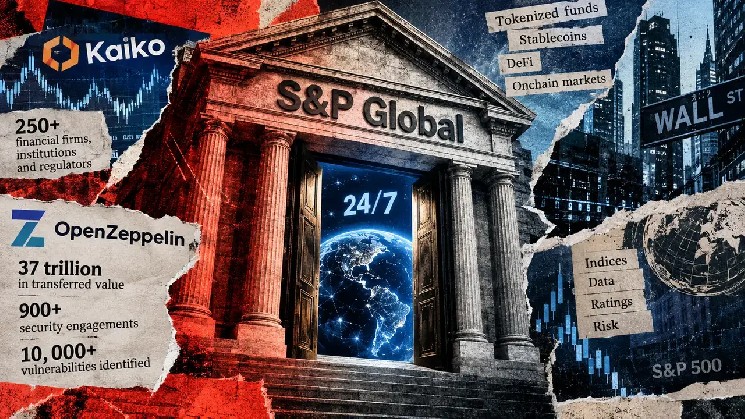
  • S&P Global Quietly Prepares for Round-the-Clock Markets, From Kaiko to OpenZeppelin

    S&P Global Quietly Prepares for Round-the-Clock Markets, From Kaiko to OpenZeppelin

    Key Highlights

    • S&P Global agreed to acquire smart contract security firm OpenZeppelin, expanding its digital asset business into the technology layer underpinning tokenized finance.
    • OpenZeppelin will operate as a separate business unit under CEO Demian Brener, reporting to S&P Global Ratings President Yann Le Pallec; financial terms were not disclosed.
    • The acquisition gives S&P direct exposure to the security infrastructure behind more than $37 trillion in transferred value, over 900 security engagements, and 10,000+ identified vulnerabilities.

    S&P Global Acquires OpenZeppelin to Secure Tokenized Finance Infrastructure

    Financial data and ratings giant S&P Global announced on September 17 an agreement to acquire OpenZeppelin, a leading smart contract security firm whose open-source libraries and audit services underpin a vast swath of the blockchain ecosystem. The move marks a significant deepening of S&P’s push into digital assets, adding a technical risk layer to its traditional financial risk toolkit as institutional capital increasingly migrates to blockchain networks.

    Under the terms of the agreement, OpenZeppelin will continue operating under its own name as a distinct business unit. Chief Executive Demian Brener will remain in charge and report to S&P Global Ratings President Yann Le Pallec. Financial details of the transaction were not disclosed, and the deal remains subject to customary closing conditions.

    Strategic Rationale: Addressing the On-Chain Technology-Risk Layer

    The acquisition targets a specific gap in institutional risk management. As financial products—from stablecoins and tokenized funds to decentralized finance applications—move onto blockchains, institutions face a new category of risk: the software that issues, transfers, and manages those assets. S&P stated that OpenZeppelin will expand capabilities in what it described as the “on-chain technology-risk layer,” including security assessments and benchmarks for digital assets.

    This adds a technical dimension to S&P’s existing financial-risk business. Tokenized funds and stablecoins remain exposed to traditional risks around issuers, collateral, and liquidity, but their operation also depends on smart contracts, permissions, and blockchain infrastructure that introduce technical vulnerabilities. Le Pallec articulated the strategy directly:

    “Our digital assets strategy centers on bringing trusted data, benchmarks and transparent risk assessment to markets as they move onchain.”

    OpenZeppelin’s Model Preserved: Open Source and Developer Trust

    OpenZeppelin has built its reputation on two pillars: its widely used Contracts library, a standard across blockchain applications, and its security teams that review smart contracts and systems before deployment. The company emphasized that its libraries will remain free, open source, and publicly maintained after the acquisition, including future versions. Its audit, engineering, and security work will also continue under the existing team.

    This preservation of the developer model is critical to OpenZeppelin’s adoption. Brener noted that the combination could help OpenZeppelin reach more financial institutions as banks, asset managers, and issuers increase their use of blockchain infrastructure. For S&P, the acquisition provides access to OpenZeppelin’s technical expertise and developer relationships, while OpenZeppelin gains S&P’s institutional relationships, research resources, and distribution channels. S&P said the acquisition is not expected to materially affect its financial results, emphasizing near-term expansion of capabilities rather than a large new revenue stream.

    Why This Matters: Building Infrastructure for 24/7 Markets

    The OpenZeppelin deal is the latest in a series of strategic moves by S&P Global to build infrastructure for markets that increasingly operate around the clock. Three days prior, S&P led a strategic investment in crypto-data provider Kaiko, extending its Series B funding to $110 million alongside participants including DRW, Susquehanna, Royal Bank of Canada, Nasdaq, and BNP Paribas. Kaiko supplies market data and infrastructure to over 250 financial firms, institutions, and regulators, connecting to more than 150 exchanges.

    S&P and Kaiko have already collaborated to bring traditional benchmarks on-chain. In March, they embedded the iBoxx US Treasuries Index into blockchain infrastructure, and earlier this month they combined their digital-asset benchmark businesses into the S&P Kaiko Digital Asset Indices. S&P Dow Jones Indices also helped develop the S&P Digital Markets 50 Index, which Dinari subsequently tokenized using Chainlink for verifiable on-chain pricing.

    Beyond benchmarks, S&P has developed stablecoin stability assessments, issued a credit rating for DeFi protocol Sky, and licensed the S&P 500 for tokenized products. The OpenZeppelin acquisition adds the smart-contract security piece to a stack that now includes: Kaiko for crypto-native pricing and market data, S&P for benchmarks and financial-risk analysis, and OpenZeppelin for smart-contract expertise governing how assets move between investors and applications.

    As trading expands outside traditional exchange hours, always-on markets require continuous prices, collateral valuations, benchmarks, and risk controls. Tokenized assets add software and smart contract risks alongside conventional financial ones. For S&P, this creates an opportunity to extend services it already sells to banks and asset managers into a market where the infrastructure itself is becoming part of the risk assessment. If more securities and funds migrate onto blockchains, institutions may increasingly need a single provider to understand both the asset they hold and the technology that determines how it moves.

    Frequently Asked Questions

    What does OpenZeppelin do, and why is it significant?

    OpenZeppelin is a smart contract security firm whose open-source Contracts library is a widely used standard across blockchain applications. The company has completed over 900 security engagements, identified more than 10,000 vulnerabilities before production, and its infrastructure has supported over $37 trillion in transferred value. It provides both the code libraries developers build on and the audit services that verify contract safety before deployment.

    Will OpenZeppelin’s open-source libraries remain free after the acquisition?

    Yes. OpenZeppelin explicitly stated that its libraries will remain free, open source, and publicly maintained after the acquisition, including future versions. Its audit, engineering, and security work will also continue under the existing team, preserving the developer model that drove its adoption.

    How does this fit into S&P Global’s broader digital asset strategy?

    The acquisition is part of a coordinated buildout that includes a strategic investment in crypto-data provider Kaiko, the launch of on-chain benchmarks like the iBoxx US Treasuries Index and S&P Kaiko Digital Asset Indices, stablecoin stability assessments, a credit rating for DeFi protocol Sky, and licensing the S&P 500 for tokenized products. Together, these pieces give S&P capabilities across market data, benchmarks, financial risk analysis, and now smart-contract technical risk for 24/7 blockchain markets.

  • Moscow Exchange Adds 5 Crypto Perpetuals: Can 72K Qualified Investors Deepen Liquidity?

    Moscow Exchange Adds 5 Crypto Perpetuals: Can 72K Qualified Investors Deepen Liquidity?

    Key Highlights

    • Moscow Exchange (MOEX) launches perpetual futures on Bitcoin, Ethereum, Solana, Ripple, and Tron indices for qualified investors on September 22.
    • The exchange’s existing crypto derivatives market has attracted over 72,000 qualified investors and recorded volumes exceeding 600 billion Rubles since its summer 2023 debut.
    • Retail investors remain excluded from crypto derivatives despite Russia permitting retail spot crypto trading, concentrating liquidity among professional accounts.

    MOEX Broadens Regulated Crypto Derivatives Suite with Perpetual Futures

    Moscow Exchange (MOEX) is significantly expanding its regulated cryptocurrency derivatives offering, responding to growing demand for institutional-grade digital-asset exposure within Russia. Beginning September 22, qualified investors will gain access to perpetual futures contracts linked to indices tracking Bitcoin (BTC), Ethereum (ETH), Solana (SOL), Ripple (XRP), and Tron (TRX). The move adds a new structural layer to a marketplace that has already onboarded more than 72,000 qualified investors since its initial crypto futures launch in summer 2023, generating cumulative trading volumes surpassing 600 billion Rubles.

    Perpetual Structure Removes Daily Rollover Friction

    The newly announced perpetual contracts are designed to renew automatically on a daily basis, eliminating the requirement for traders to close positions at the end of each trading session. This structural feature makes the instruments substantially more suitable for continuous hedging and speculative strategies compared to traditional fixed-expiry futures, which demand repetitive position rollovers. By reducing operational friction, MOEX aims to capture trading activity that might otherwise migrate to offshore venues offering similar perpetual products.

    Professional-Only Access Shapes Liquidity Profile

    A critical constraint on market development is the professional-only access framework. Retail investors are barred from trading these derivatives, concentrating liquidity exclusively among qualified accounts. This restriction persists even as Russia has separately opened spot cryptocurrency trading to retail participants while maintaining a ban on crypto payments. The qualified-investor requirement creates a dual dynamic: it ensures a baseline of institutional-scale participation but simultaneously caps the potential depth of the order book by excluding the broader retail cohort.

    Broker participation emerges as a pivotal variable. As intermediaries responsible for onboarding qualified accounts, brokers function as the primary growth lever for expanding the trader base without altering the regulatory perimeter. Should broker engagement accelerate, MOEX could see materially higher derivative volumes while the retail restriction remains in force.

    Why This Matters

    The September 22 launch serves as a real-time test of whether Russia’s professional crypto derivatives market can achieve self-sustaining depth. Bitcoin and Ethereum contracts are expected to capture the lion’s share of early volume given their established demand profile; meaningful participation in Solana, XRP, and Tron perpetuals would signal genuine market broadening beyond the two largest assets. Market observers will monitor open interest trajectories alongside sustained volume—rising open interest with consistent turnover would indicate deepening positioning, while a post-launch activity fade would suggest the expansion adds product breadth without materially improving market liquidity. The outcome will inform whether MOEX can establish itself as a durable onshore venue for institutional crypto risk management or remains a niche segment dependent on a limited pool of qualified capital.

    Frequently Asked Questions

    Who can trade the new MOEX perpetual crypto futures?

    Only qualified investors as defined under Russian securities regulations may trade the new perpetual futures. Retail investors are explicitly excluded from these derivative products, even though Russia permits retail participation in spot cryptocurrency trading.

    What cryptocurrencies are covered by the new perpetual contracts?

    The launch includes perpetual futures linked to indices for Bitcoin (BTC), Ethereum (ETH), Solana (SOL), Ripple (XRP), and Tron (TRX).

    How do perpetual futures differ from the existing MOEX crypto futures?

    Perpetual futures renew automatically each day and do not require traders to close or roll over positions at expiry, unlike traditional fixed-maturity futures. This structure supports continuous hedging and speculation without daily operational interruption.

  • XRPL’s New Lending Tool Could Lock Up XRP From Minutes to Decades

    XRPL’s New Lending Tool Could Lock Up XRP From Minutes to Decades

    Key Highlights

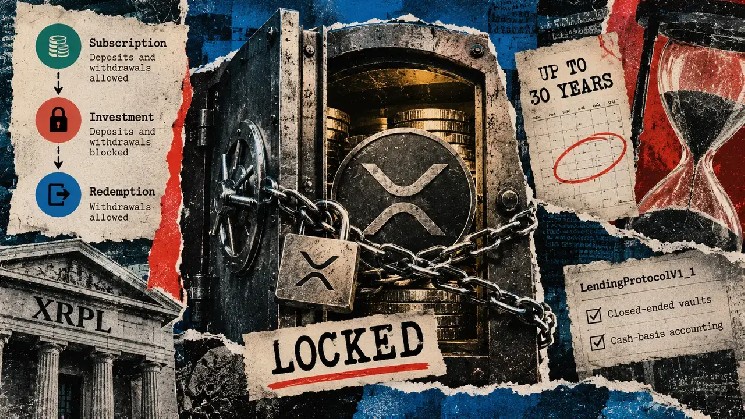
    • The XRP Ledger Foundation released xrpld 3.4.0 on September 16 with LendingProtocolV1_1, introducing closed-ended vaults with fixed subscription, investment, and redemption periods and cash-basis interest accounting.
    • Deposited assets in closed-ended vaults are locked during the investment phase, which can range from 60 seconds to just under 30 years, while interest is recognized only when borrowers actually pay it.
    • Both the base LendingProtocol and SingleAssetVault amendments remain below the 28-of-35 validator threshold required for activation, meaning the features are not yet live on the mainnet.

    XRP Ledger 3.4.0 Introduces Structured Lending With Fixed-Term Vaults

    The XRP Ledger Foundation shipped xrpld version 3.4.0 on September 16, embedding the LendingProtocolV1_1 code path that defines a new generation of closed-ended lending vaults. The release adds two structural changes: a fixed calendar that locks depositor capital for a predetermined term, and a shift to cash-basis accounting that records interest income only when borrowers make payments. Together, these changes aim to make the risk-return profile of on-ledger lending more transparent for participants.

    Unlike open-ended pools that allow continuous deposits and withdrawals, the new closed-ended vaults move through three distinct phases. At creation, the vault sets a SubscriptionDate and a RedemptionDate that remain immutable. During the subscription window, depositors may add assets and redeem shares freely. Once the investment phase begins, the protocol blocks new deposits and withdrawals, committing the vault’s capital to loan funding. Only when the redemption date arrives can depositors withdraw their share of the proceeds. The investment period must be at least 60 seconds and strictly less than 30 years, providing a wide but bounded range for term design.

    Cash-Basis Accounting Separates Expected From Realized Returns

    The accounting overhaul addresses a longstanding ambiguity in how vault income is reported. Under the prior whole-life model, scheduled interest could be booked at loan origination, before the borrower delivered any cash. A missed payment would then force the system to unwind income that had already appeared in the vault’s net asset value. The LendingProtocolV1_1 implementation stamps newly created vaults with a cash-basis accounting version, recognizing interest strictly as borrowers pay it. Vaults created under the earlier rules permanently retain legacy whole-life accounting, ensuring backward compatibility without forced migration.

    For depositors, the practical effect is a cleaner separation between a claim on a borrower and realized vault income. Scheduled payments remain off-balance-sheet receivables until cash arrives, making the reported asset value less dependent on money that has not yet been received. The change also alters how much debt a broker appears to carry against protocol limits, because future interest no longer enters the total at origination. This may create additional headroom for new loans under the protocol’s measurements, though actual utilization still depends on real borrowers and funding.

    Amendment Governance Remains the Critical Gate

    Despite the code being present in the 3.4.0 release, the features are not yet accessible on the live network. A dashboard snapshot fetched on September 17 showed the base LendingProtocol amendment at 13 of 35 trusted-validator votes and SingleAssetVault at 16 of 35, both below the displayed activation threshold of 28. The LendingProtocolV1_1 amendment itself did not appear in the responding node’s feature feed, nor was an activation countdown visible. Network governance therefore remains the first measurable hurdle: the amendments must become visible, attract sufficient validator support, and complete the two-week activation window before any vault can be created.

    Single-asset vaults can denominate their principal in XRP, an issued trust-line token, or a Multi-Purpose Token. This flexibility means that lasting XRP demand from the lending system depends entirely on later choices by application developers, borrowers, and depositors. Moving already-owned XRP into a vault produces a visible locked balance without requiring a market purchase, and applications could build lending pools around issued assets while leaving XRP outside the principal flow entirely.

    Why This Matters

    The introduction of closed-ended vaults and cash-basis accounting represents a maturation of the XRP Ledger’s native lending architecture. By enforcing a visible commitment period and recognizing income only upon receipt, the protocol reduces the opacity that can obscure credit risk in decentralized lending markets. However, the economic significance for XRP holders hinges on adoption metrics that have yet to materialize: the number of XRP-denominated vaults created, the volume of XRP deposited, loan origination activity, repayment performance, and whether depositors renew after the first redemption cycle. Until those on-chain indicators emerge, the system’s capacity to generate sustained demand for XRP—beyond a temporary liquidity sink—remains an open question. The next concrete milestones are the amendment activation process and the subsequent launch of application-level lending products that choose XRP as their principal asset.

    Frequently Asked Questions

    When will the new lending features be available on the XRP Ledger mainnet?
    The features require the LendingProtocol and SingleAssetVault amendments to reach a 28-of-35 validator supermajority and complete a two-week activation period. As of September 17, voting stood at 13 and 16 respectively, with LendingProtocolV1_1 not yet visible in the feature feed.
    Can depositors withdraw their assets early from a closed-ended vault?
    No. Once the investment phase begins at the SubscriptionDate, the protocol blocks all deposits and withdrawals until the RedemptionDate. The lock is enforced at the protocol level for the full term, which can range from 60 seconds to just under 30 years.
    Does this update create new demand for XRP?
    Not automatically. The vault design supports XRP, issued trust-line tokens, and Multi-Purpose Tokens as principal assets. Sustained XRP demand would require applications to select XRP for their vaults, borrowers to seek XRP-denominated credit, and depositors to repeatedly fund and renew positions after observing repayment performance.