Key Highlights
- Circle and Tether froze approximately $320,000 in USDC and USDT stablecoins linked to the Bitget exchange hack, leveraging built-in blacklist controls.
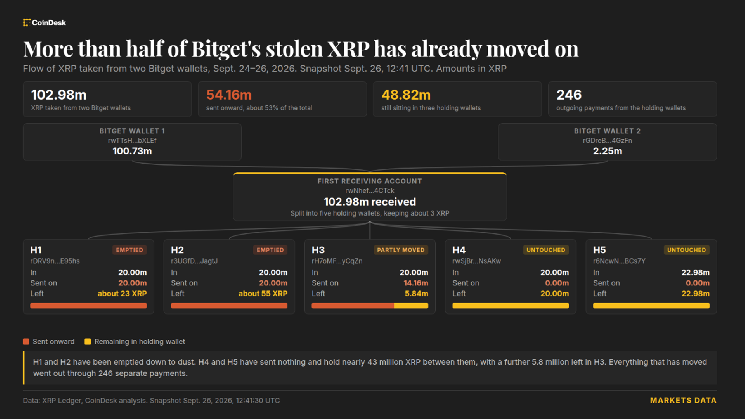
- The attacker moved roughly 54 million XRP from the original five holding wallets overnight, reducing the balance from 70 million to 49 million tokens in eight hours.
- XRP traded near $1.54 on Saturday, down 4% in 24 hours but retaining a 9% weekly gain, with the stolen haul valued at approximately $160 million.
Stablecoin Issuers Intervene to Block Illicit Funds
Circle and Tether, the operators behind the leading dollar-pegged stablecoins USDC and USDT, have taken swift action to mitigate the fallout from the massive Bitget crypto exchange breach. The companies froze roughly $320,000 worth of stablecoins associated with the hacker’s wallet addresses. Both tokens possess programmable controls that allow the issuers to blacklist specific addresses, effectively preventing the frozen assets from being transferred or redeemed. This intervention highlights the centralized enforcement layer that exists within major fiat-backed stablecoins, a feature often cited by regulators and critics alike.
Attacker Accelerates XRP Distribution Across Wallets
On-chain data shows the perpetrator significantly sped up the movement of stolen XRP tokens during the early hours of Saturday. At 04:32 UTC, approximately 70 million XRP remained in the original five accounts identified as the initial holding points for the stolen funds. Roughly eight hours later, that aggregate balance had dropped to 49 million, indicating a rapid dispersal strategy. The transfers reveal the attacker distributing the assets across a growing number of wallets, a common tactic to obfuscate the trail and complicate recovery efforts.
Transaction Patterns Suggest Automated Scripting
Analysis of the transfer flows shows certain payments replicating routes previously used by the first wallet. In one notable instance, an attempted transfer of about 521,000 XRP failed because the sending account lacked sufficient funds. Approximately one hour later, a second wallet executed an identical transfer of 521,000 XRP to the same intended recipient. This pattern suggests the use of automated scripts or predetermined routing logic rather than purely manual intervention, with the attacker managing multiple wallets in parallel to drain the holdings.
Market Absorbs Supply Overhang Amid Price Resilience
Despite the significant movement of stolen funds, XRP markets displayed relative stability on Saturday. The token traded around $1.54, representing a 4% decline over the preceding 24 hours but maintaining a weekly gain of approximately 9%, according to data from CoinGecko. At the prevailing price, the original XRP haul—estimated at roughly 100 million tokens based on the 54 million moved and 49 million remaining—was worth approximately $160 million. That figure equates to roughly 4% of XRP’s reported $4.4 billion in daily trading volume, suggesting the market possesses sufficient liquidity to absorb potential sell pressure, though actual price impact will depend on the depth of buy orders at the time of execution.
Why This Matters
The Bitget hack and subsequent fund movements underscore several critical dynamics in the crypto ecosystem. First, the ability of Circle and Tether to freeze assets demonstrates the “off-switch” capability inherent in centralized stablecoins, providing a rapid response mechanism for illicit flows that does not exist for native blockchain assets like XRP. Second, the speed and sophistication of the XRP laundering—evidenced by automated multi-wallet distribution and retry logic—illustrates the operational maturity of modern cybercriminal groups targeting exchanges. Finally, the market’s muted price reaction reflects XRP’s deep liquidity and the market’s growing desensitization to large-scale exchange breaches, though the ultimate impact hinges on whether the attacker opts for rapid liquidation via decentralized exchanges or slower over-the-counter channels.
Frequently Asked Questions
How much XRP was stolen in the Bitget hack?
Based on on-chain analysis, the original haul held in five primary wallets totaled approximately 119 million XRP (70 million remaining at 04:32 UTC plus 49 million moved subsequently). At Saturday’s price of $1.54, the total value was roughly $160 million.
Can Circle and Tether freeze XRP tokens?
No. Circle and Tether can only freeze assets issued on their respective contracts—USDC and USDT. XRP is a native asset on the XRP Ledger and does not have a centralized freeze function. The $320,000 freeze applied only to stablecoin balances held in the hacker’s wallets.
Will the stolen XRP dump crash the price?
The stolen amount represents about 4% of XRP’s reported daily trading volume ($4.4 billion). While a sudden market sale could cause short-term slippage, the depth of the order books across major exchanges suggests the market could absorb the supply without a catastrophic price collapse, especially if distributed over time or via OTC desks.
Leave a Reply