Author: Evan Mercer

  • XRP Lags Latest Crypto Rally: Will It Catch Up to Rivals’ Gains?

    XRP Lags Latest Crypto Rally: Will It Catch Up to Rivals’ Gains?

    Key Highlights

    • Large cryptocurrency whales have accumulated over $2 billion worth of XRP, driving an 8.22% price surge in three days according to analyst Ali Martinez.
    • On-chain URPD data indicates limited resistance up to $1.60, a level where approximately 2.5 billion XRP previously changed hands and may trigger profit-taking.
    • XRP currently trades near $1.49, up 6.33% in 24 hours and 5.08% over the past week, outperforming recent altcoin market trends.

    Whale Accumulation Sparks XRP Price Surge

    After lagging behind other altcoins during the recent broader market rally, XRP has reclaimed investor attention following aggressive accumulation by large-scale holders. According to crypto analyst Ali Martinez, whales have purchased more than $2 billion worth of XRP in recent sessions, a volume significant enough to shift market dynamics and catalyze a sharp price recovery. The buying pressure has translated into an 8.22% gain over just three trading days, signaling renewed conviction among high-net-worth participants in the token’s near-term trajectory.

    On-Chain Metrics Point to $1.60 as Critical Resistance

    Martinez’s analysis relies heavily on URPD (UTXO Realized Price Distribution) data, which maps the price levels at which the current circulating supply last moved on-chain. The metric reveals a relative absence of realized supply between current prices and $1.60, suggesting that few holders are sitting on break-even or loss positions in that range. This structural characteristic typically reduces selling pressure during upward moves, as there are fewer incentivized exit points for traders looking to recover costs.

    The $1.60 Supply Wall

    However, the same data identifies $1.60 as a zone of heavy historical activity. Approximately 2.5 billion XRP changed hands near this price level in the past, creating a dense cluster of realized cost basis. Martinez warns that as price approaches this region, a significant portion of those holders may look to liquidate positions at or near break-even, introducing substantial selling pressure. The analyst characterizes this as the next major resistance zone where profit-taking could stall or reverse the current uptrend.

    Current Market Position and Momentum

    As of the latest data, XRP is trading at approximately $1.49, representing a 6.33% increase over the past 24 hours and a 5.08% gain over the trailing seven days. The token’s ability to sustain momentum above the $1.45 level has kept the path toward $1.60 technically viable, though the on-chain supply distribution suggests the final approach to that level may encounter increasing friction. Volume profiles and order book depth will be critical indicators of whether whale demand can absorb the anticipated supply wall.

    Why This Matters

    The resurgence of whale activity in XRP highlights a broader pattern where large capital flows often precede sustained trend changes in mid-cap crypto assets. Unlike retail-driven pumps, accumulation of this magnitude—exceeding $2 billion—typically reflects strategic positioning ahead of anticipated catalysts, whether regulatory clarity, institutional adoption, or network-level developments on the XRP Ledger. The URPD framework used by Martinez offers a more granular view of holder psychology than traditional technical indicators, mapping actual economic pain points rather than arbitrary chart levels. For market participants, the $1.60 zone represents not just a price target but a behavioral test: whether new demand can overwhelm the latent supply from prior market cycles. A decisive break above this level could signal a shift in market structure, while rejection may consolidate XRP in a lower range until fresh catalysts emerge.

    Frequently Asked Questions

    What is driving the recent XRP price increase?

    The primary driver is accumulation by large holders (whales) who have purchased over $2 billion worth of XRP, according to analyst Ali Martinez. This concentrated buying pressure has pushed the price up 8.22% in three days.

    What does the URPD data suggest about XRP’s next resistance?

    URPD (UTXO Realized Price Distribution) data shows limited on-chain supply between current levels and $1.60, indicating minimal resistance. However, $1.60 itself is a major supply zone where ~2.5 billion XRP last transacted, making it a likely profit-taking target.

    Is XRP expected to continue rising past $1.60?

    Analyst Ali Martinez suggests there is room for gains up to $1.60 based on current on-chain structure, but warns that the dense cluster of realized supply at that level may trigger significant selling pressure, potentially stalling further upside without new demand catalysts.


  • Crypto Giants Resume Buying Bitcoin, Ethereum, and Solana, On-Chain Data Shows

    Crypto Giants Resume Buying Bitcoin, Ethereum, and Solana, On-Chain Data Shows

    Key Highlights

    • Strategy (formerly MicroStrategy) added 950 BTC to its treasury, raising total holdings to 846,000 BTC, while also repurchasing $174 million in STRC preferred shares.
    • Bitmine, the largest corporate Ethereum holder, acquired 27,562 ETH to reach 5.98 million ETH (4.9% of circulating supply), valuing its total crypto-asset portfolio at $17.1 billion.
    • Nasdaq-listed DeFi Development Corp. increased its Solana position by 101,381 SOL, bringing total holdings to 2.49 million SOL for staking and validator operations.

    Corporate Treasury Accumulation Accelerates Across Major Crypto Assets

    Bitcoin, Ethereum, and Solana have all registered significant price appreciation in recent sessions, coinciding with a renewed wave of institutional buying from publicly listed treasury companies. The coordinated accumulation signals growing conviction among corporate allocators that the digital asset bull cycle is entering a mature expansion phase, particularly as macroeconomic headwinds ease and tokenization narratives gain traction.

    Strategy Extends Bitcoin Lead With Fresh 950 BTC Purchase

    Strategy, the world’s largest publicly traded Bitcoin holder, resumed its acquisition program after a multi-week pause. According to a statement by Strategy founder Michael Saylor, the company purchased an additional 950 Bitcoin, lifting its aggregate treasury to 846,000 BTC. In parallel, Strategy repurchased STRC preferred shares valued at $174 million. Saylor noted that Strategy holds assets worth $6.09 billion, adding that the company’s dollar-denominated assets could cover current preferred stock dividends and interest payments for approximately 3.8 years.

    Bitmine Deepens Ethereum Dominance With 27,562 ETH Acquisition

    Bitmine, recognized as the world’s largest corporate holder of Ethereum, disclosed last week that it purchased an additional 27,562 ETH, bringing its total holdings to 5,983,940 ETH. According to the announcement, this represents 4.9% of the total circulating ETH supply. The official statement also noted that Bitmine’s total assets, including cryptocurrency, cash, marketable securities, and strategic investment assets, have reached $17.1 billion. This figure includes 5.98 million ETH, 212 Bitcoin, $714 million in cash and marketable securities, $180 million worth of Beast Industries shares, and $105 million worth of Aitco Holdings shares. Assuming an ETH price of $2,688, Bitmine’s ETH holdings are estimated to be worth approximately $16.1 billion.

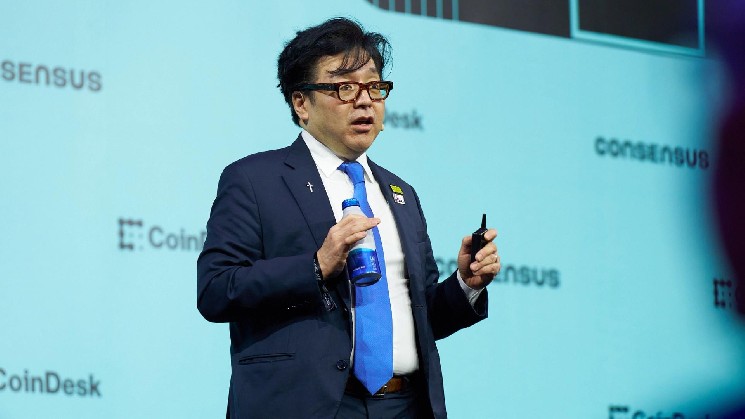
    Bitmine Chairman Tom Lee Outlines Bull Market Thesis

    Bitmine Chairman Tom Lee stated, “We believe a crypto bull market is continuing, driven by several factors, including the shift from AI to crypto that began in late June, the strengthening of crypto fundamentals around both tokenization and AI, and finally, the end of the 4-year cycle. In our view, $ETH’s tremendous performance in Q3 2026 is seen as a harbinger of potentially even stronger growth in Q4 2026. Given that institutions kept their crypto investments low in early 2026, partly due to the superior performance of AI stocks in early 2026, we expect institutions to significantly increase their crypto investments in the final three months of 2026.”

    DeFi Development Corp. Expands Solana Infrastructure Bet

    Last week, Nasdaq-listed company DeFi Development Corp. announced it had purchased an additional 101,381 Solana tokens, bringing its total SOL holdings to 2.49 million. The company also added that it plans to use its SOL holdings for staking, validator operations, and on-chain financial infrastructure, depending on market conditions and risk management standards.

    Why This Matters

    The simultaneous accumulation across Bitcoin, Ethereum, and Solana by three distinct public companies illustrates a broadening institutional adoption curve that extends beyond single-asset exposure. Strategy’s continued Bitcoin stacking reinforces its role as a de facto Bitcoin proxy for equity investors, while Bitmine’s outsized Ethereum position — now approaching 5% of circulating supply — underscores growing confidence in ETH’s staking yield and tokenization utility. DeFi Development Corp.’s validator-focused Solana strategy highlights a shift toward active network participation rather than passive holding. Collectively, these moves suggest corporate treasurers are diversifying across the layer-one spectrum, positioning for a cycle where yield-bearing staking assets and programmable infrastructure tokens command premium valuations alongside Bitcoin’s store-of-value narrative.

    Frequently Asked Questions

    How much Bitcoin does Strategy now hold after its latest purchase?

    Strategy holds 846,000 BTC following the acquisition of an additional 950 Bitcoin.

    What percentage of Ethereum’s circulating supply does Bitmine control?

    Bitmine’s 5,983,940 ETH represents 4.9% of the total circulating ETH supply.

    What is DeFi Development Corp.’s stated purpose for its Solana holdings?

    The company plans to use its 2.49 million SOL for staking, validator operations, and on-chain financial infrastructure, subject to market conditions and risk management standards.

  • ECB Plans to Buy Tokenized Bonds with Its Own Funds

    ECB Plans to Buy Tokenized Bonds with Its Own Funds

    Key Highlights

    • The European Central Bank (ECB) plans to allocate a small portion of its reserves to tokenized securities, establishing direct exposure to blockchain-based financial markets.
    • Transactions will settle via Pontes, a new Eurosystem platform that connects the ECB’s payment infrastructure to blockchain networks using central bank money.
    • ECB Executive Board member Piero Cipollone emphasized that Pontes brings “the stability and trust of central bank money to the European tokenized finance ecosystem.”

    ECB Takes Strategic Step Into Tokenized Securities

    The European Central Bank has announced plans to invest a modest share of its foreign reserves in tokenized securities, marking a significant institutional endorsement of blockchain-based financial infrastructure. The initiative positions the ECB as an active participant rather than a mere observer in the evolving digital asset landscape, allowing it to gain firsthand operational experience with the technology’s potential for wholesale financial markets.

    Pontes Platform Bridges Central Bank Money and Blockchain Markets

    Central to the strategy is Pontes, a newly launched Eurosystem platform designed to settle wholesale transactions in central bank money. The platform functions as a bridge between the ECB’s existing payment system and blockchain-based financial markets, enabling the secure transfer of tokenized assets against central bank liabilities. This architecture addresses a critical gap in the current digital asset ecosystem: the ability to settle tokenized securities with the same finality and risk profile as traditional central bank money settlements.

    “Pontes brings the stability and trust of central bank money to the European tokenized finance ecosystem,” said Piero Cipollone, member of the ECB’s executive board. “It will give an important advantage to help it scale.”

    Initial Investment Focus on Euro-Denominated Government Securities

    The ECB’s initial foray will concentrate exclusively on euro-denominated securities issued by euro-area governments, regional authorities, agencies, and European supranational institutions. This conservative scope reflects the central bank’s mandate to maintain financial stability while exploring innovation. By limiting purchases to high-quality public sector issuers, the ECB minimizes credit risk while testing the end-to-end workflow of tokenized bond acquisition, settlement, and ongoing portfolio management.

    Testing Technology Across Full Investment Lifecycle

    Beyond the initial purchase, the ECB intends to evaluate the technology across the complete investment lifecycle. This includes assessing how tokenized bonds perform in secondary market trading, corporate actions processing, coupon payments, and redemption events—all settled through the Pontes infrastructure. The exercise serves as a practical stress test for the Eurosystem’s readiness to integrate distributed ledger technology into core central banking operations without compromising monetary policy implementation or financial stability.

    Why This Matters

    The ECB’s move signals a broader strategic shift among major central banks toward operational engagement with tokenization. While many monetary authorities have conducted proofs-of-concept or pilot projects, the decision to commit actual reserves—however small—represents a tangible step toward mainstreaming blockchain-based settlement for wholesale finance. The Pontes platform specifically addresses the “settlement finality” challenge that has hindered institutional adoption of tokenized assets, offering a model where central bank money anchors the transaction. As the European Union advances its Markets in Crypto-Assets (MiCA) regulation and explores a digital euro, the ECB’s hands-on experience with tokenized government securities will likely inform future policy frameworks for digital asset markets and central bank digital currency interoperability.

    Frequently Asked Questions

    What is the Pontes platform?

    Pontes is a new Eurosystem platform that enables wholesale transactions in tokenized securities to settle in central bank money. It connects the ECB’s traditional payment infrastructure with blockchain-based financial markets, providing settlement finality equivalent to existing central bank systems.

    What types of tokenized securities will the ECB purchase?

    The ECB’s initial investments will focus exclusively on euro-denominated securities issued by euro-area governments, regional authorities, agencies, and European supranational institutions.

    Why is the ECB investing in tokenized securities now?

    The ECB aims to test the technology as an active investor—from purchase through settlement to portfolio management—gaining operational insight into blockchain-based markets while supporting the scaling of the European tokenized finance ecosystem with the stability of central bank money.

  • Senate’s Clarity Act Repeal: Why Banks and Offshore Hubs Like Dubai Are Winners

    Senate’s Clarity Act Repeal: Why Banks and Offshore Hubs Like Dubai Are Winners

    Key Highlights

    • The failure to pass the Clarity Act leaves U.S. crypto regulation to be shaped by agencies rather than Congress, with the SEC and CFTC moving forward on separate rulemaking tracks.
    • The SEC issued a temporary conditional exemption allowing eligible venues to trade tokenized U.S. stocks via permissioned liquidity pools on public blockchains.
    • The UAE now hosts over 110 regulated virtual-asset businesses with roughly 20 more holding in-principle approvals, contrasting with U.S. regulatory uncertainty.

    Regulatory Vacuum Drives Agency Action After Clarity Act Stalls

    The immediate consequence of the legislative failure to pass the Clarity Act is that cryptocurrency regulation in the United States will continue to be crafted outside the halls of Congress. With the bill effectively stalled, federal agencies have stepped into the void, advancing their own frameworks at a rapid pace. The Securities and Exchange Commission moved swiftly following the vote, issuing a temporary conditional exemption that permits eligible trading venues to offer tokenized U.S. equities through permissioned liquidity pools operating on public blockchains. This move signals the SEC’s willingness to engage with tokenized assets under specific, controlled conditions while broader statutory authority remains unresolved.

    CFTC Advances Undisclosed Proposal to White House

    Hot on the heels of the SEC’s action, the Commodity Futures Trading Commission submitted a new crypto rule proposal to the White House for review. The agency has not disclosed the details of the submission, leaving the industry in the dark regarding which digital assets the proposal contemplates, what requirements exchanges would need to meet for licensing, what restrictions would apply, and how far the CFTC believes its jurisdictional authority extends. This opacity adds another layer of uncertainty for market participants awaiting a coherent federal framework.

    Industry Voices Highlight Legislative Void and Global Divergence

    The legislative impasse has drawn sharp commentary from industry observers. “Clarity Act is dead, at least for now,” Jesse Hamilton, CoinDesk’s deputy managing editor in charge of global policy and regulation, wrote in an analysis that explains what very few appear to know: what the Clarity Act actually is. The assessment underscows the knowledge gap surrounding the failed legislation even as its demise reshapes the regulatory landscape.

    The contrast with international jurisdictions is becoming a focal point for crypto businesses. “While the U.S. continues debating the Clarity Act, in the UAE we actually have clarity,” Irina Heaver, a Dubai-based crypto lawyer and founder of NeosLegal, said via Telegram. Heaver noted that more than 110 regulated virtual-asset businesses currently operate in the country, with about 20 more holding in-principle approvals, highlighting a fully operational regulatory regime that stands in stark relief to the fragmented U.S. approach.

    Why This Matters

    The death of the Clarity Act for this congressional session cements a reality where U.S. crypto policy is set through agency rulemaking, enforcement actions, and limited exemptions rather than comprehensive statute. This piecemeal approach creates compliance complexity for firms trying to navigate SEC securities law, CFTC derivatives oversight, and state-level money transmission rules simultaneously. Meanwhile, jurisdictions like the United Arab Emirates, the European Union under MiCA, and Singapore are offering defined licensing pathways, potentially accelerating a talent and capital migration that has been underway since 2022. The SEC’s tokenized stock exemption and the CFTC’s undisclosed White House submission represent the next immediate flashpoints; market participants will scrutinize both for clues on whether a dual-agency framework can provide the predictability that legislation failed to deliver.

    Frequently Asked Questions

    What is the current status of the Clarity Act?
    The Clarity Act is dead for now, according to CoinDesk’s Jesse Hamilton, meaning it will not advance in the current congressional session and no comprehensive statutory framework for crypto market structure has been enacted.
    What did the SEC’s temporary conditional exemption authorize?
    The SEC’s exemption allows eligible venues to trade tokenized U.S. stocks through permissioned liquidity pools on public blockchains, providing a narrow, controlled pathway for on-chain equity settlement.
    How does the U.S. regulatory environment compare to the UAE’s?
    The UAE operates a live, comprehensive virtual-asset licensing regime with over 110 regulated businesses and roughly 20 additional firms holding in-principle approvals, offering regulatory certainty that contrasts with the U.S. reliance on agency-by-agency rulemaking.
  • Markets Eye Federal Reserve: Goolsbee on Inflation, Bessent on Warsh

    Markets Eye Federal Reserve: Goolsbee on Inflation, Bessent on Warsh

    Key Highlights

    • Chicago Fed President Austan Goolsbee signaled openness to rate cuts if inflation meaningfully decelerates toward the 2% target, while emphasizing the need for decisive action against price pressures.
    • U.S. Treasury Secretary Scott Bessent expressed confidence in Fed Chairman Kevin Warsh and noted President Donald Trump shares that confidence, alongside an expansion of the Treasury’s bond repurchase program.
    • With U.S. PCE inflation at 3.7% as of July, Goolsbee stressed that reaching the 2% goal depends on easing supply constraints and distinguishing between supply-driven and demand-driven inflation components.

    Goolsbee Outlines Conditional Path for Rate Cuts Amid Inflation Fight

    Chicago Federal Reserve President Austan Goolsbee delivered a nuanced assessment of monetary policy during a meeting in London, stating that the central bank would not oppose interest rate reductions if inflation slows significantly toward its 2% target. His remarks come on the heels of the Fed’s 25 basis point rate increase last week—the first hike since 2023—with markets now pricing potential further increases in October or December. Goolsbee emphasized that the Federal Reserve must have the courage to respond forcefully to inflation when necessary, expressing optimism that the 2% goal remains achievable provided there are no signs of overheating demand.

    Disentangling Supply Shocks from Demand Pressures

    Central to Goolsbee’s analysis is the ongoing effort to parse how much of current inflation stems from supply disruptions versus demand strength. He pointed specifically to robust investment in artificial intelligence as a factor supporting demand, while noting that persistent supply shocks continue to exert upward pressure on prices. As of July, U.S. personal consumption expenditures (PCE) inflation stood at 3.7%, and Goolsbee underscored that returning to the 2% target hinges on the easing of supply-side constraints. Officials, he said, are still analyzing the relative contributions of supply and demand dynamics to the current inflation picture.

    Bessent Backs Warsh, Highlights Treasury Market Operations

    Following the Fed’s latest rate decision, U.S. Treasury Secretary Scott Bessent appeared on CNBC to convey a message of stability regarding Fed leadership. Bessent reiterated his confidence in Federal Reserve Chairman Kevin Warsh and added that President Donald Trump also maintains confidence in Warsh’s stewardship of monetary policy. The Treasury chief also addressed market liquidity conditions, disclosing that the department has increased the size of its bond repurchase program—a move aimed at supporting smooth functioning in the government securities market.

    Central Bank Independence Takes Center Stage

    Goolsbee waded into the institutional dimension of monetary policy, arguing that expectations for the Fed to lower federal government borrowing costs underscore the critical importance of central bank independence. He emphasized that the Federal Reserve must set monetary policy strictly in line with its inflation mandate, free from fiscal dominance considerations. The comments arrive at a moment when the interplay between U.S. monetary policy and Treasury market interventions is under intense scrutiny from investors and policymakers alike.

    Why This Matters

    The divergent but complementary signals from the Fed and Treasury reflect a delicate balancing act as policymakers navigate the final stretch of 2026. Goolsbee’s conditional dovishness—openness to cuts only if inflation data cooperates—signals that the Fed remains data-dependent despite the recent hike. Meanwhile, Bessent’s public backing of Chairman Warsh and the expansion of the Treasury’s buyback operation aim to anchor market confidence in both leadership continuity and plumbing liquidity. With PCE inflation still nearly double the target and AI-driven investment bolstering demand, the path to 2% remains contingent on supply-side normalization, making upcoming inflation prints and Fed communications pivotal for market pricing through year-end.

    Frequently Asked Questions

    What conditions would prompt the Fed to consider rate cuts according to Goolsbee?

    Goolsbee stated the Fed would not oppose rate cuts if inflation slows significantly toward the 2% target, provided there are no signs of overheating demand and supply pressures continue to ease.

    What is the current level of U.S. PCE inflation and the Fed’s target?

    As of July, U.S. PCE inflation was at 3.7%, while the Federal Reserve’s target remains 2%.

    What actions has the Treasury taken to support market liquidity?

    Treasury Secretary Scott Bessent announced an increase in the size of the Treasury’s bond repurchase program to address liquidity conditions in the government securities market.

  • What’s Driving Bitcoin’s Rise? Glassnode and CryptoQuant CEOs Explain

    What’s Driving Bitcoin’s Rise? Glassnode and CryptoQuant CEOs Explain

    Key Highlights

    • Bitcoin surged past $85,000 as short-position liquidations between $82,000 and $86,000 accelerated upward momentum, according to Glassnode on-chain data.
    • CryptoQuant CEO Ki Young Ju confirmed Bitcoin has reclaimed the critical 365-day moving average at approximately $83,000, a level widely watched to signal the end of the bear market.
    • Analysts suggest sustained trading above the 365-day MA could trigger increased buying pressure from trend-following and institutional investors driven by FOMO.

    Short-Position Liquidations Fuel Bitcoin’s Break Above $85,000

    Bitcoin opened the week with a decisive move above the $85,000 threshold, marking its highest level in months. On-chain analytics firm Glassnode attributes the acceleration to a cascade of short-position liquidations clustered between $82,000 and $86,000. According to Glassnode data, a significant volume of short liquidity had accumulated in this range over recent months. When Bitcoin failed to produce the sharp pullbacks many traders anticipated, those holding short positions were forced to buy back $BTC to cover, creating a feedback loop that propelled prices higher.

    Glassnode analysts described the dynamic in their latest assessment: “As expected, Bitcoin quickly broke through the short liquidation wall.” They elaborated that the rejection at this level proved insufficient to halt the advance: “Short positions accumulated between $82,000 and $86,000 over the months, but the rejection at that level was insufficient. Now these short positions have become fuel, because these traders need to buy back $BTC.” This short-covering rally has effectively turned prior bearish positioning into buying pressure.

    365-Day Moving Average Reclaimed: A Critical Bull-Market Signal

    Adding weight to the bullish narrative, CryptoQuant CEO Ki Young Ju posted on X that Bitcoin has reclaimed its 365-day moving average, currently situated near $83,000, with price action holding above $84,000. Ju emphasized that this long-term trend indicator is a primary reference point for market participants assessing whether the bear market has concluded. CryptoQuant has historically treated a sustained breakout above the 365-day MA as a confirmation signal for a new bull market cycle.

    Ju’s commentary underscored the psychological and structural importance of the level: “Bitcoin reclaimed the 365MA at the $83,000 level and is currently sitting above $84,000.” He further noted the potential for momentum-driven inflows: “This is the line everyone is watching for the end of the bear market. If it holds, momentum will start to drive traders and institutions crazy with FOMO. This is where things get fun.”

    Why This Matters

    The confluence of short-covering dynamics and a key long-term technical reclamation presents a noteworthy inflection point for Bitcoin. The $82,000–$86,000 zone had acted as a liquidity magnet for bearish bets; its clearance removes a structural overhang and may reduce near-term selling pressure from forced liquidations. Simultaneously, the 365-day moving average reclaim is widely regarded by quantitative analysts and institutional desks as a regime-change filter. A daily close above this level, if sustained, could unlock algorithmic trend-following strategies and encourage capital allocation from funds that mandate bull-market confirmation before deploying size. Market participants will now monitor whether Bitcoin can establish support above the 365-day MA and the $84,000–$85,000 band, which would strengthen the case for a durable uptrend.

    Frequently Asked Questions

    What caused Bitcoin’s rapid move above $85,000?

    The surge was driven by a cascade of short-position liquidations. Glassnode data shows a large concentration of short bets between $82,000 and $86,000. When price failed to reverse sharply in that zone, short sellers bought back $BTC to cover, creating a self-reinforcing upward spiral.

    Why is the 365-day moving average so important?

    The 365-day moving average (currently ~$83,000) is a widely watched long-term trend indicator. CryptoQuant and many institutional analysts treat a sustained break above this level as a primary signal that the bear market has ended and a new bull market may be underway.

    What needs to happen for the bullish case to strengthen?

    Analysts will look for Bitcoin to hold above the 365-day MA and the $84,000–$85,000 range on daily closes. Sustained support could trigger additional buying from trend-following algorithms and institutional investors, amplifying momentum.

  • Bitmine Buys $75 Million in Ether as Tom Lee Says Institutions Remain Underweight Crypto

    Bitmine Buys $75 Million in Ether as Tom Lee Says Institutions Remain Underweight Crypto

    Key Highlights

    • Bitmine Immersion Technologies (BMNR) acquired 27,562 ETH worth approximately $75.2 million last week, raising its total holdings to 5,983,940 ETH — roughly 4.9% of the total 122.1 million ETH supply.
    • The firm has purchased ether weekly since its June 2025 pivot to a crypto treasury strategy and has staked about 5 million ETH (85% of holdings), projecting roughly $357 million in annual staking revenue at current yields.
    • BMNR shares rose 5.8% in pre-market trading, extending Friday’s 8% rally, as ETH surged to a fresh high since late January; Chairman Tom Lee says institutional investors remain underexposed to crypto and may be playing catch-up after favoring AI-linked stocks earlier this year.

    Bitmine Immersion Technologies Accelerates Ethereum Accumulation Toward 5% Supply Target

    Bitmine Immersion Technologies, the largest corporate holder of Ethereum by treasury allocation, continued its methodical accumulation strategy last week with the purchase of 27,562 ETH at an average price of $2,727 per token. The transaction, valued at approximately $75.2 million, brings the company’s total holdings to 5,983,940 ETH — representing roughly 4.9% of the cryptocurrency’s 122.1 million circulating supply. At its current weekly acquisition pace, the firm is on track to reach its stated goal of controlling 5% of the total ETH supply within the next couple of months.

    Consistent Weekly Buying Since Strategic Pivot in June 2025

    The latest purchase extends a buying streak that began in June 2025, when Bitmine formally pivoted to a crypto treasury strategy. Since that inflection point, the company has executed weekly ether acquisitions without interruption, demonstrating a disciplined dollar-cost averaging approach regardless of short-term price volatility. This consistency has allowed Bitmine to build a dominant position while avoiding the market impact of larger, sporadic purchases. The firm’s treasury now holds nearly 6 million ETH, a scale that exceeds the reserves of most known institutional holders and positions Bitmine as a de facto whale in the Ethereum ecosystem.

    Staking Infrastructure Generates Significant Yield

    Beyond accumulation, Bitmine has deployed approximately 5 million ETH — roughly 85% of its total holdings — into staking infrastructure. At current network yields, this staked position is projected to generate approximately $357 million in annual revenue, creating a substantial income stream that supplements the company’s core operations. The staking strategy also reinforces Ethereum’s proof-of-stake security while providing Bitmine with a productive use of capital that aligns with its long-term conviction in the asset. The dual benefit of price appreciation potential and yield generation distinguishes Bitmine’s approach from pure speculative holding.

    Market Reaction and Institutional Sentiment

    Financial markets responded positively to the accumulation news. BMNR shares climbed 5.8% in pre-market trading on Monday, extending Friday’s 8% rally that coincided with ether’s surge to its highest level since late January. The share price action suggests equity investors are repricing Bitmine not merely as a technology company but as a leveraged proxy for Ethereum exposure. Chairman Tom Lee, a prominent voice in digital asset strategy, framed the buying within a broader institutional narrative: institutional investors remain underexposed to crypto and may be playing catch-up after favoring artificial intelligence-linked stocks earlier in the year. His assessment implies that Bitmine’s aggressive accumulation could be an early signal of a broader rotation into digital assets by traditional capital allocators.

    Why This Matters

    Bitmine’s pursuit of a 5% supply target represents one of the most aggressive corporate treasury strategies in the digital asset space, rivaling even MicroStrategy’s bitcoin accumulation in terms of supply percentage ownership. At nearly 6 million ETH, Bitmine’s holdings exceed the staked balances of many major validators and approach the scale of the Ethereum Foundation’s own reserves. This concentration raises structural questions about governance influence, liquidity availability, and the degree to which a single entity’s actions can move the market. For institutional observers, Bitmine’s weekly buying cadence provides a real-time case study in how traditional corporations can operationalize crypto treasury management at scale. The projected $357 million in staking revenue also introduces a new paradigm: crypto-native yield as a material line item on a public company’s income statement. As ETH approaches multi-month highs and institutional sentiment shifts, Bitmine’s next quarterly disclosures will be closely watched for signs of whether the 5% threshold is reached — and what the firm signals as its next strategic milestone.

    Frequently Asked Questions

    How much ETH does Bitmine Immersion Technologies currently hold?
    As of the latest purchase, Bitmine holds 5,983,940 ETH, representing approximately 4.9% of the total 122.1 million ETH circulating supply.
    What is the projected annual revenue from Bitmine’s staked ETH?
    With roughly 5 million ETH staked (85% of holdings), Bitmine projects approximately $357 million in annual staking revenue at current network yields.
    When did Bitmine begin its weekly ETH accumulation strategy?
    The company started buying ether every week in June 2025, when it formally pivoted to a crypto treasury strategy.
  • Google and Apple Recruit Crypto Talent as Big Tech Targets Stablecoin and Tokenization Infrastructure

    Google and Apple Recruit Crypto Talent as Big Tech Targets Stablecoin and Tokenization Infrastructure

    Key Highlights

    • Google Cloud is recruiting an Industry Principal Architect in Hong Kong to drive real-world asset tokenization across the Asia-Pacific region, signaling a strategic push into blockchain infrastructure for institutional clients.
    • Apple is seeking an Apple Pay Financial Product Strategy Lead in Cupertino or New York, indicating the iPhone maker is deepening its exploration of digital-asset integration within its payments ecosystem.
    • The job postings confirm that stablecoins, tokenized deposits, and blockchain-based payments are becoming core competencies inside the world’s largest technology and payments platforms, moving beyond crypto-native firms.

    Big Tech Accelerates Digital Asset Hiring Amid Institutional Shift

    Google and Apple are actively recruiting specialized talent for digital asset initiatives, providing the clearest evidence yet that the world’s most valuable technology companies are preparing for a significant expansion of blockchain-based payments, stablecoins, and asset tokenization within their core business lines. The simultaneous hiring pushes reveal a coordinated industry movement where traditional Web2 giants are building the internal expertise necessary to support institutional-grade digital asset infrastructure.

    Google Cloud Targets APAC Tokenization Leadership

    Google Cloud has posted a role for an Industry Principal Architect based in Hong Kong, tasked with working directly with protocol foundations, exchanges, custodians, and financial institutions to tokenize real-world assets across the Asia-Pacific region. The position explicitly requires deep experience with blockchain networks, smart contracts, stablecoin infrastructure, tokenized deposits, and custody technologies. According to the listing, the hire will advise executives and help shape Google Cloud’s Web3 product roadmap as the division seeks to become the preferred cloud provider for digital-asset builders and institutional adopters. The Hong Kong location underscores the strategic importance of the APAC market, where regulatory frameworks in Hong Kong and Singapore are rapidly evolving to accommodate tokenized securities and regulated stablecoins.

    Apple Pay Explores Financial Product Strategy for Digital Assets

    In parallel, Apple is advertising for an Apple Pay Financial Product Strategy Lead to be based in either Cupertino, California, or New York. While the job description does not explicitly mention blockchain or cryptocurrency, the placement within Apple Pay—the company’s vast payments ecosystem that processes billions of transactions annually—suggests a focus on integrating new forms of digital value transfer. The role sits at the intersection of consumer payments, financial services partnerships, and emerging payment rails, positioning Apple to potentially leverage stablecoins or tokenized deposits for faster settlement, cross-border transactions, or new financial product offerings for its hundreds of millions of users.

    Why This Matters

    The hiring activity marks a pivotal inflection point for the digital asset industry. For years, blockchain infrastructure and stablecoin development were largely confined to crypto-native startups and specialist firms. The entry of Google Cloud and Apple signals that the technology has matured sufficiently for hyperscale cloud providers and global payments networks to treat it as a standard enterprise capability rather than an experimental frontier. Google Cloud’s explicit pursuit of institutional custodians and exchanges as clients reflects a broader trend: traditional financial institutions are moving from pilot programs to production deployments of tokenized assets, requiring the security, compliance, and scalability that only major cloud platforms can deliver. Meanwhile, Apple’s exploration within Apple Pay could accelerate consumer-facing adoption of blockchain-based payments by abstracting complexity behind familiar interfaces. Regulators in major jurisdictions are simultaneously finalizing frameworks for stablecoins and tokenized deposits, creating a more predictable environment for Big Tech investment. The next 12 to 18 months will likely reveal whether these hires translate into product announcements, platform integrations, or strategic partnerships that reshape how digital value moves across the global economy.

    Frequently Asked Questions

    Are Google or Apple launching their own cryptocurrencies or stablecoins?

    No. The job listings do not confirm that either company is launching a new crypto product, stablecoin, or blockchain. They indicate that both firms are building internal expertise to support digital asset infrastructure, tokenization services, and potential payment integrations for institutional partners and developers.

    Why is Google Cloud hiring in Hong Kong specifically?

    Hong Kong has emerged as a leading hub for digital asset regulation in Asia, with new licensing regimes for virtual asset trading platforms and active pilots for tokenized green bonds and wholesale central bank digital currencies. The location positions Google Cloud to serve financial institutions and protocol foundations operating under these evolving regulatory frameworks across the broader APAC region.

    What does the Apple Pay role suggest about the company’s direction?

    The Apple Pay Financial Product Strategy Lead role suggests Apple is evaluating how emerging payment rails—including stablecoins, tokenized deposits, and potentially central bank digital currencies—could enhance its payments ecosystem. This could enable faster cross-border settlements, new financial product partnerships, or programmable payment features for merchants and consumers, though no specific product has been announced.

  • Machine Learning Algorithm Sets Shiba Inu (SHIB) Price for October 1, 2026

    Machine Learning Algorithm Sets Shiba Inu (SHIB) Price for October 1, 2026

    Key Highlights

    • Finbold’s AI Agent predicts Shiba Inu ($SHIB) will reach $0.000006525 by October 1, 2026, implying a 13% gain from the current $0.00000573 level.
    • The forecast aggregates outputs from two large language models—DeepSeek Chat and Gemini 3.5 Flash—projecting rallies of 18.67% and 9.08%, respectively.
    • Technical signals support the bullish outlook: MACD has crossed above both the signal and zero lines, while RSI sits at 62.77%, indicating strengthening momentum.

    Finbold’s AI Agent Issues October Price Target for Shiba Inu

    As Bitcoin (BTC) and Ethereum (ETH) paced a broader cryptocurrency market recovery, Finbold’s AI Agent released a forward-looking price projection for Shiba Inu ($SHIB) on September 21, 2026. The model sets an end-of-month target of $0.000006525 for October 1, representing a potential 13% upside over the subsequent ten days from the token’s then-current trading level of approximately $0.00000573. The prediction arrives amid a tentative rebound for the memecoin, which has climbed more than 37% over the past two months despite a steep 54% decline over the trailing twelve months.

    Dual-LLM Methodology Drives Consensus Forecast

    Finbold’s AI Agent derived its composite target by querying two distinct large language models. DeepSeek Chat returned the more optimistic projection, forecasting an 18.67% advance to $0.0000068. Gemini 3.5 Flash offered a more measured outlook, anticipating a 9.08% increase to $0.00000625. The agent’s final $0.000006525 figure effectively splits the difference between the two model outputs, reflecting a consensus view that balances aggressive and conservative algorithmic interpretations of current market structure.

    Technical Indicators Signal Renewed Bullish Momentum

    The AI-driven forecast is underpinned by two widely watched technical oscillators. The Moving Average Convergence Divergence (MACD) recently printed a bullish crossover, with the MACD line ascending above both the signal line and the zero line—a configuration technicians associate with the early stages of a new uptrend. Concurrently, the Relative Strength Index (RSI) registered 62.77%, positioning the asset firmly in bullish territory without yet signaling overbought conditions. Together, these readings suggest momentum is accelerating from a supportive base rather than exhausting near a local top.

    Context: From 54% Drawdown to Stabilizing Volume

    The projected rebound must be weighed against a punishing bear market. Between September 22, 2025, and the publication date, $SHIB tumbled from $0.00001276 to roughly $0.0000057, erasing more than half its value and compressing the project’s market capitalization to $3.4 billion. Recent on-chain activity offers a modest counter-narrative: 24-hour trading volume swelled 6.9% to $99.14 million, per CoinMarketCap data, hinting at returning speculative interest. Whether the AI’s October target materializes will likely depend on whether the broader risk-on sentiment sustaining Bitcoin and Ethereum continues to lift high-beta altcoins in tandem.

    Why This Matters

    AI-generated price targets are becoming a staple of crypto media coverage, offering retail traders algorithmic second opinions that blend quantitative technical analysis with natural-language reasoning from frontier models. The Finbold forecast illustrates how multi-LLM ensembles can produce a single actionable number while exposing the range of disagreement between underlying engines. For Shiba Inu specifically, the prediction tests whether a memecoin that has lost majority ownership concentration and developer mindshare can still stage technical rallies driven purely by momentum and liquidity cycles. Traders should treat the $0.000006525 level as a reference point for risk management—not a guarantee—given the asset’s history of violent reversals and its sensitivity to Bitcoin’s directional bias.

    Frequently Asked Questions

    What is Finbold’s AI Agent predicting for Shiba Inu on October 1, 2026?

    The AI Agent forecasts a price of $0.000006525, a 13% increase from the September 21 level of approximately $0.00000573.

    Which models and indicators inform the prediction?

    The composite target aggregates outputs from DeepSeek Chat and Gemini 3.5 Flash, weighted by technical readings from the MACD (bullish crossover above zero) and RSI (62.77%).

    How has Shiba Inu performed over the past year?

    $SHIB has declined 54% from $0.00001276 on September 22, 2025, to roughly $0.0000057 at press time, reducing its market capitalization to $3.4 billion.

  • Bitcoin Surges 44% in Q3, Signaling Potential Full-Blown Crypto Bull Run

    Bitcoin Surges 44% in Q3, Signaling Potential Full-Blown Crypto Bull Run

    Key Highlights

    • Bitcoin surged 44% in Q3 2025, marking its strongest quarterly performance since Q4 2024, significantly outpacing gold (+8.7%), the S&P 500 (+2%), and the Nasdaq (+2%).
    • Despite the rally, Bitcoin remains 48% below its all-time high of $126,000 set in October 2024, while major altcoins including ETH, XRP, SOL, UNI, and NEAR posted gains between 40% and 150%.
    • The initial recovery was fueled by oversold conditions and a short squeeze, but a emerging regulatory tailwind has recently provided additional momentum for the cryptocurrency complex.

    Bitcoin Leads Asset Class Performance in Third Quarter

    As the third quarter draws to a close, Bitcoin has emerged as the standout performer across major asset classes, climbing approximately 44% to trade near $84,753. Data from TradingView confirms the cryptocurrency’s dominance over traditional benchmarks: gold advanced 8.7%, while the S&P 500 and the tech-heavy Nasdaq Composite each managed only a 2% gain. The reversal is striking given the market dynamics at the start of the year, when equities—propelled by artificial intelligence enthusiasm—outpaced digital assets by a wide margin.

    Outpacing Mega-Cap Tech Including Nvidia

    The scale of Bitcoin’s outperformance extends to individual equity giants. Nvidia (NVDA), one of the world’s largest companies by market capitalization and a primary beneficiary of the AI investment wave, has risen roughly 11% over the same period. Bitcoin’s nearly fourfold advantage over the semiconductor leader underscores a pronounced shift in risk appetite and capital rotation toward digital assets during the quarter.

    Valuation Context: Still Well Below Record Highs

    Despite the robust quarterly advance, Bitcoin does not appear extended on a historical basis. The cryptocurrency remains approximately 48% below its all-time high of $126,000 reached in October 2024. This gap suggests substantial room for further recovery before previous peaks are retested, a factor likely supporting the narrative that the current rally represents a normalization rather than a speculative excess.

    Broad-Based Altcoin Strength Signals Risk-On Rotation

    The gains are not confined to Bitcoin. Major alternative tokens have recorded even larger percentage advances. Ether (ETH), XRP, Solana (SOL), Uniswap (UNI), and Near Protocol (NEAR) have each posted quarterly returns ranging from 40% to 150%. The breadth of the move indicates a broad-based risk-on rotation within the digital asset ecosystem rather than a Bitcoin-specific flight to safety.

    From Technical Overshoot to Regulatory Tailwind

    Market analysts attribute the initial phase of the recovery to deeply oversold technical conditions that attracted bargain hunters, amplified by a short squeeze that accelerated price appreciation. More recently, however, a regulatory tailwind has emerged as a fundamental catalyst. While the source does not specify particular policy developments, the shift suggests that evolving regulatory clarity—or the perception thereof—is beginning to underpin the technical recovery with a more durable structural bid.

    Why This Matters

    The third quarter performance marks a critical inflection point for digital assets. After a prolonged period where equity markets—particularly AI-exposed mega-caps—dominated returns, capital appears to be rotating back toward crypto as a distinct, high-beta asset class. The fact that Bitcoin outperformed both traditional safe havens (gold) and growth benchmarks (S&P 500, Nasdaq, Nvidia) simultaneously suggests a repricing of crypto’s role in diversified portfolios. With prices still significantly below the October 2024 peak, the setup favors continued recovery if the regulatory environment remains constructive. Upcoming quarterly earnings from crypto-exposed public companies and any further policy signals from major jurisdictions will be key drivers for Q4 momentum.

    Frequently Asked Questions

    How much has Bitcoin risen in Q3 2025?
    Bitcoin has gained approximately 44% in the third quarter, trading near $84,753 as the quarter ends.
    Is Bitcoin at a new all-time high?
    No. Despite the quarterly rally, Bitcoin remains about 48% below its record high of $126,000 set in October 2024.
    What drove the initial phase of the rally?
    The initial recovery was primarily driven by oversold technical conditions that attracted bargain hunters and a short squeeze that pushed prices higher.