Author: Evan Mercer

  • X Sues Bitcoin Influencers Over Alleged £207K Scheme

    X Sues Bitcoin Influencers Over Alleged £207K Scheme

    Key Highlights

    • X Internet Unlimited Company and X Corp. filed a High Court lawsuit in England on September 17 against Vivek Kumar Sen, Zamyang Sherpa, and “persons unknown” alleging a coordinated network manipulated engagement across six Bitcoin-focused accounts to extract at least £207,384 from the Creator Revenue Sharing program.
    • The complaint identifies six primary accounts—@Vivek4real_, @Bitcoin_Teddy, @saylordocs, @TrendingBitcoin, @Kalshibacktest, and @PolyBackTest—alleging they operated “as a single coordinated network” with substantially similar posts appearing within seconds or minutes of each other and cross-engagement patterns designed to inflate monetizable metrics.
    • The legal action comes as X retired its Creator Revenue Sharing program in early September and launched the Original Content Rewards program, which explicitly excludes fraudulent, paid, promoted, or artificially generated impressions and requires identity verification through Stripe for non-U.S. creators.

    X Files UK High Court Lawsuit Alleging Coordinated Fraud Scheme

    X Internet Unlimited Company and X Corp. have initiated legal proceedings in the Business and Property Courts of England and Wales under claim number BL-2026-001161, filing particulars of claim on September 17 that name two identified defendants—Vivek Kumar Sen and Zamyang Sherpa—alongside unidentified account operators described as “persons unknown.” The lawsuit alleges that a coordinated network of Bitcoin-focused accounts systematically manipulated engagement metrics to fraudulently qualify for and collect payments from X’s Creator Revenue Sharing program between August 2023 and February 2026. The claims have not been adjudicated, and no publicly accessible defense filing or court judgment responding to the September 17 particulars of claim was located as of September 21.

    Six Primary Accounts Identified in Alleged Payout Network

    The complaint centers on six primary accounts enrolled in Creator Revenue Sharing: @Vivek4real_, @Bitcoin_Teddy, @saylordocs, @TrendingBitcoin, @Kalshibacktest, and @PolyBackTest. X’s filing links payment accounts associated with the first three to Sen and the remaining three to Sherpa, while alleging that other people may have operated or controlled parts of the network. Three additional handles—@BTC_Vibes, @MrSuperBitcoin, and @Laserlump—appear in Annex A as accounts that allegedly repeatedly liked, replied to, and reposted material from the primary accounts as part of the same activity, with the company stating further investigation and disclosure could identify more accounts or incidents.

    X claims the defendants operated the accounts “as a single coordinated network” to increase monetizable engagement. The company alleges substantially similar posts appeared across accounts within short periods while the accounts liked, reposted, and replied to one another’s material. Specific examples cited in the filing include: on August 13, @Vivek4real_, @saylordocs, and @Bitcoin_Teddy allegedly replied to the same third-party post within 31 seconds; on July 23, July 26, and August 3, @TrendingBitcoin, @Vivek4real_, and @Bitcoin_Teddy allegedly published matching content within minutes; and on August 5, @Vivek4real_ and @TrendingBitcoin allegedly published substantially similar posts only 11 seconds apart. X characterizes those activities as deliberate engagement manipulation, though the claims remain allegations presented by the company.

    Financial Claims Exceed £207,000 with Additional Investigation Costs

    The financial claim covers payments X says it made because the disputed accounts appeared eligible for Creator Revenue Sharing. The company’s schedule lists £74,332.44 for @Vivek4real_, approximately £50,065 plus a smaller payment converted from Paraguayan guaraní for @Bitcoin_Teddy, £49,441.91 for @saylordocs, £22,938.35 for @TrendingBitcoin, £3,490.71 for @Kalshibacktest, and £6,705.25 for @PolyBackTest—totaling no less than £207,384 in Creator Revenue Sharing losses. X estimates another £75,000 or more in investigation, analysis, remediation, and prevention expenses, though the filing notes that second amount was not yet fully known.

    The complaint alleges the defendants supplied misleading information through associated payment accounts and used overlapping devices, software clients, cookies, and other identifiers. X claims some accounts were connected through financial details that did not match the apparent account operators. Those allegations form part of X’s case for deceit, unlawful-means conspiracy, breach of contract, unjust enrichment, and knowing receipt connected with the older program. The filing seeks delivery or repayment of the disputed funds, damages, equitable or restitutionary compensation, interest under Section 35A of the Senior Courts Act 1981, legal costs, and any further relief the court considers appropriate. The September 17 pleading carries statements of truth from two X legal directors.

    Account Suspensions Preceded Legal Action Amid Program Transition

    X says it suspended the defendants’ accounts on August 18 for what it described as coordinated revenue-sharing fraud and platform manipulation, filing the court action one month later. The suspensions occurred while X was preparing to retire the monetization system at issue in the lawsuit. According to X’s official Creator Revenue Sharing guidance, new enrollments stopped August 7 and existing participants could continue earning only through September 7, with the final payout for earnings under the former program scheduled around September 11. As previously reported, the platform had been considering USDC and other stablecoins as possible creator-payment options while moving away from the old revenue-sharing model, though no stablecoin payment system had been confirmed at the time.

    The older program rewarded eligible creators partly according to engagement generated by their posts. To qualify, users had to meet requirements including an X Premium subscription, more than five million organic impressions over the previous three months, more than 500 verified followers, and compliance with platform rules. X relied heavily on those rules in its pleading, stating that Creator Revenue Sharing terms permitted it to withhold or recover payments when creators artificially inflated views, used bots, or manipulated the platform. In related enforcement actions, X tightened monetization enforcement in March for creators posting undisclosed AI-generated war videos, imposing temporary suspensions from revenue sharing and permanent removal for repeat violations.

    Why This Matters

    This lawsuit illuminates the ongoing challenges platforms face in policing monetization programs vulnerable to coordinated inauthentic behavior. The alleged scheme—spanning nearly three years and involving multiple accounts, overlapping technical identifiers, and cross-border payment details—demonstrates how sophisticated actors can exploit engagement-based revenue models. X’s transition to the Original Content Rewards program, which bases payouts on qualified impressions from original material viewed by Premium subscribers in the Home Timeline and expressly excludes fraudulent or artificially generated impressions, reflects a broader industry shift toward more verifiable monetization metrics. The case also highlights the legal strategy platforms may pursue to recover funds and deter future abuse: combining civil claims for deceit, conspiracy, breach of contract, and unjust enrichment with platform-level enforcement actions such as account suspensions. For creators and advertisers, the outcome could signal how aggressively platforms will pursue clawbacks and legal remedies when program integrity is compromised.

    Frequently Asked Questions

    Who are the named defendants in X’s UK lawsuit?
    Vivek Kumar Sen and Zamyang Sherpa are the two named defendants, along with unidentified operators referred to as “persons unknown” in the High Court filing.
    How much money does X allege was fraudulently obtained?
    X claims total Creator Revenue Sharing losses of no less than £207,384 across six primary accounts, plus an estimated £75,000 or more in investigation and remediation costs.
    What program replaced Creator Revenue Sharing?
    X launched the Original Content Rewards program on September 8, which bases payouts on qualified impressions from original content viewed by Premium subscribers and explicitly excludes fraudulent, paid, promoted, or artificially generated impressions.

  • Fetch.ai and NuNet Lose $2 Million in Private Key Compromise

    Fetch.ai and NuNet Lose $2 Million in Private Key Compromise

    Key Highlights

    • A single attacker exploited compromised privileged credentials to drain $1.53 million in $FET from Fetch.ai and mint 408.5 million unauthorized NTX tokens worth $462,730 from NuNet, totaling approximately $2.01 million.
    • Security firms PeckShield, Blockaid, and SlowMist linked both incidents to the same wallet, identifying a critical failure in key management where a single ECDSA signature from an externally owned account authorized the TokenConversionManagerV3 contract without limit checks or on-chain proof verification.
    • NTX collapsed nearly 95% to an all-time low of $0.00004075 due to massive supply inflation, while $FET remained relatively stable because the attack removed existing tokens rather than creating new ones.

    Coordinated Infrastructure Exploit Targets Fetch.ai and NuNet

    An attacker compromised privileged signing credentials to breach infrastructure shared by Fetch.ai and NuNet, two projects within the broader Artificial Superintelligence Alliance ecosystem, extracting approximately $2.01 million in a coordinated exploit detected on September 19, 2026. Blockchain security firms PeckShield and Blockaid independently traced both incidents to the same attacker wallet cluster, revealing a cascade failure in operational security that spanned connected systems despite the underlying token contracts themselves remaining uncompromised.

    According to PeckShield, the exploiter siphoned 8.7 million $FET valued at $1.53 million from a Fetch.ai converter contract, while simultaneously receiving an unauthorized mint of 408.5 million NTX tokens worth approximately $462,730 from the NuNet deployer account. Blockaid’s real-time monitoring confirmed approximately $1.56 million in $FET drained from the converter alongside roughly $452,000 in newly minted NTX, bringing the total observed value to $2.01 million while the attack was still ongoing. NuNet, described by CoinMarketCap as the second spin-off from SingularityNET, operates within the same AI-crypto ecosystem as Fetch.ai, amplifying the systemic implications of the shared credential compromise.

    Single Signature Authorization Failure Identified as Root Cause

    SlowMist’s technical analysis pinpointed the structural vulnerability: the TokenConversionManagerV3 contract relied solely on an ECDSA signature from a single externally owned account to authorize the conversionIn() function that drained the $FET reserves. The contract lacked a checkLimits(amount) control mechanism and did not verify the presence of burn or lock proofs on-chain. This design meant that once the authorizer key was compromised, a legitimate signature alone was sufficient to empty the converter’s entire $FET balance without additional safeguards.

    Fetch.ai’s preliminary analysis concluded that the signing key had likely been compromised, while on-chain evidence suggests the NuNet minting key may have suffered a similar breach. The projects responded collaboratively: Fetch.ai confirmed it worked with SingularityNET to deactivate affected wallets and contracts, stating that no Fetch.ai contracts remained at risk and that AGIX-to-$FET conversions had been paused as a precaution. An on-chain analysis tracing the attack from the compromised signing key to the attacker’s cash-out wallets has been published on ASI:One, though Fetch.ai emphasized this is not the final report.

    Divergent Market Impacts Highlight Supply Dynamics

    The two tokens exhibited starkly different price responses driven by the distinct mechanics of each exploit. The $FET hack removed previously issued tokens from circulation, while the NTX hack generated hundreds of millions of unauthorized tokens, fundamentally compromising supply integrity and creating intense selling pressure. CoinMarketCap data shows NTX trading around $0.000066, down nearly 95% within 24 hours after hitting an all-time low of $0.00004075 on September 20. In contrast, $FET avoided a comparable catastrophe because the attack reduced rather than inflated its circulating supply.

    Why This Matters

    While the $2 million direct loss appears modest against the estimated $2.85 trillion cryptocurrency market capitalization, the attack methodology aligns with a dominant and escalating industry threat vector. TRM Labs recorded 207 hacks totaling $972 million in losses during the first half of 2026, with infrastructure and operational compromises accounting for only 15% of incidents but approximately 76% of stolen funds. CoinGecko’s 2026 security report reinforces this pattern, documenting over $1.8 billion in losses from infrastructure and supply-chain breaches between January 2025 and July 2026, with private-key compromise persisting as a primary failure point. A parallel case emerged in June 2026 when Humanity Protocol disclosed that exposed private keys contributed to losses up to $31 million, sending its H token down as much as 90%. The Fetch.ai and NuNet incident underscores how weaknesses in key management can cascade across interconnected protocols, even when smart contracts themselves are not directly exploited.

    Frequently Asked Questions

    How did the attacker gain access to both Fetch.ai and NuNet systems?
    Security firms linked both exploits to the same attacker wallet. Fetch.ai’s analysis indicates the signing key for the TokenConversionManagerV3 contract was compromised, allowing unauthorized conversionIn() calls. On-chain evidence suggests the NuNet minting key may have been similarly compromised, enabling the unauthorized NTX mint from the deployer account.
    Why did NTX crash 95% while $FET remained stable?
    The $FET exploit drained existing tokens from a converter contract, reducing circulating supply. The NTX exploit minted 408.5 million new unauthorized tokens, massively inflating supply and destroying tokenomics. This supply shock created overwhelming sell pressure that crashed NTX from ~$0.000066 to an all-time low of $0.00004075.
    What steps have Fetch.ai and NuNet taken to contain the damage?
    Fetch.ai deactivated affected wallets and contracts in coordination with SingularityNET, paused AGIX-to-$FET conversions as a precaution, and stated no Fetch.ai contracts remain at risk. An on-chain analysis is available on ASI:One tracing the attack flow. NuNet’s specific remediation steps for the unauthorized NTX supply have not been detailed in the current reports.
  • FCA Targets Three London Premises in Illegal P2P Crypto Trading Crackdown

    FCA Targets Three London Premises in Illegal P2P Crypto Trading Crackdown

    Key Highlights

    • The Financial Conduct Authority, HM Revenue & Customs, and the Metropolitan Police jointly inspected three London commercial premises on September 10 over suspected unregistered peer-to-peer crypto trading, with details published on September 17.
    • Cease-and-desist notices were issued to the businesses involved, targeting physical and P2P operations operating outside the UK’s anti-money-laundering registration and financial promotions framework.
    • The enforcement action coincides with the upcoming opening of the FCA’s new crypto authorisation gateway at the end of September, signaling a dual-track approach of enabling compliant firms while penalizing non-compliant operators.

    Regulators Target Unregistered Crypto Venues in Coordinated London Operation

    The Financial Conduct Authority has intensified its crackdown on illegal peer-to-peer cryptocurrency trading in the capital, conducting coordinated inspections at three commercial premises alongside HM Revenue & Customs and the Metropolitan Police. The operation, which took place on September 10 and was publicly disclosed by the FCA on September 17, resulted in cease-and-desist notices being served to the businesses under investigation. According to the regulator, the action focused specifically on unregistered peer-to-peer and physical crypto trading venues—not on licensed UK exchanges or mainstream digital asset platforms.

    Distinction Between Unregistered Operators and Licensed Exchanges Critical

    The distinction matters because the United Kingdom is in the midst of a comprehensive overhaul of its cryptocurrency regulatory regime. The FCA’s new authorisation gateway for cryptoasset firms is scheduled to open at the end of September, but businesses already face existing obligations around anti-money-laundering registration and financial promotions compliance. Physical and peer-to-peer businesses that operate outside that framework remain primary enforcement targets. The latest action appears squarely aimed at that segment of the market and is not evidence that the FCA is suddenly targeting licensed exchanges or shutting down mainstream crypto trading activity.

    Enforcement and Authorisation Advancing in Tandem

    Dual-Track Strategy Creates Clearer Market Incentives

    The timing of the operation is notable. On one side, the FCA is establishing a clearer regulatory pathway for crypto firms that want to operate legally under the incoming regime. On the other, it is increasing pressure on businesses that choose to ignore those rules. Those two tracks are mutually reinforcing: a licensing system only carries weight if companies that bypass it face tangible consequences. For legitimate firms, that dynamic can eventually be beneficial. Clear rules are expensive to comply with, but they become even harder to justify commercially if competitors can simply disregard them without repercussion.

    The FCA’s message is becoming fairly straightforward: the UK wants crypto businesses, but it increasingly expects them to behave like regulated financial businesses. By pairing the rollout of a formal authorisation gateway with visible enforcement against unregistered operators, the regulator is signaling that compliance is not optional—it is the price of market access.

    Why This Matters

    The coordinated action underscores a pivotal moment in UK crypto regulation. As the FCA prepares to launch its full authorisation regime, the September 10 inspections serve as a practical demonstration that the regulator will not rely solely on paper rules. The involvement of HMRC and the Metropolitan Police highlights the multi-agency nature of financial crime enforcement in the crypto space, particularly around anti-money-laundering obligations. For industry participants, the message is clear: the window for operating in regulatory grey zones is closing. Firms that have not yet secured AML registration or aligned with financial promotions rules face escalating risk of enforcement, while those pursuing authorisation gain a competitive advantage in a market where regulatory credibility is becoming a prerequisite for banking relationships, institutional partnerships, and consumer trust.

    Frequently Asked Questions

    Which agencies participated in the September 10 inspections?

    The Financial Conduct Authority, HM Revenue & Customs, and the Metropolitan Police jointly conducted the inspections at three London commercial premises.

    Were licensed UK crypto exchanges targeted in this operation?

    No. The FCA stated the action focused on unregistered peer-to-peer and physical crypto trading businesses operating outside the existing anti-money-laundering and financial promotions framework, not on licensed exchanges.

    When does the FCA’s new crypto authorisation gateway open?

    The FCA’s new authorisation gateway for cryptoasset firms is scheduled to open at the end of September.

  • Uniswap Founder Says Sam Bankman-Fried Paid Seven Figures for Domain

    Uniswap Founder Says Sam Bankman-Fried Paid Seven Figures for Domain

    Key Highlights

    • Uniswap founder Hayden Adams alleges Sam Bankman-Fried paid a seven-figure sum for the Uniswap.com domain and redirected it to the SushiSwap fork in 2021.
    • A World Intellectual Property Organization panel ordered the domain transferred to Uniswap Labs in September 2021 after finding it had been registered and used in bad faith.
    • Uniswap.com now redirects to the official Uniswap application, while Bankman-Fried’s 25-year fraud sentence was affirmed by the U.S. Court of Appeals for the Second Circuit in June 2026.

    Adams Reveals Bankman-Fried’s Alleged Domain Purchase

    Uniswap founder Hayden Adams disclosed on September 21, 2026 that Sam Bankman-Fried purchased the Uniswap.com domain for a seven-figure sum after Uniswap Labs declined to meet the original owners’ asking price. In a post on X (formerly Twitter), Adams wrote: “Fun fact, the og owners of https://t.co/bRvDs5brca wanted 7 figures, but we refused to pay that amount So SBF bought it (for 7 figures) and pointed it to a fork – I guess to flex / mess with usThis malicious use of the domain was enough for our legal team to get it for free https://t.co/ZV0yJhdvZg” Adams characterized Bankman-Fried’s motive as speculative, stating: “I guess to flex / mess with us,” while discussing the possible reasoning behind the redirect.

    WIPO Domain Dispute Proceedings Confirm Bad Faith Use

    The World Intellectual Property Organization (WIPO) case record substantiates key elements of Adams’ account. Uniswap Labs filed a complaint in May 2021 after discovering that Uniswap.com was redirecting visitors to SushiSwap, a decentralized exchange created as a fork of the Uniswap protocol. Contemporary reporting from The Block documented the redirect at the time, while SushiSwap contributor 0xMaki denied the SushiSwap team had purchased the domain.

    A three-member WIPO panel reviewed evidence including a screenshot dated May 18, 2021 and archived Wayback Machine records showing the domain resolving to a SushiSwap webpage. The panel described SushiSwap as operating in the same financial market as Uniswap Labs. The respondent, identified in the proceeding as Registration Private, Domains By Proxy, LLC / Future XXX of Hong Kong, contested parts of the case, arguing that SushiSwap was an open-source derivative and disputing the redirect’s establishment. The panel rejected these arguments after reviewing additional evidence.

    The decision, issued September 3, 2021, found that Uniswap Labs held registered rights to the UNISWAP trademark and that the domain was identical to that mark. The panel determined the SushiSwap redirect did not qualify as bona fide use and created a high risk of implied affiliation. WIPO concluded the domain had been registered and used in bad faith, noting the respondent acquired the domain on April 7, 2021—years after the protocol’s creation—and had knowledge of Uniswap Labs beforehand. The domain was ordered transferred to Universal Navigation Inc., which operates as Uniswap Labs, under the Uniform Domain Name Dispute Resolution Policy without requiring purchase from the respondent.

    Bankman-Fried’s Documented SushiSwap Involvement Provides Context

    Bankman-Fried had a documented role with SushiSwap months before the domain dispute. In September 2020, SushiSwap creator Chef Nomi transferred control of the project to Bankman-Fried during a governance crisis after withdrawing tokens from the developer fund. Bankman-Fried helped oversee SushiSwap’s migration before control moved toward a multisignature structure. This historical relationship contextualizes Adams’ statement, though neither the WIPO record nor contemporary reporting independently establishes Bankman-Fried’s ownership of Uniswap.com. The WIPO respondent was represented by Australian law firm Cornwalls, and the published decision does not name Bankman-Fried as Future XXX or disclose a seven-figure transaction.

    Current Domain Status and Ongoing Trademark Enforcement

    As of September 21, 2026, Uniswap.com redirects directly to the official Uniswap application at app.uniswap.org. Uniswap Labs maintains trademark guidelines stating third parties should not use UNISWAP, $UNI, or UNISWAP LABS trademarks in domain names or create names suggesting false affiliation. The company’s support directory identifies Uniswap.org as the official website and app.uniswap.org as the trading interface, with Uniswap.com functioning as a redirect.

    Why This Matters

    The Uniswap.com dispute illustrates how trademark law and domain dispute resolution mechanisms can protect decentralized protocol brands against malicious redirection, even when the underlying software is open source. The WIPO panel’s ruling established that open-source licensing does not permit unauthorized use of trademarked names in domains to create confusion or imply affiliation. For the broader cryptocurrency ecosystem, the case demonstrates that traditional intellectual property frameworks remain effective tools for protecting users from phishing, impersonation, and brand dilution. The alleged involvement of Bankman-Fried—later convicted of fraud in the FTX collapse—adds a notable layer to the narrative of early DeFi competitive dynamics, though the WIPO decision rested on trademark and bad-faith findings rather than the identity of the domain purchaser.

    Frequently Asked Questions

    Did the WIPO panel name Sam Bankman-Fried as the purchaser of Uniswap.com?

    No. The WIPO decision identified the respondent as Registration Private, Domains By Proxy, LLC / Future XXX of Hong Kong and does not name Bankman-Fried as the domain purchaser or disclose a seven-figure transaction. Adams’ allegation is based on his own knowledge and has not been independently confirmed by the WIPO record.

    What was the basis for WIPO transferring Uniswap.com to Uniswap Labs?

    The panel found that Uniswap Labs held registered trademark rights to UNISWAP, the domain was identical to that mark, and the respondent had registered and used the domain in bad faith by redirecting it to SushiSwap, creating a high risk of implied affiliation. The transfer was ordered under the Uniform Domain Name Dispute Resolution Policy without requiring Uniswap Labs to purchase the domain.

    Where does Uniswap.com redirect today?

    As of September 21, 2026, Uniswap.com redirects directly to the official Uniswap trading interface at app.uniswap.org. Uniswap.org remains the company’s primary official website.

  • Bitcoin Surges Past $81,000 as NEAR Jumps 23% on Zcash Swap Traffic

    Bitcoin Surges Past $81,000 as NEAR Jumps 23% on Zcash Swap Traffic

    Key Highlights:

    • Bitcoin holds above $81,000 in Monday Asian trading, extending gains after the SEC greenlit onchain trading of tokenized U.S. equities.
    • NEAR token surges roughly 23% to above $4 as its cross-chain swap service, NEAR Intents, becomes a primary routing layer for Zcash (ZEC) volume.
    • Major consumer wallets ZODL and Vizor have integrated NEAR Intents, driving a sixfold jump in daily ZEC volume routed through the protocol in the past week.

    Bitcoin Consolidates Above $81K as SEC Tokenized Stock Ruling Lifts Sentiment

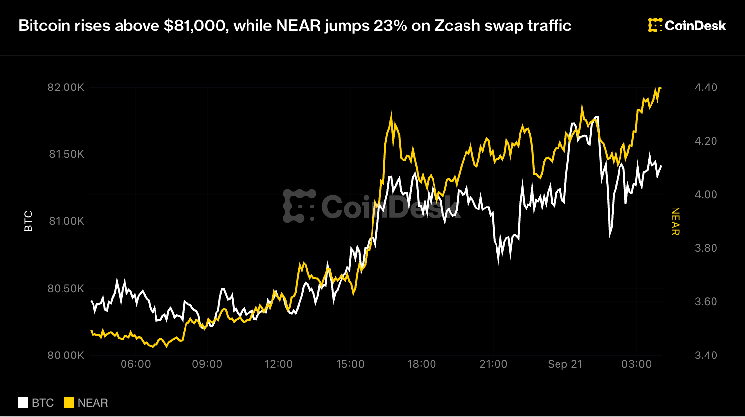
    Bitcoin traded just above $81,000 during Monday morning hours in Asia, marking a gain of less than 1% over the preceding 24 hours according to CoinDesk data. The cryptocurrency has been adding to its recovery since Thursday, when the U.S. Securities and Exchange Commission cleared a regulatory path for the onchain trading of tokenized U.S. stocks. The move is widely seen as a landmark step toward bridging traditional equity markets with blockchain-based settlement, providing a fresh catalyst for digital-asset risk appetite.

    NEAR Token Leads Major-Cap Gains on Cross-Chain Routing Demand

    The standout performer among major tokens was NEAR, which climbed approximately 23% to trade just above $4. The rally traces directly to NEAR Intents, a swap service built on the NEAR blockchain that enables a wallet to exchange one token for another across different chains without requiring the user to move funds between networks first. The abstraction of cross-chain complexity has turned NEAR into a de facto routing layer for one of the most heavily traded assets in the market.

    Wallet Integrations Drive Sixfold Volume Spike for ZEC

    Major consumer wallets, including ZODL and Vizor, have plugged NEAR Intents into their interfaces to offer Zcash (ZEC) swaps. Since those integrations went live, daily ZEC volume routed through the service has jumped sixfold in a single week. The surge in order flow has created a positive feedback loop for the NEAR token itself, which has followed the traffic as the underlying settlement and gas asset for the routing activity.

    Broader Market Moves Remain Measured

    Outside of NEAR’s outsized move, the rest of the major-cap complex posted modest advances. ZEC itself gained 3% to just above $1,500, while BNB rose 2% to nearly $777. Ether and HYPE each added roughly 2%. The remaining large-cap cohort — XRP, DOGE, SOL, and TRX — all rose 1% or less, indicating a market digesting the SEC news selectively rather than chasing a broad risk-on impulse.

    Why This Matters

    The SEC’s decision to allow onchain trading of tokenized U.S. equities represents a structural shift: it legitimizes the use of public blockchains as settlement rails for regulated securities. For protocols like NEAR that have invested in chain-abstraction infrastructure, the ruling arrives as tailwinds build for cross-chain liquidity aggregation. The sixfold volume increase on NEAR Intents demonstrates real user demand for seamless interoperability — a prerequisite if tokenized stocks are to trade natively onchain at scale. Watch for further wallet integrations and whether other Layer 1s deploy similar intent-based routing to capture order flow.

    Frequently Asked Questions

    What is NEAR Intents and why is it driving NEAR’s price higher?

    NEAR Intents is a cross-chain swap service on the NEAR blockchain that lets users trade tokens across different networks without manually bridging funds. Wallets ZODL and Vizor have integrated it for ZEC swaps, causing a sixfold volume spike that increases demand for NEAR as the routing layer’s native gas and settlement token.

    How did the SEC’s tokenized stock decision affect Bitcoin?

    Bitcoin has extended gains since Thursday’s SEC ruling, trading above $81,000 on Monday. The decision is viewed as a bullish regulatory signal for the broader digital-asset ecosystem, though Bitcoin’s own move has been modest — up less than 1% in 24 hours — suggesting the market is still calibrating the long-term implications.

    Which other major tokens moved on Monday?

    ZEC gained 3% to above $1,500; BNB rose 2% to near $777; Ether and HYPE each added about 2%; while XRP, DOGE, SOL, and TRX all rose 1% or less.

  • Bitcoin Clears Key Hurdle That Historically Preceded Major Bull Runs

    Bitcoin Clears Key Hurdle That Historically Preceded Major Bull Runs

    Key Highlights

    • Bitcoin closed the week ended September 20 above its 50-week moving average for the first time in 45 weeks, signaling a potential trend reversal.
    • The cryptocurrency gained nearly 6% during the week, trading around $81,000 and extending its rebound to 29% over the past 35 days.
    • Galaxy Research Head Alex Thorn described the weekly close above the key moving average as “a potentially important confirmation that the market’s bear phase may have run its course and a new uptrend is upon us.”

    Bitcoin Breaks 45-Week Barrier Above Critical 50-Week Moving Average

    Bitcoin (BTC) has cleared a major technical hurdle that had resisted bullish attempts for nearly a year. For the first time since late 2023, the world’s largest cryptocurrency posted a weekly close above its 50-week moving average, a development market analysts are interpreting as a potential confirmation that the prolonged bearish phase has concluded.

    The weekly candlestick close—recorded at 23:59 UTC on Sunday, September 20—shows Bitcoin settling around $81,000 after a weekly gain of nearly 6%. This advance extends the asset’s recovery to approximately 29% over the preceding 35-day period. Unlike previous instances where price action briefly pierced the moving average only to retreat, this week’s candle closed decisively above the indicator, a distinction technical analysts consider significant for trend validation.

    Why the Weekly Close Carries More Weight Than Intraday Tests

    Bitcoin trades continuously across global exchanges, but technical analysis frameworks rely on defined session closes—daily at 00:00 UTC and weekly at 23:59 UTC on Sundays—to construct candlestick charts. A weekly close above a major moving average carries substantially more analytical weight than an intraday or intraweek breach that fails to hold into the close.

    The 50-week moving average represents the arithmetic mean of weekly closing prices over roughly the past year. In Bitcoin market analysis, this metric serves as a widely watched proxy for the asset’s long-term trend direction. When price action sustains above this level on a weekly basis, it historically correlates with the early stages of sustained uptrends; conversely, extended periods below the average typically coincide with bearish or consolidation phases.

    Analyst Perspective: Galaxy Research Signals Trend Shift

    Commenting on the technical development, Galaxy Research Head of Research Alex Thorn characterized the weekly close as “a potentially important confirmation that the market’s bear phase may have run its course and a new uptrend is upon us.” Thorn’s assessment underscores the significance market participants attach to the 50-week average as a regime-change indicator rather than merely a short-term support or resistance level.

    Galaxy Digital, the financial services and investment management firm founded by Mike Novogratz, operates Galaxy Research as its dedicated market analysis division. The firm’s commentary often influences institutional sentiment given its focus on digital asset markets and its position as a bridge between traditional finance and the cryptocurrency ecosystem.

    Why This Matters

    The 50-week moving average breach represents more than a standalone technical signal; it occurs against a backdrop of evolving macroeconomic conditions, including anticipated shifts in global monetary policy and growing institutional adoption through spot exchange-traded products in major markets. A sustained weekly close above this threshold could attract trend-following capital allocation strategies that use the 50-week average as a systematic entry filter. However, market structure analysts caution that the true test lies in whether Bitcoin can convert the former resistance into support during subsequent weekly candles, particularly if macroeconomic volatility prompts risk-off sentiment across broader financial markets.

    Frequently Asked Questions

    What is the 50-week moving average and why is it significant for Bitcoin?

    The 50-week moving average calculates the average weekly closing price of Bitcoin over approximately the past year. Technical analysts use it as a long-term trend indicator; sustained trading above it typically signals a bullish regime, while extended periods below suggest bearish or consolidation conditions.

    How does a weekly candle close differ from an intraday price move?

    A weekly candle closes at 23:59 UTC every Sunday, capturing the full week’s price action. Analysts consider a weekly close above a key level more reliable than an intraday breach because it reflects sustained conviction across all global trading sessions rather than a temporary liquidity-driven spike.

    What was Bitcoin’s price performance during the week of this breakout?

    Bitcoin rose nearly 6% during the week ended September 20, closing around $81,000. This weekly gain contributed to a broader 29% rebound over the preceding 35-day period.

  • Strategy Founder Michael Saylor Argues Clarity Act Collapse Is a Win

    Strategy Founder Michael Saylor Argues Clarity Act Collapse Is a Win

    Key Highlights

    • Strategy founder Michael Saylor contends the Senate’s failure to advance the Clarity Act benefits the digital asset industry by avoiding restrictive legislative provisions.
    • Despite the legislative setback, the SEC and CFTC are independently advancing rulemaking, including conditional relief for onchain trading of tokenized securities.
    • The Clarity Act fell one vote short of cloture on Tuesday (49-50), stalling a framework the industry had sought to resolve jurisdictional uncertainty between regulators.

    Saylor Reframes Legislative Defeat as Strategic Opportunity

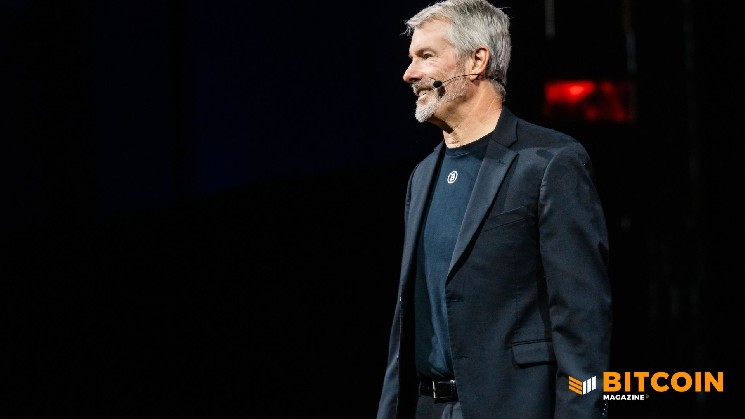
    Strategy founder and Executive Chairman Michael Saylor argued Saturday that the Senate’s blockade of the long-awaited Clarity Act represents a net positive for the digital asset ecosystem. Writing on X, the Bitcoin treasury pioneer asserted that legislation carries the risk of cementing restrictions as easily as it enshrines rights, suggesting the industry may be better served by regulatory evolution driven by market innovation rather than statutory compromise.

    Regulators Advance Rulemaking Independently of Congress

    The Clarity Act, which aimed to formally delineate oversight between the Securities and Exchange Commission (SEC) and the Commodity Futures Trading Commission (CFTC), failed a procedural vote on Tuesday by a margin of 49 to 50. Despite the legislative impasse, both agencies are moving forward with independent rulemaking initiatives. The SEC has issued conditional relief for the onchain trading of certain tokenized stocks, while the CFTC Chair has signaled a willingness to act without the bill’s authority. Saylor contended these developments would deliver the regulatory clarity crypto companies require without the constraints embedded in the proposed legislation.

    Critique of Specific Bill Provisions

    Saylor specifically criticized provisions within the Clarity Act that would limit the ability to pay customers for holding payment stablecoins, arguing such restrictions would not benefit the crypto space. “We have an administration willing to modernize financial markets. We should use the next two years to put better financial products into people’s hands,” Saylor wrote. He continued: “Let the Digital Assets industry innovate rapidly in a free market and create the greatest possible value for the U.S. and global economy.”

    Political Context and Industry Background

    The bill’s collapse comes after President Donald Trump urged lawmakers to pass the measure last month, a call that helped spur a Bitcoin rally. Republicans had warned for months that Democrats were deliberately stalling the legislation. The digital asset industry has long advocated for a clear regulatory framework following an enforcement-heavy approach during the Biden administration, when regulators penalized numerous crypto companies with fines for allegedly selling unregistered securities. Strategy, formerly known as MicroStrategy, began accumulating Bitcoin in 2020 and has since become the largest corporate holder of the asset.

    Why This Matters

    The failure of the Clarity Act leaves a significant regulatory vacuum at the federal level, but Saylor’s perspective highlights a growing sentiment among some industry leaders that agency-led rulemaking may offer more flexibility than a legislative compromise negotiated in a polarized Congress. With the SEC and CFTC actively pursuing their own frameworks, the practical regulatory landscape for tokenized assets, stablecoins, and market structure will likely be shaped by administrative action and litigation in the near term. The episode underscores the ongoing tension between the industry’s desire for legislative certainty and its aversion to provisions perceived as limiting innovation or competitive dynamics.

    Frequently Asked Questions

    What was the Clarity Act intended to do?

    The Clarity Act aimed to formally divide regulatory oversight of digital assets between the SEC and CFTC by establishing clear definitions for which assets qualify as securities, commodities, or stablecoins, resolving long-standing jurisdictional ambiguity.

    Why does Michael Saylor view the bill’s failure as positive?

    Saylor argues that legislation can permanently entrench restrictions alongside protections. He believes agency-led rulemaking—such as the SEC’s conditional relief for onchain tokenized stock trading and the CFTC’s independent action—can provide necessary clarity without codifying provisions he views as harmful, like limits on stablecoin yield incentives.

    What happens next for crypto regulation in the U.S.?

    With the Clarity Act stalled, the SEC and CFTC are expected to continue advancing their own rulemaking agendas. Market participants should monitor agency proposals, enforcement actions, and court rulings as the primary drivers of regulatory development in the absence of comprehensive legislation.

  • WisdomTree, MoonPay Expand US Access to Tokenized Funds

    WisdomTree, MoonPay Expand US Access to Tokenized Funds

    Key Highlights

    • WisdomTree integrates MoonPay’s payment infrastructure directly into its WisdomTree Prime platform, enabling retail users to access tokenized investment products via card and bank transfers.
    • MoonPay’s ecosystem of over 30 million registered accounts gains a new pathway into blockchain-based investment products, starting with WisdomTree’s Government Money Market Digital Fund (WTGXX).
    • The partnership highlights a critical shift in the tokenized real-world asset (RWA) sector: competition is moving from product creation to distribution, as major asset managers like BlackRock and Franklin Templeton launch similar offerings.

    WisdomTree Partners with MoonPay to Simplify Tokenized Fund Access

    WisdomTree, the global exchange-traded fund (ETF) and exchange-traded product (ETP) sponsor, has announced a strategic integration with MoonPay to embed the fintech firm’s payment infrastructure directly into WisdomTree Prime, its mobile-first tokenized investment platform. The collaboration aims to remove the technical friction that has historically prevented mainstream retail investors from accessing blockchain-based financial products.

    By plugging MoonPay’s on-ramp—which supports debit cards, credit cards, and bank transfers—into WisdomTree Prime, the asset manager is effectively abstracting away the complexities of crypto wallets, private keys, and gas fees. Users can now fund their accounts and purchase tokenized fund shares through a user experience that mirrors traditional fintech applications rather than decentralized finance (DeFi) protocols.

    MoonPay’s Scale Brings Retail On-Ramp to WisdomTree Prime

    MoonPay claims its ecosystem reaches more than 30 million registered accounts globally. For WisdomTree, this represents a massive potential distribution channel for its tokenized fund lineup. For MoonPay, the integration provides its user base with a regulated, yield-bearing entry point into the growing market for tokenized real-world assets (RWAs).

    The partnership launches with access to WTGXX, the ticker for WisdomTree’s Government Money Market Digital Fund. This is a critical distinction: WTGXX is not a stablecoin. It is a registered, regulated money market fund under the Investment Company Act of 1940, investing primarily in U.S. government securities and repurchase agreements. The “tokenized” descriptor refers strictly to the use of blockchain rails—specifically the Stellar and Polygon networks—for representing ownership, facilitating transfers, and enabling near-instant settlement.

    WTGXX: A Regulated Tokenized Money Market Fund, Not a Stablecoin

    Money market funds have emerged as the clearest early use case for asset tokenization. Their appeal lies in their simplicity, high liquidity, and backing by familiar, low-risk instruments like U.S. Treasuries. The blockchain layer adds programmable ownership, 24/7/365 settlement finality, and seamless interoperability with digital wallets and DeFi protocols—features impossible with traditional transfer-agent records.

    WisdomTree has been a pioneer in this space, launching WTGXX in 2022 as one of the first tokenized money market funds from a major traditional asset manager. The fund maintains a stable $1.00 net asset value (NAV) per share and distributes daily accrued income monthly, functioning operationally like a prime institutional money market fund but with the operational advantages of blockchain infrastructure.

    Tokenized Funds Face Distribution Hurdles Beyond Crypto-Native Users

    Despite the theoretical advantages of tokenization—faster settlement, fractional ownership, programmable compliance—adoption has been bottlenecked by onboarding friction. “Tokenization has spent years sounding more complicated than it needs to be,” the source notes. The core challenge is not the technology but the user journey: opening a crypto wallet, completing KYC on an exchange, bridging funds, and signing blockchain transactions remains daunting for the average saver.

    MoonPay’s role is to collapse that journey. By handling the fiat-to-token conversion and wallet abstraction in the background, WisdomTree can present a product that feels like buying an ETF in a brokerage app. This is essential if tokenized funds are to expand beyond the existing cohort of crypto-native investors and capture the vast retail cash-management market.

    Major Asset Managers Race to Tokenize Cash and Treasury Products

    WisdomTree is not operating in a vacuum. The tokenized cash and Treasury sector has become a focal point for the world’s largest asset managers. BlackRock launched its USD Institutional Digital Liquidity Fund (BUIDL) on Ethereum in 2024, rapidly accumulating billions in assets under management. Franklin Templeton continues to expand its OnChain U.S. Government Money Fund (FOBXX), which operates on Stellar and Polygon. Other players, including Ondo Finance, Superstate, and Hashnote, are also vying for market share.

    The competitive dynamic has shifted. The technical capability to tokenize a fund is now table stakes. The differentiator is distribution: how easily can an end user—whether a retail saver, a corporate treasurer, or a DAO treasury—actually buy, hold, and use the product? WisdomTree’s integration of MoonPay is a direct answer to that question, adding a consumer-grade on-ramp to its existing institutional and advisor channels.

    Why This Matters

    The WisdomTree-MoonPay partnership signals the maturation of the tokenized RWA narrative from “infrastructure building” to “distribution scaling.” For years, the industry focused on the how—standards like ERC-20, ERC-1400, and proprietary permissioned chains. Now, with multiple credible, regulated tokenized money market funds live, the bottleneck is unequivocally the who and the how easily.

    MoonPay’s integration brings a Web2-grade user experience to a Web3-native product structure. If successful, this model—traditional asset manager manufactures the regulated product; fintech specialist handles the fiat on-ramp and UX—could become the standard blueprint for bringing tokenized RWAs to the mass market. The next steps to watch are whether WisdomTree expands the integration to other funds in its Prime lineup (such as tokenized equities or fixed income) and whether competitors like BlackRock or Franklin Templeton pursue similar embedded-finance partnerships to broaden BUIDL and FOBXX access beyond institutional and accredited channels.

    Frequently Asked Questions

    What is WTGXX and how does it differ from a stablecoin like USDC or USDT?

    WTGXX is the ticker for WisdomTree’s Government Money Market Digital Fund. It is a regulated 1940 Act mutual fund that invests in U.S. government securities and repos, targeting a stable $1.00 NAV. Unlike stablecoins, which are typically unregulated liabilities of a private issuer backed by reserves, WTGXX is a registered security with shareholder protections, board oversight, and SIPC eligibility when held at a member broker-dealer. The “digital” aspect refers only to the use of blockchain (Stellar and Polygon) for record-keeping and transfer.

    Do I need a crypto wallet to invest in WTGXX through WisdomTree Prime?

    No. The integration with MoonPay is designed to abstract away wallet management. Users can onboard via WisdomTree Prime using standard identity verification (KYC), fund their account via card or bank transfer through MoonPay, and hold WTGXX shares within the WisdomTree Prime app. The underlying blockchain transactions are managed in the background.

    Is this partnership available to users in all jurisdictions?

    Availability depends on the regulatory permissions of both WisdomTree and MoonPay in specific jurisdictions. WisdomTree Prime and WTGXX have specific eligibility requirements (e.g., U.S. persons, accredited investor status for certain share classes). MoonPay’s services are also restricted in certain countries. Users should verify eligibility on the WisdomTree Prime platform or the official WisdomTree investor relations site.

  • CASHCAT Falls 30%, Yet Key Support Level Historically Triggers Rallies

    CASHCAT Falls 30%, Yet Key Support Level Historically Triggers Rallies

    Key Highlights

    • CashCat ($CASHCAT) plummeted roughly 30% in 24 hours as broader cryptocurrency market capital shrinkage triggered a breach of structural horizontal resistance.
    • Price has fallen into the lower support of a rising bullish channel — a level that has historically catalyzed rebounds — while Money Flow Index (MFI) surges to 35.5, signaling capital inflow.
    • Funding Rate remains positive at 0.0078% with net long positioning and spot market net buying, suggesting the drop is sentiment-driven rather than a structural bearish shift.

    CashCat Tests Critical Channel Support After 30% Correction

    CashCat ($CASHCAT) surrendered significant ground over the past 24 hours, declining approximately 30% as a wave of capital contraction swept across the wider cryptocurrency market. According to chart analysis from TradingView, the sell-off accelerated after price broke below a structural horizontal resistance line, pushing the memecoin down to the lower boundary of a broader rising bullish channel. Despite the sharp pullback, the asset remains embedded within an overall bullish pattern defined by oscillation between established upper resistance and lower support levels.

    Historical Support Zone Draws Buying Interest

    The current support level now being tested has acted as a launchpad for rallies on multiple prior occasions. Technical analysts note that price arriving at this zone increases the probability of a rebound, provided the prevailing fractal structure holds. On-chain and derivative metrics reinforce this view: the Money Flow Index (MFI), which tracks capital inflow and market bias, has surged to roughly 35.5. The uptick suggests that as price reached channel support, buy orders were triggered, injecting fresh liquidity into the market even as the broader correction unfolded.

    Bearish Momentum Peaks, But Derivatives Signal Resilience

    Short-term momentum indicators still favor sellers. The Bull Bear Power metric — a gauge of which side controls the market — shows bears dominant, with the red histogram bar printing its deepest level since September 10. However, derivative market structure tells a more nuanced story. Data from CoinGlass reveals the Funding Rate has dipped only marginally, holding at a positive 0.0078%. This reading indicates the majority of open contracts remain long. Simultaneously, spot market netflow has registered net buying, underscoring that the recent price decline stems primarily from sentiment deterioration rather than a fundamental shift in market structure.

    Why This Matters

    CashCat’s price action illustrates a classic memecoin dynamic: violent sentiment-driven corrections within intact longer-term technical frameworks. The convergence of a historically reliable channel support, rising MFI, positive funding rates, and spot accumulation creates a high-probability setup for a relief bounce — provided Bitcoin and the broader risk complex stabilize. Traders and investors should monitor whether the Bull Bear Power histogram begins to contract from its current extreme, which would signal exhausting selling pressure. A reclaim of the breached horizontal resistance would further validate the bullish channel thesis, while a decisive close below channel support would invalidate the pattern and open the door to deeper losses.

    Frequently Asked Questions

    What caused CashCat’s 30% price drop in the last 24 hours?

    The decline was triggered by broad cryptocurrency market capital shrinkage and a breach of a structural horizontal resistance line, pushing price into the support level of a rising bullish channel.

    Does the current technical setup favor a rebound?

    Yes. Price is testing a channel support that has sparked rallies before, MFI is rising at 35.5 showing capital inflow, Funding Rate remains positive at 0.0078% with net long positioning, and spot netflow shows buying — all suggesting the drop is sentiment-driven, not structural.

    What would invalidate the bullish case for CashCat?

    A decisive daily close below the rising channel’s lower support trendline would break the bullish pattern and likely lead to further downside.

  • North Korean fake recruiters infect 30K devices, steal $10.7M in crypto

    North Korean fake recruiters infect 30K devices, steal $10.7M in crypto

    Key Highlights

    • North Korean hacking group WaterPlum, also known as Contagious Interview, stole at least $10.7 million by impersonating recruiters from legitimate crypto and AI companies to target software developers and IT professionals worldwide.
    • The campaign infected over 30,000 devices across more than 100 countries and extracted funds or credentials from over 7,000 cryptocurrency wallets between December 2025 and July 2026.
    • A joint advisory from Japan, Germany, Australia, and the United States links WaterPlum to North Korea’s Munitions Industry Department and its broader strategy of placing undercover IT workers inside foreign organizations.

    Global Advisory Exposes Sophisticated Recruitment Fraud

    A joint cybersecurity advisory issued by authorities in Japan, Germany, Australia, and the United States has detailed a sprawling operation by the North Korean hacking group WaterPlum, also tracked as Contagious Interview. The group masqueraded as recruiters for legitimate artificial intelligence, cryptocurrency, and non-fungible token (NFT) companies, leveraging social media platforms, online job boards, gig work sites, and freelance marketplaces to lure victims. According to the advisory, the primary targets were individual web designers, engineers, and specialists in cryptocurrency, blockchain, and Web3 technologies. The operation has resulted in the theft of at least $10.7 million, marking a significant escalation in North Korea’s use of social engineering to fund its weapons programs.

    Malware Deployment via Fake Coding Assignments

    The attack chain relied on tricking job seekers into downloading and executing malicious files disguised as coding assignments or fixes for video-conferencing errors. Once executed, the malware provided the threat actors with backdoor access to the victim’s computer. WaterPlum operators then deployed remote-access trojans and infostealing malware to exfiltrate sensitive data and cryptocurrency. The advisory notes that successful infections create downstream risks, enabling WaterPlum actors to infiltrate the organizations that employ the compromised developers, thereby extending the blast radius beyond individual freelancers to corporate networks.

    Connection to North Korean IT Worker Infiltration

    The advisory explicitly links WaterPlum’s activities to North Korea’s broader campaign of placing IT workers inside foreign companies under false pretenses. Japanese and U.S. authorities assess that WaterPlum actors and certain North Korean IT workers operate under the direction of the country’s Munitions Industry Department. This dual-track approach—stealing cryptocurrency directly while simultaneously building a workforce of impersonators—amplifies the regime’s revenue generation. Stolen identity documents allow North Korean operatives to impersonate legitimate developers, securing employment and income, while sensitive personal data harvested during intrusions creates opportunities for extortion.

    Recent Incidents Highlight Ongoing Threat

    The advisory cites concrete examples of the infiltration tactic. In one case, a suspected North Korean IT worker applied for an engineering role at a Japanese cryptocurrency exchange using a forged resume; the applicant was rejected after failing to demonstrate the claimed skills during the interview. More recently, in July, Cointelegraph reported that blockchain software company Consensys had unknowingly engaged a North Korea-linked developer as a consultant. Consensys confirmed it terminated the contractor’s access upon discovering the threat, stating an investigation found no theft of assets or data, no malicious code deployment, and no impact on user safety. These incidents underscore the persistent difficulty organizations face in vetting remote technical talent.

    Why This Matters

    The WaterPlum campaign represents the latest evolution in North Korea’s long-standing reliance on cryptocurrency theft to circumvent international sanctions and fund its nuclear and ballistic missile programs. The Federal Bureau of Investigation (FBI) previously attributed the $1.5 billion theft from the Bybit exchange in February 2025 to North Korean actors. U.S. authorities have issued warnings about the regime’s undercover IT worker scheme since at least 2018. The convergence of direct financial theft, supply chain compromise via compromised developers, and strategic workforce infiltration signals a mature, well-resourced threat ecosystem. For the cybersecurity industry and any organization hiring remote technical talent, the advisory serves as a critical reminder that identity verification and device trust cannot be assumed based solely on a resume or interview performance.

    Frequently Asked Questions

    What is WaterPlum and how does it operate?

    WaterPlum, also known as Contagious Interview, is a North Korean state-sponsored hacking group. It operates by posing as recruiters from legitimate AI, crypto, and NFT companies on job platforms. The group tricks software developers and IT professionals into downloading malware disguised as coding tests or software fixes, gaining backdoor access to steal cryptocurrency, credentials, and sensitive data.

    How can job seekers protect themselves from such recruitment scams?

    Job seekers should verify the legitimacy of recruiters and companies through independent channels before downloading any files. Be wary of unsolicited offers, requests to execute code as part of an interview process, or pressure to install specific video-conferencing software or “fixes.” Use endpoint detection and response (EDR) solutions and maintain strict separation between personal and work devices.

    What are the implications for companies hiring remote developers?

    Companies face the risk of inadvertently hiring North Korean operatives using stolen identities, which can lead to intellectual property theft, infrastructure compromise, and regulatory violations. The Consensys incident demonstrates that even sophisticated firms can be deceived. Organizations must implement rigorous identity verification, background checks, technical assessments that cannot be easily faked, and continuous monitoring of contractor activity.