Author: Evan Mercer

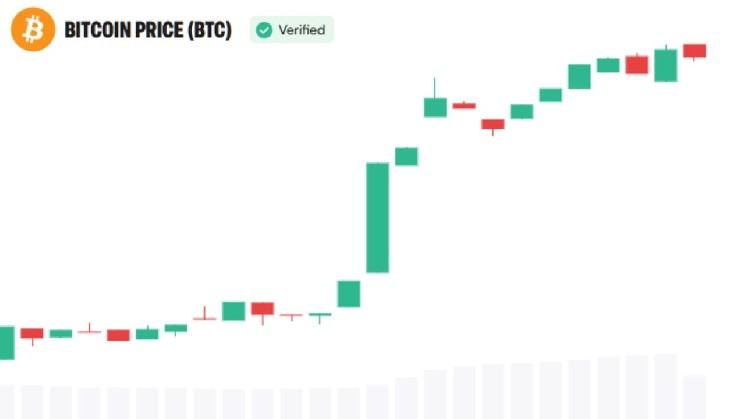
  • Bitcoin Rally Driven by ‘Serious Institutional Money,’ Devere Says

    Bitcoin Rally Driven by ‘Serious Institutional Money,’ Devere Says

    Key Highlights

    • Devere Group CEO Nigel Green argues Bitcoin’s recovery is gaining durability from sustained institutional inflows into regulated U.S. spot ETFs, marking a shift from leveraged speculation to “patient capital.”
    • Despite a net inflow of approximately $6.1 million across five trading days through Sept. 18, the trend remains fragile after $746.3 million in withdrawals on Sept. 15–16 nearly offset recent gains.
    • The Federal Reserve’s Sept. 16 rate hike to 3.75%–4% raises the opportunity cost of holding non-yielding Bitcoin, while the CLARITY Act’s legislative stall delays regulatory clarity that Green says could unlock pension and wealth-manager allocations.

    Institutional Flows Signal Market Shift, Says Devere Group CEO

    Bitcoin’s recent price recovery is underpinned by a structural shift in market participation, according to Devere Group Chief Executive Officer Nigel Green. In comments issued Sept. 21, Green asserted that consistent purchasing through regulated investment products indicates buyers have regained control of the market. He characterized the current momentum as fundamentally different from previous rallies driven by leveraged speculation.

    “The market’s momentum has flipped, and this time there’s serious institutional money behind it,” Green said, adding:

    “Billions are flowing into regulated bitcoin products week after week. It’s patient capital that plans to stay, a very different animal from the leveraged speculation that fuelled past rallies.”

    ETF Data Shows Mixed Recovery After Volatile Week

    Flow data for U.S. spot bitcoin exchange-traded funds (ETFs) supports Green’s observation of renewed demand, though the net picture remains modest. Farside Investors’ rounded daily figures show the funds attracted $433 million in net inflows on Sept. 18, following $159.5 million the previous session and $159.9 million on Sept. 14. However, those purchases only narrowly offset withdrawals of $746.3 million recorded on Sept. 15 and 16, leaving approximately $6.1 million in net inflows across the five trading days.

    The recovery began Thursday, Sept. 18, when bitcoin ETFs returned to positive flows after two consecutive sessions of withdrawals. BlackRock’s IBIT led the rebound, while ether and XRP funds continued losing money. The divergence suggests renewed demand for bitcoin products has not yet translated into consistent buying across the broader crypto ETF market.

    Monetary Policy Creates Countervailing Pressure

    Green’s supply-side argument—that Bitcoin’s fixed cap of 21 million coins offers a hedge against currency debasement—runs against a tightening monetary backdrop. The Federal Reserve raised its benchmark target range to 3.75%–4% on Sept. 16, a unanimous quarter-point increase accompanied by language describing inflation as elevated. Higher interest rates increase returns on interest-bearing assets, raising the opportunity cost of holding Bitcoin, which pays no yield.

    A separate assessment from Grayscale characterized the latest increase as a limited adjustment within the current Fed cycle. The asset manager distinguished one or two potential increases in 2026 from the prolonged tightening cycle that began in 2022. That interpretation aligns with Green’s view that demand can remain resilient despite higher rates, though both assessments represent forward-looking market outlooks rather than established facts.

    Regulatory Uncertainty Tempers Optimism

    Green identified clearer U.S. crypto rules as a conditional catalyst that could encourage pension funds and wealth managers to increase exposure. His forecast depends on large allocators becoming more comfortable with the regulatory framework governing digital assets, which would extend demand beyond current ETF buyers into a wider pool of portfolio allocations.

    The legislative backdrop, however, delivered a setback on Sept. 15 when senators failed to advance the CLARITY Act toward floor debate. The procedural vote required 60 votes to move forward; its failure left the proposed market-structure framework unresolved. Green nevertheless expects a larger potential pool of buyers if regulation becomes clearer, while acknowledging that volatility and pullbacks will continue.

    “Once big allocators see rules they can work with, the next wave of demand could dwarf this one,”

    he described, elaborating:

    “The crypto winter looks to be ending. Every dip that gets bought strengthens the case that the floor has moved higher.”

    “Bitcoin is a permanent fixture in the global portfolio conversation, and the bulls know it,”

    the executive concluded.

    Why This Matters

    The interplay between institutional adoption, monetary policy, and regulatory progress defines Bitcoin’s current inflection point. Sustained ETF inflows—particularly from vehicles like BlackRock’s IBIT—signal growing acceptance among traditional financial intermediaries, yet the net flow figures remain marginal after sharp reversals. The Federal Reserve’s higher-for-longer rate posture introduces a persistent headwind for non-yielding assets, while the CLARITY Act’s stall underscores that U.S. regulatory certainty remains a work in progress. Market participants should monitor whether the “patient capital” Green describes withstands the dual test of rate sensitivity and legislative gridlock, or whether the recent rebound proves another bear-market rally.

    Frequently Asked Questions

    What were the net flows into U.S. spot Bitcoin ETFs for the week ending Sept. 18?

    According to Farside Investors data cited in the report, U.S. spot Bitcoin ETFs saw approximately $6.1 million in net inflows across the five trading days through Sept. 18. This followed $433 million in inflows on Sept. 18, $159.5 million on Sept. 17, and $159.9 million on Sept. 14, which were largely offset by $746.3 million in withdrawals on Sept. 15–16.

    How does the Federal Reserve’s September rate hike affect Bitcoin’s appeal?

    The Fed raised its benchmark rate to 3.75%–4% on Sept. 16, increasing the opportunity cost of holding Bitcoin because the cryptocurrency does not generate interest income. Higher yields on bonds and cash equivalents make non-yielding assets comparatively less attractive, though some analysts, including Grayscale, view the hike as a limited adjustment rather than a return to aggressive tightening.

    What is the CLARITY Act and why does its failure matter for Bitcoin?

    The CLARITY Act is a proposed U.S. market-structure framework for digital assets. Its failure to advance past a procedural vote on Sept. 15—falling short of the 60 votes needed—leaves regulatory rules unresolved. Devere Group CEO Nigel Green argues that clearer rules would unlock allocations from pension funds and wealth managers, potentially driving a larger wave of institutional demand than current ETF flows.


  • 5 Best Meme Coins for 2026 Compared: DOGE, SHIB, PENGU, BONK & MemeToro’s Fair-Launch Model

    5 Best Meme Coins for 2026 Compared: DOGE, SHIB, PENGU, BONK & MemeToro’s Fair-Launch Model

    Key Highlights

    • MemeToro ($MT) raises over $140,000 in Stage 7 presale at $0.00430 per token, targeting a $0.05186 listing price implying ~12x hypothetical upside.
    • Established meme coins Dogecoin ($DOGE), Shiba Inu ($SHIB), Pudgy Penguins ($PENGU), and Bonk ($BONK) retain dominance through community size, ecosystem integrations, and brand IP.
    • MemeToro differentiates with an AI-powered, open-source fair-launch pad enforcing zero-insider allocation and offering $MT utility across trading, staking (up to 35% APY), and prediction markets.

    Meme Coin Landscape in 2026: Established Giants Versus Emerging Infrastructure

    The conversation around the leading meme coins heading into 2026 centers on five distinct projects, each representing a different value proposition. Dogecoin ($DOGE) and Shiba Inu ($SHIB) continue to benefit from deep liquidity and multi-year community momentum. Pudgy Penguins ($PENGU) leverages a recognizable consumer brand and digital intellectual property portfolio. Bonk ($BONK) remains tightly woven into the Solana ecosystem’s memecoin activity. Meanwhile, MemeToro ($MT) is still in its presale phase, having crossed $140,000 raised in Stage 7 at a price of $0.00430, while building an AI-driven launchpad infrastructure designed to support future token creation and trading.

    Dogecoin and Shiba Inu: Community Depth and Ecosystem Maturity

    Dogecoin retains one of the longest track records among major meme assets. Its broad mainstream recognition and deep market liquidity have allowed it to remain a fixture in cryptocurrency market discussions regardless of cycle. Shiba Inu has expanded beyond a single token, developing a broader ecosystem that includes the Shibarium layer-2 network. This ecosystem development gives $SHIB a structural complexity that distinguishes it from a simple community token. Both projects already operate in open markets with established trading activity, providing a baseline of stability and accessibility that newer entrants have yet to achieve.

    Pudgy Penguins and Bonk: Brand IP and Chain-Native Integration

    Pudgy Penguins provides $PENGU with a direct link to a wider consumer-facing brand and digital IP ecosystem. The token’s meme identity is reinforced by the broader Pudgy Penguins project, which spans physical merchandise, licensing, and community engagement. Bonk, by contrast, has cultivated a dominant presence within the Solana network’s memecoin sector. Its integrations across Solana decentralized applications and trading venues give it a chain-native role that differs from the multi-chain or Ethereum-centric positioning of $DOGE and $SHIB. These ecosystem connections create defensive moats rooted in distribution and utility rather than narrative alone.

    MemeToro’s Fair-Launch Model and AI Launchpad Infrastructure

    MemeToro’s latest update emphasizes open-source AI launchpad smart contracts engineered to enforce fixed fair-launch rules. The system validates allocation totals and funding consistency under a zero-insider-allocation framework, aiming to reduce distribution uncertainty that often plagues new token launches. The $MT token is designed for utility across memecoin trading, platform access, staking, rewards, and prediction markets. The project currently advertises a projected staking return of up to 35% APY. With a Stage 7 price of $0.00430 and a stated listing target of $0.05186, the implied move represents approximately 12.06x or 1,106% hypothetical upside, though the project explicitly notes this is not a prediction or guaranteed return. Buyers are directed to verify the official website, contract address, BNB Chain network, presale stage, and purchase instructions before connecting a wallet.

    Why This Matters

    The 2026 meme coin narrative is bifurcating between incumbent tokens with proven network effects and infrastructure plays betting on the next wave of token creation. Established assets like $DOGE, $SHIB, $PENGU, and $BONK derive value from liquidity, brand recognition, and chain-specific entrenchment. MemeToro represents a shift toward launchpad-as-a-service models, where AI-driven trend detection and programmatic fair-launch mechanics attempt to solve the trust and distribution problems that have historically plagued early-stage memecoins. For market participants, the distinction is critical: investing in incumbents is a bet on sustained cultural relevance and liquidity, while participating in presales like MemeToro is a bet on the execution of unproven infrastructure and the future pipeline of tokens it may spawn. Regulatory scrutiny on fair-launch claims, smart contract audits, and the realized performance of AI-curated launches will be key watch items through late 2025 and into 2026.

    Frequently Asked Questions

    What is MemeToro’s current presale price and fundraising status?
    MemeToro is in Stage 7 at $0.00430 per $MT token, with over $140,000 raised to date.
    How does MemeToro’s fair-launch mechanism work?
    The project uses open-source AI launchpad smart contracts that enforce fixed allocation rules, check funding consistency, and operate under a zero-insider-allocation framework to minimize distribution manipulation.
    What utilities are planned for the $MT token?
    $MT is designed for memecoin trading, platform access, staking (up to 35% projected APY), rewards, and prediction markets within the MemeToro ecosystem.

    More Information on MemeToro ($MT) Presale: Website: https://memetoro.com/ | X: https://x.com/memetoro_mt | Telegram: https://t.me/memetoro_mt | YouTube: https://www.youtube.com/watch?v=gY0jgWy_DtA

  • Where to Buy the Best Crypto Presale and What Happens Next: Vesting, Claims, and TGE Explained With MemeToro

    Where to Buy the Best Crypto Presale and What Happens Next: Vesting, Claims, and TGE Explained With MemeToro

    Key Highlights

    • MemeToro’s public-sale allocation of 857,936,900 $MT tokens (71% of the 1.2 billion total supply) carries no vesting schedule and is designed to be fully claimable at launch.
    • Presale purchases credit $MT allocations to buyer accounts immediately, but tokens are not tradeable until the Token Generation Event (TGE) and official claim process begins.
    • The project warns buyers to retain transaction hashes, use only the official MemeToro website for claims, and ignore direct messages offering “early claim” access to avoid scams.

    Understanding the MemeToro Presale Structure: Credit Versus Claim

    MemeToro, a memecoin ecosystem project building on BNB Chain, has clarified the mechanics of its ongoing presale to distinguish between payment crediting and token claiming. According to the project’s official guide, when a buyer completes a purchase using BNB, ETH, USDT, or a credit card, the corresponding $MT allocation is credited directly to the buyer’s account on the platform. This crediting step records the entitlement but does not deliver a live, tradable token balance to the buyer’s wallet. The project emphasizes that buyers must save the transaction hash from their crypto payment, as this on-chain record serves as the permanent proof of purchase and can be used to verify the account credit if needed.

    Token Generation Event and Vesting Details

    The Token Generation Event (TGE) marks the point at which the $MT token is minted and the official claim process becomes available. MemeToro has disclosed that its public-sale allocation totals 857,936,900 $MT, representing 71% of the 1.2 billion-token maximum supply. Unlike the marketing-partner allocation, which is subject to a 24-month vesting schedule, the public-sale portion carries no vesting and is intended to be fully claimable at launch. This distinction is critical for participants because vesting schedules control when allocated tokens become liquid; the absence of vesting on the public tranche means a significant volume of supply could enter circulation immediately once claims open, depending on buyer behavior and market conditions.

    Post-TGE Claim Process and Security Guidance

    After the TGE, MemeToro plans to publish the claim timing, the official claim page URL, and the $MT token contract address. Buyers will be expected to connect the same wallet used for the original purchase to claim their allocation. The project has issued explicit security warnings: participants should ignore any direct messages offering “early claim” access, never enter a wallet seed phrase or recovery phrase on a claim page, and only interact with the official MemeToro website. These precautions are standard in the crypto presale space, where phishing campaigns often spike around claim events. The project’s roadmap outlines ecosystem utilities for $MT, including AI-proposed memecoin launches, a funding mechanism, staking, a memecoin trading terminal, prediction markets, and a news portal—all of which are designed to drive token demand post-launch.

    Why This Matters

    The MemeToro presale structure highlights a common pattern in new token launches: a large, unvested public allocation combined with an immediate claim at TGE can create significant sell pressure if early buyers choose to exit quickly. The 71% public-sale share is unusually high compared to many projects that reserve larger portions for team, treasury, or investor vesting. For market participants, the key variables will be the depth of initial liquidity, the exchange listing schedule, and the actual adoption of the planned ecosystem products. The project’s transparency about vesting differences between allocation categories allows buyers to model potential supply dynamics more accurately, but it does not eliminate the inherent volatility and risk associated with low-float, high-supply memecoin launches.

    Frequently Asked Questions

    When can I claim my $MT tokens after purchasing in the presale?

    You can claim your $MT tokens only after the Token Generation Event (TGE), when MemeToro publishes the official claim page, timing, and contract address. The presale purchase credits an allocation to your account, but tokens are not delivered to your wallet until the claim process goes live.

    Is there a vesting schedule on the public-sale allocation?

    No. MemeToro states that the public-sale allocation of 857,936,900 $MT (71% of total supply) has no vesting and is intended to be fully claimable at launch. This differs from the marketing-partner allocation, which follows a 24-month vesting schedule.

    What should I do to protect myself from scams during the claim period?

    Bookmark the official MemeToro website (memetoro.com), retain your original purchase transaction hash, and only use the official claim page announced by the project. Never share your wallet recovery phrase, and ignore any direct messages or links promising early or exclusive claim access.

  • Top Crypto Presales for Upcoming Bull Run: MemeToro, AlphaPepe, Remittix Compared as AI Utility Expands

    Top Crypto Presales for Upcoming Bull Run: MemeToro, AlphaPepe, Remittix Compared as AI Utility Expands

    Key Highlights

    • Three distinct crypto presale projects—MemeToro, AlphaPepe, and Remittix—offer different utility models for the anticipated bull run: AI memecoin infrastructure, pre-trade intelligence tools, and crypto-to-fiat payments respectively.
    • MemeToro has raised over $140,000 in Stage 7 with $MT priced at $0.00430, featuring an open-source AI launchpad with automated fair-launch rules and a stated listing target of $0.05186 (12.06x hypothetical upside).
    • AlphaPepe reports over 11,500 holders and $2.58 million raised at $0.02873, developing AlphaSwap for risk checks and trend signals, while Remittix focuses on payment adoption rather than memecoin speculation.

    Top Crypto Presales Differentiate Utility Ahead of Expected Bull Run

    As market participants scan for early-stage opportunities ahead of a potential cryptocurrency bull run, three presale projects—MemeToro, AlphaPepe, and Remittix—have emerged with distinctly different utility propositions. Rather than relying solely on speculative momentum, each project is building product infrastructure that addresses separate niches: AI-driven memecoin creation, pre-trade analytical tools, and cross-border fiat settlement. This divergence highlights a maturing presale landscape where fundamentals and use-case clarity are becoming differentiating factors for informed buyers.

    MemeToro: AI-Powered Memecoin Launch Infrastructure

    MemeToro is constructing an AI agent designed to systematically study internet trends, validate concepts, and execute structured memecoin launches. The platform recently crossed $140,000 raised in Stage 7, with its native token $MT priced at $0.00430. Beyond capital accumulation, MemeToro has released open-source launchpad contracts that enforce published rules including allocation checks, funding consistency, and restrictions around insider allocation. These automated fair-launch mechanisms aim to reduce human discretion and increase transparency.

    Ecosystem Utility Beyond the Presale

    The $MT token is slated to serve multiple functions within the MemeToro ecosystem: granting access to the launchpad, enabling staking and rewards, facilitating memecoin trading, and supporting prediction markets. This multi-utility design positions MemeToro as a broader product suite rather than a single-purpose presale token. The project states a listing target of $0.05186, which would represent a 12.06x increase from the current Stage 7 price—a mathematical scenario, not a guaranteed forecast.

    AlphaPepe: Pre-Trade Intelligence via AlphaSwap

    AlphaPepe has taken a different approach by developing AlphaSwap, a platform focused on delivering actionable intelligence before a token swap occurs. The system provides risk assessments and trend signals to help users evaluate potential trades. According to the latest supplied data, AlphaPepe has amassed over 11,500 holders and raised approximately $2.58 million, with its token trading near $0.02873. The roadmap includes plans for decentralized exchange (DEX) access and centralized exchange (CEX) partnerships, signaling an intent to integrate deeply into the trading infrastructure layer.

    Trading Tools as a Meme-Centric Differentiator

    While AlphaPepe retains meme-focused branding, its core value proposition centers on pre-trade information symmetry. By equipping users with risk checks and trend analysis, AlphaPepe attempts to address a common pain point in memecoin markets: the lack of reliable, real-time due diligence tools before capital commitment.

    Remittix: Crypto-to-Fiat Payments and Remittance

    Remittix occupies a separate category altogether, targeting crypto-to-fiat payments and remittance use cases. Its business model ties token value to the adoption of payment-related services rather than memecoin launch activity or trading tools. The project has promoted its payments platform and stated funding milestones linked to its launch plans, emphasizing real-world utility in cross-border value transfer. This creates a three-way utility split: MemeToro for AI memecoin infrastructure, AlphaPepe for trading and risk tools, and Remittix for payments and remittance.

    Comparing Utility Models and Presale Metrics

    For buyers evaluating the top crypto presales for upcoming bull run themes, the primary distinction lies in product focus. MemeToro’s Stage 7 price of $0.00430 versus its $0.05186 listing target implies a hypothetical 1,106% upside, while AlphaPepe’s $0.02873 price reflects a different stage of capital formation and holder base. Remittix does not publicize comparable presale pricing metrics in the current dataset. Each project’s trajectory will depend on execution of its respective roadmap—launchpad deployment for MemeToro, AlphaSwap feature rollout for AlphaPepe, and payment network integration for Remittix.

    Risk Considerations for Presale Participants

    Presale buyers should conduct thorough due diligence, reviewing smart contract audits, token allocation structures, product development progress, liquidity provisions, and launch conditions. A rising market can improve overall liquidity and demand, but it does not guarantee success for any individual presale. The mathematical upside scenarios presented by projects are illustrative, not predictive. Capital allocation decisions must weigh the inherent risks of early-stage, pre-market tokens against the specific utility and adoption potential of each platform.

    Why This Matters

    The emergence of differentiated utility models among concurrent presales signals a shift from homogeneous speculative vehicles toward specialized protocol development. MemeToro’s focus on automated, transparent launch infrastructure addresses recurring concerns about fair distribution in memecoin markets. AlphaPepe’s emphasis on pre-trade intelligence responds to the information asymmetry that plagues retail participants in high-velocity token markets. Remittix’s payment-centric approach anchors token demand to tangible fiat off-ramp volume. Collectively, these projects illustrate how presale narratives are evolving to incorporate product-market fit considerations earlier in the lifecycle. For the broader industry, the success or failure of these models will inform whether utility-first presales can sustainably outperform pure hype-driven launches in the next market cycle.

    Frequently Asked Questions

    What distinguishes MemeToro, AlphaPepe, and Remittix from each other?

    MemeToro centers on AI-powered memecoin launch infrastructure with an open-source fair-launch pad. AlphaPepe builds AlphaSwap, a pre-trade intelligence platform offering risk checks and trend signals. Remittix focuses on crypto-to-fiat payments and remittance services, tying token utility to payment adoption rather than memecoin or trading activity.

    What are the current presale metrics for MemeToro and AlphaPepe?

    MemeToro has raised over $140,000 in Stage 7 with $MT priced at $0.00430 and a stated listing target of $0.05186. AlphaPepe reports over 11,500 holders, approximately $2.58 million raised, and a token price near $0.02873.

    Does a bull run guarantee gains on presale investments?

    No. While a bull market can increase overall liquidity and demand, individual project performance depends on execution, product adoption, audit security, tokenomics, and launch conditions. Hypothetical upside calculations are mathematical scenarios, not forecasts.

  • Bitcoin Surpasses $87,000, Ethereum Tops $2,800: Key Drivers Behind the Rally

    Bitcoin Surpasses $87,000, Ethereum Tops $2,800: Key Drivers Behind the Rally

    Key Highlights

    • Bitcoin surged past $87,000 and Ethereum topped $2,800 as the crypto market extended a powerful rally driven by renewed institutional demand and a massive short squeeze.
    • U.S. spot Bitcoin ETFs recorded approximately $593 million in net inflows over Thursday and Friday, reversing earlier outflows and signaling strengthened institutional appetite.
    • Futures market liquidations reached $926 million in 24 hours, with $785 million in short positions forced to close, accelerating the upward price momentum across major assets.

    Bitcoin and Ethereum Lead Broad Market Rally to Multi-Week Highs

    The cryptocurrency market sustained its vigorous upward trajectory on Monday, with Bitcoin (BTC) breaching the $87,000 threshold and Ethereum (ETH) reclaiming the $2,800 level. According to real-time data from OKX, Bitcoin traded at $87,010, marking a 7.41% gain over the preceding 24 hours, while Ethereum advanced 5.98% to $2,800.26. The synchronized rally across the two largest digital assets by market capitalization underscores a broad-based resurgence in risk appetite among both retail and institutional participants.

    Institutional Demand Rebounds as Spot Bitcoin ETFs See Heavy Inflows

    A primary catalyst for the rally was the sharp reversal of capital flows into U.S. spot Bitcoin exchange-traded funds. Data compiled by Bloomberg revealed that the cohort of U.S.-listed spot Bitcoin ETFs attracted net inflows of approximately $593 million across Thursday and Friday trading sessions. This influx substantially offset the net outflows recorded earlier in the week, renewing market confidence in sustained institutional allocation to Bitcoin as a portfolio asset. The turnaround in ETF flows is widely interpreted by analysts as a leading indicator of renewed long-term conviction among traditional finance allocators.

    Regulatory Green Light for Tokenized Shares Bolsters Sentiment

    Regulatory developments provided an additional tailwind. The U.S. Securities and Exchange Commission (SEC) granted a five-year regulatory exemption to specific platforms permitting the trading of tokenized shares on blockchain infrastructure. Market observers view this decision as a potential milestone in the integration of blockchain-based financial products into the traditional U.S. capital markets framework, potentially paving the way for broader asset tokenization and enhanced market efficiency.

    Macroeconomic Backdrop Shifts in Favor of Risk Assets

    The rally coincided with a constructive shift in the macroeconomic environment. A decline in the U.S. 10-year Treasury yield below 5%, falling oil prices, and a record-high close for the Nasdaq Composite—led by megacap technology stocks—collectively reduced the opportunity cost of holding non-yielding, high-beta assets like Bitcoin. The correlation between tech equities and crypto remained elevated, with Bitcoin outperforming the Nasdaq’s gains by a significant margin, advancing over 6% during the same risk-on window.

    Massive Short Squeeze Amplifies Gains in Futures Markets

    Perhaps the most immediate accelerant was a violent short squeeze in the derivatives market. Data from CoinGlass indicated that $926 million in leveraged positions were liquidated across the cryptocurrency complex in the last 24 hours. Of that total, approximately $785 million represented short positions, compelling bearish traders to buy back exposure aggressively as prices rose. Long liquidations were comparatively modest at roughly $142 million. Bitcoin accounted for $509 million of total liquidations, while Ethereum saw approximately $198 million wiped out. The single largest liquidation event occurred on the BTC/USDT perpetual contract on Binance, involving a position valued at roughly $11.3 million.

    Why This Matters

    The convergence of positive ETF flows, regulatory progress on tokenization, a favorable macro pivot, and a derivatives-driven short squeeze creates a multi-layered bullish structure that is more durable than rallies driven by a single catalyst. The ETF inflow reversal is particularly significant because it reflects discretionary capital allocation decisions by institutional investors, rather than speculative leverage alone. Meanwhile, the SEC’s exemption for tokenized share trading signals a potential thaw in the regulatory stance toward digital asset innovation in the United States, which could unlock a new wave of product development and capital formation. Traders should monitor whether the futures market’s open interest rebuilds on the long side—a sign of fresh conviction—or if the squeeze has exhausted near-term buying pressure.

    Frequently Asked Questions

    What triggered the latest Bitcoin rally above $87,000?
    The rally was driven by a combination of $593 million in net inflows into U.S. spot Bitcoin ETFs, a regulatory exemption for tokenized share trading by the SEC, improving macroeconomic conditions including falling Treasury yields, and a $785 million short squeeze in the futures market.
    How large were the futures liquidations during this move?
    Total liquidations reached $926 million in 24 hours, with $785 million in short positions and $142 million in long positions. Bitcoin accounted for $509 million and Ethereum for $198 million of the total.
    Does the SEC exemption mean all tokenized stocks are now legal in the U.S.?
    No. The SEC granted a five-year exemption to specific platforms for trading tokenized shares on blockchain. It is a targeted regulatory relief, not a blanket legalization of all tokenized securities.
  • New Cryptocurrency Attack Discovered on iPhone: Steps to Protect Your Assets

    New Cryptocurrency Attack Discovered on iPhone: Steps to Protect Your Assets

    Key Highlights

    • Google Threat Intelligence Group (GTIG) revealed the “DarkSword” attack chain exploiting six iOS vulnerabilities to achieve kernel-level access via Safari, with all flaws patched in iOS 26.3 or earlier.
    • The campaign targeted cryptocurrency users in Turkey, Saudi Arabia, Malaysia, and Ukraine starting November 2025, enabling extraction of private keys and seed phrases from compromised devices.
    • Unverified claims that DarkSword affects all iOS versions from 13 through 26.5 remain unconfirmed; Apple released iOS 26.7 on September 14, 2026, and researchers urge immediate updates plus Lockdown Mode for high-risk users.

    Multi-Stage Safari Exploit Chain Grants Kernel Access on iPhone

    Security researchers have detailed a sophisticated attack chain dubbed DarkSword that targets iPhone users through Safari, ultimately delivering full device control and posing acute risk to cryptocurrency holders. According to research published in March by the Google Threat Intelligence Group (GTIG), the exploit chain begins with memory corruption vulnerabilities in Safari’s JavaScriptCore engine. When a target visits a malicious or compromised website, the initial foothold allows attackers to bypass Pointer Authentication Codes (PAC) protections, escape the WebContent sandbox, and escalate privileges to the kernel level. GTIG confirmed that six distinct vulnerabilities were chained together in the operation, all of which Apple addressed no later than the release of iOS 26.3.

    Confirmed Targeting of Cryptocurrency Users Across Four Nations

    Lookout’s complementary research indicates that once DarkSword achieves kernel access, threat actors can rapidly extract user credentials and sensitive data associated with cryptocurrency wallets, including private keys and mnemonic seed phrases stored on the device. The first confirmed iterations of the campaign targeted devices running iOS 18.4 through iOS 18.7. GTIG attributed active exploitation to a campaign that began in November 2025 against targets located in Turkey, Saudi Arabia, Malaysia, and Ukraine. The geographic spread and focus on crypto asset extraction suggest a financially motivated operation with selective targeting rather than indiscriminate mass compromise.

    Unverified Claims of Broader Version Impact Require Caution

    Recent public claims asserting that DarkSword remains effective across a vastly wider range — from iOS 13 through iOS 26.5 — have not been independently verified by GTIG, Lookout, or other recognized research entities. Security professionals emphasize that this extended version span should not be treated as a confirmed finding. Apple continues to harden the platform; the company released iOS 26.7 on September 14, 2026, and recent updates have included patches for numerous vulnerabilities affecting WebKit, the kernel, and other core system components. Researchers stress that the verified attack surface covers the iOS 18.x series addressed in the March disclosure.

    Mitigation Guidance: Update, Lockdown Mode, and Operational Hygiene

    GTIG and Lookout recommend that all users, particularly those managing cryptocurrency wallets on mobile devices, immediately update to the latest available iOS version. For devices that cannot be updated or for individuals assessed to be at elevated risk, enabling Apple’s Lockdown Mode provides an additional layer of protection by severely restricting attack surface vectors such as just-in-time JavaScript compilation and complex web technologies. Beyond patching, researchers advise strict operational hygiene: avoid opening untrusted links received via messages, email, or social media in Safari, and never store critical secrets — private keys, seed phrases, or recovery phrases — in plaintext or accessible locations on the phone.

    Why This Matters

    The DarkSword disclosure underscores the persistent threat of watering-hole and drive-by exploitation targeting mobile browsers, especially when high-value assets like cryptocurrency wallets are involved. The chain’s ability to defeat PAC and sandbox protections — mitigations Apple has invested heavily in — demonstrates that determined adversaries can still string together multiple zero-day or n-day flaws to achieve full compromise. For the cryptocurrency ecosystem, the incident reinforces that mobile devices should not be treated as secure cold storage; hardware wallets and air-gapped signing remain best practice. The November 2025 campaign start date also indicates that threat actors held and operationalized the chain for months before public disclosure, a reminder that patch lag creates a dangerous exposure window. Going forward, Apple’s rapid response with iOS 26.3 and subsequent releases, combined with Lockdown Mode adoption, represents the primary defense for at-risk users until the next vulnerability cycle emerges.

    Frequently Asked Questions

    Which iOS versions are confirmed vulnerable to the DarkSword attack chain?
    GTIG confirmed that the first observed DarkSword variants targeted devices running iOS 18.4 through iOS 18.7. All six vulnerabilities used in the chain were patched by Apple in iOS 26.3 or earlier.
    Is it true that DarkSword works on every iOS version from 13 to 26.5?
    No. Claims that the exploit chain affects all versions from iOS 13 through iOS 26.5 have not been independently verified by Google Threat Intelligence Group, Lookout, or other recognized researchers. The verified scope remains the iOS 18.x series documented in the March disclosure.
    What immediate steps should cryptocurrency users take to protect themselves?
    Update to the latest iOS version (iOS 26.7 as of September 14, 2026), enable Lockdown Mode if the device supports it and the user is at high risk, avoid opening untrusted links in Safari, and never store private keys, seed phrases, or recovery phrases on the phone in accessible form.
  • MemeToro Releases Open Smart Contract Code Aiming for Fairer Memecoin Launches

    MemeToro Releases Open Smart Contract Code Aiming for Fairer Memecoin Launches

    Key Highlights

    • MemeToro publishes 1,373 lines of Solidity code across 17 files for a fair-launch escrow system on BNB Chain, aiming to lock token-launch terms at creation and eliminate hidden insider allocations.
    • The $MT utility token features a 1.2 billion total supply with 857.9 million allocated to public sale (no vesting), while marketing and partner allocations follow a 24-month vesting schedule.
    • Platform remains under development with AI-assisted launch tools, prediction markets, and a news hub planned; staking rewards of up to 35% APR are advertised but not guaranteed.

    MemeToro Releases Open-Source Fair-Launch Escrow Code for BNB Chain Memecoin Transparency

    Memecoin traders have long grappled with opaque launch mechanics—uncertain token allocations, mutable rules, and unclear fund flows. Addressing this transparency gap, MemeToro has published a complete Solidity codebase for a proposed fair-launch escrow system on BNB Chain. The repository spans 1,373 lines across 17 files, including a FairLaunchEscrow contract, interfaces, tests, and documentation designed to let participants verify launch terms before committing capital.

    Contract Design Aims to Eliminate Hidden Allocations

    The FairLaunchEscrow contract centers on a straightforward fairness principle: contributor and liquidity allocations must sum to 100% of the fair-launch split, leaving no remainder for undisclosed developer or insider wallets. According to the project’s documentation, the contract enforces several protections at the code level. Launch settings are locked at creation, preventing post-deployment changes to critical parameters. Funds are routed exclusively toward refunds or planned liquidity provision. Public functions enable users to execute claims, refunds, and finalization without relying on a creator’s manual intervention.

    For traders evaluating new tokens, this architecture provides a verifiable starting point—replacing marketing claims with auditable logic. However, the project acknowledges that open code alone cannot stop market volatility, guarantee liquidity depth, or substitute for completed deployment, thorough testing, and independent security review.

    Test Suite Covers Critical Launch Scenarios

    Smart contracts must handle multiple execution paths: reaching a funding cap, missing a deadline, processing claim requests, or issuing refunds. MemeToro’s public release includes tests for funding caps, deadlines, claims, refunds, and invalid inputs. While tests do not prove correctness, they demonstrate that the project is validating escrow behavior under varied conditions—a crucial step in memecoin markets where decisions are made rapidly and contracts cannot depend on a creator being online to resolve issues.

    The design incorporates public actions so users can independently trigger claims and refunds when stated conditions are met, reducing reliance on centralized coordination.

    $MT Tokenomics: 1.2 Billion Supply With Tiered Vesting

    MemeToro’s utility token, $MT, carries a 1.2 billion total supply. The public-sale allocation stands at 857,936,900 tokens with no vesting, intended to be claimable at launch. Remaining allocations include 120 million for centralized exchange reserves, 96 million for marketing and partners (subject to a 24-month vesting schedule), 60 million for MemeToro trading operations, 53.28 million for network rewards, and 12.7831 million for the core team.

    The 24-month vesting on marketing and partner tokens may mitigate sudden selling pressure from that segment, though it does not ensure price stability. The project advertises staking rewards of up to 35% APR to incentivize participation, but emphasizes these rewards are not guaranteed income and can change. Prospective buyers are directed to review the tokenomics documentation and follow the official MemeToro purchase guide before participating in Stage 7.

    Planned Ecosystem Loop: AI Tools, Visible Contracts, Trader Discovery

    Beyond the escrow contract, MemeToro envisions a broader platform where $MT powers premium access, platform transactions, launch funding, staking, rewards, and future memecoin trading features. The roadmap includes prediction markets and a news hub. An AI agent is slated to assist creators in configuring launch settings, while the fair-launch contract enforces the agreed terms on-chain. Traders would use the platform to review launches, track emerging tokens, and eventually trade them within the ecosystem.

    This proposed utility loop—AI-assisted preparation, transparent contract enforcement, trader discovery, and $MT-mediated participation—remains inactive while the platform undergoes development. Adoption hinges on whether the tools prove intuitive enough to attract both creators and traders at scale. Open-source code provides a foundation, but user experience and network effects will determine whether the ecosystem achieves critical mass.

    Why This Matters

    Memecoin launches on BNB Chain and other networks have historically suffered from “rug pull” risks, hidden team wallets, and mutable parameters that disadvantage early participants. By publishing a complete, test-covered escrow implementation before mainnet deployment, MemeToro is attempting to shift the trust model from reputation-based to code-verifiable. The 100% allocation rule—contributors plus liquidity equals the full split—directly addresses the most common insider-allocation complaint.

    However, several hurdles remain. The contract has not yet undergone independent audit. Deployment on BNB Chain mainnet, integration with the planned AI tooling and trading interface, and community adoption are all未完成 milestones. The 35% APR staking figure, while attractive, carries the standard disclaimer that protocol rewards are variable and not guaranteed. For the broader memecoin sector, MemeToro’s approach represents a data point in the ongoing experiment: can radical transparency at the smart-contract layer become a competitive differentiator that draws liquidity away from opaque launches?

    Frequently Asked Questions

    What does MemeToro’s FairLaunchEscrow contract actually enforce?

    The contract locks launch settings at creation, requires contributor and liquidity allocations to total 100% of the fair-launch split (leaving zero allocation for insiders), routes funds only to refunds or liquidity, and provides public functions for claims, refunds, and finalization so users can act without creator intervention.

    What is the $MT token supply breakdown and vesting schedule?

    Total supply is 1.2 billion $MT. Public sale receives 857,936,900 tokens with no vesting. Marketing and partner allocation (96 million) vests over 24 months. Other allocations: 120 million for CEX reserves, 60 million for MemeToro trading, 53.28 million for network rewards, and 12.7831 million for the core team.

    Is the MemeToro platform live and audited?

    No. The platform is still under development. The fair-launch escrow code has been published publicly with tests, but it has not yet been deployed to BNB Chain mainnet or undergone independent security audit. The AI tools, trading features, prediction markets, and news hub remain on the roadmap.

  • Nvidia Invests $3 Billion in SB Energy Ahead of $50 Billion IPO

    Nvidia Invests $3 Billion in SB Energy Ahead of $50 Billion IPO

    Key Highlights

    • Nvidia is investing an additional $1.5 billion in SB Energy through Class N non-voting shares, raising its total equity commitment to $3 billion ahead of the company’s planned Nasdaq IPO.
    • SB Energy’s PORTS-Pike Technology Campus in Ohio, leased long-term to OpenAI with an exclusive Nvidia chip mandate, is designed for 4.25 gigawatts of AI computing capacity, expandable to 8 gigawatts.
    • Nvidia has disclosed up to $108.5 billion in maximum gross exposure tied to AI infrastructure guarantees, including a $105 billion residual value guarantee linked to the Ohio project that phases in as data centers enter service.

    Nvidia Deepens Financial Ties to AI Infrastructure Ahead of SB Energy IPO

    Nvidia is significantly expanding its stake in the physical infrastructure underpinning the artificial intelligence boom, committing an additional $1.5 billion to SB Energy, the SoftBank-backed energy and data center subsidiary preparing for a U.S. initial public offering. The transaction, executed through a private placement and a prepaid forward contract for newly issued Class N non-voting shares priced at the IPO offering price, doubles Nvidia’s total equity commitment in SB Energy to $3 billion. The move gives the chipmaker substantial financial exposure to one of the largest dedicated AI computing campuses under development in the United States without granting voting control over SB Energy’s governance.

    SB Energy Targets $50 Billion Valuation in Nasdaq Listing

    SB Energy filed its IPO registration in late August 2026 and intends to list on the Nasdaq under the ticker SBE, seeking a valuation of roughly $50 billion. The company aims to raise between $5 billion and $7 billion through the public offering, positioning it as one of the larger listings directly tied to the AI infrastructure buildout cycle. Separately, SB Energy is reportedly pursuing an additional $500 million from Japanese investors earmarked specifically for data center and power infrastructure development, according to Bloomberg. As the energy and data center arm of SoftBank Group, SB Energy sits at the intersection of surging AI compute demand and the massive power requirements needed to support it.

    Ohio Campus Anchors Nvidia’s Strategic Bet

    The rationale for Nvidia’s deepening commitment centers on SB Energy’s flagship project: the PORTS-Pike Technology Campus in Ohio. The facility is engineered to deliver an initial 4.25 gigawatts of AI computing load, with expansion potential to 8 gigawatts, placing it among the largest dedicated AI sites in the country. Crucially, the campus is leased long-term to OpenAI under terms that mandate the exclusive use of Nvidia chips. This arrangement creates a direct commercial feedback loop: every watt of computing capacity deployed at PORTS-Pike translates into demand for Nvidia’s graphics processing units, effectively securing a built-in revenue stream tied to the infrastructure Nvidia is helping finance.

    Billion-Dollar Guarantees Extend Beyond Equity

    Nvidia’s involvement extends well beyond equity ownership. In connection with the Ohio project, the company has pledged residual value guarantees reaching as high as $105 billion. According to Invezz, this guarantee sits within a broader $108.5 billion maximum gross exposure Nvidia disclosed in its latest filing, covering AI infrastructure commitments that also include $3.5 billion tied to certain AI-cloud partners. The OpenAI-linked guarantee does not take full effect immediately; obligations are expected to increase as nine data centers enter service, beginning around fiscal 2029, before declining as OpenAI makes lease payments. The guarantee is also conditional, triggered only under specified circumstances such as tenant default or insolvency, which limits its near-term balance-sheet impact while maintaining substantial long-term exposure.

    Why This Matters

    Nvidia’s expanding role illustrates a structural shift in how the AI economy is being financed. Rather than merely selling chips into demand generated by others, Nvidia is increasingly acting as a capital provider and risk partner for the gigawatt-scale infrastructure required to run advanced AI workloads. By embedding chip-exclusivity clauses into long-term leases and backing projects with residual value guarantees, Nvidia secures demand visibility for its product roadmap while assuming financial risks traditionally borne by real estate and infrastructure investors. For the broader market, the SB Energy IPO will serve as a key barometer of public investor appetite for pure-play AI infrastructure assets, and the company’s financial performance—revenue grew 66.4% year-over-year in the first half of 2026 even as net losses widened—highlights the capital-intensive, front-loaded cost profile of building at this scale.

    Frequently Asked Questions

    How much has Nvidia committed to SB Energy in total, and what structure does the latest investment use?
    Nvidia’s total equity commitment to SB Energy now stands at $3 billion following the latest $1.5 billion tranche. The new shares are Class N non-voting shares acquired via a private placement paired with a prepaid forward contract, both priced at the IPO offering price.
    What is the significance of the PORTS-Pike Technology Campus lease to OpenAI?
    The Ohio campus is leased long-term to OpenAI with a contractual requirement for exclusive use of Nvidia chips. This means the facility’s entire 4.25 GW (expandable to 8 GW) computing capacity is tied directly to Nvidia’s GPU business, creating a guaranteed demand channel for its hardware.
    What are the terms and scale of Nvidia’s residual value guarantee for the Ohio project?
    Nvidia has pledged up to $105 billion in residual value guarantees linked to the PORTS-Pike campus, part of a disclosed $108.5 billion maximum gross exposure across AI infrastructure commitments. The guarantee phases in as nine data centers enter service starting around fiscal 2029 and is triggered only under specified conditions such as tenant default or insolvency.
  • Bitcoin Hits $87,000: How High Can BTC Go?

    Bitcoin Hits $87,000: How High Can BTC Go?

    Key Highlights

    • Bitcoin has broken above its 50-week moving average (~$78,320) and the May swing high, confirming a five-wave Elliott Wave structure from the July low that signals a sustained uptrend rather than a counter-trend bounce.
    • The cryptocurrency has reached the pattern’s minimum target near $85,000, with primary upside objectives between $88,600 and $92,220 and an extended target at $97,637 if momentum persists.
    • A bearish RSI divergence has emerged—price making higher highs while momentum prints lower peaks—warning that the rally may be approaching exhaustion, though an immediate reversal is not guaranteed.

    Bitcoin Confirms Five-Wave Advance From July Low

    Bitcoin has cleared two critical technical thresholds this week, piercing its 50-week moving average—currently anchored near $78,320—and eclipsing the previous swing high established in May. According to a chart analyst tracking the structure, this breakout validates a completed five-wave Elliott Wave sequence that originated from the July trough. The formation is widely regarded in technical circles as evidence of a genuine impulsive trend rather than a corrective rebound, suggesting the dominant bias has shifted decisively to the upside.

    Anatomy of the Impulsive Structure

    The analyst detailed how this specific wave progression typically unfolds across five distinct phases. The advance begins subtly, with the initial leg higher passing largely unnoticed by the broader market. A protracted, sideways consolidation follows—the second wave—which erodes interest and convinces many participants that no meaningful move is underway. The third wave then erupts aggressively, trapping latecomers and short-sellers who are forced to chase the move. A second pause, the fourth wave, precedes a final fifth-wave push that requires comparatively less fresh capital because the majority of interested buyers have already committed.

    Projected Price Targets and the $85,000 Milestone

    Bitcoin has already tagged the pattern’s minimum measured-move objective around $85,000, a level the analyst characterized as a “weak outcome” given the structure’s implications. A more robust fulfillment zone sits between $88,600 and $92,220, while an extended Fibonacci projection places the upper bound near $97,637 should the rally accelerate into a lengthened fifth wave. These levels are derived from standard Elliott Wave measurement techniques applied to the completed July-to-present sequence.

    Momentum Divergence Raises Caution Flag

    Despite the constructive price action, a subtle but notable warning has appeared on the Relative Strength Index (RSI), a momentum oscillator that gauges buying pressure. The indicator has printed a lower high even as Bitcoin’s price registered a higher high—a configuration known as bearish divergence. This discrepancy often materializes near the terminal phase of a strong advance, signaling that internal momentum may be waning. The analyst emphasized that divergence alone does not precipitate an immediate top; rather, it serves as an alert that the probability of a pause or pullback is rising.

    Pullback Expectations and Key Support Zones

    A consolidation or retracement following a five-wave advance is considered normal market mechanics, not a structural failure. The analyst noted Bitcoin could conceivably hold above the 50-week moving average near $78,320, transforming the former resistance into support. Should a deeper correction materialize, a broader demand zone around $75,000 was flagged as a reference area where buyers may re-engage—explicitly described as a contextual zone, not a downside price target.

    Near-Term Invalidation and Upside Trigger Levels

    On shorter timeframes, Bitcoin has completed a smaller five-wave rally from the September 15 low. The pivotal level to monitor is $80,120; a sustained defense of this price preserves the immediate uptrend, while a confirmed breakdown would constitute the first tangible evidence that a local top is in place. Immediate support clusters between $80,566 and $82,985, with the $82,800 region highlighted as a likely retest candidate. A successful hold and renewed advance from that zone would open the path toward $88,900 as the next actionable objective.

    Why This Matters

    The completion of a textbook five-wave structure on the weekly timeframe carries weight beyond individual price targets—it informs portfolio positioning for institutional and retail participants alike. A confirmed impulsive sequence from a major low (July) suggests the cyclical bear market narrative has been invalidated, potentially unlocking a new wave of capital allocation toward digital assets. However, the concurrent RSI divergence introduces a tactical risk: trend-followers may need to manage position sizing and tighten trailing stops as the rally matures, while counter-trend traders should await price confirmation—such as a break of $80,120—before committing to short exposures. The $75,000–$78,320 band will likely define the “buy-the-dip” region if the market transitions from trend expansion to consolidation.

    Frequently Asked Questions

    Has Bitcoin already reached its peak for this cycle?
    Not necessarily. The analyst’s wave count indicates the minimum target ($85,000) has been met, but the primary target zone ($88,600–$92,220) and extended target ($97,637) remain intact. A bearish RSI divergence warns of slowing momentum, but divergences can persist during strong fifth waves and do not alone confirm a top.
    What price level would invalidate the current bullish structure?
    A confirmed break below $80,120 on the shorter timeframe would signal the immediate uptrend from the September 15 low has ended. On the larger structure, a breakdown beneath the 50-week moving average near $78,320—and especially a move toward the $75,000 support zone—would raise questions about the integrity of the five-wave advance.
    Is the $75,000 level a price target for a crash?
    No. The analyst explicitly stated the $75,000 area is a “reference zone” for where buyers may return if a deeper pullback occurs, not a forecast or downside objective. It represents a historical confluence area, not a prediction of decline.
  • Chainlink Co-Founder Sergey Nazarov Joins Major

    Chainlink Co-Founder Sergey Nazarov Joins Major

    Key Highlights

    • Chainlink Co-Founder Sergey Nazarov will speak in three sessions at the Sibos 2024 conference alongside representatives from Microsoft, DTCC, Clearstream, and the International Finance Corporation.
    • The participation underscores deepening collaboration between blockchain infrastructure providers and traditional financial institutions on tokenization and cross-chain interoperability.
    • Market participants are monitoring the event for partnership announcements that could influence Chainlink’s market position and broader crypto sentiment.

    Chainlink Takes Center Stage at Sibos 2024

    Chainlink Co-Founder Sergey Nazarov is scheduled to participate in three dedicated sessions at next week’s Sibos conference, the premier annual gathering for the global financial services industry organized by SWIFT. His presence places the decentralized oracle network directly alongside traditional finance heavyweights, including Microsoft, the Depository Trust & Clearing Corporation (DTCC), Clearstream, and the International Finance Corporation (IFC). The lineup signals a maturing relationship between blockchain technology providers and the established banking infrastructure that moves trillions of dollars daily.

    Bridging DeFi and Traditional Banking Rails

    Nazarov’s engagement at Sibos highlights Chainlink’s strategic focus on connecting decentralized finance (DeFi) with traditional banking systems. As a decentralized oracle network, Chainlink provides the critical middleware that allows smart contracts to securely access off-chain data, payment systems, and APIs. By sharing the stage with institutions like DTCC—the central clearing house for U.S. securities—and Clearstream, the European central securities depository, Chainlink is demonstrating how its Cross-Chain Interoperability Protocol (CCIP) and data feeds can integrate with existing settlement and custody workflows rather than replace them.

    Institutional Collaboration Accelerates

    The conference agenda reflects a broader industry shift: regulators and major financial intermediaries are moving beyond theoretical exploration of blockchain to practical implementation. Sessions featuring the International Finance Corporation, a member of the World Bank Group, indicate that development finance institutions are also evaluating how oracle networks and tokenized assets can improve capital allocation in emerging markets. Chainlink’s expanding roster of institutional partnerships—spanning banking, asset management, and market infrastructure—suggests its technology is becoming a de facto standard for secure blockchain-to-traditional-finance connectivity.

    Why This Matters

    The Sibos conference serves as a bellwether for financial technology adoption. When a blockchain infrastructure provider secures multiple speaking slots alongside the operators of the world’s most critical payment and settlement systems, it signals that distributed ledger technology is transitioning from pilot programs to production-grade infrastructure. For Chainlink specifically, the event offers a platform to showcase how its oracle network and CCIP protocol solve the “blockchain oracle problem” and the fragmentation across private bank chains and public networks. Positive developments—such as new integration announcements with DTCC or Clearstream—could catalyze further institutional adoption of tokenized assets and reinforce Chainlink’s position as the primary connective tissue between on-chain and off-chain financial ecosystems.

    Frequently Asked Questions

    What is Sergey Nazarov’s role at the Sibos conference?

    Chainlink Co-Founder Sergey Nazarov is participating in three sessions at Sibos 2024, appearing alongside representatives from Microsoft, DTCC, Clearstream, and the International Finance Corporation to discuss blockchain integration with traditional finance.

    Why is Chainlink’s presence at Sibos significant for the financial industry?

    Sibos is the primary conference for global banking infrastructure. Chainlink’s prominent placement indicates that major financial institutions now view decentralized oracle networks and cross-chain interoperability protocols as essential components for tokenized asset settlement and data connectivity.

    What should markets watch for following the conference?

    Traders and analysts are monitoring for concrete partnership announcements, technical integration updates with DTCC or Clearstream, and any regulatory guidance discussed at the event that could accelerate institutional adoption of Chainlink’s CCIP and data oracle services.