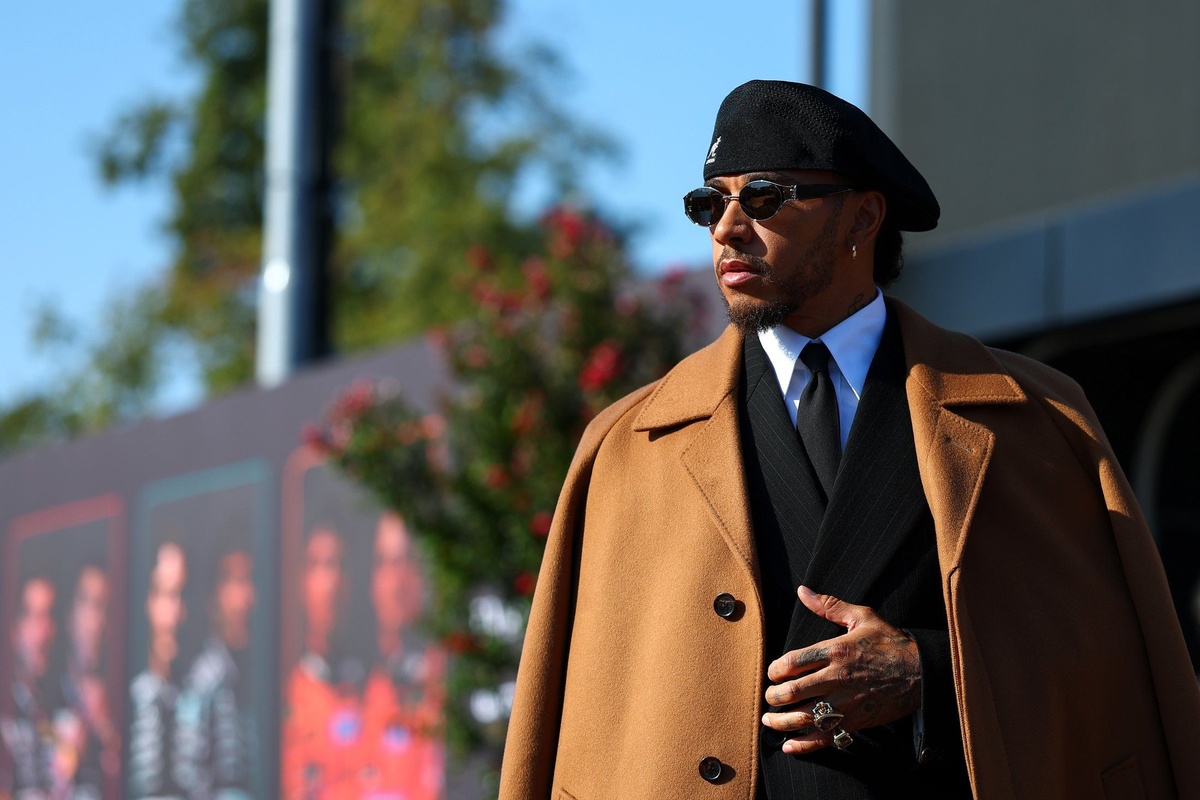
Tag: Formula 1

  • Lewis Hamilton’s Dawn Apollo Studios Signs Major New Deal with Skydance Sports

    Lewis Hamilton’s Dawn Apollo Studios Signs Major New Deal with Skydance Sports

    Key Highlights

    • Seven-time Formula 1 champion Lewis Hamilton has signed a multi-year, first-look production deal with Skydance Sports through his Dawn Apollo Studios company, expanding his footprint in film and television.
    • Dawn Apollo Studios, founded in 2022, will develop and produce scripted, unscripted, and animated content with Hamilton serving as executive producer on all projects.
    • The partnership follows Dawn Apollo’s significant involvement in “F1: The Movie,” which grossed over $634 million globally, and Hamilton has revealed three new film concepts in development, including two animations.

    Hamilton Expands Media Empire with Skydance Sports Partnership

    Seven-time Formula 1 World Champion Lewis Hamilton has formalized a multi-year, first-look production agreement with Skydance Sports, the sports entertainment division of Paramount Skydance, through his Dawn Apollo Studios banner. The deal positions the newly signed Ferrari driver as an executive producer across a slate of scripted, unscripted, and animated projects, marking a significant escalation of his off-track business ventures. Announced amid Hamilton’s debut season with Scuderia Ferrari, the partnership leverages the commercial momentum generated by “F1: The Movie,” the Apple Original Films release that Dawn Apollo helped shepherd to a global box office haul exceeding $634 million.

    Dawn Apollo Studios: From Consultancy to Content Creation

    Hamilton launched Dawn Apollo Studios in 2022 with a mandate to champion diverse storytelling across sport, culture, and entertainment. The company’s most visible credit to date is its deep involvement in “F1: The Movie,” the high-octane drama starring Brad Pitt and Damson Idris directed by Joseph Kosinski. Hamilton served as both executive producer and consultant on the production, embedding himself in the creative process from script development through post-production. The film’s commercial success—crossing the $634 million threshold worldwide—validated Dawn Apollo’s model of athlete-led content creation and provided the leverage for the new Skydance Sports arrangement.

    Strategic Alignment with Skydance Sports Leadership

    The agreement pairs Dawn Apollo with a division led by Jesse Sisgold, President of Skydance Sports, whose portfolio includes documentaries, series, and feature films centered on athletic narratives. Hamilton emphasized the cultural resonance of the collaboration in a statement accompanying the announcement:

    “I’ve always believed stories can help people see the world differently and spark important conversations,” the Ferrari driver explained.

    “That’s what excites me about Dawn Apollo Studios. It gives us the chance to back projects that feel honest, bold and meaningful, and to create space for voices and perspectives that haven’t always had that opportunity.

    “Skydance Sports understands how powerful sport, culture and entertainment can be in moving audiences, and I’m excited to team up with Jesse and the team to bring those stories to life.”

    Slate Expansion: Animations, Documentaries, and Feature Films

    Beyond the structural partnership, Hamilton has offered a glimpse into Dawn Apollo’s active development pipeline. Speaking to media during the 2025 Monaco Grand Prix weekend, he detailed three original concepts currently in various stages of writing, signaling a shift from consulting on external projects to originating intellectual property.

    “I’ve got three concepts that I’m writing,” he told the media at the 2025 Monaco Grand Prix. “I’m going to write them with a writer because I’ve never written a movie before.

    “But I’ve got these concepts and these ideas that I’ve come up with for movies. I think two of them will be animations and one of them is already in a phase of the first part of the script already, so it’s exciting.

    “And then there will be documentaries, there will be maybe a TV series at some stage, but mostly movies. I love the development of movies – that’s what I love the most.”

    This disclosure reveals a deliberate diversification strategy: two animated features, a live-action script nearing completion, and a broader slate encompassing documentaries and potential series. The animation focus suggests an intent to reach younger, global audiences beyond the core motorsport demographic, while the documentary and series formats align with the current streaming-driven demand for behind-the-scenes sports content.

    Why This Matters

    The Hamilton–Skydance Sports deal exemplifies the accelerating convergence of elite athlete branding, media ownership, and studio infrastructure. As traditional endorsement models evolve into equity and production partnerships, Hamilton is following a trajectory blazed by figures like LeBron James (SpringHill Company) and Peyton Manning (Omaha Productions), but with a distinct Formula 1 global platform. For Paramount Skydance, the alliance secures a first-look window on projects from one of the world’s most recognizable athletes at the precise moment his Ferrari move amplifies international visibility. For the industry, it signals that athlete-led studios are no longer vanity imprints but viable content engines capable of delivering theatrical-scale returns, as evidenced by the $634 million gross of “F1: The Movie.” The next 12–18 months will test whether Dawn Apollo can translate that singular success into a sustainable, multi-genre pipeline.

    Frequently Asked Questions

    What is Dawn Apollo Studios and when was it founded?

    Dawn Apollo Studios is Lewis Hamilton’s production company, established in 2022. It focuses on developing and producing scripted, unscripted, and animated content across film, television, and digital platforms, with an emphasis on diverse storytelling in sport and culture.

    How was Dawn Apollo involved in “F1: The Movie”?

    Dawn Apollo Studios was heavily involved in the making of “F1: The Movie,” with Hamilton serving as an executive producer and consultant on the project. The film, starring Brad Pitt and Damson Idris, grossed more than $634 million at the global box office.

    What new projects has Lewis Hamilton revealed are in development?

    At the 2025 Monaco Grand Prix, Hamilton disclosed he is writing three original concepts—two animated features and one live-action project already in early script phase—with plans for documentaries and a potential television series. He is collaborating with professional screenwriters on these projects.
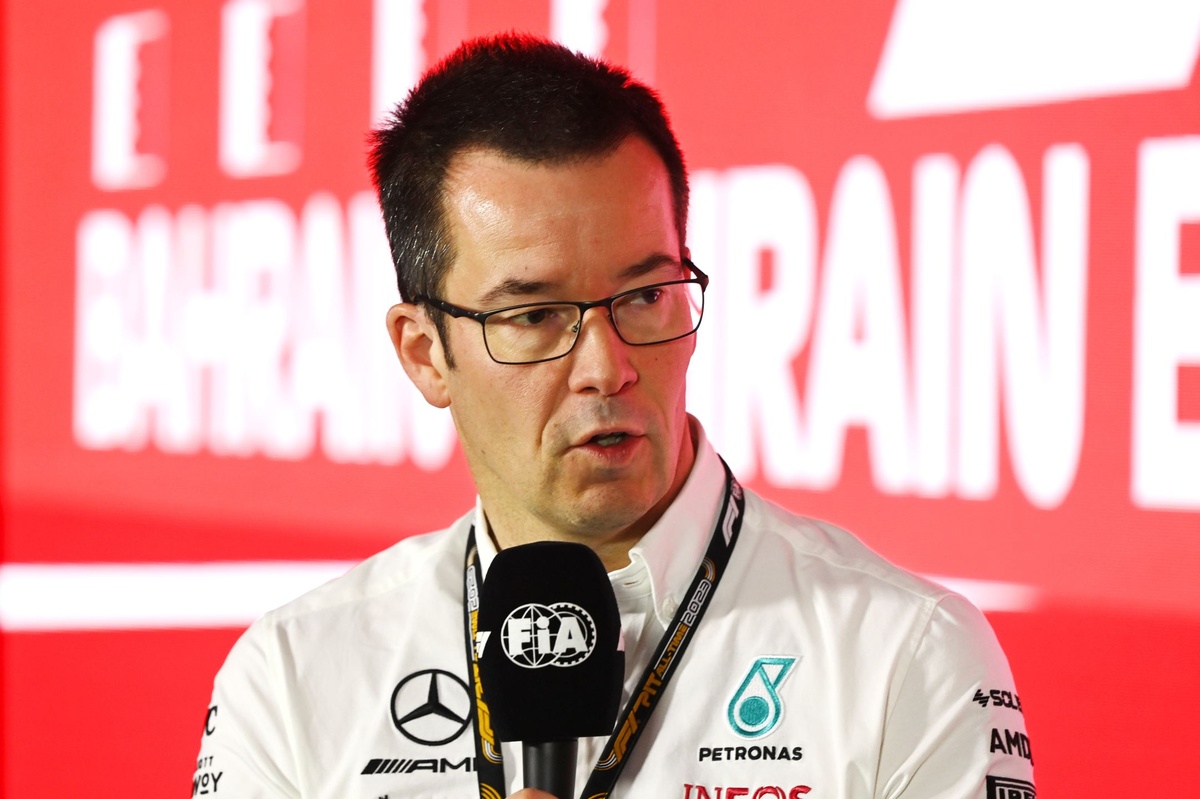
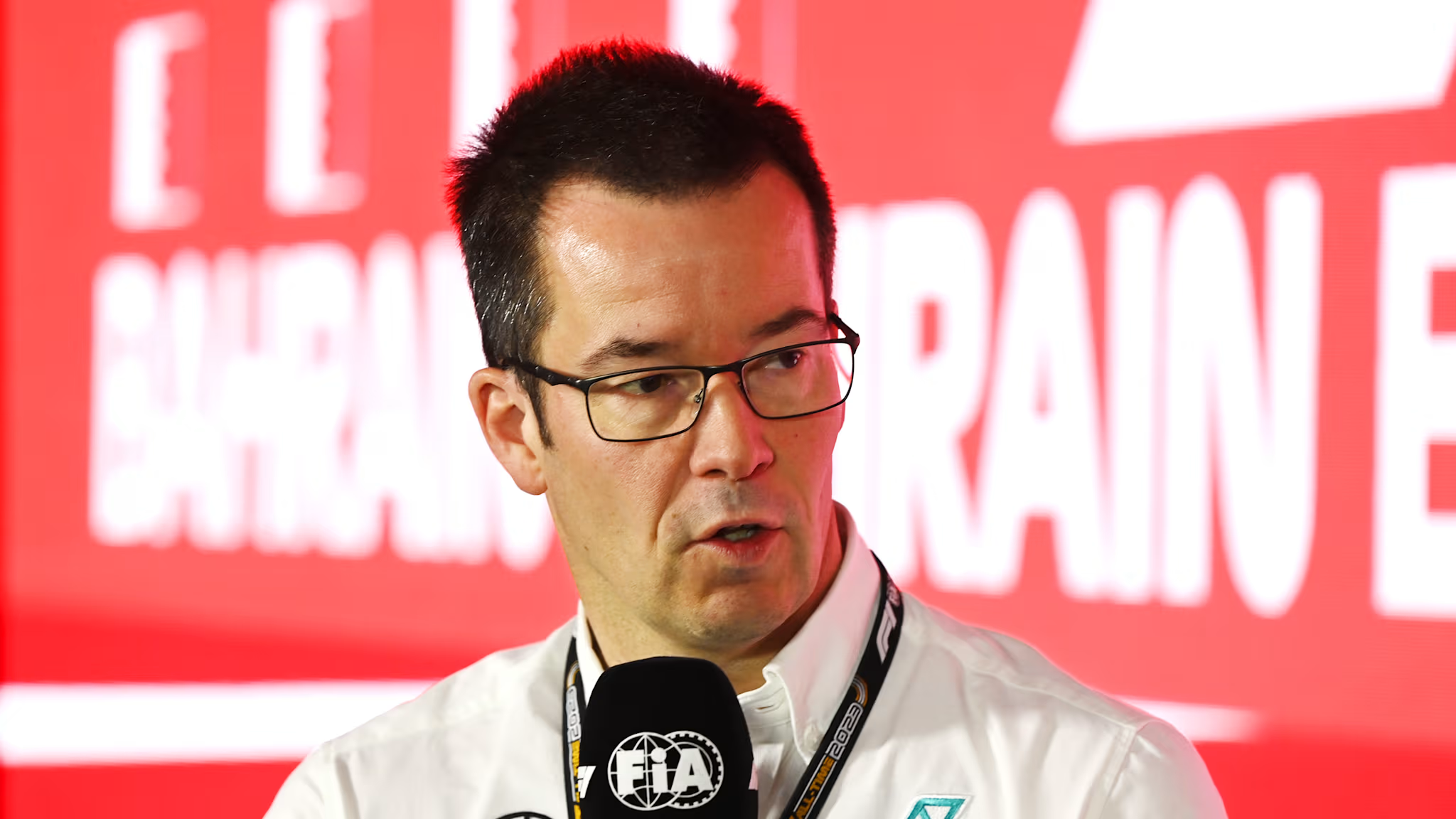
  • Alpine Hires Former Mercedes F1 Tech Chief Mike Elliott as CTO

    Alpine Hires Former Mercedes F1 Tech Chief Mike Elliott as CTO

    Key Highlights

    • Alpine F1 appoints former Mercedes CTO Mike Elliott as Chief Technical Officer in a newly created role at the Enstone factory.
    • Elliott returns to Enstone after previous tenure as principal aerodynamicist during the Renault and Lotus eras, bringing eight Constructors’ and eight Drivers’ championship pedigree.
    • The appointment comes as Alpine fights Racing Bulls for fifth in the 2025 Constructors’ Championship ahead of its 2026 transition to Mercedes power units.

    Alpine Bolsters Technical Leadership with Mike Elliott Appointment

    The BWT Alpine Formula 1 Team has confirmed the appointment of Mike Elliott as Chief Technical Officer, a newly created position designed to oversee the technical and engineering functions at the team’s factory at Enstone. The announcement, made on Thursday, signals a significant reinforcement of the squad’s technical hierarchy as the outfit targets a return to the front of the grid. Elliott, a 52-year-old British engineer, assumes immediate responsibility for the entire technical area, with current Executive Technical Director David Sanchez now reporting directly into him.

    A Proven Championship Pedigree Returns to Enstone

    The hiring represents a notable homecoming for Elliott, who previously served as the team’s principal aerodynamicist during its Renault and Lotus iterations. His career trajectory since departing Enstone has been defined by sustained success at Mercedes. He joined the Brackley-based squad as Head of Aerodynamics, playing a pivotal role in the team’s early dominance of the 2014 hybrid regulations. Elliott subsequently rose through the ranks to serve as Technical Director and ultimately Chief Technical Officer, a tenure that saw him trade positions with James Allison before his departure from Mercedes in 2023.

    Alpine Highlights Championship CV and Strategic Fit

    In its official statement, Alpine emphasized the depth of Elliott’s winning experience. “He has a proven track record in the sport, having contributed to an impressive eight constructors’ and eight drivers’ championships,” the team stated. Alpine further contextualized the strategic rationale behind the hire, noting that “Elliott’s arrival at Enstone strengthens the team’s technical capabilities as the team looks to build on the improved performances on track and close the gap to the top four teams.” This mandate aligns directly with the team’s current trajectory, having sacrificed development on the 2024 car to prioritize the 2025 and 2026 projects.

    Why This Matters

    The appointment of Mike Elliott is a definitive statement of intent from Alpine and its parent company, Renault Group. After a difficult start to the current regulatory cycle, the team has shown signs of recovery in 2025, currently battling Visa Cash App Racing Bulls for fifth place in the Constructors’ Championship. Crucially, 2026 marks a seismic shift for the Enstone operation: it will be the first season Alpine competes as a customer team for Mercedes power units, ending its factory engine program. Elliott’s intimate knowledge of Mercedes’ power unit installation requirements, cooling architectures, and aero-philosophy—gained during his decade-long stint at Brackley—provides a unique bridge between the chassis team and their new engine partner. His elevation above David Sanchez also clarifies a technical reporting structure that has seen frequent reorganization in recent years, placing a single, highly experienced figure at the apex of technical decision-making ahead of the all-new 2026 regulations.

    Frequently Asked Questions

    What is Mike Elliott’s specific mandate at Alpine?

    Elliott has been appointed Chief Technical Officer, a newly created role in which he will “oversee the technical and engineering functions at the team’s factory at Enstone.” He sits atop the technical hierarchy, with Executive Technical Director David Sanchez now reporting to him.

    Why is his Mercedes background significant for Alpine’s 2026 season?

    Alpine will switch to Mercedes customer power units in 2026. Elliott spent over a decade at Mercedes, rising to CTO, giving him unparalleled insight into the power unit’s integration requirements, which is critical for designing the all-new 2026 chassis regulations.

    How has Alpine performed recently to warrant this structural change?

    After a deliberate strategy of sacrificing 2024 development to focus on future regulations, Alpine has made a strong start to the 2025 season, currently fighting Racing Bulls for fifth place in the Constructors’ Championship.

  • Alpine Appoints Mike Elliott as Chief Technical Officer

    Alpine Appoints Mike Elliott as Chief Technical Officer

    Alpine has confirmed the appointment of Mike Elliott as Chief Technical Officer, marking a significant return to Formula 1 for the British engineer following his departure from Mercedes in late 2023.

    Extensive Formula 1 Pedigree

    Elliott brings 23 years of elite-level experience to the Enstone-based operation. His career began at McLaren in 2000 as an aerodynamicist, where he advanced through various technical roles before joining Renault in 2008. He remained with the Enstone outfit through its various iterations until 2012, when he moved to Mercedes.

    At Mercedes, Elliott progressed to Head of Aerodynamics before serving as Technology Director from 2017 to 2021 and Technical Director between 2021 and 2023. He briefly assumed the Chief Technical Officer role in a 2023 leadership swap with James Allison, departing the team six months later.

    Alpine Statement on Appointment

    In a statement confirming his appointment, Alpine stated that Elliott will “oversee the technical and engineering functions at the team’s factory at Enstone” in his new position, adding: “He has a proven track record in the sport, having contributed to an impressive eight Constructors’ and eight Drivers’ Championships.

    “Elliott’s arrival at Enstone strengthens the team’s technical capabilities as the team looks to build on the improved performances on track and close the gap to the top four teams.”

    Strategic Significance for Alpine

    The hiring represents a clear statement of intent from Alpine as they target a return to the front of the grid. Elliott’s championship-winning experience at Mercedes, combined with his prior knowledge of the Enstone facility, positions him to make an immediate impact on the team’s technical direction for the 2025 season and beyond.

  • Yuki Tsunoda Reveals Why He Failed to Master Red Bull’s 2025 F1 Car

    Yuki Tsunoda Reveals Why He Failed to Master Red Bull’s 2025 F1 Car

    Key Highlights

    • Yuki Tsunoda finished 17th in the 2025 drivers’ standings with 30 points, while teammate Max Verstappen won eight grands prix and scored 385 points during their time together.
    • Tsunoda admits attempting to replicate Verstappen’s car set-ups was his “biggest mistake,” as the RB21’s characteristics remained elusive despite his prior experience with Red Bull’s philosophy.
    • Red Bull informed Tsunoda he would not be retained for 2026 at the Qatar Grand Prix; he described the news as a relief after a “so stressful” second half of the season.

    The Unprecedented Gap: Tsunoda’s 2025 Red Bull Ordeal

    It seems almost unfathomable for a title contender’s team-mate to end up 17th in the Formula 1 drivers’ standings, yet that is precisely what happened to Yuki Tsunoda alongside Max Verstappen at Red Bull in 2025. In a way, it was unprecedented; the closest modern parallel was perhaps Felipe Massa lying 16th eight rounds into the 2012 season while Ferrari team-mate Fernando Alonso comfortably led the championship, though the Brazilian managed to turn that situation around. Tsunoda’s case was unique. Having decided to release an underperforming Sergio Perez, Red Bull initially picked Liam Lawson over Tsunoda for a 2025 promotion, believing the New Zealander’s lack of experience would be offset by his allegedly higher potential. Lawson did not get much time to prove himself. After two grands prix in which he was eliminated in Q1 and failed to score any points, he was sent back to Racing Bulls, with Tsunoda finally getting his chance at the main team.

    Pre-Season Optimism Meets RB21 Reality

    At the time, the Japanese driver was quite bullish about his odds of succeeding where so many others had failed. “People often say Red Bull cars tend to have strong front-end grip. I personally love cars that turn aggressively, and in the past, I adapted my driving style to that kind of set-up,” Tsunoda said ahead of his Red Bull debut. “Racing Bulls traditionally had cars that understeered a bit more, which was challenging for me at first, but I got used to it, and it eventually became my norm. Now, the key will be adjusting to Red Bull’s characteristics again, but considering my past experience, I’m not too worried about it.”

    Perhaps he should have been. While Verstappen won eight grands prix—more than anyone, including 2025 champion Lando Norris—Tsunoda failed to take a single podium finish, with his highest result an underwhelming sixth in Baku; he scored 30 points to his team-mate’s 385 over their time together. In 27 qualifying sessions (sprints included), Tsunoda made it to Q3 eight times, was out in Q2 on nine occasions, and was eliminated as early as Q1 on 10 occurrences. He outqualified his team-mate just once and was 0.6s slower on average. So, what was the problem with Red Bull’s RB21 F1 car? To some extent, Tsunoda remains at a loss to explain it. “Normally I’m able to understand the car, what I’m driving, what kind of characteristic,” Tsunoda detailed on the Beyond The Grid podcast, “but it feels like even after Abu Dhabi, I didn’t know what kind of car I was driving. I still don’t understand what was the issue and what things made me very struggle to learn about this car and get used to the car. I thought confidence was there, but some race I just somehow lost the confidence. I still don’t understand the car, to be honest.”

    The Setup Trap: Replicating Verstappen’s Philosophy

    Still, Tsunoda has fascinating insight to provide. He openly admits he refrained from tweaking his driving style, believing that is just what works for him. However, he did end up trying out Verstappen’s set-ups—and that experiment just failed. “One thing about myself: I have big enough ego to not change my driving style,” Tsunoda admitted. “I know what I’m doing in terms of driving and I believe in myself. So, I never try to change my driving style to another driver’s, even though the driver is competitive and fast. Obviously for Max, it’s a different case. He’s a world champion, he proves a lot of things and I still learn a lot of things from his driving. My core driving is the same. And at some time, probably the first year out of any years since I started, I thought about changing driving style and trying to do something similar to Max. But in my perspective, if I just look at data, I didn’t really see a huge difference in terms of driving. What I did most—and what I think now was the biggest mistake last year—was to try to replicate the set-up, what he’s doing; even knowing that sometimes, if I feel the car very oversteer, Max’s [set-up] in theory makes the car worse, more sensitive in the direction change, or makes the car slide more. I tend to choose the set-up, even though I’m already struggling with oversteer. It can happen sometimes the opposite way as well: even though I’m struggling with understeer, his car is more understeer. I try to replicate that.”

    Echoes of Albon: A Familiar Red Bull Struggle

    Tsunoda is not the first driver to unsuccessfully attempt to use Verstappen’s set-up. Alex Albon too struggled alongside the Dutchman, for a year and a half, in 2019-20. Back in 2023, the Anglo-Thai reminisced in the High Performance Podcast: “[Verstappen] has quite a unique driving style, it’s not that easy to get along with. Everyone has a driving style; I would say my driving style is a bit more on the smooth side, but I like a car that has a good front end, so quite sharp, quite direct. Max does too, but his level of sharp and direct is a whole different level—it’s eye-wateringly sharp. To give people kind of maybe an explanation of what that might feel like, if you bump up the sensitivity [on a computer game] completely to the max and you move that mouse and it’s just darting across the screen everywhere, that’s kind of how it feels. It becomes so sharp that it makes you a little bit tense.”

    This metaphor was brought up to Tsunoda, but he was not convinced it was particularly relevant to the RB21. Asked if he could relate, the Japanese racer said: “Yes and no. First, the car is a lot different to when Alex was driving. And I’ve never driven Alex’s car. I tend to force the car how I want to drive. It’s sensitive, but I didn’t feel that sensitive. But at the same time, like I said, it was very up and down. Some tracks I’m driving more sensitive car than him, some tracks he was driving more sensitive. On average, probably he was driving a bit more sensitive car, more like a sharper car than me. What he was definitely better at was, even though the car was sensitive or even numb… In a corner, there’s always one phase or one moment that the car naturally reacts to, or tries to kind of respect its own behaviour. You know what I mean? Like, always in the corner, as soon as I turn in or whatever, that car does its own thing. That can be like a sensitive, sharp rotation or, I don’t know, the front slides or something. He’s able to use that and he can smell that kind of behaviour probably much faster than me. And he was able to maximise that kind of behaviour throughout the corner. It’s not necessarily my driving style that I’m doing, but if I have that kind of moments, sharp turn-in or rotation or the front slide, I tend to force the car how I want to drive. I normally respect how the car wants to drive through the corner, or I’m able to use that kind of natural behavior from the car. But I wasn’t able to use that ability much in the Red Bull.”

    From Suzoka Optimism to Season-Long Ordeal

    As soon as he first drove the RB21 in free practice at Suzuka, Tsunoda’s early optimism gave way to caution; he reported the car was “feeling a bit more tricky” than on the simulator. With hindsight, it was a sign of the ordeal to come. “Even though I said, yeah, I thought I had confidence, probably it was not enough, as much as the VCARB car that I drove for four years,” Tsunoda said. “Red Bull is still a car that was completely different, which I felt as soon as I stepped into that car in Suzuka. There’s some confidence level I was able to build up, but to maximise that whole performance, I think that was probably something I was missing, and trying to find that confidence throughout the year.”

    The End of the Road: Relief Amid Disappointment

    Tsunoda eventually found out in Qatar, at the penultimate round of the season, that he would not be retained as a race driver and would act as a reserve in 2026—no huge surprise given his results, and the campaign had been so draining that the news actually was a relief to him. “I still remember the moments,” he recounted. “Initially, what I got told was from Helmut [Marko, then Red Bull’s motorsport advisor]. In the end, Helmut is the person that brought me into Formula 1, brought me even to the Red Bull junior programme. We were together since when I was 17, 18. I remember he was also pretty disappointed about that. And when I got told, I still remember, I didn’t feel that much of huge disappointment or devastated feeling. Obviously I was still disappointed and pretty sad that I’m not driving next year. But not as I expected because I don’t know why, somehow in a way, I fought really hard. I fought more than ever in that 2025 year. And even if I look back now, I don’t have much regret. I gave everything. In a way, honestly, my heart was just saying, ‘Okay, now I can be relaxed’. Because it was so stressful, the second half of the 2025 season, where I fought hard with a lot of pressure. Like I was never able to kind of breathe out much.”

    Why This Matters

    Tsunoda’s 2025 season serves as a stark case study in the difficulty of adapting to a Red Bull Racing car tailored around Max Verstappen’s singular driving style and set-up preferences. The RB21’s “eye-wateringly sharp” front-end sensitivity—described previously by Alex Albon as akin to maximizing mouse sensitivity in a video game—created a vehicle that rewarded a specific, highly reactive driving approach. Tsunoda’s admission that he “forced the car how I want to drive” rather than respecting its natural rotation highlights a fundamental philosophical clash: the car demanded a driver who could anticipate and utilize its nervous behaviour, while Tsunoda’s instinct was to impose his own rhythm. The experiment of copying Verstappen’s set-ups despite suffering opposite balance issues (oversteer vs. understeer) underscores the trap teammates fall into when chasing the benchmark’s data rather than their own confidence. With Tsunoda moving to a reserve role for 2026 and Liam Lawson returning to Racing Bulls, Red Bull’s driver development pipeline faces scrutiny over its ability to cultivate a viable second seat alongside a generational talent whose car demands remain uniquely extreme.

    Frequently Asked Questions

    Why did Yuki Tsunoda struggle so much relative to Max Verstappen in the 2025 Red Bull RB21?
    Tsunoda could not adapt to the RB21’s specific handling characteristics, describing the car as elusive even after the season ended. He admitted his “biggest mistake” was replicating Verstappen’s set-ups despite those set-ups often worsening the balance issues (oversteer or understeer) he was experiencing, and he acknowledged he “forced the car” rather than utilizing its natural rotation through corners as Verstappen could.
    How did Tsunoda’s 2025 statistics compare to Verstappen’s during their time as teammates?
    Over their stint together, Verstappen won eight grands prix and scored 385 points, while Tsunoda scored 30 points with a best finish of sixth in Baku. In 27 qualifying sessions (including sprints), Tsunoda reached Q3 eight times, exited in Q2 nine times, and was eliminated in Q1 on 10 occasions. He outqualified Verstappen once and trailed by 0.6 seconds on average.
    What was Tsunoda’s reaction to being dropped for the 2026 season?
    Tsunoda revealed the news—delivered by Helmut Marko at the Qatar Grand Prix—brought a sense of relief rather than devastation. He stated he “fought more than ever in that 2025 year” with no regrets, but acknowledged the second half of the season was “so stressful” and that his heart felt “okay, now I can be relaxed” upon learning he would move to a reserve role.
  • How Max Verstappen Won the ‘Biggest Race’ of His Motorsport Career

    How Max Verstappen Won the ‘Biggest Race’ of His Motorsport Career

    Max Verstappen Dominates Red Bull’s ‘Max vs 100’ Karting Spectacular at Silverstone

    Just days after securing a podium finish at the Spanish Grand Prix, four-time Formula 1 World Champion Max Verstappen swapped his RB20 for a go-kart to tackle Red Bull’s ambitious Max vs 100 challenge at Silverstone.

    The Challenge: Overtake 100 Rivals from the Back of the Grid

    Held on Wednesday evening, the event tasked Verstappen with overtaking and eliminating 100 competitors—comprising Red Bull athletes, content creators, and other guests—from the very back of the grid within 30 laps or 75 minutes. Red Bull, renowned for high-concept stunts across sports, billed it as the world’s biggest go-kart race. The action was broadcast live on Disney+, amplified across social media, and produced with the gravity of a headline Grand Prix.

    Following two practice days overseen by Racing Bulls driver Arvid Lindblad, the serious business began when Verstappen arrived to sample the 2.5 km layout blending Silverstone’s karting venue with sections of the F1 circuit. While Verstappen’s outright pace was never in doubt, the logistical puzzle of carving through a 101-kart field from last to first remained an open question.

    “It’s a long way! A very long way!”

    Verstappen smiled during a pre-race interview as he walked the length of the grid, the scale of the challenge visibly dawning on him moments before the 18:00 start.

    Verstappen’s P101 to P1 Charge

    From the moment the lights went out, Verstappen shuffled forward aggressively, ducking and diving past a gaggle of rivals into Turn 1. He narrowly avoided the first-corner bottleneck and strategically used the grass to bypass spinners. His rapid progress continued through Sectors 1 and 2 until a Full Course Yellow neutralized the race to clear further incidents.

    Initial estimates suggested he might have passed 20 to 50 karts, but the timing screens revealed a staggering reality: Verstappen had rocketed to 37th position, a gain of 64 places on the opening tour.

    “Not a bad first lap, then!”

    Verstappen chimed over the radio upon hearing the news.

    Once racing resumed, the Dutchman’s ascent was relentless: 25th by Lap 4, 10th by Lap 6, and fifth by Lap 7. The field dwindled until only three karts remained ahead—those of F1 journalist Jacky Martens, YouTuber Zac Alsop, and Red Bull Ford Powertrains technician Lewis Osler. Despite light-hearted radio banter among the leaders about forming a roadblock, Verstappen dispatched them all within 35 minutes and 14 laps.

    “That was simply lovely,”

    Verstappen chuckled after eliminating the final kart, adding:

    “it’s my first win of the year, so I’ll take this one!”

    Post-Race Reflections: ‘A Hundred Is a Lot!’

    Speaking to select media including F1.com, Verstappen reflected on the unique experience:

    “I grew up racing a lot in karts, then because of your formula career you don’t really get a lot of time racing them anymore, so it’s always nice to go back and have a go at it.

    “I got three or four laps on the track, and that was basically my practice. Before that, it’s always very hard to know what to expect, so it’s also better then not to overthink the situation, and just feel it once you sit in the kart. But I think the most that I’ve been on a track with is like 40 karts, maybe, so a hundred is a lot!”

    Verstappen’s fastest lap of 2m 20.673s was 2.6 seconds clear of Martens’ best (2m 23.327s). He explained the strategic calculus behind the victory:

    “I knew my lap times when I did the prep laps, and I knew the Qualifying lap times of the others, so I knew that it was possible [to win], but it also really depended on my first two laps,”

    said Verstappen.

    “They went better than expected, so that of course helped a lot.

    “Before the race, I said, ‘Let’s be bold and say that I will pass 40 people in Lap 1’, and then they told me [what it was] at the end. It was a good effort. Some people got really excited on the new [extended] part of the track, and there was a bit of a road blockage going on, but I managed to swerve around it, and it worked out well.

    “When the lights go out, you kind of just see where the gaps are, and then you also kind of need to trust a few people around you, that they don’t do anything crazy. To be honest, they didn’t. They were very excited with each other, but they were actually quite nice to me! They weren’t crashing into me or whatever.”

    “He Sees Something We Don’t See” – Race Director Analysis

    Track Designer and Race Director David Terrien was among those left impressed by Verstappen’s spatial awareness and decision-making in heavy traffic.

    “Going through the traffic of such a big field, no one has done it,”

    Terrien commented.

    “There’s never been a karting race with so many karts. So, even Max was questioning himself just before the start, how he could go through the traffic.

    “When you look at the replay, he picked the right spots. Every time there was a gap, he went for it. He was on the right side of the track when there was a crash going on the other side. I think that’s what makes the difference with Max – his starts, and his reaction time. He showed his skills in all aspects.

    “I was talking to Max’s race engineer and we were looking at the replay of the start. He sees something we don’t see. He sees a gap that’s going to open, and it’s not open yet. So, I think that’s a race vision. That’s something he has that most of the drivers don’t have.”

    Another ‘Crazy, Fun’ Red Bull Memory

    For Verstappen, the event joins a growing catalogue of unconventional Red Bull challenges—such as driving an F1 car down a mountain and racing caravans with Daniel Ricciardo—that blend competition with entertainment.

    “Sometimes I get reminded of what I actually did in the past, and I’m like, ‘Oh my God, did I really do that?’”

    Verstappen said.

    “It’s definitely one of the best ones out there. I mean, how many times do you have the opportunity to create something like this? Racing against a hundred other people from other disciplines or sports.

    “I think it’s great that with Red Bull, they always come up with some crazy, fun things, and it suits me as well. I think also the way that it was organised today… I know it requires a lot of effort to be able to do something like this, and it’s a lot of fun to be a part of that.”

    Could ‘Max vs 200’ Be Next?

    Asked if the concept could become a tradition, Verstappen grinned:

    “That’s what I said! I was like, ‘Maybe 200’, and then we’ll see again,”

    he responded, before signing off from the press conference to savor what will undoubtedly rank among his most memorable victories.

  • Win 2027 Grand Prix Tickets to Celebrate 2027 Calendar Launch

    Win 2027 Grand Prix Tickets to Celebrate 2027 Calendar Launch

    Formula 1 Launches 2027 Calendar Giveaway with Race Tickets Prize

    Formula 1 is celebrating the release of the 2027 F1 Calendar by offering fans a chance to win tickets to a 2027 Grand Prix of their choice. The promotion runs through the official F1 Unlocked platform.

    How to Enter the 2027 F1 Ticket Giveaway

    To participate, fans must:

    • Sign up for a free F1 Unlocked account (or sign in if already a member)
    • Vote for the 2027 race they are most looking forward to attending

    One winner will be selected to receive tickets to their chosen 2027 Formula 1 race.

    About F1 Unlocked

    F1 Unlocked is Formula 1’s free membership program that provides fans with exclusive content, priority ticket access, behind-the-scenes features, and special promotions like this calendar launch giveaway.

    The 2027 Formula 1 season calendar was recently announced, setting the schedule for the next championship year. Fans can now review the full race lineup and cast their vote for the event they most want to experience in person.

  • “I’m not enjoying life” – How Yuki Tsunoda’s Red Bull F1 stint “exhausted” him

    “I’m not enjoying life” – How Yuki Tsunoda’s Red Bull F1 stint “exhausted” him

    Key Highlights

    • Yuki Tsunoda described his 2025 Red Bull Racing season as the “toughest year” of his career, revealing severe mental exhaustion and a loss of enjoyment in Formula 1 while struggling to match Max Verstappen’s performance.
    • Tsunoda lost his race seat after the summer break when Isack Hadjar was promoted and Arvid Lindblad debuted, but returned to Racing Bulls for the final three grands prix following Hadjar’s wrist injury and Liam Lawson’s temporary Red Bull call-up.
    • The Japanese driver stated he emerged from the ordeal mentally stronger, declaring he now feels “very comfortable” under pressure and believes nothing in his future career will match the difficulty of his 2025 experience.

    Tsunoda’s Brutal Red Bull Audition: A Midseason Promotion With No Preparation

    Yuki Tsunoda’s 2025 Formula 1 campaign stands as a case study in the unforgiving nature of Red Bull Racing’s second seat. Promoted from Racing Bulls midseason to partner four-time world champion Max Verstappen, Tsunoda stepped into the RB21 without a single prior lap in the machinery—a disadvantage compounded by the team’s condensed development cycle. While Sergio Perez endured four seasons in the role and Liam Lawson lasted merely two grands prix, Tsunoda received a nearly full campaign to prove his worth. He finished 17th in the drivers’ championship, while Verstappen narrowly missed a fifth consecutive title by two points, underscoring the performance gap that has defined the Milton Keynes squad’s driver lineup dynamics for years.

    Mental Toll: Exhaustion, Isolation, and a Loss of Passion

    Speaking candidly on the Beyond The Grid podcast, Tsunoda laid bare the psychological erosion that accompanied his on-track struggles. The 26-year-old described a progressive breakdown of his usual coping mechanisms, where familiar reset rituals—good food, downtime at home—ceased to restore his energy as the season wore on.

    “Definitely, 2025 was the toughest year in my career, and I learned heaps of things,” Tsunoda said. “I’m the kind of person, as soon as I had good food or whatever, I was able to reset myself between the race weeks. But I started to really struggle, towards the second half of the season especially; somehow when I came back to my house, I felt very exhausted.”

    The exhaustion deepened into existential doubt. Tsunoda recounted a growing inability to recharge, a relentless schedule that offered no respite, and a creeping realization that the joy driving his career had evaporated.

    “Normally I’m able to reset myself, get back this energy after I had something that I really like, if I do something that I really like. But I didn’t feel that energy, [it] never came back, and the races just kept going and going, going, going. I had so much up and down, and at some point I just recognised myself that I’m not really enjoying my life, I would say, like I’m not really enjoying the situation, not really enjoying driving Formula 1 probably as much as I was doing the first three years.”

    Confronting the Root Cause: Distance from Home and Professional Support

    Tsunoda traced the crisis to a factor he had overlooked since his formative European racing years: geographic and emotional separation from his support network in Japan.

    “So, it was a very tough time, and outside of racing, try to solve this issue, right? What can I do to help that? And if I look back, is there something else other than eating food or this stuff? What makes me happy? And normally it’s friends, but mostly friends in Japan and… Okay, I really recognised, actually I’m away from Japan. That I really never thought about since probably my first year in F3.”

    He sought professional intervention—psychological support, trainer guidance—but the punishing second-half calendar limited the space needed for recovery. “Okay, this is tough, something that I have to resolve myself. I got help quite a lot with psychology, trainer and a lot of things, but the race [schedule] was pretty busy in the second half, so it was a pretty tough time. But at the same time, the year gave me the opportunity to look myself through a lot more than any other years.”

    Demotion, Reserve Role, and an Unexpected Return

    The organizational fallout was swift. Ahead of the 2026 season, Red Bull promoted Isack Hadjar to the senior team and handed Arvid Lindblad his Formula 1 debut at Racing Bulls, relegating Tsunoda to a reserve driver role across both squads. Fortune intervened during the summer break when Hadjar sustained a wrist injury, prompting Lawson’s temporary elevation to Red Bull and creating a vacancy at Racing Bulls. Tsunoda seized the opportunity, contesting the final three grands prix starting at Zandvoort.

    The reprieve revealed a transformed competitor. Tsunoda reported a newfound comfort under pressure, crediting the 2025 crucible for recalibrating his mental framework.

    “Not sure I’m gonna have that much pressure and struggle, difficult times, as much as I had in 2025,” he added. “So everything comes so far with big challenges. Somehow I’m able to enjoy that kind of pressure moments and I feel very comfortable. Jumping into the car that I’ve never driven, spring qualifying format, VCARB team’s doing really well, running P5 in the teams’ championship – you can’t really mess up for the race, you want to have points. Somehow I was like, I really feel okay, I didn’t feel that much pressure.”

    Asked whether any future challenge could match 2025’s intensity, his answer was definitive: “I don’t think so.”

    Why This Matters

    Tsunoda’s experience illuminates the human cost of Red Bull’s high-stakes driver development model, where the second seat has become a revolving door of talent unable to withstand the Verstappen benchmark. The team’s 2026 lineup shuffle—elevating Hadjar and Lindblad while retaining Tsunoda in a reserve capacity—signals a continued willingness to cycle through candidates rather than stabilize the pairing. For Tsunoda, the season represents a pivotal career inflection: a driver who confronted the limits of his resilience, sought structured psychological support, and emerged claiming a durable mental upgrade. His return to Racing Bulls for the season’s closing rounds, where he operated without the paralyzing pressure that defined his Red Bull stint, offers a tangible measure of that growth. The broader paddock will watch closely whether this psychological recalibration translates into sustained on-track performance in 2026, particularly if Tsunoda secures a full-time drive again.

    Frequently Asked Questions

    Why did Yuki Tsunoda struggle so severely during his 2025 Red Bull Racing stint?
    Tsunoda was promoted midseason without any prior experience driving the RB21, placing him at an immediate technical disadvantage against four-time champion Max Verstappen. The performance gap, combined with a relentless race schedule and isolation from his Japan-based support network, triggered profound mental exhaustion and a loss of enjoyment in racing.
    How did Tsunoda return to a race seat after being demoted to reserve driver?
    Isack Hadjar, who had been promoted to Red Bull Racing for 2026, suffered a wrist injury during the summer break. Liam Lawson filled in for Hadjar at Red Bull, vacating his Racing Bulls seat and allowing Tsunoda to compete in the final three grands prix starting at Zandvoort.
    Does Tsunoda believe he is mentally stronger after the 2025 season?
    Yes. Tsunoda explicitly stated that he now feels “very comfortable” under pressure, enjoys high-pressure moments, and does not expect any future career challenge to match the difficulty of his 2025 experience. He credited psychological support and self-reflection during the season for the transformation.
  • Was Cadillac “faster” than Williams in Madring F1 Race?

    Was Cadillac “faster” than Williams in Madring F1 Race?

    Key Highlights

    • Sergio Perez showed strong race pace at the Spanish Grand Prix, matching and briefly surpassing Alexander Albon’s Williams before a water leak forced his retirement.
    • Teammate Valtteri Bottas struggled with significant tire degradation and brake management, highlighting a performance disparity within the Cadillac squad.
    • Cadillac targets improvement at the Azerbaijan Grand Prix, where the Baku circuit’s low-downforce nature may mask the MAC-26’s current aerodynamic deficiencies.

    Perez Finds Encouraging Pace Amid Reliability Woes

    Cadillac’s maiden Formula 1 campaign has largely been defined by backmarker status, but the Spanish Grand Prix at the new Madrid circuit—referred to as Madring—offered a glimmer of competitiveness from Sergio Perez. The Mexican driver qualified 18th but made a lively start, jumping past Yuki Tsunoda and Carlos Sainz to sit 16th. More importantly, his race pace proved genuinely competitive against the midfield benchmark.

    Perez spent the entirety of his race shadowing Alexander Albon’s Williams, running a near-identical strategy of mediums to hards under the Virtual Safety Car. “I was pretty much the same pace as [Alexander] Albon all the way through,” Perez commented. “I was within a second or two until we had the issue. So a really strong weekend for the team in terms of pace. We pushed everything, we were on the limit with the brakes, but we pushed to the very limit, and [I’m] happy with that.” Telemetry backed his assessment: while Perez was 0.403 seconds per lap slower on the medium compound over 11 representative laps, he turned the tables on the hard tire, lapping 0.351 seconds quicker than Albon over eight laps before a terminal water leak and blue flags ended his challenge.

    Bottas Highlights Degradation and Durability Deficits

    The picture was starkly different for Valtteri Bottas. The Finn languished at the rear of the field, managing excessive brake temperatures with persistent lift-and-coast throughout the afternoon. “We know we need to improve,” the Finn nervously chuckled. “The car is still not robust enough, and we need to make it a lot faster. And the deg today highlights how much we’re lacking, it’s like way more than the competition.” Cadillac’s reliability record underscores the struggle: the team has suffered 11 retirements or non-starts in the 2026 season, fewer than Aston Martin’s 15 but significantly more than Williams’ seven.

    When presented with Perez’s positive comparison to Albon, Bottas offered a nuanced counterpoint. “In the beginning we can be there, we’ve seen, but as the race progresses, the deg gets worse. But actually for the next event, I’m more hopeful that we can be there. Baku, the only high-speed corners, they are flat out; otherwise it’s slow- or medium-speed.” His assessment points to a fundamental aerodynamic inefficiency on the MAC-26 that punishes the car disproportionately on conventional circuits.

    Why This Matters: A Two-Tier Trajectory for a Rookie Team

    The divergent weekends of Perez and Bottas expose the volatile nature of Cadillac’s development curve. Perez’s ability to match a race-winning midfield outfit like Williams—albeit over a limited sample—suggests the underlying potential of the chassis and power unit package exists, provided the car is in its optimal window. Conversely, Bottas’s experience confirms that the operational window remains dangerously narrow, with tire degradation and thermal management acting as primary performance limiters. With 11 DNFs already on the board, reliability is not merely a statistical blemish but a barrier to data accumulation. The upcoming Azerbaijan Grand Prix represents a critical calibration opportunity: Baku’s unique layout, dominated by long straights and low-speed corners, reduces the downforce demand that currently plagues the MAC-26. A strong showing there would validate the team’s aerodynamic diagnosis and provide momentum heading into the European swing, but it would not solve the fundamental lack of robustness that Bottas emphasized.

    Frequently Asked Questions

    How did Sergio Perez’s pace compare to Alexander Albon at the Spanish Grand Prix?

    On the opening medium stint, Perez lapped 0.403 seconds slower per lap than Albon. After both switched to hard tires under the Virtual Safety Car, Perez was 0.351 seconds per lap quicker over eight representative laps before a water leak and blue flags intervened.

    What are Cadillac’s main technical issues according to Valtteri Bottas?

    Bottas cited insufficient car robustness, excessive tire degradation relative to rivals, and persistent brake temperature management issues requiring significant lift-and-coast throughout the race.

    Why is the Azerbaijan Grand Prix seen as a better opportunity for Cadillac?

    The Baku circuit features predominantly slow- and medium-speed corners with only flat-out high-speed sections, reducing the downforce demand that currently exposes the MAC-26’s aerodynamic deficiencies on conventional tracks.

  • How to Watch ‘Max vs 100’: Streaming Guide for New Competition Series

    How to Watch ‘Max vs 100’: Streaming Guide for New Competition Series

    Key Highlights

    • Four-time Formula 1 world champion Max Verstappen competes against 100 amateur drivers in Red Bull’s “Max vs 100” go-karting event at Silverstone on September 16.
    • Verstappen starts at the rear of a 101-kart grid and has 30 laps or 55–75 minutes to overtake every rival; amateurs qualify in five groups of 20 to set the grid order.
    • The race streams live on ESPN via Disney+ from 6 p.m. local time, featuring Mario Kart–inspired graphics, cinematic drone footage, and commentary by comedian Mo Gilligan.

    Verstappen Returns to Karting Roots in Massive Head-to-100 Showdown

    Formula 1 world champion Max Verstappen is trading his Red Bull Racing RB20 for an identical 85 kg go-kart today at Silverstone, taking on 100 challengers in a one-off spectacle branded Max vs 100. Organized by Red Bull, the event pits the Dutch driver against a mixed field of athletes, celebrities, content creators, and everyday fans on a purpose-built layout of the Silverstone kart circuit. Verstappen, a four-time F1 title holder, described the outing as a natural return to the discipline that forged his race craft.

    “In go-karts you learn all the basics: starts, defending, overtaking,” said Verstappen. “Of course, I spent a long period of my life go-karting, so it’s always nice to return,

    “It’s about understanding the grip of the go-kart. I’ve done so many years in go-karting that you quite naturally get back into things.”

    Format: One Pro, 100 Amateurs, 30 Laps to Conquer the Field

    The competition structure is designed for maximum drama. After a qualifying session at 2:20 p.m. local time—split into five segments of 20 drivers each, with each karter allowed a single flying lap—the 100 amateurs will line up ahead of Verstappen, who starts dead last. He then has 30 laps, capped at 55 to 75 minutes, to pass every opponent. Each driver he overtakes is immediately eliminated, meaning the contest could finish well before the full distance.

    To level the playing field slightly, amateurs may deploy one “fast lap” during the first half of the race, using a track shortcut to gain ground. For the final 15 laps, however, that tactical option belongs exclusively to Verstappen. All karts are mechanically identical, and the reigning champion can communicate directly with his rivals via radio throughout the event.

    Star-Studded Amateur Grid Blends Sport, Entertainment, and Social Media

    The published entry list reads like a crossover episode of British pop culture. Confirmed participants include content creators Zac Alsop and Jack McDermott (known professionally as Pieface), 2019 Love Island winner Amber Gill, and ultramarathon runner Arda Saatci. The diverse roster underscores Red Bull’s intent to merge motorsport with broader entertainment audiences, turning a pure driving challenge into a viral-ready spectacle.

    Broadcast Plan: Mario Kart Aesthetic Meets Live Sports Production

    Qualifying will not be televised, but the main race airs live at 6 p.m. local time on ESPN via Disney+, Red Bull’s commercial partner, with a pre-event show beginning at 5 p.m. Comedian Mo Gilligan hosts the coverage, which promises a heavy Mario Kart vibe: game-inspired on-screen graphics, cinematic drone footage, and a production style built for social clips as much as traditional broadcast. The visual language is deliberately playful, reinforcing the event’s positioning at the intersection of elite sport and mass-market entertainment.

    Why This Matters

    Max vs 100 represents a growing trend in motorsport: leveraging driver personality and accessible formats to reach audiences beyond the traditional F1 paddock. By stripping away the technological complexity of Formula 1 machinery and placing a world champion in identical equipment against relatable opponents, Red Bull creates a narrative that is instantly understandable—can the best driver on the planet beat 100 people at once? The event also serves as a proof of concept for future “pro vs. mass participation” spectacles, potentially opening new revenue streams through streaming rights, sponsorship integrations, and short-form content distribution. For Verstappen, it reinforces his brand as a racer’s racer who never lost touch with the grassroots of the sport.

    Frequently Asked Questions

    When and where can I watch Max vs 100 live?

    The race streams live on ESPN via Disney+ starting at 6 p.m. local time (Silverstone) on Wednesday, September 16, with a pre-show at 5 p.m. Qualifying at 2:20 p.m. is not broadcast.

    How does the elimination format work?

    Verstappen starts last in a 101-kart field. Every amateur he overtakes is instantly eliminated. He has 30 laps or a maximum of 55–75 minutes to clear the entire field; the event ends early if he passes everyone before the lap or time limit.

    Who are some of the notable amateur participants?

    The entry list includes British content creators Zac Alsop and Jack McDermott (Pieface), 2019 Love Island winner Amber Gill, and ultramarathon runner Arda Saatci, among athletes, celebrities, and fans selected through Red Bull’s entry process.

  • Kimi Antonelli and Mercedes Make Their Own Luck in Madrid

    Kimi Antonelli and Mercedes Make Their Own Luck in Madrid

    How Kimi Antonelli and Mercedes Mastered the VSC to Win the Spanish Grand Prix

    Kimi Antonelli’s victory at the Formula 1 Spanish Grand Prix appeared to hinge on a stroke of luck when a Virtual Safety Car (VSC) was triggered by Lance Stroll’s retirement. However, a deeper look at the telemetry and team radio reveals a calculated masterclass in racecraft and strategy from the Mercedes rookie and his pitwall.

    The VSC Moment That Changed the Race

    The neutralisation period arrived at the precise moment to flip the script on a race that Lando Norris seemed destined to win. Norris had already passed the pitlane entry when the VSC was deployed, eliminating his chance to stop. Antonelli, conversely, managed to dive into the pits at the last second. He emerged with the “virtual” lead, slotting in just behind Charles Leclerc, who had yet to make his stop.

    While the timing was fortunate, it was not accidental. Mercedes had anticipated the neutralisation, and Antonelli manipulated his pace to buy the team the critical seconds required to execute the stop.

    Telemetry Reveals Deliberate Pace Management

    Data analysis highlights exactly how Antonelli created his own opportunity. The moment yellow flags flew for Stroll’s stranded Aston Martin at Turn 20, race engineer Peter Bonnington alerted the Italian. Antonelli immediately backed off—significantly more than required by the regulations.

    Comparing Lap 13 vs. Lap 14

    • Turn 19: Antonelli entered 29 km/h slower than on the previous lap.
    • Turn 20 Braking Zone: He arrived 24 km/h slower, lifting off the throttle much earlier.

    This deliberate deceleration cost him several tenths against Norris and Max Verstappen on track, but it gifted his strategists the time window needed to confirm the VSC and call him in.

    Antonelli vs. Verstappen Under Identical Conditions

    The contrast is stark when comparing Antonelli’s telemetry to Verstappen, who was running six seconds behind under the same yellow flags before the VSC was officially deployed:

    • Verstappen was 15 km/h faster through Turn 19.
    • Verstappen reached the Turn 20 braking point 18 km/h quicker, lifting later.

    Antonelli was not merely adhering to the yellow flag delta; he was actively managing the gap to the pit entry to ensure he would be in position if—and when—the race was neutralised.

    Driver and Pitwall in Perfect Sync

    Antonelli confirmed the pre-emptive nature of his actions after the race, crediting the early warning from his engineer.

    “In my case, the timing was perfect: Bono warned me in the final sector that a virtual safety car might come out, so I lifted off,” Antonelli said after the race. “I slowed down a bit on purpose to see if I could catch the VSC right before the pit entry, and it worked out great.”

    The Mercedes pitwall had already flagged a high probability of a VSC based on real-time analysis of Stroll’s incident. This foresight allowed the strategy group to initiate the communication chain before Race Control made the official call.

    Three-Second Decision Making

    Team principal Toto Wolff praised the speed of the internal process, estimating the entire chain—from strategy identification to driver execution—took roughly three seconds.

    “The chain of command, the process was great,” Wolff said. “The strategy group had it on their mind, obviously, and then someone said, ‘That’s not going to clear quickly with the Aston Martin in the wall’. And then it was strategy to Bono, Bono double-checked, Bono to Kimi, and that was all. We’re talking about three seconds.”

    Racecraft Beyond the Years

    It remains impossible to quantify exactly how many tenths Antonelli’s deliberate lifting contributed to the successful stop versus the VSC timing itself. However, the episode serves as a compelling case study in the 18-year-old’s ability to read a race dynamically. By anticipating the neutralisation and adjusting his speed proactively, he handed his team the margin required to execute a race-winning strategy.