Tag: Formula 1

  • All Official Formula 1 Team Cars Arrive in Hot Wheels Infinite Rush via New F1 Car Collection Pack

    All Official Formula 1 Team Cars Arrive in Hot Wheels Infinite Rush via New F1 Car Collection Pack

    Key Highlights

    • HOT WHEELS Infinite Rush launches today across PlayStation 5, Xbox Series X|S, Nintendo Switch 2, ROG Xbox Ally devices, and PC via Steam, Microsoft Store, and Epic Games Store.
    • The F1 Car Collection Pack DLC, featuring the full 2026 Formula 1 grid, will release in March 2027 as downloadable content.
    • The release marks a first-of-its-kind collaboration between Mattel, Formula 1, and Milestone to bring official Hot Wheels die-cast F1 cars into a video game.

    Hot Wheels Infinite Rush Launches Globally with Multi-Platform Availability

    HOT WHEELS Infinite Rush is available now, delivering high-octane arcade racing to a broad hardware lineup that includes PlayStation 5, Xbox Series X|S, Nintendo Switch 2, ROG Xbox Ally, ROG Xbox Ally X, and PC through Steam, the Microsoft Store, and the Epic Games Store. The launch positions the title as one of the most widely accessible racing releases of the year, spanning current-generation consoles, Nintendo’s new hybrid platform, ASUS ROG’s handheld Windows devices, and the three major PC storefronts.

    Formula 1 Partnership Expands with 2026 Grid DLC Set for March 2027

    The collaboration between Mattel, Formula 1, and developer Milestone deepens with the announcement of the F1 Car Collection Pack, scheduled to arrive as downloadable content in March 2027. The pack will introduce the complete 2026 Formula 1 grid into the game, marking the first time official Hot Wheels die-cast F1 cars have been translated into a playable video game format. The move leverages the popularity of the physical die-cast line, which has already proven a commercial hit with collectors and racing fans alike.

    Formula 1 Seeks New Fan Engagement Through Gaming

    Emily Prazer, Chief Commercial Officer of Formula 1, said: “Our partnership with Mattel and Hot Wheels keeps evolving for our fans, and this latest move gives them the opportunity to race their favourite driver’s car in the HOT WHEELS Infinite Rush video game.
    “They can play against friends and family, immersing themselves in the world of F1 and enjoying the speed, competition, and drama of the sport in a whole new format.
    “We know it’s going to be hugely popular given the reaction to the previous F1 Hot Wheels die-cast cars, and we can’t wait to see fans get behind the wheel when the F1 Car Collection Pack launches in March 2027.”

    Milestone Highlights Trust and Technical Achievement

    Andrea Loiudice, Publishing Director of Milestone, said: “We’re incredibly proud to be the first to bring Formula 1 Hot Wheels die-cast cars to a video game. The opportunity to work alongside such prestigious partners as Mattel and Formula 1 is a great testament to the trust they place in Milestone and in our ability to deliver high-quality racing experiences.
    “Bringing the full 2026 F1 grid to HOT WHEELS Infinite Rush with the F1 Car Collection Pack is an exciting milestone for us, and we’re sure players around the world will be just as thrilled to enjoy these iconic cars in a whole new way.”

    Mattel Emphasizes Best-in-Class Partnership Strategy

    Erika Winterholler, Head of Licensed Games, Mattel added: “The combination of Formula 1’s authenticity and Milestone’s racing expertise created a unique opportunity to deliver something truly special for Hot Wheels fans.
    “Bringing the full 2026 Formula 1 grid to HOT WHEELS Infinite Rush reflects our approach to building best-in-class gaming experiences through great partnerships, while continuing to expand how fans engage with the Hot Wheels brand.”

    Why This Matters

    The release of HOT WHEELS Infinite Rush and its forthcoming F1 Car Collection Pack represents a strategic convergence of toy licensing, motorsport rights, and game development. Milestone, known for the MotoGP, RIDE, and Monster Energy Supercross franchises, brings specialized racing simulation DNA to an arcade-style product, while Formula 1 continues its push to reach younger and more casual audiences through gaming and lifestyle partnerships. For Mattel, the integration of the 2026 F1 grid into a digital play space extends the Hot Wheels brand beyond the pegboard, creating a persistent engagement loop between physical collectibles and interactive entertainment. The March 2027 DLC window aligns with the real-world 2026 Formula 1 season calendar, suggesting coordinated marketing beats across game updates, die-cast releases, and Grand Prix events.

    Frequently Asked Questions

    What platforms is HOT WHEELS Infinite Rush available on at launch?

    The game is available now on PlayStation 5, Xbox Series X|S, Nintendo Switch 2, ROG Xbox Ally, ROG Xbox Ally X, and PC via Steam, Microsoft Store, and Epic Games Store.

    When does the F1 Car Collection Pack release and what does it include?

    The F1 Car Collection Pack launches in March 2027 as downloadable content and features the full 2026 Formula 1 grid, marking the first time official Hot Wheels die-cast F1 cars appear in a video game.

    Who developed HOT WHEELS Infinite Rush?

    The game was developed by Milestone, the Italian studio known for racing titles such as MotoGP, RIDE, and Monster Energy Supercross, in partnership with Mattel and Formula 1.
  • 2025 F1 Academy champion Doriane Pin sets timeline for Formula 1 race seat

    2025 F1 Academy champion Doriane Pin sets timeline for Formula 1 race seat

    Key Highlights

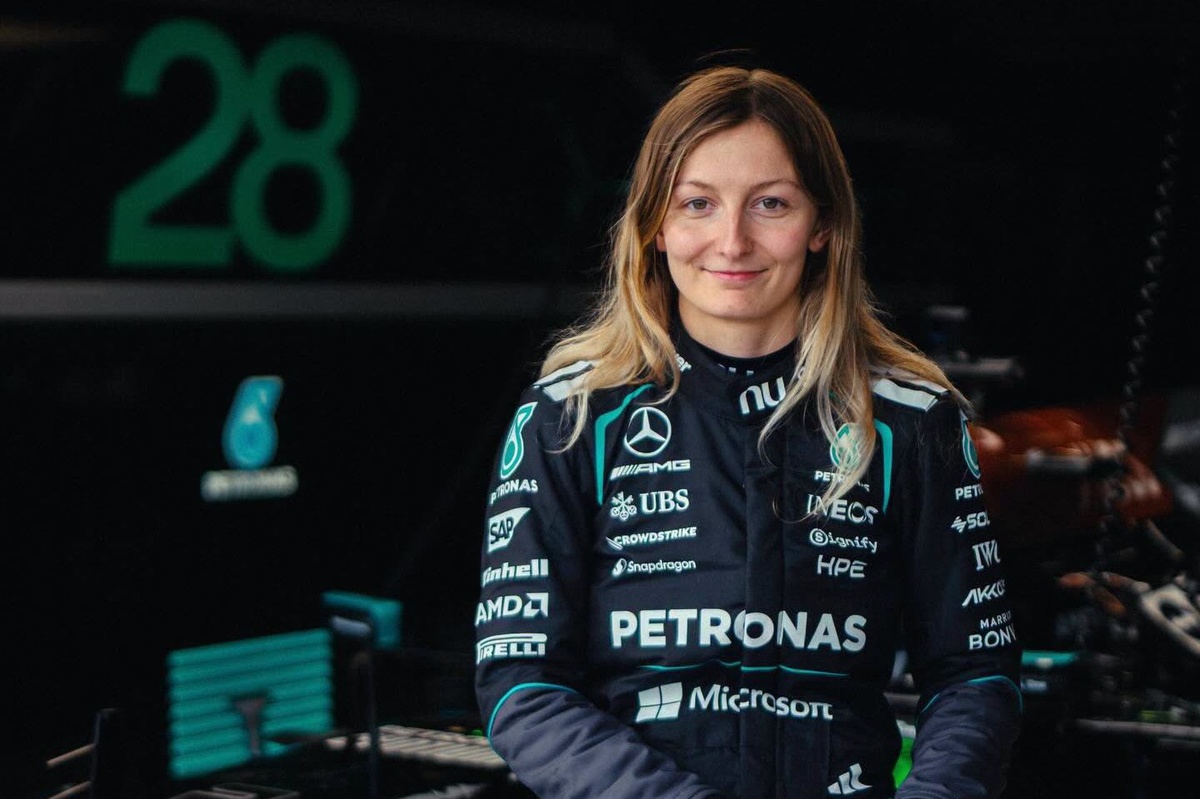
    • Mercedes Formula 1 development driver Doriane Pin has set a five-year target to secure a race seat on the F1 grid.
    • The 2025 F1 Academy champion became the first woman to drive a Mercedes F1 car at Silverstone in April 2026, testing the 2021 W12 challenger.
    • Pin advocates for greater diversity and inclusion in motorsport, emphasizing the need for more opportunities for women in Formula 1 and beyond.

    Pin Sets Ambitious Five-Year Formula 1 Timeline

    Mercedes Formula 1 development driver Doriane Pin has publicly declared her intention to earn a race seat on the Formula 1 grid within the next five years. The French driver, who currently serves as a development driver for the Brackley-based team, outlined her long-term career aspirations during a recent Mercedes In Convo With Kids interview. When asked where she envisions herself in half a decade, Pin responded directly: “In Formula 1. “That would be cool. It will open some doors to all the girls that want to be a Formula 1 driver.”

    Historic Silverstone Test and Multi-Series Programme

    Pin’s trajectory accelerated significantly after she clinched the F1 Academy championship in 2025, a triumph that secured her a development driver contract with Mercedes. In April 2026, the 22-year-old made history by becoming the first woman to drive a Mercedes Formula 1 car at Silverstone, piloting the W12 — the team’s challenger from the 2021 season. Beyond her Formula 1 commitments, Pin maintains a demanding multi-discipline schedule. She serves as a development driver for Peugeot in the FIA World Endurance Championship and for Citroën in Formula E, while also competing in the Le Mans Prototype 2 Pro-Am class of the European Le Mans Series for the Duqueine Team.

    Championing Diversity in a Male-Dominated Sport

    Pin’s ambition extends beyond personal achievement; she is a vocal advocate for systemic change within the motorsport industry. Asked what she would change about the world, she centered her answer on representation: “Diversity, in general,” she said about one thing she would change about the world. “So in sports and outside of sports, I think we need more diversity. “So more opportunities for everyone. Especially with my experience in a male-dominated sport like motorsport. So it would be good if we had a lot of women also in Formula 1.” Her perspective is informed by direct experience navigating the sport’s hierarchical structure, positioning her as a prominent voice for the next generation of female talent.

    Why This Matters

    Pin’s stated timeline and current trajectory place her among the most credible female prospects for a Formula 1 race seat in recent history. Her path mirrors and advances the progress made by predecessors such as Susie Wolff, who drove in official free practice sessions for Williams in 2014 — becoming the first woman to participate in a Grand Prix weekend in 22 years — and Jessica Hawkins, who completed a 26-lap test in the Aston Martin AMR21 at the Hungaroring in September 2023. With the F1 Academy now firmly established as a feeder series under Formula 1’s management, Pin’s development across single-seaters, endurance racing, and electric competition provides a uniquely broad technical foundation. Should she achieve her five-year goal, it would represent a watershed moment for gender diversity at the pinnacle of motorsport.

    Frequently Asked Questions

    Who is Doriane Pin?

    Doriane Pin is a 22-year-old French racing driver who won the 2025 F1 Academy championship. She is currently a Formula 1 development driver for Mercedes, a development driver for Peugeot in the World Endurance Championship and Citroën in Formula E, and competes in the LMP2 Pro-Am class of the European Le Mans Series for Duqueine Team.

    What historic milestone did Pin achieve at Silverstone in April 2026?

    Pin became the first woman to drive a Mercedes Formula 1 car at Silverstone, testing the team’s 2021 W12 challenger as part of her development driver duties.

    Which other female drivers have recently tested Formula 1 machinery?

    Susie Wolff drove in official free practice sessions for Williams in 2014, and Jessica Hawkins completed a 26-lap test in the Aston Martin AMR21 at the Hungaroring in September 2023.

  • Revisiting One of F1’s Most Intriguing ‘What If?’ Moments

    Revisiting One of F1’s Most Intriguing ‘What If?’ Moments

    Key Highlights

    • McLaren dominated Formula 1 from 1988 to 1991, winning four consecutive Constructors’ and Drivers’ Championships with engine partner Honda.
    • The partnership ended abruptly when Honda withdrew from F1 at the close of the 1992 season due to financial pressures.
    • Honda’s departure triggered a period of instability and performance struggles for McLaren throughout the mid-1990s.

    The Golden Era: McLaren-Honda Dominance (1988–1991)

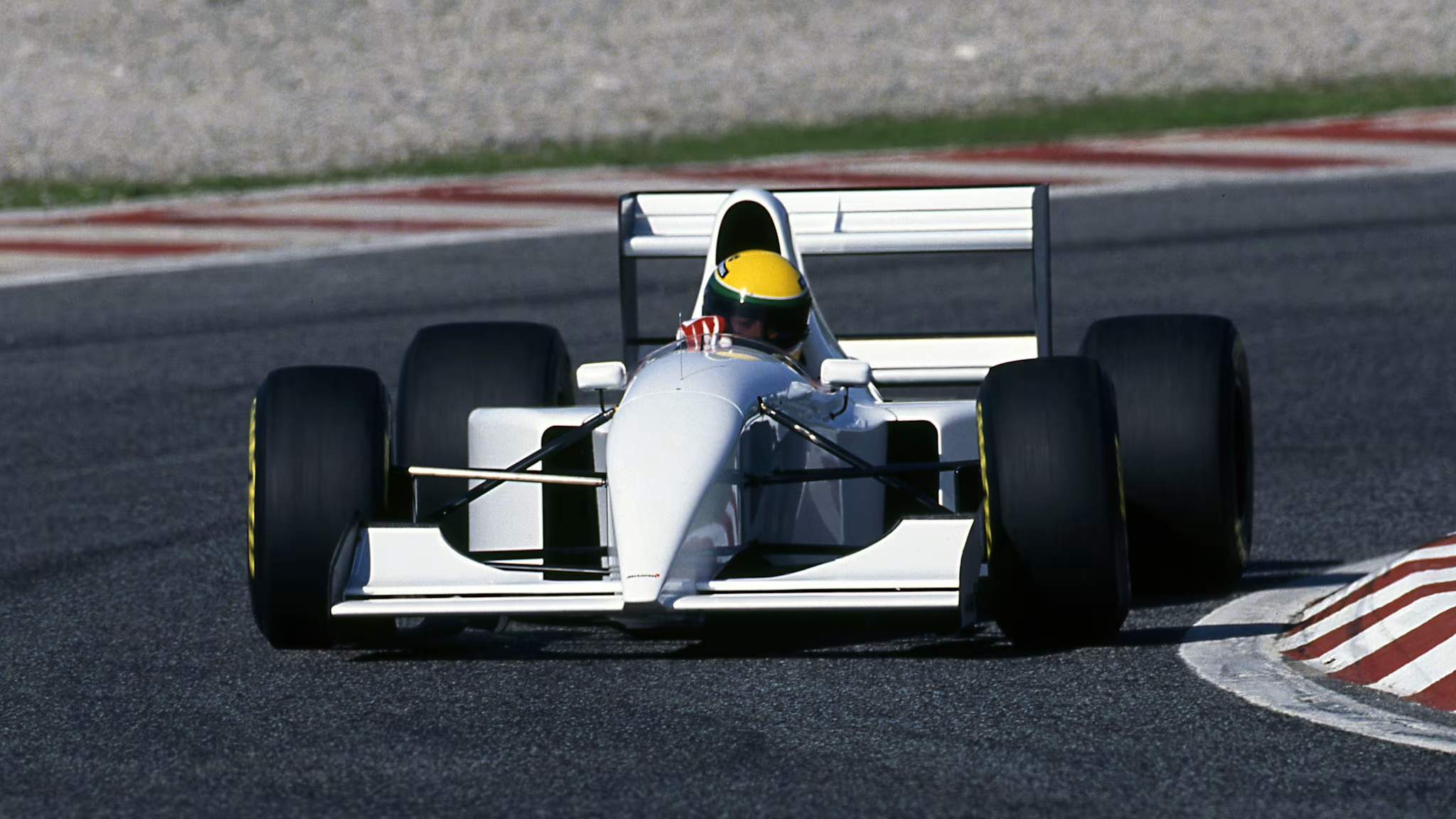
    During the late 1980s and early 1990s, McLaren authored one of the most dominant chapters in Formula 1 history. Between 1988 and 1991, the Woking-based squad secured four successive Constructors’ Championships and four straight Drivers’ Championships, a feat of consistency and excellence rarely matched in the sport. Central to this supremacy was the technical alliance with Japanese engine manufacturer Honda, whose power units—paired with McLaren chassis designed by the likes of Gordon Murray and later Neil Oatley—proved virtually unbeatable. Legendary drivers Ayrton Senna and Alain Prost, and later Gerhard Berger, piloted the MP4/4, MP4/5, MP4/5B, and MP4/6 to a combined 44 race victories over those four seasons, establishing a benchmark for engine-chassis integration.

    Sudden Shift: Honda’s Withdrawal at the End of 1992

    That period of stability and success turned into a spell of change and misfiring performance over the next few years. Amid growing financial pressures and a shifting corporate strategy, Honda made the decision to pull the plug on their Formula 1 operations at the end of the 1992 season. The announcement caught the paddock off guard; Honda had powered McLaren to the previous four titles and was still competitive, with Senna securing three wins in the 1992 campaign driving the MP4/7A. The Japanese manufacturer cited the need to redirect resources toward core automotive operations during a prolonged economic downturn in Japan, leaving McLaren without a works engine supply for the first time in nearly a decade.

    The Aftermath: Scrambling for Power and Competitiveness

    Honda’s exit forced McLaren into a frantic search for a new engine partner ahead of the 1993 season. The team eventually secured a customer supply of Ford HB V8 units, badged as Cosworth, which lacked the development support and raw power of the works Honda V10s and V12s. While Senna extracted remarkable results—including five victories—in the 1993 MP4/8, the writing was on the wall: McLaren had lost its factory backing and the deep integration that had defined its golden era. Subsequent partnerships with Peugeot (1994) and a return to Mercedes (1995 onward) would eventually restore winning ways, but the immediate aftermath of 1992 marked the end of McLaren’s most statistically dominant epoch and the beginning of a transitional wilderness.

    Why This Matters

    The dissolution of the McLaren-Honda alliance in 1992 serves as a pivotal case study in Formula 1’s reliance on manufacturer commitment. It illustrates how quickly a championship-winning structure can unravel when economic externalities—such as Japan’s “Lost Decade”—force OEMs to reprioritize spending. For McLaren, the loss triggered a multi-year rebuild that only concluded with the Mercedes works partnership, which delivered two more Drivers’ titles for Mika Häkkinen in 1998 and 1999. The episode also foreshadowed the volatile nature of engine supplier relationships that continues to shape the grid today, from Red Bull’s Renault and Honda cycles to Aston Martin’s forthcoming Honda return in 2026.

    Frequently Asked Questions

    How many championships did McLaren win with Honda between 1988 and 1991?

    McLaren won four consecutive Constructors’ Championships and four consecutive Drivers’ Championships during the 1988–1991 period with Honda power.

    Why did Honda leave Formula 1 at the end of 1992?

    Honda withdrew due to financial pressures and a need to redirect resources toward core automotive operations during a prolonged economic downturn in Japan.

    What engine did McLaren use after Honda left in 1992?

    For the 1993 season, McLaren used customer Ford HB V8 engines badged as Cosworth, before switching to Peugeot in 1994 and then beginning a long-term works partnership with Mercedes in 1995.

  • Star Wars in Formula 1: Red Bull, Renault, George Lucas, and F1’s Biggest Crossovers

    Star Wars in Formula 1: Red Bull, Renault, George Lucas, and F1’s Biggest Crossovers

    Key Highlights

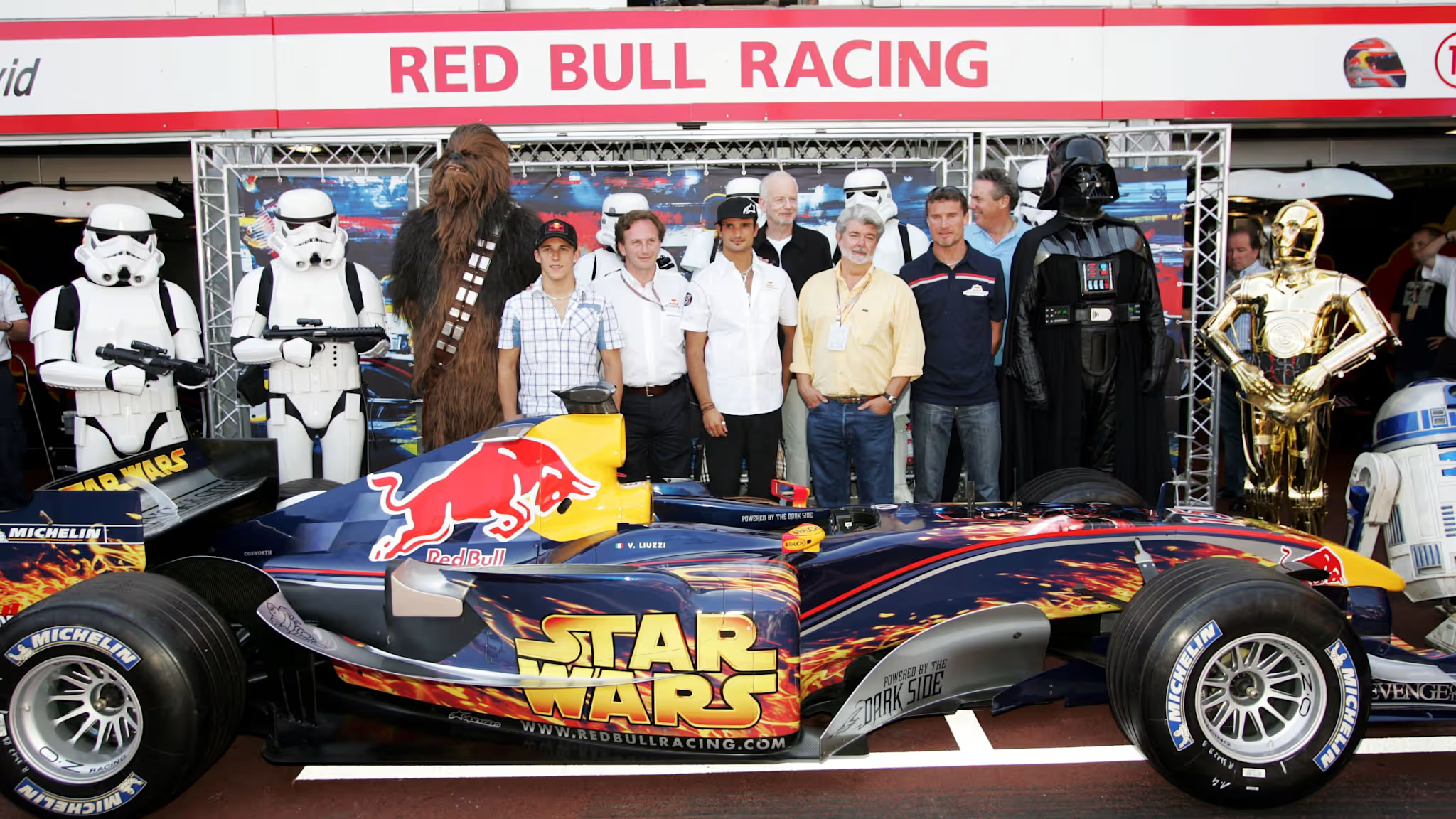
    • Red Bull Racing launched a full Star Wars: Episode III – Revenge of the Sith livery and Stormtrooper pit crew at the 2005 Monaco Grand Prix, marking the first major Formula 1–Star Wars crossover.
    • George Lucas personally conducted the podium interviews at the 2015 Italian Grand Prix after Lewis Hamilton’s dominant victory for Mercedes at Monza.
    • Renault and Disney celebrated their shared 40th anniversaries at the 2017 Monaco Grand Prix with Stormtroopers, R2-D2, and Lucas returning to the principality paddock.

    The Galaxy Meets the Grid: A History of Star Wars in Formula 1

    As the Lucas Museum of Narrative Art prepares to open its doors in Los Angeles on September 22, co-founded by filmmaker George Lucas and business leader Mellody Hobson, the intersection of cinema’s most iconic space opera and the pinnacle of motorsport returns to the spotlight. The museum’s 100,000-square-foot campus, housing over 30 galleries, will feature an opening exhibition titled Star Wars in Motion showcasing vehicles, props, and costumes from the first six films—including Luke Skywalker’s Landspeeder and General Grievous’s Wheel Bike. That motorsport connection is no coincidence: Formula 1 has played host to Stormtroopers, Sith Lords, and the creator himself on three unforgettable occasions spanning 12 years.

    2005 – Red Bull Racing Joins the Dark Side at Monaco

    Only six races into their Formula 1 journey, Red Bull Racing seized the 2005 Monaco Grand Prix weekend to partner with Lucasfilm for the release of Star Wars: Episode III – Revenge of the Sith. Drivers David Coulthard and Vitantonio Liuzzi piloted RB1 chassis transformed with flame motifs along the bodywork, massive Star Wars logos on the sidepods, and Dark Side branding across the livery. The spectacle extended far beyond the cars: Darth Vader, Chewbacca, C-3PO, R2-D2, and an entire battalion of Stormtroopers descended on the team’s floating Energy Station in Monte Carlo’s harbor. Even Red Bull’s mechanics swapped their standard kit for white Stormtrooper-inspired pit stop attire, creating some of the most distinctive visual moments in Grand Prix history. Lucas himself attended as a guest. On track, however, the Force was not with the nascent squad: both cars retired—Coulthard after collision damage involving Michael Schumacher, Liuzzi later with mechanical issues—denying the team its first points finish of the season. Kimi Räikkönen claimed victory for McLaren, ahead of Nick Heidfeld and Mark Webber for Williams, yet the Red Bull Star Wars livery endures as one of Monaco’s most memorable one-off designs.

    2015 – George Lucas Takes the Podium at Monza

    A decade later, Star Wars returned to the paddock without a team partnership—this time with its creator center stage. Lucas attended the 2015 British Grand Prix at Silverstone as a guest, but his most prominent appearance came months later at the Italian Grand Prix in Monza. After Lewis Hamilton delivered a masterclass—pole position, every lap led, fastest lap set—to win for Mercedes ahead of Sebastian Vettel‘s Ferrari and Felipe Massa‘s Williams, the three drivers ascended the podium to find Lucas waiting. The filmmaker conducted the post-race interviews, placing the seven-time world champion in conversation with the architect of Darth Vader, Luke Skywalker, and one of cinema’s most enduring mythologies. The moment bridged the Temple of Speed with a galaxy far, far away.

    2017 – Renault and Disney Celebrate Twin 40th Anniversaries in Monaco

    Two years later, the principality hosted another convergence. The original Star Wars: A New Hope premiered in May 1977; less than two months later, Renault debuted in Formula 1 at Silverstone with the turbocharged RS01. Four decades on, Renault and Disney marked the milestone at the 2017 Monaco Grand Prix. Stormtroopers and R2-D2 again roamed the paddock alongside drivers Nico Hülkenberg and Jolyon Palmer, while Lucas made a return visit to Monte Carlo. On track, results were mixed: Hülkenberg qualified tenth but retired after 16 laps with a gearbox failure; Palmer finished eleventh, just outside the points. Yet the imagery—white armor against the Mediterranean backdrop, an astromech droid beside a contemporary Formula 1 car—reinforced a unique cultural crossover that began with Red Bull’s bold gamble in 2005.

    Why This Matters

    The Lucas Museum’s opening exhibition Star Wars in Motion frames these Formula 1 moments as part of a broader narrative: the franchise’s deep engagement with vehicles, speed, and design as storytelling tools. From the podracing sequence in The Phantom Menace to the landspeeder chase in A New Hope, Star Wars has always treated motion as character. The three Formula 1 crossovers—each distinct in execution, from Red Bull’s full-team transformation to Lucas’s personal podium appearance to Renault’s anniversary celebration—reflect how motorsport’s global platform and visual spectacle align with Lucasfilm’s mythmaking. As the museum opens in Los Angeles’ Exposition Park, these episodes underscore that Star Wars’ cultural footprint extends beyond theaters into live global events, where the line between fiction and high-stakes reality blurs for millions of viewers.

    Frequently Asked Questions

    Which Formula 1 team ran the first Star Wars–themed livery?
    Red Bull Racing debuted a Revenge of the Sith livery at the 2005 Monaco Grand Prix, complete with Stormtrooper-clad mechanics and character appearances in the paddock.
    Did George Lucas ever appear on an F1 podium?
    Yes. Lucas conducted the post-race podium interviews at the 2015 Italian Grand Prix in Monza after Lewis Hamilton’s victory for Mercedes.
    What is the Lucas Museum of Narrative Art and when does it open?
    Co-founded by George Lucas and Mellody Hobson, the museum opens September 22 in Los Angeles with over 100,000 square feet across 30+ galleries. Its opening exhibitions include Star Wars in Motion, featuring vehicles, props, and costumes from the first six Star Wars films.
  • Justin Rose on McLaren Golf: Bringing Formula 1’s Pursuit of Perfection to the Fairway

    Justin Rose on McLaren Golf: Bringing Formula 1’s Pursuit of Perfection to the Fairway

    Key Highlights

    • Justin Rose, the 2013 U.S. Open champion and 2016 Olympic gold medalist, serves as McLaren Golf’s inaugural global ambassador and investor, debuting prototype irons developed over a year with McLaren engineers.
    • Rose aims to transfer Formula 1’s culture of “scrapping for the finest of margins” to his pursuit of a second major championship after recent runner-up finishes at The Open (2024) and the Masters (2025).
    • McLaren Golf plans to expand beyond irons into metal woods and drivers, where the company’s wind tunnel, algorithmic design, CAD, and aerodynamic expertise will be applied to club development.

    Home Advantage at Wentworth

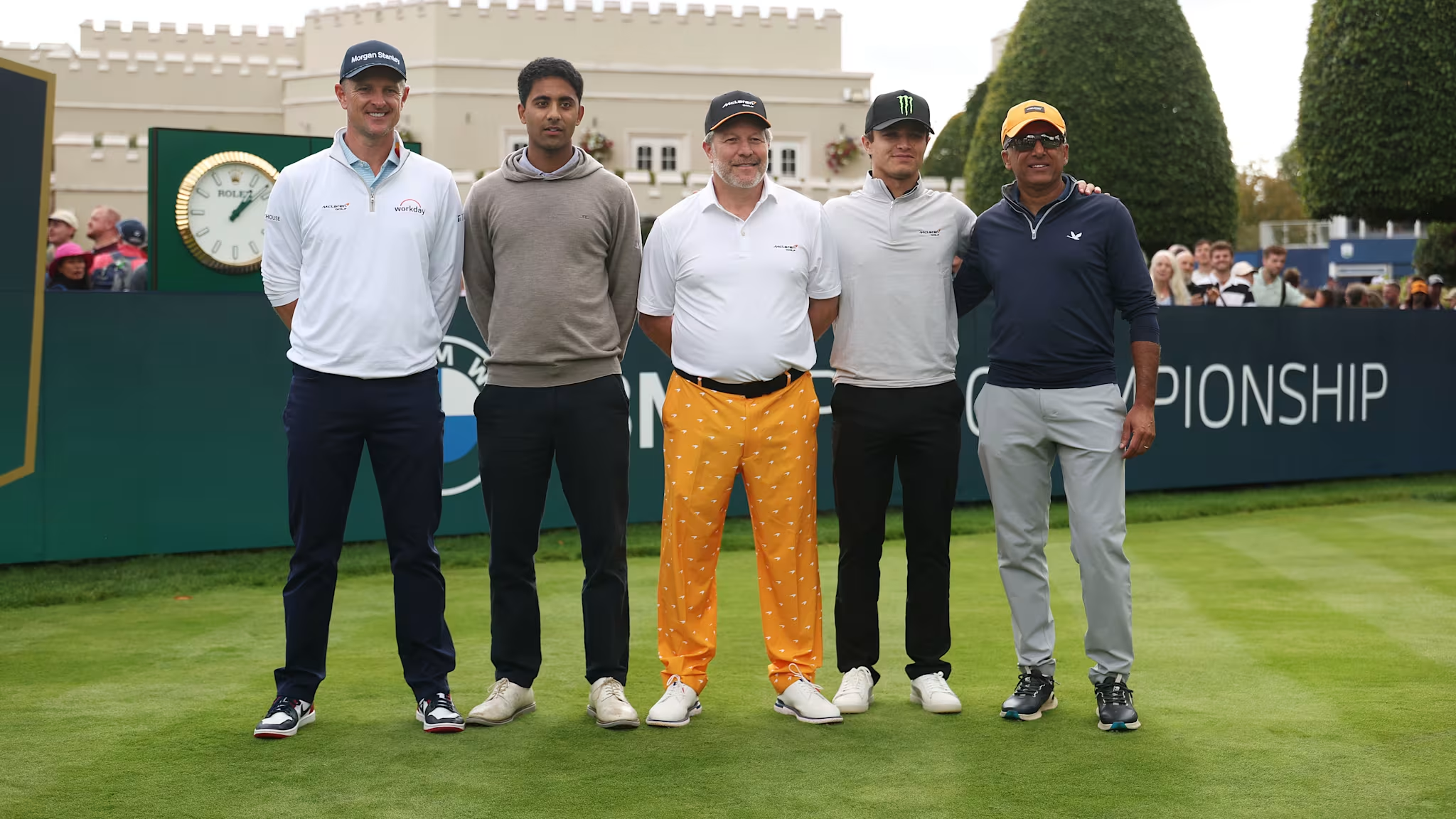
    The BMW PGA Championship at Wentworth Club has taken on a distinctively papaya hue this week, as McLaren Golf makes its presence felt on the DP World Tour. The Surrey venue sits a mere 15-minute drive from the McLaren Technology Centre in Woking, and with Justin Rose also based locally, the tournament represents a true home game for both the player and his new equipment partner. Since McLaren’s high-profile entry into golf ahead of the 2025 Miami Grand Prix—unveiling its first club line and announcing the Rose partnership—the grandstands at PGA and DP World Tour events have begun to reflect the iconic orange livery more commonly associated with the Formula 1 grid.

    Scrapping for the Finest of Margins

    At 46, Rose remains a contender at the sport’s biggest stages, posting runner-up finishes at The Open in 2024 and the Masters in 2025, followed by a tie for third at Augusta in 2026. His alliance with McLaren is driven by a desire to convert those near-misses into victories. “The culture around F1 is all about scrapping for the finest of margins when every millisecond counts,” Rose continues. “Hopefully that’s a good ethos to bring into the golf world as well.”

    Rose acknowledges his family ties to motorsport: “My brother’s the petrolhead of our family,” before adding, “I could claim myself to be a Drive to Survive bandwagon fan, but I was very aware of F1 growing up. We’ve been spoilt in the UK – it’s always been a sport we’ve been successful at, with great drivers through the years; Lewis [Hamilton], of course, and so many before him. But in recent years, living so close to Woking and the MTC, and being asked to be involved on the McLaren advisory board, has given me much greater appreciation of the sport. And it’s been nice getting to know Zak [Brown], Lando [Norris] and the boys. When you know people personally, you start to pay more attention.”

    Irons in the Fire: Engineering the Prototype

    McLaren’s fanbase has embraced Rose, with CEO Zak Brown joining him for Wednesday’s pro-am. Lando Norris, an avid golfer, was slated to play but withdrew due to a sore back. Despite the F1 drivers’ absence on Thursday, McLaren caps and polos dotted the spectator areas. While Rose’s papaya bag has drawn attention since April, the clubs inside have sparked deeper discussion. The former World No. 1 was instrumental in developing and testing the prototype irons, collaborating with McLaren’s engineers for over a year before debuting them professionally.

    “The irons project, which is the first venture, is a little bit more straightforward, [but that’s] not to say that we’re not doing anything differently,” explains Rose. “It’s cool that McLaren have come to market with metal-injection moulded irons. It is not necessarily a new process, but it’s a new way for someone to build the clubs start to finish. Once we get into the metal woods, the fairway woods, and the drivers, that’s when the wind tunnel, the algorithmic building, CADs and aerodynamic science will be very valuable to us.”

    Shared Sporting DNA

    Though Formula 1 and golf occupy different ends of the sporting spectrum—Oscar Piastri’s mother Nicole once wished her son had pursued golf or tennis for her nerves—the disciplines share demands for mentality, concentration, problem-solving, and precision under pressure. Norris is an ardent golfer, but Rose has no desire to trade fairways for the pit lane. “It’s phenomenal what they do,” Rose says. “I think we all think we’re okay behind the wheel, but then you get an understanding of where your limits are in a car, and it’s not where their limits are. It’s scary, actually, to see what they can do in a machine like that. My only experience is being taken on a hot lap in a McLaren, not even an F1 car. To see what those boys are capable of is quite frightening and awe-inspiring. But keep that on the track!”

    Why This Matters

    McLaren’s entry into golf equipment represents a rare crossover between elite motorsport engineering and professional golf technology. By applying Formula 1 methodologies—computational fluid dynamics, materials science, rapid prototyping, and a culture of marginal gains—to club design, McLaren Golf could disrupt a market long dominated by traditional manufacturers. Rose’s role as both ambassador and investor, combined with his proximity to the McLaren Technology Centre and direct access to the engineering team, creates a tightly integrated feedback loop between tour validation and R&D. The upcoming development of metal woods and drivers will serve as the true test of whether F1-grade aerodynamics and algorithmic design can deliver measurable performance gains for the world’s best players.

    Frequently Asked Questions

    What is Justin Rose’s role with McLaren Golf?
    Justin Rose serves as McLaren Golf’s inaugural global ambassador and investor. He has been integrally involved in the development and testing of the company’s prototype irons for over a year and will assist in developing future metal woods and drivers.
    How does McLaren’s Formula 1 expertise apply to golf club design?
    McLaren is transferring its F1 engineering capabilities—including wind tunnel testing, algorithmic design, CAD modeling, and aerodynamic science—to golf equipment. The company debuted with metal-injection moulded irons and plans to leverage its full technical suite for fairway woods and drivers.
    Why is the BMW PGA Championship significant for this partnership?
    Wentworth Club is located approximately 15 minutes from the McLaren Technology Centre in Woking, and Rose is based locally. The tournament serves as a home event for both the player and the manufacturer, with visible brand presence among spectators and direct access to engineering resources.
  • Tremayne: Why the Portuguese Grand Prix Return to the F1 Calendar Delights Me

    Tremayne: Why the Portuguese Grand Prix Return to the F1 Calendar Delights Me

    Key Highlights

    • Estoril circuit remembered for distinctive atmosphere during its tenure hosting the Portuguese Grand Prix.
    • Snake encounter in the paddock near the press room becomes a noted anecdote from the venue’s Formula 1 history.
    • Former F1 driver Perry McCarthy’s characterization of journalists as ‘reptiles’ recalled in connection with the incident.

    Estoril’s Unique Paddock Atmosphere Recalled

    The Autódromo do Estoril, which hosted the Portuguese Grand Prix for over a decade until 1996, has been remembered for a paddock environment that combined competitive intensity with an unusual proximity to nature. The circuit, located on the Portuguese Riviera west of Lisbon, was a fixture on the Formula 1 calendar from 1984 to 1996 and earned a reputation among the traveling press corps for a relaxed yet professional ambiance that contrasted with the sterile corporate hospitality suites becoming common at newer venues.

    Unexpected Wildlife Encounter in the Press Area

    Among the more memorable episodes from the Estoril years involves a reptilian visitor that appeared in the paddock not far from the media center. The snake, which emerged in the vicinity of the working press room, prompted brief alarm before it became clear the creature was significantly more apprehensive of the human contingent than they were of it. After a short standoff, the animal retreated without incident, slithering away into the surrounding undergrowth. The episode underscored the circuit’s semi-rural setting, where the boundary between the high-tech world of grand prix racing and the local ecosystem remained porous.

    McCarthy’s ‘Reptiles’ Quip Resonates

    The incident inevitably drew comparisons to a well-known observation by Perry McCarthy, the British driver who competed for the Andrea Moda and Spyker teams in the early 1990s. McCarthy, never reluctant to offer a colorful assessment of the paddock hierarchy, famously referred to the assembled journalist corps as ‘reptiles’. The snake’s appearance near the press room was noted at the time as a moment of unintended symmetry, as if the local fauna had taken McCarthy’s metaphor literally. The former driver, who later gained wider fame as the original Top Gear Stig, has frequently recounted his experiences navigating the often fractious relationship between competitors and the media during his motorsport career.

    Why This Matters

    Estoril occupies a distinct chapter in Formula 1 history as one of the last “traditional” European circuits before the widespread adoption of Hermann Tilke-designed venues characterized by expansive run-off areas and standardized facilities. The snake anecdote, while minor in the grand narrative of world championship racing, illustrates the organic, less sanitized character of grand prix weekends in that era. As Formula 1 evaluates future calendar expansion and the potential return of a Portuguese round—most recently held at the Algarve International Circuit in Portimão—veteran observers often cite Estoril’s blend of challenging topology and authentic atmosphere as a benchmark. The circuit remains active in national and historic racing, preserving the layout where Ayrton Senna claimed his first victory in 1985 and where Jacques Villeneuve and Michael Schumacher collided in the 1997 title decider.

    Frequently Asked Questions

    When did the Portuguese Grand Prix take place at Estoril?
    The Formula 1 Portuguese Grand Prix was held at the Autódromo do Estoril from 1984 to 1996 inclusive, before moving to the Algarve International Circuit for races in 2020, 2021, and 2022.
    Who is Perry McCarthy?
    Perry McCarthy is a British former racing driver who competed in Formula 1 for the Andrea Moda and Spyker teams in 1992. He later became widely known as the original “Stig” on the BBC motoring show Top Gear and is recognized for his candid commentary on motorsport culture.
    What happened to the snake in the paddock?
    According to the account, the snake was frightened by the presence of people near the press room and eventually slithered away into the surrounding area without harm to anyone or further incident.
  • Williams Accepts 2026 F1 Development Compromise, Shifts Focus to 2027

    Williams Accepts 2026 F1 Development Compromise, Shifts Focus to 2027

    Key Highlights

    • Williams Racing has accepted a developmental compromise for the remainder of the 2026 Formula 1 season, having redirected the majority of its engineering resources toward the 2027 campaign.
    • Team principal James Vowles confirmed two new chassis and aerodynamic upgrades will debut at the Azerbaijan Grand Prix to address car mass limits, but warned the updates will not be sufficient to consistently score points given the pace of rival development.
    • A difficult Spanish Grand Prix at the new Madring circuit—where Alex Albon finished 15th and Carlos Sainz retired with floor damage—exposed the extent of Williams’ current performance deficit relative to the midfield.

    Vowles Acknowledges Difficult Spanish Grand Prix Reality

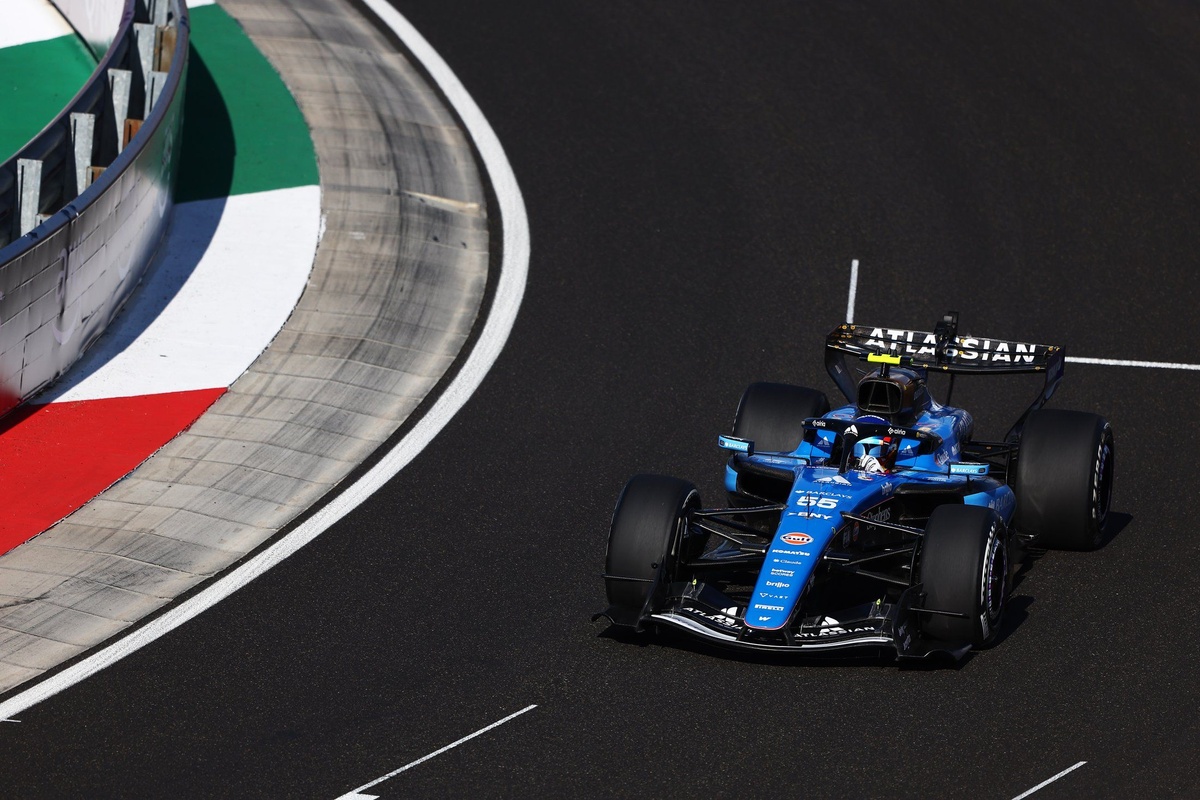
    Williams team principal James Vowles offered a candid assessment of the squad’s trajectory during his post-race “Vowles Verdict” debrief following a challenging Spanish Grand Prix at the brand-new Madring circuit. The weekend underscored the Grove outfit’s current struggles: Alex Albon and Carlos Sainz qualified 16th and 17th respectively, before Sainz incurred a three-place grid penalty for impeding, dropping him to 20th on the grid. Albon managed only 15th at the finish, while Sainz retired after 43 laps due to floor damage.

    “For us, a difficult grand prix. We knew it was going to be difficult going into it,” Vowles explained. “It’s just exaggerating the issues we have at the moment, and we haven’t added performance to the car for far too long and have fallen back relative to teams around us.”

    Baku Upgrades Offer Limited Relief

    Looking ahead to the Azerbaijan Grand Prix, Vowles outlined a technical plan aimed at extracting immediate gains. “We have Baku coming up next, and it’s a race we’ve been looking forward to for a while. We’re going to be bringing two new chassis to that event in a bid to get our car mass below the limit. So that should be a strong step up in performance for us. And in addition to that, we’ll have some aerodynamic upgrades that go with it.”

    However, the team principal tempered expectations regarding the impact of those updates. “There is a however. The field has moved on so significantly and these upgrades, whilst powerful, simply won’t be what we are looking for in order to consistently score points.”

    Strategic Pivot Toward 2027 Season

    The fundamental constraint, Vowles revealed, is a resource allocation decision made months ago. “We’ve invested a lot already into next year and beyond, and the resultant behind this is that we accept the compromise to this year, and it stems from what happened over the winter, and we weren’t able to recuperate to the level we wanted. So, a positive step forward but really we need more, and it will come into next year.”

    This strategic pivot means Williams has effectively conceded the remainder of the 2026 championship, accepting a period of limited competitiveness to accelerate development for the 2027 regulation cycle.

    Why This Matters

    Williams’ situation illustrates the brutal resource allocation dilemma facing midfield teams under Formula 1’s cost cap and aerodynamic testing restrictions. With development bandwidth finite, teams must choose between fighting for points in the current season or investing early in the next regulatory cycle—a decision that can define competitiveness for years. For Williams, a historic constructor seeking to return to the front, the 2027 regulation changes represent a potential inflection point. The team’s willingness to endure a barren second half of 2026 signals high internal confidence in their 2027 concept, but also carries reputational and commercial risk if the projected gains fail to materialize. The Baku upgrades will serve as a litmus test for whether the new chassis can at least stabilize the car’s platform before the long pivot to next year.

    Frequently Asked Questions

    Why is Williams bringing two new chassis to the Azerbaijan Grand Prix?
    Williams is introducing two new chassis in Baku to reduce the car’s mass below the regulatory minimum weight limit, which Vowles described as a “strong step up in performance” for the team.
    Will the Baku upgrades make Williams competitive enough to score points regularly?
    No. Vowles explicitly stated that while the upgrades are “powerful,” the development rate of rival teams means they “simply won’t be what we are looking for in order to consistently score points.”
    What caused Williams to accept a compromise for the rest of the 2026 season?
    The team shifted the majority of its engineering resources to the 2027 project during the winter, and Vowles acknowledged they “weren’t able to recuperate to the level we wanted” for the current campaign, forcing a strategic acceptance of reduced competitiveness in 2026.
  • Mercedes Targets Pole Drought End with Malaysia F1 Upgrades

    Mercedes Targets Pole Drought End with Malaysia F1 Upgrades

    Key Highlights

    • Mercedes confirms its next major Formula 1 upgrade package will debut at the Malaysian Grand Prix on 2–4 October, targeting a return to pole-contending form.
    • Despite a commanding 145-point championship lead over Ferrari, the Silver Arrows have not claimed pole position since Kimi Antonelli topped qualifying at Spa in July.
    • Trackside engineering director Andrew Shovlin expects a “decent step” from the Malaysian updates but cautions the competitive gap to McLaren and Ferrari is now just one or two tenths.

    Mercedes Targets Malaysian Upgrade to Arrest Qualifying Slide

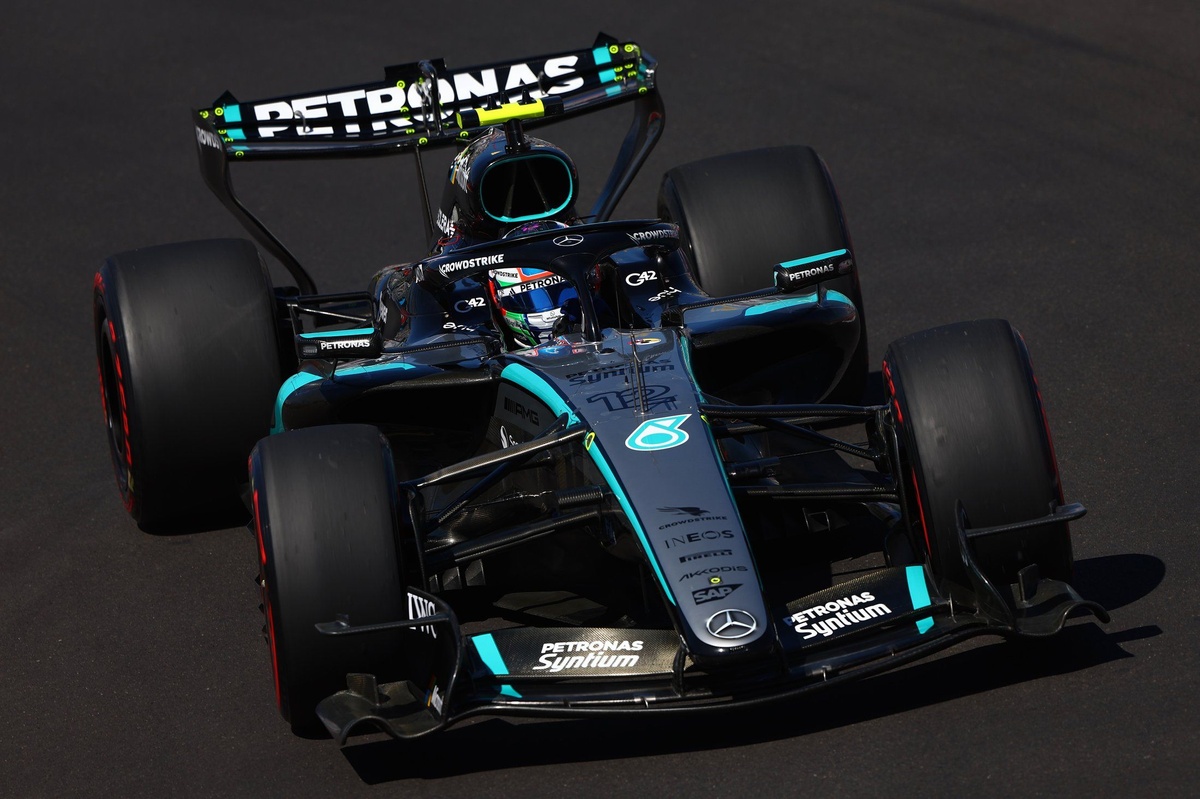
    Mercedes has confirmed that its next significant Formula 1 development package will arrive at the Malaysian Grand Prix on 2–4 October, marking the Asian venue’s return to the calendar in place of Bahrain. The German manufacturer enters the event with a substantial 145-point advantage over Ferrari in the 2026 Constructors’ Championship, a lead built despite the team’s last major upgrade being introduced at the Montreal round in May. Since then, Mercedes has relied on minor, circuit-specific updates while rivals Ferrari and McLaren have pursued more aggressive development programmes.

    That strategic conservatism has coincided with a shift in competitive momentum. After winning the opening six grands prix of the season, Mercedes has secured only four victories in the subsequent eight rounds, with McLaren and Ferrari each claiming two wins. More critically for a team historically defined by Saturday dominance, the Silver Arrows have not started from pole position since Kimi Antonelli set the pace at Spa-Francorchamps in July—a drought spanning four consecutive race weekends.

    Shovlin Details Baku Strategy and Upgrade Timeline

    Speaking on the Nu Silver Arrows Radio Show podcast, trackside engineering director Andrew Shovlin outlined the team’s immediate approach. With the Azerbaijan Grand Prix preceding Malaysia, Shovlin acknowledged limited new components for the Baku street circuit, emphasising its unique demands.

    “We haven’t got much new coming to Baku, but actually that’s a circuit that’s more about drag than downforce. So the car was good in Monza, hopefully it will work well in Baku. But, you need a car that can have a good straight line speed.”

    “There’s other things, though, you need in Baku, like the sort of street circuit nature, almost that Monaco-esque being able to deal with the low speed, keeping all the wheels on the ground.”

    Looking beyond the Caspian Sea venue, Shovlin confirmed the developmental focus shifts eastward.

    “And then the updates, well, they’re going to come Malaysia onwards and hopefully we’ll make a decent step. I don’t think we’re going to be out front by miles, but hopefully we’ll be back into a position where we can really go into qualifying, knowing that we’re fighting for pole.”

    Championship Lead Masks Growing Qualifying Deficit

    The disconnect between Mercedes’ race-day potency and its qualifying form is stark. Antonelli has converted the W15’s race pace into back-to-back victories at Monza and Madrid, yet the team finds itself on a pole-position drought that contrasts sharply with the opening phase of the campaign. In the three most recent rounds without a Mercedes pole, McLaren’s Lando Norris has topped the timesheets each time—a reversal from the first ten rounds where the Silver Arrows swept every pole position.

    Shovlin articulated the fine margins now defining the championship’s front row.

    “Early in the season, we tended to go thinking, we have a car that if we do a really good job, it should be on pole. We should be fighting for a race win. Whereas now the margin between finishing first and finishing sixth is one or two tenths and it’s difficult to predict because Monza is a unique track.”

    “It needs a car that’s quite slippy with low drag and then new circuit like Madring couldn’t be more different. But we just focus on getting the most out of the car and if we win, awesome.”

    Why This Matters

    The Malaysian Grand Prix represents a pivotal inflection point in the 2026 season. While Mercedes’ championship buffer provides insulation, the convergence of performance among the top three teams—now separated by mere hundredths of a second in qualifying—threatens to erode the operational advantages that come with starting at the front. For team principal Toto Wolff and technical director James Allison, the Malaysian upgrade must deliver not merely incremental lap time but a restoration of the qualifying predictability that underpinned the team’s early-season dominance. With McLaren and Ferrari showing no signs of slowing their development trajectories, the Sepang event will test whether Mercedes’ conservative mid-season strategy was a calculated masterstroke or a window of opportunity ceded to rivals.

    Frequently Asked Questions

    When will Mercedes’ next major upgrade arrive?
    The next significant development package is scheduled for the Malaysian Grand Prix on 2–4 October 2026.
    Why has Mercedes not taken pole since July?
    The competitive gap to McLaren and Ferrari has narrowed to one or two tenths of a second, making qualifying outcomes highly sensitive to circuit characteristics. Lando Norris has claimed pole in three of the last four rounds for McLaren.
    What is Mercedes’ current championship position?
    Mercedes leads the 2026 Constructors’ Championship by 145 points over second-placed Ferrari, despite winning only four of the last eight races.
  • Inside McLaren’s Formula 1 Fashion Show Featuring 46 Central Saint Martins Designers

    Inside McLaren’s Formula 1 Fashion Show Featuring 46 Central Saint Martins Designers

    Key Highlights

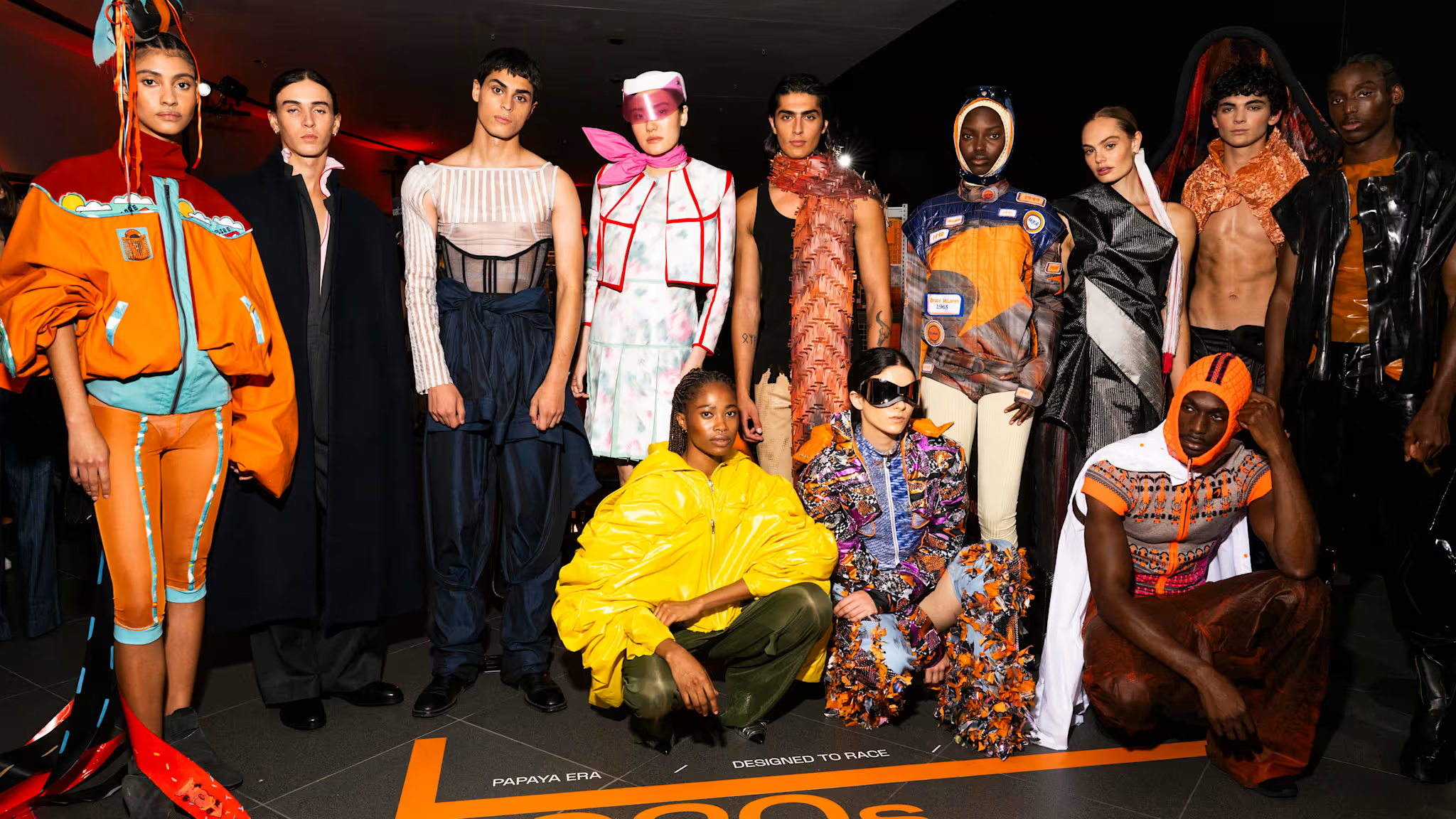
    • McLaren Racing and Central Saint Martins unveiled “Designed to Race: Front Row,” a fashion show at the McLaren Technology Centre featuring 12 looks by 46 MA students interpreting six decades of team history.
    • The non-commercial collaboration emphasized creative dialogue between high-performance engineering and fashion design, utilizing materials like carbon fibre, upcycled seatbelts, and engineering blueprints.
    • McLaren CMO Louise McEwen cited data showing nearly half of F1 fans consider fashion vital to expressing fandom, framing the event as a strategic bridge to younger, more diverse audiences.

    McLaren Technology Centre Hosts Fashion Showcase Rooted in Six Decades of Racing Heritage

    The McLaren Technology Centre in Woking was transformed into a runway on Wednesday evening for Designed to Race: Front Row, a collaborative presentation between McLaren Racing and Central Saint Martins (CSM). Instead of engineers and mechanics, models navigated a course set among the team’s most iconic Formula 1 cars, wearing 12 distinct looks conceived by 46 MA Fashion students. The collection traversed the team’s history from the 1970s to the present day, drawing inspiration from specific drivers, engineering philosophies, and the evolving culture of the sport.

    From James Hunt’s Grit to Senna’s Precision: A Five-Chapter Narrative

    The show was structured across five thematic chapters: Grit x Glamour, Precision and Power, Global Icon, Engineered Athlete, and Papaya Era. The opening chapter revisited the 1970s, when Emerson Fittipaldi secured McLaren’s first Drivers’ and Constructors’ championships in 1974. It focused heavily on James Hunt, whose habit of wearing overalls tied at the waist and disregard for formal dress codes informed flared silhouettes, leather, orange tones, and distressed finishes. As the narrative progressed toward the Ayrton Senna era, references became more technical. Students translated Senna’s yellow helmet, precise driving style, and the concept of airflow into lightweight fabrics and digitally developed patterns. Other groups shifted focus entirely, centering designs on a female fire marshal or embedding subtle details like the stitching of Monaco’s famous hairpin inside a pair of trousers.

    Shared Language of Trial, Error, and Micron-Level Precision

    During a pre-show panel discussion, CSM MA Fashion Course Leader Fabio Piras explained the open brief encouraged interpretation over replication. “The brief was interesting because it wasn’t asking us to necessarily design a piece of fashion, an outfit,” Piras said. “It was an interpretation of a period, of an era, of a character, of obviously an iconic champion and a car.” He described the students’ visit to the Technology Centre as an “absolutely bombastic moment,” noting the race cars function as “amazing design objects.” Student Enzo Keuning highlighted the project’s unique freedom: “What made this project unique was that there wasn’t one way to interpret that heritage. Each group brought a different perspective, from engineering and performance, to identity and craftsmanship, and we were challenged to transform those ideas into something new.”

    The parallel between fashion’s iterative process and Formula 1’s relentless development cycle was a central theme. Piras noted that audiences see only the “10-minute performance at the end,” missing the “process of fashion is trial and error… trying things out and moving on with the mistakes.” McLaren Racing Chief Marketing Officer Louise McEwen drew a direct equivalence, describing the team’s “constant state… of reinvention.” She recalled a directive ahead of the 2025 British Grand Prix where Team Principal Andrea Stella requested weight savings measured in “microns and milliseconds,” adding, “it’s fair to say it was some segments of papaya that really make the difference.” This engineering rigour—blueprints informing patterns, carbon fibre and upcycled seatbelts integrated into garments—was visibly present in the students’ final work.

    The Papaya Era: Fan Culture, Data, and the Cultural Crossover

    The final chapter, Papaya Era, addressed the contemporary intersection of racing and lifestyle. Papaya orange dominated, mixed with denim and knitwear, while a headpiece referenced Daniel Ricciardo’s celebratory ‘Shoey.’ One group explored the perspective of young fans viewing drivers as heroes, utilizing toy cars and childlike drawings. This focus on the evolving fanbase was a primary strategic driver for McLaren. F1 Presenter Ariana Bravo emphasized the sport’s unexpected demographic shift: “Formula 1 has seen a growth in its audience in a way that I don’t think any of us within the sport were expecting… It’s a much younger and a much more diverse audience now.” She noted fans now seek “accessibility 24/7” and want to “express their support for a team through fashion, through culture.”

    McEwen confirmed internal data indicates “nearly half of fans consider fashion important to the way they express their fandom,” a statistic that informed the project. However, she rejected a purely transactional view of success. “We are obsessed by data, and the whole piece tonight was informed by data… But everything that you saw today was very much about creativity and humanness coming through.” The event attracted a cross-section of motorsport, fashion, music, and sport, including drivers Lando Norris and Oscar Piastri, F1 ACADEMY drivers Ella Lloyd and Ella Stevens, Freddie Hunt (son of James), models Mia Regan and Denola Gray, rapper Kojey Radical, and Olympic medallist Amy Hunt. McEwen stressed the necessity of creative freedom: “We have to be as competitive off the grid as we are on it… without creativity, we’re never going to appeal to new fans, we’re never going to have new ideas.” She concluded, “I didn’t know quite what we were going to get tonight, and I’m just blown away and super excited.”

    Why This Matters

    The Designed to Race: Front Row showcase represents a maturation of Formula 1’s engagement with the fashion and lifestyle sectors. Moving beyond traditional merchandise drops or driver-branded capsule collections, McLaren adopted an academic partnership model that treats heritage as a creative dataset rather than a marketing asset. By granting Central Saint Martins students unrestricted interpretive license—resulting in pieces ranging from fire marshal-inspired workwear to gowns patterned on aerodynamic airflow—the project positions McLaren as a cultural curator rather than a mere rights holder. This aligns with the commercial reality highlighted by Ariana Bravo and Louise McEwen: a younger, gender-diverse fanbase consuming F1 as a 24/7 lifestyle ecosystem. The use of genuine race-used materials (seatbelts, boots, equipment) and engineering data (blueprints, weight-saving logic) provides an authenticity that purely fashion-led collaborations often lack. As the sport’s commercial value becomes increasingly tied to cultural relevance off-track, McLaren’s strategy of “competitive creativity” off the grid may become a template for other constructors seeking to convert cultural attention into commercial longevity.

    Frequently Asked Questions

    Was the fashion collection created for retail sale?

    No. McLaren Racing CMO Louise McEwen explicitly stated the collaboration was not about designing product for sale. She described it as “opening up a conversation” between two high-performing teams—McLaren and Central Saint Martins—centered on shared values of craft, creativity, and ingenuity.

    How did McLaren’s engineering process influence the student designs?

    The influence was both material and methodological. Students incorporated carbon fibre, upcycled racing seatbelts, fabric offcuts, and used McLaren equipment into the 12 looks. Conceptually, engineering blueprints and aerodynamic forms informed patterns and silhouettes. McEwen drew a direct parallel between F1’s obsession with “microns and milliseconds”—citing a specific weight-saving demand for “segments of papaya” ahead of the 2025 British Grand Prix—and the fashion studio’s process of “trial and error” described by Fabio Piras.

    What specific data point drove McLaren’s investment in this fashion project?

    McEwen referenced Global F1 Fan data indicating that “nearly half of fans consider fashion important to the way they express their fandom.” This insight validated the strategic decision to engage the fashion community authentically, targeting the younger, more diverse audience identified by F1 Presenter Ariana Bravo as wanting to “tap into the culture… and the lifestyle aspect” of the sport beyond on-track action.

  • EXCLUSIVE: José Mourinho on His Love for F1, How Racing Compares to Football, and the Madring’s First Grand Prix

    EXCLUSIVE: José Mourinho on His Love for F1, How Racing Compares to Football, and the Madring’s First Grand Prix

    Key Highlights

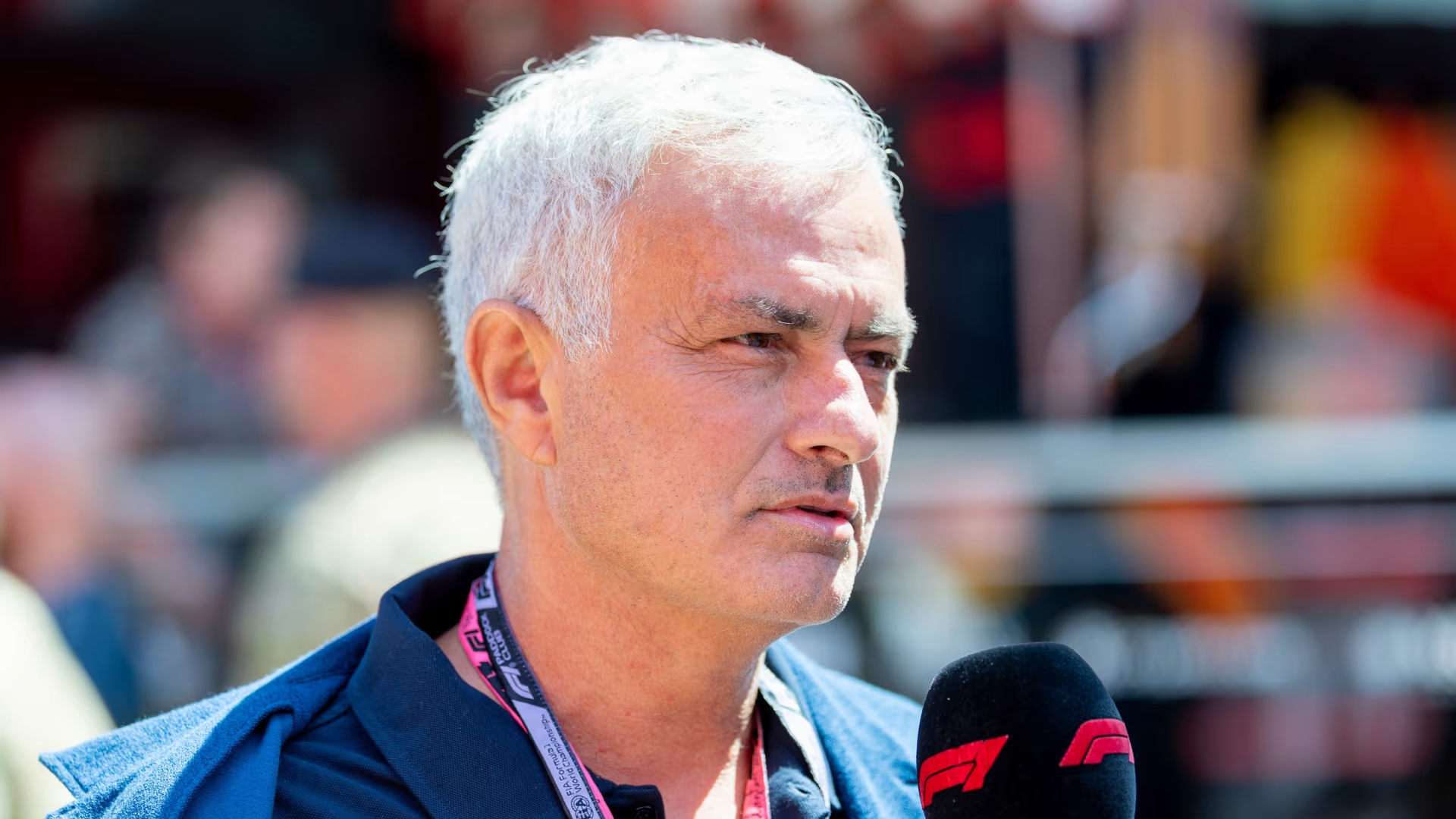
    • José Mourinho attended the inaugural Spanish Grand Prix at the Madring circuit, located less than four kilometres from Real Madrid’s training ground, following a 4-1 La Liga victory over Rayo Vallecano.
    • The veteran coach argued football must learn from Formula 1’s approach to high-pressure environments, specifically citing drivers’ ability to engage with media and fans before “fighting for their lives” in the car.
    • Mourinho dismissed immediate prospects of becoming an F1 team principal but confirmed a close relationship with F1 CEO Stefano Domenicali and drivers like Max Verstappen, expressing a preference for attending qualifying and free practice sessions.

    Mourinho Experiences the Inaugural Madrid Grand Prix at Madring

    From Bernabéu Victory to the F1 Paddock

    Two sporting worlds collided at the Madring circuit last weekend as legendary football manager José Mourinho visited Formula 1’s newest venue for the inaugural Spanish Grand Prix in Madrid. The hybrid street-permanent facility, constructed around the IFEMA Exhibition Centre, sits mere kilometres from Real Madrid’s Valdebebas training complex where Mourinho currently works. His arrival came just 12 hours after overseeing a commanding 4-1 La Liga win over Rayo Vallecano at the Santiago Bernabéu—a match that saw Kylian Mbappé and Jude Bellingham propel Los Blancos level on points with FC Barcelona at the summit of the table. For the Portuguese tactician, a long-time F1 enthusiast who has attended events including the 2024 British Grand Prix, the Madring debut carried unique personal significance.

    “I’ve enjoyed it [F1] for a while, and I’ve been to a few races, but of course this is the first one [at the Madring],” Mourinho told F1.com. “Because I work just around the corner, every day that I was coming to work or leaving work, I was following it, the building [process], and the more we were approaching this day, [there was] more emotion for everybody.”

    Pressure, Preparation, and Lessons from the Grid

    Drawing on a managerial career spanning Benfica, Porto, Chelsea, Inter Milan, Real Madrid, Manchester United, and Roma—yielding over 25 major trophies including two UEFA Champions League titles—Mourinho offered a nuanced comparison between the psychological demands of elite football and Formula 1. While acknowledging the shared intensity of top-level competition, he identified a critical divergence in how athletes manage the moments preceding peak performance.

    “You know, it’s huge pressure for both,” he says thoughtfully. “When you have sports at the highest level, we are always speaking about huge pressure. But I feel that they [F1] are one step ahead of us in terms of the way they approach the big moments. [In football] we close each other [off], I believe, too much, also because of tradition.“

    He elaborated on the contrasting pre-event rituals, highlighting the accessibility mandated in the F1 paddock. “These guys [the drivers], [there’s] huge pressure, but before that [time in the car], they are together, they meet people, they do a little bit of PR, they do a little bit of media. I think we have to learn with them, the way they can be relaxed, and half an hour later they can be in the car fighting for their lives, because they take risks.”

    The Hypothetical Team Principal Role and Paddock Relationships

    When pressed on the hypothetical scenario of transitioning from the technical area to the pit wall as an F1 team boss, Mourinho responded with characteristic candor. “I have no idea!” Mourinho responds, with his eyes widening at the prospect. “I just have to learn. I learn with [F1 President and CEO] Stefano Domenicali; I ask him lots of questions. I tried to learn with all of them [the people I meet], and I like very much to come [to watch F1].”

    He clarified that his matchday commitments prevented a Saturday paddock visit, but outlined his preferred mode of engagement for future events. “It was not possible [on Saturday], because I had a match day, but I like to come for the Qualifyings, I like to come for the training sessions [Free Practices], because then clearly you can be closer, and you can interact more. Today is their day, and it’s the day I like to respect their privacy.”

    Mourinho’s paddock currency remains high, bolstered by longstanding friendships with key figures including Domenicali and four-time World Champion Max Verstappen, who received his 2025 British Grand Prix pole position award from the coach at Silverstone. “I know almost all of them, and everybody [has been] so nice to me over so many years,” Mourinho continues. “Now we’re coming to some new people, to some new generations, but I always had great respect from them. Because, as a family, we are so close to Stefano, it is of course a great way to be invited – we invited ourselves! – and to have always the reception that we have.”

    Why This Matters

    The arrival of the Spanish Grand Prix at the Madring circuit represents a strategic expansion for Formula 1 into the Spanish capital, leveraging the massive global footprint of Real Madrid and the broader Madrid metropolitan area. Mourinho’s presence underscores the growing crossover appeal between elite football and motorsport, a trend accelerated by Netflix’s Drive to Survive and the increasing movement of athletes and owners across both ecosystems. His specific commentary on pressure management and “open” versus “closed” cultures offers a rare, high-level tactical perspective from a serial winner in football applying lessons from a different high-performance domain. With a 10-year contract securing Madrid’s place on the calendar until at least 2035, the Madring venue is poised to become a permanent fixture for sporting VIPs, further blurring the lines between the football and motorsport establishments.

    Frequently Asked Questions

    Why was José Mourinho at the Spanish Grand Prix in Madrid?
    Mourinho attended the inaugural Spanish Grand Prix at the Madring circuit as a long-time Formula 1 fan. The venue is located less than four kilometres from Real Madrid’s training ground where he works, allowing him to follow the circuit’s construction process daily.
    What did Mourinho say about the difference between pressure in football and F1?
    Mourinho stated that while both sports operate under “huge pressure,” F1 is “one step ahead” in handling big moments. He noted that footballers “close each other off” too much due to tradition, whereas F1 drivers engage with media, PR, and fans before getting in the car, allowing them to be relaxed before facing life-threatening risks.
    Did Mourinho meet any F1 drivers or executives during the weekend?
    Yes, Mourinho met with F1 President and CEO Stefano Domenicali—whom he considers a close family friend—and four-time World Champion Max Verstappen. He presented Verstappen with the pole position award at the 2025 British Grand Prix and maintains friendships with many current and former drivers.