Tag: Federal Reserve

  • Federal Reserve Proposes Stablecoin Rules Under the GENIUS Act

    Federal Reserve Proposes Stablecoin Rules Under the GENIUS Act

    Key Highlights

    • The Federal Reserve Board proposed two rules on September 24 to implement the GENIUS Act, requiring payment stablecoin issuers to fully back tokens with permissible reserve assets and meet new capital and risk-management standards.
    • The first proposal mandates full reserve backing using short-term Treasury bills and other high-quality liquid assets, while the second creates a tailored application process for Board-supervised banks seeking to issue payment stablecoins.
    • A 60-day public comment period begins upon publication in the Federal Register, marking the central bank’s most concrete step yet to supervise a stablecoin market that has become core digital-asset infrastructure.

    Federal Reserve Unveils Dual Rulemaking to Operationalize GENIUS Act Stablecoin Framework

    The Federal Reserve Board took its most decisive regulatory action to date on payment stablecoins on September 24, releasing two proposed rules at 2:30 p.m. Eastern time that translate the Guiding and Establishing National Innovation for U.S. Stablecoins Act (GENIUS Act) into enforceable supervisory standards. The proposals provide banks and nonbank issuers with the first detailed look at how the central bank intends to oversee a market that has evolved into critical plumbing for digital-asset transactions. By setting explicit reserve composition, capital adequacy, and application requirements, the Fed aims to establish a clear legal pathway for depository institutions to enter the dollar-pegged token business while maintaining financial stability safeguards.

    Full Reserve Backing and Standardized Capital Requirements

    The first proposal targets Board-supervised payment stablecoin issuers directly, mandating that reserve assets match or exceed the value of outstanding coins at all times. Permissible reserves are limited to short-term Treasury bills and certain other high-quality, liquid assets, a design intended to eliminate credit and liquidity mismatches that have plagued previous stablecoin models. In addition to asset composition rules, the proposal imposes standardized capital requirements calibrated to the credit and operational risks inherent in stablecoin issuance and redemption activities. Risk-management standards prescribed by the GENIUS Act are also codified, covering governance, cybersecurity, and third-party dependency oversight. The same rulemaking extends to firms that safekeep reserve assets on behalf of issuers, establishing custodial standards, and clarifies the range of permissible stablecoin-related activities for Board-supervised banking organizations.

    Tailored Application Pathway for Depository Institutions

    The second proposal addresses a persistent industry demand: a transparent, predictable process for banks that wish to issue payment stablecoins. Applicants must submit a comprehensive business plan, detailed financial projections, and supporting documentation demonstrating compliance with the reserve, capital, and risk-management frameworks. The draft rule also establishes procedural protections, including a defined process for administrative appeals, hearings, and final determinations, giving institutions greater certainty about supervisory timelines and outcomes. By formalizing this pathway, the Fed signals that stablecoin issuance is a permissible banking activity subject to the same rigorous entry standards as other novel financial products.

    Why This Matters: Regulatory Convergence and Global Competitiveness

    The Federal Reserve’s move does not occur in isolation. It coincides with parallel legislative efforts such as the CLARITY Act, which seeks to resolve market-structure oversight gaps for digital assets more broadly, and with an international regulatory tightening cycle. In Europe, the Markets in Crypto-Assets Regulation (MiCA) has already imposed stringent reserve, governance, and disclosure requirements on stablecoin issuers, while the Bank of England and other central banks are advancing their own supervisory regimes. The Fed’s proposals therefore serve a dual purpose: they domesticize the GENIUS Act’s federal framework for issuers and reserve custodians under the Board’s jurisdiction, and they position U.S. regulated entities to compete on a level playing field with foreign counterparts operating under comparable or stricter regimes. The 60-day comment period, which begins upon Federal Register publication, will be closely watched by banks, fintechs, and stablecoin incumbents such as Circle and Paxos, all of which must assess the operational and economic feasibility of compliance before the rules are finalized.

    Frequently Asked Questions

    What assets qualify as permissible reserves under the Fed’s first proposal?

    Permissible reserves include short-term Treasury bills and certain other high-quality, liquid assets. The proposal explicitly requires that the value of these reserves fully covers outstanding payment stablecoins at all times.

    How does the application process work for banks that want to issue payment stablecoins? Under the second proposal, Board-supervised banks must submit a business plan, financial information, and other required documents. The rule establishes a process for appeals, hearings, and final determinations on applications.

    When does the public comment period end?

    The comment period closes 60 days after both proposals are published in the Federal Register. The exact calendar date will depend on the publication date.

  • Fed Moves to Tighten Stablecoin Rules With Two New GENIUS Act Proposals

    Fed Moves to Tighten Stablecoin Rules With Two New GENIUS Act Proposals

    Key Highlights

    • The Federal Reserve proposed two rules on Thursday to establish oversight for payment stablecoin issuers under the GENIUS Act, opening a 60-day public comment period.
    • The first proposal mandates full backing of stablecoins with approved reserve assets such as short-term U.S. Treasury bills and sets capital requirements for credit and operational risks.
    • The second proposal outlines application procedures for Fed-supervised banks seeking to issue payment stablecoins, including business plan submissions, financial disclosures, and appeals processes.

    Federal Reserve Unveils Dual Regulatory Framework for Stablecoin Oversight

    The Federal Reserve announced two proposed rules Thursday aimed at establishing a comprehensive supervisory framework for payment stablecoin issuers operating under the Guiding and Establishing National Innovation for US Stablecoins ($GENIUS) Act. The proposals, published for public comment, represent the central bank’s most detailed regulatory action to date on dollar-denominated stablecoins since the legislation was signed into law by President Donald Trump on July 18, 2025. The public comment period will close 60 days after publication in the Federal Register, giving market participants, legal experts, and consumer advocates a structured window to shape the final rulemaking.

    Reserve Asset Requirements and Capital Standards Detailed

    The first proposal targets payment stablecoin issuers supervised by the Federal Reserve, requiring them to fully back their tokens with approved reserve assets. Eligible assets include short-term U.S. Treasury bills and other high-quality liquid assets, a design intended to ensure immediate redeemability even under severe market stress. Beyond asset composition, the rule sets explicit capital requirements for credit and operational risks and introduces risk management standards tailored to stablecoin activities. A companion provision addresses firms that hold assets backing stablecoins, clarifying which stablecoin-related activities are permissible for banks under Federal Reserve supervision.

    Bank Application Process and Supervisory Clarifications

    The second proposal focuses on the authorization pathway for Fed-supervised banks that wish to issue payment stablecoins. Applicant institutions must submit detailed business plans, financial information, and supporting documentation for review. The framework also establishes formal procedures for appeals and hearings related to application decisions, embedding due process into the supervisory architecture. Together, the two proposals create a dual-track regime: one governing the ongoing operational and financial integrity of stablecoin issuers, the other governing entry into the business by depository institutions.

    Governor Barr Emphasizes Redemption Stability and Public Input

    Federal Reserve Governor Michael Barr underscored the core objective of the rulemaking in a statement accompanying the release. He said stablecoins can only remain stable if users can quickly redeem them at full value. This should hold even during market stress or when the issuer and related companies face financial strain. He went on to add,

    “I support the proposed rulemaking as a step in that direction within the framework provided by the $GENIUS Act, particularly as the rulemaking identifies key questions on which public feedback will be important. I am encouraged by provisions for reserve asset limitations, as well as transparent and standardized capital requirements. It will be useful to have public input on both of these aspects of the proposal, and in particular on whether the rule adequately addresses interest rate and foreign currency risks.”

    Barr’s remarks highlight two areas where the Federal Reserve is explicitly seeking feedback: the calibration of reserve asset limitations and the design of capital requirements, with particular attention to interest rate and foreign currency risk exposures that could affect stablecoin stability.

    Why This Matters

    The Federal Reserve’s proposals arrive amid a rapidly converging regulatory landscape for stablecoins in the United States. The $GENIUS Act, enacted in July 2025, established the federal statutory framework, but implementation depends on coordinated rulemaking across multiple agencies. The Treasury Department last month issued proposed definitions covering who may issue U.S. stablecoins and which entities fall under the law’s compliance obligations. The Federal Deposit Insurance Corporation (FDIC) initiated its own regulatory process in December 2024, while several agencies in June 2025 proposed applying existing customer identification and verification requirements to stablecoin issuers. The Fed’s dual proposals now add the prudential supervisory layer—capital, liquidity, risk management, and entry standards—specifically for institutions under its jurisdiction. The 60-day comment period will be closely watched by issuers such as Circle and Tether, banking organizations evaluating stablecoin entry, and congressional overseers monitoring whether the regulatory architecture balances innovation with financial stability.

    Frequently Asked Questions

    What reserve assets are permitted under the Federal Reserve’s first proposal?

    The proposal requires payment stablecoin issuers to fully back tokens with approved reserve assets, specifically short-term U.S. Treasury bills and other high-quality liquid assets.

    Which institutions are covered by the two proposed rules?

    The first proposal applies to payment stablecoin issuers supervised by the Federal Reserve and firms holding backing assets. The second proposal governs Fed-supervised banks that apply to issue payment stablecoins.

    How long is the public comment period and when does it end?

    The public comment period runs for 60 days after the proposals are published in the Federal Register; the exact closing date will be determined by the publication date.

  • Fed Proposes New Stablecoin Rules Under GENIUS Act

    Fed Proposes New Stablecoin Rules Under GENIUS Act

    Key Highlights

    • The Federal Reserve proposed two rule sets on September 24 establishing operational standards for payment stablecoin issuers and banks under the GENIUS Act, including full reserve backing and capital requirements.
    • Fed-supervised stablecoin issuers must hold qualifying reserve assets such as short-term U.S. Treasury bills to back all outstanding tokens, plus maintain capital buffers for credit and operational risk.
    • Regulators including the OCC, FDIC, and Treasury are still finalizing implementation rules one year after the GENIUS Act was signed, with full enforcement targeted for January 18, 2027.

    Federal Reserve Unveils Dual Regulatory Framework for Stablecoin Issuers and Banks

    On September 24, the U.S. Federal Reserve released two comprehensive proposals designed to implement the statutory framework established by the Guiding and Establishing National Innovation for U.S. Stablecoins (GENIUS) Act. The dual proposals address distinct but interconnected segments of the payment stablecoin ecosystem: non-bank issuers subject to Federal Reserve supervision and Fed-supervised depository institutions seeking to issue their own stablecoins. Together, they represent the most detailed federal regulatory approach to date for dollar-denominated payment stablecoins.

    Reserve, Capital, and Risk Standards for Non-Bank Issuers

    The first proposal targets payment stablecoin issuers that fall under the Federal Reserve’s supervisory authority. It mandates that these entities fully back every outstanding stablecoin with permitted reserve assets, defined as short-term U.S. Treasury bills and other high-quality, liquid instruments. The requirement operates on a one-to-one basis: an issuer with $1 billion in circulating stablecoins must maintain qualifying reserves sufficient to support that full amount. This structure is explicitly intended to ensure holders can redeem tokens for their underlying value even during periods of acute market stress.

    Beyond asset backing, the proposal introduces standardized capital requirements calibrated to absorb losses arising from credit and operational risks. Capital functions as an additional financial cushion separate from the reserve assets backing token redemptions. The framework also imposes risk-management standards tailored to the operational complexities of running a payment stablecoin business, covering governance, cybersecurity, and third-party dependency management.

    Tailored Application Pathway for Fed-Supervised Banks

    The second proposal creates a dedicated regulatory pathway for Federal Reserve-supervised banks that wish to issue payment stablecoins. Rather than navigating the standard banking application process, these institutions would follow a tailored procedure requiring submission of a detailed business plan, financial projections, and operational information. The Federal Reserve would assess whether the proposed stablecoin operation is viable and whether the bank possesses the necessary resources, controls, and risk-management infrastructure.

    The proposal also establishes formal administrative procedures, including mechanisms for appeals, hearings, and final decisions in cases where an application is challenged or denied. This procedural framework aims to provide regulatory certainty for depository institutions entering the stablecoin space while preserving supervisory rigor.

    Why This Matters

    The proposals arrive exactly one year after President Donald Trump signed the GENIUS Act into law, underscoring the extended timeline for translating legislative intent into enforceable regulation. While the Act set an initial implementation target of July 18, 2026, multiple agencies — including the Office of the Comptroller of the Currency (OCC), the Federal Deposit Insurance Corporation (FDIC), and the Treasury Department — continue to solicit public feedback on interlocking rulemakings covering reserves, capital, liquidity, custody, risk management, and compliance. The Federal Reserve’s 60-day comment period, which begins upon publication in the Federal Register, runs parallel to these efforts. Full enforcement across the federal regulatory architecture is now projected for January 18, 2027, signaling a phased and deliberate approach to stablecoin oversight that prioritizes coordination among prudential regulators.

    Frequently Asked Questions

    What assets qualify as permitted reserves under the Federal Reserve’s proposal?

    Permitted reserve assets include short-term U.S. Treasury bills and other high-quality, liquid assets as defined in the proposal. The requirement is designed to ensure stablecoin holders can redeem tokens at par value during market stress.

    How does the application process differ for banks versus non-bank issuers?

    Fed-supervised banks would use a tailored application procedure requiring a business plan and financial information, distinct from the standard banking application process. Non-bank issuers are subject to the reserve, capital, and risk-management standards outlined in the first proposal.

    When will the final rules take effect?

    The comment period closes 60 days after publication in the Federal Register. While the GENIUS Act originally targeted July 18, 2026 for implementation, full enforcement across all relevant agencies is currently planned for January 18, 2027.

  • Bitcoin Faces New Inflation Test as Diesel Hits Nominal $6.53 Record

    Bitcoin Faces New Inflation Test as Diesel Hits Nominal $6.53 Record

    Key Highlights

    • US on-highway diesel reached $6.529 per gallon on September 21, marking a new nominal record high and a 24.4-cent weekly increase, according to the Energy Information Administration.
    • Distillate fuel inventories fell to 107.431 million barrels in the week ended September 18, signaling constrained supply amid tight global distillate and crude markets.
    • The price surge raises freight-cost inflation risks that could influence Federal Reserve interest-rate policy, with upcoming CPI and PCE data releases in October serving as critical tests for Bitcoin and risk-asset investors.

    Diesel Hits Fresh Nominal Record as Inventories Tighten

    The Energy Information Administration reported Monday that the US average on-highway diesel price climbed to $6.529 per gallon on September 21, up 24.4 cents from the prior week. Because the EIA had already designated the September 14 reading as a nominal dollar record, the latest figure establishes another all-time high at the pump without inflation adjustment. The increase coincides with a drawdown in distillate fuel stocks, which fell to 107.431 million barrels in the week ended September 18 from 107.859 million barrels a week earlier, according to EIA data published September 23. The inventory decline reinforces evidence of constrained supply in the distillate complex.

    Global Supply Dynamics Drive Price Surge

    The EIA attributes the recent diesel surge to tight global distillate supply and elevated crude oil prices. Diesel fuels the majority of US freight movement by road and rail, and the agency notes that sustained high prices can translate into higher shipping costs across the logistics chain. Whether carriers pass those costs to shippers and ultimately to consumers depends on contract structures, competitive dynamics, and the duration of the fuel-price squeeze. A prolonged rise across multiple freight billing cycles would pose a more significant inflation risk than a single expensive week at the pump.

    Upstream Price Pressure Evident in Producer Data

    Earlier data from the Bureau of Labor Statistics illustrate why the diesel-to-freight channel warrants close monitoring. The producer price index for diesel fuel jumped 24.1% in August from July, while the truck freight transportation price index rose 2.0% over the same period. Both increases occurred before the latest retail diesel record, signaling upstream price pressure building in August. The data leave the precise cause of the freight index increase and any downstream consumer-price effect unsettled, but the sequence suggests a transmission mechanism from fuel costs to transportation services is active.

    Inflation and Rate Expectations Link Diesel to Bitcoin

    The potential Bitcoin effect operates through inflation and interest-rate expectations. If sustained fuel and freight costs keep broader inflation firm, investors may anticipate the Federal Reserve holding rates higher for longer, weighing on assets sensitive to financing conditions. The Federal Open Market Committee raised its target federal funds range to 3.75%–4% on September 16, citing elevated inflation broadly. That decision preceded the September 21 diesel reading. Bitcoin’s specific response to this diesel move remains to be seen, but the macroeconomic pathway is clear: diesel → freight costs → services inflation → Fed policy expectations → risk-asset valuation.

    Why This Matters

    The diesel price spike sits at the intersection of physical commodity markets and monetary policy. Distillate inventories remain near seasonal lows, and global refining constraints—particularly in Europe and Asia—limit quick supply responses. The Federal Reserve’s next policy meetings will incorporate the September CPI release scheduled for October 14, the September producer price index on October 15, and the September Personal Consumption Expenditures price index on October 29. If diesel prices moderate or freight and consumer prices show limited pass-through, the case for a lasting inflation impulse from this episode weakens. For Bitcoin investors, the sequence of data releases over the next month will clarify whether the latest diesel record represents a transient supply shock or a durable cost-push factor that could keep interest rates elevated deeper into 2025.

    Frequently Asked Questions

    What is the current US on-highway diesel price and how does it compare to recent history?

    The national average on-highway diesel price reached $6.529 per gallon on September 21, 2024, up 24.4 cents from the prior week. The EIA had already labeled the September 14 price a nominal record, making this the second consecutive weekly record high in nominal dollar terms.

    How could higher diesel prices affect Federal Reserve interest-rate decisions?

    Diesel powers most US freight transport. Sustained increases can raise shipping costs, which may feed into broader services inflation. If upcoming CPI and PCE data show persistent inflation partly driven by freight costs, the Fed may maintain its current 3.75%–4% target range longer than markets currently expect, creating headwinds for rate-sensitive assets like Bitcoin.

    What upcoming economic releases will clarify the inflation impact?

    Key releases include the September Consumer Price Index on October 14, the September Producer Price Index on October 15, and the September Personal Income and Outlays report (including PCE price data) on October 29. These will reveal whether August’s upstream diesel and freight price pressures have passed through to consumer-level inflation.

  • Fed Drafts Stablecoin Rules: Who Qualifies to Issue Them?

    Fed Drafts Stablecoin Rules: Who Qualifies to Issue Them?

    Key Highlights

    • The Federal Reserve published two stablecoin rule proposals on September 24, 2026, creating distinct application paths for insured state member banks and operating rules for issuers under Fed supervision.
    • Proposals establish a $5 million initial capital floor for new issuers with a 2% capital charge on uninsured reserve deposits, plus a 360-day transition for state issuers crossing $10 billion in outstanding tokens.
    • Rules remain proposals open for a 60-day comment period; final requirements depend on feedback and interagency coordination with the OCC and FDIC.

    Fed Unveils Dual Stablecoin Framework Targeting Bank Subsidiaries and Issuer Operations

    The Federal Reserve Board of Governors released two sweeping stablecoin proposals on September 24 at 2:30 p.m. Eastern time, marking the most detailed federal blueprint yet for dollar-token issuance in the United States. The 60-page application notice (Docket R-1900, RIN 7100-AH30) governs how an insured state member bank seeks approval for a stablecoin subsidiary. A separate 392-page notice would implement reserve, capital, redemption, custody and related requirements under the $GENIUS Act. Both documents are proposals open for comment, not licenses granted or final regulations. The comment period closes 60 days after publication in the Federal Register, a date the notices had not supplied when released.

    The scope deserves care. The application notice addresses an insured state member bank seeking permission for a subsidiary to issue payment stablecoins. It does not offer every fintech a direct route to the Fed. The broader operating notice covers issuers supervised by the Board through the paths described in that proposal. As the source text emphasizes, “An OCC application, a state-qualified issuer and a state member bank subsidiary do not become the same legal entity simply because all three propose dollar tokens.”

    Application Process Centers on Insured State Member Banks, Not Direct Fintech Access

    The Bank Is the Applicant, the Subsidiary Is the Issuer

    The $GENIUS Act permits three domestic issuer categories described in the Fed’s application notice: a qualifying subsidiary of an insured depository institution approved by its primary federal regulator, a federal qualified issuer approved by the Office of the Comptroller of the Currency, and a state-qualified issuer approved by its state regulator. Different supervisors handle the different paths. An insured state member bank applies to the Federal Reserve for approval of its subsidiary under section 5 of the statute, codified at 12 U.S.C. 5904.

    That legal distinction can be obscured by a familiar phrase, a bank stablecoin. In the Fed’s proposed application procedure, the bank is the applicant and its controlled subsidiary is the contemplated issuer. A technology company supplying wallets or software is not the applicant on that basis. A bank with a national charter has a different primary regulator. An uninsured state member bank does not use the insured-bank procedure in this notice. The notice says such a bank may approach its home state stablecoin regulator, while its existing Federal Reserve obligations continue to apply.

    Control Definitions and Consortium Questions

    The proposed rule defines control using existing bank holding company concepts. Ownership or voting power of at least 25% of a class of voting securities is one path; control over a majority of directors is another; a controlling influence determined by the Board after notice and hearing is a third. A prospective issuer formed by multiple banks raises a practical question: which bank controls the company, and which regulator reviews it? The Fed asks that question explicitly in Questions 1 through 4 of its application notice.

    For a consortium, the Board says it may accept one application on behalf of multiple insured state member banks if the venture counts as a subsidiary of each. The notice does not say that every multi-bank venture automatically meets that test. A structure in which a bank owns a small minority interest and a separate commercial company directs issuance needs analysis of who actually controls the issuer. A named bank on a consortium’s promotional list does not settle the question.

    The distinction is timely because 21 financial institutions committed in September to form a stablecoin company, with a proposed launch in the first half of 2027 subject to conditions. The announcement is evidence of a planned venture, not evidence that its eventual entity will apply through the Fed’s insured state member bank route. Banks can collaborate through a company that uses another licensing path. The proposal leaves the legal design consequential.

    Two-Stage Review Clock: 30-Day Completeness Check Then 120-Day Decision Window

    The proposed application process contains two clocks. Under section 247.30, the Board would tell an applicant within 30 days of receiving its materials whether the filing is substantially complete and identify missing information if it is not. The 120-day decision period runs from the submission date of a substantially complete application. If the Board does not decide a complete application within that period, the proposal restates the statute’s deemed-approval provision.

    Filing a letter on day one therefore does not guarantee approval on day 120. The Fed says the submission date is the date its Reserve Bank received the final material needed for substantial completeness, not the later date when the Board sends its completeness notice. An application with omitted material needed to evaluate statutory factors is not substantially complete. A material change can cause a previously complete application to be treated as new if the information on hand is no longer sufficient.

    The notice supplies examples: deteriorating financial condition, a material change to the issuer’s business plan, or another change affecting review. This is a procedural limit on a headline claim that applications are approved automatically if the Fed waits. Automatic approval is tied to a complete application and a defined 120-day period. A company cannot make the clock run by sending an incomplete business plan and calling it a filing.

    Nor can the Board deny a substantially complete application for any reason it likes. The $GENIUS Act, as described in the notice, limits denial to a determination that the applicant’s activities, including those of the proposed issuer, would be unsafe or unsound based on statutory factors. The proposal supplies a process for a denied applicant to seek a hearing and appeal. Those limits support the opposing reading of the application rule: the 30-day notification, 120-day decision period, limited denial grounds and appeal procedures constrain regulatory delay as much as they screen applicants.

    There is an important difference between missing a deadline and refusing an application. The deemed-approval provision addresses a regulator’s failure to issue a decision on a complete file within 120 days. A timely denial triggers a separate process in which the applicant can contest the grounds. The proposed procedural rule details hearings and final determinations, while the statute restricts the substance of a denial. A prospective issuer should therefore distinguish three statuses in any public account of its progress: submitted, substantially complete and approved. None can safely be substituted for another. A press release that says an application was filed tells readers nothing by itself about when the 120-day clock began.

    The Board says an applicant should send its letter to the appropriate Federal Reserve Bank, which would forward a copy to the Board. The applicant has to sign, describe the proposal, state the action sought and explain why approval meets the statutory factors. Existing information that the supervisor already holds can in some cases reduce duplication, but the proposed rule still requires the information needed to assess the stablecoin subsidiary. The detail becomes especially relevant where an established bank launches a new entity: examination history for the parent does not itself supply a business plan, governance scheme and redemption process for the proposed issuer.

    The disclosure burden remains substantial. The proposed application includes a business plan, financial information, policies and procedures, relevant agreements, governance and material third-party relationships. It asks who does what across the proposed program. A bank can outsource technical tasks, but the Board still wants to see the issuer’s operating structure and the bank’s oversight of it. The notice invites pre-filing feedback for complex proposals, an option that does not itself constitute approval.

    Capital Requirements Link Reserve Composition to Risk-Based Minimums

    Reserve Backing and Capital Are Separate Layers

    The operating proposal separates the dollars backing outstanding tokens from the issuer’s own loss-absorbing capital. A dollar of qualifying reserves for a dollar of coins is a backing requirement. Capital is a second layer, intended to absorb risks to the issuer’s continued operations and certain exposures. Describing a fully reserved issuer as needing no capital confuses those two accounts.

    The Fed proposes a $5 million initial minimum during a three-year de novo period, indexed to nominal U.S. GDP. The applicable minimum would be the higher of that floor and a calculated risk-based requirement. The Board could set a different amount in specified circumstances, including when the calculated minimum does not match an issuer’s exposures. The $5 million is neither an application fee nor a universal final capital requirement. It is a proposed floor for a newly approved Board-supervised issuer in its initial period.

    Uninsured Deposits Trigger a 2% Capital Charge

    One line of the 392-page notice makes the reserve decision measurable. Proposed section 247.17(a)(1) assigns a 2% capital requirement to uninsured eligible deposit claims held as reserve assets. The Fed links that treatment to bank credit risk. A bank failure could delay recovery or leave a loss in the issuer’s reserves. The notice specifically recalls Circle’s approximately $3.3 billion in uninsured USDC reserves held at Silicon Valley Bank when regulators closed that lender in March 2023.

    Apply the proposed rate to simple, hypothetical exposures. If an issuer holds $250 million in uninsured eligible deposits, the 2% component is $5 million. At $1 billion, it is $20 million. At $3.3 billion, matching the approximate historical exposure cited in the notice without implying that today’s Circle would hold that sum in such accounts, the arithmetic reaches $66 million. These are illustrations of one proposed component, not complete regulatory capital calculations, final costs or findings about a named issuer.

    The arithmetic exposes the point at which the initial $5 million floor ceases to tell a reader much about the reserve bank choice. Even before operational risk and any other applicable charges enter, a hypothetical $1 billion uninsured deposit exposure produces a $20 million component. The proposal asks whether the 2% calibration should instead range from 1% to 4%, or vary with the credit standing of the deposit bank. At 1% the same $1 billion example produces $10 million; at 4% it produces $40 million. Those alternative rates are questions for commenters, not adopted rules.

    Operational Risk and Custody Add Further Dimensions

    The Fed’s framework considers other categories as well, including undercollateralized reverse repurchase agreements, eligible funds, operational risk and non-reserve assets. The calculation uses different measurement periods for some exposures. It would be false precision to treat the deposit example as the entire capital bill. The comparison does show why a prospective issuer should model its custody and reserve structure alongside its licensing application. A plan naming a reserve bank but leaving the size of uninsured exposure unspecified omits information central to its capital needs.

    The proposal’s treatment of operating risk cannot be replaced with the usual argument that short Treasury bills have little credit risk. A redemption desk must work on weekends when a Treasury market does not; software access, failed transfers, custody controls, reconciliation and customer screening can each demand money even when reserves remain intact. The Fed’s separate capital calculation for operational risk therefore depends on inputs other than the market value of government securities. The agency proposes quarterly measurement for the revenue-based component and asks whether other measurement frequencies would work better.

    The choice between depositing cash at a bank and holding short government securities is not binary in practice. An issuer needs settlement balances to pay redemptions, while it can hold another part of its backing in permissible liquid instruments. A design promising rapid redemptions but putting every dollar into instruments that must first be sold depends on the sale and payment chain working when customers want out. Conversely, an issuer that keeps large uninsured bank deposits may have immediate access to cash in normal conditions but incurs the proposed deposit credit-risk component. Neither observation proves one reserve mix is right for every program. Both follow from the Fed’s distinct treatment of liquidity and bank exposure.

    Custody creates another decision. Proposed sections on covered custodians describe protection for reserve property and for the private keys that allow token issuance. An issuer that relies on an outside bank to hold Treasury securities and a separate technology firm to manage minting permissions needs to map which party controls each asset, who can authorize movement, and how the issuer reconciles outstanding coins with eligible backing. The application asks for material third-party relationships and relevant agreements for that reason. A marketing statement that the reserves are safe does not disclose the chain of authority.

    The Fed describes a possible increase or decrease in the de novo capital requirement when it finds a different amount sufficient to support operations. It asks commenters whether the three-year period is appropriate and whether the initial $5 million level, indexed to nominal GDP, should be higher or lower. For a prospective issuer, a model that merely budgets $5 million as a fixed, permanent cost misses both the proposed higher-of test and the regulator’s reserved authority. The precise requirement would emerge from the adopted rule and the issuer’s actual exposures.

    Different agencies have already taken their own steps. The FDIC proposed bank issuer standards in April, and the OCC published its stablecoin proposal in February. The Fed notice compares its proposed $5 million starting floor with those agencies’ approaches. Similar figures across proposals do not remove the differences in jurisdiction, application process or final text. None of these proposals should be described as a final license for a specific company.

    $10 Billion Threshold Triggers Federal Transition for State-Supervised Issuers

    The $10 billion boundary is a second eligibility test. State supervision is a route for eligible issuers below a statutory scale threshold. Proposed section 247.51 addresses a state-qualified issuer whose consolidated outstanding issuance passes $10 billion. The Board proposes a transition to its federal framework within 360 days, unless the issuer stops issuing new payment stablecoins on a net basis while above the line or obtains an available waiver permitting continued state supervision.

    The notice asks an issuer crossing that level to notify the Board within five calendar days. Its notice would identify the supervising state, the outstanding amount, the crossing date and whether it has stopped net new issuance. A capital analysis would follow within 270 days. A request for a waiver, if sought, would be due within 240 days under the proposed procedure. A transition is not simply a new label on the same business; the issuer would need to meet the applicable federal requirements within the timetable.

    Consider an issuer at $9.9 billion. A $200 million net issuance would take it to $10.1 billion, above the threshold, under a simple point-in-time calculation. The proposal asks whether measurement should instead use a rolling average and whether issuance by nonconsolidated affiliates should count. Those questions remain open. It is therefore premature to assert that splitting tokens among subsidiaries would keep a program permanently below the line. The Board expressly asks commenters how affiliated issuance should be treated.

    The U.S. stablecoin licensing landscape already includes different supervisors and unfinished implementing rules. A growing state issuer faces the timing question earlier than a startup seeking its first license. It may need to prepare for federal supervision while current growth, reserve composition and capital remain moving targets. The $10 billion provision does not mean a coin above that value instantly becomes illegal. The notice specifies a transition period, a possible waiver and an alternative of halting net new issuance.

    Redemption and Custody Rules Add Operational Demands Beyond Reserve Backing

    A promise to redeem has its own operating requirements. The proposed reserve rule would require eligible assets backing outstanding coins on a one-to-one basis. The Board would require a public redemption policy setting out a timeframe, fees, minimum redemption quantity and procedures. Proposed section 247.12 says timely redemption may not exceed two business days after a request, subject to applicable requirements. Onboarding and customer screening still apply. An exchange customer who can sell a token in seconds is not necessarily the same person as an eligible customer redeeming directly with its issuer.

    That distinction can be missed when an issuer’s market price stays close to one dollar. Secondary-market trading shows what buyers and sellers will accept; it does not answer who has a contractual redemption claim on the issuer and through which channel. The application notice asks about redemption policies precisely because the issuer needs an operational route from token presentation to payment. A banking partner, custodian and transfer system sit in that route.

    Safekeeping requirements in the other notice reach reserve assets, tokens used as collateral and private keys used to issue payment stablecoins. The Fed would apply requirements to certain Board-supervised custodians holding covered assets, including protections intended to keep customer property separate from a custodian’s creditors. The scope differs from a generic wallet software provider that does not control the customer’s keys. The proposal asks where those boundaries should fall.

    Governor Michael Barr, in his September 24 statement accompanying the notices, supported safeguards that address runs and payment system risks. The strongest case for the Fed’s approach is therefore operational: clear redemption terms, eligible liquid reserves, capital where bank deposits are uninsured and documented custody arrangements could make an issuer’s promise easier to evaluate before a stress event. The strongest concern from a prospective entrant is the amount of upfront work and uncertainty while separate agencies finish rules that are meant to fit together. Both readings are compatible with the text; the eventual requirements depend on comments and final decisions.

    What the Proposal Cannot Tell Applicants Yet

    The Fed has not published a list of approved issuers under these new proposals. Its application notice does not reveal which prospective companies will apply through a state member bank, an OCC-supervised entity or a state regulator. A charter, a pending application, a partnership announcement and permission to issue under a final regime are distinct milestones.

    Several variables remain open on the face of the notices: the final capital calibration, whether the $10 billion threshold uses a momentary observation or an average, how multi-bank issuers document control, and how final rules across agencies line up. The notices are extensive because the Board is asking questions on these points, not because it has resolved all of them. A claim that a specific issuer qualifies today would require its organizational documents, supervisory status, application and regulator decision.

    There is a checkable way to follow the process. Federal Register publication starts the stated 60-day comment period. Final rule text determines whether the proposed $5 million floor and 2% deposit charge survive. Application notices and decisions would show which banks actually seek approval. Consortium ownership documents would show whether a bank controls the issuer. Outstanding issuance disclosures would identify state issuers nearing $10 billion.

    The Fed’s application notice says it will notify an applicant within 30 days whether its filing is substantially complete. Once the final required materials reach the appropriate Reserve Bank, the proposal defines the submission date from that receipt, which starts the statutory 120-day decision period.

    What to Watch

    • Federal Register publication: Check the publication date to calculate the 60-day comment deadline.
    • Final Fed rules: See whether the $5 million initial floor, 2% deposit charge and 360-day state-issuer transition survive.
    • Public application decisions: Look for an identified insured state member bank and the subsidiary it proposes to control.
    • Issuer ownership disclosures: Check public filings for who controls any multi-bank venture before assigning it a Fed application route.
    • Outstanding coin disclosures: Track whether a state-qualified issuer approaches or crosses $10 billion in consolidated issuance.

    Why This Matters

    The Federal Reserve’s dual-proposal release represents the most concrete federal framework to date for stablecoin issuance in the United States, but it arrives amid a fragmented regulatory landscape. The Office of the Comptroller of the Currency, under Comptroller Jonathan Gould, expects final $GENIUS Act rules by November and could begin processing applications in 2027, while the FDIC proposed its own bank issuer standards in April. This multi-agency approach means prospective issuers face overlapping but distinct rulemaking timelines, application procedures, and supervisory standards.

    The proposals’ emphasis on legal structure—specifically which entity holds the charter and which regulator holds the pen—creates immediate strategic questions for the 21 financial institutions that announced a stablecoin consortium in September. Whether that venture applies through the Fed’s insured state member bank route, the OCC’s federal qualified issuer path, or a state regulator will depend on ownership, control, and charter decisions that remain unresolved. Meanwhile, the $10 billion transition threshold introduces a new milestone for existing state-supervised issuers, forcing them to model federal capital and operational requirements well before they cross the line.

    Critically, the Fed’s separation of reserve backing from risk-based capital, and its explicit 2% charge on uninsured deposit reserves, signals that reserve composition decisions carry direct capital consequences. The reference to Circle’s $3.3 billion uninsured exposure at Silicon Valley Bank in March 2023 underscores that the rule is calibrated to real-world stress events. For the industry, the 60-day comment period is the primary window to shape final calibrations on capital floors, deposit charges, control definitions, and the $10 billion measurement methodology before the rules harden.

    Frequently Asked Questions

    Can any stablecoin company apply directly to the Fed?

    No. The proposed application route in Docket R-1900 addresses an insured state member bank seeking approval for a subsidiary. Other potential issuers use the regulator applicable to their legal structure.

    Does the bank or its subsidiary submit the application?

    The insured state member bank submits it. The proposed subsidiary would issue the payment stablecoin if the relevant approvals are obtained.

    Is an application approved automatically after 120 days?

    The statute’s deemed-approval provision applies when the Board does not decide within 120 days of a substantially complete application’s submission date. The Fed proposes a separate 30-day notice about completeness and can identify missing information.

    Is $5 million enough capital for every issuer?

    No. The proposed $5 million floor applies during an initial three-year period, and an issuer would need the higher of that figure and its calculated requirement. The Board could require a different amount in specified circumstances.

    How would uninsured reserve deposits affect capital?

    The proposal assigns a 2% component to eligible uninsured deposit claims held in reserves. On a hypothetical $1 billion exposure, that component alone is $20 million, before other applicable requirements.

    Can a bank consortium apply through one filing?

    The Fed says it may accept one filing on behalf of multiple insured state member banks if the issuer qualifies as a subsidiary of each. The notice seeks comment on how control works in a consortium.

    What happens when a state issuer passes $10 billion?

    The proposal describes a 360-day transition to federal supervision, an option to stop net new issuance while above the threshold, and a possible waiver. It asks for notification within five calendar days of crossing the line.

    Are the Fed’s September 24 rules already in force?

    No. They were published as proposals for comment, and the actual comment deadline depends on Federal Register publication. This is educational analysis, not investment advice.

    Disclaimer: This article is for information and educational purposes only and does not constitute financial or investment advice. Figures reflect regulatory filings and reporting available at the time of writing and change with each disclosure. Nothing here is a recommendation to buy, sell, or hold any security or asset. Always do your own research. Information is accurate as of September 25, 2026.

  • Bond Volatility Surges While Bitcoin and Wall Street Remain Calm

    Bond Volatility Surges While Bitcoin and Wall Street Remain Calm

    Key Highlights

    • The U.S. 10-year Treasury yield briefly touched 5.2% on Thursday before settling at 5.163%, driven by Middle East conflict pushing oil and diesel prices higher and complicating the global inflation outlook.
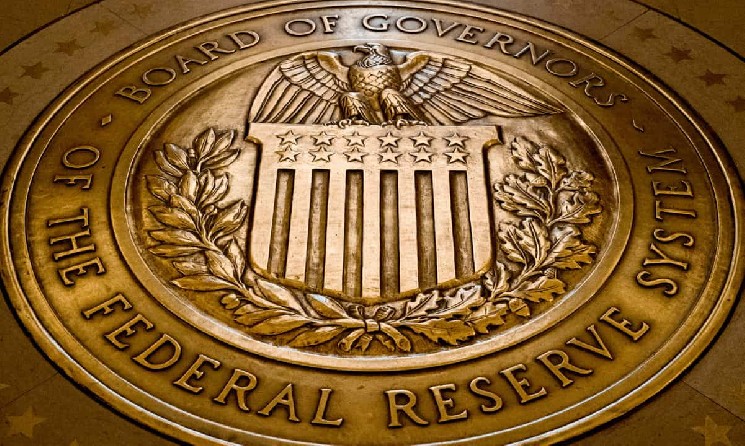
    • The ICE BofA MOVE Index ($MOVE) shows bond traders are paying significantly more for interest-rate volatility protection despite the S&P 500 rising roughly 21% since March when $MOVE was last at similar levels.
    • The 20-day correlation between the VIX and $MOVE turned negative (-0.06) for the first time since April 2024, while the BVIV-$MOVE correlation sits at -0.37, indicating a historic divergence between equity and bond volatility expectations as Bitcoin’s implied volatility hovers near yearly lows.

    Global Bond Yields Surge Amid Middle East Tensions

    A broad-based climb in government bond yields is rippling through global markets this week, with the benchmark U.S. 10-year Treasury yield briefly piercing the 5.2% threshold on Thursday before retreating slightly to 5.163%. The selloff in fixed income comes as the widening conflict in the Middle East drives crude oil and diesel prices higher, injecting fresh uncertainty into the inflation outlook and prompting traders to reassess how much further major central banks may need to tighten monetary policy. The move underscores the fragile nature of the disinflation narrative that had previously anchored market expectations for rate cuts.

    MOVE Index Signals Rising Rate Volatility Premium

    The ICE BofA MOVE Index, a widely watched gauge of expected volatility in U.S. Treasury markets, has climbed to levels last seen in March. However, the equity market backdrop has shifted dramatically: the S&P 500 stood near 6,350 when $MOVE previously traded at this level, but the index has since surged to 7,704, a gain of approximately 21%. This divergence highlights a critical shift—bond traders are now paying a considerably higher premium for protection against interest-rate swings even as equity markets rally, suggesting fixed-income participants see risks that stock investors are currently disregarding.

    Correlation Breakdown Between Asset Class Volatility

    The structural relationship between equity and bond volatility measures is showing signs of fracture. Over a 20-day rolling window, the correlation between the Cboe Volatility Index (VIX) and the MOVE Index has slipped to -0.06, turning negative for the first time since April 2024, though the reading remains statistically close to zero. The correlation between the Cboe Bitcoin Volatility Index (BVIV) and $MOVE is more distinctly negative at -0.37, marking one of its lowest readings in years. This decoupling occurs as bond volatility rises while Bitcoin’s expected volatility remains anchored near its yearly low, a dynamic that challenges traditional cross-asset hedging assumptions.

    Bitcoin’s Detachment from Yield Narrative

    Adding to the complexity, recent analysis from CoinDesk indicates that rising yields alone have demonstrated little consistent relationship with Bitcoin’s returns. The cryptocurrency’s implied volatility, as measured by BVIV, has failed to respond to the spike in rate volatility, remaining near annual lows. This suggests that Bitcoin is currently trading on idiosyncratic drivers—such as ETF flow dynamics and regulatory developments—rather than macroeconomic interest-rate sensitivity, further isolating the digital asset from traditional fixed-income turbulence.

    Why This Matters

    The simultaneous rise in bond yields and volatility premiums, coupled with a breakdown in cross-asset correlations, signals a potential regime shift for multi-asset portfolios. For institutional investors, the negative VIX-MOVE correlation undermines the traditional negative equity-bond correlation that has underpinned 60/40 portfolio construction for decades. The fact that Bitcoin volatility remains suppressed while rate volatility spikes suggests the asset is not currently functioning as a macro hedge against inflation or rate uncertainty. Market participants should monitor whether the $MOVE index sustains these elevated levels, as persistent bond volatility could force a repricing of risk assets broadly, including equities and digital assets, particularly if the Federal Reserve signals a higher-for-longer rate stance in response to energy-driven inflation pressures.

    Frequently Asked Questions

    What is the MOVE Index and why is it important?

    The ICE BofA MOVE Index ($MOVE) measures the implied volatility of U.S. Treasury securities across the 2-, 5-, 10-, and 30-year maturities. It serves as the bond market’s equivalent of the VIX, reflecting how much traders are paying to hedge against interest-rate swings. A rising $MOVE indicates growing uncertainty about the path of monetary policy and inflation.

    Why has the correlation between VIX and MOVE turned negative?

    The 20-day correlation between the VIX (equity volatility) and MOVE (bond volatility) fell to -0.06, its first negative reading since April 2024. This suggests equity traders are complacent—pricing in a soft landing and continued rally—while bond traders are hedging aggressively against sticky inflation and higher-for-longer rates, creating a rare divergence in risk perception across asset classes.

    Is Bitcoin acting as a hedge against rising yields?

    According to CoinDesk’s analysis, rising yields alone have shown little consistent relationship with Bitcoin’s returns. Currently, Bitcoin’s implied volatility (BVIV) is near yearly lows while bond volatility ($MOVE) spikes, and the BVIV-MOVE correlation sits at -0.37. This indicates Bitcoin is not currently functioning as a macro hedge against interest-rate volatility.

  • MOVE Index Surges Past 130, Fueling Bailout Speculation

    MOVE Index Surges Past 130, Fueling Bailout Speculation

    Key Highlights

    • The $MOVE Index has surged above 130, signaling heightened implied volatility in bond markets and growing liquidity concerns.
    • Traders and analysts, including prominent voice @CryptoHayes, are flagging the move as a potential precursor to policy intervention or regulatory action.
    • Historical patterns show similar index spikes have preceded central bank support measures, making current levels a critical watchpoint for market participants.

    $MOVE Index Breaches 130 Threshold, Triggering Policy Speculation

    The $MOVE Index — a widely tracked gauge of implied volatility in U.S. Treasury markets managed by ICE (Intercontinental Exchange) — has climbed above the 130 level, a threshold that market veterans associate with acute stress in fixed-income liquidity. The move was amplified across financial social media after a post by @CryptoHayes, the pseudonymous founder of BitMEX and a closely followed macro commentator, drew attention to the index’s rapid ascent. His tweet catalyzed a wave of discussion among rates traders, hedge fund managers, and crypto-market participants who monitor the $MOVE as a leading indicator of systemic funding pressure.

    Unlike the VIX, which reflects equity volatility, the $MOVE Index captures expected swings in Treasury yields across the 2-, 5-, 10-, and 30-year maturities. A reading above 130 has historically coincided with episodes such as the March 2020 pandemic liquidity crunch, the September 2022 U.K. gilt crisis, and the regional banking turbulence of early 2023. In each case, the Federal Reserve or other major central banks responded with emergency lending facilities, quantitative easing restarts, or explicit backstops — actions that subsequently stabilized markets but also reshaped asset-price trajectories across equities, credit, and digital assets.

    Mixed Crypto Signals Complicate the Picture

    The broader cryptocurrency market is sending conflicting signals as the $MOVE rises. Bitcoin (BTC) has shown resilience near recent range highs, while Ethereum (ETH) and major altcoins exhibit divergent momentum, reflecting uncertainty over whether tighter financial conditions or imminent policy relief will dominate. Liquidity in on-chain markets remains thinner than in 2021, and the correlation between crypto risk assets and rates volatility has strengthened since the 2022 bear market. Traders are parsing whether a sustained $MOVE elevation will force the Federal Reserve to signal a pause or pivot — a development that could inject fresh risk appetite into digital assets — or whether the index simply reflects transient positioning ahead of key economic data.

    Market structure analysts note that the $MOVE’s jurisdiction falls under the purview of the SEC, CFTC, and the Federal Reserve Bank of New York, all of which monitor fixed-income volatility as a barometer of dealer balance-sheet capacity. With primary dealers already managing elevated Treasury supply, a further $MOVE spike could strain market-making ability, widening bid-ask spreads and increasing the odds of an official-sector response.

    Why This Matters

    The $MOVE Index’s breach of 130 is not merely a technical milestone — it is a signal that the world’s deepest, most liquid bond market is pricing in exceptional uncertainty around interest-rate paths. For institutional allocators, this raises the specter of forced deleveraging in strategies reliant on stable funding, from basis trades to mortgage-backed securities hedging. For crypto-native funds, it underscores the growing integration of digital-asset pricing with traditional macro liquidity cycles. Policymakers at the Fed and Treasury will likely reference the $MOVE in upcoming FOMC discussions and Financial Stability Oversight Council (FSOC) meetings as they assess whether current market functioning warrants intervention. The next two weeks — featuring CPI, PPI, and retail sales data — will be decisive in determining whether the index retraces or consolidates at elevated levels, setting the stage for either a policy calm or a repeat of 2020-2023 crisis playbooks.

    Frequently Asked Questions

    What is the $MOVE Index and why does 130 matter?
    The $MOVE Index (Merrill Lynch Option Volatility Estimate) measures implied volatility across key U.S. Treasury maturities. A level above 130 has historically signaled severe fixed-income stress, often preceding central bank liquidity interventions.
    Who is @CryptoHayes and why did his post move markets?
    @CryptoHayes is Arthur Hayes, co-founder of BitMEX and chief investment officer of Maelstrom. His macro commentary commands a large following among crypto and rates traders, and his highlight of the $MOVE surge amplified institutional attention to the signal.
    How could a policy response affect cryptocurrency markets?
    If the Fed or Treasury acts to ease funding pressure — via swap lines, standing repo facilities, or balance-sheet expansion — risk assets including Bitcoin and Ethereum typically benefit from improved dollar liquidity. Conversely, inaction could prolong volatility and correlation-driven selloffs.
  • Federal Reserve Proposes Stablecoin Reserve and Capital Rules Under GENIUS Act

    Federal Reserve Proposes Stablecoin Reserve and Capital Rules Under GENIUS Act

    Key Highlights

    • The Federal Reserve has proposed a banking-like regulatory framework for payment stablecoin issuers it supervises, requiring full reserve backing, fixed capital requirements, safe custody, and a tailored approval process under the GENIUS Act.
    • Governor Michael S. Barr warned that the proposed anti-money-laundering (AML) standard focusing on “significant or systemic” failures may constrain the Fed’s enforcement capacity.
    • The stablecoin market has reached approximately $300 billion, 98% denominated in U.S. dollars, with the GENIUS Act expected to take effect January 18, 2027, or earlier if final rules are issued sooner.

    Fed Proposes Comprehensive Stablecoin Framework Under GENIUS Act

    On Thursday, September 24, the Federal Reserve Board requested public input on two proposals that would move payment stablecoin issuers under its supervision to a regulatory structure resembling that of traditional banks. The proposals, issued under the authority of the GENIUS Act, mandate that issuers maintain a full reserve backed by eligible assets such as short-term Treasuries and other high-quality liquid assets, adhere to standardized capital and risk-management requirements, follow reserve-custody rules, and secure approval through a customized process that includes procedures for appeals, hearings, and decisions. The comment period will span 60 days following publication in the Federal Register.

    Reserve, Capital, and Custody Requirements Detailed

    The proposed framework directly addresses regulatory gaps identified in a Brookings Institution paper by Nellie Liang and Brent Neiman, who argued that strong capital and liquidity regulation is essential to ensure redemption at par and that reserves held in uninsured bank deposits should carry higher capital requirements than Treasury bills or cash. The GENIUS Act itself requires at least one-to-one backing with eligible reserves. Applicants seeking to issue stablecoins must submit a business plan alongside financial documentation as part of the approval system. These measures are critical both for banks planning to issue stablecoins and for the Treasury and regulators working to implement the law.

    Barr Flags Potential Enforcement Tension in AML Proposal

    Governor Michael S. Barr, while supportive of the reserve and capital measures, expressed concern about the AML component of the package. He tied the stablecoin proposals to the Fed’s July proposal to revise bank AML program requirements, which states that supervision and enforcement would focus on “significant failures” after a bank establishes an AML program. In his statement, Barr said:

    I am concerned that the ‘significant or systemic’ standard may have unknown effects…

    — Michael S. Barr, Federal Reserve

    According to Barr, it remains unclear how such a “significant or systemic” threshold might impact the Fed’s capacity for action. This concern emerges as regulators expand stablecoin compliance requirements. In May, the FDIC encouraged applying AML, counter-terrorist-financing, and sanctions requirements to bank-affiliated stablecoin issuers. Liang and Neiman have also cautioned that if stablecoins bypass correspondent banking networks, U.S. sanctions and AML enforcement powers could be diluted unless issuers and wallet operators prevent illicit transactions.

    Market Implications: Treasury Demand and Issuer Economics

    The stablecoin market’s scale underscores the stakes. The Bank for International Settlements reported a total market value of about $300 billion in 2026, with 98% denominated in U.S. dollars. Brookings estimated the market at roughly $270 billion in June, while S&P Global Market Intelligence projects growth to $434 billion by 2028 from $269 billion in 2025, driven by cross-border payments, treasury management, and capital-market tokenization. Brookings noted that reserve flows into Treasury bills may boost demand for short-term U.S. securities, though the net effect depends on what drives stablecoin reserve growth. Stricter capital and custody rules could raise compliance costs and barriers for new entrants. The ripple effects extend beyond issuers: IMF analysts found that existing payment companies lost 1.3% (approximately $21.5 billion) of market value relative to other financial firms during the pivotal GENIUS Act vote, with cross-border firms more severely affected. Accounting for anticipated effects, losses could reach 13% to 27% (roughly $220 billion to $470 billion).

    Why This Matters

    The Federal Reserve’s proposals represent the most concrete federal step yet to bring payment stablecoins into the regulatory perimeter, translating the GENIUS Act’s statutory mandates into operational rules for supervised institutions. The reserve and capital framework aims to eliminate the run-risk and redemption uncertainties that have plagued the sector, while the approval process creates a gatekeeping mechanism for bank-affiliated issuers. However, Governor Barr’s dissent on the AML threshold highlights a structural tension: a supervision model calibrated for “significant or systemic” failures may be ill-suited for the high-velocity, pseudonymous transaction flows characteristic of stablecoin networks. Internationally, the BIS has warned that fragmented regulation invites arbitrage, and the Treasury’s January 18, 2027 effective date—or an earlier trigger 120 days after final rules—pressures agencies to finalize standards quickly. Meanwhile, the market’s dollar dominance (98% USD-denominated) means U.S. rulemaking effectively sets global norms for the largest segment of crypto-based value transfer.

    Frequently Asked Questions

    What are the core requirements for stablecoin issuers under the Fed’s proposed rules?
    Issuers supervised by the Federal Reserve must maintain full one-to-one reserve backing with eligible assets such as short-term Treasuries, meet standardized capital and risk-management requirements, follow reserve-custody rules, and obtain approval through a tailored process that includes business-plan submission, financial documentation, and procedures for appeals and hearings.
    Why is Governor Barr concerned about the AML proposal?
    Barr warns that the “significant or systemic” enforcement threshold in the Fed’s July AML revision may limit the central bank’s ability to act against stablecoin issuers, creating uncertainty about supervisory effectiveness in a high-velocity payment environment.
    When will the GENIUS Act take effect?
    The expected effective date is January 18, 2027, though the statute allows an earlier start—120 days after primary federal stablecoin regulators issue final implementing rules.
  • FedNow Prepares Cross-Border Support for U.S. Banks

    FedNow Prepares Cross-Border Support for U.S. Banks

    Key Highlights

    • Federal Reserve Financial Services launched early-adopter testing on September 23 for enhanced ISO 20022 messages that enable FedNow to settle the U.S. leg of cross-border payments while correspondent banks handle the international portion.
    • The model does not create a direct global FedNow network; it relies on existing correspondent-banking infrastructure and remains contingent on final approval of Regulation J amendments (docket R-1891) and updates to Operating Circular 8.
    • FedNow domestic volume surged 83.2% in Q2 2026 to nearly 5 million payments worth $274.66 billion, with over 1,500 participating institutions, as the Fed prepares a January 2027 discount program to further boost adoption.

    Federal Reserve Advances FedNow Cross-Border Testing with Correspondent-Banking Model

    Early Adopters Begin Testing Enhanced ISO 20022 Messages for International Payments

    Federal Reserve Financial Services announced on September 23 that a group of early-adopter financial institutions will begin testing new FedNow message formats designed to carry the data required when a payment involves a sender or recipient outside the United States. The enhanced ISO 20022 specifications have been available through the Fed’s MyStandards portal since April, allowing institutions active in international commerce to prepare system changes during 2026. Payall Payment Systems is among the named participants. President and CEO Gary Palmer said the company’s integration is intended to provide financial institutions with faster and more transparent processing for the U.S. portion of international payments while digitizing compliance and transaction-risk checks. Payall described its role as helping banks “un-nest” payment chains, screen parties and automate risk controls. Those are company claims about its infrastructure and do not establish that every international payment using the future FedNow capability will process faster or at lower cost.

    Correspondent Banks Retain Control of Foreign Leg Under Proposed Framework

    The Federal Reserve’s design keeps existing correspondent banking infrastructure at the center of the foreign portion of each transaction. A payment could begin abroad, move through correspondent arrangements, and use FedNow once it reaches the U.S. banking system. An outbound transaction could reverse that sequence, with FedNow processing the domestic transfer before an intermediary handles the payment beyond the U.S. The model resembles structures already used with Fedwire, according to Federal Reserve Financial Services. It does not create direct FedNow access for foreign banks that lack the required U.S. participation structure, nor does it establish a Federal Reserve foreign-exchange service. As one industry observer noted on social media: “FedNow going cross-border is not what it sounds like. The Fed’s own proposal: a correspondent bank handles the international leg, FedNow settles the US domestic leg in seconds. The foreign mile still runs on whichever rail the correspondent picks. So the slow, expensive part of…” — Wave of Innovation (@wave_of_innov), September 23, 2026.

    Regulation J Approval Remains Critical Unresolved Step Before Full Rollout

    The most important unresolved step is regulatory approval. The Federal Reserve Board’s current rulemaking portal still lists docket R-1891 as a “Rulemaking Proposal.” The public comment period closed June 9, but the Board has not posted a final rule replacing the proposal as of September 24. The September 23 FedNow announcement carries the same limitation: the functionality remains contingent on required amendments to Regulation J and corresponding changes to Operating Circular 8 receiving approval from the relevant Federal Reserve governing bodies. Operating Circular 8 contains the operating terms for transfers through FedNow; the April 1, 2026 version is currently listed as the effective circular, alongside operating procedures that took effect April 28. Industry feedback on the Regulation J proposal raised compliance questions that the final framework may need to address. The American Bankers Association, for example, recommended clarifying how sanctions, anti-money laundering and fraud checks should work when a FedNow payment forms part of a cross-border chain, and asked that banks be able to delay or reject payments where required to complete legally mandated screening. Stripe’s comment on the proposal separately argued that the existing FedNow operating framework contained a residency restriction for certain ultimate customers and said operating-rule changes would be needed alongside the Regulation J amendment for the proposal to achieve its full cross-border purpose.

    FedNow Domestic Volume Surges as Network Prepares for International Expansion

    FedNow enters the testing phase after rapid growth in domestic payment activity. Federal Reserve Financial Services reported 4.997 million settled customer payments during the second quarter of 2026, up 83.2% from the first quarter. Their combined value reached $274.66 billion, compared with $271.25 billion during the previous three months. Average daily volume rose from 30,317 payments in the first quarter to 54,921 in the second. Average payment size fell from $99,414 to $54,957 as transaction counts expanded more quickly than total dollar value. For all of 2025, FedNow processed 8.41 million payments worth $853.4 billion, representing 458.9% annual volume growth and more than 2,100% growth in settled value compared with 2024. The network now spans more than 1,500 participating financial institutions. Federal Reserve Financial Services keeps separate current lists of live institutions, settlement agents and certified service providers, with its participant and provider files most recently updated September 21. In a separate domestic adoption move, Federal Reserve Financial Services announced a new discount program beginning January 1, 2027, intended to encourage more institutions to activate and increase FedNow sending capabilities.

    Why This Matters

    The FedNow cross-border initiative represents a pragmatic evolution rather than a revolutionary overhaul of international payments. By leveraging the existing correspondent-banking network for the foreign leg while applying FedNow’s 24/7/365 instant settlement to the domestic portion, the Federal Reserve avoids the complexity and political sensitivity of building a direct global central-bank payment rail. This approach aligns with the Fed’s August review of U.S. cross-border payment work, which noted that FedNow had remained domestic since its July 2023 launch while demand from banks for international use increased as instant payments expanded globally. The migration of Fedwire to ISO 20022 in July 2025 created more common messaging across international payment chains, providing a technical foundation for the enhanced messages now under test. Potential use cases identified by the Federal Reserve include international payroll, corporate payments, property transactions, insurance disbursements and global treasury activity. However, the complete speed and cost of an international transaction will still depend on the foreign leg, correspondent relationships, compliance reviews and local payment infrastructure. As banks, stablecoin companies and blockchain networks compete to shorten international payment chains—with SWIFT testing a blockchain ledger with 17 global banks for round-the-clock cross-border payments using tokenized commercial-bank deposits—FedNow’s model remains based on conventional bank money settled through Federal Reserve accounts for its domestic portion. Cross-border testing is expected to proceed while the Regulation J process remains unfinished, with no general launch date published.

    Frequently Asked Questions

    Does FedNow now support direct cross-border payments to foreign banks?

    No. The Federal Reserve’s model does not create direct FedNow access for foreign banks that lack the required U.S. participation structure. FedNow settles only the U.S. domestic portion between participating domestic institutions, while correspondent banks or other approved intermediaries continue handling the overseas leg through their existing cross-border arrangements.

    When will the cross-border capability be generally available to all FedNow participants?

    No general launch date has been published. The functionality remains contingent on final approval of Regulation J amendments (docket R-1891) and corresponding changes to Operating Circular 8. Federal Reserve Financial Services says future progress updates will be provided to participants as testing, rule approval and Operating Circular changes advance.

    What role does Payall Payment Systems play in the testing phase?

    Payall Payment Systems is one of the named early-adopter participants. The company’s integration aims to provide financial institutions with faster and more transparent processing for the U.S. portion of international payments while digitizing compliance and transaction-risk checks. Payall describes its role as helping banks “un-nest” payment chains, screen parties and automate risk controls, though these are company claims about its infrastructure and do not guarantee that every international payment using the future FedNow capability will process faster or at lower cost.

  • Experienced CEO’s Bold Claim: “The Fed’s Interest Rate Hike Will Benefit Bitcoin”

    Experienced CEO’s Bold Claim: “The Fed’s Interest Rate Hike Will Benefit Bitcoin”

    Key Highlights

    • CrossBorder Capital CEO Michael Howell argues a potential Fed rate hike could be stimulative for Bitcoin, not contractionary, due to increased government interest payments flowing to the private sector.
    • Howell emphasizes global liquidity and balance sheet capacity—not policy rates—as the true driver of asset prices, noting 80% of capital market transactions now fund debt refinancing rather than new investment.
    • The analyst predicts a 25 basis point hike could strengthen long-term bonds, lower yields, and reduce volatility, with Bitcoin and gold positioned to benefit from ongoing “monetary inflation” driven by short-term Treasury issuance.

    Why Higher Rates May Not Hurt Bitcoin This Time

    Conventional wisdom holds that Federal Reserve interest rate hikes are unequivocally negative for risk assets like Bitcoin. Michael Howell, CEO of CrossBorder Capital and a widely followed analyst of global liquidity dynamics, challenges that assumption. In a detailed analysis, Howell argues that the modern financial architecture has shifted so fundamentally that a rate increase could actually inject cash into the private sector, creating a tailwind for cryptocurrencies and precious metals rather than a headwind.

    The Liquidity Framework Supplanting Rate Policy

    Howell’s thesis rests on a structural transformation in global capital markets. He calculates that approximately 80 percent of primary market transactions now serve to refinance existing debt rather than fund new productive investment. In this environment, the critical variable for financial stability is not the level of the policy rate but the availability of balance sheet capacity and liquidity that allows institutions to continue rolling over obligations. “If you raise interest rates in the U.S., you’re essentially giving more cash to the private sector. This isn’t a contraction, it’s a stimulus,” Howell stated, describing a mechanical fiscal transfer where higher coupon payments on expanding public debt flow directly to bondholders.

    This dynamic, he argues, means the U.S. government’s status as a massive net debtor has inverted the traditional transmission mechanism. When the Fed raises rates, the Treasury pays more interest, which functions as a fiscal injection. Howell contends a 25 basis point increase at the next meeting could align with short-term market expectations, strengthen long-duration bonds, push yields lower, and dampen volatility across fixed income markets—outcomes that would ease financial conditions rather than tighten them.

    Monetary Inflation and the Short-Term Debt Pivot

    Central to Howell’s outlook is the Treasury’s increasing reliance on short-term bills to finance the deficit. This shift expands commercial bank balance sheets and broad money supply, a process he describes as “monetary inflation.” In this regime, assets with fixed or limited supply—gold, silver, Bitcoin, and Ethereum—tend to outperform. Historical precedent from the 2008 global financial crisis and the COVID-19 period supports the pattern: when debt rollover stress forces central banks to expand liquidity, these assets record sharp price appreciation.

    Howell emphasizes that the United States’ elevated public debt trajectory compels policymakers to maintain ample liquidity and favor short-term borrowing. Consequently, he expects liquidity conditions to remain supportive even if the Fed moves rates higher. The recent rally in both Bitcoin and gold, he suggests, may reflect markets beginning to price this new paradigm where the policy rate is a secondary concern to the pace of balance sheet expansion.

    Why This Matters

    The analysis reframes the macroeconomic playbook for digital asset investors. For over a decade, the “Fed put” narrative has conditioned markets to expect easier policy as the primary catalyst for crypto rallies. Howell’s work suggests the catalyst may instead be fiscal-driven liquidity growth that persists regardless of the federal funds rate. If correct, the correlation between Bitcoin and global liquidity metrics—rather than interest rate expectations—becomes the superior signaling tool. This also implies that traditional recession indicators tied to yield curve inversion may misfire in a system where the curve is managed through bill issuance and central bank backstops. Investors and analysts should monitor Treasury refunding announcements, repo market functioning, and broad money aggregates with at least the same rigor applied to FOMC dot plots.

    Frequently Asked Questions

    Does Michael Howell believe the Fed will raise rates at its next meeting?
    The source does not state Howell’s prediction on whether the Fed will hike. He analyzes the potential consequences if a 25 basis point increase occurs, arguing it could be bullish for liquidity-sensitive assets.
    What specific assets does Howell identify as beneficiaries of monetary inflation?
    Howell explicitly names Bitcoin, Ethereum, gold, and silver as assets highly sensitive to global liquidity expansion and likely to benefit from the current fiscal and monetary structure.
    How does the 80% debt refinancing figure change the impact of rate hikes?
    When most capital market activity services existing debt, the system’s stability depends on rollover capacity and liquidity, not borrowing costs. Higher rates then transfer income to bondholders (stimulus) rather than choking off new investment (contraction).