Tag: Federal Reserve

  • Bitcoin Faces Critical Two Weeks as Wintermute Reveals Key Price Levels: “The Next Two Weeks Are Very Critical,” and “Below This Is…

    Bitcoin Faces Critical Two Weeks as Wintermute Reveals Key Price Levels: “The Next Two Weeks Are Very Critical,” and “Below This Is…

    Bitcoin rose above $81,000 last week before falling back to approximately $78,000 after Federal Reserve Chairman Kevin Warsh delivered a hawkish speech in Jackson Hole. With BTC trading near $78,000 in recent days, cryptocurrency market maker Wintermute has outlined its latest expectations for Bitcoin.

    Bitcoin Could Trade Between $75,000 and $82,000 Before the Fed Meeting

    Wintermute expects Bitcoin to remain between $75,000 and $82,000 until the Federal Open Market Committee (FOMC) meeting scheduled for September 15–16.

    According to Wintermute’s latest market analysis, Warsh’s speech at the Jackson Hole Annual Meeting increased expectations of a September rate hike to 64.4%. The company expects the September FOMC meeting to become a major catalyst for risk assets, particularly cryptocurrencies.

    Wintermute said market expectations for interest rates will be a decisive factor in Bitcoin’s next move. Economic data due during the first two weeks of September could significantly alter those expectations ahead of the FOMC meeting.

    US nonfarm payrolls data, scheduled for release on September 4, will be closely watched for its potential impact on interest-rate expectations and the direction of BTC.

    $82,000 Resistance Remains Key for Bitcoin

    Wintermute also noted that Bitcoin has faced repeated selling pressure near $82,000 following its recent rally. The company identified the following key levels:

    “$82,000: As a significant resistance$75,000: As the first significant support$72,000: As a critical support”

    Wintermute warned that a weekly Bitcoin close below $72,000 could alter the current market outlook. Below that level, the company sees no clearly defined support zone, potentially increasing the risk of further declines.

    In the current market environment, Wintermute considers a pullback toward $75,000 a healthier short-term move for Bitcoin. Such a decline could clear leveraged positions before the market makes another attempt to move higher.

    Based on this outlook, Wintermute expects Bitcoin to consolidate within the $75,000–$82,000 range until the September FOMC meeting.

    This is not investment advice.

  • Tom Lee Makes a “Massive Bull” Bitcoin and Ethereum Prediction With One Condition

    Tom Lee Makes a “Massive Bull” Bitcoin and Ethereum Prediction With One Condition

    Tom Lee, Fundstrat’s head of research and chief investment officer, outlined his latest outlook for the Federal Reserve’s September policy decision, U.S. stocks and global markets in an interview with CNBC.

    Although September has historically been a weak month for financial markets and uncertainty remains over the path of interest rates, Lee said markets could deliver an upside surprise contrary to prevailing expectations.

    September Fed meeting seen as market turning point

    Lee described the Fed meeting on September 15th as a critical turning point. He said that if the central bank leaves interest rates unchanged, stock markets could trigger a very strong rally.

    According to Lee, a major market correction could be delayed until October. Alternatively, stocks could see only a limited pullback after the S&P 500 rises above the 8,000-point level.

    Crypto market recovery could accelerate

    Lee also said the periodic slowdown in the cryptocurrency market, often referred to as a “crypto winter,” had been relatively shallow and was approaching its end. He noted that crypto assets became the best-performing macro asset class during the third quarter of the year.

    With institutional investors increasingly turning to crypto stocks, Lee said investor interest could return quickly as the four-year crypto cycle reaches its conclusion in the coming days.

    The analyst identified potential regulatory changes as the sector’s biggest catalyst, stating:

    “If the CLARITY Bill passes Congress this year, Bitcoin and Ethereum will have an extremely strong and massive fourth quarter.”

    This is not investment advice.

  • Renowned Economist Says Fed Should Raise Interest Rates in September

    Renowned Economist Says Fed Should Raise Interest Rates in September

    SMBC Chief Economist and former U.S. Treasury Department official Joe Lavorgna said the Federal Reserve should raise interest rates in September and suggested the central bank is likely to move in that direction.

    Speaking on CNBC, Lavogna assessed the U.S. economy’s strong growth momentum, the recovery in manufacturing and volatility in real interest rates.

    U.S. economic growth strengthens

    Lavorgna said the U.S. economy has entered a growth trajectory approaching 5% in the third quarter. He argued that the Fed’s 75 basis point interest rate cuts last year, which were introduced amid concerns about the labor market, are no longer necessary.

    “I believe the Fed should and will raise interest rates in September. Given the economic outlook and growth expectations, reversing the extra rate cuts made last year would be a logical step.”

    Higher short-term rates could reduce market risks

    In response to a question about how an interest rate increase could be negotiated with the U.S. president, Lavorgna said higher short-term interest rates would reduce the market risk premium and could push long-term bond yields lower.

    He also said short-term rate increases would offer higher returns to depositors and Treasury bond investors, potentially supporting the economy over the medium to long term.

    This is not investment advice.

  • Bitcoin, Ethereum and XRP Prices Brace for Jobs Report Week as Fed Decision Looms

    Bitcoin, Ethereum and XRP Prices Brace for Jobs Report Week as Fed Decision Looms

    Bitcoin is trading at $78,796.58, while Ethereum stands at $2,478.28 and $XRP at $1.40 as traders prepare for a week packed with U.S. labor-market data. The figures could influence the Federal Reserve’s next policy decision and, in turn, determine the near-term direction of the cryptocurrency market.

    Current Cryptocurrency Market Snapshot

    • Bitcoin: $78,796.58, up 1.7% over seven days, with a market capitalization of $1.58 trillion
    • Ethereum: $2,478.28, up 0.7% over seven days, with a market capitalization of $299 billion
    • $XRP: $1.40, up 7.7% over seven days, with a market capitalization of $87.78 billion
    • Solana: $106.44, up 12.0% over seven days
    • BNB: $698.37, roughly unchanged over seven days

    Economic Data Traders Are Watching

    According to The Kobeissi Letter, six major economic releases are scheduled this week, with employment data expected to be the main focus for financial markets:

    • Monday: August Chicago PMI data
    • Tuesday: August ISM Manufacturing PMI and Prices data, along with July JOLTS Job Openings data
    • Wednesday: August ADP Nonfarm Employment data
    • Thursday: August ISM Non-Manufacturing PMI and Prices data
    • Friday: July Jobs Report

    Why the Labor Market Matters for Crypto

    Employment data carries particular importance for cryptocurrency markets because it can directly affect expectations for the Federal Reserve’s interest-rate decision at the next FOMC meeting.

    Unexpected strength in the labor market could support the hawkish tone Fed Chair Kevin Warsh struck at Jackson Hole. That scenario could keep expectations for rate cuts subdued and place additional pressure on risk assets such as Bitcoin, Ethereum and $XRP.

    Bitcoin Price Technical Outlook

    Bitcoin remains range-bound, with support around $73,000 to $75,000 and resistance between $80,000 and $82,000. Technical analysts generally view a move above approximately $82,500 as necessary to confirm a broader bullish trend shift on higher timeframes.

    A significant pocket of liquidation liquidity is located between $76,400 and $76,700. Analysts have identified that zone as a potential near-term target if short-term weakness continues.

    Ethereum and $XRP Price Levels

    Ethereum is holding above $2,400, preserving its bullish breakout structure. The next major resistance area is positioned between $2,750 and $2,800.

    $XRP is testing support in the $1.30 to $1.40 range after being rejected near $1.60 to $1.70. The retreat followed an extended overbought signal that triggered the recent pullback.

    The current cooldown does not necessarily indicate a trend reversal. Instead, it may represent a reset before the broader trend potentially resumes.

    What the Data Could Mean for Bitcoin and Crypto

    With five separate labor and manufacturing data points scheduled from Monday through Friday, volatility in Bitcoin, Ethereum and $XRP could increase ahead of Friday’s Jobs Report. The report is widely regarded as the most important release of the week.

    Whether the data comes in above or below market expectations could determine whether the recent cryptocurrency consolidation breaks higher or develops into a longer cooling-off period.

  • Fed Chair Kevin Warsh Speaks at Jackson Hole: Highlights and Bitcoin’s Initial Reaction

    Fed Chair Kevin Warsh Speaks at Jackson Hole: Highlights and Bitcoin’s Initial Reaction

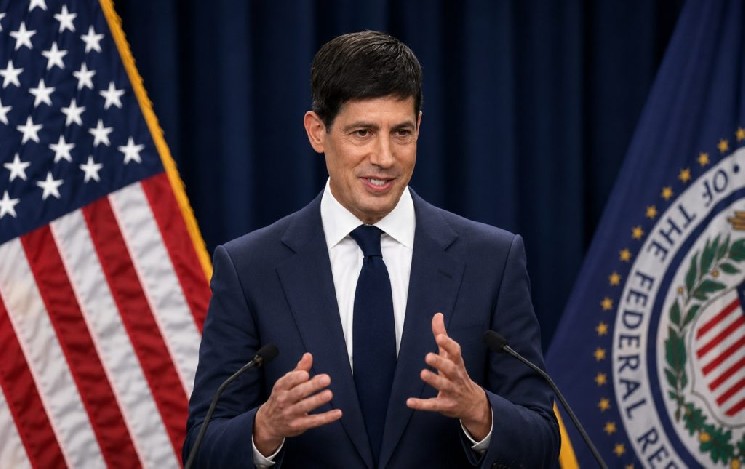
    Federal Reserve Chairman Kevin Warsh has begun his highly anticipated address at the Jackson Hole symposium in Jackson Hole, Wyoming.

    In his first speech as Fed chairman, Warsh highlighted inflation as a key concern and adopted a hawkish tone, saying price stability should remain the Federal Reserve’s priority. He noted that although summer inflation data had improved, underlying trends had not changed significantly.

    Key points from Warsh’s Jackson Hole speech

    “I’m struggling to define the financial conditions as restrictive.”

    We need to make sure that the downward trend in inflation is moving towards the target, otherwise we’ll have work to do.

    This summer’s inflation figures are better than expected, but don’t tell me that the underlying trends have changed significantly.

    Consumer spending is healthy, and labor markets are stable.

    The Fed needs to ensure that inflation remains stable.

    The economy remains resilient: consumer spending is healthy, labor markets are stable, and business investment is growing rapidly.

    Warsh also said that at the July meeting, there was a good majority that advocated waiting before changing interest rates.

    Bitcoin falls during Warsh’s speech

    Before Warsh’s address, Bitcoin was trading at around $79,000. After the speech began, its price fell to the $78,000 level. The price movement of Bitcoin during Warsh’s speech was as follows:

    This is not investment advice.

  • Warsh at Jackson Hole: ‘We have work to do’ on inflation

    Warsh at Jackson Hole: ‘We have work to do’ on inflation

    Federal Reserve Chairman Kevin Warsh said the central bank’s “predominant focus” should remain on inflation, striking a hawkish tone in closely watched remarks at the Kansas City Fed’s annual Jackson Hole symposium.

    “The responsibility for 65 months of sustained, elevated inflation sits squarely with the central bank,” said Warsh, delivering his keynote address at the Kansas City’s Fed Jackson Hole symposium.

    “We must be confident that underlying inflation is moving to our objective, clearly and at sufficient speed. Otherwise, we have work to do. That’s our job . . . our mandate . . . and our charge to keep.”

    Markets react to Warsh’s hawkish remarks

    Bitcoin fell to $78,700 following the comments. U.S. stocks were modestly lower, while bond yields moved slightly higher as investors assessed the Federal Reserve chairman’s inflation-focused message.

    Warsh’s speech had been highly anticipated because the Kansas City Fed’s annual Jackson Hole symposium has often served as a venue for U.S. central bank chiefs to prepare markets for major policy changes.

  • Fidelity Executive Comments on U.S. Treasury’s Latest Bitcoin Move

    Fidelity Executive Comments on U.S. Treasury’s Latest Bitcoin Move

    Fidelity Investments’ Global Macro Director Jurrien Timmer argues that recent U.S. Treasury operations—specifically increased long-term bond buybacks paired with heightened short-term bill issuance—are pressuring the dollar while providing tailwinds for Bitcoin and gold.

    Treasury Buybacks Weaken Dollar, Lift Bitcoin and Gold

    Timmer observed that the dollar declined last week following the Treasury’s repurchase of additional long-term bonds funded by issuing more short-term securities. He contends the concurrent sharp rally in both gold and Bitcoin prices signals market anticipation of shifts in fiscal and monetary policy frameworks.

    According to the analyst, investors may have started pricing in a potential transition toward what is increasingly termed “fiscal dominance” in the United States, alongside a perceived erosion of Federal Reserve independence.

    “It is noteworthy that the U.S. Treasury Department’s issuance of more short-term Treasury bills last week while simultaneously buying back more long-term bonds dragged the dollar down and caused both gold and Bitcoin to rise sharply. The market senses a slippery slope towards fiscal dominance and a possible loss of the Federal Reserve’s independence.”

    Larger Buybacks May Require Fed Involvement

    Timmer suggests that for the Treasury’s strategy to effectively suppress long-term yields, the repurchase program may need to expand significantly beyond current levels. Such an expansion, he notes, could compel Federal Reserve participation in what amounts to an “Operation Maturity Restructuring” aimed at altering the maturity profile of the bond market.

    He warns this trajectory carries heightened currency depreciation risks.

    “For the U.S. Treasury Department to successfully keep interest rates low, it may need to significantly increase the size of repurchases. This could require the Federal Reserve to become involved in this Operation Maturity Restructuring policy, and could lead us down a path of currency depreciation.”

    Expansionary Policy Mix Favors Bitcoin

    The Fidelity executive emphasizes that the simultaneous pursuit of expansionary fiscal policy and accommodative monetary policy creates a distinctly negative outlook for the dollar. With the greenback testing a significant long-term trend line, Timmer views this macroeconomic backdrop as structurally positive for gold, adding that Bitcoin stands to benefit from the same dynamics.

    This is not investment advice.

  • Bitcoin’s 22% Rally Needs Real Demand to Outlast Treasury Liquidity Boost

    Bitcoin’s 22% Rally Needs Real Demand to Outlast Treasury Liquidity Boost

    Bitcoin’s recent breakout appears to have been triggered by a shift in U.S. Treasury-market liquidity, but analysts say the rally’s staying power hinges on whether exchange-traded fund inflows and spot demand can replace the initial macroeconomic boost.

    Treasury Buybacks Spark 22% Surge and Short Squeeze

    Bitcoin surged roughly 22% during its breakout week as long-term Treasury yields fell and the dollar weakened following the U.S. Treasury’s decision to expand buybacks of longer-dated government debt. The move also triggered a major short squeeze, while demand for U.S. spot Bitcoin exchange-traded funds accelerated.

    The Treasury announced on Aug. 19 that it would at least double the maximum size of liquidity-support buybacks for 10-to-20-year and 20-to-30-year nominal Treasuries, raising them from $2 billion to at least $4 billion per operation. The larger operations are scheduled to begin Sept. 9 and continue through the current refunding quarter.

    Macro Forces Drove First Stage of Rally, Analysts Say

    Fabian Dori, chief investment officer at FINMA-regulated digital asset bank Sygnum, told crypto.news that Bitcoin’s behavior alongside other markets suggests the first stage of the rally had a strong macro component.

    “The clearest tell is the combination of cross-asset behavior and crypto-market plumbing.”

    Dori said the Treasury’s announcement temporarily pushed long-term yields lower while weakening the dollar and lifting both gold and Bitcoin. In his view, those moves were consistent with investors seeking hard assets amid renewed concerns about currency debasement rather than a rally driven exclusively by crypto-specific demand.

    Martin Lee, Market Insights Lead at DWF Labs, pointed to a similar divergence across markets. AI and technology assets remained under pressure while gold and Bitcoin ETFs attracted capital as debasement concerns returned, he told crypto.news.

    As crypto.news reported earlier, U.S. spot Bitcoin ETFs received about $1.92 billion during the breakout week, their largest weekly inflow in 10 months. At the same time, the price surge forced traders positioned for further weakness out of the market. Lee said a record $2.7 billion in crypto short positions were liquidated as Bitcoin cleared its previous trading range, meaning part of the apparent spot demand reflected traders buying Bitcoin to cover bearish positions.

    Derivatives Data Points to Mixed Drivers

    Derivatives data provides another clue about the nature of the breakout. Dori noted that Bitcoin-denominated open interest fell during the rally while funding rates remained contained. Bitcoin futures open interest recently declined to roughly 587,584 BTC, its lowest level in nearly five months, from around 645,760 BTC on Aug. 14.

    Rather than showing traders aggressively piling into leveraged long positions, Dori said the combination points toward forced short covering playing an important role. Still, he does not view the entire rally as a macro trade.

    “So the right interpretation is probably mixed.”

    Dori said the first impulse saw Bitcoin behave more like gold, as lower long-term yields, a weaker dollar, and debasement concerns drove demand. A second, crypto-specific impulse came from ETF inflows alongside regulatory developments in Washington, including the SEC’s Regulation Crypto proposal and renewed White House pressure for progress on the CLARITY Act.

    ETF Flows Sustain Momentum as Bond-Market Impact Fades

    ETF flows provide some evidence that demand has continued beyond the initial Treasury shock. U.S. spot Bitcoin ETFs recorded eight consecutive sessions of inflows through Wednesday, attracting about $2.8 billion over the streak.

    The continued inflows matter because the initial reaction in the bond market has already weakened. BNY Markets said the decline in the term premium following the Treasury announcement had largely retraced, with long-term yields returning close to levels seen before the Aug. 19 announcement.

    Bitcoin has therefore reached a point where crypto-specific buying may need to carry more of the rally if the original rate impulse continues to fade.

    Sept. 9 Buyback Launch Is Next Liquidity Test

    The larger Treasury buybacks do not begin until Sept. 9, raising the question of how much of their expected impact markets have already priced in. Dori said markets normally react when such policies are announced rather than waiting for the operations themselves to begin. More important than the immediate size of the purchases, in his view, was the signal that the Treasury is willing to intervene when longer-term borrowing costs become excessively high.

    Whether that support lasts will depend on what happens after the announcement’s effect fades. Dori said rising long-end yields would suggest that the buybacks are failing to provide the expected support, while a rebuilding of the Treasury General Account could withdraw liquidity. Rapid increases in funding rates and open interest would also indicate that leverage, rather than underlying demand, had begun driving Bitcoin higher. Weakening ETF flows or tighter dollar funding conditions would remove another source of marginal demand.

    Lee similarly argued that anticipation alone cannot sustain the rally indefinitely.

    “A rally on anticipation is only as durable as the flow that follows it.”

    He identified ETF flows, futures basis and funding, and Bitcoin’s previous trading range as three key indicators to watch before Sept. 9. A week of negative ETF creations while Bitcoin holds near current levels could indicate that the anticipation trade is unwinding, Lee said. He added that the three-month futures basis moved back above the 10-year Treasury yield during the rally; a reversal below that level would suggest the cash-and-carry bid had failed to persist. The more bearish combination would be Bitcoin closing back inside its pre-breakout range while ETF flows turn negative, which Lee said would indicate that leverage drove much of the move without a durable structural bid emerging.

    Liquidity Analysis Extends Beyond Fed Policy Rate

    Both analysts also argue that investors looking only at the Federal Reserve’s policy rate may miss important forces influencing crypto prices. Dori said Treasury cash management, particularly changes in the Treasury General Account and the mix of issuance and buybacks, has recently become an important marginal driver of liquidity. The term premium then transmits changes at the long end of the Treasury curve into risk assets.

    Other channels include bank balance-sheet capacity, private credit creation, stablecoin growth and global dollar funding conditions, while the Federal Reserve’s balance sheet remains important over a longer horizon. Lee similarly ranks dollar funding conditions and real yields ahead of the policy rate for short-term crypto market behavior, followed by the term premium. Treasury cash balances and reserve dynamics influence the liquidity underneath those markets, while issuance matters partly through its effect on longer-term yields.

    For Lee, Bitcoin’s reaction to the Treasury buyback announcement showed how quickly a change at the long end of the yield curve can affect crypto even without a change in the Fed’s policy-rate outlook.

    Warsh’s Jackson Hole Speech in Focus

    The liquidity debate now shifts toward Federal Reserve Chair Kevin Warsh’s first Jackson Hole keynote on Friday. The latest inflation data gives the Fed a complicated backdrop. The Bureau of Economic Analysis reported that headline Personal Consumption Expenditures inflation rose 0.2% in July and 3.7% from a year earlier. Core PCE increased 0.2% for the month and 3.3% annually. Real consumer spending was nearly unchanged during July, while the personal saving rate stood at 3%.

    Dori said Warsh could affect short-term rate expectations by explaining how the Fed views current inflation pressures, including those connected with oil markets. Treasury is attempting to influence the longer end of the curve through its buyback program, while the Fed has more direct control over short-term rates.

    “If both were to get aligned, that would be a powerful support for risk assets.”

    However, Dori said a simple change in expectations for the September Federal Open Market Committee meeting may not be enough to materially alter institutional crypto positioning. Instead, investors should watch for any signal that changes the broader liquidity outlook, such as greater tolerance for oil-driven inflation, a different balance between inflation risks and economic growth, or comments capable of repricing the Treasury term premium.

    Lee said institutions should remain defensive if inflation, bond yields and the Fed’s policy outlook provide conflicting signals. Bitcoin’s reaction alongside gold could offer another clue about how investors are treating the asset. If Bitcoin rises with gold while long-duration bonds sell off, Lee said it would strengthen the case that investors are treating BTC as a hedge against fiscal and currency concerns. If Bitcoin instead falls alongside gold, its rate sensitivity would remain dominant, and institutions would have greater reason to reduce exposure.

    For both analysts, the next stage of Bitcoin’s rally therefore depends less on any single inflation reading or September rate decision than on whether the liquidity conditions behind the breakout persist. It will also follow whether sustained ETF and spot demand can take over as the initial Treasury-driven impulse fades.