Tag: Bitcoin

  • Experienced CEO’s Bold Claim: “The Fed’s Interest Rate Hike Will Benefit Bitcoin”

    Experienced CEO’s Bold Claim: “The Fed’s Interest Rate Hike Will Benefit Bitcoin”

    Key Highlights

    • CrossBorder Capital CEO Michael Howell argues a potential Fed rate hike could be stimulative for Bitcoin, not contractionary, due to increased government interest payments flowing to the private sector.
    • Howell emphasizes global liquidity and balance sheet capacity—not policy rates—as the true driver of asset prices, noting 80% of capital market transactions now fund debt refinancing rather than new investment.
    • The analyst predicts a 25 basis point hike could strengthen long-term bonds, lower yields, and reduce volatility, with Bitcoin and gold positioned to benefit from ongoing “monetary inflation” driven by short-term Treasury issuance.

    Why Higher Rates May Not Hurt Bitcoin This Time

    Conventional wisdom holds that Federal Reserve interest rate hikes are unequivocally negative for risk assets like Bitcoin. Michael Howell, CEO of CrossBorder Capital and a widely followed analyst of global liquidity dynamics, challenges that assumption. In a detailed analysis, Howell argues that the modern financial architecture has shifted so fundamentally that a rate increase could actually inject cash into the private sector, creating a tailwind for cryptocurrencies and precious metals rather than a headwind.

    The Liquidity Framework Supplanting Rate Policy

    Howell’s thesis rests on a structural transformation in global capital markets. He calculates that approximately 80 percent of primary market transactions now serve to refinance existing debt rather than fund new productive investment. In this environment, the critical variable for financial stability is not the level of the policy rate but the availability of balance sheet capacity and liquidity that allows institutions to continue rolling over obligations. “If you raise interest rates in the U.S., you’re essentially giving more cash to the private sector. This isn’t a contraction, it’s a stimulus,” Howell stated, describing a mechanical fiscal transfer where higher coupon payments on expanding public debt flow directly to bondholders.

    This dynamic, he argues, means the U.S. government’s status as a massive net debtor has inverted the traditional transmission mechanism. When the Fed raises rates, the Treasury pays more interest, which functions as a fiscal injection. Howell contends a 25 basis point increase at the next meeting could align with short-term market expectations, strengthen long-duration bonds, push yields lower, and dampen volatility across fixed income markets—outcomes that would ease financial conditions rather than tighten them.

    Monetary Inflation and the Short-Term Debt Pivot

    Central to Howell’s outlook is the Treasury’s increasing reliance on short-term bills to finance the deficit. This shift expands commercial bank balance sheets and broad money supply, a process he describes as “monetary inflation.” In this regime, assets with fixed or limited supply—gold, silver, Bitcoin, and Ethereum—tend to outperform. Historical precedent from the 2008 global financial crisis and the COVID-19 period supports the pattern: when debt rollover stress forces central banks to expand liquidity, these assets record sharp price appreciation.

    Howell emphasizes that the United States’ elevated public debt trajectory compels policymakers to maintain ample liquidity and favor short-term borrowing. Consequently, he expects liquidity conditions to remain supportive even if the Fed moves rates higher. The recent rally in both Bitcoin and gold, he suggests, may reflect markets beginning to price this new paradigm where the policy rate is a secondary concern to the pace of balance sheet expansion.

    Why This Matters

    The analysis reframes the macroeconomic playbook for digital asset investors. For over a decade, the “Fed put” narrative has conditioned markets to expect easier policy as the primary catalyst for crypto rallies. Howell’s work suggests the catalyst may instead be fiscal-driven liquidity growth that persists regardless of the federal funds rate. If correct, the correlation between Bitcoin and global liquidity metrics—rather than interest rate expectations—becomes the superior signaling tool. This also implies that traditional recession indicators tied to yield curve inversion may misfire in a system where the curve is managed through bill issuance and central bank backstops. Investors and analysts should monitor Treasury refunding announcements, repo market functioning, and broad money aggregates with at least the same rigor applied to FOMC dot plots.

    Frequently Asked Questions

    Does Michael Howell believe the Fed will raise rates at its next meeting?
    The source does not state Howell’s prediction on whether the Fed will hike. He analyzes the potential consequences if a 25 basis point increase occurs, arguing it could be bullish for liquidity-sensitive assets.
    What specific assets does Howell identify as beneficiaries of monetary inflation?
    Howell explicitly names Bitcoin, Ethereum, gold, and silver as assets highly sensitive to global liquidity expansion and likely to benefit from the current fiscal and monetary structure.
    How does the 80% debt refinancing figure change the impact of rate hikes?
    When most capital market activity services existing debt, the system’s stability depends on rollover capacity and liquidity, not borrowing costs. Higher rates then transfer income to bondholders (stimulus) rather than choking off new investment (contraction).

  • Strategy Pays $100M Premium to Repurchase Bitcoin It Previously Sold

    Strategy Pays $100M Premium to Repurchase Bitcoin It Previously Sold

    Key Highlights

    • Strategy (formerly MicroStrategy) incurred a $100.2 million opportunity cost after selling 6,948 BTC at an average of $62,150 in summer 2024 and repurchasing 5,553 BTC at an average of $80,207 this autumn.
    • The company’s founder Michael Saylor and CEO Phong Le stated the sales were executed for “messaging purposes” to “inoculate the market” rather than due to cash needs, despite SEC filings citing dividend funding.
    • Strategy still holds 1,363 fewer BTC than its June peak of 847,363, and replacing the remaining coins at current prices would require approximately $100 million more.

    Summer Sale, Autumn Rebuy: A Costly Roundtrip

    Strategy, the corporate bitcoin treasury pioneer founded by Michael Saylor, has spent recent weeks reacquiring 5,553 of the 6,948 bitcoin it liquidated between May and August 2024. The roundtrip trade has proven expensive: the company sold at an average price of $62,150 per coin, generating $345.1 million in proceeds, only to repurchase at an average of $80,207 — a 29% premium that cost shareholders $445.4 million for the same 5,553 coins. The realized opportunity cost of being out of the market during bitcoin’s summer-to-autumn rally exceeds $100.2 million.

    The first repurchase tranche arrived during the week ending August 30, when Strategy acquired 4,603 BTC at $80,318 each for $369.7 million, funded by newly issued stock that diluted common shareholders. A follow-up purchase of 950 BTC at $79,670 apiece was executed last week using cash instead of equity. Despite these outlays, the company’s holdings stand at 846,000 BTC — still 1,363 coins short of the 847,363 it held as recently as June 21. Reacquiring the remaining shortfall would demand roughly another $100 million at prevailing market prices.

    Sales Driven by Narrative, Not Necessity

    According to Saylor and CEO Phong Le, the motivation for the initial sales was not liquidity pressure but strategic messaging. On a May 5 call with analysts, Saylor stated the company would sell bitcoin “just to inoculate the market” and send a signal to news publications that it had done so. He later told Fortune, “the skeptics and the short-sellers don’t recognize that we’re just selling a $BTC derivative, and we have the option to sell the $BTC.” Both executives appeared on numerous television interviews and podcasts to frame the sales as deliberate communication rather than financial distress.

    However, official SEC filings for the sales cited dividend funding as the use of proceeds — despite the company holding sufficient cash to cover those dividends without liquidating bitcoin. The discrepancy between public statements and regulatory disclosures has drawn scrutiny from analysts and shareholders alike.

    Leadership Remains Unapologetic

    Neither Saylor nor Le has expressed regret over the sequence of trades. On the day of Strategy’s fourth sale of the year, Le posted, “This is the Digital Credit Capital Framework at work.” He subsequently told Bloomberg that it was “the right trade at the time to sell $BTC.” Le added, “It’s a two-way strategy. There will be times when it makes sense to sell bitcoin.” The comments underscore a philosophical shift toward active portfolio management — buying and selling based on capital market conditions — rather than the perpetual accumulation strategy the company previously championed.

    Why This Matters

    Strategy’s bitcoin treasury operations have long served as a bellwether for corporate digital asset adoption. The summer 2024 sell-and-rebuy episode marks the first significant deviation from the company’s “never sell” narrative, testing investor confidence in a model that previously relied on unwavering conviction. The $100 million-plus opportunity cost quantifies the financial penalty of market-timing decisions in a volatile asset class. Furthermore, the divergence between management’s public rationale (“messaging”) and SEC filing rationale (dividend funding) raises governance questions about transparency. With 1,363 BTC still un-replaced and bitcoin trading near multi-month highs, the company faces a choice: deploy additional capital at elevated prices or accept a permanently reduced bitcoin position — either outcome carrying implications for shareholders who viewed Strategy as a pure-play bitcoin proxy.

    Frequently Asked Questions

    How much bitcoin does Strategy currently hold compared to its June 2024 peak?
    Strategy holds 846,000 BTC as of the latest disclosure, down from 847,363 BTC on June 21, 2024 — a shortfall of 1,363 coins.
    What was the stated reason for the summer 2024 bitcoin sales?
    Michael Saylor and CEO Phong Le publicly stated the sales were for “messaging purposes” to “inoculate the market” and demonstrate the company’s ability to sell bitcoin as a derivative-like instrument. SEC filings, however, listed dividend funding as the use of proceeds.
    Has Strategy completed its repurchase program?
    No. The company has repurchased 5,553 of the 6,948 BTC sold. Replacing the remaining 1,363 BTC at current market prices would require approximately $100 million in additional capital.
  • Mark Yusko Predicts Bitcoin Will Reach $250,000

    Mark Yusko Predicts Bitcoin Will Reach $250,000

    Key Highlights

    • Morgan Creek Capital Management CEO Mark Yusko signals Bitcoin has transitioned from a “distribution” phase to an “accumulation” phase, citing higher lows, higher highs, and a break above key moving averages.
    • Yusko’s valuation model pegs Bitcoin’s current fair value at approximately $105,000 based on Metcalfe’s Law and network valuation models, suggesting the asset remains undervalued at recent $85,000-$86,000 levels.
    • Global M2 money supply expansion, reduced leverage in crypto markets, and a shift toward institutional ownership are cited as structural tailwinds for a sustainable, albeit slower, long-term uptrend targeting $250,000.

    Yusko Identifies Structural Shift in Bitcoin Market Dynamics

    Mark Yusko, chief executive officer of Morgan Creek Capital Management, has outlined a bullish thesis for Bitcoin arguing that the cryptocurrency’s market structure is undergoing a fundamental shift back in favor of a sustained uptrend. In a recent interview, the veteran investor detailed a significant change in market character compared to just months prior, when he advised caution. Yusko now contends that Bitcoin has moved decisively from a “distribution” phase into an “accumulation” phase, a transition he believes marks the early stages of a new bull run with a long-term price target of $250,000.

    Technical Confirmation and Valuation Metrics Support Thesis

    The Morgan Creek CEO’s analysis rests on a confluence of technical and on-chain metrics. Yusko highlights that Bitcoin price action has begun printing higher lows and higher highs, a classic Dow Theory signal of an emerging uptrend. Critically, the asset has reclaimed both the 200-day moving average and the 50-week moving average, levels widely watched by institutional trend-followers. Bitcoin’s recent surge above $86,000, reaching its highest level since January, has been bolstered by sustained inflows into spot Bitcoin exchange-traded funds and renewed institutional purchasing.

    Despite the recovery from a local low near $58,000 to the current $85,000-$86,000 range, Yusko maintains that Bitcoin trades below its intrinsic “fair value.” Applying Metcalfe’s Law alongside Timothy Peterson’s network valuation model, Yusko calculates a fair value of approximately $105,000. In a separate recent statement, he characterized trading below this level as a compelling accumulation opportunity for long-term allocators.

    Macro Liquidity and Evolving Market Structure Favor Sustainability

    Beyond technicals, Yusko anchors his outlook in the macroeconomic backdrop. He points to a renewed expansion in global M2 money supply, noting that while the Federal Reserve maintains a restrictive posture, aggressive monetary expansion in major economies—particularly China—is driving global liquidity higher. This environment, he argues, historically favors scarce assets.

    Equally important is the changing composition of market participants. Yusko contrasts the current cycle with previous bull runs dominated by speculative retail leverage of 20x to 100x, which precipitated violent liquidation cascades. He observes that the growing dominance of spot ETFs, family offices, and high-net-worth long-term holders has structurally reduced systemic leverage. The sharp correction from a 2025 peak near $125,000-$126,000, in his view, effectively flushed excessive leveraged positions, leaving a healthier base.

    “The Rise in Bitcoin Won’t Come Suddenly”

    Yusko explicitly tempers expectations for explosive, vertical price action. “The Rise in Bitcoin Won’t Come Suddenly” he stated, emphasizing that Bitcoin’s maturation into a major asset class makes the tenfold rallies of prior cycles increasingly improbable. Instead, he envisions a protracted but more durable advance, potentially driving total market capitalization into the tens of trillions of dollars over the long term. This slower grind higher, he argues, is the trade-off for greater institutional participation and reduced volatility.

    Debt Monetization Narrative and Broader Digital Asset Exposure

    The thesis extends beyond Bitcoin-specific factors to a structural critique of the global financial system. Yusko argues that unsustainable sovereign debt loads will ultimately compel governments to devalue fiat currencies, positioning fixed-supply assets like gold and Bitcoin as primary stores of value. While his conviction is strongest on Bitcoin, Yusko also identifies significant roles for smart-contract platforms including Ethereum, Solana, and Avalanche in the evolving digital economy, highlighting tokenization of real-world assets, on-chain securities trading, and decentralized finance as key growth vectors.

    Why This Matters

    Yusko’s analysis reflects a growing consensus among institutional managers that Bitcoin’s market microstructure has fundamentally matured. The approval and success of spot Bitcoin ETFs in the United States have introduced a persistent, price-insensitive buyer base—registered investment advisors, pension funds, and endowments—that did not exist in prior cycles. This structural shift reduces the likelihood of the 80% drawdowns characteristic of Bitcoin’s early history, but also dampens the velocity of upside moves. For allocators, the implication is clear: Bitcoin is transitioning from a speculative vehicle to a strategic portfolio asset, demanding longer time horizons and conviction in the monetary debasement narrative. The $105,000 fair value estimate provides a tangible benchmark for dollar-cost averaging strategies, while the $250,000 long-term target underscores the asymmetric upside still perceived by early institutional adopters.

    Frequently Asked Questions

    What specific technical signals does Mark Yusko cite as confirmation of a new Bitcoin bull market?
    Yusko points to the formation of higher lows and higher highs, a decisive break above both the 200-day moving average and the 50-week moving average, and a second bottom formation with higher volume as primary technical confirmation of a trend change.
    How does Yusko arrive at a $105,000 fair value estimate for Bitcoin?
    The valuation derives from applying Metcalfe’s Law—which values a network proportionally to the square of its users—combined with Timothy Peterson’s network valuation model, which correlates Bitcoin’s price with its address activity and hash rate.
    Why does Yusko expect slower price appreciation in this cycle compared to previous ones?
    He attributes the slower grind to Bitcoin’s larger market capitalization and the dominant presence of institutional investors, ETFs, and family offices who employ little to no leverage and have longer investment horizons, reducing both volatility and the velocity of parabolic rallies.
  • Mystery Whale Shifts $104 Million: Sells Bitcoin, Buys This Altcoin

    Mystery Whale Shifts $104 Million: Sells Bitcoin, Buys This Altcoin

    Key Highlights

    • A cryptocurrency whale has rotated approximately $104 million from Bitcoin into Ethereum over six days, with the latest swap converting 200.71 BTC ($17.2 million) into 6,247 ETH.
    • On-chain analytics platform Lookonchain reports the whale staked all 40,670 ETH acquired, signaling a long-term yield strategy rather than short-term speculation.
    • The move comes as Bitcoin has outperformed Ethereum in recent price action despite Ethereum’s larger market capitalization, though profitability of the rotation remains uncertain.

    Whale Executes Multi-Day Bitcoin-to-Ethereum Rotation Worth $104 Million

    Blockchain analytics firm Lookonchain has flagged a series of large-scale transactions by a single wallet address that has systematically exchanged Bitcoin for Ethereum over the past week. According to on-chain data shared by the platform, the entity—commonly referred to as a whale due to its substantial holdings—completed its most recent swap by converting 200.71 BTC, valued at roughly $17.2 million, into 6,247 ETH.

    This latest transaction is part of a broader pattern. Lookonchain’s analysis reveals that over a six-day window, the same address sold a cumulative 1,308 BTC and accumulated 40,670 ETH in return. At the time of execution, the total notional value of the assets involved was estimated at approximately $104 million. The consistent directionality of the flows suggests a deliberate portfolio rebalancing rather than opportunistic trading.

    Full Staking Deployment Indicates Long-Term Yield Focus

    A critical detail emerging from the on-chain data is the immediate deployment of all acquired Ethereum into staking. The whale staked the entire 40,670 ETH haul, a move that locks the assets into Ethereum’s proof-of-stake consensus mechanism to earn validator rewards. This behavior strongly implies a strategic horizon measured in months or years, as staked ETH typically faces withdrawal queues and is ill-suited for rapid liquidation.

    By committing the full position to staking, the whale is effectively betting on Ethereum’s long-term network security, adoption trajectory, and the sustainability of staking yields—currently hovering around 3% to 4% annually—rather than seeking short-term price arbitrage between the two largest cryptocurrencies by market capitalization.

    Why This Matters: Market Structure and Narrative Shifts

    The rotation arrives at a notable juncture in crypto market dynamics. Despite Ethereum’s larger market capitalization and its position as the primary settlement layer for decentralized finance and tokenized assets, Bitcoin has recently demonstrated stronger price momentum. The whale’s decision to rotate out of the outperforming asset into the laggard runs counter to simple trend-following logic and may reflect a fundamental reassessment of risk-adjusted returns, regulatory clarity around Ethereum’s status, or anticipation of upcoming protocol upgrades such as the Pectra hard fork.

    Large on-chain movements by identifiable entities are closely monitored by market participants because they can signal institutional-grade conviction shifts. While a single whale’s actions do not dictate market direction, the scale—$104 million in six days—and the staking commitment provide a data point suggesting that at least one sophisticated actor views Ethereum’s staking yield and roadmap as more compelling than Bitcoin’s current price trajectory over their investment horizon.

    Frequently Asked Questions

    Who is Lookonchain and why is their data significant?

    Lookonchain is a blockchain analytics platform that tracks and labels on-chain activity of notable addresses, including whales, institutions, and project treasuries. Their findings are widely cited in the crypto industry because they provide verified, real-time transaction data sourced directly from public blockchains.

    What does it mean that the whale staked all 40,670 ETH?

    Staking involves locking ETH to participate in Ethereum’s proof-of-stake consensus as a validator, earning protocol rewards in return. The decision to stake the entire acquired amount indicates the whale intends to hold the position long-term and generate yield, as staked ETH cannot be instantly sold and is subject to withdrawal queues.

    Does this transaction guarantee Ethereum will outperform Bitcoin going forward?

    No. The source explicitly notes that the whale’s purchase “doesn’t necessarily mean the transaction will be profitable.” Large investor moves reflect conviction at a point in time but are subject to market risk, regulatory changes, and protocol developments. Past performance and whale activity are not reliable predictors of future price action.

  • Bitcoin Recovers From Asian-Session Lows as Falling Oil Price Supports Risk Appetite

    Bitcoin Recovers From Asian-Session Lows as Falling Oil Price Supports Risk Appetite

    Key Highlights

    • Bitcoin surged above $86,000 after breaking the May high, driven by nearly $1 billion in single-day spot ETF inflows—the largest since October 2024.
    • WTI crude oil dropped below $90 a barrel on reports Iran may reopen the Strait of Hormuz, easing inflation fears and reducing pressure for further Federal Reserve rate hikes.
    • Broad risk appetite improved as the Nasdaq rallied, global stocks rose, U.S. bond yields fell, and optimism grew over U.S.–China trade negotiations.

    Bitcoin Extends Rally Past $86K on Record ETF Flows and Macro Tailwinds

    Bitcoin (BTC) consolidated near $85,927 early Tuesday after a decisive break above its May high during Monday’s session, reinforcing a bullish technical structure that has been building for weeks. The largest cryptocurrency by market capitalization recovered from Asian-session lows around $85,000 and traded within striking distance of the $86,000 psychological level. The broader digital-asset benchmark, the CoinDesk 20 Index (CD20), advanced 2.2% over the past 24 hours, signaling broad-based participation across the crypto complex.

    Spot Bitcoin ETFs Post Largest Daily Inflow Since October

    A primary catalyst for Monday’s surge was extraordinary demand for U.S.-listed spot bitcoin exchange-traded funds. The cohort attracted nearly $1 billion in net inflows in a single trading day, marking the largest one-day haul since October 2024. The magnitude of the flow underscores renewed institutional conviction and suggests that the recent price consolidation was viewed as an accumulation opportunity rather than a distribution phase. Analysts note that sustained inflows of this scale could provide a structural bid underpinning further upside.

    Falling Oil Prices Ease Inflation Concerns and Fed Hawkishness

    Macroeconomic developments provided additional tailwinds. West Texas Intermediate (WTI) crude futures slid more than 2% to dip below $90 per barrel, extending a retreat from a recent peak near $106. The decline followed a Kyodo News report stating that Iran signaled willingness to reopen the Strait of Hormuz within seven days if the United States eased its blockade. A sustained drop in energy costs could alleviate inflationary pressures, weakening the argument for additional Federal Reserve interest-rate increases in the coming months—a scenario historically supportive of risk assets, including cryptocurrencies.

    Risk Appetite Revives on Equities Rally and Geopolitical Optimism

    The crypto advance coincided with a sharp rise in the Nasdaq Composite, rising global equity markets, and declining U.S. Treasury yields. Sentiment was further buoyed by optimism surrounding U.S.–China trade negotiations. Alex Kuptsikevich, chief market analyst at FxPro, summarized the confluence in an email: “The crypto market gained ground against the backdrop of a sharp rise in the Nasdaq index. Falling oil prices and US government bond yields, rising global stock markets and optimism regarding US-China negotiations supported risk appetite.”

    Why This Matters

    The simultaneous break of a key technical level, record-setting ETF inflows, and a favorable macroeconomic backdrop—lower oil, falling yields, and easing geopolitical tension—creates a rare alignment of fundamental and technical tailwinds for bitcoin. If ETF demand persists and the Federal Reserve maintains a dovish tilt amid disinflationary data, the path of least resistance for BTC could remain higher, with the next major resistance zone likely near the all-time high above $108,000. Market participants will closely monitor weekly ETF flow data, upcoming CPI/PCE prints, and any formal progress on the Strait of Hormuz situation for confirmation of the current narrative.

    Frequently Asked Questions

    What triggered Bitcoin’s break above the May high?
    A combination of nearly $1 billion in single-day spot bitcoin ETF inflows—the largest since October 2024—falling oil prices, declining U.S. bond yields, a rallying Nasdaq, and optimism over U.S.–China talks drove the breakout.
    How do lower oil prices affect Bitcoin?
    Lower oil prices reduce inflationary pressure, which lessens the likelihood of further Federal Reserve rate hikes. A more dovish Fed outlook typically supports risk assets, including cryptocurrencies.
    What is the significance of the Strait of Hormuz report?
    The Kyodo report that Iran may reopen the Strait of Hormuz if U.S. sanctions ease triggered a sharp drop in WTI crude below $90 a barrel, directly contributing to the disinflationary narrative benefiting Bitcoin.
  • BitMEX Founder Arthur Hayes: US AI Growth Slowdown Will Support Bitcoin Price

    BitMEX Founder Arthur Hayes: US AI Growth Slowdown Will Support Bitcoin Price

    Key Highlights

    • BitMEX co-founder Arthur Hayes argues a slowdown in the U.S. AI sector could trigger monetary expansion that benefits Bitcoin long term.
    • Hayes warns that weakening AI compute demand may expose debt risks in data center financing, potentially forcing government liquidity injections.
    • Any resulting increase in money supply could lift Bitcoin and altcoin prices, though Hayes emphasizes this is a conditional scenario, not a certainty.

    Hayes Links AI Slowdown to Potential Monetary Expansion

    BitMEX co-founder Arthur Hayes has outlined a macroeconomic thesis connecting a potential deceleration in the United States artificial intelligence sector to a bullish long-term outlook for Bitcoin (BTC). In a detailed blog post, Hayes posits that a slowdown in AI-driven demand for computing power could illuminate significant debt risks embedded in the financing of data center infrastructure. According to Hayes, the capital-intensive nature of AI build-outs has relied heavily on leverage, and a deceleration in revenue growth could turn those liabilities into systemic stressors.

    Debt Risks in AI Infrastructure Could Trigger Government Intervention

    Hayes specifically highlighted that debt used to finance investments in AI infrastructure could create new risks if growth in the sector slows. He argued that in such a scenario, the U.S. government might consider providing liquidity to support the AI sector directly or to bail out insurance companies exposed to distressed assets tied to that debt. In either case, he noted, this would involve injecting more money into the economy, thereby increasing the broad money supply. This mechanism—where private sector distress prompts public sector balance sheet expansion—forms the core of Hayes’ transmission channel between AI economics and digital asset valuations.

    Bitcoin as a Hedge Against Liquidity Injections

    The co-founder of BitMEX suggested that Bitcoin and some altcoin prices could be positively affected if the money supply expands as a policy response. Hayes’ assessment focuses on the potential connection between developments in the artificial intelligence sector, global liquidity conditions, and cryptocurrency markets. Crucially, he clarifies that the key element in his scenario is not that an AI slowdown will directly increase Bitcoin demand, but rather that the pressure it could put on the financial system might lead policymakers to provide more liquidity. Assets with fixed or predictable supply schedules, such as Bitcoin, have historically rallied during periods of aggressive monetary expansion.

    Why This Matters

    Hayes’ analysis reflects a broader market narrative that views Bitcoin as a primary beneficiary of fiscal and monetary reflexivity—where policy responses to economic stress debase fiat currencies and drive capital toward hard assets. The intersection of AI capital expenditure cycles and sovereign debt dynamics is an emerging theme for macro strategists. As hyperscalers like Microsoft, Google, and Amazon commit hundreds of billions to AI infrastructure, the credit quality of that spending becomes a systemic concern. If revenue growth fails to service the associated debt, the Federal Reserve or Treasury may face pressure to backstop the market, repeating patterns seen in 2008 and 2020. For crypto investors, the thesis underscores the importance of monitoring traditional credit markets and policy signals, not just on-chain metrics.

    Frequently Asked Questions

    Does Arthur Hayes guarantee Bitcoin will rise if the AI sector slows?
    No. Hayes explicitly states that potential policy actions or their impact on the Bitcoin price are not considered certain developments. His view is a conditional scenario analysis, not a price prediction.
    What specific mechanism does Hayes describe linking AI to Bitcoin?
    Hayes argues an AI slowdown could expose data center debt risks, prompting government liquidity injections to prevent financial contagion. The resulting expansion of the money supply could then favor scarce assets like Bitcoin.
    Is this considered investment advice?
    The source material includes a clear disclaimer: “This is not investment advice.” Readers should treat the commentary as macroeconomic perspective, not a recommendation to buy or sell any asset.
  • Circle Launches Bitcoin-Backed USDC Borrowing Service

    Circle Launches Bitcoin-Backed USDC Borrowing Service

    Key Highlights

    • Circle has launched Digital Asset-Backed Borrowing for eligible Circle Mint institutions, enabling them to deposit Bitcoin, mint cirBTC, and borrow USDC through third-party DeFi lending markets on Arc and Ethereum.
    • Morpho is the first supported protocol, with an 86% liquidation loan-to-value threshold on Arc; Circle indicates Aave and other platforms will follow, though no timetable has been announced.
    • The service keeps native Bitcoin in regulated custody via Circle National Trust while cirBTC circulates as collateral through user-controlled Smart Wallets, separating DeFi credit risk from Circle Mint balances.

    Circle Unveils Institutional Bitcoin-Backed USDC Borrowing via DeFi Protocols

    Circle announced on September 21, 2026, the launch of Digital Asset-Backed Borrowing for eligible Circle Mint LLC customers, introducing a streamlined workflow that allows institutions to deposit native Bitcoin ($BTC), mint Circle Wrapped Bitcoin (cirBTC), and borrow $USDC through third-party lending markets on the Arc and Ethereum networks. The product combines what were previously separate steps—custody, wrapping, and DeFi borrowing—into a single coordinated interface, with Morpho serving as the inaugural supported lending protocol.

    Digital Asset-Backed Borrowing is now available in Circle Mint for eligible Circle Mint LLC customers.Deposit $BTC. Mint cirBTC. Borrow $USDC.Through one coordinated workflow, customers can use $BTC-backed cirBTC as collateral through supported third-party lending markets on Arc… the company posted on its official X account on September 21.

    How the Borrowing Workflow Operates

    Under the new workflow, an eligible institution deposits Bitcoin into Circle Mint and mints cirBTC, a 1:1 Bitcoin-backed token. The customer then transfers cirBTC into a user-controlled Smart Wallet, posts the token as collateral with a supported protocol such as Morpho, and borrows USDC. Borrowed funds move automatically from the Smart Wallet into the customer’s Circle Mint balance. Repayment follows the same path: USDC sent from Circle Mint into the Smart Wallet repays part or all of the outstanding debt, freeing collateral subject to the lending protocol’s rules.

    Circle emphasizes that it does not provide the underlying credit. Its legal terms state that Circle Technology Services supplies the interface and Smart Wallet technology, while lending, collateral management, and liquidations occur entirely through third-party DeFi protocols and their smart contracts. Assets moved into the Smart Wallet are no longer held within the regulated Circle Mint environment. Circle Mint remains an institutional service; individual retail users cannot open standard Mint accounts, and Digital Asset-Backed Borrowing carries additional jurisdiction and eligibility requirements. Circle confirmed that New York customers are excluded from the borrowing product.

    Morpho Leads on Arc with Live cirBTC-USDC Markets

    Morpho provides the first lending infrastructure integrated with the Circle Mint borrowing workflow. On Arc, the protocol operates a USDC market using cirBTC as collateral with an 86% liquidation loan-to-value threshold. Live Morpho data viewed on September 22 showed $18.86 million in outstanding borrowing against $157.85 million of available liquidity. The market held $176.71 million in total size with utilization at 10.67%, and no realized or unrealized bad debt was displayed at the time of verification. These figures fluctuate as users supply liquidity, borrow, repay, or withdraw funds.

    Circle’s terms make clear that displayed rates and protocol parameters come from third parties and can change without Circle’s control. Automatic liquidation can occur if collateral values, oracle readings, interest charges, or protocol settings push a position beyond the applicable limit. Morpho had moved onto Arc when Circle’s Layer 1 went public on September 16. As previously reported, the Arc mainnet launched with USDC as its native gas asset, while Morpho and Aave supplied lending infrastructure alongside applications for trading and tokenized assets. Morpho had indicated before the Digital Asset-Backed Borrowing release that institutional Circle Mint customers would gain access to its Arc credit markets directly through Circle’s interface, and the protocol has separately proposed a $50,000 monthly incentive budget for Arc borrowing activity under its governance process.

    cirBTC Reserves Verified Above Outstanding Supply

    cirBTC serves as the collateral bridge connecting native Bitcoin with the Ethereum and Arc smart-contract environments. Circle first introduced the asset on Ethereum in June before bringing it to Arc on September 21. The launch on Ethereum introduced 1:1 Bitcoin backing alongside Chainlink Proof of Reserve, allowing market participants to inspect reserve information while native Bitcoin remains held separately from circulating wrapped tokens.

    Current Circle data showed 948.7508 cirBTC outstanding against 951.2586 BTC in reserves at the time of verification. Arc accounted for 396.9919 cirBTC, while Ethereum carried 551.7590 cirBTC. The displayed reserve value stood at roughly $77.19 million. Circle states the underlying Bitcoin is held through its Bermuda affiliate and safeguarded by Circle National Trust in segregated accounts for cirBTC holders. Circle National Trust received final approval from the Office of the Comptroller of the Currency (OCC) in July to operate as a federally chartered national trust bank. The OCC charter permits the trust bank to provide regulated digital asset custody services; it does not accept deposits or make loans, and digital assets held there are not FDIC insured.

    Circle affirms that cirBTC reserves are not lent, pledged, or rehypothecated. Chainlink Proof of Reserve publishes reserve information onchain, while Circle lists Bitcoin reserve addresses so counterparties can compare native BTC holdings with circulating cirBTC supply.

    Regulatory Perimeter and Risk Disclosures

    Circle’s legal documentation draws a clear line between the Circle Mint account and the DeFi borrowing position. Once collateral leaves Circle Mint for the Smart Wallet, Circle Internet Financial no longer holds those assets under the controls applying to balances kept inside Mint. Customers control the Smart Wallet through a two-of-two multiparty computation key-management system. Circle says it cannot independently initiate, reverse, or cancel blockchain transactions from the wallet. Borrowers remain responsible for monitoring their positions, maintaining collateral, and reviewing protocol risks.

    Liquidations are controlled entirely by the selected lending protocol. Circle warns that falling collateral values, changing rates, oracle movements, or revised market parameters can trigger an automatic liquidation without prior notice, potentially resulting in penalties or collateral losses.

    Why This Matters

    The launch represents a significant step in bridging regulated institutional custody with decentralized finance credit markets. By enabling institutions to unlock dollar liquidity from Bitcoin holdings without selling the underlying asset, Circle addresses a core treasury management need for crypto-native firms and traditional financial institutions entering digital assets. The architecture—keeping native Bitcoin in an OCC-chartered trust while cirBTC circulates through audited smart contracts—offers a compliance-forward model that separates custodial risk from DeFi protocol risk.

    Morpho’s immediate integration on Arc, just five days after the network’s public mainnet launch, demonstrates the velocity at which lending infrastructure can deploy on new chains when native gas assets (USDC) and wrapped collateral (cirBTC) are natively available. The forthcoming addition of Aave and other protocols would deepen liquidity and provide institutions with protocol choice, a key requirement for treasury diversification. Meanwhile, Circle’s expanding institutional USDC network—evidenced by BNY’s June launch of USDC minting, redemption, and custody and Standard Chartered’s July introduction of bank-led USDC access—signals a broader strategy to embed USDC into regulated financial plumbing while using DeFi as a complementary, opt-in yield and credit layer.

    Frequently Asked Questions

    Who is eligible to use Circle’s Digital Asset-Backed Borrowing?

    Only eligible Circle Mint LLC customers—institutional entities that meet jurisdiction and compliance requirements—can access the product. Individual retail users cannot open standard Circle Mint accounts, and New York customers are explicitly excluded from the borrowing service.

    What happens to the Bitcoin deposited as collateral?

    Native Bitcoin is held through Circle’s Bermuda affiliate and safeguarded by Circle National Trust, an OCC-chartered national trust bank, in segregated accounts. The Bitcoin is not lent, pledged, or rehypothecated. cirBTC is minted 1:1 against these reserves, and Chainlink Proof of Reserve provides onchain verification of the backing.

    Does Circle control the lending terms or liquidation process?

    No. Circle provides the interface and Smart Wallet technology through Circle Technology Services. Lending, collateral management, interest rates, liquidation thresholds, and liquidation execution are controlled entirely by the third-party DeFi protocol (currently Morpho) and its smart contracts. Circle cannot initiate, reverse, or cancel transactions from the user-controlled Smart Wallet.

  • Bitcoin Rally Driven by ‘Serious Institutional Money,’ Devere Says

    Bitcoin Rally Driven by ‘Serious Institutional Money,’ Devere Says

    Key Highlights

    • Devere Group CEO Nigel Green argues Bitcoin’s recovery is gaining durability from sustained institutional inflows into regulated U.S. spot ETFs, marking a shift from leveraged speculation to “patient capital.”
    • Despite a net inflow of approximately $6.1 million across five trading days through Sept. 18, the trend remains fragile after $746.3 million in withdrawals on Sept. 15–16 nearly offset recent gains.
    • The Federal Reserve’s Sept. 16 rate hike to 3.75%–4% raises the opportunity cost of holding non-yielding Bitcoin, while the CLARITY Act’s legislative stall delays regulatory clarity that Green says could unlock pension and wealth-manager allocations.

    Institutional Flows Signal Market Shift, Says Devere Group CEO

    Bitcoin’s recent price recovery is underpinned by a structural shift in market participation, according to Devere Group Chief Executive Officer Nigel Green. In comments issued Sept. 21, Green asserted that consistent purchasing through regulated investment products indicates buyers have regained control of the market. He characterized the current momentum as fundamentally different from previous rallies driven by leveraged speculation.

    “The market’s momentum has flipped, and this time there’s serious institutional money behind it,” Green said, adding:

    “Billions are flowing into regulated bitcoin products week after week. It’s patient capital that plans to stay, a very different animal from the leveraged speculation that fuelled past rallies.”

    ETF Data Shows Mixed Recovery After Volatile Week

    Flow data for U.S. spot bitcoin exchange-traded funds (ETFs) supports Green’s observation of renewed demand, though the net picture remains modest. Farside Investors’ rounded daily figures show the funds attracted $433 million in net inflows on Sept. 18, following $159.5 million the previous session and $159.9 million on Sept. 14. However, those purchases only narrowly offset withdrawals of $746.3 million recorded on Sept. 15 and 16, leaving approximately $6.1 million in net inflows across the five trading days.

    The recovery began Thursday, Sept. 18, when bitcoin ETFs returned to positive flows after two consecutive sessions of withdrawals. BlackRock’s IBIT led the rebound, while ether and XRP funds continued losing money. The divergence suggests renewed demand for bitcoin products has not yet translated into consistent buying across the broader crypto ETF market.

    Monetary Policy Creates Countervailing Pressure

    Green’s supply-side argument—that Bitcoin’s fixed cap of 21 million coins offers a hedge against currency debasement—runs against a tightening monetary backdrop. The Federal Reserve raised its benchmark target range to 3.75%–4% on Sept. 16, a unanimous quarter-point increase accompanied by language describing inflation as elevated. Higher interest rates increase returns on interest-bearing assets, raising the opportunity cost of holding Bitcoin, which pays no yield.

    A separate assessment from Grayscale characterized the latest increase as a limited adjustment within the current Fed cycle. The asset manager distinguished one or two potential increases in 2026 from the prolonged tightening cycle that began in 2022. That interpretation aligns with Green’s view that demand can remain resilient despite higher rates, though both assessments represent forward-looking market outlooks rather than established facts.

    Regulatory Uncertainty Tempers Optimism

    Green identified clearer U.S. crypto rules as a conditional catalyst that could encourage pension funds and wealth managers to increase exposure. His forecast depends on large allocators becoming more comfortable with the regulatory framework governing digital assets, which would extend demand beyond current ETF buyers into a wider pool of portfolio allocations.

    The legislative backdrop, however, delivered a setback on Sept. 15 when senators failed to advance the CLARITY Act toward floor debate. The procedural vote required 60 votes to move forward; its failure left the proposed market-structure framework unresolved. Green nevertheless expects a larger potential pool of buyers if regulation becomes clearer, while acknowledging that volatility and pullbacks will continue.

    “Once big allocators see rules they can work with, the next wave of demand could dwarf this one,”

    he described, elaborating:

    “The crypto winter looks to be ending. Every dip that gets bought strengthens the case that the floor has moved higher.”

    “Bitcoin is a permanent fixture in the global portfolio conversation, and the bulls know it,”

    the executive concluded.

    Why This Matters

    The interplay between institutional adoption, monetary policy, and regulatory progress defines Bitcoin’s current inflection point. Sustained ETF inflows—particularly from vehicles like BlackRock’s IBIT—signal growing acceptance among traditional financial intermediaries, yet the net flow figures remain marginal after sharp reversals. The Federal Reserve’s higher-for-longer rate posture introduces a persistent headwind for non-yielding assets, while the CLARITY Act’s stall underscores that U.S. regulatory certainty remains a work in progress. Market participants should monitor whether the “patient capital” Green describes withstands the dual test of rate sensitivity and legislative gridlock, or whether the recent rebound proves another bear-market rally.

    Frequently Asked Questions

    What were the net flows into U.S. spot Bitcoin ETFs for the week ending Sept. 18?

    According to Farside Investors data cited in the report, U.S. spot Bitcoin ETFs saw approximately $6.1 million in net inflows across the five trading days through Sept. 18. This followed $433 million in inflows on Sept. 18, $159.5 million on Sept. 17, and $159.9 million on Sept. 14, which were largely offset by $746.3 million in withdrawals on Sept. 15–16.

    How does the Federal Reserve’s September rate hike affect Bitcoin’s appeal?

    The Fed raised its benchmark rate to 3.75%–4% on Sept. 16, increasing the opportunity cost of holding Bitcoin because the cryptocurrency does not generate interest income. Higher yields on bonds and cash equivalents make non-yielding assets comparatively less attractive, though some analysts, including Grayscale, view the hike as a limited adjustment rather than a return to aggressive tightening.

    What is the CLARITY Act and why does its failure matter for Bitcoin?

    The CLARITY Act is a proposed U.S. market-structure framework for digital assets. Its failure to advance past a procedural vote on Sept. 15—falling short of the 60 votes needed—leaves regulatory rules unresolved. Devere Group CEO Nigel Green argues that clearer rules would unlock allocations from pension funds and wealth managers, potentially driving a larger wave of institutional demand than current ETF flows.

  • Bitcoin Surpasses $87,000, Ethereum Tops $2,800: Key Drivers Behind the Rally

    Bitcoin Surpasses $87,000, Ethereum Tops $2,800: Key Drivers Behind the Rally

    Key Highlights

    • Bitcoin surged past $87,000 and Ethereum topped $2,800 as the crypto market extended a powerful rally driven by renewed institutional demand and a massive short squeeze.
    • U.S. spot Bitcoin ETFs recorded approximately $593 million in net inflows over Thursday and Friday, reversing earlier outflows and signaling strengthened institutional appetite.
    • Futures market liquidations reached $926 million in 24 hours, with $785 million in short positions forced to close, accelerating the upward price momentum across major assets.

    Bitcoin and Ethereum Lead Broad Market Rally to Multi-Week Highs

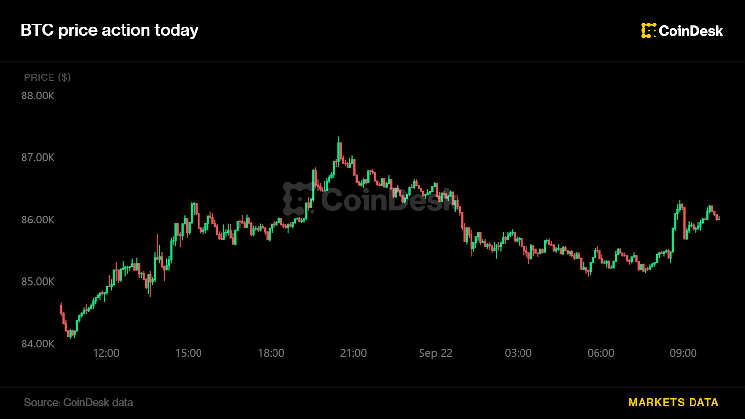
    The cryptocurrency market sustained its vigorous upward trajectory on Monday, with Bitcoin (BTC) breaching the $87,000 threshold and Ethereum (ETH) reclaiming the $2,800 level. According to real-time data from OKX, Bitcoin traded at $87,010, marking a 7.41% gain over the preceding 24 hours, while Ethereum advanced 5.98% to $2,800.26. The synchronized rally across the two largest digital assets by market capitalization underscores a broad-based resurgence in risk appetite among both retail and institutional participants.

    Institutional Demand Rebounds as Spot Bitcoin ETFs See Heavy Inflows

    A primary catalyst for the rally was the sharp reversal of capital flows into U.S. spot Bitcoin exchange-traded funds. Data compiled by Bloomberg revealed that the cohort of U.S.-listed spot Bitcoin ETFs attracted net inflows of approximately $593 million across Thursday and Friday trading sessions. This influx substantially offset the net outflows recorded earlier in the week, renewing market confidence in sustained institutional allocation to Bitcoin as a portfolio asset. The turnaround in ETF flows is widely interpreted by analysts as a leading indicator of renewed long-term conviction among traditional finance allocators.

    Regulatory Green Light for Tokenized Shares Bolsters Sentiment

    Regulatory developments provided an additional tailwind. The U.S. Securities and Exchange Commission (SEC) granted a five-year regulatory exemption to specific platforms permitting the trading of tokenized shares on blockchain infrastructure. Market observers view this decision as a potential milestone in the integration of blockchain-based financial products into the traditional U.S. capital markets framework, potentially paving the way for broader asset tokenization and enhanced market efficiency.

    Macroeconomic Backdrop Shifts in Favor of Risk Assets

    The rally coincided with a constructive shift in the macroeconomic environment. A decline in the U.S. 10-year Treasury yield below 5%, falling oil prices, and a record-high close for the Nasdaq Composite—led by megacap technology stocks—collectively reduced the opportunity cost of holding non-yielding, high-beta assets like Bitcoin. The correlation between tech equities and crypto remained elevated, with Bitcoin outperforming the Nasdaq’s gains by a significant margin, advancing over 6% during the same risk-on window.

    Massive Short Squeeze Amplifies Gains in Futures Markets

    Perhaps the most immediate accelerant was a violent short squeeze in the derivatives market. Data from CoinGlass indicated that $926 million in leveraged positions were liquidated across the cryptocurrency complex in the last 24 hours. Of that total, approximately $785 million represented short positions, compelling bearish traders to buy back exposure aggressively as prices rose. Long liquidations were comparatively modest at roughly $142 million. Bitcoin accounted for $509 million of total liquidations, while Ethereum saw approximately $198 million wiped out. The single largest liquidation event occurred on the BTC/USDT perpetual contract on Binance, involving a position valued at roughly $11.3 million.

    Why This Matters

    The convergence of positive ETF flows, regulatory progress on tokenization, a favorable macro pivot, and a derivatives-driven short squeeze creates a multi-layered bullish structure that is more durable than rallies driven by a single catalyst. The ETF inflow reversal is particularly significant because it reflects discretionary capital allocation decisions by institutional investors, rather than speculative leverage alone. Meanwhile, the SEC’s exemption for tokenized share trading signals a potential thaw in the regulatory stance toward digital asset innovation in the United States, which could unlock a new wave of product development and capital formation. Traders should monitor whether the futures market’s open interest rebuilds on the long side—a sign of fresh conviction—or if the squeeze has exhausted near-term buying pressure.

    Frequently Asked Questions

    What triggered the latest Bitcoin rally above $87,000?
    The rally was driven by a combination of $593 million in net inflows into U.S. spot Bitcoin ETFs, a regulatory exemption for tokenized share trading by the SEC, improving macroeconomic conditions including falling Treasury yields, and a $785 million short squeeze in the futures market.
    How large were the futures liquidations during this move?
    Total liquidations reached $926 million in 24 hours, with $785 million in short positions and $142 million in long positions. Bitcoin accounted for $509 million and Ethereum for $198 million of the total.
    Does the SEC exemption mean all tokenized stocks are now legal in the U.S.?
    No. The SEC granted a five-year exemption to specific platforms for trading tokenized shares on blockchain. It is a targeted regulatory relief, not a blanket legalization of all tokenized securities.
  • Bitcoin Hits $87,000: How High Can BTC Go?

    Bitcoin Hits $87,000: How High Can BTC Go?

    Key Highlights

    • Bitcoin has broken above its 50-week moving average (~$78,320) and the May swing high, confirming a five-wave Elliott Wave structure from the July low that signals a sustained uptrend rather than a counter-trend bounce.
    • The cryptocurrency has reached the pattern’s minimum target near $85,000, with primary upside objectives between $88,600 and $92,220 and an extended target at $97,637 if momentum persists.
    • A bearish RSI divergence has emerged—price making higher highs while momentum prints lower peaks—warning that the rally may be approaching exhaustion, though an immediate reversal is not guaranteed.

    Bitcoin Confirms Five-Wave Advance From July Low

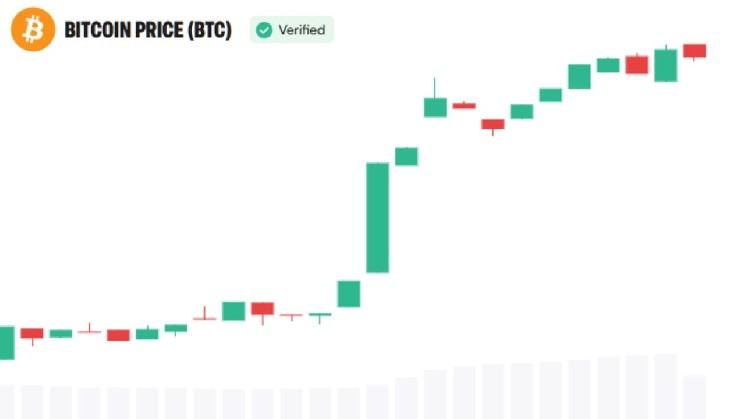
    Bitcoin has cleared two critical technical thresholds this week, piercing its 50-week moving average—currently anchored near $78,320—and eclipsing the previous swing high established in May. According to a chart analyst tracking the structure, this breakout validates a completed five-wave Elliott Wave sequence that originated from the July trough. The formation is widely regarded in technical circles as evidence of a genuine impulsive trend rather than a corrective rebound, suggesting the dominant bias has shifted decisively to the upside.

    Anatomy of the Impulsive Structure

    The analyst detailed how this specific wave progression typically unfolds across five distinct phases. The advance begins subtly, with the initial leg higher passing largely unnoticed by the broader market. A protracted, sideways consolidation follows—the second wave—which erodes interest and convinces many participants that no meaningful move is underway. The third wave then erupts aggressively, trapping latecomers and short-sellers who are forced to chase the move. A second pause, the fourth wave, precedes a final fifth-wave push that requires comparatively less fresh capital because the majority of interested buyers have already committed.

    Projected Price Targets and the $85,000 Milestone

    Bitcoin has already tagged the pattern’s minimum measured-move objective around $85,000, a level the analyst characterized as a “weak outcome” given the structure’s implications. A more robust fulfillment zone sits between $88,600 and $92,220, while an extended Fibonacci projection places the upper bound near $97,637 should the rally accelerate into a lengthened fifth wave. These levels are derived from standard Elliott Wave measurement techniques applied to the completed July-to-present sequence.

    Momentum Divergence Raises Caution Flag

    Despite the constructive price action, a subtle but notable warning has appeared on the Relative Strength Index (RSI), a momentum oscillator that gauges buying pressure. The indicator has printed a lower high even as Bitcoin’s price registered a higher high—a configuration known as bearish divergence. This discrepancy often materializes near the terminal phase of a strong advance, signaling that internal momentum may be waning. The analyst emphasized that divergence alone does not precipitate an immediate top; rather, it serves as an alert that the probability of a pause or pullback is rising.

    Pullback Expectations and Key Support Zones

    A consolidation or retracement following a five-wave advance is considered normal market mechanics, not a structural failure. The analyst noted Bitcoin could conceivably hold above the 50-week moving average near $78,320, transforming the former resistance into support. Should a deeper correction materialize, a broader demand zone around $75,000 was flagged as a reference area where buyers may re-engage—explicitly described as a contextual zone, not a downside price target.

    Near-Term Invalidation and Upside Trigger Levels

    On shorter timeframes, Bitcoin has completed a smaller five-wave rally from the September 15 low. The pivotal level to monitor is $80,120; a sustained defense of this price preserves the immediate uptrend, while a confirmed breakdown would constitute the first tangible evidence that a local top is in place. Immediate support clusters between $80,566 and $82,985, with the $82,800 region highlighted as a likely retest candidate. A successful hold and renewed advance from that zone would open the path toward $88,900 as the next actionable objective.

    Why This Matters

    The completion of a textbook five-wave structure on the weekly timeframe carries weight beyond individual price targets—it informs portfolio positioning for institutional and retail participants alike. A confirmed impulsive sequence from a major low (July) suggests the cyclical bear market narrative has been invalidated, potentially unlocking a new wave of capital allocation toward digital assets. However, the concurrent RSI divergence introduces a tactical risk: trend-followers may need to manage position sizing and tighten trailing stops as the rally matures, while counter-trend traders should await price confirmation—such as a break of $80,120—before committing to short exposures. The $75,000–$78,320 band will likely define the “buy-the-dip” region if the market transitions from trend expansion to consolidation.

    Frequently Asked Questions

    Has Bitcoin already reached its peak for this cycle?
    Not necessarily. The analyst’s wave count indicates the minimum target ($85,000) has been met, but the primary target zone ($88,600–$92,220) and extended target ($97,637) remain intact. A bearish RSI divergence warns of slowing momentum, but divergences can persist during strong fifth waves and do not alone confirm a top.
    What price level would invalidate the current bullish structure?
    A confirmed break below $80,120 on the shorter timeframe would signal the immediate uptrend from the September 15 low has ended. On the larger structure, a breakdown beneath the 50-week moving average near $78,320—and especially a move toward the $75,000 support zone—would raise questions about the integrity of the five-wave advance.
    Is the $75,000 level a price target for a crash?
    No. The analyst explicitly stated the $75,000 area is a “reference zone” for where buyers may return if a deeper pullback occurs, not a forecast or downside objective. It represents a historical confluence area, not a prediction of decline.