Category: Coins

Digital assets, cryptocurrencies, blockchain, and currency news.

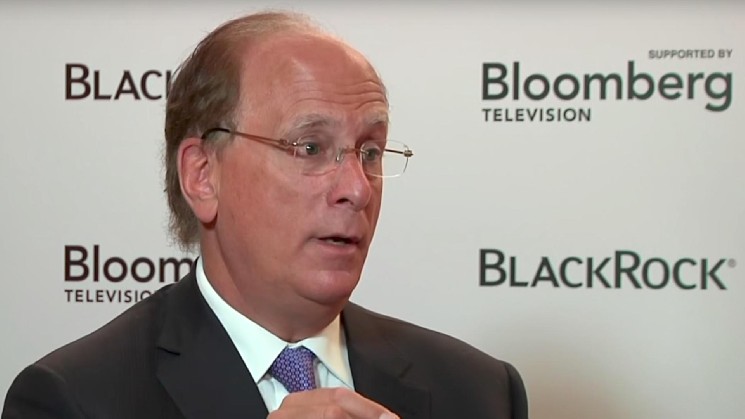
  • BlackRock: AI Agents Will Soon Buy Computing Power and Data Using Stablecoins

    BlackRock: AI Agents Will Soon Buy Computing Power and Data Using Stablecoins

    Key Highlights

    • BlackRock identifies artificial intelligence as a primary catalyst for digital asset adoption, citing autonomous agents’ need for native payment and settlement infrastructure.
    • Stablecoins are positioned as the immediate beneficiary due to their price stability for service pricing and blockchain networks’ 24/7 payment capabilities.
    • The asset manager highlights Coinbase’s x402 protocol as an emerging standard for agent-to-service payments, including API calls, while noting traditional payment networks are also adapting to agentic commerce.

    BlackRock Maps Convergence of AI Agents and Digital Asset Infrastructure

    BlackRock, the world’s largest asset manager, has published research arguing that artificial intelligence will serve as one of the most significant drivers for digital asset adoption in the coming years. The paper centers on the rise of autonomous AI agents—software systems capable of independently executing complex tasks—and their fundamental requirement for programmable, always-on financial infrastructure to operate at machine speed.

    Machine-Native Intelligence Requires Machine-Native Payments

    According to BlackRock’s analysis, AI provides “machine-native intelligence” while digital assets supply the corresponding payment and settlement layer these agents need to act on their decisions without human intervention. The paper illustrates a scenario where an autonomous agent carrying out a task could pay for a data request, book a service, or purchase computing capacity instantly, eliminating the latency and friction inherent in traditional financial systems that require human authorization or operate within limited business hours.

    This architectural fit stems from the programmable nature of blockchain networks and tokenized assets, which allow for conditional, automated value transfer based on code execution rather than institutional intermediaries. For AI agents operating across time zones and negotiating micro-transactions for compute resources or data access, the ability to settle instantly and finality is presented as a functional necessity rather than a speculative feature.

    Stablecoins Emerge as Primary Vehicle for Agentic Commerce

    The research identifies stablecoins as the likely first major beneficiary of this paradigm shift. Their relatively stable value makes them practical for pricing services and settling obligations predictably—a critical requirement for autonomous systems budgeting resources or calculating cost-efficiency in real time. Furthermore, public blockchain networks enable these stablecoin payments to occur around the clock, seven days a week, aligning with the non-stop operational tempo of AI agents.

    BlackRock specifically highlights Coinbase’s x402 protocol as one emerging mechanism facilitating this economy. The protocol is designed to allow agents to pay for online resources—including API calls—directly via HTTP payments, embedding settlement into the web request layer itself. This development signals a move toward standardized, interoperable payment rails for machine-to-machine commerce.

    Traditional Finance Adapts to Agentic Payments Landscape

    While emphasizing the structural advantages of crypto-native infrastructure, BlackRock’s paper acknowledges that existing payment networks are not standing still. The research notes that traditional financial rails are actively adapting to accommodate agentic commerce, suggesting a competitive landscape where both blockchain-based and upgraded legacy systems vie for the high-volume, low-value transaction flows generated by autonomous AI agents.

    Why This Matters

    BlackRock’s endorsement of the AI-agent and digital-asset convergence carries significant weight given the firm’s $10 trillion-plus in assets under management and its growing involvement in tokenized funds and blockchain infrastructure. The paper frames digital assets not as speculative vehicles but as essential utility infrastructure for the next computing paradigm. If autonomous agents become a dominant economic force—as many AI researchers predict—the demand for instant, programmable, global settlement could drive institutional adoption of stablecoins and blockchain payment rails far beyond current crypto-native use cases. The mention of Coinbase’s x402 protocol also underscores how major regulated exchanges are building the middleware to bridge traditional web commerce with onchain settlement. Meanwhile, the acknowledgment that legacy payment networks are adapting signals a broader industry recognition that the future of commerce may be increasingly machine-initiated.

    Frequently Asked Questions

    Why does BlackRock believe AI agents need digital assets for payments?
    BlackRock argues that AI agents require “machine-native” payment infrastructure that operates 24/7, settles instantly, and can be triggered programmatically without human authorization—capabilities that blockchain networks and tokenized assets provide natively.
    What role do stablecoins play in this vision?
    Stablecoins are seen as the immediate primary vehicle because their price stability allows agents to price services and budget resources predictably, while blockchain rails enable round-the-clock settlement.
    What is Coinbase’s x402 protocol and why does BlackRock highlight it?
    x402 is an emerging protocol from Coinbase that enables HTTP-based payments for online resources such as API calls, allowing agents to pay for web services directly at the protocol layer. BlackRock cites it as an example of the middleware being built for agent-to-service commerce.
  • Coinbase Launches Fixed-Rate USDC Loans Backed by Bitcoin

    Coinbase Launches Fixed-Rate USDC Loans Backed by Bitcoin

    Key Highlights

    • Coinbase launches fixed-rate USDC loans backed by Bitcoin, offering borrowers certainty on interest costs and repayment dates.
    • The new product runs on Morpho Midnight, a decentralized fixed-rate lending protocol that settles on Coinbase’s Base layer-2 network.
    • Fixed-rate loans sit alongside Coinbase’s existing variable-rate Morpho Blue offering, which currently holds over $1.4 billion in active loans.

    Coinbase Expands Crypto Lending With Fixed-Rate Bitcoin-Backed USDC Loans

    Nasdaq-listed cryptocurrency exchange Coinbase (COIN) has introduced a fixed-rate borrowing option that allows users to mint dollar-pegged stablecoin USDC against their Bitcoin (BTC) holdings. Announced on Tuesday, the new product sets both the interest rate and the repayment date at the moment of borrowing, providing a predictable alternative to the exchange’s existing variable-rate loans. The move signals a significant evolution in how centralized platforms are integrating decentralized finance primitives to offer more sophisticated credit products.

    Morpho Midnight Powers the Fixed-Rate Infrastructure

    The fixed-rate offering operates on Morpho Midnight, a decentralized, non-custodial lending protocol designed specifically for fixed-rate and fixed-term crypto loans. Launched in July of this year, Morpho Midnight enables borrowers to lock in borrowing costs for a defined period, shielding them from the rate volatility inherent in utilization-based models. All transactions settle on Base, Coinbase’s Ethereum layer-2 network, combining the efficiency of a rollup with the composability of onchain lending markets.

    Contrast With the Existing Variable-Rate Model

    Until now, Coinbase’s lending functionality has relied exclusively on the Morpho Blue protocol, where interest rates fluctuate algorithmically based on real-time supply and demand dynamics. During periods of heightened borrowing demand, those variable rates can climb sharply, introducing uncertainty for users managing leveraged positions or liquidity needs. “The move takes onchain borrowing beyond the predominantly variable-rate model, giving users greater certainty over the cost and duration of their borrowing,” according to an announcement on Tuesday. The floating-rate market remains substantial, with more than $1.4 billion in active loans backed by nearly $3 billion of collateral, and will continue to operate alongside the new fixed-term option.

    Why This Matters

    The introduction of fixed-rate, Bitcoin-backed loans on a regulated exchange venue represents a meaningful bridge between traditional finance expectations and decentralized finance architecture. For retail and institutional users alike, the ability to borrow against BTC without selling—and with a known cost of capital—mirrors the term-loan structures common in traditional credit markets. By leveraging Morpho Midnight’s immutable smart contracts and settling on Base, Coinbase reduces counterparty risk while maintaining a compliant, user-friendly interface. This development also underscores the growing role of purpose-built lending protocols like Morpho in powering the next generation of onchain credit, moving the ecosystem beyond the purely variable-rate paradigm that has dominated DeFi lending since its inception.

    Frequently Asked Questions

    What is the difference between Coinbase’s new fixed-rate loans and its existing variable-rate loans?

    Fixed-rate loans lock in the interest rate and repayment date at the time of borrowing, providing cost certainty. Variable-rate loans on Morpho Blue have interest rates that change based on supply and demand and can increase when borrowing demand spikes.

    Which protocol and network power the new fixed-rate USDC loans?

    The fixed-rate loans run on Morpho Midnight, a decentralized fixed-rate lending protocol launched in July, and settle on Base, Coinbase’s Ethereum layer-2 network.

    How large is Coinbase’s existing variable-rate lending market?

    The floating-rate loans on Morpho Blue currently have more than $1.4 billion in active loans backed by nearly $3 billion of collateral.

  • US Debt Tops $40 Trillion as Investors Flock to Gold, Swiss Franc, Bitcoin

    US Debt Tops $40 Trillion as Investors Flock to Gold, Swiss Franc, Bitcoin

    Key Highlights

    • US national debt has surpassed $40 trillion, prompting investors to seek hedges against potential dollar depreciation including gold, the Swiss franc, and Bitcoin.
    • Bitcoin-backed lending products are expanding in the US, allowing BTC holders to access liquidity without selling, though these carry liquidation risks if collateral values decline.
    • Neoclassic Capital co-founder Michael Bucella emphasizes Bitcoin retains its risk-asset status and remains sensitive to macroeconomic conditions, unlike traditional safe havens such as gold.

    Mounting US Debt Drives Search for Dollar Alternatives

    The United States national debt crossing the $40 trillion threshold has intensified market scrutiny of public finances and the long-term trajectory of the dollar, pushing a segment of investors toward alternative store-of-value assets. In a recent interview, Michael Bucella, co-founder of Neoclassic Capital, outlined how the rapid accumulation of sovereign debt is reshaping portfolio allocation strategies. According to Bucella, the accelerating pace of borrowing is causing some investors to diversify away from dollar-denominated holdings, with gold, the Swiss franc, and Bitcoin emerging as preferred hedges against currency depreciation risk.

    Bitcoin-Backed Lending Creates New Liquidity Pathways

    Beyond direct allocation, Bucella highlighted the growing adoption of Bitcoin-backed loan products in the United States as a structural development for the asset class. These mechanisms allow Bitcoin holders to pledge their BTC as collateral to obtain cash loans, preserving their long-term positions while meeting immediate liquidity needs. The co-founder noted this innovation is creating new financing opportunities for investors who would otherwise face taxable events or opportunity costs from selling. However, he cautioned that such products carry inherent risks, including the potential for margin calls or forced liquidation if the collateral value declines sharply during market downturns.

    Bitcoin’s Risk Profile Distinguishes It From Traditional Havens

    Despite its increasing institutional adoption, Bucella was explicit about Bitcoin’s fundamental nature. According to him, unlike traditional safe-haven assets such as gold, BTC remains sensitive to global economic developments and broader macroeconomic conditions. He stated that Bitcoin still retains its risky asset status, meaning its price behavior correlates more closely with risk-on sentiment and liquidity cycles than with the defensive characteristics typically associated with sovereign debt crises or currency debasement scenarios. This distinction is critical for investors evaluating Bitcoin’s role in a diversified hedge strategy.

    Why This Matters

    The $40 trillion debt milestone represents more than a psychological threshold; it reflects a structural fiscal trajectory that has reignited debate about dollar dominance, inflation expectations, and the architecture of global reserves. As sovereign debt service costs rise, the search for non-sovereign, non-correlated assets accelerates. Bitcoin’s dual narrative—as both a speculative risk asset and a potential monetary hedge—places it at the center of this transition. The proliferation of Bitcoin-backed credit markets further integrates the asset into traditional financial plumbing, potentially deepening liquidity while introducing new systemic linkages. Institutional demand, regulatory clarity, and macroeconomic volatility will collectively shape whether Bitcoin evolves into a reliable diversifier or remains a high-beta proxy for liquidity conditions.

    Frequently Asked Questions

    What assets are investors considering as hedges against dollar depreciation amid rising US debt?
    According to Michael Bucella, investors are diversifying into gold, the Swiss franc, and Bitcoin as preferred alternatives to dollar-denominated holdings.
    How do Bitcoin-backed loans work and what are the risks?
    Bitcoin-backed lending allows BTC holders to use their holdings as collateral for cash loans without selling. Risks include margin calls or forced liquidation if Bitcoin’s price falls significantly, requiring additional collateral or resulting in asset loss.
    Is Bitcoin considered a safe-haven asset like gold?
    No. Bucella emphasized that Bitcoin retains its risky asset status and remains sensitive to macroeconomic conditions and global economic developments, unlike traditional safe havens such as gold.
  • DOGE Rally Accelerates as Price Hits Multi-Month High

    DOGE Rally Accelerates as Price Hits Multi-Month High

    Key Highlights

    • Dogecoin surged to an intraday high of $0.1059 before settling near $0.09986, a 1.04% gain over 24 hours, putting the psychological $0.10 resistance level in focus.
    • X (formerly Twitter) launched its Cashtag trading integration with Coinbase, Kraken, Gemini, Moomoo, and Interactive Brokers, creating a direct pipeline from social discussion to trade execution for U.S. users.
    • Despite bullish momentum signals from derivatives activity and a rising RSI, the 50-day EMA remains below the 200-day EMA, preserving a longer-term bearish moving-average structure that requires sustained buying to reverse.

    Dogecoin Extends Recovery as X Cashtag Trading Links Go Live

    Dogecoin ($DOGE) pushed to its highest intraday level in months on Tuesday, briefly touching $0.1059 before consolidating around $0.09986—a 1.04% advance over the prior 24 hours. The rally brought the psychologically significant $0.10 threshold back into immediate range, fueling renewed speculative interest across spot and derivatives markets. Volume data from major exchanges showed elevated participation, with the token’s market capitalization climbing back toward the $14.5 billion mark as buyers stepped in ahead of the weekly options expiry.

    X Cashtag Integration Creates New Distribution Channel

    The catalyst coincides with the public rollout of X‘s Cashtag trading program, which now surfaces real-time market data and a “Trade” button next to supported tickers—including $DOGE—for users in the United States. Clicking the button redirects traders to one of five integrated brokerages: Coinbase, Kraken, Gemini, Moomoo, and Interactive Brokers. The feature does not constitute native wallet integration or payment functionality on the social platform, but it dramatically shortens the latency between financial discourse, price discovery, and order placement.

    Given Elon Musk‘s years-long public endorsement of Dogecoin—including past references to it as “the people’s crypto” and his acquisition of X itself—the Cashtag rollout is widely interpreted by market participants as a structural tailwind. Analysts note that while no formal payment integration has been announced, the mere presence of a one-click trade pathway on the platform where Dogecoin narratives originate represents a meaningful distribution advantage over assets lacking similar social-graph exposure.

    Derivatives Activity Amplifies Price Action

    Futures markets added a second layer of momentum. Perpetual swap contracts on Binance, Bybit, and OKX recorded a sharp uptick in open interest, rising over 12% in the last two sessions to exceed $650 million in notional value. Funding rates flipped positive across major venues, signaling that leveraged longs are willing to pay a premium to maintain exposure. This derivatives bid can accelerate upside moves during low-liquidity windows, but it also raises the risk of cascading liquidations if price reverses below key support near $0.095.

    Technical Signals Point to a Key Test of Moving-Average Structure

    Short-Term Momentum Improves, Longer-Term Hurdle Remains

    On the daily chart, the Relative Strength Index (RSI) climbed to 62, placing it at the upper boundary of the neutral-to-bullish zone, while the Average Directional Index (ADX) held above 25—a threshold typically associated with a confirmed trending environment. These readings confirm that buying pressure has intensified and that the current leg higher possesses directional conviction.

    However, the macro structure remains cautious. The 50-day Exponential Moving Average (EMA) continues to trade below the 200-day EMA, maintaining the bearish crossover—commonly referred to as a “Death Cross”—that formed during the prolonged decline from the 2024 highs. A sustainable trend reversal would require $DOGE to reclaim both moving averages and, critically, to flip the 200-day EMA into support. Until that occurs, rallies toward $0.11–$0.12 are vulnerable to distribution by longer-term holders who have been underwater since the prior cycle peak.

    Psychological Resistance at $0.10 Draws Algorithmic Attention

    Order-book analysis shows a cluster of sell-limit orders stacked between $0.100 and $0.102, alongside concentrated stop-loss buy orders just above $0.105. This liquidity magnet explains the sharp rejection from the $0.1059 intraday high and suggests that a clean break above $0.106 could trigger a short-covering squeeze toward the next volume node near $0.112. Conversely, failure to hold the $0.095–$0.097 demand zone would likely invite a retest of the 50-day EMA near $0.092.

    Why This Matters

    The convergence of a major social-media distribution upgrade (X Cashtags), heightened derivatives participation, and improving short-term technicals creates a rare alignment of fundamental, structural, and technical catalysts for Dogecoin. For retail traders, the Cashtag integration lowers the friction of converting social sentiment into positions, potentially accelerating reflexive price-action loops that meme assets are prone to exhibit. For institutional desks, the elevated open interest and positive funding rates signal that professional capital is actively engaging with the long side, not merely providing liquidity.

    However, the persistent 50/200-day EMA bear cross serves as a reminder that Dogecoin has not yet transitioned into a confirmed macro uptrend. The next two to three weeks—encompassing the monthly options expiry, U.S. CPI data, and potential Federal Reserve policy signals—will determine whether the current bounce matures into a trend reversal or fades into another lower-high sequence. Market participants should monitor the $0.095 support and the 200-day EMA (currently ~$0.108) as the critical battlegrounds for that decision.

    Frequently Asked Questions

    What is the X Cashtag trading feature and which brokers are connected?

    X Cashtags now display live market data and a “Trade” button for supported tickers, redirecting U.S. users to Coinbase, Kraken, Gemini, Moomoo, or Interactive Brokers to execute orders. The feature is informational and transactional via partner platforms, not a native X wallet or payment system.

    Why does the 50-day EMA below the 200-day EMA matter for Dogecoin?

    This “Death Cross” formation signals that the medium-term trend remains bearish relative to the long-term trend. Until $DOGE closes sustainably above both moving averages and flips the 200-day EMA into support, rallies are considered counter-trend and carry higher risk of reversal.

    How are derivatives influencing Dogecoin’s current price action?

    Open interest in perpetual futures has surged above $650 million with positive funding rates, indicating aggressive long positioning. This leveraged bid can amplify upside moves but also creates liquidation clusters below $0.095 that could accelerate a correction if triggered.

  • BVNK Adds Stellar Blockchain for Cross-Border Payments and Treasury

    BVNK Adds Stellar Blockchain for Cross-Border Payments and Treasury

    Key Highlights

    • BVNK integrated the Stellar blockchain on September 22, 2026, enabling corporate clients in over 130 countries to access high-volume, sub-penny cross-border payments via a single API.
    • The Stellar network processed $55.6 billion across 3.6 billion transactions in 2025 with 5-second average settlement and 99.99% uptime, offering a cost-efficient alternative to traditional banking rails.
    • BVNK, holding over 40 licenses including UK EMI, EU MiCA, and US money transmitter authorizations, plans to launch a unified stablecoin card and account infrastructure in Europe by Q4 2026.

    BVNK Activates Stellar Network for Enterprise Cross-Border Payments

    Corporate payment platform BVNK has officially integrated the Stellar blockchain, launching the new rail for enterprise customers across more than 130 countries effective September 22, 2026. The deployment expands BVNK’s multichain architecture for stablecoins, allowing businesses to execute international payments, remittances, and treasury disbursements with near-instant finality and fees amounting to fractions of a cent. By bridging crypto liquidity with traditional banking infrastructure, the integration aims to eliminate the operational friction companies typically encounter when moving capital across diverse jurisdictions.

    Single API Access to Proven Blockchain Rails

    The technical implementation enables business clients to access Stellar rails and its native assets through a single Application Programming Interface (API), removing the need for organizations to rebuild IT systems when adopting new payment corridors. BVNK reported that the architecture is specifically designed to mitigate the complexity of individually connecting to multiple blockchains. Network performance data from 2025 underscores the rail’s capacity: the Stellar network recorded a cumulative volume of $55.6 billion distributed across 3.6 billion operations, maintaining 99.99% uptime with average settlement times of five seconds.

    Institutional Demand Drives Stablecoin Adoption for Treasury Operations

    The integration responds directly to surging institutional demand for stablecoins in daily treasury workflows. BVNK data from July 2026 indicates that corporate stablecoin wallets are functioning most frequently as global dollar account layers, mitigating operational frictions between jurisdictions. Through this layer, companies handling B2B payments, international payroll, and supplier settlements can convert stablecoin balances into local fiat currencies and vice versa. Denelle Dixon, CEO of the Stellar Development Foundation, emphasized that businesses moving capital at scale demand operational certainty in every payment corridor, stating the alliance seeks to extend proven financial rails to regulated corporations processing regular settlements with stable digital assets.

    Why This Matters

    The BVNK-Stellar integration marks a significant maturation step for blockchain-based corporate payments. By combining Stellar’s high-throughput, low-cost settlement layer with BVNK’s regulated multichain platform and extensive licensing portfolio—including an Electronic Money Institution license from the UK FCA, MiCA-aligned licenses in Malta, and money transmitter authorizations across the United States—the partnership delivers a compliant, production-grade alternative to SWIFT and correspondent banking for stablecoin-denominated flows. The move reflects a broader industry shift where regulated fintechs are abstracting blockchain complexity behind unified APIs, enabling enterprises to access on-chain efficiency without managing node infrastructure or navigating multiple protocol integrations. With BVNK signaling the progressive addition of more native Stellar assets and a unified stablecoin card and account rollout in Europe slated for Q4 2026, the infrastructure stack for institutional stablecoin utilization continues to consolidate around regulated, interoperable rails.

    Frequently Asked Questions

    What specific services does the BVNK-Stellar integration enable for corporate clients?

    The integration enables cross-border payments, remittances, and corporate treasury disbursements using stablecoins on the Stellar network. Businesses can process international transfers with near-instant finality and sub-penny fees, convert stablecoin balances to local fiat currencies, and manage B2B payments, payroll, and supplier settlements through a single API across 130+ countries.

    What regulatory licenses does BVNK hold to operate this service?

    BVNK holds more than 40 licenses and registrations globally, including an Electronic Money Institution (EMI) license in the United Kingdom under FCA supervision, licenses in Malta adapted to MiCA regulations, and money transmitter authorizations in the United States.

    What are the next planned milestones for BVNK’s stablecoin infrastructure?

    BVNK plans to complete the functional rollout of its unified stablecoin card and account infrastructure in the European market during the final quarter of 2026, with progressive addition of more native Stellar assets within the same connection environment in coming quarters.

  • GOP Senator Spotlights US President’s Crypto Ventures

    GOP Senator Spotlights US President’s Crypto Ventures

    Key Highlights

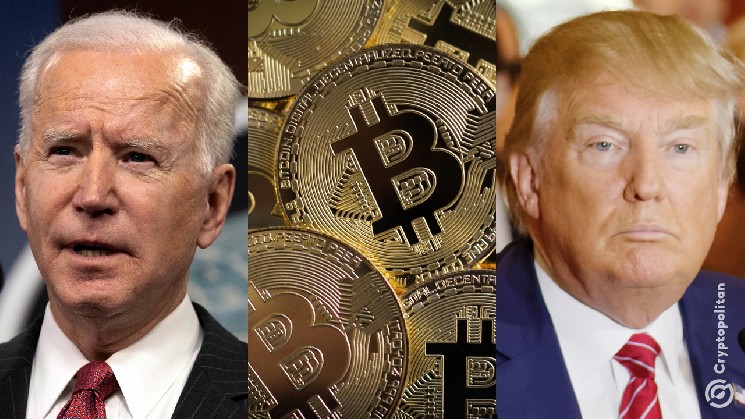
    • Republican Senator John Curtis of Utah has defected from party lines to demand subpoenas for both Donald Trump Jr. and Hunter Biden, citing cryptocurrency ventures and foreign influence concerns.
    • Curtis specifically alleges Trump Jr. attended a private island wedding after-party funded by a Putin-connected Russian oligarch, while also promoting family crypto projects and prediction markets.
    • Senate Judiciary Committee Ranking Democrat Dick Durbin endorsed the bipartisan investigation, warning that ignoring the matter would make the committee complicit in “a cover up.”

    First-Term Senator Breaks Ranks to Demand Dual Investigation

    In a striking departure from Republican orthodoxy, freshman Senator John Curtis of Utah has formally requested that the Senate Judiciary Committee issue subpoenas for the adult sons of two sitting and former presidents. Addressing Committee Chair Chuck Grassley of Iowa and Ranking Member Dick Durbin of Illinois, Curtis framed his demand around “the use of family relationships for private financial benefit, favoritism, or access by domestic and foreign entities.” The move places the first-term senator, who faces no reelection until 2030, at the center of a bipartisan push to scrutinize the business dealings of Donald Trump Jr. and Hunter Biden simultaneously.

    Cryptocurrency Ventures and Oligarch Connections Draw Scrutiny

    Curtis’s letter singles out several interlocking concerns surrounding Trump Jr., with cryptocurrency promotion taking center stage. The senator highlighted the president’s son’s active involvement in family cryptocurrency projects, work on prediction markets falling under Commodity Futures Trading Commission jurisdiction, foreign real estate transactions, and contracts with defense companies. These activities, Curtis argues, raise questions about whether foreign individuals gain inappropriate access to relatives of the sitting president.

    The catalyst for Curtis’s intervention traces to Trump Jr.’s wedding celebrations. According to the senator, Russian oligarch Aras Kremlev—who recently traveled with Vladimir Putin’s delegation to China—financed an after-party on a private island in the Bahamas. Trump Jr.’s wife, Bettina Anderson, acknowledged the event on Instagram as a “very generous gift from Kremlev.” Last week, ProPublica reported the celebration had been “secretly financed” by an oligarch associated with Putin, though the president subsequently stated his son had reimbursed Kremlev.

    Bipartisan Momentum Builds Around Equal Scrutiny

    Curtis drew a sharp distinction between ordinary wedding gifts and the alleged oligarch-funded festivities. On X, he wrote: “A toaster is a wedding gift. A private-island party paid for by a Putin-connected oligarch is something else altogether. Republicans nearly wore out the subpoena machine investigating Hunter Biden’s foreign relationships. We should not unplug it now. ‘Trust us’ was not enough then, and it…”

    The senator’s demand extends equally to Hunter Biden, whom Curtis argues conducted substantial business dealings abroad—particularly with China and Ukraine—during periods when Joe Biden either held office or sought it. While the former president pardoned his son in December 2024, Curtis noted that Hunter Biden has denied involving his father in business dealings.

    Durbin endorsed the dual approach, declaring that “corruption at the highest levels of our government should never be tolerated.” He emphasized that while Hunter Biden has already testified under oath to Congress, Trump Jr. has not. To ignore the issue, Durbin warned, would render the committee part of “a cover up.”

    Why This Matters: Crypto Regulation and Ethical Boundaries

    The investigation request arrives at a pivotal moment for digital asset policy. Just one week earlier, Republican senators failed to secure sufficient Democratic support to advance the Digital Asset Market Clarity Act (CLARITY), legislation designed to establish market structure regulations for the cryptocurrency industry. Several Democrats opposed the bill explicitly because they believed the president “was using crypto to convert the presidency into a money-making scheme.”

    That allegation carries a specific financial figure: Trump has claimed $1.4 billion in digital asset investment earnings through 2025. Prior to this episode, Democrats had already called for investigations into the president’s memecoin, the family-owned World Liberty Financial venture, and a reported $500 million deal with the Abu Dhabi royal family. Republicans countered that Trump had made concessions on ethics language before the vote. Curtis’s intervention now threatens to reshape the legislative calculus around crypto regulation by tying market structure debates directly to first-family financial entanglements.

    Frequently Asked Questions

    What specific allegations does Senator Curtis make against Donald Trump Jr.?

    Curtis alleges Trump Jr. promoted family cryptocurrency projects and prediction markets, engaged in foreign real estate transactions and defense contracts, and attended a private island wedding after-party funded by Russian oligarch Aras Kremlev, who has ties to Vladimir Putin. The senator argues these activities raise questions about foreign access to the president’s family.

    Why is Senator Curtis also targeting Hunter Biden?

    Curtis argues for equal scrutiny, citing Hunter Biden’s “substantial business dealings abroad, especially with China and Ukraine” during periods when Joe Biden held office or was seeking it. While Hunter Biden has testified under oath and received a presidential pardon in December 2024, Curtis maintains the investigation should proceed to establish facts and identify needed reforms.

    How does this relate to cryptocurrency legislation?

    The demand comes one week after Senate Republicans failed to advance the Digital Asset Market Clarity Act due to Democratic opposition. Democrats explicitly cited concerns that the president was using cryptocurrency to monetize the presidency, pointing to $1.4 billion in reported digital asset earnings, the family’s World Liberty Financial venture, and a $500 million Abu Dhabi deal. Curtis’s investigation could directly impact future crypto regulatory efforts.

  • FET Price Eyes $0.21 Supply Zone Break After 11% Rally

    FET Price Eyes $0.21 Supply Zone Break After 11% Rally

    Key Highlights

    • Superintelligence Alliance ($FET) surged 11.24% to $0.2012, with spot volume jumping 35.69% as the token tests the critical $0.2100 supply zone.
    • Exchange reserves climbed 14.01% to $41.7 million, increasing immediate sell-side liquidity even as derivatives data shows top traders heavily positioned long at a 2.69 long/short ratio.
    • MACD remains bullish with the line at 0.0091 above the signal line at 0.0059, supporting a potential breakout toward $0.2538, though failure at $0.2100 could see a retest of $0.1742 support.

    FET Rally Confronts Overhead Supply as Volume Surges

    The Superintelligence Alliance token ($FET) extended its recovery on Tuesday, climbing 11.24% to $0.2012 at press time as heightened spot market participation drove the AI-focused asset toward a technically significant supply zone. The advance was accompanied by a 35.69% surge in 24-hour spot volume, signaling genuine buyer interest rather than thin-liquidity manipulation. After reclaiming several contested levels from its August lows, the token now approaches the $0.2100 region, which sits within a broader supply zone extending above current prices. Market participants face a demanding test: sustaining the volume momentum needed to absorb selling pressure clustered around this overhead barrier.

    Rising Exchange Reserves Add Sell-Side Complexity

    Complicating the bullish narrative, on-chain data from CryptoQuant reveals that $FET exchange reserves pumped 14.01% during the rally period, reaching approximately $41.7 million. The increase means a larger quantity of tokens now sits in exchange wallets, granting holders immediate access to liquidity should they choose to sell into the advance. While rising reserves alone do not confirm active distribution, the timing is notable: the reserve expansion coincides precisely with the price approach to a zone historically associated with selling pressure. This dynamic creates a tactical standoff where spot buyers must overcome not only existing limit orders but also the latent supply represented by the growing exchange balances.

    Derivatives Positioning Skews Heavily Long

    Conversely, derivatives data from CoinGlass paints a strongly bullish picture among leveraged participants. As of writing, Binance top-trader accounts show 72.89% long positioning versus 27.11% short, producing a long/short ratio of 2.69 — a pronounced directional imbalance. The OI-weighted funding rate has turned positive at 0.0166%, indicating long-position holders are paying shorts to maintain exposure, a condition that typically reflects conviction in further upside. However, the crowded long side introduces fragility: a sharp rejection at the $0.2100 supply zone could trigger cascading long liquidations, amplifying volatility and accelerating a pullback toward the $0.1742 support level where buyers previously stepped in.

    Technical Structure Favors Upside Attempt, Confirmation Pending

    From a technical standpoint, the MACD indicator strengthened during the approach to resistance rather than diverging, a constructive signal. The MACD line sits at 0.0091, comfortably above its signal line at 0.0059, with expanding green histogram bars confirming active bullish momentum. This configuration supports another challenge of the crucial supply zone. A decisive daily close above $0.2100 would invalidate the near-term bearish structure and open a path toward the next key resistance at $0.2538. Absent that confirmation, the risk remains skewed toward a range-bound consolidation or pullback to $0.1742, where the bulls would need to defend their foothold once more.

    Why This Matters

    The $FET price action encapsulates a classic crypto market tension: improving spot fundamentals and bullish derivatives positioning clashing with rising exchange supply and a well-defined technical resistance. As the native token of the Artificial Superintelligence Alliance — formed by the merger of Fetch.ai, SingularityNET, and Ocean Protocol — $FET serves as a bellwether for the decentralized AI narrative. A clean break above $0.2100 would signal that accumulation during the August lows has shifted into a new uptrend phase, potentially attracting fresh capital flows into the AI-crypto intersection. Conversely, a failure here would extend the consolidation phase, testing the patience of long-term holders and the conviction of leveraged longs. Traders and investors should monitor daily close behavior around $0.2100, exchange reserve trends for signs of distribution, and funding rate dynamics for early warnings of leverage unwind.

    Frequently Asked Questions

    What is the key resistance level for $FET right now?

    The critical resistance is the $0.2100 supply zone. A decisive daily close above this level could open the path toward the next major resistance at $0.2538.

    Why are rising exchange reserves a concern during a rally?

    Rising exchange reserves mean more tokens are held in exchange wallets, giving holders immediate access to liquidity. This increases potential sell-side pressure, especially as price approaches a known supply zone where profit-taking or break-even selling may occur.

    What does the current MACD reading suggest about $FET momentum?

    The MACD line at 0.0091 remains above the signal line at 0.0059 with expanding histogram bars, indicating bullish momentum is accelerating rather than fading as price tests resistance — a constructive technical signal for a potential breakout attempt.

  • HBAR Price Surges 29%, Breaks Long-Term Resistance — $0.10 Target in Sight?

    HBAR Price Surges 29%, Breaks Long-Term Resistance — $0.10 Target in Sight?

    Key Highlights

    • Hedera’s HBAR token has surged nearly 29% from its recent low, reaching approximately $0.097 and breaking above the long-standing $0.086 resistance level.
    • The rally occurred on elevated trading volume, with the price clearing its 200-day moving average and shorter-term averages, signaling broad-based buyer participation.
    • The next critical hurdle is the psychological $0.10 level; a decisive daily close above could open the path toward the $0.109–$0.11 resistance zone seen in early June.

    HBAR Breaks Multi-Month Resistance on Strong Volume

    Hedera’s native token, HBAR, has staged a notable recovery, climbing almost 29% from its recent trough to trade near $0.097. The advance has propelled the altcoin above a persistent technical barrier at the $0.086 price level, a zone that had capped upside attempts for months. According to chart data sourced from TradingView, the token touched an intraday high of $0.099, bringing it within striking distance of the psychologically significant $0.10 threshold—a level HBAR has not managed to close above in several months.

    Volume Surge Confirms Buyer Conviction

    Adding technical weight to the move, daily trading volume expanded significantly compared to the preceding session and exceeded the average levels observed throughout August and early September. In technical analysis, a price advance accompanied by rising volume is typically interpreted as confirmation of genuine buyer interest, distinguishing a sustainable trend from a low-liquidity spike. The breakout has also repositioned HBAR above its 200-day moving average, which resides near the $0.086 mark. This long-term average previously acted as a ceiling for price action; reclaiming it suggests the current upswing may represent a structural shift rather than a fleeting bounce. Shorter-term moving averages now also sit below the current price, indicating bullish alignment across multiple timeframes.

    $0.10 Level Emerges as Pivot Point for Next Leg

    The immediate focus for market participants is whether HBAR can secure a convincing daily close above $0.10. The token stalled near $0.099 in the latest session, highlighting the resistance cluster at this round number. Should buyers overcome this hurdle, the early June supply zone between $0.109 and $0.11 becomes the next logical target—a region that previously triggered heavy selling pressure and may test resolve again. Conversely, failure to clear $0.10 could prompt a consolidation or pullback after the rapid ascent. The first line of defense on any rejection lies at $0.09, followed by the former breakout level at $0.086. A decisive break back below $0.086 would invalidate the bullish structure and raise the possibility that the recent rally overextended too quickly.

    Why This Matters

    Hedera’s price action reflects broader sentiment shifts in the layer-1 blockchain sector, where investors are reassessing valuations amid evolving macroeconomic conditions and network-specific developments. A sustained break above the 200-day moving average, confirmed by volume, is widely watched by algorithmic and discretionary traders alike as a signal of trend reversal. The $0.10 level holds outsized psychological importance; clearing it could attract momentum-driven flows and algorithmic buy programs, while failure may invite short-term profit-taking. Market participants will also monitor on-chain metrics—such as active addresses, transaction count, and staking participation—to gauge whether the price move is supported by fundamental network usage growth.

    Frequently Asked Questions

    What triggered HBAR’s recent 29% price increase?
    The rally appears driven by a technical breakout above the $0.086 resistance (200-day moving average) on significantly higher-than-average trading volume, indicating renewed buyer interest. No specific fundamental catalyst was cited in the source analysis.
    What are the key price levels to watch for HBAR next?
    The immediate resistance is $0.10. A daily close above this could target the $0.109–$0.11 zone. On the downside, $0.09 is the first support, followed by the critical $0.086 level; a break below $0.086 would negate the bullish breakout.
    Does the volume increase confirm the uptrend is sustainable?
    Rising volume during the advance is a positive technical signal suggesting broader participation. However, sustainability depends on whether buyers can defend the $0.086–$0.09 zone on any pullback and ultimately secure a close above $0.10.
  • SoFi Moves $25 Billion Mastercard Program Onto Stablecoin Rails

    SoFi Moves $25 Billion Mastercard Program Onto Stablecoin Rails

    Key Highlights

    • SoFi becomes the first nationally chartered U.S. bank to settle debit and credit card transactions via blockchain on Mastercard’s global network, processing an estimated $25 billion annually through its SoFiUSD stablecoin.
    • SoFiUSD is backed primarily by cash reserves, redeemable 1:1 for U.S. dollars, and overseen by the Office of the Comptroller of the Currency, though it carries no FDIC or SIPC insurance.
    • The live rollout caps a six-month partnership with Mastercard and signals a broader industry push to integrate stablecoin settlement into traditional payment rails, with SoFi now pursuing retail, cross-border, and remittance applications.

    SoFi Launches First Bank-Issued Stablecoin Settlement on Mastercard Network

    San Francisco-based SoFi Technologies has achieved a landmark milestone in the convergence of traditional banking and blockchain infrastructure. Announced Tuesday, the company became the first nationally chartered bank in the United States to route its entire debit and credit card program—an operation expected to process roughly $25 billion in annual volume—through blockchain-based settlement on Mastercard’s global network. The move leverages SoFiUSD, a dollar-pegged stablecoin SoFi began issuing earlier this year, marking the first live deployment of a bank-issued digital currency for mainstream card settlement at this scale.

    Regulatory Framework and Token Design

    SoFiUSD is issued by SoFi Bank, N.A., which operates under the supervision of the Office of the Comptroller of the Currency (OCC). According to the announcement, the stablecoin is backed primarily by cash reserves and can be redeemed for U.S. dollars on a one-to-one basis. The companies were explicit, however, that SoFiUSD is not a bank deposit and carries no FDIC or SIPC insurance, a distinction that underscores the novel regulatory territory the product occupies. Transactions were already moving through the blockchain as of Tuesday’s announcement, building on a partnership first revealed in March between SoFi and Mastercard.

    Executive Perspective on Speed and Safeguards

    SoFi CEO Anthony Noto framed the launch as a practical breakthrough for business clients. “In six months, SoFi and Mastercard took stablecoin settlement from an idea to a live product that materially improves how money moves for businesses,” said SoFi CEO Anthony Noto, in a statement. He added that thanks to the move, “businesses have faster access to their money via the speed of blockchain, with the safeguards of a bank.” The emphasis on speed—near-instant settlement versus traditional multi-day cycles—reflects a core value proposition driving institutional adoption of tokenized money.

    Why This Matters

    The deployment signals a pivotal shift in how major payment networks and regulated banks approach blockchain infrastructure. Mastercard has been steadily building a “multi-rail” strategy that accommodates stablecoins alongside legacy rails, working with banks, fintechs, and crypto-native issuers to create interoperable settlement layers. For SoFi, the card program migration is explicitly described as a starting point: the company confirmed it is in active discussions with large retailers and technology platforms about adopting similar settlement arrangements, and it plans to explore additional applications with Mastercard, including cross-border payments and remittances. If those expansions materialize, SoFiUSD could become a template for how chartered banks tokenize commercial money while remaining within the perimeter of federal banking regulation.

    Frequently Asked Questions

    What is SoFiUSD and how is it backed?

    SoFiUSD is a U.S. dollar-denominated stablecoin issued by SoFi Bank, N.A. It is backed primarily by cash reserves and is redeemable 1:1 for U.S. dollars. The token is overseen by the Office of the Comptroller of the Currency but is not a bank deposit and does not carry FDIC or SIPC insurance.

    How does this change the experience for SoFi cardholders and merchants?

    For businesses accepting SoFi card payments, settlement occurs at blockchain speed—effectively near-instant—rather than the traditional multi-day clearing cycle. Cardholders continue to use their SoFi debit and credit cards as normal; the blockchain settlement layer operates behind the scenes on Mastercard’s network.

    Will SoFi expand stablecoin settlement beyond card transactions?

    Yes. SoFi stated it is in talks with large retailers and technology platforms about similar settlement arrangements and plans to explore additional applications with Mastercard, specifically citing cross-border payments and remittances as next steps.

  • U.S. Regulator Warns of Cheating Risks in ‘Mention Markets’ on Prediction Platforms

    U.S. Regulator Warns of Cheating Risks in ‘Mention Markets’ on Prediction Platforms

    Key Highlights

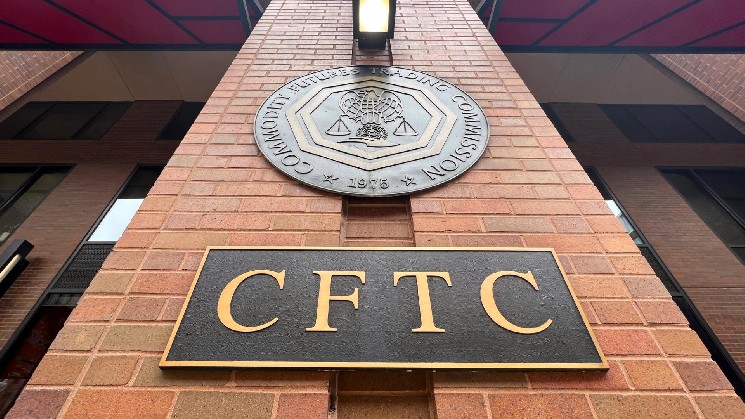
    • The CFTC issued a staff advisory warning that “mention markets” — betting on what a specific individual might say or do — are “presumptively readily susceptible to manipulation.”
    • The regulator distinguishes these markets from standard event contracts because outcomes depend on “the discrete conduct of a named person” rather than independently generated, externally verifiable events.
    • Prediction platform operators including Kalshi and Polymarket are reminded they may only list derivative contracts that are not readily susceptible to manipulation.

    CFTC Targets ‘Mention Markets’ in New Supervisory Advisory

    The Commodity Futures Trading Commission has drawn a sharp regulatory line around a growing category of prediction-market contracts, issuing a staff advisory on Tuesday that labels wagers on an individual’s future statements or actions as “presumptively readily susceptible to manipulation.” The guidance, released by the agency’s Division of Market Oversight, signals a potential narrowing of the event-contract universe that can clear the CFTC’s supervisory hurdles, directly affecting operators such as Kalshi and Polymarket.

    How ‘Mention Markets’ Differ From Standard Event Contracts

    Unlike traditional event contracts that settle on “independently generated, externally verifiable outcomes that are outside the control of any single person,” the CFTC staff advisory explains that mention markets pivot on “the discrete conduct of a named person, and that conduct may be neither independently generated nor externally verifiable.” Because the outcome hinges on one person’s behavior — or the actions of those in their orbit — the agency warns that the individual or people around them could shift the result based on their own knowledge of the betting activity.

    Regulatory Reminder: Only Non-Manipulable Contracts Permitted

    The advisory serves as a formal reminder to prediction-platform operators that they are “only allowed to trade derivative contracts that are not readily susceptible to manipulation.” By classifying mention markets as presumptively problematic, the CFTC is effectively placing the burden on exchanges to demonstrate why any contract tied to a specific person’s conduct should be permitted, or to delist such markets altogether. The move underscores the agency’s focus on market integrity as prediction platforms expand their offerings beyond traditional economic and political indicators.

    Why This Matters

    The CFTC’s advisory arrives as prediction markets gain mainstream traction and attract significant volume during major news cycles. By targeting contracts tied to individual conduct, the regulator is addressing a structural vulnerability: markets where a single actor — or their associates — can influence the outcome create clear incentives for insider trading and market manipulation. For platforms like Kalshi and Polymarket, the guidance implies a compliance review of existing “mention market” listings and stricter vetting for future contracts. The decision also sets a precedent for how U.S. regulators may treat novel event-contract categories as the sector evolves, balancing innovation with the statutory mandate to prevent manipulation and protect market participants.

    Frequently Asked Questions

    What are “mention markets” according to the CFTC?
    Mention markets are wagers on what a specific, named individual might say or do — for example, whether a public figure will utter a certain phrase or take a particular action. The CFTC considers these distinct from standard event contracts because the outcome depends on the discrete conduct of one person.
    Why does the CFTC consider mention markets prone to manipulation?
    The advisory states that because the outcome pivots on “the discrete conduct of a named person,” that person or people around them could influence the result based on their own knowledge of the betting, making the market “presumptively readily susceptible to manipulation.”
    What must prediction platforms like Kalshi and Polymarket do in response?
    Operators are reminded they may only list derivative contracts that are not readily susceptible to manipulation. They will likely need to review existing mention-market contracts for compliance and apply stricter criteria before launching similar markets in the future.