Category: Coins

Digital assets, cryptocurrencies, blockchain, and currency news.

  • Barclays, HSBC, Lloyds and Other UK Banks Test Tokenized Deposits in First Live Customer Transactions

    Barclays, HSBC, Lloyds and Other UK Banks Test Tokenized Deposits in First Live Customer Transactions

    Key Highlights

    • Seven major UK banks—including Barclays, HSBC UK, Lloyds, Monzo, Nationwide, NatWest, and Santander—executed the first live customer transactions using tokenized sterling deposits through the Great British Tokenised Deposit initiative.
    • The pilots covered two remortgage completions and a consumer marketplace purchase, demonstrating automated fund locking and release that reduces settlement delays and counterparty risk.
    • Future phases aim to connect tokenized deposits with digital assets and test delivery-versus-payment-versus-reserves settlement on the Quant-developed GBTD platform.

    UK Banks Complete First Live Tokenized Deposit Transactions

    Britain’s largest retail and commercial banks have moved tokenized sterling deposits from concept to production, processing live customer payments through a shared industry platform. The milestone, disclosed in a September 24 statement, marks the first time programmable commercial bank money has been used for genuine retail transactions in the United Kingdom. The activity was coordinated under the Great British Tokenised Deposit (GBTD) initiative, convened by the trade association UK Finance, and involved a consortium of seven institutions: Barclays, HSBC UK, Lloyds Banking Group, Monzo, Nationwide Building Society, NatWest Group, and Santander UK.

    Remortgage and Marketplace Pilots Demonstrate Programmable Benefits

    The initial pilots focused on two high-value remortgage completions and a single consumer-to-consumer marketplace purchase. In the remortgage scenarios, funds were programmatically locked at the outset and released automatically only when legal completion was confirmed, eliminating the manual coordination that typically introduces settlement latency. Notably, customers continued to earn interest on their deposits during the pre-completion period, preserving the economic characteristics of a traditional bank account. For the marketplace transaction, the buyer’s funds remained immobilized until the goods were physically received, illustrating how conditional payment logic can mitigate counterparty risk in peer-to-peer commerce.

    Quant-Built Platform Provides Shared Infrastructure

    All transactions were executed on the GBTD platform, developed by enterprise blockchain firm Quant to serve as common infrastructure for tokenized commercial bank money. The architecture is designed to allow multiple issuers to operate interoperable tokenized deposits on a single network while maintaining each bank’s independent ledger and regulatory obligations. Participants emphasized that the model retains the trust, deposit protections, and regulatory framework associated with conventional sterling deposits, distinguishing it from stablecoins or crypto-assets that operate outside the commercial banking perimeter.

    Why This Matters

    The successful live trials represent a significant step toward the Bank of England’s broader exploration of wholesale and retail central bank digital currency (CBDC) coexistence with private-sector innovation. By proving that tokenized deposits can settle real-world obligations—such as property completions and e-commerce escrow—without sacrificing deposit insurance or interest accrual, the GBTD initiative addresses a critical gap in the digital money debate. The next phase, which will link tokenized deposits to digital asset settlement and test delivery-versus-payment-versus-reserves (DvPvR) mechanics, could lay the groundwork for instantaneous, atomic settlement of tokenized securities, foreign exchange, and syndicated loan facilities, potentially reducing systemic counterparty exposure across UK financial markets.

    Frequently Asked Questions

    What is the Great British Tokenised Deposit (GBTD) initiative?
    GBTD is an industry-led program convened by UK Finance that enables participating UK banks to issue, transfer, and settle tokenized sterling deposits on a shared platform developed by Quant. It aims to bring the functionality of programmable money to commercial bank deposits while preserving existing regulatory protections.
    Which banks participated in the first live transactions?
    The seven participating institutions are Barclays, HSBC UK, Lloyds Banking Group, Monzo, Nationwide Building Society, NatWest Group, and Santander UK.
    How do tokenized deposits differ from stablecoins?
    Tokenized deposits are liabilities of regulated commercial banks, carry standard deposit insurance protections, and exist within the existing monetary and regulatory framework. Stablecoins are typically issued by non-bank entities, may not offer deposit insurance, and operate under different regulatory regimes.
  • Aptos Releases Mainnet Node v1.49.1 as Validator Upgrade Cycle Continues

    Aptos Releases Mainnet Node v1.49.1 as Validator Upgrade Cycle Continues

    Key Highlights

    • Aptos Labs has published mainnet node software v1.49.1, a production release for validators and fullnode operators that consolidates execution, consensus, storage, and state-sync improvements.
    • The release rolls forward fixes from the prior v1.49 hotfix path into a standard public build, giving infrastructure operators a stable, maintainable baseline.
    • No action is required from $APT holders; the upgrade is purely infrastructure-focused and does not involve token migrations, wallet updates, or user-facing changes.

    Aptos Labs Delivers Mainnet Node v1.49.1 for Validator and Fullnode Operators

    Aptos Labs has shipped mainnet node software v1.49.1, a production-grade release targeted squarely at validator operators, fullnode providers, indexers, and RPC services. The update packages a broad set of changes spanning execution consistency, consensus behavior, storage handling, state synchronization, and the Move runtime environment. Crucially, it also incorporates fixes that previously existed only in the private v1.49 hotfix branch, giving the operator community a single, public baseline to deploy and maintain.

    Consolidating Hotfixes into a Standard Release Path

    The v1.49.1 changelog reflects work on validator recovery, database handling, and execution determinism—areas that directly affect network stability under load. By folding the emergency hotfixes into a standard mainnet build, Aptos Labs addresses a practical operational need: validators and infrastructure providers can now move off a narrowly distributed patch branch onto a versioned release with a complete changelog. This reduces version fragmentation across the network, which is essential when multiple parties need to reproduce bugs or coordinate upgrades against the same software baseline.

    Infrastructure Upgrade, Not a User-Facing Fork

    Despite the version increment, the release carries no user-facing implications. $APT holders do not need to swap tokens, update wallet balances, or interact with migration contracts. The practical work sits entirely with node operators planning their next maintenance window. For ordinary users, the optimal outcome is invisible—a network that continues running reliably without demanding any action on their part.

    Why This Matters

    Blockchain software releases are frequently labeled “network upgrades” even when the end-user experience is unchanged. In this case, the distinction is material: v1.49.1 is an operational consolidation effort. Aptos has been iterating rapidly through the 1.49 series, and moving emergency fixes into a supported mainline release is a necessary step toward long-term stability. For validators, RPC providers, and indexers, a common software target simplifies debugging, reduces the risk of consensus divergence, and provides a clearer upgrade cadence. While Aptos continues to address broader stability challenges under heavy load, establishing a clean production baseline after a hotfix cycle is a foundational part of that work.

    Frequently Asked Questions

    Do $APT token holders need to take any action for v1.49.1?

    No. The release is strictly for validator and fullnode operators. End users do not need to migrate tokens, update wallets, or interact with any contracts.

    What changes are included in the v1.49.1 release?

    The release covers execution consistency, consensus improvements, storage and database handling, state synchronization, validator recovery logic, and the Move environment. It also rolls forward all fixes from the prior v1.49 hotfix branch into a single public build.

    Who should upgrade to v1.49.1 and why?

    Validators, fullnode providers, indexers, and RPC operators should plan an upgrade. The release provides a stable, versioned baseline with a complete changelog, replacing the emergency hotfix branch and reducing version fragmentation across the network.

  • US Banks Shift From Bitcoin to Altcoins as Three Tokens Gain Attention

    US Banks Shift From Bitcoin to Altcoins as Three Tokens Gain Attention

    Key Highlights

    • Bitcoin’s share of US banks’ cryptocurrency exposure dropped sharply from 75.8% to 44.2%, according to new Basel Committee on Banking Supervision data cited by Ledger Insights.
    • Ethereum’s allocation surged to 38.5%, while Solana (7.8%) and XRP (5.6%) entered bank portfolios as notable holdings.
    • Client-driven crypto transaction volumes at American banks jumped 93% to €6.4 billion, contrasting with a 25% decline in Europe to €1.9 billion.

    US Banks Drastically Reduce Bitcoin Exposure in Favor of Ethereum, Solana, and XRP

    New regulatory data published by the Basel Committee on Banking Supervision (BCBS) reveals a profound rotation in how financial institutions across the Americas are allocating capital across digital assets. According to analysis by Ledger Insights, Bitcoin’s ($BTC) dominance within bank cryptocurrency risk portfolios has nearly halved, falling from 75.8% to 44.2% — a shift that signals growing institutional comfort with alternative Layer 1 networks and a diversification away from the original cryptocurrency as a sole reserve asset.

    Ethereum Emerges as Primary Beneficiary of Portfolio Rebalancing

    The decline in Bitcoin’s weighting has coincided with a substantial rise in Ethereum ($ETH) exposure, which now accounts for 38.5% of banks’ crypto risk portfolios in the Americas. This near-parity with Bitcoin marks a watershed moment for institutional adoption of the second-largest blockchain by market capitalization. Additionally, Solana ($SOL) and XRP have established measurable footholds, registering 7.8% and 5.6% allocations respectively. The presence of these assets in regulated bank portfolios suggests evolving risk frameworks that now accommodate a broader spectrum of crypto assets beyond Bitcoin.

    Total Crypto Risk Exposure Remains Stable Amid Allocation Shift

    Notably, the BCBS data indicates no material change in the aggregate cryptocurrency risk held by banks during the reporting period. This stability implies that the observed rebalancing reflects strategic asset rotation rather than a net reduction in digital asset engagement. Banks appear to be actively managing concentration risk by redistributing exposure across multiple protocols, a development consistent with maturing institutional custody and risk management practices.

    Client-Driven Trading Activity Surges in Americas, Contracts in Europe

    Beyond proprietary holdings, the data captures a sharp divergence in client-facing crypto activity. Transaction volumes executed by banks on behalf of customers in the Americas surged 93% period-over-period, reaching €6.4 billion. In contrast, European banks saw a 25% decline in similar client flows, falling to €1.9 billion. The asymmetry underscores differing regulatory climates and market appetites across jurisdictions, with U.S. institutions capturing a growing share of institutional and high-net-worth crypto order flow.

    Why This Matters

    The BCBS portfolio data offers the most transparent window yet into how globally systemically important banks are treating digital assets under the evolving Basel III prudential framework. The rotation from Bitcoin toward Ethereum, Solana, and XRP suggests that regulatory capital rules — which assign higher risk weights to less liquid or more volatile assets — may be influencing allocation decisions as much as market conviction. Meanwhile, the explosion in Americas-based client volumes signals that U.S. banks are increasingly acting as on-ramps for institutional capital, even as Europe’s Markets in Crypto-Assets (MiCA) regime continues to take shape. Future BCBS disclosures will be critical for tracking whether this diversification trend accelerates or stabilizes.

    Frequently Asked Questions

    What does the BCBS data measure exactly?
    The data tracks the composition of cryptocurrency risk exposures held by banks in the Americas, expressed as percentage allocations across specific assets, as reported under Basel Committee supervisory standards.
    Did banks sell Bitcoin to buy Ethereum, Solana, and XRP?
    The data shows a shift in portfolio weightings but does not confirm net buying or selling of any specific asset, as total crypto risk exposure remained stable. The rebalancing could reflect valuation changes, new allocations, or a combination of both.
    Why did client transaction volumes rise in the Americas but fall in Europe?
    The divergence likely reflects differences in regulatory clarity, institutional adoption curves, and market structure. The U.S. has seen growing custodial and prime brokerage services for crypto, while Europe’s MiCA framework is still being implemented.
  • Crypto Casino Duelbits Goes Offline After $7 Million Hot Wallet Hack

    Crypto Casino Duelbits Goes Offline After $7 Million Hot Wallet Hack

    Key Highlights

    • Crypto gambling platform Duelbits suffered a $7 million hot wallet exploit on Thursday, prompting the site to go offline while co-founder Joe confirmed “user funds are safe.”
    • Blockchain security firm Scam Sniffer identified a suspected private key compromise affecting wallets on Ethereum, BNB Chain, Tron, and Bitcoin, with 8.1 BTC also stolen.
    • The attack mirrors the 2023 Stake.com breach, where hackers stole $40 million using the same private key compromise method.

    Duelbits Takes Platform Offline After $7 Million Hot Wallet Drain

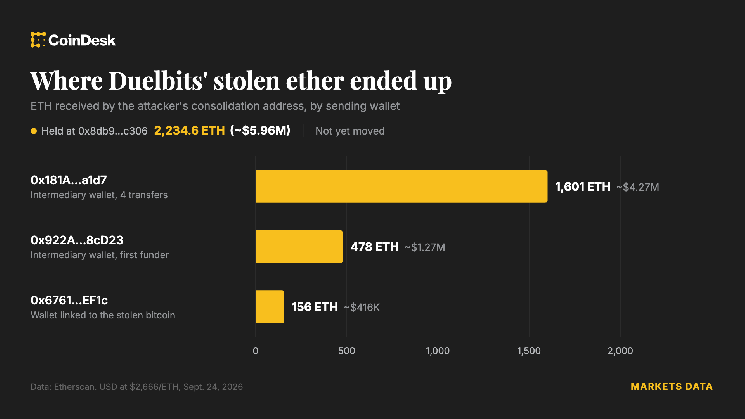
    Crypto gambling platform Duelbits went offline on Thursday after attackers drained approximately $7 million from its hot wallets across multiple blockchains. The incident was first flagged by blockchain security firm Scam Sniffer, which reported that Duelbits hot wallets on Ethereum, BNB Chain, and Tron had sent funds to newly created addresses in what appeared to be a private key compromise. The firm later confirmed the company’s Bitcoin hot wallet also lost 8.1 BTC in the attack.

    Co-Founder Confirms Breach, Assures User Funds Secure

    Duelbits co-founder Joe addressed the incident on X, stating: “Confirming a ~$7M hack. Still investigating exactly what happened and how,” adding that “user funds are safe.” He indicated the platform would remain offline until the investigation concludes and its hot wallets are refilled. The direct acknowledgment from leadership came as on-chain data continued to reveal the full scope of the asset movements.

    On-Chain Analysis Reveals Multi-Chain Asset Losses

    Etherscan data shows the Ethereum wallet labeled as a Duelbits hot wallet transferred 836 ETH, approximately 593,000 USDT, 97,000 USDC, 31,500 DAI, and 12.4 billion SHIB to the attacker within minutes. The compromised Ethereum wallet now holds less than $25 in ether. Scam Sniffer’s analysis indicates the simultaneous compromise across Ethereum, BNB Chain, Tron, and Bitcoin networks strongly points to a private key breach rather than a smart contract vulnerability.

    Attack Method Mirrors 2023 Stake.com Breach

    The suspected private key compromise mirrors the methodology used in the 2023 attack on Stake.com, the largest crypto casino by volume, where hackers made off with $40 million. That incident, also attributed to a private key compromise, raised significant concerns about key management practices across the crypto gambling sector. The recurrence of this attack vector suggests persistent operational security challenges for platforms managing large hot wallet balances.

    Why This Matters

    The Duelbits hack underscores the ongoing vulnerability of centralized hot wallet infrastructure in the crypto gambling industry. Despite high-profile incidents like the Stake.com breach, platforms continue to maintain substantial assets in internet-connected wallets secured by single points of failure. The multi-chain nature of this exploit—hitting Ethereum, BNB Chain, Tron, and Bitcoin simultaneously—demonstrates how a single private key compromise can cascade across an operator’s entire treasury. For users, the incident reinforces the importance of platform solvency transparency and the risks inherent in custodial gambling platforms. Regulators and industry watchdogs will likely scrutinize whether Duelbits’ claim that “user funds are safe” holds up during the investigation and whether the platform maintains sufficient cold storage reserves to cover the hot wallet losses without impacting customer balances.

    Frequently Asked Questions

    How much was stolen in the Duelbits hack?

    Approximately $7 million was drained from Duelbits hot wallets across Ethereum, BNB Chain, and Tron, plus an additional 8.1 BTC from the platform’s Bitcoin hot wallet.

    What caused the Duelbits security breach?

    Blockchain security firm Scam Sniffer identified a suspected private key compromise as the attack vector, noting that wallets across multiple chains sent funds to newly created addresses simultaneously.

    Is Duelbits currently operational?

    No, Duelbits has taken its platform offline. Co-founder Joe stated the site will remain offline until the investigation is finished and hot wallets are refilled.

  • Coinbase Issues Warning Following XRP Rally

    Coinbase Issues Warning Following XRP Rally

    Key Highlights

    • Coinbase Markets data shows XRP one-week call/put implied volatility skew hit 9.3 volatility points, placing it in the top 5% of readings over the past year, signaling heightened bullish derivative demand.
    • XRP futures open interest surged to $4.1 billion, with CME Group overtaking Binance as the leading venue, indicating growing institutional participation in the token’s derivatives market.
    • Analysts warn the concentration of long call positions after XRP’s 15–18% weekly rally creates “crowded positioning” risk, which could amplify downside volatility if sentiment reverses.

    XRP Derivatives Signal Aggressive Bullish Positioning Amid Market Pullback

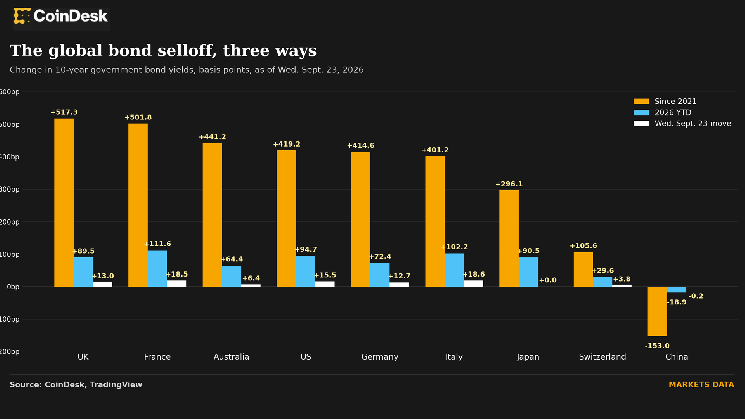
    Bitcoin’s recent ascent above $87,000 and broad altcoin strength were abruptly halted this week as surging global bond yields—reaching levels last seen in 2007—triggered a sharp risk-off move across digital assets. While major cryptocurrencies retreated from local highs, on-chain and derivatives data for XRP tell a contrasting story of intensifying speculative conviction. Coinbase Markets, the institutional-facing arm of the Nasdaq-listed exchange, published a detailed analysis highlighting an extraordinary shift in XRP options pricing that suggests professional traders are betting heavily on continued upside.

    Options Skew Reaches Extreme Bullish Territory

    According to Coinbase Markets, the one-week implied volatility spread between XRP call and put options widened to 9.3 volatility points. This metric, known as the risk reversal or skew, sits in the 95th percentile of observations recorded over the trailing twelve months. In practical terms, the premium investors are willing to pay for upside protection (calls) versus downside protection (puts) has ballooned, reflecting a consensus expectation that XRP’s recent 15% to 18% weekly gain is a precursor to further appreciation rather than exhaustion. Coinbase cautions, however, that a 9.3-point volatility differential does not mathematically translate to a 9.3% price move; it merely quantifies the intensity of directional demand in the options market.

    Futures Open Interest Hits $4.1 Billion as CME Leads Institutional Flow

    Complementing the options signal, aggregate open interest across XRP futures contracts climbed to $4.1 billion. Notably, CME Group—the primary regulated venue for institutional crypto derivatives in the United States—surpassed Binance in XRP futures volume and open interest. This shift is widely interpreted by market structure analysts as evidence that regulated, compliance-first capital is allocating to XRP with greater conviction than retail-heavy offshore platforms. The CME’s leadership position in a specific altcoin’s futures complex is relatively rare and underscores the token’s evolving status among professional allocators.

    Why This Matters: Crowded Trade Dynamics and Macro Crosscurrents

    The confluence of extreme options skew and record futures open interest introduces a classic “crowded positioning” vulnerability. When a disproportionate share of market participants holds similar directional bets—here, long calls and long futures—any catalyst that challenges the thesis can trigger a violent unwind. Forced liquidation of leveraged futures and delta-hedging by options market makers can accelerate price declines, creating a feedback loop detached from spot fundamentals. This risk is amplified by the macro backdrop: the U.S. 10-year Treasury yield piercing 4.5% has already pressured risk assets broadly. Should yields continue climbing, the high-beta nature of altcoins like XRP could see disproportionate selling, testing the resolve of the very derivatives positions that currently appear so bullish. Traders and risk managers will monitor CME positioning reports and options expiry calendars closely for signs of de-risking.

    Frequently Asked Questions

    What does a 9.3-point call/put implied volatility skew mean for XRP?
    It indicates that options market participants are paying a significantly higher premium for one-week call options versus put options, placing current demand for upside exposure in the top 5% of the past year. It reflects sentiment, not a guaranteed price target.
    Why is CME surpassing Binance in XRP futures significant?
    CME is the primary regulated derivatives marketplace for U.S. institutions. Its leadership in XRP futures suggests professional, compliance-driven capital is actively building positions, which often correlates with longer holding periods and deeper liquidity than retail-dominated offshore venues.
    What is the primary risk highlighted by Coinbase Markets?
    Coinbase warns of “crowded positioning” risk: if a large number of investors hold similar long positions simultaneously, a sudden sentiment reversal can cause exaggerated price swings as participants rush to exit, amplified by futures liquidations and options dealer hedging.

    *This article summarizes third-party market analysis and does not constitute investment advice.

  • Bitcoin Bear Markets Growing Milder, Signaling Potential Bull Market Ahead

    Bitcoin Bear Markets Growing Milder, Signaling Potential Bull Market Ahead

    Key Highlights

    • Bitcoin ETFs have shifted ownership toward financial advisers and professional investors who typically allocate around 2% of portfolios to the asset, compared to 20–30% or more for crypto-native retail investors.
    • Institutional rebalancing behavior—buying after declines and selling after surges to maintain target weights—is expected to soften sell-offs but also cap the magnitude of rallies.
    • Risk Dimensions CIO Mark Connors predicts smaller drawdowns than the 70–80% crashes of prior cycles, but warns that reduced volatility comes with moderated returns and “smaller blow-off tops.”

    ETFs Reshape Bitcoin Ownership From Retail to Professional Hands

    Before the launch of spot bitcoin exchange-traded funds, ownership of the largest cryptocurrency was concentrated among retail investors, crypto-native funds, and traders making tactical bets. According to Rasmussen, the introduction of ETFs provided financial advisers and other professional investors with a familiar, regulated vehicle to add bitcoin to traditional portfolios. This structural shift has fundamentally altered the composition of the investor base, bringing in participants who approach the asset through the lens of portfolio construction rather than speculative conviction.

    Allocation Discipline Creates Divergent Risk Profiles

    The difference in allocation size creates starkly different risk experiences. Rasmussen noted that a professional investor might allocate roughly 2% of a portfolio to bitcoin, whereas crypto-focused retail investors often commit 20%, 30%, or more of their capital to the asset. Consequently, a 50% price decline impacts these groups in vastly different ways. “If it goes down 50%, my portfolio is only down 1%,” Rasmussen said in an interview, describing how an investor with a 2% allocation might view the decline. For a retail holder with a 30% allocation, the same drop would erase 15% of total portfolio value.

    Rebalancing Mechanics May Dampen Volatility Cycles

    Beyond allocation size, the discipline of periodic rebalancing introduces a mechanical counter-cyclical force. An adviser targeting a 2% bitcoin weight may buy after a steep decline to restore the target allocation, providing a floor of demand during sell-offs. Conversely, if bitcoin surges and grows to 5% of the portfolio, that same investor may sell a portion at the next rebalancing date, creating natural supply at higher prices. This dynamic could soften the depth of corrections while simultaneously limiting the explosive upside that characterized earlier market cycles.

    Institutionalization Brings Trade-Offs: Smaller Drawdowns, Moderated Returns

    Mark Connors, chief investment officer at Risk Dimensions, expects growing institutional participation to contribute to smaller drawdowns than the 70–80% declines observed in previous bitcoin cycles. However, he cautioned that investors should not expect to get something for nothing. Connors said bitcoin’s volatility has fallen over time, but its returns have moderated as well. More institutional investors could mean “smaller blow-off tops due to rebalancing,” he said, highlighting the trade-off between reduced downside risk and capped upside potential as the asset matures within traditional financial infrastructure.

    Why This Matters

    The transition from a retail-dominated market to one with significant professional participation marks a structural maturation for bitcoin as an asset class. The introduction of spot ETFs in the United States has accelerated this shift by lowering operational and custody barriers for registered investment advisors, family offices, and institutional allocators. As these investors apply modern portfolio theory—fixed allocations, systematic rebalancing, and risk-budgeting frameworks—the statistical properties of bitcoin’s price action are likely to evolve. Historically, bitcoin’s boom-bust cycles were amplified by homogeneous, high-conviction holders prone to panic selling and euphoric buying. A more diverse holder base with differentiated time horizons and mandate constraints could produce a return profile that resembles other alternative assets: lower volatility, reduced tail risk, but also diminished alpha relative to the asset’s early years. For allocators, this raises strategic questions about bitcoin’s role in a portfolio—whether it remains a high-beta growth sleeve or transitions toward a diversifier with equity-like risk and modestly enhanced returns.

    Frequently Asked Questions

    How does a typical professional investor’s bitcoin allocation differ from a retail crypto investor’s?

    Professional investors such as financial advisers typically allocate around 2% of a portfolio to bitcoin, while crypto-focused retail investors often hold 20%, 30%, or more of their total capital in the asset.

    What effect does portfolio rebalancing have on bitcoin’s price cycles?

    Systematic rebalancing creates counter-cyclical flows: advisers buy bitcoin after price declines to restore target weights, supporting prices during corrections, and sell after sharp rallies to trim overweight positions, capping upside momentum.

    Will institutional adoption eliminate bitcoin’s volatility entirely?

    No. Mark Connors of Risk Dimensions notes that while institutional participation may reduce the severity of drawdowns compared to historical 70–80% crashes, volatility will persist and returns are likely to moderate, resulting in “smaller blow-off tops due to rebalancing.”

  • Data Proves Bitcoin Unfazed by Rising Bond Yields Long-Term

    Data Proves Bitcoin Unfazed by Rising Bond Yields Long-Term

    Key Highlights

    • U.S. 10-year Treasury yield surged 15 basis points to 5.13%, the highest level since 2007, triggering global yield increases.
    • Bitcoin’s 90-day correlation with U.S. 10-year yield daily moves stands at just −0.18, with 180-day and 1-year correlations even closer to zero at −0.06 and −0.03 respectively.
    • Historical data analyzed by CoinDesk shows Bitcoin has demonstrated little to no consistent correlation with bond yields across multiple timeframes and international markets.

    Rising Yields Reignite Debate Over Bitcoin’s Macro Sensitivity

    The U.S. 10-year Treasury yield jumped 15 basis points on Wednesday to breach 5.13%, marking its highest level since the pre-financial crisis era of 2007. The move rippled across global fixed-income markets, pulling sovereign yields higher worldwide and reviving a familiar market narrative: that rising bond yields create a structural headwind for non-yielding assets like Bitcoin (BTC) and gold. The conventional logic posits that as risk-free returns become more attractive, the opportunity cost of holding zero-coupon assets increases, theoretically drawing capital away from crypto and toward government debt.

    Correlation Data Contradicts Conventional Wisdom

    While the theoretical framework appears sound on paper, empirical evidence fails to support a consistent inverse relationship. According to data analyzed by CoinDesk, the 90-day rolling correlation between Bitcoin’s daily returns and daily moves in the U.S. 10-year yield sits at just −0.18—a figure statistically indistinguishable from zero correlation. Extending the observation window does not strengthen the link; the 180-day correlation narrows further to −0.06, while the one-year correlation stands at a negligible −0.03. Across every measured timeframe, Bitcoin’s price action has exhibited virtually no linear dependence on the trajectory of U.S. benchmark yields.

    Global Yield Regimes Show Similar Disconnect

    The absence of correlation is not confined to the United States. Bitcoin has demonstrated an equally weak statistical relationship with the sovereign yields of other major economies. This global pattern suggests that Bitcoin’s valuation drivers operate independently of the interest rate channels that dominate traditional asset pricing models. Rather than functioning as a simple “risk-off” or “risk-on” proxy sensitive to the cost of capital, the asset’s historical behavior aligns more closely with a distinct, idiosyncratic return stream shaped by network adoption cycles, liquidity conditions specific to crypto markets, and evolving regulatory narratives.

    Why This Matters

    The persistent disconnect between Bitcoin and bond yields carries significant implications for portfolio construction and macro strategy. Investors and analysts who position Bitcoin strictly as a rate-sensitive speculative asset may be relying on a flawed mental model that has not held up over the asset’s history. As central banks navigate a potential “higher for longer” rate environment, understanding Bitcoin’s true correlation profile—effectively zero with respect to sovereign yields—becomes critical for accurate risk budgeting. The data suggests Bitcoin should be evaluated on its own fundamental merits and crypto-specific catalysts rather than through the lens of traditional duration risk.

    Frequently Asked Questions

    What is the current correlation between Bitcoin and the U.S. 10-year Treasury yield?

    As of the latest analysis by CoinDesk, the 90-day correlation is −0.18, the 180-day correlation is −0.06, and the one-year correlation is −0.03—all statistically near zero.

    Does Bitcoin correlate with bond yields in other countries?

    No. The data shows Bitcoin is equally uncorrelated with the sovereign yields of other nations, indicating this is a global phenomenon rather than a U.S.-specific anomaly.

    Why does the market still believe rising yields hurt Bitcoin?

    The narrative relies on theoretical opportunity cost logic: higher risk-free rates should make non-yielding assets less attractive. However, historical price data does not bear out this relationship, suggesting other factors dominate Bitcoin’s valuation.

  • Token Burns Continue for Popular Altcoin; Latest Burn Amount Revealed

    Token Burns Continue for Popular Altcoin; Latest Burn Amount Revealed

    Key Highlights

    • Polygon Foundation CEO Sandeep Nailwal announced on September 24 that 100 million $POL tokens have been permanently burned, removing approximately 1% of the total supply from circulation.
    • The tokens were sent to an inaccessible address in a process known as “token burning,” making them permanently unrecoverable and unable to re-enter the market.
    • Nailwal’s announcement did not disclose the specific reasons for the burn, its expected impact on Polygon’s token economy, or any new supply arrangements for $POL following the reduction.

    Polygon Foundation Executes 100 Million $POL Token Burn

    Polygon Foundation CEO Sandeep Nailwal confirmed on September 24 that the organization has permanently removed 100 million $POL tokens from circulation. In a social media post, Nailwal stated that the tokens were “permanently incinerated”, a phrasing that underscores the irreversible nature of the operation. The burned amount represents roughly 1% of the total $POL supply, marking a notable contraction in the token’s circulating float.

    Mechanics of the Supply Reduction

    The burn was executed by sending the 100 million tokens to an inaccessible wallet address, a standard cryptographic method for permanently destroying digital assets. Once transferred to such an address—often referred to as a “null” or “burn” address—the tokens can never be retrieved, spent, or reintroduced into the Polygon ecosystem. This operation directly reduces the total supply of $POL, the native token that powers network activities, staking, governance, and transaction fees across Polygon’s suite of scaling solutions.

    Strategic Context Remains Undisclosed

    Despite the significance of a 1% supply reduction, Nailwal’s statement offered no explanation for the decision. The post did not reference a scheduled burn mechanism, a governance proposal, a response to inflationary pressures, or any upcoming changes to $POL’s emission schedule. Similarly, the Polygon Foundation has not published details on whether this burn is a one-time event or part of a broader tokenomic redesign. The absence of forward-looking guidance leaves market participants without clarity on future supply dynamics.

    Why This Matters

    Token burns are a closely watched lever in crypto economics because they alter the supply side of the valuation equation without necessarily changing demand. For $POL, which succeeded MATIC as the ecosystem’s primary asset following the Polygon 2.0 upgrade, supply management is critical to its role in securing the AggLayer and incentivizing validators. A 1% reduction is modest in isolation, but if it signals the start of a programmatic burn schedule—similar to Ethereum’s EIP-1559 fee burn or BNB’s quarterly auto-burn—it could establish a deflationary narrative that influences long-term holder sentiment and staking yields. Until the Foundation provides a rationale or roadmap, the burn remains a discrete event rather than a confirmed policy shift.

    Frequently Asked Questions

    What exactly does it mean that 100 million $POL tokens were “permanently incinerated”?

    The tokens were sent to a cryptographic address with no known private key, making them mathematically impossible to access or spend. They are effectively destroyed and will never re-enter circulation.

    Did Sandeep Nailwal or the Polygon Foundation explain why this burn was conducted?

    No. The September 24 announcement did not include any reasoning, strategic context, or indication of whether further burns are planned.

    How does this burn affect the total and circulating supply of $POL?

    The operation reduces the total supply by approximately 1%. Since the tokens were removed from circulation entirely, the circulating supply decreases by the same amount, assuming the burned tokens were previously part of the circulating float.

  • AI Coding Slashes Quantum-Safe Bitcoin Transaction Cost Estimate from $320 to $66 in One Week

    AI Coding Slashes Quantum-Safe Bitcoin Transaction Cost Estimate from $320 to $66 in One Week

    Key Highlights

    • StarkWare has demonstrated a quantum-resistant Bitcoin transaction method that operates within current protocol rules, requiring no soft fork or network upgrade.
    • The approach uses hash-based cryptography to protect against quantum computers deriving private keys from exposed public keys, but costs approximately $320 in computing per transaction under current implementation.
    • Significant limitations remain: transactions must be submitted directly to miners, and the method cannot protect coins whose public keys are already exposed — the primary target for any quantum attacker.

    StarkWare Unveils Quantum-Resistant Bitcoin Transaction Method Without Protocol Changes

    Israeli blockchain scaling firm StarkWare has published research demonstrating a method to execute quantum-resistant transactions on Bitcoin without requiring a soft fork or any modification to the network’s consensus rules. The technique leverages hash-based cryptographic commitments — specifically leveraging the collision resistance of SHA-256 — to shield coins from a future scenario in which a sufficiently powerful quantum computer could derive a private key from an exposed public key using Shor’s algorithm.

    Because the construction fits entirely within Bitcoin’s existing script and transaction validity rules, it can be deployed immediately as an emergency mitigation if the quantum threat materializes before the broader ecosystem adopts a more comprehensive, protocol-level upgrade such as BIP-360 or similar proposals for post-quantum signature schemes. However, the current implementation carries a steep computational price tag: approximately $320 of computing resources per transaction, according to the cost breakdown published by StarkWare.

    Cost Claims and Independent Verification

    A third-party contest site associated with the research cites a lower figure of $66 per transaction, but this number remains an estimate drawn from a test computation and has not been validated by a subsequent transaction actually mined on the Bitcoin mainnet. The improved code referenced by the contest site has not been shown preparing another transaction that was successfully included in a block. Applying the speedups displayed on the contest site to StarkWare’s original $320 cost breakdown yields an estimated $83 per transaction, according to calculations performed by CoinDesk. The contest site states that later record-setting runs surpass those measurements, though it does not disclose which specific results underpin the $66 estimate.

    Operational Constraints Limit Practical Deployment

    Beyond cost, the method imposes structural constraints that reduce its utility as a general-purpose solution. Transactions constructed using this approach must be sent directly to a miner because they do not propagate through the Bitcoin peer-to-peer network in the standard manner. More critically, the protection only applies to coins whose public keys have not yet been exposed on-chain — such as those locked in pay-to-taproot (P2TR) or pay-to-witness-script-hash (P2WSH) outputs where the public key remains hidden until spending. Coins in pay-to-pubkey-hash (P2PKH) or reused pay-to-taproot addresses with revealed public keys — the very cohort a quantum adversary would target first — cannot be secured retroactively by this method.

    Why This Matters

    The research addresses a long-standing theoretical vulnerability in Bitcoin’s elliptic curve cryptography (secp256k1), which secures the vast majority of coins in circulation. While large-scale, fault-tolerant quantum computers capable of breaking ECDSA do not yet exist, advances in quantum error correction and qubit coherence have accelerated expert timelines. The National Institute of Standards and Technology (NIST) has already standardized post-quantum algorithms such as CRYSTALS-Dilithium and SPHINCS+, but integrating them into Bitcoin would require a contentious, multi-year soft fork process with broad miner, developer, and user consensus.

    StarkWare’s hash-based fallback offers a permissionless, immediate escape hatch — but only for a subset of unspent transaction outputs (UTXOs) and at a cost that currently limits use to high-value holdings. The requirement for direct miner submission also introduces trust and censorship considerations. As the ecosystem debates long-term quantum resistance — including proposals for quantum-resistant address formats and commit-reveal schemes — this work establishes a proven, if imperfect, bridge capability.

    Frequently Asked Questions

    Does this method require a Bitcoin soft fork or protocol upgrade?
    No. The construction operates entirely within Bitcoin’s existing consensus and script rules, meaning it can be used today without any network-level changes.
    Can this protect all Bitcoin holdings from a quantum attack?
    No. It only secures coins whose public keys have not yet been revealed on-chain — primarily Taproot and certain Script-based outputs. Coins in legacy P2PKH addresses or reused Taproot addresses with exposed public keys remain vulnerable.
    What is the real-world cost to use this quantum-resistant transaction method?
    StarkWare’s published breakdown estimates ~$320 in compute per transaction. Independent analysis by CoinDesk applying claimed optimizations suggests ~$83, while a contest site cites an unverified $66 figure. No subsequent mainnet transaction has confirmed the lower costs.
  • FedNow Prepares Cross-Border Support for U.S. Banks

    FedNow Prepares Cross-Border Support for U.S. Banks

    Key Highlights

    • Federal Reserve Financial Services launched early-adopter testing on September 23 for enhanced ISO 20022 messages that enable FedNow to settle the U.S. leg of cross-border payments while correspondent banks handle the international portion.
    • The model does not create a direct global FedNow network; it relies on existing correspondent-banking infrastructure and remains contingent on final approval of Regulation J amendments (docket R-1891) and updates to Operating Circular 8.
    • FedNow domestic volume surged 83.2% in Q2 2026 to nearly 5 million payments worth $274.66 billion, with over 1,500 participating institutions, as the Fed prepares a January 2027 discount program to further boost adoption.

    Federal Reserve Advances FedNow Cross-Border Testing with Correspondent-Banking Model

    Early Adopters Begin Testing Enhanced ISO 20022 Messages for International Payments

    Federal Reserve Financial Services announced on September 23 that a group of early-adopter financial institutions will begin testing new FedNow message formats designed to carry the data required when a payment involves a sender or recipient outside the United States. The enhanced ISO 20022 specifications have been available through the Fed’s MyStandards portal since April, allowing institutions active in international commerce to prepare system changes during 2026. Payall Payment Systems is among the named participants. President and CEO Gary Palmer said the company’s integration is intended to provide financial institutions with faster and more transparent processing for the U.S. portion of international payments while digitizing compliance and transaction-risk checks. Payall described its role as helping banks “un-nest” payment chains, screen parties and automate risk controls. Those are company claims about its infrastructure and do not establish that every international payment using the future FedNow capability will process faster or at lower cost.


    Correspondent Banks Retain Control of Foreign Leg Under Proposed Framework

    The Federal Reserve’s design keeps existing correspondent banking infrastructure at the center of the foreign portion of each transaction. A payment could begin abroad, move through correspondent arrangements, and use FedNow once it reaches the U.S. banking system. An outbound transaction could reverse that sequence, with FedNow processing the domestic transfer before an intermediary handles the payment beyond the U.S. The model resembles structures already used with Fedwire, according to Federal Reserve Financial Services. It does not create direct FedNow access for foreign banks that lack the required U.S. participation structure, nor does it establish a Federal Reserve foreign-exchange service. As one industry observer noted on social media: “FedNow going cross-border is not what it sounds like. The Fed’s own proposal: a correspondent bank handles the international leg, FedNow settles the US domestic leg in seconds. The foreign mile still runs on whichever rail the correspondent picks. So the slow, expensive part of…” — Wave of Innovation (@wave_of_innov), September 23, 2026.

    Regulation J Approval Remains Critical Unresolved Step Before Full Rollout

    The most important unresolved step is regulatory approval. The Federal Reserve Board’s current rulemaking portal still lists docket R-1891 as a “Rulemaking Proposal.” The public comment period closed June 9, but the Board has not posted a final rule replacing the proposal as of September 24. The September 23 FedNow announcement carries the same limitation: the functionality remains contingent on required amendments to Regulation J and corresponding changes to Operating Circular 8 receiving approval from the relevant Federal Reserve governing bodies. Operating Circular 8 contains the operating terms for transfers through FedNow; the April 1, 2026 version is currently listed as the effective circular, alongside operating procedures that took effect April 28. Industry feedback on the Regulation J proposal raised compliance questions that the final framework may need to address. The American Bankers Association, for example, recommended clarifying how sanctions, anti-money laundering and fraud checks should work when a FedNow payment forms part of a cross-border chain, and asked that banks be able to delay or reject payments where required to complete legally mandated screening. Stripe’s comment on the proposal separately argued that the existing FedNow operating framework contained a residency restriction for certain ultimate customers and said operating-rule changes would be needed alongside the Regulation J amendment for the proposal to achieve its full cross-border purpose.

    FedNow Domestic Volume Surges as Network Prepares for International Expansion

    FedNow enters the testing phase after rapid growth in domestic payment activity. Federal Reserve Financial Services reported 4.997 million settled customer payments during the second quarter of 2026, up 83.2% from the first quarter. Their combined value reached $274.66 billion, compared with $271.25 billion during the previous three months. Average daily volume rose from 30,317 payments in the first quarter to 54,921 in the second. Average payment size fell from $99,414 to $54,957 as transaction counts expanded more quickly than total dollar value. For all of 2025, FedNow processed 8.41 million payments worth $853.4 billion, representing 458.9% annual volume growth and more than 2,100% growth in settled value compared with 2024. The network now spans more than 1,500 participating financial institutions. Federal Reserve Financial Services keeps separate current lists of live institutions, settlement agents and certified service providers, with its participant and provider files most recently updated September 21. In a separate domestic adoption move, Federal Reserve Financial Services announced a new discount program beginning January 1, 2027, intended to encourage more institutions to activate and increase FedNow sending capabilities.

    Why This Matters

    The FedNow cross-border initiative represents a pragmatic evolution rather than a revolutionary overhaul of international payments. By leveraging the existing correspondent-banking network for the foreign leg while applying FedNow’s 24/7/365 instant settlement to the domestic portion, the Federal Reserve avoids the complexity and political sensitivity of building a direct global central-bank payment rail. This approach aligns with the Fed’s August review of U.S. cross-border payment work, which noted that FedNow had remained domestic since its July 2023 launch while demand from banks for international use increased as instant payments expanded globally. The migration of Fedwire to ISO 20022 in July 2025 created more common messaging across international payment chains, providing a technical foundation for the enhanced messages now under test. Potential use cases identified by the Federal Reserve include international payroll, corporate payments, property transactions, insurance disbursements and global treasury activity. However, the complete speed and cost of an international transaction will still depend on the foreign leg, correspondent relationships, compliance reviews and local payment infrastructure. As banks, stablecoin companies and blockchain networks compete to shorten international payment chains—with SWIFT testing a blockchain ledger with 17 global banks for round-the-clock cross-border payments using tokenized commercial-bank deposits—FedNow’s model remains based on conventional bank money settled through Federal Reserve accounts for its domestic portion. Cross-border testing is expected to proceed while the Regulation J process remains unfinished, with no general launch date published.

    Frequently Asked Questions

    Does FedNow now support direct cross-border payments to foreign banks?

    No. The Federal Reserve’s model does not create direct FedNow access for foreign banks that lack the required U.S. participation structure. FedNow settles only the U.S. domestic portion between participating domestic institutions, while correspondent banks or other approved intermediaries continue handling the overseas leg through their existing cross-border arrangements.

    When will the cross-border capability be generally available to all FedNow participants?

    No general launch date has been published. The functionality remains contingent on final approval of Regulation J amendments (docket R-1891) and corresponding changes to Operating Circular 8. Federal Reserve Financial Services says future progress updates will be provided to participants as testing, rule approval and Operating Circular changes advance.

    What role does Payall Payment Systems play in the testing phase?

    Payall Payment Systems is one of the named early-adopter participants. The company’s integration aims to provide financial institutions with faster and more transparent processing for the U.S. portion of international payments while digitizing compliance and transaction-risk checks. Payall describes its role as helping banks “un-nest” payment chains, screen parties and automate risk controls, though these are company claims about its infrastructure and do not guarantee that every international payment using the future FedNow capability will process faster or at lower cost.