Category: Coins

Digital assets, cryptocurrencies, blockchain, and currency news.

  • EU Directive DAC8: Crypto taxes remain as they are – but the data is forcibly recorded

    EU Directive DAC8: Crypto taxes remain as they are – but the data is forcibly recorded


    • With DAC8, the EU will introduce a new transparency framework for digital assets in 2026. It does not change taxation itself, but rather the form in which it is levied.
    • Relevant crypto transactions are systematically recorded, evaluated and automatically reported to the tax authorities. Everything will be easier for honest taxpayers – for others it will be difficult.

    To clear up a common misunderstanding, the DAC8 regulations do not mean new taxes on profits from crypto assets. The existing national tax obligations remain unchanged.

    In Germany, the one-year holding period still applies to private sales transactions. The change lies in the transparency of tax obligations, or more precisely, in the recording of the relevant data.

    From 2026, all relevant crypto service providers – exchanges, brokers, custodians and certain wallet providers – will be required to record and report transaction data in detail. This includes identity data, trading data, swaps, deposits and withdrawals as well as transfers to external wallets.

    Non-EU platforms that serve EU customers are also subject to this reporting requirement. The definition of crypto assets is based on MiCAR and therefore also includes stablecoins and decentrally issued tokens.

    First the data collection – then the data exchange

    The practical implementation takes place in two steps. From January 1, 2026, service providers must record all relevant transactions. The first transmission to the tax authorities will take place in 2027 for the 2026 tax year.

    The data first goes to the national tax authorities and is then distributed across the EU.

    For investors this means: The tax offices receive complete transaction profiles, including holding periods, realized profits and losses as well as account movements, which also include movements in and out of wallets.

    Discrepancies between the tax return and reported data are automatically visible.

    For service providers, this means that they have to expand their KYC processes, obtain tax self-disclosures and set up technical reporting infrastructures. If customers do not cooperate, accounts and transactions can be blocked.

    Taxation remains the same

    DAC8 does not change the taxation of crypto profits, but rather the ability of tax authorities to audit them. The current situation in which a lack of data access makes tracking difficult is ending. Tax evasion becomes effectively impossible because every transaction, every swap and every payout is recorded. Self-custody is also recorded because transfers to external wallets are also documented if they originate from a service provider.

    This means a new reality for investors: errors in the tax return are immediately noticeable, and your own documentation must match the officially collected data sets. There is considerable compliance pressure for service providers, which means a lot of additional work, especially for smaller providers.

    DAC8 marks the shift from a largely “self-governing” crypto tax practice to a system controlled by tax authorities.
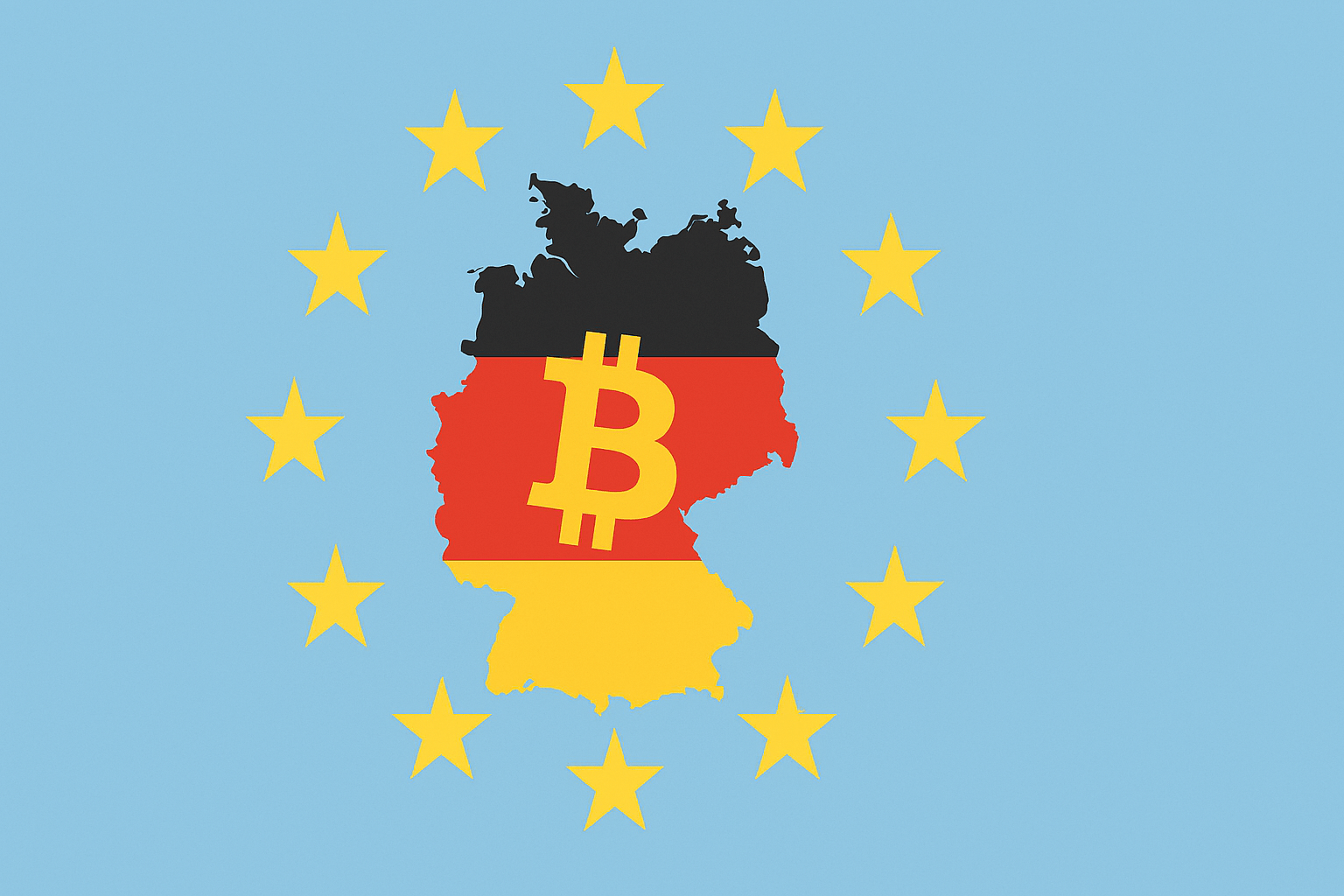
  • Europe’s most crypto-friendly environment is called Germany

    Europe’s most crypto-friendly environment is called Germany


    • The German crypto industry has developed in recent years in a way that has surprised most industry insiders – especially the Germans themselves.
    • The Federal Republic actually stands for strict regulation, complicated bureaucracy and an extremely conservative financial culture. How did it become the EU hotspot for digital assets?

    It started with a decision from 2019 that was hardly worth reporting at the time: When the Bundestag passed the law introducing electronic securities (eWpG) and BaFin introduced the crypto custody license, the foundation was laid. The eWpG came into force in June 2021.

    While other EU members were still arguing over definitions, Germany already had a legal framework that classified digital assets as a legitimate, new asset class. This resulted in a location advantage for attentive investors, long before the issue had reached Brussels in the form of the MiCA debates.

    Early regulation pays off

    Demand grew rapidly. The KPMG/BTC ECHO study “Digital Assets in Germany 2025” shows:

    German crypto investors invest an average of 29% of their assets in digital assets, and 61% of those surveyed have invested more than 20% of their assets in them.

    It is a picture that was hardly imaginable just a few years ago: cryptocurrency and tokenized assets are topics that are discussed not only among a few in the know, but in the middle of society.

    This is not the spread of a new variant of gambling addiction, but rather an expression of structural trust that has been able to build thanks to a robust, accepted regulatory framework.

    It is the millennial generation that is driving development. In Europe, Switzerland is still the country with the highest crypto market penetration, but Germany has a decisive advantage – it is much larger and has much more growth potential.

    No other economy in Europe combines regulatory maturity, institutional infrastructure and social acceptance so effectively. The Federal Republic is not only a key EU market, but also a catalyst for the entire European crypto industry.

    Tokenization is Engine of development

    Germany is one of the few countries in which digital bonds, tokenized fund shares and blockchain-based securities are not only anchored in law but are already in operational use across the board.

    Banks such as DZ Bank, DekaBank and Commerzbank have set up their own RWA tokenization services, some with partners, and are testing new market models.

    The eWpG has modernized the capital markets by replacing the paper-based certificate with the digital register – a step that has received international attention. At the same time, a system has developed that extends far beyond the financial sector.

    Berlin, Hamburg, Frankfurt and Munich have developed into FinTech clusters in which start-ups, banks and technology suppliers work together. Medium-sized companies are experimenting with blockchain solutions in supply chains, energy infrastructure and mechanical engineering.

    Germany has thus created something that is rare in Europe: a cross-sector innovation network that does not view digital assets in isolation, but rather as increasingly relevant elements of a comprehensive digital transformation.

    With MiCAR, the development receives an additional boost, and Germany benefits twice: BaFin has years of experience in the supervision of digital assets, and providers can serve the entire EU market from Germany – keyword passporting.

    The Federal Republic will thus become a hub for MiCA-compliant crypto providers who want to grow in the EU. Social change reinforces this dynamic. Cryptocurrencies are no longer seen as exotic or disreputable and speculative, but rather as progressive.

    Although Bitcoin and Ethereum continue to dominate portfolios, interest in alternatives is growing. Young investors are driving it forward and ensuring that more and more digital assets establish themselves in the mainstream.

    Not always – but more and more often…

    Germany is by no means the country of choice for all investors, but it has the economy that is most advanced in terms of regulations, has the most institutional investments, is technologically broadest and has the steepest social acceptance curve.

    In his classic comedy “One, Two, Three”, Billy Wilder has the Germany boss of Coca Cola say – albeit in a different context:

    „They did it already. It´s that damned German efficiency!“

    Now Germany has become the most crypto-friendly economy in the EU.

  • “The Unit”: BRICS countries start test run for new currency

    “The Unit”: BRICS countries start test run for new currency


    • The BRICS is testing “The Unit,” a gold- and currency-backed settlement unit for cross-border payments.
    • This is a mini-pilot test for a settlement instrument, not direct competition to the US dollar.

    At the turn of the year, a pilot project around a new accounting unit called “The Unit” is causing fresh speculation about a possible BRICS alternative to the US dollar. According to several reports, this is not a classic consumer currency, but rather an experimental settlement instrument intended to test cross-border payments, as CNF reported in December.

    Two of the most successful German podcasters, Kiarash Hossainpour (“Hoss”) and Philip Hopf, pointed out in anPost on January 1st on the development. It says:

    “The BRICS countries have launched a pilot project for a new currency called ‘The Unit’. This unit is backed 40 percent by physical gold and 60 percent by national currencies of member countries. Each unit is pegged to the value of one gram of gold, with the daily value fluctuating based on exchange rates.”

    BRICS relies on the blockchain for test runs

    Notably, the system is “based on a digital platform with blockchain technology and serves as a test for cross-border payments,” as Hoss and Hopf further note. Only 100 units have been issued so far. A full rollout has not yet been announced.

    This is exactly where the question marks begin. The Jerusalem Post reported on December 8, 2025 on a “unit” concept as a gold-backed settlement variable, which essentially amounts to mixed coverage (gold plus a basket of currencies).

    Fisher Investments formulated However, he is unusually open about his skepticism about the validity of the underlying “test” claims and points out that it is only a settlement tool and not a new currency:

    “For one thing, ‘The Unit’ is not a real currency like the US dollar or the euro (assuming the story is even true!). You can’t buy anything with it.”

    Several reports also assign the project to the IRIAS (International Research Institute for Advanced Systems) and describe its status as a pilot phase that has not yet been adopted as an official system by BRICS central banks or the New Development Bank.

    For the crypto market, the news is less relevant because of its immediate impact, but rather as a further signal: geopolitical blocks continue to experiment with blockchain-supported settlement, but Bitcoin, Ethereum or even XRP (according to previous speculation) do not play a role according to the information that has been made public so far

    Whether “The Unit” has a future is questionable. According to a JD Supra-Analyse In December, the BRICS summit in July 2025 (Rio de Janeiro) did not bring any concrete progress towards the common currency; There was no mention of this in the final declaration.

  • New EU tax rules for crypto: This is what DAC 8 will change from January 1st, 2026

    New EU tax rules for crypto: This is what DAC 8 will change from January 1st, 2026


    • From January 1, 2026, crypto service providers in the EU will report all relevant crypto transactions to the tax authorities.
    • Crypto investors must fully document their trades.

    With DAC 8, a new reporting regime for crypto transactions has been in effect in the EU (and therefore also in Germany) since January 1, 2026: Crypto service providers must record tax-relevant usage and transaction data and exchange it across the EU via the national authorities. The aim is to systematically make tax evasion and avoidance in cross-border crypto transactions more difficult.

    What crypto owners need to know now

    The direct obligation does not apply to private Bitcoin or crypto holders, but to “Reporting Crypto-Asset Service Providers”, i.e. providers such as exchanges and brokers who enable transactions in crypto assets for customers.

    The EU Commission explicitly says that these service providers should start collecting data for reportable transactions from users based in the EU from January 1, 2026.

    In Germany, this specifically means that service providers will have to collect transactions from 2026 and submit them to the Federal Central Tax Office (BZSt) in the following year official website confirmed.

    This is not just about identification data, but also about all transactions. Purchases and sales, swaps between crypto assets as well as deposits and withdrawals are mentioned. In addition, providers should obtain tax self-disclosures from users; If there is no cooperation, account blocks or transaction blocks are also planned.

    At the EU level, the scope is deliberately broad: DAC 8 is based on the MiCA definitions and, in addition to decentrally issued crypto assets, also includes stablecoins and certain NFTs.

    The EU Commission names 2026 as the first reporting year. The report is due “within nine months” after the end of the first covered fiscal year, specifically between January 1st and September 30th, 2027, and should then be exchanged between the EU states.

    For Germany, this means that from 2027, the data collected in 2026 will be reported to the BZSt, no later than July 31 for the previous year. The Federal Central Tax Office then forwards the information to the local tax offices.

    What practically changes for crypto users

    The key effect is transparency, not a new tax rate. Anyone who trades through reportable providers must expect that transaction activity will be recorded in a structured manner from the 2026 reporting year and officially processed from 2027.

    This increases the pressure on users to accurately document transaction histories and correctly tax profits. On the one hand, if you provide false information or conceal relevant data, you risk being accused of tax evasion, which is known to be severely punished; on the other hand, stock exchanges and the like can request additional self-disclosures; Failure to cooperate may result in restrictions on the use of the platform.

  • IOTA: From experiment to global infrastructure in just 10 years

    IOTA: From experiment to global infrastructure in just 10 years


    • In October 2025, IOTA turned 10 years old, making it a Methuselah by the standards of the crypto industry.
    • Since 2015, IOTA has developed from an experimental DAG approach to a global Layer-1 infrastructure.

    For the birthday in 2025 there was an airdrop of 10 million IOTA tokens, distributed across Binance Simple Earn, LiquidLink, native Staker and the anniversary event in Singapore.

    The biggest technical milestone in recent years was the Rebased Protocol Upgrade, which transformed IOTA into a high-performance, fully decentralized system. It creates 50,000 transactions per second, sub-secondary finality and a delegated proof-of-stake model with up to 100 validators. This means that IOTA is ready for enterprise applications on a global scale. At the same time, the global presence grew:

    • In Africa, IOTA supports the ADAPT initiative, which aims to double intra-African trade by 2035.
    • In the US, integration took place with BitGo and Uphold, enabling institutional custody and native transactions.
    • The vLEI framework has been officially launched in China – a system that is built directly on IOTA infrastructure and standardizes digital corporate identities.

    These developments show how strongly IOTA has become anchored in real economic applications.

    Quantitative and qualitative growth

    New DeFi building blocks such as Swirl for liquid staking and Virtue for stablecoin liquidity expand and diversify the project’s financial layer.

    The IOTA Trust Framework is an open source toolkit that combines identity verification, authentication and tokenization and offers companies a standardized basis for digital processes.

    IOTA also set standards in the area of ​​digital trading infrastructure: The Trade Worldwide Information Network TWIN uses IOTA technology to make supply chains and complete trading processes transparent and interoperable.

    The combination of DeFi, secured identities and trading makes IOTA one of the few L1 networks that realistically depicts classic economic processes – not just “abstract”, often speculative financial applications.

    The Future: Starfish and Multichain

    IOTA has a clear roadmap for 2026 and beyond. The upcoming Starfish consensus model is intended to further increase decentralization, improve validator economics, and enable local gas fee markets.

    Through integrations with LayerZero and Stargate, IOTA is already connected to over 150 networks — the foundation for the interoperable multichain future.

    The second wave of anniversary airdrops is aimed at DeFi customers, liquidity providers and crosschain players. The NFT Genesis Drop is also coming up, which rewards early backers.

    IOTA has now become the infrastructure for digital identities, for tokenized assets and for global trade — a clear focus with an emphasis on a classic segment of the global economy.

  • Ethereum in 4Q25: Record activity despite price pressure

    Ethereum in 4Q25: Record activity despite price pressure


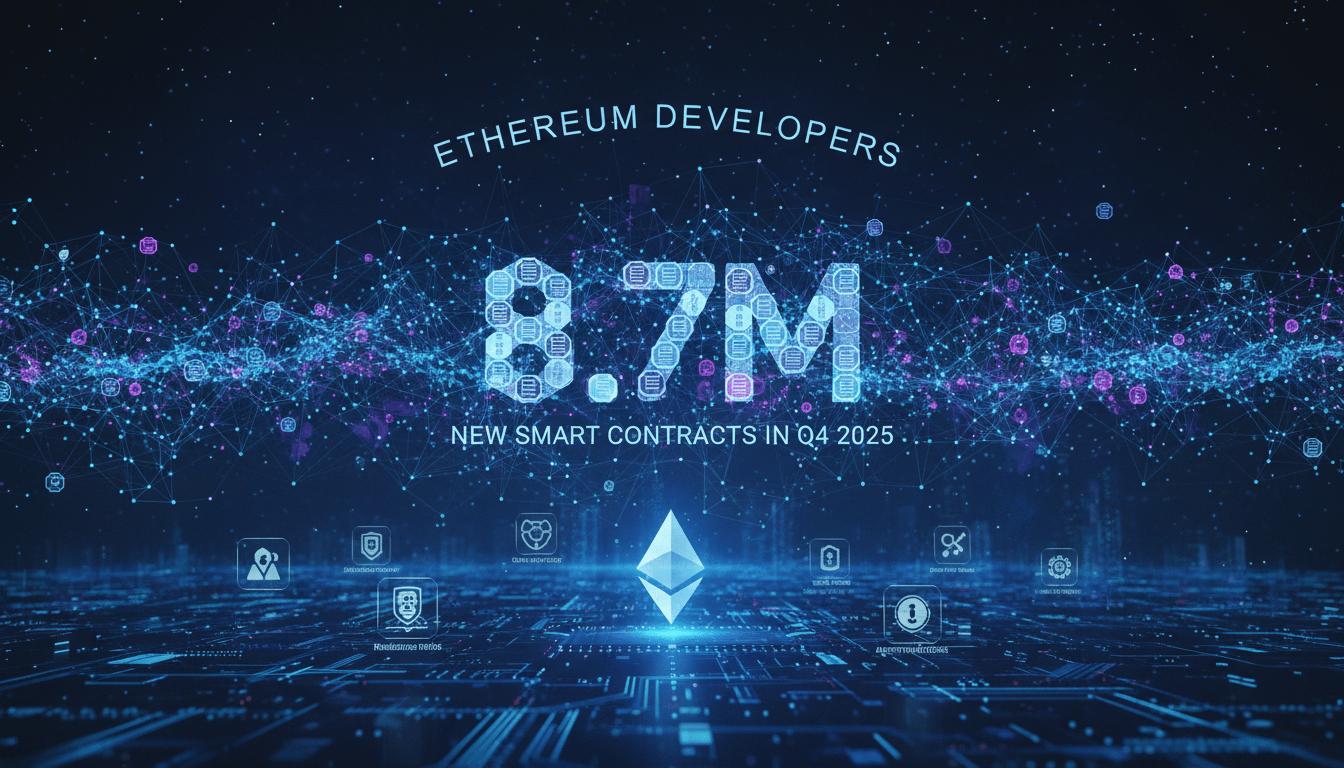
    • Ethereum developers hit a new high with 8.7 million new smart contracts in 4Q25.
    • Despite the new record, the ETH price remains undeterred near the $3,000 mark.

    After two weak quarters, the renewed increase shows a significant return in developer activity. “Token Terminal” describes growth as organic and difficult to manipulate because contract deployments reflect the actual development work.

    Record quarter with 8.7 million smart contracts

    The 30-day average was 171,000 new contracts. The number per day is considered a precise indicator of future network activity because developers usually create the required infrastructure months before the expected user flows and the corresponding increase in fees.

    Powered by RWA, stablecoins and L2 expansion

    The picture is consistent: growth is not driven by speculation, but by organized structures, especially Layer 2 networks.

    • RWA tokenization: Ethereum remains the quasi-industry standard of tokenization, backed by security, liquidity and proven infrastructure.
    • Stablecoins: Over 50% of the $307 billion global stablecoin market is on Ethereum.
    • Layer 2 networks: Base, Arbitrum and Optimism are reducing costs and accelerating their experiments, which is massively increasing the number of smart contracts.
    • GameFi and Restaking: New financial and gaming protocols are driving demand for complex smart contract systems.

    All of this solidifies Ethereum’s role as a global settlement layer.

    Price development: Fundamental strength meets market volatility

    Despite the record activity, the ETH price remained under pressure in the 4th quarter. After reaching an annual high near $5,000, ETH fell back to around $3,000 in the wake of the market collapse in October and remained there until the end of the year.

    Onchain data also shows increased exchange inflows of over 400,000 ETH in December, suggesting distribution rather than accumulation. At the same time, the number of active addresses rose from 396,000 to over 610,000 – another sign of growing network usage.

    Ethereum delivered its strongest fundamental values ​​in years in Q4 25. The discrepancy between the record activity and the uninvolved ETH price is likely to resolve in 2026, when the results of increased developer activity lead to increasing user numbers and increasing fees.

  • IOTA Review 2025: Rebased as a basis for the plans for 2026

    IOTA Review 2025: Rebased as a basis for the plans for 2026


    • IOTA sees 2025 as a turning point: “Rebased” is the focus.
    • For 2026, IOTA is relying on adoption via trading (TWIN/ADAPT), cross-chain (LayerZero/Stargate) and DeFi/Trust expansion.

    2025 was a turning point for IOTA: the 10th anniversary marked a profound protocol upgrade with “Rebased”, as well as real adaptation, new infrastructure integrations and an expanded trust and DeFi stack. In a new one Blog post As of December 31, 2025, the IOTA Foundation is taking stock of the year and it is extremely positive.

    Ten years of IOTA

    For its anniversary, IOTA is putting technical progress in the foreground:

    “The Rebased Protocol upgrade represents the most significant technical achievement in the history of IOTA. In 2025, we have completely transformed the network into a high-performance, decentralized Layer-1 without technical legacy – one of the oldest networks to achieve this.”

    With Rebased the coordinator was removed. Since then, IOTA now runs as a fully decentralized delegated proof-of-stake network “with up to 100 elected validators.” At the same time, Move smart contracts were integrated “on the base layer”.

    The economic layer has also been adjusted: staking rewards, transaction fees with fee burning and storage deposits. In addition, the IOTA Foundation emphasizes the improvements in consensus, gas pricing and validator selection in the blog post. But the biggest advance is performance:

    “Thanks to the protocol upgrade, IOTA now achieves over 50,000 TPS with finality under one second (around 400 ms on average) and is therefore production-ready for large-scale deployments.”

    Trade as a leitmotif: TWIN, ADAPT and Salus

    Rebased is described as a prerequisite for a stronger trading agenda:

    “By unlocking IOTA’s full potential, the rebased upgrade paved the way for the growth of TWIN, the Trade Worldwide Information Network. Building on IOTA technology and the success of TLIP in East Africa, the newly launched TWIN Foundation demonstrated how digital identity, tokenization and smart contracts can transform trade.”

    For 2026, IOTA announces that it will connect TWIN to the mainnet, with the aim of “onboarding entire countries”, processing “millions of transactions daily” and embedding “verifiable, compliant and tokenized trade” into global supply chains.

    In Africa, IOTA refers to ADAPT: together with the AfCFTA Secretariat, the Tony Blair Institute for Global Change and the World Economic Forum, IOTA is a “founding technology partner” of a continental initiative to digitize trade:

    “ADAPT aims to double intra-African trade by 2035 and unlock tens of billions of dollars in economic potential.”

    A second block concerns trade finance and digital corporate identities. The IOTA Foundation writes:

    “In September, we shared plans to work with GLEIF to enable companies to establish verifiable digital identities that – combined with TWIN – create instant on-chain trust.”

    At the same time, Salus has shown how trade finance for critical minerals can be modernized: tokenize documents, anchor identities, and automate payments via smart contracts.

    US Access, DeFi, Trust Framework and Looking Ahead

    Regarding the IOTA token, the foundation writes that 2025 was a turning point for adoption in the USA: As CNF reported, BitGo brought “regulated, insured custody” and thus institutional-grade access to the IOTA mainnet. Uphold subsequently launched native buying/selling and deposits and withdrawals for US users.

    At the infrastructure level, IOTA highlights the connection to LayerZero and Stargate: This means that the IOTA mainnet is connected to “more than 150 blockchain networks”, including Ethereum, Solana, Base and BNB Smart Chain.

    To this end, the IOTA Foundation outlines a growing DeFi stack (Swirl, Virtue, Pools DEX, Liquidlink, CyberPerp) and focuses on the IOTA Trust Framework as an open source toolkit for identity, notarization, tokenization and “gasless transactions”.

    The ambitions for 2026 are great:

    “Three countries have already been confirmed to deploy via ADAPT on the IOTA mainnet, and five more are starting pilot programs.”

    Technically, IOTA announces Starfish as the next consensus, plus IOTA Names, more validators including “Validator Score” and local gas fee markets.

    The picture that the review paints is clear: 2025 was less a cosmetic rebranding at IOTA than a conversion for scaling, and 2026 should show that this will result in adaptation on the international stage.

  • What do crypto institutions expect from 2026?

    What do crypto institutions expect from 2026?


    • Crypto institutions see 2026 as a year of internationally convergent regulation and restructuring.
    • Blackrock sees stablecoins as future channels of global dollar payments, and Grayscale speaks of the beginning of the era of institutions.

    In the USA, the “GENIUS Act” makes stablecoins regulated financial instruments, embedded in treasury flows and cross-border settlement. Grayscale calls it the beginning of the “Institutional Era.”

    ETF flows replace the assumptions about the consequences of the cryptocurrency halving. For Bitcoin, a new all-time high is considered certain, and privacy tech and RWA tokenization will become structural growth drivers, at least if you follow the assumptions of the experts in the institutions.

    Market restructuring expected

    • Coinbase Institutional recognizes a shift in focus to market structures. Perpetual futures dominate pricing and price development, prediction markets become serious information markets, and stablecoins remain the largest real-world use case. At the same time, digital treasury structures are becoming more professional, while tokenized stocks and bonds are becoming mainstream.
    • Galaxy Digital describes 2026 as the year of the RWA super cycle. Tokenized assets will become standard collateral, stablecoin volumes will overtake that of traditional payment systems, and at least one major blockchain will adopt an “enshrined revenue model.”
    • ARK Invest expects an economic “Goldilocks year” with neutral inflation and acceptance by institutions as the driving force. ARK CEO Catherine Wood’s long-term goal for Bitcoin remains at $2.4 million by 2030.
    • LBank Labs, CoinGecko and CoinGape see 2026 as a phase of re-institutionalization after the flash crash of 2025. DeFi becomes invisible but useful: it merges with neobanking as the industry divides into regulated gardens and sovereign platforms.
    • 21Shares predicts a structurally strong but not euphoric year. Stablecoins cross the $1 trillion mark, tokenization becomes the core market, and AI agents automate capital allocation.

    2026 will not be a year of hype, but rather a year of infrastructure. The crypto industry has grown up. Anyone who still relies on supposedly plausible rumors and “narratives” in 2026 will be proven wrong by the realities of the markets.

  • Pi Network: Suspicion of insider dump and fake quotes

    Pi Network: Suspicion of insider dump and fake quotes


    • After strange token transfers, an abrupt price drop and numerous fake listings on decentralized exchanges, Pi Network is once again under fire.
    • Analysts assume an insider dump, but the Pi Core team vehemently denies all allegations and speaks of “normal mainnet migration”.

    The current debate was triggered by the analysis of the on-chain observer Atlaswhich identified movements of more than 12 million PI. According to his assessment, these transfers could have been a coordinated dump that triggered the subsequent price drop of over 50%.

    Atlas called Pi Network a potential “mega-rug” and spoke of one of the biggest fraud cases of the year. The allegations spread quickly on social media and increased the already growing skepticism about the project.

    Pi denies it

    The Pi‑Core team immediately dismissed the allegations as “false and misleading.” The transfers in question were part of the regular main net‑Migration where previously mined PI would be paid out to customers.

    No team tokens were sold and all large movements were transparently marked as “migration distribution”. The criticism is based on misinterpretation and there were no fact checks.

    A public statement by the Bybit CEO, who described Pi Network as a “scam” and made it clear that Pi was not listed on Bybit, caused additional explosiveness.

    This statement significantly increased the damage to its reputation, especially since Pi Network had already struggled with unofficial listings and mix-ups in the past.

    Now there are warnings about a new wave of fraudulent fake listings on decentralized exchanges. Several alleged “PI pairs” are not authorized and could lead to total losses.

    Pi Network emphasizes that the official Pi Coin is currently not freely tradable and may only be used via verified partners as part of the enclosed or open network model.

    The fake listings would take advantage of the project’s brand recognition and target inexperienced customers.

    The allegations hit Pi Network at a phase in which the project is already being watched critically.

    Criticism for years

    For years, there have been complaints about a lack of transparency, a diffuse roadmap and the discrepancy between the claimed 60 million pioneers – miners – and the actual activity on the internet.

    Previous data protection irregularities and doubts about the Pi Network mining model are also being revisited in the current debate. Whether the latest transfers are legitimate migrations or a coordinated dump remains unclear for the time being.

    However, one thing is clear: the combination of price declines, contradictory statements, fake quotes and growing criticism is currently putting Pi Network under more pressure than ever.

  • Bitcoin Update: 2 Data Points Traders Shouldn’t Ignore

    Bitcoin Update: 2 Data Points Traders Shouldn’t Ignore


    • Unusual shortage of 10-year US Treasuries signals possible liquidity shortages and increased volatility potential for Bitcoin.
    • Long-term Bitcoin holders reduce their selling pressure; the LTH supply is turning positive again, which is historically rather bullish.

    At the turn of the year, two rather inconspicuous but very relevant signals come into focus: tensions in the US bond market and a noticeable change in mood among long-term Bitcoin investors (LTH). Both data points suggest that there could soon be more volatility in the market.

    US Treasury Bond Shortage: What This Means for Bitcoin

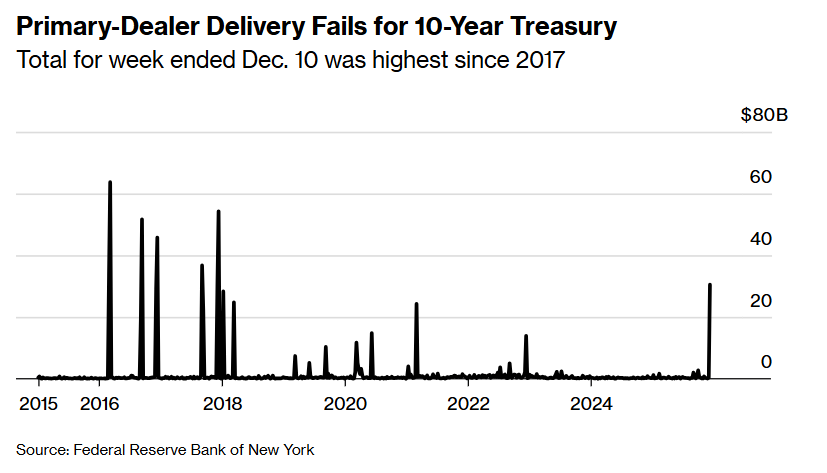
    The first data point comes from the bond market. As the well-known YouTuber and expert Furkan Yildirim writes on In just one week, so-called “fails” affected a volume of around $30.5 billion. This is the highest value since 2017.

    Primary dealer delivery defaults on 10-year US Treasury bonds
    Primary Dealer Deliveries on 10-Year US Treasury Notes | Source: @FurkanCCTV on X

    Yildirim explains the mechanism like this:

    “Imagine you buy something and the payment goes through, but the goods don’t arrive on time. Not because it’s broken. But because it’s difficult to get. With bonds, this happens when a certain security is suddenly in extremely high demand.”

    Specifically, numerous market participants needed exactly this ten-year bond at short notice, for hedging, to close positions or for technical reasons in trading. The result: scarcity. A particularly striking detail was that investors sometimes had to pay to borrow the bond. An atypical signal indicating demand exceeding available supply.

    According to Yildirim, part of the reason lies with the US Federal Reserve.

    “Part of the explanation is pretty simple: The Fed has been holding fewer bonds since 2022 because it is reducing its holdings. And: If the Fed has less of this new ten-year bond in its portfolio, it can also make less of it available to the market. This reduces the freely available share,” said Yildirim.

    This is relevant for Bitcoin investors because such tensions can indicate when liquidity in the financial system is becoming scarcer or more expensive. Not a crisis signal, but an environmental factor that influences risk assets. “Such friction is often an early indicator that something is becoming tighter in the financial system,” explains Yildirim, adding the connection to Bitcoin:

    “Bitcoin reacts strongly to liquidity. When there is enough leeway in the system, risky assets often perform better. When things get tight, things can quickly become unsettled. This bond shortage is not a direct Bitcoin trigger. But it is an example of how technical bottlenecks suddenly become visible in the background.”

    Long-term Bitcoin holders are accumulating again

    The second data point comes directly from the Bitcoin on-chain space. CryptoQuant CEO Ki Young Ju refers to an analysis by analyst Darkfrost (@Darkfost_Coc), which shows that long-term Bitcoin holders have recently significantly reduced their selling pressure.

    In his analysis, the CryptoQuant expert eliminated disturbing effects, in particular the movement of around 800,000 BTC from Coinbase, and discovered a bullish signal.

    Darkfrost explains via X:

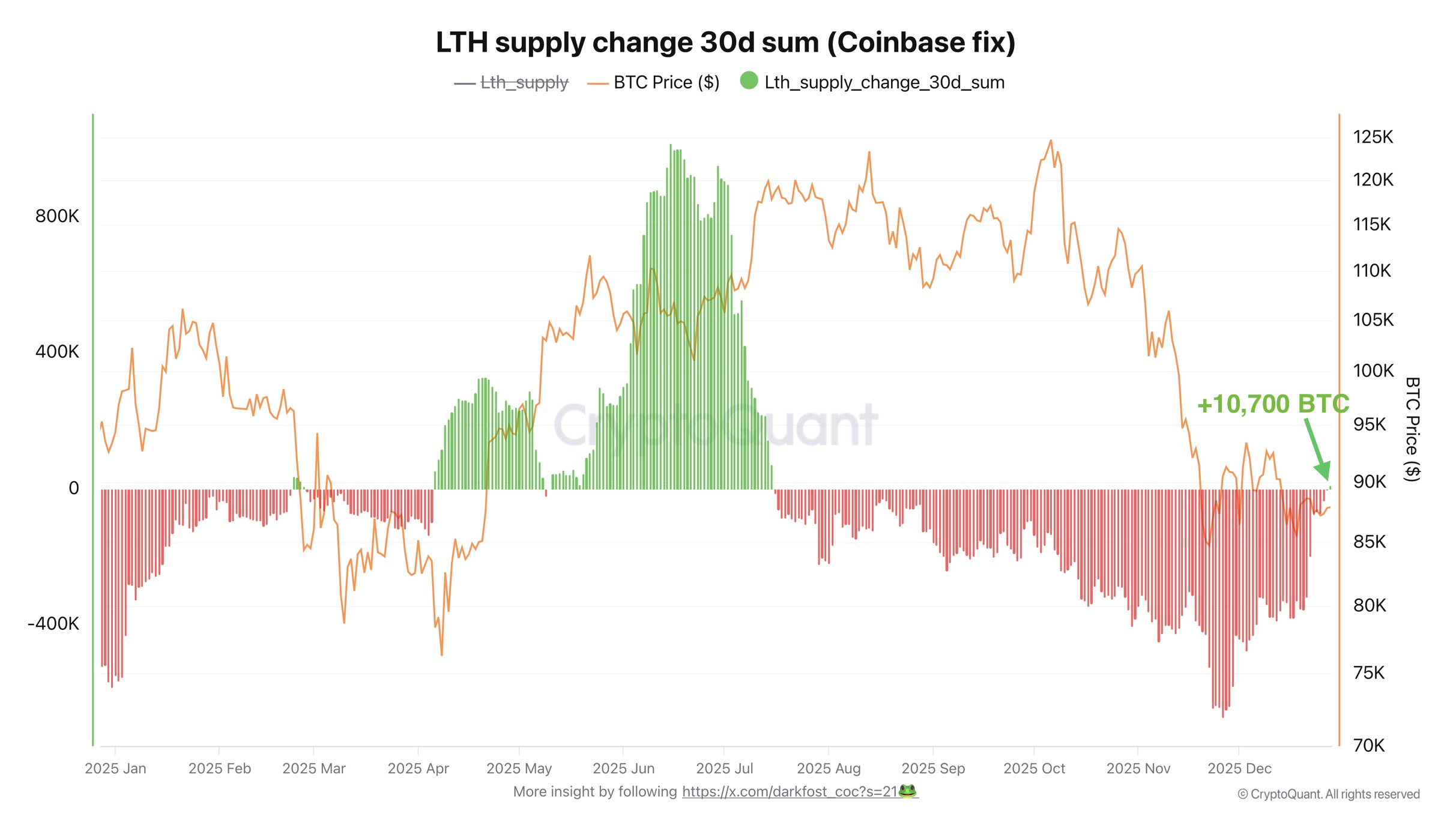
    “Since July 16th, the monthly change in LTH supply (30-day total) was clearly in a distribution phase until recently. In other words, the proportion of the supply held by LTHs has been steadily declining for months. Now we have returned to positive territory – around 10,700 BTC have moved into long-term held coins.”

    Bitcoin LTH Supply Change (30-Day Average)
    Bitcoin LTH Supply Change (30-Day Average), Source: @Darkfost_Coc on X

    While it’s only a moderate shift so far, “historically, such shifts have often preceded the formation of consolidation phases – or even bullish recovery moves, depending on how the overarching trend evolves,” said the on-chain analyst.

    Taken together, both data points do not indicate an immediate trigger for strong price movements, but provide important contextual information for the new year, especially for market participants who are keeping an eye on the mechanics in the background alongside central bank policy and technical analysis. As CNF reported yesterday, the vast majority of experts are bullish for 2026.