Category: Coins

Digital assets, cryptocurrencies, blockchain, and currency news.

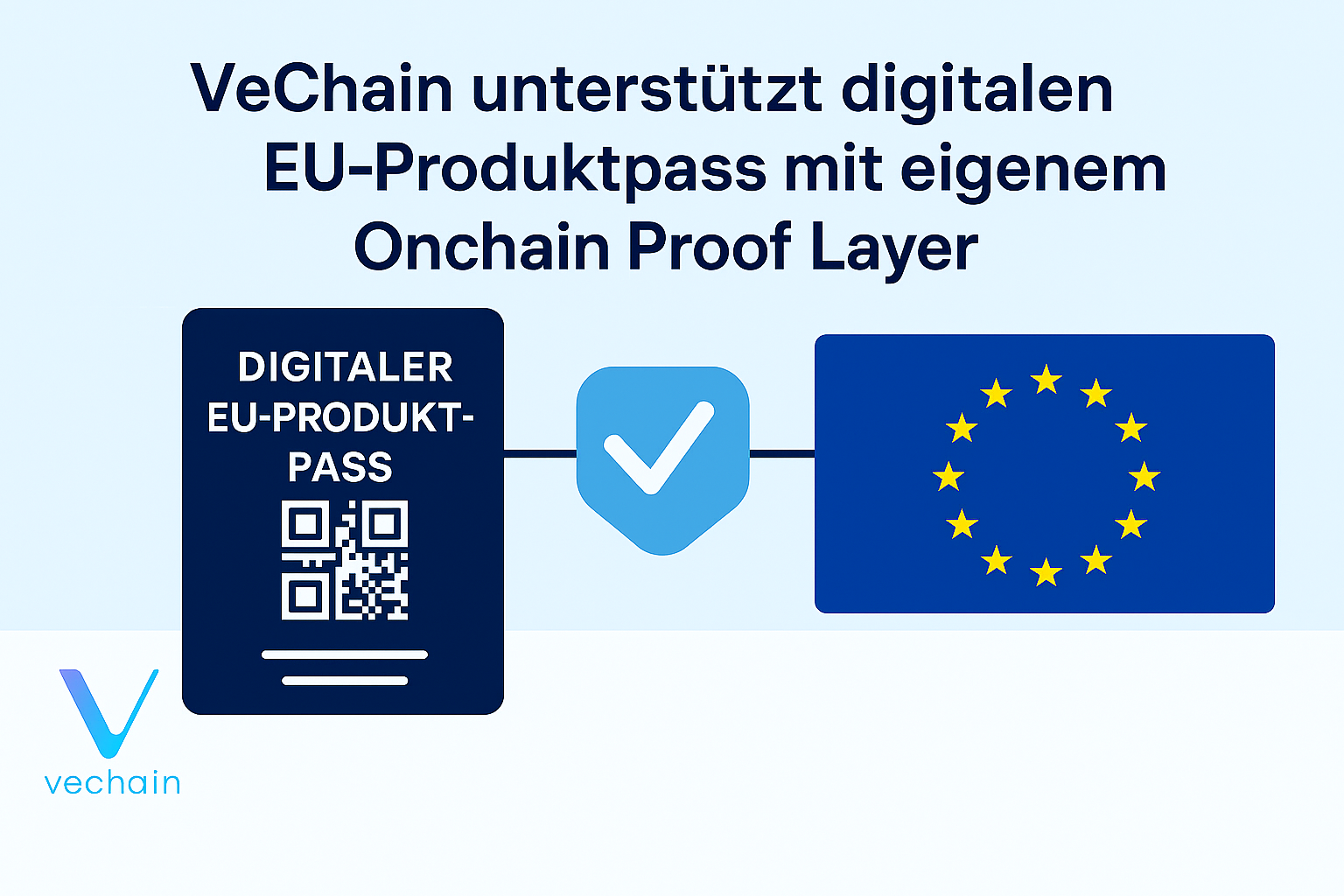
  • Digital EU product passport: Vechain builds the compatible blockchain

    Digital EU product passport: Vechain builds the compatible blockchain


    • VeChain is already adapting to the EU ESPR regulation, which will require the digital EU product passport from 2027. He must document relevant product data.
    • VeChain’s blockchain receives an additional onchain layer of proof in order to store the data in a forgery-proof manner and make it accessible to authorized parties.

    From 2027, according to the EU “Ecodesign for Sustainable Products Regulation” (ESPR), numerous industrial products – including textiles, batteries and electronics – must be delivered with a digital product passport that contains information on origin, materials, CO₂ footprint, repairability and recycling potential.

    Onchain Layer of Proof as a technological basis

    VeChain offers a new technical level of storing product data immutably on the blockchain. The data sources are validated via an API-based “trust layer” so that companies can anchor the information directly in the VeChainThor blockchain.

    This creates auditable and forgery-proof evidence that meets the requirements for digital product passports. This saves the affected companies from having to convert their own systems. The resulting transparency is intended to strengthen the circular economy and encourage companies to operate more sustainably.
    VeChain sees the new regulation as an opportunity to establish its blockchain infrastructure as a technical backbone for the new EU documentation requirement.

    What does this mean for companies?

    With this orientation, VeChain is specifically targeting European manufacturers, retailers and transport companies that must meet the upcoming legal requirements.

    EU regulation is creating a new market for digital product and sustainability data, and VeChain wants to position itself as a leading provider early on.

    With VeChain, companies can store their DPP data in compliance with the law and at the same time make supply chain and sustainability information verifiable. The technology makes product counterfeiting more difficult, reduces legal risks and enables companies to test their adaptation measures without time pressure and to react to the obligation to have a digital EU product passport, which will apply from 2027.
  • UK premiere: Tokenized deposits meet government bonds on the Canton Network

    UK premiere: Tokenized deposits meet government bonds on the Canton Network


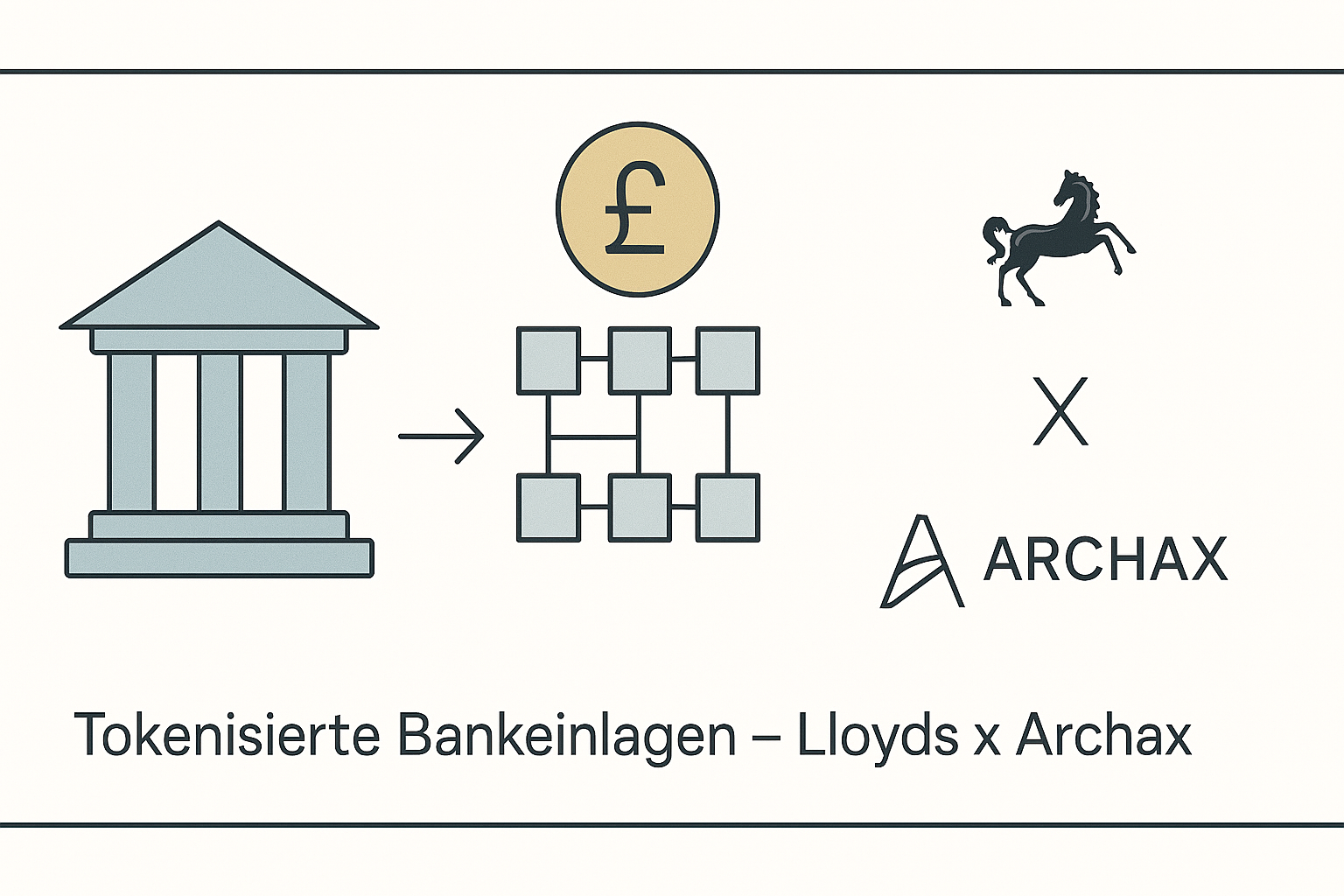
    • Lloyds and Archax hatten on January 7th in Great Britain together dhe first tokenized bank deposit transaction on a public blockchain.
    • One bought a government bond with tokenized pound sterling deposits – a Milestone for regulated financial markets through PoW.

    Lloyds Banking Group, one of the UK’s largest banks, and Archax, a fully regulated digital asset marketplace, shared a technological first on the Canton Network, a public blockchain network designed specifically for regulated financial markets. At the center of the campaign were two digital assets.

    The initial situation

    Firstly, Lloyds issued sterling bank deposits as tokens on a public blockchain for the first time. These tokenized deposits are fully backed by real-world FIAT bank deposits and are considered safer and more “reputable” from a regulatory perspective than stablecoins.

    On the other hand, Archax had issued a tokenized British government bond, which also exists on the blockchain. The special thing is that the two asset derivatives interacted with each other for the first time in a real, regulated transaction.

    The transaction

    Lloyds Bank PLC issued the tokenized deposits on Canton, which were subsequently used by Lloyds Bank Corporate Markets to purchase the tokenized government bond from Archax. The entire transaction took place entirely on-chain, while the connection to the traditional bank accounts of Lloyds customers remained intact. For the first time, the token of a British government bond was purchased with tokenized pound sterling deposits. That was the milestone.

    The financial industry is increasingly moving towards digitized assets that enable fast settlement, low risk and high transparency. Tokenized deposits are considered particularly promising because they combine the security of traditional bank deposits with the efficiency of blockchain technology.

    The transaction shows that traditional bank accounts, regulated digital assets and public blockchains can interact directly and smoothly. This is a crucial step so that blockchain technology can be integrated into the classic financial market without being undermined by regulatory standards.

    The meaning

    The transaction shows how capital markets can work in the future: fully digital, efficient, transparent and available around the clock. Lloyds and Archax have taken a historic step by completing a regulated financial transaction involving real-world assets entirely on a public blockchain for the first time.

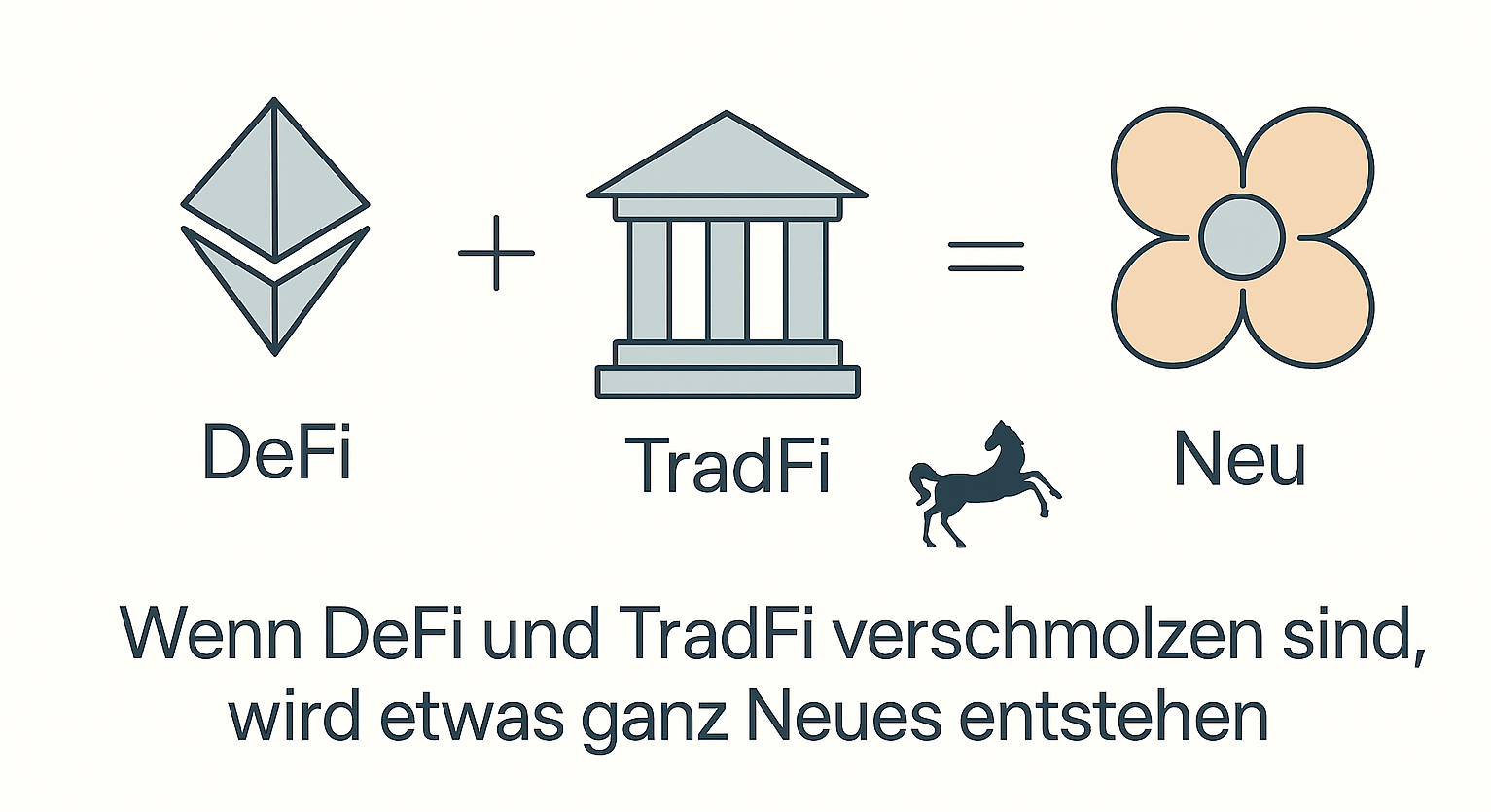
    So it works. One day, when DeFi and TradFi have finally merged, something completely new will have emerged that we don’t yet know what it will look like – but it will be simpler and safer.

  • Florida plans to remove state Bitcoin reserve, Ethereum and XRP for the time being

    Florida plans to remove state Bitcoin reserve, Ethereum and XRP for the time being


    • Florida is planning a state Bitcoin reserve led by the CFO.
    • A 500 billion US dollar hurdle currently means that only Bitcoin can be purchased.

    Florida is introducing new legislation that would allow the state to establish a state-managed Bitcoin reserve. The reserve will be managed by the Chief Financial Officer (CFO), with clear rules for custody, reporting requirements and a market capitalization hurdle that currently limits the selection to just Bitcoin.

    The push follows an earlier Florida bill from 2025 that would allow public funds to be invested in Bitcoin. This bill limited the allocation to up to 10 percent and also provided for Bitcoin payments to the government and the lending of holdings to generate additional income. However, the project got stuck in a committee.

    Those submitted now Legislative proposals shift the focus: Instead of a broad investment mandate across several public funds, the focus is on building a reserve structure that is accumulated through legal allocations of funds.

    Is the Bitcoin Reserve coming to Florida?

    House Bill 1039, filed Jan. 6, establishes the Florida Strategic Cryptocurrency Reserve as a special fund outside the state treasury, with custody and management at the CFO. The reserve can include not only purchased stocks, but also crypto assets that arise from forks or are distributed to government addresses via airdrop. Current income, interest or rewards should also end up in the reserve.

    Senate Bill 1040 regulates the trust fund side: It creates the “Florida Cryptocurrency Reserve” as a trust fund in the CFO Office and defines the purpose of “acquiring, holding, managing and disposing of crypto assets”, including to strengthen financial resilience and as a “potential hedge against inflation and economic volatility”. At the same time, the draft contains a time limit: without another legal extension, the trust fund will end on July 1, 2030.

    Both HB 1039 and SB 1038 attach a hard threshold to purchases. A cryptocurrency can only be purchased if it has had an average market capitalization of at least $500 billion over the last 24 months.

    This formally refers to “crypto assets”, but in fact only Bitcoin qualifies. Ethereum currently has a market capitalization of around $373 billion and would need to exceed the limit for two years (on average) before ETH would be an option. XRP would have to multiply its market cap of around $127 billion to reach the threshold.

    What is also interesting is that the bill requires that private keys be available exclusively from the state, not accessible via smartphones, located in at least two geographically separate, secure data centers, and that transactions be authorized via a multi-party governance model.

    The CFO may also engage third parties for custody, liquidity execution and independent audits and, if he deems it appropriate, may also use derivatives for purchases.

    An Advisory Committee is provided for political control. And: By December 31st of every even calendar year at the latest, the CFO should publish a report that shows inventory quantities, an estimate, inventory changes and the management measures of the period.

    Whether Florida has a state Bitcoin reserve in its second attempt now depends on whether the drafts make it through committees this time, while the size and timing of actual purchases will be decided by Florida’s CFO.

  • Suspicion: insider knowledge of polymarket bets

    Suspicion: insider knowledge of polymarket bets


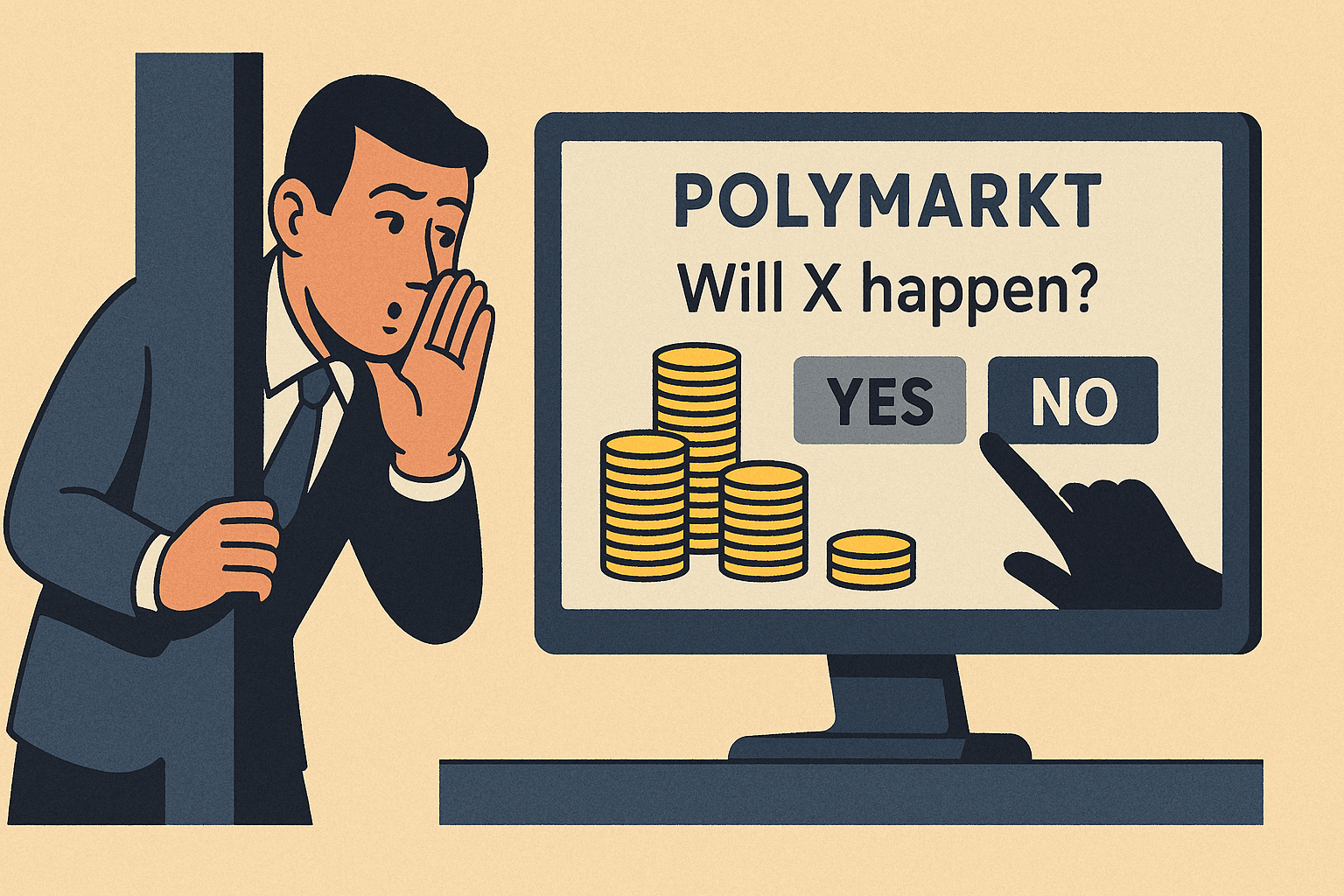
    • An account on the crypto forecasting platform Polymarket turned a stake of around $32,000 into a profit of over $436,000 within a few days.
    • The customer was counting on the early deposition or capture of Venezuelan President Nicolás Maduro by the USA.

    The bets were placed at a time when the market valued the probability of such an event at only around six percent. Just a few hours later, the US government confirmed the arrest of Maduro – and the betting winnings were paid out immediately. The exceptionally precise timing has now sparked a debate that extends far beyond the crypto scene.

    Single-use account for a single purpose

    According to several media reports, the Polymarket account in question was only opened on January 2nd. It is striking that the customer relied exclusively on aggression scenarios against Venezuela: a US invasion, the presence of American troops in the country, the removal of Maduro and even the activation of the “War Powers Act”, the restriction of war powers by President Trump.

    The War Powers Act is a 1973 US federal law that limits the US president’s war powers. It was passed in response to the Vietnam War to ensure that Congress regained a stronger role in military decisions.

    Blockchain analysts identified additional wallets that had placed similar bets shortly before the military operation. This has raised the question of whether the war speculator simply had an exceptional sense of the emerging developments, or whether he had insider information that was not available to the public.

    Political explosiveness and open questions

    There is currently no official evidence of an information leak, but the combination of exactly on-time account opening, precisely formulated bets and exact timing of the bets still raises eyebrows.

    The discussion about possible insider knowledge has now reached political dimensions. According to Decrypt, a US representative is working on a bill that would explicitly ban the use of confidential government information on prediction markets.

    At the same time, industry representatives argue that forecast markets function fundamentally differently than traditional financial markets and that insider knowledge can contribute to efficiency there.

    The first bets are now circulating as to whether and when Greenland will become the 51st US state.

    The first bets are now circulating as to whether and when Greenland will become the 51st US state.

  • Barclays Bank joins FinTech Ubyx

    Barclays Bank joins FinTech Ubyx


    • The major British bank Barclays has acquired a stake in the US fintech Ubyx, thereby sending a signal for the next possible development phase of digital financial infrastructures.
    • As Reuters reports, Barclays primarily wants to use the investment to evaluate regulated forms of “tokenized money”, i.e. digital forms of money that are regulated within the existing supervisory framework.

    The idea is not to have your own tokens, but to take care of the infrastructure that integrates stablecoins into existing systems. Ubyx is developing a settlement and clearing layer that connects stablecoins from multiple issuers and allows them to be redeemed at par. Stablecoins should be better integrated into the traditional financial system and recognized as cash equivalents.

    The company is working on an infrastructure that will treat stablecoins like classic bank deposits – regardless of blockchain, issuer or wallet environment. The aim is a universal settlement layer that allows banks, fintechs and institutions to use digital forms of money in a standardized, regulated manner. Barclays sees this as a strategic building block for future capital market and payment processes, especially in light of its own regulation in its home country of Great Britain.

    Wanted: The best digital money standard

    The project represents the intention of major banks not to primarily issue their own tokens, but to focus on the infrastructure that integrates stablecoins and tokenized deposits into existing systems. Barclays has already participated in several industry projects focused on G7-backed, fully reserved digital bank money systems.

    By joining Ubyx, Barclays is now entering an early market in a market that is expected to consolidate quickly once the Bank of England and the Financial Conduct Authority present their final regulatory framework for stablecoins. The aim is to make tokenized money, such as deposits based on stablecoins or tokenized bank balances, usable for regulated financial institutions.

    Ubyx is already backed by Coinbase Ventures and Galaxy Digital, according to Reuters, and is considered one of the few companies focused exclusively on regulated interoperability.

    Financial details about the investment were not disclosed. For Barclays, however, it is the clearest approach to stablecoin-based settlement models to date – and an indication that the bank does not view digital forms of money from a speculative perspective, but rather as a further development of the payment infrastructure.

  • 25% in seven days: XRP surprisingly moves ahead of BTC and ETH

    25% in seven days: XRP surprisingly moves ahead of BTC and ETH


    • In the first days of the new year, the crypto market is experiencing a development that astonishes even experienced market observers.
    • While Bitcoin and Ethereum traditionally set the pace, an altcoin that was long considered a laggard is suddenly taking center stage: XRP.

    The cryptocurrency XRP, under the care of Ripple, the service provider for international commercial payments, at times significantly outperformed the price development of the two industry leaders Bitcoin and Ethereum. What initially appears to be a positive volatility swing turns out to be the result of a combination of structural market forces, the effect of new regulation and a wave of institutional demand.

    In the last 7 days, XRP has performed significantly better than Bitcoin (BTC) and Ethereum (ETH). XRP is about scarce 25 % increased week-on-week, while BTC only gained around +6% and ETH gained around +10% in the same period. This means that XRP has clearly outperformed in percentage terms and exceeded the altcoin performance of the two major market leaders. At the time of writing, XRP is at 2.21 USD.

    The main cause is the capital flows into newly launched XRP ETFs. Within just a few weeks, billions of dollars flowed into these products, a volume that exceeded even optimistic forecasts. The result was a sharp price increase, which temporarily raised XRP to a level that many investors no longer considered possible after previous years of unfulfilled forecasts. But ETF inflows are only part of the story.

    Institutional demand and regulation

    A key driver of recent developments is the changing attitude of institutional investors. After the long-standing legal dispute between Ripple and the SEC was finally settled in 2025, the perception of XRP has fundamentally changed. The regulatory uncertainty that has plagued the token since 2020 is gone.

    For professional investors, this is the prerequisite for even thinking about XRP-based financial products again. With the approval of several XRP ETFs in the USA and Europe, new opportunities opened up. Fund managers were now able to invest in regulated XRP products for the first time.

    The result was a wave of capital that permanently changed the market. Ethereum is also benefiting from the new ETF dynamics, but growth expectations seem to be higher for XRP – not least because XRP is considered undervalued. This creates an environment in which even moderate capital inflows trigger disproportionate price reactions.

    How sustainable is the new dynamic?

    The market structure plays into the hands of XRP. Compared to Bitcoin and Ethereum, the market capitalization is significantly smaller, meaning that larger capital inflows cause much larger swings. While a three-digit million amount is hardly noticeable for Bitcoin, the same amount can trigger percentage price movements for XRP. This explains why XRP is at times clearly ahead of the two market leaders in relative terms.

    Still, some experts warn that a significant portion of the recent rally is based on short-term capital flows, which can turn around just as quickly. Others point out that although XRP is now clearly regulated, it now has the problem of having to catch up with other payment providers because it was only active in the market for a good five years “with the handbrake on” due to the SEC process.

    However, it is already clear that XRP has shaped the beginning of 2026 like no other altcoin. The combination of ETF inflows, institutional realignment and market effects has put XRP in a position that long seemed unattainable. Whether this creates a sustainable trend or just a powerful moment in the cycle – the market will decide in 2026.

  • Silent Revolution: Why Deutsche Bank is interested in VeChain

    Silent Revolution: Why Deutsche Bank is interested in VeChain


    • Deutsche Bank is building a future that will be radically different from anything the financial world has ever known. Tokenized securities, digital settlement, programmable assets.
    • As the technical vision becomes clearer, a crucial question remains: Which blockchain should the new financial architecture actually run on? The name VeChain appears more and more frequently.

    VeChain has earned its reputation as Specialist in supply chains, but has now become a serious candidate for general RWA tokenization. VeChain is a highly interesting partner for a bank that not only wants to manage digital assets but also connect them with real data.

    Why VeChain is an option

    Deutsche Bank is observing the development of tokenization with the calm of an actor who knows that he cannot afford to make a wrong decision. Scalability, governance, compliance with existing and future regulation – all of this must be taken into account.

    VeChain covers areas that are increasingly critical for institutional capital markets because its systems are designed to REmbedding eal-world data into digital assets in a tamper-proof manner is something that goes far beyond classic cryptocurrencies. For Deutsche Bank, which is heavily involved in ESG reporting, supply chain financing and tokenization, this is more than just a technical detail.

    It is a possible building block for products that are regulatory-compliant and innovative. Nobody is officially talking about a partnership yet; But in the logic of the “Tokenized Capital Markets Thesis” – the assumption that real assets will be digitized, fragmented and programmable in the future – VeChain inevitably comes into focus as a technology basis.

    Capital markets in transition

    The Deutsche Bank Research Institute is convinced that tokenization is not just a trend, but a structural change. A global wealth transfer of over $80 trillion is imminent, and digital assets could provide the infrastructure to make it efficient. If capital markets are based on real-time data in the future, if CO₂ certificates, supply chain status data and proof of production become tradable assets, then proven technology is needed to reliably provide this data.

    Vechain fits

    VeChain has specialized in exactly this in recent years and has thus occupied a – now former – niche that is now becoming strategically relevant. This does not mean that a Deutsche Bank/VeChain collaboration is imminent.

    But it means that highly specialized systems like VeChain are no longer peripheral, but are becoming the infrastructure elements of a new financial world.

    In this world, securities are no longer printed – they are programmed.

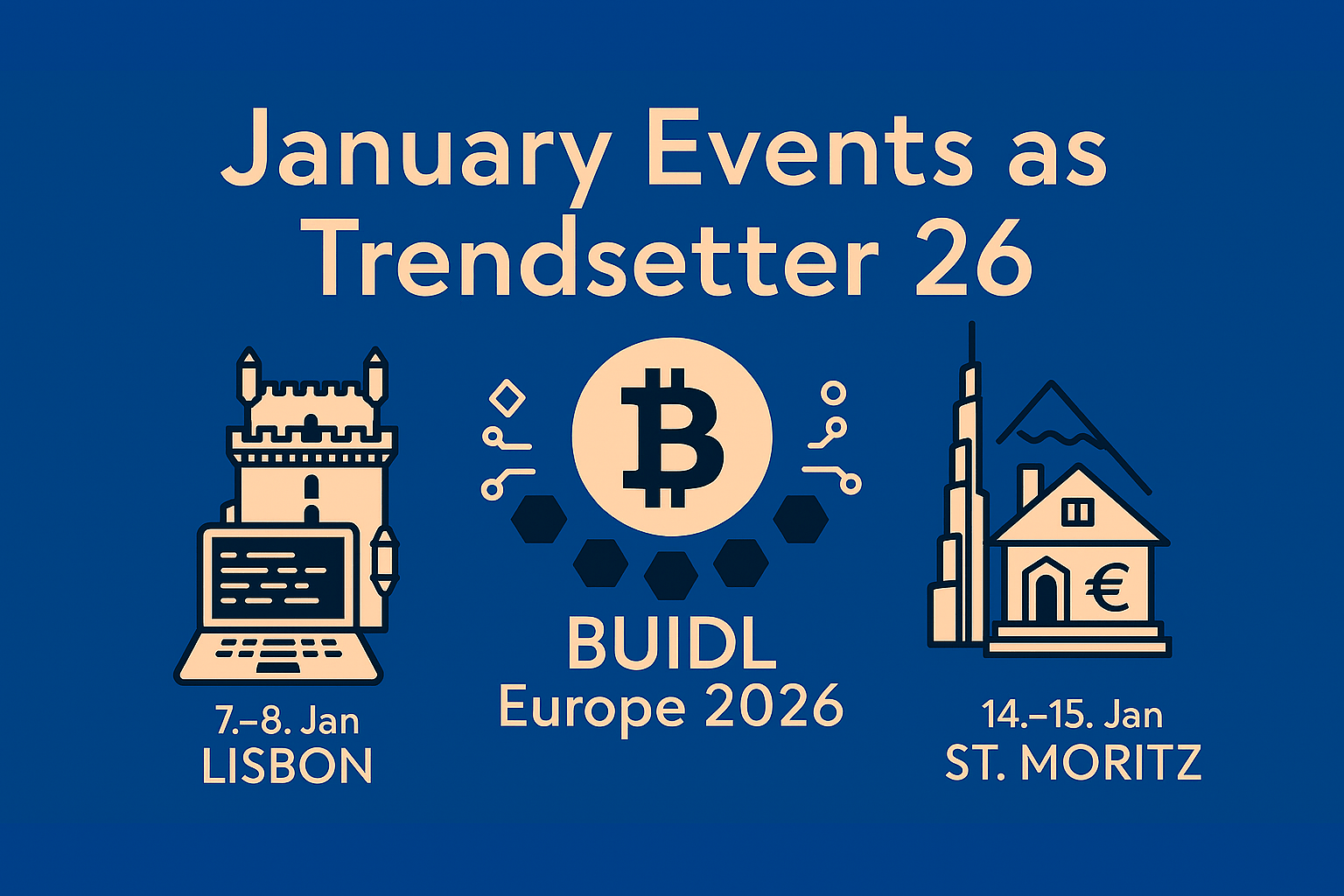
  • Bitcoin & Crypto in January: These dates are important

    Bitcoin & Crypto in January: These dates are important


    • 2026 begins with three events that could hardly be more different: a technical builder meeting in Lisbon, a global Web3 expo in Dubai and an exclusive institutional summit in St. Moritz.
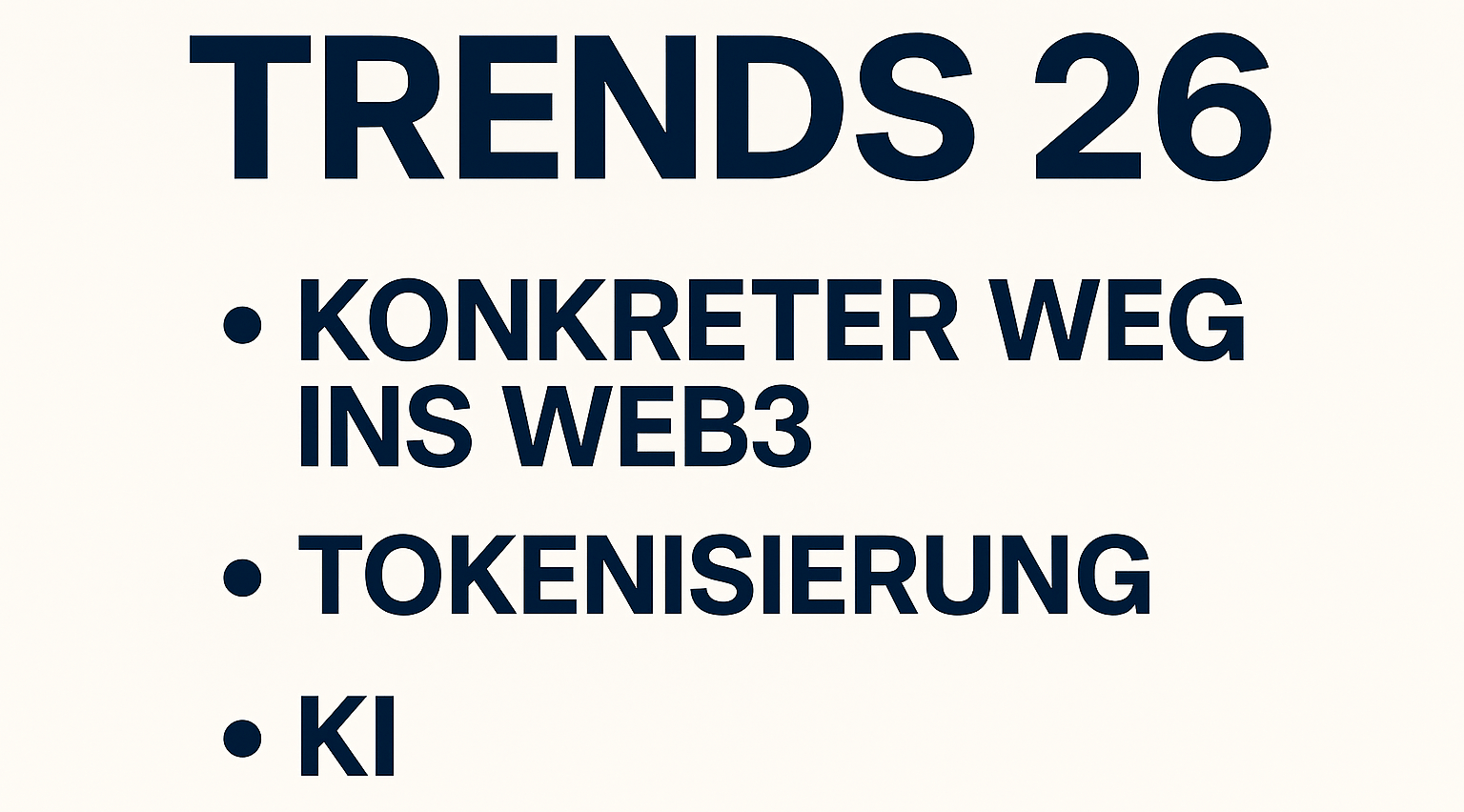
    • Together they set the agenda for the crypto industry with topics that will define the year: infrastructure, tokenization, regulation and institutional adoption.

    Die BUIDL Europe remains true to its claim of being an event for doers. The conference is aimed at developers, protocol teams and founders who work on the technical basis of Web3.

    7–8 January: BUIDL Europe Lisbon – The path to the web3

    The focus is on new Layer 2 architectures, zero-knowledge technologies, interoperability and the question of how Web3 applications can be scaled without losing their decentralization.

    The intention of the event is clear: less marketing, more code. Lisbon is once again positioning itself as a European center for Web3 development. The impact is traditionally noticeable because many projects deliberately set their technical roadmaps, toolkits or protocol upgrades for this date.

    For the market, this means: new standards, new narratives and often the first signals about where the infrastructure is heading in the new year.

    January 14th to 15th: Web 3.0 Expo Dubai – Tokenization and AI

    Dubai uses this Web 3.0 Expo as a stage to consolidate its role as a global Web3 location. The event is much broader than BUIDL Europe.

    It attracts startups, AI companies, gaming studios, regulators, investors and media. The intention is to showcase the fusion of tokenization, artificial intelligence, digital identity and DeFi while underlining Dubai’s liberal regulatory ambitions.

    The impact of such expos is less technical and more geopolitically and economically relevant. New partnerships are emerging, tokenization projects are announced, and the MENA region is providing momentum that is increasingly being perceived globally.

    For investors, Dubai is an indicator of which topics are gaining regulatory and economic tailwind – particularly RWA tokenization, AI-powered protocols and Web3 gaming.

    January 14th to 16th: CfC St. Moritz – setting the pace for institutions

    The CfC St. Moritz remains one of the most exclusive crypto events worldwide. The list of participants consists of family offices, banks, asset managers, regulators and founders. The intention is not public visibility, but rather confidential exchange about regulation, macro trends and institutional strategies.

    The impact of this peak is subtle but significant. Many regulatory and institutional trends that become big later in the year arise here in a small circle. Switzerland is using the event to strengthen its position as a regulated, yet innovation-friendly location in Europe.

    For the market, this means: signals on ETF structures, custody, compliance standards and institutional capital flows. What is being discussed in St. Moritz has influenced the strategic direction of major investors more than once.

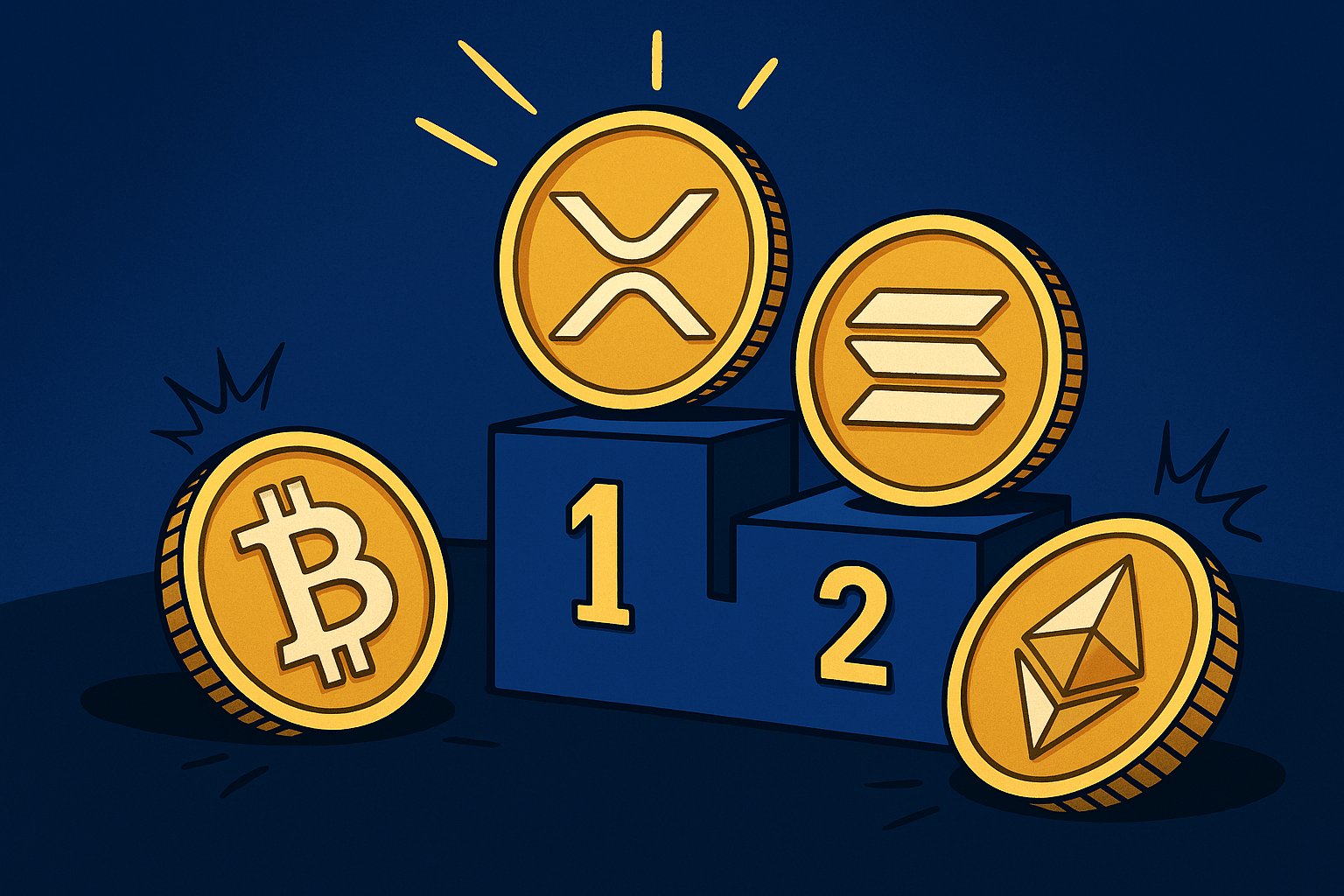
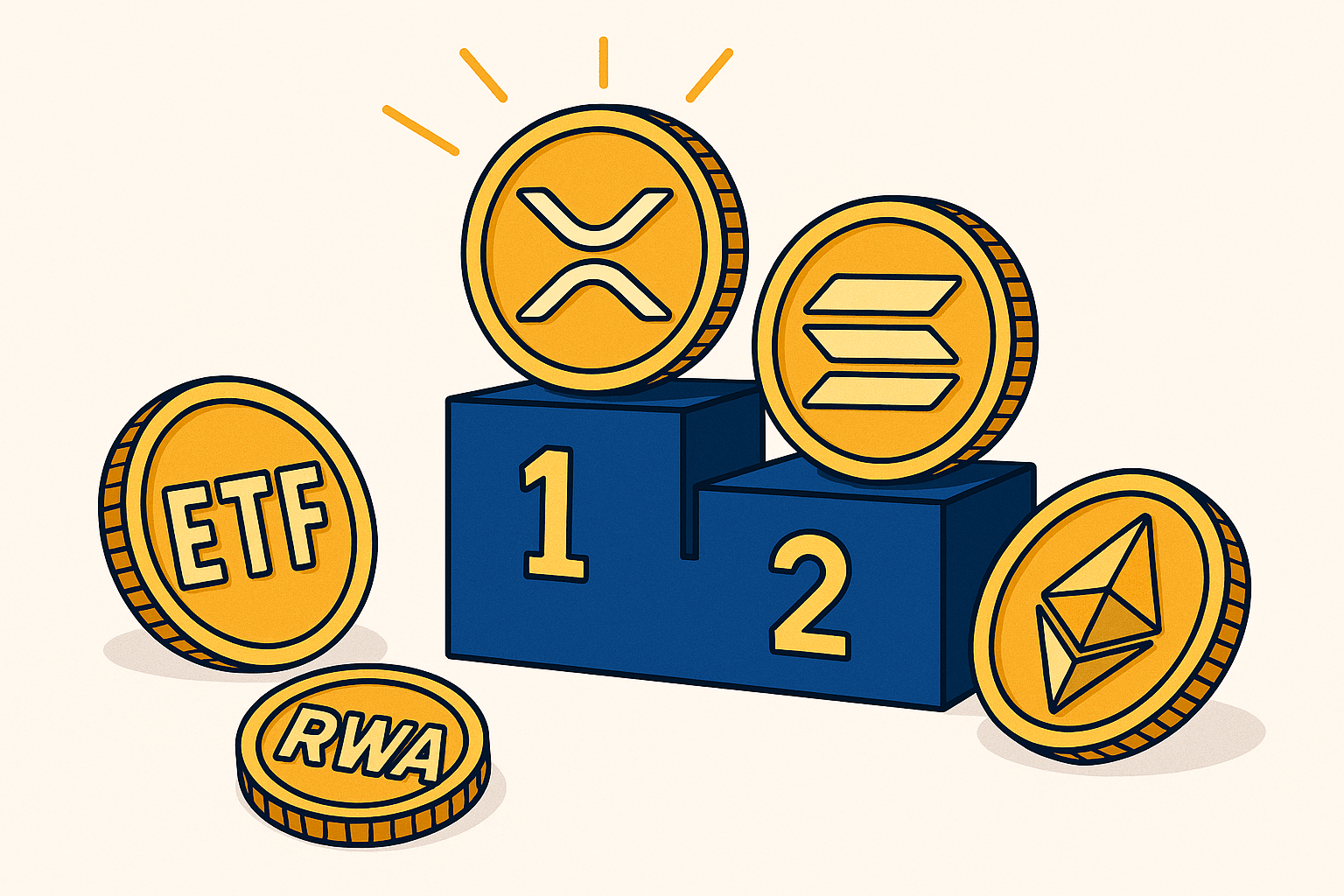
  • Bitcoin and Ethereum dethroned – Institutions prefer XRP and SOL

    Bitcoin and Ethereum dethroned – Institutions prefer XRP and SOL


    • Bitcoin and Ethereum have been the favorites of almost every institutional investor for over a decade.
    • But in 2025, capital flows and strategic allocations increasingly shifted to XRP and Solana.

    This is not only an indicator of the technological quality of the two new champions, but it also reflects the new, clear regulation and real-world use cases that institutions are looking for.

    The data speaks for itself: XRP and Solana had the largest growth in inflows, while Bitcoin suffered a loss of importance for the first time since 2018.

    ETFs and RWA tokenization were the deciding factor

    The rise of XRP was largely aided by the approval of several spot ETFs in the US and Europe. All of them have not had a single day of net outflows since their launch – a first in crypto ETF history.

    At the same time, the CLARITY Act provided new regulatory certainty, positioning Ripple-based payment infrastructures as Ripple has arrived in the EU banking system.

    Solana, on the other hand, impressed with its role as a leading platform for the tokenization of real assets. Over $873 million in real world assets, including tokenized shares of Tesla, Nvidia and even treasuries, were issued on Solana in 2025.

    Institutional heavyweights such as BlackRock, Franklin Templeton and Ondo Finance relied on the network’s scalability and low transaction costs. Western Union also announced a Solana-based stablecoin platform for over 150 million customers – a move that underscores the network’s relevance in global payments.

    Bitcoin and Ethereum remain relevant

    Despite their market capitalization and historical dominance, Bitcoin and Ethereum suffered a decline in importance in 2025.

    Although Bitcoin remains the asset with the highest turnover, institutional investors are increasingly seeing innovation potential elsewhere. Although Ethereum was reclassified as a “core asset”, XRP and Solana overtook it in terms of growth dynamics and real economic integration.

    The new institutional crypto elite is no longer just defined by large market shares, but increasingly by regulatory compliance, technical scalability and strategic integration into global financial infrastructures.

    XRP and Solana meet these criteria – and have therefore established themselves as new favorites.

  • Controversial Bitcoin Upgrade: What’s behind the Core v30 problem?

    Controversial Bitcoin Upgrade: What’s behind the Core v30 problem?


    • The Bitcoin Core v30 upgrade not only affects technology, but also network policy. The limit for OP_RETURN data is to be increased drastically.
    • While it was previously only possible to embed comparatively tiny amounts of data in transactions, the new version allows up to 100 kilobytes.

    Critics say the adjustment is a risky design decision that could have dire consequences. They warn that this could cause the blockchain to reach a size that would jeopardize the decentralization of the Bitcoin project.

    However, supporters argue that the change merely formalizes existing options and creates more flexibility. The discussion shows how sensitive interventions in the Bitcoin infrastructure are perceived by the community and how quickly technical decisions can take on political dimensions.

    Central structure is affected

    The operators of the full nodes, which as a whole form the backbone of the blockchain network, are particularly affected. In the future, you will have to provide significantly more storage space and bandwidth because large amounts of data can be stored in the blockchain via OP_RETURN.

    For many node operators this means: they need new, expensive hardware. Exchanges and mining pools must adapt their infrastructure in order to continue to work reliably and not risk overloading their nodes.

    Developers of alternative Bitcoin implementations also have to decide whether to adopt the change or consciously distance themselves from it.

    Uncertainty about how the network will behave in the coming months is causing reluctance to upgrade nodes. Some operators are waiting, others are testing the new version in isolation in order to better assess possible effects.

    What those affected can do now

    For many, the question arises as to how they should deal with the situation. The most sensible recommendation is not to implement the update too quickly, but rather to first follow the ongoing discussion in the developer community. Anyone who runs a node can also adjust local rules to limit or simply reject large OP_RETURN transactions.

    Companies should review their capacity planning and set up monitoring systems to detect unusual mempool activities early. Since the debate is ongoing, there is a possibility that the change will be modified or withdrawn in a later version.

    Until then, caution is advised. Bitcoin Core v30 shows once again how complex and sensitive the further development of a global, decentralized system is and how important it is to critically monitor technical innovations.