Category: Coins

Digital assets, cryptocurrencies, blockchain, and currency news.

  • IOTA launches name service: On-chain handles come to the mainnet

    IOTA launches name service: On-chain handles come to the mainnet


    • IOTA launched “IOTA Names” on January 12, 2026: human-readable on-chain names are intended to simplify transfers and reduce errors.
    • There will be an X-Space at 2:00 p.m. CET for the launch.

    On Monday, January 12, 2026, IOTA announced the launch of IOTA Names, an on-chain naming service that replaces wallet addresses with human-readable names to simplify transfers and identity representation in the IOTA ecosystem. In the announcement via X, the IOTA Foundation writes:

    “Your onchain identity just got a whole lot easier. IOTA Names is live today, delivering human-readable names that make sending and receiving IOTA and more much easier.”

    For the launch, the IOTA Foundation has announced an X-Space at 2:00 p.m. CET, in which the scope of functions and how to get started will be explained.

    IOTA addresses finally become readable

    As known from Ethereum and other networks, IOTA Names will allow the registration of readable names in the style of “dom.iota” instead of long addresses and is intended to reduce sources of errors in transfers and map identity on the network more easily.

    It is important for users and developers to know that name resolution is not “magic” but is addressable at the protocol/API level. In the IOTA documentation, for example, there is a GraphQL query to resolve an IOTA name to an address (“resolveIotaNamesAddress”).

    Dedicated methods also appear in the TypeScript SDK API, including lookup, reverse lookup and finding “registration NFTs” for an address. This means that registrations are mapped as on-chain objects/NFTs and can be managed programmatically.

    The testnet version was already promoted by the IOTA Foundation with functions such as subdomains and an auction system. The IOTA Names account on

    “Over 7,000 addresses have already been auctioned. Auctions are intended to serve as a fair launch mechanism when the mainnet launches. Afterwards, names can be purchased immediately.”

    In October, the official account promoted IOTA Names as a scarce on-chain commodity: “The next wave of digital assets aren’t tokens, they’re names. Short, clean onchain names are becoming prime digital real estate. The pattern is clear: Simplicity → Scarcity → Value.”

    High secondary market sales from other naming systems are sometimes cited as a reference. For example, paradigm.eth sold for 420 ETH ($1.5 million), 000.eth for 300 ETH ($317,000), abc.eth for 90 ETH ($253,000), cat.sol for more than 7,000 SOL ($150,000), and sui.sui for around $45,000.

  • OKX launches crypto rewards program in the EEA

    OKX launches crypto rewards program in the EEA


    • Crypto exchange OKX is expanding its offering in the EU and introducing a new rewards program for customers in the EEA.
    • It is reacting to the new EU crypto regulation and the associated restrictions on comparable offers from other providers.

    In the “Crypto Rewards” rewards program, customers can deposit USDC, Bitcoin, Ether or Solana into a flexible earnings program. Returns are calculated continuously and credited hourly.

    3.5 percent ROI per year

    For USDC, OKX cites an average annual return of 3.5 percent. There is no fixed term or lock-up period, which distinguishes the product from classic staking and lock-up models, which are now subject to new requirements in the EU.

    OKX emphasizes that the new offer is fully compatible with the applicable EU regulations. The background is the introduction of the EU MiCA regulations, which reorganizes the market for crypto services and, in particular, regulates income and interest products more closely.

    Several international stock exchanges have already restricted or suspended their earn programs in Europe to avoid regulatory risks.

    OKX is recommended as a long-term partner

    Several international stock exchanges have already restricted or suspended their earn programs in Europe to avoid regulatory risks.

    OKX still sees growing demand for simple, transparent revenue models, especially in the area of ​​stablecoins. Many European customers hold large holdings of USDC and USDT without using them productively.

    OKX wants to close this gap and at the same time recommend itself as a long-term partner for investors in the European market.

    With the introduction of the new rewards program, OKX is sending a signal that the European Economic Area – which extends beyond the EU – is still viewed as a strategically important market despite stricter regulation.

    It remains to be seen whether the offer will also encourage other providers to reassess their presence in the earn segment

  • UN and Tether: Strategic alliance against organized crypto crime

    UN and Tether: Strategic alliance against organized crypto crime


    • The UN and Tether Limited are working together to combat rampant crypto crime in Africa, one of the fastest-growing crypto markets.
    • The aim is to specifically combat fraud, illegal financial flows and related human trafficking.

    The cooperation between the United Nations Office on Drugs and Crime (UNODC) and the company Tether Limited, which was announced on January 9th, is a milestone in the global fight against international organized crime, which is increasingly using cryptocurrencies as tools of crime.

    Africa is one of the fastest growing crypto markets, but crypto crime is also growing rapidly. This is where the cooperation between the UNO and Tether comes into play. It plans to introduce crypto-security, fraud prevention and victim assistance programs, with Nigeria, Uganda and Congo at the top of the list.

    Why Africa and why Tether?

    Africa has the third fastest growing crypto region in the world, while also being a hotspot for scams, fraud networks and exploitation by other types of cybercrime.

    The increasing use of USDT, particularly in Nigeria, is the reason for the direct involvement of Tether Limited as a USDT issuer in the fight against stablecoin abuse by criminals.

    The cooperation includes four specific projects:

    1. Cybersecurity training programs be established at universities in Africa and also in Papua New Guinea. The goals are to recognize fraud patterns, the safe use of digital assets and the teaching of blockchain basics.
    2. Protection programs Victim protection initiatives should be financed for victims of human trafficking and digital exploitation. Local authorities and NGOs should be supported in identifying perpetrators and structures.
    3. Blockchain‑Analyst is intended to identify illegal financial flows. These money flows should be tracked and connections with fraud, corruption or terrorist financing uncovered so that law enforcement authorities can take action.
    4. „Strategic Vision for Africa 2030“ The UNODC initiative aims to promote economic resilience, build secure digital infrastructures and improve cooperation between governments, law enforcement and the tech sector.

    The program will specifically start in Senegal, Nigeria, Congo, Malawi, Ethiopia, Uganda and Papua New Guinea, although this state is not in Africa but north of Australia.

    Importance of the alliance

    The cooperation between UNODC and Tether Limited is the largest security policy partnership to date in which a crypto company is directly involved. It shows that stablecoins are not just financial instruments, but can form a global infrastructure that can be used in the fight against crypto-crime.

  • First mega hack of the new year – Truebit loses $26 million

    First mega hack of the new year – Truebit loses $26 million


    • Blockchain security experts at Cyvers Alerts uncovered a suspicious on-chain transaction on the Truebit protocol on Thursday.
    • A single address received 8,535 ETH, marked as a “Truebit Protocol Purchase” – estimated damage: around $26 million.

    The crypto market is experiencing the first shock of the new year: The Truebit protocol has lost more than 8,500 ETH, the equivalent of around $26 million, due to a serious exploit. Truebit is a blockchain scaling protocol which outsources complex calculations to reduce costs and increase performance by executing tasks offchain.

    The first clues came from the Blockchain‑Analysefirma Cyvers Alertswhich noticed an unusual transaction in which a single address received thousands of ETH, marked as “Truebit Protocol: Purchase.”

    It quickly became clear that this was not a legitimate operation, but rather a targeted attack on an outdated smart contract that had not been updated in years.

    The attackers got the TRU tokens practically for free and then exchanged them for ETH, depleting the project’s reserves in a very short time.

    TRU token collapsed after a few hours

    The immediate consequences for the TRU token were dramatic. Within a few hours, the token lost almost all of its value. Price data shows a fall of 99.95 percent – ​​effectively a total loss.

    Liquidity collapsed on decentralized exchanges while Partially freezing data feeds or displayed incorrect values. For many investors who still view Truebit as an experimental but ambitious project in the area of ​​off-chain computing power, the collapse came as a complete surprise.

    The incident joins a series of security issues affecting outdated smart contracts and raises questions about how long unmaintained protocols can “survive” in a blockchain system.

    Public prosecutor’s office is investigating

    The Truebit team has since confirmed the incident and stated that they had been informed of a hacker attack.

    They are working closely with law enforcement to identify those responsible and trace the stolen crypto assets. At the same time, a technical post-mortem is being prepared to reveal the exact cause and sequence of the attack.

    For the crypto market, the case is a warning example of how dangerous outdated smart contracts are. The investigation is ongoing, and at this time it is not certain whether Truebit will recover from this blow or whether it has initiated the project’s final demise.

  • Ripple starts business operations in Great Britain – and has its foot in the door to the EU

    Ripple starts business operations in Great Britain – and has its foot in the door to the EU


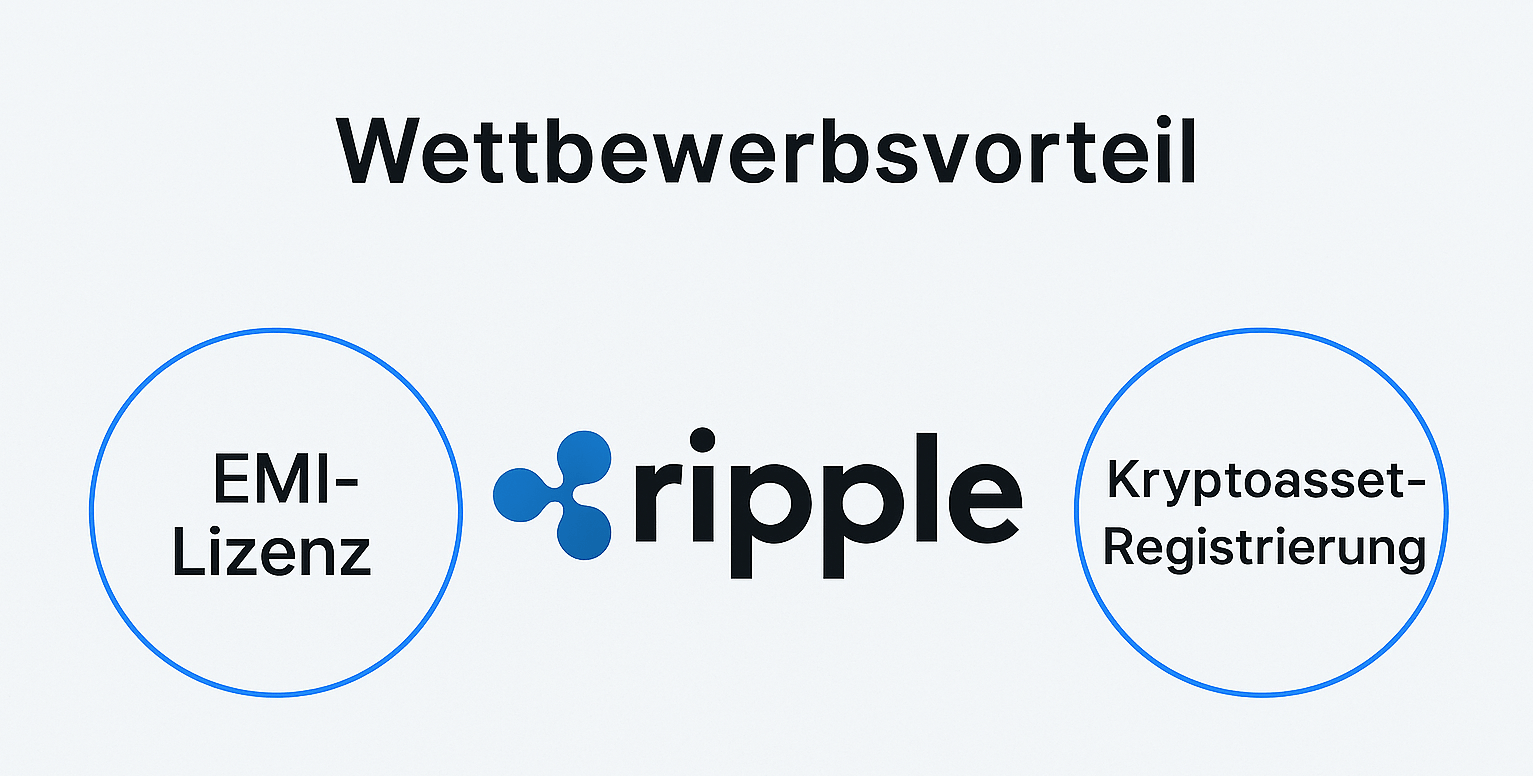
    • Ripple has the Electronic Money Institution License (EMI) in the UK and the Cryptoasset Registration from the Financial Conduct Authority FCA – and thus the legal basis for starting business operations.
    • The FCA is considered one of the most demanding regulatory authorities in the world. Therefore, these licenses have a signaling effect for possible applications for corresponding approvals in the EU.

    The EMI license gives Ripple permission to issue electronic money and offer regulated payment services. This puts the company in the same league as established FinTechs such as Revolut or Wise, but with a focus on blockchain-based infrastructure.

    The license commits Ripple to high standards of capital adequacy, risk management and compliance. At the same time, it creates the basis for offering cross-border payment services via Ripple Payments directly in the British market and for acquiring institutional customers. They can rely on a regulated, technologically modern alternative in international payment transactions.

    The second approval, Cryptoasset Registration, confirms that Ripple complies with UK anti-money laundering and counter-terrorism financing requirements. This is a requirement for all companies wanting to offer crypto services in the UK.

    Duties and opportunities

    The two new FCA licenses give Ripple a significant boost in its reputation with EU supervisory authorities, as the British financial regulator is considered particularly strict and has high requirements for compliance, governance and money laundering prevention.

    This puts Ripple in a very good starting position to enter into discussions with EU regulatory authorities and strengthens the starting position for later MiCA licensing, which will become mandatory in the EU in 2026.

    Of course, the British licenses do not replace EU approval, but they show that Ripple already meets many of the requirements that the EU requires in its MiCAR. At the same time, Ripple is becoming more attractive to EU banks and payment service providers, who prefer to work with partners who are authorized in regulated markets and can demonstrate robust AML processes.

    In addition, Ripple can already gain indirect access to EU customers through British financial institutions that themselves have EU licenses, which enables preparatory operational expansion even without an EU license.

  • One week of DAC8 in the EU: Reactions to the new tax reporting requirement

    One week of DAC8 in the EU: Reactions to the new tax reporting requirement


    • A week after it came into force, DAC8 is causing a heated data protection debate, especially in the crypto community.
    • Large crypto service providers and tax authorities see the new rules as a necessary step towards tax transparency.

    Since the DAC8 Directive came into force, there has been noticeable unrest in the European crypto industry. Private users and smaller providers in particular express concerns about the expanded reporting requirements. The automatic and mandatory recording of tax IDs and detailed transaction data is often perceived as an invasion of financial privacy.

    Forums and social media are dominated by discussions about possible risks from data leaks and the question of whether the new requirements could lead to increased migration to less regulated markets. The uncertainty is further increased by the fact that many technical and organizational details of the implementation have not yet been fully clarified.

    Regulators and large providers focus on stability

    While criticism from the community remains loud, regulatory authorities and larger crypto providers appear much more relaxed. For them, the harmonization of European tax transparency is a priority. The directive is seen as a necessary step to curb tax evasion and create a level playing field.

    Large service providers who had already set up extensive KYC and reporting structures see DAC8 as a confirmation of their previous practice rather than a burden. Some of them even use the opportunity to position themselves as particularly compliant and to increase trust among institutional customers.

    Uncertainty among other affected people

    Between these two poles there is a broad group of private investors and smaller companies who are primarily confronted with practical questions.

    Many people do not yet know exactly what data will be reported in the future, to what extent, and what transition periods will apply. The directive is formally in force, but operational implementation will take months. This phase of uncertainty leads to noticeable reluctance in the market.

    Many customers are reducing their activities, others are waiting until they have their first experience with the new rules. The mood is one of caution, but also of hope that a clear picture will emerge over time.

  • EU directive DAC8 is already being “implemented” – by phishing scammers

    EU directive DAC8 is already being “implemented” – by phishing scammers


    • The EU directive DAC8 has only been in force since January 1st, but it is already changing the European crypto scene – for some investors, however, in a completely different way than they had imagined.
    • Crypto service providers are now obliged to report detailed customer data to the tax authorities, and fraudsters promptly take advantage of the ignorance of many private investors and send phishing emails – with success.

    With DAC8 The anonymous use of cryptocurrencies on EU-regulated platforms ends. The directive requires exchanges, brokers and wallet providers to automatically transmit the names, tax data and transaction histories of their customers to the authorities without their intervention.

    Non-EU service providers must also adhere to this rule if they serve customers in the EU. The measure is part of a comprehensive strategy to curb tax evasion. It is intended to standardize the exchange of information between national tax authorities.

    Fraudsters take advantage of investors’ ignorance

    The new reporting requirement is causing uncertainty – and this is currently being exploited by criminals. Emails are circulating across the EU that purport to come from tax authorities and request “DAC8 verification” or “wallet registration.”

    The emails seem credible because they refer to real legal changes and use the usual official jargon with the corresponding bureaucratic phrases. There are also terms such as “automated information exchange” and “tax transparency”. But all of that is nonsense.

    In fact, the new EU DAC8 directive is aimed exclusively at commercial crypto service providers, not investors. An authority will never request – and certainly not via email – to transmit wallet data, tax IDs or seed phrases (!). The wave of phishing shows how quickly new regulations that are still unknown in detail can be exploited if the information available to those affected is still incomplete.

    Alleged authority emails are fake

    As companies begin to adapt their processes to the new requirements, experts warn of significant risks in the transition phase of DAC8. The directive provides for fines of up to 50,000 euros for violations, which puts pressure on providers to quickly adapt their systems.

    At the same time, the risk that criminals will take advantage of the situation increases before the public is fully informed about the new rules. The current wave of phishing is an example of how much cybercrime depends on the ignorance of those being deceived.

    For investors this means: All DAC8-related emails that request the disclosure of any personal information or information about investments made are the beginning of an attempted fraud – ignore them.

    DAC8 does not affect investors at all and does not create any reporting requirements for investors. The coming months will show how well Europe masters this balancing act between transparency, security and consumer protection.

  • Bitcoin predictions 2026: From super cycle to pessimism, everything is there

    Bitcoin predictions 2026: From super cycle to pessimism, everything is there


    • The industry’s leading analysis experts published assessments on the future of Bitcoin at the beginning of the year. They paint a picture between supercycle and low-level consolidation.
    • Bernstein expects a strong upturn, VanEck warns of a slowdown. Most voices from the DACH region are optimistic, not least because of the new EU regulations that will take effect this year.

    Bitcoin forecasts for 2026 from the leading players show a broad but clearly positive spectrum.
    Wall Street broker Bernstein sees a historic supercycle, VanEck expects a short-term slowdown but long-term strength, and the DACH region moves between cautious optimism and ambitious price targets.
    What all assessments have in common is the assumption that Bitcoin will play a larger role in the global financial system in the coming years – with all the opportunities and risks that such a scenario entails.

    Bernstein: Supercycle as a basic assumption

    Bernstein is currently one of the loudest snorting Bitcoin bulls. In its analysis, the company expects a multi-year super cycle, which will be driven primarily by RWA tokenization.

    According to Bernstein, setbacks such as the weak 2025 annual results are not a structural danger, but rather “buy the dip” opportunities. The Bernstein experts see Bitcoin at around $200,000 in 2026 and justify this with increasing institutional penetration of the market and a generally growing importance of digital assets in the global financial system.

    VanEck: Between current reality and optimism

    Asset manager VanEck is much more cautious. No new ATH is expected for 2026, but rather a consolidation phase. According to VanEck analyst Matthew Sigel, the price could fall to a cycle low of around $75,000. The market structure should be characterized by decreasing volatility and a reduction in leverage, which would indicate a bottoming out, not a strong increase. VanEck is more optimistic for 2027. Sigel forecasts around $180,000, driven by ETF inflows and institutional support.

    DACH region

    In German-speaking countries, optimistic voices predominate. Swiss media reports from experts who consider price targets between $150,000 and $250,000 to be realistic. The main argument cited is the increasing institutional interest in sustainably stabilizing and professionalizing the market.

    German analysts, in turn, emphasize that Bitcoin is showing remarkable stability despite setbacks above the $100,000 mark. Business Insider points out that many forecasts expect prices to continue rising and seasonal patterns could generate additional momentum in the fourth quarter.

  • VeChain Pilot: Rekord AG processes 100,000 DPP transactions

    VeChain Pilot: Rekord AG processes 100,000 DPP transactions


    • Rekord AG is piloting digital product passports (DPP) on VeChain.
    • According to the company, the system processed over 100,000 transactions in the first month.

    Rekord AG is taking the EU regulation on the environmentally friendly design of sustainable products (ESPR) as a trigger for a structural restructuring of product data and is using VeChain in a pilot project to test Digital Product Passports (DPP) in practice as verifiable, constantly updated data interfaces.

    In an XPost On January 8th, Rekord AG, which is developing a blockchain-based platform for data verification, writes that the EU regulation calls for a shift from selective sustainability reports to long-term, reliable evidence along the supply chain:

    “The ESPR provides a clear direction for product data. Sustainability information is no longer seen as something that is disclosed periodically,” writes the Swiss company. “They become a verified operational asset that must continually withstand as products move through supply chains and markets.”

    Rekord argues that the expectation is not just for greater transparency, but for the ability to substantiate, test and re-test claims over time. DPPs are not just a “label”, but a kind of access level to a system of product information.

    “Digital product passports are often treated as static outputs: a QR code, a digital label, something that is published once, once requirements are met,” Rekord says. “In practice, a DPP works best as an interface to a system of record for product information.”

    According to the company, ERPs, PIMs, supplier portals and certification systems will continue to operate. Rekord AG wants to convert the data created there into “verifiable, time-bound evidence”. According to the company, material composition, manufacturing steps, supplier attestations, certificates and lifecycle metrics are recorded as events, tied to the source, time-stamped and contextualized.

    In order to make the verification status visible, Rekord AG has developed the “Trust Explorer”. Regulators could check compliance without relying solely on manual audits; Companies could evaluate supplier statements more consistently; Partners could relate to shared evidence.

    VeChain pilot: 100,000 transactions in the first month

    The proof-of-scale record becomes more concrete: In an initial pilot with VeChain, the system processed more than 100,000 transactions in the first month:

    “In Rekord’s initial pilot phase with VeChain, the system processed over 100,000 transactions in the first month without impacting performance. Operational data streams were anchored and verified in real-time, demonstrating Rekord’s ability to support large amounts of data in complex supply chains.”

    At the same time, the company emphasizes that the pilot also validated the multi-chain capability:

    “As digital product passports increasingly span heterogeneous infrastructures, the ability to anchor and reconcile product data across different supply chains becomes essential. Rekord’s architecture is designed to manage this complexity while ensuring consistency and traceability.”

    With the cooperation, VeChain is further expanding its real adaptation in the economy. In 2019, the project caused a stir with a collaboration with BMW in the context of supply chain transparency and data verification. VeChain also worked with Walmart in 2020. It was about testing blockchain-supported traceability as well as product and origin data along the supply chain.

  • IOTA-DeFi: Cyberperp launches native CYB bridge between EVM and mainnet

    IOTA-DeFi: Cyberperp launches native CYB bridge between EVM and mainnet


    • Native CYB bridge for transfers between IOTA EVM and IOTA mainnet as well as staking goes live.
    • At the same time, CYB–IOTA staking was announced on the mainnet.

    Cyberperp, a decentralized spot and perpetual exchange (DEX) that runs on the IOTA EVM and the IOTA L1 mainnet, reported a technical decision on January 7th: its own native bridge should enable CYB transfers between the IOTA EVM and the IOTA mainnet.

    Cyberperp connects IOTA EVM and Mainnet

    In parallel, the team announced staking and liquidity functions on a mainnet basis and adjusted the fee logic. In one Update via X the Cyberperp team writes:

    “We have deployed our own native CYB bridge, enabling seamless transfers of CYB between the IOTA EVM and the IOTA mainnet. CYB–IOTA staking is now live on the mainnet, allowing users to stake and earn directly on the network.”

    The team is thus reporting two innovations: firstly, the technical route for CYB between the EVM execution environment and the L1 mainnet, secondly, the activation of a staking function (“stake and earn”) directly on the mainnet.

    In another article via X, the team addresses the liquidity side and the distribution logic. Cyberperp writes:

    “You can now add liquidity via ‘Zap’ and earn fees on both mainnet and EVM. This makes participation across ecosystems easier and more efficient. Fee distribution has also been updated. Fees are now distributed once a week, with a rolling distribution model instead of daily snapshots.”

    The announcement comes at a phase in which IOTA itself is prioritizing interoperability with other blockchain ecosystems. As CNF reported, IOTA integrated LayerZero and Stargate into the mainnet in December, expanding cross-chain connectivity to 150+ networks.

    Via X, Stargate announced at the time that CYB would be the first cryptocurrency that can be transferred between IOTA and supported blockchains. Further cryptocurrencies were promised.

    In its annual review for 2025 and the outlook for 2026, the IOTA Foundation mentioned Cyberperp by name. While the connection to LayerZero and Stargate was highlighted at the infrastructure level, the IOTA Foundation pointed to a growing DeFi stack with Cyberperp, Swirl, Virtue, Pools DEX and Liquidlink.