Category: Coins

Digital assets, cryptocurrencies, blockchain, and currency news.

  • Experienced Analyst: “XRP Has Surpassed the Expected Level—Here’s the Next Target!”

    Experienced Analyst: “XRP Has Surpassed the Expected Level—Here’s the Next Target!”

    Crypto analyst Ali Martinez says XRP could target $1.70 in the short term after testing a critical support zone and breaking through resistance.

    According to Martinez’s analysis, XRP rallied approximately 71.8%, climbing from $0.988 to $1.698. The cryptocurrency then entered a correction of roughly 20%, falling back toward a key demand zone where trading activity was concentrated.

    XRP support zone at $1.35-$1.38

    Martinez highlighted on-chain cost distribution data similar to URPD (UTXO Realized Price Distribution). The data shows that approximately 3.2 billion XRP changed hands between $1.35 and $1.38, making this range one of the most important support zones for XRP, according to the analyst.

    If this support holds, Martinez identified the following resistance levels for XRP’s potential upward move:

    • $1.60: Approximately 1.99 billion XRP traded.
    • $1.68: Approximately 1.98 billion XRP traded.
    • $1.86: Approximately 3.47 billion XRP traded.

    Could XRP reach $2.19?

    Martinez believes a break above $1.86 could be particularly significant for XRP. A strong move through that level could open the way for a further rally toward $2.19, according to the analyst. Approximately 3.12 billion XRP previously changed hands around the $2.19 level.

    In a subsequent post, Martinez said XRP had broken through short-term resistance, adding that “the breakout has been confirmed.” He identified $1.70 as the next target in the current technical outlook.

    XRP was trading at approximately $1.41 at the time of writing, up about 1.37% over the previous 24 hours.

    This is not investment advice.

  • Russia’s Largest Bank Issues Statement on Bitcoin and Ethereum

    Russia’s Largest Bank Issues Statement on Bitcoin and Ethereum

    Russia’s largest bank, Sberbank, is preparing to expand its cryptocurrency-backed loan products by accepting Ethereum (ETH) and Tether (USDT) as collateral alongside Bitcoin (BTC).

    According to Russian news agency TASS, Sberbank Deputy Chairman of the Board Anatoly Popov said the bank would continue developing lending products secured by digital assets. Popov noted that Sberbank already has practical experience working with cryptocurrencies.

    Sberbank Plans to Expand Crypto-Backed Loans

    Popov said Sberbank would adapt its existing products once Russia’s new cryptocurrency regulatory framework fully takes effect. The bank would then gradually expand its digital asset-related services in line with the new rules.

    Under Sberbank’s plans, Bitcoin would not be the only cryptocurrency eligible for use as collateral. Ethereum and the dollar-backed stablecoin Tether could also be added to the bank’s cryptocurrency-backed lending products in the future.

    However, implementation will depend on regulatory approval. Popov said the Russian Central Bank would specifically need to permit ETH and USDT to circulate publicly before they could be accepted as loan collateral.

    This is not investment advice.

  • Michael Saylor Hints at First Bitcoin Purchase in Two Months as Bitcoin Nears $79,000

    Michael Saylor Hints at First Bitcoin Purchase in Two Months as Bitcoin Nears $79,000

    Michael Saylor has hinted that Strategy may have made its first bitcoin purchase since June 22, as bitcoin approached $79,000.

    Bitcoin was up nearly 1% over the previous 24 hours and more than 2.5% from Friday’s low, following Federal Reserve Chair Kevin Warsh’s hawkish speech at Jackson Hole.

    Strategy executive chairman Saylor posted “We’re Back” on X, suggesting that the company may have resumed its bitcoin purchases after a two-month pause.

    Strategy shifts focus back to bitcoin purchases

    The bitcoin accumulation company had spent the past few months, beginning in May, selling part of its bitcoin holdings to strengthen its balance sheet. More recently, Strategy stopped selling bitcoin and instead sold MSTR shares to increase its U.S. dollar reserves. It also began buying back its preferred stock, STRC.

    Strategy now has nearly four years of preferred-dividend coverage. As a result, any new capital raised is likely to support additional bitcoin purchases and further STRC preferred-stock buybacks rather than increase the company’s U.S. dollar reserves.

    STRC climbed as high as $98 on Friday, but Strategy is likely to continue its buybacks in an effort to help the preferred stock return to $100.

    Read more: Strategy cuts net leverage to near zero as cash nearly matches convertible debt

    Source: cryptonews.net

  • Experienced Analyst Claims Bitcoin Has a “Hidden Bearish Divergence”

    Experienced Analyst Claims Bitcoin Has a “Hidden Bearish Divergence”

    Bitcoin Faces Bearish Divergence as $80,000 Resistance Holds

    Crypto analyst Rekt Capital has identified significant technical resistance near $80,000 on Bitcoin’s daily chart, while a hidden bearish divergence has emerged between Bitcoin’s price and the Relative Strength Index (RSI).

    Bitcoin Rebounds Toward $80,000

    According to the analyst, Bitcoin’s lows in February and June 2026 formed in similar price ranges, with the RSI reaching comparable oversold levels during both periods. After each bottoming move, Bitcoin recovered toward the $80,000 level.

    However, Rekt Capital highlighted a key difference between the current market structure and Bitcoin’s surge in May 2026. Although Bitcoin has again climbed toward $80,000, its latest peak remains below the previous high. At the same time, the RSI has moved above its earlier level and formed a higher peak.

    Hidden Bearish Divergence Signals Risk

    In technical analysis, a pattern in which price forms lower peaks while the RSI records higher peaks is known as hidden bearish divergence. It can indicate that the current upward momentum lacks confirmation from price action and that selling pressure may increase.

    Rekt Capital said this negative technical outlook will remain in place unless Bitcoin breaks above the resistance zone near $80,000 and establishes a new, higher peak.

    This is not investment advice.

  • From Hawala to SWIFT: Inside the 1,000-Year Battle to Move Money Safely

    From Hawala to SWIFT: Inside the 1,000-Year Battle to Move Money Safely

    For a thousand years, the financial industry has sought ways to move wealth virtually. Yet each time innovators develop a faster or more secure method of transferring capital, malicious actors respond with new and sometimes highly sophisticated attack vectors.

    For more than 50 years, the messaging network created by the Society for Worldwide Interbank Financial Telecommunications (Swift) has served as the dominant infrastructure for cross-border settlement, routing approximately $5 trillion each day. However, the bank-owned organization is under growing pressure to evolve as it works to increase transaction speed, lower costs and compete with an expanding range of blockchain-based alternatives.

    In recent years, stablecoins and tokenized deposits have emerged as potential “SWIFT killers”, a phrase coined in a 2017 Brave New Coin analysis of Ripple, the blockchain network designed to facilitate cross-border transactions.

    Swift took almost nine years to respond. Last month, it unveiled a blockchain ledger. Soon afterward, HSBC and Standard Chartered completed the first live transaction using the system, settling it in seconds rather than days.

    Swift’s potential inspiration

    In the 8th century, Islamic merchants transporting goods between Baghdad, Cairo and the Indian subcontinent faced a serious security problem. Moving gold physically was dangerous because bandits were waiting to target travelers, and even heavily armed escorts could not fully solve the risk.

    Source: cryptonews.net

  • 15 Altcoins See Trading Volume Surge in South Korea as XRP Loses Top Spot

    15 Altcoins See Trading Volume Surge in South Korea as XRP Loses Top Spot

    Upbit and Bithumb, two of South Korea’s largest cryptocurrency exchanges, recorded exceptionally high 24-hour trading volumes for several altcoins.

    Combined trading data from both exchanges showed that Prom ($PROM) ranked first, with approximately $115.2 million in volume on Upbit and $24.3 million on Bithumb. Its combined trading volume reached about $139.5 million.

    Top altcoin trading volumes on Upbit and Bithumb

    XRP ($XRP) followed with a combined trading volume of approximately $97.5 million. Boundless (ZKC) recorded $78.7 million, while zkPass (ZKP) posted approximately $67.2 million.

    Upbit data showed that Prom ($PROM), Boundless (ZKC), zkPass (ZKP), and Official Trump ($TRUMP) each recorded higher 24-hour trading volumes than Bitcoin and Ethereum. On Bithumb, Helium ($HNT) and Prom ($PROM) ranked among the strongest performers after XRP.

    The combined 24-hour trading volumes for the listed altcoins were:

    • Prom ($PROM) – $139.5 million
    • XRP ($XRP) – $97.5 million
    • Boundless (ZKC) – $78.7 million
    • zkPass (ZKP) – $67.2 million
    • Official Trump ($TRUMP) – $58.8 million
    • Seeker (SKR) – $42.3 million
    • Helium ($HNT) – $36.7 million
    • DAPPOS (DOS) – $35.7 million
    • Solana (SOL) – $24.7 million
    • Bounce (AUCTION) – $18.7 million
    • Ontology Gas (ONG) – $18.1 million
    • Bitlayer (BTR) – $17.7 million
    • PolySwarm (NCT) – $16.9 million
    • o1.exchange (O) – $11.6 million
    • Worldcoin (WLD) – $9 million

    This is not investment advice.

    Source: cryptonews.net

  • Crypto Market Makers Cash In on Bitcoin’s Rally

    Crypto Market Makers Cash In on Bitcoin’s Rally

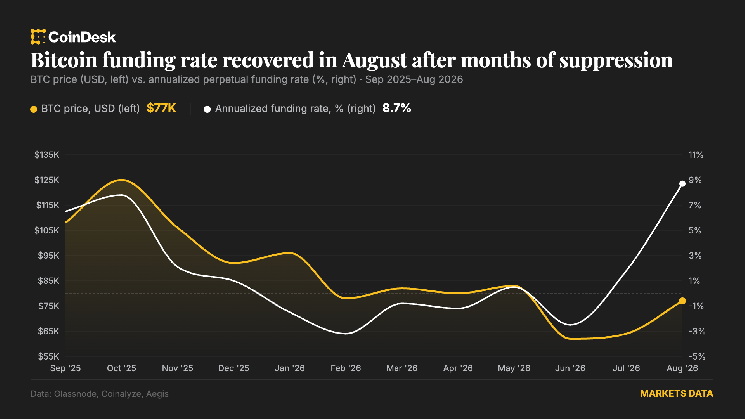
    When bitcoin surged from around $62,000 to above $77,000 in a matter of days last week, the rally wiped out $3 billion from leveraged short sellers who had accumulated bearish positions during the previous market downturn. For major crypto trading firms, however, the sharp price increase created an opportunity that did not depend on predicting bitcoin’s next move.

    Leading digital-asset trading firms including Abraxas Capital, Fasanara Capital and Wintermute have quietly accumulated hundreds of millions of dollars in short perpetual futures positions on Hyperliquid, an on-chain derivatives exchange.

    According to on-chain data tracked by Lookonchain, the three firms collectively hold short positions totaling 138,569 $ETH, worth roughly $338 million, and 3,425 $BTC, valued at approximately $265 million.

    At the same time, Abraxas Capital has been withdrawing large amounts of spot cryptocurrency from centralized exchanges. Data from Arkham Intelligence shows that the firm removed 73,872 $ETH, worth approximately $173 million, from Binance over the past four days alone.

    Crypto firms target funding yields instead of market direction

    The strategy is known as a cash-and-carry trade, or basis trade, and it has become one of the most widely used yield-generating strategies in crypto markets during bullish periods.

    The mechanics are straightforward: traders hold a spot cryptocurrency position while simultaneously shorting an equivalent amount through perpetual futures. Because the two positions largely offset each other, the trader has limited exposure to changes in the asset’s price.

    Instead, the firms seek to capture the funding rate — a periodic payment that traders holding long positions pay to short sellers when market sentiment is bullish.

  • Is Bitcoin’s Recent Rally a Bubble or Sustainable?

    Is Bitcoin’s Recent Rally a Bubble or Sustainable?

    Bitcoin’s recent rally from approximately $63,500 to more than $80,000 appears to have been driven by strong spot demand rather than leveraged trading, according to an assessment from QCP Capital.

    Bitcoin rally shows healthier market structure

    QCP Capital reported that roughly $2.8 billion flowed into spot Bitcoin ETFs during Bitcoin’s rise from $63,500. At the same time, open interest in Bitcoin futures declined from about 646,000 BTC in mid-August to 588,000 BTC.

    Relatively low funding rates also suggest that the price increase was not fueled by aggressive leveraged long positions. QCP said spot purchases and the closing of short positions were particularly prominent during the rally.

    The limited accumulation of excessive leverage could point to a more sustainable market structure for Bitcoin than in previous speculative rallies.

    Federal Reserve and US Treasury remain in focus

    Despite Bitcoin’s positive technical structure, the broader macroeconomic outlook remains uncertain. Core PCE inflation held at 3.3% year over year in July, while markets are pricing in a 35% probability that the Federal Reserve will raise interest rates by 25 basis points at its September meeting.

    Meanwhile, the expansion of the US Treasury’s repurchase program for long-term bonds is supporting risk assets. Beginning September 9, the Treasury will raise the upper limit for each repurchase operation involving 10- to 30-year bonds from $2 billion to at least $4 billion.

    After the announcement, long-term bond yields declined and the dollar index weakened, while gold and Bitcoin prices moved higher.

    QCP also said Nvidia’s strong balance sheet had contributed to risk appetite across global markets.

    However, the US Treasury’s bond repurchase program is not quantitative easing. The initiative is designed to improve liquidity in the long-term bond market rather than directly determine bond yields, and it does not create a QE-like expansion in central bank reserves.

    According to QCP’s assessment, the key short-term question for Bitcoin is whether strong spot demand will continue.

    This is not investment advice.

  • Cosmos Labs Misread the Bug Before the $5.7 Million Six-Chain Hack

    Cosmos Labs Misread the Bug Before the $5.7 Million Six-Chain Hack

    The Cosmos Hub was not hacked. The incident affected shared software used by some independent Cosmos-based networks, not the Cosmos Hub or every blockchain in the wider Cosmos ecosystem.

    The vulnerability was found in cosmos/evm, which enables Cosmos-based networks to run Ethereum-compatible applications. According to the Cosmos Labs post-mortem, six networks using the software were exploited between August 20 and August 25. MANTRA, TAC and KiiChain were identified in the detailed timeline, while the other three networks were not publicly named.

    That distinction is important: a failure in shared software does not mean the entire Cosmos ecosystem suffered a “Cosmos hack.” The same principle applied to The Sandbox bridge exploit, where a compromised integration did not mean the underlying protocol had been hacked.

    Attackers converted approximately $5.72 million

    Cosmos Labs estimated that attackers exchanged approximately $2.87 million through decentralized venues, using prices from August 19. The company said the figure was an estimate that had not been independently audited. Attackers reportedly sold another $2.85 million through centralized exchanges, bringing the total amount converted or sold to roughly $5.72 million.

    Cosmos Labs said affected chains reported that the centralized-exchange accounts had been frozen while police investigations continued. The $5.72 million conversion total will not change, although recovery of frozen exchange balances could lower the eventual net loss.

    The response also helped limit the damage. Cosmos Labs worked with 13 other potentially exposed networks to patch, halt or otherwise protect them, with no further reported incidents. The company coordinated with 40 chains overall.

    How an accounting mismatch exposed valid balances

    The vulnerability resulted from two parts of the software calculating account balances differently. Cosmos EVM’s StateDB tracked only the amount an account could spend immediately. Cosmos vesting accounts, however, could contain both spendable and locked tokens, while the staking system allowed locked tokens to be delegated.

    When the software subtracted the full delegated amount from the smaller spendable balance, unchecked arithmetic underflow could wrap the result to a number close to 2256. An attacker could then combine that underflow with an overflow during a transfer.

    The exploit did not create a lasting increase in the total token supply. Instead, it could reduce a high-balance victim account to zero and give the attacker the balance previously held by that account. The flaw therefore created a direct fund-theft risk rather than merely causing an inaccurate display or accounting discrepancy.

    The warning came nearly four months before the attacks

    The theft followed a longer sequence of events, with the decisive error occurring during the initial security assessment months before the code was exploited.

    Timeline of the security incident and exploit disclosures.

    Cosmos Labs treated a production threat as routine maintenance

    The original proof of concept used a chain configured with six decimal places. Cosmos Labs tested configurations using 18 decimals, failed to reproduce the issue and concluded that known production networks were safe. That conclusion was incorrect: the underlying balance mismatch could affect every Cosmos EVM chain, regardless of its decimal configuration.

    After later reports established the vulnerability’s broader reach, Cosmos Labs knew that production funds were exposed. It chose a silent-patching process designed to place fixed code in operators’ hands without publishing details that could help attackers.

    The releases were available approximately 20 hours before the first known attack. However, the release notes did not state the severity of the issue or tell operators that delaying the upgrade could expose user funds. Operators could see that the releases included security fixes, but the notes did not explain that unpatched chains faced potential losses.

    The disclosure became public the following morning. A pull request in a downstream fork described the exploit path and identified affected release tags approximately 12 hours before the first attack, giving attackers a clearer route. By then, Cosmos Labs had already failed to provide operators with a warning explaining the urgency.

    Cosmos Labs did not know every chain that needed a warning

    A private warning process works only when maintainers know whom to contact. Cosmos Labs said the ecosystem includes more than 115 known public chains but does not have a complete registry. During the response, it discovered 11 Cosmos EVM deployments that were not registered in its security channels.

    Cosmos Labs maintained the shared code without knowing every network that had deployed it. That gap made it harder to deliver a confidential warning before enough information was public for chain teams to identify the threat themselves.

    The response timeline also showed why the warning needed to be explicit. After MANTRA reported the first attack, Cosmos Labs sent its first critical secure email approximately two hours later. TAC was attacked roughly 45 hours after MANTRA despite earlier communication. Guidance later escalated to advise all Cosmos EVM chains to halt.

    For independent Cosmos EVM chains, publishing the code was not enough. Their teams also needed to understand that the upgrade was urgent and coordinate a state-breaking release.

    Vulnerable chains must upgrade or halt

    The critical security advisory identifies versions before 0.6.2 and versions from 0.7.0 up to, but not including, 0.7.2 as affected. Operators should upgrade to Cosmos EVM 0.6.2, 0.7.2 or a later release.

    There is no configuration-only workaround. Disabling the staking precompile removes the primary trigger described in the advisory, but Cosmos Labs does not consider that a substitute for upgrading. A chain that cannot immediately install a patched release should halt.

    BTCPay recently issued similarly specific instructions after confirming stolen funds: update affected installations or take them offline. In both cases, the guidance is useful because the risk depends on the software version in use.

    The next fix is the disclosure process

    Cosmos Labs said it will broaden vulnerability triage beyond the reporter’s proof of concept, expand its network of security contacts and verify that those contacts remain responsive. It also plans to establish clearer standards for private and silent patches, including when maintainers should recommend a halt rather than a coordinated upgrade.

    An external audit of its operational security practices is also planned. These changes address the part of the incident that another code patch cannot solve: how a decentralized group of independent chains receives, understands and acts on a time-sensitive warning.

    The initial assessment narrowed the vulnerability too quickly. The later release process concealed its urgency from some of the people expected to install the fix. The code was available before the first attack, but several operators lacked a warning that made clear that waiting could cost users their funds.

    This article is for informational purposes only and does not constitute financial, investment or security advice. Network operators should consult the official Cosmos EVM advisory and verify their deployed version.


  • Wall Street Altcoin Picks: Charles Schwab Backs Ethereum, Solana, XRP, and Hyperliquid

    Wall Street Altcoin Picks: Charles Schwab Backs Ethereum, Solana, XRP, and Hyperliquid

    Schwab Identifies Five Distinct Crypto Portfolio Roles

    Charles Schwab director of global equity research Adam Lynch recently outlined the firm’s approach to crypto allocation, separating five digital assets that it believes serve fundamentally different portfolio purposes: Bitcoin, Ethereum, Solana, $XRP and Hyperliquid.

    Schwab Says Crypto Assets Are Not the Same Trade

    Lynch described Bitcoin as the “classic” hedge against currency debasement, making it the asset investors may turn to when concerned about fiat currency devaluation. He said Ethereum offers greater functional utility than Bitcoin while still fitting within the broader debasement narrative.

    Lynch classified Solana, $XRP and Hyperliquid as higher-volatility, higher-risk allocations. He suggested pairing them with core positions in larger digital assets rather than using them as replacements.

    Goldman Sachs’ Solana ETF Exposure Draws Attention

    Goldman Sachs has become the largest disclosed holder of spot Solana ETFs, with $88 million in exposure, according to disclosure filings referenced in the discussion. Since not all institutional holders must disclose their positions, Wall Street’s actual Solana exposure could be significantly greater than the amount currently visible in public filings.

    Separately, Schwab confirmed that it is adding Solana, Avalanche and Chainlink to its crypto trading platform. The move expands the platform’s offering beyond the Bitcoin and Ethereum access it already provided.

    Grayscale Research has identified Bitcoin, Ethereum and Zcash as the assets most likely to benefit from what it calls the “debasement trade,” a trend linked to U.S. national debt exceeding $40 trillion and ongoing fiscal deficits.

    Solana’s Planned Token Supply Falls After Validator Vote

    In a separate development, Solana validators approved a proposal to double the network’s disinflation rate to 30%. Yes votes surpassed the 66.6% threshold during the final hour of voting.

    The change is expected to reduce planned SOL issuance by nearly 20 million tokens over the next six years, representing an estimated $1.4 billion in value. A reduction in newly issued tokens entering circulation is widely viewed as a structurally bullish development for Solana’s long-term valuation.

    Bitcoin Falls Below $77,000 as Fed Chair Warsh Signals Hawkish Stance

    The bullish crypto outlook met broader macroeconomic pressure on Friday, when Bitcoin dropped below $77,000 after Fed Chair Kevin Warsh signaled that a rate hike could be possible during his Jackson Hole keynote. Warsh has maintained a hawkish tone in each of his public appearances since taking the role.

    U.S. inflation has remained above the Federal Reserve’s 2% target for 65 consecutive months, according to the discussion. That persistent inflation continues to complicate the outlook for interest-rate cuts.

    What the Developments Mean for Crypto Investors

    Schwab’s differentiated crypto allocation strategy, Goldman Sachs’ growing Solana exposure, Solana’s reduced planned token issuance and a bipartisan regulatory bill receiving support from banks all point to expanding institutional infrastructure around digital assets.

    That infrastructure is developing even as short-term crypto prices respond to Federal Reserve commentary. Whether the structural momentum leads to sustained price strength could depend less on any single Fed speech and more on how quickly the CLARITY Act advances through Congress.