Author: Evan Mercer

  • Bitcoin Faces Critical Two Weeks as Wintermute Reveals Key Price Levels: “The Next Two Weeks Are Very Critical,” and “Below This Is…

    Bitcoin Faces Critical Two Weeks as Wintermute Reveals Key Price Levels: “The Next Two Weeks Are Very Critical,” and “Below This Is…

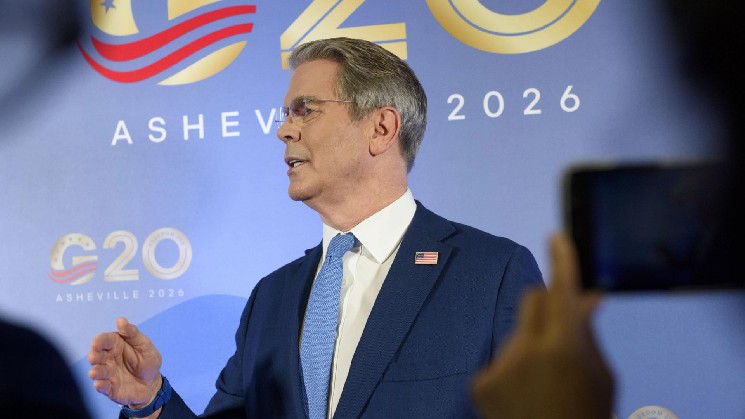
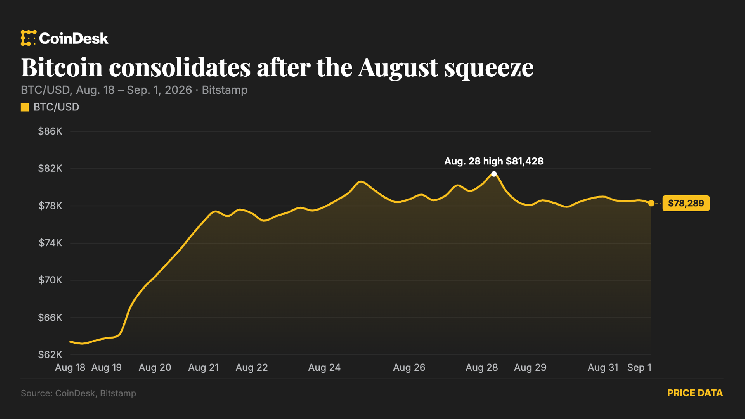
    Bitcoin rose above $81,000 last week before falling back to approximately $78,000 after Federal Reserve Chairman Kevin Warsh delivered a hawkish speech in Jackson Hole. With BTC trading near $78,000 in recent days, cryptocurrency market maker Wintermute has outlined its latest expectations for Bitcoin.

    Bitcoin Could Trade Between $75,000 and $82,000 Before the Fed Meeting

    Wintermute expects Bitcoin to remain between $75,000 and $82,000 until the Federal Open Market Committee (FOMC) meeting scheduled for September 15–16.

    According to Wintermute’s latest market analysis, Warsh’s speech at the Jackson Hole Annual Meeting increased expectations of a September rate hike to 64.4%. The company expects the September FOMC meeting to become a major catalyst for risk assets, particularly cryptocurrencies.

    Wintermute said market expectations for interest rates will be a decisive factor in Bitcoin’s next move. Economic data due during the first two weeks of September could significantly alter those expectations ahead of the FOMC meeting.

    US nonfarm payrolls data, scheduled for release on September 4, will be closely watched for its potential impact on interest-rate expectations and the direction of BTC.

    $82,000 Resistance Remains Key for Bitcoin

    Wintermute also noted that Bitcoin has faced repeated selling pressure near $82,000 following its recent rally. The company identified the following key levels:

    “$82,000: As a significant resistance$75,000: As the first significant support$72,000: As a critical support”

    Wintermute warned that a weekly Bitcoin close below $72,000 could alter the current market outlook. Below that level, the company sees no clearly defined support zone, potentially increasing the risk of further declines.

    In the current market environment, Wintermute considers a pullback toward $75,000 a healthier short-term move for Bitcoin. Such a decline could clear leveraged positions before the market makes another attempt to move higher.

    Based on this outlook, Wintermute expects Bitcoin to consolidate within the $75,000–$82,000 range until the September FOMC meeting.

    This is not investment advice.

  • UK Crime Agency Freezes Premier League Account Containing $13.5 Million in Crypto Crime Probe

    UK Crime Agency Freezes Premier League Account Containing $13.5 Million in Crypto Crime Probe

    The U.K.’s National Crime Agency (NCA) has frozen more than £10 million ($13.5 million) held by the Premier League, according to reports.

    The freezing order was obtained from Westminster Magistrates’ Court in January 2025 under the Proceeds of Crime Act. The Sun reported Tuesday that the funds are understood to relate to the first payment made by Sorare under its $140 million, four-year partnership agreement with the Premier League, signed in 2023.

    The partnership was terminated at the end of last season. There is no suspicion of wrongdoing by the Premier League.

    “The purpose of the order is to prevent dissipation of the funds while the NCA investigates any potential links between those funds and alleged third-party criminality,” an NCA spokesperson said in a statement via email.

    The agency did not specify which crime it is investigating. Neither the Premier League nor Sorare responded to CoinDesk’s request for further comment.

    U.K. regulators increase scrutiny of crypto football partnerships

    The asset freeze comes as U.K. regulators tighten their scrutiny of cryptocurrency sponsorship deals in football. The Financial Conduct Authority has warned Premier League clubs that partnerships with unauthorized crypto firms could breach financial services laws.

  • Ethena Brings Stablecoins to Everyday Banking With High-Yield Savings, Cards, and Payments

    Ethena Brings Stablecoins to Everyday Banking With High-Yield Savings, Cards, and Payments

    Ethena ($ENA) is expanding beyond its yield-generating dollar business with Ethena Pay, a consumer finance app designed to package stablecoins into a bank account-like experience.

    The protocol said Ethena Pay went live on Apple’s App Store on Tuesday. The app combines dollar savings, card spending, international transfers and fiat onramps in one platform.

    Ethena is promoting the product as an “internet money neobank,” offering a 6% dollar savings rate and 5% cashback on card purchases. The app also supports free dollar, pound and euro onramps, local currencies, and fiat international bank account numbers (IBANs) linked to self-custodial stablecoin accounts.

    Ethena’s native $ENA token rose 9% after the announcement, outperforming broadly flat cryptocurrency markets.

    Ethena expands beyond its crypto yield strategy

    The launch marks another step in Ethena’s rapid expansion beyond the crypto basis trade that originally generated yield for $USDe (USDE), its $4 billion synthetic dollar token.

    Last week, the project revised the economics of the $ENA token and outlined plans to use equity perpetuals as another source of returns for $USDe.

    Earlier this year, Ethena introduced a savings product with Coinbase, opening another distribution channel for its dollar products through an exchange with more than 100 million users.

    From stablecoin savings to everyday spending

    Ethena Pay connects Ethena’s savings products with payments, allowing users to hold savings, earn rewards, and spend or transfer money through the same app. The approach is designed to reduce the need to move funds between a crypto wallet, exchange and traditional bank account.

  • Wall Street Flocks to XRP as Bloomberg Analyst Reveals Key Findings on Top XRP Investors

    Wall Street Flocks to XRP as Bloomberg Analyst Reveals Key Findings on Top XRP Investors

    Bitcoin and the broader cryptocurrency market rallied sharply in August, with BTC rising above $80,000 for the first time in months. XRP was among the altcoins to post significant gains during the period.

    Data shows that XRP’s price increased by approximately 40% between August 17 and August 31, rising from $0.99 to $1.38. However, total open interest in XRP futures fell by 16%, declining from 2.77 billion XRP to approximately 2.34 billion XRP.

    While open positions across the broader XRP futures market decreased, activity on the Chicago Mercantile Exchange (CME) moved in the opposite direction. CME open positions increased from 284 million XRP to 387 million XRP, representing a gain of approximately 36%.

    According to market analyst Omkar Godbole, the CME’s status as a regulated market used primarily by professional investors and asset managers makes the increase a potential signal of strengthening institutional interest in XRP.

    The shift in futures positioning comes ahead of the expected US Clarity Act vote, which would establish rules for the structure of the cryptocurrency market. The legislation is of particular interest to XRP and other digital assets, while market participants closely monitor the Senate’s procedural vote on the bill.

    Wall Street Interest in XRP ETFs Grows

    Despite continued volatility in XRP futures, US spot XRP ETFs maintained steady inflows.

    Bloomberg ETF analyst James Seyffart announced in a post on August 31 that cumulative net inflows into US spot XRP ETFs had reached $1.8 billion.

    Seyffart also noted that ETF flows have remained mostly positive since their launch, despite fluctuations in the price of XRP.

    Largest Institutional XRP ETF Holders

    After reviewing second-quarter 13F filings, Seyffart identified Goldman Sachs, Jane Street, and Millennium Management as some of the most prominent institutional investors in spot XRP ETFs.

    According to the chart shared by Seyffart, Goldman Sachs held the largest position, with $87.4 million invested in spot XRP ETFs. That represented an increase of $83.1 million from the previous quarter.

    Jane Street Group ranked second with $16.6 million, followed by Millennium Management with $16.2 million, Intesa Sanpaolo with $14.4 million, and Marex UK Holdings with $8.1 million.

    Advisors Lead XRP ETF Investor Groups

    Investment advisors stood out among the major XRP ETF investor groups. Seyffart’s report showed that advisors were among the largest holders of spot XRP ETFs during the second quarter and represented the most active investor group in allocating capital to these products.

    The data indicates that XRP ETFs are attracting interest from both individual investors and traditional financial institutions, suggesting that institutional participation in the products is continuing to expand.

    This is not investment advice.

  • Hut 8’s Texas Power Site Included in Anthropic’s $35 Billion AI Deal

    Hut 8’s Texas Power Site Included in Anthropic’s $35 Billion AI Deal

    Bitcoin miner Hut 8 is gaining attention after its Beacon Point data center campus in Texas was linked to Anthropic’s latest artificial intelligence computing contract.

    Anthropic has agreed to spend $35 billion purchasing computing capacity from Lambda, an AI cloud company backed by Nvidia, the Wall Street Journal reported late Monday.

    Some of that capacity will operate through Hut 8’s Beacon Point campus in Nueces County, Texas. Nvidia holds the lease on the facility, Lambda will deploy Nvidia chips there, and Anthropic will purchase the resulting computing power.

    Hut 8 shares initially jumped after the news emerged Monday night, but the stock was only marginally higher in premarket trading.

    Hut 8 had previously disclosed two 15-year leases at Beacon Point covering 704 megawatts of IT capacity without identifying the tenant. The leases represent $19.6 billion in contracted value over their initial terms.

    The 525-acre site has access to up to 1 gigawatt of power and an existing connection to the electricity grid. CoinDesk has asked Hut 8 to confirm how much of Beacon Point’s 704 megawatts of leased capacity is associated with Lambda and Anthropic, and whether Nvidia is the previously undisclosed tenant behind both leases.

    Why Bitcoin Miners Are Appearing in AI Infrastructure Deals

    AI companies require enormous amounts of electricity, while connecting hundreds of megawatts to the grid from a new site can take years. Bitcoin miners already operate large facilities designed around low-cost power and existing grid connections, making their infrastructure attractive to AI developers racing to expand computing capacity.

    Source: cryptonews.net

  • Bitcoin (BTC) at a Critical Junction After Rally: Analysts Say Further Gains Depend on Two Events

    Bitcoin (BTC) at a Critical Junction After Rally: Analysts Say Further Gains Depend on Two Events

    Bitcoin surged 24% in August, marking its strongest monthly gain since November 2024. After the sharp rally, the cryptocurrency stabilized near $78,000 as high oil prices and rising U.S. Treasury yields limited further upside.

    At the same time, expectations for a September interest rate hike increased significantly following Federal Reserve Chairman Kevin Warsh’s speech in Jackson Hole. Despite the more hawkish outlook from the Fed, analysts say Bitcoin continues to hold key support levels.

    Bitcoin Holds Critical Support at $77,100

    According to Bitfinex analysts, Bitcoin is holding its critical support level at $77,100 despite signals that the Federal Reserve may pursue a more hawkish monetary policy.

    Bitfinex’s latest Alpha report said Bitcoin experienced a sharp pullback last week after climbing to $81,500 following Kevin Warsh’s remarks at Jackson Hole. However, Bitcoin’s ability to remain above $77,100 suggests that the broader uptrend has not yet been broken.

    Spot Bitcoin Buying Supports the Rally

    Bitfinex analysts said Bitcoin’s August surge was not driven solely by leveraged trading. Actual purchases in the spot market also contributed to the cryptocurrency’s rise.

    U.S. spot Bitcoin ETFs recorded total net inflows of $924.5 million during the week of August 24-28. Bitfinex said liquidity concentrated in ETFs and stablecoins is supporting the Bitcoin and broader crypto market uptrend, although high inflation and expectations of future interest rate hikes could restrict additional gains.

    U.S. employment data due on September 4 and inflation data scheduled for September 11 are expected to be important for market expectations surrounding the Federal Reserve’s September interest rate decision.

    Can Bitcoin Hold Above $80,000?

    Bitcoin fell below $80,000 after Kevin Warsh’s hawkish speech at Jackson Hole but has continued to hold the $77,100 support level.

    Questions remain over whether Bitcoin can sustain a move above $80,000. Bitfinex points to strong spot Bitcoin demand and approximately $925 million in net inflows into spot Bitcoin ETFs as factors supporting the market. However, some analysts remain cautious about the durability of the rally.

    Greeks.live analyst Adam said ETFs had recorded large inflows, but the strong inflow streak ended with a $202 million outflow on August 28. The analyst warned that continued ETF outflows, and the possibility that they could become permanent, may make it more difficult for Bitcoin to remain above $80,000.

    The analyst also discussed Strategy’s decision to resume Bitcoin purchases after a long pause. According to the analyst, Strategy’s purchases could support the price in the short term but may not be sufficient on their own to alter the long-term trend.

    Macroeconomic Risks Remain

    The analyst said the Federal Reserve’s hawkish stance and broader macroeconomic uncertainty remain among the main risks facing Bitcoin, echoing concerns raised by Bitfinex.

    These factors are putting additional pressure on investor confidence and the Bitcoin price. The analyst believes it is too early to describe the market as a new strong bull trend without a sustained move above $80,000. ETF flows and Federal Reserve policy are likely to play a decisive role in determining Bitcoin’s short-term direction.

    This is not investment advice.

  • U.S. Looks to Influence Japan’s Monetary Policy—but Bitcoin Is Beyond Its Reach

    U.S. Looks to Influence Japan’s Monetary Policy—but Bitcoin Is Beyond Its Reach

    If Japan raises interest rates and the yen strengthens sharply, years of cheap yen-funded bullish bets on stocks, bonds and cryptocurrencies could unwind. Foreign investors who bought Japanese shares because of the weak yen may sell, while Japanese savers who moved money overseas as a hedge could repatriate those funds.

    As these positions are closed, risk assets could come under selling pressure. Bitcoin suffered collateral damage in early August 2024, when a Bank of Japan rate increase pushed the yen higher and triggered a broad wave of risk aversion.

    Bitcoin’s long-term bullish outlook remains intact, but the cryptocurrency still trades as a high-risk asset when traditional markets face sudden interest-rate and currency shocks. Investors should remain alert.

    For analysis of today’s activity in altcoins and derivatives, see Crypto Markets Today. For a comprehensive list of events this week, see CoinDesk’s “Crypto Week Ahead.”

    What’s Trending

    North Korean hackers move tens of millions on Hyperliquid as Trump pushes to bring crypto platform onshore

    Blockchain data reviewed by CoinDesk appears to show that wallets reportedly linked to North Korea’s Lazarus Group sold more than $30 million in bitcoin on the platform during the past three weeks alone.

    CME’s share of $XRP futures jumps as token rallies 40% in one week

    A growing share of $XRP futures trading is shifting toward CME as traders reduce leveraged positions across cryptocurrency exchanges.

    Global bond yields reach multi-decade highs as Middle East turmoil revives inflation fears

    Government bond yields rose across major markets, with borrowing costs in Japan and the U.K. reaching multi-decade highs and U.S. Treasury yields also surging.

    Oil prices rise and stocks fall as Middle East violence intensifies uncertainty

    Oil prices climbed 2% while global shares fell Tuesday. Brent crude gained 2% to $92.35 per barrel, and U.S. benchmark crude rose 2.5% to $87.84 per barrel.

    Source: cryptonews.net

  • Bitcoin Holds Near $78,000 as Arbitrum Surges 30% on Robinhood Chain Revenue

    Bitcoin Holds Near $78,000 as Arbitrum Surges 30% on Robinhood Chain Revenue

    Bitcoin is trading near $78,000, down 0.4% since midnight UTC and about 0.7% over the past seven days as the market consolidates after a short squeeze lifted the price from below $63,000 to nearly $81,400 last week.

    Bitcoin’s relative strength has remained intact despite the calmer conditions. Nasdaq 100 futures are down 0.5% since midnight, meaning bitcoin is once again outperforming equities.

    Spot bitcoin exchange-traded funds recorded $3.04 billion in net inflows across nine consecutive sessions, their longest streak since April. The run ended Friday with a $202 million outflow before resuming Monday with $217 million in fresh inflows, according to SoSoValue data.

    Altcoins are mixed in the latest session. The Altcoin Season index has fallen to 26 out of 100 from 34 on Friday, its lowest reading in more than 90 days.

    Crypto derivatives positioning remains balanced

    Balanced positioning: The 24-hour taker buy-sell volume ratio in crypto futures markets has remained balanced for a second consecutive day. Open interest has held near $136 billion, while trading volume has declined 7%. The combination suggests traders are adding neither significant long nor short exposure and are waiting for a clearer market signal.

    Arbitrum leads gainers: Arbitrum’s $ARB is the best-performing token among the top 100 cryptocurrencies over the past 24 hours, gaining nearly 30%. The rally is supported by increased futures participation, with open interest rising more than 10%. The data points to a buildup of long positions as $ARB attempts to establish support above chart resistance at 11 cents. Annualized funding rates near 8% suggest the market is not overheated.

    Monero open interest continues to rise: Open interest in privacy-focused Monero futures has climbed to 640,000 tokens, the highest level since February 2024. The signals are mixed. Funding rates have dropped to 15% from more than 50%, suggesting bullish positions are no longer overcrowded. However, the 24-hour open-interest-adjusted cumulative volume delta is negative, indicating bearish leadership. XMR has already pulled back to around $525 from Monday’s high of $548.

    Demand for $TRX shorts: Tron’s $TRX stands out with funding rates at minus 80%, signaling crowded bearish positioning. Short sellers are accepting a high cost to maintain their positions. $TRX is trading near 33 cents after falling for a third consecutive day.

    Light positioning in bitcoin and ether: Open interest in $BTC and $ETH remains subdued, hovering near multi-week lows.

    Volatility cools: Bitcoin’s and ether’s 30-day implied volatility indexes, BVIV and EVIV, have reversed their mid-August spikes, pointing to calmer market conditions.

    Options flow turns bullish: In options listed on Deribit, the $80,000 bitcoin call expiring Sept. 25 was the most-traded position over the past 20 hours. A call represents a bullish bet on the underlying asset. For ether, the $2,500 call attracted the most activity.

    Arbitrum leads the altcoin market

    Arbitrum’s surge is the clearest standout across the altcoin sector. The rally is linked to Robinhood Chain, which operates as a dedicated Arbitrum chain and sends 10% of net protocol revenue to the Arbitrum ecosystem.

    Offchain Labs co-founder Steven Goldfeder said Monday that Robinhood Chain’s 24-hour transaction revenue had exceeded $2 million, up from approximately $1.22 million the previous day. At that pace, Arbitrum’s share would amount to roughly $73 million annually.

    ARK Invest’s Lorenzo Valente calculated that gross revenue on Robinhood Chain rose from $54,676 on Aug. 22 to $1.088 million on Aug. 30, an increase of nearly 20 times. Arbitrum’s share increased from $5,400 to $108,000 over the same period.

    Curve DAO’s CRV$0.3586 rose 14% over 24 hours to approximately 35.13 cents on $119 million in trading volume. The move forms part of the broader decentralized finance rally that has lifted lending and decentralized exchange tokens through the second half of August.

    Uniswap’s $UNI extended its gains, rising 8% since midnight to around $5.80 after advancing 12% over the previous 24 hours. The token is now up 34% over the past seven days on $519 million in volume.

    Among the day’s smaller movers, Aave’s AAVE$126.93 gained 1.9% to $126.54, while Morpho’s MORPHO$2.5549 rose 2%. The moves suggest decentralized finance assets are holding up better than the broader crypto market during Tuesday’s session.


  • Singapore Proposes 100% Reserves and Yield Ban for Stablecoin Issuers

    Singapore Proposes 100% Reserves and Yield Ban for Stablecoin Issuers

    Singapore’s Monetary Authority of Singapore (MAS) has reaffirmed that stablecoins may be used for payments but should not be marketed to the public as investment products or yield-generating instruments similar to bank deposits.

    “MAS’s stance remains that while stablecoins may be used for payments, they should not be used by the public as investment products or for the generation of yield, akin to bank deposit,” the bill states.

    The position is part of MAS’s latest consultation on a proposed regulatory framework for stablecoins. The framework is intended to support the use of reliable, well-regulated stablecoins in tokenized financial markets while limiting risks to users and the wider financial system.

    “Trusted and well-regulated stablecoins can serve as a credible settlement asset in tokenized financial markets, while mitigating risks to users and the broader financial system,” said Ho Hern Shin, MAS deputy managing director for financial supervision.

    Limited recognition for some foreign stablecoins

    The consultation also proposes limited recognition for a small number of foreign stablecoins regulated under comparable overseas frameworks. MAS has not yet determined how that recognition would operate in practice, how responsibilities would be allocated for jointly issued tokens or whether transitional arrangements would apply to existing issuers based in Singapore.

    MAS first consulted on its proposed stablecoin rules in October 2022 and published its response to feedback in August 2023. The latest consultation closes on Oct. 16. The central bank will consult separately on subsidiary legislation at a later date, and no implementation date has been announced.

    Stablecoins tested in Singapore

    The proposed rules come as regulated stablecoins are already being tested in Singapore. Ripple is exploring whether its RLUSD stablecoin can replace manual payment processes that have slowed cross-border trade for decades through Singapore’s central bank sandbox, a controlled environment where companies test new financial technology.

    The testing forms part of BLOOM, an MAS initiative designed to expand settlement capabilities for tokenized bank liabilities and regulated stablecoins.

  • Payward and London Stock Exchange Partner to Tokenize Leading UK Stocks

    Payward and London Stock Exchange Partner to Tokenize Leading UK Stocks

    The London Stock Exchange (LSE) and Payward, the parent company of crypto exchange Kraken, are partnering to bring tokenized versions of the UK’s largest listed companies to blockchain-based markets.

    Under the planned initiative, Payward will tokenize the top 100 London-listed stocks as xStocks. The LSE will explore supporting trading in those tokens through LSE 24, its proposed 24-hour trading venue, subject to regulatory approval.

    Top 100 London-listed companies planned for xStocks

    The partnership would expand xStocks into one of the world’s major equity markets. Since launching just over a year ago, the tokenized stock framework has recorded more than $40 billion in total volume, including over $20 billion in onchain settlement volume.

    xStocks now have more than 200,000 holders. Payward said the framework has demonstrated how tokenized assets can give investors access to companies and markets beyond traditional geographic and market-access limitations.

    The planned UK rollout would make the top 100 London-listed companies available as xStocks to investors in more than 110 countries. The tokens would provide continuous, onchain exposure to some of the UK’s largest listed companies, although they are not currently available to UK investors, Payward stated.

    If regulators approve the arrangement, the LSE would list the xStocks and support their trading through LSE 24. The initiative could enable LSE members to trade tokenized securities representing companies from the US, EU, UK and Hong Kong alongside other asset classes, combining continuous blockchain-based trading with established regulated infrastructure.

    Payward and the LSE also plan to examine native, issuer-sponsored equity tokens. These instruments could allow LSE members to issue and service shares directly onchain while preserving the rights and fungibility associated with conventional securities.

    London Stock Exchange plans longer trading hours

    The London Stock Exchange plans to launch an overnight trading venue in the first half of 2027. The move would extend the exchange’s operating hours as it seeks to attract international retail investors and compete with the continuous accessibility of crypto markets.

    The LSE has already expanded its presence in crypto-linked products. In mid-2024, it began listing physically backed Bitcoin and Ethereum ETNs after the debut of US spot Bitcoin ETFs. Although those products initially targeted professional investors, changes by the Financial Conduct Authority have since enabled retail participation.

    The overnight venue will initially focus on exchange-traded products, giving the LSE a targeted entry point into extended-hours trading. Longer trading hours could make London-listed investment products more accessible to investors in Asia, the Middle East, North America and other markets outside the exchange’s traditional trading window.

    The exchange also intends to integrate agentic AI capabilities into the venue. The systems could support portfolio evaluation, market research and trade execution.