Author: Evan Mercer

  • XRP Healthcare Goes Offline After Top Ex-Ripple Engineers Call Out ‘Red Flags’

    XRP Healthcare Goes Offline After Top Ex-Ripple Engineers Call Out ‘Red Flags’

    XRP Healthcare has officially announced the cessation of its operations and the initiation of a coordinated delisting for its XRPH and XRPHAI tokens. The decision marks the end of a three-year effort to build a blockchain-based healthcare ecosystem. Management cited the prolonged bear market and a failed attempt to secure a public listing as contributing factors, though a severe technical crisis proved to be the primary catalyst for the shutdown.

    Fatal Wallet Exploit Drains $452,000 in Assets

    Financial pressure on the company escalated sharply following a major security breach on September 3. Attackers successfully drained 4,011 XRPH wallets, resulting in total losses of approximately $452,000. The stolen assets included 267,664 XRP and the project’s native tokens.

    Subsequent technical analysis confirmed that the vulnerability was not related to the XRP Ledger itself. Instead, the flaw resided in XRP Healthcare’s application code. The algorithm used to generate seed phrases suffered from low entropy, enabling hackers to reconstruct private keys offline. Further decompilation of the application revealed an even more critical security failure: the wallet was transmitting users’ seed phrases over the network.

    Ripple Veterans Confirm Long-Standing Red Flags

    The incident ignited a fierce public debate within the XRP community. On September 6, former developers associated with Ripple—including Matt Hamilton, Vet Goose, and Hazard Cookie—stated that the collapse of the startup, previously known as XRPayNet, had been inevitable for years.

    Vet Goose publicly acknowledged that he had personally rejected the team’s grant applications due to inaccurate claims regarding partnerships in their documentation. He emphasized that the healthcare platform never required its own token and characterized the wallet’s architecture as unprofessional.

    Matt Hamilton and Hazard Cookie corroborated these claims, confirming they had identified critical risks and questionable operational practices within the project several years prior. Both noted that the startup’s management had consistently ignored criticism from the community.

    Management Response and Final Liquidation

    In response to the allegations, XRP Healthcare’s management stated it had fully trusted the developers it hired and claimed to have learned that seed phrases were being transmitted over the network only after the hack occurred. The team labeled the criticism from Ripple veterans as inappropriate but offered no technical arguments to counter the specific claims regarding the wallet’s architecture.

    A recent statement confirms the project’s final status: liquidation has been deemed inevitable, and continuing operations is considered unviable. The XRPH Wallet applications will remain permanently disconnected from the network. Management is currently discussing withdrawal deadlines with cryptocurrency exchanges, with each trading platform set to establish its own exact timeline and rules for the delisting process.

  • MoneyGram Launches Stablecoin-Backed Card as Digital Dollars Enter Everyday Spending

    MoneyGram Launches Stablecoin-Backed Card as Digital Dollars Enter Everyday Spending

    Global remittances firm MoneyGram is expanding its stablecoin strategy into everyday retail spending with the launch of a new Visa debit card that allows customers to hold and spend a U.S. dollar-denominated balance anywhere Visa is accepted.

    MoneyGram Card Launches First in Colombia

    The MoneyGram Card will debut in Colombia, with plans to roll out to additional markets over the coming months, the company announced Thursday. Users can register through the MoneyGram app, add the virtual card to mobile wallets, and use it for online purchases or in-store transactions. The card also enables customers to send money to themselves for cash pickup in local currency at MoneyGram agent locations.

    USDC Stablecoin Integration With MGUSD Planned

    The card will initially operate using Circle’s USDC stablecoin, with MoneyGram’s own MGUSD token slated for integration afterward, the company confirmed to CoinDesk. A physical version of the card is expected later this year and will support ATM withdrawals.

    Development partners include stablecoin payments firm Rain, wallet infrastructure provider Crossmint, and the Stellar blockchain network.

    Stablecoins Move Beyond Crypto Trading Into Daily Finance

    The launch reflects a broader shift in how dollar-linked tokens are being used. Stablecoins have evolved from their origins as trading instruments in cryptocurrency markets into practical tools for cross-border payments, remittances, and corporate treasury management. Debit cards linked to stablecoin balances now offer consumers a familiar way to spend those funds through existing payment networks.

  • Donald Trump’s $5,000 Promise: Potential Impact on Bitcoin and Altcoins

    Donald Trump’s $5,000 Promise: Potential Impact on Bitcoin and Altcoins

    Trump Launches Midterm Campaign With $5,000 Payment Promise to Adult Citizens

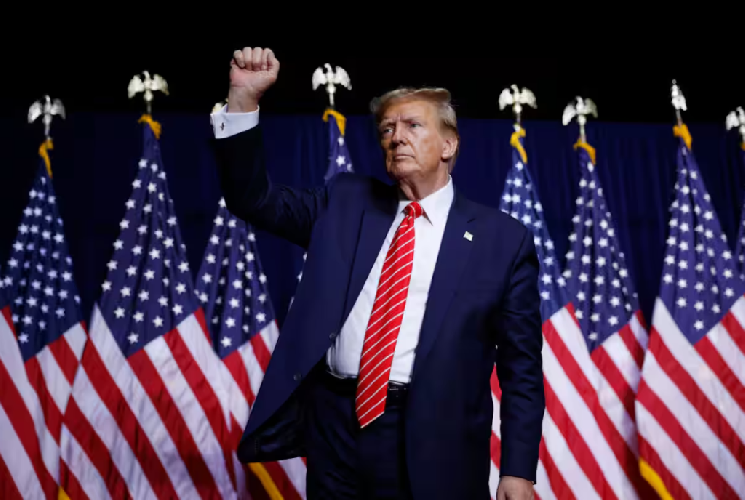
    Former President Donald Trump officially kicked off his campaign for the November congressional elections with a rally in Dallas, Texas, where he announced a sweeping financial proposal: a $5,000 payment to every adult U.S. citizen if Republicans secure control of both the Senate and the House of Representatives.

    Details of the Proposed Payment Program

    Speaking at the Republican midterm election rally, Trump outlined the direct payment plan but attached a strict domestic spending requirement. “I don’t want you spending this money in Canada, China, or Germany. The only condition is that the money is spent in the United States.”

    The former president did not specify how the program would be funded during his remarks. According to calculations by Reuters, based on a U.S. adult population of approximately 270 million, the total cost could reach roughly $1.35 trillion. Legal experts cited by Reuters noted that a presidential decree alone would be insufficient to authorize such expenditures; congressional legislation would be required.

    Cryptocurrency Analysts Predict Potential Altcoin Season

    Trump’s proposal has immediately drawn attention from digital asset markets. Cryptocurrency analyst Mark Chadwick suggested the plan could act as a massive liquidity catalyst for the crypto sector, potentially triggering a large-scale altcoin season.

    In a post on his X account, Chadwick compared the proposed payments to the COVID-19 stimulus checks distributed in 2021, which coincided with a significant rally in risk assets. He argued that the infusion of new capital could provide additional momentum to a bull market he believes is already in its early stages. Chadwick had previously noted in his analyses that the long-term downtrend in the altcoin market appeared to have broken, with current technical patterns resembling those seen ahead of previous major altcoin rallies.

    This article does not constitute investment advice.

  • Trump Promises $5,000 Payment: Bitcoin and Altcoins React

    Trump Promises $5,000 Payment: Bitcoin and Altcoins React

    The U.S. election cycle, a key focus for Bitcoin and altcoin markets, has re-entered the spotlight. As the country moves toward the November congressional midterms, former President Donald Trump officially launched his campaign with a rally in Texas yesterday, unveiling a sweeping financial proposal aimed at adult American citizens.

    Trump Proposes $5,000 Payment for Every Adult Citizen

    Speaking at a Republican midterm election rally in Dallas, Trump declared that if Republicans secure control of both the Senate and the House of Representatives, every adult U.S. citizen would receive a $5,000 payment. The announcement was framed with a bold banner: “Trump: $5,000 for Every Adult Citizen!”

    However, the former president attached a strict domestic spending requirement. He stated, “I don’t want you spending this money in Canada, China, or Germany. The only condition is that the money is spent in the United States.”

    Funding Details and Legislative Hurdles Remain Unclear

    Trump did not outline how the program would be funded during his remarks. According to Reuters calculations, based on an estimated U.S. adult population of 270 million, the total cost could reach approximately $1.35 trillion. Legal experts cited by Reuters emphasized that a presidential decree alone would be insufficient to authorize such payments; congressional legislation would be required.

    Crypto Analysts Eye Potential Liquidity Surge and Altcoin Season

    The proposal has immediately sparked discussion within the cryptocurrency sector regarding its potential market impact. Cryptocurrency analyst Mark Chadwick suggested that implementing a $5,000 “dividend” for American adults could act as a powerful liquidity catalyst for digital assets.

    In a post on his X account, Chadwick compared the theoretical plan to the COVID-19 stimulus payments distributed in 2021. He argued that the influx of new capital could accelerate a bull market cycle he believes is already forming. Chadwick previously noted that the long-term downtrend in the altcoin market has broken, with current technical patterns resembling the early stages of previous major altcoin rallies.

    This is not investment advice.

  • Crypto Researchers Halve Bitcoin and Ethereum Quantum Attack Estimates

    Crypto Researchers Halve Bitcoin and Ethereum Quantum Attack Estimates

    Researchers Optimize Key Calculation in Shor’s Algorithm, Advancing Quantum Threat to Bitcoin and Ethereum

    A collaborative research effort has significantly optimized point addition—a core calculation repeated within Shor’s algorithm—potentially reducing the quantum computing resources needed to break the elliptic curve cryptography securing Bitcoin and Ethereum.

    How Shor’s Algorithm Threatens Blockchain Security

    Shor’s algorithm is the quantum procedure capable of deriving a private key from an exposed public key. A sufficiently powerful quantum computer running this algorithm could forge digital signatures, effectively allowing an attacker to spend funds from any wallet whose public key is known. Both Bitcoin and Ethereum rely on the secp256k1 elliptic curve, the specific cryptographic target of this research.

    Massive Open Challenge Drives Rapid Iteration

    The optimization work was conducted through ECDSA.Fail, an open challenge created by Eigen Labs. Over a roughly eight-week period, more than 100 participants—working alongside AI coding agents—submitted over 400 accepted improvements. Each successful optimization became the new baseline for subsequent attempts, creating a rapid, compounding feedback loop.

    Human-AI Collaboration Model

    The project employed a distinct division of labor: AI agents handled implementation, repeated testing, and smaller-scale optimizations, while human researchers directed high-level strategy and made larger architectural design changes. The accompanying paper does not quantify the exact contribution split between human and machine effort.

    Implications for the Quantum Timeline

    These findings suggest that the threat to secp256k1 does not solely depend on advances in quantum hardware. Algorithmic improvements alone can reduce the size and capability of the quantum computer required to execute an attack, effectively pulling the timeline forward without any new qubits being built.

    Significant Limitations Remain

    Despite the progress, the researchers emphasize that they optimized only one major component of the full attack. The current circuit does not include:

    • Physical error correction overhead
    • The complete Shor calculation
    • Hardware-specific costs of execution on a real quantum device

    Consequently, no existing quantum computer can use these results to break Bitcoin or Ethereum today.

    Read more: Bitcoin and Ethereum race quantum clock as U.S. backs $300 million hardware push

  • Bitwise Acquires $107 Million in Solana Over 20 Days

    Bitwise Acquires $107 Million in Solana Over 20 Days

    Bitwise Accumulates $107.4 Million in SOL as Solana ETF Inflows Persist

    Leading asset management firm Bitwise has significantly increased its Solana position, acquiring $107.4 million worth of SOL tokens despite sluggish momentum in the broader Solana ETF market. The substantial purchase, identified through on-chain analytics platform Arkham Intelligence, coincides with a month of consistent capital inflows into the firm’s Solana investment product.

    Institutional Investors Leverage Price Weakness

    Amid ongoing volatility across the cryptocurrency market, institutional investors appear to be treating the recent decline in Solana’s price as a strategic entry point. The data reveals that Bitwise executed the large-scale accumulation after its Solana ETF recorded steady, modest inflows across 20 consecutive trading sessions. During this period, only two sessions registered outflows, indicating sustained positive demand for the fund on the vast majority of trading days.

    Holdings Approach $1 Billion Milestone

    This latest acquisition has propelled Bitwise’s total Solana holdings toward a historic threshold. As of Thursday, September 10, the firm holds over 9,030,000 SOL. Based on a current market price of approximately $101 per token, the portfolio is valued at roughly $918 million. At the current accumulation rate, Bitwise is on track to surpass $1 billion in Solana assets under management in the near term, underscoring growing institutional conviction in the Solana ecosystem.

  • Retirees Sue Fund Linked to Public Dogecoin Miner Z Squared

    Retirees Sue Fund Linked to Public Dogecoin Miner Z Squared

    Z Squared, a publicly traded company that acquired Dogecoin mining rigs from a fund advertising 28% annual returns, is contending with SEC enforcement actions, a seven-figure lawsuit from retirees, and a stock price that has fallen 76% over the past year.

    Retirees Sue Broad Street Global Management

    Retirees Paula and Stephen Darby, both 77 years old, filed suit against Broad Street Global Management, LLC, BroadStreet, Inc., Steven Baldassarra, and Joseph Baldassarra in Miami federal court on September 4. The court issued summonses the following day. The Darbys allege that the Baldassarras are trying to steal over half a billion dollars from their own investors, including the Darbys’ approximate $1,415,373.

    Note: Anyone can make allegations in a civil lawsuit, which are not necessarily indicative of wrongdoing. Readers should not interpret initial claims by plaintiffs seeking money as accurate or probable.

    SEC Enforcement Action

    In January 2025, the SEC sued Broad Street and its managers, alleging the group collected more than $1 billion from over 1,000 investors. The name “Broad Street” invokes the prestige of, but is unrelated to, the financial district street in downtown New York. Investor money was supposed to fund hotels, custom home construction, and a South Carolina lagoon resort promising perpetual income at rates of return never seen before. Disturbingly, Broad Street’s crypto mining division took in about $199 million after targeting 28% annual returns. A court-appointed monitor has overseen the company since April 2025, a few months after the SEC enforcement action.

    SPAC Merger and Valuation Concerns

    Despite ongoing SEC proceedings, the mining arm went public via a blank-check holding company merger in April 2026. The combined entity trades on Nasdaq under the symbol ZSQR. CEO David Halabu had worked with Broad Street since late 2021. Broad Street walked away with 41.5 million shares—about 81% of the company at closing—and distributed them to its members.

    The valuation attached to that merger was ambitious. A valuation firm ascribed the 9,800-machine fleet a value of $660 million, assuming every machine was a flagship Bitmain L9 working on Dogecoin. In reality, 8,228 of the machines were lower-specification L7 units. Z Squared’s own books tell a different story: the machines came onto the books at $12.4 million and carried a net value of $11.3 million at quarter end. In the second quarter of 2026, the fleet earned just $1.6 million, 88% of it from Dogecoin. Cost of revenue ran to 211% to generate that revenue, and the filing admitted, Our direct mining costs exceeded our mining revenue before giving effect to depreciation of our mining fleet. The quarterly net loss was $13.8 million. In other words, the company’s “$660 million” fleet of crypto miners generated money-losing revenue.

    Redemption Dispute and the Darbys’ Cash Demand

    Broad Street’s November 2025 redemption notice offered investors two payout options: cash within 180 days, or stock of a Cayman acquisition company. The Darbys chose cash, which was due on May 27, 2026. With the deadline five days away, according to the Darbys, Broad Street changed their selection to the Cayman company’s stock. The Darbys are now suing to recover their cash.

    Pivot to AI Data Center

    Z Squared has since pivoted toward artificial intelligence infrastructure. On Wednesday, the company closed an all-stock purchase of an Arkansas data center campus with eight megawatts of power. Halabu wrote to shareholders last month: I would rather earn your confidence with delivered megawatts than ask for it with words.

    Ongoing SEC Proceedings and Disclosure

    The SEC’s enforcement action remains ongoing. In the latest quarterly filing for ZSQR shareholders, the company disclosed: BSG Series CM, LLC, the entity from which we acquired our entire mining fleet, was our controlling stockholder immediately after the business combination and is a named defendant in SEC enforcement proceedings.

    Related: After crashing 99.9%, this BTC treasury stock crashed 99.9% again (Protos)

  • Bitcoin Reacts to US PPI Data Release

    Bitcoin Reacts to US PPI Data Release

    Bitcoin slipped below $78,000 on Tuesday as traders braced for a critical week of U.S. inflation data, starting with the Producer Price Index (PPI) release. The pullback erased early-week gains that had briefly tested the $80,000 resistance level, and the broader altcoin market followed suit, with Ethereum (ETH), XRP, and BNB all posting losses.

    PPI and CPI Data to Shape Fed Rate Outlook

    The market’s focus remains fixed on the Federal Reserve’s September interest rate decision. According to Fed WatchTool data, the probability of a rate hike in September is currently priced at 62.2%. Today’s PPI figures and tomorrow’s Consumer Price Index (CPI) report are expected to be pivotal in shaping those expectations.

    Analysts suggest a lower-than-expected PPI reading could signal easing inflationary pressures, strengthening the case for a Fed rate cut and potentially triggering a positive reaction in Bitcoin and other risk assets. Conversely, a hotter-than-forecast print could dampen rate-cut hopes and apply short-term selling pressure on crypto markets.

    August PPI Data Released: Key Figures

    The U.S. Bureau of Labor Statistics released the August PPI data this morning. The results were mixed relative to forecasts:

    • Core PPI (Monthly): 0.2% (Expected: 0.3%; Previous: 0.2%)
    • Core PPI (Annual): 4.6% (Expected: 4.6%; Previous: 4.2%)
    • Headline PPI (Monthly): 0.4% (Expected: 0.4%; Previous: 0.0%)
    • Headline PPI (Annual): 5.4% (Expected: 5.3%; Previous: 4.7%)

    While the monthly core reading came in below expectations — a potential positive for risk sentiment — the annual headline figure ticked higher to 5.4%, above both the prior month and consensus estimates.

    Bitcoin’s Immediate Reaction

    Bitcoin’s initial price action following the data release was muted, holding near the $78,000 level as markets digested the mixed signals. Traders now await Wednesday’s CPI report for further directional clarity.

    This is not investment advice.

  • BIS Chief Warns AI Capex Arms Race Fueled by Opaque Debt, Raising Systemic Risks

    BIS Chief Warns AI Capex Arms Race Fueled by Opaque Debt, Raising Systemic Risks

    Global financial leaders are sounding the alarm on the unprecedented scale of artificial intelligence investment, warning that the current spending trajectory could trigger widespread asset bubbles if commercial returns fail to materialize.

    Trillion-Dollar AI Spending Wave

    According to recent analysis, the five largest technology companies alone plan to invest over a trillion dollars on AI-related projects between 2025 and 2026. Projections indicate that global AI-related investment could surge from roughly $500 billion today to between $3 trillion and $4 trillion by 2030.

    A recent Bridgewater Associates report highlights that Microsoft, Alphabet, Meta, and Amazon—which hold a combined market capitalization of approximately $12 trillion—expect to spend $650 billion together on AI infrastructure this year alone.

    Bubble Concerns Gain Traction

    Concerns about an AI bubble have intensified this year. Citrini Research’s bearish 2028 scenario unsettled technology stocks in February, adding weight to warnings about financial stability risks.

    “With U.S. stocks accounting for a large share of global equity markets, the effects could propagate globally. In some jurisdictions, windfall gains from rising AI-related exports may also contribute to domestic asset bubbles, further exacerbating financial stability concerns,” he said.

    “I do not say that this is where the AI boom must lead.But the scale and speed of the current investment boom, and the weight of expected commercial returns, do warrant some caution.”

    Productivity Gains vs. Distribution Challenges

    The BIS chief acknowledged that AI’s promise is real, citing evidence of productivity gains in coding, consulting, and professional writing. However, he emphasized that the eventual economic effect will depend on how widely the benefits are shared and whether policymakers invest in skills, infrastructure, and competition.

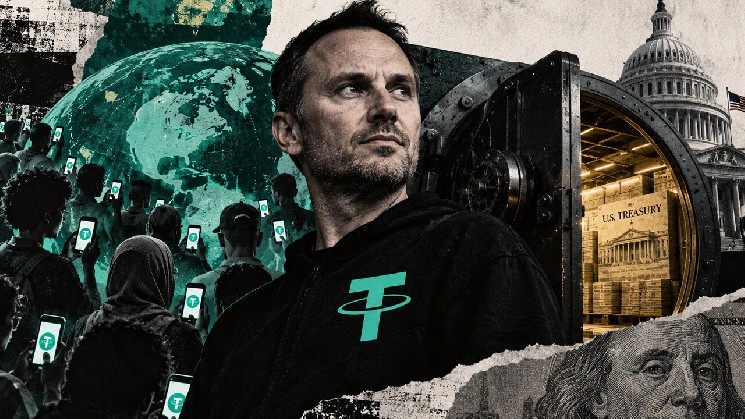
  • Paolo Ardoino: 650 Million People Hold Decentralized US Debt, Yet Tether Controls T-Bills

    Paolo Ardoino: 650 Million People Hold Decentralized US Debt, Yet Tether Controls T-Bills

    Tether CEO’s ‘Decentralized Ownership’ Claim Faces Scrutiny Over Legal and Economic Reality

    Paolo Ardoino offered a striking answer to a familiar U.S. debt problem: replace concentrated foreign buyers with hundreds of millions of stablecoin users. In an Aug. 31 episode of The Wolf of All Streets, the Tether CEO said the company had created the decentralized ownership of the US debt through 650 million people who were basically holding some US Treasuries. His point centered on concentration risk: unlike a foreign government, hundreds of millions of users are unlikely to decide together to sell U.S. debt in a single morning.

    The macroeconomic intuition carries weight. Demand for USDT gives Tether funds that it can place in a Treasury-heavy reserve portfolio. However, calling token users owners of government debt collapses several distinct relationships into one. Tether’s own documents state that users own USDT, eligible verified customers have a personal contractual right to redeem, and Tether International owns and manages the reserve assets.

    The 650 Million Figure: Attribution and Methodology

    The 650 million figure is attributable to Tether, not an independently verified count of Treasury investors. In an Aug. 13 audit announcement, the company said more than 650 million users across emerging markets rely on Tether daily, without publishing a methodology for that figure.

    Tether’s earlier work shows why users needs qualification. Its 2024 methodology note treated on-chain addresses or accounts as a proxy and upper-bound estimate, acknowledging that one person can control multiple wallets. It then added estimates for people holding USDT through centralized services. Tether’s fourth-quarter 2025 report used that broad approach to estimate 534.5 million users at year-end.

    Those measures are useful for estimating reach, but they do not establish 650 million unique people, 650 million current holders, or 650 million customers able to redeem directly with Tether. They establish the scale Tether assigns to its network.

    What USDT Holders Actually Own

    Tether’s current terms call the right to purchase or redeem tokens a personal contractual right. They also say issuance and redemption are administered by Tether and require the customer to be verified.

    The company’s Relevant Information Document makes the allocation of control clearer. After a verified customer sends fiat and receives tokens, Tether says it holds or invests the funds in a basket of reserves. The composition of that basket can change at Tether’s sole discretion, and Tether says it primarily holds the assets through banks and licensed financial institutions.

    Its latest Financial Figures and Reserves Report uses similarly direct accounting language. It describes the reserves as assets owned by Tether International and the issued tokens as refund liabilities recorded at their contractual redemption value.

    That arrangement is not the same as owning a Treasury bill through a brokerage account or holding a beneficial interest in a fund that passes through portfolio economics. USDT holders own transferable tokens. The reserve assets sit on the issuer’s side of the structure.

    The documents do not eliminate holder rights; they define them more narrowly. The Relevant Information Document says an eligible redemption is paid at the token’s face value in fiat, less fees. It also says holders are not entitled to increases in reserve value above face value. The income and gains from the portfolio therefore do not flow through to USDT holders merely because Treasuries back the token.

    Redemption Terms and Limitations

    Direct access to that redemption promise is narrower than USDT’s global circulation. Tether’s fee schedule sets a $100,000 minimum for direct acquisition or redemption. A redemption costs the greater of $1,000 or 0.1%. Applicants must complete verification, and Tether retains sole discretion to approve or reject requests to become verified customers.

    The legal terms allow Tether to delay or suspend services, including redemptions, in circumstances involving suspected prohibited use, legal requirements, government directions, investigations, unauthorized access or risks that Tether considers unacceptable. Fees can change.

    Secondary Market vs. Direct Redemption

    Holders can still sell USDT through secondary markets, subject to the rules and liquidity of the exchanges, dealers, or other platforms they use. That is a market exit, however, rather than a direct exercise of the issuer contract. It may transfer the token to another buyer instead of shrinking Tether’s outstanding liabilities.

    The distinction also limits what can safely be said about creditor priority. Tether’s public materials establish an issuer liability and an eligible customer’s redemption right. They do not establish one universal insolvency ranking for every secondary-market holder across every jurisdiction.

    The Treasury Exposure Is Real and Large

    None of this makes the reserve portfolio economically irrelevant to users. USDT’s reliability depends in part on Tether’s ability to meet its obligations, and the composition and liquidity of the reserves are central to that ability.

    As of June 30, Tether International reported $187.751 billion in reserve assets against $183.642 billion in liabilities. The portfolio included $114.961 billion of direct U.S. Treasury bills. It also reported $18.626 billion of overnight reverse-repurchase exposure, collateralized by about $18.596 billion of U.S. Treasuries. Those are distinct positions. Directly owned bills and Treasury collateral supporting a repo should not be combined and described as if they create the same legal relationship.

    Decentralized Distribution, Centralized Control

    The scale helps explain Ardoino’s framing. Broad demand for USDT can create broad economic dependence on a company whose reserve allocation generates substantial demand for short-term government debt. Earlier analysis has examined Tether’s Treasury scale and the risks embedded in U.S. debt markets, and how stablecoin issuers can become marginal buyers as other holders retreat.

    The ownership question is different. Tether can spread dollar access across wallets and platforms, and rising issuance can increase the pool it allocates partly to Treasuries. It does not follow that each user owns a pro rata slice of those bills, can direct their sale, or receives their yield.

    A more precise description is that USDT decentralizes the distribution of an issuer-mediated dollar claim. The associated funding demand is geographically dispersed. Legal title to the reserves, portfolio control, and the economics above token face value remain centralized at Tether. Ardoino’s macro intuition is directionally meaningful, but the legal and economic plumbing remains issuer-mediated.