Author: Evan Mercer

  • Republicans Introduce New Version of Key Crypto Bill for BTC, XRP, ETH

    Republicans Introduce New Version of Key Crypto Bill for BTC, XRP, ETH

    Senate Republicans have circulated a revised 630-page version of the CLARITY Act mere days before a pivotal procedural vote that could shape the regulatory future of the broader cryptocurrency market, including major assets such as Bitcoin, XRP, and Ethereum.

    Partisan Dynamics Remain Unresolved

    Journalist Brendan Pedersen reported Thursday that the latest legislative text remains a Republican proposal rather than a bipartisan agreement. Democrats who have previously expressed interest in crypto legislation remain skeptical, according to Pedersen. A Democratic aide characterized the unresolved ethics dispute as the “biggest stumbling block by far.”

    “This latest proposal does nothing to resolve those concerns,” the aide said.

    Sept. 15 Cloture Vote Looms as Critical Test

    The Senate’s cloture motion on the motion to proceed to the CLARITY Act is scheduled to ripen on Sept. 15 at 2:15 p.m. ET. This procedural vote determines whether debate on the legislation can advance; it is not a final vote on passage. With the current draft still lacking bipartisan support, Republicans will need to persuade enough Democrats to allow the legislation to move forward.

    Key Revisions in the Updated Draft

    The updated legislation introduces several notable changes to the regulatory framework:

    Decentralization Definitions Refined

    The revised draft draws a clearer distinction between genuinely decentralized protocols and what it terms “non-decentralized finance trading protocols.” The text specifies that merely participating in a decentralized governance mechanism or an incident-response security council does not automatically constitute control.

    Developer Protections Retained

    The bill maintains significant protections for software developers, a provision viewed as critical for innovation in the digital asset space.

    Focus on Digital-Commodity Markets

    The revised DeFi language explicitly focuses parts of the regulatory regime on digital-commodity cash and spot markets, narrowing the scope of certain oversight mechanisms.

    Credit Union Provisions Strengthened

    Another notable revision strengthens language concerning credit unions. Regulators, including the National Credit Union Administration (NCUA), would retain their full supervisory and enforcement powers. The bill also makes technical changes to the GENIUS Act intended to place credit-union accounts on more equal footing with bank deposits when dealing with tokenized financial products.

    Political Hurdle Outweighs Technical Changes

    While the updated draft modifies several regulatory mechanics of the CLARITY Act, it does not resolve the core political dispute most likely to determine whether the legislation can advance. The Sept. 15 cloture vote represents the next major test, and the outcome will signal whether a path forward exists for comprehensive crypto market structure legislation in the current Congress.

  • Can This Demand Zone Trigger a Rebound for Trump Crypto?

    Can This Demand Zone Trigger a Rebound for Trump Crypto?

    Official Trump ($TRUMP) Price Analysis: Demand Zone Test Amid Heavy Short Positioning

    Official Trump ($TRUMP) has declined approximately 10% over the past 24 hours, reversing a portion of the 34% monthly gain accumulated through late August. Despite the near-term bearish price action, technical analysis suggests the token may be approaching a critical demand zone that has historically triggered rebounds.

    Key Demand Zone Identified on Chart

    According to TradingView charts, $TRUMP is currently trading within a level that previously acted as resistance on three separate occasions, each time forcing the price lower and contributing to significant drawdowns. The most recent test of this zone in August resulted in a roughly 32% decline, establishing the local low for that period.

    A sustained bounce from this area could propel the asset toward upside targets in the $3.00 to $3.40 range. Conversely, a breakdown below the zone would likely accelerate losses toward a secondary demand area, labeled “Demand Zone 2” on the chart, which may offer another potential rebound point.

    Bollinger Bands Signal Undervaluation

    The Bollinger Bands indicator — used to gauge overvaluation and undervaluation — currently places $TRUMP in the undervalued (lower/red) band. Historical precedent supports a bullish interpretation: the prior touch of the lower band on August 18 preceded a rally to a local high of $3.66 on March 18, 2026.

    If the current structure mirrors that fractal, a relief rally could target the mid-band near $2.35 or extend toward $2.72. However, the magnitude of any recovery remains contingent on fresh capital inflows, which appear limited at present.

    Money Flow Index Shows Weakening Capital Inflows

    The Money Flow Index (MFI), which tracks capital inflows and outflows, reads 54.41 — technically within the 50–80 range that typically signals bullish sentiment. Yet the indicator is trending downward, indicating that capital is gradually exiting the market. This divergence between the absolute level and the trend direction undermines the case for an immediate, sustained recovery.

    Perpetual Markets Show Heavy Short Bias

    Data from CoinGlass reveals a pronounced concentration of short positions in the perpetual futures market. The Open Interest (OI) Weighted Funding Rate has dropped to -0.0221%, reflecting a strong tilt toward bearish positioning. Total Open Interest in the perpetual market stands at $175.72 million.

    This depth of short-side capital concentration suggests downside pressure will persist unless a clear bullish catalyst — such as a fundamental news event or a sharp short squeeze — emerges to shift market structure.

    Summary: $TRUMP at Technical Crossroads

    • Price Action: Down ~10% daily; up ~34% monthly.
    • Key Level: Testing a historical resistance-turned-demand zone; bounce targets $3.00–$3.40.
    • Bollinger Bands: Price in lower (undervalued) band; prior touch sparked rally to $3.66.
    • MFI: 54.41 but trending down — capital outflows accelerating.
    • Derivatives: OI Weighted Funding Rate at -0.0221%; OI at $175.72M — heavy short bias.
    • Risk: Elevated downside risk until a definitive rebound catalyst appears.

    Traders should monitor the demand zone for signs of buyer absorption, while remaining cautious of the prevailing short-dominated derivatives structure and weakening spot capital flows.

  • Liquid Hackers Call Blockstream ‘Delusional, Greedy, and Arrogant,’ Demand 10% Bounty

    Liquid Hackers Call Blockstream ‘Delusional, Greedy, and Arrogant,’ Demand 10% Bounty

    Blockstream-Hacker Dispute Escalates Over Liquid Sidechain Security Breach

    The conflict between Blockstream and the party claiming to be a white-hat hacker has intensified, according to a recent update from Samson Mow. The hacker has leveled serious accusations against Blockstream, alleging the company dedicated only $1.5 million—or possibly nothing—to secure approximately $5 billion in assets on the Liquid sidechain.

    Hacker Demands Bounty, Threatens Further Losses

    In a message characterized by harsh language, the hacker labeled Blockstream’s approach a “flagrant neglect of security.” The group demanded that Blockstream pay a 10% bug bounty from its own funds and warned that refusal could lead to a 15% loss for Liquid users. The communication further accused Blockstream of being “delusional, greedy, and arrogant” in its security management. The hackers also stated they intend to publish the private key required to decrypt their conversations with the company.

    Meanwhile, the Liquid sidechain remains paused. Blockstream and Federation members are working on additional security fixes, resolving a chain split, and preparing for a coordinated network restart. Users have been advised not to send Bitcoin to Liquid peg-in addresses until the network is fully operational again.

    Background: $320 Million Withdrawal and Partial Return

    The latest exchange follows the withdrawal of roughly 4,000 BTC (valued at approximately $320 million at the time) from Liquid’s Federation wallet on September 6. The party responsible initially identified as white-hat hackers, stating the funds would be returned once Blockstream addressed the security vulnerability and patched all affected nodes. After Blockstream confirmed the bridge nodes had been patched, 3,400 BTC was returned to the Federation wallet, leaving approximately 598 BTC still in the hackers’ possession.

    Mow Warns of Serious Consequences

    In a separate post on X, former Blockstream Chief Strategy Officer Samson Mow cautioned the hackers that they may be underestimating the repercussions of their actions. He noted that Blockstream’s decision to engage with them via PGP encryption was a “courtesy” and questioned whether publicly admitting to taking the BTC and then demanding a bounty was a “wise move.”

    Mow further suggested the group left behind more forensic clues than they realize and warned that returning the funds does not guarantee they can simply walk away from the incident.

    “As a white hat, the road only widens; as a black hat, you’re forever on edge. Dreaming of walking away with assets unscathed is nothing but delusion. Some doors, once opened, can never be closed again.”

  • Bitcoin, Ethereum, XRP Plunge as US PPI Surges to 5.4%, Fed Rate‑Hike Odds Hit 74%

    Bitcoin, Ethereum, XRP Plunge as US PPI Surges to 5.4%, Fed Rate‑Hike Odds Hit 74%

    Bitcoin, Ethereum, and XRP extended their losing streak on Thursday after fresh U.S. inflation data fueled speculation that the Federal Reserve will raise interest rates at its upcoming policy meeting. The renewed sell-off across major cryptocurrencies highlights the asset class’s continued sensitivity to macroeconomic shifts and central bank signaling.

    Inflation Data Triggers Rate-Hike Bets

    The latest consumer price figures came in hotter than expected, reinforcing the narrative that the Fed’s tightening cycle may not be over. Markets quickly repriced the probability of a rate hike at the September 15–16 Federal Open Market Committee (FOMC) meeting, sending risk assets — including digital assets — lower.

    Crypto Market Reacts to Macro Pressure

    Bitcoin slipped below key technical levels, while Ethereum and XRP mirrored the downturn. The correlation between crypto and equities remains elevated, meaning that any hawkish tilt from the Fed tends to weigh on both traditional and digital risk markets simultaneously.

    FOMC Meeting in Focus

    Traders are now laser-focused on the September 15–16 FOMC gathering. A rate increase — or even hawkish forward guidance — could prolong the current correction in crypto prices. Conversely, a pause with dovish undertones might provide a short-term relief rally.

    The September 15-16 FOMC meeting could be weighed on risk assets on the crypto market.

  • Former Amazon CFO Warren Jenson Joins Polymarket as Finance Chief

    Former Amazon CFO Warren Jenson Joins Polymarket as Finance Chief

    Polymarket Appoints Finance Veteran Warren Jenson as CFO to Drive U.S. Expansion

    Prediction market platform Polymarket has named Warren Jenson as its new Chief Financial Officer, a strategic hire aimed at accelerating the company’s U.S. expansion and strengthening global operations. Jenson will report directly to Founder and Chief Executive Officer Shayne Coplan.

    Seasoned Executive to Oversee Financial Strategy and Infrastructure

    In his new role, Jenson will oversee financial operations, capital planning, and long-term business strategy. He is also tasked with building the financial infrastructure required for Polymarket’s next stage of growth. The appointment signals the company’s intent to professionalize its leadership as it navigates an increasingly competitive landscape.

    Decades of Leadership Across Global Enterprises

    Jenson brings extensive experience from several major global corporations. He previously served as CFO at Amazon, Electronic Arts, Delta Air Lines, and NBC. Additionally, he held senior leadership positions at Nielsen and LiveRamp. His track record spans technology, entertainment, aviation, and media sectors, providing Polymarket with a financial leader accustomed to scaling complex, high-growth organizations.

    Leadership Team Expansion Amid Market Competition

    The hire follows Polymarket’s recent recruitment of former Uber executive Travis VanderZanden as Chief Growth Officer. Together, the appointments reflect a deliberate effort to bolster the executive bench during a period of rapid evolution in the prediction market sector.

    Prediction Market Volumes Surge, Competitive Pressure Mounts

    Prediction markets have experienced significant growth in recent months. Combined August volumes at Kalshi and Polymarket reportedly reached $48.4 billion, according to data from Piper Sandler. However, Kalshi accounted for approximately $40 billion of that activity, placing pressure on Polymarket to regain market share.

    Regulated U.S. Exchange and Revenue Milestones

    Beyond leadership changes, Polymarket continues to develop its regulated U.S. exchange and global platform. The company recently surpassed $1 billion in annualized revenue, underscoring the commercial traction of its decentralized prediction market model.

    Related: Lummis Uses $42M Tether Lawsuit to Push Senate Toward CLARITY Act

  • Crypto Project Paying Nearly 1 Million People Daily Income Has Reserves Looted

    Crypto Project Paying Nearly 1 Million People Daily Income Has Reserves Looted

    Superfluid Bug Allows Attacker to Drain Over $100,000 from GoodDollar Reserves

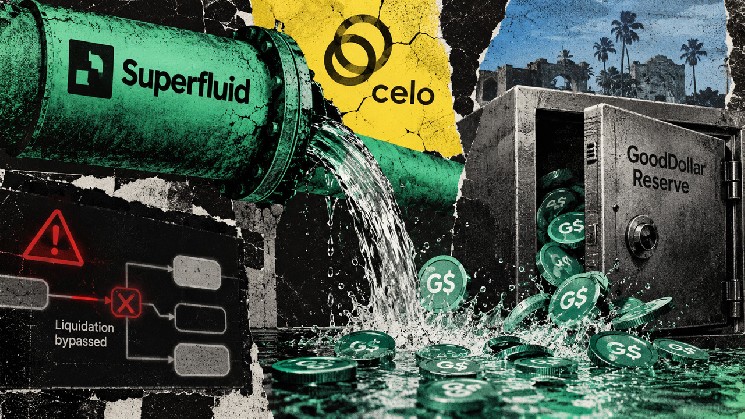
    A vulnerability in Superfluid’s Celo deployment enabled a malicious application to bypass liquidation safeguards and mint excess G$ tokens, resulting in the drainage of more than $100,000 from GoodDollar’s reserves. GoodDollar announced on September 9 that 86,588 cUSD was exchanged out of its Celo reserve and an additional $20,857 was taken from its XDC reserve. External G$ liquidity pools were also impacted, though neither project has disclosed the extent of those losses.

    GoodDollar’s UBI Model and Reserve Structure

    GoodDollar operates as a decentralized universal basic income (UBI) protocol that distributes G$ tokens daily to registered users. The protocol’s reserve is backed by stablecoins, with yield generated through DeFi investments used to support G$ issuance and UBI distributions. According to GoodDollar’s dashboard, the program has over 963,000 unique UBI claimants and has distributed more than 2.3 billion G$ tokens to date, making the reserve central to the token’s economic model and daily distribution system.

    Celo Network Holds 28% of G$ Circulating Supply

    Approximately 2.4 billion G$ tokens circulate on the Celo network, representing roughly 28% of the token’s 8.7 billion circulating supply. This makes Celo the second-largest network for G$ after Fuse, which holds 4.19 billion G$. Ethereum accounts for about 1.82 billion G$, while the XDC network holds 292.5 million G$.

    GoodDollar Crypto Tokens Circulating Supply by Networks (Source: GoodDollar’s Dashboard)

    Superfluid Identifies Celo-Specific Vulnerability

    Superfluid’s Security Council confirmed that the vulnerability was isolated to its Celo deployment. A malicious application circumvented a whitelisting requirement, allowing insolvent G$ balances to remain active instead of being liquidated. These excess balances were then exchanged against assets in the GoodDollar Reserve and other liquidity pools.

    Superfluid detected insolvent accounts on September 3 and traced the liquidation failure to the Super App bug the following day. The team deployed a hotfix, reinstated Super App whitelisting on Celo, and closed the affected accounts. The council stated that other Superfluid networks were not exposed to the same flaw.

    GoodDollar Activates Emergency Safeguards

    GoodDollar reported that its Celo and XDC reserves were not fully depleted, crediting monitoring alerts, emergency pauses, and existing protocol safeguards. Claiming, G$ transfers, and identity verification have resumed on Celo. However, reserve operations on both Celo and XDC remain paused, bridging is suspended, and liquidity in external pools remains limited. GoodDollar has advised users against swapping G$ until liquidity improves, warning that thin markets could produce significant slippage and prices that diverge from normal levels.

    Unexplained XDC Reserve Loss Raises Questions

    Meanwhile, the $20,857 loss from the XDC reserve remains unexplained. Superfluid stated the underlying vulnerability existed only on Celo, yet GoodDollar reported an outflow from its XDC reserve. Neither project has disclosed how the excess G$ reached or affected the XDC network.

    Incident Reports and Recovery Plans Underway

    GoodDollar said it plans to address the excess G$, restore liquidity, and reopen the remaining paused functions. Both GoodDollar and Superfluid are preparing separate incident reports that should provide a fuller accounting of external-pool losses and explain how the Celo exploit produced an outflow on XDC.

  • Solana Price Risks Falling Below $100 as Bearish Momentum Intensifies

    Solana Price Risks Falling Below $100 as Bearish Momentum Intensifies

    Solana Price Dips Below $102 as Macro Risks Trigger Broad Crypto Sell-Off

    Solana (SOL) declined 3.5% over the past 24 hours to trade near $101 on September 10, putting the critical $100 support level under threat as selling pressure intensifies across digital asset markets. According to CoinGecko data at the time of writing, SOL was priced at $100.96 after retreating from the $104–$105 range and touching an intraday low of roughly $100.60.

    Despite the near-term pullback, the token remains up 1.1% over the past seven days and has surged 34.5% over the last 30 days, climbing from the mid-$70s in August to briefly test the $110 level.

    Macroeconomic Headwinds Drive Risk-Off Sentiment

    The decline coincides with a broad risk-off move across global markets. Brent crude oil prices surged above $100 per barrel as the U.S.–Iran conflict escalated and attacks on shipping lanes disrupted energy flows through the Middle East. Higher energy costs have reignited concerns over U.S. inflation just ahead of key consumer price data and next week’s Federal Reserve policy decision.

    Asian equities fell in tandem with cryptocurrencies as investors reduced exposure to risk assets. Additional pressure stemmed from the bond market, where the U.S. 10-year Treasury yield climbed to approximately 4.85%—its highest level since late 2023—after the Treasury announced a $6 billion long-dated bond buyback that was smaller than market participants had anticipated. Rising yields increase the opportunity cost of holding non-yielding assets like crypto at a time when markets are reassessing the trajectory of U.S. interest rates.

    Traders are currently pricing in roughly a 60% probability of another Federal Reserve rate hike following strong labor market data. The macro-driven selloff swept across the crypto complex: Bitcoin hovered near $79,000, while roughly $246 million in leveraged positions were liquidated over the past 24 hours as volatility spiked.

    No Solana-Specific Catalyst Behind the Drop

    Coinbase market data linked SOL‘s decline to broad inflation concerns and weakness across smart contract platform tokens, supporting the view that the sell-off is not driven by a new Solana-specific event. Profit-taking likely amplified the move once SOL slipped from the $105 area.

    Solana (SOL) Technical Price Analysis

    Daily Chart: Momentum Fades, $100 Support in Focus

    On the daily timeframe, SOL/USDT was trading near $101.19 after printing an intraday low of $100.50.

    SOL/USDT 1-day price chart. Source: TradingView.
    • Price has fallen below the 9-day simple moving average (SMA) at $102.88, leaving the short-term average above the market after supporting much of the August advance.
    • The daily Commodity Channel Index (CCI) has dropped to -10.02 from over 300 during the August breakout. Its moving average remains elevated at 64.77.
    • The CCI’s fall back through zero indicates the strong positive momentum behind the rally toward $110 has dissipated, though the indicator has not reached the -100 level typically associated with oversold conditions.

    $100 now acts as immediate support after SOL repeatedly held the $100–$101 zone during the recent decline. A daily close below this level could bring $95 into focus, with the $90–$92.50 area forming the next major support zone stemming from the August breakout.

    For a recovery to gain traction, SOL must first reclaim the 9-day SMA at $102.88. The next resistance cluster sits around $105–$107, where several recent upside attempts have stalled. A decisive break above that zone could put the August high near $110 back in play.

    4-Hour Chart: Bearish Structure Intensifies

    The 4-hour timeframe shows a similar deterioration in momentum.

    SOL/USDT 4-hour price chart. Source: TradingView.
    • SOL has declined from the $106–$107 region since September 7 and was last trading at $101.18, with the latest candle reaching a low of $100.83.
    • On-balance volume (OBV) has fallen to -44.94 million from roughly -41 million during the prior rebound, confirming that the move toward $100 has been accompanied by declining cumulative volume pressure.
    • The 4-hour MACD line has dropped to -0.46, below the signal line at -0.33, with the histogram at -0.13. Both lines have moved below zero as SOL approaches $100, signaling short-term momentum favors sellers.

    A break below $100 would expose the recent 4-hour support around $97.50–$98. SOL traded in that area during the early-September pullback before recovering toward $106. If $97.50 fails, the next visible support sits around $95.

    For the bearish structure to weaken, SOL would need to recover to $102.50–$103 and push the MACD back toward its zero line. A move through $105 would then open the door to the $107 area, while the late-August peak near $110 remains the next major upside target.

  • Flop Labs Launches Yellow Paper Repository, Driving Community

    Flop Labs Launches Yellow Paper Repository, Driving Community

    Flop Labs Launches Yellow Paper Repository to Drive $FLOP Community Engagement

    Flop Labs has officially released its Yellow Paper repository, marking a notable milestone in the platform’s efforts to deepen community involvement. The announcement gained significant traction after Arthur Hayes highlighted it in a social media post, sparking heightened interest among $FLOP token holders and crypto observers alike.

    Strategic Move Amid Mixed Market Conditions

    The Yellow Paper launch arrives at a pivotal moment for the cryptocurrency sector, where market signals remain mixed. By publishing detailed documentation on the project’s vision and technical roadmap, Flop Labs aims to create a focal point for community alignment. The repository is designed to give token holders clearer insight into the $FLOP ecosystem’s utility and future direction, potentially catalyzing more active participation as users evaluate the project’s long-term prospects.

    Key Highlights of the Announcement

    • Flop Labs has published its Yellow Paper repository for public access.
    • The documentation targets enhanced engagement with $FLOP token holders.
    • Arthur Hayes’ endorsement amplified visibility across crypto communities.
    • The initiative supports a broader strategy to refine tokenomics and strengthen community dynamics.
    • An upcoming tokenomics infographic and AMA session next week are expected to provide further details.

    Market Response and Trading Activity

    Current trading activity for Flop Labs registers at zero volume, indicating the market is in a wait-and-see mode following the announcement. The absence of price movement suggests traders are holding positions pending more concrete information on tokenomics and upcoming initiatives. However, the Yellow Paper’s release may shift sentiment as community members review the project’s technical framework and governance model.

    Building a Foundation for Community-Driven Growth

    Flop Labs is positioning the Yellow Paper as a cornerstone for transparent, community-led development. By clarifying the $FLOP token’s utility and outlining future milestones, the project seeks to attract and retain users who value participatory governance. This approach aligns with a growing trend in decentralized ecosystems where informed communities drive sustainable adoption.

    What to Watch Next

    Market participants and community members will closely monitor how the Yellow Paper influences engagement metrics in the coming weeks. The scheduled tokenomics infographic and AMA session represent critical touchpoints that could clarify incentive structures, distribution mechanisms, and roadmap priorities. These events may trigger renewed activity in the $FLOP token as stakeholders align with the project’s evolving objectives.

    This article is for informational purposes only and does not constitute financial advice.

  • Ant International Joins Visa, Mastercard to Develop AI Agent Payment Standards

    Ant International Joins Visa, Mastercard to Develop AI Agent Payment Standards

    Ant International has partnered with Visa and Mastercard to develop common standards for identifying and monitoring AI agents as autonomous software takes on a larger role in global payments. The collaboration aims to create an interoperable “Know Your Agent” framework that lets merchants and payment providers verify which AI agents are behind transactions and whether they are authorized to act.

    Framework addresses projected growth in agentic commerce

    The initiative arrives as payment companies prepare for AI systems that can search for products, place orders, and make payments for consumers and businesses. Ant cited McKinsey projections that AI agents could handle between $3 trillion and $5 trillion of global consumer commerce by 2030.

    Jiang-Ming Yang, chief innovation officer at Ant International, emphasized that safeguards will be essential as agents gain more authority over financial transactions because AI systems can produce incorrect information or take actions users did not intend.

    “Trust is the foundation of the AI transformation,” Yang told CNBC.

    Interoperable identity system reduces friction

    Under the collaboration, Ant International, Visa, and Mastercard plan to establish common methods for linking an AI agent to a valid entity, evaluating its behavior, and monitoring its activity. The companies are focusing on interoperability between their separate systems so an agent that has already established its identity with one payment provider would not necessarily have to repeat the process with another.

    “If [an] agent registers with Ant, they don’t need to register again with Visa, Mastercard,” Yang said.

    Such a system would give merchants and payment processors a consistent way to determine which software agent is requesting a transaction and the party on whose behalf it is operating.

    Pablo Fourez, chief digital officer at Mastercard, said interoperability between Know Your Agent frameworks will be needed if agentic commerce is to operate across different platforms.

    “Interoperability across Know-Your-Agent frameworks is essential to making agentic commerce work at scale,” Fourez said, stressing the need for merchants and payment companies to consistently identify AI agents they can trust.

    Each company brings existing agent payment infrastructure

    Each of the three companies has spent the past year developing its own technology for AI-led payments. Mastercard on Wednesday launched Agent Connect, a system that gives merchants a single integration for product discovery, cart creation, and customer-approved payments across AI shopping platforms.

    Agent Connect works with Mastercard Agent Pay, which records customer authority through tokenized permissions when an AI system is allowed to make a purchase. Merchants and payment providers can use the permission to determine whether the transaction falls within instructions provided by the customer.

    Visa builds autonomous payment stack

    Visa has been developing a separate stack for autonomous payments. In April, the company introduced Intelligent Commerce Connect, bringing payment initiation, tokenization, authentication, and spending controls into infrastructure designed for AI agents.

    The system allows agents to search for products and complete transactions on behalf of consumers while using Visa’s existing payment network and security tools. Visa expanded that work in June with new AI and stablecoin capabilities, including a partnership with OpenAI to support payments within agentic commerce experiences. Its stablecoin settlement activity had reached a $7 billion annualized run rate at the time, crypto.news previously reported.

    Mastercard targets machine-to-machine transactions

    Mastercard has taken a similar route through Agent Pay for Machines. The company unveiled the payment network in June with support from more than 30 payment, blockchain, and technology companies, including Ripple, Coinbase, Stripe, Adyen, and the Solana Foundation.

    The network was built for transactions initiated by autonomous software, including high-volume and low-value payments. Users can set spending limits, authorization requirements, and settlement conditions, while transactions can run through conventional payment networks or stablecoin rails.

    Both card companies have consequently been developing controls for a payment environment in which the person buying a product may not directly interact with the merchant’s checkout page.

    Ant International adds digital wallet scale

    Ant International gives the collaboration access to another part of the global payments market through Alipay+, its cross-border payment and digitalization platform. More than 50 electronic wallets have partnered with Ant International through Alipay+, according to the company. Such wallets are widely used in markets where consumers frequently rely on mobile payment systems instead of physical credit or debit cards.

    Digital wallets represented 56% of global e-commerce transaction value and 33% of point-of-sale value in 2025, according to Worldpay data cited by the companies. Total spending through the payment method exceeded $13 trillion.

    Card networks and digital wallets have become increasingly connected as wallets add support for cards and other funding sources, giving AI payment systems multiple routes through which transactions could eventually be completed.

    Stablecoins emerge as machine payment rail

    Visa has already been testing combinations of AI payments and blockchain-based settlement. Wirex joined Visa’s Agentic Ready program in June to test AI agents making stablecoin payments, initially focusing on software subscriptions, marketing spending, and procurement.

    The tests were designed to determine how autonomous software could initiate financial transactions while preserving security controls and user authority.

    Stablecoins have become another part of the infrastructure being developed for machine-led transactions. Visa and Artemis said in July that stablecoins could be suited to low-value machine-to-machine payments, while traditional cards could continue handling consumer purchases.

    Alipay deploys consumer-facing AI ordering

    Ant’s work on payment standards is arriving as its former parent company’s Alipay platform begins putting AI-assisted purchasing tools in front of consumers. Ant International separated from Hangzhou-based Ant Group nearly three years ago. Ant Group operates Alipay, the mobile payment service widely used in mainland China.

    Alipay said Wednesday that users can now create recurring Starbucks requests through one of its AI features.

    “buy me a Starbucks iced Americano at 10 a.m. every day,” according to the announcement. The system can then place the requested order at the scheduled time before asking the customer to complete payment.

    The arrangement keeps the payment approval with the user even though the AI feature handles the recurring order. Alipay users can make recurring ride-hailing requests from Didi through the same AI tool, extending the automated system from retail purchases to transportation services.