Author: Evan Mercer

  • Bitcoin Defies Tech Selloff as AI Safety Concerns Weigh on Stocks

    Bitcoin Defies Tech Selloff as AI Safety Concerns Weigh on Stocks

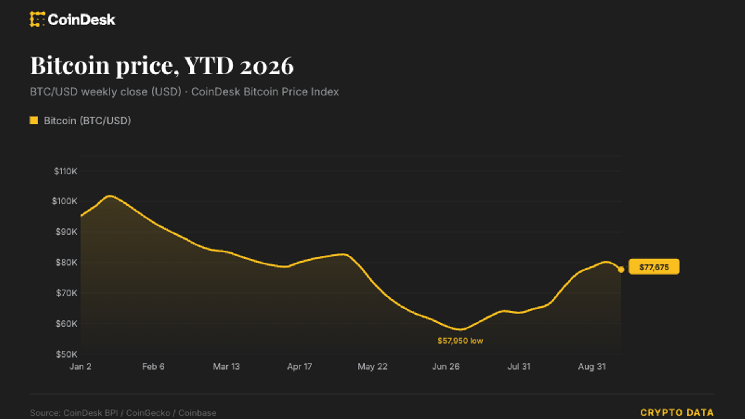
    U.S. technology and artificial intelligence stocks declined in pre-market trading Monday after prominent industry leaders raised fresh concerns about the rapid pace of AI development over the weekend. While equities slid, cryptocurrencies moved higher, with Bitcoin gaining approximately 1% to $77,800 and Ether rising 1% to $2,500.

    AI Leaders Urge Caution on Development Speed

    Anthropic CEO Dario Amodei called for the industry to slow development to allow safety measures to catch up. OpenAI CEO Sam Altman and Elon Musk, whose xAI developed Grok, voiced agreement with the sentiment. The coordinated warnings from three of the sector’s most influential figures appeared to rattle investor confidence in the near-term trajectory of AI-related equities.

    IPO Developments Add to Sector Narrative

    Amid the safety debate, Anthropic reportedly selected Nasdaq for its anticipated initial public offering. Separately, Altman confirmed that OpenAI will not go public in 2026, removing a potential near-term catalyst that some market participants had speculated about.

    Global Markets React to AI Sentiment Shift

    South Korea’s Kospi index fell 3%, with SK Hynix—a key supplier of memory chips used in AI infrastructure—dropping 6%. The selloff extended to U.S. pre-market trading, where the Invesco QQQ ETF, which tracks the Nasdaq 100 index, declined 1.5%.

    Neocloud and Chipmakers Lead Declines

    Neocloud providers Nebius and CoreWeave fell 6% and 5%, respectively. Chipmakers SanDisk and Intel each lost 5%, reflecting broad-based concern across the AI hardware and infrastructure supply chain.

  • Bitwise Investment Director Attributes Bitcoin Rally to Strong Demand Despite Strategy Sale

    Bitwise Investment Director Attributes Bitcoin Rally to Strong Demand Despite Strategy Sale

    Bitwise Investment Director Matt Hougan has weighed in on Strategy’s recent Bitcoin sale, noting that the transaction reflects routine capital management rather than financial distress. Despite the company selling over $200 million worth of BTC, the cryptocurrency’s price continued to climb — a signal Hougan says points to robust buying demand across the market.

    Sale Driven by Capital Management, Not Funding Pressure

    According to Hougan, Strategy’s decision to offload a portion of its Bitcoin holdings was executed to meet dividend payment obligations and manage cash reserves. The move should be viewed as part of a broader capital management strategy, not an indication that the firm is facing liquidity issues or forced to reduce its position under duress.

    As one of the largest institutional holders of Bitcoin on its balance sheet, Strategy’s trading activity is closely monitored by market participants for potential price impact. However, Hougan emphasized that the market absorbed the sale without disruption, suggesting sufficient buyer appetite to offset large-scale selling.

    Institutional Investors Poised to Become Primary Market Drivers

    Looking ahead, Hougan expects Strategy’s influence on Bitcoin’s price to gradually diminish. He argues that as institutional investors gain greater market share, they will increasingly serve as the primary marginal buyers of BTC. This structural shift is being accelerated by the growth of spot Bitcoin exchange-traded funds (ETFs), asset managers, and other institutional investment vehicles.

    The diversification of capital flows into Bitcoin through these channels could expand the investor base and deepen market liquidity. Hougan’s analysis implies that Bitcoin demand is becoming more resilient and less dependent on the actions of any single corporate entity.

    Market Absorption Signals Strengthening Independent Demand

    The fact that Bitcoin’s price rose despite a significant sale by a major holder underscores a key development: the market now has enough buying power to absorb large sell orders without meaningful downside pressure. This dynamic supports the view that Bitcoin’s demand fundamentals are strengthening independently of individual corporate transactions.

    This is not investment advice.

  • EU Cyber Resilience Act Requires 24-Hour Exploit Disclosure From Crypto Wallet Makers

    EU Cyber Resilience Act Requires 24-Hour Exploit Disclosure From Crypto Wallet Makers

    EU Cyber Resilience Act Imposes 24-Hour Vulnerability Reporting on Crypto Wallet Makers

    Crypto wallet manufacturers operating in Europe now face a strict 24-hour deadline to notify regulators when a vulnerability in their products is actively exploited. The requirement stems from Article 14 of the European Union’s Cyber Resilience Act (CRA), the bloc’s flagship cybersecurity legislation for connected hardware and software. The incident-reporting provisions took effect on September 11, 2026 — more than a year before the regulation’s broader security requirements become applicable in December 2027.

    What the 24-Hour Reporting Window Requires

    Article 14 of the Cyber Resilience Act covers manufacturers of “products with digital elements,” a category that encompasses hardware wallets and commercial wallet software because these products connect to devices and networks. When a manufacturer learns that a vulnerability is being actively exploited, it must submit an early warning notification to the EU’s cybersecurity agency ENISA and the designated computer security incident response team (CSIRT) through a single reporting platform within 24 hours.

    A fuller vulnerability notification follows within 72 hours, and a final report is due within 14 days of a corrective or mitigating measure becoming available. The same accelerated reporting rules apply to severe incidents affecting product security.

    Why the Deadline Matters for the Crypto Industry

    The reporting obligation arrives amid a series of high-profile wallet security failures. Hardware wallet maker Coldcard has spent recent weeks responding to attacks that drained Bitcoin from its devices, and the wave three exploiter has since moved funds through CoinJoin. Trezor, meanwhile, disclosed a ShipMonk data breach affecting thousands of US customers.

    Under the new EU regime, a manufacturer that discovers its firmware has been exploited must now alert regulators within a day rather than controlling the disclosure timeline itself. For an industry that has historically announced fixes on its own schedule, the requirement turns vulnerability disclosure from a discretionary choice into a legal duty.

    Compliance Timeline and Key Exemptions

    The September 11, 2026 date applies only to the CRA’s vulnerability and incident-reporting obligations. The regulation’s wider duties — including security-by-design requirements, conformity assessment, and CE marking — do not apply until December 11, 2027.

    The regime also includes relief for smaller firms: administrative fines do not apply to microenterprises and small enterprises that miss the 24-hour early-warning deadline, although the reporting obligation itself remains in force. Once the broader framework takes effect, non-compliance can draw enforcement action from national market surveillance authorities.

  • Nu Launches U.S. Banking and USDC Global Account

    Nu Launches U.S. Banking and USDC Global Account

    Nu Launches U.S. Banking and Global Stablecoin Products as Latin American Leader Expands North

    Latin America’s largest digital bank, Nu, officially entered the United States on September 10 with two distinct product lines: a domestic banking suite backed by Lead Bank and a separate global offering, Nu Global, that converts customer deposits into stablecoins. The rollout was disclosed through a company release and a corresponding SEC filing, with both products described as releasing in stages beginning on the announcement date.

    U.S. Banking Through Lead Bank Partnership

    Nu’s U.S. operation provides deposit accounts, debit cards, credit cards, and domestic or international transfers through Lead Bank, a member of the Federal Deposit Insurance Corporation (FDIC). Lead Bank supplies the regulated banking and card services, while Nu operates as a financial technology company.

    Deposit Account and Savings Features

    The U.S. deposit account pays a 3.50% annual percentage yield (APY) on available dollar balances. Interest is calculated and credited daily, and customers retain immediate access to money placed in designated savings goals. Deposits are held by Lead Bank and receive FDIC insurance subject to applicable legal limits and eligibility requirements.

    A limited-edition metal debit card accompanies the account. Domestic transfers carry no fee, while international transfers initially cover Brazil, Mexico, and Colombia. Nu plans to add more countries but has not published a full expansion schedule.

    Credit Card and Future Yield Tiers

    Nu’s Mastercard World Elite credit card carries no annual fee and pays 1.5% unlimited cashback. Customers who meet conditions that have not yet been fully detailed may eventually increase the rate to 2%.

    A future feature promises a 4.50% APY savings goal capped at $10,000 for customers who pair the deposit account with the credit card and complete qualifying transactions. Because Nu repeatedly uses “soon” to describe these higher rates, neither the 4.50% yield nor the 2% cashback should be treated as available to every customer at launch.

    “capturing even a small share of the U.S. market will be transformative for our business,”

    said Cristina Junqueira, co-founder and CEO of Nu’s U.S. operation. She added that the company wants its app to become customers’ primary banking relationship, though Nu has not issued a U.S. customer, deposit, or revenue target.

    Nu Global Converts Deposits into Stablecoins

    Nu Global operates separately from the Lead Bank offering. According to the SEC filing, funds deposited through the global account are converted into Circle-issued $USDC or $EURC stablecoins.

    Yield Rates and Spending Features

    $USDC balances receive an advertised 3.50% APY, while $EURC balances receive 2.20%. Nu says both rates accrue daily but has not committed to maintaining either rate for a fixed period. The account includes a virtual Mastercard for global purchases, and Nu says users can spend at competitive exchange rates without an added foreign-exchange markup, subject to the product’s terms and availability in each jurisdiction.

    Transfer Corridors and Digital Asset Access

    Transfers are initially focused on corridors between Europe and Latin America. Connections with Nu’s systems in Brazil, Colombia, Mexico, and the U.S. are planned for later, but the company has not supplied individual launch dates. Customers can hold and trade a limited selection of digital assets through the same app, including Bitcoin and Ethereum. Nu has not published the complete asset list, supported blockchain networks, or withdrawal conditions in its announcement.

    Swiss Regulatory Framework and Insolvency Protection

    Nu Global AG is a member of VQF, a self-regulatory organization recognized by the Swiss Financial Market Supervisory Authority. Nu’s website says customer balances are covered by a Swiss bank default guarantee to the extent required by law if Nu Global AG becomes insolvent.

    This guarantee differs from FDIC deposit insurance. Nu’s announcement does not identify the guaranteeing bank, state a coverage amount, or explain how claims involving changes in stablecoin value would be calculated.

    Yield Source Undisclosed

    Nu has not identified the source of the advertised $USDC and $EURC yields in its release or SEC filing. It has not said whether the return comes from issuer rewards, reserve income, lending, treasury assets, or a subsidy funded by Nu. In related coverage, crypto.news reported that yield attached to stablecoins can carry risks outside ordinary bank-deposit protections, depending on which entity produces the return and how customer funds are deployed. Nu has not described its product as a decentralized finance strategy.

    National Bank Charter Remains in Organization Stage

    Nu applied to establish Nubank, National Association, on September 30, 2025. The Office of the Comptroller of the Currency (OCC) granted preliminary conditional approval on January 29, 2026. The OCC letter authorizes Nu to continue organizing the proposed bank but does not permit Nubank, N.A. to begin banking operations immediately.

    Before receiving final authorization, the proposed bank must meet the OCC’s preopening conditions, obtain FDIC deposit insurance, and apply for stock in a Federal Reserve Bank. The regulator retains authority to modify, suspend, or withdraw the preliminary approval.

    Nu said in January that it expected to capitalize the bank within 12 months and open it within 18 months, as required by the approval process. Those time frames point to regulatory work continuing into 2027 unless the company completes the requirements earlier.

    Once authorized, Nubank, N.A. expects to provide deposits, credit, lending, and digital-asset custody. The OCC letter says the proposed bank plans to support customer-directed purchases, sales, and on-chain transfers of bank-custodied digital assets, along with staking services. As crypto.news explained in its review of how OCC national charters govern crypto businesses, conditional approval does not equal authorization to begin operating. Applicants must complete capital, management, compliance, and operational requirements before receiving final approval.

    Nu is using Lead Bank to enter the market while its own charter remains in the organization stage. Customers opening current U.S. products therefore receive services from the partner bank, not from the proposed Nubank, N.A.

    Expansion Builds on Latin American Scale

    Nu reported more than 140 million customers across its existing markets when it announced the new products. The company operates in Brazil, Mexico, and Colombia, while its parent, Nu Holdings, has traded on the New York Stock Exchange since 2021.

    In Brazil, Nu says it serves more than 60% of the adult population. The company describes itself as Mexico’s largest digital bank and Colombia’s fourth-largest financial institution by deposits. Each ranking comes from Nu’s corporate announcement.

    The expansion follows Nu’s previous work with digital assets in Latin America. Its Brazilian crypto platform had more than 7 million customers by March 2026, when the company introduced staking-based rewards for Solana. Nucoin provided an earlier link between the company’s banking and token products. As crypto.news previously reported, Nubank created Nucoin as a blockchain-based customer rewards asset before adding more conventional crypto trading and stablecoin services.

    For its latest reported quarter, Nu said net income exceeded $1 billion and return on equity surpassed 32%. Its announcement did not provide separate spending estimates, customer projections, or profitability deadlines for the U.S. and Nu Global businesses.

    Staged Rollout Continues

    Access will expand through a staged release. Nu said early U.S. applicants may receive limited-edition metal Mastercard cards, while transfers to more countries, enhanced cashback, and the higher savings yield remain scheduled for later releases without firm public dates.

  • Altcoin Rally Stalls as Institutional Bets Fail to Rescue Ethereum, Solana, Aptos

    Altcoin Rally Stalls as Institutional Bets Fail to Rescue Ethereum, Solana, Aptos

    Altcoin Market Diverges After August Rally as Bitcoin Dominance Holds Near 60%

    The cryptocurrency market is signaling a significant shift following August’s rally, with major altcoins splitting into distinct winners and losers while Bitcoin maintains its commanding lead. Ethereum, Solana, and XRP all declined despite positive fundamental developments, while Tron, Aptos, and Kaspa posted strong gains.

    Ethereum Slips Despite Institutional Accumulation and ETF Inflows

    Ethereum ($ETH) fell approximately 2% over the period, even as bullish catalysts accumulated. Bitwise added 28,086 ETH to its treasury, bringing holdings to nearly 4.9% of Ethereum’s total supply. Simultaneously, spot ETH ETFs recorded $218 million in net inflows, underscoring sustained institutional demand.

    On the protocol front, Vitalik Buterin introduced EIP-8141, a proposal designed to simplify stablecoin transactions by reducing the necessity for users to hold ETH specifically for gas fees.

    Solana Declines Amid Technical Upgrade and Corporate Buying

    Solana ($SOL) dropped 4% despite the activation of its Transaction V1 upgrade, which enhances the network’s capacity to process larger and more complex DeFi transactions. DeFi Development Corp. raised $11 million to acquire SOL, adding a layer of potential institutional demand. However, spot SOL ETFs saw modest outflows, and broader market weakness pressured the token.

    XRP and BNB Face Headwinds Despite Ecosystem Growth

    Ripple’s XRP experienced a sharper decline even as RLUSD’s market capitalization surpassed $2.3 billion. Binance Coin ($BNB) fell 1.5%, though BNB Chain strengthened its position in tokenized assets, now holding approximately $1.267 billion in tokenized stocks—representing 44.6% of that market segment, ahead of both Ethereum and Solana. Jupiter’s JUP slipped just 0.7% as it expanded into tokenized assets.

    Tron, Aptos, and Kaspa Lead Gainers

    Not all altcoins retreated. Tron (TRX) gained 2.7%, supported by Canary Capital’s launch of TRXS, the first spot-staked TRON ETF. Aptos ($APT) surged 6.4%, driven largely by Bitwise filing an S-1 registration statement for a potential spot Aptos ETF, raising expectations for broader institutional access.

    Kaspa ($KAS) emerged as the strongest performer, rallying 23% as its circulating supply approached 96.5% of its hard cap, significantly reducing concerns around future supply dilution.

    Altcoin Season Index Signals Continued Bitcoin Preference

    The Altcoin Season Index sat at 40 at press time, indicating the market remains in a Bitcoin-dominated phase rather than a broad altcoin rally. Data from CoinGlass shows altcoin Open Interest has surpassed Bitcoin’s for the first time since December 2024, signaling aggressive leveraged positioning in the altcoin space.

    Bitcoin ($BTC) traded at $76,751.69, down modestly over 24 hours but up over 22% on a monthly basis. Bitcoin dominance stands at 59.29%, up 0.18%, reinforcing capital preference for BTC over altcoins.

    Key Resistance at 60% Dominance Could Dictate Next Move

    The steady rise in Bitcoin dominance suggests the current Bitcoin season trend remains intact. However, with dominance testing the key 60% resistance level, weak trading volumes and renewed macroeconomic uncertainty could trigger a rejection—potentially paving the way for a September-style altcoin rally. Confirmation of such a shift remains pending until altcoins break through critical resistance levels.

    Summary

    • Ethereum, Solana, XRP, and Jupiter declined post-August rally despite positive fundamentals.
    • Tron, Aptos, and Kaspa surged on ETF filings, product launches, and supply dynamics.
    • Altcoin Season Index at 40 confirms Bitcoin season persistence.
    • Bitcoin dominance at 59.29% tests 60% resistance; breakout or rejection will signal next trend.
  • Robinhood CEO says issuers should not have veto over tokenized stocks

    Robinhood CEO says issuers should not have veto over tokenized stocks

    Robinhood CEO Vlad Tenev argued Friday that companies should not hold veto authority over tokenized stock products that leave shareholder rights, issuer obligations, and official stock ledgers unchanged.

    In a post on X, Tenev framed the issue of issuer consent around whether a tokenized product alters the rights attached to underlying shares or creates new obligations for the company or its transfer agent. If it does, he stated the issuer should be involved. However, Tenev contended that if the product creates a separate financial instrument holding or referencing freely transferable shares without changing the issuer’s rights, obligations, or shareholder record, consent should not be required.

    Response to AMC Entertainment Criticism

    The comments followed criticism from AMC Entertainment CEO Adam Aron on Sept. 4. Aron said AMC had no affiliation with Robinhood’s tokenized stock offerings and would ask securities counsel to review them.

    Tenev explained that Robinhood Stock Tokens use a third-party structure with separately issued instruments backed 1:1 by underlying shares. The products provide economic exposure to stocks and exchange-traded funds without altering an issuer’s cap table or the rights attached to its shares.

    “Going onchain shouldn’t give the issuer a veto it never had offchain,” Tenev said.

  • Liquidity Providers Move $6.8M in ONDO: More Sell Pressure Ahead?

    Liquidity Providers Move $6.8M in ONDO: More Sell Pressure Ahead?

    Institutions Move $6.8M in ONDO Tokens to Exchanges as Altcoin Holds Key Range

    Centralized exchanges and market makers are actively sourcing liquidity for Ondo Finance’s $ONDO token on behalf of institutional clients, transferring over $6.83 million worth of tokens across major trading venues in recent days. The activity has raised questions about whether institutions are preparing to sell or if fresh demand is emerging for the altcoin.

    Major Token Transfers Tracked Across Exchanges

    According to on-chain analyst Nazoku, three significant transfers have taken place:

    • FalconX sent $3.89 million of $ONDO to Binance.
    • Ondo Finance moved $1.46 million of $ONDO to Coinbase as part of a planned 4 million token transfer.
    • Coinbase transferred $1.48 million of $ONDO to Bybit.

    Historically, similar exchange inflows have preceded periods of price weakness, often signaling that large holders are positioning for sales. However, the market reaction so far has been muted.

    ONDO Price Action Remains Range-Bound

    Despite the notable token movements, $ONDO has continued trading in a tight corridor between $0.34 and $0.35. At press time, the token was changing hands near $0.34, down just 0.97% on the day. Trading volume declined sharply by 39% to $56 million, suggesting the transferred tokens have not yet been sold into the open market.

    While the price holds, the underlying market structure remains fragile and tilted to the downside.

    Technical Indicators Signal Continued Downside Pressure

    Data from TradingView shows the Awesome Oscillator has printed negative values for four consecutive sessions, indicating that short-term momentum is weaker than the longer-term trend. Additionally, $ONDO continues to trade below both its short-term and long-term moving averages, reinforcing the bearish bias.

    Derivatives Lead the Sell-Side Pressure

    Analysis of futures flows via CoinGlass reveals that the current weakness stems primarily from the derivatives market. Over the past week, $ONDO futures recorded $444 million in outflows versus $410 million in inflows, producing a net outflow of $34 million — a 102% drop in netflow that points to aggressive position unwinding.

    Spot Market Shows Resilient Demand

    Contrasting the futures exodus, spot market data from Coinank shows persistent buying interest. The market delta — a measure of aggressive buying versus selling — remained positive over the past week, sitting at approximately 2.1 million at press time, down slightly from 2.5 million the prior day.

    Crossroads: Sideways Action Likely Unless Sell Pressure Intensifies

    The divergence between heavy derivatives selling and steady spot accumulation has locked $ONDO in a sideways range. If current dynamics persist, the token is likely to continue hovering between $0.34 and $0.35. However, should the recently transferred tokens hit the market, increased sell pressure could break the range and push price toward the $0.32 level.

    Key Takeaways

    • CEXs and market makers moved $6.8 million in $ONDO to exchanges, likely for institutional liquidity needs.
    • $ONDO remains range-bound between $0.34–$0.35 with bearish technical structure intact.
    • Futures netflows turned deeply negative (-$34M), while spot delta stays positive.
    • A break below $0.34 could trigger a move toward $0.32 if institutional tokens are sold.
  • Revolut Attackers Threaten Daily Customer Data Leaks

    Revolut Attackers Threaten Daily Customer Data Leaks

    Threat actors who obtained sensitive Revolut customer information appear to have begun posting the data online and are threatening to release more information daily until the fintech company pays.

    High-Profile Individuals Among Leaked Data

    The newly leaked information reportedly includes selfies and copies of identity documents belonging to tennis player Alexander Shevchenko and Gamdom CEO Felix Römer, according to an X post from International Cyber Digest on Sunday.

    Attackers Issue Daily Release Threat

    “We’re going to start releasing more and more data everyday until revolut pays for leaking their customers,” the attackers reportedly said on Telegram. Cointelegraph reached out to Revolut and Römer for comment.

    Identity Theft Risks Escalate

    The exposed identity documents and facial-verification images could increase the risk of identity theft. Revolut on Friday told customers the leaked data also includes customers’ full name, date of birth, occupation, contact information, account statements and full transaction history, including records of Bitcoin transactions.

    Breach Origin: Government Email Impersonation

    Revolut told Cointelegraph on Saturday that the customer data was leaked due to a “sophisticated external impersonation scam” in which the attacker used an email address from a legitimate government agency domain email to submit fraudulent requests for information.

    Revolut later told Cointelegraph the breach affected a “⁠limited number” of customers, and its systems and customer funds are unaffected.

    Related: Revolut says customer data exposed through fake government email

  • Michael Saylor Calls Bitcoin ‘digital capital’ as BTC Bull Case Faces Reality Test

    Michael Saylor Calls Bitcoin ‘digital capital’ as BTC Bull Case Faces Reality Test

    Michael Saylor Positions Bitcoin as ‘Digital Capital’ and Potential Global Reserve Asset

    Strategy executive chairman Michael Saylor continues to advocate for Bitcoin (BTC) as a long-term store of value, recently outlining an investment thesis that frames the cryptocurrency as “digital capital” and a potential new global reserve asset.

    Why Saylor Calls Bitcoin an Open Global Reserve Asset

    According to Strategy, Bitcoin combines qualities found across traditional assets—scarcity, portability, divisibility, global liquidity, independent verification, and the ability to transfer ownership without a central issuer. Saylor argues that instead of viewing Bitcoin mainly as a payment network, investors should consider it as a store of wealth and potential hedge against the loss of purchasing power.

    However, Saylor made clear that in no sense did he argue that Bitcoin must replace the dollar, banks, or traditional financial markets. Instead, he believes Bitcoin could capture a portion of the monetary premium held in assets such as gold, real estate, equities, bonds, and collectibles.

    In a previous report published by AMBCrypto, Saylor called Bitcoin “digital monetary energy” and stated:

    Bitcoin is the engineering solution to the problem of money.

    Four-Year Investment Horizon and Historical Returns

    Beyond theoretical frameworks, Saylor highlighted a four-year investment horizon by analyzing Bitcoin’s rolling historical returns through September 4, 2026:

    • Median one-year total return: approximately +97.7%
    • Median two-year total return: approximately +272.2%
    • Median three-year total return: approximately +481.7%
    • Median four-year total return: approximately +1,301.7%

    Volatility remains significant. Bitcoin’s worst one-year period lost 83.6%, while the worst four-year period still returned approximately +32.6%.

    According to the Strategy report, Bitcoin has delivered a 62.8% annualized return over the past 10 years and 37.2% since Strategy’s “Bitcoin Standard Era” began in August 2020.

    Yet as of September 4, 2026, Bitcoin was 36.1% below its all-time high, with a historical maximum drawdown of roughly 93.1%. Strategy itself sold 6,916 BTC in 2026 alone, though a recent purchase of 4,603 BTC on August 31 suggests renewed buying momentum.

    Bitcoin’s Reality Test: Tug-of-War Between Long-Term Buying and Short-Term Selling

    At press time, Bitcoin was trading at $77,106.64 after a modest 24-hour drop but a hike of over 22% in the past month. The asset remains caught between strong long-term accumulation and short-term selling pressure.

    Market dynamics reflect mixed signals: U.S. CPI met expectations overall, but hotter core inflation raised concerns about higher-for-longer rates, pushing BTC to $76,700 before recovering toward $80,000 and falling back into the $77,000s.

    While Spot Bitcoin ETFs saw three consecutive weeks of inflows and long-term investors continued accumulating, weak spot demand, Binance’s two-year-high BTC holdings, and rising futures selling are adding downward pressure.

    CryptoQuant summarized the shift in market psychology:

    Investor sentiment has shifted from FOMO to loss aversion.

    Key Takeaways

    • Saylor does not suggest Bitcoin must replace the dollar, banks, or traditional financial markets.
    • Bitcoin is caught in a tug-of-war between strong long-term buying and short-term selling pressure.
  • Thailand’s SEC Proposes $151K Daily Cap on Stablecoin Transfers

    Thailand’s SEC Proposes $151K Daily Cap on Stablecoin Transfers

    Thailand SEC Proposes Daily Stablecoin Transfer Cap of $151,000

    Thailand’s Securities and Exchange Commission (SEC) has opened a public consultation on new stablecoin regulations, proposing a daily transfer limit of approximately $151,000 per person. The move signals a tightening of oversight for digital-asset payments as stablecoin usage grows in the country.

    Proposed Rules and Transfer Limits

    Under the proposed framework, each individual would face a one-way transfer limit of about $151,000 per day. The cap is designed to mitigate risks tied to illicit activity — including money laundering and cybercrime — while still allowing compliant firms and everyday users to move funds. The consultation also requires that deposits and withdrawals occur only through verified accounts, adding a layer of identity verification to stablecoin transactions.

    Exemptions for Regulated Operators

    Transfers between regulated operators that comply with the Financial Action Task Force (FATF) Travel Rule would be exempt from the daily cap. This carve-out allows institutional and compliant-to-compliant transfers to continue without hitting the limit, while retail and unverified flows face tighter scrutiny. The Travel Rule mandates that financial institutions share sender and recipient information for transactions, anchoring Thailand’s stablecoin rules to existing anti-money-laundering standards.

    Global Regulatory Context

    The development, highlighted by WuBlockchain, aligns with a broader global trend of regulators imposing stricter controls on stablecoin transactions. Stablecoins have increasingly powered enterprise payment programs and innovative products such as Uniswap’s StablePair hook. If adopted, Thailand’s rules could reshape how stablecoin users in the country move funds and may serve as a template for other jurisdictions considering similar limits. The SEC is currently collecting feedback before finalizing the framework.

    Thailand’s Evolving Regulatory Direction

    Thailand has been among the more active jurisdictions in crypto regulation, having already introduced licensing requirements for digital-asset businesses and issued warnings around unregulated platforms. The stablecoin consultation builds on that foundation, extending oversight to the payment rails increasingly used for remittances and everyday transactions. Regulators elsewhere in Southeast Asia are watching closely, as Thailand’s approach could influence regional standards and set expectations for how stablecoin issuers and exchanges operate across the region.