Author: Evan Mercer

  • Ethereum Layer 1 Sets Record 25.9 TPS as Q2 Transactions Hit 203.9 Million

    Ethereum Layer 1 Sets Record 25.9 TPS as Q2 Transactions Hit 203.9 Million

    Ethereum’s Layer-1 network achieved fresh usage milestones in the second quarter of 2026, even as the count of monthly active users contracted sharply. According to Token Terminal data, the blockchain processed 203.9 million transactions during the quarter, representing a 68.4% increase year-over-year. Average throughput also hit a record high of 25.9 transactions per second.

    Transaction Volume Surges Despite User Decline

    Despite the surge in on-chain activity, monthly active users fell 30% quarter-over-quarter to 9.2 million. This divergence indicates that the remaining user base generated significantly more transactions per capita. Network fees climbed 31.6% to $52.5 million, while ETH burn revenue more than doubled to $17.1 million, underscoring the intensified economic activity on the base layer.

    Tokenization Bolsters Ethereum’s Dominance

    Ethereum’s position as the primary settlement layer for tokenized assets strengthened further. The market for tokenized assets on Ethereum averaged $203.1 billion during Q2. Stablecoins continued to dominate this segment, accounting for $176.8 billion, while tokenized funds reached $20.8 billion. Notably, tokenized U.S. Treasury funds hit a record average of $7.5 billion.

    The network retained the largest share of both stablecoins and tokenized funds among leading blockchain ecosystems. Total value locked (TVL) across Ethereum’s ecosystem averaged $287.2 billion, though this figure declined 9.2% compared to the previous quarter.

    Staking Growth Signals Network Confidence

    Participation in network security reached a new high, with Ethereum’s staking ratio climbing to a record 32%. The number of addresses holding ETH also expanded, rising 6.6% to 312.1 million. These metrics suggest a deepening commitment from token holders to secure the proof-of-stake consensus mechanism.

    ETH Price Reaction and Outlook

    At the time of reporting, ETH trades around $2,538, marking a 1.18% gain over the preceding 24 hours. The combination of stronger network usage, rising staking participation, and expanding tokenization activity could provide fundamental support for Ethereum’s long-term market position.

    Related: Strive Adds 469 BTC, Bringing Bitcoin Holdings to 25,000

  • Robinhood Says Shares, Voting Rights Coming for Stock Tokens

    Robinhood Says Shares, Voting Rights Coming for Stock Tokens

    Robinhood plans to allow holders of its Stock Tokens to redeem them for actual shares and exercise voting rights on those shares, according to the company’s crypto chief. Johann Kerbrat, senior vice president and general manager of international and crypto at Robinhood, outlined the roadmap in a post on X Monday morning.

    Roadmap Announced on Social Media

    Kerbrat posted at 11:17 a.m. ET, addressing the most requested features directly: “What about in-kind redemption and voting rights? Not yet, but they’re coming,” he wrote. “Step one is to scale adoption of Stock Tokens. We’re actively working on redemptions for shares 1:1 with voting for eligible Stock Token holders on the roadmap.”

    CEO Vlad Tenev amplified the message, reposting the thread at 1:12 p.m. ET with the line: “In-kind redemption and voting are coming for Robinhood Stock Tokens.” The two posts had attracted 244,000 and 294,700 views respectively by mid-afternoon. The company has not issued a formal press release on the planned changes.

    Current Structure: Cash-Settled Debt Securities

    Delivering either feature requires rewriting the offering documents that govern the product. Robinhood Stock Tokens are not shares; they are tokenized debt securities issued from Jersey under a prospectus that settles every redemption in cash. The shares backing the tokens can be lent to a borrower who retains the voting rights.

    The base prospectus, dated June 25 and approved by the Financial Market Authority Liechtenstein, answers the redemption question explicitly. Under the heading “Can I physically receive the Underlying at redemption?” it states: “No. Investors are not entitled to receive physical delivery of the relevant Underlying. At redemption, the Investors will be entitled to receive the Redemption Amount, payable in the Specified Currency as cash.”

    The same document reinforces the point in its terms and conditions: “Physical delivery of the Underlying and/or Collateral is excluded and Investors’ interests will be settled in the Specified Currency as cash in the event of a redemption or termination.”

    Robinhood’s consumer-facing Stock Tokens page notes that holders “can also redeem them directly with the Issuer, where there is no authorized participant,” subject to know-your-customer and anti-money-laundering checks. That redemption pays cash. The issuer’s product page sets the redemption fee at zero for the first 90 days after issuance and 0.05% thereafter.

    The insolvency disclosure on the same page describes the same cash-settlement mechanism. If the issuer fails, “an independent security agent will sell the underlying shares, and arrange for the cash proceeds to be paid to token holders.”

    No Shareholder Rights Under Current Terms

    On voting, the prospectus is equally explicit: “The Investors in a Product are not entitled to any rights or claims to the relevant Underlying aside from those described in the Terms and Conditions. In particular, the Investors do not have shareholder rights in respect of the relevant Underlying. Accordingly, Investors do not have voting rights, participation or attendance rights, pre-emption rights in offers for subscription of securities relating to the relevant Underlying, any right to share in the profits of an issuer of such Underlying.”

    That language became central to a public dispute this month when AMC Entertainment CEO Adam Aron criticized the AMC stock token. Chief Legal Officer Dan Gallagher responded by telling Aron to “send your lawyers and we’ll educate them,” sparking a broader sector debate over which tokenized stock model prevails. Competitors have taken different approaches: Ondo Global Markets has added proxy voting through Broadridge outside the U.S., while Dinari’s dShares can be burned for redemption at market value.

    Shares Are Lent Out, Complicating Vote Pass-Through

    The final terms for individual tokens add a second structural obstacle to passing votes through to token holders. The Apple series, Series 14, states that “the Underlying may be lent out to the Prime Borrower, who is permitted to further lend the Underlying to End Borrowers and is obliged to provide an equivalent amount of Collateral to the Issuer.”

    During a loan, the prospectus specifies that “the borrower retains all incidents of ownership of the Lent Underlyings,” and “the Issuer waives voting rights and any rights to consent or take action with respect to the Lent Underlyings during the loan term.”

    The final terms also qualify the backing claim. Kerbrat wrote that “all Robinhood Stock Tokens are backed 1:1 with real shares in secure custody.” However, the Apple final terms clarify that where shares have been lent, “the Products in respect of such Series will not, to a greater extent, be backed or secured by the relevant Underlying themselves. Instead, the Prime Borrower is required to provide equivalent cash or other Eligible Financial Instruments as Collateral, in an amount equal to at least 100% of the market value of the Lent Underlyings.”

    The prospectus says the issuer “will provide information regarding the amount of Lent Underlyings on a regular basis on the Issuer Website.” The issuer site includes sections for corporate actions, price deviations, an FAQ, product details, service providers, restricted jurisdictions, and disclosures. None currently publishes a lending figure.

    Custody and Service Providers Disclosed

    The custody partner left unnamed on Robinhood’s marketing page is identified in the service provider list: Alpaca Securities LLC of New York, which acts as both custodian and broker. Bitstamp Global Ltd, a British Virgin Islands entity in the group Robinhood finished acquiring on June 2, 2025, serves as the authorized participant. Security Agent Services AG of Zug is the security and verification agent, and JPMorgan Chase Bank’s London branch holds the paying account.

    Say by Robinhood Cited as Voting Mechanism

    Kerbrat pointed to an existing Robinhood asset as the potential mechanism for enabling voting. “We run a shareholder engagement platform, Say by Robinhood, which allows shareholders to participate in actions like voting,” he wrote. Robinhood acquired Say Technologies in August 2021. The platform’s page for companies offers to “reach shareholders with proxy materials, prospectuses, shareholder meeting information, company updates, livestream Q&A, and other regulated communications.”

    Stock Token holders hold a claim on the issuer rather than the share itself. They are identified to Robinhood only if they complete the issuer’s KYC checks, and the tokens are not sold to residents of the United States, Canada, the United Kingdom, or Switzerland.

    Volume Figures and Market Context

    Kerbrat opened his thread with two key metrics: “Stock Tokens TVL reaching over $170M and nearly $50B in DEX volume on the Robinhood Chain.”

    According to CoinGecko, the Robinhood Chain stocks ecosystem holds $168.47 million across its tokens, with $212.08 million in 24-hour volume. The largest tokens by value are tokenized SPY at $24.6 million, NVDA at $22.4 million, and SpaceX at $11.2 million.

    The $50 billion figure is chain-wide. DefiLlama data shows Robinhood Chain processed $12.25 billion of decentralized exchange volume over seven days and $32.74 billion over 30 days, with total value locked at $916.6 million. Uniswap handles approximately 84% of that volume. The Defiant reported in July that the chain had surpassed Solana in tokenized stock volume, driven by memecoin pairs, and noted this month that tokenized equities traded $1.01 billion over a weekend with U.S. exchanges closed.

    Robinhood lists more than 190 Stock Tokens. HOOD shares traded at $113.85 at 2:35 p.m. ET, up 1.1% on the day, per CNBC.

    Onchain figures via DefiLlama and CoinGecko as of 18:30 UTC on Sept. 14. Legal terms via the RHJ base prospectus dated June 25, 2026 and the final terms for Series 14 (ISIN JE00BX9H9M76).
  • Delphi Digital’s Jose Questions Authenticity of Current

    Delphi Digital’s Jose Questions Authenticity of Current

    Delphi Digital Warns Bitcoin Rally May Lack New Capital Inflows

    Amid a wave of selling pressure across the crypto market, Delphi Digital has raised concerns regarding the current Bitcoin rally. Analyst Jose suggests that the recent influx of funds may primarily consist of sidelined investors rather than new money entering the market. This commentary prompts traders to reconsider the sustainability of the rally and its implications for future momentum.

    Market Context: Mixed Signals Across Major Assets

    The crypto market currently presents a mixed landscape, with many major assets showing varying momentum. Delphi Digital’s analysis indicates that the latest Bitcoin rally may not signify a genuine influx of new capital. Instead, it appears that investors who had previously exited the market are returning to buy back in. This raises questions about the overall health of the rally and whether it can sustain itself without fresh investment inflows.

    Trading Volume and Sentiment Indicators

    As of now, market data indicates that Bitcoin’s price remains stable, yet the lack of significant trading volume suggests a cautious sentiment among investors. The broader crypto market is exhibiting signs of indecision, with many traders watching developments closely. The Fear & Greed Index reflects a moderate level of caution, indicating that market participants are weighing potential risks against opportunities presented by the rally.

    About Delphi Digital’s Analysis

    Delphi Digital is known for its analytical insights into the cryptocurrency market, focusing on trends and investor behavior. Their scrutiny of the current Bitcoin rally reflects concerns about market sustainability, making their commentary relevant for traders and investors alike.

    Key Levels to Watch in Coming Days

    Traders should keep a close eye on Bitcoin’s price movements in the coming days, particularly looking for signs of new money entering the market. A failure to attract fresh investment could lead to a pullback, challenging the current rally. Additionally, monitoring the Fear & Greed Index will provide insights into market sentiment and potential price direction as traders weigh their options.

    This article is for informational purposes only and should not be considered financial advice.

  • Zcash: Will $13.65M Whale Buying Propel ZEC Price Toward $1,500?

    Zcash: Will $13.65M Whale Buying Propel ZEC Price Toward $1,500?

    Whale Accumulation Signals Strong Demand for Zcash

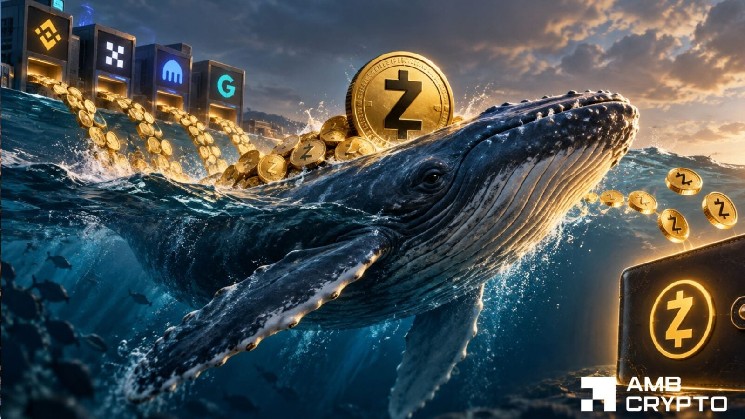
    Zcash ($ZEC) whale accumulation outlook strengthened significantly, with a $13.65 million position complementing aggressive spot-market buying throughout the latest price recovery. According to Onchain Lens, one whale accumulated roughly 12.87K $ZEC from four major exchanges over the past week.

    Notably, the purchases originated from Binance, OKX, Kraken, and Gate, reflecting accumulation across several liquidity platforms. The whale later transferred the 12.86K $ZEC into a fresh wallet, completing the broader accumulation sequence. This activity removed a sizable position off the exchanges where the whale initially acquired it. The accumulation arrived as $ZEC attempted to stabilize after its latest price pullback.

    Spot Market Buying Supports Accumulation

    Whale accumulation did not stand alone; broader spot-market activity reinforced the demand picture. The Spot Taker CVD remained taker-buy dominant, providing another demand element alongside the whale accumulation. This metric typically tracks whether aggressive market buyers or sellers control executed spot volume over a measured period.

    Buyer dominance implied that market participants increasingly crossed the spread to acquire $ZEC rather than awaiting lower prices. Crucially, such activity broadened the demand picture beyond one whale’s purchases across centralized exchanges. The whale accumulation reflected large-holder conviction, while Spot Taker CVD highlighted aggressive buying across the spot market. Combined, both developments implied that bulls actively absorbed available $ZEC during recent price volatility.

    Source: CryptoQuant

    Mining Economics Drive Network Participation

    Stronger network economics provided another support component to Zcash’s improving fundamental backdrop. Specifically, Zcash mining economics improved substantially as higher profitability attracted considerably greater network participation throughout 2026.

    According to Grayscale, Zcash miner rewards were estimated near $2 million daily, compared with roughly $35 million for Bitcoin miners. Despite the huge disparity, Zcash delivered nearly twice Bitcoin’s mining rewards per rig. Additionally, the $ZEC protocol generated around four times Bitcoin’s rewards per megawatt-hour, improving its relative energy economics. This profitability helped explain why Zcash mining activity increased by more than 250% throughout 2026. The mining-power chart showed particularly rapid expansion during the latest phase of the year, complementing demand-side developments.

    Source: X

    Elliott Wave Analysis: Wave 5 Confirmation Needed

    On the 24-hour chart at press time, Zcash’s price structure had completed four stages of a developing Elliott impulse wave sequence, with Wave (5) awaiting confirmation.

    • Wave (1) advanced towards the $850 region after breaking out of its consolidation range.
    • Wave (2) retraced towards the $813.95 support zone.
    • Wave (3) drove sharply higher, with the $ZEC price reaching the $1,295–$1,298 resistance region. This third-wave impulse remained the strongest leg, satisfying a key condition for the developing motive structure.
    • Wave (4) pulled $ZEC towards the $1,054.72 zone without overlapping the Wave (1) peak, protecting the bullish sequence.

    At press time, Zcash price had reversed to $1,138.89, as RSI cooled to 62.37 from recent overbought conditions. The five-wave cycle still needs Wave (5) confirmation. A sustained advance above the $1,295–$1,298 supply zone would strengthen that confirmation and open a path to a $1,500 possible target. Alternatively, losing the $1,054.72 support would challenge the current wave count and raise the risk of a truncated Elliott impulse wave.

    Source: TradingView

    Summary

    Whale accumulation and taker buying strengthened $ZEC’s demand during its latest recovery. Zcash’s developing Elliott impulse wave now awaits Wave 5 to confirm the bullish cycle structure.

  • Top 3 Trending Cryptocurrencies Today: Lisk Surges 764.7% as Pons Declines

    Top 3 Trending Cryptocurrencies Today: Lisk Surges 764.7% as Pons Declines

    CoinGecko Trending Crypto Rankings Highlight Surge in Smaller Tokens Over Bitcoin

    On September 14, 2026, CoinGecko’s Top Trending Cryptocurrencies ranking reveals a notable shift in market attention toward smaller, more volatile tokens rather than established large-cap assets like Bitcoin ($BTC). The data shows dramatic weekly movements across several trending cryptocurrencies, raising questions about whether these spikes reflect genuine momentum or speculative liquidity cycles.

    Lisk ($LSK) Leads With 764.7% Weekly Surge Driven by Short Squeeze

    Lisk ($LSK) dominates the trending list after gaining 16.0% in the past 24 hours and approximately 764.7% over seven days. According to derivatives data, this explosive move was primarily fueled by a violent short squeeze on September 13, which triggered $35–41 million in total liquidations—the largest of any token that day. The vast majority, $33–36 million, came from short positions being forcibly closed.

    The liquidated shorts forced buying into a self-reinforcing rally on relatively thin liquidity, amplifying the price action. This mechanism illustrates how leveraged positions can create outsized percentage moves in lower-cap assets.

    Lighter ($LIT) Gains Traction in Perpetual DEX Sector

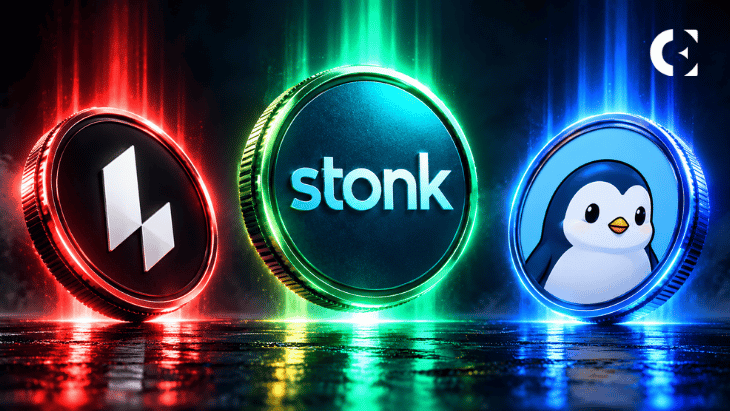
    $LIT, the native token of a high-performance decentralized perpetual futures exchange built as an application-specific zk-rollup on Ethereum, is also ranking high in trending searches. At press time, $LIT was trading around 4.56, up about 9% in the last 24 hours and approximately 4.4% over the last seven days, accompanied by strong trading volume.

    Lighter’s momentum stems from its positioning in the competitive perpetual DEX sector, broader interest in DeFi trading infrastructure, rising platform volume, and ecosystem integrations. The weekly performance and search attention have positioned $LIT among the more viewed mid-cap tokens as traders rotate toward active trading-related assets.

    Other Notable Movers in Trending Rankings

    Current top names in CoinGecko’s trending list include:

    • $STONK — down 25.9%
    • $LIT — up 9.7%
    • Pudgy Penguins (PENGU) — down 1.8%
    • $PONS — down 4.4%
    • Bittensor (TAO) — down 1.1%
    • Bitway (BTW) — up 35.2%
    • $LSK — up 16.0%

    Pons ($PONS) Enters Post-Parabolic Cooling Phase

    Pons, the native token of the leading non-custodial token launchpad on Robinhood Chain, has seen a classic post-parabolic cooling phase following an extraordinary run. Currently trading at approximately $0.53–$0.54, it holds a market capitalization of around $380–$385 million with a circulating supply of about 712 million tokens following massive token burns.

    In the last 24 hours, $PONS has shown mixed short-term movements, while the 7-day chart remains bullish at roughly +29–30%. The 30-day gain exceeds 1200%, underscoring the magnitude of the earlier rally. Nevertheless, the token sits approximately 44–45% below its peak price of around $0.97 set on September 5, 2026.

    This transition from pure momentum to a more measured—yet still volatile—phase signals that the most intense speculative wave has cooled.

    What CoinGecko’s Trending Crypto Ranking Actually Measures

    CoinGecko’s “Top Trending Cryptocurrencies” ranking is a real-time attention metric, not a performance or quality ranking. The list is based on the number of searches made by CoinGecko users in the past 3 hours, reflecting immediate spikes in interest and attention.

    It does not measure:

    • Trading volume
    • Liquidity
    • Price performance
    • Market capitalization
    • Fundamentals
    • Tokenomics
    • On-chain metrics

    Trending status typically serves as an early indicator of interest and can be driven by social-media activity, a big price swing, a news story, a short squeeze, or meme speculation.

    Are Traders Rotating Toward Smaller, Riskier Tokens?

    CoinGecko’s current trend data shows a strong focus on mid- to low-cap, more volatile tokens rather than the largest and most established digital assets. Many of these tokens are far smaller than Bitcoin or Ethereum in terms of market capitalization but exhibit sharp percentage moves. This pattern reflects a common market phase in which speculative capital rotates into lower-liquidity, narrative-driven tokens.

    Key Due Diligence Checks Before Buying a Trending Crypto Coin

    Before buying a trending crypto coin, investors should evaluate:

    • Liquidity and trading volume — Can you enter and exit positions without excessive slippage?
    • Tokenomics and supply dynamics — Inflation schedule, unlocks, burns, and distribution.
    • Holder concentration — Whale dominance increases manipulation risk.
    • Contract security and audits — Verified code reduces exploit exposure.
    • Project fundamentals and utility — Real use case versus pure speculation.
    • Market context and risk factors — Macro conditions, sector narratives, regulatory environment.
    • Personal risk management — Position sizing, stop-losses, and portfolio allocation limits.

    Trending is a sign of attention—and should not be the only reason for purchase.

  • Banking Groups, New York Lawyers Oppose CLARITY Act Ahead of Sept. 15 Senate Vote

    Banking Groups, New York Lawyers Oppose CLARITY Act Ahead of Sept. 15 Senate Vote

    Banking Groups and State Attorneys General Challenge CLARITY Act Ahead of Senate Vote

    Major banking associations and a coalition of state attorneys general are mounting opposition to the CLARITY Act as the Senate prepares for a crucial vote scheduled for September 15. The legislation, which aims to establish a federal regulatory framework for stablecoins, faces mounting pressure from two distinct fronts, each raising separate concerns about the bill’s implications for financial stability and state enforcement authority.

    Banking Industry Raises Concerns Over Stablecoin Rewards and Deposits

    Banking trade groups argue that the current draft of the CLARITY Act creates an uneven playing field by permitting stablecoin issuers to offer yield-bearing products that function similarly to bank deposits but without equivalent regulatory safeguards. Industry representatives contend that allowing stablecoin rewards to compete directly with traditional interest-bearing accounts could destabilize deposit funding models, particularly for community and regional banks that rely on stable core deposits for lending operations.

    The groups emphasize that stablecoin issuers operating under the proposed framework would not be subject to the same capital requirements, deposit insurance premiums, or examination regimes that apply to insured depository institutions. This regulatory disparity, they warn, could accelerate deposit outflows from the banking system into less-regulated digital assets, potentially undermining monetary policy transmission and financial intermediation.

    State Attorneys General Defend Enforcement Authority

    In a parallel challenge, a bipartisan group of state attorneys general has objected to provisions that would preempt state enforcement powers over stablecoin activities. The coalition argues that the CLARITY Act’s federal preemption clauses would strip states of their ability to investigate and prosecute fraud, consumer protection violations, and anti-money laundering failures involving stablecoin issuers and wallet providers operating within their jurisdictions.

    State enforcement officials maintain that their on-the-ground oversight has been critical in addressing crypto-related scams, unlicensed money transmission, and deceptive marketing practices. They contend that a purely federal regulatory model, without preserved state concurrent enforcement authority, would create enforcement gaps and leave consumers with fewer avenues for redress when harmed by bad actors in the stablecoin ecosystem.

    Legislative Timeline and Stakes

    The Senate Banking Committee is expected to bring the measure to the floor during the week of September 15, setting up a high-stakes debate over the balance between federal regulatory certainty and state-level consumer protections. Proponents of the CLARITY Act argue that a unified federal framework is essential for providing legal clarity, fostering responsible innovation, and maintaining U.S. competitiveness in digital asset markets.

    Opponents counter that the bill, as currently structured, sacrifices critical safeguards in favor of industry-friendly provisions. With both banking lobbyists and state law enforcement officials actively engaging congressional offices, the outcome of the September vote remains uncertain. Any passed legislation would still require reconciliation with House counterparts before reaching the president’s desk.

    Market Implications

    Financial markets are closely monitoring the legislative proceedings, as the CLARITY Act represents the most significant federal attempt to date to regulate payment stablecoins. The bill’s treatment of reserve requirements, issuance standards, and the permissible activities of nonbank stablecoin issuers could reshape the competitive landscape for digital payments and dollar-denominated tokenized assets globally.

    Stablecoin market participants, including major issuers and blockchain infrastructure providers, have lobbied for clear federal rules that would enable broader institutional adoption. Meanwhile, traditional financial institutions seek either equal regulatory treatment or explicit barriers preventing stablecoins from replicating deposit-like functions without banking charters.

  • Trump Agrees to Revised Clarity Act Ethics Provision

    Trump Agrees to Revised Clarity Act Ethics Provision

    Legislation addressing digital asset market clarity and government ethics advanced toward a critical procedural vote this week, setting the stage for a complex legislative path that extends into the post-election session.

    Cloture Vote Determines Immediate Future

    The bill’s survival hinges on a cloture vote scheduled for this week. If successful, the measure will proceed through additional procedural steps, including a final passage vote in the Senate. The House of Representatives must also take up the legislation when it reconvenes after the November election recess.

    Ethics Provisions Strengthened in Revised Draft

    The updated legislation introduces significant changes to ethics enforcement for senior government officials. The provision now includes civil penalties for issuers and, marking a departure from the previous draft, grants state attorneys general the authority to file lawsuits to enforce compliance. Additionally, lawmakers removed a sunset clause that would have limited the enforcement timeframe.

    Divestiture and Blind Trust Requirements Detailed

    The revised text establishes strict timelines for covered individuals—defined as senior government officials subject to the ethics rules—who hold significant financial interests in digital assets. According to the bill:

    “Not later than the effective date of division C of the Digital Asset Market Clarity Act under section 30104 of that division, a covered individual who maintains a significant financial interest shall — A$0.08276 divest the significant financial interest; or B$0.2173 place the significant financial interest in a qualified blind trust,” the revised text said.

    Disclosure and Exchange Restrictions

    Following divestiture or placement in a blind trust, the covered individual has three days to notify the relevant ethics office. That office then has an additional three days to publicly announce the action, which will be treated as a sale for regulatory purposes. The legislation also prohibits cryptocurrency exchanges from listing any digital assets issued by a covered individual.

  • Consensus Returns to Hong Kong for Third Year with Expanded AI Focus

    Consensus Returns to Hong Kong for Third Year with Expanded AI Focus

    Consensus Hong Kong Returns for Third Year in February 2027

    Consensus, the flagship event for the crypto and blockchain industry, is set to return to Hong Kong in early February 2027. This marks the third consecutive year the conference will be held in the city, reinforcing its status as a pivotal gathering for the global digital asset community.

    Record Attendance and Evolving Focus

    The previous two editions, held in 2025 and 2026, each attracted over 10,000 attendees. For the 2027 installment, organizers have anchored the agenda around two principal themes: the institutional adoption of digital assets and artificial intelligence (AI). Notably, AI is expected to command greater significance than in prior years, mirroring its accelerating influence on the future of finance and money.

    Hong Kong’s Strategic Position in Digital Assets

    Asia is widely recognized as the leading region for digital asset adoption, and Hong Kong sits at the forefront as a premier hub. The city’s appeal stems from a robust regulatory framework designed for virtual assets, combined with its established role as a global financial center. This environment continues to draw major industry players and institutional capital to the region.

    High-Profile Speaker Lineage

    The caliber of the event is underscored by its recent speaker rosters. The 2026 edition featured a lineup of industry titans, including Richard Teng, co-CEO of Binance; Lily Liu, president of the Solana Foundation; Justin Sun, founder of Tron; and Joseph Lubin, CEO of Consensys. Their participation highlights the conference’s ability to convene the leadership shaping the next generation of Web3 and blockchain infrastructure.

  • Kaiko Extends Series B Funding to $110 Million with S&P Global, BNP Paribas

    Kaiko Extends Series B Funding to $110 Million with S&P Global, BNP Paribas

    Crypto data provider Kaiko has extended its Series B funding round to $110 million following a strategic investment led by S&P Global, marking another milestone in the convergence of digital asset infrastructure and traditional finance.

    Funding Round Details and Key Investors

    Kaiko originally announced its Series B in May 2022, raising $53 million and tripling its valuation, which remains undisclosed. A year earlier, the firm closed a $24 million Series A led by Anthemis and Underscore VC. The latest extension brings total Series B capital to $110 million.

    The round includes participation from a consortium of major financial institutions and crypto-native firms:

    • S&P Global (lead investor)
    • BNP Paribas
    • Coinbase Ventures
    • Nasdaq
    • Royal Bank of Canada
    • Stellar

    Strategic Focus: 24/7 Market Infrastructure

    The fresh capital will be deployed to expand Kaiko’s data infrastructure to support the growth of 24/7 digital markets, the company announced Monday. Founded in France in 2014, Kaiko serves more than 150 exchanges and blockchain protocols and plans to strengthen its core data business while expanding its product offering.

    “Digital asset markets operate 24/7, and the infrastructure supporting them must do the same,” Kaiko said, adding that the funding demonstrates that institutions running today’s capital markets are investing in the data infrastructure required to operate tokenized markets.

    Institutional Convergence Signal

    The investor roster—spanning traditional financial giants like S&P Global, BNP Paribas, Nasdaq, and Royal Bank of Canada alongside crypto-native backers—underscores the accelerating institutional adoption of digital asset market infrastructure. Kaiko’s data products are positioned to bridge the gap between legacy capital markets and the always-on nature of blockchain-based trading.

    The blockchain analytics firm did not immediately respond to a CoinDesk request for further information.

  • Hunter Biden’s Request to Elon Musk Revealed in Latest Laptop Saga Development

    Hunter Biden’s Request to Elon Musk Revealed in Latest Laptop Saga Development

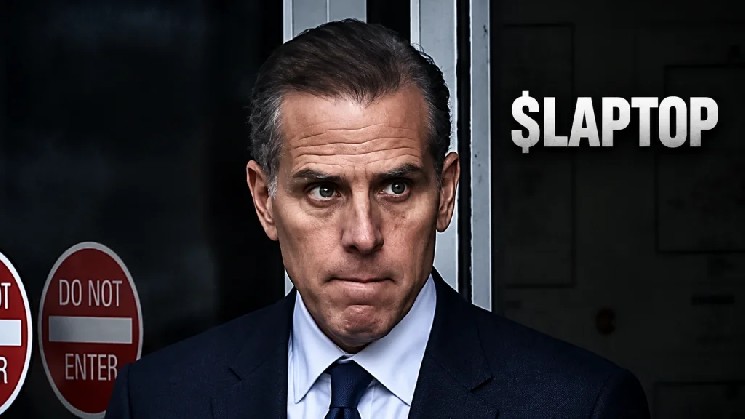
    Hunter Biden Launches $LAPTOP Memecoin on Base Blockchain

    Hunter Biden, son of former U.S. President Joe Biden, has entered the cryptocurrency market, reviving the laptop controversy that dominated U.S. political discourse ahead of the 2020 presidential election. On September 9, 2026, Biden launched a memecoin named $LAPTOP on the Base blockchain.

    Token Price Surges Then Crashes Within Minutes

    The token experienced an extremely rapid price surge in its first few minutes, briefly exceeding $200. However, the rally proved short-lived, and the price crashed severely soon after.

    X Account Suspended Amid Controversy

    Following the price collapse, the project’s X account was suspended. The platform has not publicly provided a clear reason for the suspension.

    Hunter Biden Appeals Directly to Elon Musk

    Addressing the suspension five days after the launch, Hunter Biden made a direct appeal to Elon Musk via X. In his post, Biden referenced warnings from Musk and Anthropic CEO Dario Amodei regarding the potential threat artificial intelligence could pose to humanity by 2030. Biden jokingly asked if his $LAPTOP account could be reinstated, stating, “Is there any chance we can lift the ban on the laptop token?”

    The request, which tagged Musk directly, sparked debate on social media regarding whether Musk would support the $LAPTOKEN project. However, there is currently no verified evidence that Musk has supported, purchased, or taken any action to influence the token’s price. Additionally, there is no confirmed information indicating that Musk has responded to Biden’s request. At this stage, the connection between Musk and $LAPTOP appears limited to Biden’s public appeal to restore the suspended account.

    This is not investment advice.