Author: Evan Mercer

  • Bitcoin Reserve Bill Heads to House Committee for Historic Vote

    Bitcoin Reserve Bill Heads to House Committee for Historic Vote

    House Financial Services Committee Set to Vote on Bitcoin Reserve Bill ARMA

    The House Financial Services Committee is scheduled to hold a pivotal markup session on Wednesday, September 16 at 10:00 a.m. ET to vote on the American Reserve Modernization Act (ARMA) of 2026, designated as H.R. 8957. The bipartisan legislation, introduced in late May by Republican Representative Nick Begich and Democratic co-sponsor Representative Jared Golden, proposes establishing a strategic national Bitcoin reserve alongside a broader digital asset stockpile.

    Key Provisions of the ARMA Legislation

    The bill outlines several core mandates designed to govern the acquisition, storage, and potential use of digital assets by the federal government:

    20-Year Lockup Period for Bitcoin

    A central feature of the legislation is a mandatory 20-year holding period for any Bitcoin acquired for the national reserve. During this timeframe, the government would be prohibited from trading or selling the asset. The sole exception allows for liquidation only if the proceeds are used exclusively to retire outstanding federal debt.

    Redirecting Seized Bitcoin to the Reserve

    The Act mandates that all Bitcoin obtained through criminal seizures or penalties must be transferred directly to the national Bitcoin reserve. This provision effectively ends the current practice of auctioning off forfeited digital assets.

    Creation of a Digital Asset Stockpile

    Reflecting the legislation’s renamed scope, ARMA establishes a “Digital Asset Stockpile” for holding altcoins classified as assets. The government would be authorized to sell or trade these alternative digital assets for Bitcoin, or liquidate them to pay down the national debt.

    Strict Budget Neutrality and Acquisition Strategy

    The proposal enforces budget neutrality, stipulating zero net cost for acquiring Bitcoin. It explicitly bans purchases funded by debt issuance, new taxes, or deficit spending. Instead, the Department of the Treasury and the Department of Commerce are tasked with developing a plan to accumulate 1 million BTC over a five-year period using surplus dollars or a portion of net earnings from Federal Reserve banks.

    Decentralized Storage and Audit Requirements

    To ensure security and transparency, the bill requires a decentralized network of secure physical storage facilities distributed across the country. Third-party contractors would conduct quarterly audits of the reserves.

    Legislative Path Forward

    If the bill clears the committee markup, it will advance to the full House of Representatives for a floor vote. Subsequent passage would send the legislation to the Senate for consideration, followed by the President’s desk for signature into law.


  • US House Schedules Strategic Bitcoin Reserve Bill Markup Vote for Sept. 16

    US House Schedules Strategic Bitcoin Reserve Bill Markup Vote for Sept. 16

    House Financial Services Committee Advances Strategic Bitcoin Reserve Legislation

    The U.S. House Financial Services Committee is preparing to mark up legislation that would establish a strategic bitcoin reserve, signaling growing congressional interest in digital asset policy. The committee’s latest memorandum confirms that H.R. 8957, the American Reserve Modernization Act of 2026, will be among nine bills considered during a markup session scheduled for September 16.

    Legislative Details and Committee Action

    The American Reserve Modernization Act of 2026 represents a significant step toward formalizing bitcoin holdings at the federal level. By including this measure in its upcoming markup agenda, the House Financial Services Committee indicates a willingness to debate and potentially advance the proposal through the legislative process. Markup sessions allow committee members to amend, debate, and vote on legislation before it proceeds to the full House for consideration.

    Broader Digital Asset Policy Context

    This development occurs amid increasing congressional attention to cryptocurrency regulation and the strategic role of digital assets in national financial infrastructure. The inclusion of the Strategic Bitcoin Reserve bill alongside eight other measures suggests the committee is addressing a range of financial services priorities in a single session.

    Next Steps in the Legislative Process

    If the bill passes committee markup, it would move to the House floor for further debate and a potential vote. Subsequent approval would require Senate passage and presidential signature to become law. The September 16 markup represents a critical early test of congressional support for a federally managed bitcoin reserve.

  • XRP Price Poised for 40% Surge on CLARITY Act Vote, But Major Catch Remains

    XRP Price Poised for 40% Surge on CLARITY Act Vote, But Major Catch Remains

    Senate Prepares for CLARITY Act Vote as XRP Eyes Breakout

    The United States Senate is scheduled to vote on the CLARITY Act, a development coinciding with technical signals suggesting XRP is positioning for a potential price breakout.

    Analyst CasiTrades Weighs in on XRP Outlook

    Crypto analyst CasiTrades indicates there is potential for more significant price action for XRP. However, the analyst cautioned that Ripple’s XRP may encounter massive resistance should the rally advance to key price levels.

  • DOJ Seeks Forfeiture of $61M in Iranian Oil Proceeds Laundered Through Binance

    DOJ Seeks Forfeiture of $61M in Iranian Oil Proceeds Laundered Through Binance

    DOJ Targets $61 Million in Crypto Tied to Iranian Oil Sales

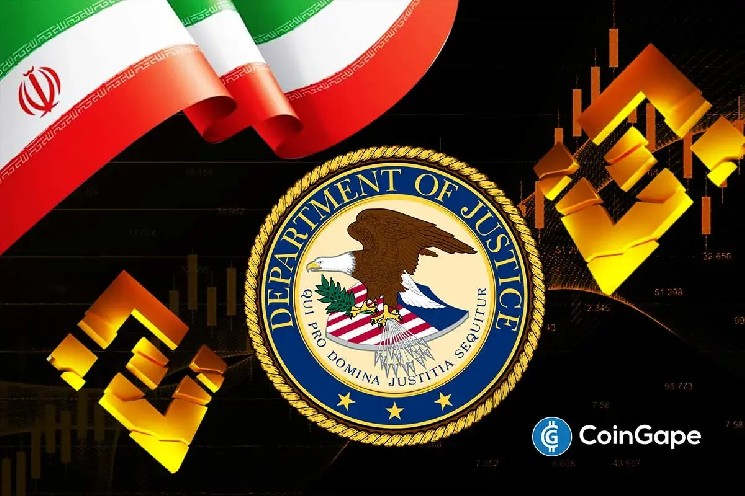
    The U.S. Department of Justice has filed a civil forfeiture complaint seeking to seize approximately $61 million in cryptocurrency proceeds. The funds are allegedly linked to the sale of Iranian oil and were laundered through the crypto exchange Binance, according to the complaint.

    Alleged Sanctions Evasion Scheme

    The legal action alleges that the cryptocurrency represents proceeds from Iranian oil sales conducted in violation of U.S. sanctions. Prosecutors claim the funds were moved through Binance to obscure their origin and facilitate access to the international financial system.

    Part of Broader Treasury Enforcement

    The forfeiture complaint follows the U.S. Treasury Department’s launch of “Operation Economic Outcast,” an enforcement initiative targeting Iranian oil sanctions evasion. The operation aims to disrupt networks that facilitate the sale of Iranian petroleum and petrochemical products through deceptive shipping practices and financial intermediaries.

    Binance’s Regulatory Scrutiny

    Binance, the world’s largest cryptocurrency exchange by trading volume, has faced increasing regulatory pressure globally. The exchange has previously settled with U.S. authorities over anti-money laundering and sanctions violations, agreeing to pay substantial fines and implement enhanced compliance measures.

    The civil forfeiture process allows the government to seize assets suspected of being connected to illegal activity without necessarily charging individuals with a crime. Claimants have the opportunity to contest the seizure in court.

  • SEC’s Atkins Backs Clarity Act, Vows to Advance Crypto Rules Without It

    SEC’s Atkins Backs Clarity Act, Vows to Advance Crypto Rules Without It

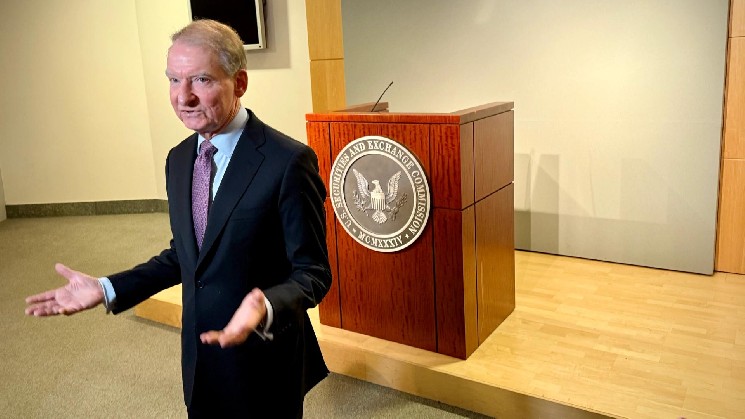
    SEC Commissioner Hester Peirce outlined a three-part regulatory framework for digital assets during recent remarks, emphasizing the need for clarity as markets evolve. The proposals target capital formation, transfer agent modernization, and crypto custody rules for investment advisers.

    Digital Asset Clarity Act Would Reduce Regulatory Guesswork

    The first pillar centers on advancing the Digital Asset Clarity Act. If adopted, the framework would give entrepreneurs greater certainty to raise capital in the U.S. using digital assets rather than having to “guess what the law is as they go.” The legislation aims to define when a digital asset qualifies as a security, providing a clearer path for compliant fundraising.

    Transfer Agent Rules Overdue for Blockchain Integration

    The second initiative calls for an overhaul of transfer agent rules to include blockchains for digital ownership ledgers. Peirce noted the rules have not been seriously updated in roughly four decades and were built for paper stock certificates. Transfer agents are already adapting to a market that increasingly incorporates tokenized assets, making regulatory modernization essential.

    Crypto Custody Proposal for Advisers and Regulated Funds

    Additionally, Peirce said she has asked SEC staff to develop a proposal clarifying crypto custody for investment advisers and regulated funds. That proposal would seek to allow advisers, under certain conditions, to custody crypto themselves and to use state trust companies as custodians. Self-custody may be necessary because qualified third-party custodians do not yet exist for some assets, while state trust companies already provide a pathway that “works in practice.”

    Unified Regulatory Architecture

    Peirce described the three initiatives together as “three pillars of a single, rational, and comprehensive regulatory architecture.” She emphasized the urgency of action, stating, “The SEC should not be the last institution to notice that the world actually has changed.”

    The push for the Clarity Act vote comes as the bill faces an uphill battle, with several key disputes still unresolved ahead of Tuesday’s procedural vote.

  • U.S. Department of Justice Issues Statement on Binance and Iran

    U.S. Department of Justice Issues Statement on Binance and Iran

    DOJ Seeks Seizure of $61 Million in Crypto Linked to Iranian Oil Sanctions Evasion

    The U.S. Department of Justice has filed a civil forfeiture lawsuit targeting approximately $61 million in cryptocurrency allegedly connected to the Iranian government and the Islamic Revolutionary Guard Corps (IRGC). The complaint, filed in the Southern District of New York, claims the digital assets represent proceeds from the illicit sale of sanctioned Iranian crude oil laundered through the cryptocurrency exchange Binance.

    Alleged Laundering Network Involves China-Based Firms

    According to the U.S. Attorney’s Office for the Southern District of New York, two China-based companies — Blessed Trust and Hexa Whale — used trading accounts on the UAE-based exchange Binance to facilitate the laundering operation. Authorities allege these firms helped convert proceeds from black market Iranian oil sales into cryptocurrency, moving funds through complex transaction networks designed to conceal their origin.

    The complaint details how Blessed Trust presented itself to financial and crypto service providers as an asset management and digital asset custody company. In reality, prosecutors say it transferred funds derived from Iranian crude oil and petroleum product sales. The firm allegedly offered services converting fiat currency into cryptocurrencies utilizing U.S.-based crypto issuers.

    Hexa Whale reportedly operated under the guise of a commodities brokerage but conducted similar transactions with Blessed Trust and affiliated parties. Both companies reportedly served clients in the Chinese oil and petroleum sector.

    $1.5 Billion in Illicit Oil Revenues Tracked

    Investigators identified a cluster of interconnected cryptocurrency addresses dubbed “Entity A” that allegedly received and distributed over $1.5 billion in funds from sanctioned Iranian oil sales. Transfers from these addresses reportedly went to money-handling companies linked to the IRGC, other crypto addresses, and an Iran-based cryptocurrency exchange.

    Prosecutors allege Blessed Trust and Hexa Whale used sophisticated crypto transfer networks and address clustering to obscure the nature, source, and true ownership of transactions. The scheme allegedly facilitated tens of millions of dollars in transfers through the U.S. financial system.

    Officials Emphasize Sanctions Enforcement and Crypto Tracing

    Assistant U.S. Attorney Sean S. Buckley stated that the Iranian government uses its sanctioned oil sales to finance its military and operations in the region, and that the investigation alleges that cryptocurrency actors in China and other countries played a role in laundering more than $1.5 billion in illicit oil revenues.

    FBI New York Field Office Deputy Director James C. Barnacle Jr. stated that the operation demonstrated the ability to track cryptocurrency networks used to circumvent sanctions, and that cutting off funds from black market oil sales aimed to reduce the financing capacity of the Iranian military and related entities.

    The IRGC has been designated as a foreign terrorist organization by the United States. The forfeiture action seeks to disrupt financial pipelines supporting Iranian state activities and proxy operations across the Middle East.

    This article is for informational purposes only and does not constitute investment advice.

  • Gemini Launches New Discord Channel for Community Engagement

    Gemini Launches New Discord Channel for Community Engagement

    Gemini, the cryptocurrency exchange founded by the Winklevoss twins, has launched an official Discord channel to strengthen community engagement. The announcement, shared via the platform’s official X (formerly Twitter) account, signals a strategic push to foster direct communication with users amid a shifting crypto market landscape.

    Direct Channel for User Interaction

    The new Discord server is designed to serve as a centralized hub for real-time discussions, platform updates, and user feedback. By establishing a presence on the popular communication platform, Gemini aims to create a more interactive environment where traders and investors can access timely information, seek support, and participate in community-driven initiatives.

    This move reflects a broader industry trend where exchanges and blockchain projects are prioritizing owned community channels over reliance on third-party social media algorithms. Direct access to users allows platforms to disseminate critical updates — such as maintenance windows, new asset listings, or security advisories — without algorithmic filtering.

    Context: Mixed Market Signals

    The launch comes as the cryptocurrency market exhibits mixed signals, with asset prices fluctuating across major tokens. In this environment, user sentiment and retention have become critical metrics for platforms competing on trust, transparency, and service quality. Enhanced community infrastructure may help Gemini differentiate itself by improving responsiveness and building longer-term user loyalty.

    Gemini has historically positioned itself as a regulatory-compliant, security-first exchange with a user-friendly interface. The Discord initiative extends that philosophy into community management, offering a structured space for dialogue that complements existing support and educational resources.

    What to Watch

    Market observers and Gemini users alike will monitor how actively the exchange leverages the new channel. Key indicators include frequency of official announcements, responsiveness to user inquiries, moderation quality, and whether the community evolves into a source of organic feedback that shapes product development. Increased engagement could also influence trading behavior by accelerating information flow among retail participants.

    As the crypto ecosystem matures, platforms that invest in transparent, two-way communication may gain a competitive edge in user retention and brand trust. Gemini’s Discord launch represents a measurable step in that direction.

  • NEAR Protocol Highlights Need for Data Privacy

    NEAR Protocol Highlights Need for Data Privacy

    NEAR Protocol took to social media to assert that any system holding identities is a potential exposure point. The project emphasized that confidentiality should be a baseline expectation, particularly for financial and AI systems. The statement reflects mounting concerns about data privacy across the cryptocurrency sector.

    Community Response Signals Growing Privacy Focus

    The protocol’s recent post gained significant traction, accumulating 334 likes and 48 retweets. The engagement underscores how data protection has become a central conversation as the broader crypto market navigates mixed signals. Safeguarding sensitive user information in financial infrastructure and artificial intelligence applications is rapidly shifting from a feature to a fundamental user requirement.

    Market Context and Protocol Alignment

    Current market dynamics present a complex backdrop for this privacy advocacy. While digital asset markets show divergent trends, the call for stronger data protections may shape how blockchain projects architect their protocols to meet evolving expectations. NEAR Protocol, a blockchain platform built for high-performance decentralized applications, has positioned confidentiality as core to its mission of enhancing trust and security in the evolving Web3 landscape.

    Industry Implications for Developers and Traders

    Market participants are monitoring how NEAR’s stance on confidentiality translates into platform enhancements and user adoption. As privacy concerns intensify, protocols that prioritize data protection may gain competitive advantage through increased trust. This dynamic could catalyze a broader industry reassessment of data handling standards across the blockchain ecosystem.

    This article does not constitute financial advice.

  • Swiss Bitcoin Pay Shuts Down Servers After Data Breach

    Swiss Bitcoin Pay Shuts Down Servers After Data Breach

    Swiss Bitcoin Pay Takes Servers Offline Following Data Breach

    Swiss Bitcoin Pay, a non-custodial bitcoin payment processor based in Neuchâtel, Switzerland, announced Monday that it had temporarily shut down its servers after detecting a data breach. The company stated that user funds remain secure, though customer email addresses, bitcoin addresses, IBANs, transaction histories, and hashed passwords are believed to have been compromised.

    Breach Details and Company Response

    According to a statement posted on X (formerly Twitter), the company confirmed that a malicious actor likely gained access to its internal systems. The full statement reads:

    “A malicious user has likely gained access to Swiss Bitcoin Pay’s internal systems. As a precaution, we are temporarily shutting down our servers while we investigate and secure our infrastructure.At this stage, we believe they may have accessed customer email addresses, Bitcoin…”

    In a follow-up announcement, Swiss Bitcoin Pay reiterated the situation and sought to reassure users:

    “A malicious user has likely gained access to Swiss Bitcoin Pay’s internal systems …As a precaution, we are temporarily shutting down our servers while we investigate and secure our infrastructure.” Swiss Bitcoin Pay said on Monday.

    “User funds are safe, and any amounts owed to users will be fully returned.”

    The company did not immediately respond to Bitcoin Magazine’s request for additional comment. Swiss Bitcoin Pay enables businesses to accept bitcoin payments using both on-chain transactions and the Lightning Network.

    Part of a Broader Trend in 2026

    The incident adds to a growing list of data breaches affecting bitcoin and fintech firms this year. Last week, Revolut confirmed it had provided customer passports, driver’s licenses, verification selfies, and transaction histories to an unauthorized party that sent fraudulent requests from a legitimate government agency’s email domain.

    Also last week, hardware wallet manufacturer Trezor warned customers that a data breach at a third-party marketing platform used for newsletter distribution had exposed user data, leading to targeted phishing attacks.

    Earlier in 2026, criminals obtained customer information through Ledger’s payment processor, Global-e, to conduct phishing campaigns. In August, crypto wallet provider SafePal disclosed a breach involving unauthorized access to approximately 39,798 customers’ order information, including names, addresses, and purchase data.

  • Aave V4 Proposal Would Put DAO Funds First in Line to Absorb Lending Losses

    Aave V4 Proposal Would Put DAO Funds First in Line to Absorb Lending Losses

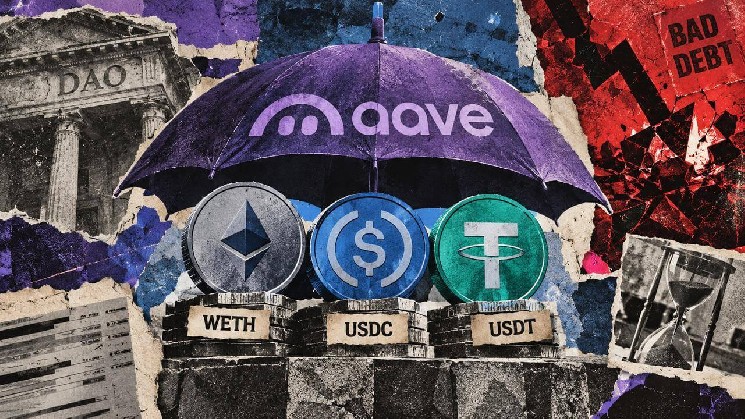
    Aave V4 Umbrella Proposal Introduces Bad-Debt Backstop for Core Lending Markets

    Aave V4 lenders supplying wrapped Ether (WETH), USDC, or USDT to the protocol’s Core liquidity Hub on Ethereum would gain a bad-debt backstop under a September 11 proposal from governance delegate TokenLogic. The “Umbrella” framework designates the Aave DAO as the first line of defense against losses, followed by volunteer underwriters, with initial coverage restricted to those three lending markets.

    Proposed Underwriting Targets and Scope

    The proposed underwriting targets are set at 800 ETH for Core WETH, 400,000 USDC for Core USDC, and 400,000 USDT for Core USDT. TokenLogic sized these amounts to cover six to eight weeks of expected loan growth. The figures represent targets for a proposed configuration, not capital already committed to protecting lenders.

    For suppliers, the coverage boundary is the specific reserve, or asset pool, receiving their deposit. Coverage for Core USDC would not extend to USDC supplied to another Hub, even though the token is identical. Capital allocated to one Hub asset cannot clear another reserve’s deficit.

    How Losses Would Be Absorbed

    Bad debt arises when liquidation exhausts a borrower’s collateral but leaves debt unpaid. Under the proposed framework, the Aave DAO would absorb an initial layer through “deficit offsets” of 33 ETH for Core WETH, 15,000 USDC for Core USDC, and 15,000 USDT for Core USDT.

    Umbrella underwriters could then lose their committed capital to cover deficits beyond that layer. Their funds would continue earning supply yield until used, with coverage implemented by burning supplied Hub shares. Additional rewards compensate participants for accepting that loss risk.

    Coverage Eligibility Extends to Spoke-Borrowed Assets

    Eligibility for that coverage would include all borrowing from each protected reserve. That includes loans originated through Spokes, the components where debt is created, whose collateral sits in other Hubs. Those credit lines still expose the Core reserve supplying the borrowed asset.

    Underwriter Exit Terms Include Cooldown and Withdrawal Window

    Underwriters would face a structured exit process. Each proposed market specifies a 20-day cooldown followed by a two-day withdrawal window. Aave’s withdrawal guidance states that participants who miss the window must activate another cooldown and wait a further 20 days.

    Starting that exit process does not remove risk exposure. Aave’s Umbrella documentation notes that staked assets remain exposed to slashing during cooldown while continuing to earn rewards. The extra yield therefore comes with both potential capital loss and restricted access to funds.

    Initial Plan Excludes USDG, frxUSD, and Other Hubs

    TokenLogic does not recommend initial general-purpose coverage for USDG or frxUSD. The delegate cites uncertainty over incentive-sensitive lending activity and the ability to attract underwriters who transfer risk away from existing suppliers. For frxUSD, it highlights a concentrated, issuer-linked supplier base.

    The assessment also leaves other Hubs’ reserves outside the initial plan, for varying reasons including limited incremental protection and narrow supplier bases. These exclusions do not mean the loans lack collateral or that losses are imminent.

    Monitoring and Reassessment Timeline

    TokenLogic proposes monitoring conditions after activation and reassessing the framework after three months, with excluded markets reconsidered as lending activity matures and supplier bases diversify.