Author: Evan Mercer

  • Bitcoin Moves Closer to Gold as Rising US Debt Revives the Debasement Trade

    Bitcoin Moves Closer to Gold as Rising US Debt Revives the Debasement Trade

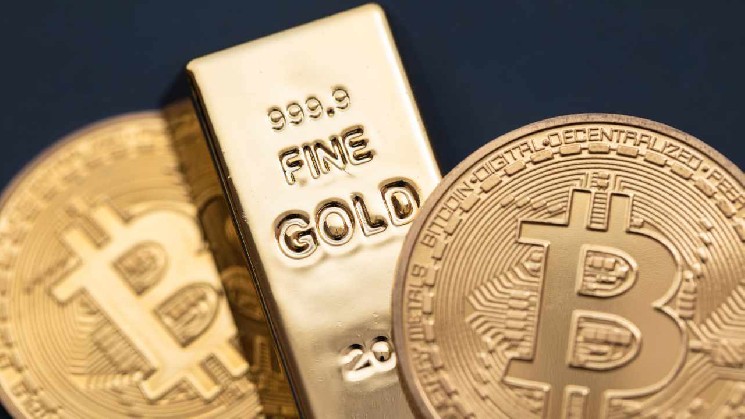
    Bitcoin’s relationship with traditional financial assets is shifting, with its correlation to gold rising as its link to the Nasdaq 100 weakens, according to Grayscale. The asset manager said on Aug. 27 that the change could signal a new market regime and potentially revive bitcoin’s role as a portfolio diversifier.

    Bitcoin’s 90-day correlation with the Nasdaq 100 fell from above 60% to approximately 33%, Grayscale said, citing Bloomberg data through Aug. 24. During the same period, bitcoin’s correlation with gold increased from barely above zero at the beginning of 2026 to more than 50%.

    The shift marks a departure from recent years, when bitcoin often traded alongside growth-oriented technology stocks. Grayscale said the divergence may reflect renewed investor focus on bitcoin’s scarcity, monetary independence and potential store-of-value characteristics.

    Recent market activity has reinforced the comparison. Gold rose above $4,600 as bitcoin participated in the same debasement trade, while investors reassessed the outlook for the U.S. dollar and long-term borrowing costs. Gold futures reached as high as $4,730.90 on Aug. 26.

    U.S. Debt Surpasses $40 Trillion

    The changing correlation comes as federal borrowing needs remain elevated and total U.S. public debt has surpassed $40 trillion. Treasury figures showed that the milestone was crossed in August, intensifying scrutiny of persistent budget deficits, rising interest expenses and the government’s reliance on continued debt issuance.

    The U.S. Department of the Treasury expects $739 billion in privately held net marketable borrowing during the July-September quarter, followed by an additional $628 billion during the October-December period. The third-quarter estimate was $68 billion higher than the forecast Treasury issued in May.

    Treasury is also managing pressure in longer-dated securities while maintaining substantial issuance. Its August quarterly refunding included $125 billion in Treasury securities: $58 billion in three-year notes, $42 billion in 10-year notes and $25 billion in 30-year bonds. Treasury also projected up to $38 billion in liquidity-support buybacks during the quarter.

    The fiscal backdrop has strengthened the case for assets outside government-issued currencies and sovereign debt. Ray Dalio, founder of Bridgewater Associates, recently warned that U.S. debt could reach between $55 trillion and $60 trillion within a decade. He also said gold and bitcoin could perform relatively well as monetary pressures intensify.

    Bitcoin’s Scarcity Re-enters the Investment Narrative

    Bitcoin was introduced after the global financial crisis without a central issuer. Its issuance mechanism is governed by network consensus, and its current consensus rules limit total supply to roughly 21 million BTC. That fixed supply distinguishes bitcoin from currencies that can expand in response to fiscal or monetary policy decisions.

    The supply distinction is central to the debasement trade, in which investors reduce exposure to currencies or government debt and favor assets with constrained supplies. Precious metals, particularly gold, have traditionally dominated this strategy, but bitcoin’s fixed issuance structure has increasingly placed it in the same investment discussion.

    The narrative gained momentum after Treasury announced plans to expand its bond repurchase activity, renewing attention on fiscal pressure and potential dollar weakness. Bitcoin rallied as the debasement trade returned to financial markets. Treasury buybacks, however, are financed through debt issuance and are distinct from Federal Reserve quantitative easing.

    Grayscale’s latest correlation data suggest that investors may be drawing a clearer distinction between bitcoin and the technology-heavy equity market. A sustained move toward gold-like behavior could strengthen bitcoin’s diversification case, although correlation relationships can change and do not prove that the cryptocurrency will consistently function as a safe-haven asset.

  • Kraken and Galaxy Flipped Late as Solana Approved Major Supply Cut

    Kraken and Galaxy Flipped Late as Solana Approved Major Supply Cut

    Solana’s proposal to double the network’s annual disinflation rate has been marked as accepted after receiving 176.29 million $SOL For, 66.19 million $SOL Against and 20.63 million $SOL Abstain, according to Validator Info.

    The result gives Solana validators and stakers a mandate to accelerate the network’s move toward lower issuance. It does not, however, immediately change $SOL’s monetary schedule. The next phase depends on implementation through SIMD-0550, coordination among Solana clients, feature gating and eventual activation.

    That distinction now defines the outcome. Solana’s first major governance cycle has moved beyond whether SGP-0002 would pass and toward a more consequential question: whether a narrow, high-stakes vote can become a clean consensus change.

    Solana’s vote passed, but the margin depends on the denominator

    The final public tally produces two different-looking margins from the same vote balances.

    Validator Info records 176.29 million $SOL For, equivalent to about 67.0% of the 263.12 million $SOL in displayed turnout. That headline figure explains why the vote appeared to come down to the final moments.

    Solana’s governance-proposal policy excludes Abstain from the approval denominator. Under that rule, For is measured only against For plus Against.

    That creates a decisive-stake total of 242.48 million $SOL. A two-thirds threshold based on that figure is approximately 161.65 million $SOL, meaning the 176.29 million $SOL For balance exceeded the policy threshold by about 14.64 million $SOL. On that basis, support stood at approximately 72.7%.

    The rounded vote buckets total 263.11 million $SOL, while the page reports 263.12 million $SOL in turnout. The derived percentages and margin are therefore approximate.

    The arithmetic does not remove the political drama; it explains it. The vote appeared razor-thin when measured across all ballots, while Solana’s written rule produced a wider cushion because abstentions did not count against approval.

    The confusion reflects a broader issue that CryptoSlate highlighted before voting opened: Solana’s public governance interfaces did not always present the same participation and threshold logic. An earlier 60% quorum display issue did not indicate that voting had been corrupted, but it foreshadowed the legitimacy concerns that could arise if the interface, repository and public debate relied on different figures.

    Late validator shifts drove the debate on X

    Helius CEO Mert Mumtaz, one of the proposal’s most visible supporters, said on X that “500 calls” brought votes in during the final seconds and that the proposal passed by a “literal hair.”

    Validators linked to Kraken and Galaxy shifted toward a majority For position shortly before voting closed. Kraken 2, described as representing about 2% of votes, changed from Against to For, while Galaxy moved from mostly Abstain to a majority For position near the deadline.

    Kraken’s larger validator recast 8.92 million $SOL from 100% Against to 90.34% For and 9.66% Against. Galaxy shifted from 92% Abstain to 58.36% For.

    Acceptance does not mean implementation

    SGP-0002 is a governance mandate. The technical path runs through SIMD-0550, which remains the vehicle for implementing the faster disinflation schedule. A consensus-affecting emissions change must still be specified, tested and coordinated across Solana clients before activation.

    Solana’s governance process separates proposal acceptance from subsequent implementation and activation. The vote establishes a policy direction, but validators still need a consensus-safe implementation path before the new schedule can take effect in production.

    SGP-0002 calls for Solana to double annual disinflation from 15% to 30% while keeping the terminal inflation rate at 1.5%. The proposal’s model estimates that approximately 18.89 million fewer $SOL would be issued over six years, potentially affecting staking yields.

    That estimate assumes specific staking-participation ranges, validator costs, commission levels and voting costs. The eventual dollar value of foregone issuance will vary with the price of $SOL, validator economics, staking participation and the timing of implementation.

    Solana Company announced its opposition to SGP-0002 before voting ended, arguing against changing the issuance schedule during the first governance cycle. Staking on company-held $SOL generated 99.4% of its more than $2.5 million in second-quarter revenue, making the vote a direct test of how validator economics interact with delegated governance.

    The vote also exposed a broader divide between builders and scarcity advocates seeking faster issuance reductions, and staking operators or yield-sensitive participants concerned about lower nominal rewards.

    Solana’s governance legitimacy now depends on execution

    SGP-0002 was accepted with 176.29 million $SOL For and 66.19 million $SOL Against. Solana has demonstrated that its new governance system can produce a binding directional signal, but it has also shown how much narrative risk emerges when the denominator, interface and social debate do not align clearly.

    Solana’s governance model allows validators to vote with delegated stake by default, while native stakers can override that choice. Solana and Cardano governance advocates have argued that this structure reduces the risk of voter apathy, but it also increases the need for delegators to monitor the representatives voting with their stake.

    Passive stake flowed through validators unless delegators intervened. That design can make governance more decisive, but it also makes validator incentives, labeling and late vote changes more important to public trust.

    If SIMD-0550 advances cleanly, clients converge on identical arithmetic and a feature gate activates without controversy, the vote could represent Solana’s first successful move toward a more active monetary-policy process.

    If implementation stalls, the result could instead show that passing a governance mandate is easier than turning it into production consensus.

    SGP-0002 has passed and been accepted. It gives Solana a mandate to double annual disinflation, but the emissions change will not become active until the technical implementation and activation process catches up.

  • NeoPod Delivers First Payouts and Seeks GrantShares Voting Membership

    NeoPod Delivers First Payouts and Seeks GrantShares Voting Membership

    NeoPod has distributed its first payouts to community members since relaunching earlier this year, with claimers receiving an average of approximately US $15. The largest individual payout was roughly $50.

    The Aug. 28 milestone capped a five-month period during which Neo’s community ambassador program rebuilt its platform, hosted six ask-me-anything sessions (AMAs), and began seeking a formal governance role through GrantShares.

    NeoPod distributes first payouts on Neo X

    The payouts were distributed on the Neo X blockchain. The largest single claim totaled 37.8541 $GAS, based on a rate of $1.29 per $GAS.

    Users earned experience points (XP) through NeoPod’s quest system by completing social tasks and in-platform challenges. Their XP was converted into $GAS and delivered directly to a connected wallet.

    NeoPod is also planning a “refer a friend” competition featuring a hardware wallet prize donated by Neo News Today.

    NeoPod seeks GrantShares voting role

    NeoPod has submitted a proposal to become a voting member of GrantShares, Neo’s community-run funding decentralized autonomous organization (DAO). The proposal has been endorsed and currently has three votes in favor.

    If approved, NeoPod would be authorized to cast official votes after its internal team reviews and discusses each proposal.

    The proposal says NeoPod’s community-facing position makes it well suited to contribute to GrantShares funding decisions. The team stated in its application:

    “As a community-focused platform, NeoPod is well positioned to act as a bridge between GrantShares applicants and the wider Neo community. We can help raise awareness of successful proposals, communicate their goals and progress, and encourage greater community engagement with the projects receiving support.”

    NeoPod expands its community program

    NeoPod, Neo Global Development’s community ambassador program, originally launched in September 2022. It was revamped in August 2024 following the Neo X MainNet release.

    The latest iteration, informally known as “NeoPod 2.0,” moved away from incentivizing large volumes of low-quality content. Instead, it introduced a dedicated creator model in which selected creators produce content about the Neo ecosystem, while the wider community earns $GAS by amplifying and engaging with that material.

    The relaunch began on April 1 with the opening of a dedicated Discord server. Since then, creators producing content in nine languages—English, Indonesian, Spanish, Portuguese, Arabic, Turkish, Hindi, Japanese, and Korean—have joined the program. NeoPod is also seeking to expand into additional Asian and African markets.

    Between June and August, NeoPod hosted six AMAs with guests from across the Neo ecosystem: NNT’s Dylan Grabowski, community builder Aziz of NeoRedPill, COZ co-founder and CEO Tyler Adams, FrankCoin creator Frank, Pixudi founder Alex Scoresby, and GameShame Studios founder Nidhish Sajwan.

    On Aug. 7, NeoPod launched its quest-based website at neopod.org. The platform gives users a structured interface for completing tasks, tracking progress, and converting earned XP into Neo X $GAS.

    NeoPod does not require sign-up forms or know-your-customer (KYC) verification. Users can connect a wallet or register with an email address.

    Source: cryptonews.net

  • Tusk Calls for Crypto Law Re-Vote Following Zondacrypto Scandal

    Tusk Calls for Crypto Law Re-Vote Following Zondacrypto Scandal

    Polish authorities are reconsidering the need for clear cryptocurrency regulations following the Zondacrypto scandal, one of the country’s largest crypto-related corruption cases.

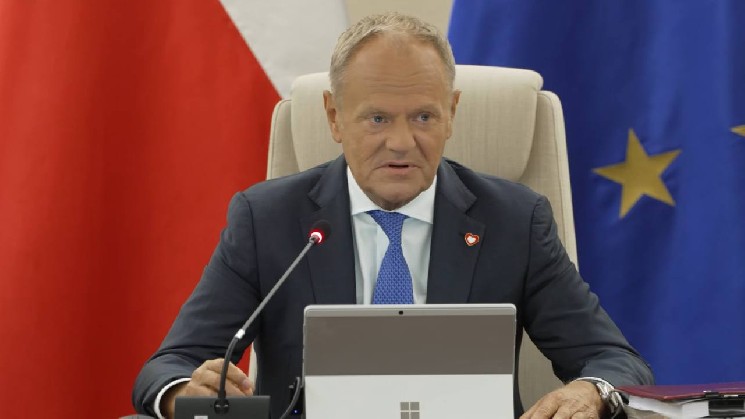
    During a Council of Ministers meeting on Friday focused on drafting Poland’s 2027 budget, Prime Minister Donald Tusk commented on the situation surrounding the Zondacrypto exchange.

    Tusk said the budget preparations had been overshadowed by the bankruptcy of Zondacrypto and the recent detention of Polish Olympic Committee President Radosław Piesiewicz in a corruption investigation.

    “This is not some ordinary bribe, some one politician. It looks like a well-organized system in which names known from other situations appear,” Tusk declared, highlighting the seriousness of the developments.

    Poland to revote on Crypto-Asset Market Act

    Tusk said he would ask the Speaker of the Sejm to organize another vote on the Crypto-Asset Market Act. President Karol Nawrocki vetoed the legislation for the third time on June 11.

    “This is probably the moment when no one will have the nerve to say that there is ‘no problem’ or that we have a lot of time. At this point, I can no longer imagine that President Nawrocki, Chairman Kaczyński, and former Prime Minister Morawiecki would reject this problem with such incredible lightness,” Tusk stated.

    Tusk has directly linked President Nawrocki to the Zondacrypto bankruptcy scandal, in which affected customers reportedly lost up to $94 million, according to estimates.

    In a social media post, Tusk said the scandal was the reason behind the law’s veto. He accused the governing party of receiving “cash for watches worth 40,000 euros, for media, election parties, foundations of right-wing politicians.”

    Crypto regulation leaves Polish exchanges in limbo

    Przemysław Kral, the former head of Zondacrypto, criticized the legislation, calling it a “major step backwards” and warning that Poland’s crypto industry would “suffer” if it were passed.

    The vetoes have left Poland in regulatory limbo, preventing the country from fully implementing provisions of the Markets in Crypto-Assets (MiCA) regulation. As a result, domestic cryptocurrency exchanges are still unable to register in Poland.

  • 7 of 8 Shiba Inu (SHIB) Spot Flow Timeframes Turn Red: What to Expect From the Price

    7 of 8 Shiba Inu (SHIB) Spot Flow Timeframes Turn Red: What to Expect From the Price

    Shiba Inu is facing renewed selling pressure after its latest recovery attempt, with spot-flow data suggesting that buyers are struggling to maintain control. Following rejection at a recent local high, $SHIB is trading near $0.00000532, while seven of the eight short-term flow periods recorded negative net inflows.

    Shiba Inu spot inflows remain weak

    The imbalance is visible across multiple time frames. Net inflow over five minutes stood at -$11,460, while the 15-minute and 30-minute readings were approximately -$29,970 and -$89,170, respectively. The one-hour period showed a further deficit of $49,130.

    $SHIB/USDT Chart by TradingView

    The weakness continued across longer periods. Net flow over four hours was -$75,850, while the eight-hour figure was -$50,970. Only the 12-hour period remained slightly positive, with net inflows of approximately $25,430.

    A negative net inflow means that more capital left $SHIB spot markets than entered them during the measured period. This does not guarantee that the price will decline, but the consistent outflows across several time frames point to weak immediate demand after $SHIB’s sharp advance.

    Price action supports that view. Shiba Inu recently climbed from approximately $0.0000044 to a brief high near $0.0000062 before sellers quickly pushed the token lower.

    Shiba Inu faces resistance near $0.0000057

    The clearest technical barrier is the long-term moving average, currently positioned near $0.00000572. $SHIB has so far failed to reclaim that level, although it continues to trade comfortably above its shorter moving averages at approximately $0.00000532.

    The first significant support zone lies between $0.00000497 and $0.00000499. Another moving average provides support near $0.00000468.

    These levels suggest that while the recent breakout structure has weakened, it has not been completely invalidated. Momentum has also normalized. After briefly entering overbought territory, the relative strength index is now around 58, leaving $SHIB more room to move in either direction.

    For bulls, the immediate objectives are to reclaim $0.0000055 and then break through the $0.0000057-$0.0000058 resistance area. A move above those levels would bring the recent $0.0000062 high back into focus.

    However, continued negative spot flows combined with a break below $0.0000050 could expose $SHIB to a correction toward $0.0000047. For now, the flow data favors consolidation or further short-term pressure rather than an immediate continuation of the previous rally.

    Source: cryptonews.net

  • Neo SPCC Updates Neo Exporter and locode-db With Latest Ecosystem Dependencies

    Neo SPCC Updates Neo Exporter and locode-db With Latest Ecosystem Dependencies

    Neo SPCC has released maintenance updates for two NeoFS infrastructure components: the Neo Exporter monitoring tool and the locode-db geographic location database. Both releases align the projects with the latest dependencies across the Neo ecosystem and raise the minimum required Go version to 1.26.

    Neo Exporter v0.15.4 updates NeoFS monitoring dependencies

    Released on Aug. 25, Neo Exporter v0.15.4 updates the monitoring tool for current NeoFS and Neo stack versions. The release moves the project to NeoFS SDK RC21, NeoGo v0.122.0, gRPC 1.82.1, and Prometheus client 1.24.1, while also refreshing its cryptographic and networking libraries.

    No new features were introduced in this version. The update follows Neo Exporter v0.15.3, released in May, and continues the project’s regular maintenance schedule.

    locode-db refreshes UN/LOCODE geographic data

    locode-db v0.9.0, released on Aug. 24, updates the UN/LOCODE database to version 2025-1. The refresh adds 174 new locations and applies 248 corrections across multiple countries, including coordinate fixes and location name updates in Europe, Asia-Pacific, and the Americas.

    NeoFS uses locode-db to map storage nodes to physical locations through the internationally standardized UN/LOCODE system. Keeping the geographic dataset current helps NeoFS accurately represent the global distribution of its storage infrastructure.

    In addition to the data refresh, locode-db v0.9.0 introduces code modernizations that use newer Go standard library features, improves error handling, and optimizes memory allocation. The geometric operations library used for coordinate processing was also updated.

    Both releases require Go 1.26

    Neo Exporter v0.15.4 and locode-db v0.9.0 now require Go 1.26 or later for builds. This raises the previous minimum versions of Go 1.25 for Neo Exporter and Go 1.24 for locode-db.

    The shared version requirement aligns both tools with the wider NeoFS stack and supports consistent build environments across Neo infrastructure projects. Operators running Neo Exporter or compiling locode-db from source should verify that their systems support Go 1.26 before upgrading.

    Pre-built Neo Exporter binaries are available for macOS and Linux on x86-64 and ARM architectures.

    Release notes are available on GitHub:

    Source: cryptonews.net

  • Ripple Prepares XRP Ledger for Quantum Computing Before ‘Q-Day’ Arrives

    Ripple Prepares XRP Ledger for Quantum Computing Before ‘Q-Day’ Arrives

    Quantum computing could force financial institutions to overhaul how they protect transactions, identities, assets and sensitive information, Ripple executive Akinyele said.

    “The financial system was not built with quantum computing in mind,” Akinyele said. “As quantum capabilities advance, institutions will need to rethink how they secure transactions, identities, assets and sensitive data.”

    Ripple’s four-stage quantum-resistance plan

    Ripple has outlined a four-stage plan for the $XRP Ledger that covers the period before and after a serious quantum-computing threat emerges. The first steps involve identifying which parts of the network could be vulnerable and testing alternative cryptographic methods against the blockchain’s current workload.

    Later stages would operate existing security systems alongside quantum-resistant alternatives before transitioning the wider network to the new technology.

    The plan also includes an emergency response if quantum computing develops faster than expected. Ripple says the network would need a mechanism to act before attackers could exploit older cryptographic protections.

    The $XRP Ledger already enables users to replace the keys that control an account without changing the account itself. Ripple says this feature could simplify a future migration, although the network’s independent validators would still need to coordinate any broader changes to transaction rules.

    “That upgrade will go well beyond swapping out one cryptographic algorithm for another,” Akinyele said. “It will require more agile infrastructure, stronger key management, clearer upgrade paths and systems that can evolve without disrupting the financial activity they support.”

    Source: cryptonews.net

  • Crypto Faces $3.63 Billion Security Crisis Despite Audited Protocols

    Crypto Faces $3.63 Billion Security Crisis Despite Audited Protocols

    Crypto scams and hacks continued at a high frequency in 2026, with attackers carrying out 207 separate hacks during the first half of the year. Despite the increase in incidents, total losses fell to $972 million, less than half of the $2.3 billion stolen during the first half of 2025.

    CoinGecko’s recent report, titled ‘2026’s State of Crypto Security’, documented 245 security incidents affecting crypto platforms between January 2025 and July 2026. Together, the incidents resulted in $3.63 billion in losses.

    Crypto hack losses remain concentrated

    The 10 largest attacks accounted for more than 72.5% of all stolen funds. Decentralized exchanges (DEXs) and decentralized applications (dApps) faced significant exposure to smart-contract exploits, which caused approximately $546 million in losses.

    However, crypto security threats increasingly extended beyond core code. More than $1.8 billion was lost through infrastructure and supply-chain vulnerabilities, including weaknesses in third-party services, integrations, and software updates. High-profile examples included security failures at Bybit and KelpDAO.

    Of the 245 documented incidents, 147 involved audited protocols. These incidents accounted for 88.44% of all stolen capital.

    Only about 11% of the attacks targeting audited protocols exploited vulnerabilities within the scope of the relevant audits, resulting in approximately $396 million in losses. Most attacks instead involved infrastructure, third-party services, governance systems, front ends, or human error.

    Crypto insurance coverage declines

    Despite the increase in crypto hacks, active insurance coverage declined from $163.2 million to $130.2 million, covering 20.2% of the sector. Cumulative payouts, meanwhile, remained at approximately $33 million.

    The on-chain insurance sector also struggled to scale. By August 2026, five of nine on-chain insurance protocols had become inactive or pivoted to other activities.

    SEC reviews crypto custody rules

    The developments came as the SEC revisited its Custody Rule to clarify who can safeguard customers’ crypto assets.

    On 25th August, the agency submitted proposed amendments to OIRA for review. Publication was expected by October 2026, followed by at least 60 days of public comments. The rules are not yet effective, however. Further analysis and a second SEC vote would still be required, meaning mandatory compliance could take several years.

    The report’s key findings show that the largest 10 attacks accounted for more than 72.5% of all stolen funds, while 147 of the 245 documented incidents involved audited protocols and represented 88.44% of all stolen capital.

    Source: cryptonews.net

  • Ripple Prime Expands Into Equity Derivatives With Delta One Launch

    Ripple Prime Expands Into Equity Derivatives With Delta One Launch

    Ripple has expanded its institutional brokerage business with the launch of Delta One within Ripple Prime, adding equity derivatives to a platform that already covers foreign exchange, fixed income, derivatives, and digital assets.

    The Delta One service went live on Aug. 27 for institutional investors, including hedge funds, asset managers, and other financial institutions. Clients can execute total return swaps linked to U.S.-listed equities, indices, and digital assets, while also using cross-margining across supported asset classes through a single counterparty relationship.

    Ripple Prime Adds Equity Derivatives

    Ripple Prime President Noel Kimmel said:

    “The launch of our Delta One business is an important development for Ripple Prime and a natural extension of the platform we’ve built.”

    “Clients can now access equities, FX, derivatives, fixed income, and digital asset prime brokerage, clearing, and financing all through a single counterparty that is built for the future of finance: cross-asset, structurally aligned, 24/7. This is in line with what institutional market participants are asking for today, and we are proud to be the ones delivering it,”

    The expansion follows Ripple Prime’s U.S. digital asset spot prime brokerage launch in November. That service added institutional over-the-counter spot trading alongside swaps, futures, and options, broadening Ripple Prime’s institutional trading capabilities.

    Total Return Swaps Broaden Market Access

    Total return swaps give investors economic exposure to an asset or index without requiring direct ownership. The Commodity Futures Trading Commission describes total return swaps as agreements in which payments depend on changes in the value of a specified asset, index, or related derivative, multiplied by an agreed notional amount.

    The structure can help institutions manage market exposure through derivatives while consolidating positions across supported asset classes. Ripple Prime’s institutional derivatives operations also include clearing and financing services as markets move toward continuous trading.

    Ripple Prime Expands Its Institutional Platform

    Ripple said its Delta One operation differs from desks that combine derivatives services with market-making or proprietary trading businesses. According to the company, the operation focuses solely on clearing and financing flows.

    The business developed from Ripple’s acquisition of Hidden Road, which was later rebranded as Ripple Prime. The acquisition provided the foundation for Ripple Prime’s broader institutional brokerage platform.

    Delta One Launch Follows New Financing

    Ripple said the new business enters the equity derivatives market with more than $1 billion in regulatory net capital. On Aug. 18, Ripple Prime closed an upsized $275 million private placement of senior unsecured notes.

    The senior notes offering was completed to support Ripple Prime’s continued growth and followed a $200 million debt facility obtained earlier in the year from funds managed by Neuberger Specialty Finance.

    With Delta One now live, institutional clients can access equities, indices, digital assets, foreign exchange, fixed income, and derivatives through Ripple Prime’s broader brokerage, clearing, and financing platform.

  • Ethena’s 95% Buyback Plan Faces One Problem: Trigger Is 50% Above USDe’s Current Level

    Ethena’s 95% Buyback Plan Faces One Problem: Trigger Is 50% Above USDe’s Current Level

    Ethena Foundation has opened a governance vote that could direct 95% of net protocol revenue toward $ENA buybacks once $USDe supply reaches tiered milestones. The proposal also includes an end to future monthly investor unlocks.

    The market reacted immediately after Ethena Foundation announced the changes on August 27. $ENA rose 10.4% to $0.1677, outperforming a broader market in which 87 of 100 tracked assets declined.

    However, the buyback mechanism remains conditional. The first activation milestone requires $USDe supply to reach $7.5 billion, while current supply is below $5 billion. That means the protocol needs roughly 50% supply growth before the first buybacks can begin.

    What Ethena proposed for $ENA

    The proposal contains four changes: two structural measures that apply regardless of market conditions and two measures dependent on future growth.

    Ethena Foundation plans to buy locked $ENA from certain seed investors and end future monthly investor unlocks. Stopping the recurring unlocks would remove a continuing source of token supply that has weighed on $ENA rallies since 2024.

    The conditional measures would introduce a governance-approved fee switch. Depending on $USDe issuance milestones ranging from $7.5 billion to more than $15 billion, between 5% and over 15% of gross revenue would be allocated to the Ethena Foundation. Of the collected funds, 95% would be used for secondary-market $ENA buybacks and 5% for growth.

    A separate agreement would also place most of the intellectual property and economic benefits associated with the protocol with the foundation and ecosystem rather than with shareholders in Ethena Labs.

    Why the $7.5 billion milestone matters

    The 95% allocation is significant, but it only applies once the revenue pool is activated. The trigger has not yet been reached.

    $USDe supply has fallen below $5 billion, compared with a peak near $15 billion in October and $11.7 billion in August 2025. Public data on stablecoin supply by issuer is tracked by DefiLlama. With the first fee-switch milestone set at $7.5 billion, supply must increase by roughly 50% before the mechanism generates its first buyback.

    A fee switch is a governance decision that redirects part of a protocol’s revenue toward token holders, often through buybacks or distributions, instead of leaving the revenue entirely with users or the operating company.

    The 95% figure describes the share of a pool that becomes available only above a threshold the protocol is currently well below. An authorization sets a maximum allocation, not a guaranteed schedule of purchases. The more important variables are whether the threshold is reached and how quickly buybacks are executed.

    Can $USDe supply return to $7.5 billion?

    $USDe has traded at much higher supply levels before, which supports the possibility of a recovery. However, the reason for the previous contraction also creates a risk.

    $USDe is a synthetic dollar backed by a delta-neutral strategy. Ethena holds spot crypto assets while shorting equivalent perpetual futures, allowing it to capture the funding rate paid by leveraged long positions. That funding rate generates revenue and generally increases with bullish leverage. Current funding rates across major venues are available through CoinGlass.

    The decline from approximately $15 billion to below $5 billion followed weaker conditions in crypto derivatives markets. When funding rates compress, the yield on staked $USDe falls, encouraging deposits to move toward other opportunities. As a result, renewed supply growth depends on sustained bullish positioning in derivatives markets—the same condition that has recently been absent.

    The relationship between funding conditions and $ENA valuation was highlighted on August 21, when the token traded at $0.1323 and was estimated at roughly 1.1 times annualized revenue. The low multiple appeared attractive because the market was valuing revenue that investors expected to be cyclical. The subsequent contraction in $USDe supply demonstrated that cyclicality in practice.

    What is $ENA’s revenue multiple?

    $ENA is trading at roughly 1.2 times annualized revenue, still among the lowest valuations measured for a token with meaningful protocol revenue.

    Ethena generated $4,034,157 in fees over a 24-hour period, all of which was recorded as protocol revenue. Annualized, that represents approximately $1.47 billion. DefiLlama updates protocol fee and revenue data daily.

    With a market capitalization of approximately $1.8 billion at the current price, $ENA’s valuation is about 1.2 times annualized revenue. By comparison, Hyperliquid trades at approximately 41 times revenue, up from 24 times three weeks earlier. Most tokens in the top 100 have no revenue against which to calculate a multiple.

    That valuation remains dependent on the limitations of annualizing a single day of revenue. Revenue generated during favorable market conditions is not necessarily a stable long-term base. It reflects what the model earns when funding rates are positive, while the contraction in $USDe supply shows what can happen when those conditions reverse.

    Risks facing the $ENA buyback plan

    The main risks include existing emissions, the time required to reach the milestone and the possibility that buybacks will be too small to materially affect the market even after they begin.

    Independent analysis has estimated that $ENA faces more than $300 million in scheduled emissions during 2026 at current prices. One model estimates annualized buybacks of approximately $26 million under a particular scenario. On those figures, buybacks would equal roughly 0.1% of daily trading volume, below the 1% to 2% level often considered necessary to have a meaningful market impact.

    Ending future monthly investor unlocks changes part of that calculation and may ultimately prove to be the more important immediate announcement. However, emissions that have already been scheduled will not disappear simply because future unlocks are halted.

    The proposal also faces a structural trade-off. Revenue directed toward $ENA buybacks is revenue that is not paid to staked $USDe holders. Yet the yield on sUSDe helps attract the deposits needed to expand $USDe supply toward the buyback milestone. Increasing one incentive can weaken the other.

    What to watch next

    Ethena has proposed directing 95% of net protocol revenue into $ENA buybacks, but the first milestone requires $USDe supply to reach $7.5 billion from a current level below $5 billion. Approximately 50% growth is needed before any buyback can occur.

    Ending future investor unlocks is an immediate measure. The buyback program is real but conditional. The market has treated the two announcements as though they have the same effect, even though the buyback depends on a supply base that has contracted by roughly two thirds since October.

    The key metric to monitor is $USDe supply, not the 95% headline. Supply growth will determine whether the proposed revenue mechanism reaches $ENA.

    This article is for information only and is not investment advice. Crypto assets are extremely volatile and you can lose your entire stake. Always do your own research.

    Source: cryptonews.net