Author: Evan Mercer

  • Bitcoin Whale’s BTC Holdings Begin Moving After 15 Years of Dormancy

    Bitcoin Whale’s BTC Holdings Begin Moving After 15 Years of Dormancy

    Six long-dormant Bitcoin wallets created between 2011 and 2014 have become active again, according to data from Galaxy Research. Between August 16 and 26, the wallets transferred a combined 553.59 $BTC, worth approximately $40 million at current prices.

    Bitcoin wallets inactive for more than 15 years move funds

    One of the wallets had reportedly been inactive for more than 15 years. Its renewed activity indicates that some Bitcoin holdings from the cryptocurrency’s earliest years are beginning to move on-chain again.

    Galaxy Research found that five of the six wallets transferred their Bitcoin to addresses not associated with any known cryptocurrency exchange. As a result, there is no clear evidence that the transactions were intended as direct sales.

    The remaining wallet transferred 40 $BTC to Boerse Stuttgart Digital, a Germany-based provider of cryptocurrency custody and transaction services. However, the transfer does not necessarily indicate that the Bitcoin was sold. The assets may instead have been moved into custody or transferred for another institutional transaction purpose.

    ‘Sleeping Bitcoin’ activity reaches its lowest level since 2022

    Alex Thorn, head of research at Galaxy Digital, said on-chain activity involving long-dormant Bitcoin has declined significantly in recent months. Thorn said activity among legacy coins, described as “sleeping Bitcoin,” fell to its lowest level since the third quarter of 2022 by the second quarter of 2026.

    Thorn also expects the total value of transfers from Bitcoin wallets that have been inactive for long periods throughout 2026 to be less than half the level recorded last year.

    This is not investment advice.

  • What to Expect From Bitcoin (BTC) and Dogecoin (DOGE) Prices in the Coming Days

    What to Expect From Bitcoin (BTC) and Dogecoin (DOGE) Prices in the Coming Days

    Crypto analyst Ali Martinez has outlined key Bitcoin and Dogecoin price levels that investors are watching, identifying potential support, resistance and breakout zones for both cryptocurrencies.

    Bitcoin price outlook

    Martinez said the $73,880 level is a critical threshold for maintaining Bitcoin’s bullish outlook. The analyst noted that the “-0.5” level in Bitcoin’s MVRV price bands currently corresponds to approximately $73,880.

    If $BTC holds above this region, the next major target indicated by the MVRV price bands could be $100,000, according to Martinez.

    Martinez also said Bitcoin’s current price structure resembles the market movements that followed the 2022 bear market bottom. After breaking its long-term downtrend in 2023, Bitcoin tested its previous August peak before retreating to around $20,000 and entering a strong bull run.

    The analyst believes a similar pattern may be developing again. He identified the approximately $83,000 peak recorded in May 2026 as the critical level to watch in this scenario.

    If Bitcoin faces rejection near $83,000, Martinez said the resulting pullback could create the next significant buying opportunity for $BTC.

    Dogecoin technical analysis

    Dogecoin ($DOGE) is also on Martinez’s radar. According to the analyst, a bullish flag pattern may be forming on the cryptocurrency’s hourly chart.

    Within this formation, the price could first retrace to the key support level at $0.081. Martinez identified $0.090 as the critical level for a potential upward move.

    The analyst said a technical breakout could be confirmed if $DOGE closes an hourly candle above $0.090. If that occurs, the price could rise toward $0.115.

    This is not investment advice.

  • Bitcoin Gains Continue, but One Analyst Remains Cautious: “I Haven’t Seen What I’m Looking For Yet”

    Bitcoin Gains Continue, but One Analyst Remains Cautious: “I Haven’t Seen What I’m Looking For Yet”

    Bitcoin’s recent cryptocurrency market recovery has revived bullish expectations, but on-chain data suggests the market may still face further downside. Alphractal founder Joao Wedson said Bitcoin may not have reached the cycle’s ultimate price bottom, warning that the BTC price could fall to $53,000 or lower if historical patterns repeat.

    Wedson’s analysis focused on the MVRV Z-Score, an on-chain indicator used to assess market value, realized value and investor behavior. He said on-chain metrics reflect how investors behave during periods of market euphoria and fear, making them relevant for evaluating Bitcoin’s broader market cycles.

    Bitcoin’s 2018 Crash Offers a Historical Comparison

    Wedson compared Bitcoin’s current market structure with the 2017–2018 cycle. According to his analysis, the MVRV Z-Score formed three major peaks during the 2017 bull market before Bitcoin reached its all-time high.

    After Bitcoin peaked and began to decline, the indicator formed a base between approximately 0.25 and 1.16. Wedson noted that many market participants did not expect another sharp drop at the time. However, Bitcoin fell again in November 2018, reaching approximately $3,180.

    During the 2024–2025 period, the MVRV Z-Score also formed three separate peaks, Wedson said. He added that enthusiasm around those peaks was more limited than in 2017 because the market had become more complex than in previous cycles.

    Following Bitcoin’s recent decline from its peak, the MVRV Z-Score formed a base in an area similar to the one observed in 2018. Wedson said the indicator has recently risen again, with Bitcoin’s price moving higher alongside it.

    “MVRV Z-Score Has Not Yet Fallen into Negative Zone”

    Wedson identified the indicator’s failure to enter the negative zone as the primary risk. Historically, that zone has been associated with major Bitcoin cycle lows.

    Wedson stated that based on the available data, he constantly asked himself the same question: If the MVRV Z-Score needs to go down, will the Bitcoin price follow the indicator?

    Based solely on on-chain data, the Alphractal founder said there are not enough signals to confirm that Bitcoin’s current decline represents the ultimate market bottom.

    Wedson said Bitcoin may need to fall to at least approximately $53,000 or even lower for the conditions he is monitoring to be met.

    The analyst emphasized that his assessment was not financial advice. He said it was a direct examination of the data rather than a challenge to the current bullish narrative in the market.

    Recalling that most market participants also did not anticipate another sharp decline in 2018, Wedson said the key question was whether the current Bitcoin cycle would end in a similar way to previous cycles.

    At this stage, Wedson said, on-chain indicators point to continuing downside risks rather than definitively confirming that “the bottom has been reached” for Bitcoin.

    This is not investment advice.
  • Hyperliquid’s $249B Trading Volume Lead: Can HYPE Survive the Crowd It Created?

    Hyperliquid’s $249B Trading Volume Lead: Can HYPE Survive the Crowd It Created?

    Hyperliquid Leads Perpetual DEX Volume, but Crowded Long Positions Raise Risk

    Hyperliquid ($HYPE) continues to dominate the perpetual decentralized exchange market, but its strong performance has also created a potentially fragile trading setup. With bullish positioning heavily concentrated on one side, the market could face a sharp shakeout if sentiment turns.

    Hyperliquid Pulls Further Ahead in Trading Volume

    Hyperliquid’s notional trading volume has reached $249.2 billion, more than double the $106 billion recorded by its nearest competitor, TradeXYZ.

    The gap is even wider compared with other platforms. Aster recorded $49.3 billion, while Lighter, Kalshi and edgeX each remained below $40 billion.

    Liquidity often attracts more liquidity, creating a self-reinforcing cycle. Higher trading volume supports deeper markets, which can draw in even more traders.

    Source: X

    Hyperliquid Strategies Makes a Major $HYPE Bet

    Traders are not the only ones showing confidence in the ecosystem. Nasdaq-listed Hyperliquid Strategies more than doubled its $HYPE treasury to 29.3 million tokens. The holdings were valued at $1.9 billion at the end of the fiscal year on June 30.

    The company raised $647 million through equity financing and subsequently spent another $773.4 million to acquire 16.5 million $HYPE tokens.

    That represents a substantial commitment to a single ecosystem. Most of the tokens are also being staked, allowing the assets to generate additional yield.

    Crowded Long Positions Could Pressure $HYPE

    However, the market is not without risks. Traders are heavily positioned in the same bullish direction.

    Across a one-month liquidation window, approximately 80% of liquidation exposure is concentrated in long positions, compared with 20% in shorts.

    Source: Alphractal

    The imbalance is even more pronounced over three months, with 82% of exposure on longs and just 18% on shorts.

    Source: Alphractal

    According to Joao Wedson, CEO of Alphractal, the imbalance could create danger for the market.

    A price decline appears to be the more likely scenario.

    The concern is that Hyperliquid’s success has attracted too much bullish positioning. The short-term market structure could punish late buyers if the uptrend loses momentum.

    Could Hyperliquid Survive a Shakeout?

    The next move may be less important than the level $HYPE manages to hold. If the token maintains this level, it could have enough strength to move higher again.

    However, if a large number of long positions begin closing, the price could fall toward lower liquidity levels. That potential turning point is worth watching closely.

    Key Takeaways

    • Hyperliquid leads perpetual DEX volume with $249.2 billion in notional trading volume.
    • Hyperliquid Strategies holds approximately $1.9 billion worth of $HYPE.
    • Long positions account for roughly 80% to 82% of liquidation exposure across the measured periods.
    • A broad unwinding of bullish positions could put significant downward pressure on $HYPE.
  • New York Warns of Fake Crypto and AI Scams as Losses Reach $8 Billion

    New York Warns of Fake Crypto and AI Scams as Losses Reach $8 Billion

    Investment scams became the most expensive type of fraud tracked by the Federal Trade Commission in 2025, with reported losses exceeding $8 billion, according to New York officials. The state Division of Consumer Protection issued an artificial intelligence investment scam warning on Aug. 26 after 144,041 consumers reported losses totaling more than $8 billion, a 38% increase from 2024. The median reported loss rose to $10,560.

    Investment scams can start on social media, dating apps, through text messages and emails, in online advertisements, or during seemingly friendly conversations. An FTC consumer alert issued in April placed the 2025 total at more than $7.9 billion, with the median individual loss above $10,000. The agency said scammers promote fake opportunities involving cryptocurrency, stocks, and foreign exchange, often using fraudulent investment coaching offers.

    New York Secretary of State Walter T. Mosley cautioned:

    “New Yorkers need to be vigilant against scammers, who may be able to create increasingly sophisticated and realistic messaging using AI technology or other means to steal your hard-earned money. If it seems too good to be true, it probably is.”

    Reported investment scam losses exceeded $8 billion in 2025, up 38% from 2024, while the median reported loss reached $10,560. Chart generated by Bitcoin.com News using New York Department of State figures citing Federal Trade Commission data.

    AI Deepfakes Promote Fake Crypto Investments

    Artificial intelligence enables fraudsters to clone voices, create fabricated videos, impersonate financial figures, and produce polished social media advertisements. In an April warning, New York Attorney General Letitia James described scams involving deepfake celebrity endorsements, fraudulent cryptocurrencies, pump-and-dump schemes, and fake trading platforms promoted on Facebook, Instagram, and Whatsapp.

    Victims may be directed to professional-looking applications showing fabricated account balances, investment returns, and trading activity. Some operators allow small initial withdrawals to build credibility before urging victims to deposit larger amounts.

    Similar tactics have emerged internationally. Australian regulators recently dismantled 3,106 fraudulent cryptocurrency investment platforms during the 2026 financial year as AI-generated endorsements became increasingly difficult to distinguish from legitimate promotions.

    Fake Trading Platforms Build Trust Before Charging Fees

    A separate Australian case showed how organized groups can create an entire fake online ecosystem around a nonexistent crypto investment. Investigators found counterfeit trading platforms, fabricated news articles, and chatbots posing as customer-support staff. The operation continued until a woman lost nearly $74,690.

    Scammers may later demand additional fees before releasing supposed investment funds. New York officials warned consumers never to pay those fees.

    Consumers should confirm the identity of any investment promoter, verify the company and opportunity, and determine where their money will go before transferring funds. Warning signs of a cryptocurrency investment scam include guaranteed high returns, unsolicited offers, high-pressure sales tactics, and projects without clear documentation.

    Anyone who suspects fraud should stop sending money immediately and report the incident to the FTC, the FBI’s Internet Crime Complaint Center, the SEC, or the New York Attorney General.

  • Why Bitcoin Crashed After Warsh’s Jackson Hole Speech—and What Happens Next

    Why Bitcoin Crashed After Warsh’s Jackson Hole Speech—and What Happens Next

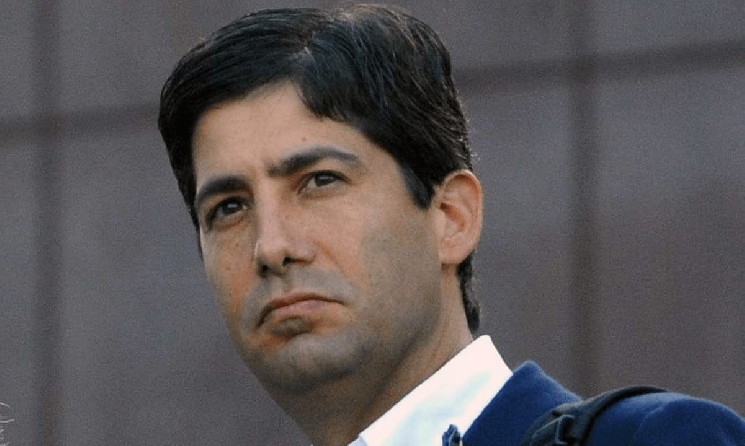
    Bitcoin’s recovery from below $65,000 to above $81,000 has encountered its first major macroeconomic setback after Federal Reserve Chair Kevin Warsh delivered a hawkish message at Jackson Hole on Friday. The key question now is whether the prospect of higher interest rates and rising U.S. Treasury yields could undermine the cryptocurrency market’s sharp rebound.

    Bitcoin ($BTC) held relatively steady during Warsh’s speech, but fell by $3,000 within hours of its conclusion, dropping below $77,000 for the first time in nearly a week. The sell-off spread across financial markets, weighing on stocks, precious metals and other risk-sensitive assets.

    Why Warsh’s Jackson Hole Speech Hurt Bitcoin

    Warsh did not explicitly say that the Federal Reserve is seriously considering raising interest rates, but his message was clear. Inflation remains elevated, the U.S. economy remains strong, and the central bank cannot simply declare victory. The Fed’s preferred personal consumption expenditures (PCE) inflation gauge is currently at 3.7% year over year, while its six-month annualized rate is even higher at 4.1%. Both measures remain well above the Fed’s target.

    Warsh emphasized that the Fed’s 2% inflation objective is “firm and fixed” and argued that price stability will not restore itself without further action from the central bank.

    He also played down some of the summer’s more encouraging inflation data, including the June figures, saying they had not convinced him or his colleagues that the underlying trend had improved substantially. Until the Fed can reassure markets that inflation is moving toward 2% “clearly and at sufficient speed,” policymakers will continue to “have work to do,” he added.

    Rate-Hike Expectations Rise as Bitcoin Falls

    Before Warsh’s speech, traders had assigned a one-third chance to an interest-rate increase in September. Those odds moved toward 60% after the speech, based on market pricing cited by Reuters. U.S. Treasury yields climbed again, while the dollar strengthened sharply after weakening the previous week.

    That is almost the opposite of the macroeconomic backdrop that helped Bitcoin surge 10 days earlier. The shift may explain why BTC fell from a recent peak above $80,000 to below $77,000 within hours, pulling most altcoins lower as well.

    Warsh also highlighted business investment growth of roughly 9% annually and a 20% rise in the S&P 500. Unemployment remained around 4%, while credit conditions were relatively easy. In practical terms, the economy is not currently giving the central bank an obvious reason to accept inflation above its target.

    Higher expected policy rates generally push Treasury yields higher, increasing the returns investors can earn from assets viewed as considerably safer. A more hawkish Federal Reserve also tends to support the U.S. dollar and tighten broader financial conditions. Historically, that combination has been unfavorable for Bitcoin and more speculative altcoins.

    Treasury Support Conflicts With the Fed’s Inflation Fight

    Treasury Secretary Scott Bessent’s recent intervention in the bond market helped drive long-term yields lower, at least temporarily, and contributed to Bitcoin’s major rally. However, Warsh reminded investors that the Federal Reserve has a different mandate.

    The Treasury may want to reduce borrowing costs and improve market liquidity, but the central bank must continue addressing inflation that remains above its target.

    As a result, markets remain caught between two powerful forces: Treasury efforts to support financial conditions and a Federal Reserve that may need to keep monetary policy tighter for longer than investors had expected.

    Source: cryptonews.net

  • Strive’s SATA Generates Enough Funding to Buy 1,192 Bitcoin This Week

    Strive’s SATA Generates Enough Funding to Buy 1,192 Bitcoin This Week

    Strive’s SATA preferred share program generated an estimated purchasing capacity of 1,192 BTC by August 28, 2026, according to market monitor BitcoinTreasuries.NET.

    The company held 21,356 BTC on its corporate balance sheet after previously disclosing the acquisition of 1,110 coins on August 24. SATA perpetual preferred shares traded at or above their $100 par value, allowing Strive to reactivate its at-the-market (ATM) offering.

    Strive’s SATA program generates estimated Bitcoin purchasing capacity

    During the final weeks of August, Strive’s SATA financial instrument generated an estimated capital volume sufficient to finance the purchase of 1,192 Bitcoin. BitcoinTreasuries.NET said its monitoring model indicated that trading activity in the U.S. market had restored the company’s capital issuance capacity.

    JUST IN: Strive’s $SATA has funded over 100 #Bitcoin in purchases again today, less than two hours into trading.
    Projected at 1,192 bitcoin:native and counting funded from $SATA alone this week. pic.twitter.com/09tRDG4own
    — BitcoinTreasuries.NET (@BTCtreasuries) August 28, 2026

    The figure is an algorithmic estimate based on Strive’s ATM equity offering program. BitcoinTreasuries.NET said the metric represents potential purchasing power generated by exchange trading volume rather than an officially confirmed asset acquisition.

    Between August 24 and August 28, 2026, Bitcoin traded between $78,000 and $80,000. Data from the analytics platform indicated that liquidity generated through the equity channel reached between $93 million and $95 million.

    Strive had not filed a Form 8-K with the U.S. Securities and Exchange Commission confirming treasury purchases during that period. Industry analysts have noted that regulatory filings typically appear several days after market execution.

    As of August 21, 2026, Strive’s corporate reserves stood at 21,356 BTC. Company filings show an initial baseline of 7,525 BTC in November 2025, representing a 184% increase in holdings over nine months.

    How Strive’s SATA issuance mechanism works

    Strive’s Variable Rate Series A Perpetual Preferred Stock trades on the Nasdaq under the ticker SATA. Corporate filings state that the security has a $100 liquidation preference per share, ranking senior to common equity.

    Strive maintains an annualized dividend rate of 13% on the preferred stock’s par value. Market reports state that distributions are paid on each business day declared by the board of directors.

    The placement facility resumes whenever SATA trades above $100. Under the mechanism’s structure, selling shares at a premium to par value allows Strive to raise net capital without using traditional debt or collateralized lending agreements.

    In SEC filings submitted in June 2026, Strive authorized ATM facilities of up to $2.6 billion for SATA and $2.55 billion for its ASST common stock. The framework allows incremental equity sales matched against available order-book depth.

    Strive’s second-quarter 2026 balance sheet reported $171.9 million in cash and cash equivalents. Regulatory reports also verified a fixed position of 505,000 STRC preferred shares valued at $48.57 million.

    The company’s executive leadership has emphasized that the strategy is intended to maintain an unencumbered treasury without debt secured by its cryptocurrency holdings. At the same time, risk disclosures filed with the SEC warn that continued issuance of SATA or ASST shares could dilute common shareholders, depending on underlying asset volatility.

    Markets are awaiting Strive’s upcoming Form 8-K filing with the SEC to confirm the final number of Bitcoin acquired during the final week of August 2026.

  • Strive May Have Raised Funds to Acquire 1,192 BTC Through SATA Perpetual Preferred Stock

    Strive May Have Raised Funds to Acquire 1,192 BTC Through SATA Perpetual Preferred Stock

    Strive (ASST) may have raised enough capital to purchase 1,192 Bitcoin this week through the issuance of its perpetual preferred stock, SATA, according to an analysis by Bitcoin Treasuries. The potential transaction would give the asset manager renewed capacity to expand its digital asset treasury as its share price recovers.

    How SATA Supports Strive’s Bitcoin Strategy

    SATA is Strive’s perpetual preferred stock and serves as a flexible fundraising tool. The company can issue new SATA shares to finance Bitcoin acquisitions only when the stock trades above its $100 par value.

    After falling to $79 in June, SATA recovered to the $100 threshold on Aug. 21. That rebound restored Strive’s ability to raise capital through the preferred stock and potentially direct the proceeds toward additional Bitcoin purchases.

    The structure allows Strive to access equity markets without directly diluting common shareholders in the traditional sense. It also supports the company’s broader strategy of building a Bitcoin treasury, a trend increasingly adopted by corporate treasuries seeking exposure to digital assets.

    Potential 1,192-Bitcoin Purchase

    A potential purchase of 1,192 BTC would add to Strive’s existing holdings and strengthen its position among publicly traded companies holding Bitcoin. Bitcoin Treasuries’ analysis indicates that the fundraising may have taken place this week, although the timing and transaction remain subject to confirmation through official disclosures.

    The development comes as Bitcoin has shown resilience in recent weeks and institutional interest remains strong. For investors, SATA trading above its $100 par value is a positive signal because it indicates that Strive has regained access to an important source of funding for its Bitcoin acquisition strategy.

    Why Strive’s SATA Fundraising Matters

    Strive’s use of perpetual preferred stock to help fund Bitcoin purchases highlights the growing connection between traditional finance and digital assets. The approach could offer a model for other companies seeking to build cryptocurrency treasuries without relying solely on debt or issuing common equity.

    The strategy also demonstrates how share-price performance can affect a company’s ability to expand its digital asset holdings. Because the $100 par value acts as a funding threshold, investors may view SATA’s trading level as an indicator of Strive’s potential capacity to make future Bitcoin purchases.

    Strive’s potential Bitcoin acquisition through SATA reflects the continued development of corporate treasury strategies in the digital asset market. With SATA back above par, the company has regained a key fundraising mechanism, while official filings are expected to provide definitive details about any transaction.

    Frequently Asked Questions

    What is SATA?

    SATA is Strive’s perpetual preferred stock. The company can use it to raise funds for Bitcoin purchases when the stock trades above its $100 par value.

    How many Bitcoin did Strive potentially buy?

    According to Bitcoin Treasuries, Strive may have raised funds to purchase 1,192 BTC this week.

    Why is SATA’s $100 par value significant?

    The $100 par value is the threshold at which SATA can issue new shares to raise capital. SATA’s recovery to that level on Aug. 21 restored Strive’s ability to use the stock as a fundraising tool.