Tag: Donald Trump

  • Crypto Longs Worth $570 Million Wiped Out as Clarity Act Fails

    Crypto Longs Worth $570 Million Wiped Out as Clarity Act Fails

    Crypto traders holding long, or bullish, futures positions suffered significant losses over the past 24 hours following the failure of the Clarity Act in a Senate procedural vote.

    Liquidation Data Reveals Heavy Long-Side Damage

    Exchanges liquidated approximately $571 million in long positions during this period, marking the highest total since August 22, according to data from CoinGlass. In contrast, short, or bearish, positions accounted for only about $100 million of the total wipeout.

    Bitcoin and Ether Lead Liquidation Tally

    Bitcoin and ether longs absorbed the heaviest damage, with roughly $190 million liquidated in each asset. XRP longs lost about $30 million, while Solana longs saw approximately $22 million in liquidations.

    Market Positioning Reflected Legislative Optimism

    The liquidation data indicates markets were positioned for continued upside, largely driven by hopes that the Clarity Act would advance. Analysts had previously flagged ether and DeFi tokens as the assets most likely to outperform bitcoin if the Senate voted in favor of the legislation.

    Trump Concession Reports Fueled Recent Rally

    Optimism strengthened earlier this week after reports that President Donald Trump was willing to make concessions on the bill’s ethics provisions. The market responded positively: bitcoin, the largest cryptocurrency by market value, rose to nearly $80,000 from about $77,000 on Monday.

  • Wall Street Bets on Fed Rate Hike: What It Means for Bitcoin, Bonds, and Trump

    Wall Street Bets on Fed Rate Hike: What It Means for Bitcoin, Bonds, and Trump

    Federal Reserve Poised for First Rate Hike Since 2023 Amid Inflation Pressure

    Wall Street is bracing for the Federal Reserve to raise interest rates on Wednesday, a move that would mark the first increase since 2023. The Federal Open Market Committee concludes its two-day meeting this week, and CME’s FedWatch tool places the probability of a 25-basis-point hike at 94.5%, up from under 50% just a month ago. Such a move would lift the federal funds rate to a range of 3.75%–4% from the current 3.50%–3.75%.

    Wall Street Consensus Shifts Rapidly Toward Tightening

    The shift from unlikely to near-universal expectation happened quickly. A Wall Street Journal survey published this week found nearly every major bank now anticipates a hike on Wednesday. Most institutions—including Barclays, Citigroup, JPMorgan, Morgan Stanley, and UBS—forecast 50 basis points of total tightening by year-end. Bank of America, Deutsche Bank, and RBC are more hawkish, calling for 75 basis points of tightening in 2026. Goldman Sachs sits at the dovish end of the hiking camp, penciling in only this week’s quarter-point increase. Jefferies and Oxford Economics remain outliers, forecasting a rate cut in December and in 2027, respectively.

    Higher rates increase borrowing costs, dampen spending, and pressure assets that thrive on cheap capital, such as equities and Bitcoin. They also boost yields on safe government bonds, drawing capital away from riskier investments. However, market anxiety stems less from the hike itself than from uncertainty about the trajectory of future moves. Markets are repricing now, ahead of the Fed’s communication, to account for that ambiguity.

    Inflation and Labor Data Drive the Decision

    The case for tightening rests on persistent inflation. Headline CPI ran at 3.4% annually in August, with core inflation at 2.5%—both comfortably above the Fed’s 2% target. Oil prices, elevated by the ongoing conflict with Iran, have added a layer of price pressure that neither tariffs nor rate cuts can easily offset.

    The Fed held rates steady at 3.50%–3.75% in July, but that decision passed by a narrow 9–3 vote, with three policymakers already advocating for a hike at the time. That internal split, combined with a stronger-than-expected August jobs report, tilted the committee toward tightening heading into this week’s meeting.

    Political Tension Mounts as Trump Pressures Fed Chair

    The impending hike places Fed Chair Kevin Warsh in a difficult position. President Donald Trump handpicked Warsh for the role in January and, at his swearing-in ceremony in May, urged him to be “totally independent” while making clear he expected lower rates. That expectation has not materialized—at least not in the way Trump likely meant by “totally independent.”

    In the past two weeks, Trump, Vice President JD Vance, and Treasury Secretary Scott Bessent have all publicly pushed for rate cuts. Trump went as far as threatening to halt trade with countries running surpluses with the U.S. if rates do not come down. Warsh has stated the president has had no influence on Fed decisions.

    The rate decision lands two months before the November midterms, where polls already show voters frustrated with high prices and borrowing costs. The tightening cycle arrives in part because of the tariff and Iran-conflict policies Trump himself has championed.

    Bond Markets Price In Higher-for-Longer Rates

    Bond markets have not waited for Wednesday’s announcement. The 10-year Treasury yield touched 5.04% this week, its highest level since July 2007, as traders priced in both the hike and a prolonged period of elevated rates. The two-year yield, more sensitive to Fed policy, hit its highest level since July 2024. Higher yields make Treasurys more attractive relative to risk assets and tend to strengthen the dollar—a headwind for assets like cryptocurrency that benefit from abundant liquidity.

    Bitcoin and Altcoins Enter Decision Week Under Pressure

    Crypto markets approach the Fed decision already weakened. On Tuesday, Bitcoin traded around $75,700, down roughly 3.2% on the day after the Clarity Act—crypto’s long-awaited market structure legislation—failed a Senate cloture vote. Bitcoin remains well below its September peak near $82,000.

    Technical analysts highlight $73,200 as a critical level: a daily close below it could open the door to $71,000 and even $66,900, negating the bullish structure that recently triggered a golden cross pattern.

    Bitcoin price data. Image: TradingView

    Not all analysts view a hike as purely bearish. Some argue a quarter-point move aimed primarily at anchoring long-term Treasury yields—rather than genuinely tightening financial conditions—could leave crypto’s medium-term outlook largely intact. In this view, the market’s reaction hinges on whether the decision and Warsh’s tone during the press conference surprise relative to what is already priced in.

    Higher-beta altcoins are expected to experience sharper percentage swings than Bitcoin in either direction, given thinner liquidity and heavier leverage.

    Key Events to Watch Wednesday

    The Fed’s policy statement and updated dot plot are due at 2:00 p.m. ET Wednesday, followed by Warsh’s press conference at 2:30 p.m. ET. Traders will scrutinize whether officials still pencil in just one more hike this year or something closer to the two additional moves Bank of America, Deutsche Bank, and RBC now project.

  • Bitcoin Price Nears $80K as Trump Signals Iran Talks

    Bitcoin Price Nears $80K as Trump Signals Iran Talks

    Bitcoin Recovers 3% to $79,143 as Trump Signals Iran Diplomacy, but Geopolitical Risks Persist

    Bitcoin ($BTC) climbed approximately 3% to $79,143 on Monday after briefly touching $79,325, buoyed by comments from U.S. President Donald Trump suggesting Iran wants to reach a deal with Washington. The recovery comes despite conflicting statements from Tehran and ongoing military tensions that continue to pressure energy markets.

    Trump Comments Spark Risk-On Sentiment

    Bitcoin’s rebound accelerated after President Trump posted on Truth Social that Tehran was eager for an agreement.

    “The failing Nation of Iran wants to make a deal, quickly and badly,”

    Trump wrote. He added that he would decide whether the United States engages with Tehran, though he said Washington was open to the idea. The remarks introduced the possibility of renewed talks after months of military exchanges and repeated failures to secure a lasting agreement.

    During the recovery, Bitcoin first moved above $78,000 and reached $78,940 before extending gains. A daily Binance chart on TradingView showed BTC opening at $76,842, dipping to $76,388, and later peaking at $79,325. The asset traded near $79,143 at the time of capture, representing a 3% daily gain.

    U.S. equities mirrored the cryptocurrency’s move. Approximately $570 billion returned to stocks within three hours after the session had earlier erased more than $600 billion. Technology shares had faced additional pressure after executives from artificial intelligence companies called for slower development to address safety risks, adding another layer of uncertainty for a sector that has driven much of the recent U.S. equity rally.

    However, Iranian state media rejected Trump’s claim that Tehran was seeking a quick agreement, leaving the market without confirmation from both governments. LiveSquawk separately cited Iran’s ILNA news agency as saying the United States had sought a “phased” agreement, based on information attributed to a Pakistani source. The report did not establish that Washington and Tehran had accepted final terms.

    Oil Above $100 Keeps U.S.-Iran Risk Active

    The diplomatic dispute unfolds as attacks involving Iran-aligned forces continue to pressure oil production and shipping routes.

    According to Reuters, Yemen’s Iran-aligned Houthis launched missiles and drones at a military airbase in Khamis Mushait, Saudi Arabia. The group said it targeted aircraft hangars, radar equipment, runways, and ammunition storage sites in response to Saudi strikes in Yemen.

    In a separate attack, which Riyadh blamed on Iran-backed fighters in Iraq, Saudi Arabia’s east-west pipeline was taken offline. The route allows oil exports to bypass the Strait of Hormuz, making it critical while traffic through the strait remains restricted.

    Traders told Reuters that an extended pipeline closure could affect as much as 4% of global oil supply. Brent crude rose more than 4% after the weekend before paring gains following Trump’s comments. It later traded near $106 per barrel, while U.S. crude remained above $100.

    For American consumers, Reuters reported that the average retail diesel price had reached a record above $6.23 per gallon. Sustained energy costs could feed inflation and complicate the Federal Reserve’s interest-rate decisions, creating a direct link between the conflict and the conditions facing U.S. Bitcoin investors.

    As crypto.news previously reported, Bitfinex analysts identified energy costs and real Treasury yields as restraints on Bitcoin. The analysts said an oil shock could keep inflation expectations elevated, while tighter monetary policy would reduce liquidity without resolving the loss of energy supply.

    Oman had planned to host Iranian and Gulf officials for discussions over the future operation of the Strait of Hormuz. Foreign Minister Sayyid Badr Albusaidi postponed the meeting “in the interests of consensus,” without announcing a replacement date. Iran said Saudi Arabia had requested the delay. Tehran also published a list of 77 vessels it said had breached its operating rules in the strait, warning that future violations could lead to fines, detention, or confiscation.

    Bitcoin Faces Technical Resistance Near $80,000

    Technical readings show Bitcoin has returned above the center of its daily Bollinger Bands but has not cleared the upper boundary.

    • Bollinger Band midpoint: ~$78,521
    • Upper band: ~$81,035
    • Lower band: ~$76,008

    BTC’s move above the midpoint gives buyers control of the immediate range, although the upper band and recent highs create resistance between $80,000 and $81,035.

    Bitcoin price daily chart — Sep. 15 | Source: crypto.news

    A one-week CoinGlass liquidation heatmap shows the largest nearby concentration of leveraged positions just below $80,000. The brightest band appears around $79,900 to $80,000, making the area a possible target if buyers extend the advance.

    Bitcoin liquidation heatmap | Source: CoinGlass

    Several smaller liquidation pools sit between roughly $80,200 and $80,700. A clean move through that region would bring the Bollinger Band ceiling near $81,035 into focus, followed by the larger $82,000 area identified in recent Bitfinex analysis.

    Momentum Signals Remain Mixed

    Momentum remains less certain. The daily MACD line stood near 1,579, below its signal line around 2,211, while the histogram had fallen to approximately minus 631. Both MACD lines remained above zero, but the bearish crossover and red histogram bars showed that momentum had weakened after Bitcoin’s sharp August rally.

    Price action has also remained uneven since BTC first moved above $80,000. Buyers have defended pullbacks toward the mid-$76,000 area, yet several attempts to hold above $81,000 have failed. The current move has returned Bitcoin to the upper half of that range without confirming a breakout.

    Key Support Levels to Watch

    On the downside, the Bollinger midpoint near $78,521 forms the first technical support. Losing it would expose the $77,500 to $78,000 region, where the heatmap shows a series of smaller leveraged clusters.

    The largest lower liquidity concentration sits around $76,000, close to the daily lower Bollinger Band. A sustained break below that zone could expose another pool near $75,000 to $75,400.

    Fed Policy Adds Another Test for U.S. Investors

    The Iran conflict is not the only event capable of disrupting Bitcoin’s recovery. The Federal Reserve meets on Sept. 15 and 16, with its policy statement, updated economic projections, and Chair Kevin Warsh’s press conference due on Wednesday.

    Markets had priced an 87% probability of a quarter-point increase before the meeting. Such a decision would move the federal funds target range from 3.50%–3.75% to 3.75%–4.00%.

    Bitfinex analysts said the Fed’s projections could matter more for Bitcoin than the rate announcement itself because they will show whether officials expect one increase or a longer series of moves. Higher Treasury yields can raise the return available from government securities, increasing competition for capital held in non-yielding assets such as Bitcoin.

    U.S.-listed spot Bitcoin exchange-traded funds provide another measure of demand from American investors. The products attracted $986.7 million during the week ending Sept. 4, after taking in $924.5 million the previous week. Three consecutive positive weeks brought the combined inflow to about $3.8 billion.

    Fed policy, oil prices, and developments around the Strait of Hormuz will now overlap with the liquidation levels visible on the Bitcoin chart. The Federal Reserve is scheduled to release its decision on Wednesday afternoon, followed by Warsh’s press conference and the central bank’s updated economic projections.

  • White House Condemns Aaron Rupar Over Attacks on Trump Staffers

    White House Condemns Aaron Rupar Over Attacks on Trump Staffers

    White House Defends Press Wrangler After Journalist’s Criticism Sparks Online Clash

    A confrontation between a left-leaning journalist and the White House rapid response team has escalated into a public dispute over the treatment of a young female staffer. The incident began when Aaron Rupar, a self-described leftist commentator who monitors President Donald Trump’s activities online, posted a clip from C-SPAN on his X account Sunday afternoon.

    Clip Shows Staffer Directing Press Corps

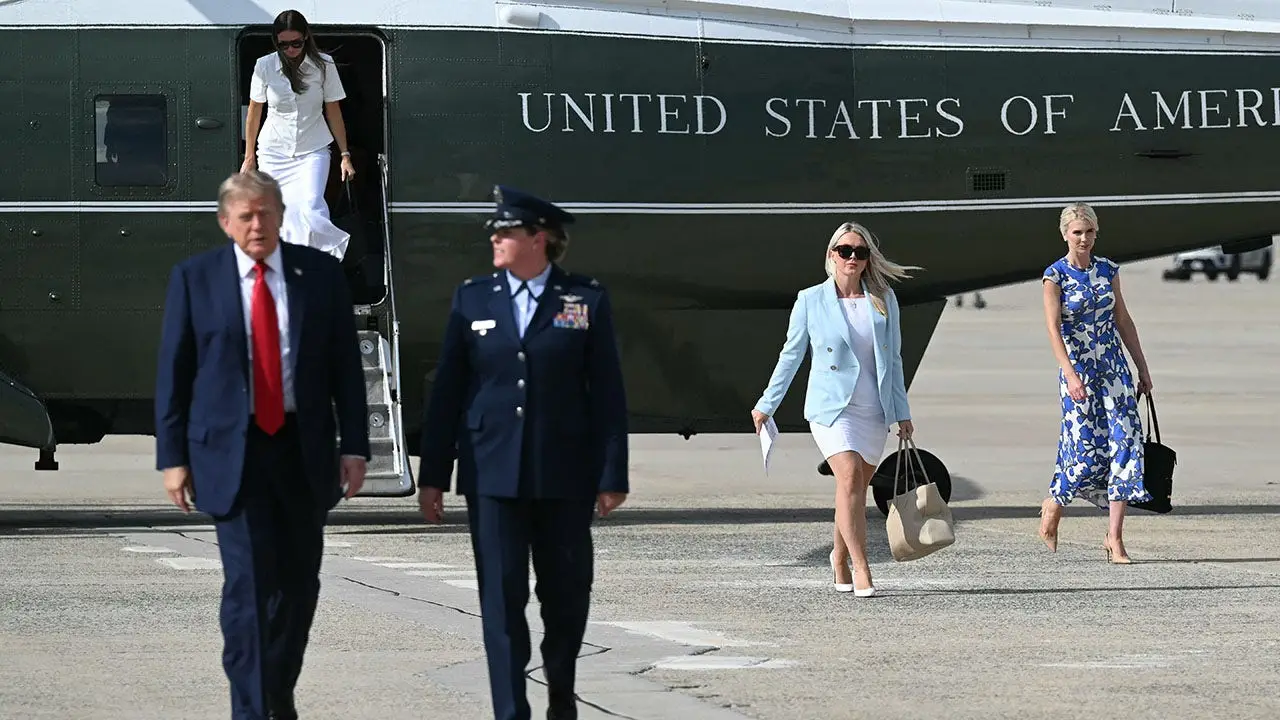
    The footage captured President Trump greeting family members near Air Force One in Ireland before boarding. In the video, White House press wrangler Ellie Acra is seen sternly directing media members to leave the area beneath the aircraft wing, using the standard phrase: “Thank you, press.“

    Press wranglers serve a logistical function in both Republican and Democratic administrations, responsible for moving the media to and from designated coverage areas to keep the president on schedule.

    Rupar’s Commentary Draws White House Rebuke

    Rupar framed the routine interaction negatively, writing: “another [sic] blonde Trump flunkie starts literally shoving photographers away from Trump.” His commentary quickly went viral, prompting a forceful response from the official White House rapid response X account.

    The account posted: “This is a press wrangler doing her job — and doing it well. Aaron, meanwhile, is gutter trash (in his 40s) who spends his days hiding behind his keyboard and making disturbing comments about women doing their jobs. Truly a sick freak!“

    Journalist Claims Harassment Following Official Response

    Following the White House rebuttal, Rupar alleged the official account was inciting harassment. He stated: “For the second straight day, the White House’s taxpayer-funded incitement account is attacking me and oddly mentioning I’m in my 40s (which I know makes me way too old for the president) When they do this it results in a flood of harassing and threatening messages, which of course is the point.”

    Pattern of Targeting White House Aide Natalie Harp

    The Sunday exchange followed a similar incident on Saturday, when Rupar posted a photo of White House aide Natalie Harp in Ireland with the comment: “Look who made the trip to Ireland!” accompanied by the hashtag #TravelWithNatalie, which he has used to track her movements alongside the president for weeks.

    Rupar and other online commentators have insinuated without evidence that Harp and Trump are engaged in an inappropriate relationship. The White House responded to the Saturday post: “President Trump does, in fact, travel with staff. Aaron, on the other hand, is a sick, deluded freak (in his 40s) who sits behind a keyboard and posts creepy things like this.”

    Senator Amplifies Unsubstantiated Claims

    The speculation surrounding Harp gained political traction last month when Sen. Jon Ossoff, D-Ga., referenced the aide during a campaign speech. Ossoff remarked: “He doesn’t want to do the job… He wants to build his ballroom and travel with Natalie on their apparently defenseless flying palace gifted by the emir of Qatar.“

    Ossoff’s Republican opponent, Rep. Mike Collins, characterized the comment as “sexist” and “misogynist.” The senator has since faced questions about invoking the staffer’s name during a campaign rally.

    Fox News Digital reached out to Rupar and the White House for further comment.

  • Trump Meets Advisers on CLARITY Act Ahead of Tuesday Vote

    Trump Meets Advisers on CLARITY Act Ahead of Tuesday Vote

    President Donald Trump convened advisers on Friday, September 11, to negotiate the ethics language holding up the Digital Asset Market Clarity Act, four days before a pivotal Senate cloture vote that requires 60 votes to advance the legislation. Politico first reported the closed-door session, citing two people familiar with the talks. Neither the White House nor the negotiators disclosed the outcome. By Sunday, no revised text had circulated. Trump’s crypto policy adviser, Patrick Witt, struck an upbeat tone the following day, writing that it was a “Bad day to be a Clarity Act doomer.” He did not specify what had changed. With the Senate returning Monday, lawmakers have one working day before taking a public position on Tuesday.

    One paragraph of ethics text stalls a 630-page bill

    Lawmakers resolved most of the CLARITY Act months ago. The sole remaining obstacle is a conflict-of-interest provision targeting officials who profit from digital assets—a clause that describes the sitting president with uncomfortable precision. Trump previously accepted a version brokered by Senator Cynthia Lummis, but Senate Democrats and at least one Republican, Thom Tillis, deemed it too weak to secure their votes. Tillis has warned the bill collapses without a White House agreement. The current draft bars officials and their spouses from issuing tokens, yet permits them to hold crypto personally, exempts their children, and sunsets in 2029.

    Trump family collects 75% of $WLFI sale proceeds

    The Trump family launched World Liberty Financial in September 2024, with Donald Trump Jr., Eric Trump, and Barron Trump serving as its web3 ambassadors. The venture operates a governance token, $WLFI, and a dollar-pegged stablecoin, USD1, backed by Treasuries and custodied by BitGo. Under the project’s own disclosures, an entity tied to Trump and family members receives 75% of $WLFI sale proceeds after reserves, and the family holds billions of tokens directly. Trump reported more than $1 billion in crypto income for 2025, including roughly $515 million from $WLFI sales. Senator Elizabeth Warren said the draft does nothing to stop him from “vacuuming up his next $1.4 billion in crypto profits.”

    The token has punished outside buyers, trading below $0.06 while early investors remain locked out of most of their holdings. In August, the Office of the Comptroller of the Currency granted a World Liberty affiliate preliminary approval to pursue a national trust bank charter, which would tie the family’s finances to a federally regulated bank for the first time.

    CLARITY Act splits crypto oversight between SEC and CFTC

    Stripping away the politics, the bill draws the regulatory line the two agencies have contested for a decade. A maturity test determines which regulator governs a token: the network must be fully operational, no single entity may control more than 20% of supply or voting power, and founders cannot hold unilateral upgrade authority. Tokens clearing that threshold move from securities law to commodities law, sharply altering their compliance burden.

    How the maturity test works

    • Network status: Fully operational
    • Control threshold: No single holder controls more than 20% of supply or votes
    • Founder authority: No unilateral upgrade power

    Payment stablecoins fall into a shared SEC-CFTC category, with core rules already established by the GENIUS Act.

    Cloture requires 60 votes; Republicans hold 53

    Tuesday’s vote is a procedural cloture motion to begin debate, not final passage. The arithmetic remains unforgiving. Republicans need at least seven Democrats to cross over, and the likeliest Democratic supporters tied their backing to stronger ethics language that never materialized during the recess. The House demonstrated this coalition can hold when the ethics fight subsides, passing the bill 294–134 in July 2025 with 78 Democrats in favor. The Senate Banking Committee advanced its version 15–9 in May. The floor is where personal stakes become explicit, and where Senator Ruben Gallego is drafting a compromise no one has yet endorsed.

    Cloture math at a glance

    Category Count
    Votes needed to proceed 60
    Republican senators 53
    Additional Democrats required 7+

    Key senator positions

    • Rand Paul (R): Firm no
    • Josh Hawley (R): Firm no
    • Thom Tillis (R): Conditional
    • 7 pro-crypto Democrats: Undecided
    • Kirsten Gillibrand (D): Hard line on ethics

    Disclosure without divestment leaves conflict intact

    The administration’s proposed compromise leans on transparency: officials would report crypto holdings rather than divest. Watchdogs argue disclosure does little when assets are liquid and volatile, because knowing what a president owns does not prevent those tokens from moving on the policies he signs. Warren’s committee staff found the provisions riddled with loopholes and noted enforcement would fall to a Justice Department he appoints. Transparency International reached the same conclusion. Friday’s meeting did not visibly close that gap.

    Failed vote hands crypto to agency rulebooks until at least 2029

    Prediction markets have priced in the difficulty. Polymarket odds of 2026 passage slid from 82% in February to roughly 16% by late August, and Galaxy Digital cut its estimate near 10%. A failed cloture vote would end the bill’s legislative year and leave the industry under regulation by enforcement, with the SEC, CFTC, and OCC each writing pieces of the rulebook on their own terms. The SEC has already proposed exempting certain token offerings from securities registration. That reality has fueled the argument that crypto regulation can advance even if CLARITY stalls—a view gaining traction among executives who would prefer a statute but expect to operate without one. Europe’s MiCA regime is already live and licensing firms, and a prolonged U.S. stalemate cedes that ground abroad.

    A calendar problem looms beyond Tuesday

    A timing issue the vote counts rarely mention compounds the uncertainty. The House has canceled its late-September voting weeks to focus on the midterm campaign, meaning even a Senate substitute would need identical House text or a lame-duck session after the November 3 elections to reach the president’s desk. Tuesday reads less as a finish line than as a signal of whether a 2026 deal remains mathematically alive.

  • President Trump Jokes About Melania’s Absence During Ireland Trip

    President Trump Jokes About Melania’s Absence During Ireland Trip

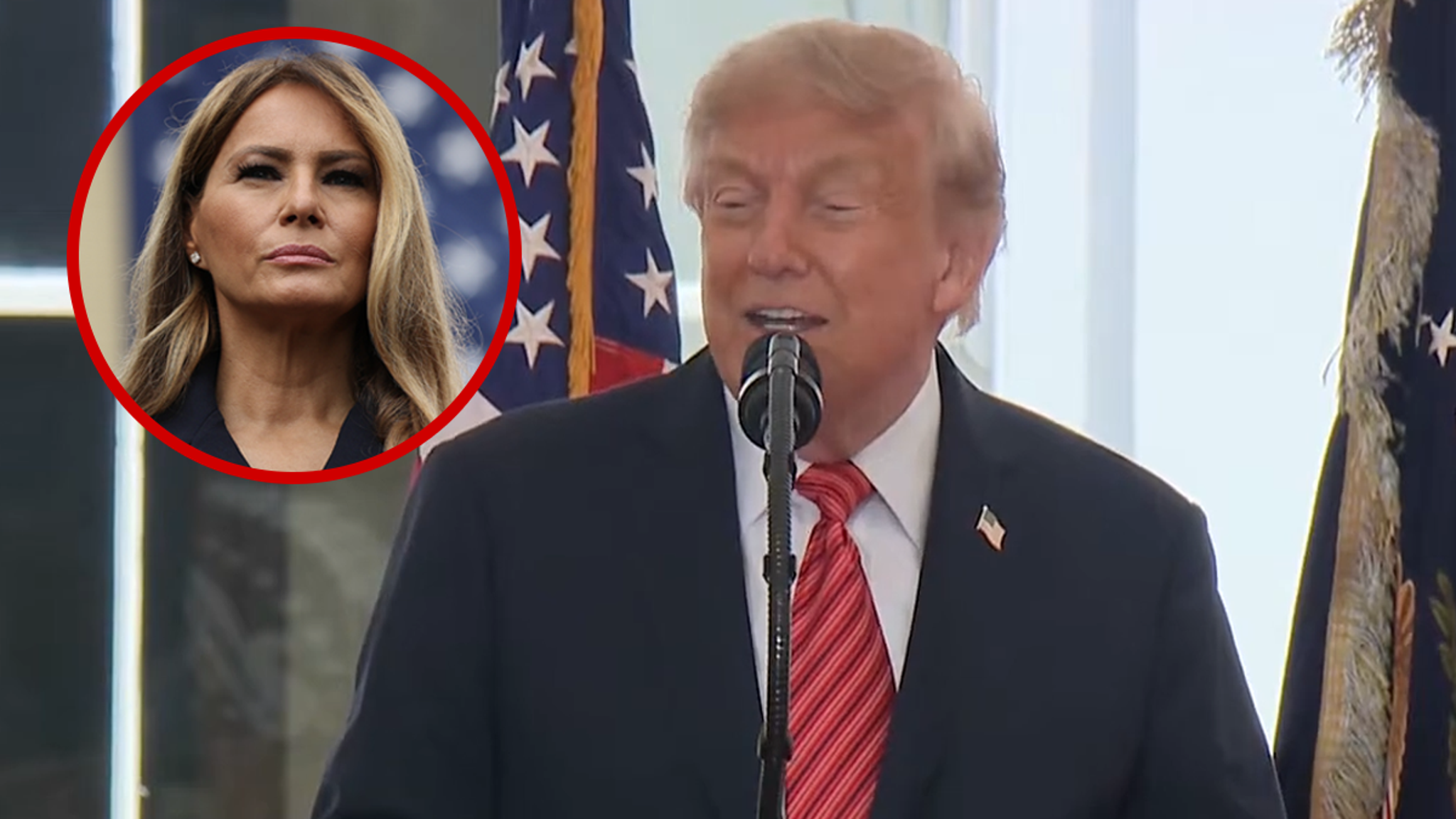
    President Donald Trump addressed First Lady Melania Trump’s absence during his official visit to Ireland on Saturday, offering lighthearted remarks to reporters in Dublin.

    Speaking to the press, the president stated: “My wife is here in spirit. She’s watching right now. She said to say hello” to a couple.

    Trump’s comments came as he continued his European trip without the first lady by his side. The president’s framing of her absence as a spiritual presence rather than a physical one drew attention from international media covering the diplomatic visit.

    The Ireland stop formed part of Trump’s broader European itinerary, which included meetings with Irish leaders and discussions on trade relations, Brexit implications, and the Northern Ireland peace process.

  • Oil Prices Dip Yet Stay on Track to Close Week Above $100

    Oil Prices Dip Yet Stay on Track to Close Week Above $100

    Oil prices pulled back on Friday but remained on track for a weekly gain of nearly 9% after surging above $100 a barrel for the first time in months. Brent crude futures, the global benchmark, fell 2.4% to trade at $105.03 a barrel, while U.S. West Texas Intermediate (WTI) slipped 2.75% to $99.66 per barrel. On Thursday, Brent peaked near $108 a barrel and WTI topped $104.

    Diplomatic Signals Trigger Pullback

    The decline followed reports from Iranian state media that Tehran will meet with Gulf states in Oman to discuss the Strait of Hormuz, signaling diplomatic engagement despite a week of sharp escalation. Brent futures were on course for a weekly gain of 9%, set to close the week above the critical $100 mark for the first time since mid-May. WTI’s week-to-date gain stood at 8.9%. Friday’s drop snapped five consecutive days of gains for Brent and an eight-day winning streak for WTI.

    Markets Brace for Protracted Conflict

    Traders are pricing in a prolonged Iran conflict, reacting to escalating tensions in the Middle East and a Wall Street Journal report that top White House advisors discussed with President Donald Trump the possibility that the conflict could extend beyond his current term. Trump has said the conflict will end after the U.S. midterm elections in November, adding that oil and gas prices will also fall after the critical vote.

    Geopolitical Fears Dominate Trading

    “Once again, it is geopolitical fears driving everything,” Deutsche Bank’s Jim Reid said in a Friday morning note. “In terms of the latest Middle East headlines, yesterday saw growing concerns over the safety of Red Sea shipping, and the potential knock-on effects for Saudi oil exports, as Houthi rebels captured Yemen’s port city of Mokha, which is located close to the Bab el-Mandeb Strait on the southern end of the Red Sea. The mood also wasn’t helped by news that Saudi Arabia’s oil output has fallen to its lowest since 1990.”

    Analyst Weighs Structural vs. Transitory Supply Deficit

    Tamas Varga, an analyst at PVM Oil Associates, told CNBC that the key question for investors is whether the current supply deficit is structural or transitory. “While further spikes cannot be ruled out and re-visiting the April peak of $126 remains a possibility as global and regional oil inventories keep drawing down, it must be noted that [the] higher oil prices climb, the more demand will be obliterated,” he said. “The difference between the current crisis and… the one experienced in 1990, during the first Gulf War, is that today oil is more elastic than 35 years ago.”

    Renewables Accelerate Demand Shift

    Varga said renewable energy is “more than capable” of replacing “certain parts of the barrel,” especially in electricity generation. “It appears only a question of time that the gap between global oil supply and demand will narrow, either by supply increasing in case of a truce or demand decreases, due to the widespread use of alternative energy sources,” he added. “In the interim, further oil price strength is very much possible, but it would be surprising to see it lasting beyond 2026.”

  • Jimmy Kimmel Gleefully Roasts Empty Seats at Trump’s Midterm Convention

    Jimmy Kimmel Gleefully Roasts Empty Seats at Trump’s Midterm Convention

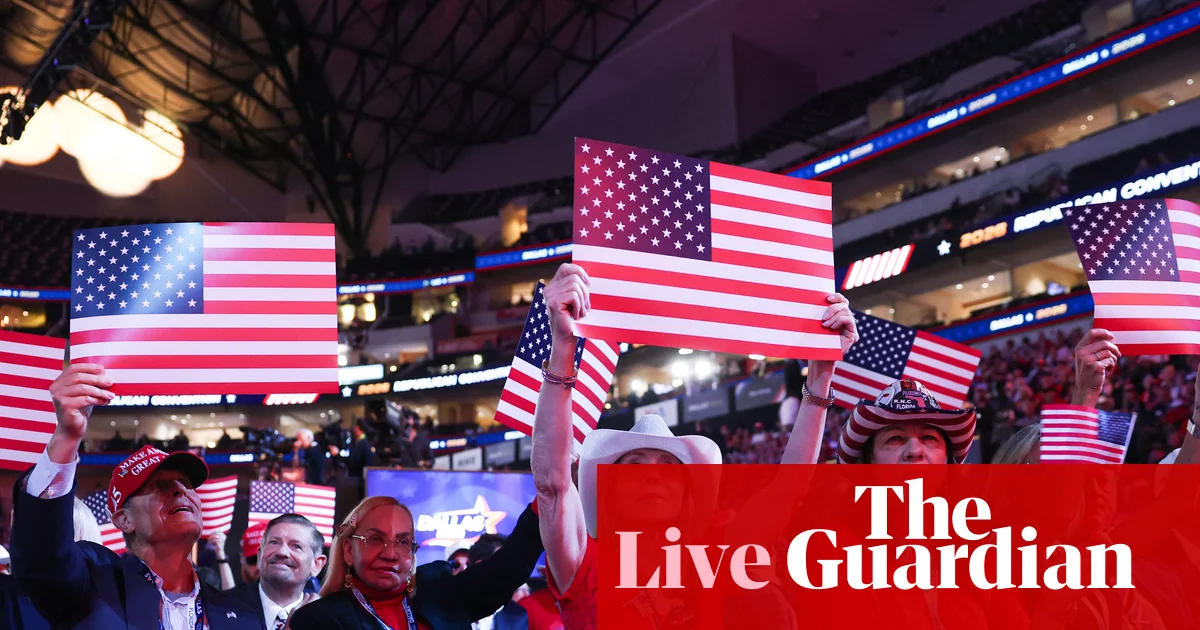
    Former President Donald Trump held a midterm campaign convention in Texas on Wednesday, but attendance appeared lower than expected as several Republicans cited scheduling conflicts for their absence.

    Jimmy Kimmel Highlights Empty Seats at Trump Rally

    Late-night host Jimmy Kimmel devoted a segment to the event, contrasting video footage of vacant seats with Trump’s claim that the venue was packed.

    “Could there be a better metaphor for this presidency than him bragging about the size of his crowd to a bunch of empty seats? I don’t think so. When does the kid come out and inform the emperor that he has no clothes? That arena was as empty as a Waymo,” Kimmel says.

    Kimmel further compared the scene to state-controlled media environments.

    “This is what happens in North Korea. It is really terrifying that this is the news that some people are getting exclusively.”

    The convention was intended to energize Republican voters ahead of the midterm elections, but the visible turnout raised questions about current enthusiasm levels within the party base.

  • JD Vance to Address Republican Midterm Convention After Trump’s $5,000 Offer Sparks Bribery Claims

    JD Vance to Address Republican Midterm Convention After Trump’s $5,000 Offer Sparks Bribery Claims

    The second night of the Republican midterm convention opened in Dallas on Thursday with Republican National Committee Chair Joe Gruters wielding his comically large gavel to kick off proceedings. The evening was framed by the one-year anniversary of conservative activist Charlie Kirk’s assassination, a shadow that loomed over the gathering as Vice President JD Vance prepared to deliver the keynote address and former President Donald Trump signaled a shorter appearance than his nearly two-hour speech the previous night.

    Convention Opens with Tribute to Charlie Kirk

    Gruters marked the somber anniversary of Kirk’s death, noting the Turning Point USA founder was shot and killed while speaking at a campus event in Utah one year ago. “He [Kirk] believed in America, in freedom, in young people’s courage to stand up and fight for the country they love. He didn’t just join a movement; he built one,” Gruters said. “Let’s honor Charlie and let’s be more like Charlie Kirk.”

    Trump, addressing the convention Wednesday night, had promised a briefer follow-up. “I’m going to be just sort of getting up here and saying, good luck. We love you all,” he said at the end of his nearly two-hour speech on Wednesday.

    House Republicans Focus on Michigan Senate Race

    Representative Lisa McClain, chair of the House Republican Conference, used her speaking slot to attack Abdul El-Sayed, the Democratic nominee for U.S. Senate in Michigan. McClain accused El-Sayed of wanting to “release violent criminals back into your communities” and highlighted his campaign appearance with progressive streamer Hasan Piker. Piker apologized in 2019 for comments stating the U.S. “deserved” the September 11 terror attacks. “My mom has a saying: ‘You are who you hang with’,” McClain said, adding that the November elections are a choice “between common sense and communist crazy”.

    Trump’s $5,000 Pledge Draws Skepticism, Bribery Accusations

    In a CBS News interview during the convention, Trump claimed Congress would not need to approve the $5,000 payments he promised to U.S. adults if Republicans retain congressional control—a pledge carrying a price tag exceeding $1 trillion. “The country is doing so well, we’ve taken in trillions of dollars in tariffs and other things,” the president said, again inflating tariff revenue. Tariff revenue is deposited into the U.S. Treasury and allocated by Congress through legislation. Trump reiterated the money would need to be spent domestically but did not explain enforcement mechanisms.

    The proposal triggered immediate backlash. Palantir founder and major GOP donor Joe Lonsdale posted on X that while he favors winning the midterms, he is “strongly against bread and circus bribes.” California Governor Gavin Newsom called the pledge “pathetic and sad,” elaborating: “Pathetic because it’s just bullshit. And sad that he has to go in front of people and bribe them. I mean, that’s how desperate he is to hold on to power. He knows his presidency is de facto over as we know it this November. He’s going to do everything he can to rig the election, and in the absence of that he wanted to buy everybody off.”

    Former Texas Representative Beto O’Rourke dismissed the offer as “the stink of desperation.” Speaking at a Bloomberg News roundtable in Dallas, O’Rourke said: “I think people will take it for what it is: it’s a gimmick, it’s a bribe. It’s another promise that the president will be unable to fulfill. He’s promised these kinds of dividends before. I think we were supposed to get one from all of the money we were making off of tariffs. It’s never materialised.” He continued: “It adds to the stink of desperation. That is emanating from that convention centre and every action that we’ve seen over the last 12 months: gerrymandering five congressional districts, screwing with vote by mail, shutting down 92 polling places, more than a million Texans on the suspense list. This is a party that cannot compete on the power of its ideas or on its accomplishments while in office and so they’re trying to stop people literally from voting or bribe those who they think can be persuaded. I just don’t think that’s going to be effective.”

    Vance and Trump Jr. Eulogize Kirk on Memorial Podcast

    Earlier Thursday, Vance appeared on the Charlie Kirk Show’s memorial episode, calling Kirk an irreplaceable leader and close personal friend. “There’s no way to replace Charlie Kirk,” Vance said. Kirk was an early supporter of Vance’s 2022 Senate campaign and advocated for his 2024 vice-presidential selection. Since Kirk’s death, his widow Erika Kirk, who now leads Turning Point USA, has voiced support for Vance as a future presidential successor.

    Donald Trump Jr. followed Vance on the podcast, recalling their 2015 meeting during his father’s first presidential run. “It was the beginning of a long friendship,” Trump Jr. said. “I think we spoke every day for 10 years,” he added later. The White House, top Republicans, and conservative world leaders issued statements commemorating the anniversary.

    Trump Uses Medal of Honor Ceremony for Political Attacks

    At the National Medal of Honor Museum in Arlington, Texas, Trump deviated from a bipartisan ceremony honoring 65 living recipients to attack Texas Democratic Senate candidate James Talarico, tout inflated investment figures, and criticize his own endorsed candidate, Attorney General Ken Paxton. Trump imagined a conversation with Paxton: “I’m not sure if I like your look. I’m not sure if I like the way you dress. I don’t like the way you talk. But you’re the greatest attorney general.” He dubbed Talarico “Talafreako” and claimed “close to $21tn” had been invested in the U.S. since his inauguration—a figure CNN fact-checkers labeled fictional.

    Trump also expressed personal desire for the Medal of Honor. “What I really want is I want for myself the Congressional Medal of Honor,” said Trump, who received a Vietnam War draft exemption for bone spurs. “I would give it to myself; I have no problem, but I’m not allowed to.” He later clarified he was joking. The ceremony concluded with the Village People’s YMCA.

    Missouri Supreme Court Upholds 2022 Congressional Maps

    The U.S. Supreme Court declined to block a Missouri Supreme Court order restoring the state’s 2022 congressional district map, likely ending Republican efforts to use 2025 boundaries that could have secured an additional House seat. Missouri Secretary of State Denny Hoskins, a Republican who faced a contempt hearing over his resistance, ordered local election authorities to use the 2022 map. “Following the United States supreme court’s stay, the only governing court order in effect is from the Missouri supreme court,” Hoskins’ office stated. “In accordance with that order, my Office is directing local election authorities to use the 2022 congressional map.”

    DHS Proposes Eliminating Visa Grace Period for Foreign Workers

    The Department of Homeland Security published a formal proposal Thursday to remove the 60-day grace period allowing H-1B and other work-visa holders to seek new employment or adjust status after job loss. The Obama-era rule permitted workers and dependent family members to remain in the U.S. for 60 days post-employment. The new rule would require immediate departure upon termination.

    Lawsuit Seeks to Block ICE from Polling Places

    A coalition of voting and civil rights groups, joined by the city of Denver, filed a preemptive lawsuit Thursday to prevent the Trump administration from deploying armed ICE agents to polling sites in November. Citing a Civil War-era statute barring armed federal officers from voting locations, the suit argues: “The specter of armed officers at polling places threatens the freedom of this upcoming election. It places voters in fear that they will be confronted by armed federal law enforcement if they choose to cast a ballot.” Defendants include DHS Secretary Markwayne Mullin and ICE Director David Venturella. While Mullin stated ICE is not there to patrol polls, he acknowledged agents could be present for site threats or warrant service.

    Appeals Court Upholds Block on Mail-Voting Restrictions

    The First U.S. Circuit Court of Appeals in Boston rejected the administration’s bid to lift a lower court injunction blocking Trump’s executive order imposing sweeping new federal authorities over mail-in voting. The three-judge panel declined to stay the injunction as the Supreme Court considers the case, with states already mailing ballots for the midterms.

    FCC Pressure Forces Kimmel to Move Talarico Interview to YouTube

    Late-night host Jimmy Kimmel announced Wednesday that an interview with Texas Democratic Senate candidate James Talarico would not air on ABC but on YouTube, citing FCC equal-time rule enforcement. “Now that [Trump] is president, his FCC has threatened me, threatened our show, threatened our network, ABC, our affiliates, our local stations, based on simple, traditional editorial decisions,” Kimmel said. “In the America we live in right now, that is the best we can do, until November, of course,” he added. Talarico faces Republican Ken Paxton, a Trump endorsee, in a tight Senate race.

    Talarico Accuses Paxton of Ignoring Epstein Survivors

    At a Dallas press conference alongside Epstein survivors Annie Farmer and Sharlene Rochard, Talarico demanded accountability. “When did pedophilia become a partisan issue? When did holding sexual abusers accountable become controversial?” Talarico said. He alleged survivors requested meetings with Paxton, who refused. “Our attorney general here in Texas has the power to get justice for these survivors, and he’s refusing to do so,” Talarico said. “Ken Paxton has two choices: he can stand with these survivors and get justice, or he can continue to cover up Jeffrey Epstein’s abuse. The choice is entirely his.”

    Democratic gubernatorial candidate Gina Hinojosa visited the same DOJ Epstein files exhibit Wednesday. “It’s really incredible that we live in a country where the justice system is so broken at every level that there has not been accountability of what we know was extensive sexual abuse, exploitation that happened for decades,” Hinojosa said, according to the Associated Press. “And that powerful people who run this country are still living their lives without having been held to account.”

    O’Rourke Rules Out 2028 Run, Assesses Democratic Field

    Beto O’Rourke confirmed he will not seek the 2028 Democratic presidential nomination but offered assessments of potential contenders. “There’s obvious people: Gavin Newsom’s been running for the last 20 years for the presidency in 2028,” O’Rourke told Bloomberg. “I’ve been watching some of what Pete Buttigieg has been doing: he’s so freaking intelligent and amazing and connecting with people and answering questions on Fox News. JB Pritzker was just here: he certainly seems to be running.” He cited his 19-year-old son’s excitement about Senator Jon Ossoff as a barometer. “My son is 19 years old and has grown up around politics and therefore doesn’t like it and doesn’t really engage, but to get a text from him, ‘Hey dad, do you know this Jon Ossoff guy? I just saw one of his speeches.’ To see him get excited: if you’re a parent and your kid gets excited about something, it means something. I think that’s awesome,” he said.

    On Vice President Kamala Harris: “In the same way that some of these folks are obvious in their intentions, I can’t really tell what Kamala [Harris] is doing or wants to do. I think she’s amazing. I think that’s a decision for her to make. But I do think 2028 primary election voters are going to be watching what the contenders did in 2026 when everything was on the line, so I think every one of those people we just talked about, they’re being measured from the future right now by what they’re doing at this moment.” Asked what he sees in the mirror, O’Rourke quipped: “I see someone who’s so glad that they got it out of their system.”

    Protests and Competitive Races Mark Convention Exterior

    Outside the American Airlines Arena, protesters marched against the administration’s immigration policies, highlighting individuals killed by federal agents during enforcement actions in Minnesota. Inside, Pennsylvania Representative Ryan Mackenzie, fighting a competitive re-election in the Lehigh Valley district, avoided controversial administration policies to focus on tax relief, border security, and attacking Democratic opponent Bob Brooks. “When we hear about the decision between common sense and crazy, it’s not rhetoric. It’s not a slogan. You need to think about the real effects that it has in a district like mine in Pennsylvania and all across the country,” Mackenzie said. The Cook Political Report rates Pennsylvania’s 7th Congressional District among the nation’s most competitive House races.

  • Donald Trump’s $5,000 Promise: Potential Impact on Bitcoin and Altcoins

    Donald Trump’s $5,000 Promise: Potential Impact on Bitcoin and Altcoins

    Trump Launches Midterm Campaign With $5,000 Payment Promise to Adult Citizens

    Former President Donald Trump officially kicked off his campaign for the November congressional elections with a rally in Dallas, Texas, where he announced a sweeping financial proposal: a $5,000 payment to every adult U.S. citizen if Republicans secure control of both the Senate and the House of Representatives.

    Details of the Proposed Payment Program

    Speaking at the Republican midterm election rally, Trump outlined the direct payment plan but attached a strict domestic spending requirement. “I don’t want you spending this money in Canada, China, or Germany. The only condition is that the money is spent in the United States.”

    The former president did not specify how the program would be funded during his remarks. According to calculations by Reuters, based on a U.S. adult population of approximately 270 million, the total cost could reach roughly $1.35 trillion. Legal experts cited by Reuters noted that a presidential decree alone would be insufficient to authorize such expenditures; congressional legislation would be required.

    Cryptocurrency Analysts Predict Potential Altcoin Season

    Trump’s proposal has immediately drawn attention from digital asset markets. Cryptocurrency analyst Mark Chadwick suggested the plan could act as a massive liquidity catalyst for the crypto sector, potentially triggering a large-scale altcoin season.

    In a post on his X account, Chadwick compared the proposed payments to the COVID-19 stimulus checks distributed in 2021, which coincided with a significant rally in risk assets. He argued that the infusion of new capital could provide additional momentum to a bull market he believes is already in its early stages. Chadwick had previously noted in his analyses that the long-term downtrend in the altcoin market appeared to have broken, with current technical patterns resembling those seen ahead of previous major altcoin rallies.

    This article does not constitute investment advice.