Tag: Donald Trump

  • Ambassador Kimberly Guilfoyle’s Gatekeeper Identified as Paid Gas Lobbyist

    Ambassador Kimberly Guilfoyle’s Gatekeeper Identified as Paid Gas Lobbyist

    Key Highlights

    • Ambassador Kimberly Guilfoyle has been frequently accompanied by Christos Marafatsos at official engagements, drawing scrutiny over his role.
    • Former President Donald Trump previously referred to Marafatsos as a “good-looking guy,” highlighting a personal connection.
    • Marafatsos holds no elected or appointed government position, raising questions about his presence in official diplomatic meetings.

    Guilfoyle’s Diplomatic Circle Draws Attention to Unofficial Advisor

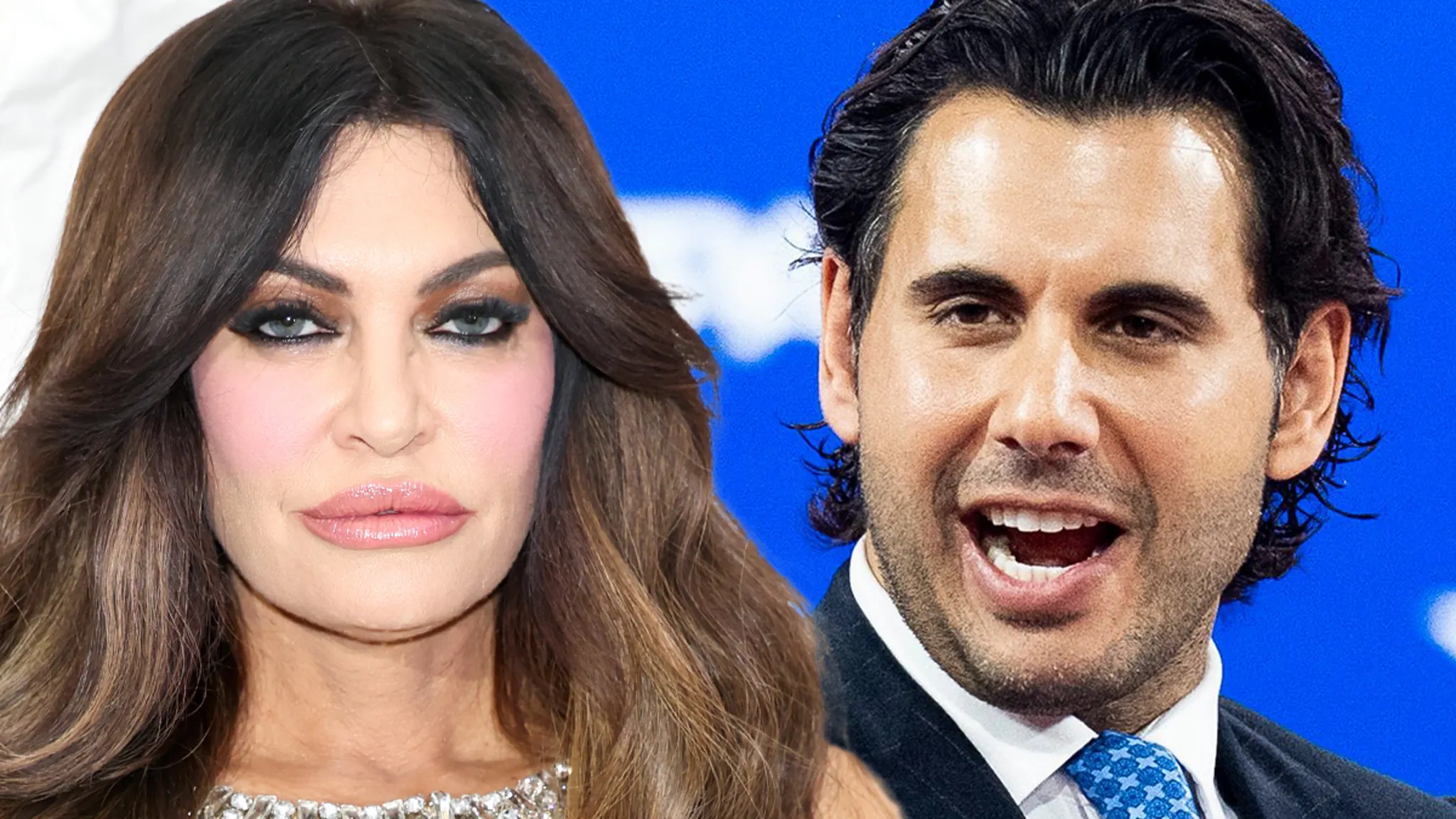
    U.S. Ambassador to Greece Kimberly Guilfoyle has been observed in the consistent company of Christos Marafatsos during official diplomatic functions, a development that has prompted discussion regarding the boundaries of formal representation. Marafatsos, a figure known within Greek business and social circles, has appeared alongside Guilfoyle at events where policy and bilateral relations are typically discussed by accredited diplomats and senior embassy staff. His recurring presence has moved beyond casual attendance, placing him in settings where sensitive conversations regarding U.S.-Greece strategic interests occur.

    Trump Connection and Lack of Official Portfolio

    The attention surrounding Marafatsos is amplified by his connection to former President Donald Trump. During a past interaction, Trump publicly referred to Marafatsos as a “good-looking guy”, a remark that underscores a personal familiarity extending into the political sphere. Despite this high-profile acknowledgment, Marafatsos does not hold an elected office, a Senate-confirmed appointment, or a designated role within the State Department or the U.S. Mission to Greece. He is not listed on the embassy’s official roster of officers, nor does he possess a diplomatic title such as Special Advisor, Counselor, or Attaché that would formally authorize his participation in government proceedings.

    Protocol Concerns and Precedent in Diplomatic Practice

    Diplomatic protocol generally restricts participation in official meetings to accredited personnel who have undergone security clearances, ethics training, and formal accreditation processes. The inclusion of a private citizen without a defined portfolio in such forums deviates from standard operating procedures designed to protect classified information, ensure accountability, and maintain the integrity of the chain of command. While ambassadors often employ personal aides or consultants, these individuals are typically brought on through official mechanisms—such as Schedule C appointments or personal services contracts—that subject them to financial disclosure rules and oversight. The absence of such a framework for Marafatsos creates a gray area regarding his access to privileged information and his influence on policy execution.

    Why This Matters

    The situation involving Ambassador Guilfoyle and Christos Marafatsos touches on broader themes of transparency and governance in diplomatic missions. The credibility of U.S. representation abroad relies on the clear distinction between official acts of state and private influence. When individuals without formal authority participate in high-level engagements, it can create confusion among foreign counterparts regarding who speaks for the United States government. This dynamic also invites scrutiny from congressional oversight committees and inspectors general tasked with ensuring that taxpayer-funded missions operate within established legal and ethical frameworks. As the administration continues to define its diplomatic priorities in the Eastern Mediterranean, the composition of the Ambassador’s inner circle will remain a point of interest for observers monitoring the professionalization of the Foreign Service.

    Frequently Asked Questions

    Who is Christos Marafatsos?
    Christos Marafatsos is a private citizen and Greek business figure who has been seen accompanying U.S. Ambassador Kimberly Guilfoyle at official diplomatic meetings in Greece. He is not a U.S. government employee, nor does he hold an elected or appointed position.
    What is his connection to Donald Trump?
    Former President Donald Trump once publicly referred to Marafatsos as a “good-looking guy”, indicating a personal acquaintance.
    Why is his presence at official meetings controversial?
    Because Marafatsos lacks a security clearance, diplomatic accreditation, or formal government role, his participation in official functions raises concerns about access to sensitive information, adherence to diplomatic protocol, and the potential for unofficial influence on U.S. foreign policy.
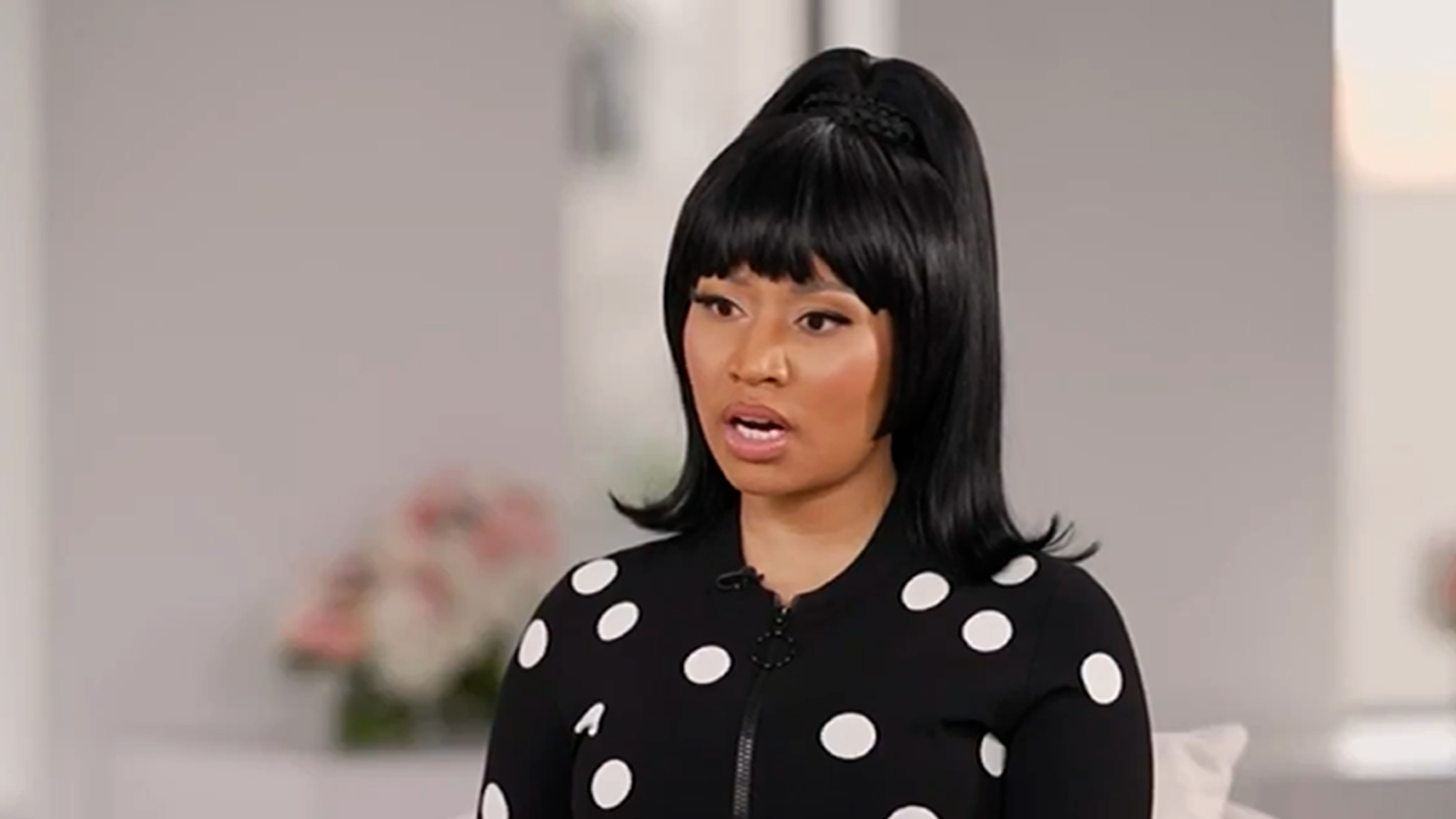
  • Nicki Minaj Slams Democrats for Being ‘Way Too Caught Up in Pop Culture’

    Nicki Minaj Slams Democrats for Being ‘Way Too Caught Up in Pop Culture’

    Key Highlights

    • Nicki Minaj criticizes the Democratic Party for blending politics with pop culture, labeling the approach “petty and childish.”
    • The rapper’s remarks come ahead of a scheduled interview with Lara Trump on Fox News Channel’s “My View With Lara Trump.”
    • The appearance signals Minaj’s continued engagement in political discourse ahead of the 2024 election cycle.

    Nicki Minaj Escalates Criticism of Democratic Party Ahead of Fox News Interview

    Grammy-nominated rapper Nicki Minaj has intensified her public commentary on American politics, accusing the Democratic Party of inappropriately merging political messaging with popular culture. In promotional clips released ahead of her sit-down with Lara Trump, the “Super Bass” artist characterized the party’s tactics as “petty and childish,” marking her latest foray into the intersection of entertainment and electoral politics.

    Rapper Targets Political Strategy in Entertainment Spaces

    Minaj’s criticism centers on what she perceives as the Democratic Party’s overreliance on celebrity endorsements and pop-culture activism to sway voters. The Trinidadian-born artist, whose legal name is Onika Tanya Maraj-Petty, has previously voiced skepticism about COVID-19 vaccine mandates and questioned mainstream media narratives, positions that have drawn both support and backlash across the political spectrum. Her latest remarks suggest a broader frustration with how political institutions engage with cultural figures.

    High-Profile Platform on Conservative Media

    The interview is slated to air on Fox News Channel as part of “My View With Lara Trump,” a program hosted by the former president’s daughter-in-law and former Republican National Committee co-chair. The booking places Minaj in direct conversation with a key figure in Donald Trump’s political operation, amplifying the potential reach of her comments among conservative audiences. Lara Trump has used the show to feature voices critical of the Biden administration and Democratic leadership.

    Why This Matters

    Nicki Minaj commands a massive global following, with over 200 million followers on Instagram alone, giving her significant influence over younger demographics that both major parties are fighting to mobilize. Her willingness to appear on explicitly partisan media underscores a shifting landscape where artists bypass traditional press to speak directly to niche audiences. For the Republican Party, securing a cultural icon of Minaj’s stature—even for a single interview—represents a symbolic win in the ongoing battle for cultural relevance. For Democrats, the criticism highlights vulnerabilities in their celebrity-driven outreach strategy, particularly among voters who view such efforts as inauthentic or coercive. With the 2024 general election approaching, expect more high-profile entertainers to leverage their platforms for explicit political messaging across partisan media ecosystems.

    Frequently Asked Questions

    What specific comments did Nicki Minaj make about the Democratic Party?

    Minaj said she is “tired of Democrats mixing politics and pop culture” and called the political party “petty and childish.”

    When and where will the interview air?

    The interview with Lara Trump is scheduled to air tonight on Fox News Channel’s program “My View With Lara Trump.”

    Has Nicki Minaj made political statements before?

    Yes. Minaj has previously drawn attention for questioning COVID-19 vaccine policies in 2021 and engaging in public debates about medical freedom, though she has not formally endorsed a presidential candidate.

  • Trump’s State Dinner Table Seats Billionaires Worth a Combined $1.13 Trillion

    Trump’s State Dinner Table Seats Billionaires Worth a Combined $1.13 Trillion

    Key Highlights

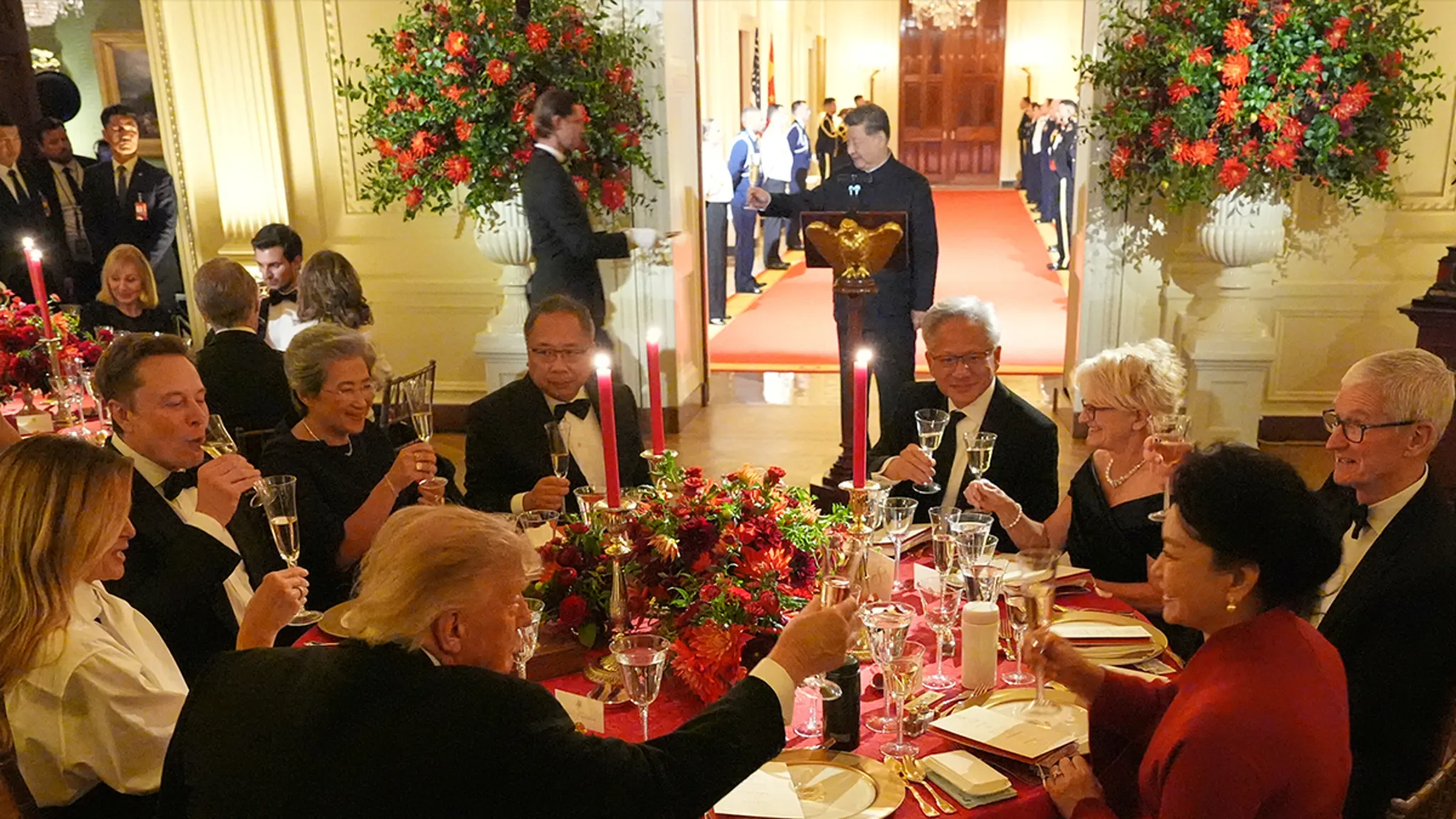
    • Billionaires with a combined net worth of nearly $1.13 trillion were seated at President Donald Trump’s table during a state dinner for Chinese President Xi Jinping.
    • The collective wealth of the guests at the table was reported to be roughly equivalent to the entire Gross Domestic Product (GDP) of Poland.
    • The seating arrangement placed ultra-high-net-worth individuals in direct proximity to the leaders of the world’s two largest economies.

    Trump State Dinner Seating Draws Attention to Concentration of Wealth

    The guest list for President Donald Trump’s table at the state dinner hosted for Chinese President Xi Jinping has highlighted the extraordinary concentration of wealth among the President’s inner circle. According to reports, the billionaires seated at the presidential table possessed a combined net worth approaching $1.13 trillion. This staggering figure places the collective financial power of those immediate guests on par with the total economic output of a major European nation, specifically matching the Gross Domestic Product of Poland.

    Historic Context of the US-China State Dinner

    The state dinner itself represented a high-stakes diplomatic engagement between the United States and China, the world’s two largest economies. Such events are traditionally used to solidify bilateral relations, negotiate trade frameworks, and project soft power. The decision to seat a cohort of billionaires—rather than solely cabinet secretaries, lawmakers, or traditional diplomats—at the President’s immediate table signaled a distinct approach to governance and diplomacy, prioritizing private sector leadership and personal financial success within the framework of official statecraft.

    Economic Scale of the Guest List

    The comparison of the attendees’ combined net worth to Poland’s GDP serves as a stark illustration of global wealth disparity. Poland, a significant European economy with a population of nearly 38 million, generates approximately $1.13 trillion in annual economic activity. The fact that a single dinner table could command an equivalent amount of static capital underscores the outsized influence wielded by a minuscule number of individuals in the modern global economy. This concentration of capital at the highest levels of political interaction raises questions regarding policy access, regulatory capture, and the intersection of private wealth with public diplomacy.

    Why This Matters

    The seating arrangement at the Trump-Xi state dinner offers a tangible data point in the ongoing debate regarding the role of oligarchic wealth in democratic governance. When the combined assets of a President’s dinner companions rival the GDP of a sovereign nation, it reframes the conversation around campaign finance, lobbying influence, and the composition of advisory circles. For international observers, particularly in Beijing, the presence of such immense private capital at the presidential table may have signaled a blurring of lines between state policy and corporate interest, potentially influencing perceptions of US negotiating positions on trade, technology transfer, and market access. This moment remains a reference point for analyses of plutocratic trends in 21st-century American politics.

    Frequently Asked Questions

    Who were the billionaires seated at President Trump’s table?

    The provided source text identifies the guests only as “billionaires whose combined net worth is nearly $1.13 trillion” and does not list their specific names.

    How does the combined net worth compare to Poland’s GDP?

    The source explicitly states the combined net worth of the guests—nearly $1.13 trillion—is “roughly the same amount as Poland’s entire GDP.”

    Was this a standard diplomatic seating arrangement?

    Standard state dinner protocol typically seats the visiting head of state next to the host head of state, with cabinet members, congressional leadership, and diplomats filling the immediate tables. Seating a group of private billionaires at the President’s personal table represents a significant departure from that tradition.

  • Jimmy Kimmel Roasts Trump’s Meeting With Xi Jinping

    Jimmy Kimmel Roasts Trump’s Meeting With Xi Jinping

    Key Highlights

    • Jimmy Kimmel compared Donald Trump’s hosting of Xi Jinping to a child showing off toys to a friend, mocking the president’s tendency to brag about White House renovations.
    • The late-night host highlighted Trump showcasing gold-painted walls, a half-built ballroom, and a new helipad during the Chinese leader’s visit.
    • Kimmel contrasted Trump’s focus on property features with pressing economic concerns like high gas prices, concluding “there really is nothing that guy will not brag about.”

    Kimmel Roasts Trump’s ‘Show-and-Tell’ Diplomacy With Xi Jinping

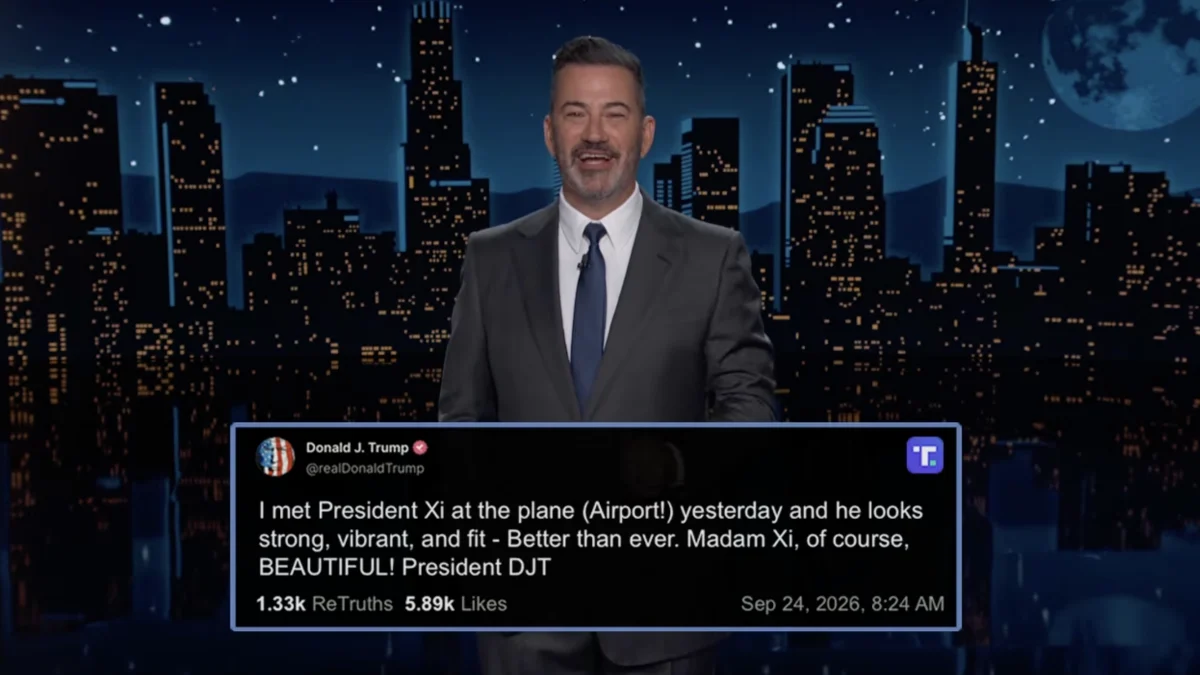
    Late-night television continued its tradition of satirizing presidential diplomacy when Jimmy Kimmel opened his Monday monologue with a scathing analogy comparing Donald Trump‘s recent White House meeting with Chinese President Xi Jinping to a nine-year-old’s playdate. The Jimmy Kimmel Live! host framed the high-stakes geopolitical encounter as a domestic display of one-upmanship, suggesting the U.S. president treated the Chinese leader less like a counterpart and more like a guest invited to admire home improvements.

    President’s Tour Focuses on Gold Walls, Ballroom, and Helipad

    According to Kimmel’s comedic reconstruction, the president’s itinerary for Xi centered on aesthetic upgrades rather than policy substance. “He dragged President Xi around the house showing him all the insane gold paint he put on the walls, he showed him his half-built ballroom, and he’s also very proud of his new helipad,” Kimmel told his studio audience. The host supported the bit by airing a clip of Trump speaking to reporters about the helipad, which the comedian presented as evidence of the president’s priorities. “There really is nothing that guy will not brag about,” Kimmel concluded, before delivering a punchline juxtaposing the helipad boast with consumer pain at the pump: “Guys, I know gas is $6 a gallon — look at how beautiful my helipad is.”

    Late-Night Tradition Targets Presidential Pageantry

    The segment fits a long-standing pattern in which late-night hosts use summits and state visits as fodder for character-driven comedy. Kimmel’s “playdate” metaphor reduces complex U.S.-China relations to a relatable suburban scenario, leveraging the universal experience of a child desperately displaying possessions to a new friend. By focusing on the physical attributes of the White House — gold paint, an unfinished ballroom, a helipad — the monologue shifts attention from diplomatic outcomes to the president’s personal brand of self-promotion, a recurring theme in Kimmel’s coverage of the Trump administration.

    Why This Matters

    While framed as entertainment, late-night monologues shape public perception of political figures and events, particularly among younger demographics who consume news through comedy clips on social platforms. Kimmel’s specific focus on the helipad and gold décor reinforces a narrative that the president prioritizes personal vanity projects and optics over substantive governance. The $6-per-gallon gas reference, whether hyperbolic or reflective of specific regional pricing at the time, taps into kitchen-table economic anxiety. As the 2024 election cycle intensifies, such segments contribute to the broader media environment that frames candidate attributes and presidential performance for millions of viewers who may not follow traditional political coverage.

    Frequently Asked Questions

    What specific White House features did Jimmy Kimmel say Trump showed off to Xi Jinping?
    Kimmel stated Trump showed Xi “insane gold paint he put on the walls,” a “half-built ballroom,” and a “new helipad.”
    What was the central analogy Jimmy Kimmel used to describe the Trump-Xi meeting?
    Kimmel compared the meeting to his nine-year-old son having a friend over for the first time and showing off “his Legos, his video games, his bunk beds, everything.”
    Did Kimmel reference any economic issues in his monologue?
    Yes, Kimmel concluded by saying, “Guys, I know gas is $6 a gallon — look at how beautiful my helipad is,” contrasting the helipad boast with high fuel costs.
  • President Trump Flinches During Military Flyover Beside Xi Jinping, Sparking Viral Meme

    President Trump Flinches During Military Flyover Beside Xi Jinping, Sparking Viral Meme

    Key Highlights

    • A viral video captured former U.S. President Donald Trump visibly flinching during a loud military jet flyover while standing next to Chinese President Xi Jinping at a Maryland summit on September 23, 2026.
    • The contrast between Trump’s reaction and Xi Jinping’s composed demeanor sparked widespread internet memes and social media commentary comparing the two leaders’ responses.
    • The moment became a cultural touchpoint for political satire, illustrating how spontaneous, unscripted moments at high-profile diplomatic events can instantly fuel global digital discourse.

    Viral Moment at Maryland Summit Captures Global Attention

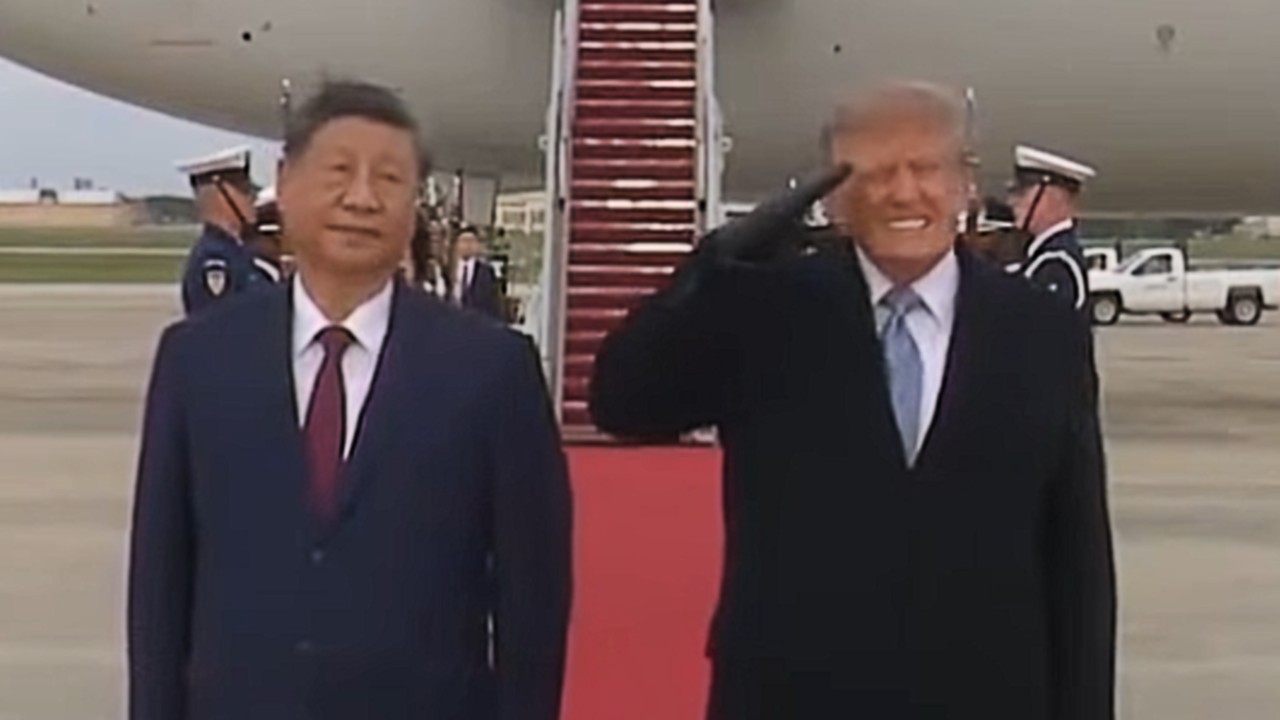
    A routine military flyover during a bilateral summit in Maryland on September 23, 2026, produced an unscripted moment that quickly transcended diplomatic protocol to become a defining internet meme. As jets roared overhead, video footage showed former President Donald Trump instinctively flinching and ducking slightly at the sudden noise, while Chinese President Xi Jinping remained visibly still and composed beside him. The split-second divergence in body language was captured by press pool cameras and disseminated across social media platforms within minutes, setting off a wave of remixes, caption contests, and comparative analysis.

    Anatomy of a Meme: From Footage to Cultural Commentary

    The clip’s virality stemmed less from the event itself—a standard ceremonial arrival or departure honor—and more from the perceived symbolism projected onto the leaders’ involuntary reactions. Editors on platforms such as X, TikTok, and Reddit isolated the two-second sequence, looping it alongside audio exaggerations, split-screen comparisons, and satirical captions framing the moment as a metaphor for contrasting leadership styles, geopolitical resolve, or simple physiological reflex. Know Your Meme documented the phenomenon under the entry “Trump Flinches Beside Xi Jinping,” cataloging hundreds of derivative works that ranged from lighthearted humor to pointed political caricature. The meme’s velocity underscored how modern digital ecosystems repurpose raw news footage into participatory cultural artifacts almost instantaneously.

    Diplomatic Stagecraft Meets Unfiltered Reality

    The summit itself was part of ongoing high-stakes engagement between Washington and Beijing, addressing trade, security, and climate cooperation. Such events are meticulously choreographed to project unity, strength, and controlled optics. The flyover, intended as a display of American military capability and ceremonial honor, instead introduced an uncontrolled variable: the human startle reflex. Trump’s reaction, while a normal physiological response to sudden loud noise, was weaponized by critics and meme creators alike as evidence of weakness or lack of composure. Conversely, Xi’s stillness was framed by some observers as calculated poise, though experts noted it could equally reflect anticipation, protocol adherence, or simply a different sensory threshold. The incident highlighted the fragility of staged diplomacy in an era where every micro-expression is recorded, amplified, and reinterpreted by a global audience.

    Why This Matters

    The “Trump Flinches” episode exemplifies a broader shift in political communication: unscripted, incidental moments now carry outsized weight in shaping public perception, often eclipsing the substantive policy outcomes of the summits where they occur. For strategists and leaders, it reinforces that no public appearance—no matter how routine—is immune from becoming viral content. For media literacy advocates, it serves as a case study in how context collapse on social platforms strips nuance from complex diplomatic interactions, reducing hours of negotiation to a single, looping gesture. As U.S.-China relations continue to define the geopolitical landscape, the ability of fleeting visual moments to drive narrative—sometimes detached from factual substance—remains a critical dynamic for policymakers, journalists, and the public to navigate.

    Frequently Asked Questions

    When and where did the viral video originate?

    The video was recorded on September 23, 2026, during a summit in Maryland, United States, where former President Donald Trump and Chinese President Xi Jinping were standing together for a military jet flyover.

    Why did the clip become a meme?

    The stark visual contrast between Trump’s visible flinch and Xi Jinping’s motionless composure was widely shared and remixed online, with users interpreting the moment as symbolic of differing leadership personas, fueling satire and political commentary across social media.

    Was the flyover an unusual event for a diplomatic summit?

    Military flyovers are a standard ceremonial honor for visiting heads of state at major U.S. summits, intended as a display of pageantry and military capability rather than a surprise or threat.

  • President Trump Flinches During Military Flyover With Xi Jinping, Sparking Viral Memes

    President Trump Flinches During Military Flyover With Xi Jinping, Sparking Viral Memes

    Key Highlights

    • A video captured U.S. President Donald Trump flinching during a military jet flyover while standing beside Chinese President Xi Jinping at a summit in Maryland on September 23, 2026.
    • The footage showed Xi Jinping remaining visibly composed during the loud aircraft passage, creating a sharp visual contrast that spread rapidly across social media platforms.
    • The moment spawned widespread internet memes and reactions comparing the two leaders’ physical responses to the sudden noise.

    Viral Summit Moment Captures Divergent Reactions

    A brief video clip recorded during a bilateral summit in Maryland on September 23, 2026, became the subject of intense online attention after it captured a split-second difference in how two world leaders reacted to a military flyover. The footage shows U.S. President Donald Trump and Chinese President Xi Jinping standing side by side on an outdoor platform when a formation of jets roared overhead. As the aircraft passed, producing a sudden, thunderous cacophony, Trump visibly flinched—his shoulders rising and head turning sharply toward the sound—while Xi Jinping stood motionless, his posture and expression unchanged.

    Social Media Amplifies Visual Contrast

    The clip circulated widely on platforms including X, TikTok, and Instagram within hours of the event. Users edited the footage into side-by-side comparisons, slow-motion replays, and captioned memes that highlighted the momentary divergence in body language. The imagery was framed variously as a metaphor for leadership styles, geopolitical posturing, or simply an involuntary human startle reflex. The volume of engagement propelled related hashtags into trending positions in multiple countries, extending the reach far beyond typical political commentary circles.

    Meme Culture Interprets Diplomatic Optics

    Internet culture quickly appropriated the seconds-long exchange, generating thousands of derivative works. Some creators paired the footage with dramatic music or sound effects; others inserted cartoonish annotations exaggerating the flinch. Commentary ranged from lighthearted jokes about noise sensitivity to partisan narratives assigning strategic meaning to the uncontrolled physical response. The phenomenon illustrated how modern diplomatic encounters are instantly mined for symbolic content, with micro-expressions and reflexive movements subjected to mass interpretation detached from their original context.

    Why This Matters

    The viral spread of the flyover moment underscores the degree to which leader optics are now dissected in real time by a global digital audience. Summit staging, once managed primarily through official press releases and curated photography, is increasingly subject to uncontrolled citizen recording and algorithmic amplification. A reflexive flinch—likely a routine acoustic startle response—becomes a durable visual artifact that can shape public perception of composure, resilience, or frailty. For communication strategists, the episode reinforces that every outdoor appearance carries the risk of unscripted moments being weaponized as political shorthand, regardless of the substantive outcomes of the diplomatic meetings themselves.

    Frequently Asked Questions

    When and where did the flyover incident occur?

    The video was recorded on September 23, 2026, during a summit meeting in Maryland, United States, where President Donald Trump and President Xi Jinping were standing together outdoors as military jets flew overhead.

    What exactly happened in the viral video?

    The footage shows President Trump flinching visibly—raising his shoulders and turning his head—when the jets passed loudly overhead, while President Xi Jinping remained still and did not display a similar startle reaction.

    Why did the clip become a widespread meme?

    The stark visual contrast between the two leaders’ instantaneous physical responses was rapidly edited, captioned, and shared across social media, where users interpreted the moment as symbolic of broader leadership narratives or simply as compelling short-form content.

  • Jimmy Kimmel Sums Up Trump TV in One Brutal Sentence

    Jimmy Kimmel Sums Up Trump TV in One Brutal Sentence

    Key Highlights

    • The White House launched a 24/7 “Trump TV” YouTube stream days after revoking press credentials for CNN, Politico, and MSNBC correspondents.
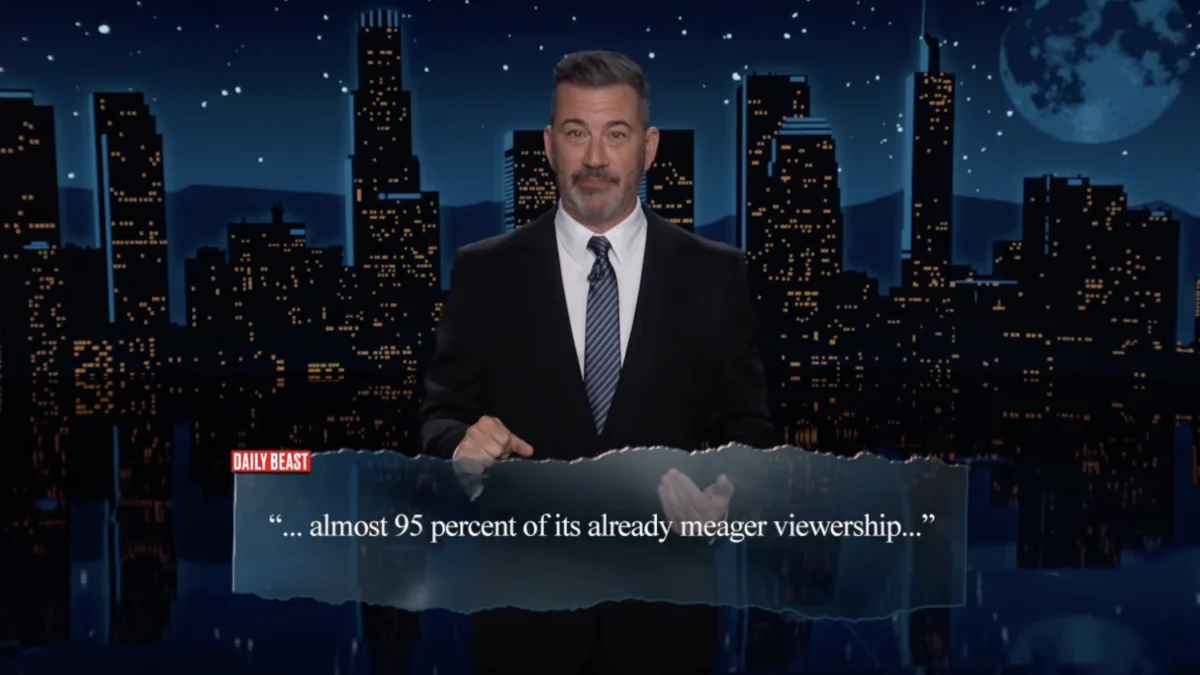
    • Jimmy Kimmel mocked the venture on his Wednesday monologue, noting viewership plummeted from a peak of roughly 8,500 on Monday night to under 500 by Wednesday morning.
    • Kimmel debuted a parody slate of fictional Trump-branded programming, including “The All-White Lotus” and “America’s Most Dangerous Windmills.”

    White House Debuts Proprietary Streaming Channel Amid Press Access Crackdown

    The Trump administration has rolled out a round-the-clock YouTube feed branded as “Trump TV,” a move that arrives less than a week after the White House stripped press passes from journalists representing CNN, Politico, and MSNBC. The stream, which features a loop of presidential remarks, campaign-style rallies, and supportive commentary, is positioned by the administration as a direct line to supporters bypassing traditional media gatekeepers. Critics, however, view the launch as an escalation in the ongoing confrontation between the executive branch and the institutional press corps.

    Kimmel Delivers Scathing Prime-Time Assessment

    On Wednesday’s edition of Jimmy Kimmel Live!, the host devoted a segment to the nascent channel, delivering a withering verdict on its early performance metrics. Kimmel told his studio audience, “So far it’s going about as well as everything else with Donald Trump’s name on it. It peaked with an audience of about 8,500 people on Monday night. By this morning they were down to fewer than 500 viewers. The only channel doing worse is the Strait of Hormuz.” The quip drew sustained laughter and underscored the late-night host’s longstanding satirical focus on the former president’s media ventures.

    Parody Lineup Imagines Expanded Trump Programming Universe

    Beyond the ratings analysis, Kimmel unveiled a faux promotional reel envisioning a full prime-time slate for the network. The satirical schedule featured titles such as The All-White Lotus—a play on the HBO anthology series—and America’s Most Dangerous Windmills, referencing Trump’s frequent rhetorical fixation on wind turbines. The bit framed the channel as a natural extension of Trump’s entertainment background, blending policy grievances with reality-television tropes.

    Why This Matters

    The launch of “Trump TV” signals a strategic shift toward owned-and-operated digital distribution, allowing the White House to control messaging without editorial interference. Coupled with the selective revocation of press credentials, the move raises questions about press freedom, government transparency, and the evolving relationship between political power and legacy media. For late-night comedy, the channel provides fresh material while highlighting the administration’s media strategy as a cultural flashpoint. Analysts will watch whether viewership stabilizes, grows, or continues its sharp decline, and whether other political figures adopt similar direct-to-consumer streaming models.

    Frequently Asked Questions

    What is “Trump TV” and when did it launch?
    “Trump TV” is a 24/7 YouTube livestream launched by the Trump administration days after revoking White House press credentials for CNN, Politico, and MSNBC journalists. It broadcasts presidential remarks, rallies, and supportive commentary.
    How many people are actually watching the stream?
    According to Jimmy Kimmel’s Wednesday monologue, the stream peaked at roughly 8,500 concurrent viewers on Monday night and had fallen to fewer than 500 by Wednesday morning.
    Why did the White House revoke credentials for those specific outlets?
    The source text does not specify the administration’s stated rationale for revoking credentials from CNN, Politico, and MSNBC, only that the action preceded the “Trump TV” launch.
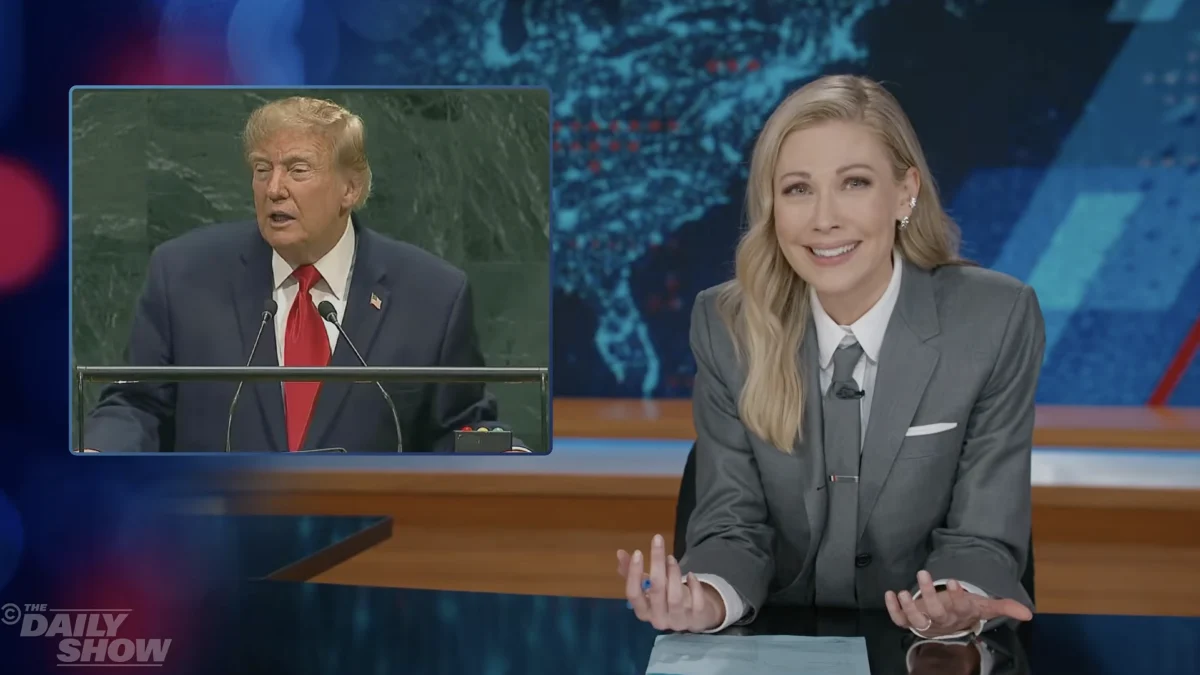
  • The Daily Show’s Desi Lydic Torches Trump on Superintelligence

    The Daily Show’s Desi Lydic Torches Trump on Superintelligence

    Key Highlights

    • Former Anthropic researcher Jacob Coxon warns AI “could kill us all by the end of the decade” as Donald Trump uses United Nations platform to rebrand artificial intelligence as “super intelligence dash SI.”
    • The Daily Show correspondent Desi Lydic dismantles Trump’s terminology, noting “SI” already stands for Sports Illustrated and mocking the president’s “weird obsession with rebranding things” on the world stage.
    • Lydic characterizes the UN moment as “the geopolitical version of your dad walking around in his underwear when your friends are over,” highlighting diplomatic embarrassment alongside semantic confusion.

    Trump Unveils ‘Super Intelligence’ Rebrand During UN Address

    President Donald Trump continued what The Daily Show senior correspondent Desi Lydic described as a “bizarre quest to rename artificial intelligence” during his Tuesday address to the United Nations General Assembly. Standing at the podium before world leaders, Trump declared, “Welcome to the new world of super intelligence dash SI,” explicitly voicing the punctuation mark “dash” as part of the proposed abbreviation. The moment immediately drew scrutiny for both its linguistic awkwardness and its collision with an existing global brand.

    Daily Show Dissects ‘Dash SI’ and Sports Illustrated Conflict

    On Tuesday night’s broadcast, Lydic opened her segment by referencing former Anthropic researcher Jacob Coxon‘s stark warning that AI “could kill us all by the end of the decade,” then pivoted to the president’s proposed solution: rebranding. “That’s a relief,” Lydic said. “Here, I was scared of artificial intelligence, but now I’d be honoured to be murdered by super intelligence. Problem solved.”

    Lydic zeroed in on the president’s delivery. “Did you just say ‘dash SI?’” she responded, replaying the clip. “Speaking of super intelligence, congrats on reading the punctuation on the prompter. Also, nobody’s gonna say ‘SI.’ That’s already what we call Sports Illustrated. It’s taken. You of all people should respect Sports Illustrated. The swimsuit issue is your favorite book.”

    Diplomatic Embarrassment and the ‘Geopolitical Version’ of Parental Mortification

    Beyond the trademark collision, Lydic framed the episode as a blow to American standing. “This is so embarrassing for America,” she said. “We’re all used to Trump’s weird obsession with rebranding things, but this is in front of the world. It’s the geopolitical version of your dad walking around in his underwear when your friends are over. Oh my god, Dad, Trinidad and Tobago can see your butt crack!”

    The segment underscored a pattern of presidential neologisms — from “covfefe” to the renaming of military bases and geographic features — but positioned the UN appearance as uniquely exposed because the audience comprised foreign heads of state rather than domestic rally-goers.

    Why This Matters

    The clash between existential AI risk warnings from industry insiders like Coxon and the administration’s focus on branding illustrates a widening gap between technical safety discourse and political messaging. As nations race to regulate advanced models, the U.S. president’s public vocabulary — including the voiced punctuation “dash SI” — becomes part of the diplomatic record, potentially complicating negotiations on AI governance frameworks at forums such as the UN’s own High-Level Advisory Body on Artificial Intelligence. Meanwhile, the Sports Illustrated trademark conflict, while trivial on its face, exemplifies the lack of inter-agency vetting that typically precedes presidential terminology rollouts.

    Frequently Asked Questions

    What exactly did Trump say at the United Nations?
    Trump stated: “Welcome to the new world of super intelligence dash SI,” pronouncing the word “dash” as part of the proposed acronym.
    Why did Desi Lydic reference Sports Illustrated?
    Lydic pointed out that “SI” is the long-standing abbreviation for Sports Illustrated, a brand Trump is known to favor, making the proposed AI rebrand both confusing and legally fraught.
    Who is Jacob Coxon and why is his warning relevant?
    Jacob Coxon is a former researcher at Anthropic, an AI safety-focused company. His statement that AI “could kill us all by the end of the decade” represents a growing chorus of technical experts warning of catastrophic risk, contrasting sharply with the administration’s rhetorical focus on renaming the technology.
  • Democrats ‘chose visceral hatred for’ Donald Trump Over crypto Clarity Act, Lummis Says

    Democrats ‘chose visceral hatred for’ Donald Trump Over crypto Clarity Act, Lummis Says

    Key Highlights

    • Senator Cynthia Lummis blamed Senate Democrats for blocking a procedural vote on bipartisan crypto market structure legislation last week, calling the outcome “dismayed, dumbfounded and saddened.”
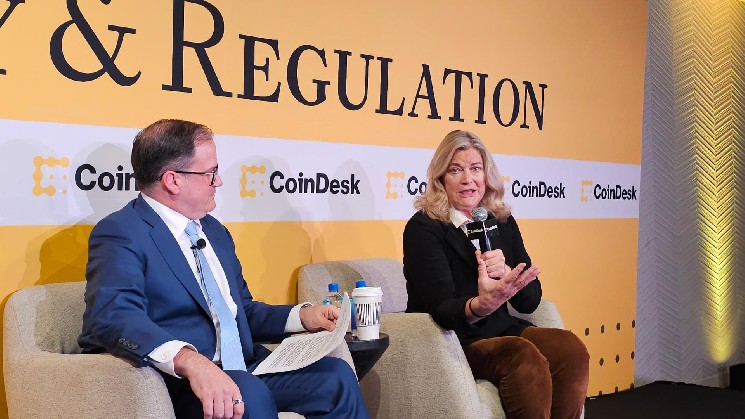
    • Speaking at CoinDesk’s Policy & Regulation event, Lummis alleged Democrats prioritized opposition to President Donald Trump over passing the bill, which had grown from 300 to over 600 pages after Democratic requests for provisions such as bankruptcy protections.
    • The legislation was the product of cross-party negotiations, but failed to advance before the midterm election cycle, leaving digital asset regulatory clarity in limbo.

    Lummis Points Finger at Democratic Opposition to Trump

    Senator Cynthia Lummis (R-Wyo.) delivered a sharp rebuke of her Democratic colleagues on Tuesday, arguing that partisan animosity toward President Donald Trump derailed a carefully negotiated crypto market structure bill that had achieved rare bipartisan consensus. Addressing attendees at CoinDesk’s Policy & Regulation event in Washington, D.C., Lummis said she was “dismayed, dumbfounded and saddened” that the Senate could not advance a key procedural vote on the measure last week.

    The Wyoming Republican framed the failure as a deliberate choice by Democrats to deny the incoming administration a legislative win ahead of the midterm elections. The problem was, as I see it, Democrats hate President [Donald] Trump more than they like good policy, and the way I see it is they chose their visceral hatred for President Trump and denied the opportunity to pass important policy legislation before a midterm, Lummis said. They chose that … pin it on the Democrats.

    Bill Expanded Significantly After Democratic Input

    Lummis emphasized that the legislation was not a partisan product but the result of extensive negotiations between members of both parties. She noted the bill had ballooned from roughly 300 pages to more than 600 after Democrats requested additional provisions addressing issues such as bankruptcy protections, among other items. Those concessions, she argued, demonstrated Republican willingness to accommodate Democratic priorities, only for the bill to stall at the procedural stage.

    The stalled measure represents the most comprehensive attempt to date to establish a clear regulatory framework for digital asset markets in the United States. Its failure to advance leaves critical questions unresolved regarding the classification of tokens, the roles of the SEC and CFTC, consumer protections, and the treatment of digital assets in bankruptcy proceedings — issues the expanded text had sought to address.

    Why This Matters

    The collapse of the bipartisan crypto market structure bill underscores how broader political dynamics — particularly the polarized response to President Trump — can override substantive policy agreement on emerging technologies. With the legislation now stalled, regulatory uncertainty continues to hamper the digital asset industry, driving activity offshore and complicating compliance for U.S.-based firms. The next opportunity for comprehensive crypto legislation will likely depend on the composition of the next Congress and whether either party chooses to revive the negotiated text or pursue a new approach. For now, the SEC and CFTC will continue to rely on existing enforcement authorities, and market participants will operate without the statutory clarity the bill was designed to provide.

    Frequently Asked Questions

    What specific provisions did Democrats request that expanded the bill?

    According to Senator Lummis, Democrats asked for provisions addressing bankruptcy protections, among other items, which caused the bill to grow from roughly 300 pages to over 600 pages.

    Was the crypto market structure bill a partisan or bipartisan effort?

    Lummis described the bill as a bipartisan product resulting from negotiations between members of both parties, though it ultimately failed to advance due to what she characterized as Democratic opposition to President Trump.

    What happens next for crypto regulation in the Senate?

    With the procedural vote blocked before the midterm elections, the legislation is effectively stalled. Future progress will depend on the next Congress’s composition and priorities, and whether lawmakers choose to revive this negotiated text or start anew.

  • Donald Trump’s Single Word Sparks 300% Altcoin Surge

    Donald Trump’s Single Word Sparks 300% Altcoin Surge

    Key Highlights

    • Solana-based memecoin Super Inu surged over 300% following President Donald Trump’s United Nations General Assembly remarks endorsing “super intelligence” for artificial intelligence.
    • The token’s market capitalization reached approximately $7.23 million post-surge, with reports indicating it is paired with tokenized NVIDIA shares via the Stonk platform.
    • No official connection exists between Super Inu and the U.S. government, Donald Trump, or the Trump family, underscoring the speculative volatility of low-cap memecoins.

    Trump’s UN Address Sparks Memecoin Frenzy

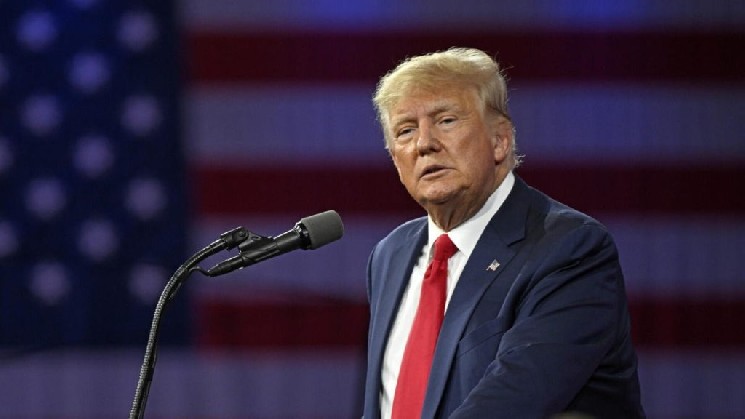
    During his address to the United Nations General Assembly, President Donald Trump declared that his administration would not restrict artificial intelligence but instead encourage “super intelligence”. The President further announced that the term “Super Intelligence” would be officially adopted for artificial intelligence in U.S. government documents. While the remarks centered on national technology policy, cryptocurrency markets reacted almost immediately, demonstrating the outsized influence political rhetoric can exert on speculative digital assets.

    Super Inu Token Surges 300% on Solana

    Within a short window following the President’s speech, Super Inu, a memecoin built on the Solana blockchain, experienced a price surge exceeding 300%. Market data indicates the token’s total market capitalization climbed to roughly $7.23 million at the peak of the rally. According to on-chain analysis and platform disclosures, Super Inu is allegedly paired with tokenized NVIDIA shares and was issued through the Stonk platform, a detail that adds a layer of synthetic asset exposure to the token’s structure.

    No Official Ties to Government or Trump Entity

    Despite the dramatic price action, the President’s UN address made no mention of the Super Inu token, cryptocurrency, or blockchain technology. There is no confirmed official link between the asset and the United States government, Donald Trump, or any member of the Trump family. The rally appears driven entirely by speculative narrative trading, where traders associate keywords from high-profile political speeches with similarly named tokens, regardless of fundamental connections.

    Low-Cap Memecoin Mechanics Amplify Risk

    The Super Inu episode illustrates the inherent mechanics of low-market-capitalization memecoins. Because liquidity pools are shallow, even relatively small buy orders can trigger exponential price increases. Conversely, the same structural fragility means that selling pressure can precipitate equally rapid and severe price collapses, often wiping out late-entry retail investors. Market observers caution that such assets function more as sentiment-driven lottery tickets than as investments tied to underlying utility or adoption.

    Why This Matters

    The Super Inu rally highlights a recurring pattern in cryptocurrency markets where political figures’ public statements—particularly those involving technology buzzwords—act as catalysts for ephemeral speculative bubbles. As the 2024 U.S. election cycle intensifies and AI policy remains a dominant theme, traders and automated bots increasingly scan speeches for trigger terms. This dynamic raises concerns about market manipulation, investor protection, and the broader reputation of the digital asset sector. Regulators and exchange operators may face renewed pressure to monitor or restrict tokens that appear to exploit political branding without authorization.

    Frequently Asked Questions

    Did Donald Trump endorse the Super Inu token?
    No. President Trump’s UN General Assembly speech referenced “super intelligence” as a government policy term for artificial intelligence and did not mention Super Inu, cryptocurrency, or any digital asset.
    What is the Stonk platform’s role in Super Inu?
    According to the source data, Super Inu was issued via the Stonk platform and is allegedly paired with tokenized NVIDIA shares, suggesting a synthetic asset structure rather than a standard memecoin launch.
    Is Super Inu a safe investment?
    The source explicitly states this is not investment advice and warns that low-market-cap memecoins can rise and fall extremely quickly due to thin liquidity, making them highly speculative and risky.