Tag: CryptoQuant

  • Global ETF Demand Could Drive Bitcoin’s Next Bull Cycle Peak

    Global ETF Demand Could Drive Bitcoin’s Next Bull Cycle Peak

    Bitcoin’s current bull-cycle peak could be driven by institutional capital and exchange-traded funds (ETFs) outside the United States, according to Ki Young Ju, founder and CEO of cryptocurrency market analytics platform CryptoQuant.

    Ju outlined the forecast in an Aug. 27 post on X, arguing that international market access could become a significant source of demand after U.S. products expanded regulated exposure to bitcoin.

    Ju stated:

    “The peak of this bull cycle will likely be driven by institutional money and ETFs outside the US.”

    South Korea Highlights Barriers to Bitcoin ETF Access

    Ju cited South Korea as an example of the restrictions that remain in international markets. The country does not have a spot bitcoin ETF, retail investors cannot purchase foreign-listed spot bitcoin ETFs, and most companies are still unable to open exchange accounts to buy $BTC.

    South Korea has begun allowing corporate participation in stages. A Financial Services Commission (FSC) roadmap includes a phase covering about 3,500 listed companies and qualified professional investors, while financial companies and other corporations remain outside the framework.

    Ju described widespread retail access as a possible signal that the market cycle is reaching its peak:

    “This cycle’s top might be when a banker at a regional bank in Korea recommends a spot bitcoin ETF to a granny for her savings.”

    The forecast shifts attention away from U.S. fund flows and toward markets where regulated bitcoin investment products are unavailable or have limited distribution. The U.S. Securities and Exchange Commission (SEC) approved spot bitcoin exchange-traded products in January 2024, enabling investors to gain exposure through conventional brokerage and investment accounts.

    Ju argues that similar access in other countries could broaden participation during the next phase of bitcoin’s cycle.

    Institutions Build Bitcoin and Tokenization Infrastructure

    Institutional adoption extends beyond direct bitcoin purchases and spot ETF holdings, although access and service offerings remain uneven. Strategy’s Bitcoin Banking Adoption Index assessed 25 major institutions across trading, custody, digital asset products, financing, and corporate participation.

    The index placed overall bank adoption at 32%, indicating substantial room for financial institutions to expand their digital asset capabilities.

    Tokenized real-world assets (RWAs) could provide another part of the financial infrastructure that Ju expects to support broader adoption. As of Aug. 29, RWA.xyz’s Global Market Overview reported $38.63 billion in distributed asset value, an increase of 2.65% over the previous 30 days.

    These products are part of the tokenized RWA market, which transfers claims on assets such as government securities and private credit to blockchain-based systems for issuance, settlement, and transfer.

    Stablecoin Liquidity Could Expand Market Access

    Deeper stablecoin markets could provide institutions with greater liquidity for trading, settlement, and cross-border transfers as regulated bitcoin access expands.

    The Bank for International Settlements (BIS) said stablecoins show potential for faster, programmable payments but warned that current designs can create financial integrity, liquidity, and monetary risks. The assessment underscores that expanding on-chain financial infrastructure does not remove regulatory or operational concerns.

    Bitcoin’s fixed supply limit and decentralized settlement remain distinct from the regulated funds and tokenized financial systems that give investors access to the asset. Wider ETF distribution could increase bitcoin access without changing the network’s underlying design.

    Ju expects both investment access and the infrastructure supporting it to expand beyond the U.S. market. His comments follow rapid adoption of U.S. bitcoin ETFs, with spot funds attracting about $57 billion in net inflows during their first two years.

    “So far this has been a US adoption story, but the next phase is global institutionalization with deeper stablecoin liquidity and RWA rails,” Ju noted, adding:

    “More institutions will hold $BTC as a strategic asset, and access will improve in the many countries that still lack ETFs.”

    The outlook centers on wider international ETF availability, increased institutional bitcoin holdings, and blockchain-based financial infrastructure as factors that could shape the cryptocurrency’s next stage of adoption.


  • 145 Billion SHIB Ready for Sale as Shiba Inu Netflow Turns Bearish

    145 Billion SHIB Ready for Sale as Shiba Inu Netflow Turns Bearish

    Shiba Inu Risks Falling Below the $0.000005 Price Level as Selling Pressure Builds

    Shiba Inu may be on track to lose the key $0.000005 price level as demand appears to weaken and exchange activity points to rising selling pressure.

    Recent data from crypto analytics platform CryptoQuant shows that Shiba Inu’s exchange activity is no longer signaling bullish momentum. The token’s exchange netflow has shifted, suggesting that more SHIB is moving onto exchanges than is being withdrawn.

    Shiba Inu Traders Begin Selling

    The data indicates that Shiba Inu traders may be selling part of their holdings to protect against potential losses after the recent price breakout helped them recover.

    According to the data, Shiba Inu’s exchange netflow had reached approximately 145,906,600,000 SHIB as of Saturday, August 29.

    Although this represents a bearish signal for the broader Shiba Inu ecosystem, it also shows that the volume of tokens transferred to exchanges for potential selling exceeds the volume moved out of exchanges by more than 145 billion SHIB.

    This suggests that momentum is fading, with traders showing less willingness to hold or accumulate additional tokens amid speculation that the coming month could be bearish.

    Shiba Inu Price Falls 4%

    As bearish momentum begins to affect the Shiba Inu ecosystem, SHIB has continued to post mixed price action in recent days.

    Shiba Inu has recently turned lower, increasing the risk of a move back below the key $0.000005 level. The token has recorded daily declines of approximately 3% in recent sessions.

  • Coinbase, Binance Whales Set XRP Profit Targets at $15, $32 as Bull Rally Resumes

    Coinbase, Binance Whales Set XRP Profit Targets at $15, $32 as Bull Rally Resumes

    XRP Faces Major Whale Sell Walls at $15 and $32 as Price Attempts Recovery

    XRP is encountering significant long-term selling pressure as whales on Binance and Coinbase maintain large sell walls at the $15 and $32 price levels. The order-book liquidity appears as the token attempts to resume its rally following a recent pullback.

    Binance and Coinbase Whales Stack Sell Orders

    According to CryptoQuant author CW, Binance whales previously established a sell wall extending to $15, and that liquidity remains in place. Meanwhile, Coinbase whales have created new sell walls reaching as high as $32 this month. CW emphasized the current dynamic in the order books.

    “Currently, it is Coinbase whales that are blocking the rise,” CW said, adding that the group has been forming multiple sell walls.

    These sell walls represent clustered limit-sell liquidity rather than firm price targets or guarantees that XRP will reach those levels. Analyst ChartNerd cautioned that order-book liquidity is transient because traders can cancel or move their orders at any time. While large sell walls can act as supply ceilings, they do not necessarily signal an impending rally.

    XRP Price Action: Pullback and Rebound

    The whale activity coincides with XRP’s attempt to recover from a correction after last week’s rally. The token climbed to $1.70 before declining 19.18% over the following days to reach $1.3632. At press time, XRP has rebounded to approximately $1.45, marking its intraday high. The recovery aligns with broader crypto market strength as Bitcoin reclaimed the $80,000 level, reviving bullish sentiment.

    Key Technical Levels: Support and Resistance

    ChartNerd identified $1.36 as key four-hour support. Immediate resistance sits between $1.51 and $1.55. A successful breakout above that zone opens the path toward $1.80 and $1.94. Conversely, rejection would likely send XRP back toward the $1.36 support area.

    $1.54: The Critical Battleground

    The analyst highlighted a confluence between XRP’s lower-timeframe resistance and the weekly 50 EMA (Exponential Moving Average) around $1.54. He stated that a close above this moving average remains the “main objective” for a continuation higher, as failure to reclaim it could signal renewed weakness.

    In a subsequent update, ChartNerd summarized the setup on X (formerly Twitter):

    Long story short..
    You’ve heard it enough times..
    Until $1.54 is reclaimed..$XRP’s upside move is under pressure
    — 🇬🇧 ChartNerd 📊 (@ChartNerdTA) August 27, 2026

    This makes the $1.51–$1.55 region a near-term battleground. A move above it could strengthen the bullish case and put the $1.70 high back within reach.

    Whale Accumulation Offsets Sell-Wall Pressure

    Adding a bullish counter-narrative, CryptoQuant author Darkfost reported that whales withdrew more than 231 million XRP from Binance in a single day, worth over $335 million at the time. The outflows represented a sharp increase from the 90-day average of $40 million and marked the highest level of whale withdrawals from Binance in six months.

    Such movements reduce the immediately tradable supply on exchanges, which typically supports a price rally. With whales accumulating XRP off-exchange while major holders maintain large sell walls at higher prices, the market awaits a decisive move.

    Whether XRP can overcome the $1.54 resistance and resume its advance remains the central question for traders in the coming sessions.

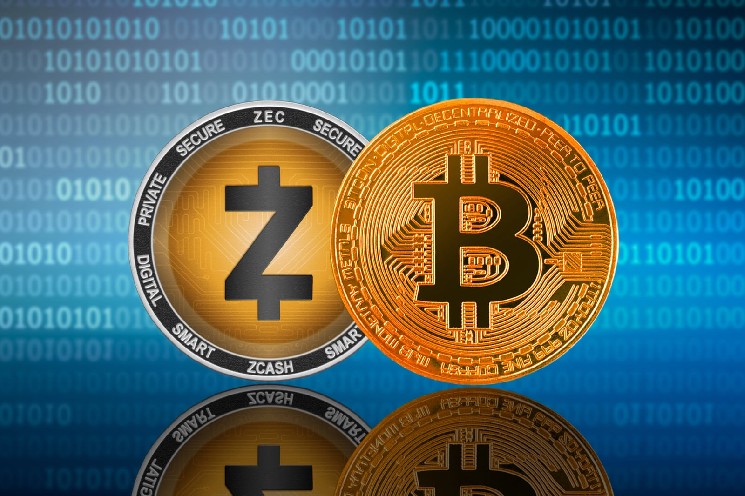
  • Zcash (ZEC) Price Rise Is a Red Flag for Bitcoin (BTC), Warns CryptoQuant Analyst

    Zcash (ZEC) Price Rise Is a Red Flag for Bitcoin (BTC), Warns CryptoQuant Analyst

    The rapid ascent of the privacy-centric cryptocurrency Zcash (ZEC) is raising alarms among on-chain analysts, who view the sudden rally as a significant warning sign for Bitcoin (BTC). While spot exchange-traded funds (ETFs) recently drew retail capital into the digital asset space, researchers have flagged critical signs of overheating in the cryptocurrency derivatives market.

    Historical market cycles point to a troubling trend: unusual surges in Zcash during periods when the leading cryptocurrency is consolidating have often served as a reliable leading indicator of an impending market-wide correction. According to recent data from CryptoQuant, the Zcash risk metric has climbed into extreme territory, flashing a clear warning signal for Bitcoin investors. This altcoin rally is unfolding while Bitcoin remains bound within a trading range of $60,000 to $80,000, struggling to break out past its previous highs.

    Analyst Warnings and Historical Patterns

    CryptoQuant analyst Maartun highlighted the suddenness of the move, pointing out that the privacy coin “just ripped 70% in a matter of days,” which has left him “more worried about Bitcoin than excited about Zcash” given the current structure of the market. According to the analyst, this exact technical signal has historically occurred right before major pullbacks in the market’s leading asset.

    Derivative Market Overheating and Volume Drop

    Technical data from CoinGlass supports these warnings of local overheating. Over a 24-hour window, Zcash trading volumes dropped significantly, with spot trading volume falling by 24.97% and derivatives volume shrinking by 24.16%. This suggests that the initial institutional excitement surrounding Zcash ETF developments has already been priced in, driving a price correction down to $779.38.

    Additionally, short-term activity in the futures market shows sharp divergence. In the four-hour timeframe, futures selling escalated rapidly, jumping by 101.68%. At the same time, leveraged trading remains highly elevated, with $1.53 billion in borrowed capital locked in Zcash margin positions. This leverage represents over 11% of the asset’s total market capitalization, which currently stands at $13.13 billion.

    Critical Views and Liquidation Risks

    The debate surrounding this rally is further intensified by commentary from Alex Thorn, the head of research at Galaxy Digital. Thorn voiced strong skepticism about the long-term viability and utility of the ecosystem. He criticized traders who chose to “pump ZEC because it’s ‘private bitcoin’” and went on to explain that account-based blockchains are “privacy nightmares” by design, arguing that they are “substantially less private than UTXO-based chains like bitcoin.”

    If the high concentration of leveraged positions—represented by the $1.53 billion futures overhang—begins to trigger forced liquidations, it could set off a domino effect across major crypto derivatives exchanges. Because Bitcoin is currently experiencing a lack of strong buying momentum within its current consolidation range, sudden panic in the derivatives space coupled with a broad liquidity drain could serve as the catalyst for a deeper market-wide correction, forcing investors to quickly transition into a risk-off posture.