Category: Coins

Digital assets, cryptocurrencies, blockchain, and currency news.

  • Spaces Launches Trust Anchor to Verify Bitcoin Identities Without a Central Resolver

    Spaces Launches Trust Anchor to Verify Bitcoin Identities Without a Central Resolver

    Key Highlights

    • Spaces launches Trust Anchor, enabling Bitcoin-native verification of human-readable identities like alice@bitcoin without central resolvers.
    • Version 0.4.2 activates off-chain issuance on mainnet with @bitcoin as first operator; handles cost a flat $25 and are irrevocable once issued.
    • Protocol differs from BIP-353, NIP-05, and ENS by anchoring name and key directly to Bitcoin, allowing holder-controlled certificates verifiable by anyone.

    Spaces Unveils Trust Anchor to Solve Bitcoin Identity Verification Without Central Authorities

    Spaces has released Trust Anchor, a new tool designed to let applications confirm human-readable identities—such as alice@bitcoin—directly through the Bitcoin network instead of relying on a central resolver. The launch, also reported by Bitcoin News, addresses a decades-old challenge in the cryptocurrency industry: how to simplify address usage without requiring users to trust a company server to determine who truly owns an address. By associating both payments and identity with Bitcoin, Trust Anchor aims to remove the intermediary trust assumptions that have plagued previous naming systems.

    How Trust Anchor and the Trust ID Work

    According to Spaces documentation, a single number called the Trust ID represents the Trust Anchor. When users scan or paste the Trust ID, compatible software can validate the state of the Spaces protocol using data obtained directly from the Bitcoin network. The generated anchor set is then transformed into the Trust ID. Spaces notes that a Trust ID remains valid for 14 days; users typically need to rescan only when adding new contacts or when a contact rotates a key.

    To obtain a Trust ID, running a full Bitcoin node is not required. Spaces recommends Veritas, a macOS menu-bar application that acts as a local certificate authority anchored to Bitcoin. Veritas can sync via a checkpoint, validate Bitcoin’s header chain, and generate the Trust ID locally. For users of the Spaces client with Bitcoin Core, the space-cli trust command provides an alternative method to produce the Trust ID as a QR code along with the linked Bitcoin block. Veritas currently supports only macOS, while Windows and Linux users are directed to the Spaces client.

    Mainnet Launch Activates Off-Chain Issuance with @bitcoin as First Operator

    Irrevocable Handles at a Flat $25 Fee

    On September 16, Spaces shipped version 0.4.2, bringing its off-chain issuance system to mainnet with @bitcoin serving as the first production operator. According to the mainnet announcement, handles can be acquired via Nacho on iOS, Android, or the web. Each handle links a readable name to the script pubkey of a Binary Merkle Trie. The operator periodically commits the trie root to Bitcoin via a 32-byte hash, after which the holder receives an off-chain certificate proving both inclusion and prior non-existence.

    Spaces emphasizes that there are no possibilities of later revoking, rerouting, or recovering a handle after it has been issued. The cost for @bitcoin handles is a flat $25 under a first-come, first-served distribution model. Technical details of the process are available in the project’s protocol paper.

    Contrasting Trust Roots: Spaces vs. BIP-353, NIP-05, and ENS

    The architecture differs fundamentally from existing approaches. BIP-353, authored by Matt Corallo and Bastien Teinturier, publishes Bitcoin payment details via DNS TXT records and relies on DNSSEC for verification. NIP-05 similarly uses internet domains, extracting identity information from the domain’s /.well-known/nostr.json file. Spaces, by contrast, links both the name and the private key directly to Bitcoin, enabling the holder to obtain a certificate verifiable by anyone without referencing the original certificate issuers.

    $ENS employs yet another model: its registry is built on Ethereum smart contracts. A March 2026 post by $ENS stated there are approximately 1.6 million registered domains and 30 million subnames across over one hundred different chains. Even if names become inactive due to non-renewal, active .eth registrations cannot simply be cancelled.

    Why This Matters: Adoption Hurdles and Market Context

    The significance of the Trust Anchor release extends beyond Bitcoin price movements—it targets the infrastructure layer that could make crypto applications more usable. Earlier this year, Cryptopolitan reported that Tether’s self-custodial wallet introduced human-readable identifiers for transactions, reducing reliance on copying lengthy addresses. However, history offers a cautionary tale: a Princeton study of Namecoin found that only 28 out of nearly 120,000 registered names had not been squatted and contained unique content, with little evidence of a viable secondary market for names.

    This underscores the challenge Spaces faces: a well-designed protocol alone does not guarantee adoption. Readable identities become useful only when wallets, applications, and users embrace them. Market conditions add another layer of uncertainty. TRM Labs estimated that global retail crypto trading volume in the first quarter of 2026 was $979 billion, an 11% decline year-over-year. Meanwhile, Coinbase Research suggests that open payment standards and agentic commerce could create more stable demand for on-chain transactions. The existence of verifiable, readable identities supports that premise, but the success of Spaces will depend less on the cleverness of its naming scheme than on the breadth of wallet and application integration.

    Frequently Asked Questions

    What is a Trust ID and how long is it valid?

    A Trust ID is a single number representing the Trust Anchor. It can be scanned or pasted into compatible software to validate the Spaces protocol state using Bitcoin network data. According to Spaces, a Trust ID is valid for 14 days and typically needs rescanning only when adding new contacts or when a contact rotates a key.

    How does Spaces differ from BIP-353, NIP-05, and ENS?

    Spaces anchors both the human-readable name and the private key directly to Bitcoin, allowing holders to obtain certificates verifiable by anyone without referencing the original issuer. BIP-353 uses DNS TXT records with DNSSEC validation. NIP-05 relies on domain-based /.well-known/nostr.json files. ENS operates via Ethereum smart contracts across 100+ chains with a renewal-based model.

    What are the costs and permanence guarantees for @bitcoin handles?

    @bitcoin handles cost a flat $25 on a first-come, first-served basis. Once issued, handles cannot be revoked, rerouted, or recovered—ownership is permanent and irrevocable according to Spaces.


  • Binance faces U.S. probe over Iran sanctions

    Binance faces U.S. probe over Iran sanctions

    Key Highlights

    • U.S. federal prosecutors in Manhattan are investigating whether Binance knowingly allowed trading that violated Iran sanctions, nearly three years after the exchange’s $4.3 billion settlement with the Justice Department.
    • A separate civil forfeiture complaint filed September 14 seeks approximately $61 million in USDT held in 10 cryptocurrency addresses, alleging the funds represent proceeds from Iranian crude oil sales intended to finance the Islamic Revolutionary Guard Corps.
    • Binance maintains it offboarded the implicated firms Hexa Whale and Blessed Trust in 2025 and 2026 respectively, and says its internal review found approximately $126.1 million eventually reached Iran-linked wallets after multiple blockchain hops.

    Manhattan Prosecutors Open New Iran Sanctions Inquiry Into Binance

    U.S. federal prosecutors have launched a fresh investigation into whether Binance, the world’s largest cryptocurrency exchange, knowingly permitted trading activity that violated U.S. sanctions on Iran. According to a September 22 Bloomberg report, the Manhattan U.S. Attorney’s Office is leading the inquiry with participation from the Justice Department’s Criminal Division in Washington. The investigation focuses on Binance’s compliance controls and whether the exchange was aware of the specific transactions under review. Reuters noted it had not independently verified Bloomberg’s account.

    Binance responded to the reporting by reiterating its compliance posture. The exchange said, “We fully cooperate with law enforcement, and we remain committed to rooting out and shutting down bad actors.” The Justice Department declined to comment to Reuters, while the Manhattan U.S. Attorney’s Office was not immediately available for comment outside normal business hours.

    Civil Forfeiture Complaint Details $61 Million in Alleged Iranian Oil Proceeds

    Running parallel to the reported criminal inquiry, a verified civil forfeiture complaint filed September 14 in the Southern District of New York provides public documentation of Iran-linked funds moving through Binance accounts. The case, United States v. All USD Tether Held in the Following Cryptocurrency Addresses, No. 1:26-cv-08010, seeks all USDT held in 10 cryptocurrency addresses operating on the TRON network, valued at approximately $61 million.

    Prosecutors allege the targeted cryptocurrency represents proceeds from black-market Iranian crude oil and petroleum sales intended to finance Iranian government and military bodies, including the Islamic Revolutionary Guard Corps (IRGC). The complaint identifies two Chinese companies, Blessed Trust and Hexa Whale, as having used Binance trading accounts while handling proceeds connected with Iranian oil sales. According to the filing, a network of cryptocurrency actors laundered more than $1.5 billion in illicit oil proceeds, while Blessed Trust and Hexa Whale used the U.S. financial system to send or receive tens of millions of dollars.

    The forfeiture complaint does not accuse Binance itself of wrongdoing in that proceeding. The Justice Department states that a civil forfeiture complaint contains allegations that remain unproven until a court enters judgment for the government. Court records indicate Tether would burn the tokens covered by a seizure warrant and issue replacement tokens of equal value for transfer into U.S. government custody.

    Binance Details Offboarding Timeline for Implicated Firms

    Binance has provided its own timeline regarding the two firms named in the forfeiture complaint. In a March 6 response to a Senate inquiry, the exchange said law enforcement contacted it in April 2025 about transactions between Binance wallets and outside addresses with possible terrorism-financing connections. The company said it supplied know-your-customer and transaction records connected with Hexa Whale in June 2025 and continued reviewing the account afterward.

    Binance said it removed Hexa Whale from Binance.com on August 13, 2025. A separate set of law-enforcement requests concerning transactions involving other outside wallets arrived during summer 2025, according to the exchange. Investigators then performed a source-of-funds review and offboarded Blessed Trust in January 2026.

    The exchange maintains that, to its knowledge, no Binance account transacted directly with an Iran-based entity. In another March statement, Binance said its investigation found approximately $126.1 million eventually reached wallets linked to Iran after multiple blockchain hops, with as much as $24.1 million reaching IRGC-related wallets. The figures are Binance’s account of its internal review and have not been presented by the company as findings of a court.

    Congressional Scrutiny Preceded Current Investigation

    Scrutiny of Binance’s Iran-related controls surfaced months before the Bloomberg report. In March, Senators Elizabeth Warren, Chris Van Hollen, and Ruben Gallego planned congressional oversight of a reported Justice Department investigation involving Iran-linked transactions. At the time, the inquiry was described as examining whether networks connected to Iran used Binance to evade U.S. sanctions.

    Binance disputed claims made in several February reports. In its March congressional response, the company described parts of the reporting as “demonstrably false, unsupported by credible evidence, and defamatory in several material respects.” Binance said its know-your-customer rules prohibit users residing or located in Iran from accessing Binance.com.

    The exchange also defended its compliance staffing and monitoring data. Binance says more than 1,500 people work in compliance-related functions, representing roughly 25% of its global workforce. It reported processing more than 71,000 law-enforcement requests during 2025 and claimed exposure to four major Iranian crypto exchanges fell 97.3%, from $4.19 million to $110,000 over two years. Binance said claims that it fired compliance employees for escalating concerns were false, acknowledging that one employee was dismissed after an internal investigation over what the company described as an unauthorized disclosure of user information, while other compliance workers left voluntarily.

    Investigation Follows Landmark 2023 Criminal Settlement

    The current scrutiny follows Binance’s November 2023 criminal resolution with U.S. authorities. The exchange pleaded guilty to offenses involving the Bank Secrecy Act, operating an unregistered money-transmitting business, and violating the International Emergency Economic Powers Act. Binance agreed to a total criminal financial penalty of $4.316 billion.

    In that case, the Justice Department said Binance knowingly failed to install controls that would stop U.S. customers from trading with users in sanctioned jurisdictions. Federal prosecutors said Binance caused more than $898 million in trades between U.S. users and users ordinarily resident in Iran from January 2018 through May 2022.

    The settlement required Binance to retain an independent compliance monitor for three years and improve its anti-money-laundering and sanctions systems. Separate coordinated resolutions involved FinCEN, the Treasury Department’s Office of Foreign Assets Control, and the Commodity Futures Trading Commission. Treasury-related oversight gave authorities access to Binance books, records, and systems under separate monitoring obligations, while Iran-linked transaction reports prompted renewed questions about compliance.

    Why This Matters

    The reported investigation represents a critical test of whether Binance’s post-settlement compliance reforms are functioning as required under its 2023 plea agreement. The exchange’s admission to processing nearly $898 million in Iran-linked trades between 2018 and 2022 established a pattern of sanctions violations that resulted in one of the largest corporate penalties in U.S. history. The new Manhattan inquiry, combined with the civil forfeiture action targeting $61 million in alleged Iranian oil proceeds, suggests prosecutors are examining whether the exchange’s enhanced controls — including the independent monitor and expanded compliance staff — are effectively preventing sanctioned entities from accessing the platform. For the broader cryptocurrency industry, the case underscores the persistent challenge of enforcing sanctions compliance on decentralized networks where transactions can be obscured through multiple blockchain hops and intermediary wallets.

    Frequently Asked Questions

    What specific sanctions is Binance accused of violating?

    The investigation centers on U.S. sanctions on Iran, specifically whether Binance knowingly allowed trading that should have been stopped under the International Emergency Economic Powers Act and related sanctions programs administered by the Treasury Department’s Office of Foreign Assets Control (OFAC).

    Does the civil forfeiture complaint charge Binance with a crime?

    No. The September 14 forfeiture complaint targets the cryptocurrency held in 10 specific wallet addresses, not Binance itself. The Justice Department states the allegations in the complaint remain unproven until a court enters judgment for the government.

    What was the outcome of Binance’s 2023 settlement with U.S. authorities?

    Binance pleaded guilty to Bank Secrecy Act violations, operating an unregistered money-transmitting business, and violating the International Emergency Economic Powers Act. The exchange agreed to a $4.316 billion criminal penalty, retention of an independent compliance monitor for three years, and enhancements to its anti-money-laundering and sanctions compliance systems.

  • Ethereum Investors Withdraw ETH From Binance at Fastest Pace in 3 Years

    Ethereum Investors Withdraw ETH From Binance at Fastest Pace in 3 Years

    Key Highlights

    • Ethereum surges 6% to trade above $2,700, marking an 80% gain from $1,510 over three months as on-chain data signals strong accumulation.
    • Binance ETH withdrawal transactions hit a three-year high with a monthly average exceeding 90,000—double January levels—suggesting investors are moving assets to private custody for long-term holding.
    • U.S. spot Ethereum ETFs recorded $263.3 million in net outflows during a volatile midweek, erasing early and late-week inflows and pushing August net inflows below $190 million.

    Ethereum Price Surge and Accumulation Signals

    Ethereum climbed steadily on Monday, rising 6% over the past 24 hours to trade above $2,700 at press time. The leading altcoin has now rocketed by 80% from $1,510 in just three months, a rally that has fundamentally altered the asset’s market structure. According to data from CryptoQuant, Ethereum has moved above April’s high, demonstrating stronger momentum than Bitcoin, which has struggled to hold firmly above its May high.

    Binance Withdrawal Data Points to Strong Accumulation

    One of the most significant signals is emerging from Binance, where the monthly average of ETH withdrawal transactions has now crossed 90,000. CryptoQuant observed that this represents the highest level seen in three years and is approximately twice the level recorded at the start of the year. The rise in withdrawals can be a sign of increased accumulation, with investors appearing to move ETH away from exchanges and into private wallets or custody solutions—a behavior that often reflects a longer-term holding strategy.

    CryptoQuant found that the trend has been “fairly sudden” and significant. The data also suggests that Ethereum’s accumulation is currently stronger than Bitcoin’s. If the withdrawals continue, they could remain an important signal for ETH’s market direction in the months ahead.

    Technical Analysis: Bullish Structure and Key Levels

    Analyst Crypto Patel noted that Ethereum’s higher-timeframe structure has flipped bullish, showing a clear change of character on the chart. The move followed strong buying from the $2,300 demand area. ETH has also reclaimed the $2,483 to $2,584 fair value gap, making this zone important for the next price reaction.

    According to the analysis, the next upside area sits between $2,715 and $2,900, where additional liquidity could attract buyers. A larger resistance zone is located between $3,070 and $3,404. The $2,300 level remains a crucial structural support, while $1,647 to $1,744 could become relevant if the current structure breaks down. Crypto Patel added that the bullish setup remains valid as long as ETH holds $2,360.

    ETF Flows: Midweek Selling Pressure

    U.S.-based Ethereum ETFs endured a rough week as heavy midweek selling wiped out gains from the start and end of the week. The funds saw $141.4 million in outflows on Tuesday, followed by another $224.1 million on Wednesday and $39.2 million on Thursday. Monday and Friday offered some relief, attracting $121 million and $143.8 million respectively. Despite these inflows, they were not enough to reverse the damage. The weak stretch has now pulled August’s ETF inflows below $190 million.

    Why This Matters

    The divergence between on-chain accumulation signals and ETF flow volatility highlights a complex market dynamic. While exchange withdrawal data suggests conviction among long-term holders—often a bullish precursor—ETF flows reflect shorter-term institutional sentiment that remains sensitive to macroeconomic headlines and risk appetite. The $2,300–$2,360 support zone now serves as a critical line in the sand; a defense here could validate the bullish structure change and open the path toward the $3,000+ resistance cluster, while a breakdown would shift focus to the $1,647–$1,744 demand area. Market participants should monitor whether Binance withdrawal momentum sustains, as continued custody migration would reinforce the accumulation thesis regardless of near-term ETF turbulence.

    Frequently Asked Questions

    What is driving Ethereum’s recent price increase above $2,700?

    Ethereum’s 6% daily gain and 80% three-month rally are supported by strong on-chain accumulation signals, particularly a three-year high in Binance withdrawal transactions averaging over 90,000 per month. This suggests investors are moving ETH into private custody for long-term holding, a behavior historically associated with bullish momentum.

    Why did U.S. Ethereum ETFs see heavy outflows midweek despite the price rally?

    U.S. spot Ethereum ETFs recorded $263.3 million in net outflows from Tuesday through Thursday, erasing Monday and Friday inflows of $121 million and $143.8 million respectively. This reflects short-term institutional profit-taking or risk reduction amid broader market volatility, contrasting with the longer-term accumulation trend visible in on-chain data.

    What are the key technical levels to watch for Ethereum’s next move?

    Immediate resistance lies between $2,715 and $2,900, with major resistance at $3,070–$3,404. The bullish structure holds as long as ETH maintains $2,360, with $2,300 as critical structural support. A breakdown would bring the $1,647–$1,744 zone into focus as potential downside target.

  • BitMine Adds 27,562 ETH as Treasury Tops $17 Billion

    BitMine Adds 27,562 ETH as Treasury Tops $17 Billion

    Key Highlights

    • BitMine Immersion Technologies acquired 27,562 ETH in the week ending September 20, raising its total holdings to 5,983,940 ETH — approximately 4.9% of the total 122.1 million token supply.
    • The company’s combined crypto, cash, and equity holdings now exceed $17.1 billion, with 85% of its ETH position (5,067,309 tokens) staked and generating an annualized yield of 2.62%.
    • Chairman Tom Lee confirmed an unbroken weekly ETH purchasing streak since the treasury strategy launched on June 30, 2025, as the firm approaches its self-identified 5% supply milestone.

    BitMine’s Ether Treasury Surpasses 5.98 Million Tokens

    BitMine Immersion Technologies (NYSE: BMNR), the Ethereum treasury company chaired by Tom Lee, disclosed Monday that it acquired 27,562 ETH over the prior week, lifting its holdings to 5,983,940 tokens — about 4.9% of the total supply — and pushing its crypto and cash reserves past $17 billion, according to a company release. The disclosure cements BitMine’s standing as the largest public holder of ether.

    Treasury Nears the 5% Milestone

    As of September 20, BitMine held 5,983,940 ETH priced at $2,688 per token, alongside 212 Bitcoin, $714 million in cash and marketable securities, a $180 million stake in Beast Industries and a $105 million stake in Eightco Holdings (NASDAQ: ORBS). The company put its combined crypto, cash and equity holdings at $17.1 billion and said the ETH position alone equals 4.9% of a 122.1 million-token supply. It labels the Beast Industries and Eightco positions as “moonshots” alongside its staking and cash businesses.

    “Over the past week, we acquired 27,562 $ETH,” Lee said in the release. “BitMine has bought $ETH each and every week since the inception of its $ETH Treasury Strategy on June 30, 2025.”

    Staking Turns the Treasury Into Income

    The bulk of the position now earns yield. BitMine said 5,067,309 ETH — worth $13.6 billion, or 85% of its holdings — is staked, generating a 7-day yield of 2.62% annualized. “Bitmine has staked more $ETH than other entities in the world,” Lee said, adding that annualized staking revenue is now projected at roughly $357 million, rising to $421 million once the stack is fully deployed through its MAVAN staking platform. The update follows last week’s disclosure, when BitMine’s holdings crossed 5.96 million ETH.

    Largest Ether Treasury Extends Its Weekly Streak

    The latest purchase keeps intact an unbroken weekly buying streak that began with the strategy’s launch in mid-2025. The Norwalk, Connecticut-based company funds the program through its bitcoin mining operations and the proceeds of capital raises, and it has stepped up buying as institutional interest in ether grows. With 4.9% of the supply already in hand, it is closing in on the 5% share it has flagged as a milestone — a goal its materials call the “alchemy of 5%”.

    Why This Matters

    BitMine’s aggressive accumulation represents one of the most significant institutional treasury strategies centered on Ethereum, distinct from the more common Bitcoin-focused corporate treasury models. By consistently purchasing ETH weekly since June 2025 and staking the vast majority of holdings, the company has created a yield-generating asset base that produces projected annual revenue of $357–421 million from staking alone. The approach signals growing institutional confidence in Ethereum’s proof-of-stake economics and could influence other public companies evaluating crypto treasury allocations. The 5% supply threshold — which BitMine is approaching — would represent an unprecedented concentration of ETH in a single public entity’s hands, potentially affecting market dynamics and governance considerations.

    Frequently Asked Questions

    How much ETH does BitMine currently hold?
    As of September 20, BitMine holds 5,983,940 ETH, representing approximately 4.9% of the total 122.1 million token supply.
    What is the value of BitMine’s staked ETH and what yield does it generate?
    5,067,309 ETH (worth $13.6 billion) is staked, generating a 7-day annualized yield of 2.62%, with projected annual staking revenue of $357 million rising to $421 million upon full deployment through the MAVAN platform.
    How does BitMine fund its weekly ETH purchases?
    The Norwalk, Connecticut-based company funds its ETH Treasury Strategy through bitcoin mining operations and proceeds from capital raises.
  • XRP Surges 8.7% as Peter Brandt’s Chart Analysis Points to $5.40 Target

    XRP Surges 8.7% as Peter Brandt’s Chart Analysis Points to $5.40 Target

    Key Highlights

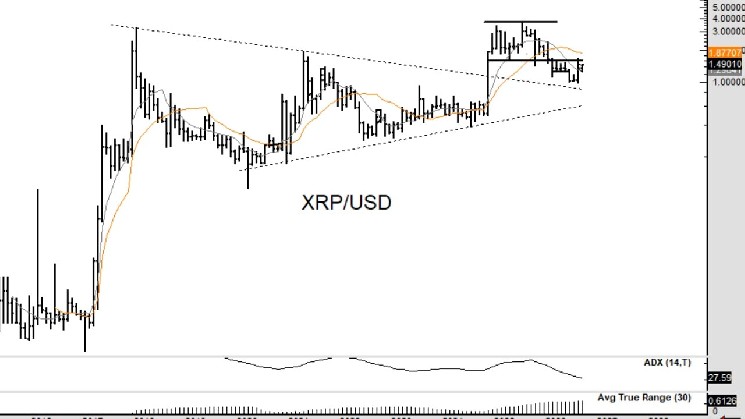
    • Veteran trader Peter Brandt projects XRP could reach $5.40 based on long-term monthly chart analysis, implying approximately 251% upside from current levels.
    • XRP surged 8.7% to $1.54 in 24-hour trading, reaching a session high of $1.57 before pulling back, with the token trading in an 11% range between $1.41 and $1.57.
    • Institutional developments accelerated as South African banking giant Absa launched digital asset custody built on Ripple technology, while the U.S. Senate rejected cloture on the CLARITY Act in a 49-50 vote.

    Peter Brandt’s Technical Analysis and $5.40 Price Target

    Veteran commodity trader Peter Brandt shared a bullish long-term projection for XRP on September 21, posting a monthly chart on X that he says implies an eventual advance to $5.40. The target would represent a substantial premium over recent trading ranges, requiring approximately 251% appreciation from the $1.54 level where XRP traded at the time of publication.

    Brandt, who entered the commodity trading business in 1976 and founded Factor Trading in 1980, emphasized the distinction between a public chart presentation and an executed trade. “This is my long-term chart of $XRP It implies an eventual advance to $5.40.” he wrote. “A claim of a ‘call’ or simple presentation of a chart is $NOT a trade. People who claim ‘trades’ need to provide proof or else the claims are BS. An X post is $NOT proof,” he added. His use of the term “eventual” frames the $5.40 objective as a long-term technical target rather than a near-term prediction, and he explicitly noted that proving an actual trade would require verifiable records showing entry, exit, and result.

    XRP Price Action and Market Performance

    Bitcoin.com Markets data confirmed XRP trading at $1.54, up 8.7% or $0.12 over the preceding 24 hours. The token established a session low of $1.41 early in the period before climbing steadily through most of the trading day. The advance peaked at $1.57 late in the session, after which XRP eased back to the $1.54 level, leaving it approximately 2% below its 24-hour high and roughly 9% above its low. The session’s full trading range spanned about 11% from low to high, reflecting heightened volatility accompanying the price discovery.

    Institutional Infrastructure Expansion and Regulatory Context

    The price rally coincided with significant institutional infrastructure developments. South African lender Absa, one of Africa’s largest banking groups, launched Absa Digital Asset Custody on September 21, built on Ripple’s custody technology. The launch occurred 11 months after Ripple and Absa announced their partnership, marking a concrete step in institutional adoption across the African continent.

    Asset manager 21Shares outlined a four-pillar investment case for XRP centered on regulatory clarity, institutional access, measurable utility, and fixed supply. The firm noted that while expanding XRP Ledger (XRPL) activity may not directly translate into sustained XRP demand, growing network activity could support demand through transaction fees, account reserves, and bridge transfers. 21Shares cited approximately $4 billion in tokenized assets and roughly $1.6 billion in RLUSD supply, with more than half circulating on the XRPL.

    On the regulatory front, the U.S. Senate rejected cloture on the CLARITY Act in a 49-50 vote. Ripple maintained that the failed vote did not alter XRP’s established legal position or disrupt demand across payments, stablecoins, and institutional markets, suggesting the token’s regulatory framework remains intact despite legislative setbacks.

    Why This Matters

    The convergence of technical analysis from a respected veteran trader, meaningful price appreciation with elevated volume, and tangible institutional infrastructure deployment creates a multi-layered bullish narrative for XRP. Brandt’s $5.40 target, while framed as a long-term technical implication rather than a trading recommendation, draws attention to the monthly chart structure that has historically preceded major trend advances in commodity and digital asset markets. The Absa custody launch demonstrates Ripple’s expanding institutional footprint beyond North America into African financial markets, while 21Shares’ analytical framework highlights the fundamental metrics—institutional access, on-chain utility, and regulatory standing—that professional allocators increasingly prioritize. The Senate’s CLARITY Act outcome, while a legislative disappointment for broader crypto regulatory clarity, appears to have had minimal immediate market impact on XRP specifically, reinforcing Ripple’s assertion that the token’s legal classification is settled. Market participants will likely monitor whether XRP can sustain above the $1.50 psychological level and build a higher base for the next leg toward Brandt’s long-term projection.

    Frequently Asked Questions

    What is Peter Brandt’s track record in technical analysis?

    Peter Brandt has over 45 years of commodity trading experience, founding Factor Trading in 1980 after beginning his career in 1976. He has managed institutional trading operations and authored two books on commodity trading and classical chart patterns, establishing him as a recognized authority in traditional technical analysis applied to digital assets.

    Does the Absa Digital Asset Custody launch directly increase XRP demand?

    Not necessarily. The custody service is built on Ripple’s technology infrastructure, but 21Shares notes that expanding XRPL activity may not translate directly into sustained XRP demand. However, the firm argues that growing network activity could support demand indirectly through transaction fees, account reserves, and bridge transfer mechanisms on the ledger.

    How significant was the Senate CLARITY Act vote for XRP specifically?

    According to Ripple, the failed cloture vote on the CLARITY Act did not change XRP’s established legal position or disrupt demand across its core use cases in payments, stablecoins, and institutional markets. The token’s regulatory classification remains intact regardless of the legislative outcome.

  • Pragma flags 6 price feeds as critical risk following $3.5M Starknet lending exploit

    Pragma flags 6 price feeds as critical risk following $3.5M Starknet lending exploit

    Key Highlights

    • Oracle provider Pragma classified six of 22 Starknet mainnet market and rate feeds as critical risk in a Sept. 18 assessment, including NSTR, EKUBO, LORDS, BROTHER, DOG, and $DAI.
    • A manipulated NSTR oracle price enabled a ~$3.5 million borrowing exploit at the Nostra lending protocol on Sept. 17, prompting Nostra to pause all lending, borrowing, withdrawals, and liquidations.
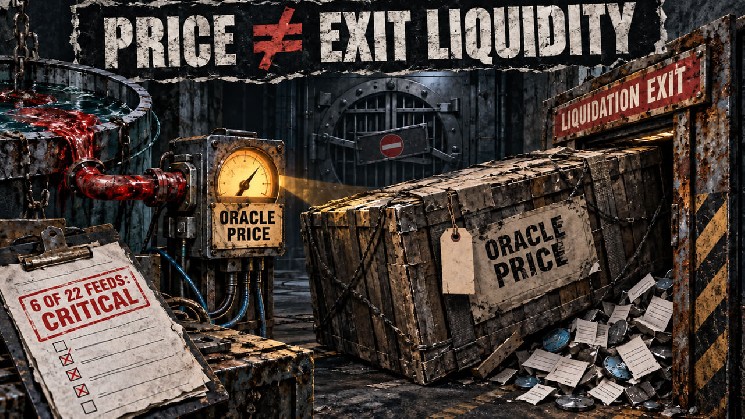
    • Pragma’s analysis demonstrates that oracle prices do not guarantee liquidation liquidity, with sell-quote deterioration ranging from 15% to 22% for critical tokens when measured against $10,000 versus $10 quotes.

    Pragma Issues Critical Risk Assessment for Starknet Oracle Feeds

    Blockchain oracle provider Pragma published a liquidity risk assessment on Sept. 18 classifying six of 22 Starknet mainnet market and rate feeds as critical risk, warning lenders that the mere availability of a token price does not establish that collateral can be sold to cover a loan. The assessment placed BROTHER, $DAI, DOG, EKUBO, LORDS, and NSTR in its critical category, with nine additional feeds rated high risk. Pragma emphasized that the evaluation does not confirm every listed feed is actively used as collateral in lending markets.

    Nostra Exploit Highlights Oracle Manipulation Vulnerability

    The report followed a Sept. 17 borrowing exploit at Nostra, a lending protocol on Starknet. According to Nostra’s account, a manipulated NSTR oracle price allowed one account to borrow approximately $3.5 million of other assets against NSTR collateral. In its Sept. 17 statement, Nostra said it “paused lending, borrowing, withdrawals, and liquidations while it reconciled the impact and traced funds,” adding that “final losses and potential recoveries were still unknown.” The announcement leaves the subsequent status of withdrawals and recovery unconfirmed.

    Pragma’s incident analysis identified two contributing sources for the affected oracle response. The provider stated that an enforced three-source minimum would have rejected the manipulated input, and its integration guidance recommends freshness checks and thresholds suited to the asset’s risk profile. Pragma attributed the deviating input to a manipulated on-chain pool and said its reconstruction found no decimals or median-calculation error. The provider separately reported that the attacker’s address had been frozen and recovery work was ongoing.

    Why Oracle Valuations Don’t Equal Liquidation Liquidity

    The core finding underscores a structural gap in decentralized lending: an oracle supplies a valuation, but liquidation requires selling collateral, and a thin market may not absorb that sale near the quoted price. As Pragma explained, “An oracle supplies a valuation. Liquidation requires selling collateral, and a thin market may not absorb that sale near the quoted price. A loan can be backed by an apparent value that cannot be realized when repayment depends on selling the token.”

    At token quantities valued by the oracle at $10,000, sell-quote deterioration was measured at approximately 15% for NSTR, 17% for EKUBO, 22% for LORDS, and 20% for BROTHER, when compared against quotes for $10 sales. Pragma’s Sept. 18 snapshot showed indicative $10,000 sell quotes deteriorating 15% to 22% versus $10 quotes across these four tokens.

    Source Concentration and Aggregation Risks

    The $DAI critical rating stems from source concentration and tested Starknet token routes rather than global illiquidity. Pragma noted that current and legacy deployments had different exit curves, so the critical rating cannot be read as a finding that $DAI is globally illiquid. The provider also warned that multiple source labels do not necessarily solve the problem: “publishers and aggregators can share underlying market dependencies, so several labels may reflect overlapping liquidity.”

    Protocol Response and Recovery Efforts

    For depositors, the immediate consequence was restricted access to funds. Nostra’s pause of all protocol functions remains in effect while the team reconciles impact and traces funds. Pragma’s report confirmed the attacker’s address was frozen and that recovery work continues, though final loss figures and potential recoveries remain undetermined as of the Sept. 17 disclosures.

    Why This Matters

    Pragma’s assessment exposes a fundamental risk in decentralized finance: the conflation of price availability with exit liquidity. Lending protocols that accept oracle-valued tokens as collateral without independent liquidity analysis may face unbacked loans when markets cannot absorb forced sales at quoted prices. The Nostra exploit demonstrates how a single manipulated feed can cascade into multi-million dollar losses. For the broader Starknet ecosystem, the report forces a reevaluation of which assets qualify as collateral, appropriate exposure limits, and whether exit liquidity can support liquidation under stress. As Pragma concluded, “Publishing a price doesn’t settle any of those questions by itself.”

    Frequently Asked Questions

    Which tokens did Pragma classify as critical risk in its Sept. 18 assessment?
    Pragma placed BROTHER, $DAI, DOG, EKUBO, LORDS, and NSTR in its critical risk category, with nine other feeds rated high risk.
    What caused the Nostra exploit on Sept. 17?
    A manipulated NSTR oracle price allowed one account to borrow approximately $3.5 million of other assets against NSTR collateral.
    Does an oracle price guarantee that collateral can be liquidated at that value?
    No. Pragma’s analysis shows that oracle valuations do not reflect actual sell-side liquidity. Sell-quote deterioration for critical tokens ranged from 15% to 22% at $10,000 volumes versus $10 quotes, meaning forced liquidations would likely realize significantly less than the oracle price.
  • Bitcoin Rally Driven by ‘Serious Institutional Money,’ Devere Says

    Bitcoin Rally Driven by ‘Serious Institutional Money,’ Devere Says

    Key Highlights

    • Devere Group CEO Nigel Green argues Bitcoin’s recovery is gaining durability from sustained institutional inflows into regulated U.S. spot ETFs, marking a shift from leveraged speculation to “patient capital.”
    • Despite a net inflow of approximately $6.1 million across five trading days through Sept. 18, the trend remains fragile after $746.3 million in withdrawals on Sept. 15–16 nearly offset recent gains.
    • The Federal Reserve’s Sept. 16 rate hike to 3.75%–4% raises the opportunity cost of holding non-yielding Bitcoin, while the CLARITY Act’s legislative stall delays regulatory clarity that Green says could unlock pension and wealth-manager allocations.

    Institutional Flows Signal Market Shift, Says Devere Group CEO

    Bitcoin’s recent price recovery is underpinned by a structural shift in market participation, according to Devere Group Chief Executive Officer Nigel Green. In comments issued Sept. 21, Green asserted that consistent purchasing through regulated investment products indicates buyers have regained control of the market. He characterized the current momentum as fundamentally different from previous rallies driven by leveraged speculation.

    “The market’s momentum has flipped, and this time there’s serious institutional money behind it,” Green said, adding:

    “Billions are flowing into regulated bitcoin products week after week. It’s patient capital that plans to stay, a very different animal from the leveraged speculation that fuelled past rallies.”

    ETF Data Shows Mixed Recovery After Volatile Week

    Flow data for U.S. spot bitcoin exchange-traded funds (ETFs) supports Green’s observation of renewed demand, though the net picture remains modest. Farside Investors’ rounded daily figures show the funds attracted $433 million in net inflows on Sept. 18, following $159.5 million the previous session and $159.9 million on Sept. 14. However, those purchases only narrowly offset withdrawals of $746.3 million recorded on Sept. 15 and 16, leaving approximately $6.1 million in net inflows across the five trading days.

    The recovery began Thursday, Sept. 18, when bitcoin ETFs returned to positive flows after two consecutive sessions of withdrawals. BlackRock’s IBIT led the rebound, while ether and XRP funds continued losing money. The divergence suggests renewed demand for bitcoin products has not yet translated into consistent buying across the broader crypto ETF market.

    Monetary Policy Creates Countervailing Pressure

    Green’s supply-side argument—that Bitcoin’s fixed cap of 21 million coins offers a hedge against currency debasement—runs against a tightening monetary backdrop. The Federal Reserve raised its benchmark target range to 3.75%–4% on Sept. 16, a unanimous quarter-point increase accompanied by language describing inflation as elevated. Higher interest rates increase returns on interest-bearing assets, raising the opportunity cost of holding Bitcoin, which pays no yield.

    A separate assessment from Grayscale characterized the latest increase as a limited adjustment within the current Fed cycle. The asset manager distinguished one or two potential increases in 2026 from the prolonged tightening cycle that began in 2022. That interpretation aligns with Green’s view that demand can remain resilient despite higher rates, though both assessments represent forward-looking market outlooks rather than established facts.

    Regulatory Uncertainty Tempers Optimism

    Green identified clearer U.S. crypto rules as a conditional catalyst that could encourage pension funds and wealth managers to increase exposure. His forecast depends on large allocators becoming more comfortable with the regulatory framework governing digital assets, which would extend demand beyond current ETF buyers into a wider pool of portfolio allocations.

    The legislative backdrop, however, delivered a setback on Sept. 15 when senators failed to advance the CLARITY Act toward floor debate. The procedural vote required 60 votes to move forward; its failure left the proposed market-structure framework unresolved. Green nevertheless expects a larger potential pool of buyers if regulation becomes clearer, while acknowledging that volatility and pullbacks will continue.

    “Once big allocators see rules they can work with, the next wave of demand could dwarf this one,”

    he described, elaborating:

    “The crypto winter looks to be ending. Every dip that gets bought strengthens the case that the floor has moved higher.”

    “Bitcoin is a permanent fixture in the global portfolio conversation, and the bulls know it,”

    the executive concluded.

    Why This Matters

    The interplay between institutional adoption, monetary policy, and regulatory progress defines Bitcoin’s current inflection point. Sustained ETF inflows—particularly from vehicles like BlackRock’s IBIT—signal growing acceptance among traditional financial intermediaries, yet the net flow figures remain marginal after sharp reversals. The Federal Reserve’s higher-for-longer rate posture introduces a persistent headwind for non-yielding assets, while the CLARITY Act’s stall underscores that U.S. regulatory certainty remains a work in progress. Market participants should monitor whether the “patient capital” Green describes withstands the dual test of rate sensitivity and legislative gridlock, or whether the recent rebound proves another bear-market rally.

    Frequently Asked Questions

    What were the net flows into U.S. spot Bitcoin ETFs for the week ending Sept. 18?

    According to Farside Investors data cited in the report, U.S. spot Bitcoin ETFs saw approximately $6.1 million in net inflows across the five trading days through Sept. 18. This followed $433 million in inflows on Sept. 18, $159.5 million on Sept. 17, and $159.9 million on Sept. 14, which were largely offset by $746.3 million in withdrawals on Sept. 15–16.

    How does the Federal Reserve’s September rate hike affect Bitcoin’s appeal?

    The Fed raised its benchmark rate to 3.75%–4% on Sept. 16, increasing the opportunity cost of holding Bitcoin because the cryptocurrency does not generate interest income. Higher yields on bonds and cash equivalents make non-yielding assets comparatively less attractive, though some analysts, including Grayscale, view the hike as a limited adjustment rather than a return to aggressive tightening.

    What is the CLARITY Act and why does its failure matter for Bitcoin?

    The CLARITY Act is a proposed U.S. market-structure framework for digital assets. Its failure to advance past a procedural vote on Sept. 15—falling short of the 60 votes needed—leaves regulatory rules unresolved. Devere Group CEO Nigel Green argues that clearer rules would unlock allocations from pension funds and wealth managers, potentially driving a larger wave of institutional demand than current ETF flows.

  • 5 Best Meme Coins for 2026 Compared: DOGE, SHIB, PENGU, BONK & MemeToro’s Fair-Launch Model

    5 Best Meme Coins for 2026 Compared: DOGE, SHIB, PENGU, BONK & MemeToro’s Fair-Launch Model

    Key Highlights

    • MemeToro ($MT) raises over $140,000 in Stage 7 presale at $0.00430 per token, targeting a $0.05186 listing price implying ~12x hypothetical upside.
    • Established meme coins Dogecoin ($DOGE), Shiba Inu ($SHIB), Pudgy Penguins ($PENGU), and Bonk ($BONK) retain dominance through community size, ecosystem integrations, and brand IP.
    • MemeToro differentiates with an AI-powered, open-source fair-launch pad enforcing zero-insider allocation and offering $MT utility across trading, staking (up to 35% APY), and prediction markets.

    Meme Coin Landscape in 2026: Established Giants Versus Emerging Infrastructure

    The conversation around the leading meme coins heading into 2026 centers on five distinct projects, each representing a different value proposition. Dogecoin ($DOGE) and Shiba Inu ($SHIB) continue to benefit from deep liquidity and multi-year community momentum. Pudgy Penguins ($PENGU) leverages a recognizable consumer brand and digital intellectual property portfolio. Bonk ($BONK) remains tightly woven into the Solana ecosystem’s memecoin activity. Meanwhile, MemeToro ($MT) is still in its presale phase, having crossed $140,000 raised in Stage 7 at a price of $0.00430, while building an AI-driven launchpad infrastructure designed to support future token creation and trading.

    Dogecoin and Shiba Inu: Community Depth and Ecosystem Maturity

    Dogecoin retains one of the longest track records among major meme assets. Its broad mainstream recognition and deep market liquidity have allowed it to remain a fixture in cryptocurrency market discussions regardless of cycle. Shiba Inu has expanded beyond a single token, developing a broader ecosystem that includes the Shibarium layer-2 network. This ecosystem development gives $SHIB a structural complexity that distinguishes it from a simple community token. Both projects already operate in open markets with established trading activity, providing a baseline of stability and accessibility that newer entrants have yet to achieve.

    Pudgy Penguins and Bonk: Brand IP and Chain-Native Integration

    Pudgy Penguins provides $PENGU with a direct link to a wider consumer-facing brand and digital IP ecosystem. The token’s meme identity is reinforced by the broader Pudgy Penguins project, which spans physical merchandise, licensing, and community engagement. Bonk, by contrast, has cultivated a dominant presence within the Solana network’s memecoin sector. Its integrations across Solana decentralized applications and trading venues give it a chain-native role that differs from the multi-chain or Ethereum-centric positioning of $DOGE and $SHIB. These ecosystem connections create defensive moats rooted in distribution and utility rather than narrative alone.

    MemeToro’s Fair-Launch Model and AI Launchpad Infrastructure

    MemeToro’s latest update emphasizes open-source AI launchpad smart contracts engineered to enforce fixed fair-launch rules. The system validates allocation totals and funding consistency under a zero-insider-allocation framework, aiming to reduce distribution uncertainty that often plagues new token launches. The $MT token is designed for utility across memecoin trading, platform access, staking, rewards, and prediction markets. The project currently advertises a projected staking return of up to 35% APY. With a Stage 7 price of $0.00430 and a stated listing target of $0.05186, the implied move represents approximately 12.06x or 1,106% hypothetical upside, though the project explicitly notes this is not a prediction or guaranteed return. Buyers are directed to verify the official website, contract address, BNB Chain network, presale stage, and purchase instructions before connecting a wallet.

    Why This Matters

    The 2026 meme coin narrative is bifurcating between incumbent tokens with proven network effects and infrastructure plays betting on the next wave of token creation. Established assets like $DOGE, $SHIB, $PENGU, and $BONK derive value from liquidity, brand recognition, and chain-specific entrenchment. MemeToro represents a shift toward launchpad-as-a-service models, where AI-driven trend detection and programmatic fair-launch mechanics attempt to solve the trust and distribution problems that have historically plagued early-stage memecoins. For market participants, the distinction is critical: investing in incumbents is a bet on sustained cultural relevance and liquidity, while participating in presales like MemeToro is a bet on the execution of unproven infrastructure and the future pipeline of tokens it may spawn. Regulatory scrutiny on fair-launch claims, smart contract audits, and the realized performance of AI-curated launches will be key watch items through late 2025 and into 2026.

    Frequently Asked Questions

    What is MemeToro’s current presale price and fundraising status?
    MemeToro is in Stage 7 at $0.00430 per $MT token, with over $140,000 raised to date.
    How does MemeToro’s fair-launch mechanism work?
    The project uses open-source AI launchpad smart contracts that enforce fixed allocation rules, check funding consistency, and operate under a zero-insider-allocation framework to minimize distribution manipulation.
    What utilities are planned for the $MT token?
    $MT is designed for memecoin trading, platform access, staking (up to 35% projected APY), rewards, and prediction markets within the MemeToro ecosystem.

    More Information on MemeToro ($MT) Presale: Website: https://memetoro.com/ | X: https://x.com/memetoro_mt | Telegram: https://t.me/memetoro_mt | YouTube: https://www.youtube.com/watch?v=gY0jgWy_DtA

  • Where to Buy the Best Crypto Presale and What Happens Next: Vesting, Claims, and TGE Explained With MemeToro

    Where to Buy the Best Crypto Presale and What Happens Next: Vesting, Claims, and TGE Explained With MemeToro

    Key Highlights

    • MemeToro’s public-sale allocation of 857,936,900 $MT tokens (71% of the 1.2 billion total supply) carries no vesting schedule and is designed to be fully claimable at launch.
    • Presale purchases credit $MT allocations to buyer accounts immediately, but tokens are not tradeable until the Token Generation Event (TGE) and official claim process begins.
    • The project warns buyers to retain transaction hashes, use only the official MemeToro website for claims, and ignore direct messages offering “early claim” access to avoid scams.

    Understanding the MemeToro Presale Structure: Credit Versus Claim

    MemeToro, a memecoin ecosystem project building on BNB Chain, has clarified the mechanics of its ongoing presale to distinguish between payment crediting and token claiming. According to the project’s official guide, when a buyer completes a purchase using BNB, ETH, USDT, or a credit card, the corresponding $MT allocation is credited directly to the buyer’s account on the platform. This crediting step records the entitlement but does not deliver a live, tradable token balance to the buyer’s wallet. The project emphasizes that buyers must save the transaction hash from their crypto payment, as this on-chain record serves as the permanent proof of purchase and can be used to verify the account credit if needed.

    Token Generation Event and Vesting Details

    The Token Generation Event (TGE) marks the point at which the $MT token is minted and the official claim process becomes available. MemeToro has disclosed that its public-sale allocation totals 857,936,900 $MT, representing 71% of the 1.2 billion-token maximum supply. Unlike the marketing-partner allocation, which is subject to a 24-month vesting schedule, the public-sale portion carries no vesting and is intended to be fully claimable at launch. This distinction is critical for participants because vesting schedules control when allocated tokens become liquid; the absence of vesting on the public tranche means a significant volume of supply could enter circulation immediately once claims open, depending on buyer behavior and market conditions.

    Post-TGE Claim Process and Security Guidance

    After the TGE, MemeToro plans to publish the claim timing, the official claim page URL, and the $MT token contract address. Buyers will be expected to connect the same wallet used for the original purchase to claim their allocation. The project has issued explicit security warnings: participants should ignore any direct messages offering “early claim” access, never enter a wallet seed phrase or recovery phrase on a claim page, and only interact with the official MemeToro website. These precautions are standard in the crypto presale space, where phishing campaigns often spike around claim events. The project’s roadmap outlines ecosystem utilities for $MT, including AI-proposed memecoin launches, a funding mechanism, staking, a memecoin trading terminal, prediction markets, and a news portal—all of which are designed to drive token demand post-launch.

    Why This Matters

    The MemeToro presale structure highlights a common pattern in new token launches: a large, unvested public allocation combined with an immediate claim at TGE can create significant sell pressure if early buyers choose to exit quickly. The 71% public-sale share is unusually high compared to many projects that reserve larger portions for team, treasury, or investor vesting. For market participants, the key variables will be the depth of initial liquidity, the exchange listing schedule, and the actual adoption of the planned ecosystem products. The project’s transparency about vesting differences between allocation categories allows buyers to model potential supply dynamics more accurately, but it does not eliminate the inherent volatility and risk associated with low-float, high-supply memecoin launches.

    Frequently Asked Questions

    When can I claim my $MT tokens after purchasing in the presale?

    You can claim your $MT tokens only after the Token Generation Event (TGE), when MemeToro publishes the official claim page, timing, and contract address. The presale purchase credits an allocation to your account, but tokens are not delivered to your wallet until the claim process goes live.

    Is there a vesting schedule on the public-sale allocation?

    No. MemeToro states that the public-sale allocation of 857,936,900 $MT (71% of total supply) has no vesting and is intended to be fully claimable at launch. This differs from the marketing-partner allocation, which follows a 24-month vesting schedule.

    What should I do to protect myself from scams during the claim period?

    Bookmark the official MemeToro website (memetoro.com), retain your original purchase transaction hash, and only use the official claim page announced by the project. Never share your wallet recovery phrase, and ignore any direct messages or links promising early or exclusive claim access.

  • Top Crypto Presales for Upcoming Bull Run: MemeToro, AlphaPepe, Remittix Compared as AI Utility Expands

    Top Crypto Presales for Upcoming Bull Run: MemeToro, AlphaPepe, Remittix Compared as AI Utility Expands

    Key Highlights

    • Three distinct crypto presale projects—MemeToro, AlphaPepe, and Remittix—offer different utility models for the anticipated bull run: AI memecoin infrastructure, pre-trade intelligence tools, and crypto-to-fiat payments respectively.
    • MemeToro has raised over $140,000 in Stage 7 with $MT priced at $0.00430, featuring an open-source AI launchpad with automated fair-launch rules and a stated listing target of $0.05186 (12.06x hypothetical upside).
    • AlphaPepe reports over 11,500 holders and $2.58 million raised at $0.02873, developing AlphaSwap for risk checks and trend signals, while Remittix focuses on payment adoption rather than memecoin speculation.

    Top Crypto Presales Differentiate Utility Ahead of Expected Bull Run

    As market participants scan for early-stage opportunities ahead of a potential cryptocurrency bull run, three presale projects—MemeToro, AlphaPepe, and Remittix—have emerged with distinctly different utility propositions. Rather than relying solely on speculative momentum, each project is building product infrastructure that addresses separate niches: AI-driven memecoin creation, pre-trade analytical tools, and cross-border fiat settlement. This divergence highlights a maturing presale landscape where fundamentals and use-case clarity are becoming differentiating factors for informed buyers.

    MemeToro: AI-Powered Memecoin Launch Infrastructure

    MemeToro is constructing an AI agent designed to systematically study internet trends, validate concepts, and execute structured memecoin launches. The platform recently crossed $140,000 raised in Stage 7, with its native token $MT priced at $0.00430. Beyond capital accumulation, MemeToro has released open-source launchpad contracts that enforce published rules including allocation checks, funding consistency, and restrictions around insider allocation. These automated fair-launch mechanisms aim to reduce human discretion and increase transparency.

    Ecosystem Utility Beyond the Presale

    The $MT token is slated to serve multiple functions within the MemeToro ecosystem: granting access to the launchpad, enabling staking and rewards, facilitating memecoin trading, and supporting prediction markets. This multi-utility design positions MemeToro as a broader product suite rather than a single-purpose presale token. The project states a listing target of $0.05186, which would represent a 12.06x increase from the current Stage 7 price—a mathematical scenario, not a guaranteed forecast.

    AlphaPepe: Pre-Trade Intelligence via AlphaSwap

    AlphaPepe has taken a different approach by developing AlphaSwap, a platform focused on delivering actionable intelligence before a token swap occurs. The system provides risk assessments and trend signals to help users evaluate potential trades. According to the latest supplied data, AlphaPepe has amassed over 11,500 holders and raised approximately $2.58 million, with its token trading near $0.02873. The roadmap includes plans for decentralized exchange (DEX) access and centralized exchange (CEX) partnerships, signaling an intent to integrate deeply into the trading infrastructure layer.

    Trading Tools as a Meme-Centric Differentiator

    While AlphaPepe retains meme-focused branding, its core value proposition centers on pre-trade information symmetry. By equipping users with risk checks and trend analysis, AlphaPepe attempts to address a common pain point in memecoin markets: the lack of reliable, real-time due diligence tools before capital commitment.

    Remittix: Crypto-to-Fiat Payments and Remittance

    Remittix occupies a separate category altogether, targeting crypto-to-fiat payments and remittance use cases. Its business model ties token value to the adoption of payment-related services rather than memecoin launch activity or trading tools. The project has promoted its payments platform and stated funding milestones linked to its launch plans, emphasizing real-world utility in cross-border value transfer. This creates a three-way utility split: MemeToro for AI memecoin infrastructure, AlphaPepe for trading and risk tools, and Remittix for payments and remittance.

    Comparing Utility Models and Presale Metrics

    For buyers evaluating the top crypto presales for upcoming bull run themes, the primary distinction lies in product focus. MemeToro’s Stage 7 price of $0.00430 versus its $0.05186 listing target implies a hypothetical 1,106% upside, while AlphaPepe’s $0.02873 price reflects a different stage of capital formation and holder base. Remittix does not publicize comparable presale pricing metrics in the current dataset. Each project’s trajectory will depend on execution of its respective roadmap—launchpad deployment for MemeToro, AlphaSwap feature rollout for AlphaPepe, and payment network integration for Remittix.

    Risk Considerations for Presale Participants

    Presale buyers should conduct thorough due diligence, reviewing smart contract audits, token allocation structures, product development progress, liquidity provisions, and launch conditions. A rising market can improve overall liquidity and demand, but it does not guarantee success for any individual presale. The mathematical upside scenarios presented by projects are illustrative, not predictive. Capital allocation decisions must weigh the inherent risks of early-stage, pre-market tokens against the specific utility and adoption potential of each platform.

    Why This Matters

    The emergence of differentiated utility models among concurrent presales signals a shift from homogeneous speculative vehicles toward specialized protocol development. MemeToro’s focus on automated, transparent launch infrastructure addresses recurring concerns about fair distribution in memecoin markets. AlphaPepe’s emphasis on pre-trade intelligence responds to the information asymmetry that plagues retail participants in high-velocity token markets. Remittix’s payment-centric approach anchors token demand to tangible fiat off-ramp volume. Collectively, these projects illustrate how presale narratives are evolving to incorporate product-market fit considerations earlier in the lifecycle. For the broader industry, the success or failure of these models will inform whether utility-first presales can sustainably outperform pure hype-driven launches in the next market cycle.

    Frequently Asked Questions

    What distinguishes MemeToro, AlphaPepe, and Remittix from each other?

    MemeToro centers on AI-powered memecoin launch infrastructure with an open-source fair-launch pad. AlphaPepe builds AlphaSwap, a pre-trade intelligence platform offering risk checks and trend signals. Remittix focuses on crypto-to-fiat payments and remittance services, tying token utility to payment adoption rather than memecoin or trading activity.

    What are the current presale metrics for MemeToro and AlphaPepe?

    MemeToro has raised over $140,000 in Stage 7 with $MT priced at $0.00430 and a stated listing target of $0.05186. AlphaPepe reports over 11,500 holders, approximately $2.58 million raised, and a token price near $0.02873.

    Does a bull run guarantee gains on presale investments?

    No. While a bull market can increase overall liquidity and demand, individual project performance depends on execution, product adoption, audit security, tokenomics, and launch conditions. Hypothetical upside calculations are mathematical scenarios, not forecasts.