Category: Coins

Digital assets, cryptocurrencies, blockchain, and currency news.

  • FET Price Eyes $0.21 Supply Zone Break After 11% Rally

    FET Price Eyes $0.21 Supply Zone Break After 11% Rally

    Key Highlights

    • Superintelligence Alliance ($FET) surged 11.24% to $0.2012, with spot volume jumping 35.69% as the token tests the critical $0.2100 supply zone.
    • Exchange reserves climbed 14.01% to $41.7 million, increasing immediate sell-side liquidity even as derivatives data shows top traders heavily positioned long at a 2.69 long/short ratio.
    • MACD remains bullish with the line at 0.0091 above the signal line at 0.0059, supporting a potential breakout toward $0.2538, though failure at $0.2100 could see a retest of $0.1742 support.

    FET Rally Confronts Overhead Supply as Volume Surges

    The Superintelligence Alliance token ($FET) extended its recovery on Tuesday, climbing 11.24% to $0.2012 at press time as heightened spot market participation drove the AI-focused asset toward a technically significant supply zone. The advance was accompanied by a 35.69% surge in 24-hour spot volume, signaling genuine buyer interest rather than thin-liquidity manipulation. After reclaiming several contested levels from its August lows, the token now approaches the $0.2100 region, which sits within a broader supply zone extending above current prices. Market participants face a demanding test: sustaining the volume momentum needed to absorb selling pressure clustered around this overhead barrier.

    Rising Exchange Reserves Add Sell-Side Complexity

    Complicating the bullish narrative, on-chain data from CryptoQuant reveals that $FET exchange reserves pumped 14.01% during the rally period, reaching approximately $41.7 million. The increase means a larger quantity of tokens now sits in exchange wallets, granting holders immediate access to liquidity should they choose to sell into the advance. While rising reserves alone do not confirm active distribution, the timing is notable: the reserve expansion coincides precisely with the price approach to a zone historically associated with selling pressure. This dynamic creates a tactical standoff where spot buyers must overcome not only existing limit orders but also the latent supply represented by the growing exchange balances.

    Derivatives Positioning Skews Heavily Long

    Conversely, derivatives data from CoinGlass paints a strongly bullish picture among leveraged participants. As of writing, Binance top-trader accounts show 72.89% long positioning versus 27.11% short, producing a long/short ratio of 2.69 — a pronounced directional imbalance. The OI-weighted funding rate has turned positive at 0.0166%, indicating long-position holders are paying shorts to maintain exposure, a condition that typically reflects conviction in further upside. However, the crowded long side introduces fragility: a sharp rejection at the $0.2100 supply zone could trigger cascading long liquidations, amplifying volatility and accelerating a pullback toward the $0.1742 support level where buyers previously stepped in.

    Technical Structure Favors Upside Attempt, Confirmation Pending

    From a technical standpoint, the MACD indicator strengthened during the approach to resistance rather than diverging, a constructive signal. The MACD line sits at 0.0091, comfortably above its signal line at 0.0059, with expanding green histogram bars confirming active bullish momentum. This configuration supports another challenge of the crucial supply zone. A decisive daily close above $0.2100 would invalidate the near-term bearish structure and open a path toward the next key resistance at $0.2538. Absent that confirmation, the risk remains skewed toward a range-bound consolidation or pullback to $0.1742, where the bulls would need to defend their foothold once more.

    Why This Matters

    The $FET price action encapsulates a classic crypto market tension: improving spot fundamentals and bullish derivatives positioning clashing with rising exchange supply and a well-defined technical resistance. As the native token of the Artificial Superintelligence Alliance — formed by the merger of Fetch.ai, SingularityNET, and Ocean Protocol — $FET serves as a bellwether for the decentralized AI narrative. A clean break above $0.2100 would signal that accumulation during the August lows has shifted into a new uptrend phase, potentially attracting fresh capital flows into the AI-crypto intersection. Conversely, a failure here would extend the consolidation phase, testing the patience of long-term holders and the conviction of leveraged longs. Traders and investors should monitor daily close behavior around $0.2100, exchange reserve trends for signs of distribution, and funding rate dynamics for early warnings of leverage unwind.

    Frequently Asked Questions

    What is the key resistance level for $FET right now?

    The critical resistance is the $0.2100 supply zone. A decisive daily close above this level could open the path toward the next major resistance at $0.2538.

    Why are rising exchange reserves a concern during a rally?

    Rising exchange reserves mean more tokens are held in exchange wallets, giving holders immediate access to liquidity. This increases potential sell-side pressure, especially as price approaches a known supply zone where profit-taking or break-even selling may occur.

    What does the current MACD reading suggest about $FET momentum?

    The MACD line at 0.0091 remains above the signal line at 0.0059 with expanding histogram bars, indicating bullish momentum is accelerating rather than fading as price tests resistance — a constructive technical signal for a potential breakout attempt.


  • HBAR Price Surges 29%, Breaks Long-Term Resistance — $0.10 Target in Sight?

    HBAR Price Surges 29%, Breaks Long-Term Resistance — $0.10 Target in Sight?

    Key Highlights

    • Hedera’s HBAR token has surged nearly 29% from its recent low, reaching approximately $0.097 and breaking above the long-standing $0.086 resistance level.
    • The rally occurred on elevated trading volume, with the price clearing its 200-day moving average and shorter-term averages, signaling broad-based buyer participation.
    • The next critical hurdle is the psychological $0.10 level; a decisive daily close above could open the path toward the $0.109–$0.11 resistance zone seen in early June.

    HBAR Breaks Multi-Month Resistance on Strong Volume

    Hedera’s native token, HBAR, has staged a notable recovery, climbing almost 29% from its recent trough to trade near $0.097. The advance has propelled the altcoin above a persistent technical barrier at the $0.086 price level, a zone that had capped upside attempts for months. According to chart data sourced from TradingView, the token touched an intraday high of $0.099, bringing it within striking distance of the psychologically significant $0.10 threshold—a level HBAR has not managed to close above in several months.

    Volume Surge Confirms Buyer Conviction

    Adding technical weight to the move, daily trading volume expanded significantly compared to the preceding session and exceeded the average levels observed throughout August and early September. In technical analysis, a price advance accompanied by rising volume is typically interpreted as confirmation of genuine buyer interest, distinguishing a sustainable trend from a low-liquidity spike. The breakout has also repositioned HBAR above its 200-day moving average, which resides near the $0.086 mark. This long-term average previously acted as a ceiling for price action; reclaiming it suggests the current upswing may represent a structural shift rather than a fleeting bounce. Shorter-term moving averages now also sit below the current price, indicating bullish alignment across multiple timeframes.

    $0.10 Level Emerges as Pivot Point for Next Leg

    The immediate focus for market participants is whether HBAR can secure a convincing daily close above $0.10. The token stalled near $0.099 in the latest session, highlighting the resistance cluster at this round number. Should buyers overcome this hurdle, the early June supply zone between $0.109 and $0.11 becomes the next logical target—a region that previously triggered heavy selling pressure and may test resolve again. Conversely, failure to clear $0.10 could prompt a consolidation or pullback after the rapid ascent. The first line of defense on any rejection lies at $0.09, followed by the former breakout level at $0.086. A decisive break back below $0.086 would invalidate the bullish structure and raise the possibility that the recent rally overextended too quickly.

    Why This Matters

    Hedera’s price action reflects broader sentiment shifts in the layer-1 blockchain sector, where investors are reassessing valuations amid evolving macroeconomic conditions and network-specific developments. A sustained break above the 200-day moving average, confirmed by volume, is widely watched by algorithmic and discretionary traders alike as a signal of trend reversal. The $0.10 level holds outsized psychological importance; clearing it could attract momentum-driven flows and algorithmic buy programs, while failure may invite short-term profit-taking. Market participants will also monitor on-chain metrics—such as active addresses, transaction count, and staking participation—to gauge whether the price move is supported by fundamental network usage growth.

    Frequently Asked Questions

    What triggered HBAR’s recent 29% price increase?
    The rally appears driven by a technical breakout above the $0.086 resistance (200-day moving average) on significantly higher-than-average trading volume, indicating renewed buyer interest. No specific fundamental catalyst was cited in the source analysis.
    What are the key price levels to watch for HBAR next?
    The immediate resistance is $0.10. A daily close above this could target the $0.109–$0.11 zone. On the downside, $0.09 is the first support, followed by the critical $0.086 level; a break below $0.086 would negate the bullish breakout.
    Does the volume increase confirm the uptrend is sustainable?
    Rising volume during the advance is a positive technical signal suggesting broader participation. However, sustainability depends on whether buyers can defend the $0.086–$0.09 zone on any pullback and ultimately secure a close above $0.10.
  • SoFi Moves $25 Billion Mastercard Program Onto Stablecoin Rails

    SoFi Moves $25 Billion Mastercard Program Onto Stablecoin Rails

    Key Highlights

    • SoFi becomes the first nationally chartered U.S. bank to settle debit and credit card transactions via blockchain on Mastercard’s global network, processing an estimated $25 billion annually through its SoFiUSD stablecoin.
    • SoFiUSD is backed primarily by cash reserves, redeemable 1:1 for U.S. dollars, and overseen by the Office of the Comptroller of the Currency, though it carries no FDIC or SIPC insurance.
    • The live rollout caps a six-month partnership with Mastercard and signals a broader industry push to integrate stablecoin settlement into traditional payment rails, with SoFi now pursuing retail, cross-border, and remittance applications.

    SoFi Launches First Bank-Issued Stablecoin Settlement on Mastercard Network

    San Francisco-based SoFi Technologies has achieved a landmark milestone in the convergence of traditional banking and blockchain infrastructure. Announced Tuesday, the company became the first nationally chartered bank in the United States to route its entire debit and credit card program—an operation expected to process roughly $25 billion in annual volume—through blockchain-based settlement on Mastercard’s global network. The move leverages SoFiUSD, a dollar-pegged stablecoin SoFi began issuing earlier this year, marking the first live deployment of a bank-issued digital currency for mainstream card settlement at this scale.

    Regulatory Framework and Token Design

    SoFiUSD is issued by SoFi Bank, N.A., which operates under the supervision of the Office of the Comptroller of the Currency (OCC). According to the announcement, the stablecoin is backed primarily by cash reserves and can be redeemed for U.S. dollars on a one-to-one basis. The companies were explicit, however, that SoFiUSD is not a bank deposit and carries no FDIC or SIPC insurance, a distinction that underscores the novel regulatory territory the product occupies. Transactions were already moving through the blockchain as of Tuesday’s announcement, building on a partnership first revealed in March between SoFi and Mastercard.

    Executive Perspective on Speed and Safeguards

    SoFi CEO Anthony Noto framed the launch as a practical breakthrough for business clients. “In six months, SoFi and Mastercard took stablecoin settlement from an idea to a live product that materially improves how money moves for businesses,” said SoFi CEO Anthony Noto, in a statement. He added that thanks to the move, “businesses have faster access to their money via the speed of blockchain, with the safeguards of a bank.” The emphasis on speed—near-instant settlement versus traditional multi-day cycles—reflects a core value proposition driving institutional adoption of tokenized money.

    Why This Matters

    The deployment signals a pivotal shift in how major payment networks and regulated banks approach blockchain infrastructure. Mastercard has been steadily building a “multi-rail” strategy that accommodates stablecoins alongside legacy rails, working with banks, fintechs, and crypto-native issuers to create interoperable settlement layers. For SoFi, the card program migration is explicitly described as a starting point: the company confirmed it is in active discussions with large retailers and technology platforms about adopting similar settlement arrangements, and it plans to explore additional applications with Mastercard, including cross-border payments and remittances. If those expansions materialize, SoFiUSD could become a template for how chartered banks tokenize commercial money while remaining within the perimeter of federal banking regulation.

    Frequently Asked Questions

    What is SoFiUSD and how is it backed?

    SoFiUSD is a U.S. dollar-denominated stablecoin issued by SoFi Bank, N.A. It is backed primarily by cash reserves and is redeemable 1:1 for U.S. dollars. The token is overseen by the Office of the Comptroller of the Currency but is not a bank deposit and does not carry FDIC or SIPC insurance.

    How does this change the experience for SoFi cardholders and merchants?

    For businesses accepting SoFi card payments, settlement occurs at blockchain speed—effectively near-instant—rather than the traditional multi-day clearing cycle. Cardholders continue to use their SoFi debit and credit cards as normal; the blockchain settlement layer operates behind the scenes on Mastercard’s network.

    Will SoFi expand stablecoin settlement beyond card transactions?

    Yes. SoFi stated it is in talks with large retailers and technology platforms about similar settlement arrangements and plans to explore additional applications with Mastercard, specifically citing cross-border payments and remittances as next steps.

  • U.S. Regulator Warns of Cheating Risks in ‘Mention Markets’ on Prediction Platforms

    U.S. Regulator Warns of Cheating Risks in ‘Mention Markets’ on Prediction Platforms

    Key Highlights

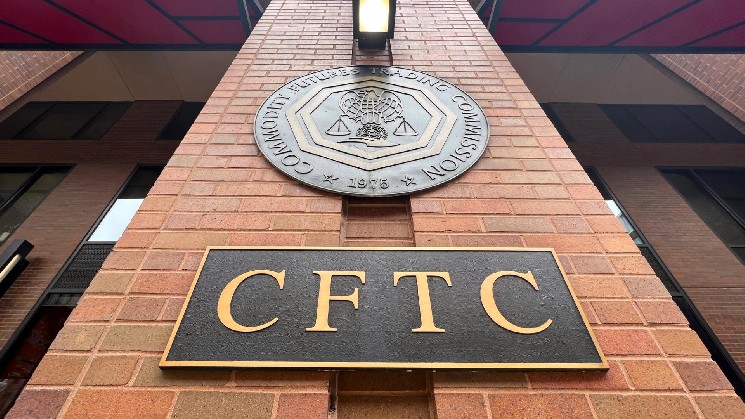
    • The CFTC issued a staff advisory warning that “mention markets” — betting on what a specific individual might say or do — are “presumptively readily susceptible to manipulation.”
    • The regulator distinguishes these markets from standard event contracts because outcomes depend on “the discrete conduct of a named person” rather than independently generated, externally verifiable events.
    • Prediction platform operators including Kalshi and Polymarket are reminded they may only list derivative contracts that are not readily susceptible to manipulation.

    CFTC Targets ‘Mention Markets’ in New Supervisory Advisory

    The Commodity Futures Trading Commission has drawn a sharp regulatory line around a growing category of prediction-market contracts, issuing a staff advisory on Tuesday that labels wagers on an individual’s future statements or actions as “presumptively readily susceptible to manipulation.” The guidance, released by the agency’s Division of Market Oversight, signals a potential narrowing of the event-contract universe that can clear the CFTC’s supervisory hurdles, directly affecting operators such as Kalshi and Polymarket.

    How ‘Mention Markets’ Differ From Standard Event Contracts

    Unlike traditional event contracts that settle on “independently generated, externally verifiable outcomes that are outside the control of any single person,” the CFTC staff advisory explains that mention markets pivot on “the discrete conduct of a named person, and that conduct may be neither independently generated nor externally verifiable.” Because the outcome hinges on one person’s behavior — or the actions of those in their orbit — the agency warns that the individual or people around them could shift the result based on their own knowledge of the betting activity.

    Regulatory Reminder: Only Non-Manipulable Contracts Permitted

    The advisory serves as a formal reminder to prediction-platform operators that they are “only allowed to trade derivative contracts that are not readily susceptible to manipulation.” By classifying mention markets as presumptively problematic, the CFTC is effectively placing the burden on exchanges to demonstrate why any contract tied to a specific person’s conduct should be permitted, or to delist such markets altogether. The move underscores the agency’s focus on market integrity as prediction platforms expand their offerings beyond traditional economic and political indicators.

    Why This Matters

    The CFTC’s advisory arrives as prediction markets gain mainstream traction and attract significant volume during major news cycles. By targeting contracts tied to individual conduct, the regulator is addressing a structural vulnerability: markets where a single actor — or their associates — can influence the outcome create clear incentives for insider trading and market manipulation. For platforms like Kalshi and Polymarket, the guidance implies a compliance review of existing “mention market” listings and stricter vetting for future contracts. The decision also sets a precedent for how U.S. regulators may treat novel event-contract categories as the sector evolves, balancing innovation with the statutory mandate to prevent manipulation and protect market participants.

    Frequently Asked Questions

    What are “mention markets” according to the CFTC?
    Mention markets are wagers on what a specific, named individual might say or do — for example, whether a public figure will utter a certain phrase or take a particular action. The CFTC considers these distinct from standard event contracts because the outcome depends on the discrete conduct of one person.
    Why does the CFTC consider mention markets prone to manipulation?
    The advisory states that because the outcome pivots on “the discrete conduct of a named person,” that person or people around them could influence the result based on their own knowledge of the betting, making the market “presumptively readily susceptible to manipulation.”
    What must prediction platforms like Kalshi and Polymarket do in response?
    Operators are reminded they may only list derivative contracts that are not readily susceptible to manipulation. They will likely need to review existing mention-market contracts for compliance and apply stricter criteria before launching similar markets in the future.
  • CFTC Scrutinizes Kalshi After $5 Billion in Near-Identical Ether Perpetual Trades, WSJ Reports

    CFTC Scrutinizes Kalshi After $5 Billion in Near-Identical Ether Perpetual Trades, WSJ Reports

    Key Highlights

    • The Commodity Futures Trading Commission is reviewing unusual trading patterns on Kalshi involving nearly one million ether perpetual futures trades clustered around $5,500, representing over $5 billion in volume.
    • Kalshi denies wash trading allegations, attributing the pattern to market makers maintaining fixed resting orders and hundreds of distinct traders participating in the transactions.
    • Jump Trading and Wintermute were identified among firms involved in the rapid transactions, with Jump stating it trades for profit and uses self-match prevention tools.

    CFTC Scrutinizes Concentrated Trading Activity on Kalshi Ether Perpetuals

    The Commodity Futures Trading Commission is examining unusual trading activity on the Kalshi exchange after an analysis by The Wall Street Journal revealed nearly one million ether perpetual futures trades executed in almost identical amounts. According to the Journal’s review of public data, more than one-third of trades in the market during recent weeks clustered around the $5,500 price level, accounting for over $5 billion in ether perpetual volume over the past month. The regulatory review comes at a pivotal moment for Kalshi, which launched its crypto perpetual futures business in May and has since sought approval to offer similar contracts tied to individual U.S. stocks.

    Allegations of Wash Trading Prompt Regulatory Review

    The trading pattern has prompted allegations of wash trading—a practice involving trades lacking genuine economic purpose that can create a misleading impression of market activity. The CFTC is reviewing the activity before determining whether to open an enforcement investigation, according to a person familiar with the matter cited by the Journal. The agency said it could not comment on whether an investigation is underway. Kalshi has categorically denied the allegations, stating that hundreds of distinct traders participated in the transactions and arguing that the repeated trade sizes resulted from market makers maintaining fixed resting orders that were repeatedly hit by faster traders.

    Kalshi Defends Market Structure and Liquidity Programs

    In its defense, Kalshi emphasized that self-trading is mechanically blocked on its platform and that coordinated wash trading is both prohibited and actively monitored. The company said its liquidity programs compensate market makers for maintaining orders at specific sizes and spreads rather than rewarding trading volume. A temporary program also refunds trading fees for qualifying self-clearing members but does not allow traders to receive more in rebates than they paid in fees. According to the Journal, Jump Trading and Wintermute were among the firms involved in the rapid transactions. Jump said it trades for profit, uses self-match prevention tools, and does not coordinate its activity with other traders.

    Why This Matters

    The CFTC’s scrutiny of Kalshi highlights the growing regulatory focus on crypto derivatives markets as they expand beyond traditional cryptocurrency exchanges into regulated venues. Kalshi, designated as a contract market by the CFTC, operates under a different regulatory framework than many offshore crypto platforms, making this review particularly significant for the evolution of U.S.-regulated crypto derivatives. The outcome could set precedents for how market-making activities, liquidity incentives, and high-frequency trading patterns are policed in crypto perpetual futures markets. As Kalshi seeks to expand into single-stock perpetual futures, the resolution of this review will likely influence the pace and conditions of that regulatory approval process.

    Frequently Asked Questions

    What triggered the CFTC’s review of Kalshi trading activity?

    The Wall Street Journal’s analysis of public data revealed nearly one million ether perpetual futures trades clustered around $5,500 in almost identical amounts, representing over $5 billion in volume over the past month. This concentration—accounting for more than one-third of recent market trades—prompted the CFTC to review the activity for potential wash trading.

    How has Kalshi responded to the wash trading allegations?

    Kalshi has denied the allegations, stating that hundreds of distinct traders participated in the transactions. The exchange attributes the repeated trade sizes to market makers maintaining fixed resting orders that were repeatedly executed by faster traders. Kalshi also noted that self-trading is mechanically blocked, coordinated wash trading is prohibited and monitored, and its liquidity programs reward order maintenance rather than volume.

    Which firms were identified as participants in the trading pattern?

    According to The Wall Street Journal, Jump Trading and Wintermute were among the firms involved in the rapid transactions. Jump Trading stated it trades for profit, uses self-match prevention tools, and does not coordinate its activity with other traders.

  • CryptoQuant CEO Ki Young Ju Predicts Bitcoin Could Surge 3-5x This Cycle

    CryptoQuant CEO Ki Young Ju Predicts Bitcoin Could Surge 3-5x This Cycle

    Key Highlights

    • CryptoQuant CEO Ki Young Ju forecasts Bitcoin appreciation of 3–5x in the current bull cycle, significantly below the 10x+ gains seen in prior cycles.
    • Growing institutional participation and market maturation are reducing both upside volatility and downside crash risk, potentially making future bear markets milder.
    • Ki argues this structural shift positions Bitcoin as a long-term capital preservation asset rather than a short-term speculative vehicle, with transformative implications for the global financial system if adoption as a functional currency accelerates.

    CryptoQuant CEO Projects Tempered Bitcoin Returns Amid Market Maturation

    CryptoQuant founder and chief executive Ki Young Ju has revised expectations for Bitcoin’s current bull cycle, suggesting the asset may climb only three to five times its present value rather than repeating the tenfold or greater surges characteristic of earlier market phases. In a post published on X, Ki attributed the moderated outlook to the cryptocurrency’s expanding market capitalization and the rising dominance of institutional investors, factors he says are fundamentally altering Bitcoin’s volatility profile.

    Institutional Growth Dampens Speculative Extremes

    Ki explained that during Bitcoin’s earlier stages, a comparatively small market cap and heavy reliance on retail participants left prices acutely sensitive to short-term speculative flows. That structure, he noted, routinely produced parabolic rallies followed by drawdowns as deep as 80 percent. As institutional capital assumes a larger share of ownership, the analyst argues, the market’s depth increases, compressing volatility in both directions and lowering the probability of both explosive melt-ups and catastrophic crashes.

    Shift Toward Long-Term Store of Value

    The CryptoQuant chief framed this evolution as a positive development for the asset class, contending that reduced cyclicality makes Bitcoin better suited for long-term capital allocation rather than short-term trading. He further speculated that should Bitcoin eventually achieve sufficient stability and gain widespread adoption as a functional medium of exchange, the resulting transformation of the global financial architecture could extend well beyond anything currently anticipated by market observers.

    Why This Matters

    Ki Young Ju’s assessment reflects a growing consensus among on-chain analysts that Bitcoin’s risk-return profile is normalizing as the asset graduates from a niche speculative instrument to an institutional-grade treasury reserve. The increasing presence of spot Bitcoin ETFs, corporate treasuries, and sovereign wealth fund allocations deepens liquidity and lengthens holder time horizons, structurally suppressing the boom-bust cycles that defined the 2013, 2017, and 2021 peaks. For investors, this implies a recalibration of expectations: lower maximum upside per cycle in exchange for shallower drawdowns and a higher probability of multi-year compounding. At a macro level, a Bitcoin that behaves more like a low-volatility monetary asset than a high-beta tech stock could accelerate its integration into global payment rails, central bank reserves, and cross-border settlement layers—a transition that would indeed reshape financial infrastructure in ways current models struggle to capture.

    Frequently Asked Questions

    What specific price multiple does Ki Young Ju expect for Bitcoin in this bull cycle?

    Ki Young Ju projects a 3–5x appreciation from current levels, contrasting with the 10x+ multiples observed in previous bull markets.

    Why does Ki believe future bear markets will be less severe?

    He cites the growing share of institutional investors and a larger market capitalization, which together deepen liquidity and reduce the influence of short-term speculative capital that historically amplified both rallies and crashes.

    Does Ki Young Ju’s analysis constitute investment advice?

    No. The original post explicitly includes a disclaimer stating “This is not investment advice.”

  • Democrats ‘chose visceral hatred for’ Donald Trump Over crypto Clarity Act, Lummis Says

    Democrats ‘chose visceral hatred for’ Donald Trump Over crypto Clarity Act, Lummis Says

    Key Highlights

    • Senator Cynthia Lummis blamed Senate Democrats for blocking a procedural vote on bipartisan crypto market structure legislation last week, calling the outcome “dismayed, dumbfounded and saddened.”
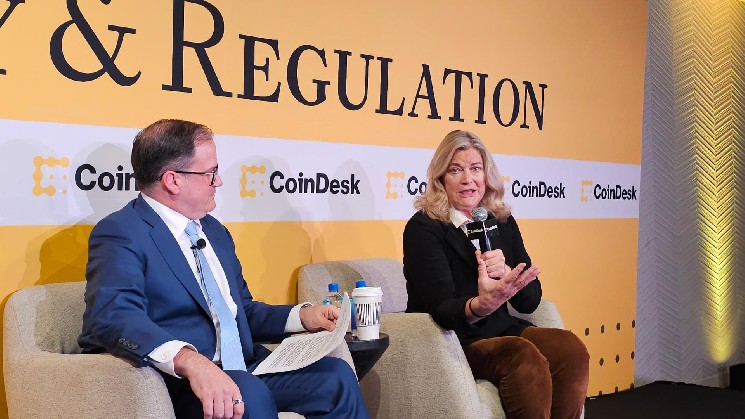
    • Speaking at CoinDesk’s Policy & Regulation event, Lummis alleged Democrats prioritized opposition to President Donald Trump over passing the bill, which had grown from 300 to over 600 pages after Democratic requests for provisions such as bankruptcy protections.
    • The legislation was the product of cross-party negotiations, but failed to advance before the midterm election cycle, leaving digital asset regulatory clarity in limbo.

    Lummis Points Finger at Democratic Opposition to Trump

    Senator Cynthia Lummis (R-Wyo.) delivered a sharp rebuke of her Democratic colleagues on Tuesday, arguing that partisan animosity toward President Donald Trump derailed a carefully negotiated crypto market structure bill that had achieved rare bipartisan consensus. Addressing attendees at CoinDesk’s Policy & Regulation event in Washington, D.C., Lummis said she was “dismayed, dumbfounded and saddened” that the Senate could not advance a key procedural vote on the measure last week.

    The Wyoming Republican framed the failure as a deliberate choice by Democrats to deny the incoming administration a legislative win ahead of the midterm elections. The problem was, as I see it, Democrats hate President [Donald] Trump more than they like good policy, and the way I see it is they chose their visceral hatred for President Trump and denied the opportunity to pass important policy legislation before a midterm, Lummis said. They chose that … pin it on the Democrats.

    Bill Expanded Significantly After Democratic Input

    Lummis emphasized that the legislation was not a partisan product but the result of extensive negotiations between members of both parties. She noted the bill had ballooned from roughly 300 pages to more than 600 after Democrats requested additional provisions addressing issues such as bankruptcy protections, among other items. Those concessions, she argued, demonstrated Republican willingness to accommodate Democratic priorities, only for the bill to stall at the procedural stage.

    The stalled measure represents the most comprehensive attempt to date to establish a clear regulatory framework for digital asset markets in the United States. Its failure to advance leaves critical questions unresolved regarding the classification of tokens, the roles of the SEC and CFTC, consumer protections, and the treatment of digital assets in bankruptcy proceedings — issues the expanded text had sought to address.

    Why This Matters

    The collapse of the bipartisan crypto market structure bill underscores how broader political dynamics — particularly the polarized response to President Trump — can override substantive policy agreement on emerging technologies. With the legislation now stalled, regulatory uncertainty continues to hamper the digital asset industry, driving activity offshore and complicating compliance for U.S.-based firms. The next opportunity for comprehensive crypto legislation will likely depend on the composition of the next Congress and whether either party chooses to revive the negotiated text or pursue a new approach. For now, the SEC and CFTC will continue to rely on existing enforcement authorities, and market participants will operate without the statutory clarity the bill was designed to provide.

    Frequently Asked Questions

    What specific provisions did Democrats request that expanded the bill?

    According to Senator Lummis, Democrats asked for provisions addressing bankruptcy protections, among other items, which caused the bill to grow from roughly 300 pages to over 600 pages.

    Was the crypto market structure bill a partisan or bipartisan effort?

    Lummis described the bill as a bipartisan product resulting from negotiations between members of both parties, though it ultimately failed to advance due to what she characterized as Democratic opposition to President Trump.

    What happens next for crypto regulation in the Senate?

    With the procedural vote blocked before the midterm elections, the legislation is effectively stalled. Future progress will depend on the next Congress’s composition and priorities, and whether lawmakers choose to revive this negotiated text or start anew.

  • Arch Lending Targets Tokenized Stocks as Next Collateral Market

    Arch Lending Targets Tokenized Stocks as Next Collateral Market

    Key Highlights

    • Arch Lending plans to launch loans backed by tokenized equities “pretty soon” as the onchain stock market surpasses $3.15 billion in distributed value.
    • Bitcoin still dominates Arch’s loan book at over 80%, though the lender reports rising demand for XRP collateral among U.S. borrowers.
    • Competitors including Ondo Finance, Kraken, and Coinbase have already integrated tokenized stocks and ETFs into lending, margin, and futures products.

    Arch Lending Targets Tokenized Equity Credit Market

    Crypto lender Arch Lending is preparing to expand its collateral offerings into tokenized equities, marking a significant step in the convergence of traditional securities and decentralized finance. Co-founder and Chief Revenue Officer Himanshu Sahay disclosed the plan during an appearance on Cointelegraph’s Chain Reaction podcast, stating the firm intends to enter the market “pretty soon” to meet growing demand for credit facilities against onchain stock holdings.

    Tokenized Equities Market Surges Past $3 Billion

    The move comes as the tokenized equities sector experiences rapid expansion. According to data from RWA.xyz, the distributed value of tokenized stocks has climbed to approximately $3.15 billion, up from roughly $630 million a year earlier. Sahay noted that while issuance has accelerated — driven by firms such as Superstate, Robinhood, and Securitize — lending infrastructure against these assets remains underdeveloped. He predicted that multiple lenders will eventually participate in the market to provide credit against tokenized equity collateral.

    Arch Diversifies Beyond Crypto-Native Assets

    Arch has already begun broadening its collateral base beyond pure cryptocurrencies. In recent weeks, the lender introduced loans backed by Paxos Gold (PAXG) and Tether Gold (XAUt), according to Sahay. Despite this diversification, Bitcoin (BTC) continues to dominate Arch’s loan book, accounting for more than 80% of outstanding credit. The firm has also observed increasing interest in XRP as collateral, particularly among borrowers in the United States.

    Competitive Landscape Heats Up

    DeFi Protocols Lead Tokenized Equity Integration

    Arch would not be the first entrant to the tokenized equity credit market. In February, Ondo Finance launched DeFi lending markets for two of its tokenized exchange-traded funds — the SPDR S&P 500 ETF and Invesco QQQ — through an integration with lending protocol Morpho on Ethereum. These tokenized ETFs can now serve as collateral for onchain borrowing.

    Centralized Exchanges Expand Utility

    Centralized platforms are also embedding tokenized equities into broader trading products. Kraken made 10 xStocks eligible to back futures and margin positions in July, while Coinbase launched its B20 stocks on the Base network in August with price-feed infrastructure designed to support DeFi borrowing and lending use cases.

    Why This Matters

    The entry of established crypto lenders like Arch into tokenized equity lending signals a maturing infrastructure for real-world asset (RWA) finance. As tokenized stocks and ETFs gain liquidity and regulatory clarity, they are becoming viable collateral for credit markets — bridging traditional portfolio assets with onchain capital efficiency. The involvement of major issuers (Superstate, Securitize, Robinhood) and exchanges (Kraken, Coinbase) suggests a multi-sided ecosystem is forming, where lending, trading, and custody of tokenized securities could eventually mirror the depth of legacy prime brokerage. For borrowers, this unlocks liquidity without selling equity positions; for lenders, it diversifies collateral risk beyond volatile crypto-native assets. The next phase will likely involve standardization of legal wrappers, oracle reliability, and cross-chain interoperability to scale these markets globally.

    Frequently Asked Questions

    What is Arch Lending’s timeline for launching tokenized equity-backed loans?
    Arch co-founder and CRO Himanshu Sahay said the firm plans to enter the market “pretty soon,” though no specific launch date was disclosed.
    Which companies currently issue tokenized equities that could serve as collateral?
    According to Sahay, firms including Superstate, Robinhood, and Securitize are issuing tokenized equities that Arch sees as potential collateral assets.
    How large is the tokenized equities market today?
    Data from RWA.xyz shows the distributed value of tokenized stocks has reached approximately $3.15 billion, up from roughly $630 million one year ago.
  • Crypto Bull Market Returns? Three Signals Indicate a Possible Comeback

    Crypto Bull Market Returns? Three Signals Indicate a Possible Comeback

    Key Highlights

    • Total cryptocurrency market capitalization surged nearly $1 trillion in six weeks, climbing from $2.06 trillion to over $2.91 trillion as Bitcoin led a broad-based recovery.
    • Spot Bitcoin ETFs recorded $999 million in net inflows—the largest single-day haul since October 2023—while combined Bitcoin and Ethereum ETF inflows reached $1.27 billion.
    • Bitcoin reclaimed all major long-term moving averages after 300 days below them, trading above both the True Market Mean ($76,746) and short-term holder cost basis ($71,763), signaling potential bull-market onset.

    Market Sentiment Shifts From Fear to Greed as Bitcoin Breaks $85,000

    The cryptocurrency market has entered a pronounced bullish phase since early August, with Bitcoin spearheading a recovery that has erased much of the bear-market damage accumulated since October 2023. In just six weeks, the aggregate crypto market capitalization has swollen from $2.06 trillion to more than $2.91 trillion, according to CoinGecko data, adding nearly $1 trillion in fresh value. The Fear & Greed Index—a widely watched sentiment gauge—has surged to 59, squarely in “greed” territory, up sharply from a “fear” reading of 45 only a week earlier. The inflection point coincided with Bitcoin’s decisive push above the $85,000 psychological threshold, a level that had acted as stiff resistance during the prolonged consolidation.

    Record ETF Inflows Signal Deepening Institutional Conviction

    Underpinning the price action is a torrent of institutional capital flowing into U.S.-listed spot exchange-traded funds. On the most recent trading day, Spot Bitcoin ETFs collectively attracted $999 million in net inflows, marking the largest single-session intake since the products drew $1.21 billion on October 6, 2023, per SoSoValue figures. BlackRock’s iShares Bitcoin Trust led the charge with $381.37 million, followed by the Ark 21Shares Bitcoin ETF at $289.12 million and Fidelity’s Wise Origin Bitcoin Fund at $238.84 million. The momentum was not confined to Bitcoin: Ethereum ETFs simultaneously pulled in $269.98 million, lifting the combined daily net inflow across both asset classes to $1.27 billion. Analysts note that the breadth of participation—spanning both the flagship cryptocurrency and its largest smart-contract rival—suggests the rally is evolving into a genuine altcoin expansion rather than a Bitcoin-only phenomenon.

    On-Chain and Technical Metrics Align With Bull-Market Thesis

    Beyond fund flows, on-chain and technical indicators are flashing constructive signals. Glassnode data shows Bitcoin has now recaptured all of its long-term moving averages after spending roughly 300 days trading beneath them—a duration that historically precedes sustained up-trends. The asset’s spot price sits comfortably above two critical cost-basis benchmarks: the True Market Mean at $76,746 and the short-term holder realized price at $71,763. Holding above these levels implies that the majority of recent acquirers are in profit, a condition that typically reinforces holder conviction and reduces sell-side pressure. Meanwhile, the rally’s breadth has flipped the Bitcoin-cycle signal in favor of altcoins, indicating capital is rotating beyond the dominant store-of-value narrative into the broader ecosystem.

    Why This Matters

    The confluence of improving sentiment, record-breaking ETF flows, and technical breakouts arrives at a pivotal juncture for digital assets. After a grueling 18-month bear market that tested institutional commitment, the simultaneous breach of $85,000 Bitcoin, the reclamation of long-term moving averages, and the rotation into altcoins mirrors the early innings of previous bull cycles in 2017 and 2020-21. However, market veterans caution that the Fear & Greed Index’s rapid ascent toward “extreme greed” (above 70) often coincides with short-term tops or sharp pullbacks. The next few sessions will test whether the current inflow momentum can absorb profit-taking from early-cycle participants without triggering a deeper correction. Regulatory clarity around stablecoins and market structure legislation in the U.S. Congress, coupled with the Federal Reserve’s evolving rate-cut trajectory, remain the key macro variables that could either extend or truncate the advance.

    Frequently Asked Questions

    What triggered the latest surge in crypto market capitalization?
    A combination of Bitcoin breaking above $85,000, record single-day inflows into Spot Bitcoin ETFs ($999M), and concurrent Ethereum ETF inflows ($269.98M) drove the total market cap from $2.06T to over $2.91T in six weeks.
    Which ETF issuers led the Bitcoin inflows?
    BlackRock’s iShares Bitcoin Trust ($381.37M), Ark 21Shares Bitcoin ETF ($289.12M), and Fidelity’s Wise Origin Bitcoin Fund ($238.84M) were the top three recipients of the $999M net inflow.
    Are technical indicators confirming a new bull market?
    Yes. Bitcoin has reclaimed all long-term moving averages after 300 days below them and trades above both the True Market Mean ($76,746) and short-term holder cost basis ($71,763)—conditions historically associated with bull-market starts. However, the Fear & Greed Index at 59 nearing “extreme greed” warrants caution for near-term volatility.
  • Filecoin Outlines Three Development Phases in Latest Update

    Filecoin Outlines Three Development Phases in Latest Update

    Key Highlights

    • Filecoin has formalized its evolution into three distinct development phases—building storage capacity, enhancing usability, and generating paid demand—under the 2026 Filecoin Network Strategy.
    • The structured roadmap aims to accelerate user acquisition and strengthen the network’s competitive position in the decentralized storage sector.
    • Current market data shows absent trading volume and thin liquidity, suggesting traders are digesting the strategic update amid mixed broader crypto signals.

    Filecoin Unveils Three-Phase Growth Framework in 2026 Network Strategy

    Filecoin, the decentralized storage protocol, has publicly outlined its progression through three significant development phases since its mainnet launch, according to an announcement from the official Filecoin account. The framework, now formalized in the 2026 Filecoin Network Strategy, segments the network’s maturation into building raw storage capacity, improving usability for developers and end users, and—beginning in 2025—driving paid demand for storage deals. The strategy signals a deliberate shift from infrastructure build-out to commercial adoption, positioning the network to attract new participants and deepen engagement across its ecosystem.

    From Capacity to Commerce: The Strategic Arc

    The first phase focused on onboarding storage providers and scaling the network’s raw capacity, establishing the physical backbone required for a credible decentralized alternative to centralized cloud providers. The second phase prioritized usability upgrades—tooling, documentation, and integration pathways—to lower the barrier for developers building on Filecoin and for clients seeking to store data. The third and current phase, initiated in 2025, centers on generating sustained paid demand, converting available capacity into revenue-generating storage deals. Filecoin’s governance, steered by its community and stakeholders, treats these phased milestones as critical markers for the protocol’s long-term market positioning.

    Market Context: Mixed Signals and Thin Liquidity

    Despite the strategic clarity, market conditions are reflecting caution. Trading volume for Filecoin’s native token is currently absent, indicating potential thin liquidity as participants assess the implications of the updated roadmap. Broader cryptocurrency markets are delivering mixed signals, which may temper immediate trader enthusiasm for Filecoin’s structural updates. Observers note that the network’s ability to translate usability improvements into measurable paid demand will be the key variable influencing both user acquisition metrics and token market dynamics in the coming weeks.

    Why This Matters

    Filecoin’s phased approach mirrors the maturation cycle seen in other decentralized infrastructure protocols, where initial supply-side incentives must eventually give way to organic, revenue-driving demand. The 2026 Filecoin Network Strategy makes this transition explicit, providing a benchmark against which the community, investors, and potential enterprise clients can measure progress. Success in the paid-demand phase would validate the economic model underpinning decentralized storage—proof that unused global capacity can be efficiently matched with paying customers without centralized intermediaries. Conversely, persistent thin liquidity and low deal flow could signal that usability barriers or macro headwinds remain higher than anticipated, affecting both network growth and token valuation.

    Frequently Asked Questions

    What are the three development phases in Filecoin’s 2026 Network Strategy?

    The three phases are: building storage capacity, enhancing usability, and generating paid demand, with the demand-generation phase beginning in 2025.

    How does the strategy affect Filecoin’s market position?

    The structured roadmap aims to attract new users and bolster network growth by shifting focus from infrastructure expansion to commercial adoption, potentially strengthening Filecoin’s competitive standing in decentralized storage.

    What should traders monitor following this update?

    Traders should watch for shifts in user engagement, paid storage deal volume, and any changes in trading liquidity as the market digests the strategic framework amid broader crypto volatility.