Category: Coins

Digital assets, cryptocurrencies, blockchain, and currency news.

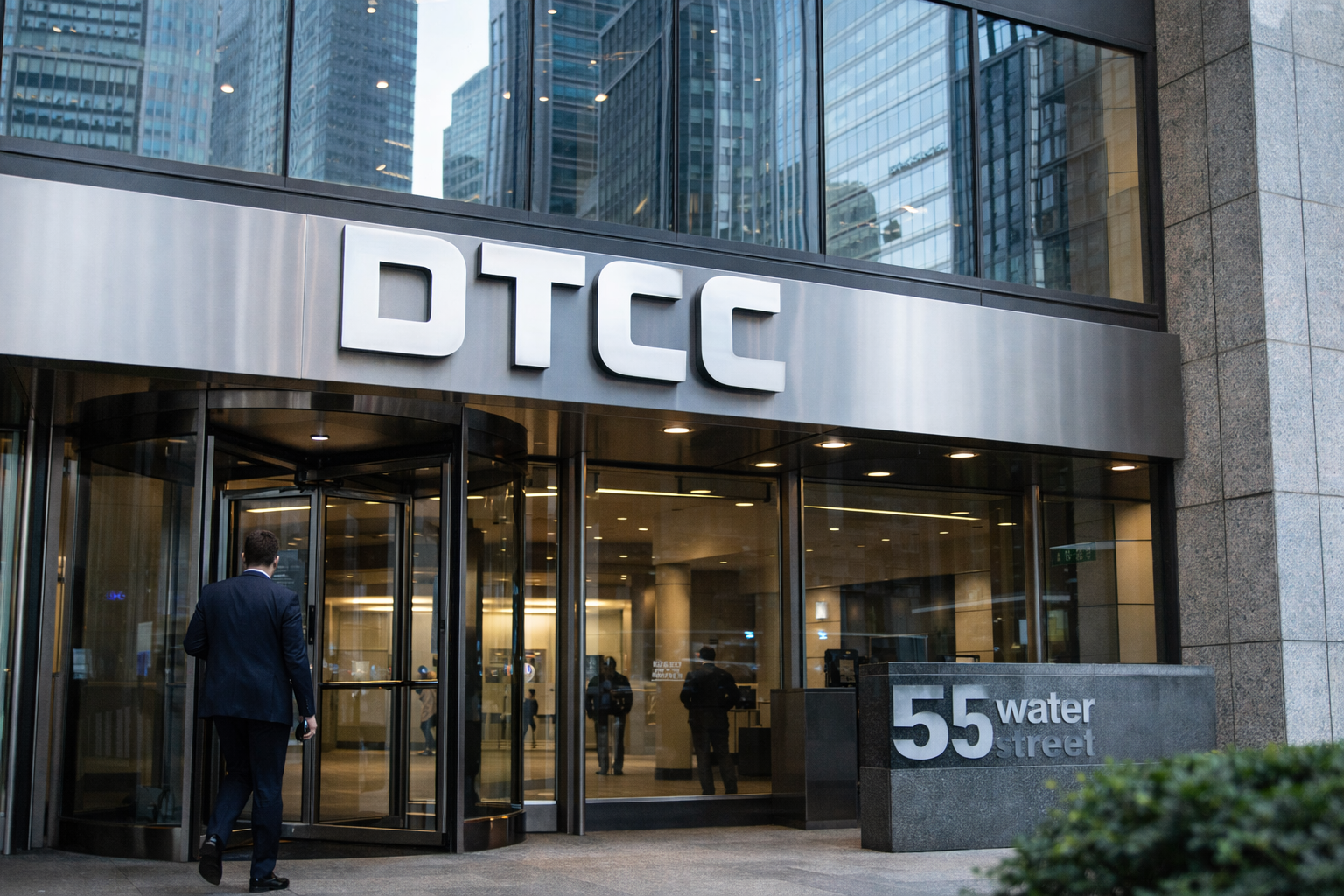
  • USA: Ripple Prime becomes a partner of the US Depository Trust & Clearing Corporation

    USA: Ripple Prime becomes a partner of the US Depository Trust & Clearing Corporation


    • Ripple Prime was added to the NSCC registry, an achievement that effectively involves Ripple in the US post-trade infrastructure.
    • This will not result in an immediate price boost for XRP, but that is not important in this case – the progress lies elsewhere.

    By joining the National Securities Clearing Corporation (NSCC) register, Ripple Prime, formerly Hidden Road, meets the requirements to participate in US clearing. The NSCC register is a core part of the Depository Trust & Clearing Corporation DTCC.

    It handles a large part of US securities trading. Inclusion in the directory means that Ripple Prime now has the same access as a classic broker. For a company with roots in the crypto sector, this is an unusually strong presence in traditional market infrastructure.

    This clearly shows that Ripple Prime does not only operate as a crypto service provider, but is increasingly at home in both worlds, DeFi and TradFi.

    Ripple Prime as a bridge between worlds

    Ripple took over Hidden Road 2025 in order to embed a global prime broker into its own system. The aim is to enable institutional customers to carry out trading and post-trading processes via the XRP ledger.

    Presence on the NSCC list is necessary to achieve this. It creates the basis for XRPL-based settlement to be directly linked to established clearing chains.

    This creates a regulated access point through which banks can test and use digital assets, FX transactions and tokenized assets via XRPL. The combination of traditional market structure and XRPL technology is a core part of the Ripple strategy.

    XRP in the institutional environment

    There was no price reaction to this because the market is currently reacting to the much more influential global factors. However, the step is also relevant for the course in the medium and long term.

    If Ripple Prime actually carries trading volumes over the XRPL, the demand for the network will increase. XRP serves as a liquidity asset in the XRPL system and benefits from any expansion of institutional use.
    XRP Ledger Tokenisierung

    Image created with ChatGPT-AI (DALL E)

    The NSCC listing also strengthens Ripple’s reputation in the area of ​​RWA tokenization and international transactions. This makes XRPL an option for institutions for settlements that require high processing speed, transparency and programmability.

    outlook

    Inclusion on the NSCC list is not spectacular, but it is an advance that consolidates Ripple’s position in the institutional market segment. This creates an improved starting position for XRP for future applications.

    The decisive factor will be whether Ripple Prime will soon have measurable volumes via the

  • Premiere in Poland: Warsaw Stock Exchange lists crypto ETPs for the first time

    Premiere in Poland: Warsaw Stock Exchange lists crypto ETPs for the first time


    • Swedish crypto ETP issuer Virtune is bringing physically backed Bitcoin, Ethereum, Solana and XRP investment products to the Warsaw Stock Exchange, the largest in Eastern Europe.
    • The four crypto ETPs give local investors regulated access to digital assets in local currency for the first time. The exchange is responding to the growing interest in digital assets in Poland.

    The Warsaw Stock Exchange, the central securities exchange in Poland and Eastern Europe, was previously a market without physically secured crypto products. This changes with the listing of the four crypto ETPs launched by Virtune.

    The Bitcoin, Ethereum, Solana and XRP ETPs are fully collateralized and tradable in Polish złoty. The target group is both institutional and private small investors. Particularly noteworthy are the derivatives on Ethereum and Solana, which can be staked and whose returns are included in the daily net asset value.

    This gives Polish investors access to crypto assets without technical hurdles, without the obligation to keep them in their own custody and without exchange rate risks. The Warsaw Stock Exchange is thus opening up to an asset class that was previously only accessible via foreign exchanges and specialized traders.

    Custody and trading

    Virtune operates under Swedish regulation and uses custody models that comply with EU requirements. The physical deposit of assets creates transparency and security.

    Raiffeisen Bank International ensures liquidity on the Warsaw Stock Exchange, acting as a market maker to ensure stable spreads and continuous tradability.

    Access is via established brokers such as XTB, which have a large customer base in Poland and thus enable immediate availability of the investments.

    Regulation, physical deposit and trading in local currency create an offer that was previously missing in the Polish market.

    European and regional significance

    With this step, Poland is joining markets such as Germany, Sweden and Switzerland, which have long been familiar with physically deposited crypto ETPs. The Warsaw Stock Exchange is now a pioneer for Eastern Europe, showing how digital assets can be integrated into existing capital market structures.

    The introduction comes as demand for regulated crypto products increases, with institutional investors demanding a clear regulatory framework. The Warsaw Stock Exchange is thus positioning itself as a relevant location in the east of the EU.

    Perspectives

    Investors will have regulated access to spot crypto products that are technically uncomplicated and at the same time meet institutional standards.

    Virtune is planning other new products this year, which will further elevate the Warsaw Stock Exchange in the crypto industry.

    Virtune Crypto ETPs
    Source: Virtune
  • EU banking consortium Qivalis is making progress on the Euro stablecoin

    EU banking consortium Qivalis is making progress on the Euro stablecoin


    • The Qivalis consortium, which now consists of twelve EU banks, is working hard on the issue of its euro-based stablecoin, which is scheduled to take place in the second half of the year.
    • Talks are already being held with international crypto exchanges. The banks involved will also market the Euro stablecoin themselves in order to quickly achieve a wide reach.

    Like the one appearing in Madrid CincoDías business newspaper – the Spanish equivalent of the German Handelsblatt – reported in its Monday edition, the Qivalis consortium’s Euro stablecoin is making good progress. There are already discussions about distribution agreements with the world’s major crypto exchanges.

    Qivalis CEO Jan Sell, former head of Coinbase in Germany, describes the goal as building an EU alternative to the dollar stablecoins that dominate the market today.

    Qivalis looks for its partners among institutions that meet the EU’s MiCA requirements, have solid liquidity and maintain high security standards.

    The aim is to provide the complete Euro stablecoin infrastructure from the first official day of distribution. There should be no gradual introduction or transition periods for related services.

    The Euro stablecoin will enable real-time transactions and is intended to reduce dependence on existing infrastructure that is difficult to modernize.

    Reserve and risk diversification

    The stablecoin is backed 1:1 by the euro. At least 40 percent is held as sight deposits at credit institutions with high credit ratings, while up to 60 percent is held in short-term government bonds from several Eurozone countries.

    Custody is carried out by a diversified group of institutions that must ensure 24/7 exchange. Qivalis CEO Sell emphasizes:

    “Despite the strong balance sheets of the member banks, risk diversification has top priority. The custodians are selected based on creditworthiness, stability and operational reliability.”

    Importance for Europe

    Although 99 percent of all stablecoins are currently pegged to the dollar, EU banks still see an international market for the euro-based stablecoin, simply because it can make EU companies independent of US infrastructure.

    The major Spanish bank BBVA, a new member of the Qivalis consortium, gave up its own stablecoin project that had already started in favor of the joint project in order to avoid fragmentation and to give more weight to the Euro stablecoin that is now being pushed forward.

    The Euro stablecoin project thus supports the European Union’s efforts to strengthen its financial independence.

    Digital Euro and Euro stablecoin
    Image created with ChatGPT-AI (DALL E)

    While the European Central Bank is pushing forward the Digital Euro – not as a CBDC, as is often wrongly claimed – the private sector is also working on a Europe-wide real-time transfer system that connects national systems and is intended to create an alternative to the dominance of the US payment services VISA and Mastercard.

  • Cardano founder warns of explosive new US crypto law

    Cardano founder warns of explosive new US crypto law


    • Cardano founder Hoskinson warns that HR 3633 would initially automatically treat new crypto projects as securities and put the burden of proof on them to the SEC.
    • New projects and DeFi in particular could suffer, while established networks would be spared.

    Cardano founder Charles Hoskinson has sharply criticized the US bill HR 3633, the “Digital Asset Market Clarity Act of 2025”. In a March 2 video, he argued that the draft does not provide regulatory clarity. Instead, it places the US crypto industry permanently under the control of the US Securities and Exchange Commission (SEC).

    Why the Cardano founder warns about the new US law

    At the center of the criticism is the basic logic of the law. According to Hoskinson, new tokens will initially be treated as securities by default. Only later do they have to prove the opposite:

    “The way this law is written, everything starts as a security. XRP would have started as a security. Cardano would have started as a security. Ethereum would have started as a security,” Hoskinson said. “Then you have to go to the SEC and tell them: I no longer believe that I am a security. And guess what: the SEC has to agree with you.”

    This means that the US Securities and Exchange Commission (SEC) has even greater power than before over whether a crypto token is a security or not. The draft formally creates a path from securities to commodities. However, the practical design is largely left to the later rulemaking by the SEC. This is exactly where Hoskinson sees the big risk.

    He outlined several ways in which the authority could, in his view, block this process: through delayed completeness checks, broadly interpretable definitions of “common control,” hardly achievable evidence of the ownership structure and economic tests on the question of whether the value of a token comes from use or from speculation.

    His point: Even if a project wants to formally demonstrate a level of maturity, the regulatory hurdles could be endless. Hoskinson was particularly clear about the burden of proof:

    “The burden of proof to demonstrate maturity and decentralization rests on the applicant. So XRP would have to prove to the SEC that it is not a security, and the SEC would be judge, jury and enforcer at the same time. No judge initially decides otherwise. The law itself makes it a security. That’s why it is a bad law.”

    With his criticism, the Cardan0 founder also indirectly addressed the position of Ripple boss Brad Garlinghouse, who repeatedly described an imperfect law as “better than none at all”. Hoskinson believes this assessment is wrong:

    “Bad law enshrines in law everything Gary Gensler wanted to do to the industry. Bad law allows the SEC, through rulemaking, to arbitrarily and wantonly destroy any new project in the United States. Bad law destroys all liquidity for those not sanctioned by the government.”

    The Cardano founder also argues that the draft brings virtually no tangible benefits to DeFi. According to him, neither protocols like Uniswap nor developers or new stablecoin models are adequately protected or even meaningfully recorded. Instead of a sustainable legal framework, a law is created that may spare existing projects but pushes new initiatives out of the US market:

    “What they will do in practice is to effectively grandfather the ten largest projects and the projects with long histories. Cardano too. But any new blockchain project would have to exclude the United States, grow outside the US and perhaps enter the US market after five or ten years.”

    His counter-proposal remains a principles-based approach: modernized securities laws, blockchain-based disclosure, explicit protections for developers, and more objective standards for decentralization. As long as that is missing, the crucial question for him is not whether Washington will act quickly, but whether the price for doing so is too high.

  • IOTA now tradable on Bullish: Why the listing is causing a stir

    IOTA now tradable on Bullish: Why the listing is causing a stir


    • IOTA is now available on Bullish, making it available to institutional investors.
    • The listing is intended to give professional investors access to IOTA through compliant trading, deep liquidity and segregated custody.

    IOTA has been available on Bullish since yesterday, March 2nd. Like the IOTA Foundation in one Press release explained, this is not just another stock exchange listing, but a step towards regulated institutional market infrastructure. The focus is on institutional trading, custody and global access for the IOTA token. The notice states:

    “Bullish integrates a powerful central order book matching system with automated market making to ensure high and predictable liquidity. This integration opens up the opportunity for institutional investors to participate in the IOTA ecosystem and benefit from a platform that combines regulated infrastructure with high liquidity.”

    Why listing is important for IOTA

    The listing is therefore clearly aimed at professional market participants. The IOTA Foundation emphasizes that the listing addresses two core requirements of institutional investors: compliant execution and secure, segregated storage.

    Another important point is the regulatory profile of the exchange. Bullish went public on the New York Stock Exchange in 2025, making it one of a small number of crypto platforms listed in the US.

    Bullish also has an international presence. Bullish is regulated in the US, Hong Kong and Gibraltar, while Bullish Europe operates under MiCAR as a spot trading and crypto asset custody provider. Dominik Schiener, co-founder and chairman of the IOTA Foundation, was pleased with the news:

    “Expanding access to professional and institutional participants strengthens our ecosystem and lays the foundation for long-term growth. Reaching the global market with compliant infrastructure is a significant step forward for IOTA. The integration on Bullish Exchange is a milestone that our community can celebrate together.”

    It is noteworthy that the custody of IOTA is taken over by Bitgo. As CNF reported, the IOTA Foundation and Bitgo partnered in December last year to enable institutional custody.

    Bullish also points to its trading and security architecture. The platform processed an average of more than $2 billion in daily volume in 2025 and has achieved a cumulative trading volume of over $1.8 trillion since launch.

    It is also said that Bullish uses a system of cold, warm and hot wallets to balance security and transaction speed. Chris Tyrer, President of Bullish Exchange, explains in the press release:

    “We are pleased to welcome IOTA to the Bullish Exchange and thus expand the range of high-quality digital assets for our institutional customers. Bullish’s deep liquidity and our sophisticated, compliant trading environment offer institutions the ideal access to access the IOTA token. This gives them an infrastructure through which they can actively engage with the asset.”

  • Is the new Gulf War dragging down the crypto industry?

    Is the new Gulf War dragging down the crypto industry?


    • On the morning of the first day of trading in the new Gulf War, the crypto industry was seen in a state of shock. The air strikes on Iran and its rocket fire on targets across the Gulf region have now led to a global chain reaction in the crypto markets.
    • All the optimism felt over the weekend has disappeared and the crypto industry experienced a massive sell-off that primarily pulverized leveraged positions on the futures market and wiped out billions of dollars in market capitalization.

    In theory, Bitcoin is often praised as digital gold and a safe haven. Reality paints a different picture. When news of the closure of the Strait of Hormuz hit the tickers, the market reacted in typical risk asset fashion. Bitcoin lost massive ground and temporarily slipped below $67,000, while gold prices climbed to record highs.
    This gap between expectations and reality makes it clear that in moments of acute uncertainty, institutional investors continue to treat crypto assets as speculative assets and shift capital into traditionally safe investments – and the safest investment in a few thousand years is gold.
    It was only in the afternoon that the first bargain hunters began to tentatively stabilize the crypto market.

    Energy costs and crypto mining

    A decisive factor for the current market weakness is the explosion in energy prices. With 20% of global oil demand blocked in the Strait of Hormuz, global energy prices skyrocketed.
    For the mining industry, which relies on cheap electricity, this can become an existential threat, with exceptions in Iceland and Norway.
    Many miners are already no longer profitable, which could lead to a consolidation of the hashrate. If prices remain at current levels for a longer period of time, many miners will have to sell existing inventories to cover ongoing expenses.

    DACH: More headwind due to new regulations

    Parallel to the war, the situation for investors in Germany, Austria and Switzerland is getting worse due to new framework conditions.
    DACH special features
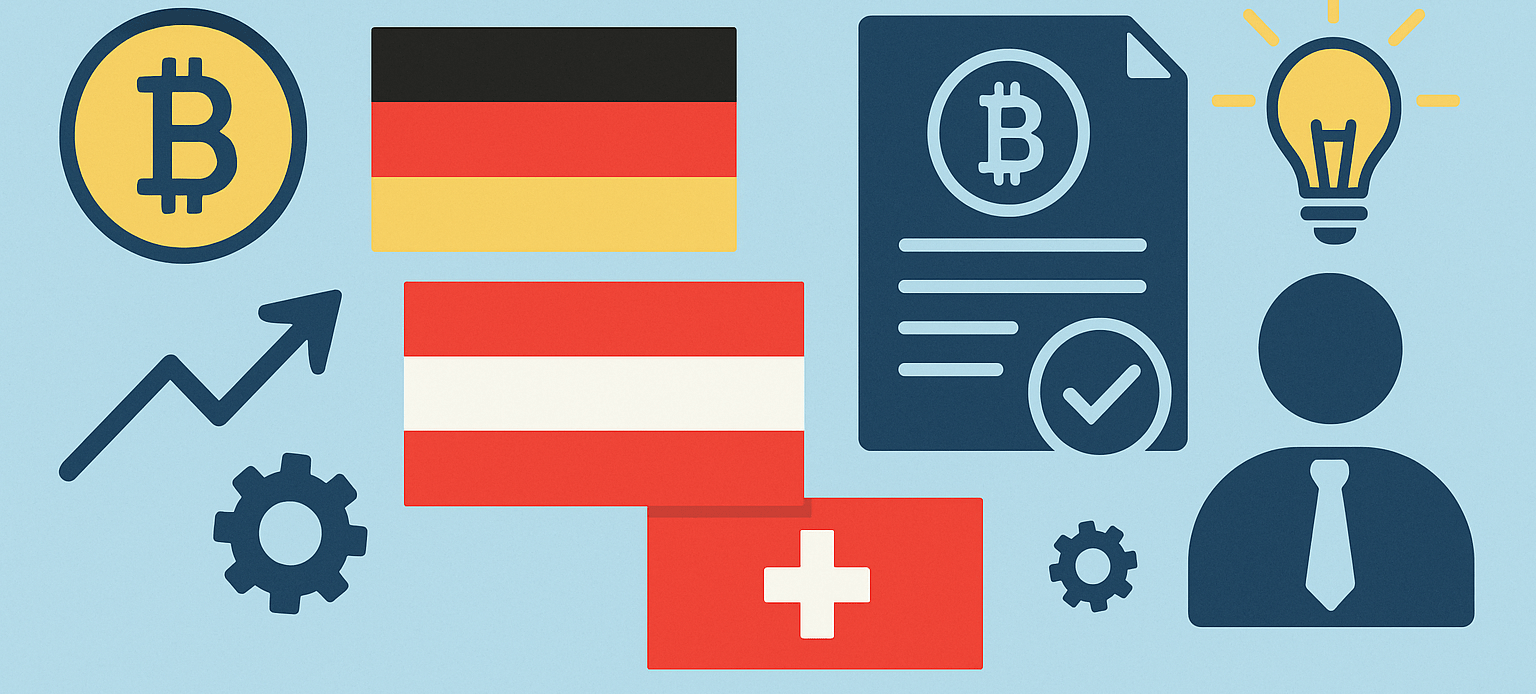
    Image created with ChatGPT-AI (DALL-E)
    Since the beginning of 2026, EU transparency guidelines have been in effect, which provide for automatic reporting of transactions to financial authorities.
    The current market panic therefore meets an environment in which tax documentation must be complete. In Switzerland, the first major banks are also reacting to the uncertain situation and divesting investments in crypto service providers, which is further increasing skepticism.
    But despite the price losses, the conflict also shows the strength of decentralized networks: In crisis areas, cryptocurrencies are increasingly being used as an alternative means of payment where banking systems are collapsing.
  • US economic data in March: impact on the crypto industry

    US economic data in March: impact on the crypto industry


    • This week only brings three partial reports on the US economy. But there is the important labor market report that will be published on Friday.
    • The other data – consumer prices, producer prices and the price index of personal consumption expenditure will only follow in the coming weeks.

    The US labor market report is considered a key indicator for assessing the US Federal Reserve’s future interest rate policy. In the week of March 2nd to 8th the publication The following US economic data is expected:

    • March 5th: Report on import and export prices;
    • March 5th: Preliminary report on productivity and unit labor costs in the fourth quarter of 2025;
    • March 6th: Report on the US labor market, in particular unemployment figures excluding agriculture, which will be covered in a separate report.

    Strong employment numbers would indicate a robust economy, making a rate cut more likely. This typically leads to rising yields and a firmer dollar.

    For crypto assets, this usually means pressure on prices as capital is reallocated into safer investments. European trading venues feel this directly because demand for Bitcoin, Ether and other altcoins falls in such phases.

    Rising unemployment, on the other hand, is associated with the expectation of interest rate cuts. This leads to falling yields and a weaker dollar. In this environment, risk appetite increases, which supports digital assets in the US and EU alike. Altcoins in particular benefit in such phases, as investors increasingly switch to smaller projects.

    Consequences for market and trade in the EU

    Since the EU is not releasing its own publications this week, the US data situation is determining what happens. There are regularly significant swings in the order books of European trading venues around the publication of the US labor market report.

    Spreads are widening as market makers adjust their models. At the same time, derivatives sales are increasing as many investors hedge positions or take advantage of short-term movements.

    Another factor is the development of dollar stablecoins. In phases of strong US economic activity, demand for them increases, which influences liquidity on EU trading venues. A weak US economy, on the other hand, leads to greater use of euro-based digital assets because the dollar becomes less attractive.

    Euro-Digital-Assets
    Image created with AI by ChatGPT (DALL-E)

    outlook

    The upcoming releases on US consumer prices, producer prices and the personal consumption expenditure price index will be much more meaningful than just the labor market data.

  • US-Iran war creates $650 million XRP selling pressure

    US-Iran war creates $650 million XRP selling pressure


    • XRP is coming under pressure in addition to the geopolitical risk-off environment after more than 472 million XRP flowed onto Binance in just seven days.
    • The unusually strong stock market inflow could create the conditions for a short-term sell-off.

    The conflict between the USA and Iran continued to escalate overnight. The Americans have now named their military operation “Operation Epic Fury”. President Trump said the operation could last “four weeks or less” and stressed that they would continue “until all of our objectives are achieved.” Almost at the same time, the Pentagon reported the first three US soldiers killed.

    The reaction on the markets was immediate. The price of Brent oil briefly climbed to $82 a barrel and European stocks slipped. The crypto world also felt the risk-off shock fully. Bitcoin and altcoins sold off heavily over the weekend. Bitcoin temporarily collapsed below $64,000, but was able to recover and stood at around $66,300 on Monday. At the same time, XRP was trading around $1.36.

    XRP price under pressure

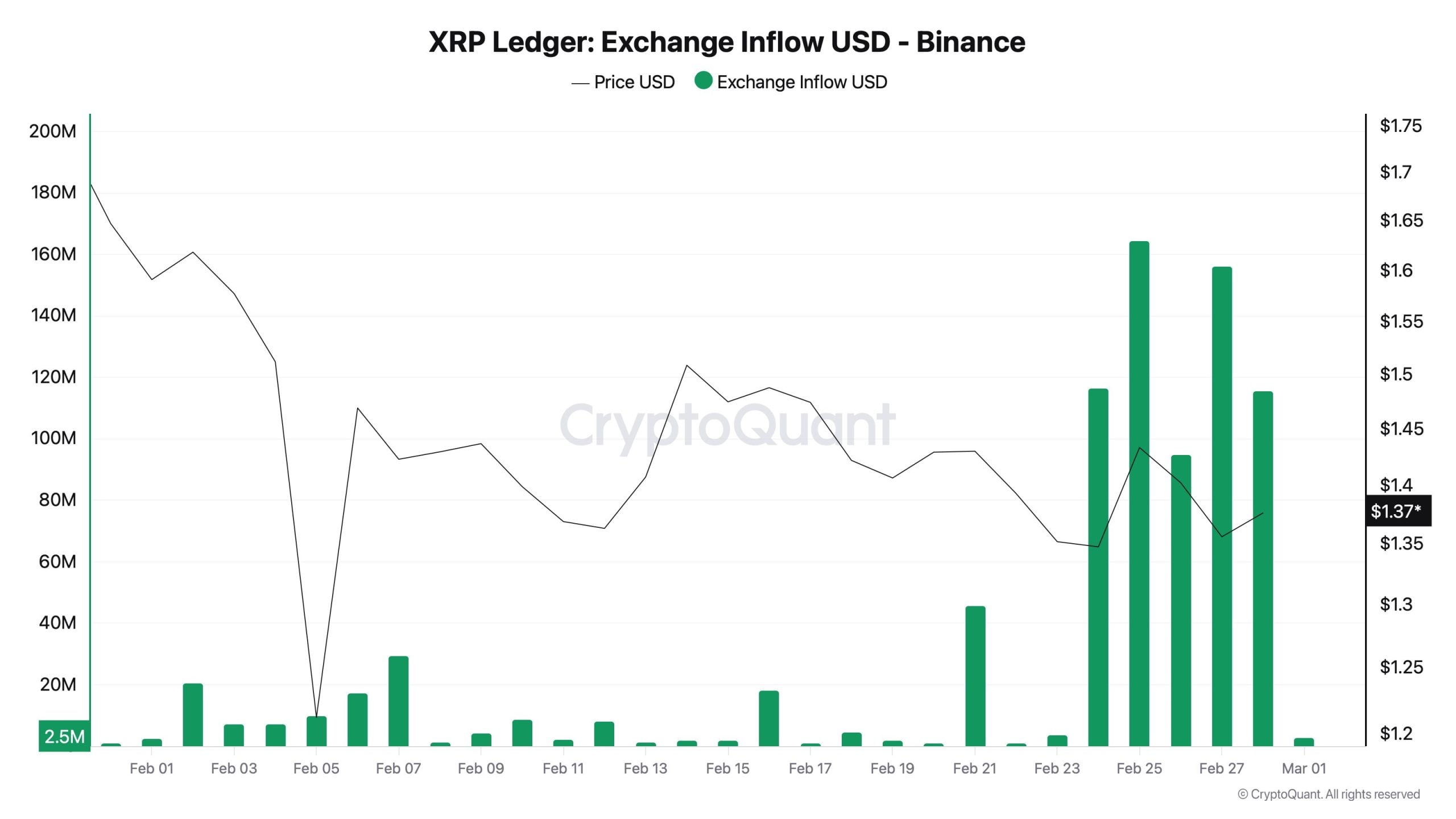
    What is particularly interesting for XRP holders is what is currently happening on-chain. Well-known CryptoQuant analyst Darkfost (@Darkfost_Coc) spoke late Sunday evening on X Alarm sounded: In just seven days, over 472 million XRP worth around $652 million flowed onto the Binance exchange. This is, as he writes, “the largest influx period of the entire February.”

    XRP Binance inflows
    XRP inflows on Binance, Source: @Darkfost_Coc on X

    Such mass movements usually indicate that large holders are getting nervous and want to keep their coins safe in case things get worse. Darkfost itself puts it cautiously: “Such inflows typically reflect a more defensive stance on the part of investors.” And with these sums, this could put the price under pressure in the short term:

    “When large amounts of tokens are traded on exchanges, it often signals a potential willingness to sell or at least an intention to position liquidity closer to the market.”

    Meanwhile, Trump is upping the ante. “It was always a four-week process or about four weeks,” he said. “They want to talk, but I said: You should have talked last week, not this week.”

    For XRP, this means a pretty uncomfortable combination: geopolitical unrest, rising oil prices and now this massive supply pressure on the stock market. As long as the news from the Middle East stays hot and the inflows don’t stop, the situation for the token remains quite delicate, according to Darkfost:

    “When such capital flows occur, they can set the stage for a sudden wave of selling that could have a short-term impact on price developments.”

  • Artificial intelligence as a turbocharger of software development

    Artificial intelligence as a turbocharger of software development


    • Ethereum inventor Vitalik Buterin is said to have been impressed. A developer wrote a complete, mainnet-ready Ethereum client in just 14 days – but with a little AI help.
    • He also provided further development planning until 2030. Dhe project is appropriately named ETH2030 and is making waves in the community.

    It began with developer Jiayao Qi’s claim that modern AI agents could be used by individuals to complete tasks that entire teams had previously worked on for years.

    He wanted to prove it straight away: He would create a functional Ethereum client, including further development planning for the next four years.

    After two weeks he was back with the client consisting of 702,000 lines of program code, a functioning synchronization with the Ethereum mainnet and a 65-point development plan for the project until 2030.

    Vitalik Buterin was impressed by the result. He saidsuch a project would have been unthinkable just a few months ago.

    At the same time, he pointed out that code generated so quickly would naturally contain errors and that many components should be understood as placeholders. What is crucial, however, is the proven ability to get complex systems up and running in an extremely short time.

    New developer reality?

    For Vitalik Buterin, the experiment is conclusive evidence of how software production is accelerating. AI-supported tools no longer just design individual functions, but rather complete systems.

    Developers can use it to solve tasks that previously could only be accomplished by coordinated teams. Buterin sees this as a fundamental shift in the balance of power in blockchain development.

    At the same time, he urges caution. The pace of development should not come at the expense of security. He calls for half of the efficiency gains gained through AI to be invested in additional testing, formal verification and independent implementations. This is the only way to prevent progress from leading to new risks.

    AI reaches cryptography

    At the same time as the ETH2030 project, a developer in the Lean Ethereum team managed to use an AI system to generate a machine-verifiable proof of a complex STARK theorem.

    This step shows that AI not only generates code, but is also able to formally map sophisticated cryptographic structures.

    For Buterin, it is an indication that AI will play a central role in the further development of safety-critical blockchain components in the future.

    Importance for the crypto industry

    The experiment shows how little time development projects will need in the future. In the medium term, Ethereum could become a coordination layer for AI agents, running locally and secured by zero-knowledge mechanisms.

    In the long term, a new era is emerging in which AI-supported implementation and automated protocol development will become the standard.

  • IOTA and WSolve launch sustainability data partnership

    IOTA and WSolve launch sustainability data partnership


    • IOTA and WSolve cooperate on digital product passports and sustainability data.
    • The goal is auditable data, more traceability and better compliance.

    The Dutch logistics software company WSolve has signed a cooperation agreement with the IOTA Foundation. The aim of the partnership is to prepare sustainability data in such a way that it can be reliably verified, checked and reused.

    The collaboration became known on February 27th LinkedIn post from WSolve. In it, the company described IOTA as “a global leader in distributed ledger technology and digital infrastructure for trustworthy data exchange.” However, there is currently no concrete information on how the cooperation will be implemented technically or commercially.

    What the IOTA and WSolve partnership is about

    The aim of the cooperation is to connect WSolves software with IOTA’s infrastructure. According to the company, WSolve offers solutions for digital product passports, reporting and lifecycle analysis. Together with IOTA, this will result in data that can be used for sustainability proof and regulatory reports. WSolve writes:

    “Together, we work to transform sustainability impact into verifiable, auditable and actionable data and help organizations take the step from good action to robust evidence – at scale.”

    From WSolve’s perspective, IOTA should primarily provide the technological basis. In the article, the company refers to areas of application such as secure and tamper-proof data, trustworthy reporting and compliance, as well as scalable traceability across value chains.

    WSolve cites the growing regulatory pressure on companies as an important driver of the partnership. LinkedIn says the collaboration, combined with WSolve’s experience in impact analysis, compliance and circular economy strategy, is intended to help “turn regulatory pressure into a real competitive advantage.”

    At the same time, WSolve describes the cooperation as values-based and formulates several common principles:

    “This collaboration is based on shared values: The future belongs to those who can demonstrate their impact. Impact data must be trustworthy, accountable and immutable. Data should provide insights, not just ensure compliance. Impact is created together. Your challenge, WSolve.”

    Despite the announcement, key points remain open. It is not yet known which specific products, pilot projects or industrial customers the partnership covers. No details have yet been published about how WSolve’s solutions for digital product passports and life cycle analyzes will be technically based on IOTA.