Category: Coins

Digital assets, cryptocurrencies, blockchain, and currency news.

  • Coinbase, Binance Whales Set XRP Profit Targets at $15, $32 as Bull Rally Resumes

    Coinbase, Binance Whales Set XRP Profit Targets at $15, $32 as Bull Rally Resumes

    XRP Faces Major Whale Sell Walls at $15 and $32 as Price Attempts Recovery

    XRP is encountering significant long-term selling pressure as whales on Binance and Coinbase maintain large sell walls at the $15 and $32 price levels. The order-book liquidity appears as the token attempts to resume its rally following a recent pullback.

    Binance and Coinbase Whales Stack Sell Orders

    According to CryptoQuant author CW, Binance whales previously established a sell wall extending to $15, and that liquidity remains in place. Meanwhile, Coinbase whales have created new sell walls reaching as high as $32 this month. CW emphasized the current dynamic in the order books.

    “Currently, it is Coinbase whales that are blocking the rise,” CW said, adding that the group has been forming multiple sell walls.

    These sell walls represent clustered limit-sell liquidity rather than firm price targets or guarantees that XRP will reach those levels. Analyst ChartNerd cautioned that order-book liquidity is transient because traders can cancel or move their orders at any time. While large sell walls can act as supply ceilings, they do not necessarily signal an impending rally.

    XRP Price Action: Pullback and Rebound

    The whale activity coincides with XRP’s attempt to recover from a correction after last week’s rally. The token climbed to $1.70 before declining 19.18% over the following days to reach $1.3632. At press time, XRP has rebounded to approximately $1.45, marking its intraday high. The recovery aligns with broader crypto market strength as Bitcoin reclaimed the $80,000 level, reviving bullish sentiment.

    Key Technical Levels: Support and Resistance

    ChartNerd identified $1.36 as key four-hour support. Immediate resistance sits between $1.51 and $1.55. A successful breakout above that zone opens the path toward $1.80 and $1.94. Conversely, rejection would likely send XRP back toward the $1.36 support area.

    $1.54: The Critical Battleground

    The analyst highlighted a confluence between XRP’s lower-timeframe resistance and the weekly 50 EMA (Exponential Moving Average) around $1.54. He stated that a close above this moving average remains the “main objective” for a continuation higher, as failure to reclaim it could signal renewed weakness.

    In a subsequent update, ChartNerd summarized the setup on X (formerly Twitter):

    Long story short..
    You’ve heard it enough times..
    Until $1.54 is reclaimed..$XRP’s upside move is under pressure
    — 🇬🇧 ChartNerd 📊 (@ChartNerdTA) August 27, 2026

    This makes the $1.51–$1.55 region a near-term battleground. A move above it could strengthen the bullish case and put the $1.70 high back within reach.

    Whale Accumulation Offsets Sell-Wall Pressure

    Adding a bullish counter-narrative, CryptoQuant author Darkfost reported that whales withdrew more than 231 million XRP from Binance in a single day, worth over $335 million at the time. The outflows represented a sharp increase from the 90-day average of $40 million and marked the highest level of whale withdrawals from Binance in six months.

    Such movements reduce the immediately tradable supply on exchanges, which typically supports a price rally. With whales accumulating XRP off-exchange while major holders maintain large sell walls at higher prices, the market awaits a decisive move.

    Whether XRP can overcome the $1.54 resistance and resume its advance remains the central question for traders in the coming sessions.


  • Nottingham Forest Bid £22m for Crystal Palace Star Daniel Munoz, Per Ornstein

    Nottingham Forest Bid £22m for Crystal Palace Star Daniel Munoz, Per Ornstein

    Nottingham Forest Submit £22m Bid for Crystal Palace Wing-Back Daniel Muñoz

    Nottingham Forest have formally entered the race to sign Crystal Palace right wing-back Daniel Muñoz, lodging a bid valued at up to £22 million, according to a report from The Athletic.

    Deal Structure and Valuation

    The proposed package comprises £20 million upfront with a further £2 million in performance-related add-ons. The 30-year-old Colombian international has established himself as a key component of Palace’s defensive structure since arriving in the Premier League.

    Potential Reunion with Oliver Glasner

    A move to the City Ground would see Muñoz reunite with Oliver Glasner. The Austrian coach oversaw the player’s most productive spell at Selhurst Park before his departure from the South London club this summer. Glasner’s system previously allowed Muñoz to flourish as an attacking outlet from the right flank, a profile that aligns with Forest’s current tactical requirements.

    Strategic Fit for Forest

    Forest’s pursuit signals a clear intent to reinforce the right-wing-back position with proven Premier League experience. Muñoz offers defensive reliability combined with the capacity to contribute in the final third, attributes that would add immediate depth to Nuno Espírito Santo’s squad options for the upcoming campaign.

  • Andoni Iraola confirms Federico Chiesa to miss Nottingham Forest clash

    Andoni Iraola confirms Federico Chiesa to miss Nottingham Forest clash

    Chiesa Ruled Out of Liverpool’s Premier League Opener Against Nottingham Forest

    Liverpool head coach Andoni Iraola has confirmed that summer signing Federico Chiesa will miss the club’s second-round Premier League fixture against Nottingham Forest due to a minor muscle injury.

    Injury Sustained During Pre-Season Friendly

    The Italy international picked up the issue during Liverpool’s pre-season meeting with Como, forcing the winger to the sidelines for the early stages of the competitive campaign. Chiesa, who joined the Reds in the current transfer window, had been building match fitness during the club’s summer preparations.

    Impact on Squad Depth for Forest Clash

    The absence of the 26-year-old attacker reduces Iraola’s attacking options for the trip to the City Ground. Liverpool will need to rely on existing forward resources as they look to maintain their early-season momentum against a Nottingham Forest side that has historically proven difficult opposition at home.

    Recovery Timeline Unspecified

    The club has not disclosed a specific return date for Chiesa, though the injury is described as minor. Medical staff will monitor the player’s progress over the coming days, with a potential return targeted for subsequent league fixtures or cup competitions.

  • 21Shares Reveals Crucial XRP Data: “It Outperformed Its Competitors!”

    21Shares Reveals Crucial XRP Data: “It Outperformed Its Competitors!”

    As XRP experiences a significant resurgence, reclaiming the $1.4 price threshold alongside a broader cryptocurrency market recovery led by Bitcoin, crypto asset management firm 21Shares has published a detailed analysis examining the token’s supply dynamics.

    The report reveals that XRP has achieved a notable milestone, recording the lowest annual supply dilution rate among major payment-focused digital assets compared in the study.

    Understanding XRP’s Supply Dilution and Escrow Releases

    According to the 21Shares analysis, the circulating supply of XRP expanded by 5.5% year-on-year during the first half of 2026. This increase in circulating supply is primarily driven by the programmatic release and subsequent lock-up of tokens from escrow accounts. Based on the firm’s calculations, approximately 272 million XRP are added to the active market on average each month.

    For investors, this 5.5% supply expansion translates to an equivalent annual dilution of their holdings under current transaction fee structures. Analysts at 21Shares point out that, all other factors remaining equal, the market price of XRP needs to appreciate by at least 5.5% annually for holders to maintain their purchasing power and achieve a break-even state.

    The Gap Between XRPL Fees and Token Inflation

    The analysis emphasizes that transaction fees generated by the network are currently insufficient to neutralize this supply expansion. To completely offset the impact of the newly released supply over the next year at current valuation levels, the fee revenue generated by the XRP Ledger (XRPL) would need to increase by 12,700 times.

    This revenue gap is further highlighted by a downward trend in network activity fees. The 21Shares data indicates that XRPL revenues during the first half of 2026 experienced an 81.6% year-on-year decline, falling from $6.43 million to $1.18 million.

    How XRP Compares to Stellar and TON

    Despite the dilution challenges, XRP compares favorably against other prominent cryptocurrencies positioned as utility and payment networks. 21Shares compared XRP’s supply metrics against similar assets, revealing the following annual supply dilution rates:

    • XRP: 5.5%
    • Stellar (XLM): 8.8%
    • Toncoin (TON): 9.6%

    With a 5.5% rate, XRP maintains the lowest annual supply dilution among the payment-centric cryptocurrencies evaluated in the 21Shares study.

    Disclaimer: This article is for informational purposes only and does not constitute investment advice.

  • Top 5 Altcoins vs. Meme Coins in 2026: Where MemeToro Presale Fits in Crypto Portfolios

    Top 5 Altcoins vs. Meme Coins in 2026: Where MemeToro Presale Fits in Crypto Portfolios

    The 2026 cryptocurrency market is highlighting a distinct division between established altcoins and emerging meme-focused projects. While dominant networks like Bitcoin, Ethereum, Solana, $XRP, and Hyperliquid provide mature, foundational ecosystems, newer initiatives like MemeToro are capturing the attention of investors seeking early-stage growth potential.

    MemeToro enters this competitive landscape not merely as another speculative token, but as an AI-driven launchpad built on the $BNB Chain. The project’s native token, $MT, is currently in Stage 6 of its presale at a price of $0.00350, as it rapidly approaches a key $100,000 fundraising milestone.

    For strategic investors weighing the options between utility altcoins and speculative meme assets, the primary goal is not just identifying which token will pump first. Instead, it is about understanding how these diverse digital assets can complement one another within a balanced, diversified crypto portfolio.

    The Evolving Dynamics of Altcoins and Meme Coins

    In the current market environment, altcoins and meme coins serve fundamentally different purposes:

    • Altcoins sustain their value through robust blockchain infrastructure, decentralized applications (dApps), deep liquidity, and active developer ecosystems. Ethereum remains the premier smart-contract standard, while Solana dominates fast, low-cost decentralized finance (DeFi) and tokenization. Meanwhile, $XRP continues to lead cross-border payment narratives, and Hyperliquid secures its position through decentralized perpetual trading.
    • Meme Coins thrive on community engagement, social media velocity, culture, and retail investor sentiment. While Dogecoin (DOGE) stands as the gold standard of established meme assets, newer projects offer higher volatility and rapid growth potential when market focus shifts.

    To construct a resilient portfolio, market participants often categorize their holdings into distinct tiers:

    • Ecosystem Exposure: Established Layer-1 and Layer-2 networks.
    • Market Participation: Large-cap liquid altcoins.
    • High-Growth Narratives: High-velocity meme coins.
    • Early-Stage Opportunities: Utility-driven presales.

    MemeToro positions itself at the intersection of these categories. Rather than relying solely on viral marketing, it pairs the excitement of the meme coin sector with a functional, AI-powered launchpad engineered to generate, deploy, and evaluate new tokens.

    The project highlights its onboarding experience and ecosystem design through interactive media, sharing a step-by-step video demonstrating how easy it is to participate in the MemeToro presale, alongside a deep dive into MemeToro Ecosystem Development.

    How MemeToro Integrates Utility into the Meme Coin Space

    MemeToro is built on the premise that token creation should involve more than just catchy branding and social media hype. Operating on the $BNB Chain, the platform utilizes advanced AI agents to monitor market trends, generate conceptual frameworks, and streamline the entire deployment pipeline.

    A standout utility feature of the platform is its integrated automated security scanner. This tool is designed to scan smart contracts for developer backdoors, honeypot risks, and malicious code before any token is launched. This proactive security focus provides a layer of trust and utility rarely seen in the speculative meme coin market.

    Currently priced at $0.00350 during its Stage 6 presale, the $MT token offers early participants a structured entry point. As the project nears its $100,000 funding milestone, its development roadmap continues to draw attention from those tracking the latest Web3 innovations.

    For investors monitoring the modern presale landscape, MemeToro successfully unifies three powerful market trends:

    • Artificial Intelligence: Leveraging AI for trend analysis and automated creation.
    • Meme Coin Infrastructure: Providing tools to make meme token launches safer and more accessible.
    • $BNB Chain Growth: Capitalizing on the scalability and liquidity of the Binance Smart Chain ecosystem.

    Strategizing Portfolio Allocation

    A well-rounded digital asset portfolio does not require an exclusive choice between high-utility altcoins and speculative meme assets. Diversification allows investors to capture upside across multiple sectors.

    While Ethereum and Solana provide essential infrastructure, $XRP facilitates global payments, and Hyperliquid powers decentralized trading, MemeToro offers niche exposure to automated, AI-driven token incubation. For those looking to participate in early-stage Web3 infrastructure, the MemeToro presale represents a unique entry point into the evolving AI-meme narrative.

    Learn More About the MemeToro ($MT) Presale:

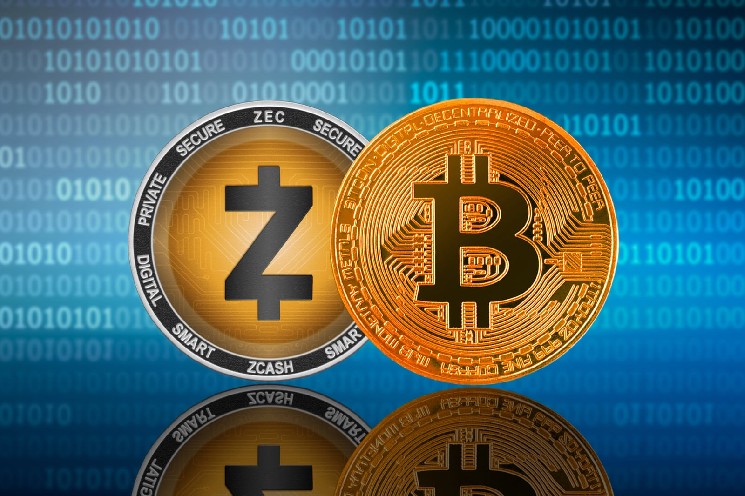
  • Zcash (ZEC) Price Rise Is a Red Flag for Bitcoin (BTC), Warns CryptoQuant Analyst

    Zcash (ZEC) Price Rise Is a Red Flag for Bitcoin (BTC), Warns CryptoQuant Analyst

    The rapid ascent of the privacy-centric cryptocurrency Zcash (ZEC) is raising alarms among on-chain analysts, who view the sudden rally as a significant warning sign for Bitcoin (BTC). While spot exchange-traded funds (ETFs) recently drew retail capital into the digital asset space, researchers have flagged critical signs of overheating in the cryptocurrency derivatives market.

    Historical market cycles point to a troubling trend: unusual surges in Zcash during periods when the leading cryptocurrency is consolidating have often served as a reliable leading indicator of an impending market-wide correction. According to recent data from CryptoQuant, the Zcash risk metric has climbed into extreme territory, flashing a clear warning signal for Bitcoin investors. This altcoin rally is unfolding while Bitcoin remains bound within a trading range of $60,000 to $80,000, struggling to break out past its previous highs.

    Analyst Warnings and Historical Patterns

    CryptoQuant analyst Maartun highlighted the suddenness of the move, pointing out that the privacy coin “just ripped 70% in a matter of days,” which has left him “more worried about Bitcoin than excited about Zcash” given the current structure of the market. According to the analyst, this exact technical signal has historically occurred right before major pullbacks in the market’s leading asset.

    Derivative Market Overheating and Volume Drop

    Technical data from CoinGlass supports these warnings of local overheating. Over a 24-hour window, Zcash trading volumes dropped significantly, with spot trading volume falling by 24.97% and derivatives volume shrinking by 24.16%. This suggests that the initial institutional excitement surrounding Zcash ETF developments has already been priced in, driving a price correction down to $779.38.

    Additionally, short-term activity in the futures market shows sharp divergence. In the four-hour timeframe, futures selling escalated rapidly, jumping by 101.68%. At the same time, leveraged trading remains highly elevated, with $1.53 billion in borrowed capital locked in Zcash margin positions. This leverage represents over 11% of the asset’s total market capitalization, which currently stands at $13.13 billion.

    Critical Views and Liquidation Risks

    The debate surrounding this rally is further intensified by commentary from Alex Thorn, the head of research at Galaxy Digital. Thorn voiced strong skepticism about the long-term viability and utility of the ecosystem. He criticized traders who chose to “pump ZEC because it’s ‘private bitcoin’” and went on to explain that account-based blockchains are “privacy nightmares” by design, arguing that they are “substantially less private than UTXO-based chains like bitcoin.”

    If the high concentration of leveraged positions—represented by the $1.53 billion futures overhang—begins to trigger forced liquidations, it could set off a domino effect across major crypto derivatives exchanges. Because Bitcoin is currently experiencing a lack of strong buying momentum within its current consolidation range, sudden panic in the derivatives space coupled with a broad liquidity drain could serve as the catalyst for a deeper market-wide correction, forcing investors to quickly transition into a risk-off posture.

  • Bitcoin Hits Resistance: $2.9B in Longs at Risk Below $68,000

    Bitcoin Hits Resistance: $2.9B in Longs at Risk Below $68,000

    Bitcoin has surged approximately 40% from its July low of around $57,800, sparking fresh optimism that the cryptocurrency may have established a definitive market bottom after several months of sideways consolidation. On August 27, $BTC was trading near $80,200. However, this impressive recovery has pushed the leading digital asset back into a major overhead resistance zone that previously triggered a sharp market sell-off.

    Technical indicators and derivatives market metrics indicate that the current rally could face a notable correction unless Bitcoin can decisively break through this key barrier.

    Leveraged Positions Highlight Potential Downside Risks

    An analysis of Bitcoin’s liquidation heatmap reveals a heavy concentration of leveraged positions sitting just below the current market price. This imbalance suggests that the path of least resistance could turn downward to flush out over-leveraged buyers.

    The closest downside liquidity cluster is situated around the $77,500 level. Data from CoinGlass indicates that approximately $392.31 million in long positions could face liquidation if $BTC slips to this price point. Because high-density liquidation zones act as liquidity magnets, they often attract price action and fuel market volatility when tested.

    A drop toward $77,500 could trigger a chain reaction of forced selling among leveraged long traders, accelerating downward momentum. An even larger risk cluster lies lower at $68,000, where an estimated $2.9 billion in long positions are vulnerable to liquidation.

    In contrast, the primary liquidity pool for short sellers on the upside is located between $84,200 and $84,215. While Bitcoin features massive liquidity targets on both sides of its current price, the significantly larger volume of leverage on the downside supports a cautious short-term outlook. Currently, $82,500 remains the critical breakout level to watch. Failing to clear this barrier could expose $77,500, followed by $72,000, and eventually the $68,000–$68,300 zone.

    BTC Re-enters the Resistance Zone of a Previous 30% Drop

    Bitcoin is currently trading within the key $79,000–$82,500 range, the same territory that capped its recovery efforts back in May. During that previous consolidation phase, sellers ultimately seized control at these levels, sparking a rejection that drove $BTC down to $57,800—a steep decline of nearly 30% from the upper boundary of the range.

    The current retest of this zone is showing similar signs of market exhaustion. Bitcoin’s daily Relative Strength Index (RSI) has climbed above 82, placing it deep in overbought territory (well above the traditional threshold of 70). While an overbought RSI does not guarantee an immediate price drop, it significantly elevates the probability of profit-taking from short-term holders.

    Key Technical Support Levels to Monitor

    Should Bitcoin fail to break above the crucial $82,500 resistance, its 200-day exponential moving average (EMA) near $72,000 will serve as the first major line of defense. A pullback to this level would represent a roughly 10% decline from current prices.

    If selling pressure intensifies, $BTC could decline toward the $68,000–$68,300 area. This region is bolstered by the convergence of the 50-day and 100-day exponential moving averages, making it a highly formidable support zone.

    Conversely, the bearish outlook would be invalidated if Bitcoin manages a decisive daily close above $82,500. A clean breakout would convert this former major resistance zone into a reliable support base, reinforcing the theory that the July low of $57,800 marked a solid, long-term market bottom.

  • Stablecoin Rewards Could Drain Billions From Regional Banks, Bank Executive Warns

    Stablecoin Rewards Could Drain Billions From Regional Banks, Bank Executive Warns

    A prominent South Dakota banking executive is cautioning federal lawmakers that the proposed stablecoin legislation could severely impact regional financial institutions. Nate Franzen, the head of agricultural finance at First Dakota National Bank, warns that unless the CLARITY Act currently under consideration in the U.S. Senate imposes strict limitations on stablecoin rewards, it could unintentionally siphon deposits away from community banks, directly weakening their capacity to support local economies.

    Understanding the CLARITY Act and Stablecoin Rewards

    The CLARITY Act is designed to establish a comprehensive federal regulatory framework for stablecoins—digital assets pegged directly to fiat currencies like the U.S. dollar. However, a major point of contention within the draft legislation is whether stablecoin issuers and digital asset platforms should be permitted to offer yield-bearing rewards or interest-like incentives to holders.

    In an opinion piece published by CoinDesk, Franzen argues that allowing these unregulated incentives could make stablecoins far more attractive to retail depositors than traditional bank accounts. Because these digital platforms do not operate under the same stringent regulatory frameworks and capital requirements as traditional banks, they can offer yields that regional institutions simply cannot match.

    To illustrate the scale of this threat, Franzen points to projections from the American Bankers Association (ABA). According to these estimates, out of the roughly $47 billion in total deposits held by regional banks across South Dakota, as much as $4.7 billion could migrate into stablecoins. Such a shift would strip local banks of up to $3.7 billion in lending capacity—a devastating prospect for a state economy heavily reliant on agricultural and small business credit.

    The Direct Threat to Local Agriculture and Small Businesses

    Regional and community banks serve as the financial backbone of rural America, providing essential credit to farmers, ranchers, and local entrepreneurs who are frequently underserved by major Wall Street institutions. If a significant portion of regional bank deposits relocates to digital stablecoin platforms, these community lenders will be forced to tighten credit standards and reduce loan volumes.

    Franzen emphasizes that his warnings are not an attempt to stifle financial innovation. Instead, he argues for a level playing field, ensuring that the introduction of novel financial technologies does not inadvertently dismantle the stability of the established community banking system that sustains local economies.

    Unregulated Yields and the Risk to Consumers

    Beyond the systemic risks to regional lending, the migration of deposits to stablecoins poses a significant threat to consumer safety. Traditional bank deposits are backed by the Federal Deposit Insurance Corporation (FDIC) for up to $250,000 per depositor, offering a guaranteed safety net. In contrast, stablecoins do not currently benefit from federal deposit insurance.

    This regulatory gap means consumers attracted by high stablecoin rewards may expose their savings to substantial capital risk without fully realizing the lack of institutional protection. Franzen is calling for robust regulatory definitions and oversight to ensure that any stablecoin-related rewards are transparent and that consumers are explicitly warned of the associated financial hazards.

    A Pivotal Moment for the U.S. Banking Sector

    The warnings issued by Franzen mirror a broader, nationwide debate concerning the convergence of digital assets and legacy finance. While some federal policymakers view stablecoins as a tool to modernize the payment ecosystem and lower transactional barriers, others remain highly skeptical of their systemic implications for traditional banking.

    The American Bankers Association has remained highly active in lobbying for a balanced regulatory approach that protects consumer funds while preserving the liquidity and lending power of community banks. The final provisions of the CLARITY Act will likely set a crucial precedent for digital asset regulation in the United States. If lawmakers opt to restrict stablecoin rewards, they may successfully insulate regional banks from deposit flight. Without these guardrails, the shift of capital away from community institutions could accelerate, leaving rural credit markets highly vulnerable.

    Frequently Asked Questions

    What is the CLARITY Act?

    The CLARITY Act is a piece of legislation under discussion in the U.S. Senate aimed at creating a federal regulatory structure for stablecoins, specifically addressing issuance guidelines, reserve requirements, and consumer protections.

    How do stablecoin rewards threaten regional banks?

    If stablecoin issuers are permitted to offer interest-like rewards, they could draw yield-seeking depositors away from community and regional banks. This deposit flight would reduce the capital these banks have available to fund local loans.

    Are stablecoins protected by FDIC insurance?

    No, stablecoins do not carry FDIC insurance. Unlike traditional bank deposits, which are federally protected up to $250,000, stablecoin holdings are subject to loss if the issuer or platform encounters financial distress.

  • VeChain Schedules VIP-255 Mainnet Launch for September as VET Rallies 23%

    VeChain Schedules VIP-255 Mainnet Launch for September as VET Rallies 23%

    The VeChain blockchain is preparing for a major technical evolution as its upcoming VIP-255 upgrade moves closer to mainnet deployment. Following a successful Interstellar governance vote that cleared the protocol changes, VeChainThor is set to integrate several key Ethereum Improvement Proposals (EIPs). These integrations will introduce advanced Ethereum Virtual Machine (EVM) instructions, cryptographic functions, and enhanced network safeguards to the ecosystem.

    Coinciding with this developmental milestone, the network’s native token, $VET, experienced a significant upward trajectory. Over a 24-hour period, the VET token rose 23.53%, trading at approximately $0.006967 at press time. This price surge pushed VeChain’s market capitalization to roughly $599.08 million, accompanied by a 277.97% increase in 24-hour trading volume, signaling robust market interest and heightened trader participation.

    VeChain VIP-255 Integrates New EVM Functions

    The VIP-255 upgrade is designed to bring VeChainThor closer to alignment with modern Ethereum standards by adopting several highly anticipated EVM upgrades. Among the core additions is EIP-1153, which introduces transient storage for smart contracts. This feature allows for temporary contract storage at a low cost of 100 gas, with all stored information automatically cleared after execution, optimizing on-chain efficiency.

    Additionally, the upgrade incorporates several other key proposals:

    • EIP-5656: Introduces the MCOPY instruction, enabling more efficient copying of memory data.
    • EIP-6780: Modifies the SELFDESTRUCT opcode behavior, ensuring contracts transfer their balances without deleting their underlying code.
    • EIP-7939: Implements a five-gas CLZ instruction to perform direct leading-zero calculations.

    Upgraded Cryptography and Advanced Wallet Security

    Security and developer flexibility receive a major boost in the VIP-255 upgrade through new cryptographic precompiles. EIP-2537 introduces native BLS12-381 curve support. According to VeChain, this native implementation drastically lowers the computational cost for operations such as signature verification and cross-chain bridging compared to recreating the curve manually within Solidity.

    For end-users, EIP-7951 brings native secp256r1 (P-256) verification. Because this cryptographic curve is widely used by modern mobile devices, hardware security keys, and passkey standards, its integration enables VeChainThor wallets to support biometric and passkey-based authorization. This functionality works seamlessly alongside VeChain’s existing native features like account abstraction and fee delegation.

    Furthermore, EIP-7823 and EIP-7883 modify the network’s MODEXP function by restricting input sizes to 1,024 bytes and introducing revised gas pricing parameters to ensure stable execution.

    Protocol Safeguards and Predictable Blocks

    To ensure network stability and predictable block production, the VIP-255 upgrade implements three core protocol-level restrictions:

    • EIP-2935: Makes historical block hashes from the most recent 8,191 blocks accessible via an Ethereum-compatible contract interface, resolved on VeChainThor through its built-in Extension contract.
    • EIP-7825: Imposes a strict ceiling of 16,777,216 gas per individual transaction.
    • EIP-7934: Establishes an upper limit of 8 MiB on the encoded block size.

    Estimated Activation Timeline

    The Interstellar upgrade is scheduled for mainnet activation at block height 25,902,540, which is projected to occur on September 16, 2026, at approximately 11:15:10 UTC. VeChain has noted that this date and time are estimates, as the precise activation depends entirely on the speed at which the network reaches the designated block height.

  • Lido Adjusts EarnETH Vault Fees: Lowers Management Fee, Raises Performance Cut

    Lido Adjusts EarnETH Vault Fees: Lowers Management Fee, Raises Performance Cut

    Lido, a dominant force in the liquid staking sector, has announced a significant restructuring of the fees associated with its EarnETH vault. Under the newly updated model, the assets-under-management (AUM) fee is being slashed to a maximum cap of 0.5%, while the performance fee is set to increase to a maximum of 20%. To ease the transition, the protocol has initially set these rates at 0.2% for the AUM fee and 15% for the performance fee.

    Understanding the EarnETH Vault Fee Adjustments

    Prior to this update, the EarnETH vault operated under a fee structure consisting of a flat 1% management fee on AUM alongside a 10% performance fee. The revised system shifts the financial weight away from fixed management costs—which users must pay regardless of market outcomes—and places greater emphasis on actual yields earned.

    This restructuring carries distinct implications depending on market conditions:

    • During Low-Yield Periods: Investors will benefit from significantly lower fixed costs, as the management fee has dropped from 1% to an initial rate of 0.2%.
    • During High-Performance Periods: The protocol will capture a larger share of the profits due to the performance fee rising to an initial 15% (with a potential cap of 20%).

    Lido has updated its EarnETH vault interface to display the current fee metrics in real-time, maintaining transparency for all protocol participants.

    A Growing Trend Toward Performance-Driven DeFi

    Lido’s decision to adjust its fee framework aligns with a broader shift across the decentralized finance (DeFi) ecosystem. Increasingly, protocols are moving away from passive custody-based charges, opting instead to align their financial incentives directly with investor success. By tying protocol revenue more closely to positive yields, vault managers are incentivized to optimize strategies and maximize returns for users.

    For active DeFi participants, this variable fee structure introduces a new calculation. While the reduced barrier to entry makes the vault highly competitive during periods of market consolidation or lower yields, investors must factor in the higher profit-sharing cut during bull runs.

    Strategic Implications for Stakers

    In a volatile cryptocurrency market, fee structures serve as a critical differentiator for investors deciding where to allocate capital. By lowering fixed management overhead, Lido positions the EarnETH vault as an attractive option for risk-averse stakers looking for cost efficiency when yields are flat. Conversely, the increased performance fee ensures that the protocol is handsomely rewarded only when delivering tangible value, fostering a more equitable relationship between the protocol and its community.

    Frequently Asked Questions

    What are the new fees for the Lido EarnETH vault?

    The revised fee structure introduces a maximum management fee of 0.5% of AUM and a maximum performance fee of 20%. However, the initial rates have been set lower, at 0.2% for AUM and 15% on performance.

    How does this fee change impact EarnETH users?

    The change reduces the fixed cost of participation, meaning users pay less during periods of flat or low returns. However, during successful periods, the higher performance fee means the protocol will take a larger share of the generated profits.

    Where can I verify the current fee rates?

    Lido maintains real-time transparency by displaying the active fee rates directly on the official EarnETH vault dashboard page.