Category: Around the World

International news, world events, society, travel, and stories beyond the other editorial categories.

  • Max Miller and Ex-Girlfriend Stephanie Grisham Ordered to Remove Social Media Posts in Latest Court Fight Involving GOP Lawmaker

    Max Miller and Ex-Girlfriend Stephanie Grisham Ordered to Remove Social Media Posts in Latest Court Fight Involving GOP Lawmaker

    Republican Rep. Max Miller spent Monday morning in an Ohio courtroom via Zoom rather than on the campaign trail, facing questions in a legal dispute with his former girlfriend, Stephanie Grisham, a former White House press secretary. It was the second time in less than a week that the embattled congressman had appeared in county court.

    Miller and Grisham face questions over settlement agreement

    As House lawmakers returned to Washington for a sprint ahead of the midterm elections, Miller joined the hearing from Washington, DC, to address whether he violated a 2023 settlement agreement with Grisham. The agreement followed Grisham’s allegation that Miller abused her, which he denied before suing her for defamation. Under the settlement, both Grisham and Miller agreed not to disparage each other publicly.

    The hearing is the latest legal challenge facing Miller as he seeks reelection in a district that former President Donald Trump won by more than 10 points in 2024. Republicans now fear the district could become competitive because of Miller’s legal and personal troubles. Some Senate Republicans have called for him to step down, although Speaker Mike Johnson told CNN on Monday that he supports Miller’s reelection campaign, calling him “a great member of Congress.”

    Miller is also involved in a bitter custody dispute with his former wife, Emily Moreno, the daughter of Republican Sen. Bernie Moreno. She has accused Miller of abuse, including holding a gun to her while their daughter was an infant. Miller has denied the allegations and appeared in person in that custody case last week.

    During Monday’s hearing in the wood-paneled courtroom, Miller faced questions about his social media activity, recent media interviews and whether he called Grisham a liar after the two reached their 2023 settlement.

    After several hours of testimony, the judge issued preliminary injunctions against both Miller and Grisham. The order required both parties to remove numerous social media posts that could be interpreted as disparaging the other.

    Social media post becomes central to dispute

    Miller was questioned about a May 7 post from his X account describing audio of Emily Moreno discussing allegations Grisham had made against the congressman. The post accompanying the audio read, “here is a recording from 2024. In it, Ms. Emily Moreno admits 1.) everything alleged by Stephanie Grisham was fabricated.”

    Grisham told the court that the post damaged her reputation and undermined the peace she had sought after the 2023 settlement.

    “When a sitting member of Congress calls you a liar, that is a pretty big deal in political circles,” Grisham testified.

    Miller argued that he had not personally posted the material and said he does not have social media applications on his cellphone. He also said the demands of his job left him too busy to monitor constant social media updates, blaming staff members for the May 7 posts.

    “I didn’t instruct them to do this, period. They just did it,” Miller said of the posts.  “You are making it seem like Twitter is 90 percent of a congressman’s job.”

    CNN interview examined in court

    The congressman was also questioned about two news interviews, including an appearance with CNN’s Jake Tapper.

    During that interview, Tapper asked Miller directly about allegations from Grisham and Moreno and whether viewers were expected to believe the women were lying. Miller told Tapper “yes,” which Grisham’s attorneys argued violated the settlement agreement.

    At another point in the interview, Miller said he could not discuss details of Grisham’s allegations because the two had reached a settlement agreement.

    Miller argued that he was defending himself in the interviews and said Grisham had disparaged him first in the court of public opinion. He also contended that public accusations can cause reputational damage even when they are untrue.

    “We live in a society where the court of public opinion matters more than facts, at least in my world,” he told the court.

    Grisham denies post referred to Miller

    Miller’s attorney, Adam Brown, argued that Grisham had posted about Miller on April 22 without naming him. Brown cited a post in which Grisham wrote on X, “Today I feel broken over what so many men with money and power get away with over & over & over,” with a broken heart emoji. “Almost worse is those of you who know & do/say nothing as it happens time & again.”

    The post appeared on the same day TMZ published a story about Miller under the headline “police investigate child neglect claims in nasty custody battle.”

    Grisham testified that the post was not about Miller. She said it referred instead to developments in the continuing controversy surrounding convicted sex offender Jeffrey Epstein, which has remained a frequent subject of news coverage.

    Grisham also told the court that Miller’s statements had affected her personal and professional life. She said her anxiety had worsened and that she had frequently declined television opportunities because she feared being asked about Miller, a subject she said she could not address under the settlement agreement.

    “It has been horrible,” she said.

  • Iran’s Internal Power Struggle Could Determine When Trump’s War Ends

    Iran’s Internal Power Struggle Could Determine When Trump’s War Ends

    More than four decades ago, after months of setbacks in the war against Saddam Hussein’s Iraq, thousands of young Iranian troops launched a surprise offensive that changed the course of the conflict.

    Rather than consolidate that victory, Iran’s then-supreme leader, Ayatollah Ruhollah Khomeini, pushed for more. He wanted to topple the Iraqi dictator, who was receiving growing support from Washington, and show future enemies that war with Iran would come at a heavy cost.

    Iran’s war debate echoes its conflict with Iraq

    The Iraq war played a pivotal role in shaping the modern Iranian state. Khomeini’s decision transformed the conflict into a six-year war of attrition that killed hundreds of thousands of people, making it one of the bloodiest wars in the region’s modern history.

    Decades later, Iran is again confronting the question of whether to continue fighting or reach an agreement.

    The revolutionaries who led the offensive now dominate positions of power in Tehran. They view the current US-Israeli war, like the conflict with Iraq, as an imposed war whose outcome will be determined not by which side is strongest, but by which side can endure the longest.

    Meanwhile, a more moderate faction sees an opportunity to consolidate Iran’s gains through negotiations that have made little progress.

    After six months of war, the deadlock has left the Islamic Republic deeply divided, while its ultimate arbiter, Supreme Leader Mojtaba Khamenei, remains in hiding.

    Tehran’s rival political factions continue to publicly insist that Iran has emerged victorious from the war. Yet a profound ideological divide remains over what victory should mean for the Islamic Republic.

    Pragmatists push for a deal with Washington

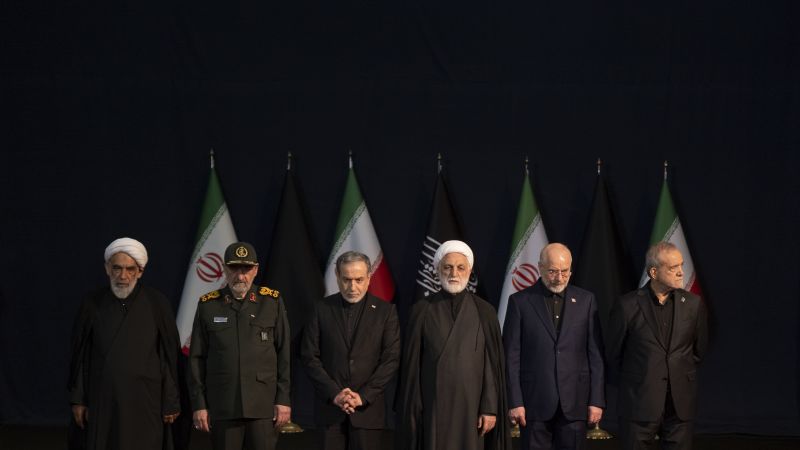
    On one side are pragmatists and technocrats led by President Masoud Pezeshkian, Parliament Speaker Mohammad Bagher Ghalibaf and Foreign Minister Abbas Araghchi.

    They support a conclusive agreement, citing an economy battered by war, an exhausting US naval blockade and damage to the country’s infrastructure.

    They have publicly warned that the opportunity to resolve the conflict from a position of strength is narrowing. They represent Iranians who believe ending the 47-year confrontation with Washington is the clearest way to ease the country’s domestic crises and preserve the Islamic Republic by ending its international isolation.

    “The war must end at some point,” Pezeshkian said this month. “It would be better to end it today, while we are in a position of strength and dignity, and the entire world acknowledges our victory.”

    Hardliners reject negotiations with the United States

    On the other side are hardline conservatives whose ideology is rooted in distrust of Washington, which they believe is determined to destroy the Islamic Republic. For more than half a century, they have warned about US intentions, and Trump’s war has strengthened their position against moderates.

    Hardliners also accuse current officials of being “Western-oriented” and of trying to steer public opinion toward an agreement by overstating the country’s domestic problems.

    “They see the US as a deeply untrustworthy actor… and (have) been burnt so many times by Trump himself that they think that this is exactly what will happen again,” Sanam Vakil, the director of the Middle East and North Africa program at London’s Chatham House think tank told CNN.

    “In their minds, by not losing (the war), they’ve won, and they’re not just trying to win out with a better deal from Washington, but they’re looking for internal longevity in their competition with their opponents.”

    Hardliners regard Pezeshkian as a weak president who came to office by chance after his hardline predecessor died in a helicopter crash. His signature alongside Trump’s on the June ceasefire agreement has further isolated him and given conservatives more power to blame him for the devastated economy and the failed agreement with Washington.

    The divisions are so severe that hardliners have accused officials of deliberately mishandling the economic crisis to push an exhausted public into accepting a deal. Some claim the government has engineered fuel shortages to make an agreement unavoidable, while others have gone further by accusing moderates of staging a coup.

    “Economically, are we really in a dead end, or are you just projecting a dead end?” asked hardline lawmaker Mohammad-Manan Raisi. “It has all been blamed on the war, while it is not all related to the war.”

    Past US agreements fuel Iran’s distrust

    Hardliners point to previous failed agreements with the United States, including the 2015 nuclear deal signed with the Obama administration and later abandoned by Trump. They also cite two instances in which the United States attacked the Islamic Republic during negotiations.

    This faction is betting on the Islamic Republic’s ability to endure. Its members argue that confrontation, backed by armed regional proxies, missiles, drones and Shia religious belief, has protected Iran more effectively than the diplomacy promoted by “Western-oriented” politicians.

    “Hardliners concluded they will achieve no deal with Trump and perhaps they’re now just living in the war between the wars,” Vakil said. “They think that they can wear Trump down and they can play for time to weaken him by extending economic pain.”

    A hardline lawmaker accused those supporting a US agreement of opposing former Supreme Leader Ayatollah Ali Khamenei, who was killed in US-Israeli strikes at the start of the war.

    “They want to prepare public opinion to accept an agreement and a humiliating peace,” Kamran Ghazanfari told parliament on Thursday, referring to those in favor of diplomacy with the US.

    “Yet the enemy has repeatedly shown that no matter how many concessions we make to it, no matter how much we retreat before it, it will never be satisfied and will continue to demand other things from us, and it will settle for nothing less than our complete surrender.”

    Mojtaba Khamenei remains silent amid political split

    As Iran’s pragmatists engage in a high-stakes diplomatic contest with Washington, hardliners’ opposition to a deal has intensified amid Trump’s erratic strategy and uncertainty over his commitment to a potential agreement.

    “Trump is not helping. He says he wants to make Iran great again then threatens Iran in the next tweet, and that fans the flame of paranoia within the Iranian system,” Vakil said.

    Conservatives, who have influence over newspapers, state broadcasters, street protesters and elements of the military, believe Trump is using diplomacy to prepare for another military campaign. They also believe that “every time they go down the road of diplomacy” with Trump he “betrayed them,” she added.

    Mojtaba Khamenei has remained silent amid the division. He appears to understand that taking a position on negotiations with an unreliable Trump could damage his office as he works to establish its legitimacy.

    On Friday, he praised the government’s performance under pressure but urged officials to address the country’s weaknesses without discussing them publicly at length, warning that doing so could embolden Iran’s enemies and demoralize its allies.

    With no one to restrain them, hardliners are continuing their campaign against an agreement with the United States.

    “Our martyred Imam (Ali Khamenei) warned them dozens of times – how do they not understand?” said Ghazanfari about his domestic opponents. “They speak in a way that reeks of nothing but capitulation and surrender.”

    Additional reporting by Aida Karimi

  • John Roberts Often Defers to Trump—but Not on the White House Ballroom Project

    John Roberts Often Defers to Trump—but Not on the White House Ballroom Project

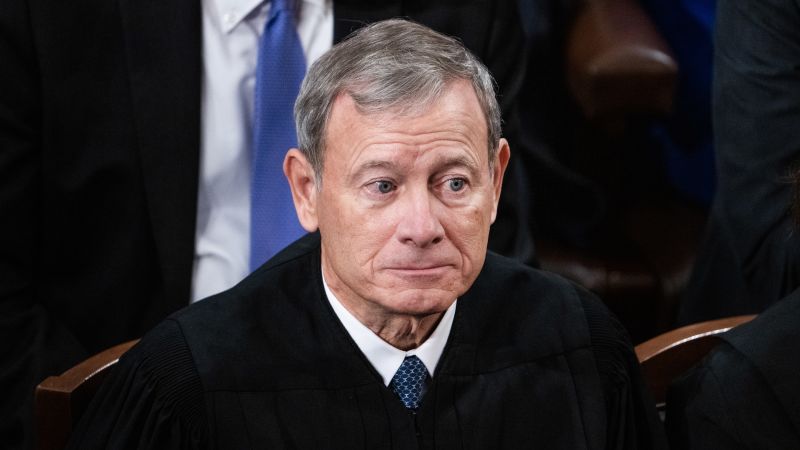
    Chief Justice John Roberts broke with Donald Trump and the Supreme Court’s other conservative justices on Monday, objecting to the president’s plan to build a massive ballroom at the White House.

    “The White House is not just any building.”

    Roberts has often deferred to Trump’s executive authority, but his dissent marked a rare break from a president whose policies have dominated the court’s docket. Roberts has authored major opinions supporting Trump, including the 2024 ruling granting him immunity from criminal prosecution and last June’s decision allowing him to fire the heads of independent agencies.

    Even in dissent, Roberts used the historically minded rhetoric for which he is known. His six-page statement invoked the history and architecture of Washington, quoting Theodore Roosevelt and Winston Churchill on the importance of iconic public buildings.

    “‘We shape our buildings, and afterwards our buildings shape us,’” Roberts wrote, lifting a line from a 1943 Churchill war speech.

    He added, “All the more reason to ensure that those responsible follow the rules in deciding what to tear down and what to build up at the People’s House.”

    Roberts invokes the White House’s historic role

    Roberts, who often tells audiences that he once planned to pursue a history Ph.D. rather than a law degree at Harvard, highlighted the symbolism of Washington’s historic architecture.

    He noted that when Roosevelt thanked Congress in 1902 for funding additions to the East and West wings, the president referred to “the stately simplicity” of the original architecture and the importance of preserving “such buildings as historic monuments which keep alive our sense of continuing with the Nation’s past.”

    Throughout his opinion, Roberts showed his own appreciation for the White House’s architecture, much as he has expressed pride in the Supreme Court’s columned building. The Supreme Court did not have its own building until 1935, more than a century after the White House and US Capitol were constructed.

    Roberts’ position did not affect the outcome and came at no apparent cost to Trump. His five conservative colleagues formed a majority that allowed construction of the ballroom to continue. The project has been underway for nearly a year and is nearing completion.

    Still, Monday’s statement adds another dimension to Roberts’ record as chief justice during Trump’s aggressive second-term agenda. The president’s cases have shaped the court’s work and will form a significant part of Roberts’ legacy.

    Roberts has approved many Trump policies, but last session he voted against two of the president’s most far-reaching initiatives: sweeping tariffs on foreign goods imposed without congressional approval and an effort to restrict birthright citizenship, the long-standing practice granting US citizenship to children born in the country.

    Trump’s plans to reshape Washington

    The case’s focus on American history also underscored Roberts’ role as chancellor of the Smithsonian Institution. The position is largely ceremonial because he serves as chief justice, but Roberts has presided over Smithsonian board meetings and observed the Trump administration’s continuing effort to reshape the nation’s leading public museums.

    Trump’s campaign to transform Washington in his own image has included adding his name to the John F. Kennedy Center for the Performing Arts and proposing a 250-foot triumphal arch. The arch is planned for the traffic circle between the entrance to Arlington National Cemetery and the Lincoln Memorial.

    The lawsuit was brought by the National Trust for Historic Preservation. The organization argued that demolishing the East Wing and constructing a 90,000 square-foot ballroom and security structure required congressional approval.

    Lower federal courts initially sided with the Trust and allowed the case to proceed. The judges found that the organization had “standing” to sue because it had shown a significant injury. The Trust cited Alison Hoagland, a longtime Trust leader and member and an architectural historian, who said the project had harmed her enjoyment of the White House.

    The Supreme Court’s majority rejected that reasoning, writing that “mere offense, disagreement, or distaste does not qualify as a concrete and particularized injury” for purposes of bringing a lawsuit. The majority issued its ruling per curiam, Latin for “by the court,” as is common in appeals arriving through the court’s emergency docket. Justices Clarence Thomas, Samuel Alito, Neil Gorsuch, Brett Kavanaugh and Amy Coney Barrett did not sign separate opinions.

    Roberts disagreed that Hoagland’s claim was minor. Liberal Justices Sonia Sotomayor, Elena Kagan and Ketanji Brown Jackson joined his opinion.

    “The White House is not just any building, and – when it comes to historic preservation – Hoagland is not just any person.”

    Roberts said earlier court decisions had recognized injury based on “esthetic interests.” He cited a 1992 precedent in which, as Roberts described it, “a desire to … observe an animal species like a particular crocodile, even for purely esthetic purposes was undeniably a cognizable interest for purposes of standing.”

    Roberts says ballroom project is likely unlawful

    In the case before the court, Roberts declared, “A historic preservationist such as Hoagland can be aesthetically injured in a concrete, particularized way by the transformation of a historic building that she frequently enjoys, just as an environmentalist can sustain a concrete, particularized aesthetic injury from the extinction of a particular animal or the transformation of a particular forest or river that he regularly enjoys.”

    Monday’s ruling addressed only the question of standing. The majority said it was not deciding whether the ballroom project itself was lawful. Roberts, however, made clear that he viewed the broader construction effort skeptically.

    He wrote that Congress had expressly prohibited construction on such federal property “without express authority of Congress.”

    “That construction is likely unlawful,” he said, adding that the usual appropriation for White House maintenance “likely does not authorize the President to use hundreds of millions of dollars in private donations to tear down the East Wing and construct a ballroom in its stead.”

  • At Least Seven Dead and More Missing After Boat Carrying Hundreds Capsizes Off Cyprus

    At Least Seven Dead and More Missing After Boat Carrying Hundreds Capsizes Off Cyprus

    A rescue operation is underway in the Mediterranean after the passenger boat Filo Jet capsized while traveling from Northern Cyprus to southern Turkey, killing at least seven people.

    The vessel was carrying 259 passengers and eight crew members from Kyrenia to Taşucu when it began taking on water a few miles off the coast of Cyprus, according to Turkey’s Interior Ministry.

    Rescue operation continues

    Ünal Üstel, prime minister of the Turkish Republic of Northern Cyprus, told Turkish media that 237 people had been rescued and that search efforts were continuing for 23 others. He said the ship capsized “due to the difficult weather conditions.” None of those rescued was in critical condition.

    Video from the scene showed dozens of people on the side of the vessel, while others wearing life jackets were in the water. At least one helicopter was seen hovering above the capsized boat.

    Four coastguard vessels from Northern Cyprus and a passenger vessel took part in the rescue operation, the Interior Ministry said. Two coastguard helicopters were also sent to the area.

    Numan Kurtulmuş, speaker of the Turkish parliament, said in a post on X that he had extended his condolences to those who lost their lives in “this exceedingly tragic incident.”

    Filo Jet capsizes off Kyrenia

    MarineTraffic tracking data showed the vessel north of Kyrenia on Sunday morning before its position transmissions stopped.

    A live stream from Kyrenia showed people arriving at the port by helicopter and on rescue boats as ambulance sirens sounded. Several ambulances were lined up at the harbor.

    Further video showed the ship lying on its side in choppy seas, with rescuers picking up people wearing life jackets and others remaining in the water.

    This is a developing story and will be updated.

  • 10-Year Treasury Yield Reaches 5%, Critical Threshold for US Economy and Markets

    10-Year Treasury Yield Reaches 5%, Critical Threshold for US Economy and Markets

    10-Year Treasury Yield Hits 5%: Borrowing Costs Surge to Highest Level Since 2007

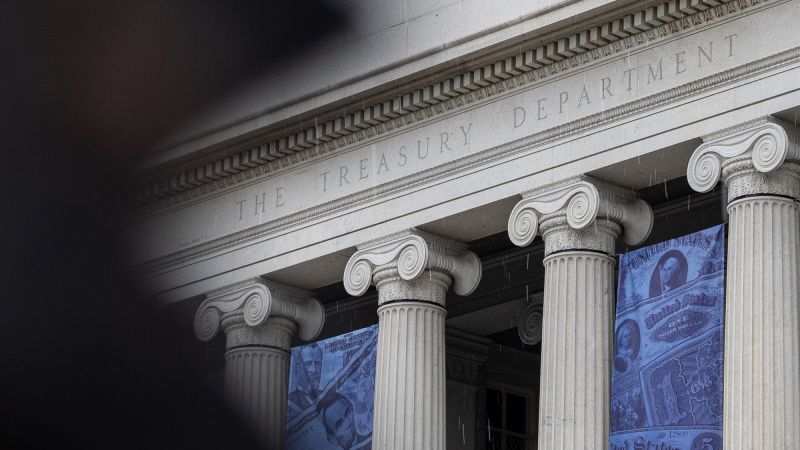
    The 10-year U.S. Treasury yield climbed to 5% on Monday, reaching a critical threshold briefly touched in 2023 and otherwise unseen since 2007. This move in the key benchmark signals higher borrowing costs for Americans seeking mortgages, auto loans, and other credit.

    Bond Market Sell-Off Extends Globally

    The 10-year yield has extended a recent surge that has lifted borrowing costs for consumers, businesses, and the U.S. government alike. Yields have risen despite efforts by Treasury Secretary Scott Bessent to calm bond-market concerns. The global bond market, anchored by the nearly $32 trillion U.S. Treasury market, has sold off as investors weigh a mosaic of risks: soaring energy prices, expectations for further central-bank rate hikes, uncertainty surrounding the war with Iran, and unchecked government spending amid mounting debt.

    Government bond yields worldwide have touched multi-year and multi-decade highs this year, compounding affordability concerns, adding to unease about sovereign debt burdens, and threatening to weigh on equity markets. Yields rise when bond prices fall; the sell-off this year has pushed prices lower and sent the 10-year yield toward levels not seen in nearly two decades. The benchmark now sits at its highest since October 2023, just a whisker below its firmest level above 5% since 2007.

    Sharp Reversal Since Start of Year

    The 10-year yield began the year at 4.15% and dipped below 4% in February. After the outbreak of war with Iran, yields sharply reversed course and have climbed steadily since. The benchmark hit 4.5% in May before breaching 5% on Monday.

    Direct Impact on Mortgage Rates and Housing

    Higher bond yields translate directly into higher interest rates, making borrowing more expensive across the economy. The 10-year Treasury serves as the benchmark for borrowing costs economy-wide. Rising yields push up the rates consumers pay on mortgages and other loans.

    The housing market feels the sting most acutely. Mortgage rates track the 10-year yield closely. As the benchmark has surged this year, the average 30-year fixed mortgage rate has climbed to its highest level in more than a year. Last week, the average 30-year fixed rate reached 6.76%, up from 6.15% at the start of the year.

    Equity Market Implications: Context Matters

    Rising yields affect analysts’ earnings-discount models and can draw investors from riskier equities into safer government bonds. However, the impact on stocks depends on the context and volatility of the yield move.

    When yields spike dramatically, shocks can ripple through equities. In April 2025, President Donald Trump’s tariffs roiled financial markets: the 10-year yield spiked, the dollar fell, and stocks tumbled. Yet this year yields have risen steadily while the S&P 500 remains up more than 10%. Strong corporate earnings can outweigh nerves about higher yields.

    Markets may absorb steadily climbing yields if economic growth stays robust. But higher borrowing costs increase risks for equities; if earnings falter, elevated yields could become a larger headwind.

    Analyst Perspectives on the 5% Threshold

    The 10-year yield at 5% is seen by some as a threshold above which financial markets might go into meltdown, John Higgins, chief economic adviser for financial markets at Capital Economics, said in a note.

    While we aren’t convinced that 5% is that ‘magic’ number, higher Treasury yields would certainly pose a risk to the sustainability of the US’ public finances as well as threaten equities, Higgins said.

    End of the Ultra-Low-Rate Era

    Analysts say the rise in global yields isn’t entirely surprising and may signal that the era of ultra-low interest rates is over, with rates returning to levels more typical of past decades. After the 2008 financial crisis, central banks worldwide cut rates to historic lows. That shift began reversing in 2022, when central banks hiked rates to combat inflation sparked by the pandemic and Russia’s invasion of Ukraine.

    The 10-year yield traded at 1.3% five years ago; today it stands at 5%.

    What we’ve been communicating to our clients is ‘normal for longer,’ meaning these factors are here to stay, Luis Alvarado, co-head of global fixed income strategy at Wells Fargo Investment Institute, told CNN.

    A sustained push higher in yields across the globe has accelerated since the start of the war with Iran. Ten-year yields in Germany, France, and the United Kingdom are all at levels not seen in more than a decade. Rising energy prices are prompting central banks to raise rates to tamp down inflation; the European Central Bank hiked rates last week for the second time this year. Meanwhile, investors grow increasingly skeptical of governments’ bloated budgets and mounting deficits.

  • Exclusive: I won’t run against Kamala Harris, Gavin Newsom tells CNN

    Exclusive: I won’t run against Kamala Harris, Gavin Newsom tells CNN

    California Governor Gavin Newsom opened up about a potential 2028 presidential bid, his relationship with Vice President Kamala Harris, and the personal calculus behind seeking the White House during an extensive fly-fishing interview with CNN anchor Jake Tapper in Montana.

    A Conversation on the Bitterroot River

    The setting was unconventional by political journalism standards: waist-deep in the frigid Bitterroot River on the Bitterroot Springs Ranch near Stevensville, Montana. Tapper, who pitched the “Out of Office” longform concept to several political figures including Vice President JD Vance and Secretary of State Marco Rubio, wanted to move beyond studio interviews. The goal was to discuss childhoods, parents, tougher moments, and biggest successes in an environment where the subject felt comfortable. Republican Senator Thom Tillis of North Carolina has also agreed to participate in the series.

    Despite Tapper’s self-described “horrible fly-fishing form,” the hours spent driving around the ranch and standing in the water loosened up the typically polished politician. The conversation ranged across decades of public life, touching on Newsom’s dyslexia, failed first marriage, past affair, his mother’s assisted suicide, a close friend’s intervention, the governor’s race, COVID-19 challenges, and confrontations with President Donald Trump.

    Newsom on Harris and the 2028 Field

    Top of mind was whether Newsom runs for president in 2028. A key variable is who else enters the race, specifically former Vice President Kamala Harris, a fellow San Francisco Democrat.

    “I don’t know if she runs, but we’ll see,” Newsom told me. “I wouldn’t run if she ran.”

    Tapper noted frank surprise at the definitive statement.

    “Why would I?” he said. “I wouldn’t do that to her. I wouldn’t do it to me. … I won’t waste everyone’s time. Who needs that?”

    Newsom elaborated on the political mechanics of such a scenario.

    “First of all, electorally it’s a gift from God for everybody else,” he explained. “They’d enjoy the hell out of it. Mutual assured destruction. It services no greater good. Why would I do this if I wasn’t trying to serve some greater good? There would be no upside whatsoever.”

    When pressed on the counterargument—that Harris ran in 2019 without reaching 2020 and lost the 2024 general election—Newsom conceded the point but stood firm.

    “That would be the case you’d make,” he acknowledged. “Pretty good one, actually. That’s objectively true. But I know what that means. I know her base of supporters, I know her friends, the (Venn) diagram on that is just pure crossover … I wouldn’t do that to people. I wouldn’t put them in that position … Every other Democrat is praying for that, and every other Republican is gonna pray for that. And that’s just not gonna happen.”

    The ‘Why’ Behind a Presidential Run

    How does a politician decide to run for the highest office? Newsom described an ongoing personal process.

    “I have no experience in this process, so I’m going through it,” Newsom said.

    Tapper noted some observers wished Newsom had challenged President Joe Biden in 2024.

    “I wasn’t ready,” he said. “First of all, I wouldn’t do that. And second, if I did, I would have gotten crushed because I didn’t have a why. You don’t have big enough why, then you don’t belong there.”

    “It’s shocking how many presidential candidates can’t answer their why. Like, shocking,” he continued. He said he’d seen “leading candidates over the last few cycles that are there for the wrong reasons. Or no reason at all, which is the worst. So, you’ve got to have a big enough why.”

    Family as the Final Veto

    After reflecting on his personal and professional journey, Newsom signaled a shift in perspective.

    “I am not screwing anything up anymore, man. I know what matters in life. I got four kids, it’s the only thing that matters to me.”

    His wife and school-aged children hold veto power over a White House run.

    “If they’re not on board, that’s a non-starter.”

    Meeting the Moment

    Back in the flowing water, checking his hook and casting upstream at signs of reluctant fish, Newsom outlined the signs that might actually make him run.

    “You just have to meet the moment. You got to be honest with yourself. Do you represent the zeitgeist in the moment, or are you wasting everybody’s time?” he said.

    “I’m not here to make a point. I want to make the difference, and you can make a difference in a lot of ways in life.”

    The full “Out of Office” report with Gavin Newsom streams Tuesday on CNN All Access starting at 8 a.m. ET.

  • Thieves Steal Four Renoir Paintings From French Museum, Dropping Two During Escape

    Thieves Steal Four Renoir Paintings From French Museum, Dropping Two During Escape

    Thieves Steal Four Paintings from Renoir Museum in Southern France

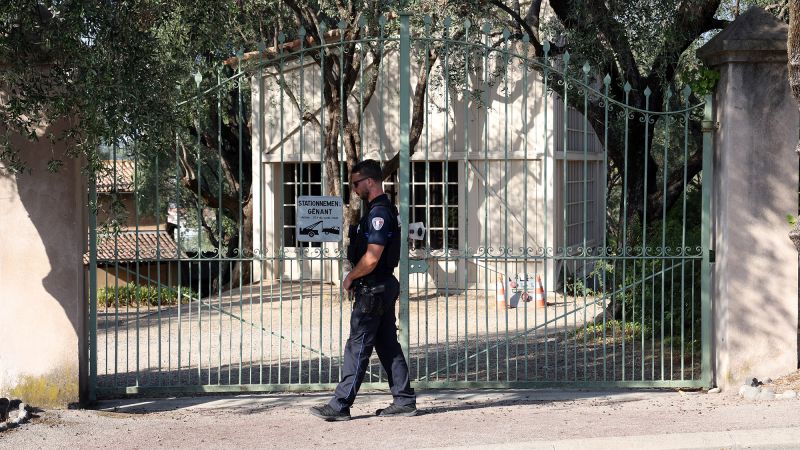
    Thieves stole four paintings from the Renoir Museum in Cagnes-sur-Mer, in the south of France, early Tuesday morning, abandoning two works as they fled. The heist marks the latest in a series of high-profile art thefts targeting cultural institutions.

    Rapid Police Response Could Not Prevent Theft

    The museum’s alarm system activated at 5:48 a.m. local time Tuesday (11:48 p.m. ET Monday). Police arrived on scene within five minutes, according to Bryan Masson, mayor of Cagnes-sur-Mer and a member of the National Rally party, in a Facebook post.

    Despite the swift response, the two thieves managed to access the ground floor where 12 artworks were stored. They fled the scene, dropping one painting during their escape. A second painting was later recovered from the museum garden, Masson confirmed at a press conference Tuesday morning.

    Well-Prepared Thieves Used Power Tools

    Masson described the perpetrators as “well-equipped and well-prepared,” noting they cut through a fence and entered through the museum gardens. “They were equipped with an electric saw and used it to cut through the fixtures securing the frames of Renoir’s works,” he added.

    Mayor Condemns Attack on Cultural Heritage

    The mayor characterized the theft as an assault on local history. “An attack on the Renoir Museum is an attack on a part of the history and heritage of #CagnesSurMer,” Masson wrote in an earlier Facebook post. “These incidents are particularly serious.”

    Masson also called for stronger security measures at museums across France. “We will devote all necessary resources to better protect this heritage, which belongs to everyone who lives in Cagnes-sur-Mer,” he added.

    The Cagnes-sur-Mer town hall announced on Facebook that the museum would remain closed until further notice. CNN has reached out to the town hall, the Renoir Museum, and France’s Ministry of Culture for comment.

    Shifting Tactics in Museum Thefts Across Europe

    The incident follows a pattern of increasingly aggressive art thefts. Nearly a year ago, the Louvre in Paris was targeted in a brazen raid where thieves stole priceless items in minutes.

    Europol, the European Union’s law enforcement agency, has documented a tactical shift in museum thefts—from deception and stealth toward more aggressive, violent methods.

    “The use of violent means could indicate the involvement of perpetrators with a new profile, distinct from those traditionally engaged in cultural property crimes,” reads a Europol report published August 24.

    “Unlike typical cultural goods traffickers, who usually avoid violence and specialise in organised property crime or the theft of cultural goods, these individuals often have histories of involvement in other types of crime.”

    Thieves are also increasingly targeting precious metals, gemstones, and culturally significant artifacts, according to the agency. “The choice of targets suggests strong criminal market demand and ease of illicit resale,” the report states.

  • Democrats Eye New Tool to Hold Trump Accountable if They Win House

    Democrats Eye New Tool to Hold Trump Accountable if They Win House

    Democrats Prepare Sweeping Investigations and Legal Battles Ahead of Midterms

    With two months until the midterm elections, Democrats are laying the groundwork to launch far-reaching investigations into the Trump administration and preparing for high-stakes court battles if they win control of the House of Representatives in November.

    Top Investigative Targets: Iran, Ballroom, Business Dealings, Epstein Files

    President Donald Trump’s war with Iran, his White House ballroom project, his family’s business dealings, and the administration’s handling of the Jeffrey Epstein files will be among the top targets of investigations if Democrats take back the House, according to conversations with over a dozen Democratic lawmakers and aides.

    Democrats don’t want to squander the opportunity to act as a check on Trump if they reclaim the majority and say they have learned a lot since the last time the party controlled the House while Trump was in office. Few say they are interested in launching an impeachment process on day one, and many instead are eyeing a new tool that would be at their disposal to try to quickly compel the testimony and documents they seek: lawsuits.

    Legal Standing and the Power to Sue

    In the majority, Democrats would have the ability to sue the Trump administration in a more effective way since they have not had standing to do so in the minority. Whether it is compelling testimony from a top administration official, escalating a fight over obtaining documents, or trying to halt the construction of Trump’s White House ballroom, Democrats plan to be strategic and aggressive about taking their fight to court.

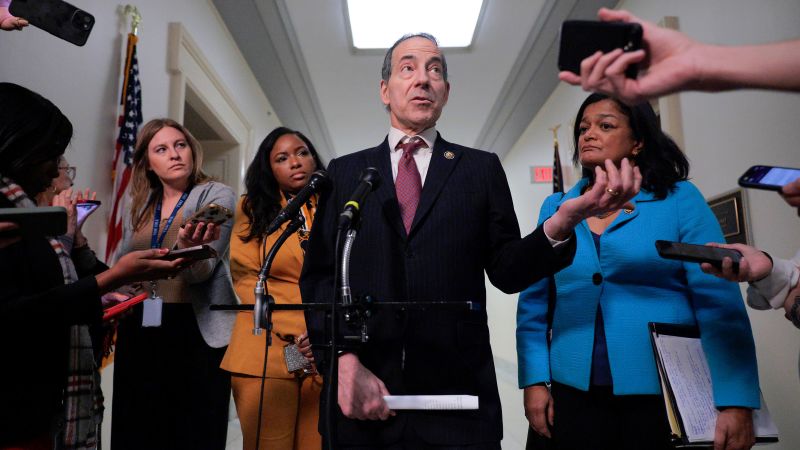
    “We’re going to use every tool in the toolbox and we will have certainly a lot more authority to get ourselves into court in the majority than we did when we were in the minority,”

    Democratic Rep. Jamie Raskin, who is in line to lead the powerful House Judiciary Committee, told CNN.

    “We are not taking no for an answer in terms of getting the evidence we need,”

    Raskin said.

    Committee Leaders Outline Specific Probes

    Raskin has already launched investigations into allegations of corrupt government contract deals at Donald Trump Jr.’s venture capital firm and on the Trump administration’s pardon policy. Rep. Robert Garcia, the top Democrat on the House Oversight Committee, wants to interview the president and first lady as well as top officials like Vice President JD Vance and White House Chief of Staff Susie Wiles about how the administration has handled the Epstein matter. Garcia also wants to interview Kushner and Trump family members about their business dealings.

    Democratic Rep. Adam Smith plans to probe the Trump administration’s decision to go to war with Iran and US strikes on alleged drug boats atop the House Armed Services Committee. Democratic Rep. Jared Huffman is laying the groundwork to investigate Trump’s ballroom and other construction projects on the House Natural Resources panel.

    Even in the minority on the House Homeland Security Committee, Democratic Rep. Bennie Thompson has tried to get answers on the administration’s deportation efforts and the practices of Immigration and Customs Enforcement. And that’s without committee gavels, subpoena power, and the standing to sue in court — all of which House Democrats will gain if they win the majority.

    Aggressive Planning and Staffing for Oversight

    For now, lawmakers in line to run committees are working aggressively to outline their top investigative priorities, jockeying for who will investigate what and trying to coordinate an overarching plan on ambitious investigative targets.

    Democratic leadership and committee teams are preparing to launch an aggressive hiring push if they win in November to be ready for the onslaught of investigations they have planned. One of the most important roles will be who Democrats select to be their in-house general counsel, who will help Democrats navigate lawsuits and the courts.

    “If you’re a highly qualified, experienced lawyer or senior staffer out there that wants to be part of this historic moment of accountability think about coming back to the Capitol and being part of this team because we will be staffing up,”

    Huffman told CNN.

    Democrats have laid the groundwork through the creation of a legal task force, which has already racked up wins even with the party in the minority, including successfully stopping the Trump administration from blocking lawmakers from making announced oversight visits to federal immigration detention facilities.

    “Should Democrats get the gavel in either chamber, we expect sustained oversight across a sweeping range of issues and entities. Companies and institutions should use the time they have now to prepare for that scrutiny,”

    said Emily Loeb, a partner at the law firm Jenner & Block, whose team has already been contacted by companies preparing for congressional investigations.

    Court Challenges and Alternative Strategies

    Of course, there’s no guarantee of success in the courts. But Democrats say they are not deterred by that, including a recent decision by the Supreme Court that cleared the way for Trump to continue construction of his massive new ballroom project at the White House, concluding that a preservation group lacked the legal right — known as standing — to challenge the project.

    “Donald Trump will not be able to run out the clock on these illegal construction projects because his buddies on the Supreme Court bounced a case for lack of standing,”

    Huffman said.

    But bringing an issue to court would just be one option at the party’s disposal.

    Anticipating roadblocks from the Trump administration, Democrats also plan to rely heavily on requests for information from the private sector, which they say would not be beholden to the same executive privilege restrictions Trump may invoke on government officials asked to comply with congressional requests or subpoenas.

    And Democrats say they have already developed relationships with multiple whistleblowers both inside and outside the government who they would also rely on in the majority if they can’t get the answers they seek directly from Trump administration officials.

    Introducing legislation would also be a component of the investigative agenda, including trying to give Congress a role in the enactment of the 25th Amendment, imposing stricter requirements barring a president from profiting from a foreign government, and permanently eliminating the “anti-weaponization” fund.

    Impeachment Debate: Strategic Caution vs. Pressure from Rank-and-File

    Raskin was the lead manager for Trump’s second impeachment trial in February 2021, and does not think impeaching Trump should even be in the initial conversation if Democrats reclaim the majority in November, given the chances of conviction in the Senate are so slim.

    “I’ve not heard a single person say to me that they think our top priority should be impeachment of Donald Trump,”

    Raskin told CNN.

    “He hasn’t been convicted, and the chances of conviction on even his most gross and undeniable offenses against the Constitution are slim because he exercises even more authoritarian control over the Republican Congress than he did in the last impeachment.”

    Garcia, meanwhile, said his focus is on finding evidence of what he says is Trump’s corruption.

    “Trump commits an impeachable offense every week. But our job is to stop Trump, to stop his agenda. That’s job number one. So, for us, our job is to (do) investigations and building a case as to why this is the most corrupt person ever to serve,”

    he told CNN.

    But even if impeachment turns out to not be most effective strategy as conviction remains unlikely in the Senate, Smith argued that Democrats should not shy away from making the case for why Trump should be impeached:

    “I’m going to be all in favor of pushing that argument.”

    And while Democratic leaders have not endorsed impeachment, there is still pressure to pursue it within the rank-and-file.

    Dozens of Democrats supported the launch of a formal impeachment debate back in June 2025.

    One of those Democrats to vote back in June, Democratic Rep. Yassamin Ansari, told CNN she supports impeaching Trump but is more focused on showing accountability.

    “I do hear a lot from my constituents about how we need to really prosecute if there are crimes that have been committed and people want to see people in power go to jail if they’ve committed crimes. It’s really that simple,”

    she told CNN.

    “We think now that there could never be another Donald Trump. There could easily be another Donald Trump. There could be a worse version of Donald Trump. And if we don’t show that there are consequences, then people also just won’t trust government.”

    In her view, the mistake Democrats made after the past impeachments, which occurred before she assumed office, was trying to go back to normal afterward.

    “I think in many ways that allowed Trump 2.0 to be so much worse because they thought they could get away with the worst possible things and nothing happened and in fact, he ultimately was re-elected again,”

    Ansari said.

    Another one of those Democrats to vote back in June of last year, Rep. Mark Pocan, who is in line to chair the subcommittee that oversees the White House budget and the now defunct Department of Government Efficiency, now says Democrats need to not get ahead of themselves.

    “I think we’ve got to do our investigation work first and that’s oversight work”

    Pocan said.

    It’s a delicate balance that Democrats are trying to strike as members actively discuss how to deliver accountability without rushing into anything.

    “Everyone’s got an axe to grind with this administration,”

    Democratic Rep. Suhas Subramanyam, who serves on the Oversight Committee, told CNN.

    “I think there are definitely people who, the first thing they want to do is start impeaching Trump. We’ve already had that happen this Congress. I just want to make sure if we do impeachment, that’s it’s going to be an ironclad case.”

    Wanting to be strategic about how to investigate Trump, some Democrats say that momentum for impeaching Trump cabinet officials, particularly Defense Secretary Pete Hegseth, could take off first.

    “Impeaching this president has caused his supporters to dig in even harder. And his party members to dig in and defend him even harder,”

    Democratic Rep. Mary Gay Scanlon, who serves on the House Judiciary Committee told CNN.

    “I suspect that some of those peripheral impeachment efforts might move sooner.”

    Balancing Oversight with Affordability Message and Governing Responsibilities

    Many Democrats, though, argue the entire conversation about a potential future investigative agenda is premature and the focus now is on winning back the House with a sizable majority and keeping up hope that the Senate could also be in play.

    Democrats say they will also be proactive in trying to tie any oversight work to their efforts to address the affordability concerns that many people face, in an effort to combat criticism that their investigations would be squarely about going after Trump.

    “I don’t think they’re incompatible. You cannot address the cost of living without the impact of corruption on the American public. So, I think they’re hand in hand,”

    Democratic Rep. Joe Morelle, who is leading the task force to create the anti-corruption agenda for Democrats if they win the majority, told CNN.

    In the aggressive pursuit of oversight, some Democrats are wary of the caucus losing sight of its affordability message. Making that connection between Democrats’ affordability and anti-corruption agenda is a critical goal for the party this fall in the final sprint ahead of the midterms.

    “If we are entrusted with the majority, we have to meet the moment to turn the ship around,”

    Democratic Rep. Chris Deluzio told CNN.

    “We have to take the economic fight front and center and we cannot only be doing oversight.”

    If they win the majority, House Democrats will also have to balance their efforts to investigate the Trump administration with the reality that Democratic leadership will still have to work with the White House on various issues to ensure basic functions of the government, like keeping the government funded, can continue.

    Democrats were split after House Democratic Leader Hakeem Jeffries recently took a private meeting with Kushner. But many said later they felt reassured after hearing the explanation from the Democratic leader, who said Kushner asked for the meeting and he took it “to discuss the affordability crisis,” and said even if Jeffries were to continue taking meetings with administration officials it would have no bearing on Democrats’ plans for aggressive oversight, even of Kushner.

    Coordinated, Multi-Committee Approach to Maximize Visibility

    Instead of narrowing their list of investigations, the party is warming to the idea of conducting multiple, even overlapping, investigations at once.

    In 2019, Democrats coalesced around an investigation that culminated in the first impeachment of Trump over allegations that the president pressured Ukraine to investigate his political rivals while withholding US security assistance and a White House meeting.

    But in the current environment, Democrats want to be more dynamic and are prepared to have multiple hearings on different issues a day.

    “We’ve got to move fast and that means it can’t all live in two committees,”

    a Democratic aide told CNN.

    “In order to make people feel like real accountability is happening, you need to have a volume and that amount of content needs to be tuned to different audiences so that people actually see it or they won’t believe we are doing anything.”

    Still, other Democrats are looking to leadership for coordination as many committees have overlapping investigative targets, with Smith telling CNN,

    “it’s going to have to be a coordinated effort, not something that each committee is going to be flying off on their own.”

  • Shakira Arrives in Madrid for Historic Residency

    Shakira Arrives in Madrid for Historic Residency

    Colombian superstar Shakira touched down at Madrid’s Adolfo Suárez Madrid-Barajas Airport on Monday, greeting fans and journalists who had gathered to welcome her. The singer is set to launch a 12-show residency in the Spanish capital on September 18 as part of her Las Mujeres Ya No Lloran World Tour.

    Immersive Venue Built for the Tour

    The concerts will take place at a purpose-built venue within Iberdrola Music, designed to deliver an immersive experience for concertgoers. The custom venue underscores the production scale of the tour, which has already drawn massive global demand.

    Madrid Residency Marks Major European Stop

    The Madrid residency represents one of the most significant European legs of the world tour, with a dozen consecutive nights scheduled. Shakira’s arrival signals the final countdown to the opening show, as the city prepares for an extended run of performances from the global icon.

  • Supreme Court Rejects Trump Plan to Limit Mail-In Voting in Midterm Elections

    Supreme Court Rejects Trump Plan to Limit Mail-In Voting in Midterm Elections

    The Supreme Court on Monday rejected President Donald Trump’s controversial plan to change how mail ballots are sent to voters nationwide, blocking a proposal that election officials warned would have caused catastrophic consequences for the 2026 midterms.

    In one of the most significant cases on the court’s emergency docket in years, a majority of justices halted a procedure that would have granted the U.S. Postal Service unprecedented authority to withhold potentially millions of mail ballots. Even some Republican election officials cautioned the proposal could trigger chaos and mass disenfranchisement.

    The court ruled the administration “is unlikely to succeed on the merits of its challenge” but provided minimal reasoning in its three-sentence, unsigned order. Conservative Justices Samuel Alito and Clarence Thomas dissented.

    Major Setback for Trump’s Mail Voting Crusade

    The decision marks a significant loss for the president, who has spent years attacking mail voting with false claims of widespread fraud while continuing to vote by mail himself. The administration framed its proposal as a “modest” regulatory tweak intended to protect against alleged fraud. Critics, however, labeled it an unconstitutional power grab the Postal Service was unprepared to execute.

    CNN has reached out to the White House for comment.

    Kavanaugh Concurs on Timing, Leaves Door Open for Future

    Justice Brett Kavanaugh, part of the court’s conservative wing, wrote a concurrence stating he believed the proposal might fall within USPS authority, but that “state and local election officials do not have sufficient time to reasonably implement the rule before the elections.”

    His reasoning acknowledged a flood of briefs from election officials arguing there was simply not enough time to implement the order this late in the cycle. The concurrence also suggested Kavanaugh could side with Alito and Thomas to approve similar changes for a future election.

    Alito Dismisses Practical Concerns, Cites Postal Authority

    In dissent, Alito argued the practical implementation concerns raised by election officials were insufficient grounds for the plaintiff states and voting rights groups to prevail.

    “The government has a strong interest in enforcing the rule, and implementing it will also ‘en­hance the visibility of Federal Ballot Mail’ in order to better detect election fraud,” Alito wrote. “On the other side of the balance, the plaintiff States invoke the practical ef­fects of implementing the rule close to the midterm elec­tions. I take that problem very seriously, but it is not enough to convince me to deny the application.”

    “That Hail Mary pass is unlikely to be successfully completed here,” Alito wrote. “The Postal Service has broad authority to regulate the mail.”

    Bipartisan Coalition Warned of Last-Minute Chaos

    Beyond the Democratic-led states and voting rights groups that challenged the proposal, a bipartisan coalition of election administrators, former governors, and others warned the justices against last-minute changes to mail ballot procedures. The Postal Service rule required states to upload massive voter datasets to an online portal that was not yet operational. It also mandated changes to ballot envelopes that had already been purchased and, in many states, already mailed to voters.

    Officials Celebrate Ruling as Defense of Democracy

    The plaintiffs praised the court’s decision late Monday.

    “Trump’s attempt to sabotage the 2026 elections has failed,” said Colorado Secretary of State Jena Griswold, a Democrat.

    California Attorney General Rob Bonta, also a Democrat, called the high court’s decision a “victory for our democracy and a powerful affirmation of the rule of law.”

    The administration argued the changes were necessary to secure ballots and ensure only eligible voters receive them. A coalition of two dozen Democratic-led states and voting groups countered the effort was a power grab by a president who has long falsely alleged widespread voter fraud in mail ballot systems.

    Court Prioritizes Voter Harm Over Administrative Burden

    In recent emergency docket rulings, the court has often found the Trump administration harmed when lower courts block controversial policies. In this case, however, the court determined that “equitable factors”—the potential harm to voters—outweighed those concerns.

    The emergency appeal, filed last week, was the third time the administration raced to the Supreme Court on this policy. In late August, the court allowed the president to proceed on technical grounds related to lawsuit timing. A lower federal court blocked the changes days later.

    Under the Constitution, states and Congress determine voting procedures—not the White House or the post office.

    Order Required Voter Lists, Barcodes, and Prosecution Threats

    The president’s order required states to submit eligible voter lists to the USPS. The agency would then be barred from delivering ballots to anyone not on those lists. It also mandated tracking barcodes on ballot envelopes and “prioritized” federal prosecution of state election officials who send or receive ballots to non-citizens or other ineligible voters.

    Whistleblower Warned of Mass Ballot Withholding

    While the Supreme Court deliberated, a Postal Service whistleblower issued stark warnings. The whistleblower’s report revealed that if a single ballot had a barcode issue, officials would decline to deliver the entire batch of mailings containing that envelope. The report also described a rushed effort to launch an online data-sharing system that could make the complex plan even more vulnerable to mass disenfranchisement.

    No Evidence of Widespread Fraud; Multiple Courts Rejected Plan

    Trump has long promoted conspiracy theories about mail voting to discredit the 2020 presidential election he lost. Improper voting remains exceedingly rare, and the administration has never produced evidence of widespread fraud capable of influencing the 2020 outcome or any other contest.

    Multiple federal courts rejected the proposal. Over the weekend, U.S. District Judge Carl Nichols, a Trump nominee in Washington, D.C., became the latest to pause the USPS rule for the midterms.