Category: Around the World

International news, world events, society, travel, and stories beyond the other editorial categories.

  • UK Upgrades Diplomatic Relations with Venezuela

    UK Upgrades Diplomatic Relations with Venezuela

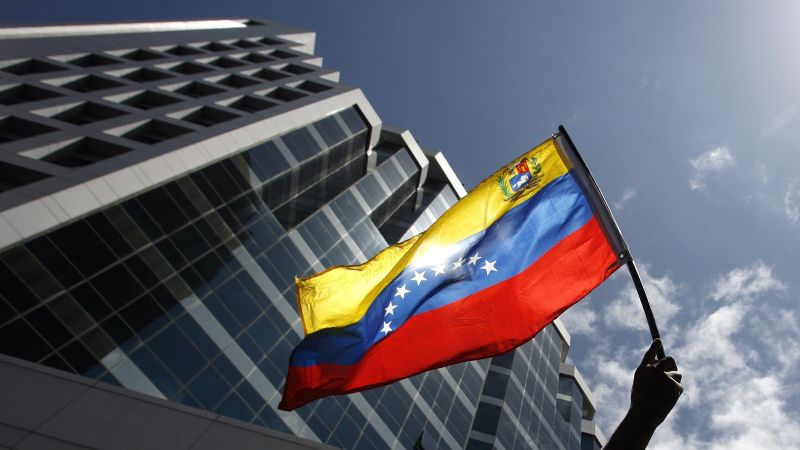
    The United Kingdom government announced Tuesday an upgrade in its diplomatic relations with Venezuela, including the appointment of an ambassador to the country, in a move it said would strengthen its capacity “to play a constructive role in support of a democratic transition.”

    “Esta decisión forma parte de un acercamiento internacional más amplio,” the government said in a statement addressed to Parliament.

    “Este enfoque no representa ningún cambio en la valoración que hace el Reino Unido de los recientes procesos electorales, incluidos los celebrados en 2024, ni implica el respaldo a ningún partido. La postura tradicional del Reino Unido es reconocer a los Estados, no a los Gobiernos,” clarified the document signed by the Minister for Latin America, Chris Elmore.

    “La mejora de nuestras relaciones reforzará nuestra capacidad para desempeñar un papel constructivo en apoyo de una transición democrática. Nos permitirá defender de manera más eficaz el respeto de los derechos humanos y contribuir a la recuperación y reconstrucción del país tras los devastadores terremotos del 24 de junio,” the text adds.

    Meanwhile, Colin Dick, head of mission at the British Embassy in Caracas, stated in a communiqué: “Espero que el Reino Unido y Venezuela trabajen aún más estrechamente en los próximos años.”

    For its part, the Venezuelan government said it “valora la decisión del Reino Unido” to elevate the level of diplomatic relations.

    Oliver Blanco, Vice Minister for Europe and North America, posted on X: “Reafirmamos nuestra disposición a profundizar un diálogo respetuoso y constructivo, así como a promover la cooperación en áreas de interés común para nuestros países y avanzar en la recuperación de los recursos que pertenecen legítimamente a los venezolanos.”

  • US Open Gets More Luxurious as True Fans Pay the Price

    US Open Gets More Luxurious as True Fans Pay the Price

    The US Open has long been associated with premium prices, from $30 tennis-themed Champagne cocktails and $100 caviar-coated chicken nuggets to $150 ball crew shirts designed by Ralph Lauren. Now, the tournament is taking its luxury strategy even further.

    Arthur Ashe Stadium, the 29-year-old centerpiece of the US Open, is debuting the first phase of an $800 million renovation this month. The upgrades include more courtside seats and expanded premium suites, while thousands of upper-level seats are being removed.

    US Open adds premium seats while removing upper-level capacity

    Courtside seating is increasing by 66% to approximately 5,000 seats, according to organizer United States Tennis Association (USTA). The stadium’s high-end suites, used by marquee sponsors including Grey Goose, Dobel Tequila and Emirates airline, are also being remodeled and expanded.

    But the premium expansion comes at the expense of more affordable seating. Nearly 3,000 upper-level seats will be eliminated once the renovation is completed next year, making cheap tickets harder to find as the tournament continues to report record attendance. The changes have already frustrated fans and some players.

    The US Open’s shift toward luxury seating reflects a broader trend in professional sports, according to Victor Matheson, a sports economist at the College of the Holy Cross. Since the early 1990s, newly built and renovated stadiums have increasingly replaced “bleacher seats and general entry with premium seating, suites and luxury boxes.”

    “The average fan has been displaced for 30 years,” he told CNN. “We’ve got more and more people competing for the same number of premium experiences, and those people have more and more money — especially at the upper end — and they’re willing to spend it.”

    US Open ticket prices have risen sharply as a result. Prices on resale websites for the tournament’s opening round, which begins August 30, reached a peak 60% higher than they were a year earlier, according to price-tracking platform TicketData.

    Tommy Paul, a highly ranked US tennis player, appeared visibly shocked on a recent podcast after learning that grounds passes cost $500 this year. The same passes cost less than $100 in 2019.

    “I wish it wasn’t that high,” he told USA Today this month, adding that the US Open is becoming “more corporate” and failing to attract the “true fans.”

    Luxury hospitality drives US Open revenue

    Demand for live sports and other in-person experiences continues to grow. The World Economic Forum forecasts that sports tourism will expand into a $1.7 trillion market by 2032, up from $600 billion in 2023.

    The trend is evident in the US Open’s finances. Ticket sales and broadcast rights account for more than half of the tournament’s income, but revenue from “corporate hospitality and services” grew faster, nearly doubling from $42 million in 2019 to $83 million in 2024, according to USTA financial reports.

    The tournament has added two new levels of suites at Arthur Ashe Stadium, with rental prices starting at $15,000 for a single session. Invite-only sponsors’ boxes are also receiving major upgrades.

    Emirates’ large suite above the center of Ashe is being remodeled this year to resemble the spacious lounges and curved bar found on the airline’s double-decker Airbus A380 planes. Grey Goose’s redesigned suite is modeled on a high-end French hotel.

    Dobel Tequila’s new suite covers nearly 700 square feet, making it two-and-a-half times larger than its previous space. The expansion helps accommodate A-list celebrities and influencers, said Lander Otegui, executive vice president of marketing and innovation for Dobel’s parent company, Proximo Spirits.

    The appetite for live events has fueled the “experience economy” around VIP access, hospitality and travel packages. On Location, which sells premium packages for major events such as the FIFA World Cup, Super Bowl and US Open, generated $666 million in revenue during the first six months of this year, a 60% increase from the same period a year earlier.

    Its chief operating officer, Ed Horne, said the company is having its “biggest year” in its nearly three-decade history.

    “People largely don’t just want a ticket anymore but want to get closer than ever,” Horne told CNN. “We are in an ‘experience economy,’ and there is no sense that is slowing down.”

    Premium sports tickets target wealthier fans

    For stadiums and tournament organizers, luxury seating can generate substantially more revenue from a smaller number of fans. In an analysis of Boston Celtics ticket sales, Matheson found that two courtside seats generated as much revenue as an entire upper-deck section at TD Garden.

    The “significant margin” from premium seating is difficult for venues and organizers to ignore, Matheson said. “There is a huge amount to be made on those super-premium experiences.”

    New stadiums are increasingly reducing overall capacity while expanding premium offerings. The NFL’s Buffalo Bills’ new stadium, for example, has fewer seats and suites than its predecessor, but the new luxury boxes cost more and reach as high as $60,000 per game.

    College sports venues are following a similar path. Florida State in Tallahassee reduced its total seating capacity by 12,000 while adding renovated luxury suites and new clubs. The renovated University of Kansas stadium in Lawrence made comparable changes.

    Matheson said the shift toward wealthier fans intensified during the Covid-19 pandemic, which “brought out of a ‘fear of missing out’ ethos in the United States.”

    “Live sports and entertainment has capitalized on that by massively increasing the prices across the board,” he added.

  • Iran Retaliates After US Strikes, Defying Trump’s Warning It Could Be Hit ‘Much Harder’

    Iran Retaliates After US Strikes, Defying Trump’s Warning It Could Be Hit ‘Much Harder’

    The US military carried out additional strikes on Iran on Tuesday, prompting Tehran to launch attacks toward Jordan, Bahrain and Kuwait despite President Donald Trump’s warning that Iran would be “hit much harder” if it retaliated.

    The latest exchange followed overnight US-Iranian attacks into Monday, the first direct strikes between the two countries in more than a month. The escalation risked reigniting a damaging conflict after weeks of relative military calm.

    After the new US strikes were announced, Trump warned that Iran would face more severe military action if it retaliated against what he called a “very justified attack.”

    “They will be hit again at a much harder and higher level, but it will not be the biggest attack of them all, that is waiting in the wings and, when it is over, there will be very little left of the Islamic Republic of Iran!” he wrote Tuesday on Truth Social.

    Iran vowed a “crushing” response and launched ballistic missiles toward Jordan and drones toward Bahrain and Kuwait, saying it was targeting US military assets.

    Tehran also claimed that shrapnel from one of the US strikes hit a wedding celebration in southern Iran, killing at least four people, including a toddler.

    In a statement to CNN, a US military spokesperson said US Central Command (CENTCOM) had seen reports of the claim and denied targeting civilians in Iran.

    “We are aware of reports, which originated from Iranian state media. The U.S. military never targets civilians, unlike the IRGC,” Capt. Timothy Hawkins, a CENTCOM spokesperson, said Wednesday, referring to Iran’s Islamic Revolutionary Guard Corps.

    US strikes target IRGC facilities

    CENTCOM said the US strikes were carried out in response to recent attempted Iranian attacks “against commercial shipping in the Strait of Hormuz and American troops deployed to the region,” according to a post on X.

    Since the US strikes on Sunday, two tankers have been hit by projectiles, according to maritime intelligence group Marisks and the traffic monitoring agency United Kingdom Maritime Trade Operations (UKMTO). Iran and the US remain engaged in a protracted confrontation over the narrow waterway, which is critical to global energy supplies.

    CENTCOM said Tuesday’s strikes targeted “air defense sites, radar systems, maritime assets and facilities, mine laying capabilities, and communications sites” associated with the IRGC. The strikes began at 12 p.m. ET, and CENTCOM announced they were complete more than six hours later.

    The renewed fighting came despite Trump’s earlier indication that he planned to move away from a military campaign and focus instead on increasing economic pressure on Iran.

    “I’m not trying to force Iran to the bargaining table,” Trump wrote on Truth Social on Tuesday night, after Iran retaliated. “I like our position now much better, with almost total control of the Hormuz Strait, and their economy totally collapsing.”

    Oil futures climbed above $94 a barrel after the US announced the new strikes.

    Iran launches attacks toward regional allies

    Jordan said it intercepted 10 Iranian missiles, while three others landed in remote areas far from populated locations. No casualties were reported, according to Jordan’s military.

    Kuwait and Bahrain said they activated air defense systems to intercept Iranian drones. Tehran also claimed to have launched a combined missile and drone attack on Erbil in Iraq’s autonomous Kurdistan region.

    Iran’s attacks came as Pakistan’s officials said they were “not discouraged” by the increase in violence. Pakistan’s Foreign Ministry “remains engaged” with Tehran and Washington, spokesperson Tahir Andrabi told reporters Wednesday. He said the strikes “should not be termed as a failure of the mediatory process.”

    Reports of casualties and damage in Iran

    The US attacks struck multiple locations across Iran.

    Seven people were killed in strikes on Khuzestan province, which borders Iraq, Iran’s state-run Islamic Republic News Agency (IRNA) reported, citing a regional official.

    The Iranian port cities of Chabahar and Konarak on the Gulf of Oman, which host major commercial, maritime and military infrastructure, also came under attack. Explosions were heard east of Bandar Abbas and around Qeshm Island in the Strait of Hormuz, according to state-linked media.

    Iran’s state-run Press TV reported that the strikes also hit Jiroft Airport in southeastern Iran and a fishmeal factory on Qeshm Island.

    Separately, an explosion was heard in Asaluyeh, a key gas and petrochemical hub on Iran’s Persian Gulf coast, according to the semi-official Fars News Agency.

    Iranian authorities claimed that several people, including a 4-year-old child, were killed and at least 68 others wounded when shrapnel fell on a building hosting a wedding celebration in the coastal village of Kouhestak in southern Iran’s Sirik county, Press TV reported.

    Footage released by Iran’s semi-official Tasnim News Agency, which purportedly showed the aftermath of a US strike, showed heavy smoke above rubble as people shouted. CNN geolocated the footage to a residential neighborhood in Kouhestak but said it could not independently verify the details of the alleged strike.

    Video also showed that a large communications tower in Kouhestak was badly damaged Tuesday night. The tower was about 135 meters (442 feet) from the building where the wedding reception was held.

    At least 19 of the wounded were children under 10, including seven boys and 12 girls, the Iranian Students’ News Agency quoted a regional health official as saying.

    Iranian Foreign Ministry spokesperson Esmaeil Baghaei condemned the attack as part of a “catalogue of atrocities” committed by the US and criticized the global community’s “normalization of bombing.” In a post on X on Wednesday, Baghaei also denounced CENTCOM’s denial of targeting civilians in Iran, calling the strike a “brutal war crime.”

    The alleged attack received extensive coverage in Iranian state media and prompted outrage on Iranian social media, followed by the rapid publication of a Lego-style animated video, a format that has become a recurring feature of Iranian wartime propaganda.

    Kouhestak is about 37 kilometers (22 miles) from Minab, where Iran says a US strike hit an elementary school in February, killing at least 168 children and 14 teachers.

    Struggle over the Strait of Hormuz

    The fighting resumed as the US and Iran remained locked in a dispute over the Strait of Hormuz. Tehran claims the right to control the waterway, while Washington says it is an international waterway.

    The strait has been a chokepoint for global energy supplies since the war began, although more oil has flowed through it in recent weeks.

    The US said it launched strikes on Sunday because Iran was attempting to use rockets to lay new sea mines in the strait. Tehran responded by firing at what it described as US military targets in the Middle East.

    Trump told Fox News on Tuesday that the US had notified Arab allies in the Persian Gulf before the latest strikes. He also criticized Iran’s leadership, saying: “I think an agreement with them isn’t worth the paper it’s written on,” before adding: “They don’t stop: They’re crazy, and they’re stupid.”

    Trump told Fox News that the US targeted radar systems Iran had attempted to rebuild. “They tried to rebuild their radar because they can’t see anything,” he said. “We waited until it was almost built, and then we hit it.”

    The Trump administration has repeatedly dismissed concerns about Iran’s long-term control of the strait.

    “In two years, the Strait of Hormuz will be like a worthless piece of water — the oil will be going on pipelines across land,” Treasury Secretary Scott Bessent told Larry Kudlow on Tuesday during an interview at a Group of 20 meeting. He was referring to plans by Arab states in the gulf to build infrastructure that would bypass the strait.

    Bessent also said the Treasury Department’s efforts to isolate Iran’s economy from the rest of the world would eventually force the regime to surrender, describing his role as helping to “make sure that they want to have a deal.”

    “We are going to economically asphyxiate this regime,” Bessent said. “The world is tired of this pariah state, or this rogue state, and they are willing to make it a pariah.”

    He added that after initially targeting a bank in Dubai over its alleged ties to Iran, the Treasury Department was likely to sanction two more banks in the next couple of weeks.
  • Trump Gave Natalie Harp and Two Aides $45,000 Each in Holiday Cash Gifts

    Trump Gave Natalie Harp and Two Aides $45,000 Each in Holiday Cash Gifts

    Trump Gave Three White House Aides $45,000 Each in Cash Holiday Gifts, Disclosures Show

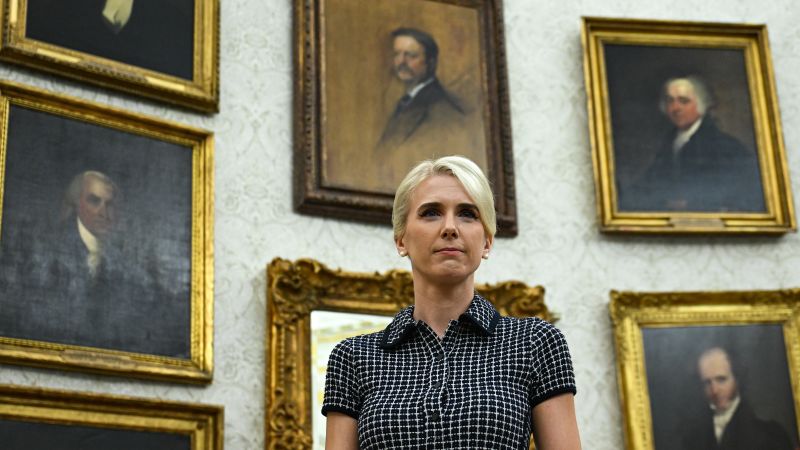
    President Donald Trump gave three senior female aides $45,000 each in cash gifts for the holidays, according to annual financial disclosure statements released by the White House. The payments were reported as a “cash gift for the holidays” by Natalie Harp, Chamberlain Harris and Margo Martin, each of whom earns an annual salary of $150,000.

    White House Defends Payments as Personal Tradition

    The White House press office issued a statement addressing the president’s cash gifts to the three aides, saying, “The President has a longstanding practice of giving Christmas gifts to people in his orbit, including at times employees and aides, both in government and in his time in the private sector.”

    “The gifts at issue here have nothing to do with any of these individuals’ official government duties, and, therefore, are entirely permissible under relevant legal and ethical standards,” the statement said.

    Harp Draws Scrutiny Amid Broader Attention

    The spotlight on Harp, a 35-year-old former far-right television anchor, intensified after Sen. Jon Ossoff (D-Ga.) mentioned her by name in a now-viral speech criticizing Trump. The Georgia Democrat swiped at the president’s “travel with Natalie on their apparently defenseless flying palace gifted by the Emir of Qatar,” a reference to her joining the president — along with a very limited group — when he secretly boarded a smaller aircraft to leave Turkey due to a threat from Iran in July.

    Harp, who frequently types the president’s Truth Social posts as he dictates them to her, has been intensely dedicated to Trump since joining his staff in 2022. She has trailed him across the country, feeding him positive stories, social media posts and other correspondence so frequently that allies dubbed her the “human printer.”

    Additional Aide Also Received Holiday Gift

    Walt Nauta, a longtime Trump aide, also received a “gift for holidays” from the president. He reported in his financial disclosure statement that the president gave him $20,000. Nauta was once charged in the case involving Trump’s handling of classified documents before the case was dropped.

    The Washington Post first reported on the cash gifts.

  • Secret Service Aware of Iranian State Media Video Threatening Barron Trump’s Life

    Secret Service Aware of Iranian State Media Video Threatening Barron Trump’s Life

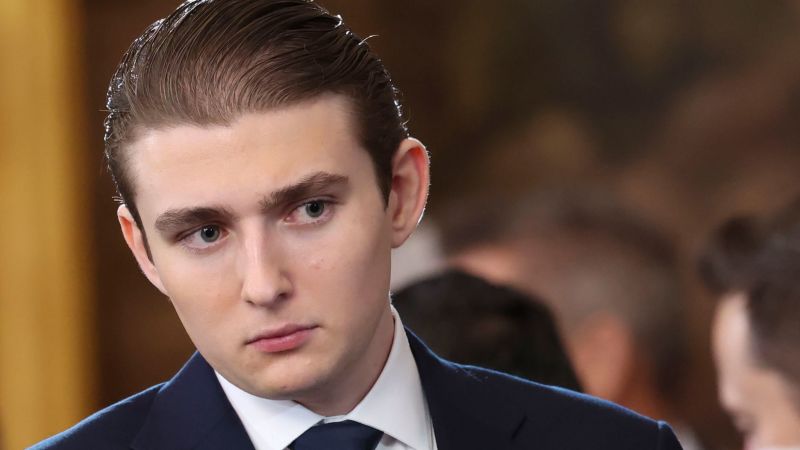
    The US Secret Service says it is aware of a video aired by Iran’s state broadcaster that appears to threaten Barron Trump, the youngest son of President Donald Trump.

    Hard-line Iranian media have repeatedly published content threatening President Trump and his family since the assassination of former Supreme Leader Ayatollah Ali Khamenei and many members of his family at the outset of the US-Israeli war with Iran in February.

    Although First Lady Melania Trump has previously been the target of threats, this appears to be the first time Barron Trump has been publicly singled out.

    “The US Secret Service is aware of the video and investigates anything that can be perceived as a threat toward our protectees,” Secret Service spokesperson Nate Herring told CNN in a statement. “Out of concern for operational security, we do not discuss matters of protective intelligence.”

    The nearly three-minute video begins with an English-language graphic reading: “Where to kill Barron Trump?!” It features stylized graphics showing locations where Barron Trump is publicly known to spend time, including Trump Tower in New York.

    Near the end of the video, the narrator says people were “eagerly waiting to receive our $10 million reward.”

    Iran broadcaster airs video targeting Trump family

    The video was broadcast over the weekend by Islamic Republic of Iran Broadcasting (IRIB), Iran’s state-run broadcaster, which is considered aligned with hard-liners in the Iranian regime. Its head is directly appointed by Iran’s supreme leader.

    A federal law enforcement source told CNN that the video is part of a broader campaign of videos from Iran targeting President Trump and his family. Some of the videos have included movement details and suggestions for killing members of the president’s family.

    The source said protective operations are constantly moved and adjusted based on security information from the Secret Service, other agencies, police and foreign governments.

    CNN has reached out to the White House for comment.

    President Trump has publicly discussed Iranian threats against his life, saying in July: “I’m on whatever list… so far, I guess I’ve been a bit lucky, but maybe that doesn’t last very long. These are evil, sick people.”

    He made the comments at the NATO summit in Turkey, before secretly leaving the country on an alternate military aircraft. He boarded the plane while hidden inside a catering truck as part of an elaborate ruse prompted by an Iranian threat.

    A person familiar with the matter told CNN that the threat involved a shoulder-fired missile and was specific enough for officials to fear that Trump’s life would be at enormous risk if he traveled on either version of Air Force One.

    The US government has long warned that Iran may try to assassinate President Trump, dating back to the 2020 drone strike he ordered that killed top Iranian general Qasem Soleimani.

    During days of funeral events for Khamenei in July, regime loyalists were seen holding posters that read “Kill Trump” and offering a bounty to anyone who avenged their leader’s death.

    Anti-American displays, including chants of “Death to America” and flag burnings, have been a constant feature of state-organized rallies in Iran since the Islamic Revolution brought the country’s theocratic regime to power in 1979.

  • Max Miller and Ex-Girlfriend Stephanie Grisham Ordered to Remove Social Media Posts in Latest Court Fight Involving GOP Lawmaker

    Max Miller and Ex-Girlfriend Stephanie Grisham Ordered to Remove Social Media Posts in Latest Court Fight Involving GOP Lawmaker

    Republican Rep. Max Miller spent Monday morning in an Ohio courtroom via Zoom rather than on the campaign trail, facing questions in a legal dispute with his former girlfriend, Stephanie Grisham, a former White House press secretary. It was the second time in less than a week that the embattled congressman had appeared in county court.

    Miller and Grisham face questions over settlement agreement

    As House lawmakers returned to Washington for a sprint ahead of the midterm elections, Miller joined the hearing from Washington, DC, to address whether he violated a 2023 settlement agreement with Grisham. The agreement followed Grisham’s allegation that Miller abused her, which he denied before suing her for defamation. Under the settlement, both Grisham and Miller agreed not to disparage each other publicly.

    The hearing is the latest legal challenge facing Miller as he seeks reelection in a district that former President Donald Trump won by more than 10 points in 2024. Republicans now fear the district could become competitive because of Miller’s legal and personal troubles. Some Senate Republicans have called for him to step down, although Speaker Mike Johnson told CNN on Monday that he supports Miller’s reelection campaign, calling him “a great member of Congress.”

    Miller is also involved in a bitter custody dispute with his former wife, Emily Moreno, the daughter of Republican Sen. Bernie Moreno. She has accused Miller of abuse, including holding a gun to her while their daughter was an infant. Miller has denied the allegations and appeared in person in that custody case last week.

    During Monday’s hearing in the wood-paneled courtroom, Miller faced questions about his social media activity, recent media interviews and whether he called Grisham a liar after the two reached their 2023 settlement.

    After several hours of testimony, the judge issued preliminary injunctions against both Miller and Grisham. The order required both parties to remove numerous social media posts that could be interpreted as disparaging the other.

    Social media post becomes central to dispute

    Miller was questioned about a May 7 post from his X account describing audio of Emily Moreno discussing allegations Grisham had made against the congressman. The post accompanying the audio read, “here is a recording from 2024. In it, Ms. Emily Moreno admits 1.) everything alleged by Stephanie Grisham was fabricated.”

    Grisham told the court that the post damaged her reputation and undermined the peace she had sought after the 2023 settlement.

    “When a sitting member of Congress calls you a liar, that is a pretty big deal in political circles,” Grisham testified.

    Miller argued that he had not personally posted the material and said he does not have social media applications on his cellphone. He also said the demands of his job left him too busy to monitor constant social media updates, blaming staff members for the May 7 posts.

    “I didn’t instruct them to do this, period. They just did it,” Miller said of the posts.  “You are making it seem like Twitter is 90 percent of a congressman’s job.”

    CNN interview examined in court

    The congressman was also questioned about two news interviews, including an appearance with CNN’s Jake Tapper.

    During that interview, Tapper asked Miller directly about allegations from Grisham and Moreno and whether viewers were expected to believe the women were lying. Miller told Tapper “yes,” which Grisham’s attorneys argued violated the settlement agreement.

    At another point in the interview, Miller said he could not discuss details of Grisham’s allegations because the two had reached a settlement agreement.

    Miller argued that he was defending himself in the interviews and said Grisham had disparaged him first in the court of public opinion. He also contended that public accusations can cause reputational damage even when they are untrue.

    “We live in a society where the court of public opinion matters more than facts, at least in my world,” he told the court.

    Grisham denies post referred to Miller

    Miller’s attorney, Adam Brown, argued that Grisham had posted about Miller on April 22 without naming him. Brown cited a post in which Grisham wrote on X, “Today I feel broken over what so many men with money and power get away with over & over & over,” with a broken heart emoji. “Almost worse is those of you who know & do/say nothing as it happens time & again.”

    The post appeared on the same day TMZ published a story about Miller under the headline “police investigate child neglect claims in nasty custody battle.”

    Grisham testified that the post was not about Miller. She said it referred instead to developments in the continuing controversy surrounding convicted sex offender Jeffrey Epstein, which has remained a frequent subject of news coverage.

    Grisham also told the court that Miller’s statements had affected her personal and professional life. She said her anxiety had worsened and that she had frequently declined television opportunities because she feared being asked about Miller, a subject she said she could not address under the settlement agreement.

    “It has been horrible,” she said.

  • Iran’s Internal Power Struggle Could Determine When Trump’s War Ends

    Iran’s Internal Power Struggle Could Determine When Trump’s War Ends

    More than four decades ago, after months of setbacks in the war against Saddam Hussein’s Iraq, thousands of young Iranian troops launched a surprise offensive that changed the course of the conflict.

    Rather than consolidate that victory, Iran’s then-supreme leader, Ayatollah Ruhollah Khomeini, pushed for more. He wanted to topple the Iraqi dictator, who was receiving growing support from Washington, and show future enemies that war with Iran would come at a heavy cost.

    Iran’s war debate echoes its conflict with Iraq

    The Iraq war played a pivotal role in shaping the modern Iranian state. Khomeini’s decision transformed the conflict into a six-year war of attrition that killed hundreds of thousands of people, making it one of the bloodiest wars in the region’s modern history.

    Decades later, Iran is again confronting the question of whether to continue fighting or reach an agreement.

    The revolutionaries who led the offensive now dominate positions of power in Tehran. They view the current US-Israeli war, like the conflict with Iraq, as an imposed war whose outcome will be determined not by which side is strongest, but by which side can endure the longest.

    Meanwhile, a more moderate faction sees an opportunity to consolidate Iran’s gains through negotiations that have made little progress.

    After six months of war, the deadlock has left the Islamic Republic deeply divided, while its ultimate arbiter, Supreme Leader Mojtaba Khamenei, remains in hiding.

    Tehran’s rival political factions continue to publicly insist that Iran has emerged victorious from the war. Yet a profound ideological divide remains over what victory should mean for the Islamic Republic.

    Pragmatists push for a deal with Washington

    On one side are pragmatists and technocrats led by President Masoud Pezeshkian, Parliament Speaker Mohammad Bagher Ghalibaf and Foreign Minister Abbas Araghchi.

    They support a conclusive agreement, citing an economy battered by war, an exhausting US naval blockade and damage to the country’s infrastructure.

    They have publicly warned that the opportunity to resolve the conflict from a position of strength is narrowing. They represent Iranians who believe ending the 47-year confrontation with Washington is the clearest way to ease the country’s domestic crises and preserve the Islamic Republic by ending its international isolation.

    “The war must end at some point,” Pezeshkian said this month. “It would be better to end it today, while we are in a position of strength and dignity, and the entire world acknowledges our victory.”

    Hardliners reject negotiations with the United States

    On the other side are hardline conservatives whose ideology is rooted in distrust of Washington, which they believe is determined to destroy the Islamic Republic. For more than half a century, they have warned about US intentions, and Trump’s war has strengthened their position against moderates.

    Hardliners also accuse current officials of being “Western-oriented” and of trying to steer public opinion toward an agreement by overstating the country’s domestic problems.

    “They see the US as a deeply untrustworthy actor… and (have) been burnt so many times by Trump himself that they think that this is exactly what will happen again,” Sanam Vakil, the director of the Middle East and North Africa program at London’s Chatham House think tank told CNN.

    “In their minds, by not losing (the war), they’ve won, and they’re not just trying to win out with a better deal from Washington, but they’re looking for internal longevity in their competition with their opponents.”

    Hardliners regard Pezeshkian as a weak president who came to office by chance after his hardline predecessor died in a helicopter crash. His signature alongside Trump’s on the June ceasefire agreement has further isolated him and given conservatives more power to blame him for the devastated economy and the failed agreement with Washington.

    The divisions are so severe that hardliners have accused officials of deliberately mishandling the economic crisis to push an exhausted public into accepting a deal. Some claim the government has engineered fuel shortages to make an agreement unavoidable, while others have gone further by accusing moderates of staging a coup.

    “Economically, are we really in a dead end, or are you just projecting a dead end?” asked hardline lawmaker Mohammad-Manan Raisi. “It has all been blamed on the war, while it is not all related to the war.”

    Past US agreements fuel Iran’s distrust

    Hardliners point to previous failed agreements with the United States, including the 2015 nuclear deal signed with the Obama administration and later abandoned by Trump. They also cite two instances in which the United States attacked the Islamic Republic during negotiations.

    This faction is betting on the Islamic Republic’s ability to endure. Its members argue that confrontation, backed by armed regional proxies, missiles, drones and Shia religious belief, has protected Iran more effectively than the diplomacy promoted by “Western-oriented” politicians.

    “Hardliners concluded they will achieve no deal with Trump and perhaps they’re now just living in the war between the wars,” Vakil said. “They think that they can wear Trump down and they can play for time to weaken him by extending economic pain.”

    A hardline lawmaker accused those supporting a US agreement of opposing former Supreme Leader Ayatollah Ali Khamenei, who was killed in US-Israeli strikes at the start of the war.

    “They want to prepare public opinion to accept an agreement and a humiliating peace,” Kamran Ghazanfari told parliament on Thursday, referring to those in favor of diplomacy with the US.

    “Yet the enemy has repeatedly shown that no matter how many concessions we make to it, no matter how much we retreat before it, it will never be satisfied and will continue to demand other things from us, and it will settle for nothing less than our complete surrender.”

    Mojtaba Khamenei remains silent amid political split

    As Iran’s pragmatists engage in a high-stakes diplomatic contest with Washington, hardliners’ opposition to a deal has intensified amid Trump’s erratic strategy and uncertainty over his commitment to a potential agreement.

    “Trump is not helping. He says he wants to make Iran great again then threatens Iran in the next tweet, and that fans the flame of paranoia within the Iranian system,” Vakil said.

    Conservatives, who have influence over newspapers, state broadcasters, street protesters and elements of the military, believe Trump is using diplomacy to prepare for another military campaign. They also believe that “every time they go down the road of diplomacy” with Trump he “betrayed them,” she added.

    Mojtaba Khamenei has remained silent amid the division. He appears to understand that taking a position on negotiations with an unreliable Trump could damage his office as he works to establish its legitimacy.

    On Friday, he praised the government’s performance under pressure but urged officials to address the country’s weaknesses without discussing them publicly at length, warning that doing so could embolden Iran’s enemies and demoralize its allies.

    With no one to restrain them, hardliners are continuing their campaign against an agreement with the United States.

    “Our martyred Imam (Ali Khamenei) warned them dozens of times – how do they not understand?” said Ghazanfari about his domestic opponents. “They speak in a way that reeks of nothing but capitulation and surrender.”

    Additional reporting by Aida Karimi

  • John Roberts Often Defers to Trump—but Not on the White House Ballroom Project

    John Roberts Often Defers to Trump—but Not on the White House Ballroom Project

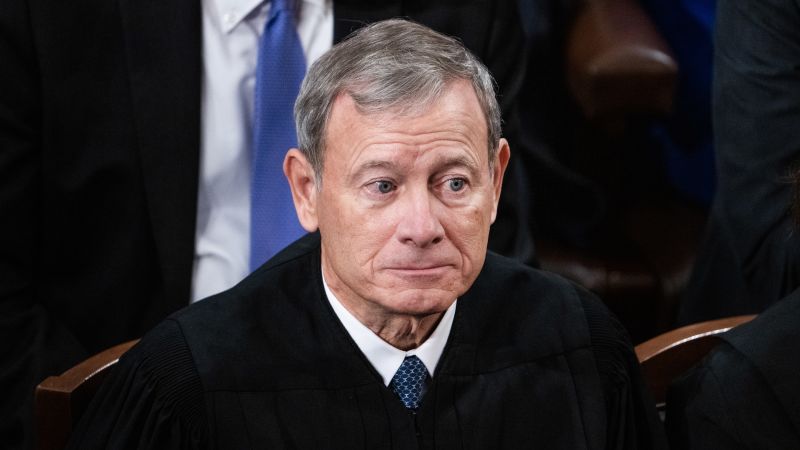
    Chief Justice John Roberts broke with Donald Trump and the Supreme Court’s other conservative justices on Monday, objecting to the president’s plan to build a massive ballroom at the White House.

    “The White House is not just any building.”

    Roberts has often deferred to Trump’s executive authority, but his dissent marked a rare break from a president whose policies have dominated the court’s docket. Roberts has authored major opinions supporting Trump, including the 2024 ruling granting him immunity from criminal prosecution and last June’s decision allowing him to fire the heads of independent agencies.

    Even in dissent, Roberts used the historically minded rhetoric for which he is known. His six-page statement invoked the history and architecture of Washington, quoting Theodore Roosevelt and Winston Churchill on the importance of iconic public buildings.

    “‘We shape our buildings, and afterwards our buildings shape us,’” Roberts wrote, lifting a line from a 1943 Churchill war speech.

    He added, “All the more reason to ensure that those responsible follow the rules in deciding what to tear down and what to build up at the People’s House.”

    Roberts invokes the White House’s historic role

    Roberts, who often tells audiences that he once planned to pursue a history Ph.D. rather than a law degree at Harvard, highlighted the symbolism of Washington’s historic architecture.

    He noted that when Roosevelt thanked Congress in 1902 for funding additions to the East and West wings, the president referred to “the stately simplicity” of the original architecture and the importance of preserving “such buildings as historic monuments which keep alive our sense of continuing with the Nation’s past.”

    Throughout his opinion, Roberts showed his own appreciation for the White House’s architecture, much as he has expressed pride in the Supreme Court’s columned building. The Supreme Court did not have its own building until 1935, more than a century after the White House and US Capitol were constructed.

    Roberts’ position did not affect the outcome and came at no apparent cost to Trump. His five conservative colleagues formed a majority that allowed construction of the ballroom to continue. The project has been underway for nearly a year and is nearing completion.

    Still, Monday’s statement adds another dimension to Roberts’ record as chief justice during Trump’s aggressive second-term agenda. The president’s cases have shaped the court’s work and will form a significant part of Roberts’ legacy.

    Roberts has approved many Trump policies, but last session he voted against two of the president’s most far-reaching initiatives: sweeping tariffs on foreign goods imposed without congressional approval and an effort to restrict birthright citizenship, the long-standing practice granting US citizenship to children born in the country.

    Trump’s plans to reshape Washington

    The case’s focus on American history also underscored Roberts’ role as chancellor of the Smithsonian Institution. The position is largely ceremonial because he serves as chief justice, but Roberts has presided over Smithsonian board meetings and observed the Trump administration’s continuing effort to reshape the nation’s leading public museums.

    Trump’s campaign to transform Washington in his own image has included adding his name to the John F. Kennedy Center for the Performing Arts and proposing a 250-foot triumphal arch. The arch is planned for the traffic circle between the entrance to Arlington National Cemetery and the Lincoln Memorial.

    The lawsuit was brought by the National Trust for Historic Preservation. The organization argued that demolishing the East Wing and constructing a 90,000 square-foot ballroom and security structure required congressional approval.

    Lower federal courts initially sided with the Trust and allowed the case to proceed. The judges found that the organization had “standing” to sue because it had shown a significant injury. The Trust cited Alison Hoagland, a longtime Trust leader and member and an architectural historian, who said the project had harmed her enjoyment of the White House.

    The Supreme Court’s majority rejected that reasoning, writing that “mere offense, disagreement, or distaste does not qualify as a concrete and particularized injury” for purposes of bringing a lawsuit. The majority issued its ruling per curiam, Latin for “by the court,” as is common in appeals arriving through the court’s emergency docket. Justices Clarence Thomas, Samuel Alito, Neil Gorsuch, Brett Kavanaugh and Amy Coney Barrett did not sign separate opinions.

    Roberts disagreed that Hoagland’s claim was minor. Liberal Justices Sonia Sotomayor, Elena Kagan and Ketanji Brown Jackson joined his opinion.

    “The White House is not just any building, and – when it comes to historic preservation – Hoagland is not just any person.”

    Roberts said earlier court decisions had recognized injury based on “esthetic interests.” He cited a 1992 precedent in which, as Roberts described it, “a desire to … observe an animal species like a particular crocodile, even for purely esthetic purposes was undeniably a cognizable interest for purposes of standing.”

    Roberts says ballroom project is likely unlawful

    In the case before the court, Roberts declared, “A historic preservationist such as Hoagland can be aesthetically injured in a concrete, particularized way by the transformation of a historic building that she frequently enjoys, just as an environmentalist can sustain a concrete, particularized aesthetic injury from the extinction of a particular animal or the transformation of a particular forest or river that he regularly enjoys.”

    Monday’s ruling addressed only the question of standing. The majority said it was not deciding whether the ballroom project itself was lawful. Roberts, however, made clear that he viewed the broader construction effort skeptically.

    He wrote that Congress had expressly prohibited construction on such federal property “without express authority of Congress.”

    “That construction is likely unlawful,” he said, adding that the usual appropriation for White House maintenance “likely does not authorize the President to use hundreds of millions of dollars in private donations to tear down the East Wing and construct a ballroom in its stead.”

  • At Least Seven Dead and More Missing After Boat Carrying Hundreds Capsizes Off Cyprus

    At Least Seven Dead and More Missing After Boat Carrying Hundreds Capsizes Off Cyprus

    A rescue operation is underway in the Mediterranean after the passenger boat Filo Jet capsized while traveling from Northern Cyprus to southern Turkey, killing at least seven people.

    The vessel was carrying 259 passengers and eight crew members from Kyrenia to Taşucu when it began taking on water a few miles off the coast of Cyprus, according to Turkey’s Interior Ministry.

    Rescue operation continues

    Ünal Üstel, prime minister of the Turkish Republic of Northern Cyprus, told Turkish media that 237 people had been rescued and that search efforts were continuing for 23 others. He said the ship capsized “due to the difficult weather conditions.” None of those rescued was in critical condition.

    Video from the scene showed dozens of people on the side of the vessel, while others wearing life jackets were in the water. At least one helicopter was seen hovering above the capsized boat.

    Four coastguard vessels from Northern Cyprus and a passenger vessel took part in the rescue operation, the Interior Ministry said. Two coastguard helicopters were also sent to the area.

    Numan Kurtulmuş, speaker of the Turkish parliament, said in a post on X that he had extended his condolences to those who lost their lives in “this exceedingly tragic incident.”

    Filo Jet capsizes off Kyrenia

    MarineTraffic tracking data showed the vessel north of Kyrenia on Sunday morning before its position transmissions stopped.

    A live stream from Kyrenia showed people arriving at the port by helicopter and on rescue boats as ambulance sirens sounded. Several ambulances were lined up at the harbor.

    Further video showed the ship lying on its side in choppy seas, with rescuers picking up people wearing life jackets and others remaining in the water.

    This is a developing story and will be updated.

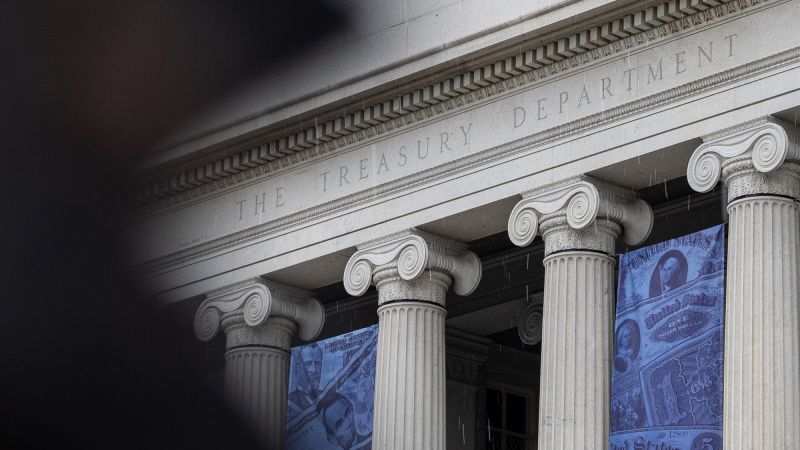
  • 10-Year Treasury Yield Reaches 5%, Critical Threshold for US Economy and Markets

    10-Year Treasury Yield Reaches 5%, Critical Threshold for US Economy and Markets

    10-Year Treasury Yield Hits 5%: Borrowing Costs Surge to Highest Level Since 2007

    The 10-year U.S. Treasury yield climbed to 5% on Monday, reaching a critical threshold briefly touched in 2023 and otherwise unseen since 2007. This move in the key benchmark signals higher borrowing costs for Americans seeking mortgages, auto loans, and other credit.

    Bond Market Sell-Off Extends Globally

    The 10-year yield has extended a recent surge that has lifted borrowing costs for consumers, businesses, and the U.S. government alike. Yields have risen despite efforts by Treasury Secretary Scott Bessent to calm bond-market concerns. The global bond market, anchored by the nearly $32 trillion U.S. Treasury market, has sold off as investors weigh a mosaic of risks: soaring energy prices, expectations for further central-bank rate hikes, uncertainty surrounding the war with Iran, and unchecked government spending amid mounting debt.

    Government bond yields worldwide have touched multi-year and multi-decade highs this year, compounding affordability concerns, adding to unease about sovereign debt burdens, and threatening to weigh on equity markets. Yields rise when bond prices fall; the sell-off this year has pushed prices lower and sent the 10-year yield toward levels not seen in nearly two decades. The benchmark now sits at its highest since October 2023, just a whisker below its firmest level above 5% since 2007.

    Sharp Reversal Since Start of Year

    The 10-year yield began the year at 4.15% and dipped below 4% in February. After the outbreak of war with Iran, yields sharply reversed course and have climbed steadily since. The benchmark hit 4.5% in May before breaching 5% on Monday.

    Direct Impact on Mortgage Rates and Housing

    Higher bond yields translate directly into higher interest rates, making borrowing more expensive across the economy. The 10-year Treasury serves as the benchmark for borrowing costs economy-wide. Rising yields push up the rates consumers pay on mortgages and other loans.

    The housing market feels the sting most acutely. Mortgage rates track the 10-year yield closely. As the benchmark has surged this year, the average 30-year fixed mortgage rate has climbed to its highest level in more than a year. Last week, the average 30-year fixed rate reached 6.76%, up from 6.15% at the start of the year.

    Equity Market Implications: Context Matters

    Rising yields affect analysts’ earnings-discount models and can draw investors from riskier equities into safer government bonds. However, the impact on stocks depends on the context and volatility of the yield move.

    When yields spike dramatically, shocks can ripple through equities. In April 2025, President Donald Trump’s tariffs roiled financial markets: the 10-year yield spiked, the dollar fell, and stocks tumbled. Yet this year yields have risen steadily while the S&P 500 remains up more than 10%. Strong corporate earnings can outweigh nerves about higher yields.

    Markets may absorb steadily climbing yields if economic growth stays robust. But higher borrowing costs increase risks for equities; if earnings falter, elevated yields could become a larger headwind.

    Analyst Perspectives on the 5% Threshold

    The 10-year yield at 5% is seen by some as a threshold above which financial markets might go into meltdown, John Higgins, chief economic adviser for financial markets at Capital Economics, said in a note.

    While we aren’t convinced that 5% is that ‘magic’ number, higher Treasury yields would certainly pose a risk to the sustainability of the US’ public finances as well as threaten equities, Higgins said.

    End of the Ultra-Low-Rate Era

    Analysts say the rise in global yields isn’t entirely surprising and may signal that the era of ultra-low interest rates is over, with rates returning to levels more typical of past decades. After the 2008 financial crisis, central banks worldwide cut rates to historic lows. That shift began reversing in 2022, when central banks hiked rates to combat inflation sparked by the pandemic and Russia’s invasion of Ukraine.

    The 10-year yield traded at 1.3% five years ago; today it stands at 5%.

    What we’ve been communicating to our clients is ‘normal for longer,’ meaning these factors are here to stay, Luis Alvarado, co-head of global fixed income strategy at Wells Fargo Investment Institute, told CNN.

    A sustained push higher in yields across the globe has accelerated since the start of the war with Iran. Ten-year yields in Germany, France, and the United Kingdom are all at levels not seen in more than a decade. Rising energy prices are prompting central banks to raise rates to tamp down inflation; the European Central Bank hiked rates last week for the second time this year. Meanwhile, investors grow increasingly skeptical of governments’ bloated budgets and mounting deficits.