Category: Around the World

International news, world events, society, travel, and stories beyond the other editorial categories.

  • Six Workers Injured at Ford Field Following Ed Sheeran Concert on Saturday Night

    Six Workers Injured at Ford Field Following Ed Sheeran Concert on Saturday Night

    Six people were injured Saturday night during the load-out following Ed Sheeran’s concert at Ford Field in Detroit, when stage equipment reportedly lost control as crews dismantled the stage.

    Photos provided to Local 4 show the accident near the stadium’s vehicle tunnel. One worker who was struck by the equipment was released from the hospital Sunday after spending the night there. He asked to remain anonymous, while another worker inside the building shared photos showing the aftermath.

    Workers injured during Ford Field stage teardown

    Fire dispatch audio captured crews being sent to the scene at about 11 p.m. Saturday.

    “Chief 1, respond to a special,” fire dispatch audio from Saturday night says.

    Local 4 was told the equipment shown in the photos lost control while the stage was being dismantled near the vehicle tunnel.

    “2000 Brush, between East Adams and East Montcalm for a forklift injury accident,” the audio said.

    Several workers said they were walking toward another part of the stadium to take a break during their shift when the incident occurred. They said they were near a ramp when the equipment lost control and struck multiple people.

    One worker who was hit in the chest told Local 4 that he had never experienced anything like it, describing the incident as happening in a split second.

    “Chief 1, it’s reported at Ford Field, Chief 1,” the audio said.

    The Detroit Fire Department said all six workers were taken to nearby hospitals. No injuries appeared to be life-threatening, officials said. At the time of transport, two patients were in serious condition and four were in stable condition.

    Ford Field begins review

    Ford Field said one of the injured people was a member of its team and that it is reviewing what happened in cooperation with authorities and the event’s production partners.

    “Ford Field has begun a full review and is cooperating with the appropriate authorities and with the event’s production partners,” the stadium said. “Out of respect for the people involved and the integrity of that review, we will not speculate on the cause. We are grateful to the Detroit Fire Department and EMS for their rapid response.”

    Ed Sheeran was in Detroit for several nights, and Saturday’s concert was his final show in the city.

  • America’s Youth Soccer Problem Starts With a $3,000 Price Tag: NPR

    America’s Youth Soccer Problem Starts With a $3,000 Price Tag: NPR

    Children wait to play football in the minor leagues of Newell’s Old Boys, where Argentine football star Lionel Messi used to play in Rosario, Argentina, in 2018.

    ROSARIO, Argentina — Newell’s Old Boys is one of Rosario’s most popular soccer clubs and operates one of Argentina’s most successful youth academies. Each week, about 700 children between the ages of 4 and 12 train at the club’s facilities in the city center, where black-and-red murals celebrate famous alumni such as Lionel Messi.

    The most promising players at Newell’s “baby football” academy receive scholarships and train for free. Other families pay about $25 a month for two weekly training sessions led mostly by former professional players. On weekends, the children compete against teams from across Rosario.

    “Here you get good coaching,” says Carlos Gil, a fencing contractor whose eight-year-old son trains at Newell’s each week.

    “You have the chance that your child can develop his skills,” Gil says. He shakes his head and chuckles after learning that parents in the United States pay between $1,000 and $3,000 a year for comparable youth soccer instruction.

    “If you did that here, almost nobody could play,” he said of the fees charged by U.S. youth soccer clubs. Gil also says that if Argentine clubs charged thousands of dollars annually for youth training, the country’s status as a global soccer powerhouse could be threatened.

    “Our best players tend to come from low income backgrounds,” Gil said. “Where would they train?”

    Argentina’s affordable youth soccer model

    With the World Cup still fresh in the minds of many Americans, debate has returned online and on television over how to make youth soccer more affordable in the United States. Critics of the U.S. pay-to-play model question whether high costs are preventing the country from reaching its full potential, particularly in men’s soccer.

    Argentina has kept youth soccer relatively affordable while producing a steady stream of world-class players. Some coaches say the country’s club structure could offer lessons for the United States.

    Newell’s — where Messi played from ages 6 to 13 — is one of dozens of Argentine clubs that subsidize youth training. The club does not depend on tuition payments or donations from local businesses for its survival. Its professional team competes in Argentina’s top division and earns revenue from ticket sales and broadcasting rights.

    Soccer field used by the Newell's Old Boys youth team in Rosario, Argentina
    A soccer field used by the Newell’s Old Boys youth team in Rosario, Argentina.

    Newell’s also earns significant sums when its best young players transfer to other clubs in Argentina or abroad.

    “The kids that we are training today are what sustains this institution,” said Gustavo Tognarelli, Newell’s head of youth development.

    In the United States, youth clubs have largely been excluded from transfer payments. Major League Soccer, the country’s top professional league, does not require its teams to share transfer fees with youth clubs that developed elite players.

    In Europe and South America, youth clubs regularly receive a portion of a professional player’s transfer fee when they trained that player between the ages of 12 and 23. These payments are known as training compensation and solidarity payments.

    Major League Soccer has been slow to adopt the system, partly because of concerns that it could violate U.S. laws. Many coaches argue that the lack of training compensation leaves American youth clubs at a disadvantage.

    “In the United States, if you train a player and they go to a better situation or a bigger club, you get nothing for that,” said Rory O’Neill, a coach of an under-13 team in Pennsylvania. O’Neill also runs a YouTube channel about coaching tactics and the state of U.S. soccer.

    O’Neill said U.S. youth clubs have limited sources of revenue and rely largely on payments from parents to cover their expenses. He believes the clubs could improve their finances if the U.S. soccer system moved toward what is known as an open ecosystem.

    Could promotion and relegation help U.S. academies?

    Only 30 teams can currently compete in MLS because it is a closed league that charges hundreds of millions of dollars for entry. In an open system, the weakest teams are relegated to lower divisions while successful teams are promoted to the top flight.

    O’Neill says promotion and relegation would give hundreds of clubs across the country a stronger incentive to invest in youth academies. Reaching the top division and accessing the financial rewards that come with it would become a realistic possibility for more teams.

    “You would have almost any millionaire start investing in clubs,” O’Neill said.

    Filippo Silva, a business owner and coach in Orlando, agrees.

    “If we do have an open system and it’s merit-based, I do think you’re going to open the doors for more small investors trying to get things done,” he said. “More people would be willing to put more money into soccer if there was something you could get out of it.”

    In Argentina, where soccer has long operated with promotion and relegation, thousands of clubs have a chance to reach the country’s top division. Although many will never get there, clubs continue to invest in youth development in the hope of climbing the football pyramid or earning money from player transfers and solidarity payments.

    Newell’s invests in players’ futures

    Newell’s funds the training and education of about 400 players between the ages of 12 and 18. They practice as many as six times a week.

    Some younger children who train twice a week receive scholarships, including Dastan Gil, Carlos Gil’s eight-year-old son.

    Driving his son to practice each week is a challenge for Gil. He lives in a small town 120 miles from Rosario, where he repairs fences for large farms and cattle ranches.

    But although being a soccer parent can be difficult, Newell’s scholarships and low fees help ease the burden.

    “In Argentina, we might not have so much money,” Gil says. “But in some areas we have better quality of life.”

  • Lanterns Episode 3: HBO Series Captures the Black American Experience in Unexpected Ways

    Lanterns Episode 3: HBO Series Captures the Black American Experience in Unexpected Ways

    This article contains spoilers for Season 1, Episode 3, “OutKast,” of Lanterns.

    Lanterns, HBO’s new adaptation of DC’s Green Lantern comics, has unfolded as a series of mysteries nested within one another. Each revelation leads to another, while the characters’ histories remain largely concealed. Three episodes in, the series finally explores the origin of its unflappable co-lead, John Stewart (Aaron Pierre), a former U.S. Marine and Green Lantern trainee to Hal Jordan (Kyle Chandler), the jaded, green-clad hero charged with protecting Earth from alien threats.

    Written by Vanessa Baden Kelly, Episode 3, “OutKast,” expands the show beyond its puzzles and superhero spectacle to examine John’s experience as a Black hero in training. His life has been shaped by immense pressure to defy racial expectations, much of it imposed by his parents, whose motivations the episode treats with unusual nuance and care.

    John Stewart’s family history in Lanterns

    The episode reveals that John’s father, John Stewart Sr. (J. Alphonse Nicholson), was approached by the Guardians of the Universe to become a Green Lantern before Hal Jordan. An extraterrestrial presence kidnaps John Sr. in a green bubble and asks him the question required to pass the test: “Are you afraid?”

    John Sr. answers honestly: Yes, he is. The opportunity ends there. When no one believes his claim that an alien abducted him, least of all his wife, Bernadette (Jasmine Cephas Jones), his mental state begins to deteriorate. Bernadette only accepts that he was telling the truth when an unnamed Guardian, played by Laura Linney, appears before her and apologizes for any “emotional turmoil” caused by the Lantern initiation process.

    Bernadette is furious that her husband was rejected. She challenges the Guardian: “Do you understand how unfair it is to ask a Black man in America if he’s afraid?” She continues, “We are terrified daily of persecution and still show up, sometimes better than everyone around us. Did you know that?” When the Guardian admits that she did not, Bernadette responds: “Even in space y’all don’t consider us.”

    The Guardian then hints that John’s younger son could become a candidate to replace the current Lantern someday. Bernadette’s resentment over the Guardians passing over John Sr. drives both parents to believe in that possibility. As Bernadette tells her husband: “We didn’t break every stereotype and face down every fear for you to be penalized because you’re scared to leave the people that you love.”

    From that point forward, the couple ruthlessly “conditions” John to become “used to fear,” hoping to transform him into an almost inhuman candidate for the Green Lantern role. They train him to be an expert sniper and force him to act as a target, with his father shooting apples from his head. John is later made to perform the same exercise against his parents.

    His childhood is stripped of ordinary comforts. He sleeps in a separate room from his older brothers and is forced to walk home through unfamiliar, potentially dangerous neighborhoods while barely a teenager. He must give up his interest in drawing, his relationships with his brothers and his emotional capacity so he can eventually become the next Green Lantern—and prove that Black people should not be excluded from conversations about ability, power and prestige.

    The burden of Black excellence

    That dream ultimately proves hollow. John becomes a Marine but is dishonorably discharged for a mistake everyone knows he did not make. The Guardians later instruct him, in practical terms, to stay quiet and follow orders. Even the Green Lantern job itself offers little reward: It pays poorly, and as Hal’s trainee, John is forced to endure the mediocre hero’s uninspiring instruction. Hal’s shortcomings also contributed to John’s dishonorable discharge.

    John’s parents raised him to pursue an honored position, but the episode asks what that sacrifice was for. John realizes that he is still expected to answer to a questionable group of beings that values him only for what he can do for them. After a lifetime under the psychological and emotional weight of his parents’ expectations, he has gained little more than the same old crap.

    This revelation exposes the pressure and fallacy of “Black excellence,” a phrase often used to describe Black people breaking barriers or achieving accomplishments that even their white peers find remarkable. Black success should be celebrated, and the idea that Black people can be great should be accepted as obvious rather than treated as something that must be proven.

    But in a world where people from other backgrounds are allowed to be mediocre, fail upward and display imperfections, Black people should be granted the same freedom. They should not face what can feel like life-ending or career-disrupting consequences for falling short of perfection. Greatness should not be the only thing Black people are permitted to be, particularly when the standards of greatness are set by groups that continue to disregard them.

    Why Lanterns treats John’s parents with empathy

    Lanterns addresses that conflict directly. John’s parents do not simply try to make him exceptional; they try to make him something less than human. It is painful to watch the young John, played by Cairo Cash Lee, separated from the people and activities he loves.

    The series could easily have presented his parents as villains. They understand the sacrifices they are demanding from a son too young to consent to them. “He’s gonna hate us,” John Sr. says. Bernadette replies, “So be it.”

    Yet John does not hate them, and neither does the series. Instead, Lanterns makes clear that his parents believed they were making the best decision for their family. Their actions emerge from exhaustion with surviving under the threat of persecution while being repeatedly judged as inadequate.

    As Bernadette tells John Sr., “We can’t raise three boys and believe that no matter how good they are, they get looked over.” For Bernadette, everything began “falling apart” on “the night they rejected” John Sr. Her choice of the word “rejected” is significant: She does not view the incident as her husband’s failure. She understands that the Guardians’ test did not account for the totality of his experience.

    By refusing to assign simple, total blame, Lanterns considers what happens when a Black parent dedicates a child’s life to making him undeniably exceptional in a world that seems determined to test him. John Sr. and Bernadette’s decision is misguided, but it is rooted in a deeply justified dissatisfaction with the status quo.

    The show can challenge the idea of Black excellence because it first establishes why John’s parents embraced it. The series suggests that entrenched cultural ideas are best dismantled through empathy and an understanding of where they came from.

    John Stewart’s story connects superhero politics to real life

    John’s story is difficult, but it reflects the Black American experience in ways that exceed expectations for a series that might otherwise have been about heroes flying through space in green Lycra. The integration of Black family dynamics into a story about intergalactic politics is less surprising when considering that Lanterns co-creator Damon Lindelof also made Watchmen, another series that managed a similarly difficult balance.

    During a panel at San Diego Comic-Con, Pierre delivered a heartfelt speech about the importance of John Stewart, a major Black hero in DC Comics. He said: “My hope is that when folks watch this, they watch it and they feel a tangible relatability.”

    For Pierre, that means embodying John’s “heart” and honoring the role of Green Lantern as John Stewart deserves. For viewers, it may also mean recognizing—and beginning to unlearn—the harsh expectations the world has unfairly placed on us.

    Source: slate.com

  • Ravens Place Rookie Running Back Adam Randall on Injured Reserve

    Ravens Place Rookie Running Back Adam Randall on Injured Reserve

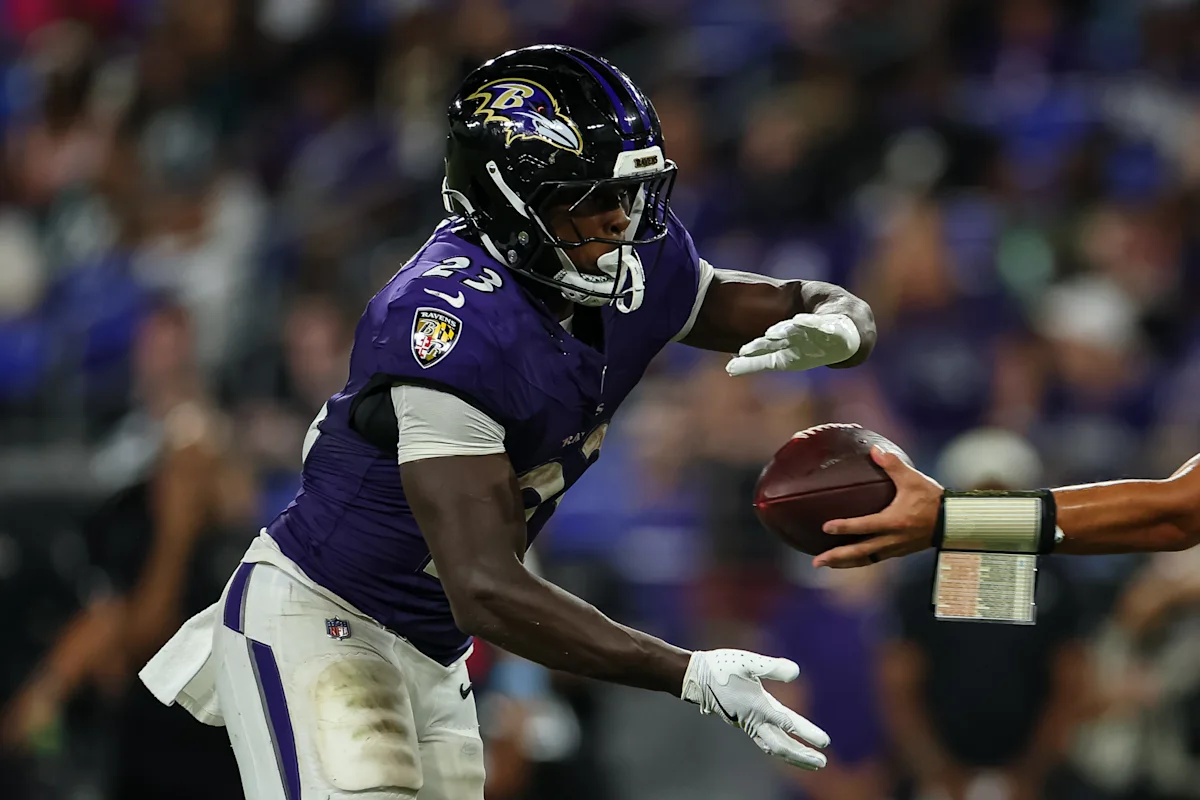
    The Baltimore Ravens placed rookie running back Adam Randall on injured reserve with a designation to return Sunday, delaying the start of the fifth-round pick’s first NFL regular season.

    Randall must miss at least the Ravens’ first four games before he can be activated. Baltimore has not disclosed the specific injury that led to the move.

    Ravens use return designation on Adam Randall

    Baltimore used one of the two return designations available during the NFL’s final roster reduction on Randall. Cornerback Bilhal Kone received the other designation.

    The NFL’s 2026 calendar allows teams to place up to two players on an applicable reserve list during the final roster reduction while designating them to return. Those players do not need to occupy spots on the active roster before being transferred to injured reserve.

    The Ravens selected Randall with the No. 174 overall pick in the 2026 NFL Draft after he successfully transitioned from wide receiver to running back at Clemson. He led the Tigers with 814 rushing yards and 10 touchdowns during his final college season, while adding 36 receptions for 254 yards and three scores.

    Adam Randall showed promise during the preseason

    Randall displayed the combination of size and versatility that attracted Baltimore during the preseason. He rushed for 46 yards and a touchdown in his debut against Philadelphia before delivering a 24-yard run against Washington that included a powerful stiff-arm.

    The injured-reserve move interrupts that early momentum but does not end Randall’s rookie season. He can return after missing the required four games and receiving medical clearance.

    Derrick Henry, Justice Hill and Rasheen Ali are the three running backs currently on Baltimore’s active roster. Randall’s placement on injured reserve also leaves the Ravens with an open active-roster position that could be used on a waiver claim or veteran addition.

    Source: sports.yahoo.com

  • P.J. Scott Among Final Los Angeles Chargers Roster Cuts

    The Los Angeles Chargers do not have a punter on their initial 53-man roster after releasing JK Scott on Sunday.

    Scott spent the past four seasons with the Chargers and could return if the AFC West club makes further roster moves. However, the team’s plans at punter remain unclear. Running back Jaret Patterson was also released.

    Chargers roster moves

    Los Angeles placed fullback/defensive lineman Scott Matlock and offensive lineman Branson Taylor on injured reserve with the designation to return. The team also moved offensive tackle Isaiah World to the reserve/non-football injury list.

    The Chargers waived wide receivers Sincere Brown, Dalevon Campbell, Liam Clifford, JaQuae Jackson, Gary Jennings and Devonte Ross; linebackers Kyle Kennard, Lander Barton, Andre Carter, Junior Colson, Emany Johnson, Garmon Randolph and Nadame Tucker; safeties Noah Avinger, Devin Grant and Myles Purchase; defensive linemen Jahmeer Carter, Jacobian Guillory and Terry Webb; tight ends Jerand Bradley, Johnny Pascuzzi and Evan Svoboda; cornerbacks Nikko Reed, Eric Rogers and Isas Waxter; running backs Gregory Desrosiers and Amar Johnson; long snapper Peter Bowden; center Josh Kaltenberger; quarterback DJ Uiagalelei; and offensive tackle Laekin Vakalahi.

    Source: www.nbcsports.com

  • Mariners to Promote Lazaro Montes from Triple-A Tacoma

    Mariners to Promote Lazaro Montes from Triple-A Tacoma

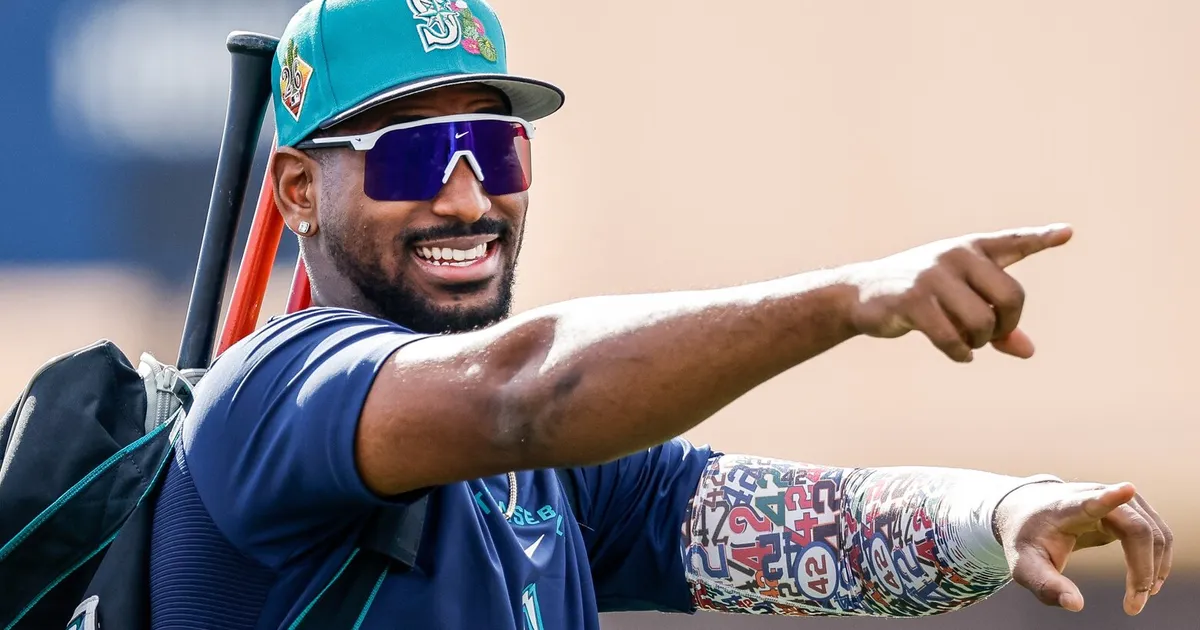
    Lazaro Montes, the 21-year-old Cuban slugger regarded as one of the most powerful prospects in Seattle Mariners history, is expected to be promoted to the major leagues when MLB rosters expand Tuesday, according to major-league sources familiar with the team’s plans who confirmed the move to The Times.

    The 6-foot-5, 250-pound left-handed hitter is set to join the Mariners in Boston as rosters expand from 26 to 28 players. Under MLB rules, Seattle can also add one pitcher to its roster Tuesday.

    Montes could provide an immediate boost to a Mariners offense that was limited to one hit Sunday in Toronto. Seattle was swept by the Blue Jays and will begin a three-game series against the Boston Red Sox on Monday.

    Montes’ power numbers in the minor leagues

    Ranked by Baseball America among the top 100 prospects in baseball, Montes has hit 38 home runs and driven in 96 runs in 122 games between Double-A Arkansas and Triple-A Tacoma this season.

    He has been especially productive recently in Tacoma, posting a .292/.398/.656 slash line and a 1.054 OPS with 10 home runs, 22 RBI, 15 walks and 34 strikeouts in 96 at-bats in August.

    The Mariners had been considering promotions for one of their two top hitting prospects: Montes or Michael Arroyo, a right-handed hitter and close friend who moved from Double-A to Triple-A with Montes earlier this summer.

    Arroyo’s defensive limitations make him a more difficult fit for Seattle’s current roster. The 21-year-old developed as a second baseman, but scouts consider him a below-average defender at the position. He has primarily played left field for Tacoma recently, although he remains a work in progress there.

    Montes is expected to receive regular at-bats with the Mariners while splitting time between right field and designated hitter.

    Mariners’ $2.5 million investment in Montes

    Seattle signed Montes in January 2022 for $2.5 million, one of the largest signing bonuses in franchise history for an international free agent. As a teenager, he drew comparisons to fellow Cuban Yordan Alvarez, the Houston slugger who is now considered the American League MVP favorite.

    Montes has worked with Alvarez’s hitting instructor in the Dominican Republic. Controlling his strikeout rate has remained an important part of Montes’ development through the minor leagues.

    His 38 home runs rank second across the minor leagues this season, but his 31.3% strikeout rate is the highest among Tacoma hitters this year.

    Cuban baseball reporter Francys Romero first reported Montes’ promotion on social media Sunday.

    Adam Jude is a Seattle Mariners beat writer at The Seattle Times. He previously covered UW Huskies football and the Seattle Seahawks for The Seattle Times.

  • Trump 2028 Run in Doubt as Even Trump Hints It May Not Happen

    Trump 2028 Run in Doubt as Even Trump Hints It May Not Happen

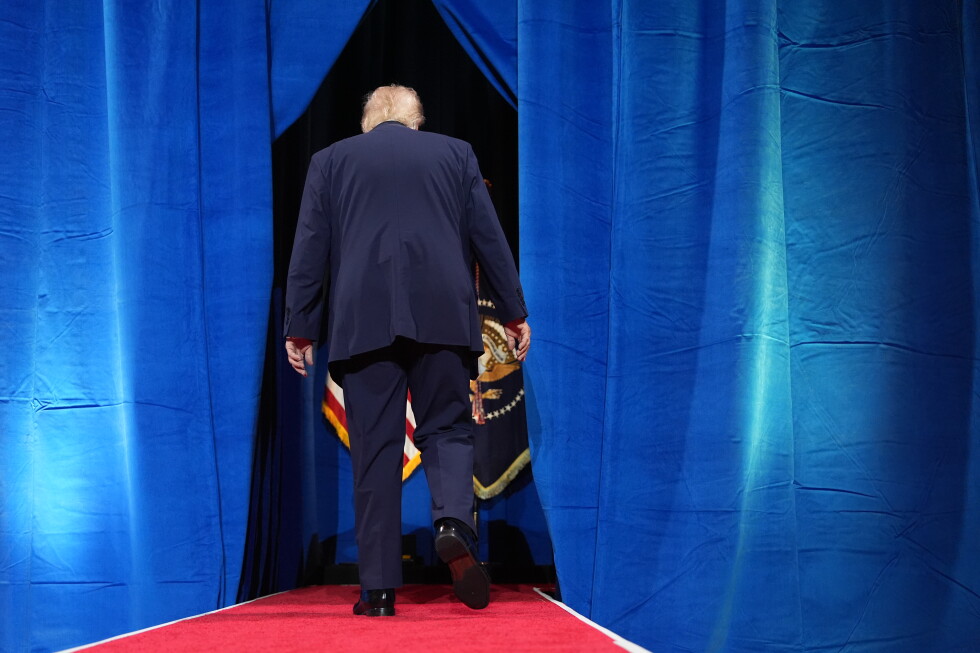
    President Donald Trump has repeatedly suggested he wants to seek a third term, promoting another campaign, wearing 2028 caps and discussing possible ways to make it happen, even while acknowledging that the Constitution bars him from doing so. Recently, however, Trump has begun speaking more openly about life after the White House, suggesting that even he may not expect another campaign to happen.

    During recent speeches, Trump has described what his life could look like after his term ends in January 2029. He has predicted that he will be at home, watching his successor take credit for his accomplishments.

    “Your next president is going to say, ‘What a great job I did,’” Trump told an event on Long Island, New York, this month. “He’ll be sitting around, watching television. A real stiff. Unless you vote Republican, of course.”

    A sitting president discussing the possibility of becoming a former president is politically sensitive. With the midterm elections now just nine weeks away, Trump is approaching the stage of his presidency when reminders of his eventual loss of power are likely to become more frequent.

    Trump discusses life after the presidency

    Trump’s willingness to acknowledge the possibility of a White House without him represents a notable shift. Since his first term—and almost immediately after winning a second—he has left open the possibility of remaining in office for more than eight years.

    “He is all over the place,” said Brian Kalt, a Michigan State University constitutional law professor. “And what that does is, it allows him to point to his own words to support any number of mutually exclusive things.” Trump can say, “’Oh yeah, I made it clear that I wasn’t gonna run,’” Kalt said. “Or, if he decides that he will, he could say, ’Well, you know, I never said I wouldn’t.’”

    The White House rejected suggestions that Trump is increasingly focused on the end of his presidency and the legacy he will leave behind. Spokesperson Olivia Wales said he “is fighting every day” to deliver on promises to reduce violent crime,crack down on the U. S-Mexico border and lower prescription drug prices.

    “The only legacy President Trump is concerned with is making America greater than ever before,” Wales said.

    Still, Trump has recently spoken more often about how he will be remembered.

    At a rally in Pennsylvania, he said, “Whoever the next president is, he’s going to be talking about what a brilliant president he is. And I’ll be home. And I’ll be saying, ’That son of a gun,’ because we did the job.”

    A week later in Georgia, Trump predicted that he would be sitting at home after his presidency ended. “I may be crying,” the president added, arguing that Democrats could retake the Senate and eliminate filibuster rules, making it easier to pass their key legislation.

    In Michigan, Trump expressed some uncertainty about whether he was ready to leave the Oval Office and return to Florida. “In two and a half years, you may have a different president — may,” he said, emphasizing the word “may.”

    “I’ll be sitting home. I’ll be reading the papers. I’ll be watching television,” Trump said before criticizing his predecessor, President Joe Biden. “And I’ll be having some guy — like last time, a real idiot — stand up and say, ‘We are doing record business.’”

    Trump continues to send mixed signals about 2028

    Although Trump has begun suggesting that he will leave office, he has continued to tease a possible 2028 presidential campaign.

    At the rescheduled White House Correspondents’ Association dinner last month, Trump joked, “Just like my presidency, the second time is always better” and that “the third time will be better yet. I’m only kidding.” He later wore a 2028 campaign cap as he finished the speech.

    The 22nd Amendment to the Constitution states that no person can be elected president more than twice. It was ratified in 1951, six years after President Franklin Delano Roosevelt died several months into his fourth term. Until Roosevelt, no other president had broken the tradition of stepping down after two terms established by George Washington.

    Only a few months after returning to the White House, Trump told NBC News, “There are methods which you could” use to seek a third term. He acknowledged that one option would be to run as Vice President JD Vance’s running mate in 2028 and then have Vance step aside if they won.

    “There are others, too,” Trump said at the time, alluding to additional options. He later told Time Magazine, “There are some loopholes,” while also saying he did not believe they should be used.

    Trump has frequently used social media to promote “Trump 2028” logos featuring his “Make America Great Again” slogan. At other times, however, he has appeared definitive about the constitutional ban on another run, recently telling reporters: “I’d love to run, but the law is very strong.”

    Kalt examined whether a two-term president could potentially return to office by running for vice president in constitutional Cliffhangers: A Legal Guide for Presidents and Their Enemies. “People do tend to find, in Trump’s words, whatever it is that they want to hear,” he said.

    Trump may be confronting the lame-duck factor

    Second-term presidents typically see their power and influence decline during their final two years, particularly when their party suffers significant losses in the midterm elections. Trump’s comments may also indicate that he is thinking about cementing his legacy, a stage many of his predecessors eventually reached.

    “They all, particularly as they cross the midpoint of their second term, start thinking about legacy,” said Paul Begala, a former adviser to President Bill Clinton. “They all banish the word. I know Clinton and Bush, they said, ’Can’t use the L-word.’ But they do,” Begala said, referring to his former boss Clinton and President George W. Bush. “They all think about it. And the staff thinks about it and the Cabinet thinks about it.”

    During his final two years in office, Clinton focused on efforts to broker a Middle East peace agreement. Bush used the slogan “sprint to the finish” during the final year of his presidency in 2008, while Biden adopted a “run through the tape” approach after ending his reelection campaign.

    Trump has sought to shape the White House and the wider Washington area in his own image, recalling his career as a real estate developer in New York during the 1970s and 1980s. His administration has ordered a towering arch near the Lincoln Memorial and restored city fountains, while also building a Rose Garden patio and helipad on the White House lawn and adding numerous gilded features to the building’s interior and exterior.

    The administration is also rushing to complete a large ballroom despite legal challenges. Trump has said the project will not be finished until late 2028, shortly before he leaves office.

    “It’s not for me, ‘cause I’m going to be here a very short period of time” when the work is finished, Trump recently told reporters in the Oval Office. “I’ll be there for four, five, six months. This is for future presidents.”

  • Analysis: Breaking Down the Patriots’ Initial 53-Man Roster for the 2026 Season

    Analysis: Breaking Down the Patriots’ Initial 53-Man Roster for the 2026 Season

    Kiner brings high energy on offense and special teams, but his film also shows more creativity as a between-the-tackles runner than the Patriots’ other RB3 candidates. He manipulates rushing lanes to locate clean entry points, finishes runs effectively and forced nine missed tackles this summer while recording 105 yards after contact. At 5-9 and 209 pounds, he is slightly smaller than Terrell Jennings, but the two backs have similar profiles. New England released Jennings from injured reserve with an injury settlement earlier in training camp.

    Wide Receiver

    Roster: A.J. Brown, Romeo Doubs, DeMario Douglas, Mack Hollins, Kyle Williams, Efton Chism III

    Cuts: Nick DeGennaro, Kyle Dixon, Cameron Dorner, Tajhaun Palmer

    After trading wide receiver Kayshon Boutte to the Texans last week, the Patriots signaled that these six players would likely make up the position group. The final roster contains no surprises.

    Undrafted rookies Cameron Dorner and Nick DeGennaro stood out, but they entered the competition in an especially difficult year. Had they joined the Patriots between 2019 and 2024, both could have been legitimate roster candidates. New England is now loaded at wide receiver after adding Brown and Doubs during the offseason.

    Williams, in particular, made Boutte expendable with a strong preseason. The second-year wideout caught touchdown passes of 69 and 45 yards and averaged 4.37 yards per route run across three preseason games. His emergence as a legitimate vertical threat could give the offense a much-needed speed element and create opportunities for a potential second-year breakout, which likely contributed to Boutte’s trade.

    Chism also earned a roster spot through his special teams ability, especially as a kickoff returner, and his potential to back up Douglas in the slot. Led by Brown and Doubs, the Patriots’ wide receiver room should be one of the team’s strengths.

    Tight End and Fullback

    Roster: Hunter Henry, Eli Raridon, Tanner Arkin, Reggie Gilliam (FB)

    Cuts: C.J. Dippre, Jack Westover

    Henry, Raridon and Gilliam were locks, leaving undrafted rookie Tanner Arkin as the only significant question on roster cutdown day. Arkin attracted attention early in camp as an in-line blocker and worked with the first-team offense in early-down and short-yardage packages.

    The Patriots also gave Arkin opportunities at fullback during the preseason, apparently preparing him to serve as Gilliam’s primary backup. His fullback blocking was inconsistent, but he could still contribute in select run-heavy packages, including short-yardage, goal-line and early-down run-pass concepts. He may also block on field goals and kickoff returns, giving New England flexibility to use two-back formations throughout the season.

    Offensive Line

    Roster: Will Campbell, Alijah Vera-Tucker, Jared Wilson, Mike Onwenu, Morgan Moses, Caleb Lomu, Greg Van Roten, Ben Brown, Dametrious Crownover, Walter Rouse

    Injured reserve: Marcus Bryant (designated to return)

    Cuts: Darrian Dalcourt, JonDarius Morgan, Jacob Rizy, Lorentz Metz, Mekhi Butler, James Hudson III

    The Patriots’ starting five, listed as the first five names, was settled before training camp began. That provided welcome certainty for an offensive line that has been unsettled in recent seasons. The biggest questions involved depth and whether second-year linemen Campbell and Wilson, along with Vera-Tucker, could raise the group’s ceiling.

    One of New England’s top reserve options suffered a preseason injury that will force him to begin the regular season on injured reserve. Seventh-round pick Marcus Bryant had been competing with first-rounder Caleb Lomu for the top swing-tackle role. With Bryant unavailable, Lomu could become the Patriots’ primary tackle backup despite an uneven training camp.

    New England addressed the position by completing a late-round pick swap with Minnesota for offensive tackle Walter Rouse. The third-year tackle has only 88 career offensive snaps, all in 2025, but his NFL experience gives the Patriots another option behind Campbell and Moses while two rookies remain in the backup mix.

    Ben Brown avoided an injured-reserve designation after suffering an ankle injury in New England’s first preseason game. He has not practiced since the injury, but his place on the active roster indicates that the Patriots expect him to return within the four-week period he would have missed on injured reserve.

    The interior of the line appears settled, but the tackle depth remains unproven. New England will rely on two rookies and Rouse, who has zero career starts, behind Campbell and Moses.

    Defensive Line

    Roster: Christian Barmore, Milton Williams, Cory Durden, Joshua Farmer, Leonard Taylor III

    Cuts: Eric Gregory, Jeremiah Pharms Jr., Isaiah Iton, Casey Rogers

    The Patriots have a clear top three on the interior defensive line in Barmore, Durden and Williams, followed by several players competing for the remaining roster spots. Fourth-round pick Joshua Farmer and Leonard Taylor III currently round out the group.

    New England could still benefit from adding a larger traditional nose tackle to help stop the run. If head coach Mike Vrabel and executive vice president of player personnel Eliot Wolf agree, the Patriots could pursue that type of player on waivers or in free agency after roster cutdowns, with DaQuan Jones among the possible options.

    For now, Farmer’s strong training-camp showing and Taylor’s performance against the Eagles in the second preseason game were enough to secure their roster spots.

    Edge Rusher

    Roster: Dre’Mont Jones, Elijah Ponder, Gabe Jacas, Quintayvious Hutchins

    Reserve/PUP: Harold Landry III

    Cuts: Xavier Holmes, Jesse Luketa, Amari Gainer, Bradyn Swinson

    The two biggest developments at edge rusher were Landry opening the season on the reserve/PUP list and seventh-round rookie Quintayvious Hutchins making the roster over 2024 fifth-round pick Bradyn Swinson. Landry will miss at least the first four games and will not count against the 53-man roster limit during that time.

    Hutchins and Swinson both project as situational pass rushers and special teams contributors. Hutchins relies more on pure edge speed, while Swinson offers a more polished pass-rushing approach. The coaching staff may have viewed Hutchins as further along on special teams, and his strip-sack that sealed a win in the second preseason game highlighted his first-step burst.

    With Landry beginning the season on PUP and fewer hybrid players on the roster, including Jahlani Tavai, the Patriots are thinner on the edge than they were last year. New England opened the previous season with five active-roster edge rushers and Tavai designated to return from injured reserve. The group’s top-end talent could determine whether the Patriots’ defense succeeds this season.

    Linebacker

    Roster: Robert Spillane, Christian Elliss, K.J. Britt, Namdi Obiazor, Khalil Jacobs

    Cuts: Riley Wilson, Chad Muma

    After late-round pick Namdi Obiazor and undrafted rookie Khalil Jacobs made strong enough impressions to earn roster spots, the main linebacker competition came down to veterans K.J. Britt and Chad Muma.

    Britt won the final spot as a physical run defender who attacks downhill and could complement starters Spillane and Elliss in short-yardage situations. He also brings extensive special teams experience, having played 77% of the Dolphins’ special teams snaps as a core contributor in 2025.

    Britt’s combination of physicality and special teams value ultimately outweighed Muma’s preseason performance. Jacobs and Obiazor both showed developmental potential: Jacobs processed quickly against the run, while Obiazor flashed in coverage, including an end-zone pass breakup in the second preseason week. Jacobs’ injury was an unfortunate ending to an encouraging camp, while Obiazor gained momentum late.

    Cornerback

    Roster: Christian Gonzalez, Carlton Davis III, Marcus Jones, Charles Woods, Karon Prunty, Channing Canada

    Cuts: Kindle Vildor, Marcellas Dial Jr., Brandon Crossley

    With Gonzalez, Davis and Jones forming an elite top trio, the Patriots held an open competition to determine the rest of the cornerback depth chart. Rookies Karon Prunty, Channing Canada and Charles Woods all made the initial roster.

    Prunty showed the most upside thanks to an intriguing combination of size and athleticism. The fifth-round pick is listed at 6-1 and 190 pounds and ran a 4.45-second 40-yard dash.

    Woods’ contributions last season as a reserve cornerback and special teams player may have carried more weight than his preseason film. He played 39% of the team’s snaps last year. Canada was a mild surprise after a midseason push appeared to cool late in camp, but he offers sticky coverage ability and potential as a slot corner and special teams gunner.

    Vildor was the odd man out. Because he is a vested veteran and is not subject to waivers, the Patriots may have considered the risk of exposing three younger cornerbacks to the waiver wire when making the decision.

    Safety

    Roster: Kevin Byard III, Craig Woodson, Jaylen Reed, Dell Pettus

    Cuts: John Saunders Jr., Mike Brown, Eric Butler, Peter Manuma

    Acquired from the Texans in the Boutte trade, Reed joins a safety room led by the NFL’s reigning interceptions leader, Byard, and one of New England’s best young players, Woodson.

    Reed is expected to compete with Pettus for snaps as a “big” nickel or dime linebacker. Pettus made the roster for the third consecutive season after entering the NFL as an undrafted player in 2024. His physical style and special teams value remain central to his role; he led the Patriots with 320 special teams snaps last season.

    Training-camp standout John Saunders Jr. was among the Patriots’ cuts despite recording a team-high five interceptions in camp practices. The addition of Reed likely made Saunders the odd man out.

    Specialists

    Roster: Andy Borregales, Bryce Baringer, Julian Ashby

    Non-football injury list: Brenden Schooler

    Cut: Matt Haack

    Baringer’s place on the initial roster suggests he is the Patriots’ punter, but his availability for Week 1 remains uncertain. Haack is a vested veteran who is not subject to waivers and was available late in training camp. Rather than place Baringer on injured reserve for four weeks, New England will keep him on the active roster and likely try to retain Haack on the practice squad as insurance.

    If Baringer is not ready for the season opener, Haack could be elevated from the practice squad to punt against Seattle.

    Schooler has not practiced this summer after suffering an injury while training away from the facility during the offseason. The Patriots’ special teams captain led the team with 15 special teams tackles and played 318 special teams snaps in 2025, second-most on the team. He will miss at least the first four games, leaving a significant void in New England’s kickoff and punt coverage units.

    Source: www.patriots.com

  • Sport Boys Defeat Sporting Cristal and Boost Hopes for the 2026 Clausura Title

    Sport Boys Defeat Sporting Cristal and Boost Hopes for the 2026 Clausura Title

    Sport Boys defeated Sporting Cristal 1-0 to strengthen their hopes of winning the 2026 Liga 1 Torneo Clausura. The victory marked Sport Boys’ first win over the Celeste side in 29 years and moved them within reach of the league leaders, Deportivo Garcilaso and Universitario de Deportes.

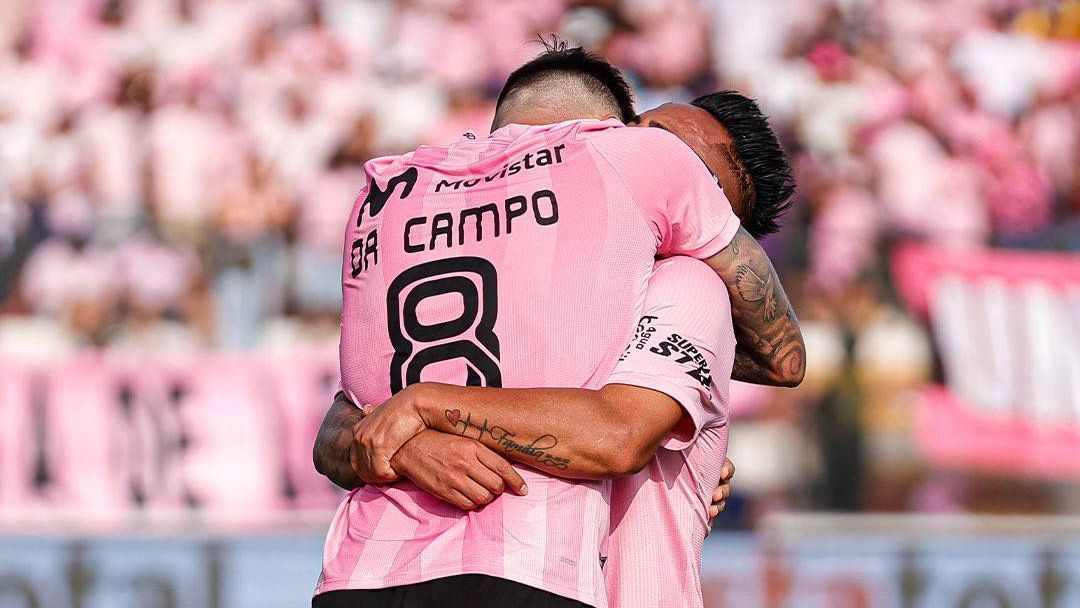
    Hernán Da Campo scores the winning goal

    Hernán Da Campo scored the only goal of the match with a spectacular long-range strike that found the corner late in the first half. His effort gave Sport Boys a decisive 1-0 lead before the interval.

    One of the match’s key moments came in the 41st minute, when Sporting Cristal midfielder Catriel Cabellos was sent off. He initially received a yellow card from referee Augusto Menéndez for stepping on Christian Cueva, but the decision was reviewed by the VAR and changed to a straight red.

    With the win, Sport Boys climbed to 14 points in the Torneo Clausura standings and moved to within two points of Deportivo Garcilaso and Universitario de Deportes. The Callao club is now in third place and has gone six matches unbeaten, recording four wins and two draws during that run.

    When is Sport Boys’ next match?

    Sport Boys’ next fixture will be away against Sport Huancayo on Saturday, September 5, at 3:00 p.m. Peru time. The match will be played as part of Matchday 8 of the Torneo Clausura.

    Source: espndeportes.espn.com

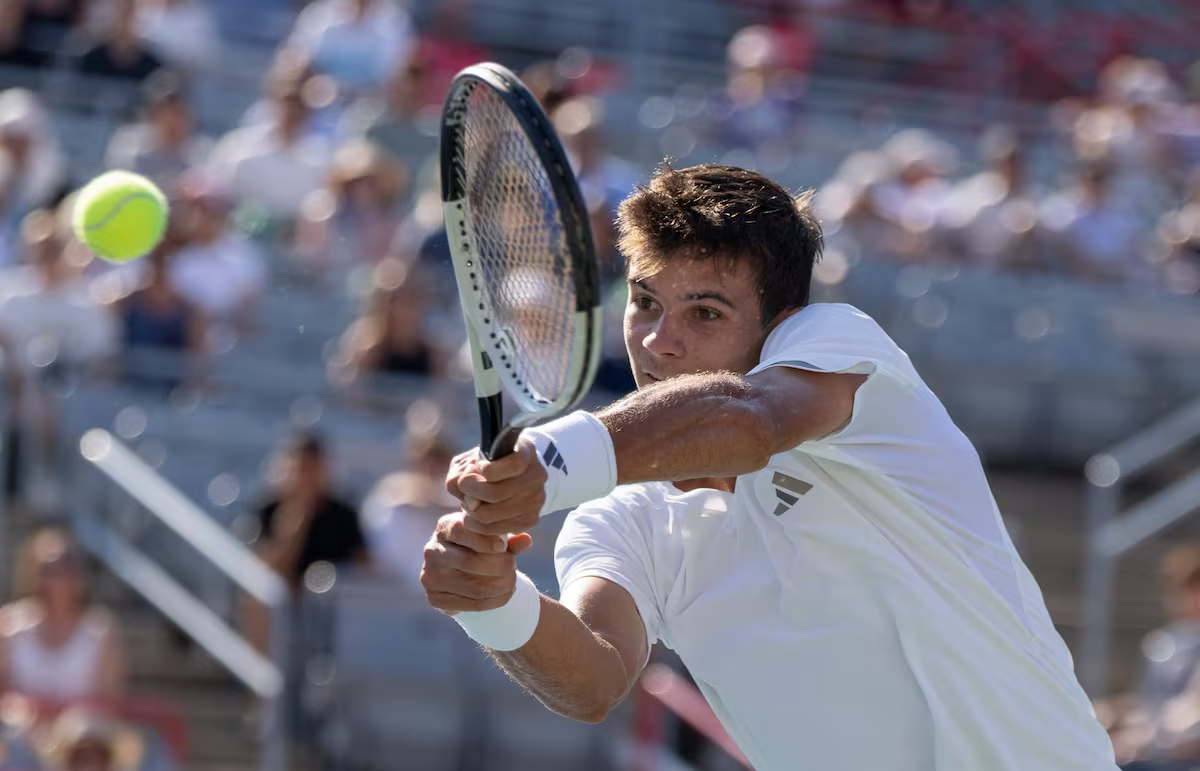
  • US Open 2026: Rafa Jódar’s Relentless Run: “Jugar tantos partidos es buena señal, tengo mucho ritmo” | Tennis | Sports

    US Open 2026: Rafa Jódar’s Relentless Run: “Jugar tantos partidos es buena señal, tengo mucho ritmo” | Tennis | Sports

    It was here in New York that the name of a lanky, acne-scarred 17-year-old from Leganés first began to attract attention. “Creo que lo he conseguido gracias a mi mentalidad y a mi forma de ser. Las cosas no salían, así que he dado un paso adelante”, Rafa Jódar said after overturning a junior final against Norway’s Budkov Kjaer, who had arrived at that tournament as the top seed and overwhelming favourite.

    That afternoon, the Madrid-born player offered an early glimpse of what might lie ahead: a determined competitor who strikes without hesitation. Today, that teenager remains just as relentless, but his life has changed dramatically. Jódar is now targeting the top 10, while little has been heard from his Nordic rival. Budkov Kjaer is ranked 149th in the world, which is no small achievement, but that is where his progress has stalled.

    “Tengo muy buenos recuerdos de aquella semana, porque pude desarrollarme como jugador aquí, en un Grand Slam, y eso ayuda mucho. Estoy muy contento de estar de vuelta”, the Spaniard said two days before this year’s tournament began.

    This is Jódar’s first US Open in the senior draw, and he arrives in clear ascendancy. He has emerged as the season’s major breakthrough player, producing results that would have been difficult to predict. His rise of 152 ranking places has become a major talking point, even attracting the attention of Roger Federer. Speaking on Saturday during his induction into the Hall of Fame in Newport, Federer said: “Lo que está haciendo es increíble. Hace unos meses, nada hubiera imaginado que pudiera hacerlo. La manera en la que está consiguiendo mantener su nivel es sencillamente increíble”.

    Jódar keeps pushing after breakthrough season

    Jódar continues to build momentum and is hoping for another surge at the final Grand Slam of the season after shining since January. He has already played 50 matches and, despite suggestions that he should have eased off, believes every second on court is valuable.

    “Estar jugando contra los mejores jugadores del mundo cada semana, incluso entrenando con ellos, hace que tu nivel mejore mucho”, he said; “si puedes aguantar el ritmo y estar ahí cada semana, física y mentalmente, también mejoras mucho. Al final, cuando juegas tantos partidos y juegas tantas semanas, siempre estás pensando y en modo torneo en tu cabeza. Estoy haciendo un gran trabajo fuera de la pista, cuando acaban los partidos; es importante recuperar bien”.

    Since 2024, Jódar has maintained the same reserved style, in clear contrast to many young players eager to build their profiles both on and off the court. He is more satisfied by his daily work and constant improvement than by public attention, a mindset that has taken him to 13th in the rankings.

    His arrival at the top level was only a matter of time: the rankings said one thing, while his tennis suggested another. Still with considerable room to improve, Jódar continues to learn about elite competition without lowering his guard or showing the slightest complacency.

    13 matches in 22 days

    “Si juego muchos partidos es buena señal; significa que estoy avanzando en los torneos”. “De momento tengo mucho ritmo de competición, lo cual es muy bueno para un jugador tan joven como yo”, the Spaniard said as he makes the most of his first summer competing at the highest level.

    Jódar reached the Washington final, the Montreal semi-finals and the Cincinnati round of 16, playing 13 matches over a 22-day period. Although signs of fatigue have appeared at times, he and his father believe the benefits of this breakthrough phase far outweigh the physical strain.

    Jódar serving during a match in Washington.
    WILL OLIVER (EFE)

    “Sé que la temporada está yendo bien, que estoy mejorando mucho y al final es un proceso de aprendizaje. Todo es nuevo para mí. Es mi primer año, así que todavía queda mucho; si no es este, intentaré conseguirlo en los próximos”, Jódar said when reminded that he is currently ninth in the annual race.

    That position leaves him in contention to finish the season among the top eight and qualify for the ATP Finals in November. Before then, on September 19 and 20, he will also lead Spain in its Davis Cup tie in Santiago, Chile.

    It has been a dream season in which Jódar has never taken his foot off the accelerator. He will not do so at Flushing Meadows, a venue that holds special memories for him. His professional and emotional connection with the United States is well established: he spent a year developing his game at the University of Virginia before moving onto the ATP Tour, and it was also where he announced himself as a junior two years ago.

    With his father still beside him as mentor and trusted support, Jódar remains focused. “Estoy contento de la evolución. Sé que quedan seis o siete torneos por delante y voy a intentar hacerlo lo mejor posible”, he said.

    He added, with full focus on his New York campaign: “Yo lo que me enfoco es en el primer partido. Voy a intentar mostrar mi mejor nivel”.

    The emergence of Mérida

    To put Jódar’s demanding schedule into context, several leading players competed in a similar number of matches during their first year at the top level. Carlos Alcaraz played 49 in 2021, Rafael Nadal played 47 in 2004, Novak Djokovic 22 in 2005 and Roger Federer 30 in 1999.

    Jódar will make his US Open debut on Tuesday at 5 p.m. against Thanasi Kokkinakis. Three Spanish players competed on the opening day. Pablo Carreño lost to Jiri Lehecka 6-1, 7-6(5), 4-6, 6-2, while Jaume Munar recovered from a difficult contest against Terence Atmane to win 6-7(5), 3-6, 6-1, 7-6(4), 7-5. Dani Mérida also advanced, defeating Marton Fucsovics 6-4, 6-4, 6-2.

    The Mallorca native spent four hours and 54 minutes on court and overcame a bizarre episode in which his opponent suffered cramps while leading by two sets. “Vengo de meses con muy poca preparación, así que lo de hoy es un paso adelante muy grande”, Munar said. He will next face another Frenchman, Arthur Rinderknech.

    Mérida will play either Marin Cilic or Andrey Rublev after securing his first win in New York and adding further momentum to his confidence. The world No. 39, who began the year ranked 163rd, summed up his performance as follows: “He sabido hacer lo que había que hacer en cada momento”.

    The match between Martín Landaluce and Britain’s Jacob Fearnley was suspended because of rain and will resume on Monday. Carlos Alcaraz will also play that day at 7:30 p.m. against Roman Safiullin, while Cristina Bucsa faces Sara Bejlec at 5 p.m. and Oksana Selekhmeteva meets Aoi Ito at the same time.