Author: Evan Mercer

  • Binance Launches 24/7 Forex Perpetual Futures With 100x Leverage

    Binance Launches 24/7 Forex Perpetual Futures With 100x Leverage

    Key Highlights

    • Binance launches 24/7 foreign exchange perpetual futures, expanding its TradFi derivatives suite into global currency markets with USDT settlement.
    • The inaugural USD/BRL (U.S. dollar–Brazilian real) contract offers up to 100x leverage, marking the exchange’s first forex perpetual product.
    • The move bridges cryptocurrency infrastructure with traditional foreign exchange, enabling round-the-clock FX speculation and hedging without legacy market hours constraints.

    Binance Enters Forex Derivatives With USD/BRL Perpetual Futures

    Binance, the world’s largest cryptocurrency exchange by trading volume, has officially launched 24/7 foreign exchange perpetual futures, signaling a strategic expansion of its traditional finance (TradFi) derivatives business into the $7.5 trillion-per-day global currency market. The inaugural offering is a USD/BRL perpetual contract settled in Tether (USDT) with maximum leverage of 100x, allowing traders to speculate on or hedge the U.S. dollar versus the Brazilian real around the clock without the settlement delays and trading-hour restrictions characteristic of conventional FX venues.

    Product Mechanics and Market Structure

    The new perpetual futures contracts mirror the structure of Binance’s existing cryptocurrency perpetuals: they have no expiry date, use a funding-rate mechanism to anchor the contract price to the underlying spot rate, and settle profit and loss in USDT. By denominating margin and settlement in the dominant crypto stablecoin, Binance eliminates the need for fiat on- and off-ramps during the trading process, reducing friction for its global user base while exposing participants to the deep liquidity of the USD/BRL pair. The 100x leverage ceiling matches the maximum available on the platform’s major crypto perpetuals, providing a familiar risk profile for existing derivatives traders.

    Bridging Crypto Infrastructure and Traditional FX

    Foreign exchange has long operated on a fragmented, over-the-counter basis with limited retail access outside banking hours. Binance’s entry introduces a centralized, order-book-based venue that operates continuously, including weekends and holidays when traditional interbank desks are closed. This architecture could attract high-frequency firms, emerging-market corporates seeking after-hours hedging, and retail speculators who currently rely on CFD brokers with wider spreads and counterparty risk. The USD/BRL pair was likely chosen for its high volatility, significant retail interest in Latin America, and the region’s growing crypto adoption, positioning Binance to capture flow from both traditional FX participants and its existing Latin American user base.

    Why This Matters

    The launch represents a convergence milestone between digital-asset infrastructure and traditional financial markets. By applying crypto-native perpetual-futures technology to sovereign currencies, Binance is testing whether the 24/7, USDT-margined model can displace legacy FX prime brokerage for a segment of the market. Success could prompt expansion into other major and emerging-market pairs—EUR/USD, USD/JPY, USD/TRY—potentially reshaping how global participants access currency risk. Regulators will likely scrutinize the product’s leverage levels, investor-protection frameworks, and AML/KYC controls, especially given Brazil’s evolving crypto-asset licensing regime under the central bank’s new virtual-asset service provider rules.

    Frequently Asked Questions

    What is a perpetual futures contract and how does it differ from standard FX forwards?

    A perpetual futures contract has no fixed expiration date; instead, a periodic funding rate keeps its price tethered to the spot market. Unlike conventional FX forwards or futures that settle on specific dates, perpetuals allow traders to hold positions indefinitely as long as margin requirements are met.

    Why is the contract settled in USDT rather than fiat currency?

    USDT settlement enables instantaneous, 24/7 value transfer on blockchain rails without relying on traditional banking hours or correspondent-banking networks. This reduces operational friction and aligns with Binance’s existing derivatives infrastructure.

    Is the 100x leverage available to all users globally?

    Leverage limits are subject to Binance’s internal risk controls and local regulatory restrictions. Users in jurisdictions with leverage caps—such as the EU under ESMA rules or Brazil under CVM guidelines—may face lower maximum leverage or product unavailability.


  • Report: ECB President Personally Blocked Binance’s EU License

    Report: ECB President Personally Blocked Binance’s EU License

    Key Highlights

    • ECB President Christine Lagarde personally lobbied Greek Prime Minister Kyriakos Mitsotakis to block Binance’s MiCA license application, overriding Greece’s own finance minister and independent regulator.
    • Binance’s application had cleared all technical reviews and the mandatory 40-day assessment period without objections before political intervention halted the process in mid-June.
    • Binance has withdrawn its Greek application and is now pursuing a MiCA license through France’s AMF after rejections from Ireland and Latvia, while competitors Coinbase and Kraken have already secured EU authorizations.

    ECB President’s Unprecedented Intervention in Binance Licensing

    European Central Bank President Christine Lagarde directly intervened to derail Binance’s bid for a Markets in Crypto-Assets (MiCA) license through Greece, according to a Wall Street Journal report citing people familiar with the discussions. The extraordinary move saw Lagarde personally press Greek Prime Minister Kyriakos Mitsotakis to block the application during a May meeting, despite the Hellenic Capital Market Commission (HCMC) having all but finalized its approval.

    A Regulatory Process Overridden at the Highest Level

    Binance had submitted its application to Greece’s HCMC for a license that, once granted by any single EU member state, would permit operation across the entire 27-nation bloc. By early June, the exchange had successfully navigated the technical review. The mandatory 40-day assessment window closed without objections, the HCMC’s anti-money laundering officer had issued a favorable sign-off, and notifications to other member states were reportedly being prepared. Then, between June 7 and June 15, the trajectory shifted abruptly. An HCMC official subsequently informed Binance that Lagarde opposed the license, and the Journal reported she had signaled this position directly to Mitsotakis, a stance that superseded the views of Greece’s own finance minister. The report suggested the Greek government’s willingness to comply may have been influenced by domestic election timing as much as the merits of Binance’s case.

    Stated Concerns: US Settlement and Digital Euro Competition

    Lagarde’s reported reasoning centered on two pillars: Binance’s 2023 guilty plea in the United States to money laundering and sanctions violations, and a strategic concern that granting the exchange a European gateway would accelerate adoption of dollar-denominated stablecoins at a time when the ECB is advancing its own digital euro project. The intervention has drawn sharp criticism from legal observers. One legal expert described the episode as “political interference” in a licensing decision that legally rests with an independent national regulator, emphasizing that the ECB holds no formal authority over MiCA approvals whatsoever.

    Binance Retreats to France After Multiple EU Rejections

    Reuters first surfaced the risk of a Greek rejection in mid-June, prompting Binance to push back forcefully. The exchange insisted the HCMC’s review had found its application compliant and highlighted a compliance team that has grown to roughly 1,500 people since its US settlement. That resistance proved insufficient. Binance later confirmed it had decided to halt the Greek application process and would seek authorization from other member states. According to contemporaneous reports, regulators in Ireland and Latvia had already declined to engage, citing the exchange’s past penalties and complex corporate structure. With Coinbase having selected Luxembourg as its MiCA hub and Kraken already holding EU approval, Binance is now concentrating its efforts on France, where it holds a smaller registration and is in active discussions with the Autorité des Marchés Financiers (AMF) for a full MiCA license covering all member states.

    Why This Matters

    The episode raises fundamental questions about the independence of national competent authorities under the MiCA framework and the extent to which political leadership—and supranational figures without formal statutory power—can influence licensing outcomes. For the crypto industry, it signals that past enforcement actions, particularly the US Department of Justice settlement, continue to cast a long shadow over European market access even after technical compliance requirements are met. For the ECB, the intervention underscores the tension between fostering a regulated digital asset ecosystem and protecting the monetary sovereignty objectives tied to the digital euro. The coming months will test whether France’s AMF applies a strictly legal standard or whether similar political considerations shape its decision on Binance’s remaining pathway to a pan-European license.

    Frequently Asked Questions

    Did Christine Lagarde have legal authority to block Binance’s MiCA license in Greece?

    No. The ECB has no formal authority over MiCA licensing decisions, which legally belong to independent national competent authorities—in this case, Greece’s Hellenic Capital Market Commission. Lagarde’s intervention was political, not statutory.

    Why did Binance withdraw its Greek application after it had technically passed review?

    After the HCMC had completed its technical assessment and the 40-day objection period expired without issue, an HCMC official informed Binance that Lagarde opposed the license. Facing explicit political opposition at the prime ministerial level, Binance chose to withdraw and pursue authorization elsewhere.

    Where does Binance stand now for a MiCA license in Europe?

    Binance has been rejected or turned away by Greece, Ireland, and Latvia. The exchange is now focusing on France, where it holds a limited registration and is negotiating with the AMF for a full MiCA license that would cover all 27 EU member states.

  • Aptos (APT) Surges 18% as Layer 1 Rotation Accelerates; $0.825 Target in Focus

    Aptos (APT) Surges 18% as Layer 1 Rotation Accelerates; $0.825 Target in Focus

    Key Highlights

    • Aptos ($APT) surged 18.6% to approximately $0.6616 as Layer-1 sector rotation drove speculative demand toward higher-beta altcoins.
    • Binance top trader positioning shows strong bullish bias with a 1.62 long/short ratio (61.79% long vs 8.21% short), reinforcing the breakout attempt above the $0.654 range ceiling.
    • Technical indicators support upside momentum—RSI at 60.94 and MACD bullish crossover—though failure to hold $0.654 could trigger a retracement toward $0.63–$0.60 or the $0.509 range floor.

    Layer-1 Rotation Fuels Aptos Breakout Above Multi-Month Range

    Aptos ($APT) posted an 18.6% price increase during the latest trading session, climbing to roughly $0.6616 as capital rotated into Layer-1 tokens across the board. The advance was not tied to a protocol-specific catalyst but rather reflected a broader shift in market participation toward higher-beta assets within the Layer-1 category. Several peer tokens recorded double-digit gains in tandem, confirming that $APT’s rally emerged from sector-wide momentum rather than isolated fundamental developments. The move lifted the token out of a prolonged consolidation band that had capped prices between $0.509 and $0.654 for months, with the latest session printing a high of $0.711—penetrating liquidity resting above the established range ceiling.

    Top Trader Positioning Heavily Skewed Long on Binance

    Derivatives data from CoinGlass reveals that Binance’s top trader cohort maintained a pronounced long-side bias as $APT approached its range ceiling. Long accounts represented 61.79% of positioning versus just 8.21% short, yielding a long/short ratio of 1.62. The ratio had fluctuated significantly in recent weeks, including a sharp spike around September 11, but the latest reading continues to show a preponderance of bullish bets among the platform’s most active traders. This positioning aligns with the spot-market recovery driven by Layer-1 rotation, though it also raises the stakes: a failure to hold the breakout could prompt leverage reduction among those concentrated long positions, amplifying downside pressure.

    Technical Structure Signals Breakout, But Acceptance Above $0.654 Is Critical

    On the daily timeframe, $APT has repeatedly tested the $0.654 resistance since mid-year, producing candle wicks above the level that subsequently retreated—classic liquidity sweeps rather than sustained breaks. The current advance differs by pushing the daily close above that boundary, with the Relative Strength Index climbing to 60.94 (above its 53.83 average but below overbought territory) and the MACD crossing above its signal line. These readings suggest momentum is strengthening without yet reaching exhaustion. For the breakout to invalidate the prior range-play structure, buyers must convert the former $0.654 ceiling into support. A successful retest would open a path toward the next significant daily resistance at $0.825.

    Liquidity Map Reveals Dual Pathways: Extension or Reversion

    Binance’s liquidation heatmap underscores that $APT’s push to $0.711 already swept through a cluster of overhead liquidity near the prior range high. However, additional liquidation clusters persist in the $0.69–$0.72 zone, meaning a sustained hold above $0.654 could fuel a further liquidity-driven extension. Conversely, rejection at the breakout level would shift risk toward the downside, where notable liquidation liquidity sits between $0.63 and $0.60. A deeper unwind of the recent leveraged longs could ultimately revisit the $0.509 range floor, particularly if bullish positioning capitulates en masse following the rapid rally.

    Why This Matters

    The $APT price action exemplifies how sector rotation dynamics can override token-specific fundamentals in the current market environment. Layer-1 tokens as a class are benefiting from renewed speculative appetite, likely driven by narratives around modular blockchain scaling, upcoming token unlocks, and relative valuation comparisons against Ethereum and Solana. For Aptos specifically, the breakout attempt carries outsized significance because the protocol has struggled to sustain momentum above $0.65 despite repeated attempts. A confirmed break would improve the technical structure and potentially attract trend-following flows, while failure would reinforce the range-bound thesis and likely deepen the consolidation. Traders should monitor whether the current long positioning in derivatives represents informed conviction or crowded leverage vulnerable to a washout.

    Frequently Asked Questions

    What triggered Aptos’ 18.6% price surge?

    The rally was driven by broad-based Layer-1 sector rotation rather than an Aptos-specific catalyst. Multiple Layer-1 tokens posted double-digit gains simultaneously as speculative capital rotated into higher-beta altcoins.

    What are the key price levels to watch for $APT?

    The critical level is $0.654 (former range ceiling, now potential support). Above that, $0.69–$0.72 holds liquidation clusters that could fuel further upside, with $0.825 as the next major resistance. On the downside, $0.63–$0.60 and the $0.509 range floor are key support zones.

    How are top traders positioned on Binance?

    Binance top traders show a strong long bias: 61.79% long vs 8.21% short, yielding a 1.62 long/short ratio. This complements the spot breakout but also creates liquidation risk if the breakout fails and leveraged longs unwind.

  • NEAR Price Rallies 24% After AI Utility Expands Across 43 Models – Will the Rally Last?

    NEAR Price Rallies 24% After AI Utility Expands Across 43 Models – Will the Rally Last?

    Key Highlights

    • $NEAR token surges 24.52% as confidential TVL tops $70 million, triggering the first milestone snapshot allocating 333,333 tokens locked until the three-day volume-weighted average price sustains above $3.33.
    • Spot volume jumps 131.81% to $1.63 billion with CryptoQuant data showing Big Whale Orders and a Taker Buy Dominant 90-day CVD, confirming aggressive buyer control during the rally.
    • Technical breakout targets the $4 region after clearing $2.820 resistance and reaching $3.461, with a higher-timeframe Fair Value Gap spanning $3.65–$4.20 and ADX at 55.63 signaling strong trend momentum.

    Confidential Infrastructure Milestone Fuels $NEAR Rally

    The Near Protocol native token $NEAR has emerged as the top-performing artificial intelligence crypto asset, posting a 24.52% gain as trading activity expanded across both spot and derivatives markets. The advance coincides with a significant milestone for the network’s confidential infrastructure: total value locked (TVL) in confidential applications recently surpassed $70 million, triggering the first snapshot under the Confidential Intents incentive program.

    According to program parameters, the snapshot allocated 333,333 milestone tokens. These tokens remain locked until $NEAR’s three-day volume-weighted average price (VWAP) reaches and sustains at least $3.33. While the token’s spot price climbed above that threshold during the recent expansion, eligibility for unlocking requires the three-day VWAP to hold at or above $3.33, adding a time-weighted condition to the incentive structure.

    Ecosystem Utility Expands Across AI and Cross-Chain Execution

    Beyond the incentive mechanics, the protocol’s Confidential Intents framework now supports private execution across more than 30 connected blockchains. The system has also integrated Intents with autonomous-agent infrastructure to facilitate asset transfers and cross-chain payments. On the AI front, $NEAR’s utility deepened through staking-based computing credits that currently cover 43 AI models, broadening the token’s fundamental demand drivers beyond speculative trading.

    Spot market participation surged in tandem, with volume increasing 131.81% to $1.63 billion. This spike suggests broad-based market engagement underpinning the price appreciation rather than thin-liquidity movement.

    Whale Orders and Aggressive Spot Buying Confirm Demand

    Large market participants strengthened the demand picture as price accelerated. CryptoQuant’s Spot Average Order Size metric registered Big Whale Orders, indicating a prevalence of larger transaction sizes. Simultaneously, the 90-day Spot Taker Cumulative Volume Delta (CVD) remained Taker Buy Dominant, signaling that aggressive buyers controlled executed spot activity throughout the rally.

    Analysts note that whale-sized orders alone do not conclusively prove accumulation; however, the Taker Buy Dominant reading provides stronger evidence that active demand accompanied those trades. The combination of elevated order sizes and aggressive buyer execution gives $NEAR’s move firmer spot-market structural support.

    Derivatives Leverage Amplifies Identifiable Demand

    By contrast, the derivatives market expanded sharply as traders increased leveraged exposure. Open Interest rose 39.54% to $924.66 million, while derivatives volume surged 101.79% to $1.85 billion. This expansion could support trend continuation while buyers defend the breakout, though elevated leverage also increases liquidation risk should $NEAR reverse sharply.

    Crucially, spot buying and Big Whale Orders accompanied this derivatives expansion, indicating that leverage amplified identifiable spot demand rather than carrying the rally in isolation.

    Technical Structure Points Toward $4 Fair Value Gap

    During its uptrend, $NEAR broke decisively above the $2.820 level, overcoming a resistance zone that had previously rejected further advance. Price subsequently reached $3.461, bringing a higher-timeframe Fair Value Gap (FVG) into immediate focus. The imbalance stretches approximately between $3.65 and $4.20, placing the psychologically significant $4.00 level inside the target region.

    Directional strength intensified substantially during the breakout, with the Average Directional Index (ADX) reaching 55.6278. The Positive Directional Indicator (+DI) at 50.3812 overwhelmingly exceeds the Negative Directional Indicator (-DI) at 4.1701, confirming dominant bullish momentum. Additionally, the Parabolic SAR indicator at $2.297 remains well below the prevailing market price, reinforcing the development of a constructive technical structure.

    If bulls maintain control above the $2.820 breakout zone, $NEAR could extend deeper into the FVG. Alternatively, rejection from the imbalance would likely send price back toward the breakout area before another recovery attempt.

    Why This Matters

    The convergence of fundamental milestone achievement, expanding confidential and AI utility, and robust spot-market demand structures distinguishes this rally from purely speculative rotations. The Confidential Intents milestone demonstrates tangible adoption of Near’s privacy-preserving cross-chain infrastructure, while the staking-based AI compute credits create a recurring utility loop for token holders. Technically, the clean break of multi-month resistance at $2.820 and the measured move toward the $3.65–$4.20 FVG provide a clear roadmap for trend followers. However, the 39.5% surge in open interest warrants monitoring: a sharp correction could trigger cascading liquidations, testing the durability of the spot bid. The three-day VWAP condition for milestone token unlocks also introduces a near-term price anchor at $3.33 that may act as a magnet or support zone in the coming sessions.

    Frequently Asked Questions

    What triggers the unlock of the 333,333 milestone tokens allocated to the Confidential Intents program?
    The tokens remain locked until $NEAR’s three-day volume-weighted average price (VWAP) sustains at or above $3.33. A spot price print above $3.33 is insufficient; the three-day average must hold the level.
    How large is the current confidential TVL on Near, and how many blockchains does Confidential Intents connect?
    Confidential TVL recently surpassed $70 million, and Confidential Intents supports private execution across more than 30 connected blockchains.
    What do the CryptoQuant Spot Taker CVD and Big Whale Orders indicate about current market dynamics?
    The 90-day Spot Taker CVD reading of “Taker Buy Dominant” shows aggressive buyers are driving spot execution, while Big Whale Orders signal elevated average transaction sizes. Together, they suggest strong, active demand from large participants rather than passive accumulation.
  • Binance’s MiCA Application Stalls as ECB President Pushes Digital Euro ‘fit for future’

    Binance’s MiCA Application Stalls as ECB President Pushes Digital Euro ‘fit for future’

    Key Highlights

    • ECB President Christine Lagarde personally intervened to halt Binance’s MiCA license approval in Greece, according to a Wall Street Journal report.
    • The intervention was reportedly motivated by concerns that Binance’s stablecoin operations could undermine the ECB’s Digital Euro project, slated for a 2027 pilot and 2029 launch.
    • Binance withdrew its Greek application in mid-June 2026 and plans to reapply in another jurisdiction, likely France, though the timeline remains uncertain pending ESMA’s assumption of sole regulatory authority in 2027.

    ECB Intervention Halts Binance MiCA License Process in Greece

    Binance’s bid to secure a Markets in Crypto-Assets (MiCA) license within the European Union has hit a significant political roadblock. According to a report by The Wall Street Journal, European Central Bank President Christine Lagarde directly intervened to stop the approval process underway with Greece’s regulator, the Hellenic Capital Market Commission (HCMC). The report alleges that Lagarde ordered Greek authorities to pause Binance’s application, citing a strategic imperative to protect the ECB’s flagship Digital Euro project. The central bank digital currency (CBDC) is currently scheduled for a test pilot beginning in mid-2027, with a full launch targeted for 2029.

    Stablecoin Competition and the Digital Euro Vision

    The WSJ report indicates that Lagarde’s opposition stems from a fear that crypto exchanges like Binance are accelerating the adoption of USD-denominated stablecoins, a dynamic the ECB believes could erode the future relevance and monetary sovereignty of the Digital Euro. The source claims Lagarde explicitly stated she “wants the Digital Euro to be fit for the future” and raised specific concerns regarding the proliferation of dollar-backed stablecoins. This suggests the regulatory friction is less about Binance’s specific compliance posture and more about a broader policy conflict between private sector stablecoin dominance and public sector CBDC rollout.

    Regulatory Timeline and the ESMA Factor

    The political pressure forced Binance to withdraw its initial HCMC application in mid-June 2026, shortly after MiCA’s transitional period concluded on July 1, 2026. While Binance’s 2023 guilty plea in the United States for money laundering and sanctions violations was noted as a contributing factor in the report, the primary driver for the blockade appears to be the ECB’s strategic timeline. Currently, MiCA licensing is managed by national competent authorities with coordination from the European Securities and Markets Authority (ESMA). However, from 2027 onward, ESMA will assume sole direct supervisory authority over crypto-asset service providers across the bloc. The WSJ report suggests there was a concerted push to delay Binance’s approval until this centralized ESMA oversight regime takes full effect.

    Industry Reaction: Concerns Over Regulatory Fairness

    The alleged intervention has drawn sharp criticism from Binance and independent observers. A Binance spokesperson condemned the reported actions, arguing that MiCA approval should not be “A process where applicants can be privately undermined through informal channels.” The exchange maintains it met all key regulatory requirements and has stated its intention to reapply for a license in another European jurisdiction, with France widely speculated as the next target. However, whether a new application can be processed and approved before ESMA assumes sole authority in 2027 remains an open question.

    Market analysts have echoed the exchange’s concerns, questioning whether the EU can apply its landmark crypto framework consistently and fairly if political directives from the central bank can override national regulatory assessments. Separately, Binance founder Changpeng Zhao (CZ) publicly questioned why traditional banks appear apprehensive toward crypto and blockchain technology, framing the episode as a defensive move by incumbent financial infrastructure.

    Why This Matters

    The standoff between the ECB and Binance highlights a fundamental tension at the heart of European digital asset regulation: the competition between private stablecoins and sovereign central bank digital currencies. MiCA was designed to create a harmonized rulebook providing legal certainty for crypto businesses operating in the EU. If the framework’s implementation can be suspended by executive political intervention to favor a pending CBDC, it undermines the credibility of the regulatory regime and creates significant precedent risk for other global firms seeking EU authorization. The transition to ESMA as the sole supervisor in 2027 adds a layer of uncertainty; firms must now calculate whether applying under the current national regime is viable, or if they should wait for the centralized supervisor, potentially facing a de facto moratorium driven by CBDC protectionism.

    Frequently Asked Questions

    Did Binance fail to meet MiCA’s technical requirements for the license?

    According to the Wall Street Journal report, the license hiccup was not because Binance failed to meet key MiCA requirements. The withdrawal was forced by political intervention from the ECB President, who reportedly ordered Greece to stop the approval process to protect the Digital Euro project from stablecoin competition.

    When will ESMA become the sole crypto regulator in the EU?

    ESMA is scheduled to assume sole direct supervisory authority over crypto-asset service providers across the European Union starting in 2027. Until then, licensing and enforcement remain the responsibility of national competent authorities like Greece’s HCMC, with ESMA acting in an oversight and coordination capacity.

    Where will Binance apply next for a MiCA license?

    Binance has stated it intends to reapply for a MiCA license in another European country. Market speculation and the WSJ report suggest France is the most likely jurisdiction for the next application, though the company has not officially confirmed the specific venue or a definitive timeline for submission.

  • Shiba Inu (SHIB) Adds 468 Million Tokens as Bears Show Signs of Exhaustion

    Shiba Inu (SHIB) Adds 468 Million Tokens as Bears Show Signs of Exhaustion

    Key Highlights

    • Shiba Inu recorded a positive exchange netflow of 115.2 trillion SHIB over the last day, with inflows of 465.7 trillion SHIB outpacing outflows of 350.4 trillion SHIB.
    • Despite substantial exchange deposits, SHIB price rebounded from a low of $0.00000480 to $0.00000537, reclaiming key short-term moving averages between $0.00000500 and $0.00000520.
    • On-chain activity remains resilient with total token transfers rising 1.09% to 3.006 trillion SHIB, while transaction and transfer counts both increased approximately 1%.

    Exchange Flow Dynamics Signal Shifting Market Structure

    On-chain data indicates that Shiba Inu’s recent selling pressure may be exhausting itself, even as exchange inflows remain elevated. According to the latest snapshot, exchange inflows reached 465,652 billion SHIB, representing a 2.46% increase over the previous day. With outflows totaling 350,424 billion SHIB, the meme coin registered a positive netflow of approximately 115,228 billion SHIB. Typically, deposits of this magnitude—averaging roughly 1,132 billion SHIB per transaction—would signal heightened selling intent, as tokens moved to centralized platforms are readily available for liquidation.

    Price Action Defies Typical Inflow Weakness

    The critical development, however, lies in the price response. SHIB briefly dipped below $0.00000480 before mounting a sharp recovery to approximately $0.00000537, forming a significant lower wick on the daily chart that suggests aggressive buying at lower levels. Since that bounce, the asset has climbed back above the cluster of shorter-term moving averages situated between $0.00000500 and $0.00000520. While a definitive bullish trend reversal has not yet been confirmed, the ability to absorb substantial exchange supply without sustaining a breakdown points to potential seller fatigue.

    Network Activity Decouples From Price Weakness

    Additional stabilization signals emerge from broader network metrics. Total token transfer volume increased by 1.09% to roughly 3.006 trillion SHIB, while the number of transactions grew 0.96% and transfer count rose 1.03%. This uptick in on-chain activity contradicts the typical pattern where declining price momentum coincides with reduced network utilization. The divergence suggests that underlying user engagement remains intact despite recent volatility, reinforcing the view that the market is finding equilibrium rather than capitulating.

    Why This Matters

    The current setup represents a nuanced inflection point for Shiba Inu. Persistent exchange inflows ordinarily precede further downside, but the failure of bears to convert that supply into sustained price degradation alters the risk calculus. If buying interest continues to meet deposits at the $0.00000480–$0.00000500 region, the path of least resistance may shift toward consolidation and eventual upside retest of the $0.00000550–$0.00000580 resistance zone. However, a renewed breakdown below the recent low would invalidate the constructive structure and likely trigger another wave of exchange-driven selling. Market participants should monitor whether netflows flip negative—a signal that accumulation is overtaking distribution—and whether the reclaimed moving averages hold as support on any pullback.

    Frequently Asked Questions

    What does a positive exchange netflow mean for SHIB?

    A positive netflow of 115.2 trillion SHIB indicates more tokens moved onto exchanges than off them in the last day. While this typically signals selling pressure, the concurrent price recovery suggests buyers are absorbing the supply.

    Has SHIB confirmed a trend reversal?

    No. The article notes that while SHIB has reclaimed short-term moving averages between $0.00000500 and $0.00000520, a bullish reversal has not yet been established. The setup is described as “getting better” rather than overtly bullish.

    Are on-chain metrics supporting the price stabilization?

    Yes. Total transfer volume rose 1.09% to 3.006 trillion SHIB, transaction count increased 0.96%, and transfer count grew 1.03%. This indicates network activity is expanding despite recent price weakness.

  • Revolut Hackers Demand 6,000 XMR as Italy Opens Data Probe

    Revolut Hackers Demand 6,000 XMR as Italy Opens Data Probe

    Key Highlights

    • Italian prosecutors and anti-mafia authorities have launched an investigation after hackers allegedly compromised an Italian government email account to steal sensitive data from at least 680 Revolut customers.
    • The group “iamnotavillain” demanded 6,000 Monero (XMR), valued at approximately $3 million, threatening to sell passports, driving licenses, identity photos, and transaction histories if the ransom was not paid by a September 16 deadline.
    • Revolut confirmed no internal systems or client funds were breached, stated it had not formally received a ransom demand, and is cooperating with regulators and law enforcement while offering support to affected customers.

    Italian Authorities Investigate Government Email Compromise Linked to Revolut Data Theft

    Italian prosecutors have opened a formal investigation following allegations that cybercriminals infiltrated a government email system to obtain confidential information on hundreds of Revolut customers. According to reports from the Financial Times and Euronews, the breach enabled attackers to pose as law enforcement officials and extract sensitive personal data, including passports, driving licenses, identity photographs, and detailed transaction histories. At least 680 customer accounts are confirmed to have been compromised in the operation.

    Ransom Demand and the Role of Monero

    The threat actor, identifying as “iamnotavillain,” published a ransom demand on September 16 accompanied by a 24-hour countdown timer. The group demanded payment of 6,000 Monero (XMR), worth roughly $3 million at the time, and threatened to auction the stolen records to other criminals if the deadline passed without payment. “They said that they identified customers with a lot of crypto holdings by doing blockchain analysis.” The attackers further claimed “They said they got the records after they compromised an Italian government email system and acted as if they were law enforcement officials.” As of the latest updates, it remains unclear whether Revolut paid the ransom or if the data has been sold on underground markets.

    Revolut Denies System Breach, Confirms Customer Support Measures

    Revolut has maintained that its own infrastructure and client funds remain secure. “Revolut responded by stating they had not formally heard back from the group nor received any ransom demands.” The company added, “They confirmed that none of its internal nor client funds had been affected nor breached.” In a further statement, Revolut emphasized its cooperation with authorities: “Revolut has said that they have been working closely with other regulators and law enforcement bodies, and have also offered to help and support any of its affected customers.” The neobank has not disclosed the specific number of impacted users beyond the 680 figure cited in media reports.

    Anti-Mafia and Counterterrorism Units Join the Probe

    The investigation has escalated beyond standard cybercrime channels. Italian prosecutors are now working alongside the country’s anti-mafia and counterterrorism authorities, signaling the potential involvement of organized crime networks or the severity of the government email compromise. The participation of these specialized units underscores the gravity with which Rome is treating the infiltration of state communications infrastructure for financial fraud.

    Why This Matters

    This incident highlights a growing threat vector in which criminals target trusted government communication channels to legitimize social engineering attacks against financial institutions and their customers. By compromising an official email account, the attackers bypassed traditional verification protocols, exploiting the inherent trust placed in law enforcement correspondence. The use of Monero as the ransom currency reflects a broader trend in ransomware operations: threat actors increasingly favor privacy-preserving cryptocurrencies to obscure transaction trails. While Monero’s protocol was not breached—its privacy features functioned as designed—the case illustrates how legitimate privacy tools can be co-opted for illicit finance. For Revolut and the broader fintech sector, the episode underscores the need for robust verification mechanisms that do not rely solely on email domain authenticity, as well as proactive customer notification frameworks when third-party data exposures occur.

    Frequently Asked Questions

    How did the attackers access Revolut customer data?

    The group allegedly compromised an Italian government email account and impersonated law enforcement officials to obtain sensitive customer records, including identity documents and transaction histories, from Revolut.

    Was Revolut’s own platform hacked?

    No. Revolut confirmed that its internal systems and client funds were not breached. The data was obtained through a compromised government email account, not through a direct intrusion into Revolut’s infrastructure.

    Why did the hackers demand payment in Monero (XMR)?

    Monero’s protocol obscures transaction amounts, sender addresses, and recipient addresses by default, making it significantly harder for law enforcement to trace ransom payments compared to transparent blockchains like Bitcoin.

  • Nostra Hit by $3.5M Oracle Attack as Security Concerns Re-emerge

    Nostra Hit by $3.5M Oracle Attack as Security Concerns Re-emerge

    Key Highlights

    • Nostra’s lending market on Starknet suffered an oracle manipulation exploit, allowing an attacker to borrow approximately $3.5 million using artificially inflated NSTR collateral.
    • The attacker bridged roughly $1.92 million to Ethereum mainnet, comprising 234.57 ETH and 1.3 million DAI, before the protocol paused all lending, borrowing, withdrawals, and liquidations.
    • The incident contributes to a surging trend in crypto security losses, with DeFiLlama data showing $1.1 billion stolen across more than 212 on-chain incidents in the first half of 2026 alone.

    Oracle Manipulation Drains Nostra Lending Market on Starknet

    Crypto security faced another significant breach today as Nostra’s lending market on the Starknet network was exploited through a deliberate manipulation of the price feed governing its native NSTR token. According to reports, the attacker subverted the protocol’s oracle system into reporting an inaccurate, inflated value for NSTR. Because Nostra relies on this oracle price to calculate collateral worth, the manipulated feed made the attacker’s NSTR holdings appear substantially more valuable than their actual market price, creating the conditions for a large-scale borrowing spree.

    Attacker Borrows $3.5 Million Across Multiple Assets Before Bridging to Ethereum

    Once the corrupted price data was accepted by Nostra’s oracle, the attacker leveraged the overvalued NSTR collateral to borrow roughly $3.5 million in a basket of assets, including Ethereum (ETH), Starknet (STRK), Circle’s USDC, Tether’s USDT, Wrapped Bitcoin (WBTC), and DAIv1. The loans appeared legitimate within the protocol’s logic because the collateral valuation and borrowing limits were derived from the compromised oracle feed. The attacker subsequently moved to extract value, bridging approximately $1.92 million to Ethereum mainnet, a sum comprising 234.57 ETH and 1.3 million DAI.

    Protocol Pauses Operations Amid Investigation; Total Loss Still Unclear

    In response to the breach, Nostra has enacted a comprehensive safety pause, halting all lending, borrowing, withdrawals, and liquidations while the team investigates the oracle manipulation vector. The protocol emphasized that the $3.5 million borrowed does not represent the final loss figure, as impact assessments and potential recovery efforts are ongoing. The exact technical method used to compromise the oracle has not yet been disclosed.

    Wave of Exploits Highlights Systemic Vulnerabilities Across CeFi and DeFi

    The Nostra incident does not exist in isolation. It coincides with a cluster of high-profile security failures over the past two weeks, signaling a broad threat landscape. Revolut, a major fintech player, fell victim to a sophisticated phishing attack initiated by a fraudulent government request that bypassed internal security checks. Term Finance suffered an exploit targeting weaknesses in its DAO governance structure, while Liquid Network experienced a software flaw that allowed attackers to generate approximately 4,000 BTC illicitly. These cases span centralized finance, decentralized governance, and sidechain infrastructure, demonstrating that attack vectors are diversifying across the entire crypto stack.

    Why This Matters: Escalating Losses Define 2026 Security Landscape

    Data from DeFiLlama underscores the severity of the current environment. Crypto security losses in the first half of 2026 have already reached $1.1 billion across more than 212 on-chain incidents. The month of April alone accounted for over $600 million in losses, driven primarily by the KelpDAO and Drift Protocol exploits. Ethereum recorded the highest chain-specific losses at $332 million, followed closely by Solana at $326 million. Zooming out to the trailing 12 months, total value hacked stands at approximately $2.101 billion, with DeFi protocols bearing the brunt at $1.353 billion and cross-chain bridges accounting for a further $758.96 million. The Nostra exploit on Starknet adds another data point to the mounting evidence that oracle integrity and cross-chain bridging remain critical systemic weak points.

    Frequently Asked Questions

    How did the attacker exploit Nostra’s lending market on Starknet?

    The attacker manipulated the price feed oracle for the NSTR token, causing it to report an artificially inflated value. This allowed the attacker to deposit NSTR as collateral that appeared more valuable than it was, enabling them to borrow approximately $3.5 million in various assets (ETH, STRK, USDC, USDT, WBTC, DAIv1) against the overvalued collateral.

    What actions has Nostra taken following the exploit?

    Nostra has paused all lending, borrowing, withdrawals, and liquidations as a safety measure while investigating the oracle manipulation. The team is currently assessing the total impact and exploring potential recovery options. The exact technical method of the oracle compromise has not yet been disclosed.

    What are the broader crypto security trends for 2026 based on DeFiLlama data?

    In the first half of 2026, crypto exploits have resulted in $1.1 billion in losses across 212+ incidents. Ethereum ($332M) and Solana ($326M) lead in chain-specific losses. Over the past year, total losses reach $2.101 billion, with DeFi protocols accounting for $1.353 billion and cross-chain bridges for $758.96 million, highlighting persistent vulnerabilities in decentralized finance infrastructure and interoperability layers.

  • MemeToro Crypto Presale Review: Can 1,373 Lines of Public Code Support $MT Post-Launch?

    MemeToro Crypto Presale Review: Can 1,373 Lines of Public Code Support $MT Post-Launch?

    Key Highlights

    • MemeToro releases 1,373 lines of MIT-licensed Solidity code across 17 files, featuring a FairLaunchEscrow contract designed to lock launch rules, block insider allocations, and route funds exclusively to refunds or liquidity.
    • The $MT token presale reaches Stage 7 at $0.00430 with over $137K raised, but long-term value depends on delivering a functional BNB Chain memecoin launchpad with AI-assisted creation tools and broader ecosystem utility.
    • Public code provides transparency for auditability, yet the project must still complete testnet deployment, liquidity infrastructure, and independent security review before the launchpad becomes operational.

    MemeToro Publishes Fair-Launch Escrow Code Ahead of $MT Presale Stage 7

    MemeToro has taken an uncommon step for a memecoin-adjacent project by publishing a complete, MIT-licensed codebase before its token reaches open trading. The release spans 1,373 lines of Solidity across 17 files and centers on a FairLaunchEscrow contract designed to enforce immutable launch parameters, eliminate owner-controlled fund routing, and allocate 100% of contributions between participant claims and liquidity provision. This technical transparency arrives as the $MT presale enters Stage 7 at $0.00430 per token, with more than $137,000 raised to date.

    Inside the AI Memecoin Launchpad Vision and $MT Utility Design

    Beyond the escrow mechanism, MemeToro is positioning itself as a BNB Chain platform for memecoin creation, discovery, trading, and supporting tooling. The roadmap describes an AI agent intended to guide creators through token launches with predefined funding and distribution rules encoded directly into smart contracts—replacing reliance on social promises with on-chain enforcement. The $MT token is slated to serve as the ecosystem’s utility asset, powering access rights, transaction fees, launch funding participation, staking rewards, and platform governance. Additional planned verticals include memecoin trading interfaces, prediction markets, and a dedicated news portal.

    The bullish case for $MT rests on genuine utility generation: if the launchpad attracts consistent creator and trader activity, demand for the token could extend beyond speculative cycles. However, the gap between published code and a production-ready platform remains significant. The AI agent, trading tools, and ancillary utilities exist only as design documents; execution risk is substantial, and buyers should weigh current verifiable artifacts against future delivery milestones.

    Technical Architecture: What the 1,373-Line Release Enforces

    The public repository includes the core FairLaunchEscrow contract, supporting interfaces, a test suite, and documentation. Its stated protections are explicit: launch settings are fixed at creation; contributor and liquidity allocations sum to 100% with no remainder; the contract design omits any owner, admin, or upgradeability functions; funds can flow only toward participant refunds or the designated liquidity pool; and public functions handle claims, refunds, and finalization. The test suite exercises scenarios covering hard caps, deadline enforcement, claim and refund logic, and invalid input handling—indicating non-trivial development investment in a sector where many projects publish minimal or no code.

    Despite these positives, the release is a development artifact, not a deployed product. MemeToro must still integrate the contracts into a live launch workflow, deploy to BNB Chain testnet, construct the liquidity provisioning pipeline, and commission an independent security audit. Until those steps complete, the code serves as a research tool for potential participants rather than a guarantee of operational safety or fairness.

    Why This Matters: Transparency as Differentiator in Memecoin Launches

    In a market segment historically dominated by opaque tokenomics, undisclosed insider allocations, and mutable liquidity promises, MemeToro’s decision to open-source its launch infrastructure represents a meaningful shift toward verifiability. Public code allows developers, analysts, and community members to audit the exact rules governing fund flows before committing capital—a capability rarely afforded in early-stage memecoin offerings. For $MT specifically, the token’s post-launch trajectory hinges on whether the AI-assisted launchpad achieves product-market fit and sustains organic volume. If creators adopt the platform and traders engage with its output, $MT could capture value across multiple touchpoints: launch fees, staking yield, governance participation, and ecosystem transaction flow. Conversely, delays in the AI agent, poor user experience, or competition from established launchpads could leave the utility narrative unrealized. The code release is a credible foundation; adoption and delivery will determine whether it translates into durable token demand.

    Frequently Asked Questions

    Is the MemeToro code open source?

    Yes. The project has published its development release under an MIT license, allowing the public to inspect the stated fair-launch design.

    What is $MT used for?

    $MT is planned for access, platform activity, funding, transactions, staking, rewards, and other MemeToro ecosystem uses.

    How can investors participate in the $MT presale?

    Participants can visit the verified presale portal via the main website, connect a BNB Chain-compatible wallet, pay with BNB, ETH, stablecoins, or card, and receive $MT tokens directly upon transaction confirmation.

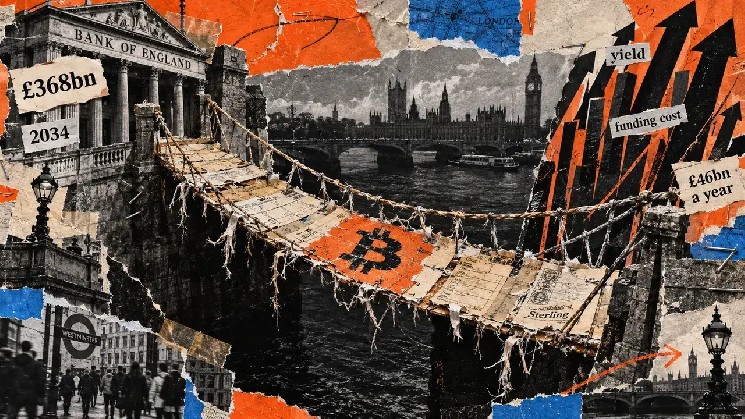
  • Bitcoin Faces Eight-Year Rate Test as BOE Unwinds £368 Billion

    Bitcoin Faces Eight-Year Rate Test as BOE Unwinds £368 Billion

    Key Highlights

    • The Bank of England will reduce its monetary-policy gilt portfolio by £368 billion by September 2034, combining £46 billion annually from maturities and £20 billion from active sales.
    • The Monetary Policy Committee voted unanimously for the unwind but split 6–3 on Bank Rate, with Megan Greene, Catherine Mann, and Huw Pill favoring a hike to 4% while six members held at 3.75%.
    • Initial market reaction was muted: 10-year and 30-year gilt yields fell 7–10 basis points, and Bitcoin hovered near $78,000 with no isolated reaction to the announcement.

    Bank of England Sets Nine-Year Gilt Unwind Path

    The Bank of England has formalized a multi-year quantitative tightening (QT) program that will remove £368 billion of gilts held for monetary-policy purposes by September 2034. The figure represents the portfolio remaining after the Bank separated £120 billion of longer-dated gilts to back banknote issuance. Under the plan approved by the Monetary Policy Committee (MPC), the residual stock will contract by an average of £46 billion per year through a combination of bond maturities and £20 billion of annual active sales.

    Split Vote on Rates, Unanimous Backing for Balance-Sheet Reduction

    The rate decision and the balance-sheet decision were taken as separate votes. Six MPC members voted to maintain Bank Rate at 3.75%, while three members—Megan Greene, Catherine Mann, and Huw Pill—preferred an increase to 4%. Despite the divergence on the policy rate, all nine members backed the multi-year gilt unwind, signaling broad consensus on the need to normalize the central bank’s balance sheet even as opinions differ on the appropriate level of short-term interest rates.

    Implementation Details and Market Mechanics

    Auction Pause and Treasury Coordination

    Implementation will begin with a temporary reduction in active market sales. The Bank’s market notice confirmed that Asset Purchase Facility (APF) auctions will pause while officials review a possible arrangement involving HM Treasury and the Debt Management Office (DMO). Operational details for any sales-to-government model are due by April 2027, and the framework remains subject to a final decision. In the interim, gilts will continue to run off through maturities.

    Runoff Pace Comparable to Recent Practice

    The planned annual active sales pace of £20 billion aligns closely with recent experience. Over the preceding 12 months, the Bank sold £21 billion of gilts. However, average total runoff—including maturities—will slow to £46 billion per year from the previous year’s £70 billion reduction, reflecting the changing maturity profile of the portfolio.

    Market Reaction: Yields Ease, Bitcoin Steady

    Early market response pointed toward easier conditions in long-dated UK debt. Reuters reported that the 10-year gilt yield fell more than 7 basis points and the 30-year yield declined nearly 10 basis points by early Thursday afternoon. The Bank’s own yield-curve data provide the broader rates backdrop, though a single trading session cannot isolate how much each policy detail contributed to the move.

    BoE Sees Modest Cumulative QT Impact

    The Bank’s July assessment estimated that quantitative tightening accounted for only 20 to 30 basis points of an approximately 200-basis-point rise in long-term gilt term premia since 2022. The majority of the increase was attributed to global uncertainty, heavy sovereign issuance, and structural changes in UK demand. This suggests the incremental effect of the newly announced pace may be limited relative to the broader forces shaping long-term yields.

    Why This Matters

    The Bank of England’s QT framework represents a significant commitment to balance-sheet normalization that will test the capacity of private investors to absorb steady gilt supply over the next decade. By separating the rate decision from the unwind plan—and securing unanimous support for the latter—the MPC has signaled that balance-sheet policy will proceed on a predetermined schedule regardless of short-term rate moves. The auction pause and Treasury coordination review introduce an operational nuance that could reshape how central bank gilt sales interact with government debt management. For risk assets, the episode underscores the indirect transmission channel: predictable central-bank withdrawal may gradually tighten global financial conditions and dampen risk appetite, but the immediate market reaction was comparatively mild, with long-dated yields falling and Bitcoin showing no discernible isolated response. The coming years will reveal whether the cumulative pressure from steady QT, combined with heavy sovereign issuance globally, exerts a more pronounced influence on term premia and cross-asset correlations.

    Frequently Asked Questions

    What is the total amount of gilts the Bank of England plans to remove by 2034?
    £368 billion, covering the monetary-policy portfolio after £120 billion of longer-dated gilts were separated to back banknotes.
    How did the MPC vote on Bank Rate versus the QT plan?
    The MPC split 6–3 on Bank Rate, with six members holding at 3.75% and three (Megan Greene, Catherine Mann, Huw Pill) favoring a hike to 4%. All nine members voted unanimously for the multi-year gilt unwind.
    Did Bitcoin react to the Bank of England’s announcement?
    Bitcoin traded near $78,000 on Friday per CryptoSlate and Coinbase snapshots, but both were rolling levels that cannot isolate a reaction to Thursday’s announcement. No discernible isolated move was identified.