Author: Evan Mercer

  • Ripple Donates $300,000 to Nepal and Tibet Flood Relief Efforts

    Ripple Donates $300,000 to Nepal and Tibet Flood Relief Efforts

    Ripple is donating $300,000 to support emergency relief efforts after severe flooding struck Nepal and Tibet, providing funding for food, water, and sanitation assistance.

    The blockchain payments company announced the contribution on Aug. 28 on X. The funds will go to World Central Kitchen, a nonprofit that provides meals during humanitarian emergencies, and Mercy Corps, which delivers humanitarian aid and supports disaster recovery.

    “Ripple is donating $300,000 to World Central Kitchen and Mercy Corps to support emergency meal distribution and water and sanitation efforts on the ground.”

    Flooding devastates communities in Nepal and Tibet

    Flooding has devastated communities along Nepal’s Bhote Koshi and Trishuli river corridors, severely damaging critical infrastructure. Mercy Corps is coordinating with local authorities and humanitarian partners to assess urgent needs and support the emergency response.

    An ice-rock avalanche from a Himalayan glacier is believed to have blocked a river before releasing a destructive surge downstream. The resulting floods swept through Nepal’s Rasuwa, Nuwakot, and Dhading districts, destroying homes, roads, bridges, power systems, and communications infrastructure. The flooding also struck the Gyirong border port in Tibet.

    Rescue operations continued amid unstable terrain and the risk of secondary disasters.

    UNICEF reported on Aug. 27 that at least 17,000 children were affected in Nepal. Eighteen schools were destroyed and 20 others sustained damage. The agency appealed for $17.2 million to fund health, nutrition, water, sanitation, education, child protection, and early-recovery programs.

    Ripple said the donation addresses two immediate needs identified in the affected areas: emergency meal distribution and water and sanitation services. World Central Kitchen and Mercy Corps will use the funding to support those efforts on the ground.

    Ripple expands humanitarian partnerships

    The donation builds on Ripple’s existing relationships with both organizations. World Central Kitchen and Mercy Corps were among several nonprofits that piloted Ripple Payments and the Ripple USD ($RLUSD) stablecoin to explore faster and more transparent ways to distribute emergency funds.

    Ripple previously worked with Mercy Corps Ventures on a drought-response project in Kenya. The $RLUSD-based pilot targeted 533 pastoralists and used satellite data and smart contracts to trigger payments when vegetation conditions fell below a predetermined threshold.

    Each eligible participant received approximately $75 if drought conditions activated the payment mechanism. The project demonstrated how stablecoins and blockchain infrastructure could automate humanitarian assistance in regions with limited access to conventional financial services.

    Ripple’s broader payment infrastructure is connected to the XRP Ledger, a public blockchain designed for rapid, low-cost transactions. The company’s contribution to relief efforts in Nepal and Tibet extends its humanitarian partnerships while directing $300,000 to organizations providing emergency assistance.
  • Canton Price Prediction: CC Price Estimated to Fall to $0.087047 by September 3, 2026

    Canton Price Prediction: CC Price Estimated to Fall to $0.087047 by September 3, 2026

    Disclaimer: This is not investment advice. The information provided is for general purposes only. No information, materials, services and other content provided on this page constitute a solicitation, recommendation, endorsement, or any financial, investment, or other advice. Seek independent professional consultation in the form of legal, financial, and fiscal advice before making any investment decision.

    Canton (CC) is trading at $ 0.115991 after rising 5.04% against the US dollar over the past 24 hours. The token also gained 5.31% against Bitcoin and 5.58% against Ethereum, outperforming the broader cryptocurrency market, whose total market capitalization increased by 3.66% during the same period.

    Despite the short-term gain, Canton is down 6.01% over the past month and 18.46% compared with its price one year ago. According to the Canton price prediction, CC is expected to fall to $ 0.087047 by Sep 03, 2026. Reaching that target would represent a 23.31% decline over the next five days.

    Canton price performance over the past 30 days

    Canton has maintained a negative recent trend, losing 6.01% in the last 30 days. Its medium-term trend is also bearish, with CC down 24.81% over the past three months. Over the longer term, Canton has declined 18.46% in one year, from $ 0.142242 on the same day last year.

    Canton reached its all-time high on Feb 03, 2026, when CC peaked at $ 0.194076. The current cycle high is $ 0.131297, while the cycle low stands at $ 0.086983. The token has recently shown high volatility, with one-month volatility at 10.25. Canton recorded 13 green days during the past 30 days.

    Canton technical analysis for Aug 29, 2026

    Market sentiment for Canton is currently Neutral, while the cryptocurrency Fear & Greed index is showing Greed. Key support levels are $ 0.108841, $ 0.106006 and $ 0.102915. The main resistance levels are $ 0.114768, $ 0.117859 and $ 0.120695.

    Neutral sentiment for Canton

    Thirteen indicators are signaling a bullish forecast for Canton, while 11 indicators point to a bearish outlook. With 54% of indicators favoring a positive prediction, the overall sentiment for CC remains Neutral.

    Cryptocurrency market sentiment remains Greed

    The Fear & Greed index currently stands at 68, indicating Greed and suggesting that investors have a positive outlook on the cryptocurrency market. The index measures sentiment among cryptocurrency investors. A “Greed” reading suggests that investors are currently optimistic about the cryptocurrency market, but can also indicate that the market is overvalued. By contrast, a “Fear” reading signals hesitation among investors and may potentially represent a buying opportunity.

    Canton moving averages and oscillators

    Several technical indicators provide additional insight into Canton’s current market position, including the Relative Strength Index and key moving averages.

    The Relative Strength Index (RSI 14) is a commonly used measure of whether an asset is overbought or oversold. Canton’s RSI 14 is 51.50, suggesting that CC is currently in neutral territory.

    The 50-day Simple Moving Average (SMA 50) reflects Canton’s average closing price over the past 50 days. CC is currently trading below the SMA 50 trendline, which is a bearish signal.

    The 200-day Simple Moving Average (SMA 200) is a longer-term trendline based on Canton’s average closing price over the past 200 days. CC is trading above the SMA 200, signaling that the market is currently bullish.

    Canton price prediction outlook

    Based on these indicators, the current Canton price prediction is Neutral. CC would need to decline 23.31% to reach the projected target of $ 0.087047 within the next five days.

    Investors should continue monitoring CC market sentiment, support and resistance levels, moving averages and other relevant metrics. Cryptocurrency markets are unpredictable, and even the largest digital assets can experience significant price volatility. For long-term Canton price predictions click here.

    Disclaimer: This is not investment advice. The information provided is for general purposes only. No information, materials, services and other content provided on this page constitute a solicitation, recommendation, endorsement, or any financial, investment, or other advice. Seek independent professional consultation in the form of legal, financial, and fiscal advice before making any investment decision.

  • Helius CEO Secures Last-Minute Vote to Cut Solana Inflation

    Helius CEO Secures Last-Minute Vote to Cut Solana Inflation

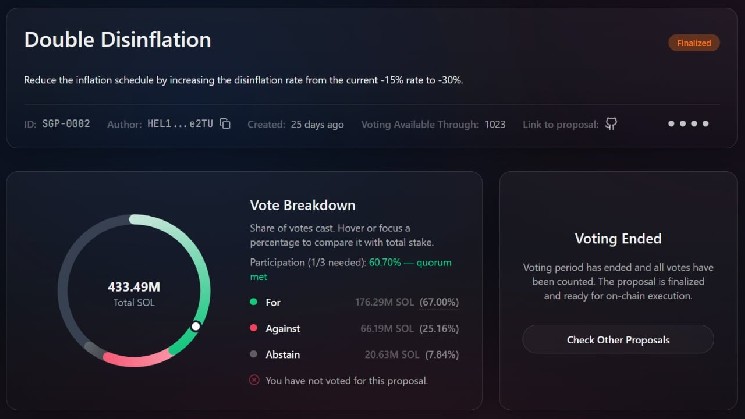
    Solana validators narrowly approved Solana Governance Proposal 0002 (SGP-0002), marking the network’s first vote on a proposal of this type.

    Solana inflation reduction proposal passes by a slim margin

    Known as Double Disinflation, SGP-0002 seeks to reduce Solana’s inflation schedule by increasing the disinflation rate from the current -15% to 30%.

    The proposal appeared unlikely to pass just hours before voting ended. It ultimately received support from validators representing 176.29 million $SOL, or 67% of the vote. Validators representing 66.19 million $SOL, or 25.16%, voted against the proposal, while 20.63 million $SOL, or 7.84%, abstained.

    Mert Mumtaz, co-founder and CEO of Solana-focused service provider and validator Helius, initially warned that the proposal would fail. He criticized validators who were randomly voting against it “under a false facade of thinking it somehow preserves extra revenue through yield for them.”

    Mumtaz described that reasoning as “mathematically nonsense,” declaring that “the people who prefer the quantity of the asset vs the value of it should immediately move to Venezuela and let other $SOL holders know how that works out.”

    Validators raise concerns over the pace of change

    Not all validators opposed the proposed inflation change for the same reason. Everstake said it voted against the proposal because of “the pace of the proposed change, the disproportionate impact it could have on smaller validators, the pressure it may put on staking participation and delegators, and the downside scenarios that remain unaddressed.”

    Despite the opposition, Mumtaz’s campaign prompted Kraken to change its position and vote in favor of SGP-0002. The shift helped the proposal pass by a narrow margin.

    “After 500 calls in the past few hours we got all the votes in the last seconds and passed the disinflation proposal by a literal hair,” Mumtaz said.

    Other Solana governance proposals receive mixed results

    The two other proposals put to a vote produced mixed outcomes. The Solana Constitution proposal, SGP-0001, passed comfortably, while SGP-0003, titled “Resource and Inclusion Fee,” failed.

    The rejection means Solana will not implement the proposed transaction fee model, which included a burn percentage.

  • Taliban Effectively Bans Cryptocurrency Trading Across Afghanistan, Arrests Traders

    Taliban Effectively Bans Cryptocurrency Trading Across Afghanistan, Arrests Traders

    The Taliban has effectively banned cryptocurrency trading across Afghanistan, closing exchange shops and threatening prosecution for traders and crypto-related businesses. The crackdown marks a major shift in a country where digital assets had become an important financial lifeline following the collapse of the Western-backed government and the freezing of Afghanistan’s international reserves.

    Afghanistan’s Cryptocurrency Ban and Enforcement

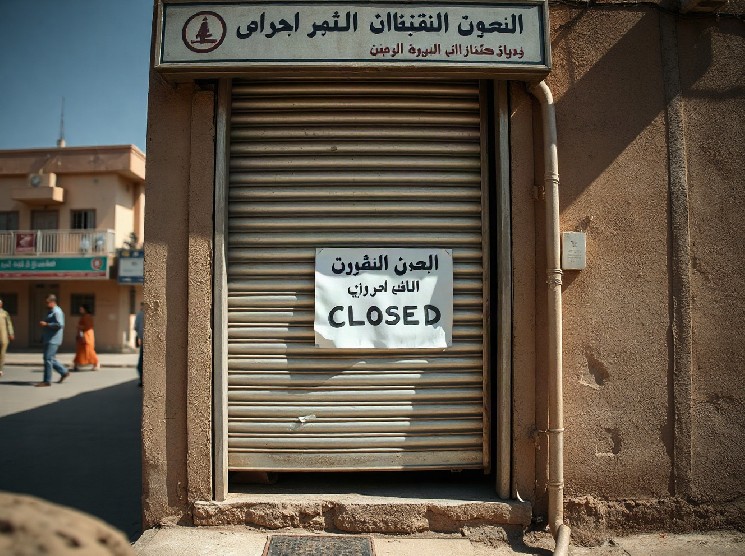
    Authorities have reportedly closed more than 20 cryptocurrency exchange shops in Herat, a major trading hub near the Iranian border, and arrested at least 13 traders.

    The Taliban’s Ministry of Finance and central bank have classified digital assets as fraudulent. Officials have also argued that cryptocurrency speculation is comparable to gambling under Islamic law. This interpretation effectively prohibits cryptocurrency trading, holding and transfers across the country.

    The enforcement campaign appears to extend nationwide, with local reports indicating that similar operations are underway in other provinces. The move is part of the Taliban’s broader effort to impose strict interpretations of Sharia law, including restrictions on interest-based banking and certain financial instruments.

    Impact on Remittances and Afghan Savings

    Before the ban, cryptocurrencies such as Bitcoin and stablecoins including USDT played a significant role in Afghanistan’s financial system. After the Taliban takeover in August 2021, Afghanistan became largely disconnected from international financial markets.

    Many Afghan citizens turned to cryptocurrency to protect their savings from hyperinflation, transfer money across borders and receive remittances from relatives overseas. Monthly crypto inflows reportedly reached more than $150 million at their peak but have since fallen to less than $80,000 following the crackdown.

    The sharp decline underscores how heavily some Afghans relied on digital assets for everyday financial needs. People without access to formal banking services used cryptocurrency as a hedge against economic instability and as a way to navigate Western sanctions that froze the country’s central bank assets.

    Humanitarian and Economic Consequences

    The cryptocurrency ban could worsen Afghanistan’s already severe humanitarian crisis, with more than half of the population facing acute food insecurity. Remittances from Afghan diaspora communities provide essential income for millions of families.

    With crypto-based transfer channels closed, many families may have to depend on informal networks that are more expensive and carry greater risks. International aid organizations and financial experts have warned that the ban could push cryptocurrency activity underground, making it more difficult to monitor and regulate.

    The policy could also deepen Afghanistan’s isolation from global financial markets and hinder any potential economic recovery. The Taliban’s decision contrasts with the approach taken by other Muslim-majority countries, including the United Arab Emirates, which has adopted regulatory frameworks for digital assets designed to align with Sharia principles.

    What the Cryptocurrency Ban Means for Afghanistan

    The Taliban’s effective ban on cryptocurrency trading represents a significant setback for financial access in Afghanistan. Although the regime has justified the measure on religious and anti-fraud grounds, its practical effect is to remove a vital financial channel for ordinary Afghans.

    As enforcement continues, the future of digital finance in Afghanistan remains uncertain. The international community is also watching how the policy affects humanitarian assistance, remittances and the country’s economic stability.

    Frequently Asked Questions

    Why did the Taliban ban cryptocurrency trading?

    The Taliban classified digital assets as fraudulent and stated that crypto speculation is comparable to gambling, which is prohibited under Islamic law. This interpretation led to a nationwide ban on cryptocurrency-related activities.

    How will the cryptocurrency ban affect Afghan citizens?

    Many Afghans used cryptocurrency for savings and remittances because the country had been cut off from much of the international financial system. The ban removes access to those services, making it more difficult for families to receive money from abroad and protect their savings from inflation.

    What happened to crypto exchange shops and traders in Afghanistan?

    Authorities reportedly shut down more than 20 cryptocurrency exchange shops in Herat and arrested at least 13 traders. The crackdown is part of a wider enforcement campaign across Afghanistan.

    Source: cryptonews.net

  • Tokenized Stock Transfer Volume Surges 415% in 30 Days to $29.5 Billion

    Tokenized Stock Transfer Volume Surges 415% in 30 Days to $29.5 Billion

    Tokenized stock activity surged over the past 30 days, with monthly transfer volume rising more than 415% to $29.5 billion, according to data from RWA.xyz.

    Monthly active addresses increased more than 209% to approximately 1.3 million, while the number of tokenized stock holders climbed 167% to 2.36 million. The total value of tokenized stocks distributed onchain also rose 1.45% over the same period to $2.54 billion, representing an increase of roughly 637% from $344 million a year earlier.

    Tokenized stock activity accelerates

    Securitize Corp. was the largest individual tokenized stock tracked by RWA.xyz, with approximately $163 million in distributed value. Strategy PP Variable xStock followed at $136 million, while an Ondo-tokenized version of Circle Internet Group reached $109 million.

    Ondo led tokenized stock platforms with $842.8 million in distributed value, followed by Kraken’s xStocks at $609.3 million and Binance’s bStocks at $599.9 million. Combined, the three platforms accounted for roughly 81% of the market.

    Tokenized equities expand across crypto platforms

    The increase in tokenized stock activity comes as crypto platforms introduce more ways for investors to trade, hold and use tokenized equities onchain.

    On Aug. 24, Coinbase launched its tokenized US stocks on Base, enabling eligible non-US users to trade the assets around the clock and use them across decentralized finance applications. The B20 tokens include companies such as Nvidia, Apple, Meta and Alphabet, and can be held in self-custody wallets.

    A day later, Bitwise launched automated portfolios built from Coinbase’s tokenized stocks. The products allow eligible non-US investors to follow preset strategies while keeping the underlying assets in their own wallets. The initial portfolios focus on the “Magnificent Seven,” robotics and artificial intelligence sectors.

    Other platforms have also broadened the use cases for tokenized stocks. In July, Bybit added tokenized shares of Nvidia, Apple, Tesla and other US companies as collateral for margin loans. Robinhood-backed decentralized exchange Arcus also launched more than 95 stock tokens and perpetual markets on Robinhood Chain.

  • Uniswap Price Eyes Bigger Rally as Robinhood Activity Surges

    Uniswap Price Eyes Bigger Rally as Robinhood Activity Surges

    Uniswap is gaining momentum as trading activity on Robinhood Chain reaches record levels. The decentralized exchange has processed roughly $130 million in daily stock-token transactions, nearly ten times more than a month ago, highlighting the growing connection between on-chain markets and traditional financial assets.

    Robinhood Chain Activity Accelerates

    Trading volume is now split almost evenly between Uniswap v3 and Uniswap v4. While v3 continues to support deep concentrated-liquidity pools, v4 is gaining traction through custom hooks, dynamic routing and lower transaction costs.

    The broader takeaway is that upgraded decentralized exchange infrastructure is now handling substantial equity-trading activity. That gives the Uniswap price outlook more substance than a routine token rally driven solely by market sentiment.

    UNI Price Has Climbed More Than 90%

    The UNI price has risen from around $2.40 in June to roughly $4.60 in August, representing a gain of more than 90%. Its earlier price history provides additional context for the current move.

    A liquidation-driven move in late 2020 was followed by a parabolic rally toward Uniswap’s all-time high of approximately $44. A similar liquidity-grab pattern is now appearing in 2026 UNI price action, although it remains uncertain whether history will repeat itself.

    If follow-up demand continues to support the UNI token price, $7.82 could become the first major resistance level. That price aligns with the weekly 200-day exponential moving average. A sustained breakout above it could place $11 and eventually $22 among the next potential targets.

    HOOD Stock Adds Context to the Uniswap Setup

    Robinhood’s stock offers another relevant comparison. HOOD previously formed a cup-and-handle pattern before advancing toward an all-time high near $154.

    After declining approximately 58% to $64 in 2026, the stock reversed higher from April and has since followed an ascending trendline. If that support continues to hold, HOOD could potentially move back toward $154 and enter another price-discovery phase.

    For now, the Uniswap price outlook is supported by improving trading activity on Robinhood Chain. However, $7.82 remains the key level bulls must overcome before the larger upside targets become relevant.

    Source: cryptonews.net

  • Pudgy Penguins and OpenSea Unite for Collector Park NYC Festival on September 3

    Pudgy Penguins and OpenSea Unite for Collector Park NYC Festival on September 3

    New York City will bring sneaker culture, NFT communities, blind-box collectors, trading-card enthusiasts and gaming fans together at Collector Park NYC, a one-day outdoor festival scheduled for September 3, 2026, at Seward Park on the Lower East Side.

    Curated by Pudgy Penguins and OpenSea, the event will focus on the growing overlap between physical and digital collecting. Visitors will be able to explore trading cards, designer toys, gaming, fashion and digital collectibles in one shared setting.

    Collector Park NYC: Key Details

    • Date: Thursday, September 3, 2026
    • Time: Noon to 8:00 PM EST
    • Location: Seward Park, Lower East Side, New York City
    • Format: One-day outdoor collectibles festival
    • Curators: Pudgy Penguins and OpenSea

    A Festival for Physical and Digital Collectors

    Collector Park is built around the idea that the boundaries between physical and digital collecting have become increasingly blurred. Instead of separating sneaker enthusiasts, trading-card collectors, gamers, fashion fans and NFT holders into different communities, the festival will bring them together for a single day of collecting, trading and shared experiences.

    The event will run for approximately eight hours, creating a concentrated program rather than the format of a multi-day convention. No additional dates have been announced.

    Who Is Curating Collector Park?

    Pudgy Penguins and OpenSea are jointly curating the festival. Pudgy Penguins describes itself as a global character universe centered on collectibles, games and storytelling. The internet-native community has expanded into a broader franchise that includes toys and physical collectibles.

    OpenSea is an NFT marketplace that is expanding its platform with token trading capabilities, cross-chain swaps and an integrated portfolio tool spanning multiple blockchains. Media inquiries for Collector Park are being handled by Kenneth Loo of Chapter X.

    Collector Communities Coming Together

    Collector Park will feature a broad range of interests, including trading cards, designer toys, gaming, fashion and digital collectibles. Its central premise is that people often collect across categories: a sneaker collector may also collect Pokémon cards, while a gamer interested in digital assets may also seek physical memorabilia.

    By presenting these interests together, the festival aims to highlight the common rituals shared by collector communities, from discovering rare items and trading with other enthusiasts to following brands, creators and limited releases.

    Activities and Experiences at Collector Park

    Attendees can expect more than vendor displays. The festival is designed around participation, discovery and community engagement, with programming intended to encourage visitors to stay and interact throughout the day.

    Planned features include vendor booths, live streaming, giveaways, live art, interactive games, food and dedicated community spaces. The event is expected to offer activities for both casual visitors and experienced collectors.

    Exclusive Releases, Trading and Giveaways

    Participating brands and creators are expected to offer exclusive product launches, limited-edition merchandise, live pack breaks, trading lounges, creator meetups, interactive games, giveaways and collectible drops.

    These limited experiences may give visitors access to physical or digital collectibles that are not available through standard retail or online channels. Organizers are expected to announce additional participating brands, creators and programming details before the festival.

    Collector Park NYC FAQ

    What is Collector Park?

    Collector Park is a one-day outdoor festival taking place on September 3, 2026, at Seward Park in New York City. The event will celebrate physical and digital collector communities and is curated by Pudgy Penguins and OpenSea.

    Who is organizing the Collector Park festival?

    The festival is being curated by Pudgy Penguins, a global collectibles brand, and OpenSea, an NFT marketplace.

    What activities will be available at Collector Park?

    Planned activities include vendor booths, live streaming, giveaways, live art, interactive games, food, exclusive product launches, limited merchandise, live pack breaks, trading lounges, creator meetups and collectible drops.

    How does Collector Park connect physical and digital collecting?

    The festival brings together communities interested in physical collectibles such as trading cards and designer toys with digital collectibles and gaming. It emphasizes the shared interests, habits and experiences that connect these collector cultures.

    Source: cryptonews.net

  • Bitcoin Price Falls After Warsh’s Hawkish Jackson Hole Keynote

    Bitcoin Price Falls After Warsh’s Hawkish Jackson Hole Keynote

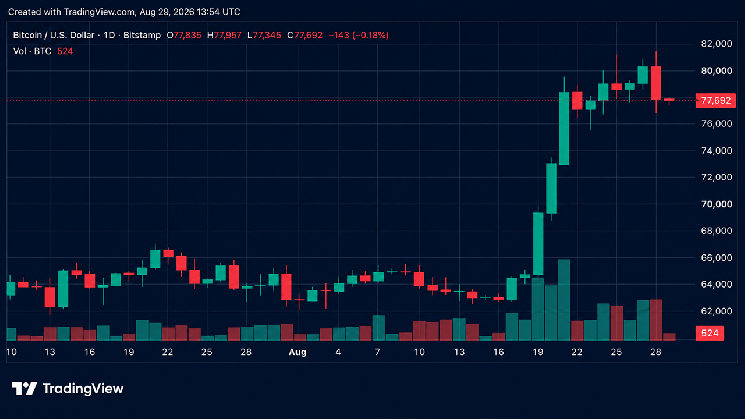
    Bitcoin has pulled back from its weekly high of $81,455, but its August gains remain substantial. As of Aug. 29, 2026, at 8:30 a.m., bitcoin was trading at approximately $77,588 to $77,984 per coin. The leading cryptocurrency had declined about 2% to 2.5% over the previous 24 hours, while still gaining 23.2% against the U.S. dollar since Aug. 15.

    Bitcoin’s initial rally followed the Treasury’s mid-August announcement about expanding bond buybacks. During the same week, U.S. President Donald Trump met with several cryptocurrency industry executives and made positive comments about the sector. He discussed bringing Hyperliquid to the United States and remained open to acquiring substantial amounts of $BTC after receiving advice from members of his administration.

    Those developments helped drive demand for spot bitcoin exchange-traded funds (ETFs), which recorded nine consecutive days of inflows. The streak ended Friday, when spot bitcoin ETFs posted their first day of outflows, with approximately $202 million leaving the funds.

    Sticky Inflation Meets Positive Crypto News

    Several developments put pressure on bitcoin toward the end of the week. U.S. inflation remained persistent, with the personal consumption expenditures (PCE) price index rising in July. Bitcoin initially absorbed the news and recovered from a modest decline before reaching its weekly high of $81,455.

    Additional positive developments supported the market, including a proposed draft to rewrite U.S. Securities and Exchange Commission (SEC) custody rules and Charles Schwab’s expansion of its digital asset offerings.

    Hawkish Jackson Hole Speech Pressures Bitcoin

    Market sentiment shifted during the Jackson Hole Economic Policy Symposium, where Federal Reserve Chair Kevin Warsh delivered his first speech at the annual event. Speaking at 10 a.m. EDT on Friday, Warsh addressed the symposium’s theme, “Financial Innovation: Implications for Payments and Policy.”

    The keynote was viewed as hawkish. Warsh said the U.S. central bank has “work to do” and argued that specific financial conditions remain difficult. He also said forward guidance had “overstayed its welcome.”

    Following the speech, the probability of a rate hike rose immediately from 35% to the mid-50% range. Treasury yields increased, while precious metals such as gold posted modest declines.

    Before Warsh’s keynote, bitcoin was trading sideways near $79,500. After the speech, its price briefly fell below $77,000 before buyers absorbed the intraday selling pressure. The move also coincided with the first day spot bitcoin ETFs recorded outflows after their extended inflow streak.

    Despite the break in consecutive inflow days, August remains a strong month for spot bitcoin ETF demand, with approximately $3.1 billion to $3.3 billion entering the funds.

    Bitcoin Tests $77,000 Support as Technical Indicators Signal Overheating

    Bitcoin’s immediate resistance this weekend is positioned between $79,500 and $80,300, a range the cryptocurrency lost following the Federal Reserve chair’s speech. Resistance becomes stronger at higher price levels.

    Support is currently holding near the $76,800 to $77,000 zone. Bitcoin’s 24-hour trading volume was approximately $28.731 billion. Technical indicators suggest momentum had already become stretched before the keynote. The daily relative strength index (RSI) was at 70, while the Stochastic indicator was higher at 85, indicating overbought conditions.

    Although the RSI is neutral and the Stochastic indicator points to overheating, the moving average convergence divergence (MACD) remains positive. Taken together, the oscillators and moving averages suggest bullish momentum is still intact despite bitcoin’s latest decline—at least for now.

  • 145 Billion SHIB Ready for Sale as Shiba Inu Netflow Turns Bearish

    145 Billion SHIB Ready for Sale as Shiba Inu Netflow Turns Bearish

    Shiba Inu Risks Falling Below the $0.000005 Price Level as Selling Pressure Builds

    Shiba Inu may be on track to lose the key $0.000005 price level as demand appears to weaken and exchange activity points to rising selling pressure.

    Recent data from crypto analytics platform CryptoQuant shows that Shiba Inu’s exchange activity is no longer signaling bullish momentum. The token’s exchange netflow has shifted, suggesting that more SHIB is moving onto exchanges than is being withdrawn.

    Shiba Inu Traders Begin Selling

    The data indicates that Shiba Inu traders may be selling part of their holdings to protect against potential losses after the recent price breakout helped them recover.

    According to the data, Shiba Inu’s exchange netflow had reached approximately 145,906,600,000 SHIB as of Saturday, August 29.

    Although this represents a bearish signal for the broader Shiba Inu ecosystem, it also shows that the volume of tokens transferred to exchanges for potential selling exceeds the volume moved out of exchanges by more than 145 billion SHIB.

    This suggests that momentum is fading, with traders showing less willingness to hold or accumulate additional tokens amid speculation that the coming month could be bearish.

    Shiba Inu Price Falls 4%

    As bearish momentum begins to affect the Shiba Inu ecosystem, SHIB has continued to post mixed price action in recent days.

    Shiba Inu has recently turned lower, increasing the risk of a move back below the key $0.000005 level. The token has recorded daily declines of approximately 3% in recent sessions.

  • Expert Identifies Key XRP Price Levels to Watch

    Expert Identifies Key XRP Price Levels to Watch

    XRP is approaching a critical technical juncture after entering a 20% correction from its recent local high. On-chain data points to several key support and resistance levels that could determine the cryptocurrency’s next move.

    XRP support zone near $1.35

    According to market analyst Ali Martinez in an August 29 X post, XRP rallied 71.8% from $0.988 to $1.698 before pulling back to test a major demand zone between $1.35 and $1.38.

    Glassnode’s UTXO Realized Price Distribution (URPD) data shows that approximately 3.2 billion XRP were previously traded within this range, making it one of the asset’s most significant support areas.

    The concentration of trading activity suggests that many holders accumulated XRP in this zone, potentially creating strong buying interest if the cryptocurrency remains above the support region.

    Key XRP resistance levels

    The URPD data also identifies several major resistance levels above the current price. The first notable barrier is at $1.60, where approximately 1.99 billion XRP were traded.

    XRP price analysis chart. Source: Glassnode

    Another resistance level is located at $1.68, supported by about 1.98 billion XRP in historical trading volume.

    The most significant resistance appears at $1.86, where approximately 3.47 billion XRP previously changed hands. This represents the largest concentration of trading activity above the current support zone and could become a major hurdle for bulls attempting to regain momentum.

    If XRP successfully defends the $1.35-$1.38 support region and reclaims the higher resistance levels, a move above $1.86 could open the door to further gains. Beyond that level, Martinez identified $2.19 as the next major target, where another 3.12 billion XRP were traded, according to URPD data.

    XRP price outlook

    A sustained breakout above $1.86 would indicate that buyers had absorbed a significant amount of overhead supply, increasing the likelihood of a rally toward the $2.19 area.

    At press time, XRP was trading at $1.39, down nearly 6% over the past week.

    XRP seven-day price chart. Source: Finbold

    Despite the recent correction, XRP remains technically bullish, trading above its 50-day simple moving average (SMA) at $1.13 and its 200-day SMA at $1.28. This positioning suggests that the broader uptrend remains intact, with both moving averages potentially acting as support during pullbacks.

    Meanwhile, the 14-day relative strength index (RSI) stood at 64.75, just below the overbought threshold of 70. The reading points to strong buying momentum while suggesting that XRP may be approaching a zone where short-term upside could become more limited if buying pressure accelerates further.

    Featured image via Shutterstock