Author: admin

  • Starfish launches on IOTA: Now live on the testnet

    Starfish launches on IOTA: Now live on the testnet


    • IOTA has activated the Starfish consensus upgrade on the testnet.
    • The core idea is that the network should no longer wait for slower validators: the rest continue to work, while laggards catch up in parallel.

    IOTA has made Starfish live on the testnet. The consensus upgrade should depend less on “laboratory conditions” — and should prove itself more where it counts: in real operation. Via X wrote the IOTA Foundation on Wednesday:

    “Starfish is now available on the IOTA testnet. It is a comprehensive consensus upgrade designed for the real world, where trust depends on reliable data exchange between distributed systems at a global scale.”

    Why IOTA Starfish is crucial

    The team is thus targeting an old core problem. In previous processes, progress depended heavily on all validators staying in sync. IOTA puts it like this:

    “What changes with Starfish at the consensus level? Previously, network progress depended on perfect coordination when some validators fell behind. With Starfish, the network continues to run while these validators recover in parallel.”

    And why this focus? Because IOTA does not see “reliability under imperfect conditions” as a bonus, but as a minimum standard. Literally:

    “Reliability under imperfect conditions should be a basic requirement – not a nice-to-have. This behavior is crucial for real-world systems such as global trade.”

    Technically, the main thing is to ensure that the system doesn’t stop just because individual validators can’t keep up. The practical effect is: the network waits less. It continues to work. Lagging validators are catching up without slowing down the rest.

    One lever here is the separation according to “urgency”: What needs to be distributed quickly and reliably gets priority. Anything that is large and eats up bandwidth is handled differently. The goal is not just “more TPS”, but more predictable processes for companies, institutions and other partners if the network is not perfect.

    This fits with IOTA’s new direction. As CNF reported, co-founder Dominik Schiener released the “Manifesto” earlier this year, which focuses on adaptation in the real world beyond the cryptosphere.

    What’s important is that Starfish is now on the testnet. This is the place where it becomes clear whether the promised robustness holds up in practice, even under stress, even if parts of the validator set “run poorly”. If the concept works, the bottom line is: less downtime due to latecomers, less coordination stress – and a more reliable process.

    The next step would be implementation on IOTA’s mainnet. There is no exact release date for this yet.
  • James Van Der Beek left followers heartbreaking ultimate message earlier than demise aged 48


    James Van Der Beek left a heartbreaking message to followers simply weeks earlier than his demise on the age of 48.

    Yesterday (11 February) it was revealed that the Dawson’s Creek star had handed away, over a 12 months after he revealed his colorectal most cancers prognosis.

    The information was confirmed by his household, who shared the next assertion on social media: “Our beloved James David Van Der Beek handed peacefully this morning.

    “He met his ultimate days with braveness, religion, and charm. There may be a lot to share relating to his needs, love for humanity and the sacredness of time.

    “These days will come. For now we ask for peaceable privateness as we grieve our loving husband, father, son, brother, and buddy.”

    Within the weeks main as much as his demise, Van Der Beek had shared a poignant message to his followers concerning the significance of resting earlier than spring.

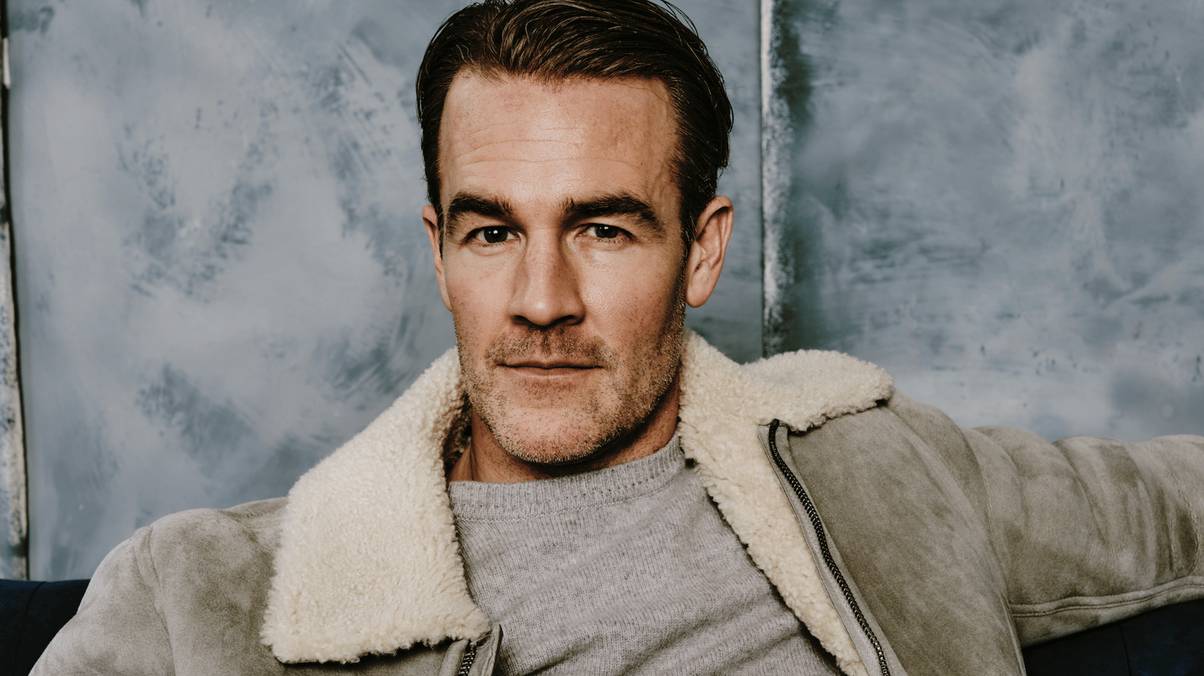
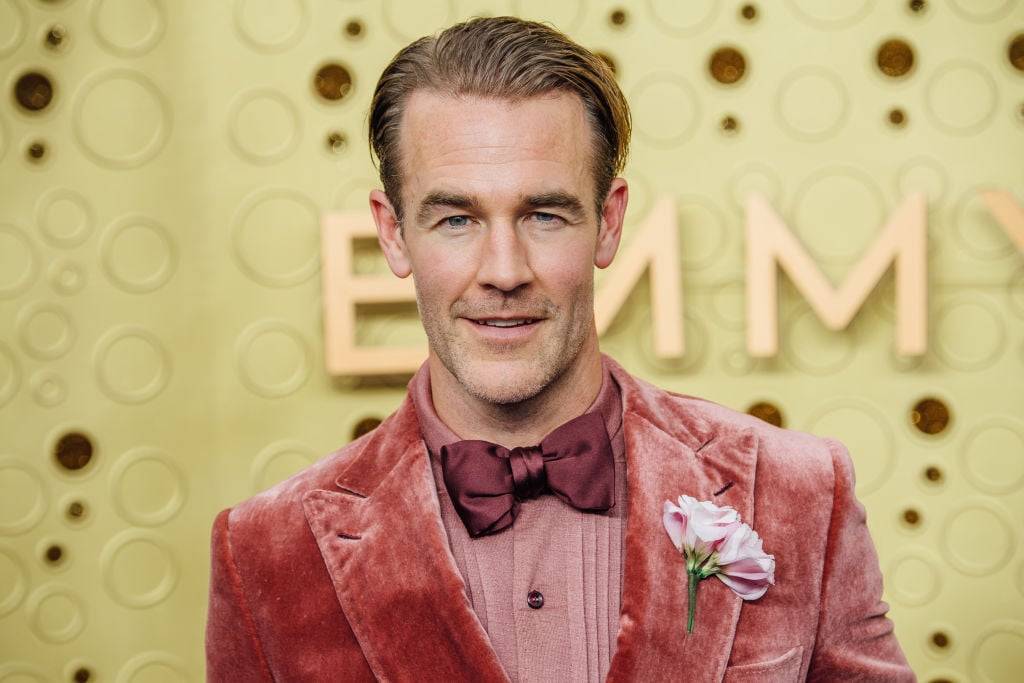
    In his ultimate message to followers, the actor confused the significance of spending the colder months resting (Emma McIntyre/Getty Pictures)

    “Anybody else on the market discovering that your New Yr’s decision was inconceivable to maintain? I’m going to say one thing: I don’t suppose it’s your fault,” he stated in a video posted on 15 January.

    Happening to query why new 12 months’s resolutions are made in the course of the coldest months, he continued: “Why are we celebrating a brand new 12 months within the lifeless of winter? Why are we celebrating new beginnings at a time when nature rests?”

    The actor then went on to say he was going to dedicate the remainder of the winter months ‘to get better [and] to relaxation’ earlier than making his resolutions within the spring.

    “The time to rejoice a brand new starting, and a brand new you, and a brand new decision, is within the spring, on the vernal equinox, when the flowers bloom and it will get hotter and the birds return,” he added.

    “That’s how nature does it. Why are we preventing nature?”

    “Within the winter, the times are shorter and the nights are longer. However as a substitute of being reminded how excellent this season is for cocooning, consuming stew, snuggling and sleeping,” he wrote within the caption.

    “Why are we being informed that is the time to purchase a gymnasium membership?”

    Tributes have since begun to pour in for Van Der Beek, who’s greatest recognized for his function as Dawson Leery in Dawson’s Creek.

    “My coronary heart is deeply hurting for all of us in the present day…each one who knew James and beloved him, anybody who beloved his work or had the pleasure of assembly him,” wrote his co-star Busy Phillips on Instagram.

    “James Van Der Beek was one in a billion and he will likely be endlessly missed.”

    “I’m so grateful for with the ability to name James a brother. I’ll miss him deeply,” wrote Kerr Smith, whereas Chad Michael Murray added: “James was a large. His phrases, artwork and humanity impressed all of us — he impressed us to be higher in all methods.”

    He was greatest recognized for his function as Dawson Leery in Dawson’s Creek (Hulton Archive/Getty Pictures)

    “I’m so unhappy in your stunning household,” penned Buffy the Vampire Slayer star Sarah Michelle Gellar. “Whereas James’ legacy will at all times stay on, this can be a enormous loss to not simply your loved ones however the world. F**okay Most cancers.”

    “A vibrant younger man. A father and husband and buddy. A generational icon. RIP JVDB. Sleep now, Dawson,” added Julie Plec, who labored as a author on Dawson’s Creek.

    Van Der Beek is survived by his spouse Kimberly and their six youngsters, daughters Olivia, Annabel, Emilia and Gwendolyn, and sons Joshua and Jeremiah.

  • Franklin Templeton and Binance are creating new types of security for institutions

    Franklin Templeton and Binance are creating new types of security for institutions


    • Franklin Templeton and Binance deepen their collaboration with a non-exchange collateral initiative aimed specifically at institutional clients.
    • The focus is on the use of tokenized money market fund shares, which are issued via Franklin Templeton’s Benji Technology Platform.

    Such shares can now be used as collateral for trading on Binance without the assets themselves having to be on the exchange. The tokens remain entirely in third-party custody while their value is projected into the Binance trading environment via Ceffu’s custody infrastructure.

    This creates a model that makes capital more efficient to use and at the same time reduces counterparty risk.

    Bridge between TradFi and DeFi

    The initiative follows on from the one announced in 2025 Partnership between Franklin Templeton and Binance and shows how quickly traditional financial instruments can be integrated into digital market structures.

    Institutional investors have the opportunity to simultaneously use regulated, return-producing money market funds as collateral and continue to earn their income.

    Roger Bayston, Head of Digital Assets at Franklin Templeton, emphasizes that Benji was developed for exactly this use case:

    Keep assets securely in third-party custody and still use them productively. Binance sees this as the logical step to integrate real-world assets more closely into digital trading and to modernize institutional processes.

    Gaining efficiency through tokenization

    Tokenized money market funds combine stability in a regulated system with the flexibility of digital markets. Institutional participants benefit from an infrastructure that enables 24/7 transactions while fitting into existing governance and risk environments.

    Ceffu CEO Ian Loh emphasizes that institutions increasingly need trading models that simultaneously optimize risk management and capital utilization. The ability to represent traditional fund shares onchain without physically moving them creates exactly this opportunity.

    Importance for the market infrastructure

    With the new collateral program, Franklin Templeton and Binance are sending a clear signal for the future of institutional market structures. Tokenized real world assets are becoming a central tool that combines liquidity, security and efficiency.

    Binance in der Wall Street
    Image created with ChatGPT-AI (DALL E)

    For Binance, the offer is a further step towards meeting the increasing demand for stable, yield-bearing securities.

    The cooperation makes it clear how traditional financial products can be integrated into the digital financial economy and shows an example of the role tokenization can play in institutional trading in the future.

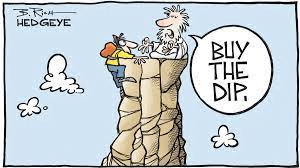
  • “Buy the dip” is good advice – but what is it, the dip?

    “Buy the dip” is good advice – but what is it, the dip?


    • The crypto market is once again in crisis mode, with investors torn between worry and hope.
    • The experts at Santiment have published a study from the “Hope Department” that clarifies the question of when a price decline is a real buying opportunity, i.e. a “dip”.

    Santiment combed through social media data, onchain indicators, and historical patterns to identify distinctive signals identifiedwhich occur particularly frequently in uncertain markets. The analysis is becoming increasingly important as the industry’s market capitalization has fallen significantly since the beginning of the year and many customers are looking for helpful guidance.

    Extremely negative sentiment as a leading indicator

    The first and perhaps strongest signal, according to Santiment, is a period of exceptionally negative sentiment on social media. When discussions are dominated by pessimism, doomsayers and FUD, it indicates that the market is oversold.

    Santiment points to historical examples where assets posted double-digit percentage recoveries immediately after such sentiment lows. The analysis shows that extreme fear is often not at the beginning, but at the end of a sell-off.

    Investors who recognize this pattern can identify potential turning points early on.

    Usage changes from “dip” to “crash”

    Another strong signal comes from the community’s choice of words. While terms like “dip” and “setback” tend to indicate a controlled correction, the transition to more drastic terms like “crash” or “goes to 0” often marks a phase of capitulation.

    Santiment emphasizes that such linguistic escalation is a recurring pattern that has often occurred shortly before a trend reversal in the past. When investors no longer talk about buying opportunities but rather about existential risks, market sentiment reaches its lowest point.

    Negative keywords strengthen the image

    The analysis also shows that an accumulation of negative key terms is another element of the overall picture. When terms like “sell,” “down,” and “panic” dominate social media, it reflects a broad loss of trust.

    Santiment points out that this collective uncertainty typically occurs when many market participants have already realized losses or are about to do so. Combined with other signals, this increases the likelihood that a bottom has been reached.

    Buy the dip
    Image created with ChatGPT-AI (DALL E)

    MVRV as objective onchain confirmation

    In addition to sentiment analysis, Santiment highlights the 30-day MVRV indicator, which measures whether short-term wallets are in profit or loss. If an asset is in the “severely undervalued” zone, it indicates that many investors are in the red – a condition that has historically often led to recoveries.

    Santiment emphasizes that particularly strong signals arise when negative sentiment and MVRV undervaluation occur simultaneously. In such phases, the likelihood of a sustained rebound increases significantly.

  • Ripple brings Aviva Investors onto XRPL: fund tokenization starts

    Ripple brings Aviva Investors onto XRPL: fund tokenization starts


    • Ripple and Aviva Investors want to tokenize traditional fund structures on the XRP Ledger.
    • Both companies justify the step with efficiency and infrastructure arguments.

    While the White House continues to struggle over regulatory guidelines for crypto, Ripple can show new progress in Europe. Aviva Investors, the asset manager of the British insurer Aviva plc, wants to tokenize traditional fund structures on the XRP Ledger (XRPL).

    tokenize and Aviva Investors shared in a statement on February 11, 2026 designated that they want to examine together how “traditional fund structures” can be brought to the XRPL. According to Ripple, this is the company’s first partnership with a European-based investment manager.

    Aviva Investors calls the project a novelty: It is “the first initiative of its kind” with which tokenized components are intended to be incorporated into the existing product range. Both sides speak of long-term cooperation and want to jointly implement tokenized funds on the XRPL “through 2026 and beyond.”

    Why Ripple and the XRP Ledger?

    In the communication, both focus primarily on the infrastructure: fast, secure and cheap transactions as well as energy efficiency. Ripple also refers to “compliance” functions that are specifically aimed at institutions in regulated markets.

    Ripple refers to the size of the network to classify it: Since 2012, over 4 billion transactions have taken place via the XRPL; The company also lists more than 7 million active wallets and 120 independent validators.

    On X, Markus Infanger, Senior Vice President at RippleX, wrote:

    “A truly significant moment for XRPL: Traditional financial services are now being implemented on the blockchain! Aviva Investors, the global asset management arm of leading British insurer Aviva plc, has announced a partnership with Ripple to tokenize traditional fund structures on the XRPL platform.”

    Jill Barber, Chief Distribution Officer at Aviva Investors, highlights the benefits for investors:
    “We are very pleased to announce our collaboration with Ripple and we look forward to working closely with the team to explore tokenized solutions,” said Barber. She added:

    “We believe tokenization can bring many benefits to investors – including improvements in time and cost efficiency. As the investment arm of the UK’s leading insurer, we have a long history of innovation. We are committed to adopting technological advances that we believe can bring positive change to our business – and we believe tokenized funds can be hugely beneficial for our clients.”

    Ripple describes the step as the next leap towards practical use. Nigel Khakoo, VP Trading and Markets at Ripple, said:

    “Tokenization is now moving from experimentation to large-scale production. Institutions like Aviva Investors are now focusing on how regulated financial assets can be deployed at scale.”

    According to Ripple, tokenized funds could bring noticeable efficiency gains to the investment process – and only really pay off over years. Khakoo cites “built-in compliance tools,” “near-instant settlement,” and “native liquidity” of XRPL as the infrastructure for “the next generation of institutional assets.”

    Reece Merrick, senior managing director for the Middle East and Africa at Ripple, designated the cooperation on

    As CNF reported, the news comes just days after Ripple received its final license as an Electronic Money Institution (EMI) from the Commission de Surveillance du Secteur Financier (CSSF) in Luxembourg.

  • Goldman Sachs reports $2.3 billion in crypto assets to SEC – XRP included for the first time

    Goldman Sachs reports $2.3 billion in crypto assets to SEC – XRP included for the first time


    • Goldman Sachs’ routine monthly report to the US Securities and Exchange Commission (SEC) is making the industry sit up and take notice. The bank reports crypto investments of $2.36 billion – a record value. But what is really remarkable is the new composition of the portfolio.
    • While Bitcoin and Ethereum continue to form the core, XRP and Solana positions of a significant size are also appearing for the first time. The bank relies exclusively on regulated spot ETFs and does not make any direct investments.

    At over a billion dollars, Bitcoin remains the most important crypto asset in the portfolio. Ethereum is almost on par, accounting for just under a billion. The almost identical weighting of the two assets is interpreted by market observers as a strong signal of trust in Ethereum.

    What is particularly interesting, however, is the inclusion of XRP ETFs worth over $150 million. Goldman Sachs is thus positioning itself in a segment that was long considered a hot potato due to the unclear Ripple regulation.

    XRP ETFs have only been trading for a few weeks and are seeing notable inflows. For many analysts, this is an indication that institutional investors are increasingly diversifying beyond Bitcoin and Ethereum and are giving more consideration to payment assets with clear use cases.

    Institutional demand is increasing – Goldman Sachs is sending a clear signal

    Die Routine reporting to the SEC shows that Goldman Sachs is continuing to expand its crypto exposure, although individual positions have been tactically reduced. The trend is clear: digital assets are no longer viewed as a speculative fringe topic, but are part of modern portfolio strategies.

    The bank only uses ETFs because they are operationally easy to handle with minimal risk. The inclusion of XRP and Solana in the portfolio shows that the bank is ready to focus on high-growth opportunities.

    Goldman Sachs holds XRP ETF
    Image created with ChatGPT-AI (DALL E)

    With the $2.3 billion in crypto ETFs, Goldman Sachs underlines that institutional players are no longer on the sidelines, but are actively channeling capital into the crypto market. Bitcoin and Ethereum are getting reaffirmation of their role as institutional underlyings.

    For XRP, on the other hand, it is an important step towards widespread acceptance after years of being an outsider due to the ultimately unsuccessful SEC lawsuit against Ripple.

  • Bank of England is testing cooperation with Chainlink

    Bank of England is testing cooperation with Chainlink


    • Chainlink takes part among other organizations in testing the second version of the Real-Time Gross-Settlement-Systems RTGS der Bank of England part. This is about the synchronous settlement of transactions involving central bank money and on-chain securities.
    • In the six-month innovation program, the British Central Bank is systematically investigating for the first time how modern interoperability applications can be embedded in the RTGS system version RT2.

    In a so-called Synchronisation Lab The British Real-Time Gross Settlement System RTGS is to be comprehensively modernized. It has been the basis of payment transactions in the United Kingdom for decades. With version RT2, the Bank of England wants to establish a modified system that can not only process classic payment flows, but also handle tokenized assets, programmable payments and future, new forms of digital money.

    The Synchronization Lab builds on the results of the earlier Meridian project. It had already shown that the completely synchronous processing of transactions between securities and central bank money “step by step” is technically feasible. Specific design options should now be tested, which could later be incorporated into the “live” infrastructure.

    Competence in the area of ​​interoperability

    Chainlink brings its expertise in the area of ​​decentralized oracles and in particular the Cross-Chain Interoperability Protocol CCIP to the program. The aim is to prove that different DLT systems, tokenized assets and simulated RTGS accounts can interact securely with one another.

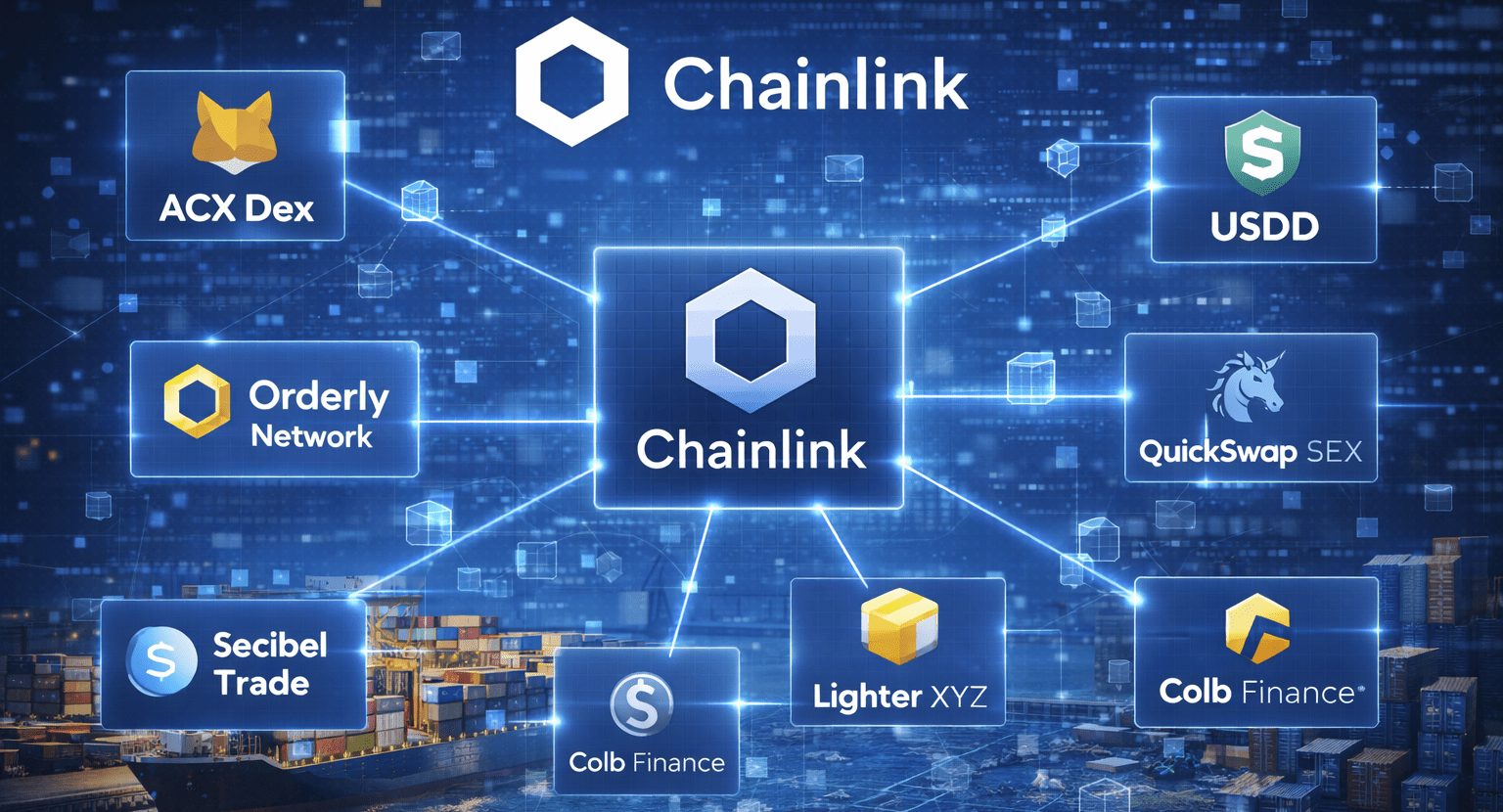
    Chainlink collaborations
    Image created with ChatGPT-AI (DALL E)

    The Bank of England provides a test environment in which participants map end-to-end processes, evaluate synchronization models and simulate the behavior of different market participants. Chainlink is intended to show how settlement instructions can be reliably transferred between onchain systems and central bank components – a critical building block for the future, new financial market infrastructure.

    Importance for tokenization

    The Bank of England Synchronization Lab has significant strategic weight. Its results flow directly into the regulatory and technical design of the British financial system.

    The project shows the crypto industry that it is not just the EU central banks that are working to embed tokenized securities, digital central bank money and the programmable processing of transactions into existing classic financial structures.

    By participating in the project, Chainlink consolidates its position as a neutral infrastructure provider, usable both in Web3 projects and by traditional financial players. Interoperability is not an optional “nice to have” feature, but rather a basic requirement for the functioning of the next generation of financial markets.

  • Crypto vs. banks: Dispute over stablecoin rewards comes to a head in the White House

    Crypto vs. banks: Dispute over stablecoin rewards comes to a head in the White House


    • In the White House, the crypto industry and major banks continued to wrestle over the rules for stablecoin rewards in the Clarity Act, but the second meeting also ended without agreement.
    • Banks and associations are pushing for a far-reaching ban on returns and interest rates for stablecoins with a paper.

    Yesterday, Tuesday, representatives of the crypto industry and large US banks met again in the White House to debate the biggest point of contention in the Clarity Act: stablecoin “rewards” and the question of which activities should be considered permitted in the future. Participants described the round as more constructive than the first time, but in the end no one went home with an agreement.

    Crypto industry vs. banking industry

    Journalist Eleanor Terrett, citing those involved, wrote that this time there were fewer people at the table and that concrete deal details were discussed more quickly. Both sides called the conversation “productive” – “but this time too there was no compromise until the end,” said Terrett.

    In terms of content, the content became much more specific: The dispute was primarily about what would still be allowed in the future, i.e. what kind of rewards crypto companies would be allowed to offer if users held stablecoins.

    According to Terrett, the crypto site wants to define the term “rewards” broadly, while banks and associations want to make it as narrow as possible. The next step is to continue “in the coming days,” although it remains unclear whether there will be another meeting before the end of the month. The White House called on both sides to find a solution by March 1st.

    What made things even more explosive was a paper that banks and banking associations brought to yesterday’s meeting: “Yield and Interest Prohibition Principles”. It states that stablecoins are designed as payment instruments in the GENIUS Act and that market structure laws should therefore enshrine a strict ban on returns and interest rates in order to prevent outflows of deposits from the traditional banking system.

    Essentially, the paper calls for a very far-reaching ban on “tying any form of financial or non-financial consideration” to stablecoin holders – in connection with the “purchase, use, ownership, possession, custody, holding or retention” of a payment stablecoin.

    And then comes the sentence that seems like a red line from the crypto industry’s perspective: Proposed exceptions must therefore remain “extremely limited”. After all, the word exception is being used for the first time.

    On top of that, the paper also includes enforcement powers for the supervisors, including civil fines, anti-avoidance rules, strict requirements for marketing and risk presentations as well as a mandatory study two years after entry into force, including possible follow-up regulation for “significant risks”.

    Compromise in the air?

    Ripple-Chefjurist Stuart Alderoty pointed after the meeting for movement:

    “Today was a productive meeting at the White House – compromise is in the air. The clear, bipartisan momentum behind sensible crypto market structure legislation continues. We should act now – while the window is still open – and deliver a real win for consumers and America.”

    Dan coiler, director of industry affairs at the Blockchain Association, showed felt less positive:

    “After the first meeting at the White House last week, today’s follow-up shifted from broad discussion to serious problem-solving. This was a smaller, more focused session. Stablecoin rewards were the focus – but banks came not to negotiate on the text of the law, but with broad prohibitive principles, and that remains a key point of disagreement.”

    CEO Summer Mersinger explained:

    “The second White House meeting shows that the political drive behind bipartisan market structure legislation for digital assets remains. We are encouraged by the progress as stakeholders work constructively to resolve outstanding issues. We remain fully committed to translating this progress into legislation that positions the U.S. as a global innovation leader.”

  • Angelina Jolie opens up on why she received double mastectomy after sharing scars for first time


    Angelina Jolie mentioned that her ‘scars are a alternative’ she made to be round for her children as they develop up.

    The actress went public along with her mastectomy scars for the primary time in December, 12 years after present process the surgical procedure in 2013.

    A mastectomy is a surgical procedure to take away all or a part of a breast, normally to deal with or stop breast most cancers, which incorporates eradicating the tissue, pores and skin, or typically the nipple.

    She has spoken concerning the scars prior to now, although, saying in an interview with Hello! final 12 months: “I did select to have that as a result of I misplaced my mom and my grandmother very younger.

    “I’ve the BRCA gene, so I selected to have a double mastectomy a decade in the past. After which I’ve additionally had my ovaries eliminated, as a result of that’s what took my mom.”

    The BRCA 1 gene was the trigger behind Jolie’s elevated danger of growing breast and ovarian most cancers.

    The actress revealed her mastectomy scars, uging girls to have BRCA screenings (Frazer Harrison/Getty Photos)

    Having made the quilt of TIME France, the mum-of-six might be seen displaying off her markings, saying: “I share these scars with many ladies I really like. And I am all the time moved after I see different girls share theirs.”

    Now, the Salt star has opened up on the transfer to decrease her danger of most cancers in a brand new interview, talking with France Inter this week.

    “I’ve all the time been somebody extra within the scars and the life that folks carry,’ she mentioned. ‘I am not drawn to an ideal concept of a life that has no scars,” she started.

    “My scars are a alternative I made to remain right here so long as I may with my youngsters. I really like my scars due to that.”

    Jolie added that she’s ‘grateful’ to have had the selection to do one thing ‘proactive’ about her well being, particularly as her mom, Marcheline Bertrand, died following breast and ovarian most cancers diagnoses at 56.

    The Needed actress went on: “So for me, I believe that is life, and when you get to the tip of your life and you have not made errors and you have not made a multitude, you do not have scars, you have not lived a full sufficient life.”

    Jolie shares three organic youngsters with ex-husband Brad Pitt: Shiloh, 19, and 17-year-old twins Knox and Vivienne, whereas additionally having three adopted youngsters: Maddox, 24, Pax, 22, and Zahara, 21.

    The Tomb Raider star mentioned she did not ‘remorse’ getting a double mastectomy, saying: “These are my decisions. I don’t say all people ought to do it that means, however it’s essential to have the selection.”

    In her upcoming movie titled Couture, she performs a lady recognized with breast most cancers.

    The actress referred to as for extra BRCA screening, admitting that she spoke out concerning the situation to ‘encourage knowledgeable decisions’.

    “Healthcare selections should be private, and girls should have the knowledge and help they should make these decisions,” Jolie beforehand highlighted.

    “Entry to screening and care mustn’t depend upon monetary sources or the place somebody lives.”

  • Physician Who actor Noel Clarke arrested on suspicion of tried rape


    British actor Noel Clarke has been arrested on suspicion of tried rape, publicity and sexual assault by touching.

    Stories say that the Physician Who actor was questioned by authorities on Tuesday (10 February) and bailed pending additional inquiries, two hours later.

    Metropolitan Police said that the arrest was associated to a sexual offence which is alleged to have occurred in 2007, involving a lady in her 20s in London.

    The Sun reported that the 50-year-old arrived at Islington police station at 12.45 through appointment, alongside together with his spouse and lawyer, the place he was questioned by detectives from the Met’s Central Specialist Crime Command.

    Clarke has beforehand been arrested for a unique alleged defence, as he was questioned over alleged voyeurism to a different girl in her 20s, which reportedly came about in 2013, say The Daily Mail.

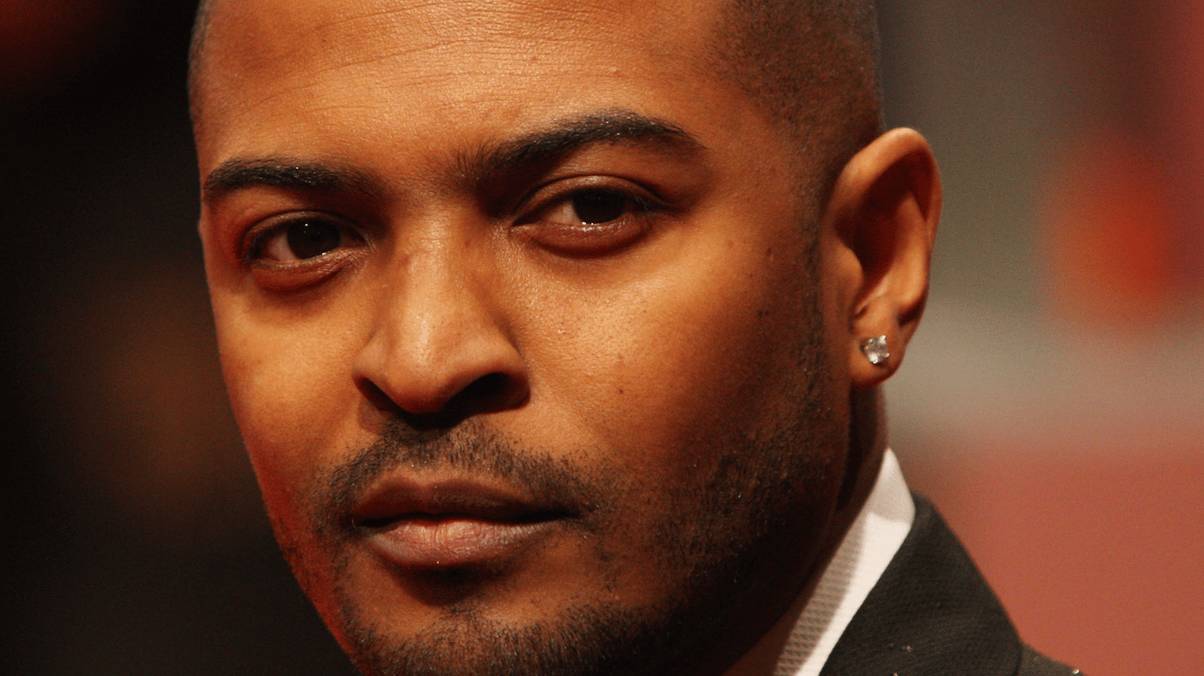
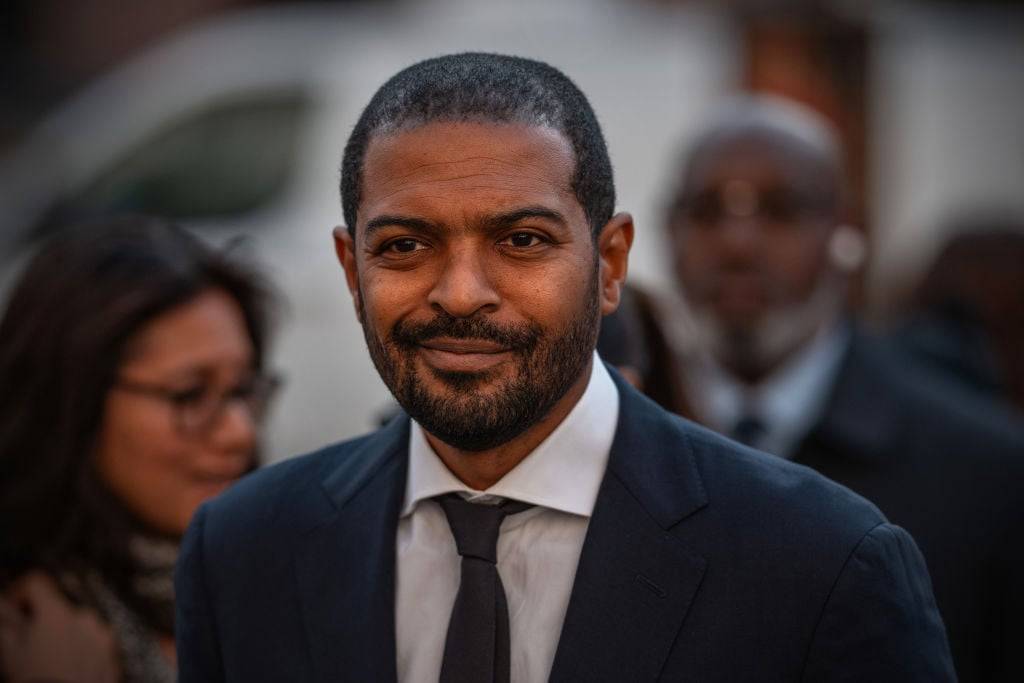
    Information of the actor’s arrest broke on Tuesday (Carl Court docket/Getty Pictures)

    The Maturity actor was apprehended at his Kensington dwelling in September 2025 – an investigation into these claims is ongoing.

    Clarke had beforehand sued the Guardian newspaper for libel after the publication reported allegations about his behaviour, a case which he misplaced in August final 12 months.

    He then declared chapter over a £3 million authorized invoice.

    It’s reported that cops have been assessing proof which had come to the fore through the Brit’s civil case in opposition to The Guardian.

    Clarke has lengthy denied the claims made in opposition to him, in a saga which has seen the actor’s profession nosedive.

    His excellent British contribution to cinema honour from Bafta, in addition to his membership, have been suspended in April 2021.

    Clarke is greatest identified for his position as Mickey Smith on Physician who from 2005 to 2006, starring alongside the likes of David Tennant and Billie Piper, making extra appearances in 2008 and 2010.

    He additionally wrote and starred in Kidulthood, with the unbiased movie’s success leading to two sequels being launched over time, Maturity and Brotherhood, each of which he directed.

    Clarke gained the BAFTA Rising Star Award in 2009 (Chris Jackson/Getty Pictures)

    A Met Police spokesperson stated in a press release to Metro: “A person in his 50s was arrested on suspicion of tried rape, publicity and sexual assault by pertaining to Tuesday, 10 February. He was interviewed by detectives.

    “This arrest pertains to a sexual offence, which is alleged to have taken place in 2007 in London in opposition to a lady in her 20s.

    “The person was additionally interviewed in relation to a voyeurism allegation, for which he was beforehand arrested in September 2025. This pertains to an offence allegedly dedicated in 2013 at an tackle in London in opposition to a lady in her 20s.

    “The person was bailed pending additional enquiries and the Met’s investigation continues.”

    LADbible has reached out to Met Police for remark.