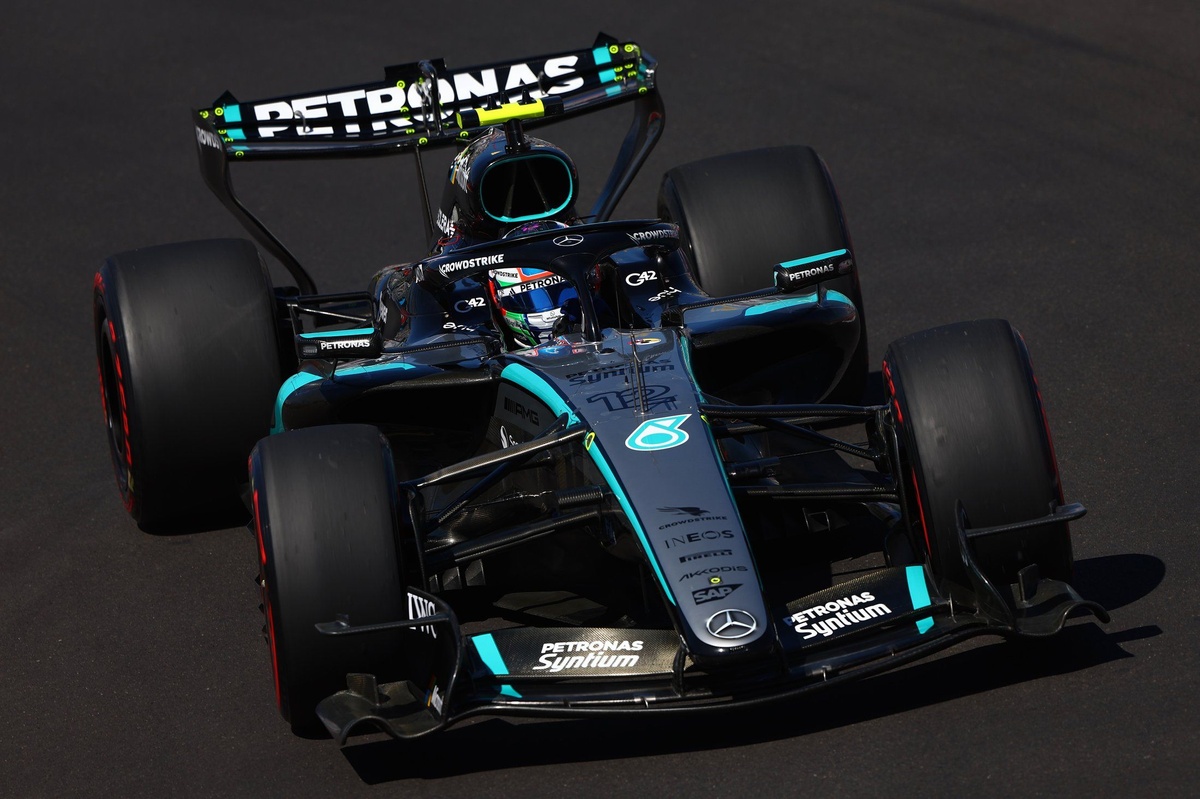
Key Highlights
- Mercedes confirms its next major Formula 1 upgrade package will debut at the Malaysian Grand Prix on 2–4 October, targeting a return to pole-contending form.
- Despite a commanding 145-point championship lead over Ferrari, the Silver Arrows have not claimed pole position since Kimi Antonelli topped qualifying at Spa in July.
- Trackside engineering director Andrew Shovlin expects a “decent step” from the Malaysian updates but cautions the competitive gap to McLaren and Ferrari is now just one or two tenths.
Mercedes Targets Malaysian Upgrade to Arrest Qualifying Slide
Mercedes has confirmed that its next significant Formula 1 development package will arrive at the Malaysian Grand Prix on 2–4 October, marking the Asian venue’s return to the calendar in place of Bahrain. The German manufacturer enters the event with a substantial 145-point advantage over Ferrari in the 2026 Constructors’ Championship, a lead built despite the team’s last major upgrade being introduced at the Montreal round in May. Since then, Mercedes has relied on minor, circuit-specific updates while rivals Ferrari and McLaren have pursued more aggressive development programmes.
That strategic conservatism has coincided with a shift in competitive momentum. After winning the opening six grands prix of the season, Mercedes has secured only four victories in the subsequent eight rounds, with McLaren and Ferrari each claiming two wins. More critically for a team historically defined by Saturday dominance, the Silver Arrows have not started from pole position since Kimi Antonelli set the pace at Spa-Francorchamps in July—a drought spanning four consecutive race weekends.
Shovlin Details Baku Strategy and Upgrade Timeline
Speaking on the Nu Silver Arrows Radio Show podcast, trackside engineering director Andrew Shovlin outlined the team’s immediate approach. With the Azerbaijan Grand Prix preceding Malaysia, Shovlin acknowledged limited new components for the Baku street circuit, emphasising its unique demands.
“We haven’t got much new coming to Baku, but actually that’s a circuit that’s more about drag than downforce. So the car was good in Monza, hopefully it will work well in Baku. But, you need a car that can have a good straight line speed.”
“There’s other things, though, you need in Baku, like the sort of street circuit nature, almost that Monaco-esque being able to deal with the low speed, keeping all the wheels on the ground.”
Looking beyond the Caspian Sea venue, Shovlin confirmed the developmental focus shifts eastward.
“And then the updates, well, they’re going to come Malaysia onwards and hopefully we’ll make a decent step. I don’t think we’re going to be out front by miles, but hopefully we’ll be back into a position where we can really go into qualifying, knowing that we’re fighting for pole.”
Championship Lead Masks Growing Qualifying Deficit
The disconnect between Mercedes’ race-day potency and its qualifying form is stark. Antonelli has converted the W15’s race pace into back-to-back victories at Monza and Madrid, yet the team finds itself on a pole-position drought that contrasts sharply with the opening phase of the campaign. In the three most recent rounds without a Mercedes pole, McLaren’s Lando Norris has topped the timesheets each time—a reversal from the first ten rounds where the Silver Arrows swept every pole position.
Shovlin articulated the fine margins now defining the championship’s front row.
“Early in the season, we tended to go thinking, we have a car that if we do a really good job, it should be on pole. We should be fighting for a race win. Whereas now the margin between finishing first and finishing sixth is one or two tenths and it’s difficult to predict because Monza is a unique track.”
“It needs a car that’s quite slippy with low drag and then new circuit like Madring couldn’t be more different. But we just focus on getting the most out of the car and if we win, awesome.”
Why This Matters
The Malaysian Grand Prix represents a pivotal inflection point in the 2026 season. While Mercedes’ championship buffer provides insulation, the convergence of performance among the top three teams—now separated by mere hundredths of a second in qualifying—threatens to erode the operational advantages that come with starting at the front. For team principal Toto Wolff and technical director James Allison, the Malaysian upgrade must deliver not merely incremental lap time but a restoration of the qualifying predictability that underpinned the team’s early-season dominance. With McLaren and Ferrari showing no signs of slowing their development trajectories, the Sepang event will test whether Mercedes’ conservative mid-season strategy was a calculated masterstroke or a window of opportunity ceded to rivals.
Frequently Asked Questions
- When will Mercedes’ next major upgrade arrive?
- The next significant development package is scheduled for the Malaysian Grand Prix on 2–4 October 2026.
- Why has Mercedes not taken pole since July?
- The competitive gap to McLaren and Ferrari has narrowed to one or two tenths of a second, making qualifying outcomes highly sensitive to circuit characteristics. Lando Norris has claimed pole in three of the last four rounds for McLaren.
- What is Mercedes’ current championship position?
- Mercedes leads the 2026 Constructors’ Championship by 145 points over second-placed Ferrari, despite winning only four of the last eight races.
Leave a Reply