Tag: Virtual Safety Car

  • How Brutal VSC Timing Turned Lando Norris’ Spanish GP Upside Down

    How Brutal VSC Timing Turned Lando Norris’ Spanish GP Upside Down

    Norris Loses Spanish GP Victory by Two Seconds as VSC Timing Ends Win Hopes

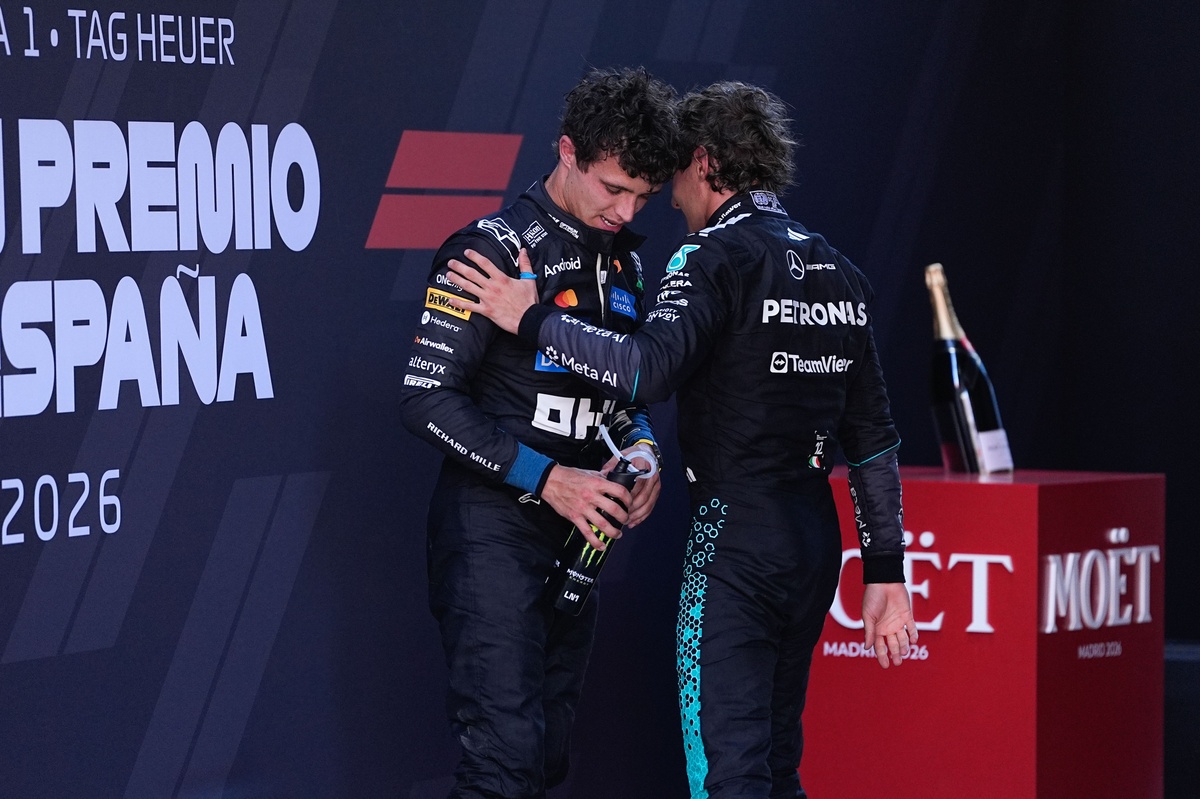
    Lando Norris missed victory at the Spanish Grand Prix by a mere two seconds — the margin between the McLaren driver passing the Madring pit entry and the deployment of the virtual safety car that ultimately handed the win to Kimi Antonelli. Norris had built a 6.2-second lead over the Mercedes rookie by the start of lap 14 and appeared firmly in control after shaking off a frantic opening lap that saw championship leader Max Verstappen run off at both Turn 1 and Turn 5 while pressuring the Briton.

    Stroll’s Brake Failure Triggers Chain of Events

    The race dynamics shifted dramatically when Lance Stroll stopped at Turn 20 at the end of lap 13. The Aston Martin driver reported fading brakes — a problem that had earlier affected Lewis Hamilton, who managed to nurse his Ferrari back to the pits. Unlike Hamilton, Stroll had no strategic reason to continue and parked his car at the marshals’ post near the barrier opening, making it accessible for retrieval.

    Yellow flags waved just as Norris exited Turn 14. At that point, there was little indication a VSC would be called; the expectation appeared to be that marshals could quickly remove the stranded Aston Martin.

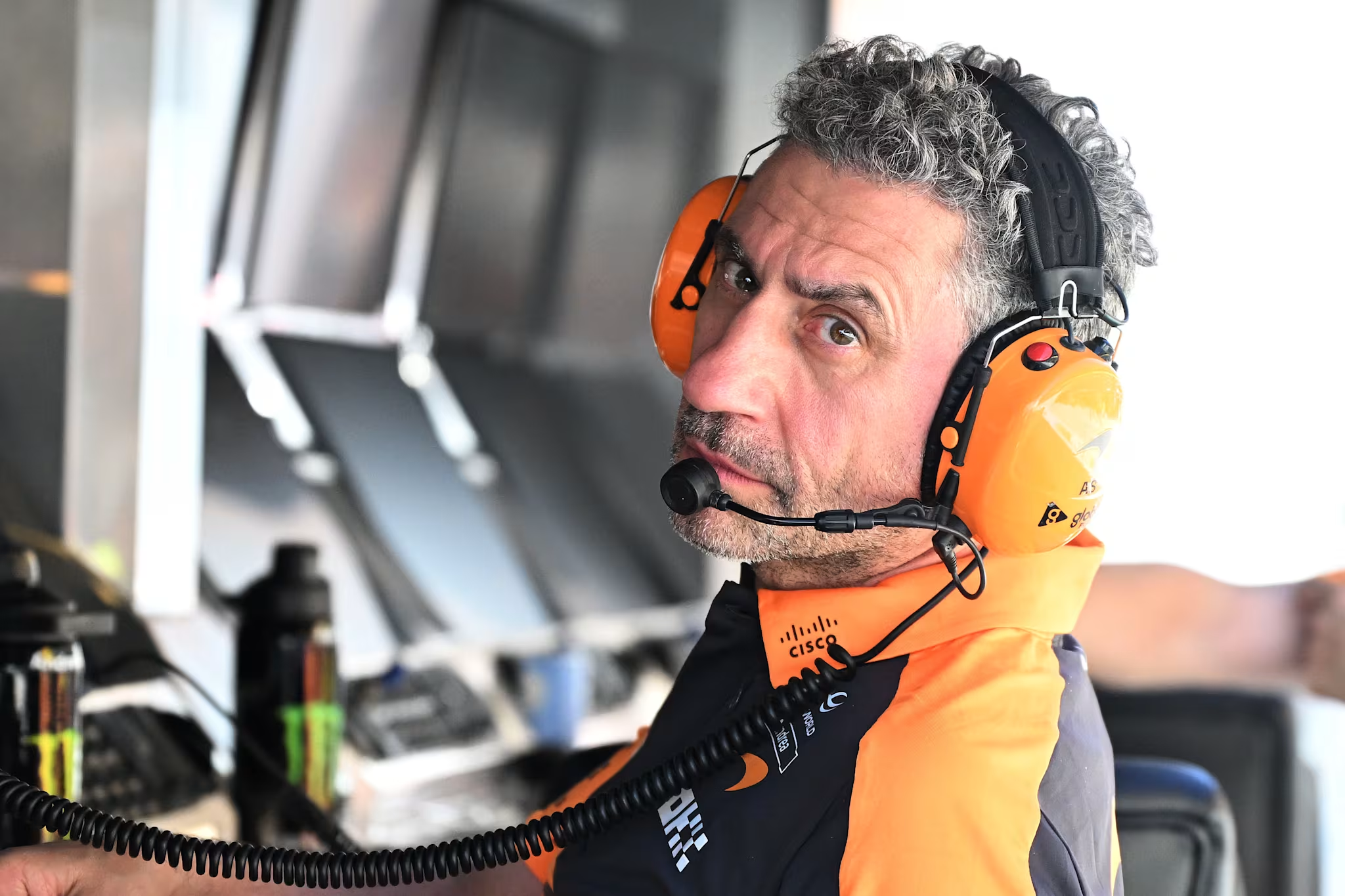
    McLaren team principal Andrea Stella later reflected on the decision not to pit pre-emptively:

    “In hindsight, it would have been a good idea [to pit pre-emptively], but we will have to review with my engineers to see whether it was kind of obvious that it would end up in a virtual safety car,” said McLaren team principal Andrea Stella.

    “Here, the problem is that you need to be extremely careful because it is 27 seconds if you don’t pit under a virtual safety car. So if you get it wrong it will be extremely penalising: from the lead, you pit unnecessarily and now you have lost the victory.

    “So, I think a good rule is to respond to what is a fact, to what is the real condition of the circuit. But we will definitely take a look as to whether in these conditions it was just simply obvious that it would end up in a virtual safety car.”

    VSC Deployed Two Seconds Too Late for Norris

    When Norris passed Stroll’s car, yellow flags were still displayed. McLaren opted against a pre-emptive stop, and the race leader negotiated Turns 21 and 22 — the final corners of the Madring layout. The virtual safety car was deployed the moment Norris exited the last corner, a timing McLaren calculated as just two seconds too late to bring their driver in.

    Antonelli, now 6.3 seconds behind, received the call to pit — as did Verstappen and George Russell. Both Antonelli and Verstappen switched to hard tyres, securing a one-stop strategy to the finish. Norris, meanwhile, faced at least one more lap before he could stop, with the risk that the VSC would end before he could capitalize on the reduced pit-lane time loss — approximately 30 seconds under normal conditions at Madring.

    Norris Stops After VSC Ends, Loses Track Position

    Antonelli and Verstappen emerged from their VSC stops behind Charles Leclerc, who had stayed out on his original hard tyres. Had Norris pitted under VSC conditions, he likely would have rejoined ahead of the Ferrari. Instead, Norris was instructed to stop regardless of the VSC status. The VSC ended as he rounded Turn 21, and he entered the pit lane for his sole stop, taking on hard tyres.

    A slow front-right wheel change added several seconds to his stationary time. Stella assessed the impact:

    “In fairness and for completeness, we had a seven second pit stop, so there’s definitely takeaways even when it comes to our operations.

    “It would have not made a difference for the final result, because probably Lando would have pitted anyhow behind Russell and even if not, it would have not been possible to overtake Verstappen and Antonelli. So definitely, we take note that there’s a lot of work to do in our operation, and it’s not the first time that we have a slow stop. But in terms of the race itself, it didn’t make a difference.”

    After Russell’s subsequent stop on lap 28, Norris closed on Verstappen but remained trapped in the Red Bull’s wake until the chequered flag, with victory slipping further away each lap.

    Radio Traffic Reveals Real-Time Decision Making

    The team radio exchange between race engineer Will Joseph and Norris captures the uncertainty:

    Will Joseph: Yellow flags at turn 20. Yellows. Virtual safety car deployed, virtual safety car deployed. No drives in the delta.
    Lando Norris: We box?

    WJ: If it stays long enough.
    LN: How big’s the crash?
    WJ: I think someone’s brakes… There are marshals on track at turn 20, I haven’t seen it. Just try and stay on the delta.
    And Lando [radio breaks]?
    LN: I think so, do you?
    WJ: Yes, we are.
    WJ: Lando, confirming we are boxing this lap, irrespective.
    LN: Confirmed.
    WJ: We still think there’s marshals on track.
    WJ: Virtual safety car ending, virtual safety car ending.
    LN: Confirmed box still?
    WJ: Yes, confirmed box. So box this lap.

    Could McLaren Have Gone Long?

    The lingering question is whether McLaren should have kept Norris out longer to build a sufficient gap. With Leclerc holding up Verstappen and Antonelli, a case exists that Norris could have extended his stint, built the roughly 30-second advantage needed to clear Antonelli, and either emerged ahead of Leclerc or waited behind him for the Ferrari’s stop.

    The data, however, undermines that scenario. Norris was on used mediums, and his gap to Leclerc pre-VSC stood at just 13.8 seconds. His per-lap advantage over the Ferrari was rapidly diminishing: 0.506 seconds quicker on lap 10, 0.272 on lap 11, 0.264 on lap 12, and only 0.027 on lap 13. With Leclerc experiencing no hard-tyre degradation and gaining pace from fuel burn, building the required 16-second buffer after the VSC lifted was effectively impossible.

    Norris quipped that McLaren had been “too fast” over the weekend — suggesting that in their usual competitive position, the VSC timing would have favored them. Stella concluded:

    “We considered staying out, but you have to you have to accept the fact that now you are on relatively used medium tyres and the people behind you will be a new hard – so you’re never going to open a gap on people with a new hard,” Stella concluded. “Therefore we kind of needed to accept that that was what we should have done, and the fact that it was incredibly unfortunate.

    “Sometimes we talk about being unlucky. I think at times the being unlucky is used for too many applications but, in this case, it’s almost a mathematical definition of being unlucky.”
  • “There was no option to retain the lead” – Andrea Stella explains logic behind Lando Norris’ ‘unlucky’ Spanish GP pit stop

    “There was no option to retain the lead” – Andrea Stella explains logic behind Lando Norris’ ‘unlucky’ Spanish GP pit stop

    McLaren Team Principal Andrea Stella has detailed the strategic call that saw Lando Norris pit for fresh tyres just as the Virtual Safety Car (VSC) period concluded at the Spanish Grand Prix, acknowledging that there was no option to retain the lead.

    VSC Timing Costs Norris Lead

    After securing pole position with a dramatic final lap in qualifying, Norris defended strongly against Kimi Antonelli on the opening lap and built a comfortable advantage. The race dynamics shifted when a VSC was deployed to recover Lance Stroll’s stranded Aston Martin. While rivals Antonelli and Max Verstappen pitted under the neutralised conditions, Norris had already passed the pit entry. He entered the pits only as the VSC ended, enduring a 7-second stop that dropped him to fifth place. Despite a strong recovery to finish third, the team’s frustration was evident.

    Stella Explains Strategic Reasoning

    Speaking to F1 TV, Stella laid out the rationale behind the decision:

    Starting from pole position, leading the race and having incredible pace… this would’ve been a race won by many seconds, and we ended up in third position.

    The reality is that in racing, there are elements that you can control and some that you cannot control. The timing of the Virtual Safety Car was a couple of seconds too late – Lando had already passed the pit entry – and then he was a few seconds too early because then it was ending once he came in to pit.

    When asked to elaborate on the logic of pitting versus staying out, Stella added:

    The logic is that if you stay out, you stay out with used mediums [that are] already grained, and it means that at some stage you will pit behind the people that have already pitted on the hard tyres, so it’s going to be a similar race to [Charles] Leclerc.

    We would actually have pitted even earlier because the medium would finish earlier, so there was no option really to retain the lead.

    We needed to accept that the timing was incredibly unfortunate and, like I said, it’s a positive race overall.

    The elements that we could not control made a difference but those that we could control make us very optimistic for the future.

    Positive Outlook Despite Frustration

    McLaren’s competitive trajectory has been upward all season, highlighted by Norris’s dominant victories in Hungary and the Netherlands. The Spanish Grand Prix weekend reinforced that progress, even in defeat. Verstappen admitted Norris was faster than all of us in the closing stages, while Antonelli felt the British driver deserved to win.

    Stella concluded with a perspective focused on the bigger picture:

    Just very unlucky, but I want to think that the positive message of a McLaren [that was] so competitive at a very different circuit layout to Zandvoort and Hungary is very encouraging for the future.

    We take it on the chin. Today we were too fast to win the race because had we been a little slower, we would’ve made it to the pits! We have a smile on our faces, we look forward to the rest of the season.

  • ‘It’s just the nature of the track’ – Max Verstappen explains Lewis Hamilton clash in Spanish Grand Prix

    ‘It’s just the nature of the track’ – Max Verstappen explains Lewis Hamilton clash in Spanish Grand Prix

    Verstappen Details Opening-Lap Clash with Hamilton at Spanish Grand Prix

    Max Verstappen has given his assessment of the near-miss with Ferrari’s Lewis Hamilton on the opening lap of the Spanish Grand Prix, an incident that saw the Dutch driver reluctantly concede the position after running off track.

    Turn 1 Incident Forces Position Swap

    As the lights went out at the Madring circuit, Hamilton surged ahead while Verstappen cut the first corner and maintained his starting slot of third place. The move prompted immediate calls from the British driver for Verstappen to return the place. The Red Bull driver was adamant that Hamilton almost shunted into me and initially resisted team instructions to yield, especially after he had also passed Kimi Antonelli to claim second. He eventually complied, allowing both Antonelli and Hamilton through, but swiftly returned to the top three when Hamilton began to struggle with brake issues.

    Verstappen Explains Defensive Decision

    Addressing the clash, Verstappen pointed to the circuit layout as a contributing factor.

    “It’s just a bit the nature of the track,” Verstappen said when questioned on the clash. “When you have that track layout with so much tarmac, people of course risk [going] for a move, and I saw what happened – Lewis clipped the kerb so he was going to run wide.

    “I think if I would’ve stayed on the track, you touch and there’s a big risk of damage. I decided to drive next to the track, and then of course the team told me to give the position back, which I did. After that, I just tried to do my race.”

    Virtual Safety Car Timing Benefits Red Bull

    Verstappen capitalized on a Virtual Safety Car period to minimize time lost during his pit stop—a strategic advantage that McLaren’s Lando Norris missed due to unfavorable timing. The sequence ultimately elevated Verstappen to second place while Norris finished third.

    Podium Finish Viewed as Strong Result Despite Pace Deficit

    Although the four-time World Champion acknowledged he lacked the outright pace to challenge either Norris or race winner Antonelli, he expressed satisfaction with the weekend overall, securing his sixth podium of the season.

    “Looking at the race pace, I think it’s a great result,” he said. “Of course, we know that Lando got unlucky with that VSC, so for us I think P2 is an incredible result because you could see how much Lando was catching me.”

    He later added further context on the competitive hierarchy during the stint.

    “I think it was quite clear that Lando and Kimi were a lot faster. Once everyone was a little bit clear, it was again the same thing where Kimi was a bit faster than me, Lando was faster than all of us, but I could keep him quite easily behind me.”

  • Juan Pablo Montoya: Mercedes Should Have Double-Stacked George Russell, Kimi Antonelli at Monza

    Juan Pablo Montoya: Mercedes Should Have Double-Stacked George Russell, Kimi Antonelli at Monza

    Former Formula 1 driver Juan Pablo Montoya has criticized Mercedes’ strategy during the Italian Grand Prix, arguing the team compromised George Russell’s race victory chances by failing to double-stack their drivers under the Virtual Safety Car.

    Montoya Questions Mercedes Pit Strategy at Monza

    Mercedes secured a dominant 1-2 finish at Monza, led by home favorite Andrea Kimi Antonelli. The rookie recovered from 19th on the grid to become the first Italian winner at the circuit since 1966. However, Russell controlled the early phases of the race and appeared the primary candidate for victory before a mid-race Virtual Safety Car period altered the complexion of the Grand Prix.

    The British driver was leading at the time but was left out on track while Antonelli pitted. The Italian subsequently sliced through the field and overtook his teammate for the win.

    Montoya: Russell Should Have Received Priority Stop

    Speaking on F1 TV’s post-race show, Montoya argued Mercedes should have given Russell the priority pitstop.

    “He was leading and he should have had the priority on the pitstop. When that virtual safety car came, at that point, it’s quicker to stop than staying out. They should have stopped him, they should have double-stacked him, and he should have stopped ahead of Antonelli,” the Colombian explained.

    “And I’m not saying Antonelli wouldn’t still catch him and win the race, but it would have been a really close fight like we saw earlier on. It would have been a really cool race at the end for all of us.”

    Wolff Defends Strategy, Cites Tyre Constraints

    Team principal Toto Wolff addressed suggestions the Brackley outfit’s strategy favoured Antonelli.

    “The two-stop was the best but we didn’t think it was the case, so that was good for him actually,” he told Sky Sports F1 after the race.

    “But today there was nothing that would have stopped him [Antonelli]. George fought with worn-out tools at the end, so I’m really happy for the one-two.”

    When asked if there were any alternative strategic options for Russell, Wolff added:

    “No, George was on the hard and we needed to go on the one-stop so there was no chance.”

  • George Russell “not even thinking” of F1 title comeback; Kimi Antonelli “in control”

    George Russell “not even thinking” of F1 title comeback; Kimi Antonelli “in control”

    Mercedes driver George Russell has conceded that mounting a Formula 1 title comeback against team-mate Kimi Antonelli appears increasingly unlikely, acknowledging the Italian’s 66-point championship lead is a formidable obstacle with only ten grands prix remaining.

    Antonelli Turns Monza Deficit into Dominant Victory

    The situation shifted dramatically at Monza. Starting from second on the grid while Antonelli lined up 19th, Russell had a prime opportunity to slash a 59-point deficit. Instead, Antonelli produced a stunning recovery drive, vaulting to sixth following the lap-six restart before setting his sights on the race lead.

    After passing Russell on lap 19 and exchanging positions several times, the 20-year-old capitalized on a timely Virtual Safety Car period. Antonelli pitted for fresh medium tyres, rejoining behind Russell—who was struggling on worn hard compounds—and hunted him down to claim a seventh victory of the season. The win extended Antonelli’s title advantage to 66 points rather than minimizing the damage Russell had hoped for.

    Russell Accepts the Reality of the Points Gap

    That decisive swing appeared to move Russell into a stage of acceptance regarding the championship fight.

    “Yeah, Kimi’s definitely in control of it and he’s deserving to be in control of it,” Russell admitted. “I’m not even thinking about a fight or a comeback or anything. I’m just focused on taking it race by race and trying to maximise every single weekend.

    “He’s performing incredibly well. It’s going to be exceptionally challenging to overcome that gap, so I’m just sort of accepting that is what it is. I’m just going to enjoy it from here on in and try and win as many races as possible.”

    Strategy Split and the VSC Turning Point

    Russell held no reservations about Mercedes’ decision to split tyre strategies. He started on mediums before switching to the hard compound for the bulk of the race, while Antonelli began on hards and moved to mediums under the red flag.

    Initially, the strategy looked favorable for Russell. Antonelli faced the prospect of nursing his mediums to the finish or attacking without a strategic safety net. However, the VSC intervention flipped the script, handing Antonelli a low-cost pit stop for fresh rubber at the perfect moment.

    “Well, [the hard] was definitely the best tyre to take to the end,” Russell said.

    “When I saw Max [Verstappen] and Kimi on the medium, I was feeling pretty good because I knew they were going to drop off more than me, so in that middle stage of the race, I was really happy with my position.

    “The VSC came out at that perfect point for the drivers to pull the trigger and take the pitstop. It would have been very interesting to see how the race would have panned out if there was no VSC.”

    With the title race tilting heavily in Antonelli’s favor, Russell has shifted his focus to race-by-race performance and maximizing every remaining weekend.

  • Martin Brundle: George Russell Must Question Mercedes Over Italian GP VSC Call

    Martin Brundle: George Russell Must Question Mercedes Over Italian GP VSC Call

    Former Formula 1 driver and Sky Sports analyst Martin Brundle insists George Russell must demand answers from Mercedes after a virtual safety car strategy potentially cost him victory at the Italian Grand Prix.

    VSC Strategy Hands Antonelli Monza Victory

    Russell appeared poised to close the gap to his championship rival and team-mate Kimi Antonelli at Monza. While Russell stayed out on hard tyres during a virtual safety car (VSC) period, Antonelli was brought in for fresh mediums. The 20-year-old Italian used the tyre advantage to carve through the field and claim victory at his home race.

    Brundle: Russell Must Question Team Decision

    “It’s been a very difficult day for George Russell,” Brundle explained. “He will have to surely sit down and talk to the team, and ask, ‘How did that happen? I was leading the race. Why was I not given the preferential cheap pit stop there?’”

    Antonelli took a power unit penalty at the Italian Grand Prix, putting him at the back of the starting grid and giving Russell a significant opportunity to reduce the deficit in the standings.

    “For the world championship, this was George’s opportunity to do something about the deficit, and the deficit has grown,” Brundle added.

    Schiff: Russell Likely Questioning Himself Too

    Former W Series driver and Sky Sports pundit Naomi Schiff echoed Brundle’s assessment. “I think maybe the reason we’ve seen him be so calm about it right now is because he’s probably questioning himself a little bit as well, and why he wasn’t able to get more of an advantage.”

    “But I think with hindsight, he will be asking questions, like, ‘Why did I not get to pit during the VSC?’”

    “Yes, he was on a different strategy and they wanted him to go long, but at the end of the day, a fresher set of tyres could have saved him the victory today.”

    Championship Standings Shift

    Antonelli, who claimed his seventh F1 win at Monza, now leads the standings with a 66-point advantage over Russell in second place.