Tag: Tokenized Equities

  • Altcoin Eliminates Token Inflation, Price Surges

    Altcoin Eliminates Token Inflation, Price Surges

    Key Highlights

    • Ethena Protocol will halt all $USDe token incentives and inflation by end of September, marking a full transition to a sustainable yield model.
    • $ENA token price surged to $0.28, leading altcoin gains, as markets reacted to the incentive wind-down and a new Binance partnership.
    • Ethena is expanding its basis trade strategy into tokenized equity markets via Binance-issued bStocks, diversifying $USDe yield sources beyond crypto perpetual futures.

    Ethena Ends $USDe Incentive Program, Shifts to Sustainable Yield Model

    Ethena Labs, the issuer of the synthetic dollar $USDe and governance token $ENA, has confirmed that all token incentives and associated inflation supporting $USDe growth will cease completely by the end of September. The protocol announced that incentive emissions have already been reduced by approximately 85% since the initial airdrop in 2024, and no new tokens will be issued for this purpose moving forward. In a statement, the Ethena team thanked the community of users and liquidity providers whose participation helped $USDe reach its current scale, framing the decision as a deliberate stepping stone to shift the protocol from a growth-promoting phase to a more sustainable, long-term operational model.

    Market Reaction Drives $ENA Price Surge

    The announcement coincided with a sharp rally in the $ENA token. According to data from HTX (formerly Huobi), $ENA emerged as one of the leading performers in the altcoin sector during the session, with its price climbing to $0.28. Market observers attribute the positive price action not only to the clarity provided by the incentive wind-down—which removes future sell pressure from token emissions—but also to a strategic partnership unveiled days earlier that could fundamentally diversify the protocol’s revenue base.

    Strategic Pivot: Expanding Basis Trade into Tokenized Equities

    Binance Partnership Unlocks Traditional Finance Yield

    On September 25, Ethena revealed a collaboration with Binance to expand its core “basis trade” strategy beyond cryptocurrency perpetual futures markets into equity perpetual futures. Under the new framework, Ethena plans to purchase bStocks—tokenized equity certificates issued by Binance-affiliated entities—and hedge the directional risk by shorting USDT-margined perpetual futures on the same underlying equities on the Binance platform. This mechanism aims to capture the funding rate spread between the spot tokenized equity and its perpetual future, effectively porting the protocol’s proven delta-neutral strategy from crypto-native assets into traditional equity indices and stocks.

    Diversifying $USDe’s Return Stack

    The move represents a significant evolution in $USDe’s yield generation. Historically, the synthetic dollar’s returns have been derived almost exclusively from funding rates in cryptocurrency perpetual futures markets (primarily BTC and ETH). By integrating tokenized equities via Binance, Ethena accesses a vastly larger, less correlated pool of funding rate premiums tied to traditional financial markets. This diversification could stabilize $USDe yields during periods of low crypto volatility and reduce the protocol’s concentration risk in digital asset derivatives.

    Why This Matters

    Ethena’s decision to sunset incentives signals a maturation milestone for the largest synthetic dollar protocol in DeFi, which currently manages over $3 billion in $USDe supply. The transition to a zero-inflation model tests whether $USDe can maintain its peg and market share purely on organic yield from basis trades—a critical proof point for the viability of non-custodial, censorship-resistant stablecoins. Simultaneously, the Binance equity integration bridges DeFi with traditional finance (TradFi) infrastructure, leveraging tokenized real-world assets (RWAs) to unlock new yield frontiers. If successful, this template could accelerate institutional adoption of on-chain synthetic dollars and establish a new paradigm for delta-neutral strategies spanning crypto and equity markets. The next key milestone will be the actual deployment of capital into bStocks positions and the resulting impact on $USDe’s yield profile in Q4 2024.

    Frequently Asked Questions

    When do $USDe token incentives officially end?

    All token incentives and inflation for $USDe will cease by the end of September 2024. The protocol confirmed that emissions have already been reduced by roughly 85% since the 2024 airdrop, and no new incentive tokens will be issued after the cutoff.

    How does the new Binance equity basis trade work?

    Ethena will buy bStocks (tokenized equity certificates from Binance-affiliated issuers) and simultaneously short the corresponding USDT-margined perpetual futures on Binance. This delta-neutral position aims to harvest the funding rate premium from equity perpetual futures, adding a TradFi-linked revenue stream to $USDe’s yield.

    What does the incentive wind-down mean for $ENA holders?

    The cessation of token emissions removes a major source of future sell pressure on $ENA, which the market interpreted positively—driving the token to $0.28 and making it a top altcoin gainer. However, $ENA’s long-term value will depend on the protocol’s ability to generate sustainable fee revenue from its expanded basis trade operations to fund buybacks or staking yields.

  • Blockchain.com, NYSE Plan 24/7 Tokenized Stock Trading Access

    Blockchain.com, NYSE Plan 24/7 Tokenized Stock Trading Access

    Key Highlights

    • Blockchain.com and NYSE Group have signed a memorandum of understanding to explore distribution of tokenized U.S.-listed stocks and ETFs via NYSE’s planned digital alternative trading system (ATS).
    • The proposed service aims to enable 24/7 trading, fractional ownership, stablecoin funding, and onchain settlement for eligible global users, pending regulatory approvals and the launch of NYSE’s digital venue.
    • The agreement includes bilateral data sharing: ICE and NYSE equity data would integrate into Blockchain.com products, while Blockchain.com crypto-market data could be distributed by ICE.

    Blockchain.com and NYSE Group Forge Partnership to Explore Tokenized Equities

    Blockchain.com and the New York Stock Exchange Group have entered into a formal agreement to investigate bringing tokenized versions of NYSE-listed securities directly to the crypto platform’s global user base. The memorandum of understanding covers joint product development and market-data sharing, with the long-term objective of enabling Blockchain.com customers to trade tokenized stocks and exchange-traded funds through infrastructure built on NYSE’s forthcoming digital alternative trading system. The collaboration marks a significant convergence between a major crypto-native exchange and the world’s largest equity market operator.

    NYSE’s Digital ATS Designed for Crypto-Native Features

    NYSE has previously outlined plans for a digital alternative trading system architected around tokenized securities. The proposed venue is engineered to support functionality familiar to cryptocurrency traders but largely absent from traditional brokerage platforms: continuous 24/7 market access, fractional share ownership, stablecoin denominated funding, and onchain settlement. If launched, Blockchain.com would serve as a distribution partner, offering its international customer base a pathway to trade tokenized representations of exchange-listed shares and ETFs within the same ecosystem they use for digital assets.

    Bilateral Data Integration Extends Beyond Trading

    The agreement envisions data flowing in both directions. Intercontinental Exchange (ICE), NYSE’s parent company, could distribute Blockchain.com’s cryptocurrency market data to its network, while Blockchain.com would integrate ICE and NYSE equity market data into its own product suite. This reciprocal arrangement underscores a strategic alignment that goes beyond simple order execution, positioning both firms to leverage each other’s data assets across traditional and digital asset markets.

    Agreement Remains Preliminary Pending Regulatory Clearance

    Despite the strategic significance, executives emphasize that the memorandum of understanding does not constitute a live trading launch. Tokenized NYSE securities are not available for unrestricted 24-hour trading today. The service is contingent on NYSE successfully launching its planned digital ATS and securing all required regulatory approvals. Jurisdictional restrictions will also apply; tokenizing a share does not eliminate the applicability of securities laws merely because ownership is represented on a blockchain.

    Why This Matters

    This partnership places two major industry trends on a direct collision course. Over the past year, cryptocurrency exchanges have aggressively pursued tokenized equity products, while traditional market infrastructure providers have begun experimenting with blockchain-based settlement layers. Blockchain.com contributes crypto-native users, wallet infrastructure, and a global distribution footprint. NYSE Group contributes regulated market structure, the underlying securities ecosystem, and the credibility of the world’s premier listing venue. If the project clears regulatory hurdles, the result could resemble less a crypto imitation of the stock market and more the stock market adopting crypto-style settlement rails—potentially reshaping how global investors access U.S. equities.

    Frequently Asked Questions

    Can I trade tokenized NYSE stocks on Blockchain.com right now?

    No. The companies have signed a memorandum of understanding only. Tokenized securities are not currently available for trading. The service depends on NYSE launching its digital alternative trading system and obtaining necessary regulatory approvals.

    Will tokenized stocks be available 24/7 to users worldwide?

    The proposed digital ATS is designed to support 24/7 trading, fractional ownership, and stablecoin funding. However, access will be subject to jurisdictional restrictions and securities regulations in each user’s country of residence.

    What role does ICE play in this partnership?

    Intercontinental Exchange (ICE) is the parent company of NYSE. Under the agreement, ICE could distribute Blockchain.com’s cryptocurrency market data, while Blockchain.com would integrate ICE and NYSE equity market data into its platform.

  • Arch Lending Targets Tokenized Stocks as Next Collateral Market

    Arch Lending Targets Tokenized Stocks as Next Collateral Market

    Key Highlights

    • Arch Lending plans to launch loans backed by tokenized equities “pretty soon” as the onchain stock market surpasses $3.15 billion in distributed value.
    • Bitcoin still dominates Arch’s loan book at over 80%, though the lender reports rising demand for XRP collateral among U.S. borrowers.
    • Competitors including Ondo Finance, Kraken, and Coinbase have already integrated tokenized stocks and ETFs into lending, margin, and futures products.

    Arch Lending Targets Tokenized Equity Credit Market

    Crypto lender Arch Lending is preparing to expand its collateral offerings into tokenized equities, marking a significant step in the convergence of traditional securities and decentralized finance. Co-founder and Chief Revenue Officer Himanshu Sahay disclosed the plan during an appearance on Cointelegraph’s Chain Reaction podcast, stating the firm intends to enter the market “pretty soon” to meet growing demand for credit facilities against onchain stock holdings.

    Tokenized Equities Market Surges Past $3 Billion

    The move comes as the tokenized equities sector experiences rapid expansion. According to data from RWA.xyz, the distributed value of tokenized stocks has climbed to approximately $3.15 billion, up from roughly $630 million a year earlier. Sahay noted that while issuance has accelerated — driven by firms such as Superstate, Robinhood, and Securitize — lending infrastructure against these assets remains underdeveloped. He predicted that multiple lenders will eventually participate in the market to provide credit against tokenized equity collateral.

    Arch Diversifies Beyond Crypto-Native Assets

    Arch has already begun broadening its collateral base beyond pure cryptocurrencies. In recent weeks, the lender introduced loans backed by Paxos Gold (PAXG) and Tether Gold (XAUt), according to Sahay. Despite this diversification, Bitcoin (BTC) continues to dominate Arch’s loan book, accounting for more than 80% of outstanding credit. The firm has also observed increasing interest in XRP as collateral, particularly among borrowers in the United States.

    Competitive Landscape Heats Up

    DeFi Protocols Lead Tokenized Equity Integration

    Arch would not be the first entrant to the tokenized equity credit market. In February, Ondo Finance launched DeFi lending markets for two of its tokenized exchange-traded funds — the SPDR S&P 500 ETF and Invesco QQQ — through an integration with lending protocol Morpho on Ethereum. These tokenized ETFs can now serve as collateral for onchain borrowing.

    Centralized Exchanges Expand Utility

    Centralized platforms are also embedding tokenized equities into broader trading products. Kraken made 10 xStocks eligible to back futures and margin positions in July, while Coinbase launched its B20 stocks on the Base network in August with price-feed infrastructure designed to support DeFi borrowing and lending use cases.

    Why This Matters

    The entry of established crypto lenders like Arch into tokenized equity lending signals a maturing infrastructure for real-world asset (RWA) finance. As tokenized stocks and ETFs gain liquidity and regulatory clarity, they are becoming viable collateral for credit markets — bridging traditional portfolio assets with onchain capital efficiency. The involvement of major issuers (Superstate, Securitize, Robinhood) and exchanges (Kraken, Coinbase) suggests a multi-sided ecosystem is forming, where lending, trading, and custody of tokenized securities could eventually mirror the depth of legacy prime brokerage. For borrowers, this unlocks liquidity without selling equity positions; for lenders, it diversifies collateral risk beyond volatile crypto-native assets. The next phase will likely involve standardization of legal wrappers, oracle reliability, and cross-chain interoperability to scale these markets globally.

    Frequently Asked Questions

    What is Arch Lending’s timeline for launching tokenized equity-backed loans?
    Arch co-founder and CRO Himanshu Sahay said the firm plans to enter the market “pretty soon,” though no specific launch date was disclosed.
    Which companies currently issue tokenized equities that could serve as collateral?
    According to Sahay, firms including Superstate, Robinhood, and Securitize are issuing tokenized equities that Arch sees as potential collateral assets.
    How large is the tokenized equities market today?
    Data from RWA.xyz shows the distributed value of tokenized stocks has reached approximately $3.15 billion, up from roughly $630 million one year ago.
  • Coinbase, Robinhood, Circle Positioned as Early Winners in SEC Tokenized Stock Push, Analysts Say

    Coinbase, Robinhood, Circle Positioned as Early Winners in SEC Tokenized Stock Push, Analysts Say

    Key Highlights

    • The SEC’s five-year innovation exemption establishes a regulatory pathway for tokenized U.S. stocks to trade via automated market makers on public blockchains, requiring preservation of shareholder rights including dividends and voting.
    • Goldman Sachs and Citizens analysts identify Coinbase as a primary beneficiary due to its existing tokenized-equity offering, institutional custody business, Coinbase Tokenize infrastructure, and Base blockchain ecosystem.
    • Coinbase CEO Brian Armstrong confirmed voting rights for token holders are “coming soon,” addressing a key requirement for parity with traditional shareholders.

    SEC Innovation Exemption Creates Onchain Pathway for U.S. Equities

    The U.S. Securities and Exchange Commission has unveiled a five-year innovation exemption that carves out a regulated framework for tokenized U.S. stocks to trade through automated market makers on public blockchains. The exemption mandates that tokens preserve core shareholder rights—specifically dividends and voting—while imposing constraints on trading venues, including limits on trading volume and the number of stocks they may offer. This targeted experiment signals a cautious but concrete step toward integrating traditional securities with decentralized market infrastructure.

    Goldman Sachs and Citizens Pinpoint Coinbase as Multi-Vector Beneficiary

    Analysts at Goldman Sachs project that Coinbase stands to benefit across multiple business lines as the tokenized-equity landscape matures. The firm’s existing tokenized-equity offering already aligns with many SEC requirements, featuring shareholder rights and dividends comparable to the underlying shares. Complementing this, Coinbase operates an institutional custody business and Coinbase Tokenize, a dedicated infrastructure service that enables other firms to bring assets onchain. Citizens analysts echoed this view, emphasizing Coinbase’s sprawling reach across custody, tokenized assets, stablecoins, and its Ethereum Layer 2 network, Base.

    Armstrong Confirms Voting Rights Rollout Imminent

    A critical piece of the compliance puzzle fell into place this week when Coinbase CEO Brian Armstrong stated that voting rights for token holders are “coming soon.” This development would bring tokenized-equity holders to functional parity with investors in the underlying shares, satisfying a core condition of the SEC’s exemption. The announcement underscores Coinbase’s proactive approach to meeting regulatory expectations ahead of broader market adoption.

    Robinhood and Circle Also Positioned for Upside

    While Coinbase commands the most detailed analyst coverage, the exemption’s ripple effects extend to other major players. Robinhood and Circle are cited as potential beneficiaries should the scope of tokenized U.S. securities expand beyond the current narrow pilot. Both firms possess the retail distribution, brokerage infrastructure, and stablecoin capabilities—particularly Circle’s USDC—that could prove pivotal in a scaled onchain equities market.

    Why This Matters

    The SEC’s innovation exemption represents the first formal U.S. regulatory acknowledgment that public blockchains can serve as legitimate venues for securities trading, albeit within strict guardrails. By requiring automated market makers to uphold dividend and voting rights, the regulator is attempting to bridge the investor-protection gap that has historically stalled tokenization efforts. For market participants, the five-year window offers a defined period to build compliant infrastructure, demonstrate demand, and lobby for permanent rulemaking. The involvement of custodians like Coinbase and stablecoin issuers like Circle suggests the emerging stack—custody, settlement, tokenization, and liquidity—is coalescing around a handful of regulated entities. Analysts will be watching trading-volume caps and stock-count limits closely; if these constraints bind quickly, pressure for legislative or rule-based expansion will intensify.

    Frequently Asked Questions

    What specific shareholder rights must tokenized stocks preserve under the SEC exemption?

    The exemption requires that tokenized stocks maintain dividends and voting rights equivalent to those of the underlying traditional shares.

    Which Coinbase business lines do analysts highlight as relevant to the tokenized-equity opportunity?

    Goldman Sachs and Citizens point to Coinbase’s existing tokenized-equity offering, institutional custody business, Coinbase Tokenize infrastructure platform, stablecoin operations, and the Base Layer 2 blockchain as key growth vectors.

    Are Robinhood and Circle expected to benefit immediately from the exemption?

    Analysts describe the current experiment as narrow, but note that Robinhood and Circle are well-positioned to benefit if the program expands to include more U.S. securities onchain.

  • Solana Launches STOCKLANA for Continuous Trading

    Solana Launches STOCKLANA for Continuous Trading

    Key Highlights

    • Solana launches STOCKLANA, enabling 24/7 stock trading with over $125,000 in prize incentives.
    • Initial social response shows strong community interest with 619 likes and 80 retweets on the announcement tweet.
    • The initiative aims to unify stock and crypto trading experiences while driving broader adoption of the Solana blockchain.

    Solana Unveils STOCKLANA for Round-the-Clock Stock Trading

    Solana has officially announced the launch of STOCKLANA, a new trading initiative that allows users to trade stocks 24 hours a day, seven days a week. The announcement, made via the project’s official X account, highlights a prize competition exceeding $125,000 designed to incentivize participation and stress-test the platform’s capabilities. According to the tweet, the program positions Solana as an emerging player in the continuous trading ecosystem, bridging traditional equity markets with the always-on nature of cryptocurrency infrastructure.

    Strategic Push for User Engagement and Platform Adoption

    The rollout of STOCKLANA represents a calculated strategic move by the Solana Foundation to deepen user engagement across its high-performance blockchain. By removing time-zone restrictions inherent in legacy stock exchanges, the platform targets active traders seeking uninterrupted market access. The substantial prize pool—surpassing $125,000—serves as a direct acquisition lever, rewarding early adopters for volume and activity. Early social metrics underscore the tactic’s initial resonance: the announcement tweet garnered 619 likes and 80 retweets, signaling robust community curiosity and a willingness to experiment with the novel trading paradigm.

    Market Context and Technical Positioning

    While the broader cryptocurrency market continues to flash mixed signals, Solana’s focus on innovative trading infrastructure differentiates it from competitors relying solely on DeFi primitives or meme-coin liquidity. STOCKLANA emphasizes a unified user experience, allowing participants to navigate both equity and digital asset markets within a single interface. The project’s current trading volume stands at zero—a baseline expected for a freshly launched product—but the incentive structure is explicitly designed to catalyze liquidity rapidly. Solana’s underlying architecture, optimized for high throughput and low latency, provides the technical bedrock necessary to support the order-flow demands of continuous, cross-asset trading.

    Why This Matters

    The introduction of STOCKLANA reflects a broader industry trend: the convergence of traditional finance (TradFi) market structures with blockchain-native settlement and access layers. As regulators globally clarify frameworks for tokenized securities and 24/7 market operations, platforms that can demonstrate reliable, compliant, and liquid continuous trading will capture first-mover advantage. For Solana, success here validates its thesis that a monolithic, high-speed Layer 1 can serve as the settlement layer for a diverse suite of financial applications beyond native crypto use cases. The coming weeks will reveal whether prize-driven bootstrapping translates into sustained organic volume, a critical metric for the platform’s long-term positioning in the tokenized equities race.

    Frequently Asked Questions

    What is STOCKLANA and how does it differ from traditional stock exchanges?

    STOCKLANA is a Solana-backed initiative enabling 24/7 trading of stocks, removing the fixed trading hours imposed by legacy exchanges like NYSE or Nasdaq. It combines this continuous access with a prize competition exceeding $125,000 to incentivize early participation.

    What has been the initial community response to the launch?

    The official announcement tweet received 619 likes and 80 retweets, indicating strong early interest from the Solana community and crypto traders exploring cross-asset opportunities.

    Does STOCKLANA currently have active trading volume?

    As of the announcement, STOCKLANA’s trading volume stands at $0, which is typical for a newly launched platform. The prize incentives are structured to rapidly bootstrap liquidity and user activity in the coming days.

  • Binance’s bStocks Adds 181K Asset Holders, Leading Adoption

    Binance’s bStocks Adds 181K Asset Holders, Leading Adoption

    Key Highlights

    • Binance’s bStocks added 181,000 new asset holders in seven days, outpacing Robinhood’s 148,700 additions.
    • The BNB Chain now commands a significant share of the tokenized stock market, signaling a shift in trader preferences.
    • Surge in tokenized stock adoption highlights growing demand for fractional ownership and digital asset alternatives.

    Binance bStocks Leads Tokenized Stock Surge with Record Holder Growth

    Binance’s tokenized stock product, bStocks, has established a commanding lead in the rapidly evolving digital asset sector, onboarding 181,000 new asset holders over the past week. According to data highlighted by Token Terminal, this growth trajectory significantly outpaces traditional fintech competitor Robinhood, which added 148,700 new holders during the same seven-day window. The milestone underscores a definitive migration of retail and institutional interest toward blockchain-based equity exposure, positioning the BNB Chain as a central infrastructure layer for tokenized traditional finance assets.

    Market Dynamics Shift as Tokenized Equities Gain Mainstream Traction

    The acceleration in bStocks adoption reflects a broader structural shift in how market participants access equity markets. Tokenized stocks offer distinct advantages over conventional share ownership, most notably fractional ownership capabilities that lower entry barriers for global investors. Binance has leveraged its regulatory positioning and the BNB Chain’s throughput capacity to capture this demand, effectively turning the chain into a primary settlement layer for tokenized equities. The platform’s ability to innovate within existing financial frameworks has allowed it to iterate faster than many Western-regulated counterparts, consolidating market share while competitors assess compliance roadmaps.

    Competitive Pressure Mounts on Traditional and Crypto-Native Platforms

    Robinhood’s substantial but secondary growth figures indicate that established fintech platforms are not ceding ground entirely, yet the velocity gap suggests a potential inflection point. As Binance deepens its bStocks catalog and liquidity pools, the competitive pressure on both traditional brokerages and other crypto exchanges to launch or expand tokenized equity offerings will intensify. Market observers note that the mixed signals in the broader cryptocurrency market—characterized by volatile token prices and shifting regulatory sentiment—create a complex backdrop where tokenized stocks emerge as a stable, yield-bearing use case for blockchain infrastructure.

    Why This Matters

    The rapid expansion of Binance bStocks signals that tokenized traditional assets are moving from experimental niche to scalable product-market fit. For the BNB Chain, capturing a dominant share of tokenized stock settlement validates its thesis as a high-performance financial infrastructure. For global regulators, the volume of non-U.S. retail participation via tokenized equities raises questions about investor protection, cross-border securities distribution, and the applicability of existing frameworks like MiCA or Reg S. For traders, the liquidity depth forming around these products may soon enable 24/7 equity exposure without reliance on legacy market hours or centralized clearinghouses. The next phase will likely involve expansion into tokenized ETFs, fixed income, and corporate actions processing on-chain.

    Frequently Asked Questions

    What are tokenized stocks and how do they differ from traditional shares?

    Tokenized stocks are blockchain-based digital representations of traditional equity shares. They enable fractional ownership, allowing investors to purchase portions of high-priced stocks, and typically trade on a 24/7 basis via crypto exchanges like Binance. Unlike traditional shares held in centralized brokerage accounts, tokenized stocks settle on-chain—on networks such as BNB Chain—providing transparent, near-instant finality.

    Why is Binance outperforming Robinhood in new tokenized stock holders?

    Binance’s bStocks benefits from the exchange’s global user base, the BNB Chain’s low transaction costs and high throughput, and a regulatory approach that has permitted faster product iteration in tokenized equities. Robinhood, while adding significant holders, operates under stricter U.S. securities regulations that limit the scope and speed of tokenized asset deployment.

    What role does the BNB Chain play in the tokenized stock ecosystem?

    The BNB Chain serves as the primary settlement and infrastructure layer for Binance’s bStocks products. Its significant market share in tokenized stock trading volume reflects the chain’s capacity to handle high-frequency, low-cost transactions required for equity token liquidity. This positions BNB Chain as critical financial infrastructure bridging traditional capital markets and decentralized technology.

  • Robinhood Says Shares, Voting Rights Coming for Stock Tokens

    Robinhood Says Shares, Voting Rights Coming for Stock Tokens

    Robinhood plans to allow holders of its Stock Tokens to redeem them for actual shares and exercise voting rights on those shares, according to the company’s crypto chief. Johann Kerbrat, senior vice president and general manager of international and crypto at Robinhood, outlined the roadmap in a post on X Monday morning.

    Roadmap Announced on Social Media

    Kerbrat posted at 11:17 a.m. ET, addressing the most requested features directly: “What about in-kind redemption and voting rights? Not yet, but they’re coming,” he wrote. “Step one is to scale adoption of Stock Tokens. We’re actively working on redemptions for shares 1:1 with voting for eligible Stock Token holders on the roadmap.”

    CEO Vlad Tenev amplified the message, reposting the thread at 1:12 p.m. ET with the line: “In-kind redemption and voting are coming for Robinhood Stock Tokens.” The two posts had attracted 244,000 and 294,700 views respectively by mid-afternoon. The company has not issued a formal press release on the planned changes.

    Current Structure: Cash-Settled Debt Securities

    Delivering either feature requires rewriting the offering documents that govern the product. Robinhood Stock Tokens are not shares; they are tokenized debt securities issued from Jersey under a prospectus that settles every redemption in cash. The shares backing the tokens can be lent to a borrower who retains the voting rights.

    The base prospectus, dated June 25 and approved by the Financial Market Authority Liechtenstein, answers the redemption question explicitly. Under the heading “Can I physically receive the Underlying at redemption?” it states: “No. Investors are not entitled to receive physical delivery of the relevant Underlying. At redemption, the Investors will be entitled to receive the Redemption Amount, payable in the Specified Currency as cash.”

    The same document reinforces the point in its terms and conditions: “Physical delivery of the Underlying and/or Collateral is excluded and Investors’ interests will be settled in the Specified Currency as cash in the event of a redemption or termination.”

    Robinhood’s consumer-facing Stock Tokens page notes that holders “can also redeem them directly with the Issuer, where there is no authorized participant,” subject to know-your-customer and anti-money-laundering checks. That redemption pays cash. The issuer’s product page sets the redemption fee at zero for the first 90 days after issuance and 0.05% thereafter.

    The insolvency disclosure on the same page describes the same cash-settlement mechanism. If the issuer fails, “an independent security agent will sell the underlying shares, and arrange for the cash proceeds to be paid to token holders.”

    No Shareholder Rights Under Current Terms

    On voting, the prospectus is equally explicit: “The Investors in a Product are not entitled to any rights or claims to the relevant Underlying aside from those described in the Terms and Conditions. In particular, the Investors do not have shareholder rights in respect of the relevant Underlying. Accordingly, Investors do not have voting rights, participation or attendance rights, pre-emption rights in offers for subscription of securities relating to the relevant Underlying, any right to share in the profits of an issuer of such Underlying.”

    That language became central to a public dispute this month when AMC Entertainment CEO Adam Aron criticized the AMC stock token. Chief Legal Officer Dan Gallagher responded by telling Aron to “send your lawyers and we’ll educate them,” sparking a broader sector debate over which tokenized stock model prevails. Competitors have taken different approaches: Ondo Global Markets has added proxy voting through Broadridge outside the U.S., while Dinari’s dShares can be burned for redemption at market value.

    Shares Are Lent Out, Complicating Vote Pass-Through

    The final terms for individual tokens add a second structural obstacle to passing votes through to token holders. The Apple series, Series 14, states that “the Underlying may be lent out to the Prime Borrower, who is permitted to further lend the Underlying to End Borrowers and is obliged to provide an equivalent amount of Collateral to the Issuer.”

    During a loan, the prospectus specifies that “the borrower retains all incidents of ownership of the Lent Underlyings,” and “the Issuer waives voting rights and any rights to consent or take action with respect to the Lent Underlyings during the loan term.”

    The final terms also qualify the backing claim. Kerbrat wrote that “all Robinhood Stock Tokens are backed 1:1 with real shares in secure custody.” However, the Apple final terms clarify that where shares have been lent, “the Products in respect of such Series will not, to a greater extent, be backed or secured by the relevant Underlying themselves. Instead, the Prime Borrower is required to provide equivalent cash or other Eligible Financial Instruments as Collateral, in an amount equal to at least 100% of the market value of the Lent Underlyings.”

    The prospectus says the issuer “will provide information regarding the amount of Lent Underlyings on a regular basis on the Issuer Website.” The issuer site includes sections for corporate actions, price deviations, an FAQ, product details, service providers, restricted jurisdictions, and disclosures. None currently publishes a lending figure.

    Custody and Service Providers Disclosed

    The custody partner left unnamed on Robinhood’s marketing page is identified in the service provider list: Alpaca Securities LLC of New York, which acts as both custodian and broker. Bitstamp Global Ltd, a British Virgin Islands entity in the group Robinhood finished acquiring on June 2, 2025, serves as the authorized participant. Security Agent Services AG of Zug is the security and verification agent, and JPMorgan Chase Bank’s London branch holds the paying account.

    Say by Robinhood Cited as Voting Mechanism

    Kerbrat pointed to an existing Robinhood asset as the potential mechanism for enabling voting. “We run a shareholder engagement platform, Say by Robinhood, which allows shareholders to participate in actions like voting,” he wrote. Robinhood acquired Say Technologies in August 2021. The platform’s page for companies offers to “reach shareholders with proxy materials, prospectuses, shareholder meeting information, company updates, livestream Q&A, and other regulated communications.”

    Stock Token holders hold a claim on the issuer rather than the share itself. They are identified to Robinhood only if they complete the issuer’s KYC checks, and the tokens are not sold to residents of the United States, Canada, the United Kingdom, or Switzerland.

    Volume Figures and Market Context

    Kerbrat opened his thread with two key metrics: “Stock Tokens TVL reaching over $170M and nearly $50B in DEX volume on the Robinhood Chain.”

    According to CoinGecko, the Robinhood Chain stocks ecosystem holds $168.47 million across its tokens, with $212.08 million in 24-hour volume. The largest tokens by value are tokenized SPY at $24.6 million, NVDA at $22.4 million, and SpaceX at $11.2 million.

    The $50 billion figure is chain-wide. DefiLlama data shows Robinhood Chain processed $12.25 billion of decentralized exchange volume over seven days and $32.74 billion over 30 days, with total value locked at $916.6 million. Uniswap handles approximately 84% of that volume. The Defiant reported in July that the chain had surpassed Solana in tokenized stock volume, driven by memecoin pairs, and noted this month that tokenized equities traded $1.01 billion over a weekend with U.S. exchanges closed.

    Robinhood lists more than 190 Stock Tokens. HOOD shares traded at $113.85 at 2:35 p.m. ET, up 1.1% on the day, per CNBC.

    Onchain figures via DefiLlama and CoinGecko as of 18:30 UTC on Sept. 14. Legal terms via the RHJ base prospectus dated June 25, 2026 and the final terms for Series 14 (ISIN JE00BX9H9M76).

  • Payward’s $100M Deal Leads Latitude’s $35M Crypto VC Funding Round

    Payward’s $100M Deal Leads Latitude’s $35M Crypto VC Funding Round

    Crypto Funding Weekly: $151 Million Across Five Deals Led by Nasdaq’s $100 Million Kraken Investment

    Crypto companies disclosed $151 million in new financing across five deals during the week of September 5–11, 2026. The total is dominated by Nasdaq Ventures’ agreement to invest $100 million in Payward, the parent company of Kraken, and a $35 million Series A for stablecoin payments infrastructure provider Latitude. The figures capture announced financing agreements rather than completed cash transfers in every case, and exclude rounds with undisclosed amounts, valuation changes without new capital, and acquisitions.

    Nasdaq Ventures Commits $100 Million to Payward for Tokenized Equities Collaboration

    On September 10, Nasdaq announced that its venture arm had signed an agreement to invest $100 million in Payward. The exchange operator emphasized that the announcement describes an agreement to invest, meaning the capital is counted as announced financing rather than cash already received. The deal represents roughly 66% of the week’s total disclosed volume.

    The partnership extends existing work between Nasdaq and Payward on tokenized equities. Nasdaq stated the companies plan to connect its proposed Nasdaq Equity Tokens design with Payward’s xStocks infrastructure. Additionally, Payward will adopt Nasdaq’s market surveillance technology across its trading venues. Nasdaq targets a second-quarter 2027 launch for its equity-token design, a timeline the company characterizes as a target rather than a guaranteed launch date. The initiative directly involves U.S. securities-market infrastructure, as Nasdaq operates American exchanges and the proposed design concerns the ownership and trading of tokenized shares.

    Latitude Raises $35 Million Series A to Bridge Stablecoin Settlement and Local Payments

    Oak HC/FT led Latitude’s $35 million Series A, announced September 9. The company builds infrastructure that uses stablecoins for settlement while delivering payments to recipients through local banking and payment systems. Oak described Latitude’s product as a single interface for businesses sending money across markets, with an investment thesis centered on the operational work required to turn stablecoin transfers into usable local-currency payments, including banking connections, liquidity management, and compliance.

    The financing carries a practical U.S. regulatory angle: the investor noted Latitude has secured money-transmitter licenses or approvals across 45 U.S. markets, providing a regulated route for businesses originating payments in the United States that need to pay recipients abroad. The $35 million reflects only the new Series A; an earlier $8 million round from March falls outside this weekly tally. Together, Payward and Latitude account for $135 million, or approximately 89% of the five deals’ disclosed value.

    Antarctic Exchange Secures $7 Million for Decentralized Perpetual Futures Platform

    Antarctic Exchange announced a $7 million financing round on September 7 for its decentralized perpetual-futures platform. The company-supplied announcement, published by Crypto Fundraising, named Valisa Capital Markets and Lucidity Capital as backers and indicated Republic Crypto structured the transaction’s token component. The round was structured as a SAFE-plus-token deal at a $70 million company valuation, a figure that measures the stated price of the business in the transaction and is separate from the $7 million raised.

    Antarctic states it is developing trading tools for retail derivatives users. Claims about platform standing and product performance originate from the company announcement and should be treated as company claims rather than independently verified results. This round represents the week’s largest disclosed financing for a decentralized trading platform.

    Smaller Rounds: RealGo and TINA

    RealGo Reports $6 Million Strategic Financing

    Web3 gaming company RealGo reported a $6 million strategic financing involving UZ Capital, Greenwood Global Capital, and Infinite Alliance. According to the report, the funds will be directed toward product development, team expansion, and AI research. The figure reflects the newly reported round, separate from earlier RealGo funding.

    TINA Raises $3 Million for Geospatial Data Network

    TINA announced a $3 million financing for its geospatial data network, according to ChainCatcher. Investors include THINKWARE, Gemhead Capital, Archer Capital, Astra Capital, Mayer Venture, and Tidal Capital. The company said the funding would support expansion of its location-data project and dashcam ecosystem. The report did not identify a lead investor, so backers are listed without assigning a lead role.

    Undisclosed Investments and Excluded Transactions

    Several notable transactions fall outside the $151 million total due to undisclosed amounts or structural classification.

    TRM Labs Series C Expansion

    San Francisco-based TRM Labs announced a Series C expansion on September 9 led by Blockchain Capital, with the company’s valuation reaching $2 billion, double the valuation attached to its February Series C. TRM did not disclose the amount of new capital raised. The $2 billion figure is a valuation, not funding received.

    Robinhood Equity Stakes in Crypto.com and OG.com

    Robinhood disclosed it would hold equity stakes in Crypto.com and OG.com through a prediction-markets partnership announced September 8. The companies did not disclose investment amounts. OG.com stated Robinhood would route some event-contract volume through its U.S. derivatives infrastructure. The equity arrangements are counted as two disclosed-stake transactions, but neither adds a dollar figure to the weekly total.

    Acquisitions Excluded

    Acquisitions appearing in funding databases, including Circle’s Tazapay transaction, are excluded because an acquisition price is not fresh financing raised by the acquired company.

    Methodology Note

    The deal inventory draws on CryptoRank’s funding database and Crypto Fundraising’s deal records, with transaction details checked against company, investor, and other reporting sources. The disclosed total counts each of the five dated financings once.

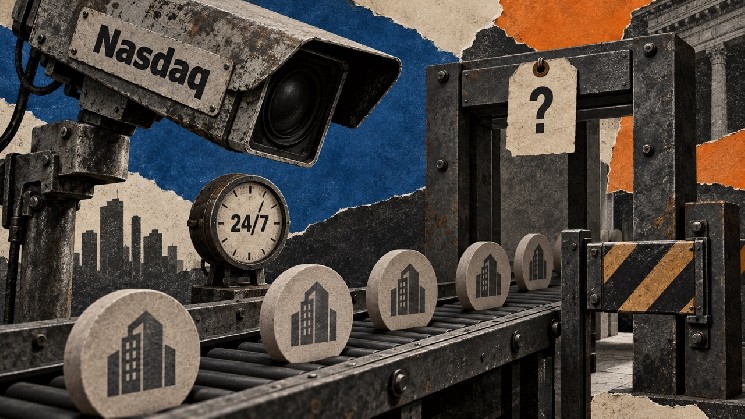
  • Why Nasdaq Surveillance Can’t Settle the Fight Over 24/7 Tokenized Markets

    Why Nasdaq Surveillance Can’t Settle the Fight Over 24/7 Tokenized Markets

    Nasdaq Invests $100 Million in Kraken Parent Payward as Always-On Markets Push Tests Regulatory Boundaries

    Nasdaq’s venture arm has agreed to invest $100 million in Payward, the parent company of crypto exchange Kraken, marking a significant convergence between traditional exchange infrastructure and digital-asset venues. Announced Sept. 10, the deal includes Payward’s adoption of Nasdaq surveillance technology across its portfolio of trading venues covering crypto, equities, tokenized equities, futures, and options.

    The investment arrives one day after Citadel Securities petitioned U.S. regulators to keep equity-linked products — including event contracts and perpetual derivatives tied to public companies — within the Securities and Exchange Commission’s regulatory perimeter. Together, the two moves highlight the unresolved classification questions facing always-on markets that operate beyond traditional trading hours.

    Surveillance Deal Lacks Cross-Market Data Details

    While Nasdaq’s surveillance adoption spans a broad range of asset classes, the announcement provides limited implementation specifics. No deployment date was disclosed, and the companies did not clarify whether Payward’s system would integrate order and trade data from the underlying U.S. cash-equity market — a critical capability for detecting manipulation that spans venues.

    Citadel’s Sept. 9 comment letter argues that effective oversight requires regulators to surveil equity-linked products alongside activity in the underlying cash equity. The market maker describes scenarios where traders with material nonpublic information could profit through equity-linked derivatives before issuer announcements, or use derivatives in strategies involving the price of the underlying security.

    This cross-market surveillance requirement represents a test the Nasdaq-Payward announcement does not answer: whether multi-asset monitoring also means access to the securities data needed to spot insider trading and manipulation across markets.

    Classification Determines Market Access and Investor Protections

    Surveillance technology can strengthen a venue’s case for operating an orderly market, but it cannot determine whether an equity-linked instrument qualifies as a security, security-based swap, swap, or futures contract under federal law. That classification controls the regulatory route to market and the investor protections that apply.

    Under CFTC Regulation 40.2, a designated contract market may list a product without prior Commission approval after filing a written self-certification by the preceding business day. Regulation 40.3 provides a separate voluntary approval route. The SEC does not use a uniform track for every exchange filing, creating divergent paths for similar products.

    Divergent Filings Illustrate Regulatory Split

    Recent filings demonstrate the contrast. A July 10 Cboe notice described binary options tied to issuer key performance indicators as a proposed rule change under the SEC. An Aug. 24 MEMX notice similarly described proposed securities event contracts tied to financial metrics reported by issuers.

    Meanwhile, CFTC product filings show a different trajectory. A QCEX KPI Contract was certified on June 18, while another CFTC page for organization code COIN listed US500, Tech100, Defense10, China10, and AI10 index perpetual-style futures as certified. These certifications establish regulatory status but do not prove live commercial trading, broad availability, or significant volume.

    The official record supports a narrower conclusion than claims that equity perpetuals are already broadly trading in the United States: multiple equity-index products have been certified, but the cited pages do not confirm their live commercial status.

    Bitcoin Precedent Does Not Resolve Equity Questions

    On May 29, 2026, the CFTC approved KalshiEX’s bitcoin-referencing BTCPERP under Regulation 40.3, accompanied by a policy statement calling for case-by-case review of perpetuals tied to other asset classes. That bitcoin-specific approval did not settle how equity-linked perpetuals should be classified.

    Citadel’s filing argues the SEC perimeter brings substantial protections beyond an approval process: best execution and order handling rules, front-running prohibitions, execution-quality disclosure, fair access requirements, venue transparency, coordinated trading halts, market-access controls, and safeguards against automatic deleveraging during volatile periods.

    These practical stakes mean two contracts providing exposure to similar corporate outcomes can offer vastly different disclosure, execution, and surveillance arrangements. A faster listing route widens access but creates uncertainty over which protections apply and which regulator holds the data and authority to investigate misconduct spanning the derivative and the underlying stock.

    Tokenized Equities Pilot Advances on Separate Track

    On March 18, 2026, the SEC approved Nasdaq’s rule change for eligible securities to trade in tokenized form during a Depository Trust Company pilot. Under this model, a tokenized share must be fungible with its traditional counterpart, carry the same CUSIP and symbol, provide the same shareholder rights, and trade on the same order book with the same execution priority. Market surveillance for both forms would rely on the same underlying data available to Nasdaq and FINRA.

    The March 18 approval did not equal a launch. The framework becomes effective only after DTC establishes the required infrastructure and post-trade settlement services, followed by at least 30 calendar days’ notice to members before tokenized trading begins.

    Separately, Nasdaq expects its work with Payward on Nasdaq Equity Tokens (NETs) to launch in the second quarter of 2027 — a forward-looking target. The sources do not establish that the Payward rollout and the DTC-pilot model have identical operating conditions.

    SEC Roundtable Addresses 24-Hour Trading Infrastructure

    The SEC’s Sept. 17 roundtable will bring these questions closer together without resolving them. The published agenda covers exchange and broker readiness, overnight surveillance, closing-price processes, clearance and settlement, investor protection, system resiliency, market-data continuity, and expected liquidity.

    The event concerns preparations for 24-hour trading in conventional market infrastructure, with a later panel looking toward possible future expansion to 24×7 trading. It is a public discussion, not a rulemaking decision — a distinction that prevents the debate about longer U.S. equity sessions from collapsing into the separate question of tokenized equities and perpetual derivatives that may trade continuously.

    Venues Need Both Surveillance and Legal Clarity

    The regulatory test is not a choice between surveillance and law. Venues will need both. Nasdaq’s technology could help Payward demonstrate that always-on markets are observable across its own stack. Citadel’s argument is that equity-linked oversight must also reach the underlying securities market and fit the statutory boundary between the SEC and CFTC.

    Until those pieces align, the fastest token rail will not necessarily deliver the broadest U.S. access. The products that reach users with durable liquidity may be the ones that combine continuous monitoring, cross-market data, operational resilience, and a classification regulators can defend.

  • Uniswap Saw Over $500M in Token While Wall Street Closed

    Uniswap Saw Over $500M in Token While Wall Street Closed

    Uniswap Processes $500M in Stock Token Volume During Wall Street Holiday

    Uniswap facilitated over $500 million in stock token trading volume while traditional U.S. markets remained closed for a three-day weekend, according to data highlighted by the decentralized exchange platform. The activity underscores Uniswap’s growing role as a continuously operational venue in the decentralized finance (DeFi) ecosystem.

    Continuous Operations Amid Traditional Market Closures

    While Wall Street observed a holiday shutdown, Uniswap maintained uninterrupted trading, processing significant volume in tokenized equity products. This capability highlights a structural advantage of decentralized exchanges: 24/7/365 market access without reliance on centralized clearing hours. The volume surge during the closure suggests traders—both retail and institutional—are actively utilizing DeFi infrastructure for equity exposure when conventional venues are offline.

    Indicator of Institutional Engagement

    The $500 million figure reinforces Uniswap’s position as a primary gateway for on-chain stock token trading. Sustained high-volume periods during traditional market holidays may signal deepening institutional comfort with decentralized execution layers. As crypto markets navigate mixed macroeconomic signals, Uniswap’s ability to absorb and execute large-scale tokenized asset flows without interruption strengthens its credibility as core DeFi infrastructure.

    Market Context and Structure

    Uniswap operates as an automated market maker (AMM), enabling peer-to-contract token swaps through liquidity pools rather than order books. This model eliminates intermediaries and supports permissionless access to tokenized assets, including synthetic equities that track traditional stocks. The platform’s resilience during the holiday period demonstrates the operational maturity of AMM-based venues for non-crypto asset classes.

    Key Trends to Monitor

    • Volume correlation: Whether holiday-driven DeFi volume normalizes during regular trading weeks or remains elevated.
    • Regulatory trajectory: How evolving frameworks for tokenized securities impact on-chain equity trading.
    • Institutional adoption: Growth in whitelisted pools, KYC-enabled front ends, and compliance tooling on Uniswap v4 and associated hooks.

    As market structure evolves, Uniswap’s always-on architecture positions it as a critical venue for traders seeking continuous access to tokenized traditional assets. The platform’s performance during the latest Wall Street closure offers a real-time case study in DeFi’s expanding role in global capital markets.

    This article is for informational purposes only and does not constitute financial advice.