Tag: TikTok viral video

  • ‘Something in Me Died’: TikToker Asks if Relationships Can Survive Cheating; Commenters Offer Complicated Answers

    ‘Something in Me Died’: TikToker Asks if Relationships Can Survive Cheating; Commenters Offer Complicated Answers

    Key Highlights

    • TikTok creator @lily.girltea sparked a viral conversation on September 16, 2026, asking viewers whether relationships can truly recover after infidelity, drawing over 118,000 likes and 2,200 comments within five days.
    • Commenters shared deeply personal accounts spanning a spectrum of outcomes—from enduring emotional trauma years later to successful reconciliation contingent on total behavioral change and forgiveness.
    • The discussion highlighted that rebuilding trust often requires concrete actions like digital transparency, lifestyle changes, and acceptance of a fundamentally altered relationship dynamic rather than a return to “fairy tale” normalcy.

    Viral Question Sparks Thousands of Personal Stories

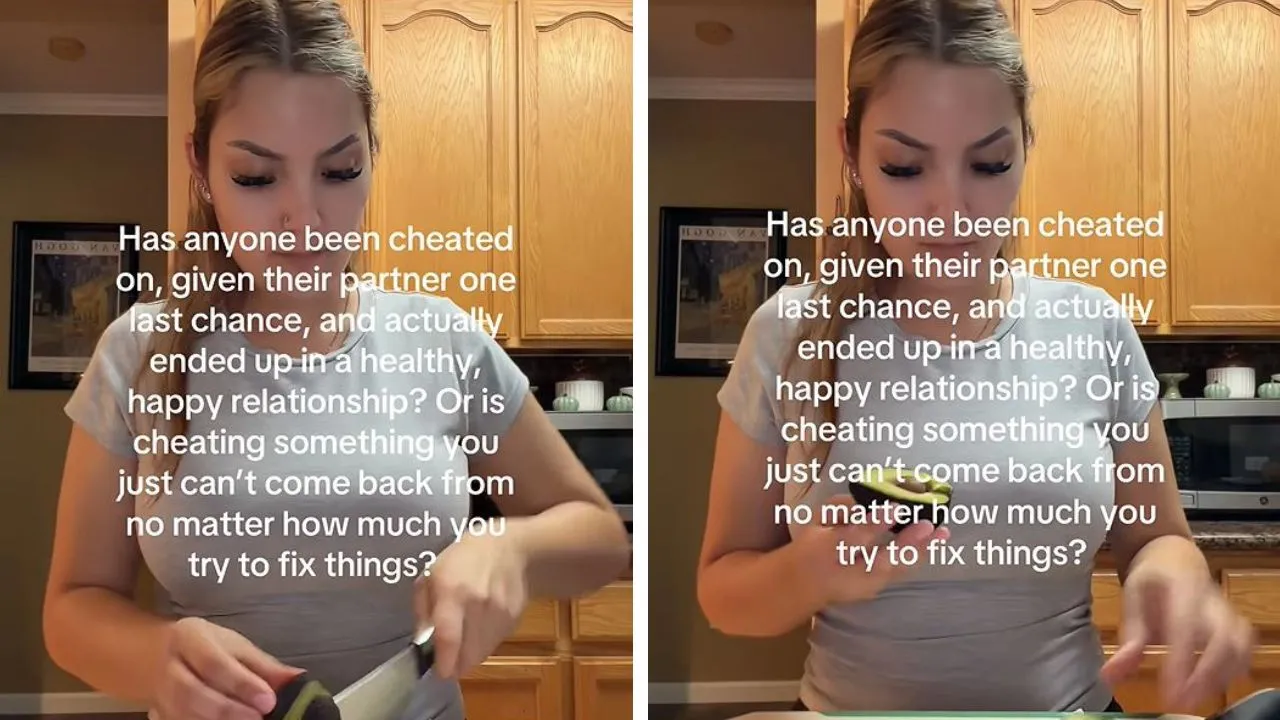
    A silent TikTok video posted by creator @lily.girltea on September 16, 2026, has become a focal point for a raw, crowdsourced examination of infidelity and reconciliation. Filmed in her kitchen while preparing food, the video features no spoken dialogue. Instead, on-screen text poses a direct question to the audience: Has anyone been cheated on, given their partner one last chance, and actually ended up in a healthy, happy relationship? Or is cheating something you just can’t come back from no matter how much you try to fix things? Set to the track “FOUND” by Zach Webb, the post rapidly accumulated more than 118,000 likes and 2,200 comments, transforming the comment section into a de facto support forum and debate hall.

    The Spectrum of Healing: From ‘Something Died’ to Complete Forgiveness

    The responses reveal no consensus, only a complex taxonomy of lived experience. One commenter encapsulated the lingering shadow of betrayal even after a partner reforms, writing, I stayed, he changed and has been so good to me, but something in me died. Not sure how to explain it, its been 3 years and I’m still hurting it comes in waves. This sentiment—that the relationship survives but the person is permanently altered—was countered by accounts of total resolution. Another user testified to a complete turnaround: Yes! 4 years ago, I literally never think about it because he COMPLETELY changed all behaviors and has become a better partner and person. You have to fully forgive & they need to change.

    The Case for Never Returning

    For some, the cognitive toll of betrayal renders reconciliation impossible. A particularly vivid comment articulated the inescapability of the memory across life’s milestones: The one thing that will never make me go back to someone who’s cheated on me is I’ve heard from numerous women that you don’t stop thinking about it. You think about it when he gets down on one knee, you think about it when you’re at your wedding, you think about it when you decide to try for your first born, you think about it when you’re giving birth, you think about it when you hold ur first child. This perspective frames infidelity not as a discrete event to be resolved, but as a permanent fracture in the narrative of a shared life.

    Practical Steps Toward Rebuilding Trust

    Amid the philosophical debate, several commenters offered concrete blueprints for the “work” required to repair a bond. One woman detailed the specific conditions that facilitated her reconciliation after her partner cheated a year and a half into their relationship: He gave me location full access to his phone, he actively stopped drinking and CHANGED. he also allowed me to lash out and go through the ups and downs of getting through a betrayal. She noted the couple separated for three months before reuniting, concluding, 3 years later we are in an amazing place. Her account underscores a recurring theme: recovery demands radical transparency, the cessation of contributing behaviors (like substance use), and the offending partner’s willingness to absorb the emotional volatility of the betrayed partner.

    Cultural Touchstones and the ‘New Normal’

    The discourse frequently borrowed from pop culture to articulate the shift in relationship dynamics. One commenter invoked the sitcom Friends to describe the loss of relational innocence, writing that there is no fairy tale left, even the realistic ones, and that repairing a relationship afterward becomes a choice and work rather than something that ever feels effortless again. Another offered a forward-looking framing focused on narrative control: You can never rewrite history but you can make it a very small fraction of your narrative when you put the work into making the rest of your life very different.

    Why This Matters

    The viral traction of @lily.girltea‘s post reflects a broader cultural shift toward processing relationship trauma in public digital spaces. Unlike traditional advice columns mediated by experts, TikTok’s algorithm surfaces peer-to-peer testimony, allowing users to benchmark their experiences against a vast, unfiltered dataset of outcomes. The conversation illustrates that “surviving cheating” is not a binary outcome but a negotiated, daily practice. For mental health professionals and relationship researchers, the thread offers a rich, real-time qualitative archive of how individuals navigate the aftermath of betrayal—highlighting the critical role of behavioral consistency, digital transparency, and the bereavement of the relationship’s “first version.” As the Daily Dot noted, the personal experiences shared in the comments were not independently verified, underscoring the platform’s role as a space for testimony rather than evidentiary record.

    Frequently Asked Questions

    What prompted the viral discussion on TikTok?
    On September 16, 2026, creator @lily.girltea posted a video showing her cooking while on-screen text asked viewers if a relationship can become healthy and happy after a partner is given a second chance following infidelity, or if cheating is an insurmountable breach.
    What were the main perspectives shared in the comments?
    Commenters presented a wide range of outcomes: some described lasting emotional pain (“something in me died”) despite a partner’s improvement; others reported full reconciliation achieved through the cheater’s total behavioral change and the betrayed partner’s forgiveness; and some argued the intrusion of the memory into future life milestones makes returning impossible.
    What concrete steps did commenters identify as necessary for reconciliation?
    Successful reconciliation stories cited specific actions: the offending partner providing full phone/location access, stopping contributing behaviors (e.g., drinking), allowing the betrayed partner to express anger without defensiveness, and accepting a temporary separation. The consensus was that the relationship does not return to “effortless” but becomes a continuous, conscious choice.
  • Woman Claims Boyfriend Faked College Career, Fabricated GPA: ‘He Was Studying for Nothing’

    Woman Claims Boyfriend Faked College Career, Fabricated GPA: ‘He Was Studying for Nothing’

    Key Highlights

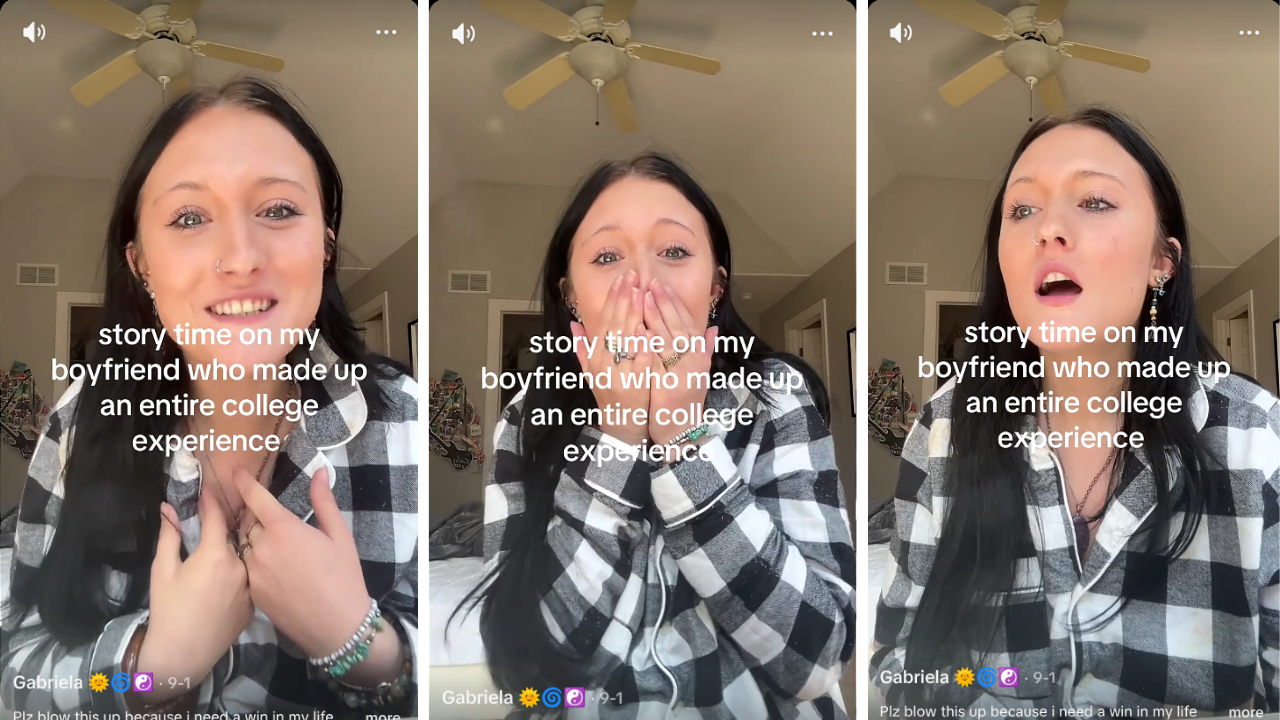
    • TikTok creator Gabriela Garbato revealed her boyfriend fabricated his entire college experience, including pretending to be a pre-med student at the University of Florida.
    • He allegedly faked assignments, a class schedule, a GPA slightly higher than hers, and a bowling scholarship at Midland University, while actually attending Santa Fe Community College before dropping out.
    • The viral video sparked discussion about pathological lying and relationship dynamics, with commenters speculating he was intimidated by her academic success.

    TikTok Creator Exposes Boyfriend’s Elaborate College Deception

    TikTok content creator Gabriela Garbato (known as @gabriela.garbato) has gone viral after sharing a detailed account of how her boyfriend allegedly lied about his entire college experience to everyone in his life, including her. The video, which has amassed nearly 975,000 views and over 1,400 comments, outlines a years-long fabrication that included a fake pre-med enrollment at the University of Florida (UF), a manufactured GPA designed to one-up her own, and a fictitious bowling scholarship at Midland University in Nebraska. The Daily Dot, which first reported on the story, noted it was unable to independently verify the events described in Garbato’s TikTok; the details here are based on her account and the ensuing viewer reactions.

    Suspicion Arises Over Pre-Med Claims

    According to Garbato, she had been skeptical from the start about her boyfriend’s claim that he was enrolled as a pre-med student at UF. Because she was also a pre-med student, she was familiar with the curriculum and professors, and she noticed he struggled to answer specific questions about his classes. Over time, she said, “cracks began to appear in his story.” She explained that he had researched the classes pre-med students typically take, which allowed him to appear knowledgeable on certain subjects. However, when she asked for the name of his biochemistry professor—a class she knew had only one instructor—he could not provide it. A subsequent search of the university’s student directory yielded no record of his name, leading her to conclude he had never enrolled.

    Confrontation and Confession

    Seeking answers, Garbato called him and said, “You didn’t go to Florida. You didn’t go to UF.” At that point, according to her account, he admitted to lying about his college experience. She described the most disturbing aspect not as the lie itself, but the extensive effort he allegedly put into making it believable. This included faking assignments, creating a class schedule, and even studying for pre-med classes alongside her. “We fake studied together,” Gabriela said. “He was studying for nothing!”

    Fabricated GPA and Scholarship

    The deception extended to academic achievements. Garbato recounted, “This is my favorite part. I asked him what his GPA was. . . I told him my GPA first. Conveniently the GPA he made up was 0.1 point better than my GPA.” She said he confessed to inventing the GPA specifically to one-up her. He also claimed to have attended Midland University on a bowling scholarship, but later admitted he had actually attended Santa Fe Community College for two years before dropping out. After the confrontation, Garbato said he confessed to his family and friends as well, eventually thanking her for exposing the secret because he could now live honestly.

    Aftermath and Viewer Reactions

    Garbato stated she still loved her boyfriend but knew she needed to end the relationship due to how easily he had lied to her and those around him. The video’s comment section ignited a broader conversation. One commenter wrote, “It’s kinda crazy how I’ve heard so many people who fake going to school to their friends and family… like what you going to do on graduation day?” Another highlighted the paradox of pathological lying: “Pathological liars are so insane like all the work they do to maintain the lie they could’ve just actually done the thing they’re lying about.” A separate commenter speculated on the relational dynamic, writing, “He def was intimidated by you and couldn’t stand the fact that his gf was doing better than him.”

    Why This Matters

    This case underscores how social media platforms like TikTok have become venues for personal storytelling that can quickly escalate into public discourse on psychology and relationship ethics. The alleged lengths of the deception—fabricating not just attendance but coursework, grades, and a scholarship—raise questions about the psychological drivers behind sustained falsehoods, particularly when they intersect with competitive dynamics in romantic partnerships. For audiences, the story serves as a cautionary tale about trust verification and the potential for elaborate performative lies. It also highlights the role of digital communities in crowdsourcing analysis and support after such revelations, as seen in the thousands of comments dissecting the boyfriend’s possible motives.

    Frequently Asked Questions

    Who is Gabriela Garbato?
    Gabriela Garbato is a TikTok content creator who posts under the handle @gabriela.garbato. She shared a viral video detailing her discovery that her boyfriend had fabricated his entire college history.
    What specific lies did the boyfriend allegedly tell?
    He claimed to be a pre-med student at the University of Florida, faked a class schedule and assignments, invented a GPA 0.1 points higher than Garbato’s, and said he attended Midland University on a bowling scholarship. In reality, he attended Santa Fe Community College for two years before dropping out.
    Has the story been independently verified?
    The Daily Dot reported that it was unable to independently verify the events described in Garbato’s TikTok video. The details are based on her account and the reactions of commenters on the platform.
  • Woman Says ‘Hell No’ to Mall Kiosk Tip Request; Cashier Replies ‘I Just Asked’

    Woman Says ‘Hell No’ to Mall Kiosk Tip Request; Cashier Replies ‘I Just Asked’

    Key Highlights

    • A TikTok video capturing a woman’s blunt refusal to tip at a mall retail counter has amassed over 3 million views, igniting widespread debate about tipping expectations in non-service settings.
    • The exchange, recorded by user @lovee.leahh_, shows the customer responding “Hell no!” when asked twice if she wanted to leave a tip, prompting the cashier to reply, “Ok! I just asked.”
    • Commenters overwhelmingly supported the shopper, with many arguing tipping should be reserved for traditional service roles like restaurant servers and stylists, not retail transactions.

    Viral Mall Encounter Sparks Renewed Tipping Culture Debate

    A routine checkout at a mall retail shop has become the latest flashpoint in America’s ongoing conversation about tipping fatigue. In a video posted by TikTok creator Leah Danzy under the handle @lovee.leahh_, a woman identified only as a shopper is heard declining a tip prompt with striking candor. The clip, which had garnered 3 million views and 3,244 comments at the time of publication, captures a moment that resonated deeply with viewers frustrated by the proliferation of tip requests across consumer transactions.

    The Exchange at the Counter

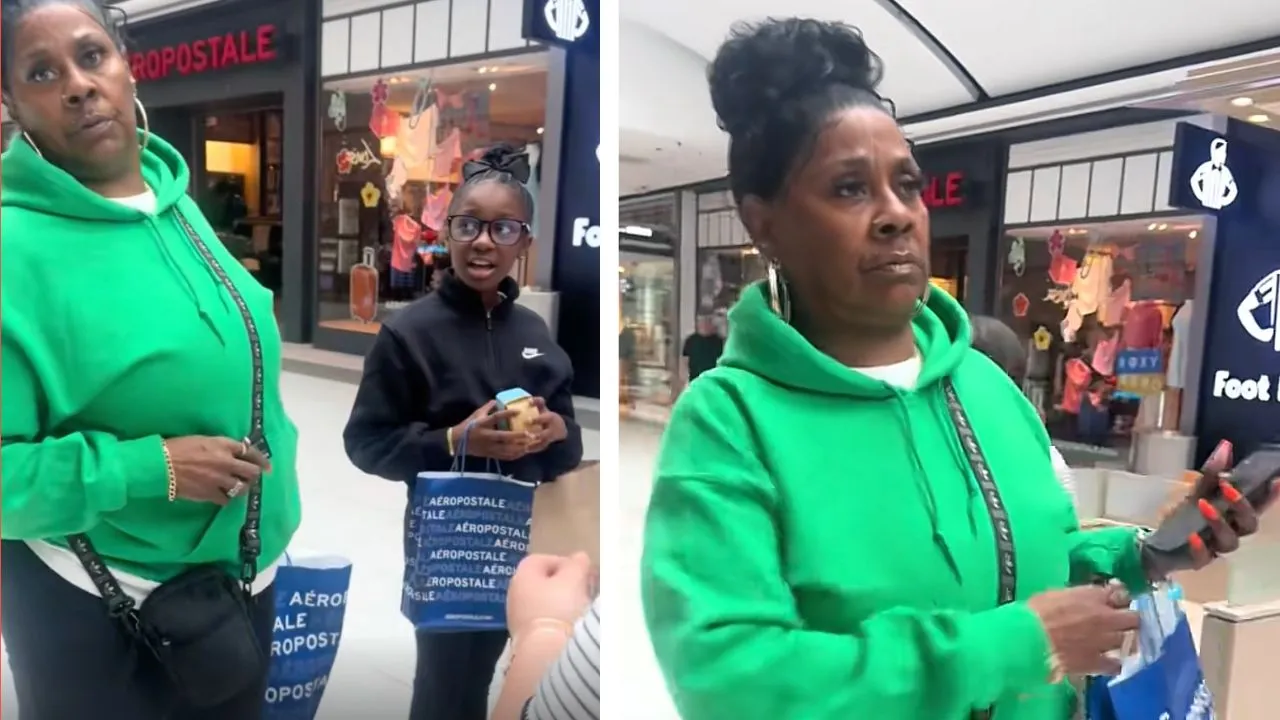
    The video opens with the woman standing at a payment counter, preparing to pay for her purchases. The shop employee can be heard asking twice, “Do you want to tip?” The customer responds immediately and emphatically: “Hell no!” followed by “No tip.”

    The cashier replies, “Ok! I just asked.” Unfazed, the woman counters, “I know, and I just told you,” and begins to walk away. A young girl accompanying her—identified in the caption as Ariel—watches the interaction with her mouth open in apparent surprise. As she exits, the shopper tells the employee, “Thank you! Have a good day.” She then turns toward the camera and remarks, ‘They are talking about f—— tip,’ before the video ends.

    The caption reads: “I still can’t get over this. Ariel was so embarrassed.”

    Comment Section Reflects Broad Frustration

    The response in the comments section was swift and largely sympathetic to the shopper. One user wrote, “I’m done with tips. Only at restaurants, and that’s all.” Another asked, “Everyone getting tips! Can I get one at my corporate job? Damn.” A third commenter questioned the context: “What did she purchase? I feel like tips are for restaurant servers and stylists.” A fourth summed up the prevailing sentiment: “She’s not wrong she just spent her money to purchase an item what does she need a tip for ?”

    The discourse mirrors a growing national sentiment that tipping prompts have overreached beyond traditional hospitality roles into retail, counter-service, and even self-checkout scenarios.

    Context: A Pattern of Tipping Controversies

    This incident follows a prior Daily Dot report on TikTok creator @gemma.moro, a waitress who shared a video detailing a table of eight that allegedly left a $10 tip on a bill exceeding $300. That video accumulated over 780,000 views and 6,100 comments. In her car after the shift, @gemma.moro expressed frustration that the large party occupied her section for hours, preventing her from serving other tables that might have tipped more generously. She stated she would have been less bothered by the low amount if the table had been easier to serve. Her video included the pointed caption: “Don’t go out to eat if you can’t afford to tip sorry ??”

    The Daily Dot was unable to independently verify the total bill amount, the tip left, or the identities of the family described in the @gemma.moro video. The details reflect the accounts shared by @lovee.leahh_ and @gemma.moro on TikTok.

    Why This Matters

    The viral spread of the mall encounter underscores a critical inflection point in U.S. tipping culture. As point-of-sale systems increasingly default to tip prompts—often with preset percentages of 15%, 20%, or 25%—consumers are confronting gratuity requests in contexts where no table service, personal care, or customized labor occurs. Retail workers, unlike tipped restaurant servers, typically earn at least the standard minimum wage, raising questions about whether tip screens serve as a subtle wage subsidy shift from employers to customers. The backlash captured in the comments suggests a growing consumer pushback against what many perceive as “tip creep,” with potential implications for how businesses configure payment terminals and how policymakers might address wage transparency in service-adjacent roles.

    Frequently Asked Questions

    Who posted the viral video of the woman refusing to tip at the mall?
    The video was posted by TikTok user @lovee.leahh_ (Leah Danzy).
    What exactly did the woman say when asked if she wanted to tip?
    She responded, “Hell no!” followed by “No tip.”
    How did the cashier react to the refusal?
    The cashier replied, “Ok! I just asked.”
  • Woman Says Hinge Date Seemed Like Perfect Match Until He Stopped Responding: ‘I Gave Him Another Chance’

    Woman Says Hinge Date Seemed Like Perfect Match Until He Stopped Responding: ‘I Gave Him Another Chance’

    Key Highlights

    • TikTok creator Sara DuPasquale (@sara_dipasquale_) shared a viral story about a Hinge date who initially seemed like a perfect long-term match but went radio silent after their first meeting.
    • Despite giving him a second chance, DuPasquale ended communication after he repeatedly failed to respond promptly when trying to plan a second date.
    • The video amassed over 3,300 likes and 420 comments, with viewers speculating the man may have been married, seeing someone else, or exhibiting narcissistic behavior patterns common on dating apps.

    TikTok Creator Shares Frustrating Hinge Experience That Resonated With Thousands

    Content creator Sara DuPasquale, known on TikTok as @sara_dipasquale_, posted a storytime video detailing a disappointing experience with a man she met on the dating app Hinge. The video, captioned “Bad Hinge Date Storytime! I love when a man says he’s looking for a life partner because it really makes for good content and something to laugh about later #dating #hinge #datefail #hingedating #single,” quickly gained traction with 3,319 likes and 420 comments as of publication.

    According to DuPasquale’s account, the initial connection appeared promising. Both parties expressed interest in a long-term partnership, with DuPasquale specifically noting she was “looking to settle down and start a family,” and the man indicated he wanted the same. “She enjoyed talking to him and getting to know him,” the source notes, adding they “had similar interests and wanted the same things.” Their first date went well enough that DuPasquale wanted to see him again.

    Communication Breakdown Leads to Second Chance — Then a Final Straw

    Despite the positive first impression, the dynamic shifted after the date. The man went “radio silent,” and when DuPasquale attempted to reach out via text, she received no response. When she eventually confronted him about the lack of communication, he explained that the week following their date had been busy. DuPasquale acknowledged her week had been equally busy but maintained she still would have found time for a quick text.

    She decided to give him another chance, texting “here and there.” He eventually asked when she was free to meet again, but when she provided her availability, “he went silent again.” The pattern repeated: nearly a week after her original text, he finally replied — but only on the single day she had indicated she was free. That response marked the last chance she was willing to give. “She decided she wasn’t going to try to plan another date.”

    TikTok Community Reacts With Theories and Dating Advice

    The comment section quickly filled with reactions from viewers who related to DuPasquale’s experience. Several commenters offered direct assessments of the man’s interest level.

    “Any man that’s into you isn’t going to wait 3-4 days to contact you,” one person wrote.

    Another added, “I’ve learned through dating, never give a man a second chance. Best advice was: Men don’t play games, if they wanted to, they would.”

    Other commenters speculated about potential hidden circumstances. “He’s married. Also anyone who has a lot of making up to do after the first date is a red flag,” one person wrote.

    Another theorized, “Sounds like he was talking to another girl and double booked. Since he texted so late, it was probably after his date with her and it didn’t go well, so he wanted to reel you back in.”

    A broader critique of dating app culture emerged as well: “Technology and dating apps are the playground for narcissists, married men, men in a relationship and players. I’m so turned off by men proving that they are all cut from the same cloth.”

    Commenters offered varying explanations for the man’s behavior, with several suggesting his inconsistent communication signaled a lack of genuine interest in pursuing a second date.

    Why This Matters: Dating App Dynamics and Viral Accountability

    DuPasquale’s story highlights recurring patterns in modern dating app culture — particularly the discrepancy between stated intentions (seeking a life partner) and actual behavior (inconsistent communication, ghosting-adjacent tactics). The viral response underscores how common these experiences are, with thousands engaging in collective pattern recognition. While The Daily Dot was unable to independently verify the events described in Sara DuPasquale’s TikTok video, the discussion reflects broader conversations about “breadcrumbing,” “benching,” and the emotional toll of ambiguous communication on platforms like Hinge. For singles navigating app-based dating, the discourse serves as a crowdsourced red-flag repository — though it also raises questions about public speculation regarding unverified personal interactions.

    Frequently Asked Questions

    Who is Sara DuPasquale?

    Sara DuPasquale is a TikTok creator who posts under the handle @sara_dipasquale_. She shared a storytime video about a disappointing Hinge date that went viral with over 3,300 likes and 420 comments.

    What happened on the Hinge date?

    DuPasquale met a man on Hinge who said he wanted a long-term partner and family — goals that aligned with hers. Their first date went well, but afterward he stopped responding to texts. After she confronted him, he cited a busy week. She gave him another chance, but he again went silent when trying to plan a second date, only replying nearly a week later on the one day she was available. She then ended contact.

    Has the man’s identity been revealed or his side of the story shared?

    No. The man has not been publicly identified, and his perspective has not been shared. The Daily Dot was unable to independently verify the events described in Sara DuPasquale’s TikTok video, and the article’s details are based solely on DuPasquale’s account and the commenters’ reactions.

  • Waiter Charges Guest for Each Extra Lemon After She Refuses Free Lemonade Offer: “I Don’t Want a Lemonade’

    Waiter Charges Guest for Each Extra Lemon After She Refuses Free Lemonade Offer: “I Don’t Want a Lemonade’

    Key Highlights

    • TikTok creator Jon Jeffrey Frederick (@johnnyharlow) says he charged a restaurant guest 25 cents per extra lemon after she repeatedly requested additional lemon and sugar for her water but declined a free lemonade.
    • The guest reportedly questioned the charges on her bill and denied asking for the extra lemons, despite the waiter’s account of multiple requests during a brunch shift.
    • The viral video, with over 1 million views, sparked debate among service workers and customers about lemonade pricing, garnish policies, and why some diners prefer DIY lemon water over fountain lemonade.

    Waiter’s Viral TikTok Details Lemon Dispute With Brunch Guest

    Content creator Jon Jeffrey Frederick, who posts under the handle @johnnyharlow, shared a storytime video on TikTok that has amassed just over 1 million views and 1,234 comments. In the clip, Frederick recounts an interaction he says occurred while working as a waiter during a brunch service. According to his account, a guest ordered a glass of water with extra lemon and sugar — the foundational ingredients for lemonade. Anticipating further requests, Frederick says he fulfilled the initial order exactly as asked.

    Guest Declines Free Lemonade, Requests More Garnishes

    Almost immediately after receiving the water, the guest signaled for more. Frederick recalls her saying, I think I’m gonna need some more lemon and probably some more sugar. Rather than continue supplying individual garnishes, Frederick says he offered her a glass of lemonade as a more practical solution. The guest refused, stating, I don’t want a lemonade. Frederick then sweetened the offer, proposing to provide the lemonade at no charge. The guest took offense, responding, Don’t you think I can afford a lemonade?

    Itemized Charges Lead to Billing Confrontation

    Frederick says he ultimately brought the additional lemons the guest requested but added a 25-cent charge for each individual lemon to her bill. When the guest reviewed the check, she questioned the extra fees. Frederick explains he told her the charges were for the extra lemon garnishes she had requested for her water. According to his account, the guest then denied having asked for the additional lemons, despite his recollection of repeated requests. Frederick concluded the video by noting the total cost of the extra garnishes exceeded the menu price of a standard glass of lemonade.

    Why This Matters: Garnish Policies and the Economics of “Free” Water

    The incident highlights a long-standing friction point in the hospitality industry: the cost of “free” accompaniments. While water is typically complimentary, the garnishes — lemon wedges, lime slices, cherries — represent tangible inventory costs that scale with volume. Frederick’s video resonated with service professionals precisely because it illustrates a common workaround: guests constructing a beverage from free components to avoid paying for a menu item. The comment section revealed institutional responses to this behavior. One commenter described a country club that implemented a formal policy: Each water serving comes with one (1) lemon slice. An additional slice (1) may be given upon request. Each additional will be $0.50. They noted the policy stopped almost the next day. Another commenter offered a consumer perspective, writing, DIY lemonade might be better than fountain syrup lemonade. I don’t see the problem. Maybe she wants less sweet lemonade. The Daily Dot was unable to independently verify the events described in Frederick’s TikTok; the details are based on his account and the reactions shared by commenters.

    Frequently Asked Questions

    How much did the waiter charge for each extra lemon?
    According to Jon Jeffrey Frederick’s account, he charged the guest 25 cents for each individual extra lemon she requested.
    Did the guest accept the free lemonade offer?
    No. Frederick says the guest declined the lemonade twice — first when offered as an alternative, and again when offered for free — before continuing to request additional lemons and sugar for her water.
    Has the restaurant’s lemon policy been verified?
    The Daily Dot states it was unable to independently verify the events described in the TikTok video. The details are based solely on Frederick’s account and the experiences shared by commenters on the post.
  • Babysitter Calls Police After Parents Allegedly Refuse to Come Home: ‘You Need to Stay’

    Babysitter Calls Police After Parents Allegedly Refuse to Come Home: ‘You Need to Stay’

    Key Highlights

    • TikTok creator @kelsgordon says she called police nonemergency line after parents allegedly refused to return home by agreed 7 p.m. deadline, instead stating they would arrive between 1:00 and 2:00 a.m.
    • The mother reportedly dismissed Kels’ prior commitment to a second babysitting job at 7:30 p.m., texting “No. You need to stay” and rejecting alternatives such as a neighbor or replacement sitter.
    • Two officers arrived by 7 p.m.; the parents returned shortly after, and the father questioned why police were called, suggesting the mother had not informed him of the babysitter’s hard deadline.

    Babysitter Details Standoff With Parents Who Allegedly Ignored Agreed End Time

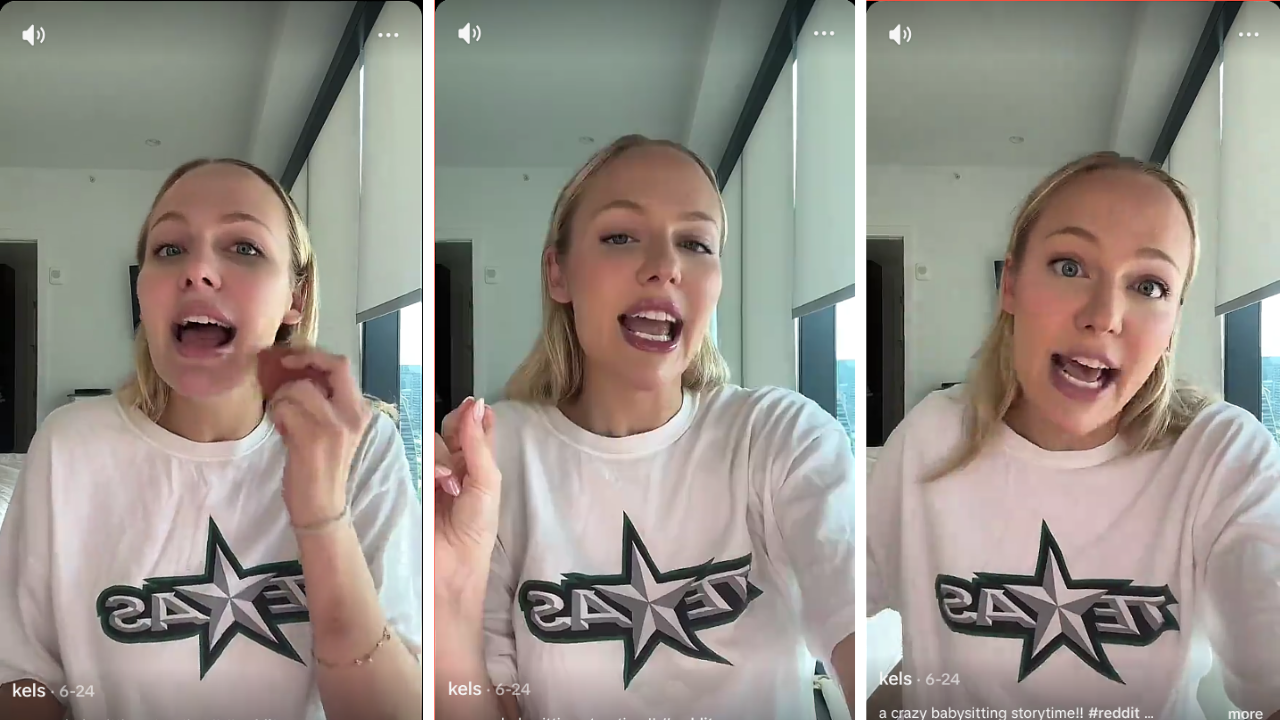
    TikTok creator Kels Gordon, known as @kelsgordon, posted a storytime video that has amassed 1.5 million views and 869 comments describing a babysitting job that escalated into a police response. Gordon, who said she has worked part-time as a babysitter since her teenage years, explained that she accepted a Saturday engagement from 2 to 7 p.m. for a family new to the area who had found her through word of mouth. She emphasized that she made her 7 p.m. departure time explicit because she had a second, long-standing babysitting commitment at 7:30 p.m. for a family whose father had an important awards show that evening.

    Mother Allegedly Changes Plans and Demands Sitter Stay Until Early Morning

    According to Gordon’s account, the children behaved well and the afternoon proceeded smoothly until approximately 6 p.m., when the mother texted to say she and her husband had encountered friends during dinner and would be home late. When Gordon asked for an estimated return time, the mother replied, “Hard to say. But, maybe around 1:00 or 2:00 a.m.” Gordon said she initially thought the woman was joking and asked again; the mother confirmed she was serious. Gordon reminded the mother of her 7:30 p.m. obligation and the need to leave by 7 p.m., but the mother dismissed the concern and responded, “No. You need to stay.” The mother added that the other family would need to make other arrangements because she could not leave her children home alone.

    Sitter Seeks Police Assistance After Alternatives Rejected

    Gordon said she proposed several alternatives, including locating another babysitter or asking a neighbor to watch the children temporarily, but the mother rejected each suggestion and insisted she remain. Following advice from her own mother, Gordon contacted the police nonemergency line. She said two officers arrived at the home by 7 p.m. and attempted to call the mother, who did not answer; the officers left a voicemail. Approximately five minutes later, Gordon received an angry text from the mother. The parents arrived home shortly thereafter. Gordon stated the father immediately asked why she had called the police when she had allegedly told his wife she was willing to stay until 1 or 2 a.m.—a claim Gordon denied, saying it revealed the mother had not been forthright with her husband about the arrangement. Despite the confrontation, Gordon said she was paid for her time and made it to her second babysitting job on schedule.

    Why This Matters

    The incident highlights the vulnerabilities gig workers and informal caregivers face when clients unilaterally change terms without consent. Babysitters, nannies, and other in-home service providers often operate without formal contracts, leaving them exposed to schedule overruns, safety concerns, and disputes over compensation. The involvement of law enforcement underscores how quickly such situations can escalate when a worker’s personal boundaries and professional commitments are disregarded. The viral response on TikTok—where commenters debated the appropriateness of calling police versus other remedies—reflects broader public interest in labor protections for domestic workers and the power dynamics inherent in private household employment.

    Frequently Asked Questions

    Did the police file a report or make any arrests?

    The source does not indicate that any police report was filed or arrests made. Gordon stated the officers arrived, attempted to contact the mother, left a voicemail, and the parents returned home shortly after. No further law enforcement action was described.

    Was the babysitter compensated for the additional time?

    Gordon said she was paid for her services and did not mention any dispute over payment for the hours worked up to 7 p.m. She did not state whether she received additional compensation for the delay caused by the parents’ late return.

    Has the family responded publicly to the allegations?

    No public response from the family has been reported. The Daily Dot noted it was unable to independently verify the events described in Gordon’s TikTok video, and the details are based solely on her account and viewer comments.

  • TikToker Finds $25 Butcher’s Bundle at Save Mart, Normally $37+ — Commenters Say It’s at Every Location

    TikToker Finds $25 Butcher’s Bundle at Save Mart, Normally $37+ — Commenters Say It’s at Every Location

    TikToker Reveals $25 Butcher’s Bundle Deal at Save Mart, Sparking Viral Grocery Hack Discussion

    A TikTok video from user @babysokiee showcasing a $25 Butcher’s Bundle at Save Mart has garnered over 12,000 likes and ignited a wave of comments from shoppers sharing similar grocery savings strategies. The video highlights a packaged meat deal that the creator says typically retails for over $37.

    What the Butcher’s Bundle Includes

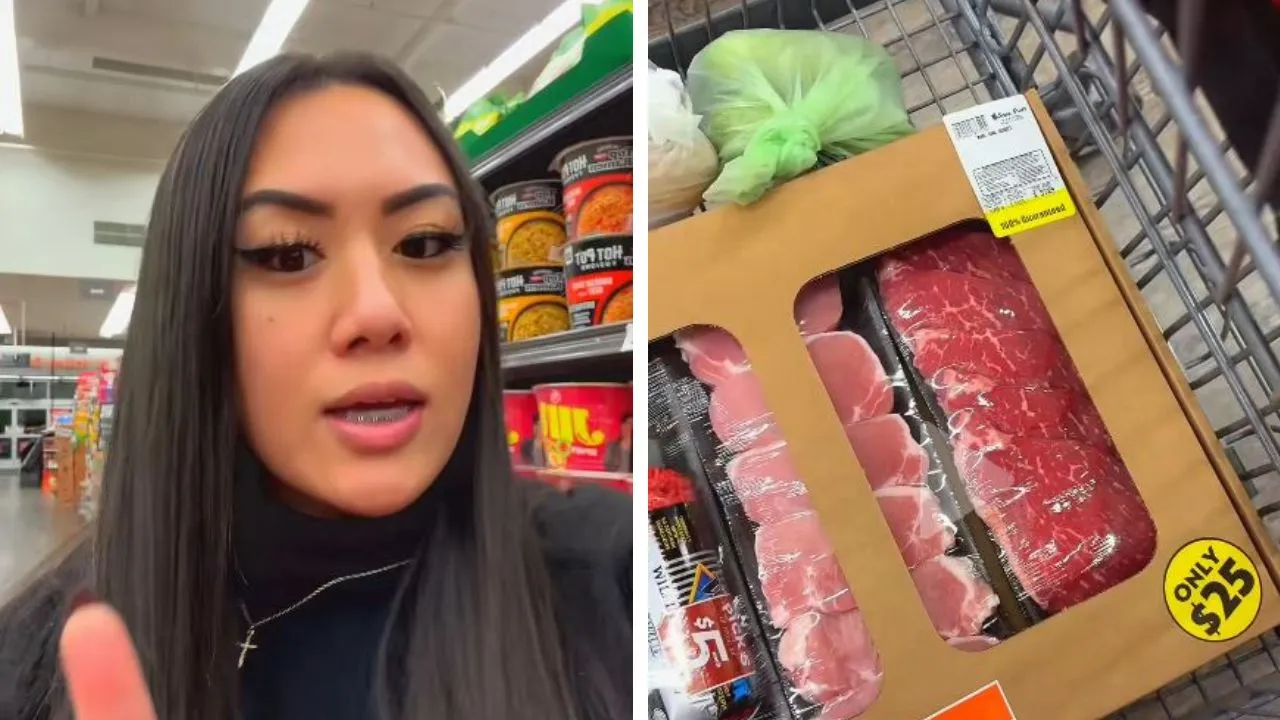
    In the video, the TikToker displays a box labeled “Butcher’s Bundles” with a prominent “Only $25” sticker. Two cutouts on the packaging reveal sealed cuts of red meat and pork stacked inside. She walks viewers through the value proposition, stating:

    “If you guys are ever near a Save Mart, stop by the meat section and grab you a butcher bundle, y’all,”

    before flipping the box to show the price tag and adding:

    “So regular price, it would have been $37.29.”

    The bundle contains four different kinds of meat: drumsticks, ground beef, pork, and red meat — all packed into a single box for $25 total. The creator emphasizes the savings:

    “You can’t say that’s not a good deal,”

    and concludes with a direct call to action:

    “So come to Save Mart and get this $25 Butcher Bundle because yes.”

    Availability and Related Deals

    In the comments section, @babysokiee noted that a store employee told her the deal was available at every Save Mart location, though she recommended calling ahead to confirm — a claim The Daily Dot could not independently verify. She also mentioned that FoodMaxx carries a similar version, and that shoppers can build their own bundle by selecting five or more packages marked with a corresponding tag.

    Commenters Compare Prices and Share Alternatives

    The comment section quickly became a forum for grocery deal comparisons. One user weighed the bundle against warehouse club pricing:

    “It’s at any Save Mart but beats spending hundreds at Costco or Sam’s Club,”

    Another expressed surprise at the discovery:

    “Omg I’m gonna have to go I didn’t know they did this,”

    A different reply pointed to a related promotion rather than the boxed bundle itself:

    “They also do the 5 for 5…. You can pick 5 different types of meat for $5 each. As long as they have that 5 for 5 sticker,”

    Some commenters framed the discount as comparable regardless of which version shoppers use:

    “Save mart does 5 for $25 so yall crying for nothing yall can also mix and match with other stuff [sic],”

    Another described a different combination than the one shown in the video:

    “They have the ones where they have 4 packages if seasoned taco meat. asada, pastor and two different chicken varieties,”

    Verification Status

    The Daily Dot was unable to independently verify the package contents, regular price, availability of the Butcher’s Bundle at all Save Mart and FoodMaxx locations, or the deal details described by commenters. The details above reflect the TikTok video and comment section as shared by @babysokiee.

  • Walmart Employee Says Customer Claimed $40 Bluey Set Cost $7.98 Due to Nearby Nerf Gun Price Tag

    Walmart Employee Says Customer Claimed $40 Bluey Set Cost $7.98 Due to Nearby Nerf Gun Price Tag

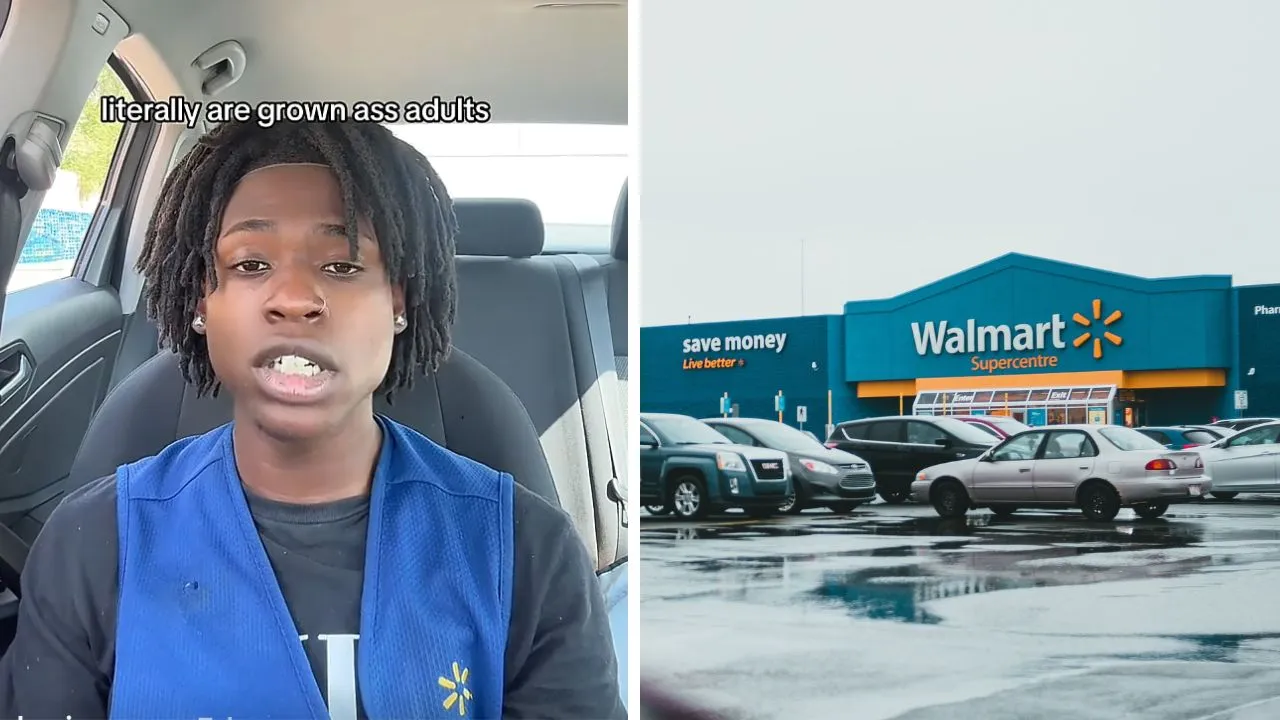
    A Walmart employee’s TikTok recounting a customer’s insistence that a Bluey play set should cost $7.98 because it sat near a Nerf gun price tag has gone viral, amassing over 828,000 views. The video, posted by user @skylouieeeee, highlights a common retail frustration: customers conflating proximity with pricing.

    The Interaction Begins

    The TikTok opens with the employee’s blunt assessment of the encounter. “Walmart has to be the only place where these people are literally grown a– adults, and yet they don’t have a lick of common sense.” He explains a woman approached him with a Bluey play set found in a random aisle without a price tag. After checking the box for clearance or markdown stickers and finding none, he informed her the toy was likely at regular price.

    The Price Dispute Escalates

    The customer insisted he accompany her to the location where she found the item. “The price is way off from where I saw it.” She led him to the Nerf gun aisle, explaining that’s where the Bluey set was sitting.

    The employee recounts her claim and his response: “She said that she saw it sitting next to a price tag that said it was $7.98, and I told her, no, it’s the right price. If anything, it says it’s for a completely different toy.”

    He clarifies the tag was for a toy gun. “This is for like a toy gun, and she was like, but it was sitting right here by the price tag.” The customer pressed further: “Are you sure that’s not the right price? Because this could be the price for the Bluey set.”

    Employee Explains Merchandising Reality

    The worker pointed out the obvious merchandising error. “The aisle you found this toy in is not even the right aisle for it — it’s two aisles down.” The customer’s logic held firm: “Then why would they put it here if that’s not the right price? It was sitting right here the whole time.”

    He tried to reason with her: “Ma’am, that doesn’t mean that that’s the price of the toy.” Adding that a shopper likely abandoned it there, he said: “Probably somebody left it there cause they didn’t want the toy no more. And she was like, okay, then why would they put it exactly right near the price tag if that’s not the price.”

    The video ends with his exasperated summary: “I’m like, I don’t know, but that is not the correct price for the damn Bluey set.”

    Social Media Reaction

    Commenters shared related retail experiences and practical advice. One user noted: “In the Walmart app, you can scan it yourself to see the price.” Another highlighted a ubiquitous checkout joke: “As A Cashier [sic] The Amount Of “Guess Its Free” Jokes Is Unreal…” A third observer summarized the phenomenon: “it’s like they walk in and all common sense disappears.”

    Verification Note

    The Daily Dot was unable to independently verify the events described in this video. The details above reflect the account as shared on TikTok by @skylouieeeee.

  • Man Compares $16 Wendy’s Meal to Chili’s Costs: ‘I Thought Fast Food Was Supposed to Be Like 8 Bucks’

    Man Compares $16 Wendy’s Meal to Chili’s Costs: ‘I Thought Fast Food Was Supposed to Be Like 8 Bucks’

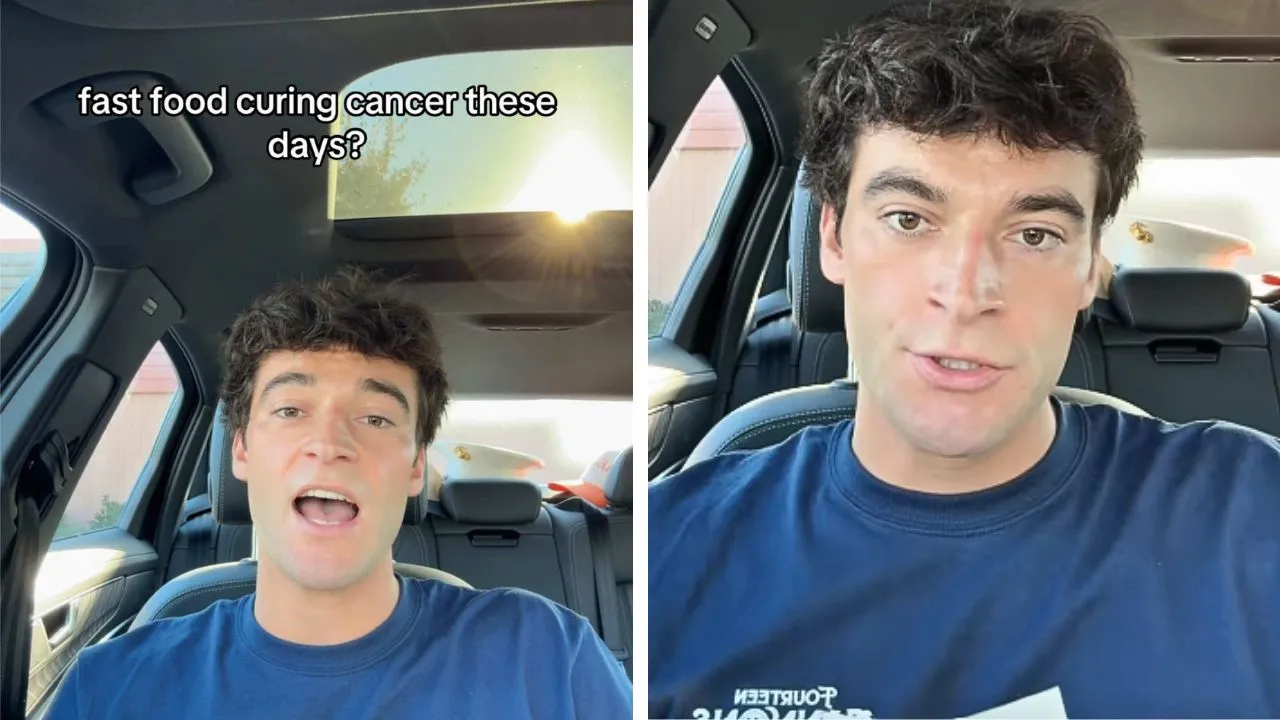
    A viral TikTok video showing a man’s deadpan complaint about a nearly $16 Wendy’s meal has resurfaced, amassing 2.2 million likes and reigniting debate over fast-food pricing. The clip, posted by user @mike.cerroni on December 20, 2024, captures him sitting in his car outside a Wendy’s in East Los Angeles, questioning the cost of a Dave’s Triple meal.

    Viral Rant Questions Value of Fast-Food Combos

    The video’s text overlay reads, “fast food curing cancer these days?” as Cerroni demands an explanation from the chain. His rhetorical escalation is immediate and sarcastic:

    “Is Wendy gonna come out here and suck it, put it on her chin for almost $20?” he asked. He then asks a series of increasingly outrageous questions about the meal, like whether Wendy will “throw ass” while he eats and whether she “spit on the fries” to make him feel like he got his money’s worth.

    Cerroni’s rant broadens to the general cost of dining out. “I thought a [expletive] meal deal was supposed to be [affordable],” he says. “I thought fast food was supposed to be like 8 bucks,” which leads him to compare the Wendy’s price with sit-down alternatives like Chili’s or Hooters. He notes he could have spent the same amount on a table-service meal instead of “eating [in his] car alone.”

    He concludes the experience was “pretty sad.”

    Comment Section Reflects Widespread Frustration

    The comments section quickly became a forum for shared frustration over inflation in the quick-service sector. Reaction to Cerroni’s delivery mixed with financial commiseration:

    • One commenter laughed, “The round up to $20”; another said, “No play action has me weak.”
    • A third asked, “Who says 1572 dollars?” referencing his specific phrasing of the price.
    • On the broader trend, one user wrote, “some restaurants got full MEALS the same price as a fast food burger combo.”
    • Another declared, “Wendy’s prices have GOTTEN INSANE.”

    Multiple commenters compared receipts across chains including McDonald’s and Five Guys, with opinions split between those finding cheaper local deals and those declaring the entire category unaffordable.

    International Perspective and “Calm Crashing Out”

    The conversation extended globally, with Canadian users reporting even higher prices for comparable meals. However, the most remarked-upon element remained Cerroni’s demeanor. As one viewer summarized: “Bro crashing out so calmly.”

    Verification Note

    The Daily Dot was unable to independently verify the specific details described in this video, including the exact meal price or location. The details above reflect the account shared by @mike.cerroni on TikTok.

  • Man Not ‘Influenced by Social Media’ Promises to Pay, Share Food, Ask for Second Date Honestly; Half of TikTok Calls It Bare Minimum

    Man Not ‘Influenced by Social Media’ Promises to Pay, Share Food, Ask for Second Date Honestly; Half of TikTok Calls It Bare Minimum

    TikTok Creator @khakibrwn Goes Viral With ‘Uninfluenced’ First Date Advice — 16.9 Million Views and Counting

    A TikTok creator who goes by @khakibrwn has struck a nerve with millions of viewers by acting out how he would handle a first date as a man who claims he hasn’t been shaped by social media dating stereotypes. His video, captioned “Dinner edition #fyp #funny #firstdate #men #trending,” had amassed 16.9 million views as of publication.

    Paying the Bill, Ordering Drinks, and Sharing Food

    In a series of skits, the creator walks through common first-date scenarios. When the check arrives, he states plainly that because he asked her out, paying is his responsibility. Asked whether they could order drinks, he responds that he wouldn’t hesitate to make a good time a “better” time.

    On the topic of sharing food — often a point of friction in modern dating discourse — he demonstrates zero hesitation. He also enacts his reaction when a date reveals she enjoys both Marvel and DC universes, along with video games: he simply respects her interests rather than debating or gatekeeping.

    Dessert, Curfews, and Honest Communication

    The skit continues through dessert (he doesn’t mind if she orders it), then moves to the post-dinner moment. If both parties agree they had a good time, they make plans together. He emphasizes respecting the date’s curfew or time to get home, and closes by saying he would communicate honestly and ask directly whether she wants to meet again.

    Reaction: ‘Bare Minimum’ or Blueprint?

    Comments on the video were split. Many users labeled the behavior the “bare minimum” of expectations on a first date. Others praised the creator for modeling respectful, straightforward dating conduct despite claiming to avoid internet influence. One commenter summed up the sentiment:

    “People have forgotten the point of dating; to actually find someone who they enjoy being around.”

    The video, set to “Bell Sound/Temple/Gone/About 10 minutes(846892)” by yulu-ism project, continues to circulate across TikTok’s For You Page, fueling ongoing conversation about what baseline courtesy looks like in modern dating.

    Image Credit: TikTok | @khakibrwn