Tag: McLaren upgrades

  • F1 Azerbaijan GP: George Russell tops FP1 as Kimi Antonelli suffers Mercedes trouble

    F1 Azerbaijan GP: George Russell tops FP1 as Kimi Antonelli suffers Mercedes trouble

    Key Highlights

    • George Russell topped the opening practice session for the Azerbaijan Grand Prix with a 1m45.387s lap for Mercedes, leading Max Verstappen (Red Bull) and Charles Leclerc (Ferrari).
    • Championship leader Kimi Antonelli suffered a hydraulic failure on his Mercedes W17 at Turn 7, bringing out a virtual safety car and ending his running prematurely.
    • McLaren, Williams, and Audi all introduced substantial upgrade packages for the Baku street circuit, with McLaren’s revised sidepods, floor edge, and diffuser drawing particular attention.

    Russell Leads Mercedes 1-2 as Verstappen and Leclerc Chase

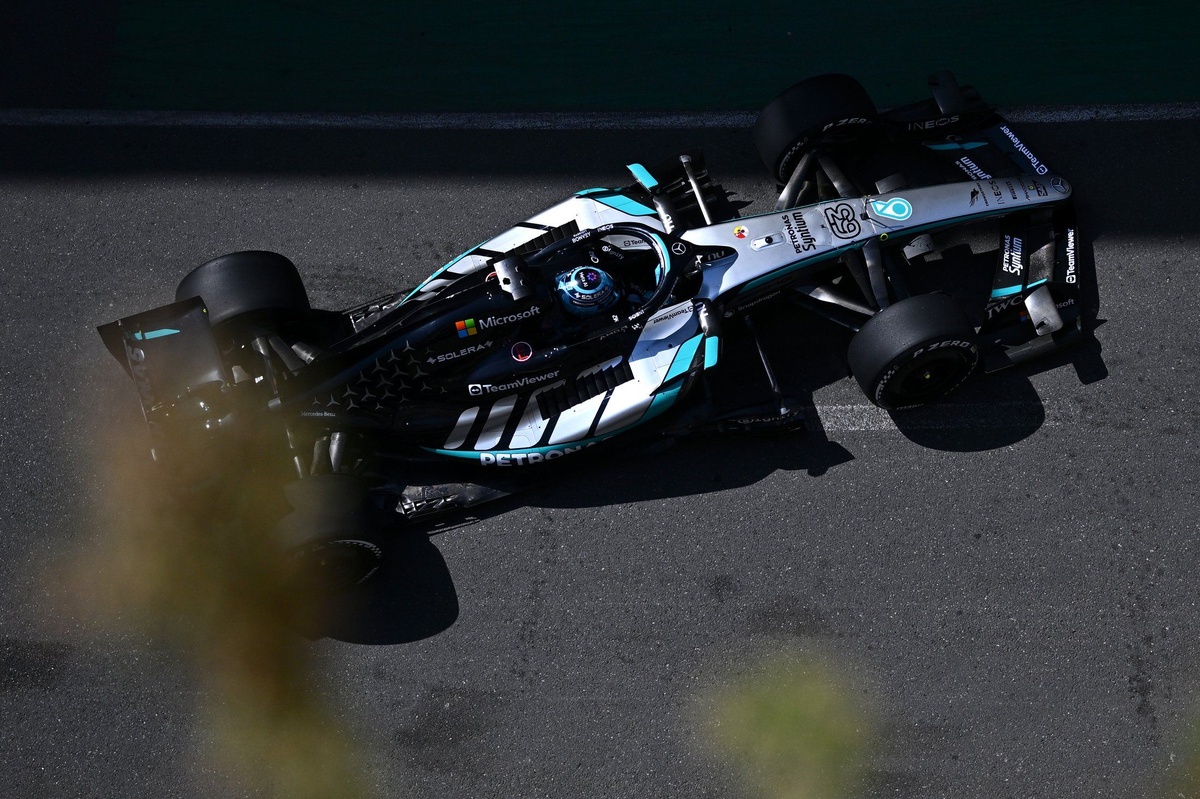
    George Russell set the pace in the first free practice session for the Formula 1 Azerbaijan Grand Prix, delivering a benchmark 1m45.387s on soft tyres with 20 minutes remaining to secure top spot for Mercedes. The Briton’s final effort edged out Max Verstappen’s Red Bull by a comfortable margin, while Charles Leclerc placed third for Ferrari to round out a tightly contested leading trio. The session, held on Thursday ahead of Saturday’s race to accommodate a national holiday, began cautiously on the dusty Baku city circuit, which sees Formula 1 action only once per year.

    Antonelli Hydraulic Failure Triggers Early Virtual Safety Car

    The session’s first major incident arrived before the halfway mark when championship leader Kimi Antonelli ground to a halt at Turn 7 with smoke billowing from his Mercedes W17. “a hydraulic issue,” the 20-year-old Italian reported over team radio, prompting a virtual safety car period while marshals cleared the car without requiring a red flag. The failure cost Antonelli valuable track time on a circuit where every lap counts, and he ultimately settled for fifth in the classification despite having briefly topped the timesheets with a 1m46.265s on harder rubber earlier in the hour.

    Upgrade Packages Debut as McLaren, Williams, and Audi Seek Gains

    Thursday’s running served as a critical shakedown for several significant technical updates. McLaren introduced new sidepods, a revised floor edge, and an updated diffuser aimed at addressing the MCL39’s low-speed weakness, though Oscar Piastri and Lando Norris endured a messy session—Norris languished in 14th without a representative soft-tyre lap as both cars underwent damage checks. Williams debuted its long-awaited package featuring a redesigned floor and lighter chassis, but brake overheating limited Carlos Sainz’s mileage. Audi’s upgraded machinery proved immediately competitive, with Nico Hulkenberg and Gabriel Bortoleto both reaching the top ten and displacing the Williams duo.

    Red Bull Brake Concerns and Rookie Impressions

    Verstappen reported early that “the brakes on his RB22 were pulling,” a concern echoed by returning team-mate Isack Hadjar, who also grappled with an apparent power unit issue on his first appearance since a wrist fracture sidelined him for three weekends. Verstappen briefly jumped to the top of the order with a rapid lap before Russell responded, though the Dutchman locked his fronts at Turn 1 and used the escape road on his subsequent push. At Racing Bulls, Liam Lawson returned to form in seventh ahead of rookie Arvid Lindblad, whose late spin at Turn 7—combined with Hulkenberg’s Turn 4 issue—brought out a second virtual safety car in the closing minutes.

    Why This Matters

    The Azerbaijan Grand Prix’s unusual Thursday-to-Saturday schedule compresses preparation time, making FP1 data disproportionately valuable for teams validating upgrades on a unique street circuit. Russell’s strong showing suggests Mercedes’ recent development direction is paying dividends on low-speed layouts, while Antonelli’s reliability setback underscores the fragility of his championship lead. McLaren’s aggressive update suite signals their intent to arrest a recent performance slide, and Audi’s immediate competitiveness with Hulkenberg and Bortoleto hints at a potential midfield shake-up. With track evolution rapid on the dusty Baku surface, Friday’s second practice—held under representative evening conditions—will be critical for tyre degradation analysis and race simulation ahead of Saturday’s grand prix.

    Frequently Asked Questions

    Why is the Azerbaijan Grand Prix being held on a Saturday?
    The race weekend was shifted forward by one day to accommodate a national holiday in Azerbaijan on Sunday, moving the grand prix from its traditional Sunday slot to Saturday.
    What caused Kimi Antonelli to stop during FP1?
    Antonelli suffered a hydraulic failure on his Mercedes W17 at Turn 7, reporting “a hydraulic issue” before his car stopped on track and triggered a virtual safety car period.
    Which teams brought major upgrades to Baku?
    McLaren introduced new sidepods, a revised floor edge, and an updated diffuser; Williams debuted a redesigned floor and lighter chassis; and Audi ran an upgraded specification on both cars.
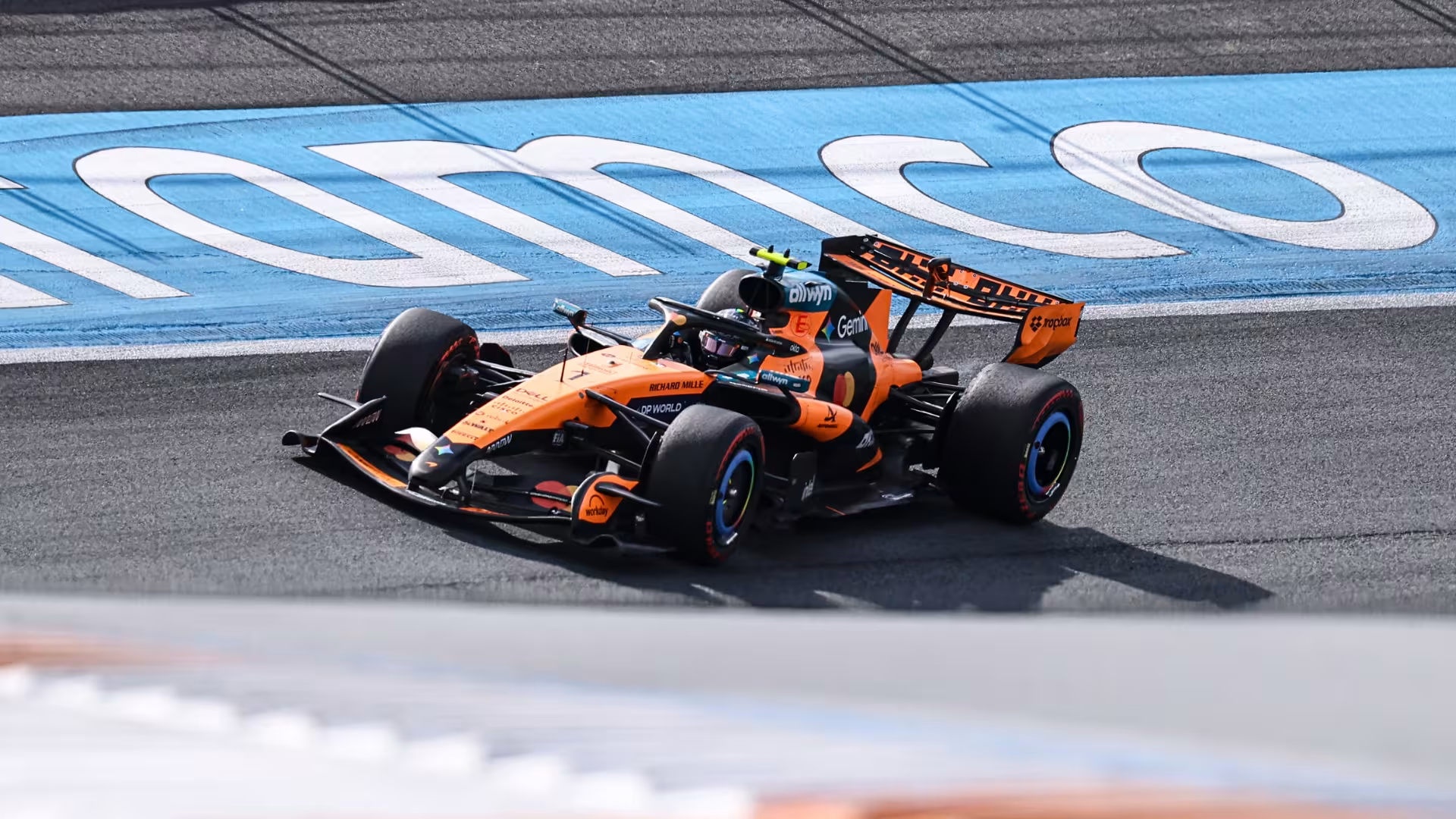
  • McLaren’s Newest Upgrades: What They Reveal Ahead of the Italian Grand Prix

    McLaren’s Newest Upgrades: What They Reveal Ahead of the Italian Grand Prix

    McLaren’s Zandvoort upgrades helped deliver back-to-back wins

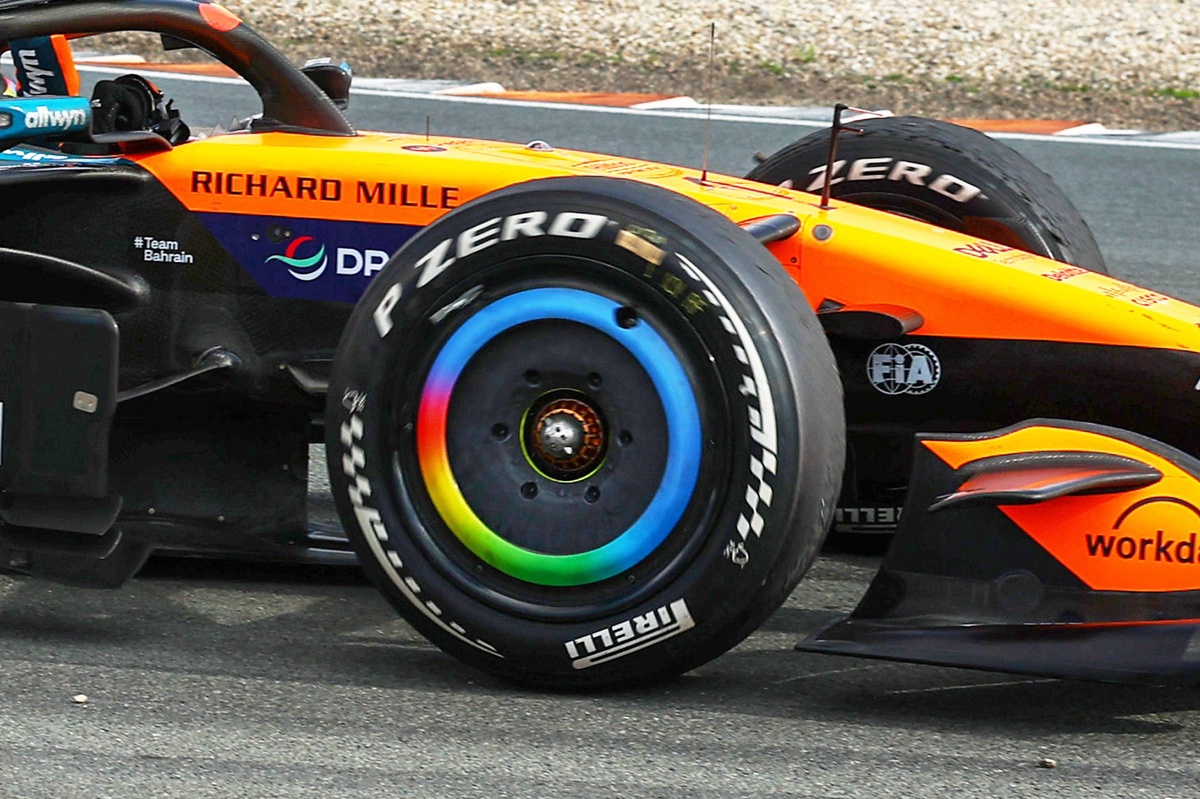
    Following its all-new floor, wakeboards and floor slots introduced in Hungary, McLaren brought further performance upgrades to Zandvoort. The latest package included a new rear wing, engine cover updates, diffuser tweaks and revised front wheel rims.

    “The items aren’t linked as a package,” explained McLaren’s technical director Neil Houldey of the Zandvoort parts. “They all provide aero performance as individual components and don’t need each other to perform.”

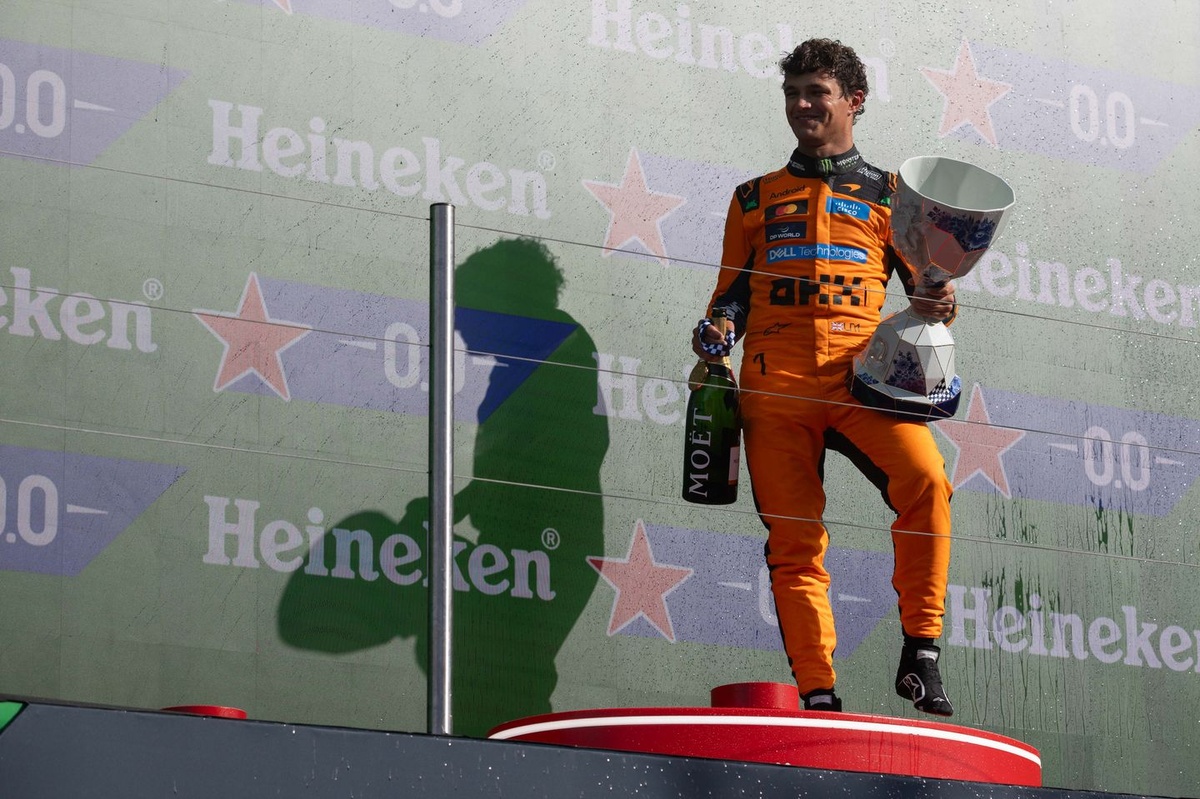
    The two consecutive upgrade packages proved highly effective, helping Lando Norris secure back-to-back Grand Prix victories, with both wins coming from pole position.

    Source: www.formula1.com

  • The Key Upgrade Behind McLaren’s Performance Leap

    The Key Upgrade Behind McLaren’s Performance Leap

    McLaren’s Zandvoort upgrades delivered more than a performance boost

    McLaren’s victory at Zandvoort, its second consecutive win after Budapest, highlighted the impact of the team’s upgrades introduced before and after Formula 1’s summer break. The developments did more than restore the aerodynamic load the car had been lacking: they also helped McLaren take a decisive step forward.

    High-speed corners reveal McLaren’s progress

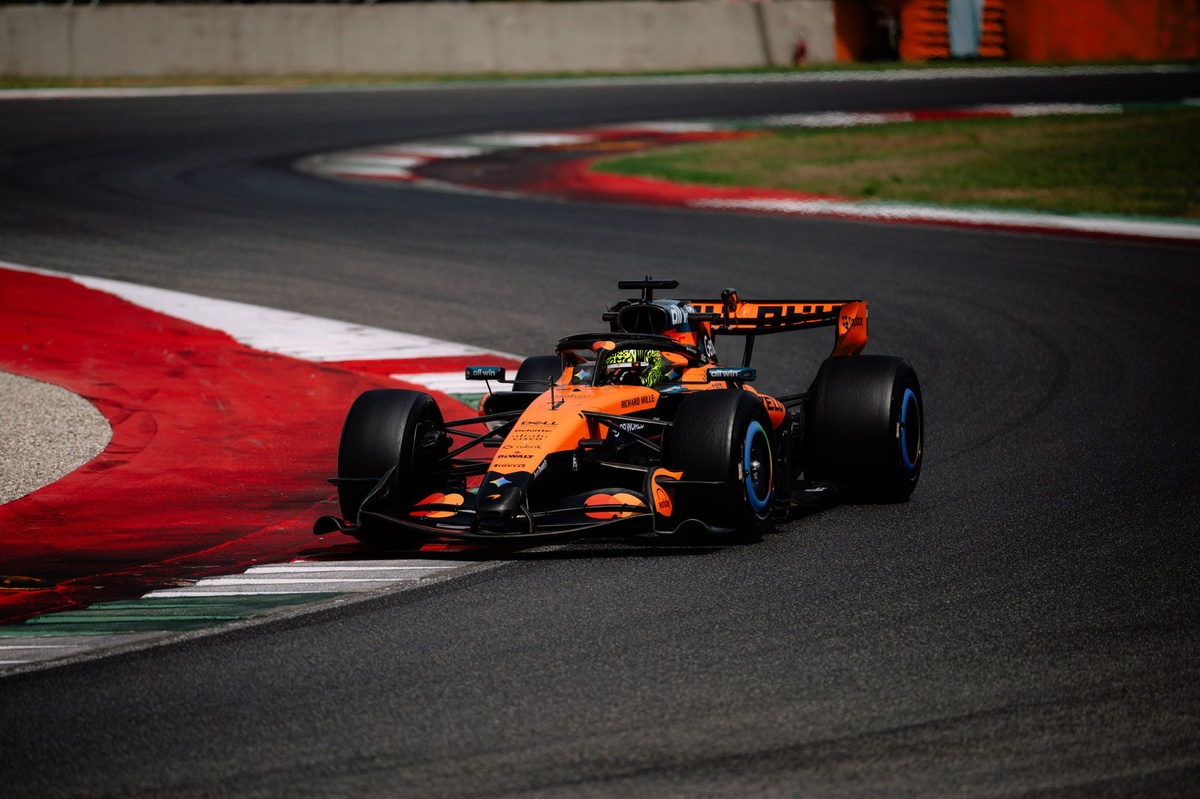
    McLaren’s strengths were already becoming apparent at the Spanish Grand Prix in Barcelona, while the car looked even more convincing at Spa. The faster and longer the corner, where absolute speed is not the only consideration, the more competitive McLaren became. Its latest upgrades supplied the additional downforce needed to make the car a benchmark through those sections.

    The effectiveness of the developments even surprised McLaren, with the car’s performance in high-speed corners exceeding the team’s internal expectations.

    Another factor in the Zandvoort victory received less attention: the introduction of new front wheel rims, a development McLaren technical director of engineering Neil Houldey had previewed before the weekend.

    McLaren wheel cover comparison

    Photo by: Clive Mason / Getty Images

    “We introduced a small change to the rear section of the floor to generate a bit of extra load, along with some minor tweaks to the rear brake ducts. We also have new front wheel rims, which will help us build more temperature in the tyres. These updates are not significant in terms of lap time, but they do make us slightly more competitive”, Houldey said.

    Why tyre temperature mattered at Zandvoort

    The significance of the wheel-rim change became clearer after the race. McLaren team principal Andrea Stella noted that Budapest and Zandvoort were both high-downforce circuits that naturally suited the car’s characteristics better than other tracks.

    McLaren’s difficulties at Monaco, however, showed that the problem was not limited to cornering speeds or circuit layout. The team had hoped to challenge at the front in Monte Carlo and repeat its successes from the previous year, but it finished outside the podium positions.

    Although Monaco offers teams greater freedom to set up the car because it involves fewer compromises, McLaren was hurt by a lack of downforce and difficulty generating heat in the front tyres. That reduced overall grip.

    The limitation had already appeared earlier in the season, most notably in Australia and China, where the car suffered significant graining. In Japan, however, graining was not a problem and a new track surface improved grip, allowing the MCL40 to score its first podium of the season.

    Front-axle graining was one of the concerns heading into the Zandvoort weekend, but it ultimately proved minimal across the field. The bigger challenge was getting the tyres into their optimal temperature window, even over a single lap.

    That was evident during the final Q3 runs on Saturday. Lando Norris secured pole position, while rival teams struggled to bring their tyres up to temperature and required an additional lap.

    Aston Martin’s 2026 wheel comparison demonstrates the difference between the front and rear designs used to manage temperatures

    Photo by: Gianluca D’Alessandro

    How McLaren’s new front rims managed tyre temperatures

    The issue was directly connected to McLaren’s upgrades in the Netherlands. Rule changes reopened wheel-rim development this season, giving teams an important tool for managing tyre temperatures and operating pressures.

    The internal cavities of a custom rim design, which some teams call “pockets”, allow engineers to passively control air exchange and thermal transfer to the tyre.

    At Zandvoort, McLaren focused on retaining more heat within the rim structure and transferring it more effectively to the tyre. As a result, only the front rim, produced by the team’s long-standing partner Enkei, was updated.

    The change was paired with a more enclosed wheel cover. Its purpose was to limit the cooling effect of ambient airflow hitting the assembly while also reducing drag.

    The rear rim remained unchanged because rear-tyre degradation was already a major factor throughout the weekend, including during the sprint and the race. At the rear of the car, McLaren’s priority was to keep temperatures under control during traction phases and through high-speed sections rather than generate additional heat.

    Strong gusts caused the cars to slide through high-speed corners, where extra downforce was crucial, as well as through key traction zones on the exits of slower corners. McLaren’s combination of aerodynamic improvements and front-rim development helped the team manage those challenges and convert its recent progress into another victory.

    Source: www.motorsport.com

  • McLaren Tipped to Become Mercedes’ Main Rival by the End of the 2026 F1 Season

    McLaren Tipped to Become Mercedes’ Main Rival by the End of the 2026 F1 Season

    Former Alpine Formula 1 team principal Otmar Szafnauer expects McLaren to emerge as Mercedes’ closest rival by the end of the 2026 season.

    Speaking on the High Performance Racing podcast with broadcaster Jake Humphrey, Szafnauer discussed the changing competitive order at the front of the Formula 1 grid after Lando Norris secured consecutive victories at the Hungarian and Dutch Grands Prix.

    McLaren upgrades could transform the F1 title fight

    McLaren has introduced significant upgrades at recent races. With the team’s development package now fully integrated ahead of the Italian Grand Prix at Monza, Szafnauer believes the Woking-based outfit can overtake Ferrari in the constructors’ championship and mount a stronger challenge to Mercedes.

    “Monza will be very important because [McLaren] brought an upgrade that did work in Hungary. I think they continued with that upgrade from what I read in Zandvoort, and now the upgrade’s complete. Let’s see how they go in Monza,” Szafnauer explained.

    “I still think they’re going to be Mercedes’ closest competitor at the end of the season. I said that at the beginning, but it seemed like it was Ferrari. And I think it’s ebbing and flowing, the relative performance due to the fact that not all of the upgrades are coming at the same time, and the upgrades are significant.

    “In a year where the regulations are new, you find a lot, right? So your learning curve is very steep. So when you bring that upgrade relative to those who haven’t, you make a step. And I think we saw that with Alpine as well. After Racing Bulls had their upgrade, they were significantly quicker than Alpine. It looked like they were going to get them. And now they’re there or thereabouts.”

    Lando Norris, McLaren. Photo by Eric Le Galliot.

    Mercedes upgrades limited by the cost cap

    Szafnauer also addressed why constructors’ championship leader Mercedes has spread its upgrades across the season instead of introducing new components more frequently. He attributed the team’s cautious approach to Formula 1’s cost cap.

    “Cost cap. They have upgrades now that they could bring, but once you start making those parts, it costs you, and they’ll go over the cap,” he said. “So what they’re going to do, my guess is, one more upgrade, Malaysia/Singapore timeframe.

    “That doesn’t mean the learning stops. The learning continues in the background. You’re still doing CFD work. You’re still doing wind tunnel work. You’re still making wind tunnel parts. All that’s planned.

    “It’s just a question of when you stop to actually bring that upgrade package. And that’s where the money is. When you make realised car parts, they cost: new wings, new floors, new bodywork. And I predict they’ll have one more big upgrade as opposed to a lot of little ones because they can’t afford it. They’re at the cap.”

  • Lando Norris Gives His Verdict on McLaren’s 2026 F1 Title Fight

    Lando Norris Gives His Verdict on McLaren’s 2026 F1 Title Fight

    Lando Norris remains confident that McLaren can make the necessary improvements to its current Formula 1 car and challenge for the 2026 world championship.

    Speaking to Sky Sports after announcing a contract extension with McLaren through the end of 2030, the British driver assessed the team’s prospects in the current championship campaign.

    McLaren endured a difficult start to the season but has made a significant performance gain following the introduction of upgrades. Norris has since claimed consecutive victories at the Hungarian and Dutch Grands Prix, moving himself into title contention.

    “Well, we’re trying to change that. That’s one thing I’m certain of,” Norris explained when asked if the car is in a position to fight for the championship.

    “The team is working better than they’ve ever worked before. I think they’re working in a more efficient, harder way, even than the last couple of years. And that level was world championship-winning level. So, it’s not that I don’t think we can win it.

    Lando Norris, McLaren
    Photo by: Eric Le Galliot

    “I’m confident we have a lot of what we need in place. It’s just certain areas on the car that we need to improve. And I believe we can. It’s just a race against time, as always, within Formula 1. But we proved over the last few weekends that we can still win races, and we have very good momentum.

    “I always want that little bit more, and I want to be confident that we can improve the car enough to easily say, ‘Yeah, we can fight for this world championship.’

    “So, we can easily fight as a team. We just need to improve some things with the car, and I’m still confident we can do that.”

    McLaren currently sits third in the constructors’ championship with 263 points, 162 points behind leaders Mercedes. Norris is fourth in the drivers’ standings with 159 points, 83 points behind championship leader Kimi Antonelli.

    Source: www.motorsport.com