Tag: Lando Norris

  • Spanish Grand Prix: How VSC Cost Lando Norris Race Win — And Should F1 Change the Rules?

    Spanish Grand Prix: How VSC Cost Lando Norris Race Win — And Should F1 Change the Rules?

    Norris Explains Pit Stop Decision After Race

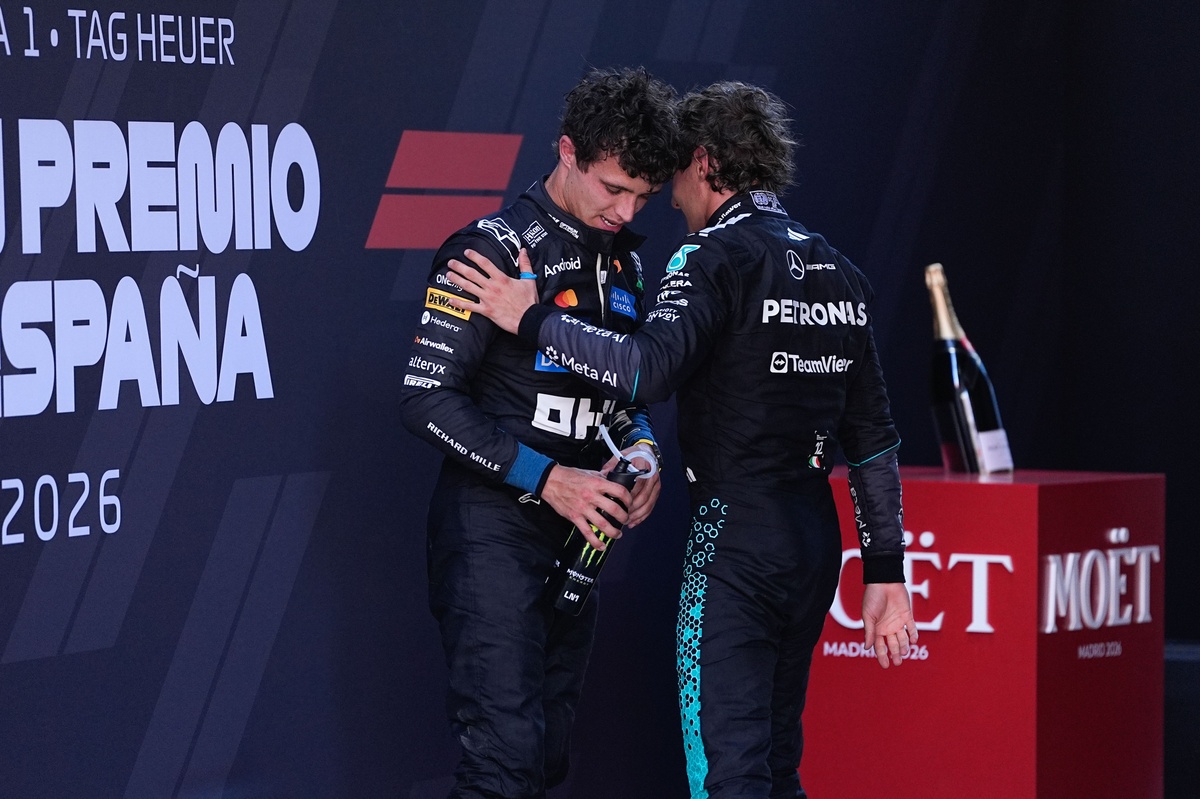
    After the race, McLaren faced questions about whether pitting on the following lap was the optimal call or if Lando Norris should have stayed out. Norris defended the decision, stating: “I had to come in at the end of the lap because it was the only chance.”

    He elaborated on the trade-offs: “It was still effectively some pit loss, (but) the fact that everyone’s kind of on colder tyres and you’re still minimising the pit loss.” Norris highlighted the tyre performance disparity: “The medium tyre (on which Norris had started the race) was destroyed and the hard tyre (to which Antonelli and Verstappen switched) was amazing.”

    Despite the outcome, Norris pointed to strong pace: “But the pace was very, very strong and on the hard tyre… I know they were stuck (behind Ferrari’s Charles Leclerc, who stayed out under the VSC), we caught up 13, 14 seconds or more, almost. So, plenty of positives. A day full of positives, just one thing let it all down.”

    Stella Analyzes Strategy Options

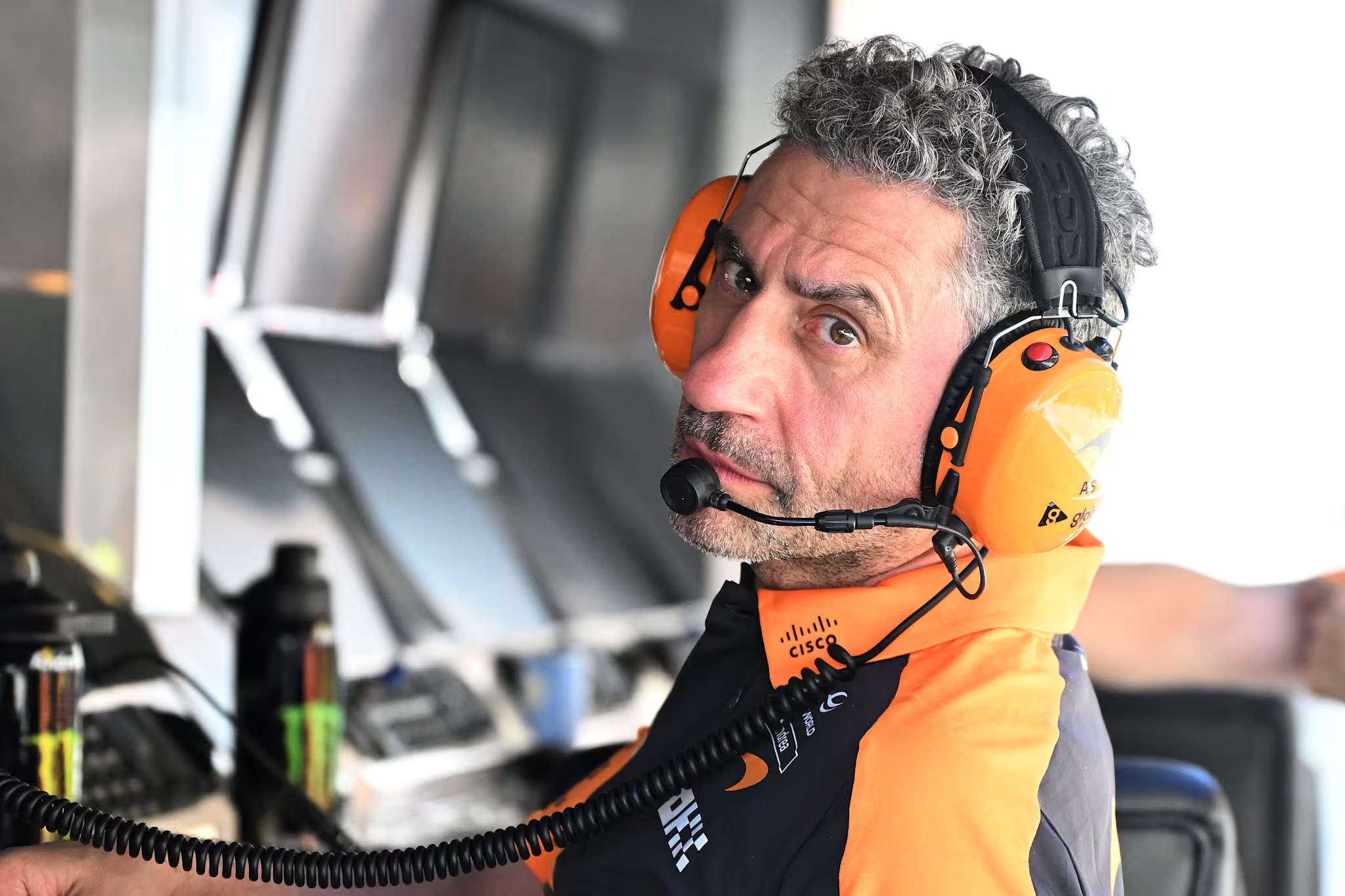
    McLaren team principal Andrea Stella confirmed the team evaluated staying out: “We considered staying out, but you have to accept the fact that now you are on relatively used medium tyres. And the people behind you will be on new hard. So you’re never going to open a gap on people on new hard.”

    Anticipating the VSC: Risk vs Reward

    Another question was whether McLaren should have anticipated the Virtual Safety Car (VSC) and pitted Norris before its deployment. Stella admitted: “In hindsight, that would have been a good idea.”

    However, he emphasized the real-time risks, noting the Madring circuit’s long pit lane — the longest on the calendar — meant a pit stop carried a significant time penalty. Stella said: “I would have to review with my engineers, see whether it was kind of obvious that it would end up in a virtual safety car. Therefore, you try to anticipate or not.”

    He detailed the specific danger: “Here, the problem is that you need to be extremely careful, because it’s 27 seconds if you don’t pit under a virtual safety car.”

    Stella explained the consequence of a wrong prediction: “So if you get it wrong, it would be extremely penalising. From the lead, you pit unnecessarily, and now you have lost the victory.”

    He outlined the team’s guiding principle: “So a good rule is to respond to what is a fact, to what is the real condition of the circuit.”

    Looking ahead, Stella said: “But we will definitely take a look as to whether in these conditions it was just simply, you know, obvious that he would end up in a virtual safety car. I cannot answer at the moment.”

  • “I almost fell asleep” – F1 drivers push for Madrid track changes after “very poor” Spanish GP

    “I almost fell asleep” – F1 drivers push for Madrid track changes after “very poor” Spanish GP

    Formula 1 Spanish Grand Prix Exposes Overtaking Flaws at New Madrid Circuit

    The inaugural Formula 1 Spanish Grand Prix at the Madring circuit delivered exactly the processional race many drivers predicted. Despite a spectacular qualifying layout, Sunday’s race offered virtually no overtaking opportunities, leaving the paddock united in criticism of the track’s racing dynamics.

    Drivers and Media Alike Struggle to Stay Engaged

    The lack of on-track action was so pronounced that journalists in the media centre reportedly nearly fell asleep during the event. Sauber driver Gabriel Bortoleto confirmed the sentiment from inside the cockpit: “I almost fell asleep as well!”

    Even race winner Kimi Antonelli, who leads the championship, admitted he enjoyed qualifying but not the Grand Prix itself. The Mercedes driver explained the core issue: “It definitely doesn’t create overtaking opportunities and it doesn’t push you to try and make a move, because 80% of the time you might have contact.”

    Antonelli cited a specific incident with Lando Norris at the second chicane: “I think especially in the second chicane, if I would have turned in there, me and Lando would have touched and probably gone into the wall and blocked the road. It definitely wouldn’t have been nice.” He concluded: “So, I think there are some corners that need to be changed to create more overtaking opportunities, because right now, yes, it’s nice over one lap, but for sure in the race you’re just stuck behind.”

    Layout Criticized Before Lights Out

    The fundamental design flaws were apparent to drivers long before the race. Max Verstappen stated on Saturday he could not see a single passing opportunity, telling Dutch media: “Just give me the track map” to indicate the extensive changes he would make.

    Drivers noted they were not consulted during the design phase, a contrast to the Jeddah Corniche Circuit where feedback was sought only after the first year proved dangerous. Haas rookie Oliver Bearman, who crashed heavily in final practice and missed qualifying, was blunt in his assessment: “You only have to look at the layout, and it’s quite clear that it’s going to be a poor track for racing.”

    Bearman added: “I mean, when you arrive and you see that layout, you’re like, what do you expect us to do? It’s a bit of a shame.” He identified two compounding factors: “Not only do you have a lot of long combined exits where it’s really tough to put power down, but you have a lot of combined entries as well. It’s very easy to drive a bit dangerously defending your position and, therefore, very hard to send an overtake.”

    The British driver confirmed the grid had already raised concerns: “We already said that to the FIA on Friday and we need to look into a way to make the track a bit more interesting for us, because it’s interesting to drive for sure, but in the race it’s very poor.”

    Junior Categories Confirm Fears

    Williams driver Alex Albon pointed to support races as early validation: “I hope there’s open-mindedness to make some track changes for next year. I mean, if the F3 cars can’t overtake, then you know there’s going to be no overtaking the whole weekend.”

    Albon believes the fixes are manageable: “I think there only needs to be a couple of changes to fix the problem. Otherwise, honestly, it’s not a bad track. It’s quite a fun track to drive, just like you saw in the races, it’s pretty boring.”

    Three Key Areas Targeted for 2027 Modifications

    Turns 3 to 5 Complex Requires Redesign

    Albon identified the sequence from Turn 3 to Turn 5 as the primary trouble spot: “A lot of it is around Turn 3 to Turn 5. I think that whole area needs to be redone, maybe straighter braking zones. We need to remove that chicane. It’s good for spectacle, but it’s not good for racing.”

    He also questioned the effectiveness of the banked Turn 13: “And I think the banking, as great as it is, it’s not really doing a good enough job in Turn 13. Turn 13 maybe needs to be a slower corner, a bigger braking zone.”

    Bortoleto highlighted a physical toll from the Turn 5 jump: “Just the jump in T5, to do that 50 laps, you get quite a lot of headache at the end of the race. So, it’s not the easiest one for our body.”

    Final Sector “Useless” Corners Need Simplification

    Lando Norris targeted the circuit’s final sector for streamlining: “I think there are some obvious changes they should make. They should get rid of Turn 18, 19, useless. Just have more of a straight into a hairpin. I don’t know how someone looks at this design and goes, ‘Mint.’ Yeah, I think there’s a lot of opportunity.”

    The McLaren driver referenced Circuit of the Americas as a positive template: “To me, it’s not a great racetrack. It’s great in qualifying, but, you know, a straight line from 17 straight to 20 [would help], to have a much wider entry like Austin Turn 1 or Turn 10, a big hairpin. You’ll create much better opportunities for everyone and you’ll be able to enjoy the race.”

    Norris acknowledged the complexity of the Turn 5-6-7 section: “There are some simple changes and maybe some trickier ones, like Turn 5, 6, 7. It’s hard to know exactly what is the best thing. The fact you have to turn and brake basically defeats the whole object of racing. So, they can do some simple changes, I think, easy changes and maybe some trickier changes, but I hope they do it because then it should be more exciting for everyone.”

    Shorter Pit Lane Proposed for Strategic Variety

    Beyond corner geometry, drivers are advocating for a shortened pit lane to encourage additional pit stops and create strategic alternatives, potentially manufacturing race excitement that the layout currently fails to produce naturally.

    With the Spanish Grand Prix locked in at the IFEMA complex through 2026 before a potential move, the unanimous driver verdict places pressure on organizers and the FIA to implement meaningful layout revisions before the 2027 season.

  • How Brutal VSC Timing Turned Lando Norris’ Spanish GP Upside Down

    How Brutal VSC Timing Turned Lando Norris’ Spanish GP Upside Down

    Norris Loses Spanish GP Victory by Two Seconds as VSC Timing Ends Win Hopes

    Lando Norris missed victory at the Spanish Grand Prix by a mere two seconds — the margin between the McLaren driver passing the Madring pit entry and the deployment of the virtual safety car that ultimately handed the win to Kimi Antonelli. Norris had built a 6.2-second lead over the Mercedes rookie by the start of lap 14 and appeared firmly in control after shaking off a frantic opening lap that saw championship leader Max Verstappen run off at both Turn 1 and Turn 5 while pressuring the Briton.

    Stroll’s Brake Failure Triggers Chain of Events

    The race dynamics shifted dramatically when Lance Stroll stopped at Turn 20 at the end of lap 13. The Aston Martin driver reported fading brakes — a problem that had earlier affected Lewis Hamilton, who managed to nurse his Ferrari back to the pits. Unlike Hamilton, Stroll had no strategic reason to continue and parked his car at the marshals’ post near the barrier opening, making it accessible for retrieval.

    Yellow flags waved just as Norris exited Turn 14. At that point, there was little indication a VSC would be called; the expectation appeared to be that marshals could quickly remove the stranded Aston Martin.

    McLaren team principal Andrea Stella later reflected on the decision not to pit pre-emptively:

    “In hindsight, it would have been a good idea [to pit pre-emptively], but we will have to review with my engineers to see whether it was kind of obvious that it would end up in a virtual safety car,” said McLaren team principal Andrea Stella.

    “Here, the problem is that you need to be extremely careful because it is 27 seconds if you don’t pit under a virtual safety car. So if you get it wrong it will be extremely penalising: from the lead, you pit unnecessarily and now you have lost the victory.

    “So, I think a good rule is to respond to what is a fact, to what is the real condition of the circuit. But we will definitely take a look as to whether in these conditions it was just simply obvious that it would end up in a virtual safety car.”

    VSC Deployed Two Seconds Too Late for Norris

    When Norris passed Stroll’s car, yellow flags were still displayed. McLaren opted against a pre-emptive stop, and the race leader negotiated Turns 21 and 22 — the final corners of the Madring layout. The virtual safety car was deployed the moment Norris exited the last corner, a timing McLaren calculated as just two seconds too late to bring their driver in.

    Antonelli, now 6.3 seconds behind, received the call to pit — as did Verstappen and George Russell. Both Antonelli and Verstappen switched to hard tyres, securing a one-stop strategy to the finish. Norris, meanwhile, faced at least one more lap before he could stop, with the risk that the VSC would end before he could capitalize on the reduced pit-lane time loss — approximately 30 seconds under normal conditions at Madring.

    Norris Stops After VSC Ends, Loses Track Position

    Antonelli and Verstappen emerged from their VSC stops behind Charles Leclerc, who had stayed out on his original hard tyres. Had Norris pitted under VSC conditions, he likely would have rejoined ahead of the Ferrari. Instead, Norris was instructed to stop regardless of the VSC status. The VSC ended as he rounded Turn 21, and he entered the pit lane for his sole stop, taking on hard tyres.

    A slow front-right wheel change added several seconds to his stationary time. Stella assessed the impact:

    “In fairness and for completeness, we had a seven second pit stop, so there’s definitely takeaways even when it comes to our operations.

    “It would have not made a difference for the final result, because probably Lando would have pitted anyhow behind Russell and even if not, it would have not been possible to overtake Verstappen and Antonelli. So definitely, we take note that there’s a lot of work to do in our operation, and it’s not the first time that we have a slow stop. But in terms of the race itself, it didn’t make a difference.”

    After Russell’s subsequent stop on lap 28, Norris closed on Verstappen but remained trapped in the Red Bull’s wake until the chequered flag, with victory slipping further away each lap.

    Radio Traffic Reveals Real-Time Decision Making

    The team radio exchange between race engineer Will Joseph and Norris captures the uncertainty:

    Will Joseph: Yellow flags at turn 20. Yellows. Virtual safety car deployed, virtual safety car deployed. No drives in the delta.
    Lando Norris: We box?

    WJ: If it stays long enough.
    LN: How big’s the crash?
    WJ: I think someone’s brakes… There are marshals on track at turn 20, I haven’t seen it. Just try and stay on the delta.
    And Lando [radio breaks]?
    LN: I think so, do you?
    WJ: Yes, we are.
    WJ: Lando, confirming we are boxing this lap, irrespective.
    LN: Confirmed.
    WJ: We still think there’s marshals on track.
    WJ: Virtual safety car ending, virtual safety car ending.
    LN: Confirmed box still?
    WJ: Yes, confirmed box. So box this lap.

    Could McLaren Have Gone Long?

    The lingering question is whether McLaren should have kept Norris out longer to build a sufficient gap. With Leclerc holding up Verstappen and Antonelli, a case exists that Norris could have extended his stint, built the roughly 30-second advantage needed to clear Antonelli, and either emerged ahead of Leclerc or waited behind him for the Ferrari’s stop.

    The data, however, undermines that scenario. Norris was on used mediums, and his gap to Leclerc pre-VSC stood at just 13.8 seconds. His per-lap advantage over the Ferrari was rapidly diminishing: 0.506 seconds quicker on lap 10, 0.272 on lap 11, 0.264 on lap 12, and only 0.027 on lap 13. With Leclerc experiencing no hard-tyre degradation and gaining pace from fuel burn, building the required 16-second buffer after the VSC lifted was effectively impossible.

    Norris quipped that McLaren had been “too fast” over the weekend — suggesting that in their usual competitive position, the VSC timing would have favored them. Stella concluded:

    “We considered staying out, but you have to you have to accept the fact that now you are on relatively used medium tyres and the people behind you will be a new hard – so you’re never going to open a gap on people with a new hard,” Stella concluded. “Therefore we kind of needed to accept that that was what we should have done, and the fact that it was incredibly unfortunate.

    “Sometimes we talk about being unlucky. I think at times the being unlucky is used for too many applications but, in this case, it’s almost a mathematical definition of being unlucky.”

  • “There was no option to retain the lead” – Andrea Stella explains logic behind Lando Norris’ ‘unlucky’ Spanish GP pit stop

    “There was no option to retain the lead” – Andrea Stella explains logic behind Lando Norris’ ‘unlucky’ Spanish GP pit stop

    McLaren Team Principal Andrea Stella has detailed the strategic call that saw Lando Norris pit for fresh tyres just as the Virtual Safety Car (VSC) period concluded at the Spanish Grand Prix, acknowledging that there was no option to retain the lead.

    VSC Timing Costs Norris Lead

    After securing pole position with a dramatic final lap in qualifying, Norris defended strongly against Kimi Antonelli on the opening lap and built a comfortable advantage. The race dynamics shifted when a VSC was deployed to recover Lance Stroll’s stranded Aston Martin. While rivals Antonelli and Max Verstappen pitted under the neutralised conditions, Norris had already passed the pit entry. He entered the pits only as the VSC ended, enduring a 7-second stop that dropped him to fifth place. Despite a strong recovery to finish third, the team’s frustration was evident.

    Stella Explains Strategic Reasoning

    Speaking to F1 TV, Stella laid out the rationale behind the decision:

    Starting from pole position, leading the race and having incredible pace… this would’ve been a race won by many seconds, and we ended up in third position.

    The reality is that in racing, there are elements that you can control and some that you cannot control. The timing of the Virtual Safety Car was a couple of seconds too late – Lando had already passed the pit entry – and then he was a few seconds too early because then it was ending once he came in to pit.

    When asked to elaborate on the logic of pitting versus staying out, Stella added:

    The logic is that if you stay out, you stay out with used mediums [that are] already grained, and it means that at some stage you will pit behind the people that have already pitted on the hard tyres, so it’s going to be a similar race to [Charles] Leclerc.

    We would actually have pitted even earlier because the medium would finish earlier, so there was no option really to retain the lead.

    We needed to accept that the timing was incredibly unfortunate and, like I said, it’s a positive race overall.

    The elements that we could not control made a difference but those that we could control make us very optimistic for the future.

    Positive Outlook Despite Frustration

    McLaren’s competitive trajectory has been upward all season, highlighted by Norris’s dominant victories in Hungary and the Netherlands. The Spanish Grand Prix weekend reinforced that progress, even in defeat. Verstappen admitted Norris was faster than all of us in the closing stages, while Antonelli felt the British driver deserved to win.

    Stella concluded with a perspective focused on the bigger picture:

    Just very unlucky, but I want to think that the positive message of a McLaren [that was] so competitive at a very different circuit layout to Zandvoort and Hungary is very encouraging for the future.

    We take it on the chin. Today we were too fast to win the race because had we been a little slower, we would’ve made it to the pits! We have a smile on our faces, we look forward to the rest of the season.

  • Max Verstappen Wins Driver of the Day After Second-Place Finish at Spanish Grand Prix in Madrid

    Max Verstappen Wins Driver of the Day After Second-Place Finish at Spanish Grand Prix in Madrid

    Verstappen Recovers to Secure Second Place at Madring After Early Penalty

    Max Verstappen demonstrated his championship mettle at the Madring, climbing from an early setback to claim a hard-fought second place for Red Bull Racing. The Dutch driver finished less than a second behind the winner after a tense battle with polesitter Lando Norris in the closing laps.

    Early Incident Drops Verstappen Down the Order

    The race did not start cleanly for the reigning champion. Verstappen cut the first chicane at the start, an infraction that resulted in a directive from race control to yield positions to rivals Kimi Antonelli and Lewis Hamilton. The penalty dropped him down the order early, forcing a recovery drive through the field.

    Masterclass in Race Management

    Undeterred by the early drama, Verstappen settled into a rhythm that showcased his signature ability to extract maximum performance from the machinery. He methodically worked his way forward, managing tire degradation and fuel loads to perfection. In the dying laps, he found himself hunting down race leader Lando Norris, applying relentless pressure on the McLaren driver.

    Despite a charging effort, Verstappen fell just short of the victory, crossing the line in P2 by a margin of less than a second. The defensive drive from Norris held firm, but the Red Bull driver’s pace in the second half of the race was a clear statement of intent.

    Fans Vote Verstappen Driver of the Day

    The performance resonated strongly with viewers, who voted Verstappen the standout driver of the Grand Prix. The final voting breakdown was as follows:

    • Max Verstappen – 23.5%
    • Charles Leclerc – 18.3%
    • Lando Norris – 16.2%
    • Kimi Antonelli – 9.7%
    • Franco Colapinto – 7.3%

    The result underscores Verstappen’s enduring popularity and the appreciation for a recovery drive that turned a potential disaster into a strong podium finish.

  • Mercedes thought it had pole position until Lando Norris took it

    Mercedes thought it had pole position until Lando Norris took it

    Mercedes Formula 1 team principal Toto Wolff briefly believed rookie Kimi Antonelli had secured pole position for the Spanish Grand Prix – until Lando Norris snatched it away in the closing moments of qualifying at the new Madring circuit.

    Antonelli’s Strong Run Fallen Short

    Antonelli markedly improved on his initial Q3 benchmark of 1m32.140s with a blistering 1m31.835s on his second flying lap, outpacing all rivals by at least 0.178 seconds. All, that is, except one. Norris, whose first effort sat at 1m32.525s, vaulted to pole position with a 1m31.824s – a margin of just 0.011s – despite what McLaren team principal Andrea Stella described as a three-tenth loss in the final corner.

    Wolff Sees the Positive in P2

    Wolff admitted he didn’t see the McLaren surge coming but preferred to frame the result as a gain rather than a loss.

    “It’s gained, looking at it that way,” Wolff told Austrian broadcaster ORF. “Before the weekend, I never believed we’d be at the front on this track layout.

    “When Lewis crossed the line, it seemed clear we were winning this. And then Lando puts in a lap like that under conditions that suddenly got so hot, where he is so good at managing rear overheating. It’s flawless.”

    McLaren had been slower than Mercedes in every practice session and qualifying segment prior to Q3, making the sudden performance swing a surprise to the Mercedes camp.

    “That surprised us, too,” he said. “But Lando has shown in the past that he can occasionally pull out a lap like that. Especially when it comes to getting a handle on rear axle overheating as best as possible. And in that regard, I think he’s in a league of his own.”

    Race Strategy Focused on Championship Battle

    Asked how he expected Sunday’s race to unfold, Wolff pointed directly to the drivers’ championship fight. Lewis Hamilton, identified as Mercedes’ main title rival, currently trails Antonelli by 76 points, while George Russell holds a slender 10-point advantage over his former teammate.

    “The most important thing is that we don’t crash into anything; that wouldn’t be good for the cost cap,” he pointed out. “And not losing points to Lewis and Ferrari. I think here you have to score, drive home, hopefully end up on the podium, hopefully ahead of Lewis. Then we’ve reached our goals.”

  • Why Lando Norris’ ‘masterpiece’ Madrid pole lap was ‘almost unrepeatable’

    Why Lando Norris’ ‘masterpiece’ Madrid pole lap was ‘almost unrepeatable’

    Norris Secures Third Pole in Four Races With ‘Masterpiece’ Lap in Madrid

    A remarkable final lap from Lando Norris in Q3 at the Madrid circuit delivered a third pole position in four races for the McLaren driver, prompting team principal Andrea Stella to label the performance a “bit of a masterpiece”.

    The achievement stands out not only in the context of the 2026 season but across Norris’ entire career. Perhaps the most striking detail was a slide at the 22nd and final corner—caused as his tyres began to degrade—that cost him over 0.3 seconds. Despite the mistake, his advantage was already so substantial that he still claimed his 19th career pole. The performance electrified the McLaren pit wall and fans alike, particularly because it appeared to materialize unexpectedly.

    Stella Hails ‘Most Impressive Lap’ in 450 Grands Prix

    “I would say that definitely this was one of the most impressive laps that I witnessed, as somebody that watches telemetry in 450 Grands Prix,” Stella said after the session.

    “Because we were not honestly performing to the level of scoring of pole position. I think at no stage during the weekend we demonstrated that the car was performing at the level of being the best car.

    We were lacking quite significantly in the first sector – low-speed and kerbing – and for the drivers it was a very difficult car to nail a lap. We saw that there were spells of potential, but it’s always very difficult to put it together.”

    As Stella noted, the pole lap would have been even more dominant without the time loss at the finale.

    “I think the most impressive thing is the fact that it’s a pole position despite having lost three and a half tenths in the last corner,” the Italian explained. “Which means that it would have been a pretty convincing pole position without this issue.

    At the same time, this issue is a consequence of pushing to the level that Lando managed to push. But today, everyone will push the limits.

    The thing that makes the lap unique, when you look especially at the telemetry, is the precision, the braking, the speed you carry an entry, the striking of the kerb, the going on power – everything is executed with a pretty unique level of precision.

    So for me, that’s if anything the main attribute that would associate to this lap, just the incredible precision in the metre-by-metre execution.”

    McLaren’s Weekend-Long Focus on Sector 1 Pays Off

    Throughout the weekend, the McLaren engineering team concentrated on the critical opening sector, which features tight complexes at Turns 1 and 2 and again at Turns 5, 5A, and 6. Progress was hampered by a gearbox issue that cost Norris crucial track time in FP2, but incremental setup tweaks through FP3 and qualifying gradually delivered the improvements the team targeted.

    “Shout out to Lando, but let me say also to the team,” said Stella. “Because we had the clear objective from the first runs in practice to add some low-speed performance and kerbing performance.

    And we kept doing that session after session, but obviously P2 was a bit of loss of ground, because Lando lost pretty much the entire session. So I think this makes his work in Qualifying even more remarkable. And also on Oscar, we were experiencing a little problem on the car, so we didn’t have great references. We kept learning, we kept putting this together.”

    Overcoming the MCL40’s Inherent Low-Speed Weakness

    Stella emphasized that the core challenge was overcoming the inherent characteristics of the MCL40.

    “The car much more naturally performs well in high-speed, fast-flowing sections,” he said. “But struggles to be consistent when you brake and you carry the brakes into low-speed, and then you have to hit a kerb – it’s very unpredictable.

    And here there’s many of these kinds of corners. So to start with, in FP1, we saw the difficulties. What I appreciated in the work of the team is that we gave ourselves a clear objective, and we started to nail several areas of the setup that ultimately compounded and allowed the performance of the car to go to another level.

    So corner 5, corner 6, I think it’s one of the most difficult corners of the entire championship. The fact that a McLaren could have the fastest Sector 1, it was not only in 5 and 6, we can see in the GPS overlays that we are also the fastest in corner 1 and 2.

    But once again, the amount of kerb that you take in corner 1 and landing without upsetting the car, this is why I say the lap was almost unrepeatable, because all this was nailed. So the gain in Sector 1 comes 50% in 5/6, but the other 50% in corner 1 and 2.”

    Setup Changes Transform Car for Key Corners

    The setup revisions also paid dividends across other critical sections, as Stella further detailed:

    “Like I said before, the car was completely changed from the start of FP1 to perform well in these two corners, and corner 7 and corner 20. These are the places where we focussed, because we knew that in the other corners the performance was coming quite naturally for the characteristics of the car.

    And in these places, we forced the car to work, but still the performance needed to be extracted. And like I said, this required a level of precision that thankfully we were able to deploy in the final run of Q3. But you know, that lap gives you a sense that it would be difficult to be repeated.”

    He added: “Still, I think the exploitation of car potential for the pole position lap is pretty unique. I would say that if we put another set of tyres, I mean, we would gain three-tenths in the last corner, but I’m not sure we would be able to repeat what Lando was able to do in the first 21 corners.”

    Tyre Degradation Costs Three Tenths at Final Corner

    The only blemish for Norris and the team was the slide at the very end of the lap as the tyres passed their optimal window.

    “I think in the last corner he just paid the price of the fact that the lap was coming like one second faster than any other lap,” Stella explained. “Therefore, there was quite a lot more that was extracted from the tyres. But the tyres were tired, and somehow Lando did not take this into account, and he entered the corner with the same impetus that he had in some other corners.

    I think it’s just a little bit of a toll that was presented by the tyres – he oversteered in entry, and this means that he loses completely the racing line. And like I say, he lost more than three-tenths.”

  • ‘I just really pushed the limit’ – George Russell reveals tyre troubles ruined pole chance in Madrid

    ‘I just really pushed the limit’ – George Russell reveals tyre troubles ruined pole chance in Madrid

    George Russell has identified overheating tyres as the primary factor behind his drop in pace during Qualifying at the Spanish Grand Prix, where he fell out of pole contention to secure sixth on the grid.

    The British driver initially showed strong adaptation to the circuit, topping the timesheets in the opening practice session. However, his relative performance declined across subsequent sessions, with Russell finishing fifth in FP2 and sixth in FP3.

    Qualifying Pace Lost to Tyre Overheating

    Russell recovered some form heading into the decisive qualifying hour, setting the fastest lap in Q1 despite brushing the wall on his first run. Although the top-10 shootout presented an opportunity to claim his fifth pole position of the season, he was unable to match the pace of Lando Norris and Kimi Antonelli, ultimately qualifying sixth — his lowest grid slot since the Hungarian Grand Prix.

    “I was in the mix to fight for pole and on that last lap of Q3, I just really pushed the limit,” he reflected. “I was about three tenths up and then lost it all towards the end of the lap with the tyres overheating.

    “That was quite a shame. It was really close between everyone out there and here we are.”

    Championship Context and Ongoing Tyre Struggles

    Russell previously offered a candid assessment of his title prospects entering the weekend, conceding that Antonelli had “done a better job” across the season to date and deserves his current 66-point lead in the Drivers’ Championship.

    While the outcome of Sunday’s Spanish Grand Prix remains open, Russell acknowledged that his persistent tyre issues will continue to hinder his progress unless Mercedes can find a solution overnight.

    “I jumped in the car and felt very comfortable here, and confident. As the track has got faster, I’ve been struggling to get the most out of the tyres.

    “I’ve just been sliding rather than going round the corners faster, and I need to understand why that is.”

  • Max Verstappen Outlines Spanish GP Focus After Qualifying P3

    Max Verstappen Outlines Spanish GP Focus After Qualifying P3

    Verstappen Positive After Qualifying Third for Spanish Grand Prix

    Max Verstappen has outlined the key areas Red Bull will target during Sunday’s Spanish Grand Prix, expressing satisfaction after securing third place in qualifying at the Madring circuit.

    The four-time world champion had finished no higher than fifth across all three practice sessions, admitting on Friday that he and the team were still getting up to speed with each lap. However, Verstappen turned the form around on Saturday, topping Q2 before claiming P3 in Q3 behind polesitter Lando Norris and championship leader Kimi Antonelli.

    Room for Improvement in Final Sector

    Asked whether the result exceeded expectations, Verstappen replied:

    “Yeah, the car was honestly in a quite decent window, and for us I think to be in the top three in Qualifying is good. We can be happy with that.

    “I think still there’s room for improvement – there can be some improvements made, especially in the final sector.

    “That’s where we really were struggling probably a little bit too much with our deployment strategy. So that’s things to learn for in the future, but for us to be in the top three is good.”

    Tyre Management Critical for Race Debut at Madring

    Looking ahead to the first Formula 1 race at the Madrid venue, Verstappen emphasised that tyre management will be pivotal.

    “[It could be] a long race, tough on tyres, so we’ll be really about managing that and trying to really extract the most out of it and see what we can do,”

    the 28-year-old said.

  • Lewis Hamilton: ‘We’ve got to work harder’ after missing 2026 Spanish GP pole for Ferrari

    Lewis Hamilton: ‘We’ve got to work harder’ after missing 2026 Spanish GP pole for Ferrari

    Hamilton and Ferrari Target Improvement After Spanish GP Qualifying

    Lewis Hamilton insists both he and Ferrari must “got to work harder” to close the performance gap after missing out on pole position for the Spanish Grand Prix. The seven-time world champion qualified fourth, finishing less than two-tenths of a second behind polesitter Lando Norris.

    FP3 Crash Puts Hamilton on Back Foot

    Hamilton entered Saturday’s qualifying session at a disadvantage after a heavy crash at the final corner during Free Practice 3. The British driver hit the barrier head-on and was forced to stop his damaged car on track after team radio calls instructed him to pull over rather than return to the pits.

    Despite the lost track time, Hamilton recovered impressively. He sat on provisional pole after the opening runs in Q3 before ultimately slipping to fourth in the final classification.

    Hamilton Reflects on Qualifying Performance

    When asked to assess his day, Hamilton downplayed the earlier incident.

    “The only thing to say about FP3 is nothing. Qualifying was pretty decent,”

    he said.

    “Generally been feeling pretty decent. It takes everything for us to be able to compete with the two powerhouse motors [Mercedes and McLaren] ahead.”

    Hamilton pointed to a perceived engine mode advantage for the leading teams during qualifying sessions.

    “They just seem to be able to turn the engine up or something when we get to Qualifying which we can’t match. We’ve got to work harder.”

    Leclerc Takes Responsibility for Fifth Place

    Teammate Charles Leclerc qualified fifth, directly behind Hamilton and also within two-tenths of Norris’s benchmark time. The Monegasque driver believed he over-drove during the decisive final segment.

    “I think the lap was pretty good in Q3, it’s a tricky Qualifying where you’ve got to go fully committed into Q3 and I did that,”

    Leclerc explained.

    “But I felt like I maybe went over the limit a little in some corners and lost a little bit on top of maybe losing down the straights a bit because of running the older spec [engine].”

    Leclerc accepted full accountability for the result.

    “But at the end, that’s on me. I think we did a good job today and we maximised our potential.”

    Both Ferraris start the Spanish Grand Prix from the third row, targeting a strong race pace to challenge the leading Mercedes and McLaren entries.