Tag: Lando Norris

  • Lando Norris Says FIA Should Hand Franco Colapinto a Race Ban After Baku F1 Crash

    Lando Norris Says FIA Should Hand Franco Colapinto a Race Ban After Baku F1 Crash

    Key Highlights

    • Lando Norris called for at least a one-race ban after Franco Colapinto’s restart crash at the Azerbaijan Grand Prix.
    • Colapinto locked up on cold tyres and brakes at Turn 1, colliding with Alpine teammate Pierre Gasly and McLaren’s Norris.
    • The incident eliminated both Norris and Gasly, while Colapinto apologized to his team, Gasly and Norris.

    Lando Norris demands tougher punishment for Franco Colapinto

    Reigning world champion Lando Norris believes Franco Colapinto should receive “at least a one-race ban” for causing a three-car incident during the Azerbaijan Grand Prix restart in Baku.

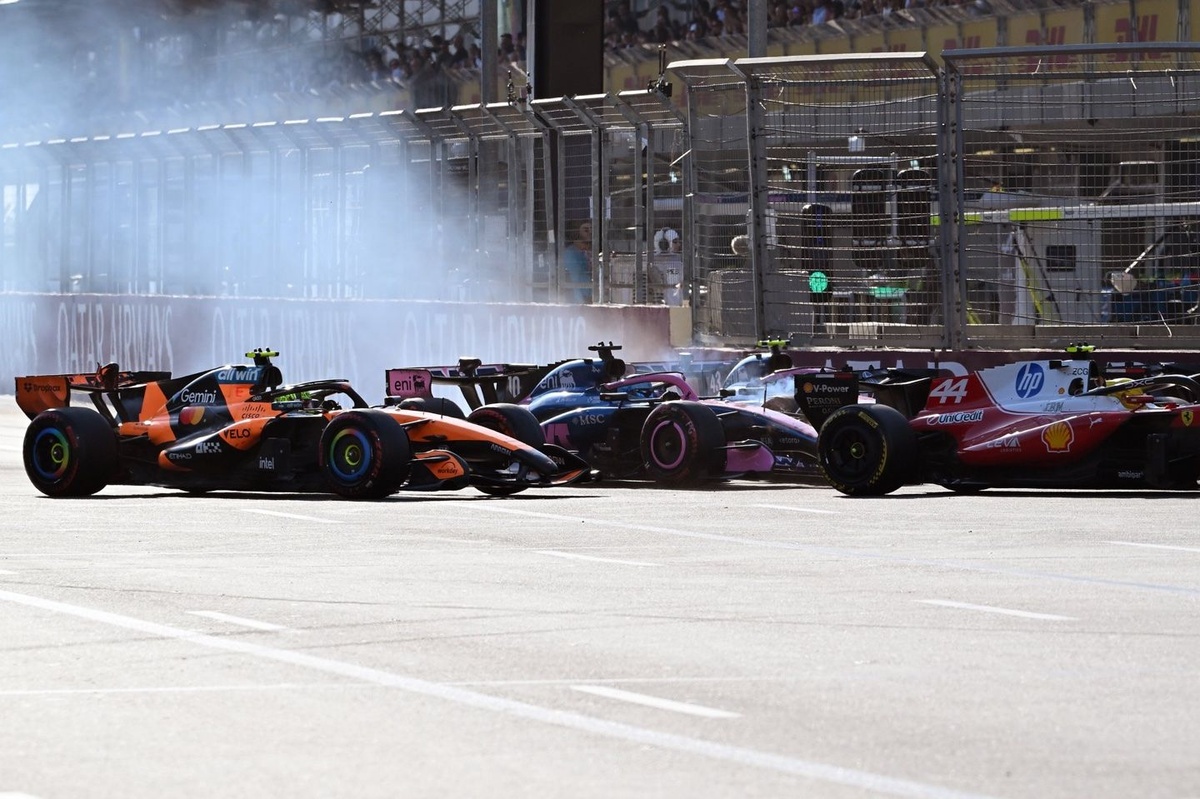
    On lap 36, Colapinto locked up his cold front tyres and went straight into Alpine teammate Pierre Gasly at Turn 1. Norris was caught in the collision as the two Alpine cars tangled, forcing both Gasly and Norris to retire from the race.

    The crash ended a difficult afternoon for Norris, who had struggled for pace and made a Turn 1 error of his own on the restart that dropped him into the pack. The McLaren driver was angered by what he considered careless driving and argued that Formula 1’s race stewards should impose stronger penalties for incidents of this nature.

    “I’ve not seen it. I just got taken out. I think the FIA should be stricter and start handing out bans for this kind of stuff,” Norris vented. “It’s careless from people. It costs a lot of money; all my parts are in the bin now. People should just get banned, because that’s not driving that deserves to be in Formula 1.

    Norris rejects cold conditions as an excuse

    Asked whether the slippery Baku circuit and low tyre temperatures provided mitigating circumstances, Norris said Formula 1 drivers should anticipate reduced grip during a restart. He also questioned whether the conditions were unusually difficult for the field.

    “In Formula 1, I think you expect drivers to anticipate things. Grip is going to be low; tyre temps are low; they weren’t even that low. In Formula 1, we want to be against the best drivers in the world, and when stuff like this happens, it’s because [they] shouldn’t be there.

    Norris said he had not yet reviewed the incident, but maintained that causing a crash during a restart warranted a significant sanction.

    “I’ve not seen it, but if you cause a crash in a restart like this, you should have at least a one-race ban.”

    Franco Colapinto apologizes after Azerbaijan GP crash

    Colapinto also accepted responsibility for the collision. The Argentine driver was battling for points alongside Gasly before his mistake ended the Alpine team’s chance of scoring with both cars and eliminated Norris from the race.

    “A big mistake,” the Argentinian acknowledged. “I locked up completely with cold tyres and cold brakes and was out of control completely. Not a lot to say more than sorry to the team, to Pierre of course, to all the factory.

    Colapinto said Alpine had worked hard to score points in Baku and described the crash as a major disappointment. He also apologized directly to Norris after recognizing that his mistake had ended the McLaren driver’s race.

    “We’ve been working really hard to score points and I threw it away with that big mistake. So, I’m very sad for the team. Of course it’s a big disappointment. I’m sorry to Lando as well.”

    Why This Matters

    The Azerbaijan Grand Prix restart highlighted the risks drivers face when grip and tyre temperatures are low in the opening corners after a neutralization. The collision had consequences for three drivers, ended Norris’s race and damaged Alpine’s points prospects while intensifying the debate over whether restart incidents should attract harsher Formula 1 penalties.

    Norris’s comments were based on his initial view from inside the incident, while Colapinto acknowledged that his lock-up left him out of control. The severity of any official response remains a matter for the FIA race stewards.

    Frequently Asked Questions

    What happened between Franco Colapinto, Pierre Gasly and Lando Norris?

    During the lap 36 restart at the Azerbaijan Grand Prix, Colapinto locked up his cold front tyres and collided with Alpine teammate Pierre Gasly at Turn 1. Norris was also collected in the incident.

    Why does Lando Norris want Franco Colapinto banned?

    Norris believes Colapinto’s restart mistake was careless and serious enough to justify a one-race ban. Norris said such incidents cause costly damage and should receive stricter punishment.

    Did Franco Colapinto accept responsibility?

    Yes. Colapinto described the crash as a “big mistake,” said he was completely out of control after locking up, and apologized to Alpine, Gasly and Norris.

  • How to Stream the 2026 Azerbaijan Grand Prix on F1 TV Premium

    How to Stream the 2026 Azerbaijan Grand Prix on F1 TV Premium

    Key Highlights

    • Kimi Antonelli leads the 2026 Formula 1 Drivers’ Championship by 81 points heading into the Azerbaijan Grand Prix at the Baku City Circuit.
    • Apple becomes Formula 1’s new Official U.S. Broadcaster, with F1 TV included free within Apple TV subscriptions and the F1 TV broadcast team fronting English-language coverage.
    • F1 TV Premium offers 4K Ultra HD/HDR streaming on up to six devices with a 26-feed Multiview feature, plus access to F2, F3, F1 Academy, and Porsche Supercup sessions.

    Azerbaijan Grand Prix Sets Stage for Championship Showdown in Baku

    The 2026 Formula 1 season arrives at the Baku City Circuit this weekend for the Azerbaijan Grand Prix, with championship leader Kimi Antonelli looking to extend his commanding advantage on the streets of Baku. The Mercedes driver enters the round with an 81-point lead at the top of the drivers’ standings following his victory at the Spanish Grand Prix in Madrid, positioning him as the clear favorite to add another triumph to his growing tally.

    Lando Norris, the reigning World Champion, arrives in Azerbaijan seeking redemption after a cruel twist of fate in Spain. The McLaren driver missed out on a potential race win when his pit stop coincided with the conclusion of a Virtual Safety Car phase, costing him critical track position. Norris will be keen to bounce back on a circuit that has historically produced unpredictable racing and dramatic momentum shifts.

    F1 TV Expands Access with Apple Partnership in United States

    Formula 1’s streaming platform is undergoing a significant transformation in the United States. Apple has been named Formula 1’s new Official U.S. Broadcaster, with F1 TV now included for free within Apple TV subscriptions. This strategic partnership streamlines access for American fans while enhancing the overall viewing experience. The established F1 TV broadcast team will primarily front Apple TV’s English-language coverage, bringing their expertise and insight to a substantially wider U.S. audience.

    For viewers seeking the premium experience, F1 TV Premium delivers races in 4K Ultra HD/HDR across up to six simultaneous devices. A personalized Multiview feature—available on select devices—offers 26 different feeds to choose from, allowing fans to curate their own race perspective. The platform also provides comprehensive coverage of every Formula 1 Grand Prix, Sprint, Qualifying, and practice session, alongside live streams of F2, F3, F1 Academy, and Porsche Supercup events.

    Enhanced Content Library and Global Payment Options

    Beyond live race coverage, F1 TV continues to expand its on-demand library with in-depth programming. Tech Talk Retro examines iconic car designs from Formula 1’s history, while F1 Icons chronicles the careers of legendary drivers from past eras. The service has also broadened its payment infrastructure, now accepting American Express among other methods to facilitate easier global access for subscribers.

    F1 TV Pro and Premium remain available in selected locations only. Fans can check regional broadcaster details and session times for the Azerbaijan Grand Prix through official Formula 1 channels.

    Why This Matters

    The Azerbaijan Grand Prix represents a critical inflection point in the 2026 championship. With an 81-point cushion, Antonelli holds a near-insurmountable lead with more than half the season remaining, though Baku’s history of safety cars and high-attrition races means no lead is truly secure. Simultaneously, Formula 1’s U.S. media rights shift to Apple signals the sport’s accelerating push into mainstream American streaming ecosystems, potentially reshaping how millions of new fans discover and consume F1 content. The integration of F1 TV into Apple’s subscription bundle removes a significant friction point for casual viewers, while the Premium tier’s 26-feed Multiview caters to the hardcore enthusiast demographic that drives sustained engagement.

    Frequently Asked Questions

    How can I watch the Azerbaijan Grand Prix in the United States?

    In the U.S., the Azerbaijan Grand Prix will be available on Apple TV, which now includes F1 TV free with an Apple TV subscription. The F1 TV broadcast team will front the English-language coverage on Apple’s platform.

    What is the difference between F1 TV Pro and F1 TV Premium?

    F1 TV Pro provides live coverage of every session with exclusive features like onboard cameras for all 22 cars and Pre-Race/Post-Race shows. F1 TV Premium adds 4K Ultra HD/HDR streaming on up to six devices, a 26-feed Multiview feature on select devices, and access to F2, F3, F1 Academy, and Porsche Supercup sessions.

    Is F1 TV available worldwide?

    F1 TV Pro and Premium are available in selected locations only. Fans should check the official Formula 1 website for details of broadcasters in their specific area.

  • Formula 1 2026 Azerbaijan Grand Prix: Start Time and How to Watch

    Formula 1 2026 Azerbaijan Grand Prix: Start Time and How to Watch

    Key Highlights

    • Formula 1 heads to the Baku City Circuit for the 2026 Azerbaijan Grand Prix, with the race scheduled for Saturday, September 26 at 15:00 local time.
    • Kimi Antonelli holds a commanding 81-point lead in the drivers’ championship after his Madrid victory, while Lando Norris seeks redemption after missing a potential win from pole position.
    • Formula 2 continues its 2026 campaign in Baku for Round 12 with championship leader Nikola Tsolov in action across a packed support-race schedule beginning Thursday, September 24.

    Formula 1 Arrives in Baku for Critical Championship Weekend

    The Formula 1 circus touches down in Azerbaijan this week for the ninth running of the Azerbaijan Grand Prix at the Baku City Circuit, marking the venue’s 10th Formula 1 outing since its debut as the European Grand Prix in 2016. The street circuit, renowned for its dramatic blend of high-speed straights and tight, twisty sections winding through the city’s historic old town and medieval walls, sets the stage for a pivotal weekend in the 2026 championship battle.

    Championship Dynamics: Antonelli Extends Lead, Norris Hunts Redemption

    Kimi Antonelli arrives in Baku with a formidable 81-point advantage at the top of the drivers’ standings following his victory at the previous round in Madrid. That race delivered a significant twist: polesitter Lando Norris, driving for McLaren, failed to convert his grid position into a win, handing Antonelli a crucial psychological and numerical edge. The McLaren driver will be desperate to bounce back on a circuit that has historically produced unpredictable outcomes, while Antonelli aims to continue his commanding run of form and tighten his grip on the title.

    Baku’s Unique Challenge and Historical Winners

    The Baku City Circuit’s distinctive layout—looping around the Caspian Sea waterfront and through the narrow streets of the old town—has consistently tested driver precision and car reliability. Over the years, only two drivers have managed multiple victories at this venue: Sergio Perez and Max Verstappen, both of whom have stood on the top step of the podium twice. Their success underscores the circuit’s demand for a blend of outright speed, tire management, and race craft, qualities that will be essential again this weekend.

    Session Schedule and Global Broadcast Details

    The weekend kicks off unusually early with Free Practice 1 on Thursday, September 24 at 12:30 local time, followed by Free Practice 2 at 16:00. Friday, September 25 sees Free Practice 3 at 12:30 and Qualifying at 16:00, setting the grid for the Grand Prix itself on Saturday, September 26 at 15:00 local time. Comprehensive global start times for all sessions are available via the official Formula 1 race hub.

    Fans can watch every session live on F1 TV Pro (available in selected territories), which offers ad-free coverage, onboard cameras from all 22 cars, and pre- and post-race shows in six languages. The service streams via Apple TV, Chromecast (Gen 2+), Android TV, Google TV, Amazon Fire TV, and Roku. For an enhanced experience, F1 TV Premium provides 4K Ultra HD/HDR streaming on up to six devices simultaneously, plus a personalized Multiview feature with 26 selectable feeds on compatible devices. The platform also includes live coverage of F2, F3, F1 ACADEMY, and Porsche Supercup sessions. Live timing remains accessible on F1.com and the official F1 app throughout the weekend.

    Weather Outlook and Formula 2 Support Action

    Current forecasts indicate mild and dry conditions for the Azerbaijan Grand Prix weekend, though the circuit’s proximity to the Caspian Sea often brings gusty winds that have caught out drivers in previous years. Teams will need to monitor aerodynamic balance closely, particularly during qualifying and the race.

    While Formula 3 concluded its season in Spain, the 2026 Formula 2 championship moves to Baku for Round 12. Championship leader Nikola Tsolov heads the field into a packed schedule: Qualifying, Practice, and Qualifying 2 all take place on Thursday, September 24. The Sprint Race runs Friday, September 25 at 08:15 local time, followed by Feature Race 1 at 14:15. Feature Race 2 is set for Saturday, September 26 at 11:00, providing a full day of junior single-seater action ahead of the Formula 1 Grand Prix.

    Why This Matters

    The Azerbaijan Grand Prix represents a critical juncture in the 2026 Formula 1 season. With Kimi Antonelli holding an 81-point championship lead, the pressure mounts on rivals—particularly Lando Norris and McLaren—to close the gap before the calendar enters its latter stages. Baku’s history of safety cars, red flags, and strategic variability offers a prime opportunity for a momentum shift. Additionally, the circuit’s status as a street venue with limited run-off areas amplifies the importance of qualifying performance and race-day execution. For Formula 2, Baku hosts a triple-header weekend that could decisively shape the title fight, with Nikola Tsolov aiming to extend his advantage under the unique pressure of two feature races in two days. The event also marks the continued evolution of F1’s broadcast strategy, with F1 TV Premium’s 4K Multiview offering a glimpse into the future of personalized motorsport consumption.

    Frequently Asked Questions

    When does the 2026 Azerbaijan Grand Prix race start?
    The Grand Prix starts on Saturday, September 26 at 15:00 local time at the Baku City Circuit. Global start times vary by time zone and are listed on the official Formula 1 race hub.
    How can I watch the Azerbaijan Grand Prix live?
    Live coverage is available on F1 TV Pro (ad-free, with onboards and multi-language commentary) and F1 TV Premium (4K UHD/HDR, Multiview, up to six devices). Both services stream via major smart TV platforms. Live timing is also free on F1.com and the F1 app.
    Who are the most successful drivers at the Baku City Circuit?
    Sergio Perez and Max Verstappen are the only drivers to have won multiple times in Baku, each with two victories. The circuit has produced a variety of winners since its 2016 debut as the European Grand Prix.
  • Nico Rosberg Proposes Major F1 VSC Rule Change After Lando Norris’ Spanish GP Setback

    Nico Rosberg Proposes Major F1 VSC Rule Change After Lando Norris’ Spanish GP Setback

    Key Highlights

    • 2016 Formula 1 World Champion Nico Rosberg has proposed closing the pitlane or drastically reducing the pitlane speed limit during Virtual Safety Car (VSC) periods to eliminate the unfair advantage gained by drivers who pit under VSC conditions.
    • The suggestion comes after the inaugural Spanish Grand Prix at the Madring circuit, where McLaren’s Lando Norris lost a likely victory after an ill-timed VSC deployed for Lance Stroll’s stranded Aston Martin allowed rivals to make cheaper pit stops.
    • Norris, who started from pole and built a lead over Mercedes’ Kimi Antonelli, had just passed the pit entry when the VSC was called, forcing him to stay out while Antonelli and Red Bull’s Max Verstappen pitted under neutralized conditions, ultimately finishing third behind race winner Antonelli and Verstappen.

    Rosberg Highlights Fundamental Flaw in VSC Pit Stop Delta

    Speaking on Sky Sports’ The F1 Show, 2016 Formula 1 World Champion Nico Rosberg dissected the strategic inequity exposed during the first-ever Spanish Grand Prix held at the Madring circuit. The race saw McLaren driver Lando Norris dominate the early stages from pole position, building a comfortable margin over Mercedes rookie Kimi Antonelli. However, the complexion of the Grand Prix shifted irrevocably when a Virtual Safety Car was deployed to retrieve Lance Stroll’s Aston Martin. Because Norris had just crossed the pit entry threshold, he was denied the opportunity to pit under the reduced time-loss delta that the VSC affords, while his primary rivals—including eventual race winner Antonelli and Red Bull Racing’s Max Verstappen—dived into the pits and emerged ahead.

    Former Champion Advocates for Structural Rule Changes

    Rosberg acknowledged the inherent lottery of neutralizations but argued the sport must explore regulatory fixes to preserve sporting fairness. “No, it’s just really unlucky,” Rosberg explained. “That’s the way it is. And it swings and roundabouts with the VSC and safety car deployments. You’re always going to have good luck or bad luck. It’s always horrible when that happens because he deserved to win, and it sucks that he lost it just because of a VSC.” He emphasized that while the VSC was introduced to avoid the spectacle-killing procession of a full Safety Car—“The problem is we hate seeing cars going round and round behind a safety car. It’s the most boring thing in the world of motorsport. And that’s why the VSC has been brought in so that we can reduce speed out there for minor dangers.”—the current rules create a perverse incentive where pitting under VSC yields a massive time gain relative to green-flag racing.

    Two Concrete Proposals to Neutralize the Pit Stop Advantage

    The German outlined two specific mechanisms to equalize the time loss of a pit stop regardless of track status. “Either the pitlane stays closed during a VSC, which then doesn’t give anybody the opportunity to take advantage during it or even why not something like: during a VSC, the pitlane speed limit gets reduced massively because it’s all about the time lost during a pitstop.” Rosberg explained the physics of the disparity: “The problem is during a VSC, the pitstop time lost is so much less because everybody on track is driving so slowly, so by going in the pits you lose a lot less race time, and that is the big problem, why then it becomes unfair.” His second proposal targets that delta directly: “But if you somehow find a way to make the pitstop time lost during a VSC as much time lost as when there’s no VSC, so you need to somehow slow people down who are going for the pitstop, that could be an idea. So then it’s all fair and equal for everybody.”

    Why This Matters

    The debate touches on a long-standing tension in Formula 1 between safety protocol integrity and competitive equity. The VSC was implemented precisely to minimize race neutralization time for minor incidents, yet its very efficiency—slowing cars on track without bunching the field—creates a “free” pit stop window that can overturn a driver’s legitimate on-track performance. The Madring race serves as a high-profile case study: Norris lost a near-certain win not through error or pace deficit, but through the geometric misfortune of track position relative to the pit entry at the moment of VSC deployment. As F1 evaluates its sporting regulations for future seasons, Rosberg’s proposals—closing the pitlane or mandating a drastically lower pitlane speed limit during VSC—represent practical, enforceable levers the FIA could pull to align the time cost of a pit stop with green-flag conditions, thereby removing the “lottery” element without reverting to full Safety Car deployments that degrade the spectacle.

    Frequently Asked Questions

    Why did Lando Norris lose the lead at the Spanish Grand Prix?

    A Virtual Safety Car was deployed to recover Lance Stroll’s Aston Martin just after Norris had passed the pit entry. This allowed rivals Kimi Antonelli and Max Verstappen to pit under VSC conditions—losing significantly less time relative to the field—while Norris was forced to stay out, dropping him to third by the finish.

    What specific rule changes did Nico Rosberg propose?

    Rosberg suggested two options: either keep the pitlane closed for the duration of a VSC, or drastically reduce the pitlane speed limit during a VSC so that the time lost during a pit stop equals the time lost under green-flag racing, neutralizing the unfair advantage.

    Was this the first Spanish Grand Prix at the Madring circuit?

    Yes, the race referenced was the inaugural Spanish Grand Prix held at the Madring circuit.

  • Lando Norris Spotted Driving Ferrari F40 in London Following 2025 Crash

    Lando Norris Spotted Driving Ferrari F40 in London Following 2025 Crash

    Key Highlights

    • Formula 1 champion Lando Norris has returned his rare Ferrari F40 to public roads in London following a January 2025 crash in Monaco that left the supercar damaged.
    • The F40, one of only 1,311 produced between 1987 and 1992, was being driven by a friend when it lost traction and struck guardrails while Norris was away.
    • Norris’s sighting comes after a third-place finish at the inaugural Spanish Grand Prix at Madring, while seven-time champion Lewis Hamilton has also recently acquired an F40.

    Norris’s Ferrari F40 Returns to London Streets After Monaco Crash Repair

    McLaren Formula 1 driver and 2025 world champion Lando Norris has been filmed driving his Ferrari F40 through London, marking the supercar’s first public appearance since a high-profile accident in Monaco earlier this year. The sighting follows Norris’s podium finish at the inaugural Spanish Grand Prix held at the new Madring circuit, where he secured third place. Footage circulating on social media shows the British driver behind the wheel of the iconic red supercar, confirming that extensive repairs have been completed since the January incident.

    Details of the January 2025 Monaco Accident

    The Ferrari F40 was involved in a crash on roads outside Monaco in January 2025 while Norris was traveling. According to reports, a friend was driving the vehicle when it lost traction exiting a left-hand corner and made contact with guardrails. The incident drew significant attention given the car’s rarity and historical significance. Norris addressed the situation shortly after it occurred, telling The Sun: “No [it is not back to normal]. It was when I was away. I wasn’t happy at all,” Norris told The Sun at the time. The 2025 champion took delivery of the F40 during the fourth quarter of 2024, adding it to a collection that already included multiple McLaren hypercars, a Porsche Carrera GT, and a Lamborghini Miura P400.

    Engineering Icon: The Ferrari F40 Legacy

    The crashed vehicle represents a significant piece of automotive history. Produced between 1987 and 1992, only 1,311 examples of the F40 were ever built. It holds the distinction of being the last road car personally overseen by Enzo Ferrari before his death in 1988, and it was the first street-legal production car to break the 200 mph barrier. The model’s twin-turbocharged V8 engine, lightweight composite construction, and raw driving dynamics have cemented its status as one of the most collectible supercars ever made, with values regularly exceeding several million dollars at auction.

    Fan Reaction and the Hamilton Connection

    Social media reaction to the London sighting was immediate and enthusiastic. On Instagram, one follower commented: “Good to see this car on the road again, after one of his friends crashed it some time ago,” while another praised: “Unbelievable taste in cars.” A third user drew a parallel to Norris’s Mercedes-powered rival, writing: “Are Lando and Lewis car sharing? Velcro on the back of the number plates?” The remark references Lewis Hamilton, the seven-time Formula 1 world champion who recently joined Scuderia Ferrari. Hamilton unveiled his own newly acquired Ferrari F40 ahead of the Italian Grand Prix at Monza, having previously sold his entire private car collection. The coincidence of both British F1 champions owning the same ultra-rare model has fueled discussion among motorsport and automotive enthusiasts alike.

    Why This Matters

    The return of Norris’s F40 to the road underscores the deep intersection between Formula 1 drivers and high-end automotive collecting. As brand ambassadors with substantial incomes and technical appreciation for engineering excellence, drivers like Norris and Hamilton serve as highly visible custodians of automotive heritage. The F40’s status as the final Enzo Ferrari–approved road car makes its preservation and active use particularly significant for marque historians and collectors. Furthermore, the Monaco crash and subsequent restoration highlight the specialized expertise required to repair carbon-fiber and Kevlar bodywork on a vehicle where original panels are irreplaceable. With both Norris and Hamilton now piloting F40s, the model’s cultural relevance within the F1 paddock has been reinforced, potentially influencing market values and collector interest in the coming years.

    Frequently Asked Questions

    When and where did Lando Norris’s Ferrari F40 crash?
    The crash occurred in January 2025 on public roads outside Monaco. A friend of Norris was driving when the car lost traction exiting a left-hand corner and struck guardrails. Norris was away at the time.
    How many Ferrari F40s were produced, and why is the model significant?
    Only 1,311 Ferrari F40s were built between 1987 and 1992. It was the last road car personally overseen by Enzo Ferrari and the first street-legal production car to exceed 200 mph, making it a landmark in automotive history.
    Does Lewis Hamilton also own a Ferrari F40?
    Yes. Seven-time Formula 1 champion Lewis Hamilton, who now drives for Scuderia Ferrari, recently acquired a Ferrari F40 after selling his previous car collection. He unveiled the purchase ahead of the Italian Grand Prix at Monza.
  • F1 Schedule Clash Avoided: Could Lando Norris or Max Verstappen Race at Le Mans 2027?

    F1 Schedule Clash Avoided: Could Lando Norris or Max Verstappen Race at Le Mans 2027?

    2027 F1 Calendar Opens Door for Le Mans Cameos, but Hurdles Remain for Verstappen and Norris

    The release of the 2027 Formula 1 calendar on Wednesday has created a tantalizing opportunity for active grand prix drivers to tackle the 95th edition of the 24 Hours of Le Mans next June. The 24-round schedule features a convenient one-week gap for the French endurance classic, slated for the weekend of 12–13 June, sandwiched between the Monaco Grand Prix and the Portuguese Grand Prix. This geographic proximity makes the logistics of a crossover attempt relatively straightforward.

    However, avoiding a direct date clash is only the first step. Several significant regulatory and logistical obstacles still stand in the way of Max Verstappen, Lando Norris, or even Fernando Alonso becoming the first active F1 driver since Alonso himself to race at La Sarthe.

    The Mandatory Test Day Conflict

    While the race weekend itself is clear, the mandatory Le Mans test day on 6 June falls directly on the same weekend as the Monaco Grand Prix. Under current sporting regulations, rookies must participate in the test day, completing 10 laps—including five timed laps—around the Circuit de la Sarthe to be eligible for the race.

    Unlike the Nürburgring Langstrecken-Serie (NLS), which adjusted its schedule this year to accommodate Verstappen, the Automobile Club de l’Ouest (ACO) and the FIA are unlikely to alter the World Endurance Championship calendar for an individual Formula 1 driver. Such a change could disrupt full-time sportscar competitors racing in multiple championships.

    Exemption Precedent Exists

    There is a regulatory pathway for Platinum-rated drivers competing in other major championships. The Le Mans supplementary regulations allow a driver to apply to the ACO Sport Committee for an exemption from the test day. If granted, the driver must complete the mandatory laps during Wednesday practice instead.

    Precedent supports this route. In 2021, Robin Frijns skipped the test day due to Formula E commitments. Similarly, Nolan Siegel and Kyffin Simpson missed the 2024 test while contesting the IndyCar round at Road America.

    The “Double Duty” Logistical Gamble

    In theory, a driver could attempt both events on the same weekend: qualify in Monaco on Saturday, travel to Le Mans overnight for an early Sunday test session, then fly from the circuit’s adjacent airport to Nice for the 3 pm Grand Prix start. Kyle Larson attempted a comparable double in 2025, racing the Indianapolis 500 and the Coca-Cola 600 on the same day for Arrow McLaren with Hendrick Motorsports’ approval.

    While this demonstrates McLaren Racing CEO Zak Brown’s openness to crossover ventures, the dynamics differ for his own F1 drivers. With Larson, Brown was loaning a driver from a NASCAR team; Hendrick Motorsports had contractual protection requiring Larson to prioritize the Charlotte race if rain delayed Indy. For Norris or Oscar Piastri, Brown may be unwilling to compromise McLaren’s Monaco chances, especially with a Saturday sprint race further compressing the schedule.

    The Third-Car Dilemma

    Even if scheduling conflicts are resolved, teams must create a seat. Historically, manufacturers have added a third, Le Mans–focused entry—Porsche did so successfully in 2015 with Nico Hülkenberg, Earl Bamber, and Nick Tandy. But that was during the high-spending LMP1 era. In the current Hypercar landscape, additional entries are often deemed more effort than value, and recent extra cars have relied on IMSA Sportscar Championship crews.

    This poses a challenge for McLaren and Ford, both entering Hypercar competition for the first time in 2027. Neither has committed to an IMSA programme, citing capacity concerns. Ford is building its race operation from scratch and has already confirmed six drivers for its two-car effort, leaving no vacancy for Verstappen. McLaren, partnered with United Autosports, has not indicated plans for a third entry, and any additional car requires FIA and ACO approval amid grid-spacing constraints.

    McLaren’s Two-Driver Strategy Creates an Opening

    McLaren may offer the clearest path. As testing progresses, it appears the team will run only two drivers per car in standard six-hour rounds, adding a third for the endurance events at Qatar, Le Mans, and Bahrain—a strategy employed by Aston Martin and Porsche. So far, McLaren has confirmed only Mikkel Jensen and Laurens Vanthoor; Alex Lynn and Malthe Jakobsen are heavily linked to the remaining seats. This structure could allow Norris—or Piastri—to slot into a third seat for the longer races without disrupting the core lineup.

    For Verstappen, if the Hypercar door remains closed, his GT3 squad—currently competing in GT World Challenge Europe with Mercedes support—offers a theoretical GT-class entry at Le Mans.

    Preparation Deficit: Track Time vs. Race Craft

    Norris took a significant step Monday, logging 38 laps in the MCL-HY at Portimão during a pre-planned McLaren Hypercar test. While the test was likely scheduled months in advance, the timing suggests awareness of the 2027 calendar window.

    Yet testing cannot replicate WEC race procedures: full-course yellows, safety car restarts, and navigating LMGT3 and LMP2 traffic. A prior WEC race start would be invaluable. Fortunately, neither the Qatar 1812 km season opener nor the Spa 6 Hours clashes with F1 in 2027. Both serve as ideal proving grounds—Qatar as the second-longest race, Spa as the traditional Le Mans dress rehearsal. The workload, however, remains daunting: adding two WEC rounds and a potential test day to an already grueling F1 slate.

    Alternative Endurance Targets for 2027

    For Verstappen, the 2027 calendar offers less complicated alternatives. Neither the Nürburgring 24 Hours nor the Spa 24 Hours conflict with F1. Verstappen debuted at the Nordschleife this year and, after a late mechanical failure denied a strong result, is keen to return for another victory bid. He has also publicly targeted the Spa 24 Hours.

    “I wish that I could race in Spa as well,” he said in June this year, while taking part in the clashing Austrian GP. “I told them already for next year. It would be ideal if they could schedule it outside of a Formula 1 weekend, so let’s see.”

    Verdict: 2027 Possible, 2028 More Probable

    A 2027 Le Mans debut for Norris or Verstappen is not impossible, but it demands genuine intent from drivers and teams to navigate test-day exemptions, seat availability, and preparation deficits. A 2028 attempt may be more realistic once McLaren and Ford have a full Hypercar season under their belts. Yet with F1 calendar clashes a perennial risk, the unique alignment of 2027 may represent a window too tempting to ignore.

  • McLaren: Impossible Overtaking Cost Lando Norris Madring F1 Win

    McLaren: Impossible Overtaking Cost Lando Norris Madring F1 Win

    McLaren Formula 1 team principal Andrea Stella has identified the Madring circuit layout as the primary factor preventing Lando Norris from converting pole position into victory at the Spanish Grand Prix. Despite a dominant early pace, Norris fell victim to a poorly timed virtual safety car and, ultimately, a track design that offered virtually no overtaking opportunities.

    Virtual Safety Car Timing Undermines Norris Lead

    Norris started from pole at Madrid’s new street circuit and immediately built a six-second advantage over the opening 12 laps. That margin, however, became a liability when the virtual safety car (VSC) was deployed. Because Norris was too far ahead to pit without losing track position, he stayed out while rivals stopped.

    When Norris eventually pitted, a seven-second tire change dropped him 16 seconds behind Kimi Antonelli. Although the British driver slashed that deficit to challenge Antonelli and Max Verstappen for the lead by lap 48, he was unable to execute a pass.

    Stella: Slow Pit Stop Did Not Cost the Win

    Stella dismissed the idea that the sluggish stop altered the race outcome, emphasizing the circuit’s fundamental limitations.

    “Because probably Lando would have [come out] anyhow behind [George] Russell,” he pointed out. “And even if not, it would have not been possible to overtake Verstappen and Antonelli.

    “So, definitely, we take note that there’s a lot of work to do in our operation. And it’s not the first time that we have a slow stop. But in terms of the race itself, it didn’t make a difference.”

    The McLaren boss acknowledged the recurring operational issue but insisted the track layout rendered the pit-stop delay irrelevant to the final result.

    Madring Produces Fewest Overtakes of 2026 Season

    Data from Sunday’s race supports Stella’s assessment. The event featured just 10 overtaking moves—the lowest total of the 2026 campaign so far, even fewer than the 11 recorded at the traditionally processional Monaco Grand Prix. Four of those 10 passes involved backmarkers Valtteri Bottas or Lance Stroll being overtaken at the rear of the field.

    Turn 5 Geometry Blocks Overtaking Attempts

    The circuit’s primary passing zone, the heavy braking area at Turn 5, proved ineffective. The corner follows a curve that complicates braking precision, and its narrow width prevents two cars from entering side-by-side.

    “When it comes to overtaking, it’s a shame that it’s so difficult,” Stella added. “It just requires a large, large lap time difference to be able to overtake. I think what F1 will have to review is whether there are some modifications required at this circuit in order to introduce an overtaking possibility.

    “Because at the moment, the fact is that the straight may be long enough, but there’s absolutely no way that two cars can enter [Turn] 5 together. So it’s basically impossible an attempt of overtaking – which is a bit of a shame, because I think if overtaking was possible today, we would have [had] Lando regaining the lead, because the pace advantage was significant.”

    Circuit Modifications Under Consideration

    Stella’s remarks place the onus on Formula 1 and the circuit promoters to evaluate layout changes for future editions. With a straight that theoretically supports slipstreaming but a choke point that negates side-by-side racing, the Madring in its current configuration prioritizes track position over race craft—a dynamic that turned a potential Norris masterclass into a strategic dead end.

  • F1 Q&A: Madring’s Overtaking Problem, Virtual Safety Car Operation, and 2027 Rookie Prospects

    F1 Q&A: Madring’s Overtaking Problem, Virtual Safety Car Operation, and 2027 Rookie Prospects

    Key Highlights

    • Lando Norris lost a likely Spanish Grand Prix victory due to unique Virtual Safety Car timing that prevented only him from pitting, reigniting debate over minimum VSC duration rules.
    • McLaren team principal Andrea Stella expressed uncertainty over whether VSCs should last at least one full lap to equalize conditions or remain a “hands of the Gods” variable.
    • Haas appears the most likely entry point for 2026 rookies, with F2 champion Leonardo Fornaroli and Ferrari academy driver Rafael Camara leading candidates alongside Toyota protege Ryo Hirakawa.

    Norris Misfortune Reignites Virtual Safety Car Debate

    Lando Norris’ cruel twist of fate at the Spanish Grand Prix has thrust Formula 1’s Virtual Safety Car regulations back into the spotlight. The McLaren driver lost a commanding race lead—and near-certain victory—when a VSC deployment froze the field at the precise moment his track position made a pit stop impossible, while rivals behind him gained a free stop under neutralized conditions. Unlike previous strategic VSC gains, where teams deliberately gambled on a neutralisation, Norris’ predicament was purely circumstantial: he was the sole driver unable to access the pits during the brief window. The incident has been described as a “chance card in Monopoly” by observers, highlighting the arbitrary nature of the current system.

    Stella Questions Fairness, FIA Process Looms

    McLaren Team Principal Andrea Stella admitted the situation left him conflicted. “Offering a personal opinion, I’m puzzled myself as to what’s right,” Stella said. “Is it correct to give enough duration such that everyone will have been subject to the same track conditions? So, for instance, the virtual safety car lasts at least one full lap. Or you just keep it in the hands of the Gods, and sometimes you are lucky, sometimes you are not. I’m not sure.”

    Norris revealed after the race that the specific issue of VSC duration and pit-lane equity “has been spoken about many, many times” in driver briefings. Any regulatory change would follow a formal pathway: analysis by the Sporting Advisory Committee, then review by the F1 Commission comprising teams, commercial rights holder Formula 1, and governing body the FIA. However, sources indicate no immediate momentum exists for a rule alteration, as safety-car variability is widely accepted as an intrinsic, albeit unpredictable, competitive element.

    2026 Rookie Market: Haas the Epicenter of Opportunity

    With most 2026 driver line-ups settled or trending toward continuity, Haas emerges as the primary gateway for new talent. Esteban Ocon’s seat appears vulnerable, creating a rare opening. The leading contenders are Italy’s Leonardo Fornaroli, the reigning Formula 2 champion and a McLaren development driver, and Brazilian Rafael Camara, currently second in the F2 standings and a Ferrari Academy member. Both have tested for the American squad and reportedly impressed. Haas reserve driver Ryo Hirakawa, a long-time Toyota protege linked to the team’s technical partnership, remains in contention but is considered a less probable choice. The team is understood to prioritize a combination of pace and financial backing.

    Red Bull Junior Shuffle and Cadillac’s American Dilemma

    Elsewhere, Red Bull is evaluating a promotion for F2 championship leader Nikola Tsolov into the Racing Bulls squad. Such a move would necessitate dropping either Liam Lawson—who has performed solidly this season—or impressive rookie Arvid Lindblad, making the decision complex. At Cadillac, the plan to fast-track IndyCar race-winner Colton Herta has stalled; his difficult F2 campaign, yielding just a best finish of fifth and 19th in the standings, makes a 2026 graduation a significant risk. Fellow American Ugo Ugochukwu, who clinched the Formula 3 title in Madrid, is on Cadillac’s radar but is likely too inexperienced for an immediate F1 step. His stature—well over six feet, taller than current grid giants Esteban Ocon, Alex Albon, and George Russell—also presents unique cockpit integration challenges. The only other potential vacancy hinges on Fernando Alonso’s undecided future at Aston Martin.

    Why This Matters

    The Norris incident exposes a structural tension in F1’s sporting regulations: the balance between operational efficiency—the VSC’s original purpose of minimizing disruption for quickly cleared hazards—and competitive equity. The current rules, evolved through iterations including pit-lane closures, still allow a neutralisation to arbitrarily advantage or disadvantage a single driver based solely on micro-sector position at the moment of deployment. With the Sporting Advisory Committee and F1 Commission as the only formal mechanisms for change, any adjustment will be deliberate and political, requiring consensus among teams that may benefit from the status quo. Simultaneously, the 2026 rookie landscape reflects a broader trend of grid stability driven by multi-year contracts and academy consolidation, making Haas’s decision a bellwether for how teams weigh academy allegiance versus immediate performance and commercial value.

    Frequently Asked Questions

    Could the VSC rules be changed before the end of the 2025 season?

    It is highly unlikely. Any amendment requires analysis by the Sporting Advisory Committee and approval by the F1 Commission, a process that typically spans months. There is currently no indication that the FIA or Formula 1 management views this as an urgent safety or sporting integrity issue warranting an expedited change.

    Who is the favorite for the open Haas seat in 2026?

    There is no clear favorite. Leonardo Fornaroli (McLaren-backed F2 champion) and Rafael Camara (Ferrari-backed F2 runner-up) are the two primary candidates, both having tested successfully. Ryo Hirakawa (Toyota/HAAS reserve) is a dark horse. The final decision will likely weigh on-track performance, simulator work, and the commercial package each driver brings.

    Is Colton Herta’s F1 dream over?

    Not necessarily, but his path has narrowed significantly. A move to F1 in 2026 looks improbable given his current F2 form. Cadillac may opt to let him complete the F2 season to rebuild momentum for a potential 2027 entry, or explore alternative candidates like Ugo Ugochukwu, though the latter’s physical stature and inexperience present additional hurdles.

  • Lando Norris Completes First Full Test in McLaren’s Le Mans Hypercar

    Lando Norris Completes First Full Test in McLaren’s Le Mans Hypercar

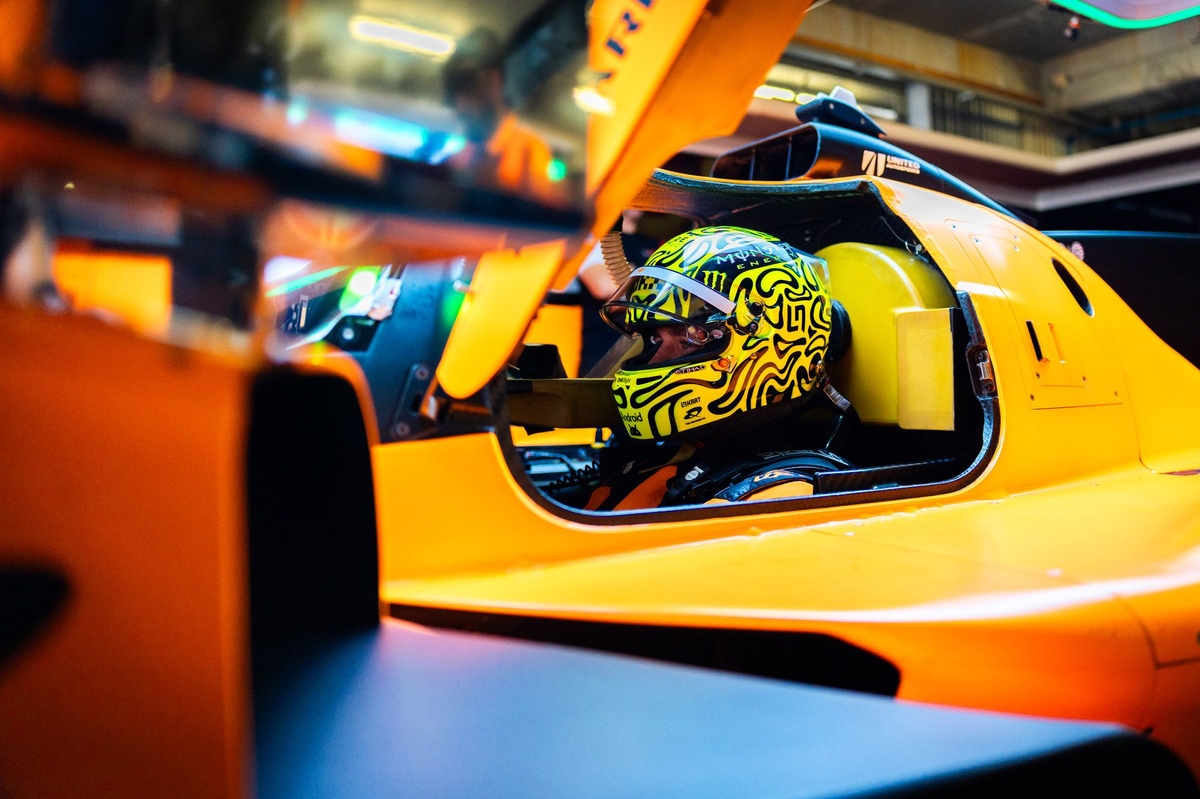
    Formula 1 world champion Lando Norris completed his first full test of the McLaren MCL-HY Le Mans Hypercar at the Algarve International Circuit in Portimão on Monday. The session came days after the Spanish Grand Prix at the new Madring circuit, where an ill-timed Virtual Safety Car denied Norris a potential victory. The British driver traveled across the border for a dedicated one-day program, completing 38 laps and covering 177 miles (285 kilometers) in the V6-powered prototype. McLaren confirmed the run included evaluation of several development items and leveraged Norris’s extensive Formula 1 experience for detailed feedback.

    Norris Completes First Full Test at Portimão

    Norris was supported by McLaren’s 2027 Hypercar drivers Mikkel Jensen and Laurens Vanthoor, who continued development work ahead of the British manufacturer’s World Endurance Championship debut next season. The test follows Norris’s initial taste of the MCL-HY during its public debut at the Goodwood Festival of Speed in July.

    Valuable Feedback from F1 Champion

    “First of all, a big thanks to the McLaren Hypercar Team for letting me drive the MCL-HY,” he said. “It was great for them to give me a chance to have a bit of fun and try something new, particularly during their busy preparations for next year.”

    “I think we also collected some valuable data, and I hope I was able to bring a different set of feelings, comments, and perspectives on things, which is useful for the team in this crucial testing period.”

    “It was cool for me personally to work with this team, and it was exciting to try new machinery too. I’ve not done a proper test in anything other than an F1 car for years now, so the fact I got to try something different, especially still as part of the McLaren family, was very special.”

    “It was a fun day in a quick car on a cool track, helping the team prepare for the start of WEC next year. A big thanks to everyone involved, I can’t wait to get back in the car in the future.”

    McLaren Hypercar Team Principal Comments

    “We are all racers at McLaren Racing, and competing in Formula 1, INDYCAR and the World Endurance Championship creates exciting cross-series opportunities,” he said.

    “Lando was keen to drive the MCL-HY beyond his Goodwood Hill run, so we invited him to join our private Portimão test. As we fully expected he adapted very quickly, integrated seamlessly and provided valuable feedback to support the car’s development.”

    “It was a pleasure to have him with the team, we wish him every success for the rest of the Formula 1 season, and we look forward to welcoming him back into the McLaren Hypercar Team soon.”

    Potential Le Mans 2027 Outing

    McLaren Racing CEO Zak Brown has previously expressed interest in fielding both Norris and Oscar Piastri in the WEC’s blue-riband event, the 24 Hours of Le Mans, though any such entry would likely require the team to run a third car. A Le Mans appearance would only be feasible if there are no clashes with Norris’s Formula 1 commitments next year. While the full 2027 WEC calendar was revealed three months ago — with Le Mans penciled in for the weekend of June 12–13 — Formula 1 has yet to publish its 2027 schedule amid ongoing geopolitical uncertainty in West Asia.

    Lando Norris, McLaren Photo by: McLaren
    Lando Norris, McLaren Photo by: McLaren
  • Guenther Steiner Criticizes Lando Norris’s Coca-Cola Spanish GP Moment as ‘unprofessional’

    Guenther Steiner Criticizes Lando Norris’s Coca-Cola Spanish GP Moment as ‘unprofessional’

    Guenther Steiner Criticizes Lando Norris Over Coca-Cola Cooldown Room Incident at Spanish Grand Prix

    Former Haas Formula 1 team principal Guenther Steiner has labeled Lando Norris’s decision to drink a Coca-Cola in the post-race cooldown room as unprofessional, following the Spanish Grand Prix in Madrid. The incident occurred after Norris finished third at the Madring circuit, sparking debate across the paddock and social media.

    Norris Defends Right to Choose His Drink

    With rival beverage company PepsiCo holding an official partnership with Formula 1, a series official reportedly asked the McLaren driver to put the Coca-Cola down. Norris firmly pushed back, stating:

    “I just did a race, so I’m allowed to drink what I would like. Thank you so much.”

    The exchange quickly went viral, with many fans praising Norris for standing his ground. However, Steiner offered a sharply different perspective during an appearance on The Red Flags Podcast.

    Steiner: “If You Are a Professional, You Don’t Do That”

    The former team chief argued that Norris should have adhered to the sport’s commercial protocols, regardless of personal preference.

    “If you are a professional, you don’t do that. End of story,” the former team chief said. “You know what you can do and what you cannot do. You’re well trained. He shouldn’t have done it. Is it a bad thing that he did it? Will somebody get hurt? No. But as a pro, you shouldn’t do it. But he has done it. And you know what? I couldn’t give a s***.”

    Commercial Reality Behind the Controversy

    When asked if the issue stemmed directly from PepsiCo’s F1 partnership, Steiner explained the categorical nature of sponsorship rights.

    “It’s all going by categories. They sell it and obviously if you don’t pay, you cannot have it. And he had a Coke. It was not the smartest thing to do.”

    Steiner added that the backlash ultimately benefited the non-sponsor brand.

    “But as I said, I don’t care because now, for Coca-Cola, it worked out pretty good. It was pretty good for [Coca-Cola]. If they wouldn’t have said anything, nobody would have even noticed, but because it was so bumped up now it’s a thing, and now Coca-Cola is laughing.”

    Race Context and Championship Standings

    Norris started the Spanish Grand Prix from pole position but dropped to third after an ill-timed virtual safety car period cost him the lead. He currently sits fourth in the 2025 drivers’ championship with 186 points, trailing leader Kimi Antonelli by 106 points.

    Lando Norris, McLaren. Photo by: Federico Basile