Tag: Kalshi

  • Kalshi Seeks En Banc Rehearing in Nevada Sports Prediction Markets Case

    Kalshi Seeks En Banc Rehearing in Nevada Sports Prediction Markets Case

    Prediction market platform Kalshi has escalated its legal challenge against the state of Nevada, filing a petition for an en banc rehearing before the Ninth Circuit Court of Appeals. The move comes after a three-judge panel ruled in favor of Nevada, upholding the state regulator’s authority to classify Kalshi’s sports-related event contracts as gambling.

    Background: Kalshi vs. Nevada Regulatory Action

    The dispute centers on Kalshi’s offerings of event contracts tied to sports outcomes. The Nevada Gaming Control Board (NGCB) previously issued a cease-and-desist order asserting that these contracts constitute unlicensed gambling under state law. Kalshi, a federally regulated exchange overseen by the Commodity Futures Trading Commission (CFTC), argues that its contracts fall under federal derivatives jurisdiction and are therefore preempted from state gambling regulation.

    Ninth Circuit Panel Decision

    In a recent decision, a Ninth Circuit panel sided with Nevada. The court held that the state retains the authority to regulate the sports contracts as gambling, rejecting Kalshi’s argument that the Commodity Exchange Act (CEA) preempts state law in this instance. The panel’s ruling effectively allows the NGCB’s enforcement action to proceed, creating a significant regulatory hurdle for the platform’s operations in the state.

    Petition for En Banc Rehearing

    Kalshi’s petition for a full court rehearing—known as an en banc review—asks the entire complement of active Ninth Circuit judges to reconsider the panel’s decision. Such petitions are granted sparingly, typically reserved for cases involving exceptional importance or conflicts with precedent. Kalshi contends that the panel’s ruling creates a circuit split regarding the scope of CEA preemption and threatens the regulatory framework for federally designated contract markets.

    Implications for Prediction Markets and Federal Preemption

    The outcome of this case carries broad implications for the prediction market industry and the balance of power between federal derivatives regulation and state gambling laws. A final ruling affirming state authority could encourage other states to pursue similar enforcement actions against federally regulated exchanges offering event contracts on sports, elections, or other outcomes. Conversely, a reversal would reinforce the CFTC’s exclusive jurisdiction over designated contract markets.

    Next Steps

    The Ninth Circuit will now decide whether to grant the petition for en banc review. If denied, the panel’s decision stands, and Kalshi may consider petitioning the U.S. Supreme Court. If granted, the case will be re-argued before a larger bench of judges, extending the legal timeline but offering Kalshi a critical opportunity to overturn the adverse precedent.

  • Kalshi Issues First Lifetime Ban to Former Congressman George Santos

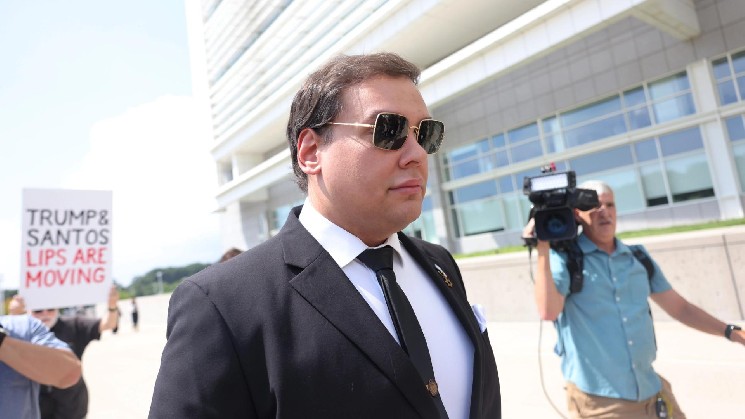
    Kalshi Issues First Lifetime Ban to Former Congressman George Santos

    George Santos did not attend the event, ultimately betting money on that outcome. In addition to banning him, Kalshi fined Santos more than $70,000 in an enforcement action late last week. Federal authorities have reportedly also been investigating the matter. Santos did not immediately respond to CoinDesk’s request for comment.

    Santos was expelled from Congress in 2023 as criminal investigations pursued the disgraced former lawmaker. He was serving a prison sentence for fraud when President Donald Trump commuted it last year.

    Kalshi said the Santos case was one of five new enforcement actions at the company. Under its regulatory obligations, the prediction-market platform is responsible for serving as a first line of defense against market manipulation. The other individuals received temporary trading bans after cooperating with Kalshi’s investigations.

    “Mr. Santos faces additional financial penalties and will be banned permanently from trading on Kalshi given his lack of cooperation,” a spokesperson said in a statement.

    The U.S. Commodity Futures Trading Commission, which regulates the industry, also fined a former White House aide for illicit trading late Friday. Gabriel Perez was ordered to pay more than $170,000 and received a three-year trading ban. The penalties were reduced after what regulators described as his “exemplary cooperation.”

  • Trump Jr.’s Firm Leads $1 Billion Polymarket Fundraising Round at $21 Billion Valuation: Report

    Trump Jr.’s Firm Leads $1 Billion Polymarket Fundraising Round at $21 Billion Valuation: Report

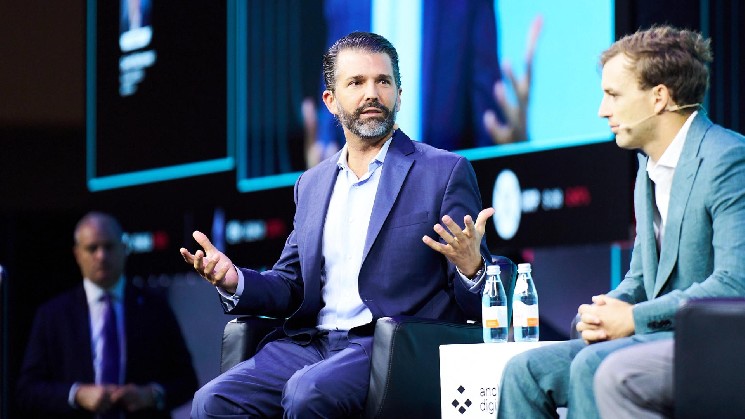
    Donald Trump Jr.’s venture capital firm, 1789 Capital, is leading a $1 billion funding round for prediction market Polymarket, valuing the company at $21 billion, a firm spokesperson said Monday.

    1789 Capital is contributing about $300 million to the round, spokesperson Alexa Henning said. The firm has already invested roughly $200 million in Polymarket.

    The latest funding values Polymarket 40% higher than its previous valuation of about $15 billion just months ago, highlighting the rapid growth of prediction markets.

    Polymarket and Kalshi expand prediction market business

    Polymarket and rival platform Kalshi allow users to wager on outcomes ranging from statements a president may make in a speech to which contestants on a reality television show might get married. Both companies have expanded sharply over the past year.

    The Trump family’s involvement in the sector has grown alongside the industry. Trump Jr. became an adviser to Kalshi in 2025 and received shares valued at more than $300,000. He also advises Polymarket separately.

    President Donald Trump has taken an increasingly favorable position toward prediction markets during the same period. Michael Selig, Trump’s appointee to lead the Commodity Futures Trading Commission, which regulates prediction markets, has praised the companies and sued states seeking to regulate them.

    In May, Trump wrote on Truth Social that prediction markets would thrive under his leadership.

  • Kalshi Imposes First Lifetime Ban on George Santos for Market Manipulation

    Kalshi Imposes First Lifetime Ban on George Santos for Market Manipulation

    Kalshi, the regulated U.S. prediction-market exchange, has issued its first permanent trading ban, barring former Representative George Santos and fining him more than $70,000 for allegedly manipulating a contract linked to his own attendance at a public event, according to CoinDesk.

    The penalty, detailed in a disciplinary record published on Kalshi’s website and confirmed by a company spokesperson, is the most severe sanction the exchange has imposed. It comes as prediction markets face growing scrutiny over whether they can prevent trading based on public figures’ actions and non-public information.

    What Kalshi Says George Santos Did

    Kalshi’s disciplinary record says Santos made a series of large trades in a market whose contracts depended on whether he attended an appearance by President Donald Trump earlier this year. The record says Santos then made public statements about his attendance in an effort to influence the market’s outcome.

    Santos ultimately bet that he would not attend the event, and he did not appear. Kalshi imposed the fine in the final days of August, in addition to banning him from the platform for life.

    Santos did not respond to CoinDesk’s request for comment. He was expelled from Congress in 2023 amid criminal fraud investigations and was serving a prison sentence when Trump commuted his sentence last year.

    Kalshi Announces Broader Enforcement Action

    Kalshi said the Santos case was one of five new enforcement matters. The other four traders received temporary bans after cooperating with investigators.

    The exchange described the cases as part of its responsibility under its regulations to serve as a first line of defense against market manipulation. A spokesperson said Santos “faces additional financial penalties and will be banned permanently from trading on Kalshi given his lack of cooperation.”

    The action followed a separate Commodity Futures Trading Commission order issued Friday, August 28. Under that order, former White House aide Gabriel Perez was directed to pay more than $170,000 and was barred from trading for three years over bets on “mention” contracts involving Trump.

    The CFTC said Perez’s penalties were reduced because of what it described as exemplary cooperation. Perez had worked as a teleprompter operator. “Mention” contracts pay out when prominent figures speak specific words during public addresses.

    Why Prediction-Market Enforcement Matters

    Prediction markets have spent the past year seeking to reassure regulators and institutional partners that their platforms can resist manipulation. That effort has gained importance as companies such as Cantor Fitzgerald open Kalshi markets to institutional clients and trading volumes increase.

    Self-enforcement is a key part of that argument. Platforms that investigate suspicious activity and impose penalties can cite those actions as evidence that their compliance systems are working.

    Rival platform Polymarket has said it uses machine learning, blockchain analytics, trade surveillance and open-source research to identify unusual activity. The company says it has referred more than 100 cases to authorities, including bets linked to a U.S. soldier accused of using classified information to wager on the capture of Venezuela’s Nicolás Maduro and possible insider trading before U.S. military action in Iran.

    Polymarket has also said its systems block the vast majority of U.S. users from accessing its international platform, as required under a 2022 settlement with the CFTC.

    Kalshi’s disciplinary record illustrates how a lightly monitored market tied to one person’s behavior can become vulnerable to manipulation. BlockchainReporter has examined a similar dynamic in coverage of sophisticated traders’ structural advantage on Kalshi.

    Key unanswered questions include how far federal scrutiny will extend and whether other prediction-market platforms will impose permanent bans of their own. Kalshi has said federal authorities have reportedly examined the Santos trades, while the wider regulatory environment—including state efforts to prohibit prediction markets—suggests that the industry’s enforcement practices will remain under close scrutiny through the U.S. midterm elections.

  • Kalshi Bans George Santos Over $17,839 Market Manipulation

    Kalshi Bans George Santos Over $17,839 Market Manipulation

    Kalshi has permanently banned former U.S. Representative George Santos and imposed a $71,356 penalty after determining that he manipulated an event market tied to his attendance at President Donald Trump’s 2026 State of the Union address. The exchange said Santos earned $17,839.57 from the trades.

    Kalshi says Santos traded on an outcome he could control

    In an Aug. 28 disciplinary notice, Kalshi said Santos placed large trades between Feb. 2 and Feb. 25 in contracts that paid out depending on whether he attended the address.

    Because Santos’s attendance determined the contracts’ result, he could directly influence the underlying event. Kalshi Rule 5.17(z) prohibits members from trading contracts when they can affect the outcome.

    Despite the restriction, Kalshi’s compliance department found that Santos bought and sold contracts tied solely to his own attendance. His positions included both “Yes” contracts, which paid if he appeared at the event, and “No” contracts, which paid if he did not.

    During the trading period, Santos published several statements about his travel and attendance plans. Kalshi said some of the posts were false or misleading and were intended to move prices before he bought or sold the related contracts.

    The exchange determined that the statements affected the market as intended. By shifting between “Yes” and “No” positions while controlling information about his plans, Santos generated $17,839.57 in profit, according to the notice.

    Kalshi cited violations involving market manipulation, trading with material nonpublic information, trading on an outcome a member can influence, and using a deceptive scheme connected to exchange activity. The exchange’s compliance department also found that Santos did not cooperate promptly and fully with its internal investigation.

    Under the settlement, Santos cannot access Kalshi directly or through another person or account. The exchange also imposed a $71,356 penalty, exactly four times the profit amount listed in its notice. The disciplinary document took effect on Aug. 28.

    Social media posts moved Santos attendance contracts

    A separate Commodity Futures Trading Commission order issued on July 31 provided a more detailed timeline of Santos’s trades. According to the regulator, Santos opened his Kalshi account on Feb. 11 and deposited about $7,000, using the funds exclusively to trade on his own attendance.

    From Feb. 12 through Feb. 22, Santos accumulated 30,874 “Yes” contracts at a total cost of $6,695.94. While holding the position, he asked his X followers whether he should wear a serious suit or a bedazzled one to the address.

    After the post, the “Yes” contract rose from about $0.15 to $0.70. Santos then sold the entire position for a $3,448.43 profit and withdrew $10,146.07 through a Venmo account created four days earlier, the CFTC said.

    Later on Feb. 22, an airline notified Santos that his flight to Washington, D.C., had been canceled. He booked a train that night, then posted the following morning that bad weather had made his trip difficult and suggested that the address might not take place. The “Yes” price fell from $0.63 to $0.28 after the post.

    On the evening of Feb. 23, Santos posted that he would attend from the House gallery. According to the federal order, a video repeating his attendance plans pushed the contract price from $0.40 to $0.70.

    About 40 minutes after publishing the video, Santos began buying “No” contracts. He eventually acquired 23,855 contracts for $8,650.66. His train was canceled about an hour after he began building the position, but he later responded, “I am” when another user asked whether he was still going.

    With both his flight and train canceled, Santos had not bought another ticket when he posted on Feb. 24 that he was watching the address on an airport television. The “Yes” contract fell from $0.73 to $0.02, increasing the value of his opposing position.

    The CFTC found that Santos closed the “No” trade early on Feb. 25 for a $14,390.57 profit. Combined with his earlier gain, the two positions generated the amount later addressed in Kalshi’s disciplinary action.

    Federal penalties are separate from Kalshi’s lifetime ban

    Kalshi’s sanction is separate from the CFTC settlement, which imposed different payment amounts and a shorter restriction covering all federally registered trading venues.

    As crypto.news previously reported, the CFTC ordered Santos to disgorge $17,569.98, pay a $17,500 civil penalty, and stop trading on any CFTC-registered entity for three years. Santos consented to the July order without admitting or denying its findings or legal conclusions.

    The regulator applied Section 6(c)(1) of the Commodity Exchange Act and Regulation 180.1, which prohibit manipulative or deceptive conduct involving swaps. The order classified the State of the Union event contracts as swaps because their payouts depended on a future event with possible financial, economic or commercial consequences.

    Although Kalshi cited Santos for failing to cooperate with its inquiry, the CFTC recognized his cooperation in the federal investigation. The findings relate to two separate reviews conducted by the exchange and its regulator.

    Earlier in June, federal investigators were examining the trades after Kalshi froze Santos’s account and referred the activity to authorities. The CFTC later resolved its part of the matter through the July settlement, while the reported Justice Department inquiry has not received a publicly announced resolution.

    Prediction markets expand controls after insider-trading cases

    Kalshi operates as a designated contract market under CFTC oversight, making its event contracts subject to federal derivatives rules and exchange-level restrictions. Users trade contracts priced according to the perceived likelihood of outcomes involving politics, sports, economic data and other public events.

    Concerns about privileged information have increased as contracts tied to speeches, political decisions and unpublished content attract more trading. In February, Kalshi imposed a $20,397.58 penalty and a two-year suspension on a MrBeast-affiliated editor over trades involving unreleased YouTube videos.

    A separate federal case involves U.S. Army Special Forces member Gannon Ken Van Dyke, whom prosecutors accused of using classified information to earn about $409,881 from Polymarket contracts linked to the capture of Nicolás Maduro. A federal judge paused the CFTC case in August while the related criminal proceeding continues. Van Dyke has pleaded not guilty and disputes whether the contracts qualify as swaps.

    Kalshi has also introduced employer-disclosure rules, a whistleblower channel and risk reviews for proposed markets. In June, it partnered with StarCompliance so participating financial firms could connect employee accounts to internal monitoring systems.

    The exchange said it conducted more than 150 investigations during the first quarter of 2026, blocked more than 100 suspected insider-trading attempts and referred 20 cases to law enforcement.
  • Alpaca Opens Brokerage Infrastructure to Kalshi Event Contracts

    Alpaca Opens Brokerage Infrastructure to Kalshi Event Contracts

    Kalshi Partners With Alpaca to Expand Prediction Markets Beyond the US

    Kalshi is partnering with brokerage infrastructure provider Alpaca to expand access to its event contracts outside the United States.

    The agreement comes as financial infrastructure firms increasingly add Kalshi contracts to their platforms. Finance Magnates reported that Alpaca recently registered as a futures commission merchant (FCM) with the Commodity Futures Trading Commission, while Apex launched an API enabling brokers and fintech companies to offer Kalshi contracts without building their own FCM infrastructure or direct exchange connectivity.

    Tony Lee, Alpaca’s chief brokerage officer. Source: LinkedIn

    Alpaca Customers to Gain Access to Kalshi Contracts

    Under the agreement, financial institutions using Alpaca’s technology will be able to offer Kalshi contracts through their existing brokerage infrastructure. Availability will remain subject to regulatory approval in each market.

    Tony Lee, Alpaca’s chief brokerage officer, said customer demand was behind the company’s move into prediction markets.

    “Our mission is really to open up financial services to as many people around the world as possible,” Lee said. “You really have to go where the customer demand is.”

    Alpaca works with more than 300 financial institutions and reaches around 14 million brokerage accounts globally. Kalshi said the network could help support its expansion into additional markets.

    Alpaca reaches 14 million brokerage accounts across more than 300 financial institutions worldwide, giving Kalshi a potential route for international expansion.

    Alpaca API Supports Kalshi’s International Expansion

    Kalshi Vice President of Business Development Max Crowley said Alpaca’s reputation and technology were important to the partnership.

    “They’re a trusted brand, they’re technology forward,” Kalshi Vice President of Business Development Max Crowley said. “This technical partnership enables that.”

    Kalshi has also expanded through other financial firms. In June, the company partnered with Canadian financial firm Wealthsimple to offer its markets in Canada.

    Alpaca’s API has about 83,000 monthly users and enables developers to build trading applications. Its infrastructure could also support automated trading activity in prediction markets.

  • Ninth Circuit Ruling Clears Way for Nevada to Enforce Gambling Rules on Kalshi

    Ninth Circuit Ruling Clears Way for Nevada to Enforce Gambling Rules on Kalshi

    Ninth Circuit Allows Nevada to Enforce Gambling Rules Against Kalshi

    The U.S. Court of Appeals for the Ninth Circuit has ruled against prediction market platform Kalshi in a dispute over whether state or federal authorities have the power to regulate sports event contracts.

    In a unanimous 3-0 decision, the court allowed Nevada gambling regulators to enforce state rules against Kalshi. The ruling reverses a lower court’s preliminary injunction, which had temporarily blocked Nevada from taking enforcement action.

    Why the Ninth Circuit Ruled Against Kalshi

    Kalshi operates a federally regulated exchange for event contracts. The company argued that the Commodity Exchange Act (CEA) preempts Nevada’s gambling regulations and sought to prevent the state from treating its sports event contracts as unlawful gambling.

    The Ninth Circuit concluded that Kalshi had not shown that the CEA explicitly preempts state gambling laws, which the court identified as a key requirement for its preemption claim.

    The decision clarifies the relationship between federal commodities regulation and state gambling oversight. Although the Commodity Futures Trading Commission (CFTC) supervises Kalshi’s exchange, states generally retain the authority to enforce their own gambling laws unless Congress has clearly indicated otherwise.

    What the Ruling Means for Kalshi

    The ruling does not determine whether Kalshi’s sports contracts are ultimately legal in Nevada. However, it removes the legal barrier that had prevented state regulators from pursuing enforcement action.

    Kalshi may seek further appeals, but Nevada can now proceed with its case. The company has not been shut down nationwide, and the decision does not resolve the final merits of the state’s claims.

    Potential Impact on Prediction Markets

    The case highlights the growing tension between innovative financial products and traditional state gambling laws. Prediction markets allow users to speculate on the outcomes of events, including elections and sports games. Their rising popularity has also exposed them to a patchwork of state regulations.

    The Ninth Circuit’s decision could influence how other states regulate similar platforms. Businesses operating in the prediction market sector may face increased pressure to comply with state gambling laws even when they operate under federal oversight.

    Legal experts have indicated that the ruling could encourage additional states to assert jurisdiction over prediction market operators. That could contribute to a more fragmented regulatory environment across the United States.

    Investors and users should be aware that the legal status of prediction markets can vary by state. The decision creates particular uncertainty in jurisdictions with strict gambling laws, even though it does not prohibit Kalshi from operating nationwide.

    Frequently Asked Questions

    What did the Ninth Circuit decide in the Kalshi case?

    The court ruled that Kalshi failed to show that the Commodity Exchange Act preempts Nevada’s gambling rules governing sports event contracts. As a result, Nevada can enforce its regulations while the case proceeds.

    Does the ruling ban Kalshi from operating in Nevada?

    No. The decision does not ban Kalshi outright. It allows Nevada regulators to pursue enforcement action, while the final outcome will depend on further proceedings in the lower courts.

    How could the decision affect other prediction markets?

    The ruling may encourage other states to assert jurisdiction over similar platforms, potentially resulting in greater state-level regulation of prediction markets.

    Source: cryptonews.net

  • Connecticut Sues Kalshi Over Sports Prediction Contracts

    Connecticut Sues Kalshi Over Sports Prediction Contracts

    Connecticut has filed a lawsuit against prediction market operator Kalshi, escalating a nationwide legal battle over whether such platforms can offer sports-related contracts without state gambling licenses. The action, filed Thursday by Attorney General William Tong, alleges that Kalshi’s sports contracts function as traditional sports wagers and violate state consumer protection laws.

    State Alleges Unlicensed Sports Gambling

    The complaint targets contracts covering team wins, game scores, and point spreads. Connecticut officials contend these products cross the line into unlicensed sports gambling, an activity reserved for licensed operators under state law. The lawsuit follows a 2023 enforcement order directing Kalshi and two other platforms to cease offering unlicensed sports wagering to Connecticut residents.

    Kalshi Claims Federal Preemption

    Kalshi has challenged Connecticut’s authority in federal court, arguing its contracts qualify as regulated financial instruments under the Commodity Exchange Act. The company maintains that the Commodity Futures Trading Commission (CFTC) holds exclusive jurisdiction over its markets, preempting state gambling regulations.

    Regulatory Conflict Expands Across States

    Connecticut’s lawsuit opens a new front in Kalshi’s growing regulatory challenges. New York has launched a similar challenge against the company’s sports prediction markets. Meanwhile, a federal court recently blocked Minnesota from enforcing a ban against prediction markets, a ruling that bolstered Kalshi’s argument for federal oversight.

    However, a Connecticut judge recently denied Kalshi’s motion to halt the state’s enforcement efforts. The company has appealed that decision.

    National Implications for Prediction Markets

    The outcomes of these cases could define how regulators classify prediction markets across the United States. The central question remains whether states retain the power to regulate sports-related event contracts independently, or whether federal commodities law provides a complete shield for platforms like Kalshi.

  • Kalshi and Analysts Eye $2,800 ETH as MemeToro Presale Pushes to $100K

    Kalshi and Analysts Eye $2,800 ETH as MemeToro Presale Pushes to $100K

    The broader cryptocurrency market is experiencing a significant resurgence, with Ethereum leading the charge alongside Bitcoin’s upward momentum. While high-cap assets test critical resistance levels, decentralized finance (DeFi) developers are simultaneously targeting long-standing structural issues within the memecoin ecosystem—specifically the lack of transparency during token launches on the BNB Chain.

    Ethereum Tests Key Resistance Zone Around $2,500

    Following a strong weekly rally of more than 30%, Ethereum ($ETH) has climbed back into the $2,450 to $2,510 trading range after spending several months depressed below these levels. This recovery has been fueled by a combination of robust spot Ethereum ETF inflows, short liquidations, and a broader market rebound led by Bitcoin.

    Market analysts and Kalshi participants are closely monitoring the $2,550 to $2,600 zone, which represents a major technical resistance barrier. A successful breakout above this range could clear the path toward $2,800. Conversely, if Ethereum faces rejection at these current levels, traders expect the $2,300 to $2,400 region to serve as the primary support zone. The sustainability of this rally remains closely tied to macroeconomic factors, including upcoming inflation data and Federal Reserve monetary policy decisions.

    Addressing the Transparency Deficit in Memecoin Launches

    While major assets deal with macro-driven price volatility, the memecoin sector faces a different set of challenges. Historically, participating in new memecoin launches has carried high risk due to information asymmetry. Investors are often required to commit capital with minimal visibility into essential parameters such as token allocations, wallet limits, funding terms, and final distribution schedules.

    To address this issue, a new project called MemeToro is developing an AI-driven launchpad on the BNB Chain designed to standardize and open-source these critical launch conditions before any investor capital is committed.

    How MemeToro Integrates AI with Smart Contract Enforcement

    MemeToro’s proposed ecosystem aims to separate token discovery from contract execution. The platform’s development pipeline utilizes artificial intelligence to scan social media platforms like X (formerly Twitter) and global news outlets for market signals. The AI then compiles these insights, attaches verification links, and drafts a comprehensive “launch manifest” detailing the token’s parameters.

    To prevent bad actors from manipulating the launchpad, the AI system includes built-in verification protocols. The current development build is programmed to reject unverified sources, ticker collisions, and insider allocation attempts. Crucially, the AI is also designed with a refusal mechanism, allowing it to decline a token launch entirely if the underlying market signals appear manipulative, harmful, or unreliable.

    Once a launch proposal is validated by the AI, the terms are hardcoded into smart contracts. This structural division ensures that while the AI acts as the research and screening tool, immutable smart contracts handle the actual enforcement of the fair-launch rules.

    A Fair-Launch Model Without Insider Allocations

    MemeToro’s architecture is structured around a strict fair-launch model. The proposed design eliminates common pain points such as premines and hidden insider allocation tiers. Instead, the platform plans to utilize fixed-rate pricing structures and strict wallet purchase limits, with funding supported via BNB, select stablecoins, and the native MT token.

    It is important to note that these features are still in the development phase. MemeToro’s public repository states that its smart contracts are not yet audited, deployed on the mainnet, or ready to secure live funds. The project’s roadmap outlines a step-by-step rollout, starting with a deployment on the BNB Chain testnet, followed by an independent third-party security audit, and the integration of ERC-8004 standards for decentralized agent identity and reputation management.

    Two Parallel Dynamics Shaping the Crypto Market

    The cryptocurrency space is currently moving in two distinct directions. On one hand, mature assets like Ethereum are navigating liquidations, ETF dynamics, and macroeconomic resistance levels near $2,500. On the other hand, early-stage infrastructure projects like MemeToro are leveraging AI and smart contract automation to bring transparency and security to decentralized token launches.

    While MemeToro’s full technical architecture remains a work in progress, its public repository gives developers and market participants an early look at how AI might soon govern safer, contract-enforced token launches on the BNB Chain.

    For those interested in learning more about the project, watch this detailed video explaining the mechanics of the ecosystem:

    Watch the MemeToro Ecosystem Video on YouTube

    For more updates and details regarding the MemeToro ($MT) presale, visit the official channels: