Tag: Formula 1

  • Mercedes Seeking Answers After Kimi Antonelli’s Pace Faded in F1 Dutch Grand Prix

    Mercedes Seeking Answers After Kimi Antonelli’s Pace Faded in F1 Dutch Grand Prix

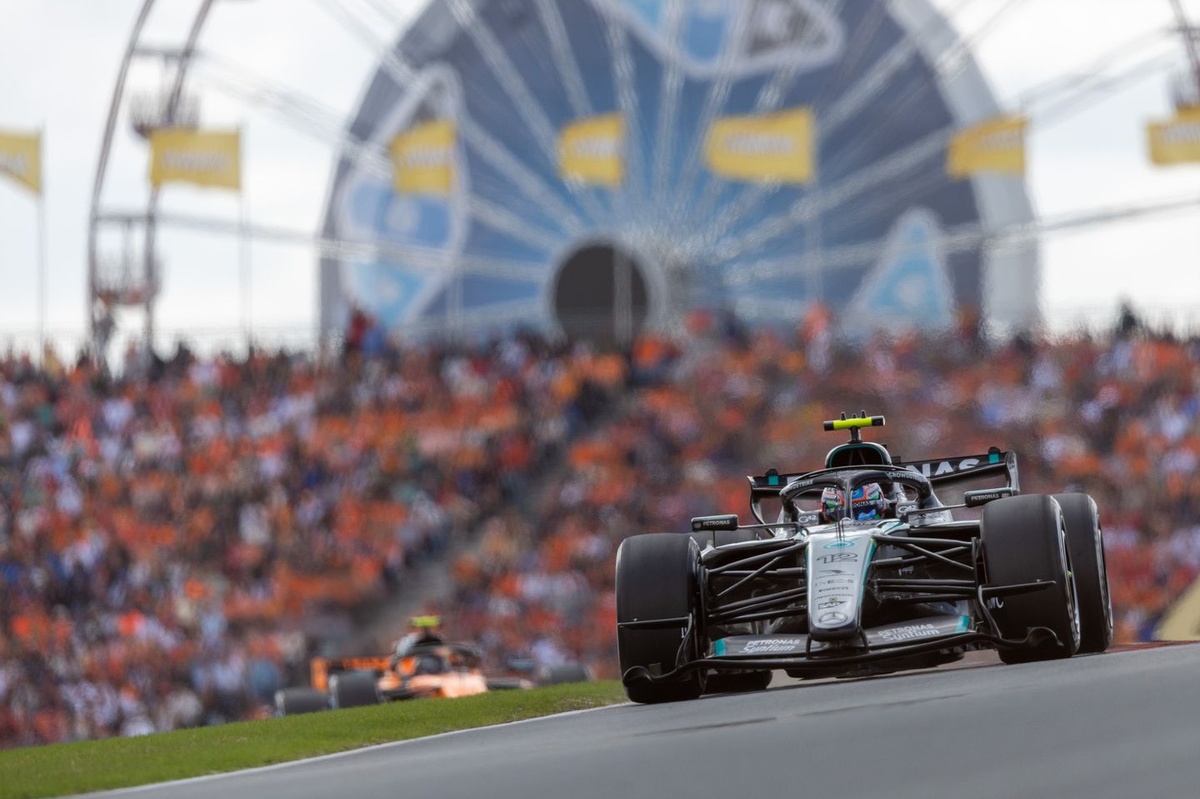
    Mercedes has launched a “deep dive” into Kimi Antonelli’s performance at the Formula 1 Dutch Grand Prix after the championship leader reported a “difficult second half” of the race while struggling with the balance of his W17.

    Antonelli made a strong start at Zandvoort. After qualifying third, he overtook Mercedes team-mate George Russell off the line to take second place before the end of the opening lap. However, the championship leader encountered increasing problems with the car after each tyre change.

    “It was really weird because I felt good with the medium. I felt decent on the first hard, but then on the second one it just felt really odd,” Antonelli explained after finishing runner-up to McLaren’s Lando Norris.

    Mercedes is now investigating the issues Antonelli faced to understand what went wrong before the next round of the Formula 1 season in Italy.

    “Each tyre had a bit more oversteer than the tyre before it and we’re trying to understand why that was,” explained Mercedes trackside engineering director Andrew Shovlin in the team’s Dutch GP debrief video.

    “Now, we didn’t change the car, we didn’t add any aero balance, which is the sort of thing that could have explained it. So, we’re having a real deep dive into the data and try and get to the bottom of that because it’s important to solve those sort of things ahead of the next race.

    “It’s obviously getting really tight now in terms of performance. We’re still waiting for our major update to land and that will help but in the meantime, it is going to be a bit of a fight.”

    The championship leader settled for second in the Netherlands

    Antonelli said the problem left him with “little confidence in the car” during the closing stages, when he was defending against Ferrari drivers Lewis Hamilton and Charles Leclerc while also closing on Russell.

    Because Antonelli and Russell were using offset strategies, Russell allowed his younger team-mate through. The move helped Antonelli secure second place and extend his championship lead.

    “George, you know, I have to thank him because he made my life a lot easier,” Antonelli explained. “But I still think probably could have stayed out and gone until the end with the same set because it put us a little bit at risk. Also, I feel we put George at risk with having to let me by and everything.

    “But I still think, at the end of the day, it was a great team execution with how things were, and I think today P2 was the maximum we could have done because the pace of the McLarens, especially in the second half, was just too strong.”

    Mercedes will hope to identify the cause of Antonelli’s handling problems before his home race in Italy. The team has already confirmed that he will take an engine penalty at the event because of reliability issues earlier in the season.

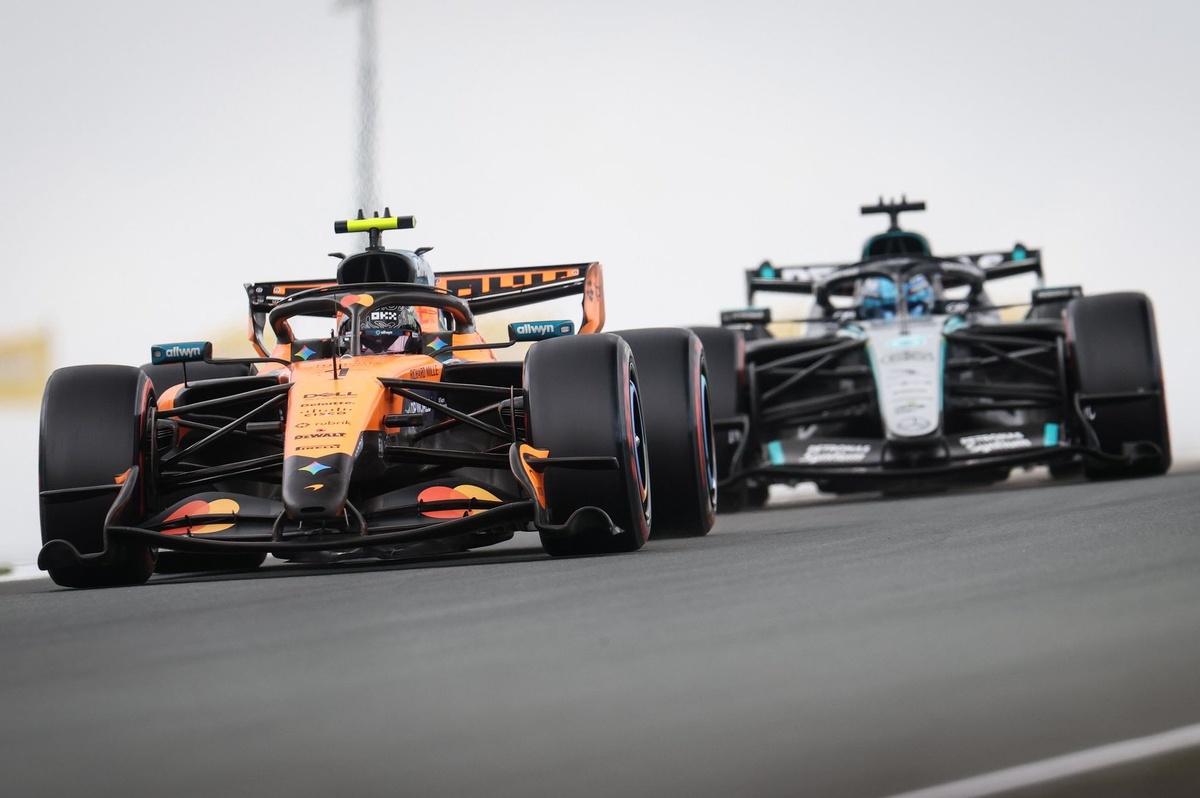
  • Esteban Ocon Defends Controversial Move on Alex Albon, Bemoans F1 Rule

    Esteban Ocon Defends Controversial Move on Alex Albon, Bemoans F1 Rule

    Esteban Ocon defended his controversial overtake on Alexander Albon during the Dutch Grand Prix and criticised the Formula 1 rule that sent him back behind the Williams driver for the second race start.

    Max Verstappen crashed out and Gabriel Bortoleto spun 360 degrees on the opening lap at a slightly damp Zandvoort circuit. As the yellow-flag zone ended, Ocon accelerated faster than Albon and moved into 13th place shortly after crossing the start-finish line. Albon objected to the move over the team radio.

    “I’m sorry, but what Esteban did is crazy,” Albon ranted on the radio. “He’s overtaking me in the middle of the crash.”

    Although Albon was not asked about the incident during his post-race media session, Ocon was questioned about the overtake and insisted that he had not breached the rules.

    “I overtook Alex, yeah, but I had the right, because it was green,”

    the Haas driver said. However, the grid for the second start was determined by the classification at the end of the first lap, making Ocon’s overtake irrelevant to the restart order.

    “What was a big shame is that you have to take all these risks, you know?” Ocon added. “You’re playing with either getting a penalty or not. I was not having a penalty, but it was very tight, because I just passed him when it was green. And then they put you back at the race start.

    “It’s been like that forever, but… Really, if that was 20 metres earlier, then I was having the place. But we still raced, like, for one-and-a-half sector. The red flag only came after Turn 5, you know? So, we passed sector one, and we were getting into sector two. So, I should have started in front of Alex – because that changed my race.”

    Esteban Ocon, Haas F1 Team — Photo by Simon Galloway / LAT Images via Getty Images

    Ocon spent the early stages of the race behind Albon before making an early pit stop on lap 16 in an attempt to find clear air. He had returned to 14th when he retired on lap 53 with a power unit problem.

    “After that, obviously, there’s a lot of things that maybe we could have done differently, with strategy, etc,”

    the Frenchman admitted.

    “Fernando [Alonso] did a really, really good strategy, I don’t think we could have done the same one without degradation. But there are things that we can look into to do a better job.”

    Ocon said Formula 1 should be able to use a more current race classification when forming the grid for a restart, rather than relying on the order recorded at the end of the previous lap.

    “We are not going to believe that in Formula 1 we don’t have timing loops every 20 metres, you know? It’s a very old-school rule, really,”

    he continued.

    “I said it on the radio, let’s not make Alex go in front again at the restart. Because that should not be the case. And for some reason I felt it, that they were going to put him in front again. They still take the line, which is like two kilometres back. It shouldn’t be like that, it should be the last moment.”

  • Andrea Stella Challenges Mercedes’ Claim It Can’t Afford F1 Upgrades: “I actually don’t believe you”

    Andrea Stella Challenges Mercedes’ Claim It Can’t Afford F1 Upgrades: “I actually don’t believe you”

    McLaren Formula 1 team principal Andrea Stella has dismissed Toto Wolff’s claim that Mercedes lacks the budget to accelerate its car development programme.

    Ferrari and McLaren have made major gains with their 2026 cars in recent weeks. Both teams have taken two victories, increasing the pressure on Mercedes after its earlier dominance.

    Mercedes delays major F1 upgrade package

    Mercedes has introduced only a limited number of aerodynamic upgrades compared with its rivals. The team is instead planning to bring a larger package to the October Bahrain Grand Prix in Malaysia.

    The delay could leave Mercedes vulnerable during the next three September races in Italy, Spain and Azerbaijan. Asked by Motosport.com after the Dutch Grand Prix whether the development strategy was becoming more difficult to justify amid McLaren’s rapid progress, Wolff said Mercedes was constrained by how its Brackley operation had allocated its $215m cost-cap allowance.

    “We haven’t got the money to put developments on the car. I said before that we are trying to evenly split that through the season based on our calculations of when we can bring the biggest updates and optimising the championship points. But we just can’t do what we can’t do,” the Austrian said.

    “You will see towards the end of the season whether they are going to be able to deploy as much stuff onto the car as they do now.

    “Someone might have a different strategy in spending more at the beginning and the middle of the year than towards the end.”

    When asked about Wolff’s comments, McLaren chief Stella expressed strong doubts about Mercedes’ financial explanation.

    “I would like to believe you, but I actually don’t believe you.”

    Andrea Stella cast doubt on Mercedes’ claims

    Photo by: Steven Tee / LAT Images via Getty Images

    McLaren points to additional 2026 cost-cap allowance

    Stella’s scepticism relates partly to changes in the 2027 power-unit regulations. The rules will move Formula 1 towards a 57-43 split between combustion power and electrical energy, while also affecting specific areas of car design.

    Teams have been granted an additional $3m cost-cap allowance that can be used in their 2026 or 2027 reporting to prepare for those changes. Stella said Mercedes could use that allowance to manufacture upgraded car components if it chose to do so.

    “All teams will have an allowance in their reporting for the cost cap,” Stella said. “And if I’m not wrong, it’s like three million that you can use in the 2026 reporting for cost cap calculations. And I’m sure that Mercedes, having seen that their rivals are kind of elevating the game, I’m sure they will now cash in on their development that surely is happening in the ground.

    “I’m sure the car in the wind tunnel is quite a bit faster than the car they have on track and they will want to now convert some of this potential into upgrades that make it to the real car. So, I’m just pretty sure that they will have upgrades. Obviously, it would be good if not, but I don’t even want to think about it…”

  • Fernando Alonso: Dutch GP Strategy Shows “I’m a very good driver”

    Fernando Alonso: Dutch GP Strategy Shows “I’m a very good driver”

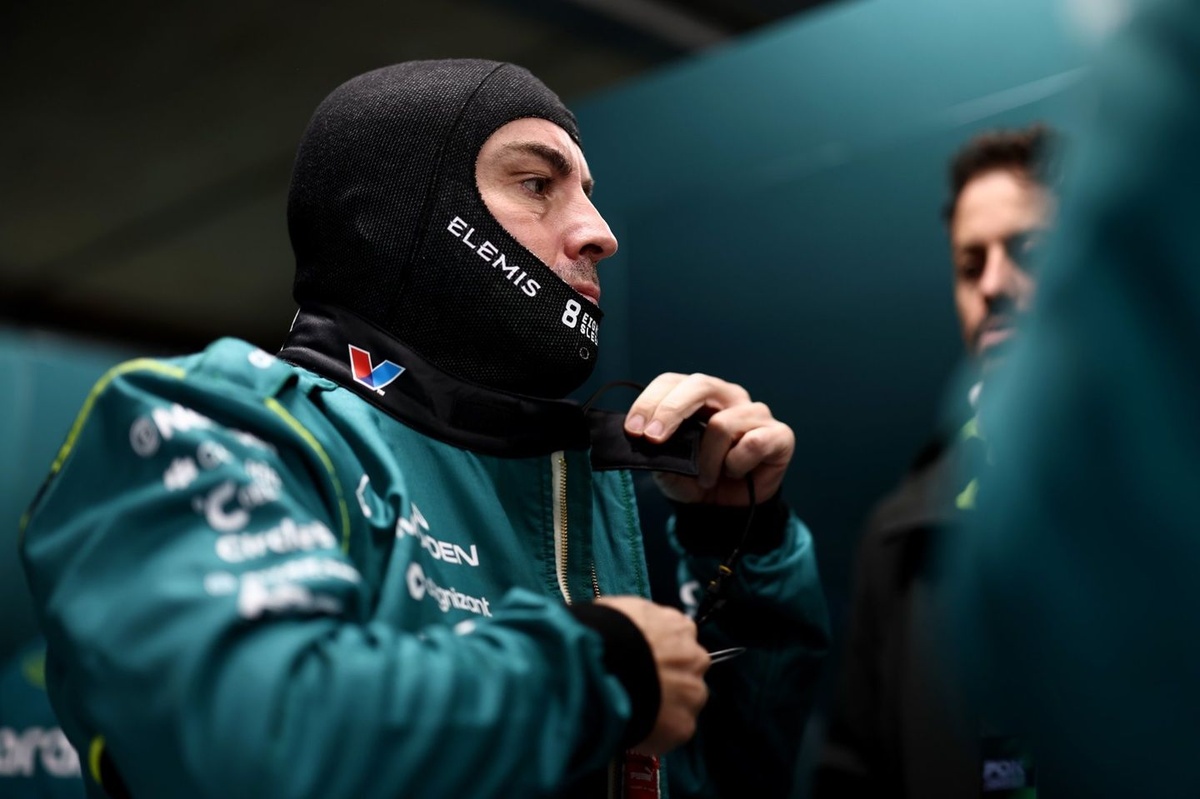
    Fernando Alonso credited his driving ability after turning an unexpected one-stop strategy into a points finish for Aston Martin at the Formula 1 Dutch Grand Prix.

    The Spaniard finished ninth at Zandvoort on Sunday after starting 18th, securing his second points result of the 2026 season following 10th place at Monaco in June.

    Alonso’s recovery was particularly impressive because he completed 34 laps on a set of soft tyres before switching to hard tyres for the remaining 38 laps of the 72-lap race. While several rivals used at least a two-stop strategy, the Aston Martin driver waited patiently behind competitors who had yet to pit before taking advantage of the overcut in clean air.

    “I’m a very good driver,” said Alonso, when asked how he made it work. “That was not the plan. I think the plan was two stops and to go more conventional.

    “But we need to sometimes deviate a little bit from what is normal. When we are in traffic, we cannot use our potential.

    “We are faster in the corners and the people in front of us, we are slower on the straights, and we’re stuck behind.

    “So, as soon as we have free track in front of us, we try to use it, even if it’s not the optimal performance and the optimal strategy and it’s what we did today.”

    Fernando Alonso, Aston Martin Racing, Alexander Albon, Williams. Photo by: Simon Galloway / LAT Images via Getty Images

    Aston Martin upgrades deliver another step forward

    Alonso’s result followed Aston Martin’s introduction of a radically different chassis at the previous round in Budapest and the arrival of an upgraded Honda engine in the Netherlands.

    The updates have helped the British team move away from its previous position as Formula 1’s slowest outfit, a tag now held by newcomer Cadillac. However, Aston Martin’s Zandvoort weekend began with significant difficulties.

    Alonso qualified last for the sprint race, while team-mate Lance Stroll started 19th. Alonso experienced driveability problems because his straight-line mode was not working, contributing to a lock-up at Turn 1.

    The two Aston Martin drivers eventually finished the sprint in 17th and 18th. They then secured more respectable qualifying positions for Sunday’s race, starting 18th and 19th ahead of Haas and Cadillac.

    Alonso expects Aston Martin to be uncompetitive at the low-downforce Italian Grand Prix in Monza, the next round of the season, but said the Dutch Grand Prix still marked “another step forward” for the Silverstone-based team.

    “Especially on the chassis side,” he added. “We brought four or five components here.

    “Also, the Budapest package was understood in the break and with all the data available after the race, we fine-tuned a little bit the set-up around that new spec, plus the new parts.

    “I think, now, we are optimising the chassis side and we are able to extract the maximum.

    “On the engine, it’s more difficult. I don’t think we can be black and white on if we have more power or not.

    “From the driver’s side of things, you change circuit one month after the other race, so the drivability has been a difficult weekend.

    “We’re struggling with the downshift again and we’re struggling with the engine braking corner to corner. So, it was a challenging weekend in that regard.”

  • Calum Nicholas Says Red Bull Lacked the Pace for Max Verstappen’s Dutch GP Podium Fight

    Calum Nicholas Says Red Bull Lacked the Pace for Max Verstappen’s Dutch GP Podium Fight

    Former Red Bull mechanic Calum Nicholas believes Max Verstappen would not have challenged for a podium at the Dutch Grand Prix even if he had avoided his opening-lap crash, arguing that Red Bull lacked the pace to compete with the frontrunners.

    Verstappen crashes on the opening lap at Zandvoort

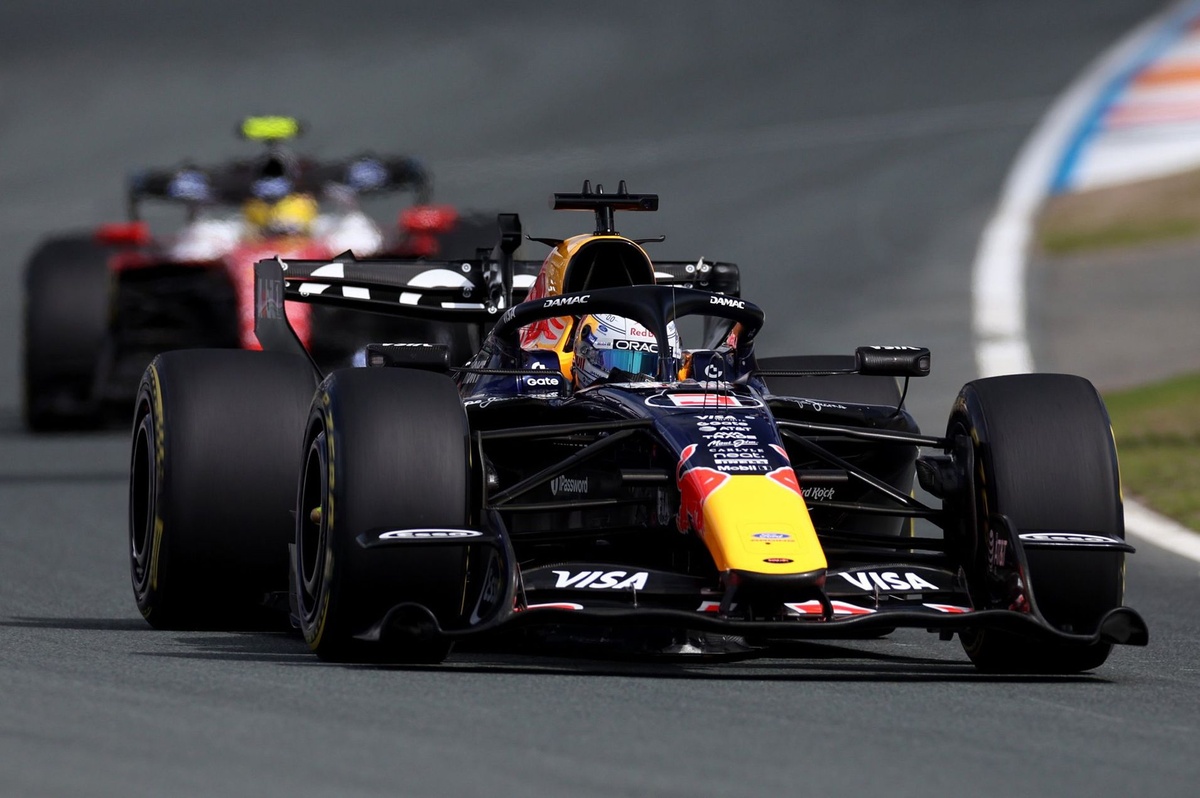
    The final Formula 1 race at Zandvoort began dramatically. Although the rain had stopped before the start, damp patches remained on the circuit. Verstappen ran onto a wet section while negotiating the final banked corner and suffered a heavy crash into the wall.

    The incident ended the home hero’s race, while Red Bull team-mate Liam Lawson went on to finish seventh and score six points for the Milton Keynes-based team. Lawson was standing in for the injured Isack Hadjar.

    Speaking on Red Bull’s official Talking Bull podcast, Nicholas said Verstappen would probably have finished in a similar position to Lawson had he completed the race.

    “One of the things that we’ve perhaps struggled with a little this year is when we’re in gusty, windy conditions, the car just seems a little bit unhappier,” Nicholas explained.

    “It creates a little bit more work for the drivers and we’ve got to work out what it is that’s at the bottom of all that. But I don’t think it’s a disaster.

    “Liam probably had a boring, lonely race. Big gap ahead of him, big gap behind him. But that was just the pace of the car. Even if Max had completed this race and not had the incident on lap one, I think that’s pretty much where he would have ended up as well, in that space between the frontrunners and those behind us. I really don’t think that there was a lot more to offer this week.”

    McLaren’s Lando Norris won the Dutch Grand Prix, with Mercedes drivers Kimi Antonelli and George Russell completing the podium.

  • Max Verstappen Shares Farewell Message After Final Dutch Grand Prix Ends Early

    Max Verstappen Shares Farewell Message After Final Dutch Grand Prix Ends Early

    Max Verstappen has paid tribute to the Dutch Grand Prix and his home fans after a crash ended his race at Zandvoort, which is set to make its final Formula 1 appearance after the 2026 season.

    Formula 1 returned to the Netherlands in 2021, following Verstappen’s rapid rise in the championship and ending the circuit’s 36-year absence from the calendar. Despite the event’s popularity, its privately funded organisers faced long-term financial challenges and decided not to pursue a contract extension beyond 2026.

    After the race, the four-time world champion shared a farewell message on Instagram:

    “Zandvoort. I’m incredibly proud of what we’ve had here. What once seemed impossible became something really special. It means a lot that I got to be part of it. I’ll always remember this. Thank you,”

    Verstappen entered his final Dutch Grand Prix after signing a contract extension that will keep him with Red Bull until the end of 2030. He scored three points by finishing sixth in the sprint, but failed to score in the main race after crashing on the opening lap.

    Verstappen crashes on wet Zandvoort track

    Some parts of the track remained wet after rainfall earlier in the day. Verstappen, who started seventh on the grid, ran onto a damp patch while navigating the banked final corner and was sent into the barriers.

    The Red Bull driver accepted responsibility for the incident after the race.

    “In the last corner, it was obviously still a bit wet. But in the end, I thought, ‘OK, now there’s a bit of a dry line.’ And then, of course, I accelerated, but still had no grip. And that was quite a heavy impact, but everything is OK,”

    He told Sky Sports Germany:

    “It’s obviously a pity, but generally speaking, I’m just a bit disappointed because we were simply too slow the entire weekend.”

  • Ferrari Teases Special Michael Schumacher Livery for SF-26 at Monza

    Ferrari Teases Special Michael Schumacher Livery for SF-26 at Monza

    Ferrari is preparing for next week’s Italian Grand Prix at Monza, where anticipation is building for the debut of a new engine expected to significantly reduce Mercedes’ power advantage. The Scuderia hopes the upgrade can reignite the Formula 1 world championship battle, with Lewis Hamilton second alongside George Russell behind championship leader Kimi Antonelli.

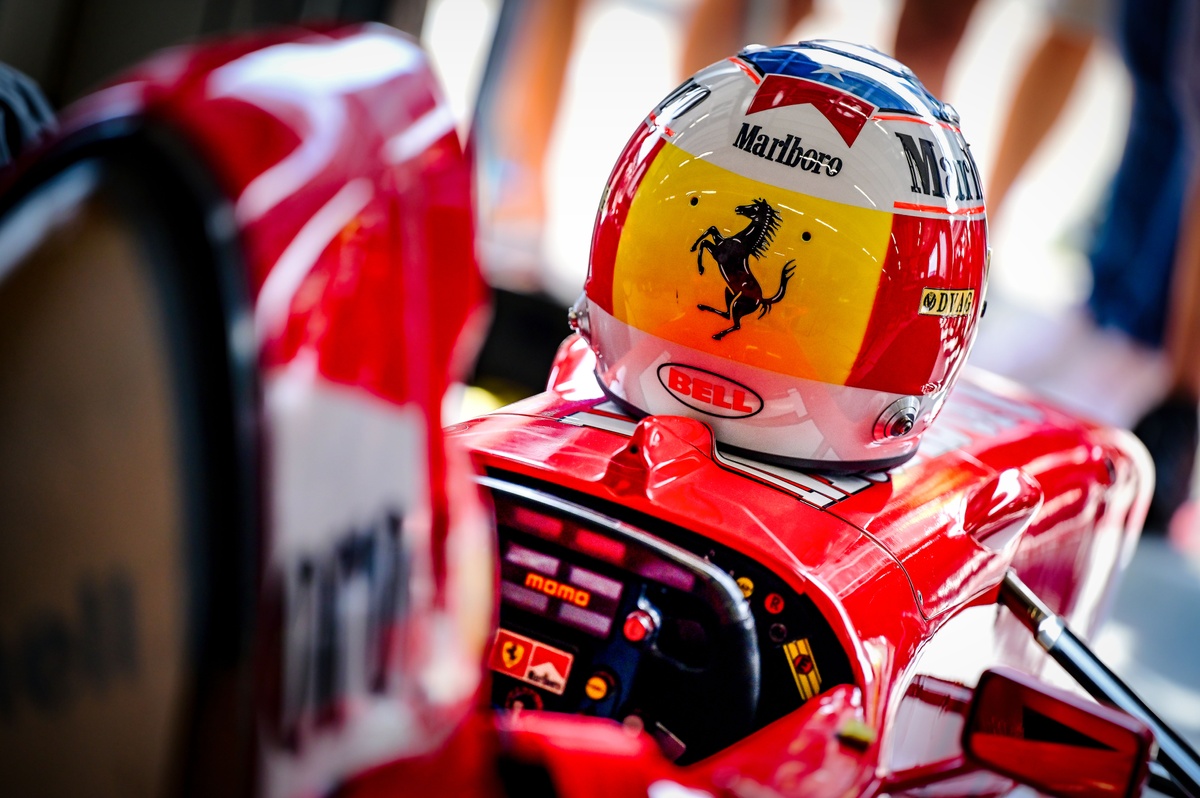
    Ferrari will also unveil a special tribute to Michael Schumacher at the 97th Italian Grand Prix. The seven-time world champion remains one of the most beloved figures in Formula 1 and a defining part of Ferrari’s history.

    Michael Schumacher with the Ferrari F2004
    Michael Schumacher, Ferrari F2004. Photo: Charles Coates / Motorsport Images

    Ferrari to honor Michael Schumacher at Monza

    The Italian Grand Prix at the Temple of Speed takes place 30 years after Schumacher claimed his first victory with Ferrari in 1996 and 20 years after his final win for the team in 2006. Between those victories, he delivered a decade of unprecedented success, securing five world titles and 71 wins during the most glorious period in Ferrari’s history.

    Hamilton’s and Charles Leclerc’s SF-26 cars will therefore feature a special livery dedicated to Schumacher. Monza will provide an appropriate stage to recognize the German driver’s extraordinary performances, which have since become legendary.

    Michael Schumacher, Ferrari Formula 1 world champion
    Michael Schumacher, world champion with Ferrari’s F1-2000. Photo: Sutton Images

    Schumacher has lived in an unknown condition since suffering a dramatic skiing accident in Méribel on 29 December 2013. His wife, Corinna, and their family continue to care for the former champion and will have the opportunity to witness the Formula 1 community’s enduring affection for one of the greatest figures in racing history.

    A series of initiatives dedicated to Schumacher is being prepared for Monza and will be officially announced in the coming days. The Italian Grand Prix is expected to draw a huge crowd, not only because of the championship battle involving home favorite Antonelli and Ferrari, but also because of the tribute Ferrari is planning for Schumacher.

    Keep Fighting Michael…

  • “Drive to Survive” Season 9: The Biggest F1 Stories Netflix Could Cover

    “Drive to Survive” Season 9: The Biggest F1 Stories Netflix Could Cover

    Netflix Confirms Drive to Survive Season 9 for 2026 F1 Championship

    Netflix has officially greenlit a ninth season of its hit Formula 1 docuseries Drive to Survive. The new instalment will chronicle the unfolding 2026 championship, a campaign already shaping up to be one of the most unpredictable in recent memory. While episode details remain under wraps, the first half of the season has delivered a wealth of compelling narratives poised to fill the expected ten-episode run.

    Kimi Antonelli’s Meteoric Rise Shakes Up the Title Fight

    The standout storyline of 2026 so far is the astonishing ascent of Mercedes rookie Kimi Antonelli. In only his second season in Formula 1, the Italian became the youngest driver ever to lead the World Championship standings after securing back-to-back victories at the Chinese and Japanese Grands Prix. His surge in performance blindsided a paddock largely focused on his more experienced team-mate, George Russell.

    Antonelli has since amassed six Grand Prix wins in the opening half of the campaign, establishing a commanding 59-point lead over Russell and seven-time champion Lewis Hamilton, who are currently level on points in second and third respectively.

    George Russell’s Trial by Fire at Mercedes

    Russell entered 2026 as a clear title favourite, winning the season-opening Australian Grand Prix and the Chinese sprint race. However, his championship challenge unravelled dramatically. As Antonelli strung together five consecutive wins, Russell endured a catalogue of misfortune: car failures in China and Canada, an ill-timed safety car that ruined his strategy in Japan, and multiple pit-lane speeding penalties in Monaco.

    Though the Briton has since recovered to remain in mathematical contention, the intra-team dynamic at Mercedes—specifically the contrast between Russell’s frustration and Antonelli’s seamless adaptation—offers ripe material for the series’ signature tension.

    New Technical Regulations Take Centre Stage

    The 2026 rule overhaul—introducing smaller, lighter cars, active aerodynamics, and power units with a near 50:50 split between internal combustion and electric power—is certain to feature prominently. The changes drew sharp criticism from several drivers and fans, criticism that intensified following Oliver Bearman’s 50G crash at the Japanese Grand Prix. The incident prompted the FIA to mandate further safety revisions for 2027, a reactive development that underscores the turbulence of the regulation transition.

    Aston Martin and Williams: High Hopes, Hard Reality

    Two of the sport’s historic names have endured nightmare starts to the new era.

    Aston Martin arrived at pre-season testing carrying immense expectation: the first year of a Honda power-unit partnership and the first car designed under technical legend Adrian Newey. Instead, the Silverstone squad grappled with fundamental chassis and power-unit deficits, delaying their B-spec upgrade until the Hungarian Grand Prix. The team currently languishes 10th in the Constructors’ Championship.

    Williams entered 2026 on a wave of optimism built throughout 2025, only to arrive at testing with an overweight car after missing a crucial private test in Barcelona. The unexpected five-week spring break—caused by the cancellation of the Saudi Arabian and Bahrain Grands Prix—allowed the Grove outfit to shed weight, yet performance remains elusive. The team is targeting a recovery with upgrades slated for the Azerbaijan Grand Prix.

    Lewis Hamilton’s Ferrari Renaissance

    After a difficult maiden season with the Scuderia in 2025, Lewis Hamilton has found his footing in 2026. The revised regulations appear to suit his driving style more favourably than the previous ground-effect generation, and a mental reset over the winter break has visibly sharpened his form.

    Hamilton claimed his first Ferrari podium with third place in China, followed by runner-up finishes in Canada and Monaco. The breakthrough arrived at the Circuit de Barcelona-Catalunya, where he secured his inaugural Grand Prix victory for Maranello. The seven-time champion now sits third in the drivers’ standings, level on points with Russell and 59 adrift of Antonelli.

    A “Not-So-Silly” Silly Season Settles Early

    Despite a frenzy of summer-break rumours, the 2027 driver market has largely stabilised:

    • Max Verstappen quashed speculation linking him to Mercedes, McLaren, or retirement by signing a Red Bull extension through 2030.
    • Carlos Sainz and Alex Albon both committed long-term futures to Williams, silencing doubts sparked by the team’s struggles.
    • Fernando Alonso’s Aston Martin future remains uncertain, with retirement or a surprise move to Alpine both plausible.
    • Esteban Ocon faces intense scrutiny at Haas after being consistently outperformed by team-mate Oliver Bearman across 2025 and 2026, casting doubt on his 2027 retention.

    New Entrants Cadillac and Audi Write Their Origin Stories

    The grid expanded to eleven teams in 2026, adding fresh narrative threads.

    Cadillac debuted with a veteran line-up of Sergio Pérez and Valtteri Bottas. Despite zero points and reliability woes, the American operation has earned paddock respect for its structural solidity.

    Audi, having completed its full takeover of Sauber, sits a respectable eighth in the Constructors’ table. However, the German manufacturer’s campaign was jolted in March by the abrupt departure of team principal Jonathan Wheatley—a corporate shake-up tailor-made for documentary treatment.

    McLaren’s Resurgence Reignites Title Hopes

    Reigning champions McLaren started 2026 on the back foot, the regulation shift dropping them behind Mercedes and Ferrari. Yet a potent upgrade package sparked a dramatic turnaround: Lando Norris captured back-to-back victories at the Hungarian and Dutch Grands Prix, catapulting the 2025 champion back into title contention and ensuring the Woking squad’s storyline remains very much alive.

    With the championship barely past its midpoint, Drive to Survive Season 9 has no shortage of high-stakes drama to document—from generational talent clashes and regulatory growing pains to corporate upheaval and redemption arcs. The cameras are rolling.

  • Red Bull Seeks F1 Development Lifeline as FIA’s New ADUO Decision Looms

    Red Bull Seeks F1 Development Lifeline as FIA’s New ADUO Decision Looms

    FIA ADUO Engine Rankings: Red Bull Tops First Period, Awaits Second Assessment

    Although the second ADUO period—Additional Development and Upgrade Opportunities in Formula 1—concluded after the Hungarian Grand Prix, the official results of the first assessment period remain unpublished. During the Monaco race weekend, however, all manufacturers were privately informed of the outcome, which placed Red Bull-Ford Powertrains surprisingly at the top of the rankings.

    First Period Results Favor Rivals

    Despite Red Bull’s dominant start to the season, the FIA allocated development tokens to its competitors: Mercedes High Performance Powertrains received one token, while Ferrari, Audi, and Honda were each granted two upgrade opportunities. The governing body had prepared a public announcement at that time but withheld it following considerable behind-the-scenes dissatisfaction from Red Bull, with CEO Oliver Mintzlaff directly involved.

    The Milton Keynes-based manufacturer had limited avenues to challenge the result. The current system measures only the internal combustion engine (ICE), yet the upgrade opportunities apply to the electrical side of the power unit as well—a structural weakness that cannot be addressed in the short term. FIA single-seater director Nikolas Tombazis explained to media including Motorsport.com that he was open to incorporating additional parameters such as turbo size, but teams and manufacturers pushed to keep the system simple last year.

    Consequently, Red Bull could only request a factual review. Team principal Laurent Mekies stated that, in his view, there was “not a single data point” suggesting that Red Bull-Ford Powertrains has the best engine on the grid. That factual check does not appear to have altered the outcome. When asked by Motorsport.com, Tombazis affirmed the accuracy of the FIA’s measurements.

    “I think our measurement, in my opinion, has proven to be very accurate,” he said. “With that said, has everything worked fine? No, because obviously people are not happy and so on. Do we need to think about improvements in the future? Yes, I would say so.”

    The prevailing paddock sentiment is that manufacturers such as Mercedes and Ferrari strategically managed their performance during the opening race weekends—avoiding showing their full hand—to secure ADUO tokens. Ferrari, in particular, managed to obtain two tokens through this approach.

    Second Period Offers Red Bull a Potential Lifeline

    Red Bull’s hopes now rest on the second assessment period, which covers races up to and including the Hungarian Grand Prix. According to the prescribed timeframe, the FIA should inform all manufacturers of the results ahead of the Italian Grand Prix at Monza, with an announcement expected this week or early next week.

    For Red Bull to receive a token, its internal combustion engine must no longer rank as the best in this second assessment. However, this outcome depends partly on rival manufacturers, who can effectively play a strategic game. If competitors refrain from using their tokens on the ICE and continue to withhold maximum performance at certain events, they could keep Red Bull at the top of the ranking for longer.

    Tombazis, speaking before the summer break, expressed skepticism about such a scenario unfolding.

    “Well, I don’t think it would be convenient for you to always be below [your maximum power] just to keep getting more opportunities, because what’s the point of opportunities if it isn’t ultimately for you to be on top?”

    To qualify for a token, Red Bull’s deficit to the best ICE on the grid during the second ADUO period must exceed 2%. If Red Bull remains top-ranked or its deficit is assessed at less than 2%, it will again receive no upgrade opportunity. In that scenario, the team’s only remaining chance to modify its power unit this season would come in the third period, which concludes after the Mexico City Grand Prix.

    Mekies and his team are hopeful of securing an opportunity before then. If successful, every manufacturer will have received at least one token in the first season under the all-new regulations, with clarity expected before media day in Monza.

  • What Charles Leclerc ‘didn’t understand’ About Ferrari’s Zandvoort F1 Strategy

    What Charles Leclerc ‘didn’t understand’ About Ferrari’s Zandvoort F1 Strategy

    Leclerc Questions Ferrari Pit-Stop Timing at Dutch Grand Prix

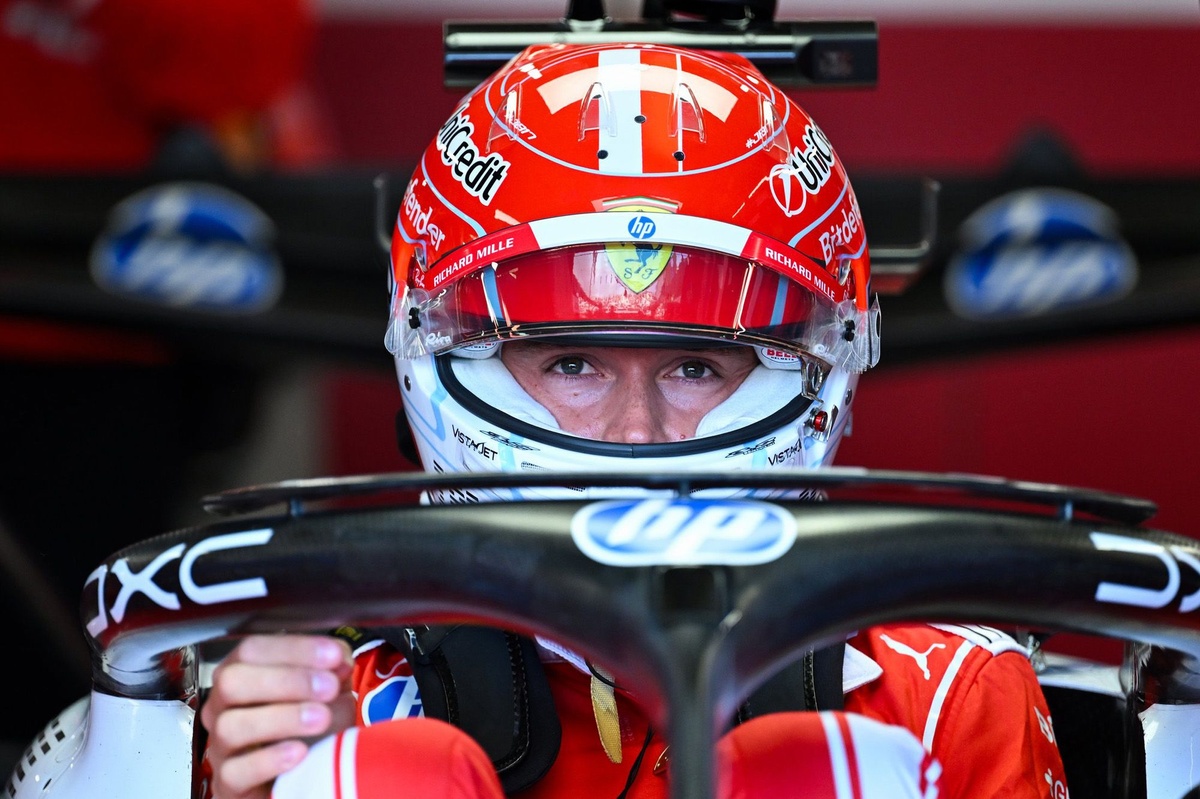
    Charles Leclerc openly questioned a Ferrari strategy decision during the Dutch Grand Prix that potentially cost him a podium finish at Zandvoort. The pivotal moment came on lap 43 when the team called the Monegasque driver into the pits, leaving him with insufficient tyre advantage to challenge George Russell for third place in the closing stages.

    “I didn’t really understand why we had to box so close to George’s pitstop,” Leclerc said after the race, speaking to Sky Sports. “Because that really was kind of signing to finishing behind George, because with a two or three laps difference, for me there wasn’t much I could have done, and I felt like there was a bit more in my tyres.”

    Leclerc had been running within a second of Russell before the Mercedes driver pitted at the end of lap 40. Extending his stint could have created a tyre-life offset similar to the strategy that delivered Lando Norris the race victory. Norris, after being held up by Kimi Antonelli, stopped seven laps later than the Italian rookie and used fresher tyres to close the gap and seize the lead. Ferrari, by contrast, brought Leclerc in just three laps after Russell.

    “I was very surprised to box so early when we had done exactly what we wanted,” he said. “George was pitting and so that was the time for us to do five, ten laps longer to build a tyre delta and to come back at the end on George.

    “Unfortunately, two laps later I was told to box, which I did I think three laps later.”

    Hamilton Factor and Radio Exchange Reveal Tension

    One contributing factor may have been Lewis Hamilton, who was on an alternative strategy and caught Leclerc at a critical juncture. The seven-time champion demanded a position swap, though it remains unclear whether Ferrari pitted Leclerc to avoid impeding his teammate. Leclerc confirmed he preferred to stay out.

    “I need to review the way the situation was looking,” he said, when asked whether he’d been willing to swap positions with Hamilton and extend his stint, “but I was happy to go longer.”

    The team’s initial call came on lap 42, prompting a sharp response from Leclerc over the radio.

    “What do you mean? This fucks my race if I stop two laps after Russell.”

    “Hello?”

    “Yeah coming back to you”

    “Charles, we want to box”

    Leclerc drove past the pit entry, still disagreeing, only to receive the command again on the following lap.

    “So box Charles box, will be for hard.”

    After the stop, he rejoined roughly six seconds behind Russell and trimmed the deficit to under two seconds within a dozen laps. However, the pace delta proved too small for a pass at Zandvoort, where overtaking demands a larger advantage. A virtual safety car on lap 55 allowed Ferrari to pit Hamilton, and Leclerc stopped as well, locking him into fifth. Both Ferraris finished behind Russell.

    Missed Undercut Opportunity

    The race highlighted Ferrari’s inability to convert strong pace into a podium due to multiple execution errors. Leclerc’s afternoon was compromised early when he lost position to Oscar Piastri at the restart. Stuck behind the McLaren during his first stint, he could not deploy the Ferrari’s speed.

    The team delayed his first stop and fitted mediums versus Piastri’s hards to facilitate an overcut, but a slow pit stop left Leclerc six seconds adrift. He closed the gap in six laps and passed Piastri on lap 34, by which time Russell was only three seconds ahead. Ferrari then had a window to undercut the Mercedes but hesitated.

    “I think it’s a lot about execution,” admitted Vasseur, speaking to Sky Germany. “Pace was good and even strong, I think, compared to Mercedes. The issue is that at the second start we lost position on Piastri. We were stuck behind him. We lost a lot of time – and then when we were able to be in front, at one stage we were quite close to the undercut on Russell. But there was a group of cars, a bit of confusion – and we didn’t do it.

    “It’s our mistake, my mistake. But overall it’s more a matter of execution.”

    At the end of lap 40, Ferrari instructed Leclerc to “Box opposite to Russell,” but the Mercedes driver pitted immediately, eliminating the undercut chance. Vasseur acknowledged the error, though pitting a lap earlier might not have succeeded either, as Leclerc would have emerged behind a train of lapped cars including Carlos Sainz, Franco Colapinto, and Arvid Lindblad.

    With the undercut gone, the only viable path to third was extending the second stint to build a tyre delta against Russell — a tactic Ferrari ultimately declined to use. Despite Vasseur’s assertion that the Scuderia’s race pace surpassed Mercedes’, it was Antonelli and Russell who stood on the podium, with Hamilton and Leclerc close behind.

    Qualifying Pace Identified as Root Cause

    Leclerc emphasized that while strategy errors were costly, the fundamental limitation was Ferrari’s qualifying performance. Starting from the third row at a circuit where overtaking is difficult forced the team into reactive strategic gambles.

    “I mean a frustrating race to be honest,” Leclerc said after the finish, “because things went the wrong way for things we cannot really control, with the virtual safety car timing, it wasn’t so great for us. But at the end of the day I think the pace was strong, we had a good overtake on Oscar, I think good tyre management.

    “The thing we need to understand is our qualifying pace. This is truly where we are lacking at the moment.”