Tag: Formula 1

  • The Key Upgrade Behind McLaren’s Performance Leap

    The Key Upgrade Behind McLaren’s Performance Leap

    McLaren’s Zandvoort upgrades delivered more than a performance boost

    McLaren’s victory at Zandvoort, its second consecutive win after Budapest, highlighted the impact of the team’s upgrades introduced before and after Formula 1’s summer break. The developments did more than restore the aerodynamic load the car had been lacking: they also helped McLaren take a decisive step forward.

    High-speed corners reveal McLaren’s progress

    McLaren’s strengths were already becoming apparent at the Spanish Grand Prix in Barcelona, while the car looked even more convincing at Spa. The faster and longer the corner, where absolute speed is not the only consideration, the more competitive McLaren became. Its latest upgrades supplied the additional downforce needed to make the car a benchmark through those sections.

    The effectiveness of the developments even surprised McLaren, with the car’s performance in high-speed corners exceeding the team’s internal expectations.

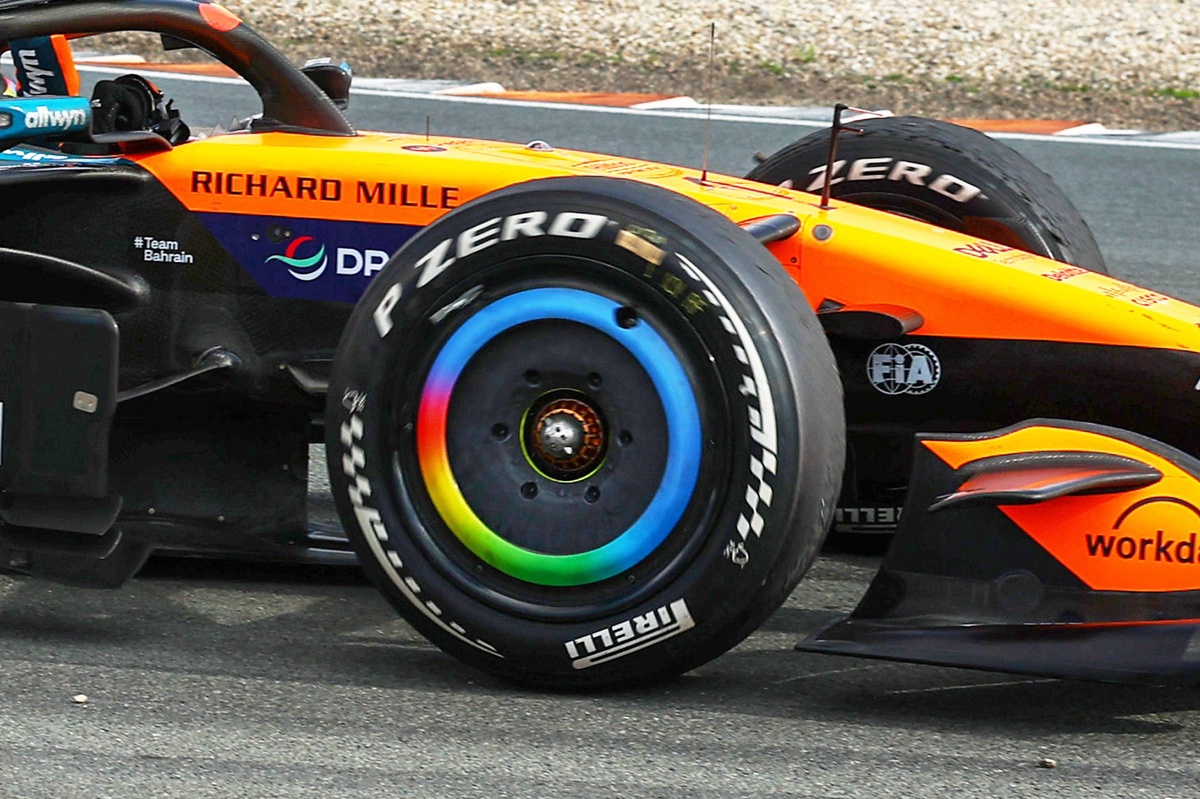
    Another factor in the Zandvoort victory received less attention: the introduction of new front wheel rims, a development McLaren technical director of engineering Neil Houldey had previewed before the weekend.

    McLaren wheel cover comparison

    Photo by: Clive Mason / Getty Images

    “We introduced a small change to the rear section of the floor to generate a bit of extra load, along with some minor tweaks to the rear brake ducts. We also have new front wheel rims, which will help us build more temperature in the tyres. These updates are not significant in terms of lap time, but they do make us slightly more competitive”, Houldey said.

    Why tyre temperature mattered at Zandvoort

    The significance of the wheel-rim change became clearer after the race. McLaren team principal Andrea Stella noted that Budapest and Zandvoort were both high-downforce circuits that naturally suited the car’s characteristics better than other tracks.

    McLaren’s difficulties at Monaco, however, showed that the problem was not limited to cornering speeds or circuit layout. The team had hoped to challenge at the front in Monte Carlo and repeat its successes from the previous year, but it finished outside the podium positions.

    Although Monaco offers teams greater freedom to set up the car because it involves fewer compromises, McLaren was hurt by a lack of downforce and difficulty generating heat in the front tyres. That reduced overall grip.

    The limitation had already appeared earlier in the season, most notably in Australia and China, where the car suffered significant graining. In Japan, however, graining was not a problem and a new track surface improved grip, allowing the MCL40 to score its first podium of the season.

    Front-axle graining was one of the concerns heading into the Zandvoort weekend, but it ultimately proved minimal across the field. The bigger challenge was getting the tyres into their optimal temperature window, even over a single lap.

    That was evident during the final Q3 runs on Saturday. Lando Norris secured pole position, while rival teams struggled to bring their tyres up to temperature and required an additional lap.

    Aston Martin’s 2026 wheel comparison demonstrates the difference between the front and rear designs used to manage temperatures

    Photo by: Gianluca D’Alessandro

    How McLaren’s new front rims managed tyre temperatures

    The issue was directly connected to McLaren’s upgrades in the Netherlands. Rule changes reopened wheel-rim development this season, giving teams an important tool for managing tyre temperatures and operating pressures.

    The internal cavities of a custom rim design, which some teams call “pockets”, allow engineers to passively control air exchange and thermal transfer to the tyre.

    At Zandvoort, McLaren focused on retaining more heat within the rim structure and transferring it more effectively to the tyre. As a result, only the front rim, produced by the team’s long-standing partner Enkei, was updated.

    The change was paired with a more enclosed wheel cover. Its purpose was to limit the cooling effect of ambient airflow hitting the assembly while also reducing drag.

    The rear rim remained unchanged because rear-tyre degradation was already a major factor throughout the weekend, including during the sprint and the race. At the rear of the car, McLaren’s priority was to keep temperatures under control during traction phases and through high-speed sections rather than generate additional heat.

    Strong gusts caused the cars to slide through high-speed corners, where extra downforce was crucial, as well as through key traction zones on the exits of slower corners. McLaren’s combination of aerodynamic improvements and front-rim development helped the team manage those challenges and convert its recent progress into another victory.

    Source: www.motorsport.com
  • Giancarlo Fisichella on Winning with Jordan and Renault, His Stunning Spa Performance for Force India, and the Ferrari Call

    Giancarlo Fisichella on Winning with Jordan and Renault, His Stunning Spa Performance for Force India, and the Ferrari Call

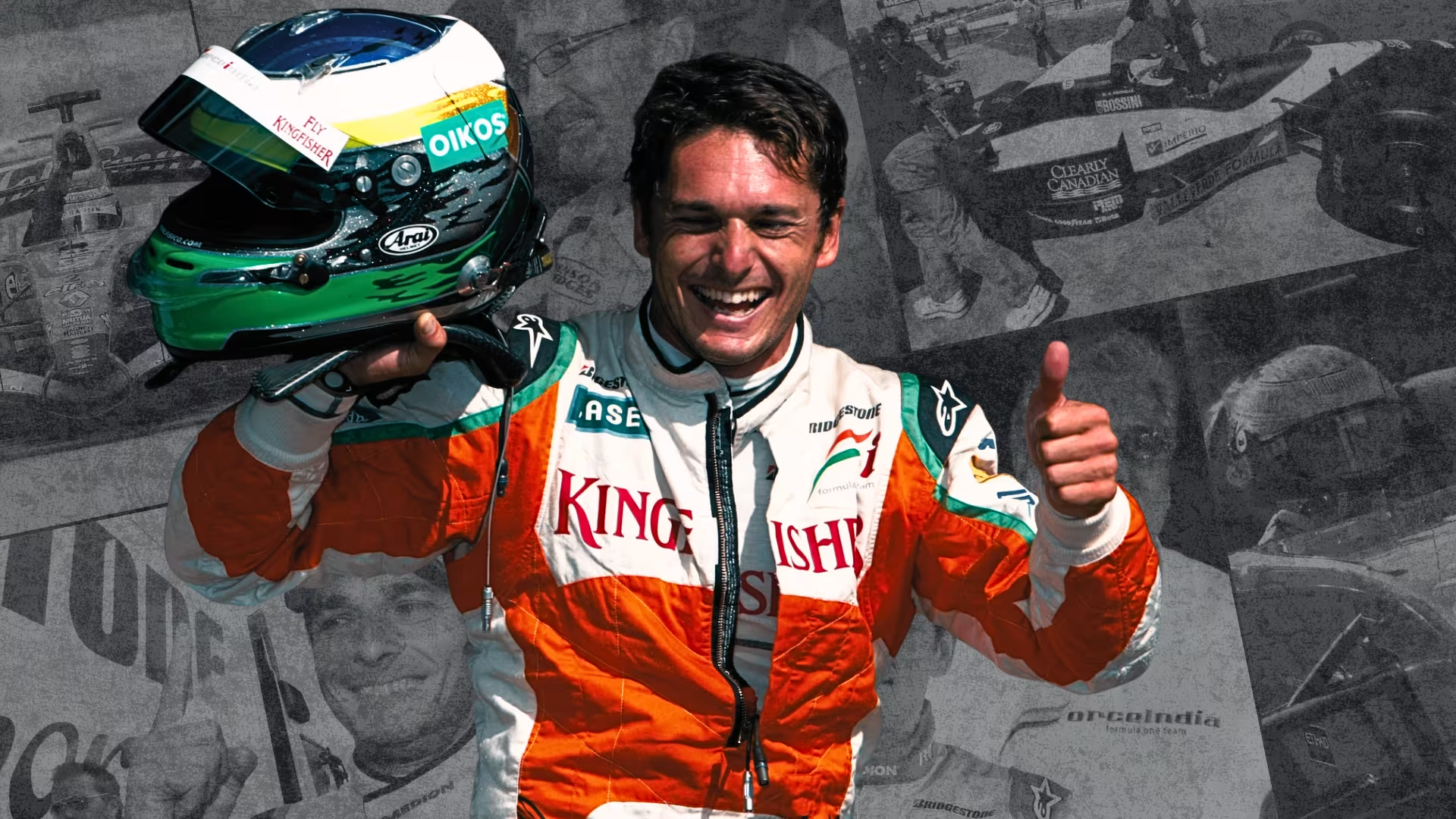
    Giancarlo Fisichella competed in 231 Grands Prix over 14 seasons, racing for several iconic Formula 1 teams and securing three victories. In the latest edition of our Lights to Flag series, we spoke to the Italian driver about his long and distinguished career in Formula 1.

    Giancarlo Fisichella’s chance with Minardi

    Fisichella’s father was a passionate Formula 1 fan. When Giancarlo was eight years old, his father took him to a track on the outskirts of their native Rome.

    Source: www.formula1.com

  • How Fred Vasseur Is Challenging Ferrari to Take More Risks

    How Fred Vasseur Is Challenging Ferrari to Take More Risks

    Ferrari’s 2026 Formula 1 car, the SF-26, has emerged as one of the grid’s most innovative designs after debuting several striking aerodynamic solutions during winter testing in Bahrain.

    The car featured an unusual vane behind the exhaust pipe on the opening day, internally known as FTM. One day later, Ferrari introduced an even more eye-catching rear wing that rotated 180 degrees between cornering and straight-line modes. The design was quickly nicknamed the “Macarena wing.”

    Ferrari leads F1 innovation with SF-26

    The exhaust wing and upside-down rear wing are only the most visible examples of Ferrari’s technical innovation. While both elements have had a relatively minor performance impact, their unusual appearance attracted significant attention and highlighted a Ferrari team increasingly willing to lead rather than follow its rivals.

    Red Bull and McLaren have since introduced their own versions of the upside-down rear wing. Red Bull is believed to have developed its solution independently of Ferrari, while McLaren began work on its design after recognising the opportunity created by Ferrari’s concept.

    Ferrari’s exhaust wing has also been widely copied, although rival teams have reportedly struggled to replicate it as effectively. Ferrari made specific rear-end design choices to accommodate the system, making the FTM difficult to reverse-engineer.

    Lewis Hamilton, Ferrari

    Photo by: Marcel van Dorst / EYE4images / NurPhoto via Getty Images

    Ferrari’s innovative 2026 car is the result of a deliberate cultural shift led by team principal Fred Vasseur. Since joining the team at the start of 2023, Vasseur has focused on reducing blame culture at Maranello and encouraging engineers to take greater risks.

    In an interview with Motorsport.com, Vasseur said Ferrari needed a change in mentality across every area of the team, not only aerodynamic design. In Formula 1, small performance gains can accumulate quickly, particularly as the field becomes more closely matched. Those margins can determine whether a driver starts from the front row or qualifies sixth.

    “It’s true that from day one I had the feeling that we have to take more risks,” Vasseur explained. “More risk on track, more risk on the innovation, on the development to take a different direction compared to the others, not to follow the others.”

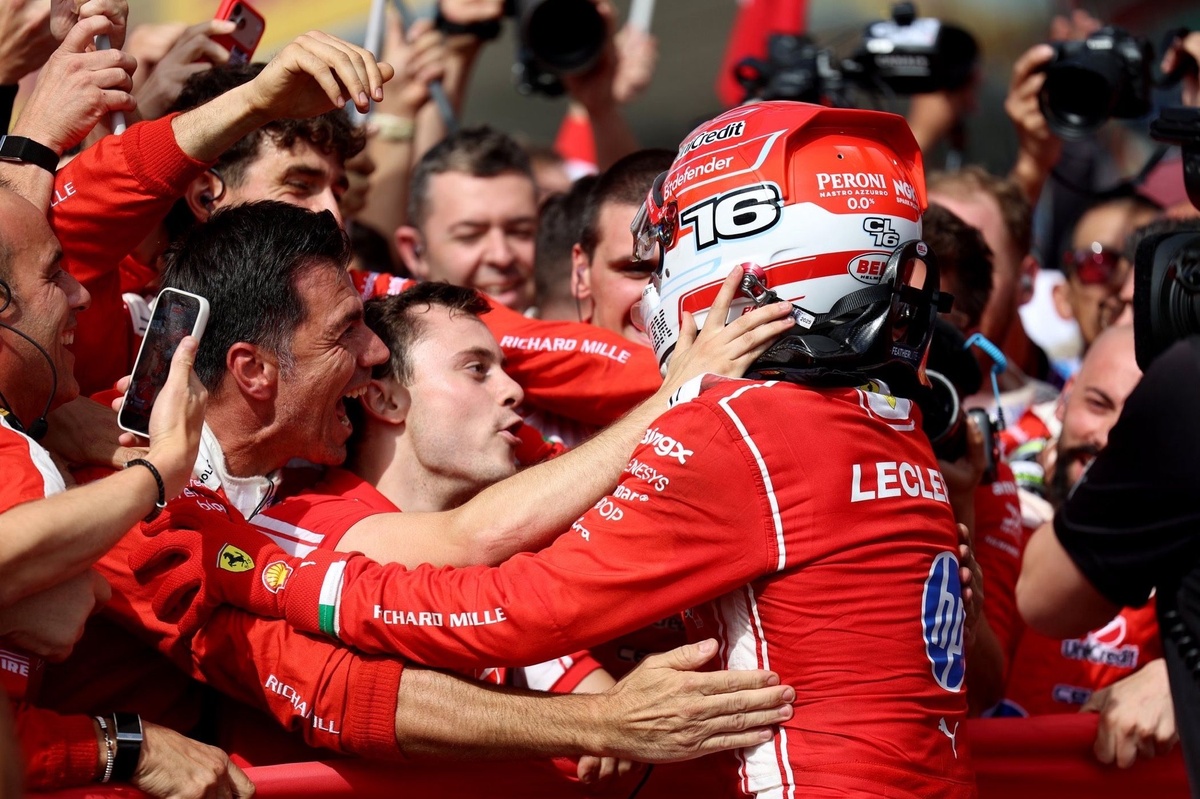
    Ferrari’s willingness to take risks has not always produced the desired result. The team’s design choices, car set-up decisions and race strategies have occasionally taken it in the wrong direction. Charles Leclerc and Lewis Hamilton have both won a grand prix this year in a more competitive Ferrari, but Vasseur believes the team’s decision-making will improve as it continues to adopt a bolder approach.

    “Sometimes it’s paying off, sometimes it’s not,” he said. “When you are a bit aggressive on strategy, sometimes you are a genius, like in Barcelona, and sometimes not, but we are the same guys on the pitwall.

    “I think we need to develop this mentality because you are improving on taking risks. You will improve in the risk assessment. You will improve in the capacity to make decisions, it means that we have to continue to do so, and we will do better and better race after race.”

    Cost cap raises the stakes for technical risks

    Changing an established company culture takes time, which explains why the process has remained a major focus for Vasseur. Innovation also carries significant risks under Formula 1’s cost cap and development restrictions, as teams cannot simply invest unlimited money in experimental ideas.

    “I’m very pleased with what we did in terms of options of development, because with the cost cap, when you are taking this direction, if it’s not paying off, it’s negative,” Vasseur explained. “It’s not that if it’s not paying off, it’s [just] a shame. You are putting your money, you are betting on something.”

    Vasseur said he was “more than keen” for Ferrari to continue leading Formula 1’s development race. He believes the team’s changing culture is giving engineers the confidence to innovate instead of playing safe because they fear the consequences of failure.

    “It was important for the guys in the team to feel the support from the company when they were innovating,” the Frenchman said. “I hope it’s only the start of this process, and that we will be able to continue to have the same approach and the same dynamic.

    “We will have a convergence of directions that we are taking, because one of the favourite parts of F1 is also to copy the others. But if we can stay one step ahead and lead the pack on some topics on some projects, I am more than keen.

    “For sure it will be more and more difficult, but it will be the same challenge for everybody.”

    Frederic Vasseur, Ferrari

    Photo by: Michael Potts / LAT Images via Getty Images

  • Williams Criticized for ‘overpromising and underdelivering’ Amid 2026 F1 Struggles

    Williams Criticized for ‘overpromising and underdelivering’ Amid 2026 F1 Struggles

    Formula 1 broadcaster Will Buxton has criticised Williams for “overpromising and underdelivering” during the 2026 season, while admitting he remains surprised that Carlos Sainz chose the Grove-based team over Audi.

    Williams struggles after ambitious 2025 claims

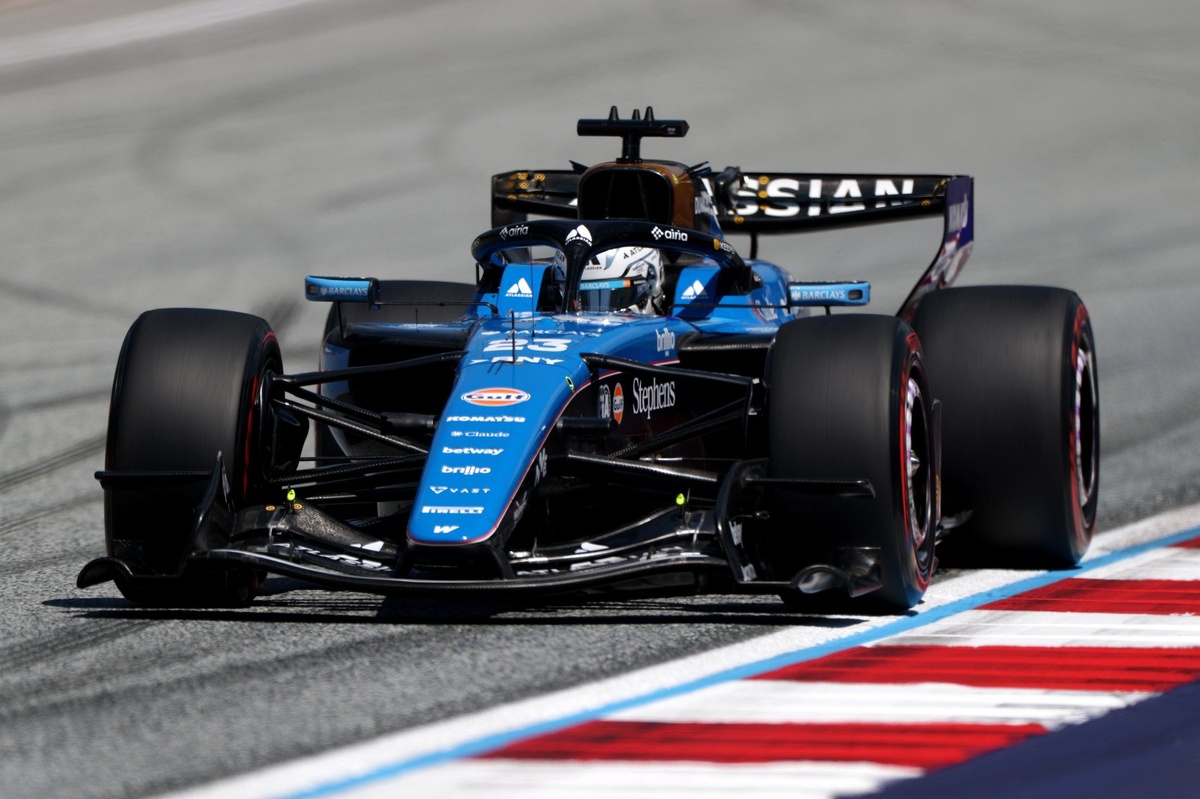
    Williams made bold statements throughout 2025, but its campaign has fallen well short of expectations. The team arrived at pre-season testing in Bahrain on the back foot after missing private testing in Barcelona, and it has since battled significant problems with an overweight car.

    After 12 rounds, Williams sits ninth in the constructors’ championship with 11 points. Sainz and Alex Albon are 16th and 17th in the drivers’ standings, with six and five points respectively.

    The team’s difficult season was compounded at the Dutch Grand Prix in Zandvoort, where the two Williams drivers collided. Albon was forced to retire, while Sainz received a 10-second penalty.

    Buxton compares Williams with Audi

    Speaking on the Up To Speed podcast, Buxton compared Williams with Audi, which joined the Formula 1 grid as a works team in 2026 after taking over Sauber.

    Sainz had held talks with Audi after losing his Ferrari seat to Lewis Hamilton, but ultimately chose Williams for the 2025 season.

    “There’s an interesting difference in mindset and philosophy between Williams and Audi. When you look at the two places that Carlos could have ended up, you might have expected Audi to turn up with great fanfare, and yet I feel that they’ve been quite understated and have kind of underpromised and overdelivered,” Buxton explained.

    “Whereas Williams keep making the big statements of, ‘We’re going to take these steps up; we want to be fighting for X, Y and Z, and this is going to be a great year for us,’ and then it disappoints. So they overpromise and underdeliver. 

    “I did find it interesting back when Carlos signed for Williams, and he had that option of going to Audi. I found it really interesting that you would turn down a factory seat over the dream that is Williams, and obviously James Vowles sold him a brilliant dream.”

    Source: www.motorsport.com

  • Italian Grand Prix at Monza: Best Pictures from the Race

    Italian Grand Prix at Monza: Best Pictures from the Race

    The Italian Grand Prix takes place this weekend at Monza, widely regarded as the most historic circuit on the Formula 1 calendar.

    Monza has hosted more Formula 1 races than any other venue, staging a Grand Prix in every season since the inaugural championship in 1950 except 1980, when the circuit was undergoing renovations.

    Monza: Formula 1’s cathedral of speed

    Set inside a royal park and surrounded by woodland, Monza is known as the “cathedral of speed”. It is also the spiritual home of Ferrari and the devoted tifosi who passionately support the Italian team.

    It is almost impossible to imagine Formula 1 without Monza. The circuit hosted the race where the first world championship was decided 76 years ago. Last year, Red Bull’s Max Verstappen set the fastest lap in Formula 1 history during qualifying at the track.

    Across the decades, Monza has witnessed thrilling finishes, Ferrari victories, championship triumphs, controversy and tragedy. Its history is inseparable from the story of Formula 1. Here is a selection of images from through the years.

    Source: www.bbc.co.uk

  • Fernando Alonso “saved” Aston Martin After Difficult Dutch GP Weekend, Says Guenther Steiner

    Fernando Alonso “saved” Aston Martin After Difficult Dutch GP Weekend, Says Guenther Steiner

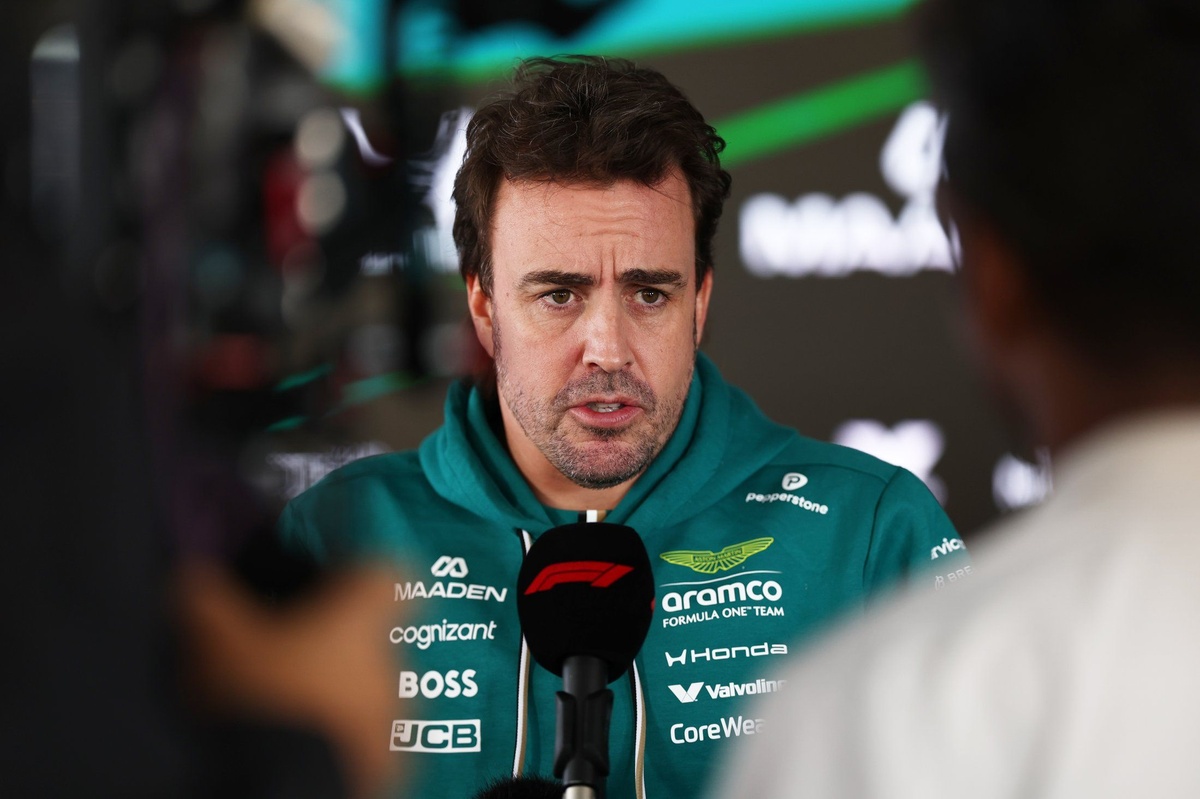
    Former Haas team principal Guenther Steiner believes Fernando Alonso was solely responsible for Aston Martin’s points finish at the Dutch Grand Prix.

    Aston Martin arrived at Zandvoort with a highly anticipated power-unit upgrade from engine partner Honda, following the introduction of a B-spec car at the Hungarian Grand Prix.

    However, the upgrades did not immediately deliver a clear improvement. Lance Stroll and Alonso finished 17th and 18th respectively in the sprint, before qualifying 18th and 19th for the Dutch Grand Prix.

    Stroll retired after suffering damage during a chaotic opening lap in which Max Verstappen crashed. Alonso, meanwhile, used an aggressive one-stop strategy to finish ninth and secure two valuable points for Aston Martin, tripling the team’s season tally.

    Steiner credits Alonso for Aston Martin points

    Speaking on The Red Flags Podcast, Steiner suggested that the result owed more to the two-time world champion’s performance than to Aston Martin’s upgraded car.

    “After what I saw on Friday and Saturday in sprint qualifying and the sprint, I was like, ‘Wow, I think we overreacted a little bit to their resurgence.’ And then also the qualifying on Saturday for the race, like, ‘Wow, this is not going the right way,’” Steiner explained.

    “This was a Fernando special here, doing it with one stop. That saved them. He could keep a decent pace, and what helps them at the moment is that there are really now three backmarker teams, which are far off everyone.”

    Aston Martin is currently 10th in the constructors’ championship with three points, all scored by Alonso. The Spaniard sits 19th in the drivers’ standings.

    Alonso says Aston Martin and Honda need more time

    Alonso praised Aston Martin’s upgrades after the race but acknowledged that the team and Honda still need time to fine-tune the changes.

    “In general, we’re still not in the place we want to be in terms of driveability. The downshifts and engine braking seem a little bit random, corner by corner,” the Spaniard told Sky Sports F1. “So we still need to fine-tune it and, with the deficit on power, we still lose a lot on the straights. So now that we are more or less competitive in the corners, we need to improve that. But we are trying to do all this together. “We need to give time to Honda as well to figure out what the problem is and where to fix it. So I’m happy, I’m relaxed. I trust both Silverstone and Sakura.”

    Source: www.motorsport.com

  • Lando Norris Discusses Long-Term McLaren Future After Committing Through 2030

    Lando Norris Discusses Long-Term McLaren Future After Committing Through 2030

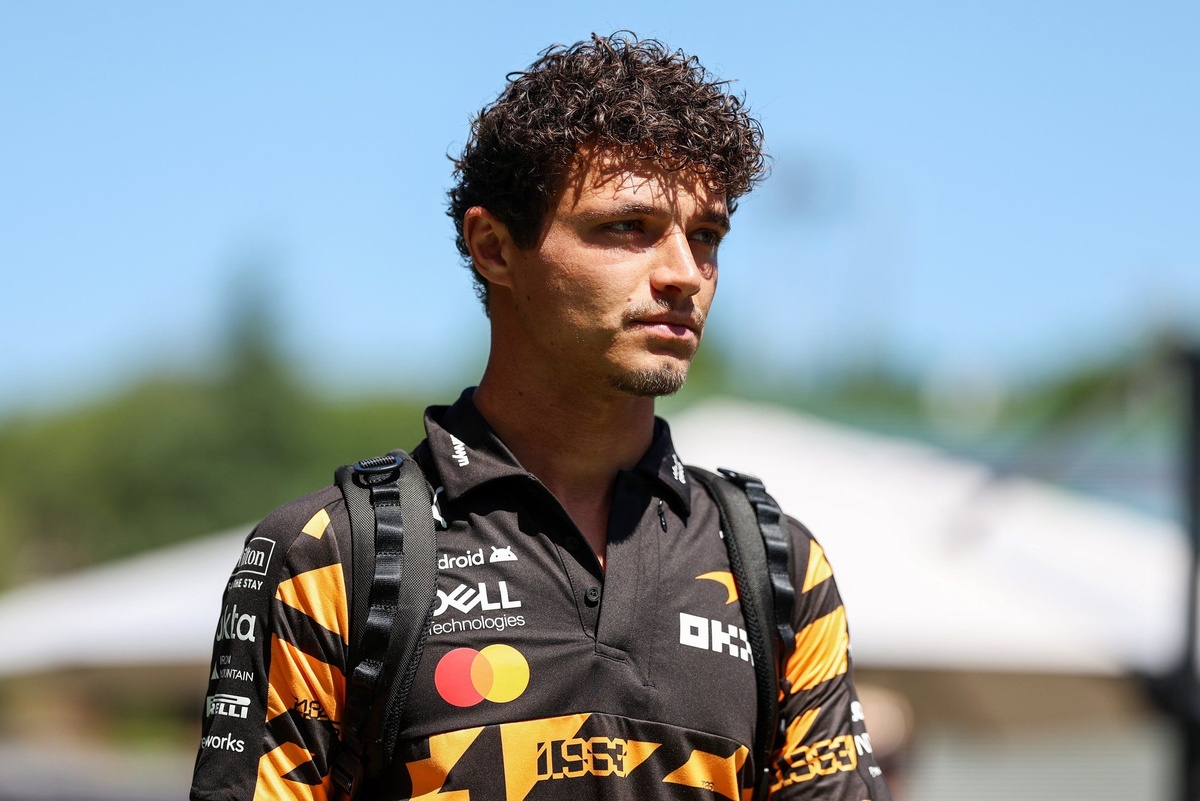
    2025 Formula 1 world champion Lando Norris says he would be “proud” to spend his entire F1 career with McLaren after committing his future to the team until the end of the 2030 season.

    The 26-year-old has signed a four-year contract extension with the Woking-based outfit. Speaking to Sky Sports about the possibility of racing into his 40s and remaining with McLaren throughout his career, Norris said he was uncertain how long he would continue competing in Formula 1 but reaffirmed his commitment to the team.

    “Oh, I don’t know if I want to get to 40. It’s a big ask to get to 30, so we’ll see. I don’t know what the future holds,”

    He added:

    “I certainly want to believe what it holds, and I still believe that we can win more as a team and win more constructors’ and more drivers’ championships, and that’s why I want to stay here.

    Lando Norris of McLaren
    Lando Norris, McLaren. Photo by: Guido De Bortoli / LAT Images via Getty Images

    “But they are also the only team I’ve ever been with, and the team that I love and I call this place my home. So, if I do end up just doing my whole career at McLaren, that’s something I’ll be so proud to say and carry with me through the rest of my life.”

    Norris played down immediate comparisons with the lengthy Formula 1 careers of Fernando Alonso and Lewis Hamilton, saying his focus is currently on the four-year extension he has just signed.

    “I don’t know what point I want to go to as a driver, whether I want to be 30, or 40, or 50. I don’t know that yet,”

    He continued:

    “So, I’m just very, very pleased to announce I’ll be here for four more years and four more years fighting for wins and championships, hopefully.”

    Norris is currently fourth in the drivers’ championship with 159 points after securing back-to-back victories at the Hungarian and Dutch Grands Prix.

  • Carlos Sainz: F1 Rules Era Could Explain Changes in Driver Competitiveness

    Carlos Sainz: F1 Rules Era Could Explain Changes in Driver Competitiveness

    Carlos Sainz believes Formula 1’s regulation changes have played a major role in reshaping the competitive order among drivers in 2026.

    F1 introduced its biggest rules overhaul last winter, changing both the chassis and power unit. The new regulations moved the sport away from ground-effect cars and introduced active aerodynamics, alongside a 50/50 split between internal-combustion and electrical power.

    The changes created a fresh challenge for drivers, who had to adapt to different car characteristics and manage power units that were significantly different from those used during the 2022-25 era.

    Sainz links F1 regulation changes to driver performance swings

    Sainz believes that transition has contributed to the changes in competitiveness seen among drivers in 2026.

    “Let’s start with one thing: it’s been impressive to see how much the performance balance between team-mates has changed. Not only between Antonelli and Russell, but also between Hamilton and Leclerc, and with Verstappen not being as dominant over Hadjar,” Sainz said in an exclusive interview.

    “I think it’s a lesson for everyone. We’ve had confirmation that when the fundamental concept of a car changes, the competitive picture can change as well.

    Lewis Hamilton, Ferrari, Charles Leclerc, Ferrari

    Photo by: Joe Portlock / Getty Images

    “It’s something I’ve always believed: a car can suit you extremely well or it can be far from what you would ideally want, but sooner or later you have to adapt. It might take some time, but eventually you have to find a way.

    “I’ve always thought that many results in Formula 1 have also been helped by the combination of being in the right place at the right time. For many years, I’ve believed there are cars that simply suit your driving style from the very first laps.”

    Why ground-effect cars did not suit Sainz

    Sainz said the ground-effect era did not naturally fit his preferred driving style, forcing him to adapt in order to maximise his performance.

    “It happened when the ground-effect regulations came in. From 2022 onwards, for four years, I was never able to drive in my natural style,” he explained.

    “I adapted and still managed to achieve some good results, but I remain convinced that the Carlos who drove during the ground-effect era wasn’t the same Carlos who drove the 2021, 2020 or 2019 cars.

    “I’m not saying I was slow with the ground-effect cars. I think I had some very good races during that period, both with Ferrari and Williams, but I always had to adapt to something that didn’t come as naturally to me.

    Charles Leclerc, Ferrari F1-75, passes the beached car of Carlos Sainz, Ferrari F1-75

    Photo by: Andy Hone / Motorsport Images

    “I had to work harder at it, and I think it was the same for other drivers too.”

    Changing teams can transform an F1 driver’s performance

    The four-time grand prix winner also believes moving between teams can have a similar effect. However, he said joining a new team is not necessarily a disadvantage when it comes to adapting to a different car or working alongside a team-mate who is already established.

    “At the final test of the season in Abu Dhabi [December 2018], I got into their [McLaren’s] car for the first time and immediately felt that it drove in a way that was exactly in line with what I liked,” Sainz said.

    “I think during my two years with McLaren, you saw the best version of me, although I also really liked the Toro Rosso. I liked the Renault a little less, while I immediately liked the 2021 Ferrari and I always performed very well in that car.

    “Then, with the arrival of the ground-effect regulations, things became more difficult, but this year, I’ve started enjoying the driving more again.

    “In the end, I don’t think a team can design a car specifically around your driving style. Sometimes you just get a fortunate combination, and when that happens you feel unbeatable. You have the feeling that it’s your car.”

  • Ferrari Faces Management Test Between Lewis Hamilton and Charles Leclerc After Dutch GP, Pundit Says

    Ferrari Faces Management Test Between Lewis Hamilton and Charles Leclerc After Dutch GP, Pundit Says

    Former F1 TV pundit Will Buxton has questioned whether Ferrari can effectively manage the relationship between seven-time world champion Lewis Hamilton and Charles Leclerc.

    Speaking on the Up To Speed podcast after the Dutch Grand Prix, Buxton contrasted Ferrari’s hesitation over team orders with Mercedes’ swift decision-making. Mercedes quickly arranged a position swap, while Ferrari chose not to intervene, prompting a series of frustrated radio messages from Hamilton.

    Ferrari’s team orders challenge

    Buxton said the incident was less a test of the two Ferrari drivers’ relationship than a test of how the team’s management handles competing priorities.

    Leclerc has raced for Ferrari since 2019 and is deeply established within the organisation. Hamilton joined the Maranello team in 2025 following a successful 12-year spell with Mercedes. After taking time to adapt to his new surroundings, the 41-year-old returned to top form in 2026.

    “Is this Ferrari’s first real test of the Charles and Lewis relationship? Well, if it’s not a test of their relationship, it’s a test of how the team handles it because Charles is the golden child, right? Always has been. He’s Ferrari through and through. He’s probably never going to race anywhere else. It’s his place, and he’s been there since he was a kid,” Buxton explained.

    “And then you’ve got Lewis, the GOAT, seven-time champion. You can’t please both, right? In an F1 team, one driver’s going to be p***ed, one driver’s going to come out happy. That’s just how it works out, especially in these kinds of scenarios. And you kind of have to take your medicine sometimes and realise that you’re going to p*** off one.

    “You can’t keep both of them happy in every single eventuality. It doesn’t happen. Lewis has experience of a team that executes immediately at Mercedes, and he wants that world championship-winning mentality at Ferrari because unless you have that, you’re never going to win a title.

    “So I can see the frustration in Lewis of being like, ‘Guys, we’re making ourselves look like d***s here. This is stupid.’ Because he has experience of the other side of the coin.

    “Is it a Ferrari problem? Is it a Charles-Lewis problem? How quickly do they have to nip it in the bud? Do they have to just figure out what they’re doing and actually get it written down, or understand that the level of execution that they have at the moment just simply isn’t what a championship-winning team has?”

  • Poor Red Bull comeback could have ended Liam Lawson’s F1 career, says former F1 TV pundit

    Poor Red Bull comeback could have ended Liam Lawson’s F1 career, says former F1 TV pundit

    Formula 1 broadcaster Will Buxton believes Liam Lawson’s career at Red Bull could have been over if the New Zealander had struggled during his return at the Dutch Grand Prix.

    Red Bull driver Isack Hadjar missed the race weekend at Zandvoort after suffering a wrist injury during the summer break. Racing Bulls driver Lawson was brought back into the Red Bull seat alongside four-time world champion Max Verstappen, while reserve driver Yuki Tsunoda replaced him at the sister team.

    The weekend represented a major test for Lawson, who had been dropped by Red Bull after only two race weekends in 2025. Speaking on the Up To Speed podcast, Buxton outlined the pressure facing the driver.

    “I don’t think you can underestimate or undervalue the pressure that would have been on him, that he would have been putting on himself to step back into a team where he had turned up and tried everything but had been fired after two races,” Buxton explained.

    Liam Lawson, Red Bull

    Photo by: Eric Le Galliot

    “If he turned up there and qualified at the back of the grid and was nowhere all weekend, that’s pretty much career done.”

    Lawson qualified eighth, one place behind Verstappen, and finished the race seventh after the Dutchman crashed on the opening lap.

    “So to turn up and drive the way that he did, to race the way that he did, qualify the way that he did, I was really happy for him,” he continued. “His radio message after the race was very sweet and there was a lot of honesty in that.

    “It was a weekend of catharsis to put all that horrible experience behind him and move on and show the world and show Red Bull, ‘Look at what you could have had.’ It was nice.”

    Source: www.motorsport.com