Mercedes Driver Holds 81-Point Lead in Drivers’ Championship After Eighth Season Win
The Mercedes star leads the Drivers’ Championship by 81 points after his eighth win of the season.
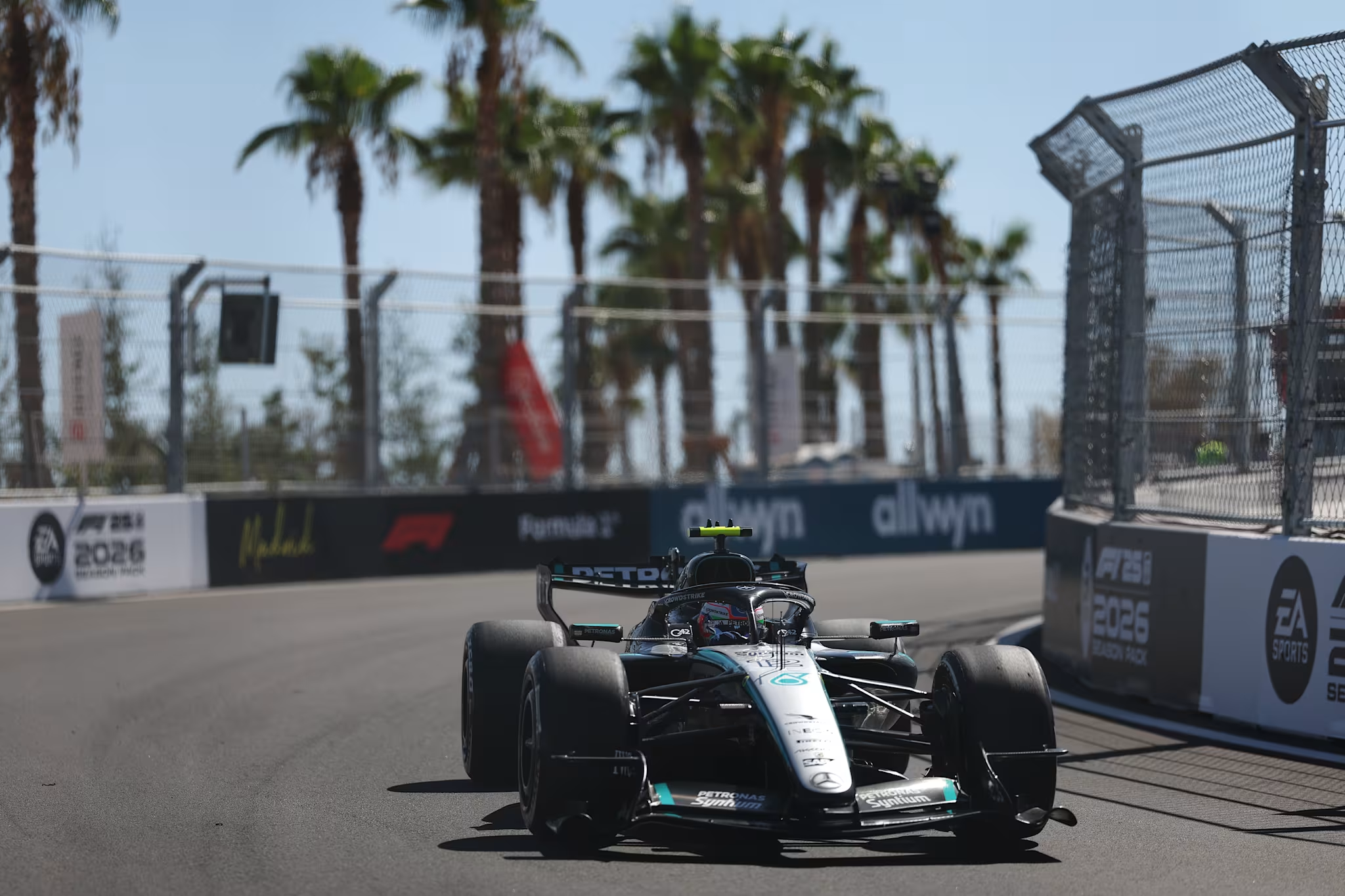
The Mercedes star leads the Drivers’ Championship by 81 points after his eighth win of the season.
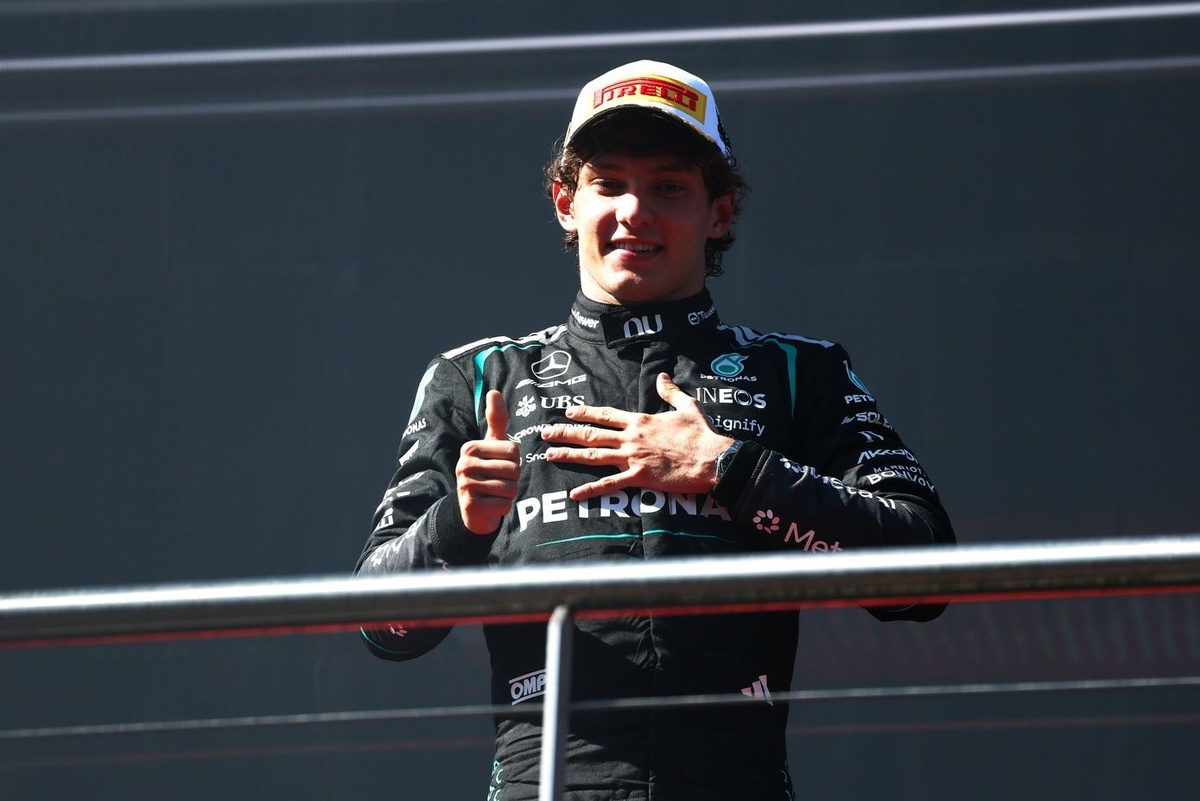
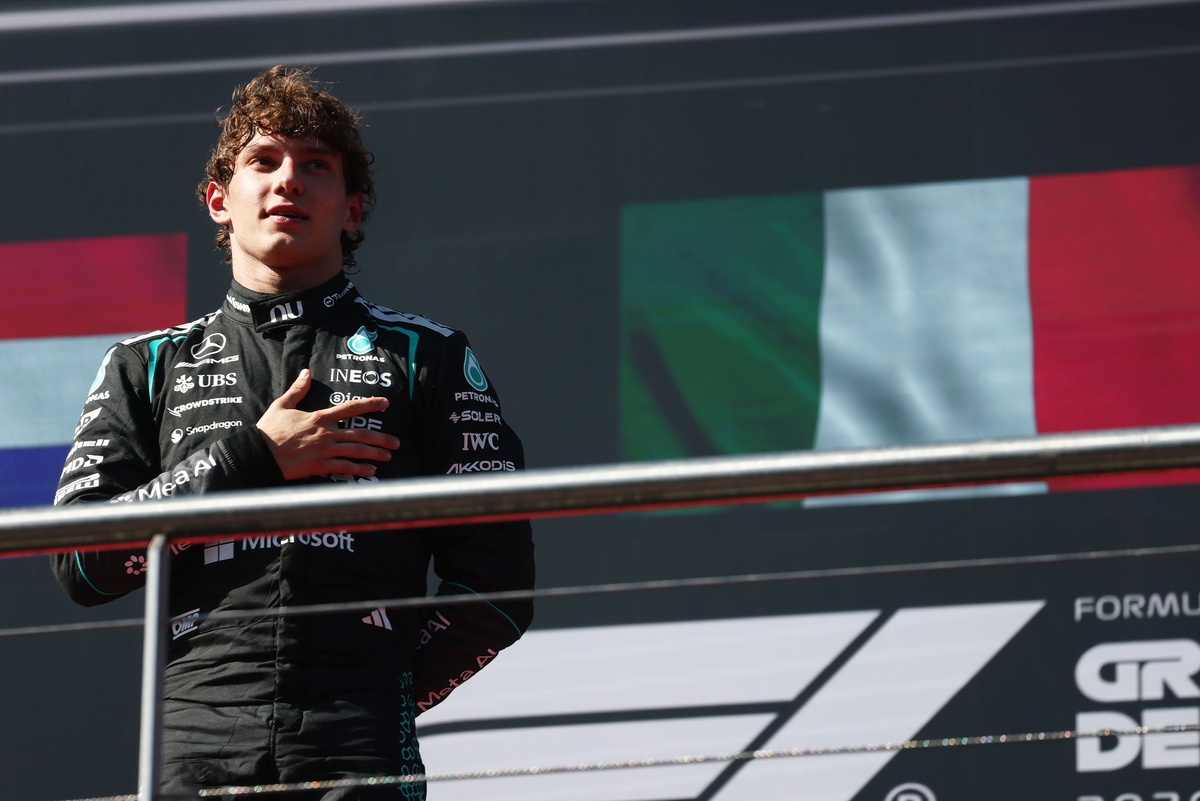
Andrea Kimi Antonelli continued his remarkable rookie campaign with a decisive victory at the Spanish Grand Prix, marking his eighth win of the Formula 1 season. The Mercedes driver crossed the finish line in Madrid to claim another 25 points, stretching his advantage in the drivers’ standings to a commanding 81-point margin over teammate George Russell, who currently occupies second place. The result further cements Antonelli’s status as the overwhelming favorite for the championship with six rounds remaining on the calendar.
Beyond the on-track dominance, it was a tender post-race scene that captured the imagination of the global Formula 1 community. After parking his Mercedes on the grid, Antonelli was greeted at the barriers by his father, Marco Antonelli, who held a single red carnation. As he handed the flower to his son, the pair shared a laugh and an embrace before the 20-year-old proceeded to his pre-podium duties. The moment, quickly dubbed “Papanelli” by fans—a blend of “Papa” and Antonelli—exploded across social media platforms.
On Reddit, one user commented, “Such a wholesome moment. Kimi is so easy to root for,” while another joked, “What is this, The Bachelor?” Over on X, the sentiment was equally warm: “The fact that little red carnation was from Papanelli. Stop, that’s so precious,” read one post. Further reactions included, “This is the most Italian thing ever and I love it! Andiamo Kimi!” and the bold declaration, “The new GOAT.”
Despite the near-insurmountable lead, Antonelli refused to engage in title talk during his post-race media duties. When pressed on the prospect of securing his maiden world championship, the Italian was unequivocal in his focus.
“Well, that’s exactly what I don’t want to do,” Antonelli explained after the race. “I want to keep pushing race by race, you know, keep delivering and keep enjoying all the way, and then, you know, trying to do my best every race. And then we’ll see where we end up at the end of the year.”
Antonelli’s 81-point lead with six races remaining places him in a historically dominant position; mathematically, he could clinch the title as early as the next round in Azerbaijan if results align. However, his public insistence on a process-oriented mindset mirrors the approach taken by recent champions who avoided early complacency. For Mercedes, the Spanish Grand Prix weekend validated their 2024 development trajectory and solidified Antonelli’s status as the franchise’s new cornerstone following Lewis Hamilton’s departure. The Baku City Circuit, hosting rounds 15 through 26 September, presents a unique low-downforce challenge where Mercedes has historically excelled, offering Antonelli a prime opportunity to move within striking distance of the crown.
Antonelli leads the drivers’ championship by 81 points over his Mercedes teammate George Russell following his victory at the Spanish Grand Prix.
The next round is the Azerbaijan Grand Prix, scheduled for September 24-26 at the Baku City Circuit.
The red carnation was given to Antonelli by his father, Marco Antonelli, in a spontaneous post-race celebration that went viral on social media, with fans praising the genuine, emotional display between father and son.
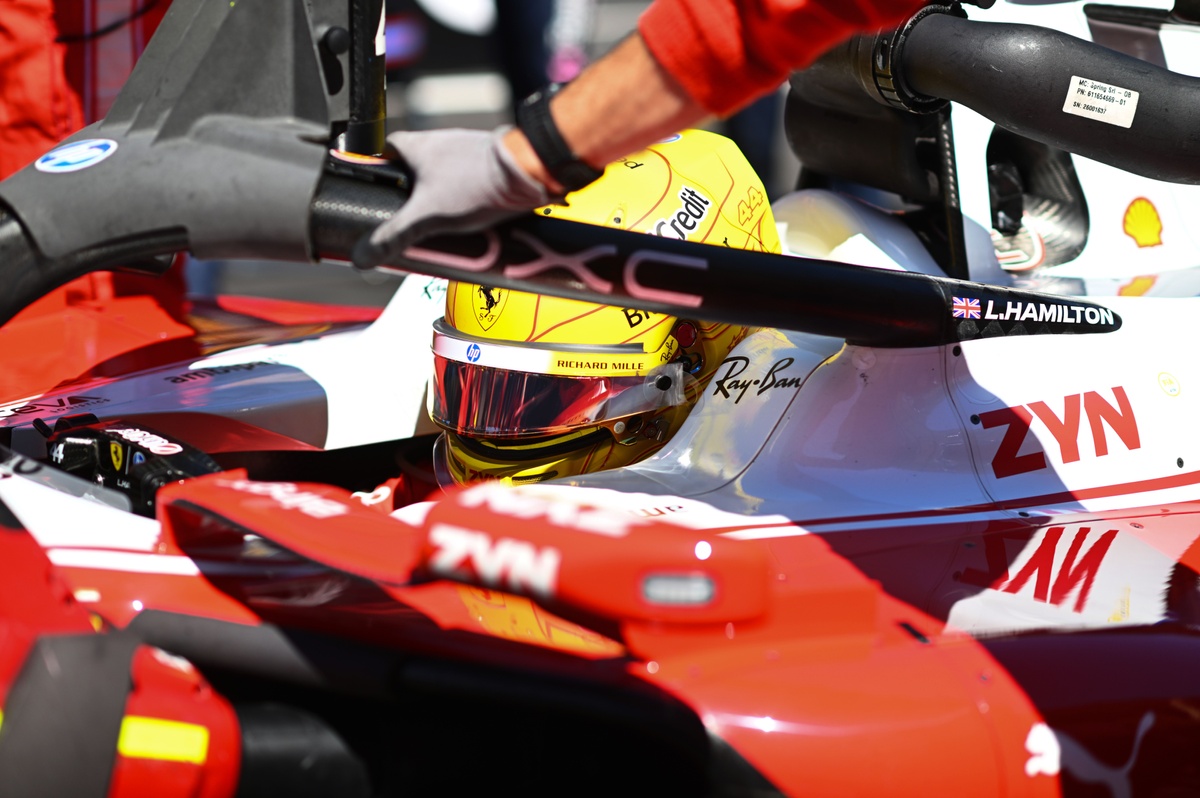
Lewis Hamilton’s Spanish Grand Prix ended in frustration on Sunday after a catastrophic brake failure forced the seven-time world champion into an early retirement from the inaugural running at Madrid’s Madring circuit. The Ferrari driver had been locked in a battle with Red Bull’s Max Verstappen for third place during the opening laps when his brake pedal began to extend abnormally, leaving him unable to slow the SF-25 effectively.
The issue manifested suddenly on the first lap. Hamilton reported that the car was stopping normally under braking for Turn 5 before the pedal “took a step,” causing him to carry excessive speed into the corner. Although the braking performance briefly recovered, giving the team and driver momentary hope, the pedal subsequently went fully to the floor. Hamilton described the incident as “really unexpected” and admitted he was “lucky to make it round” to the pits without a heavy impact, having already brushed the wall after missing a braking point.
With the 5.4-kilometre Madring layout lined by unforgiving barriers, Ferrari elected not to gamble on a damaged car. Team principal Fred Vasseur revealed that engineers attempted to rectify the problem via steering-wheel adjustments from the pit wall, but the failure recurred “a couple of corners later.” Vasseur characterized the decision to retire the car as straightforward: “Staying on track made no sense in a crazy race. We didn’t want to take any risk.”
The retirement marked a bitter conclusion to a weekend where Ferrari appeared to possess genuine race-winning performance. Vasseur pointed to the pace of Hamilton’s teammate, Charles Leclerc, as evidence that the Scuderia had the speed to challenge the frontrunners. However, the team boss was blunt about the nature of the 57-lap contest, describing it as a “procession dominated by track position” where overtaking was “mega difficult.”
The Spanish Grand Prix highlighted two critical storylines for Formula 1’s 2025 season. First, Hamilton’s mechanical DNF underscores the reliability challenges Ferrari continues to face in its championship push, wasting a rare opportunity where the SF-25 demonstrated clear front-running pace. Second, the processional nature of the race at the new Madring venue raises immediate questions about the circuit’s suitability for F1. With overtaking described as virtually impossible by a team principal whose driver was on the receiving end of the track-position trap, stakeholders will likely scrutinize whether layout modifications or regulatory adjustments are needed to prevent future editions from becoming static affairs. For Hamilton, the zero points represent a significant blow in the drivers’ standings, while Ferrari must quickly diagnose the brake-system gremlin before the next round.
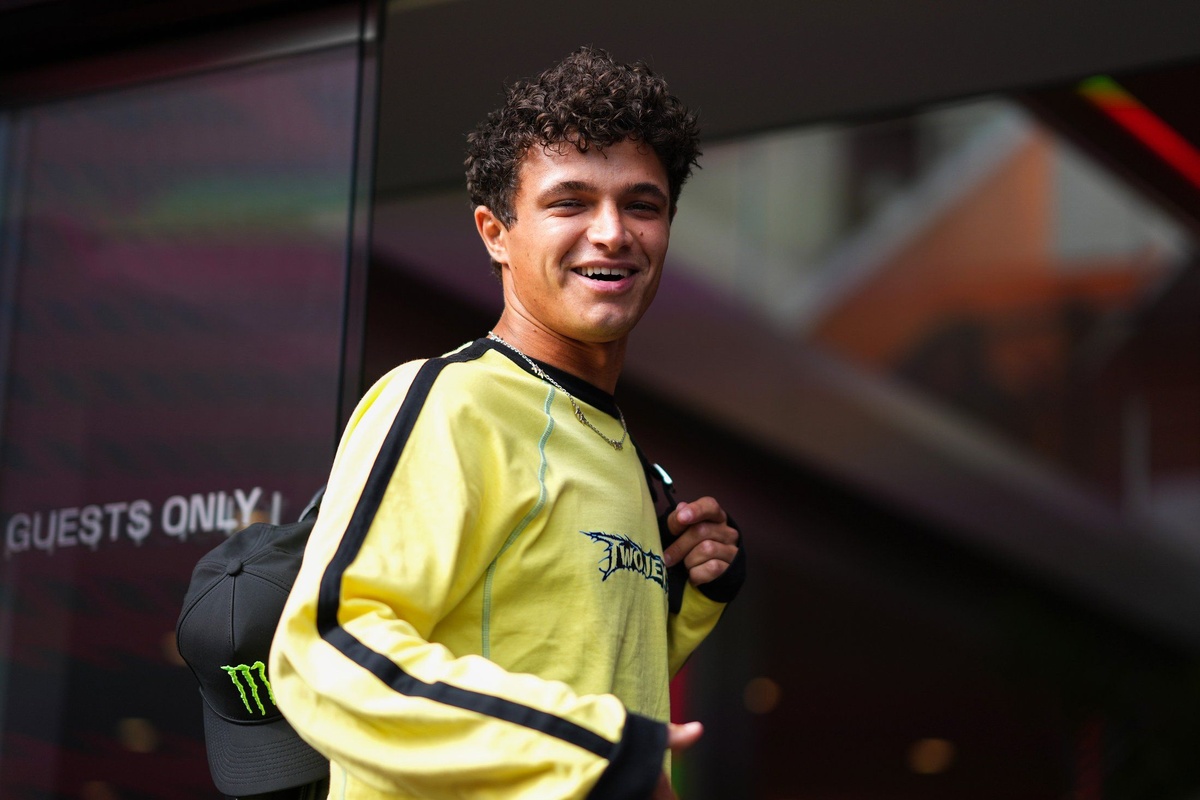
McLaren Formula 1 driver Lando Norris is scheduled to pilot the team’s new MCL-HY hypercar at the Algarve International Circuit in Portimao, Portugal, on Monday, September 14. The test session falls directly ahead of the Azerbaijan Grand Prix weekend and serves as a critical development milestone for McLaren’s upcoming entry into the FIA World Endurance Championship (WEC) and the 24 Hours of Le Mans starting in 2027. The Woking-based outfit aims to leverage Norris’s elite single-seater experience to refine the hypercar’s handling and performance characteristics before its competitive debut.
The McLaren MCL-HY represents the British manufacturer’s first purpose-built hypercar for the top tier of endurance racing. Power comes from a V6 twin-turbocharged mid-engine generating 697 horsepower, mated to a chassis engineered by Dallara—the Italian specialist with extensive experience in IndyCar, Formula 2, and previous WEC programs. McLaren retains overall design authority, integrating its proprietary aerodynamics and systems architecture. Norris previously sampled the MCL-HY during a demonstration run at the Goodwood Festival of Speed, offering early impressions that will now be expanded through a structured test program at Portimao’s demanding 4.65-kilometer layout.
Norris has made no secret of his desire to contest the 24 Hours of Le Mans once McLaren fields a competitive entry. In a video published to the McLaren YouTube channel in May 2026, he articulated his motivation with characteristic candor: “You know, I still feel like I want to go and try other things. Do Le Mans, now McLaren are doing Le Mans, so maybe go and do that at some point. But I don’t know. I’m still young, so I’ve not thought of everything just yet. But, you know, in the future hopefully I have kids and they get into racing or something and then I can live the story again.” He reinforced that stance during the 2025 Azerbaijan Grand Prix weekend, telling reporters he would “love” to take on the challenge of the Circuit de la Sarthe.
The Portimao test follows the Spanish Grand Prix at the newly introduced Madring circuit, where Norris qualified on pole position but surrendered the race lead due to an ill-timed virtual safety car period. He ultimately finished third behind race winner Kimi Antonelli (Mercedes) and Max Verstappen (Red Bull). Antonelli’s victory marked his eighth of the 2025 season, extending his Drivers’ Championship lead to 81 points over teammate George Russell. Norris currently sits fourth in the standings, behind Lewis Hamilton. The hypercar test offers a brief respite from the title fight while advancing McLaren’s long-term endurance racing strategy.
McLaren’s entry into the FIA WEC Hypercar class for 2027 signals a strategic expansion beyond Formula 1, aligning with manufacturers like Ferrari, Toyota, Porsche, Peugeot, Cadillac, BMW, and Alpine who currently contest the series. Securing a driver of Norris’s caliber for development duties underscores the program’s seriousness and could pave the way for a factory-backed Le Mans assault with a driver lineup that blends F1 pedigree with endurance specialists. The September 14 test at Portimao—chosen for its elevation changes and high-speed corners that stress aerodynamic and mechanical balance—will generate crucial correlation data between simulation models and real-world running. For Norris, the outing represents a tangible step toward a personal goal he has voiced publicly: adding a Le Mans victory to a résumé that already includes a Formula 1 World Championship.

After the race, McLaren faced questions about whether pitting on the following lap was the optimal call or if Lando Norris should have stayed out. Norris defended the decision, stating: “I had to come in at the end of the lap because it was the only chance.”
He elaborated on the trade-offs: “It was still effectively some pit loss, (but) the fact that everyone’s kind of on colder tyres and you’re still minimising the pit loss.” Norris highlighted the tyre performance disparity: “The medium tyre (on which Norris had started the race) was destroyed and the hard tyre (to which Antonelli and Verstappen switched) was amazing.”
Despite the outcome, Norris pointed to strong pace: “But the pace was very, very strong and on the hard tyre… I know they were stuck (behind Ferrari’s Charles Leclerc, who stayed out under the VSC), we caught up 13, 14 seconds or more, almost. So, plenty of positives. A day full of positives, just one thing let it all down.”
McLaren team principal Andrea Stella confirmed the team evaluated staying out: “We considered staying out, but you have to accept the fact that now you are on relatively used medium tyres. And the people behind you will be on new hard. So you’re never going to open a gap on people on new hard.”
Another question was whether McLaren should have anticipated the Virtual Safety Car (VSC) and pitted Norris before its deployment. Stella admitted: “In hindsight, that would have been a good idea.”
However, he emphasized the real-time risks, noting the Madring circuit’s long pit lane — the longest on the calendar — meant a pit stop carried a significant time penalty. Stella said: “I would have to review with my engineers, see whether it was kind of obvious that it would end up in a virtual safety car. Therefore, you try to anticipate or not.”
He detailed the specific danger: “Here, the problem is that you need to be extremely careful, because it’s 27 seconds if you don’t pit under a virtual safety car.”
Stella explained the consequence of a wrong prediction: “So if you get it wrong, it would be extremely penalising. From the lead, you pit unnecessarily, and now you have lost the victory.”
He outlined the team’s guiding principle: “So a good rule is to respond to what is a fact, to what is the real condition of the circuit.”
Looking ahead, Stella said: “But we will definitely take a look as to whether in these conditions it was just simply, you know, obvious that he would end up in a virtual safety car. I cannot answer at the moment.”
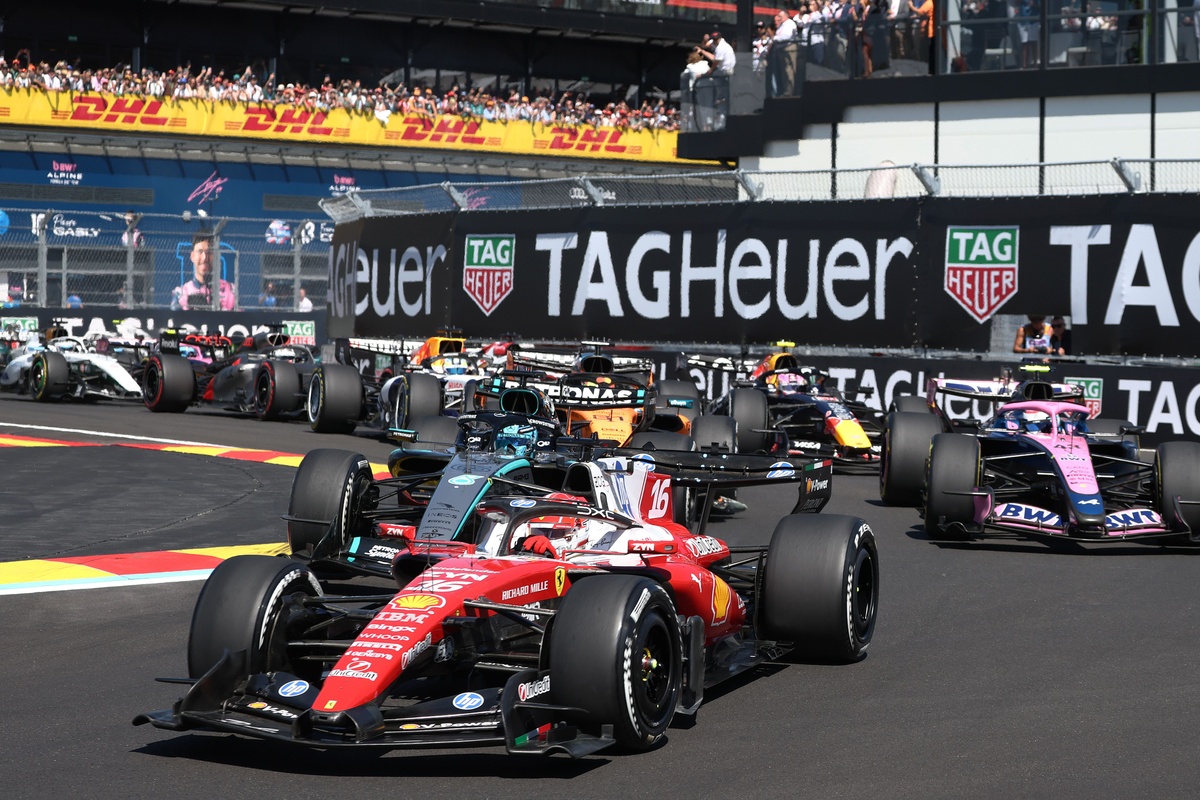
The inaugural Formula 1 Spanish Grand Prix at the Madring circuit delivered exactly the processional race many drivers predicted. Despite a spectacular qualifying layout, Sunday’s race offered virtually no overtaking opportunities, leaving the paddock united in criticism of the track’s racing dynamics.
The lack of on-track action was so pronounced that journalists in the media centre reportedly nearly fell asleep during the event. Sauber driver Gabriel Bortoleto confirmed the sentiment from inside the cockpit: “I almost fell asleep as well!”
Even race winner Kimi Antonelli, who leads the championship, admitted he enjoyed qualifying but not the Grand Prix itself. The Mercedes driver explained the core issue: “It definitely doesn’t create overtaking opportunities and it doesn’t push you to try and make a move, because 80% of the time you might have contact.”
Antonelli cited a specific incident with Lando Norris at the second chicane: “I think especially in the second chicane, if I would have turned in there, me and Lando would have touched and probably gone into the wall and blocked the road. It definitely wouldn’t have been nice.” He concluded: “So, I think there are some corners that need to be changed to create more overtaking opportunities, because right now, yes, it’s nice over one lap, but for sure in the race you’re just stuck behind.”
The fundamental design flaws were apparent to drivers long before the race. Max Verstappen stated on Saturday he could not see a single passing opportunity, telling Dutch media: “Just give me the track map” to indicate the extensive changes he would make.
Drivers noted they were not consulted during the design phase, a contrast to the Jeddah Corniche Circuit where feedback was sought only after the first year proved dangerous. Haas rookie Oliver Bearman, who crashed heavily in final practice and missed qualifying, was blunt in his assessment: “You only have to look at the layout, and it’s quite clear that it’s going to be a poor track for racing.”
Bearman added: “I mean, when you arrive and you see that layout, you’re like, what do you expect us to do? It’s a bit of a shame.” He identified two compounding factors: “Not only do you have a lot of long combined exits where it’s really tough to put power down, but you have a lot of combined entries as well. It’s very easy to drive a bit dangerously defending your position and, therefore, very hard to send an overtake.”
The British driver confirmed the grid had already raised concerns: “We already said that to the FIA on Friday and we need to look into a way to make the track a bit more interesting for us, because it’s interesting to drive for sure, but in the race it’s very poor.”
Williams driver Alex Albon pointed to support races as early validation: “I hope there’s open-mindedness to make some track changes for next year. I mean, if the F3 cars can’t overtake, then you know there’s going to be no overtaking the whole weekend.”
Albon believes the fixes are manageable: “I think there only needs to be a couple of changes to fix the problem. Otherwise, honestly, it’s not a bad track. It’s quite a fun track to drive, just like you saw in the races, it’s pretty boring.”
Albon identified the sequence from Turn 3 to Turn 5 as the primary trouble spot: “A lot of it is around Turn 3 to Turn 5. I think that whole area needs to be redone, maybe straighter braking zones. We need to remove that chicane. It’s good for spectacle, but it’s not good for racing.”
He also questioned the effectiveness of the banked Turn 13: “And I think the banking, as great as it is, it’s not really doing a good enough job in Turn 13. Turn 13 maybe needs to be a slower corner, a bigger braking zone.”
Bortoleto highlighted a physical toll from the Turn 5 jump: “Just the jump in T5, to do that 50 laps, you get quite a lot of headache at the end of the race. So, it’s not the easiest one for our body.”
Lando Norris targeted the circuit’s final sector for streamlining: “I think there are some obvious changes they should make. They should get rid of Turn 18, 19, useless. Just have more of a straight into a hairpin. I don’t know how someone looks at this design and goes, ‘Mint.’ Yeah, I think there’s a lot of opportunity.”
The McLaren driver referenced Circuit of the Americas as a positive template: “To me, it’s not a great racetrack. It’s great in qualifying, but, you know, a straight line from 17 straight to 20 [would help], to have a much wider entry like Austin Turn 1 or Turn 10, a big hairpin. You’ll create much better opportunities for everyone and you’ll be able to enjoy the race.”
Norris acknowledged the complexity of the Turn 5-6-7 section: “There are some simple changes and maybe some trickier ones, like Turn 5, 6, 7. It’s hard to know exactly what is the best thing. The fact you have to turn and brake basically defeats the whole object of racing. So, they can do some simple changes, I think, easy changes and maybe some trickier changes, but I hope they do it because then it should be more exciting for everyone.”
Beyond corner geometry, drivers are advocating for a shortened pit lane to encourage additional pit stops and create strategic alternatives, potentially manufacturing race excitement that the layout currently fails to produce naturally.
With the Spanish Grand Prix locked in at the IFEMA complex through 2026 before a potential move, the unanimous driver verdict places pressure on organizers and the FIA to implement meaningful layout revisions before the 2027 season.
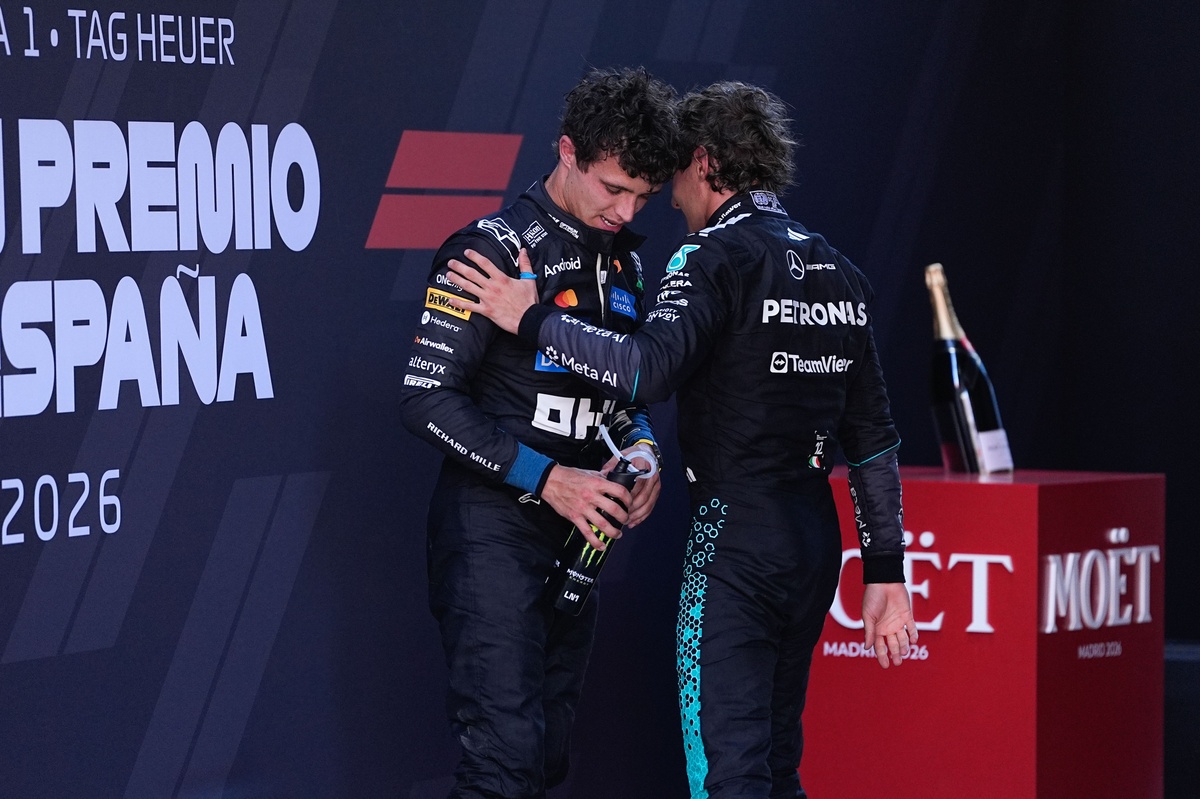
Lando Norris missed victory at the Spanish Grand Prix by a mere two seconds — the margin between the McLaren driver passing the Madring pit entry and the deployment of the virtual safety car that ultimately handed the win to Kimi Antonelli. Norris had built a 6.2-second lead over the Mercedes rookie by the start of lap 14 and appeared firmly in control after shaking off a frantic opening lap that saw championship leader Max Verstappen run off at both Turn 1 and Turn 5 while pressuring the Briton.
The race dynamics shifted dramatically when Lance Stroll stopped at Turn 20 at the end of lap 13. The Aston Martin driver reported fading brakes — a problem that had earlier affected Lewis Hamilton, who managed to nurse his Ferrari back to the pits. Unlike Hamilton, Stroll had no strategic reason to continue and parked his car at the marshals’ post near the barrier opening, making it accessible for retrieval.
Yellow flags waved just as Norris exited Turn 14. At that point, there was little indication a VSC would be called; the expectation appeared to be that marshals could quickly remove the stranded Aston Martin.
McLaren team principal Andrea Stella later reflected on the decision not to pit pre-emptively:
“In hindsight, it would have been a good idea [to pit pre-emptively], but we will have to review with my engineers to see whether it was kind of obvious that it would end up in a virtual safety car,” said McLaren team principal Andrea Stella.
“Here, the problem is that you need to be extremely careful because it is 27 seconds if you don’t pit under a virtual safety car. So if you get it wrong it will be extremely penalising: from the lead, you pit unnecessarily and now you have lost the victory.
“So, I think a good rule is to respond to what is a fact, to what is the real condition of the circuit. But we will definitely take a look as to whether in these conditions it was just simply obvious that it would end up in a virtual safety car.”
When Norris passed Stroll’s car, yellow flags were still displayed. McLaren opted against a pre-emptive stop, and the race leader negotiated Turns 21 and 22 — the final corners of the Madring layout. The virtual safety car was deployed the moment Norris exited the last corner, a timing McLaren calculated as just two seconds too late to bring their driver in.
Antonelli, now 6.3 seconds behind, received the call to pit — as did Verstappen and George Russell. Both Antonelli and Verstappen switched to hard tyres, securing a one-stop strategy to the finish. Norris, meanwhile, faced at least one more lap before he could stop, with the risk that the VSC would end before he could capitalize on the reduced pit-lane time loss — approximately 30 seconds under normal conditions at Madring.
Antonelli and Verstappen emerged from their VSC stops behind Charles Leclerc, who had stayed out on his original hard tyres. Had Norris pitted under VSC conditions, he likely would have rejoined ahead of the Ferrari. Instead, Norris was instructed to stop regardless of the VSC status. The VSC ended as he rounded Turn 21, and he entered the pit lane for his sole stop, taking on hard tyres.
A slow front-right wheel change added several seconds to his stationary time. Stella assessed the impact:
“In fairness and for completeness, we had a seven second pit stop, so there’s definitely takeaways even when it comes to our operations.
“It would have not made a difference for the final result, because probably Lando would have pitted anyhow behind Russell and even if not, it would have not been possible to overtake Verstappen and Antonelli. So definitely, we take note that there’s a lot of work to do in our operation, and it’s not the first time that we have a slow stop. But in terms of the race itself, it didn’t make a difference.”
After Russell’s subsequent stop on lap 28, Norris closed on Verstappen but remained trapped in the Red Bull’s wake until the chequered flag, with victory slipping further away each lap.
The team radio exchange between race engineer Will Joseph and Norris captures the uncertainty:
Will Joseph: Yellow flags at turn 20. Yellows. Virtual safety car deployed, virtual safety car deployed. No drives in the delta.
Lando Norris: We box?WJ: If it stays long enough.
LN: How big’s the crash?
WJ: I think someone’s brakes… There are marshals on track at turn 20, I haven’t seen it. Just try and stay on the delta.
And Lando [radio breaks]?
LN: I think so, do you?
WJ: Yes, we are.
WJ: Lando, confirming we are boxing this lap, irrespective.
LN: Confirmed.
WJ: We still think there’s marshals on track.
WJ: Virtual safety car ending, virtual safety car ending.
LN: Confirmed box still?
WJ: Yes, confirmed box. So box this lap.
The lingering question is whether McLaren should have kept Norris out longer to build a sufficient gap. With Leclerc holding up Verstappen and Antonelli, a case exists that Norris could have extended his stint, built the roughly 30-second advantage needed to clear Antonelli, and either emerged ahead of Leclerc or waited behind him for the Ferrari’s stop.
The data, however, undermines that scenario. Norris was on used mediums, and his gap to Leclerc pre-VSC stood at just 13.8 seconds. His per-lap advantage over the Ferrari was rapidly diminishing: 0.506 seconds quicker on lap 10, 0.272 on lap 11, 0.264 on lap 12, and only 0.027 on lap 13. With Leclerc experiencing no hard-tyre degradation and gaining pace from fuel burn, building the required 16-second buffer after the VSC lifted was effectively impossible.
Norris quipped that McLaren had been “too fast” over the weekend — suggesting that in their usual competitive position, the VSC timing would have favored them. Stella concluded:
“We considered staying out, but you have to you have to accept the fact that now you are on relatively used medium tyres and the people behind you will be a new hard – so you’re never going to open a gap on people with a new hard,” Stella concluded. “Therefore we kind of needed to accept that that was what we should have done, and the fact that it was incredibly unfortunate.
“Sometimes we talk about being unlucky. I think at times the being unlucky is used for too many applications but, in this case, it’s almost a mathematical definition of being unlucky.”
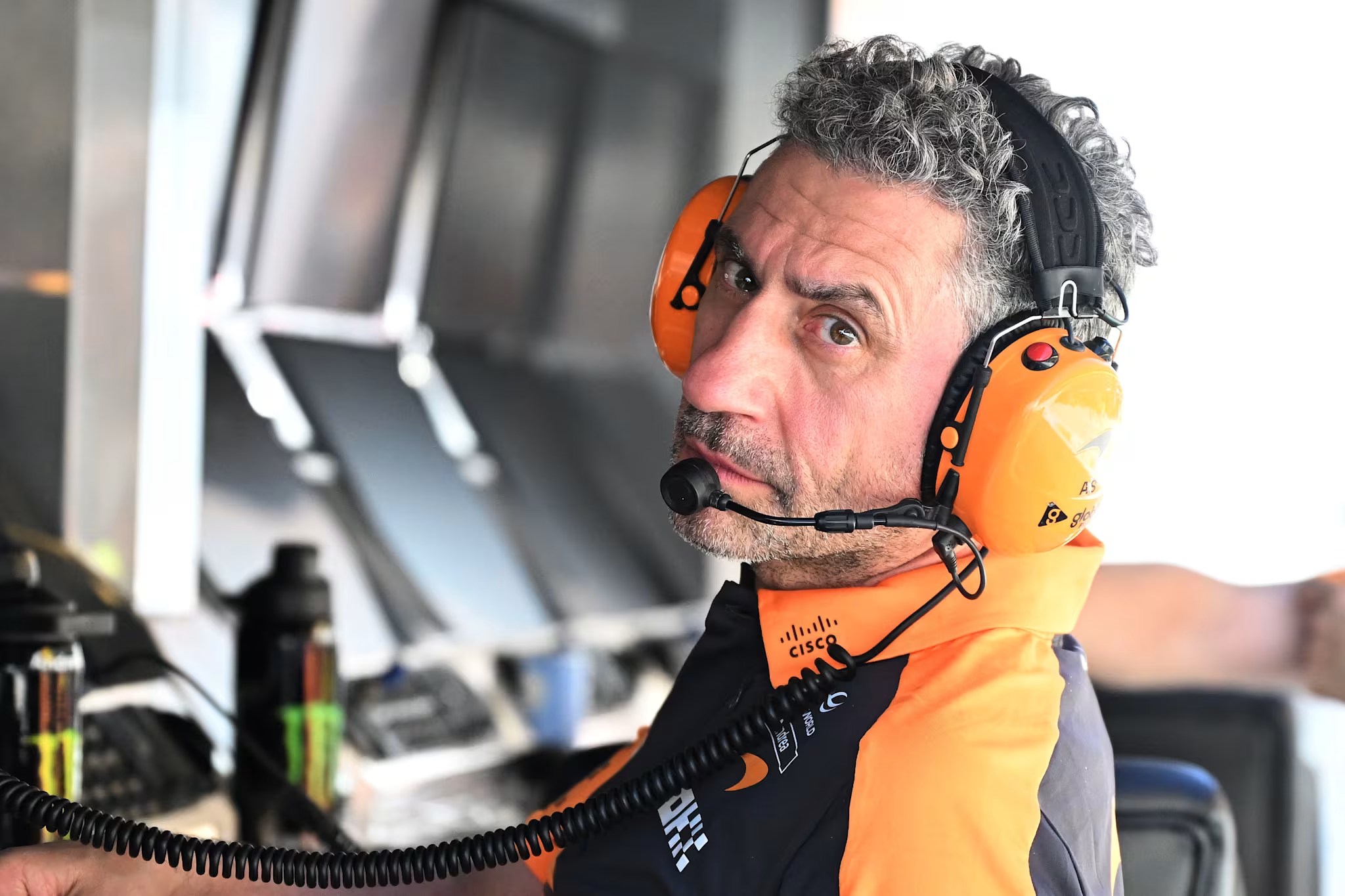
McLaren Team Principal Andrea Stella has detailed the strategic call that saw Lando Norris pit for fresh tyres just as the Virtual Safety Car (VSC) period concluded at the Spanish Grand Prix, acknowledging that there was no option to retain the lead
.
After securing pole position with a dramatic final lap in qualifying, Norris defended strongly against Kimi Antonelli on the opening lap and built a comfortable advantage. The race dynamics shifted when a VSC was deployed to recover Lance Stroll’s stranded Aston Martin. While rivals Antonelli and Max Verstappen pitted under the neutralised conditions, Norris had already passed the pit entry. He entered the pits only as the VSC ended, enduring a 7-second stop that dropped him to fifth place. Despite a strong recovery to finish third, the team’s frustration was evident.
Speaking to F1 TV, Stella laid out the rationale behind the decision:
Starting from pole position, leading the race and having incredible pace… this would’ve been a race won by many seconds, and we ended up in third position.
The reality is that in racing, there are elements that you can control and some that you cannot control. The timing of the Virtual Safety Car was a couple of seconds too late – Lando had already passed the pit entry – and then he was a few seconds too early because then it was ending once he came in to pit.
When asked to elaborate on the logic of pitting versus staying out, Stella added:
The logic is that if you stay out, you stay out with used mediums [that are] already grained, and it means that at some stage you will pit behind the people that have already pitted on the hard tyres, so it’s going to be a similar race to [Charles] Leclerc.
We would actually have pitted even earlier because the medium would finish earlier, so there was no option really to retain the lead.
We needed to accept that the timing was incredibly unfortunate and, like I said, it’s a positive race overall.
The elements that we could not control made a difference but those that we could control make us very optimistic for the future.
McLaren’s competitive trajectory has been upward all season, highlighted by Norris’s dominant victories in Hungary and the Netherlands. The Spanish Grand Prix weekend reinforced that progress, even in defeat. Verstappen admitted Norris was faster than all of us
in the closing stages, while Antonelli felt the British driver deserved to win
.
Stella concluded with a perspective focused on the bigger picture:
Just very unlucky, but I want to think that the positive message of a McLaren [that was] so competitive at a very different circuit layout to Zandvoort and Hungary is very encouraging for the future.
We take it on the chin. Today we were too fast to win the race because had we been a little slower, we would’ve made it to the pits! We have a smile on our faces, we look forward to the rest of the season.
No news article content was detected in the provided RSS source. The source appears to be a subscription access prompt rather than a news report.
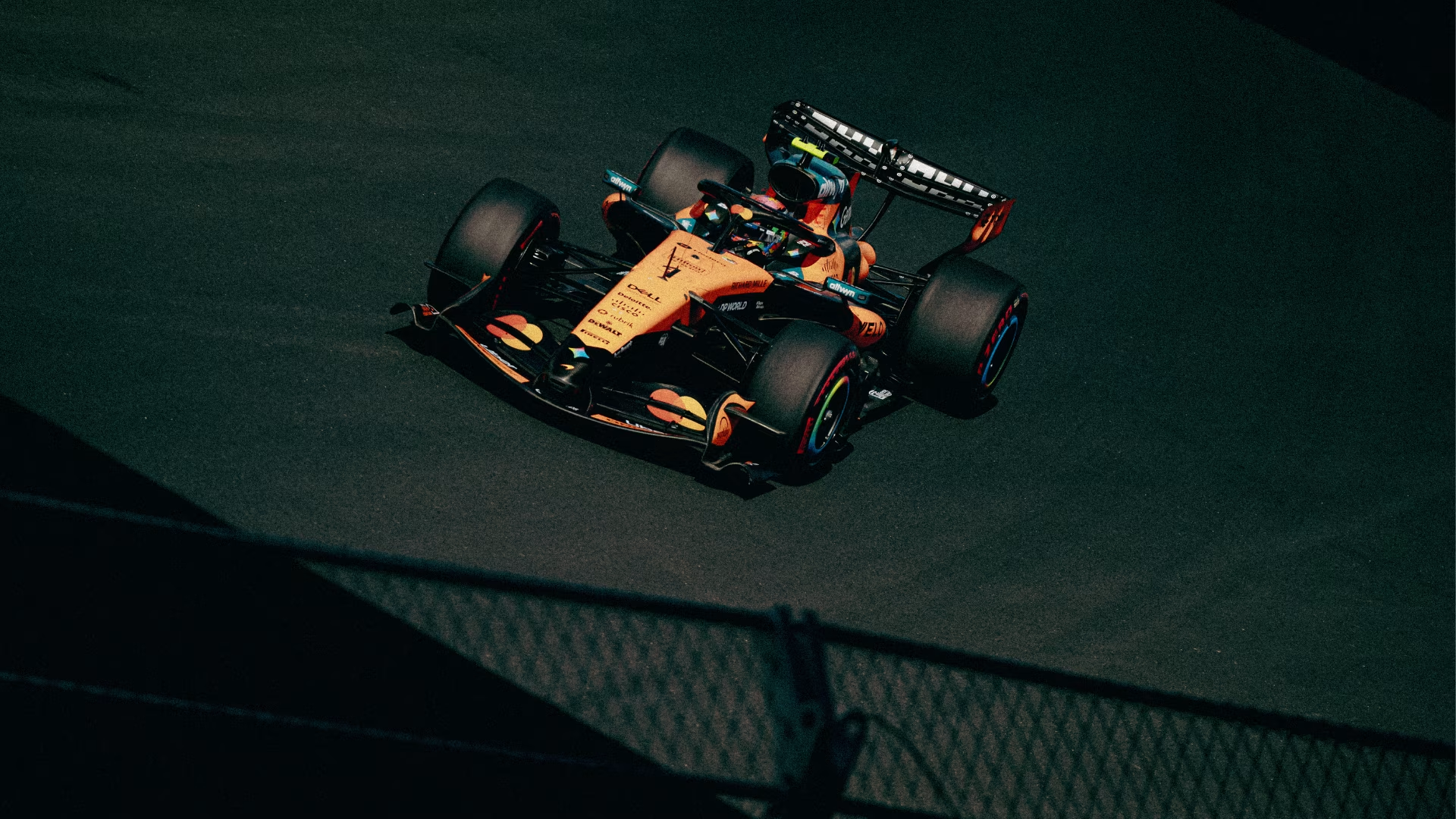
Live coverage is currently active for Sunday’s Formula 1 TAG Heuer Gran Premio de Espana 2026, marking the championship’s highly anticipated debut at the Madrid street circuit.
The 2026 edition of the Spanish Grand Prix represents a historic milestone for Formula 1, shifting the traditional venue from Barcelona to the Spanish capital. The race weekend culminates with Sunday’s main event, where drivers and teams navigate the new layout surrounding the IFEMA exhibition center.
Comprehensive live coverage provides real-time updates throughout the Grand Prix, including lap-by-lap timing, sector splits, team radio highlights, and strategic analysis as the race unfolds in Madrid.